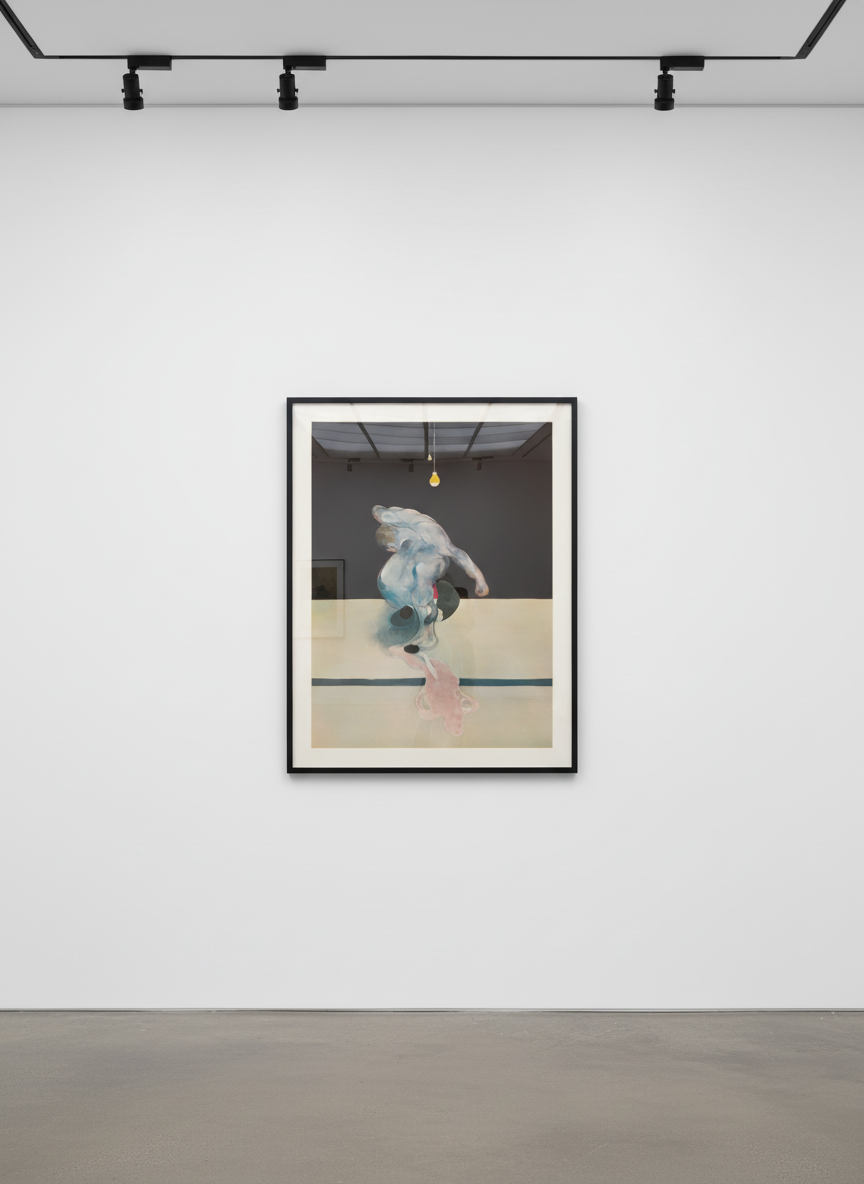
Edition of 150
1 work

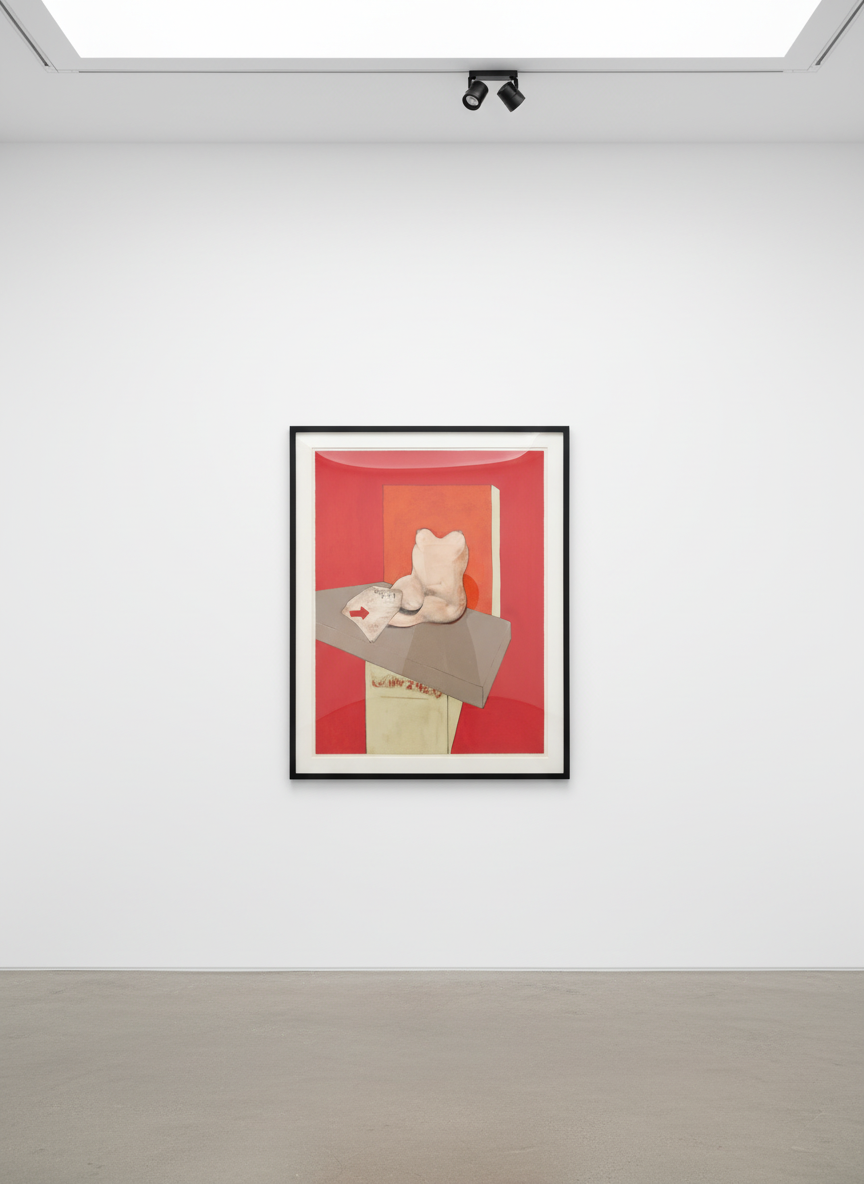
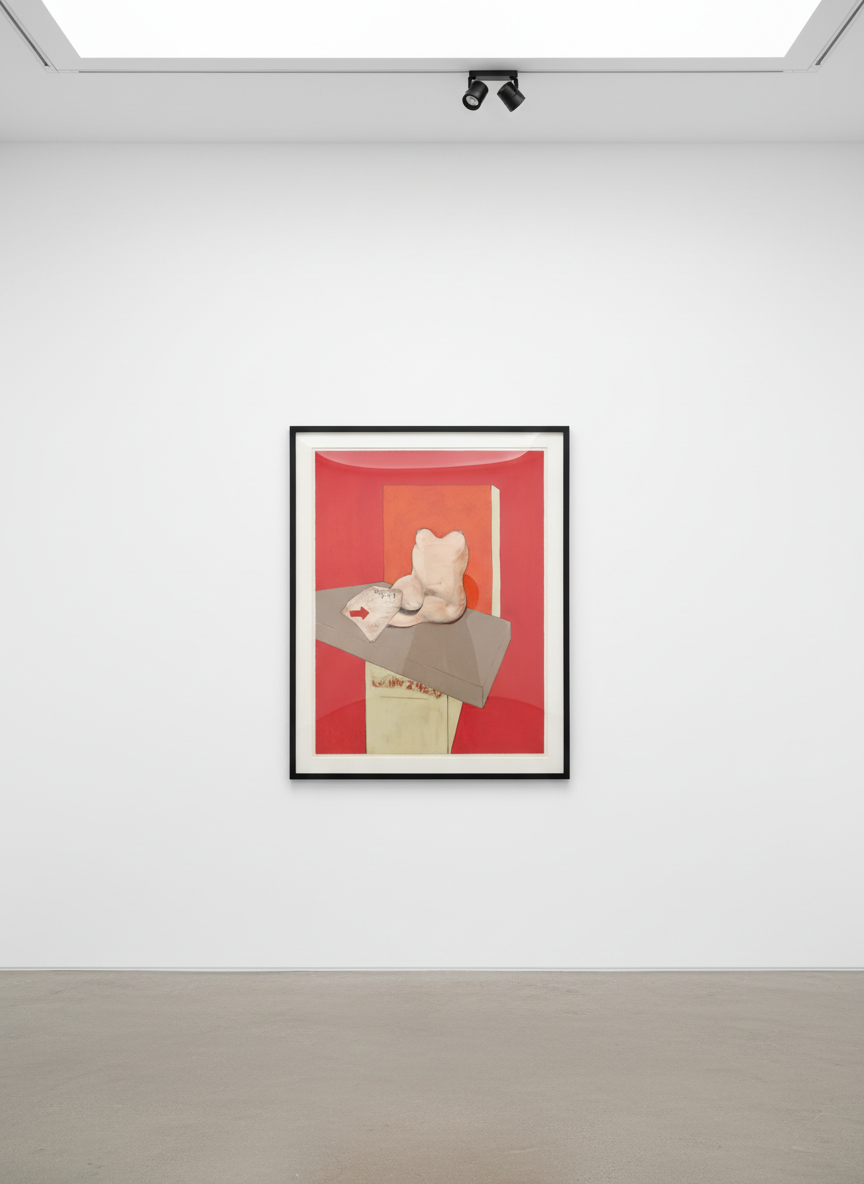
Ètude du Corps Humain d'après Ingres , afterStudy of a Human Body after Ingres 1982, 1984
Lithograph on Arches paper
34 5/8 x 23 7/8 in 88 x 60.5 cm
Edition of 180
=Francis Bacon’s Study of a Human Body (After Ingres) is a powerful reinterpretation of classical form, filtered through Bacon’s distinct visual language of distortion, existential intensity, and psychological fragmentation. Drawing inspiration from Jean-Auguste-Dominique Ingres—a 19th-century master known for his precision, anatomical mastery, and refined linear elegance—Bacon reimagines the classical figure not as a symbol of perfection, but as a vulnerable, mutable vessel of human experience.Ingres was renowned for his commitment to rigorous academic studies, often idealizing the human form while still acknowledging the subtle imperfections that made his subjects feel grounded in reality. Bacon, who greatly admired this methodical process, shared a belief in the foundational importance of studies. However, where Ingres sought idealized order and surface harmony, Bacon pursued rupture, distortion, and emotional truth. In Study of a Human Body (After Ingres), this tension between reverence and rebellion plays out through the collision of classical structure and visceral deformation.The central figure in the composition is presented as a twisted, fleshy mass—at once recognizably human and disturbingly abstract. Limbs are ambiguous or altogether absent, facial features erased or blurred, and the body seems to melt or writhe within the frame. This deliberate departure from anatomical clarity is a hallmark of Bacon’s approach to the figure. Rather than capturing likeness or realism, he evokes the internal experience of embodiment: the weight of flesh, the pressure of existence, and the psychological scars carried within the body itself.Bacon’s figure is stripped of identity and narrative context, reduced to form and texture. This reduction transforms the subject into a broader symbol of the human condition—one marked by impermanence, vulnerability, and suffering. In contrast to Ingres’ classically composed nudes, which often idealize the sensuality of the body, Bacon’s interpretation is raw and unsettling, exposing the body as a site of tension, decay, and emotional unrest.The backdrop—a vivid, blood-red field—intensifies the work’s emotional charge. In Bacon’s visual vocabulary, red frequently functions as a signifier of pain, violence, passion, or psychological turmoil. It saturates the environment with an oppressive heat, heightening the sense of confrontation between the viewer and the distorted body. This red space also isolates the figure, further emphasizing its disconnection from a coherent world—a motif that recurs throughout Bacon’s practice.Despite the figure’s organic fluidity, the composition is structured by geometric elements that frame or intersect the body. Lines and shapes—sometimes reminiscent of architectural scaffolding or clinical diagrams—impose a sense of order upon the chaos of the flesh. This juxtaposition between geometry and disfigurement evokes the fundamental tension in Bacon’s work: the desire to impose structure on the ungovernable realities of life, death, and psychological instability.In referencing Ingres directly in the title, Bacon invites comparison not only between two radically different approaches to the human body, but between two conceptions of what art can communicate. Ingres’ smooth contours and serene compositions embody Enlightenment ideals of rationality, symmetry, and ideal beauty. Bacon, working in the post-war 20th century, responds instead to a fractured, disillusioned world—where the body is a site of existential crisis rather than aesthetic pleasure.Study of a Human Body (After Ingres) thus becomes both homage and subversion. It acknowledges the artistic lineage of classical study, yet refashions it into a brutal, expressive language that reflects modern anxieties. Bacon replaces surface perfection with psychological depth; where Ingres polished, Bacon excavates.Ultimately, this work encapsulates Bacon’s broader project: to confront viewers with the raw, often brutal truths of human existence. His distortion of the figure is not a rejection of the body, but an intensified exploration of its emotional and existential resonance. The result is a piece that transcends representation, forcing us to grapple with the complex realities of identity, mortality, and suffering.In this way, Bacon challenges conventional notions of beauty, inviting us to see the human form not as an object of idealization, but as a vessel of truth—fragile, flawed, and unrelentingly real.For more information on Francis Bacon’s Study of a Human Body (After Ingres) or to buy Study of a Human Body (After Ingres) contact our galleries using the form below.
Price on Application
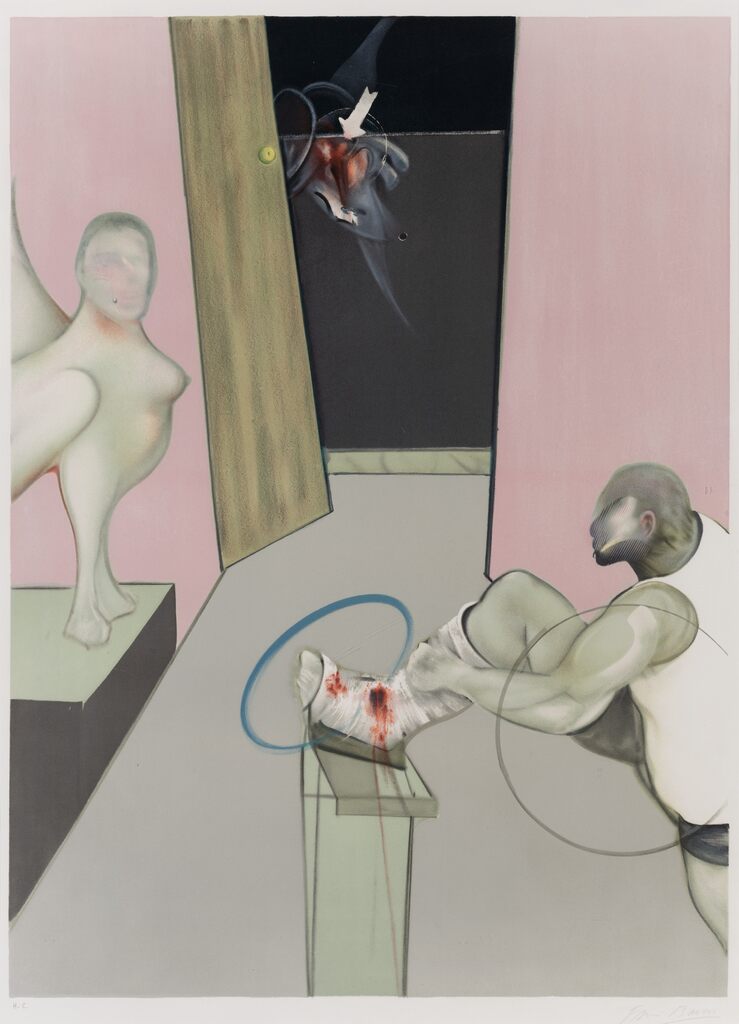
Œdipe et le Sphinx d'après Ingres (after, Œdipus and the Sphinx after Ingres, 1983) (S. 18, T. 17) · Francis Bacon · Phillips · 2025-11 · $0
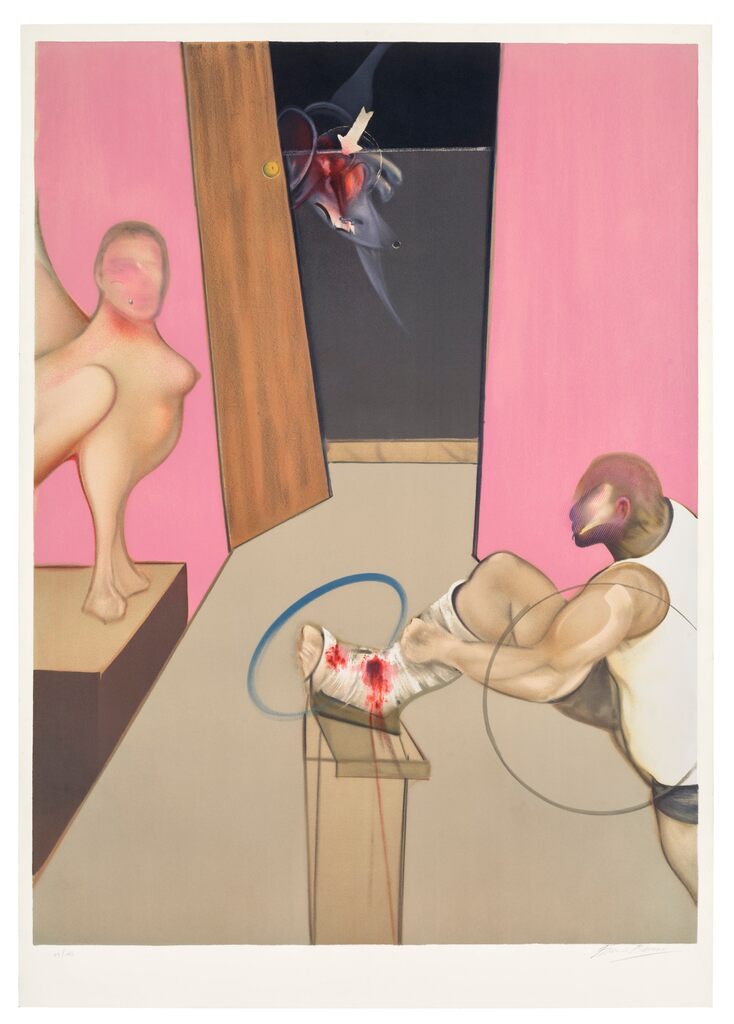
Œdipe et le Sphinx d'après Ingres (after, Œdipus and the Sphinx after Ingres, 1983) (S. 18, T. 17) · Francis Bacon · Phillips · 2025-06 · $9,705
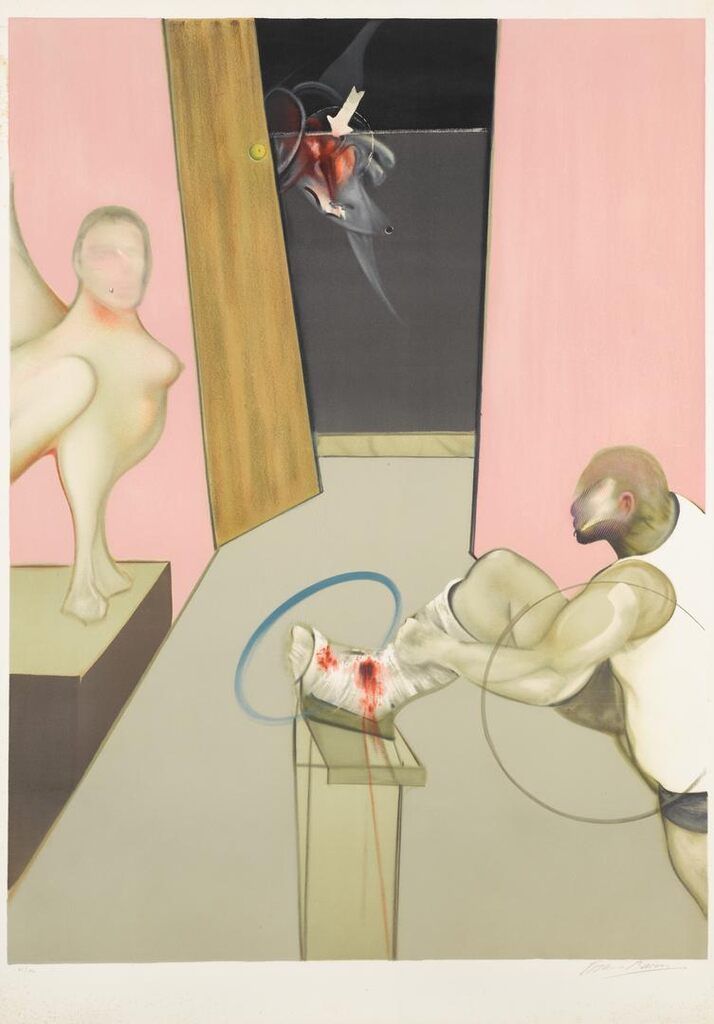
Oedipe et le Sphinx d'après Ingres · Francis Bacon · Sotheby's · 2024-07 · $12,448
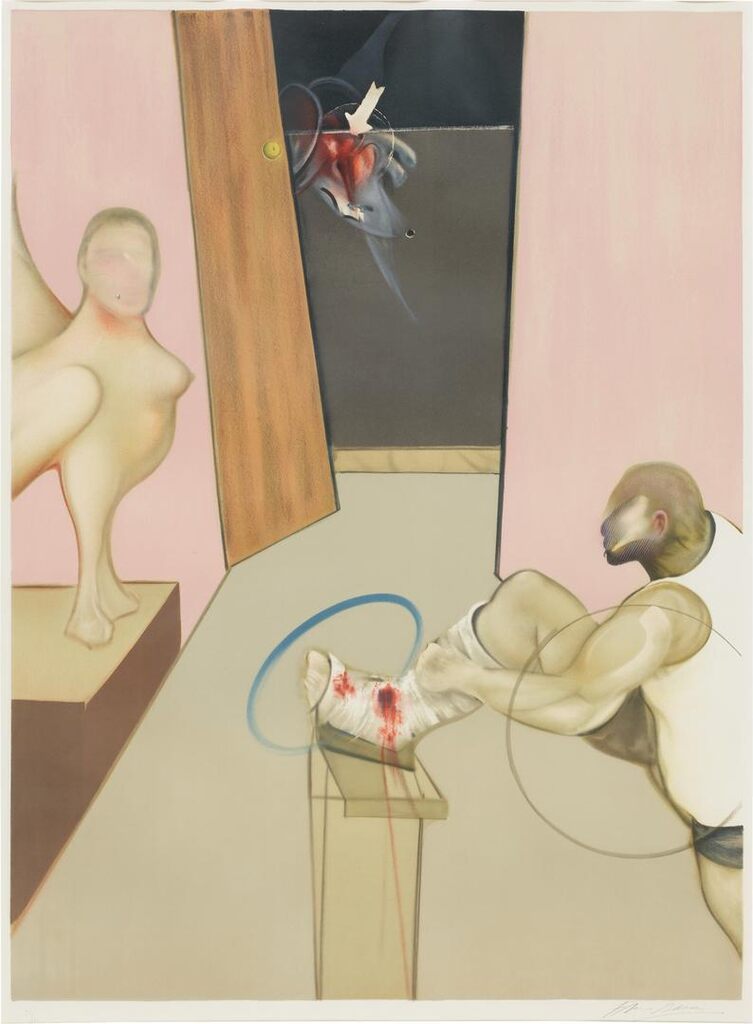
Oedipe et le Sphinx d'après Ingres · Francis Bacon · Sotheby's · 2024-06 · $0
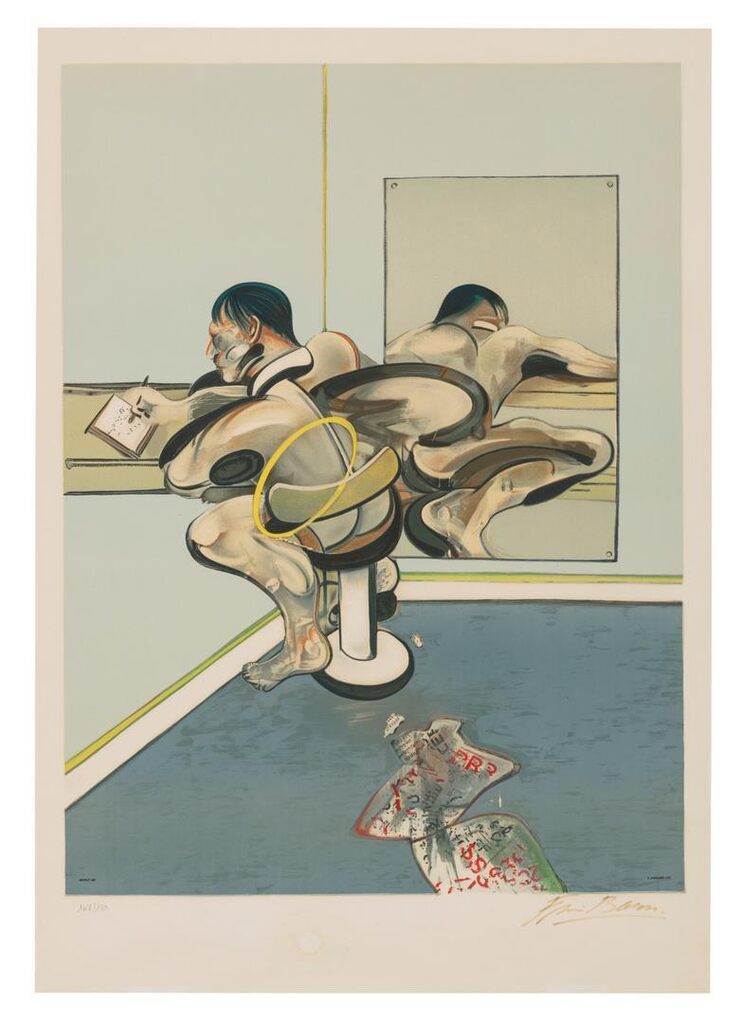
Figure Writing Reflected in a Mirror · Francis Bacon · Christie's · 2025-09 · $16,080
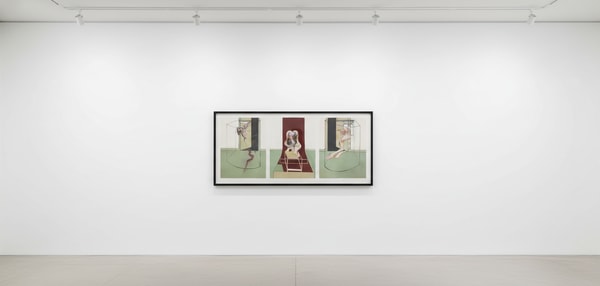
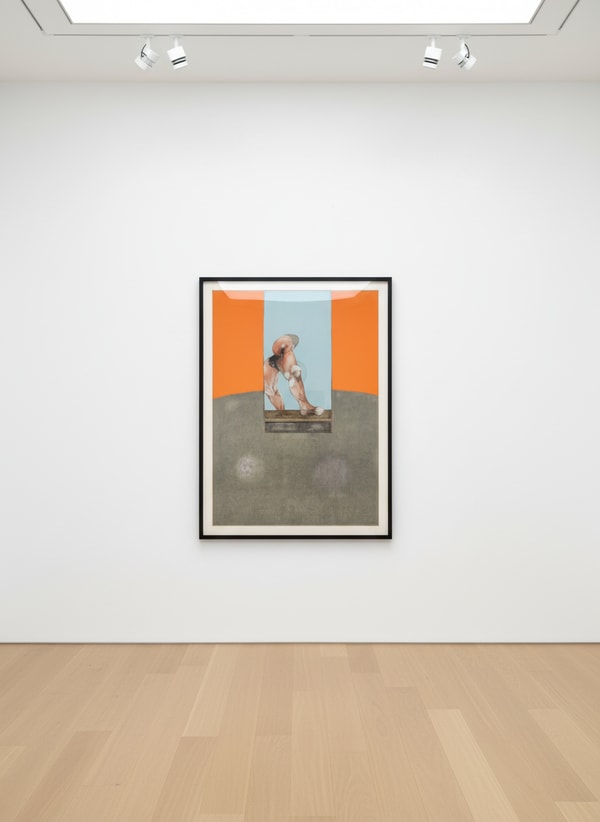
Francis Bacon
after Triptych (1981) inspired by the Oresteia of Aeschylus, 1981
1981
Francis Bacon
Etude de Tauromachie
1987

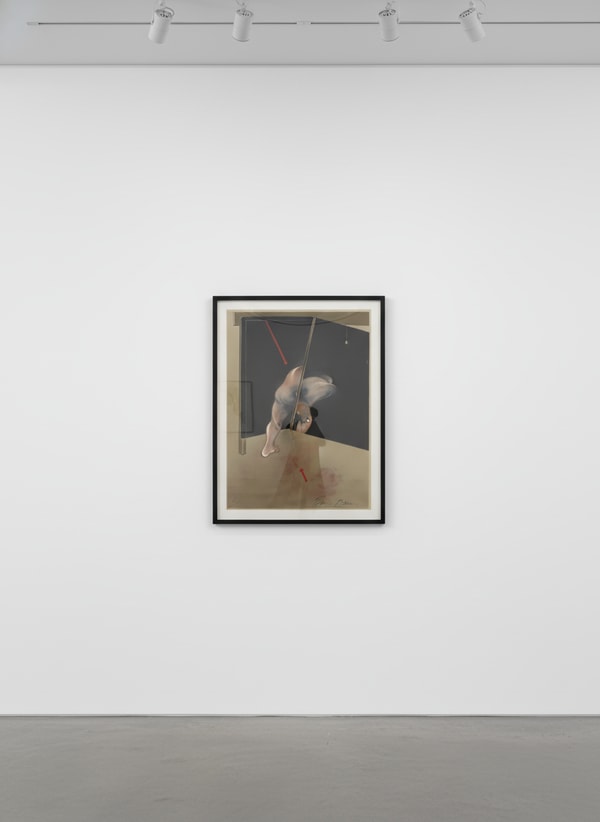
Francis Bacon
Hommage à Van Gogh , after Hommage à Van Gogh 1985
1989
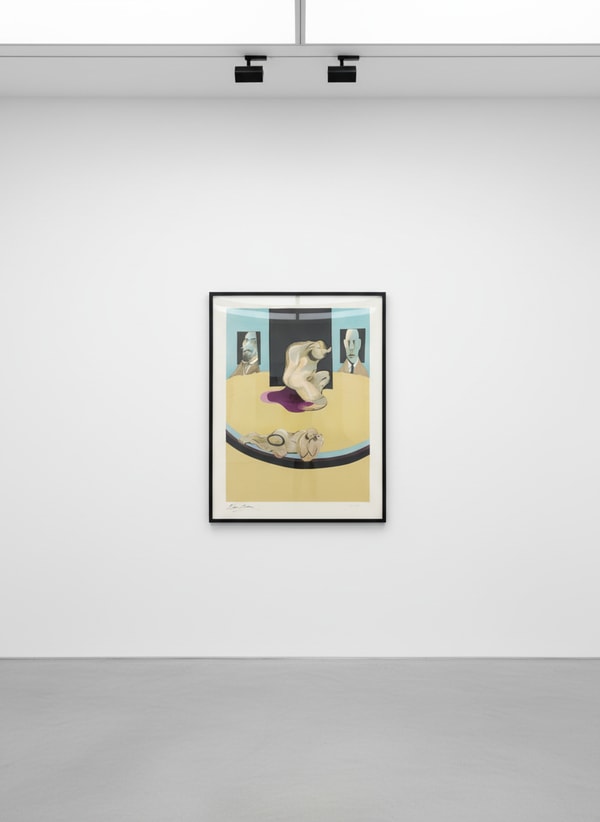
Francis Bacon
Logique de la sensation , after Study from the Human Body 1981
1981
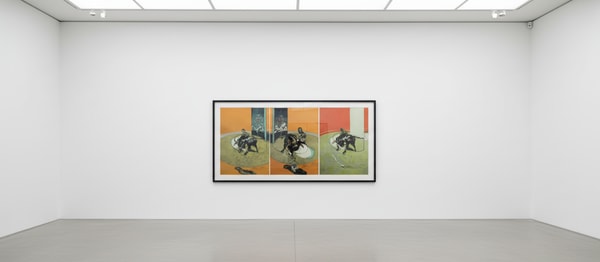
Francis Bacon
Metropolitan Museum of Art
1975
Francis Bacon
Mirroir de la Tauromachie
1990
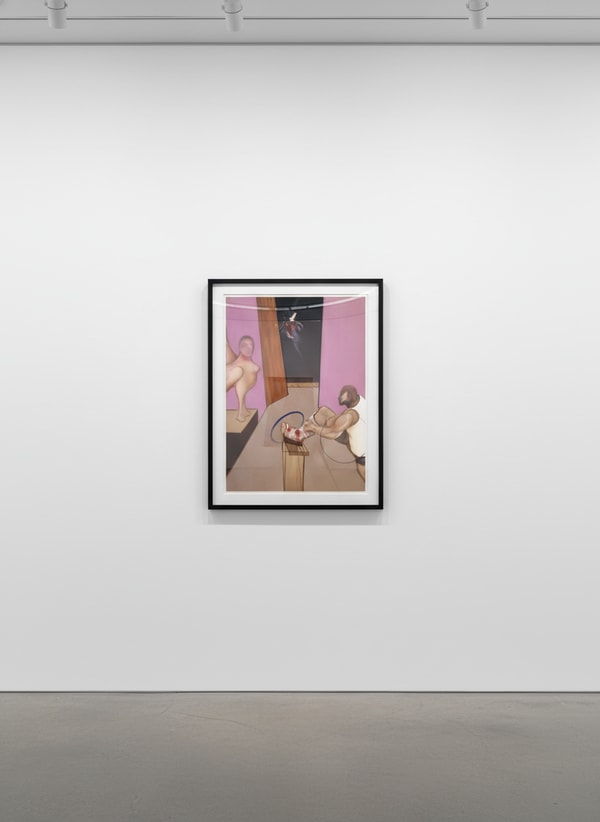
Francis Bacon
Oedipe et Le Sphinx d'après Ingres , after Oedipus and the Sphinx after Ingres 1983
1984
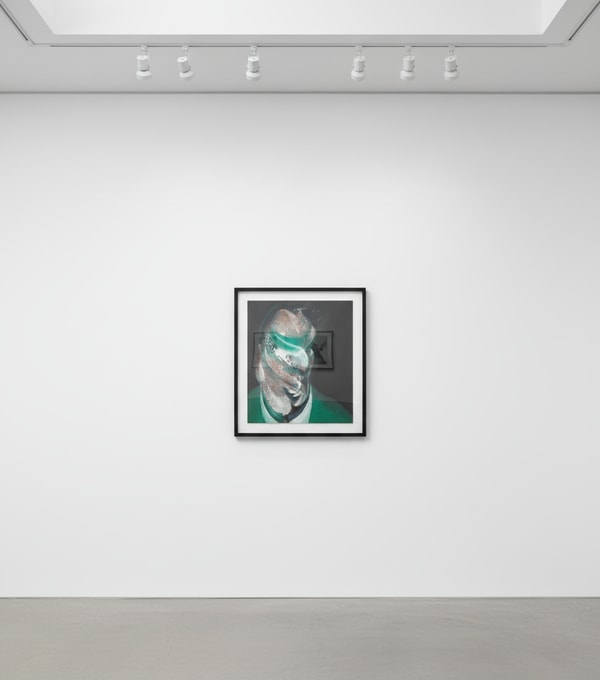
Francis Bacon
Portrait of Freud
1967
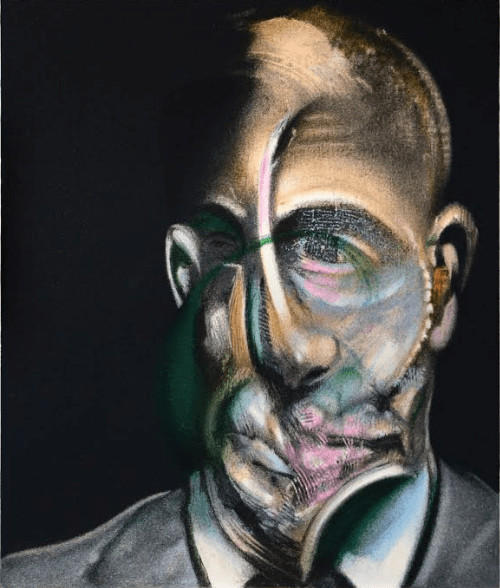
Francis Bacon
Portrait of Michel Leiris from Miroir de la Tauromachie
1990
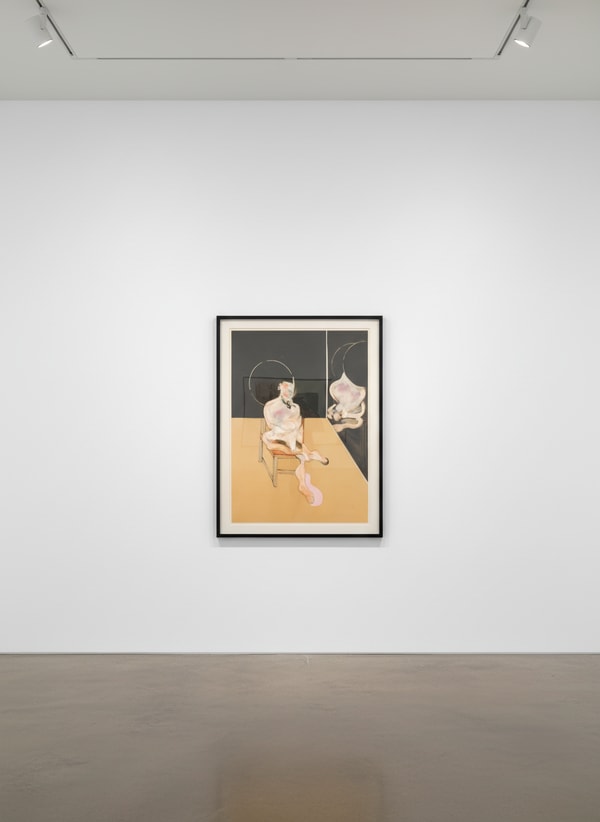
Francis Bacon
Seated Figure
1983
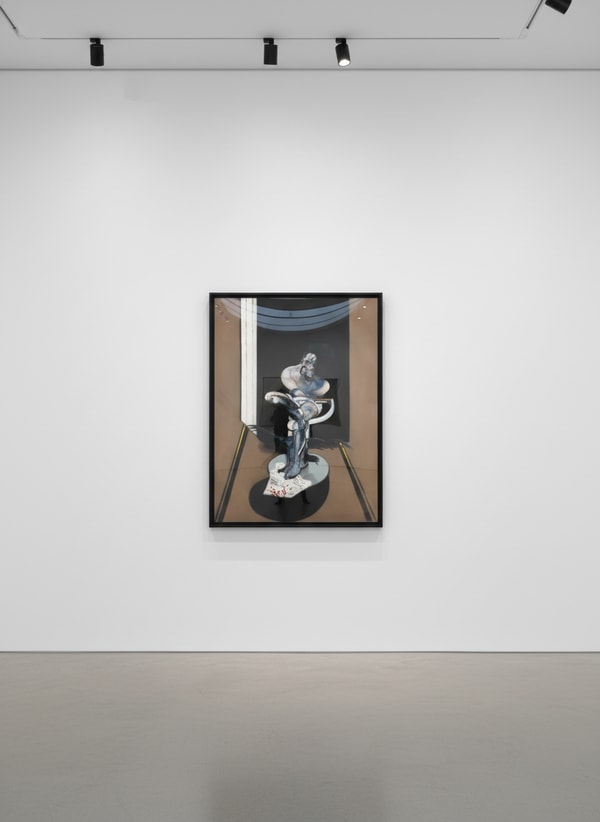
Francis Bacon
Seated Figure , after Seated Figure 1977
1992
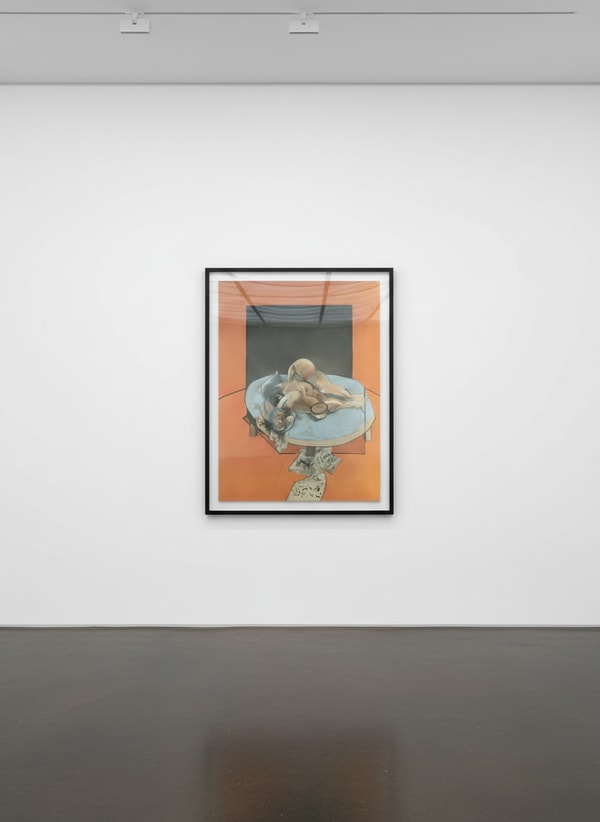
Francis Bacon
Studies of the Human Body , after the Central Panel of the Triptych Studies of the Human Body 1979
1980
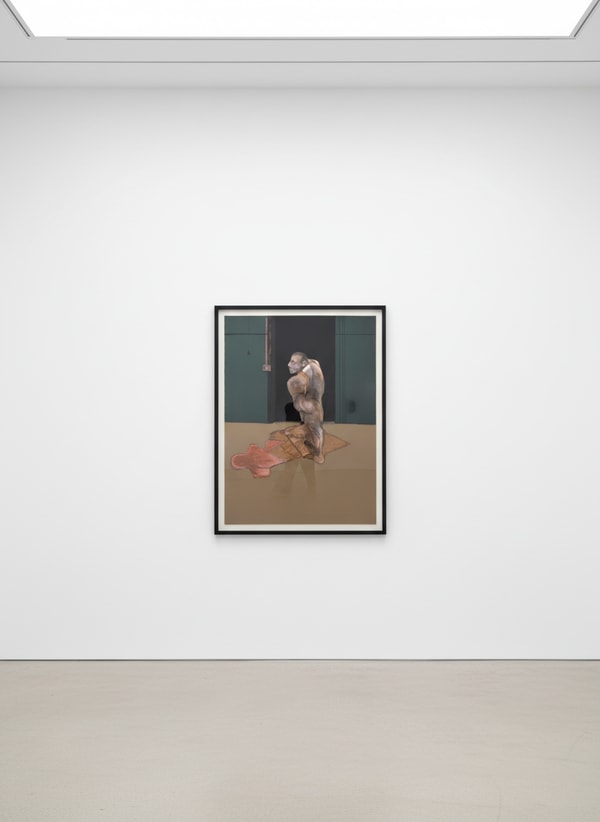
Francis Bacon
Study For A Portrait of John Edwards
1987
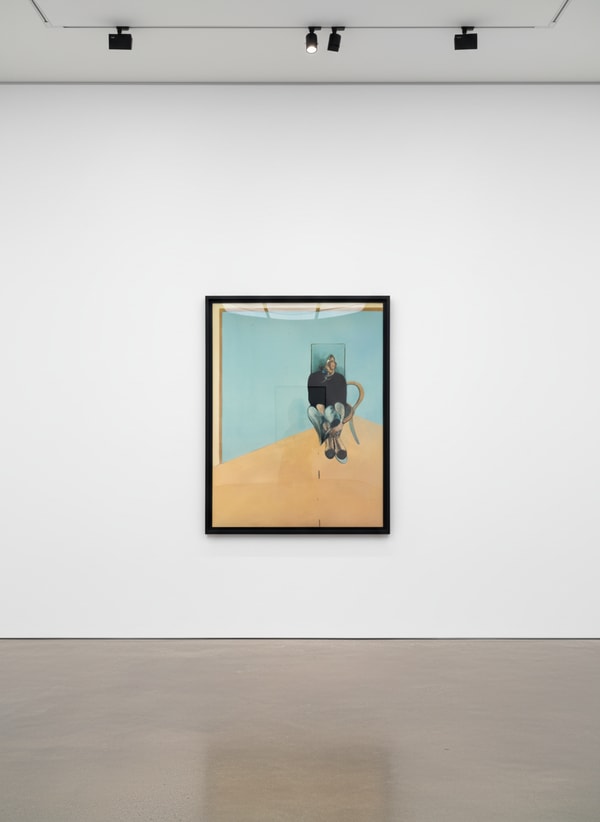
Francis Bacon
Study for Self Portrait , after Study for Self Portrait 1982
1984
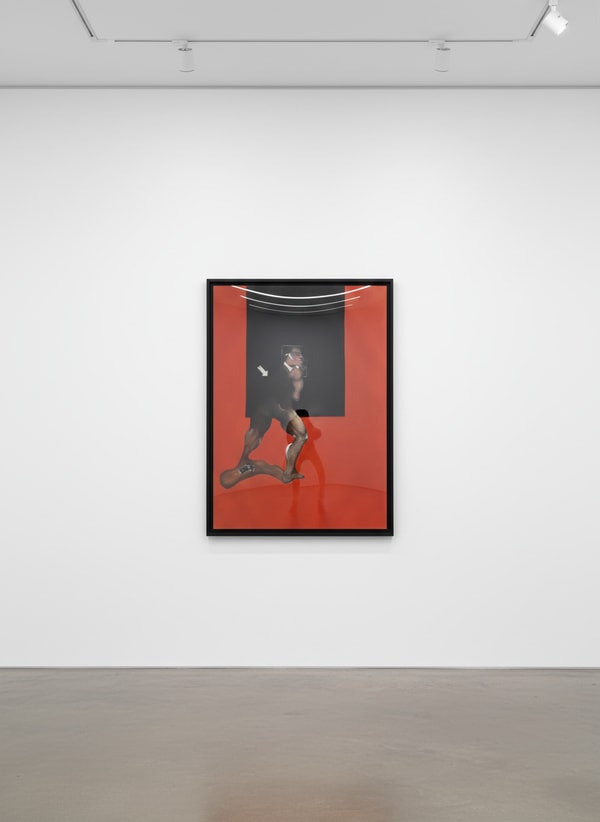
Francis Bacon
Study from Human Body , after Study from Human Body 1987
1992
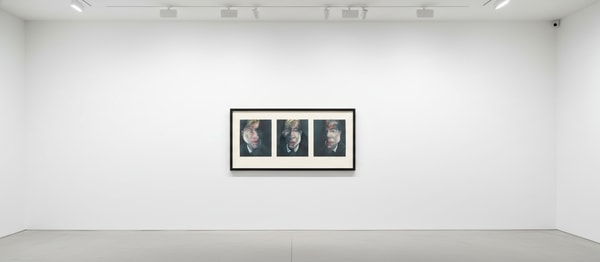
Francis Bacon
Three Studies For A Self Portrait
1983-1990
Francis Bacon (1909–1992) is among the most important figurative painters of the twentieth century, an artist whose raw, visceral canvases locate the human body in conditions of extreme psychological tension and transform painterly convention into a vehicle for existential confrontation. Born in Dublin to English parents, Bacon was largely self-taught — he received no formal art education and came to painting in his late twenties after years of drifting through London and Europe. His breakthrough came with the 1944 triptych Three Studies for Figures at the Base of a Crucifixion, which shocked a wartime London audience with its images of distorted, screaming hybrid creatures and established his reputation as an artist of unsettling and uncompromising vision.
Bacon's mature practice was built around a small number of recurrent subjects and formal devices. His Screaming Popes — a long series of works derived from Velázquez's portrait of Pope Innocent X — dissolve the authority of the Renaissance original into images of anguish and constraint, the figure screaming behind glass or pinned within a geometric cage. His portraits of his intimate circle — Lucian Freud, George Dyer, Isabel Rawsthorne, Peter Lacy — are among the most psychologically penetrating likenesses in the history of art, the faces smeared and turned and displaced in ways that feel both violently distorted and deeply faithful to the sitter's interior life. His self-portraits are equally compulsive: self-scrutiny carried to the point of self-laceration. Through all these works runs a consistent formal vocabulary: figures isolated in shallow, airless spaces; geometric frameworks of lines and bars that imprison or frame; meat-like surfaces of dragged and flung paint; glass and velvet chosen as ground materials to intensify the sense of both exposure and entrapment.
Bacon's market stands among the highest of any twentieth-century figurative artist. Three Studies of Lucian Freud (1969) achieved $142,400,000 at Christie's New York in 2013 — the world auction record at the time — while Triptych, 1976 reached $86,000,000 at Sotheby's New York in 2014, and Triptych Inspired by the Oresteia of Aeschylus (1981) achieved $84,600,000 at Sotheby's in 2020. Works on paper, prints, lithographs, and screenprints derived from his iconic paintings represent more accessible entry points to his market and are actively sought by collectors worldwide.
Bacon's work is held at Tate Modern, the Museum of Modern Art, the Metropolitan Museum of Art, the Solomon R. Guggenheim Museum, the Art Institute of Chicago, the Centre Pompidou, the Museo Nacional del Prado, and Museum Ludwig, among other major institutions globally.
Guy Hepner offers expert guidance on Francis Bacon prints, editions, and works on paper from our gallery at 177 Tenth Avenue, New York. Given the seriousness of the Bacon market and the importance of authentication, we approach every transaction with the utmost rigour. We offer free, confidential valuations for works in private collections and connections to qualified buyers worldwide.