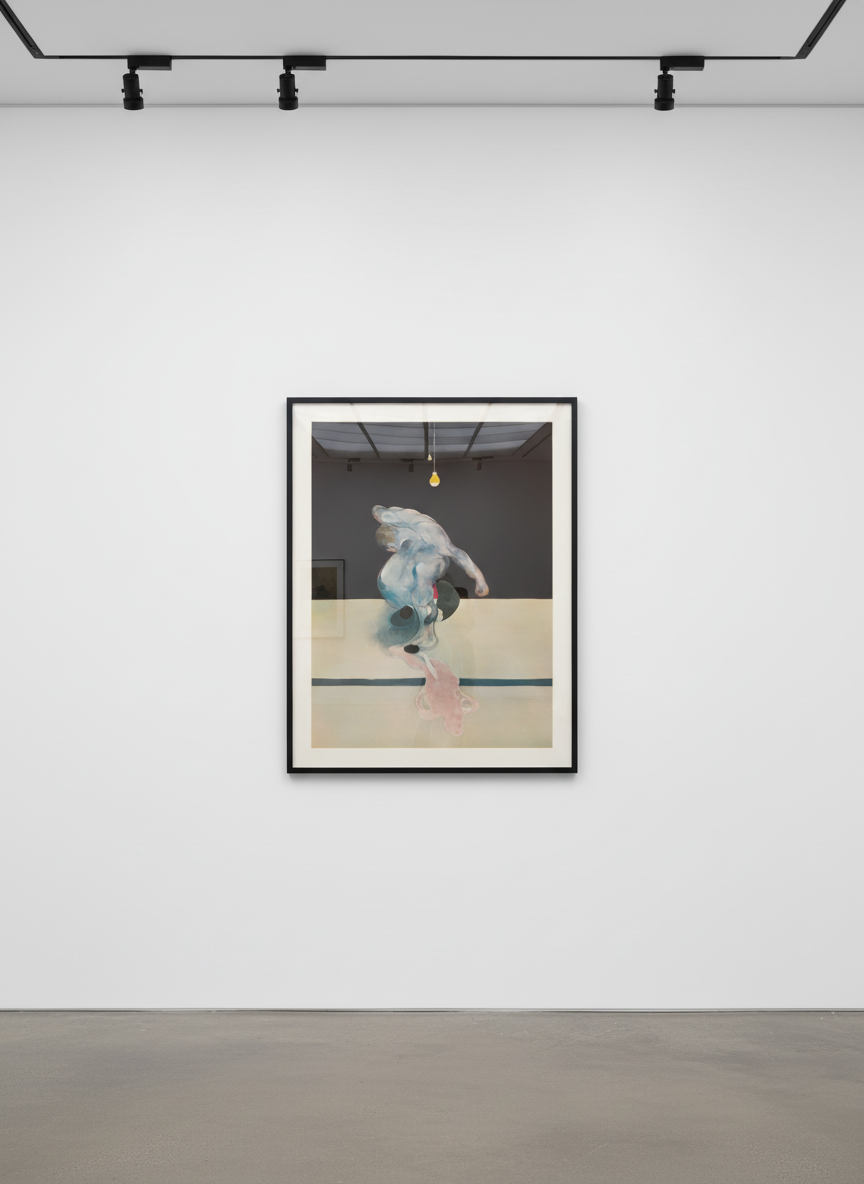
Edition of 150
1 work

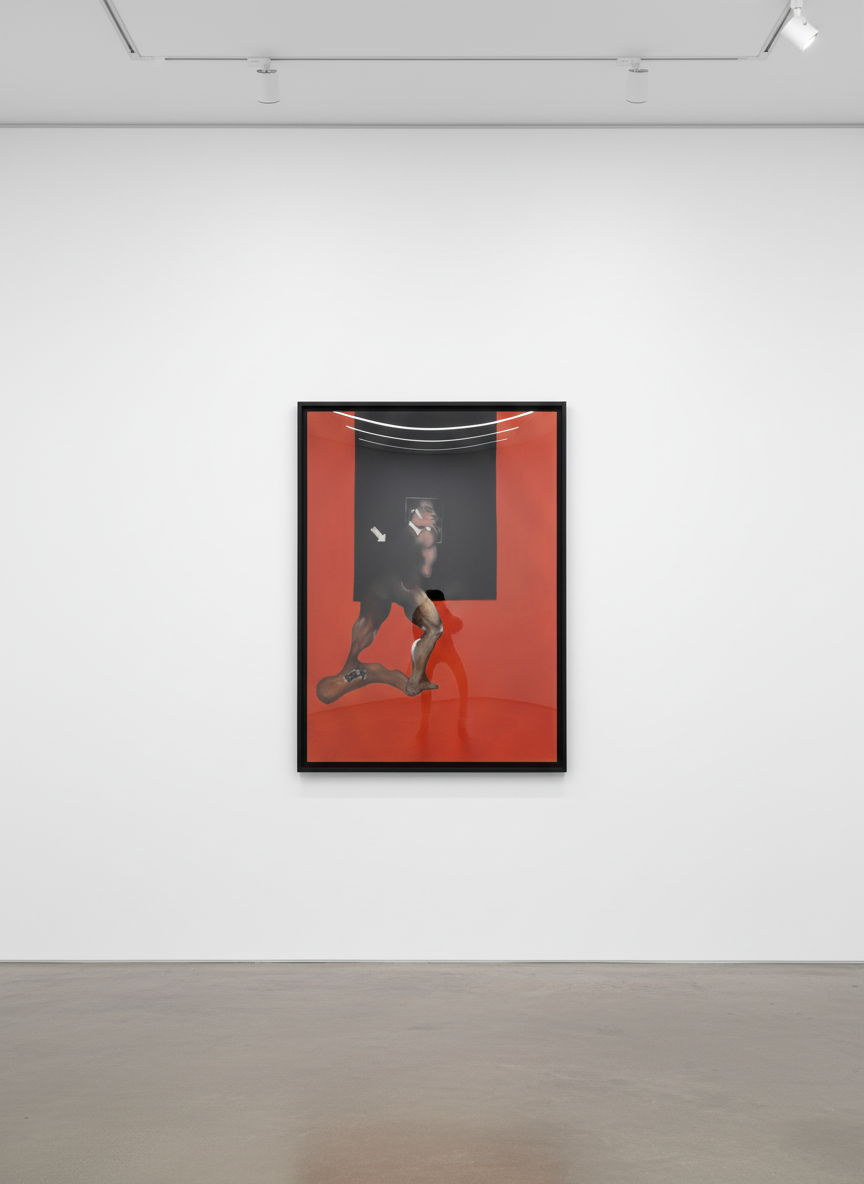
Study from Human Body , after Study from Human Body 1987, 1992
Aquatint on Fabiano paper
64 1/8 x 47 5/8 in 163 x 121 cm
Edition of 90 plus 30 AP
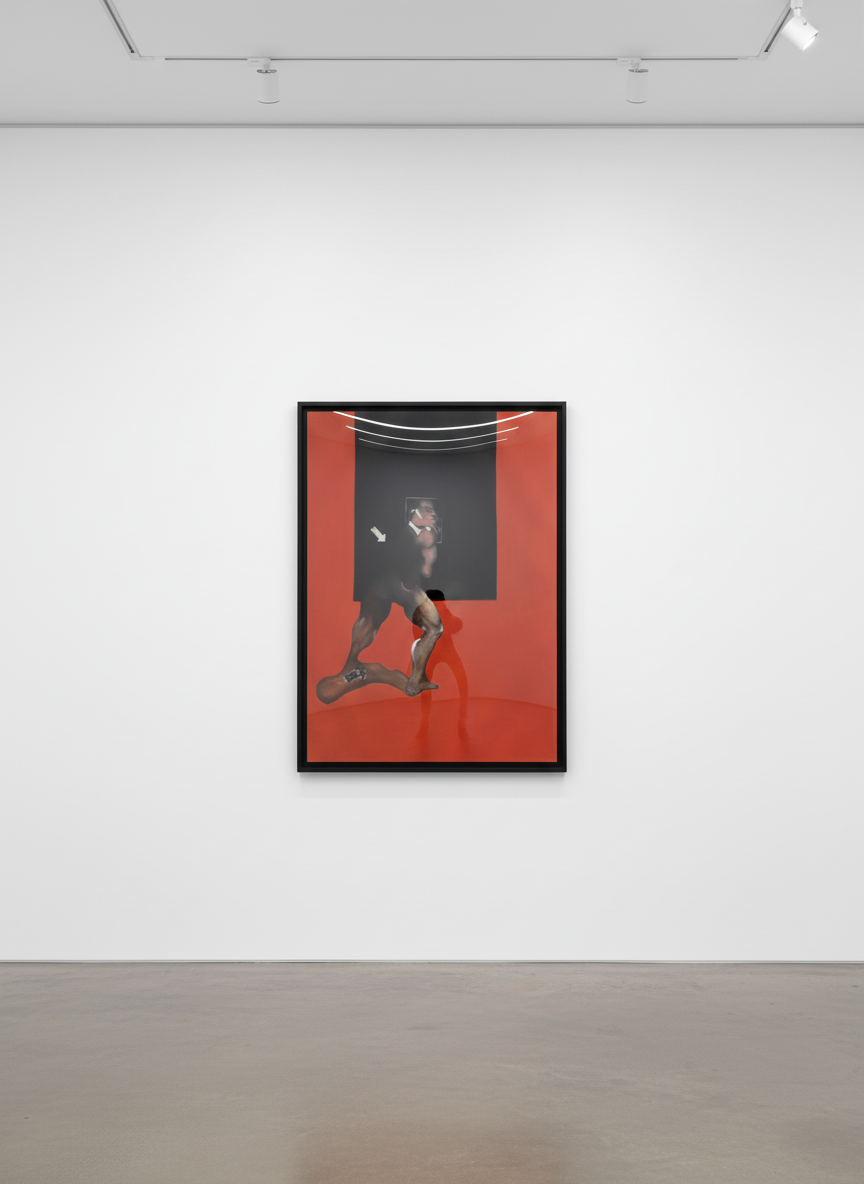
Francis Bacon’s After Study from the Human Body is a powerful embodiment of the artist’s radical reimagining of the human figure—an image defined not by anatomical precision, but by distortion, fragmentation, and existential exposure. As with much of Bacon’s work, this piece reflects his relentless interrogation of the body as a vessel of vulnerability, a site where physical form collides with psychological unrest. In this print, Bacon intensifies the viewer’s experience of bodily disintegration and inner tension, situating the figure in a stark, abstracted space that denies comfort or familiarity.The central figure in After Study from the Human Body is twisted and deformed, its proportions stretched and distorted to the point of abstraction. Most notably, the legs—contorted and exaggerated—seem to fuse with the ground beneath them, blurring the boundary between flesh and floor. This gesture renders the body unstable, neither fully upright nor grounded, and evokes a powerful sense of dislocation. The figure appears trapped in a state of metamorphosis, as though it is being absorbed by its surroundings, or melting into the very surface upon which it stands. Bacon’s figures are rarely static; they pulse with tension, caught mid-motion in some unseen struggle, often embodying a liminal space between coherence and collapse.This sense of entrapment is reinforced by the composition’s striking visual architecture. A bold, flat expanse of orange dominates the background, engulfing the scene in an unnatural, emotionally charged atmosphere. The orange is both vibrant and unsettling—a color that does not soothe but sears, functioning almost like a psychological heat map. Against this backdrop, the figure is rendered in dark, bruised tones, further isolating it within the frame. A black rectangle—functioning as a spatial enclosure or framing device—surrounds the body, heightening the claustrophobic effect. It is as though the figure is boxed in by its own existence, symbolically confined within the limits of flesh, mortality, and self-awareness.Bacon’s refusal to place his subjects in recognisable, grounded environments is central to his strategy. The space in this work is not realistic, but existential. There is no horizon, no depth, no relief—only flatness and void. The environment acts as a psychological pressure chamber, directing all attention to the battered form at its center. The body is not heroic, idealised, or even whole. It is raw and ruptured, its deformation speaking as much to inner turmoil as to physical instability.More than anatomical representations, Bacon’s figures are psychological portraits. The distortions he applies to the body are metaphors for emotional rupture—for the tension between interior experience and external form. In After Study from the Human Body, the figure’s posture, ambiguity, and almost animalistic form evoke a state of crisis—perhaps anguish, perhaps defeat. There is no face to read, no identity to anchor; the figure is depersonalized, universalized. It becomes an archetype of existential fragility, representing the human being stripped of social veneer and exposed to the raw conditions of existence.The emotional impact of the work is heightened by its minimalism. With so little visual information—no narrative cues, no landscape, no symbolic props—every compositional element becomes charged with meaning. The enclosure, the aggressive color, the ambiguous anatomy—all work together to create a space where the viewer is forced to confront not only the fragility of the body but the instability of identity itself. Bacon’s refusal to offer resolution or coherence mirrors the dissonance of modern life, where meaning is elusive and the self is fragmented.At its core, After Study from the Human Body is a meditation on the violence of being—the tension between the physical shell and the chaotic interior, between visibility and erasure. It is a continuation of Bacon’s broader philosophical engagement with the works of existentialist thinkers such as Nietzsche, Sartre, and Beckett, whose writings explored the absurdity of existence, the void of meaning, and the disintegrating structures of identity. Bacon does not offer solace; he offers truth—distorted, unvarnished, and hauntingly immediate.In this work, as in much of his output, Bacon redefines what it means to depict the human form. He moves beyond the body as a physical object and into the body as an emotional and psychological condition. After Study from the Human Body is not just a study in flesh, but a study in being—where the form is both presence and disappearance, resilience and collapse, exposure and entrapment. It is a testament to Bacon’s unique ability to express the inexpressible, to make visible the invisible fractures of human experience.For more information on Francis Bacon’s After Study from the Human Body or to buy Francis Bacon’s After Study from the Human Body contact our galleries using the form below.
Price on Application
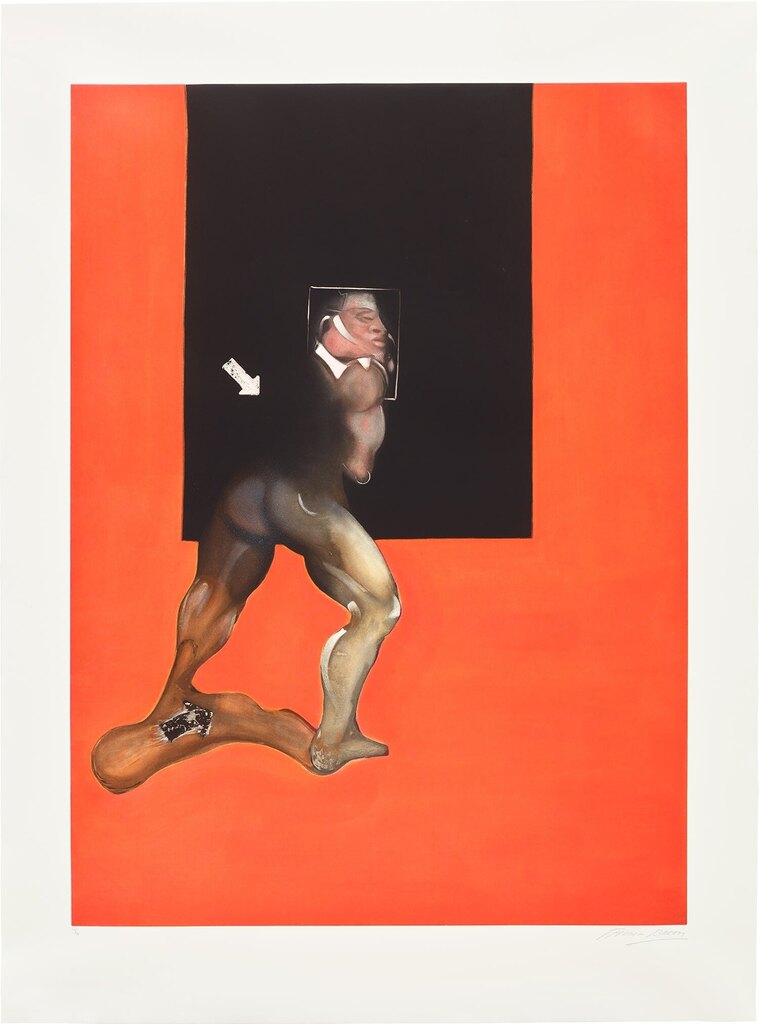
Study from Human Body (after, Study from Human Body 1987) (S. 8, T 30) · Francis Bacon · Phillips · 2022-09 · $29,110
Francis Bacon
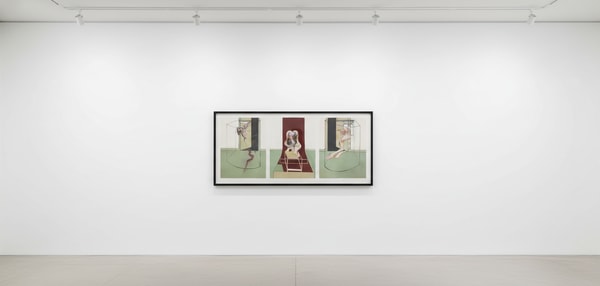
after Triptych (1981) inspired by the Oresteia of Aeschylus, 1981
1981
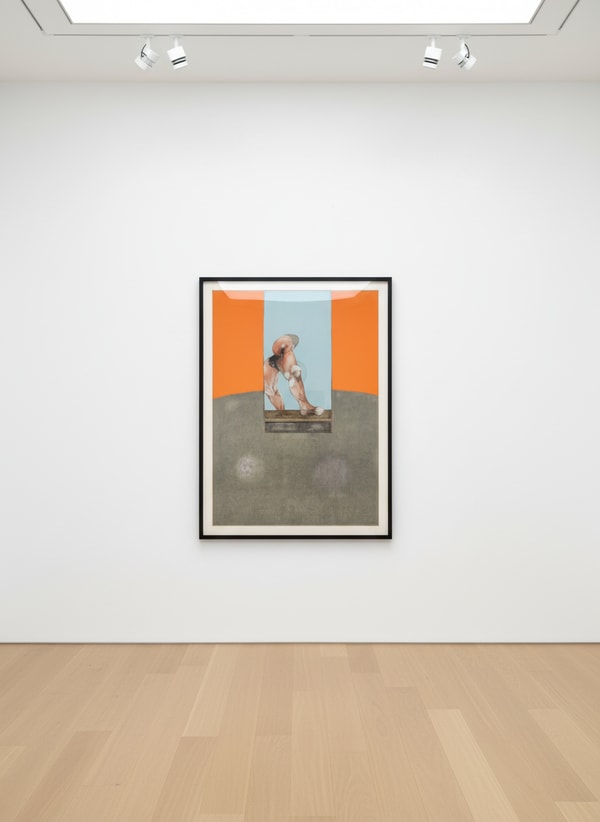
Francis Bacon
Etude de Tauromachie
1987
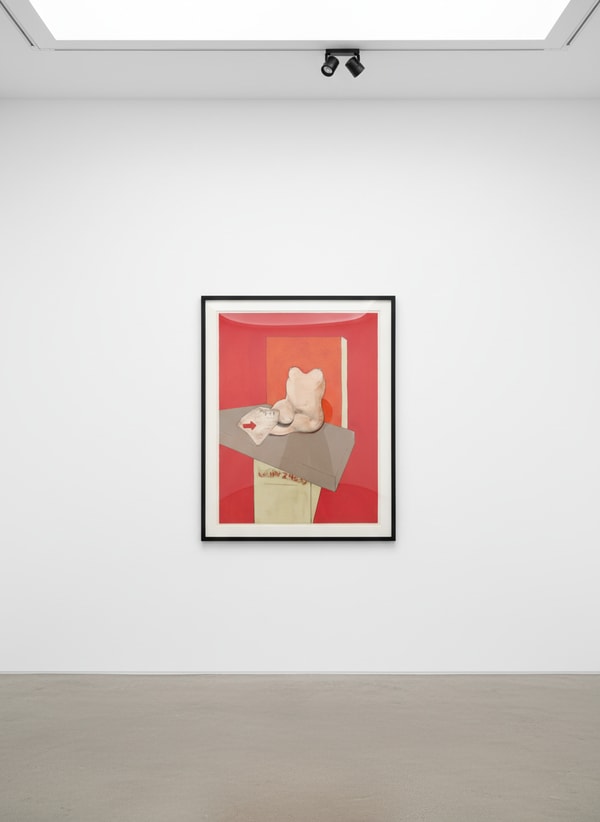
Francis Bacon
Ètude du Corps Humain d'après Ingres , afterStudy of a Human Body after Ingres 1982
1984

Francis Bacon
Hommage à Van Gogh , after Hommage à Van Gogh 1985
1989
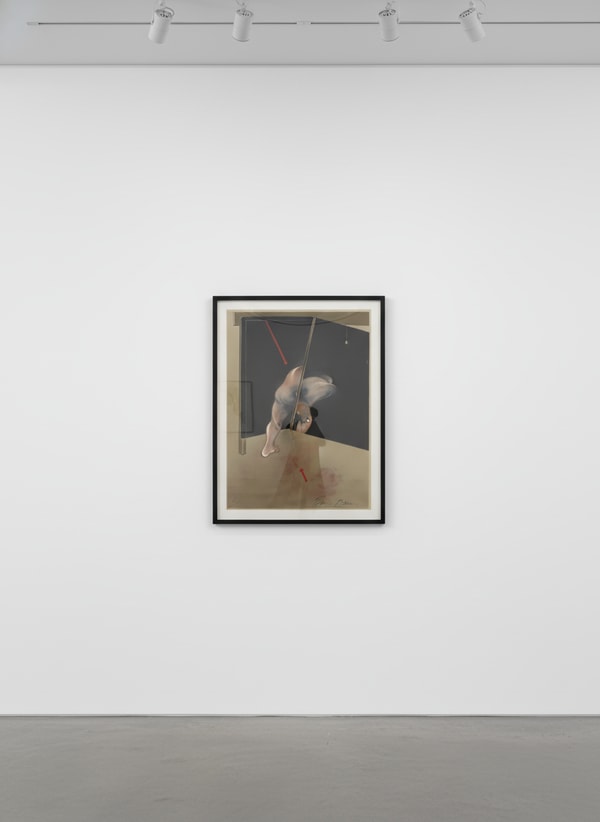
Francis Bacon
Logique de la sensation , after Study from the Human Body 1981
1981
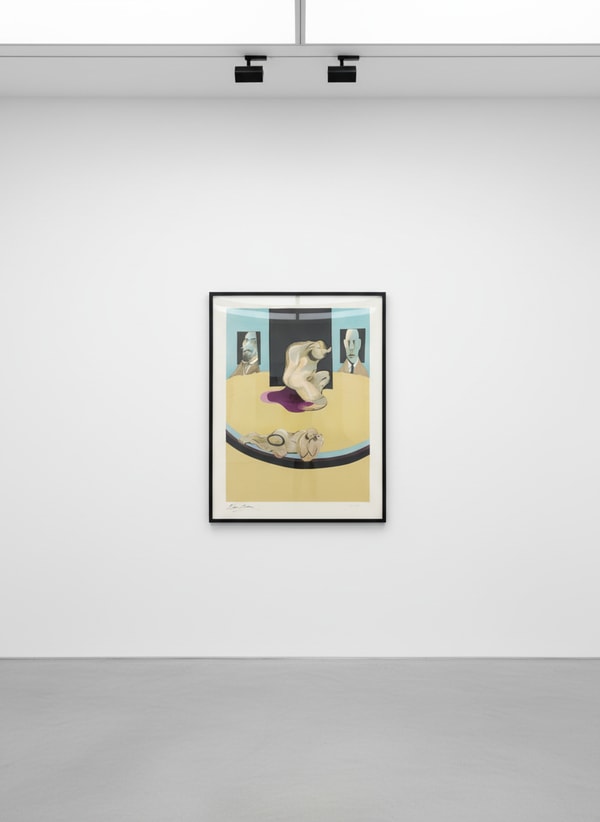
Francis Bacon
Metropolitan Museum of Art
1975
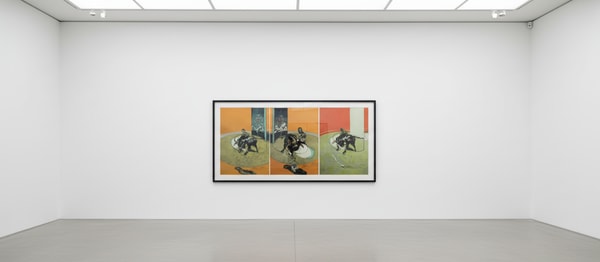
Francis Bacon
Mirroir de la Tauromachie
1990
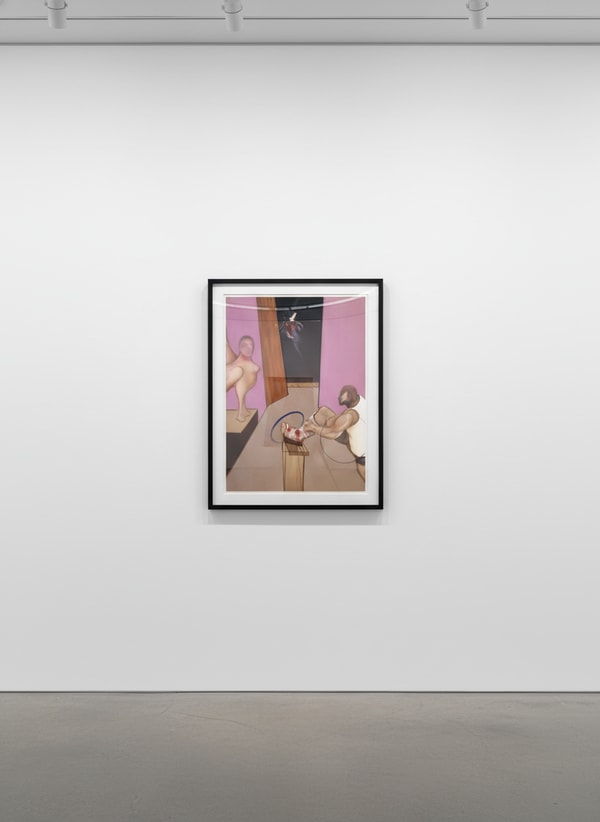
Francis Bacon
Oedipe et Le Sphinx d'après Ingres , after Oedipus and the Sphinx after Ingres 1983
1984
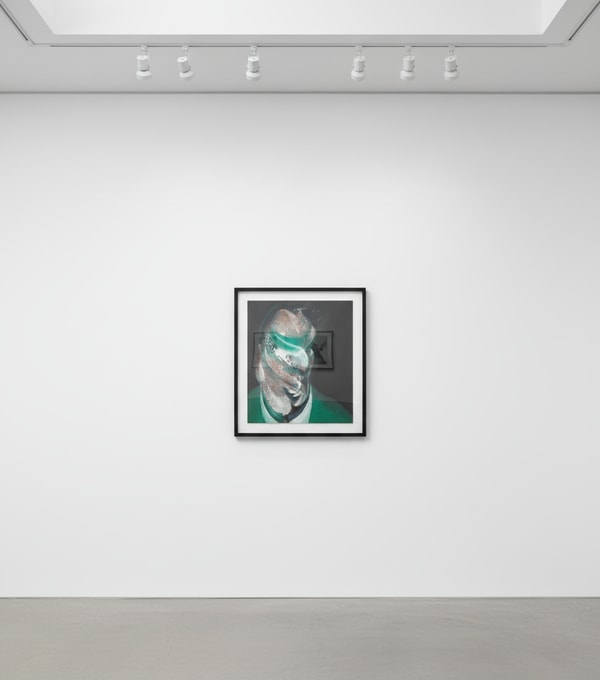
Francis Bacon
Portrait of Freud
1967
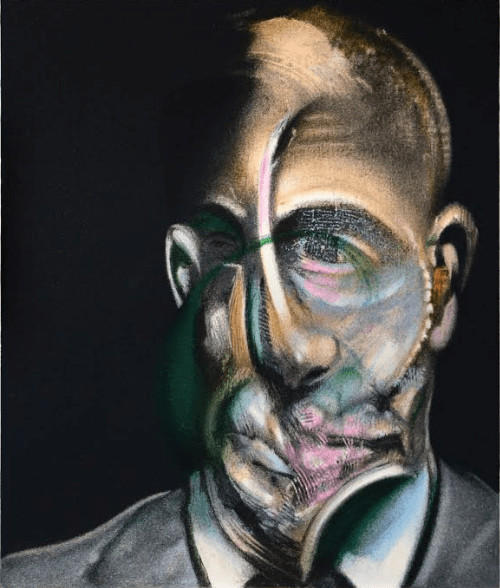
Francis Bacon
Portrait of Michel Leiris from Miroir de la Tauromachie
1990
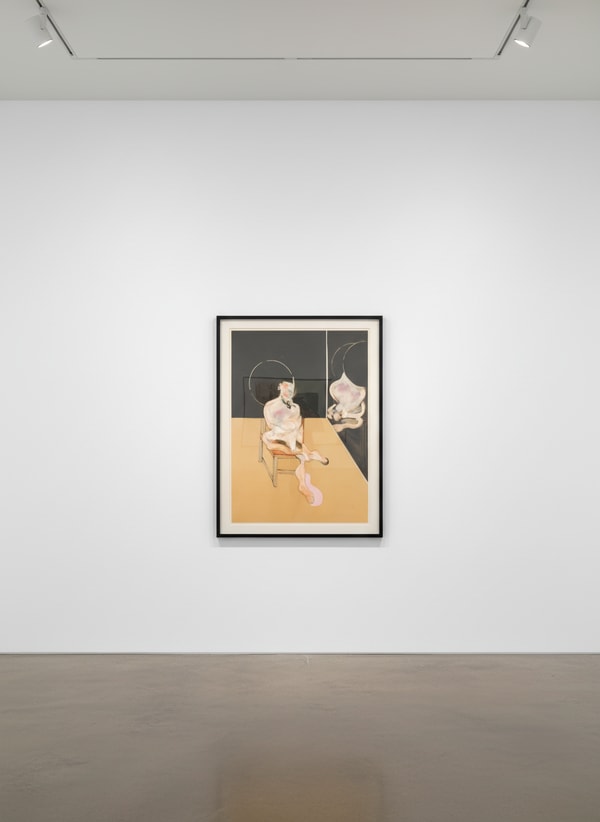
Francis Bacon
Seated Figure
1983
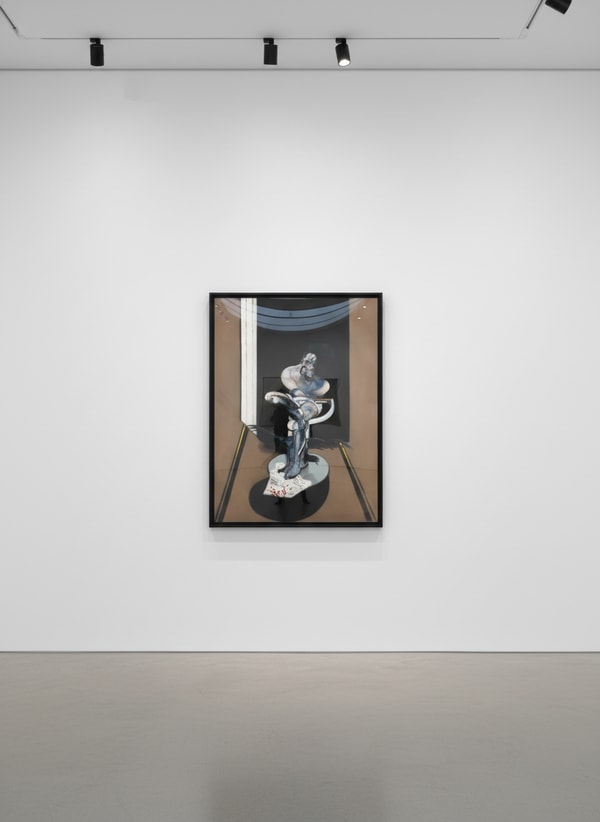
Francis Bacon
Seated Figure , after Seated Figure 1977
1992
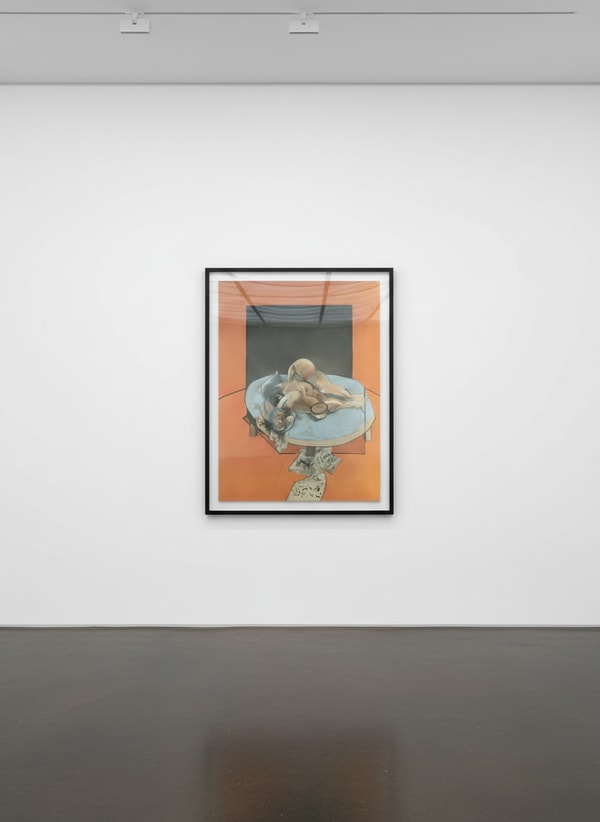
Francis Bacon
Studies of the Human Body , after the Central Panel of the Triptych Studies of the Human Body 1979
1980
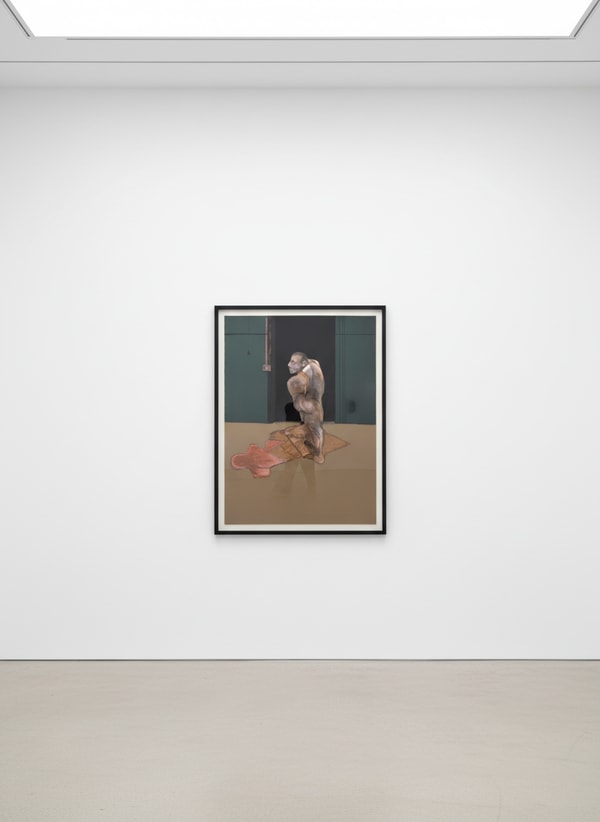
Francis Bacon
Study For A Portrait of John Edwards
1987
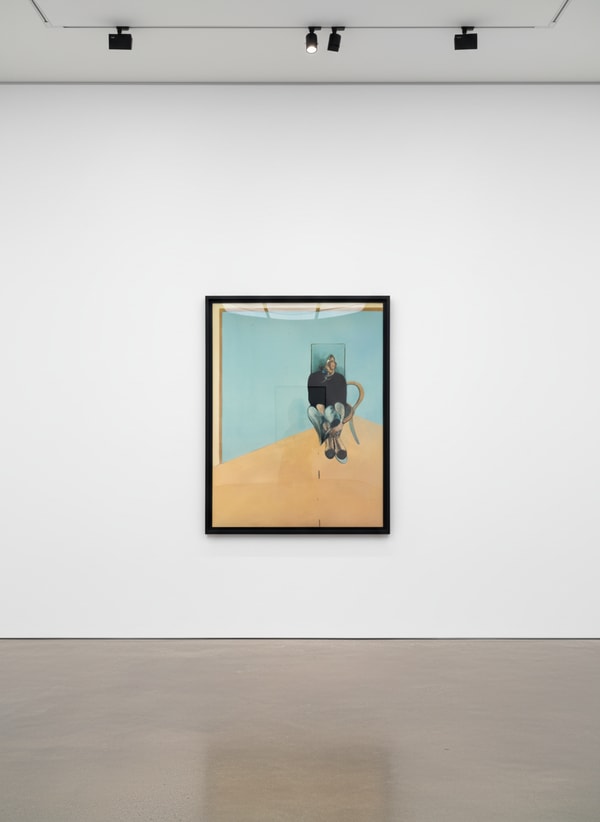
Francis Bacon
Study for Self Portrait , after Study for Self Portrait 1982
1984
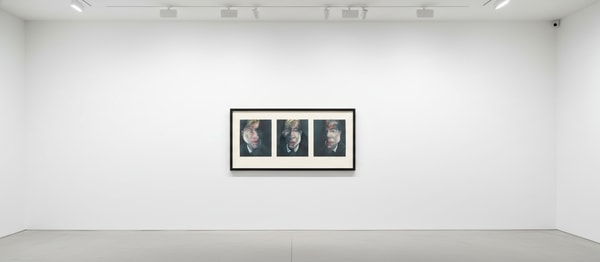
Francis Bacon
Three Studies For A Self Portrait
1983-1990
Francis Bacon (1909–1992) is among the most important figurative painters of the twentieth century, an artist whose raw, visceral canvases locate the human body in conditions of extreme psychological tension and transform painterly convention into a vehicle for existential confrontation. Born in Dublin to English parents, Bacon was largely self-taught — he received no formal art education and came to painting in his late twenties after years of drifting through London and Europe. His breakthrough came with the 1944 triptych Three Studies for Figures at the Base of a Crucifixion, which shocked a wartime London audience with its images of distorted, screaming hybrid creatures and established his reputation as an artist of unsettling and uncompromising vision.
Bacon's mature practice was built around a small number of recurrent subjects and formal devices. His Screaming Popes — a long series of works derived from Velázquez's portrait of Pope Innocent X — dissolve the authority of the Renaissance original into images of anguish and constraint, the figure screaming behind glass or pinned within a geometric cage. His portraits of his intimate circle — Lucian Freud, George Dyer, Isabel Rawsthorne, Peter Lacy — are among the most psychologically penetrating likenesses in the history of art, the faces smeared and turned and displaced in ways that feel both violently distorted and deeply faithful to the sitter's interior life. His self-portraits are equally compulsive: self-scrutiny carried to the point of self-laceration. Through all these works runs a consistent formal vocabulary: figures isolated in shallow, airless spaces; geometric frameworks of lines and bars that imprison or frame; meat-like surfaces of dragged and flung paint; glass and velvet chosen as ground materials to intensify the sense of both exposure and entrapment.
Bacon's market stands among the highest of any twentieth-century figurative artist. Three Studies of Lucian Freud (1969) achieved $142,400,000 at Christie's New York in 2013 — the world auction record at the time — while Triptych, 1976 reached $86,000,000 at Sotheby's New York in 2014, and Triptych Inspired by the Oresteia of Aeschylus (1981) achieved $84,600,000 at Sotheby's in 2020. Works on paper, prints, lithographs, and screenprints derived from his iconic paintings represent more accessible entry points to his market and are actively sought by collectors worldwide.
Bacon's work is held at Tate Modern, the Museum of Modern Art, the Metropolitan Museum of Art, the Solomon R. Guggenheim Museum, the Art Institute of Chicago, the Centre Pompidou, the Museo Nacional del Prado, and Museum Ludwig, among other major institutions globally.
Guy Hepner offers expert guidance on Francis Bacon prints, editions, and works on paper from our gallery at 177 Tenth Avenue, New York. Given the seriousness of the Bacon market and the importance of authentication, we approach every transaction with the utmost rigour. We offer free, confidential valuations for works in private collections and connections to qualified buyers worldwide.