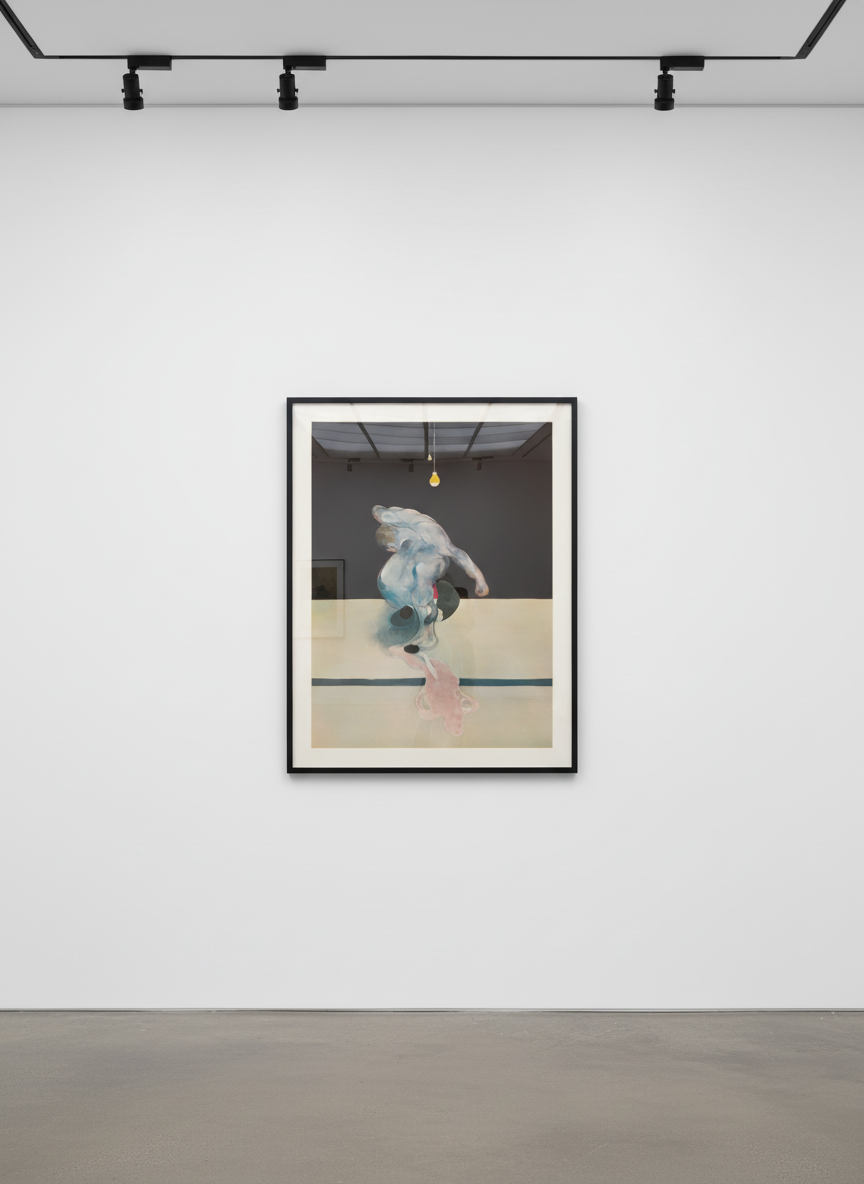
Edition of 150
1 work

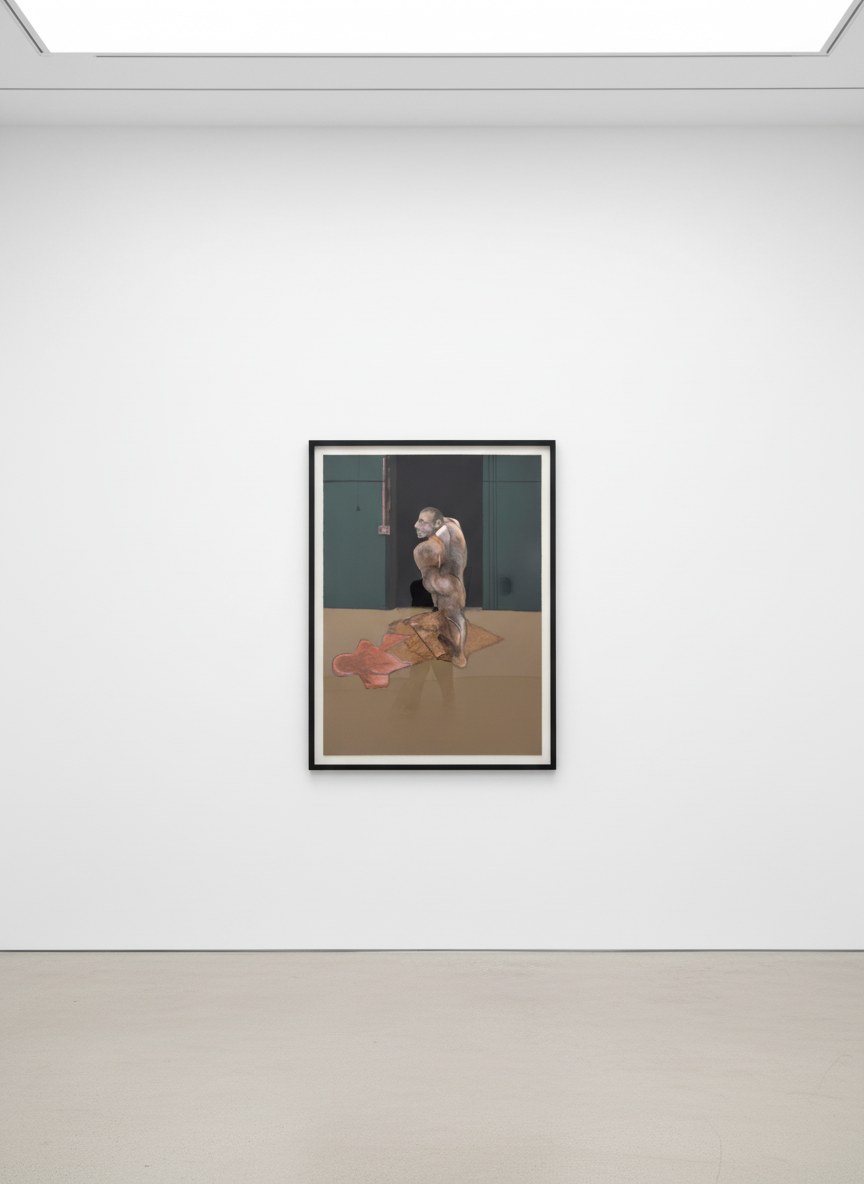
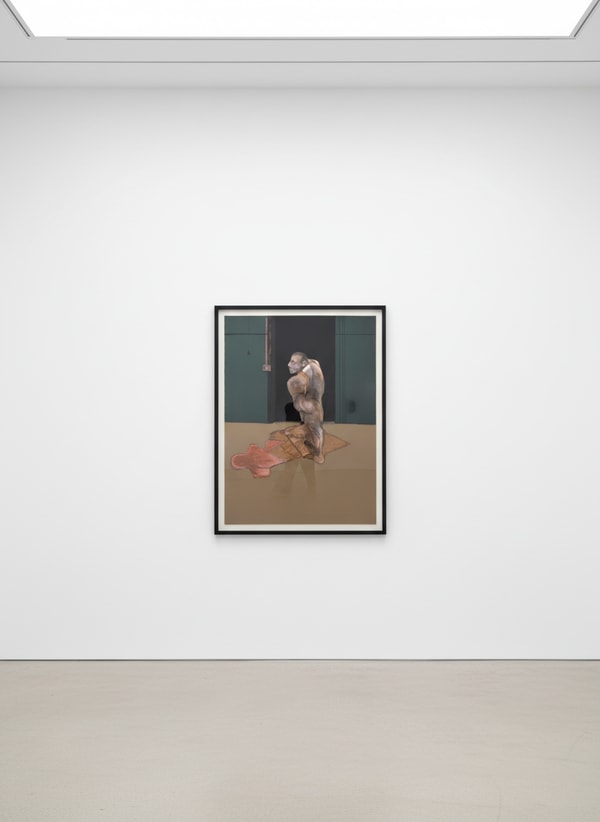
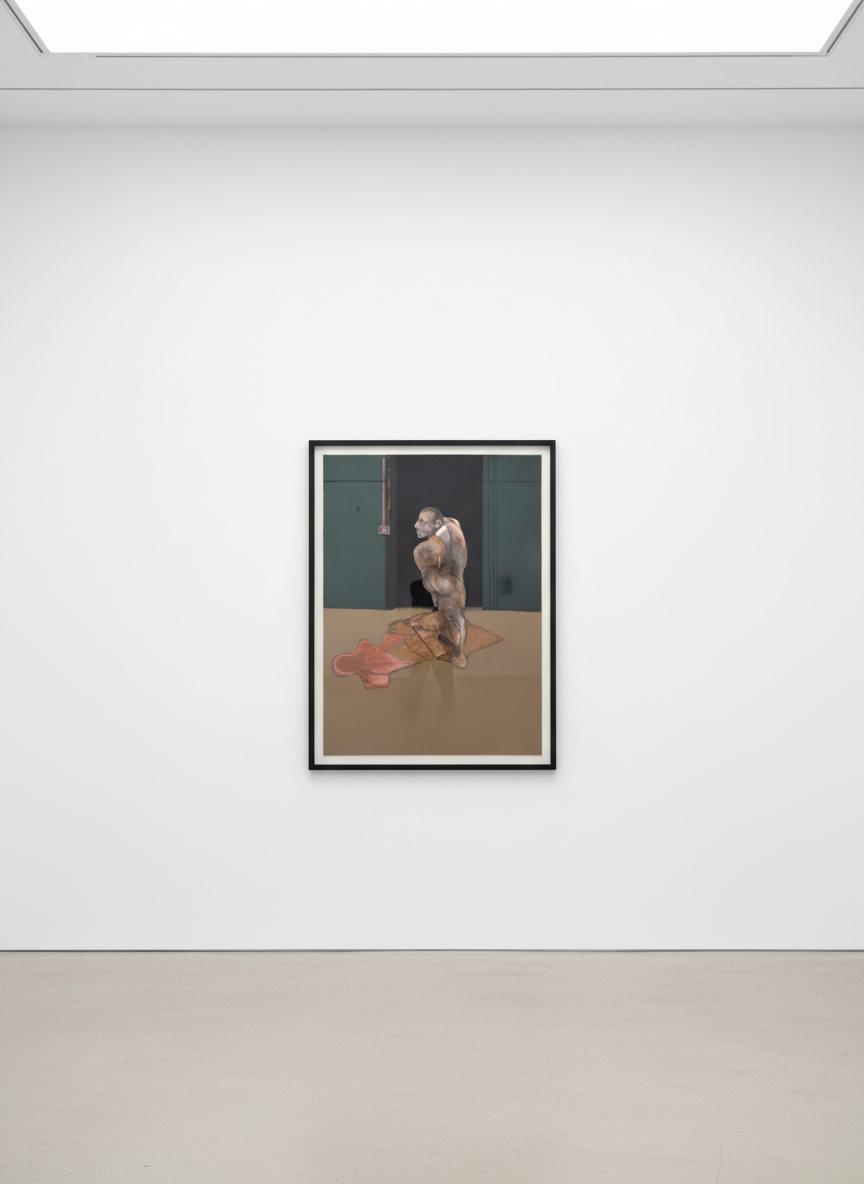
Study For A Portrait of John Edwards, 1987
Lithograph
37 1/8 x 26 3/4 in 94 x 68 cm
Edition of 180
Francis Bacon’s Study for a Portrait of John Edwards is one of the most emotionally resonant works of the artist’s later years—a portrait that transcends traditional representation to become a meditation on intimacy, memory, and mortality. Created in 1986, this painting not only encapsulates Bacon’s mature artistic language but also stands as a tribute to the profound relationship he shared with John Edwards, his closest companion during the final decades of his life.Bacon met Edwards in 1974, at a time when the artist was emerging from a period of intense personal turmoil. Edwards, more than 40 years Bacon’s junior, provided a stabilizing presence and emotional equilibrium that sharply contrasted with the volatile and often destructive relationships of Bacon’s past. While their bond was platonic, it was deeply affectionate and enduring—marked by trust, companionship, and mutual understanding. Study for a Portrait of John Edwards reflects this connection with remarkable tenderness and restraint, revealing a softer side of Bacon that rarely emerged so clearly in his earlier portraits.The portrait depicts Edwards standing nude within a sparse, architectural space, a familiar visual strategy in Bacon’s late compositions. The geometric austerity of the room—a darkened doorway, pale floor, and stark walls—creates an atmosphere of existential introspection. The figure appears subtly detached from his surroundings, as though suspended in a liminal realm between presence and absence. This sense of spatial dislocation, accentuated by the slightly cut-out appearance of the figure, imparts a dreamlike quality to the scene, echoing the fragmented, layered nature of memory and psychological perception.The composition’s emotional resonance is heightened by one of its most striking features: the sharply rendered shadow cast by Edwards on the floor. This shadow is almost sculptural in presence—solid, weighted, and deliberate—acting not just as a visual anchor but as a metaphysical echo of the figure. It suggests the inescapability of mortality, the doubling of the self, and the fleeting imprint we leave behind. Bacon reinforces this idea with a rectangular form outlined on the floor, as if to frame or contain the figure within a metaphysical space. It is a subtle yet powerful gesture, hinting at the boundaries of life, memory, and physical existence.While Bacon had long abandoned painting from life, he relied on photography as a critical tool in his practice. Edwards, in fact, played an essential role in this process—often photographing Bacon himself, and in turn becoming a frequent subject of Bacon’s painted portraits. The use of photographs allowed Bacon to distance himself from the immediate presence of the sitter, enabling a degree of emotional and aesthetic manipulation. In Study for a Portrait of John Edwards, the image becomes a synthesis of visual memory, emotional truth, and creative interpretation. Edwards is not depicted with psychological torment or anatomical violence; instead, he is rendered with quiet dignity, stillness, and an almost meditative grace.This portrait is particularly significant within the arc of Bacon’s career. By the mid-1980s, the artist had refined his approach into something leaner, more focused, and less overtly brutal. His earlier works often throbbed with anguish—figures twisted in existential agony, faces howling with internal torment. In contrast, Study for a Portrait of John Edwards is marked by calmness and clarity. The restrained palette of warm greys, flesh tones, and muted architectural blues further emphasizes the work’s contemplative mood. There is no overt violence here—only an atmosphere of profound introspection.Yet, the specter of mortality remains. The darkened doorway behind Edwards operates on both a literal and symbolic level. It suggests the passage of time, the approach of death, the threshold between being and non-being. Like so many of Bacon’s spatial constructions, it opens into nothingness—both a void and a metaphor for the unknown. But unlike the more menacing voids of his earlier work, this threshold feels quieter, more resolved. There is still tension, but also acceptance.In Study for a Portrait of John Edwards, Bacon reaches a rare moment of equilibrium—a reconciliation, however temporary, between the violence of existence and the solace of connection. The painting is not just a depiction of Edwards, but a reflection of Bacon himself: older, more introspective, and acutely aware of the impermanence of life. It serves as both personal homage and universal meditation—on love, on presence, and on the traces we leave behind.Ultimately, this work stands as one of the most poignant statements of Bacon’s late period. It distills decades of exploration into form, flesh, and psychology into a single image that is at once restrained and deeply emotive. Through minimal means—geometry, shadow, subtle distortion—Bacon expresses the quiet profundity of human connection, and the inevitable passage of time that gives it meaning.For more information on Study for a Portrait of John Edwards or to buy Study for a Portrait of John Edwards contact our galleries using the form below.
Price on Application
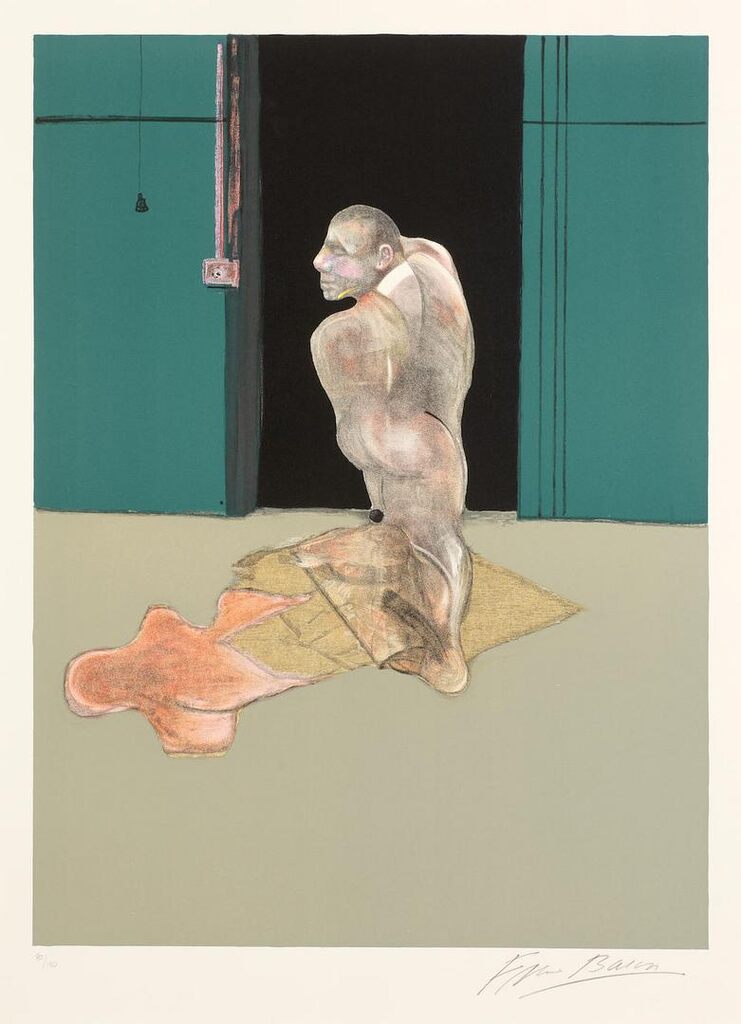
Study for a Portrait of John Edwards (Sabatier 22) · Francis Bacon · Bonhams · 2025-06 · $12,891
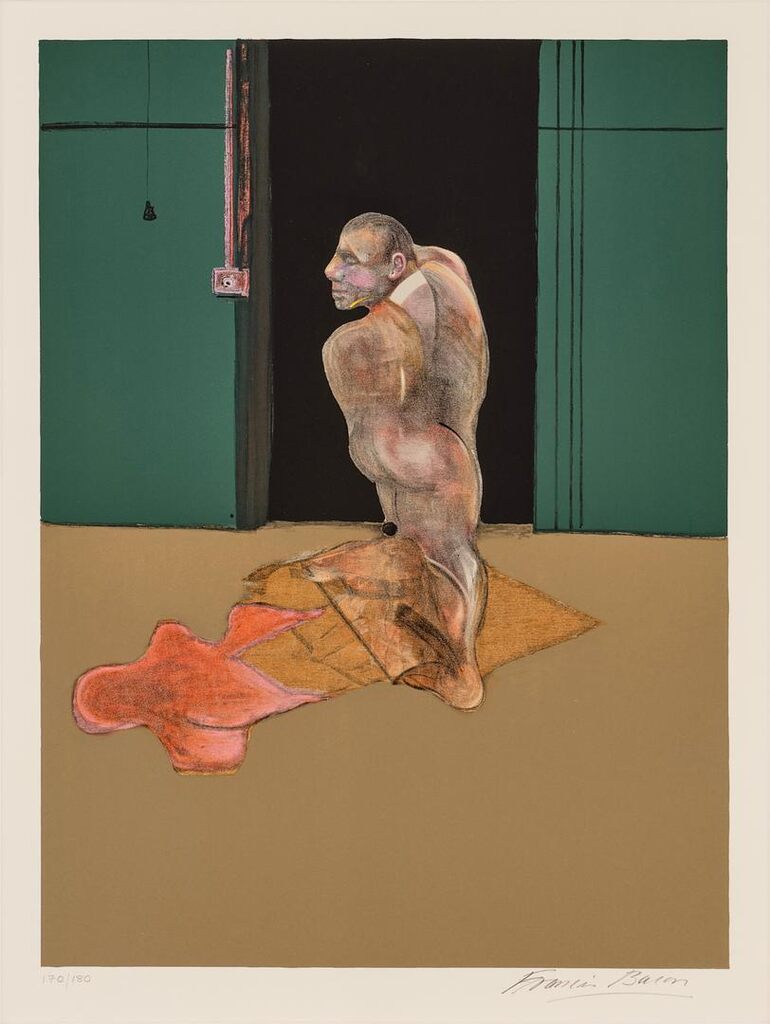
Study for Portrait of John Edwards (Sabatier 22) · Francis Bacon · Sotheby's · 2025-04 · $12,065
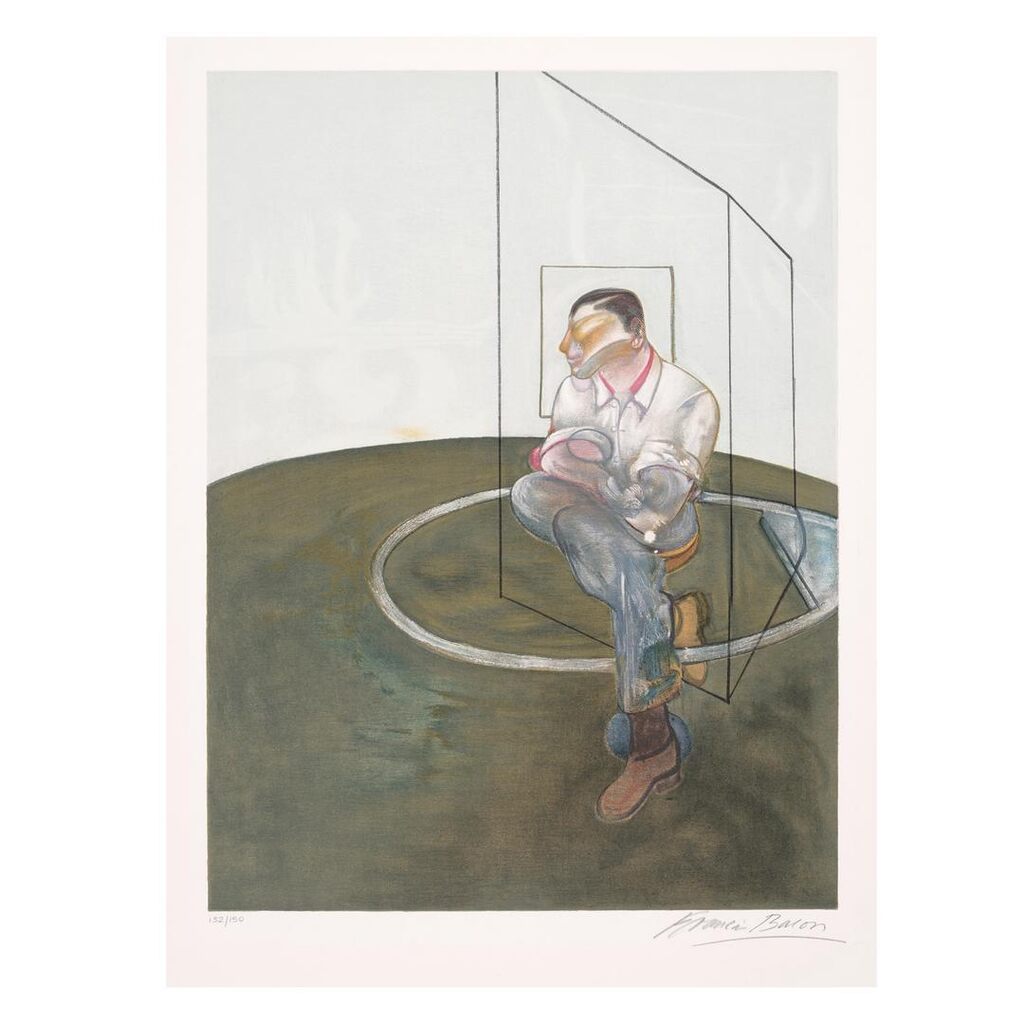
Study for a Portrait of John Edwards (Sabatier 20) · Francis Bacon · Bonhams · 2025-04 · $10,240
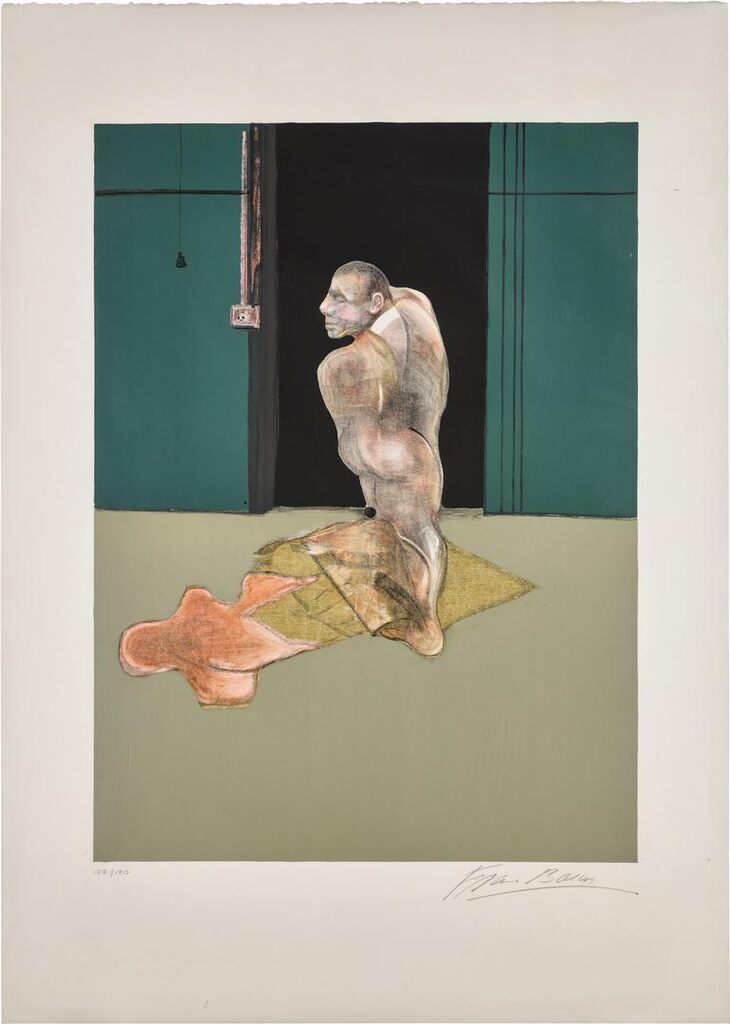
Study for a Portrait of John Edwards (S. 22; T. 23) · Francis Bacon · Sotheby's · 2022-09 · $13,668
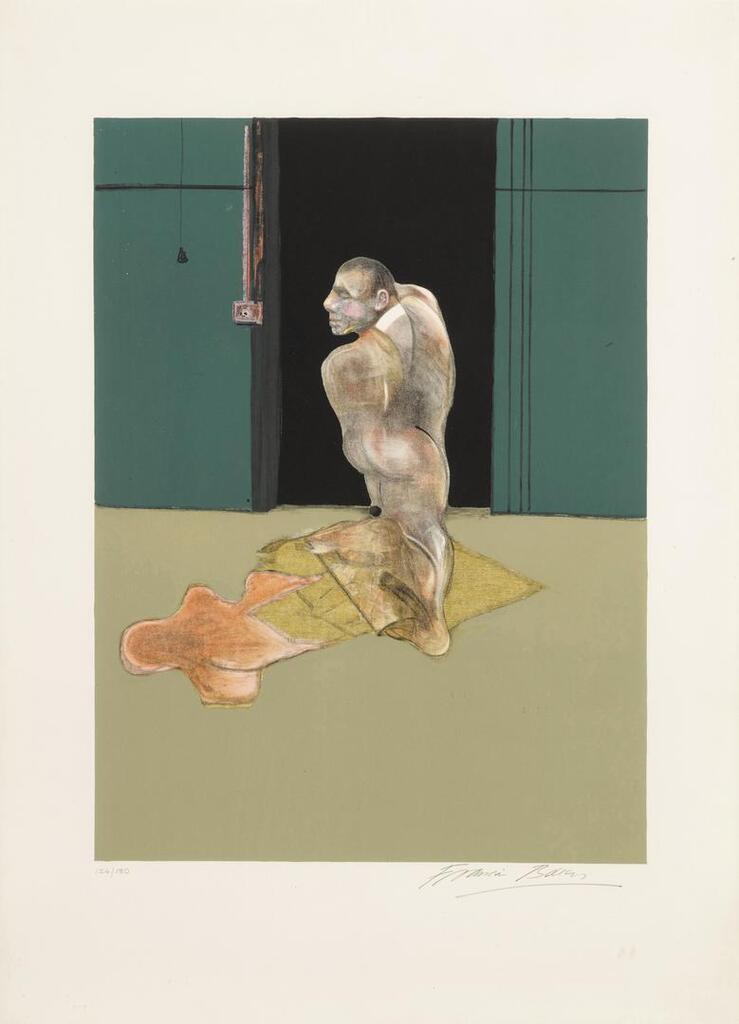
Study for Portrait of John Edwards (Sabatier 22) · Francis Bacon · Sotheby's · 2022-04 · $23,940
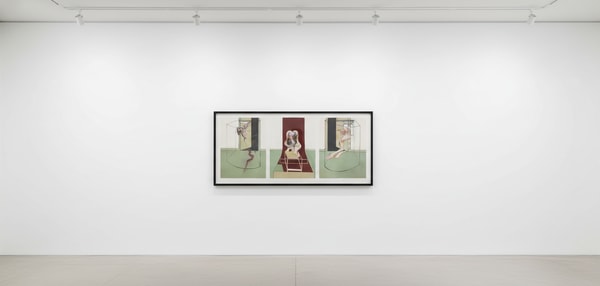
Francis Bacon
after Triptych (1981) inspired by the Oresteia of Aeschylus, 1981
1981
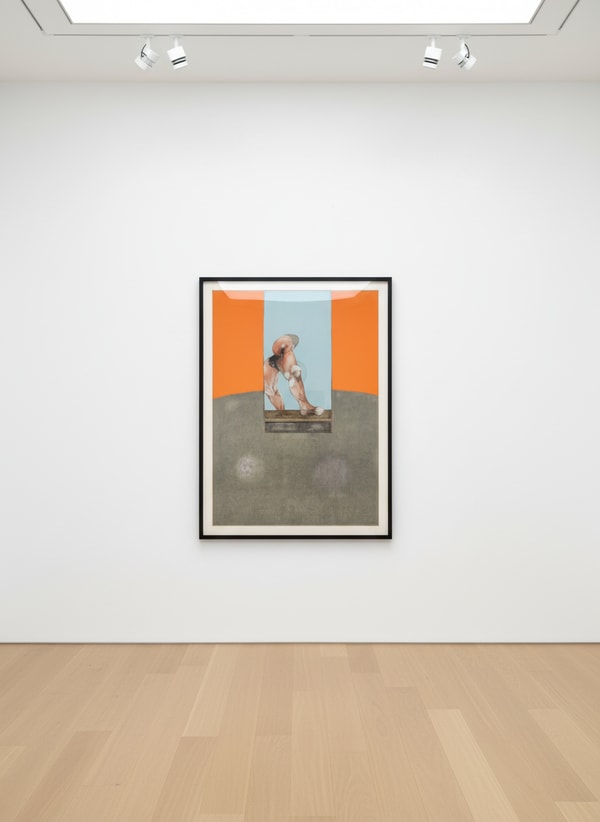
Francis Bacon
Etude de Tauromachie
1987
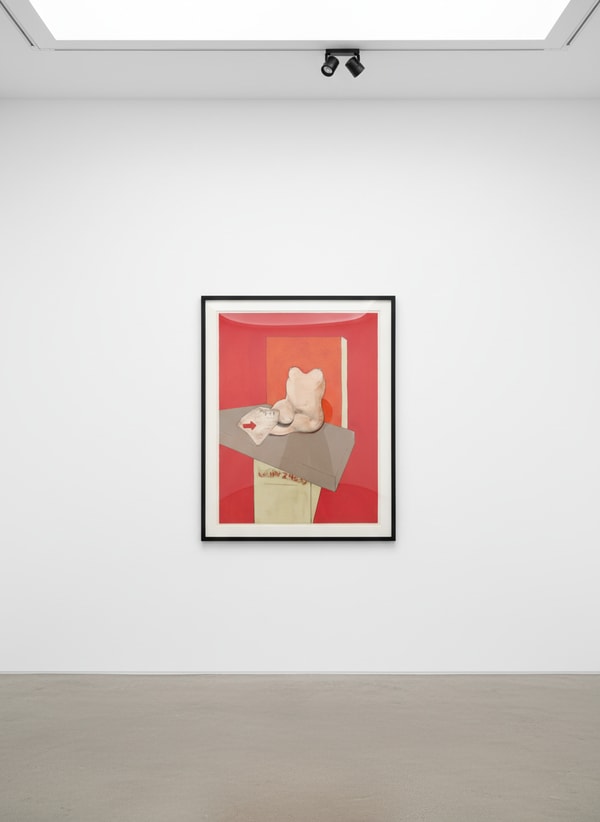
Francis Bacon
Ètude du Corps Humain d'après Ingres , afterStudy of a Human Body after Ingres 1982
1984

Francis Bacon
Hommage à Van Gogh , after Hommage à Van Gogh 1985
1989
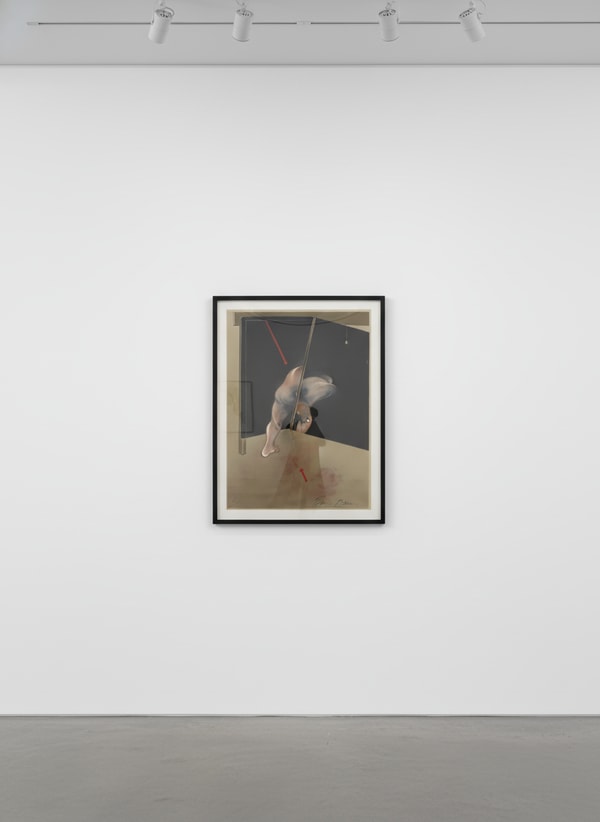
Francis Bacon
Logique de la sensation , after Study from the Human Body 1981
1981
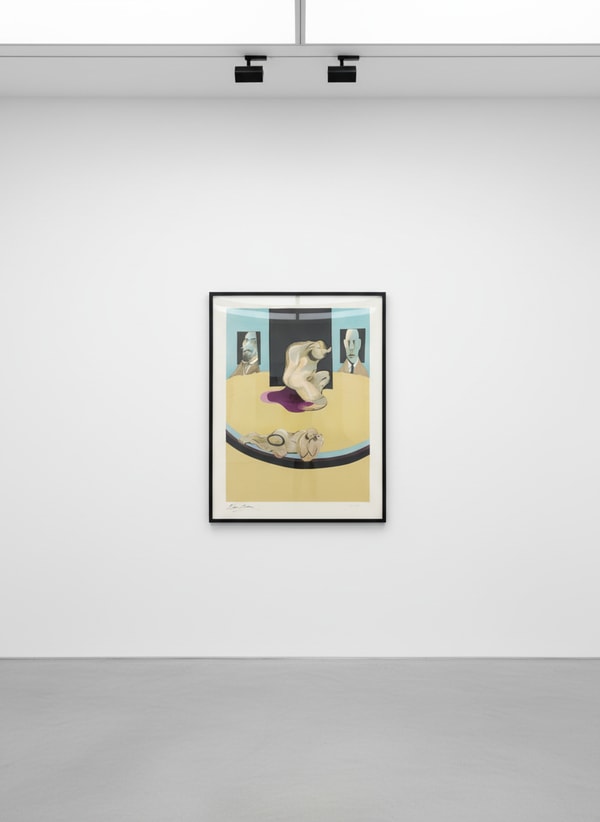
Francis Bacon
Metropolitan Museum of Art
1975
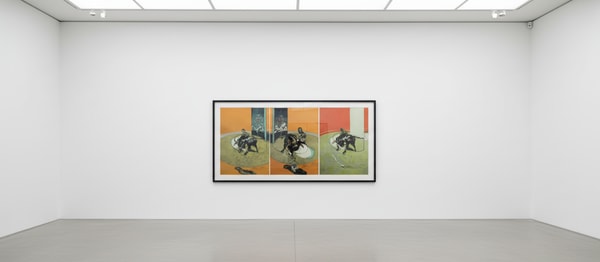
Francis Bacon
Mirroir de la Tauromachie
1990
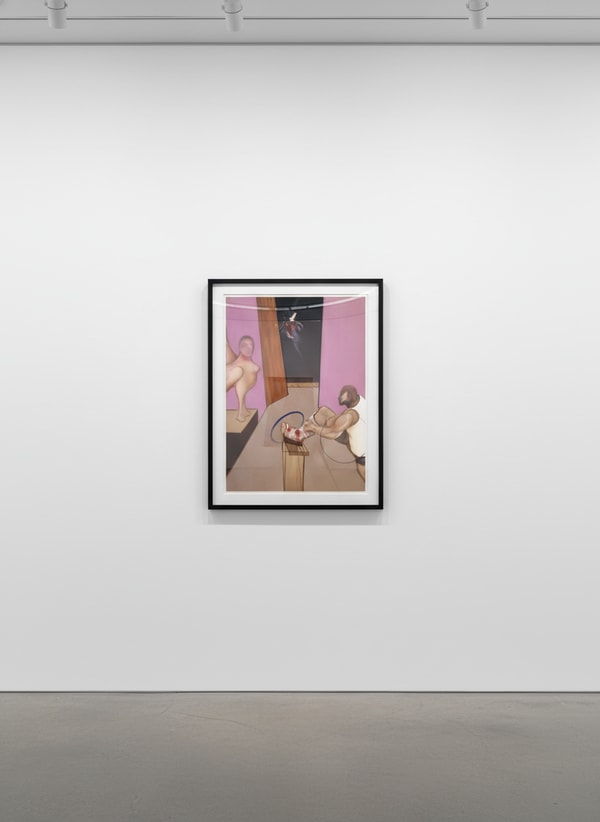
Francis Bacon
Oedipe et Le Sphinx d'après Ingres , after Oedipus and the Sphinx after Ingres 1983
1984
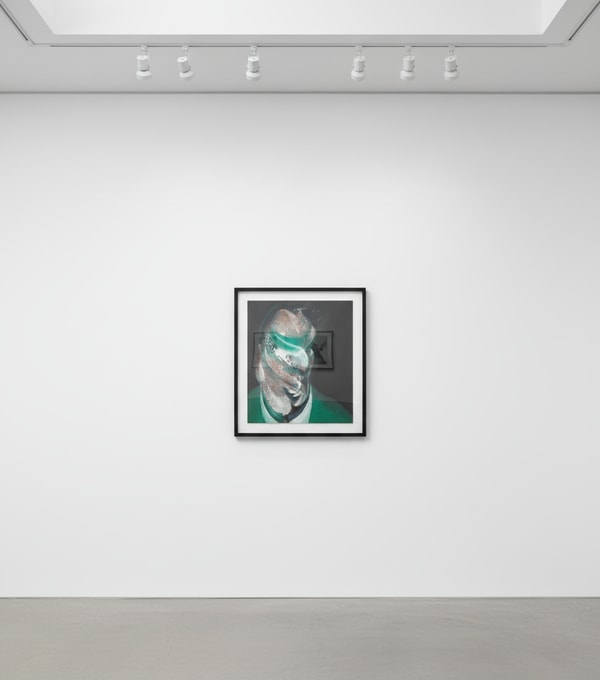
Francis Bacon
Portrait of Freud
1967
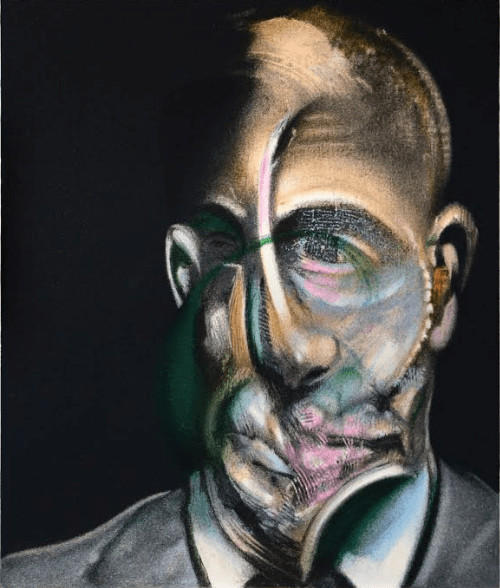
Francis Bacon
Portrait of Michel Leiris from Miroir de la Tauromachie
1990
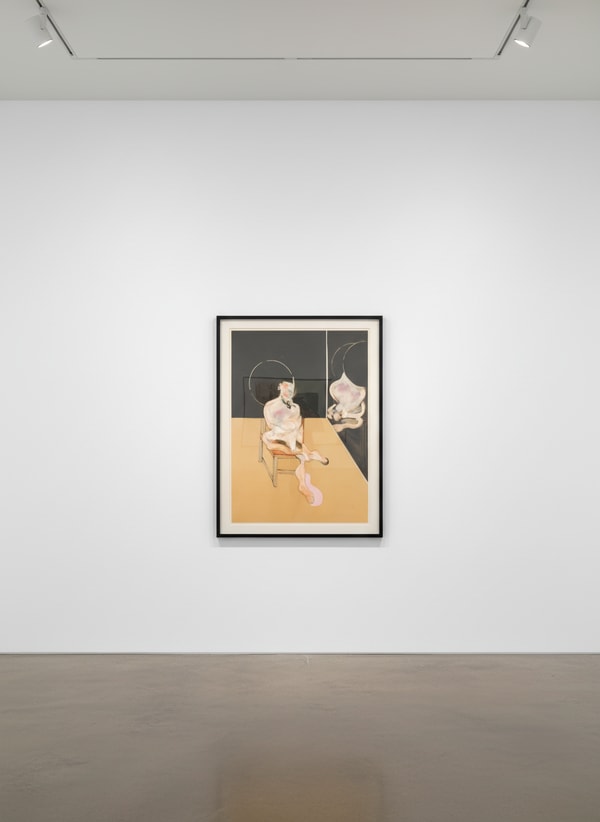
Francis Bacon
Seated Figure
1983
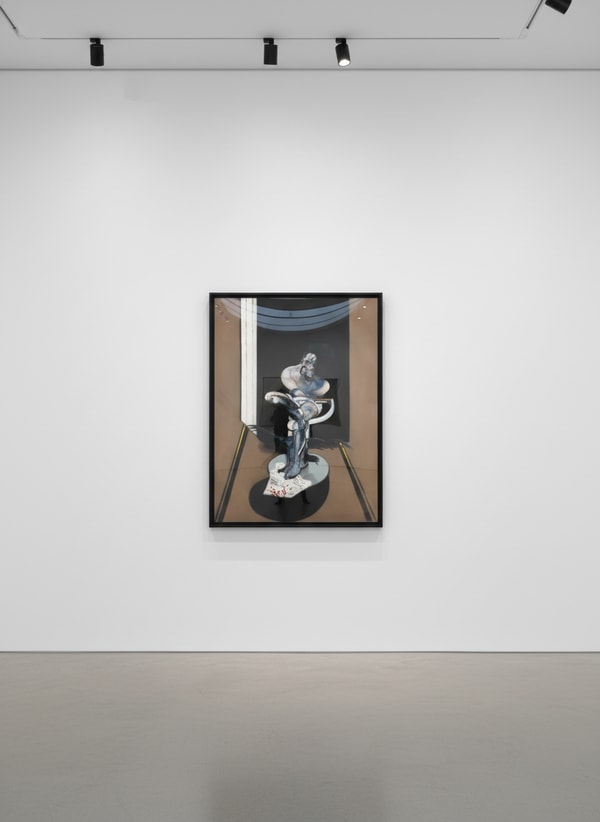
Francis Bacon
Seated Figure , after Seated Figure 1977
1992
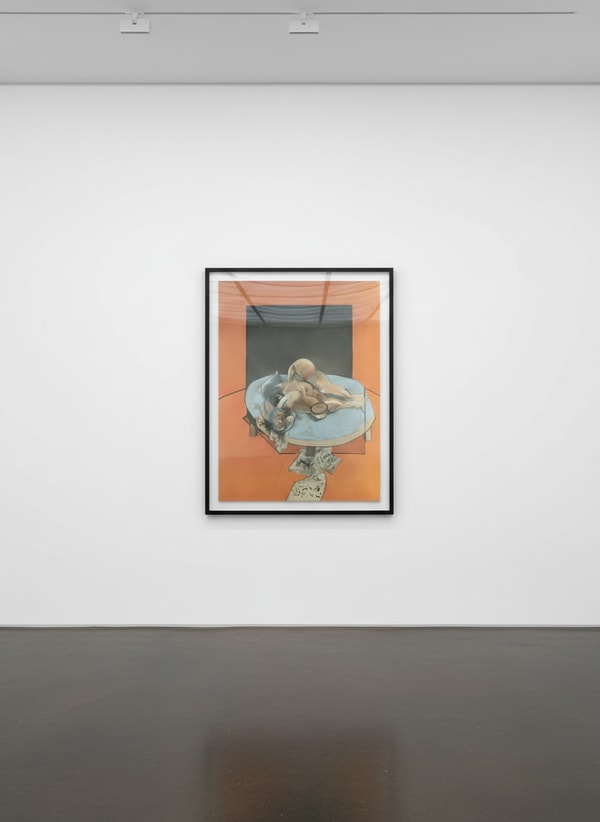
Francis Bacon
Studies of the Human Body , after the Central Panel of the Triptych Studies of the Human Body 1979
1980
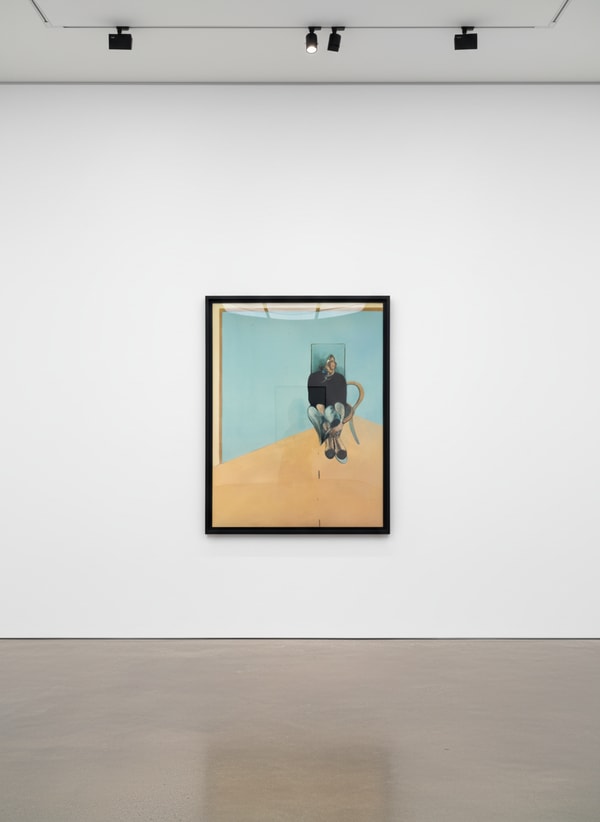
Francis Bacon
Study for Self Portrait , after Study for Self Portrait 1982
1984
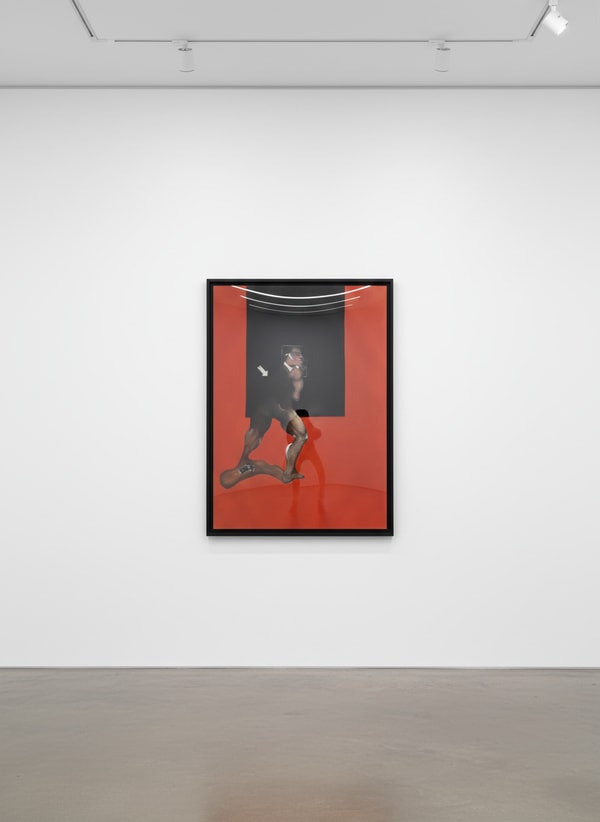
Francis Bacon
Study from Human Body , after Study from Human Body 1987
1992
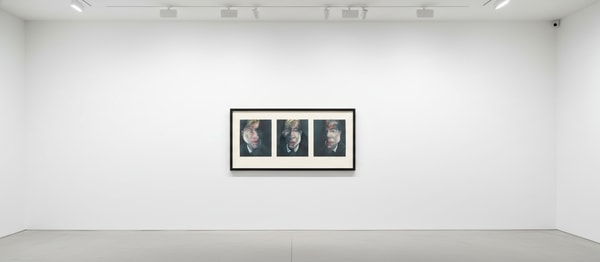
Francis Bacon
Three Studies For A Self Portrait
1983-1990
Francis Bacon (1909–1992) is among the most important figurative painters of the twentieth century, an artist whose raw, visceral canvases locate the human body in conditions of extreme psychological tension and transform painterly convention into a vehicle for existential confrontation. Born in Dublin to English parents, Bacon was largely self-taught — he received no formal art education and came to painting in his late twenties after years of drifting through London and Europe. His breakthrough came with the 1944 triptych Three Studies for Figures at the Base of a Crucifixion, which shocked a wartime London audience with its images of distorted, screaming hybrid creatures and established his reputation as an artist of unsettling and uncompromising vision.
Bacon's mature practice was built around a small number of recurrent subjects and formal devices. His Screaming Popes — a long series of works derived from Velázquez's portrait of Pope Innocent X — dissolve the authority of the Renaissance original into images of anguish and constraint, the figure screaming behind glass or pinned within a geometric cage. His portraits of his intimate circle — Lucian Freud, George Dyer, Isabel Rawsthorne, Peter Lacy — are among the most psychologically penetrating likenesses in the history of art, the faces smeared and turned and displaced in ways that feel both violently distorted and deeply faithful to the sitter's interior life. His self-portraits are equally compulsive: self-scrutiny carried to the point of self-laceration. Through all these works runs a consistent formal vocabulary: figures isolated in shallow, airless spaces; geometric frameworks of lines and bars that imprison or frame; meat-like surfaces of dragged and flung paint; glass and velvet chosen as ground materials to intensify the sense of both exposure and entrapment.
Bacon's market stands among the highest of any twentieth-century figurative artist. Three Studies of Lucian Freud (1969) achieved $142,400,000 at Christie's New York in 2013 — the world auction record at the time — while Triptych, 1976 reached $86,000,000 at Sotheby's New York in 2014, and Triptych Inspired by the Oresteia of Aeschylus (1981) achieved $84,600,000 at Sotheby's in 2020. Works on paper, prints, lithographs, and screenprints derived from his iconic paintings represent more accessible entry points to his market and are actively sought by collectors worldwide.
Bacon's work is held at Tate Modern, the Museum of Modern Art, the Metropolitan Museum of Art, the Solomon R. Guggenheim Museum, the Art Institute of Chicago, the Centre Pompidou, the Museo Nacional del Prado, and Museum Ludwig, among other major institutions globally.
Guy Hepner offers expert guidance on Francis Bacon prints, editions, and works on paper from our gallery at 177 Tenth Avenue, New York. Given the seriousness of the Bacon market and the importance of authentication, we approach every transaction with the utmost rigour. We offer free, confidential valuations for works in private collections and connections to qualified buyers worldwide.