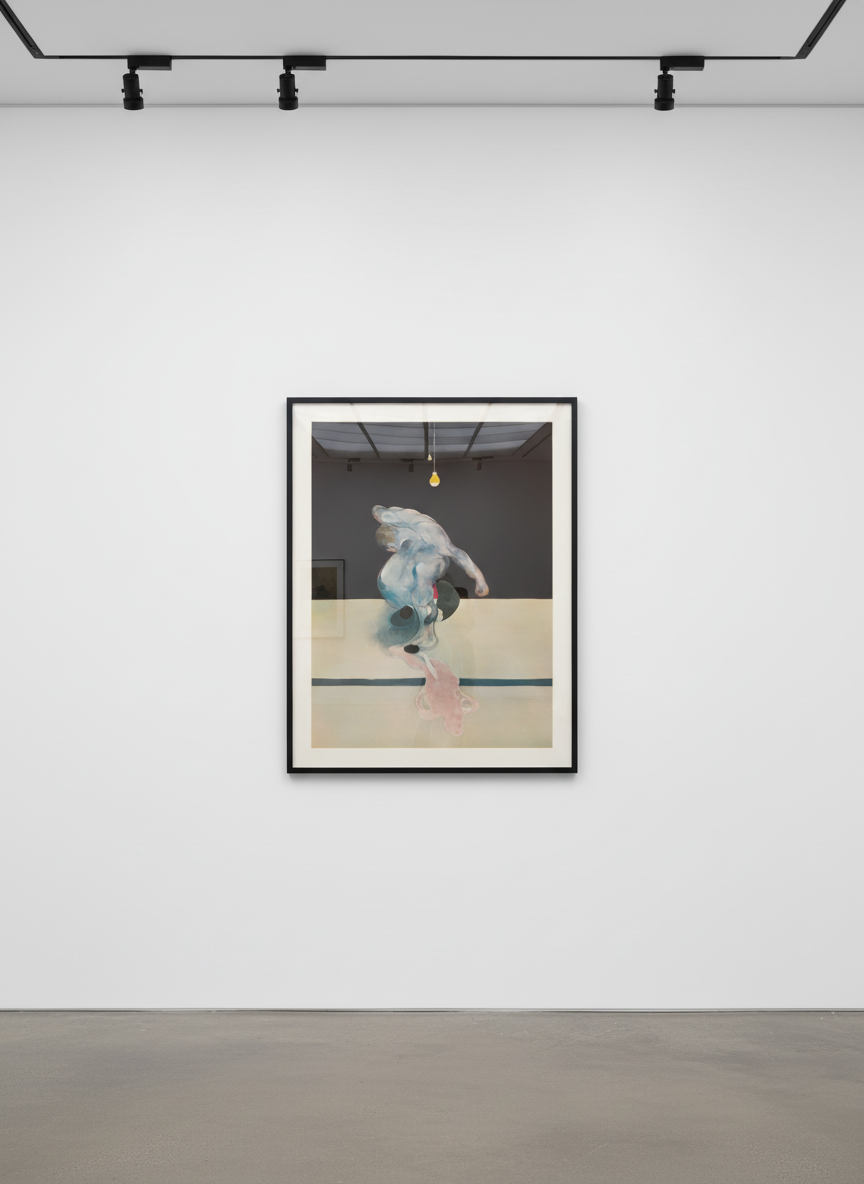
Edition of 150
1 work

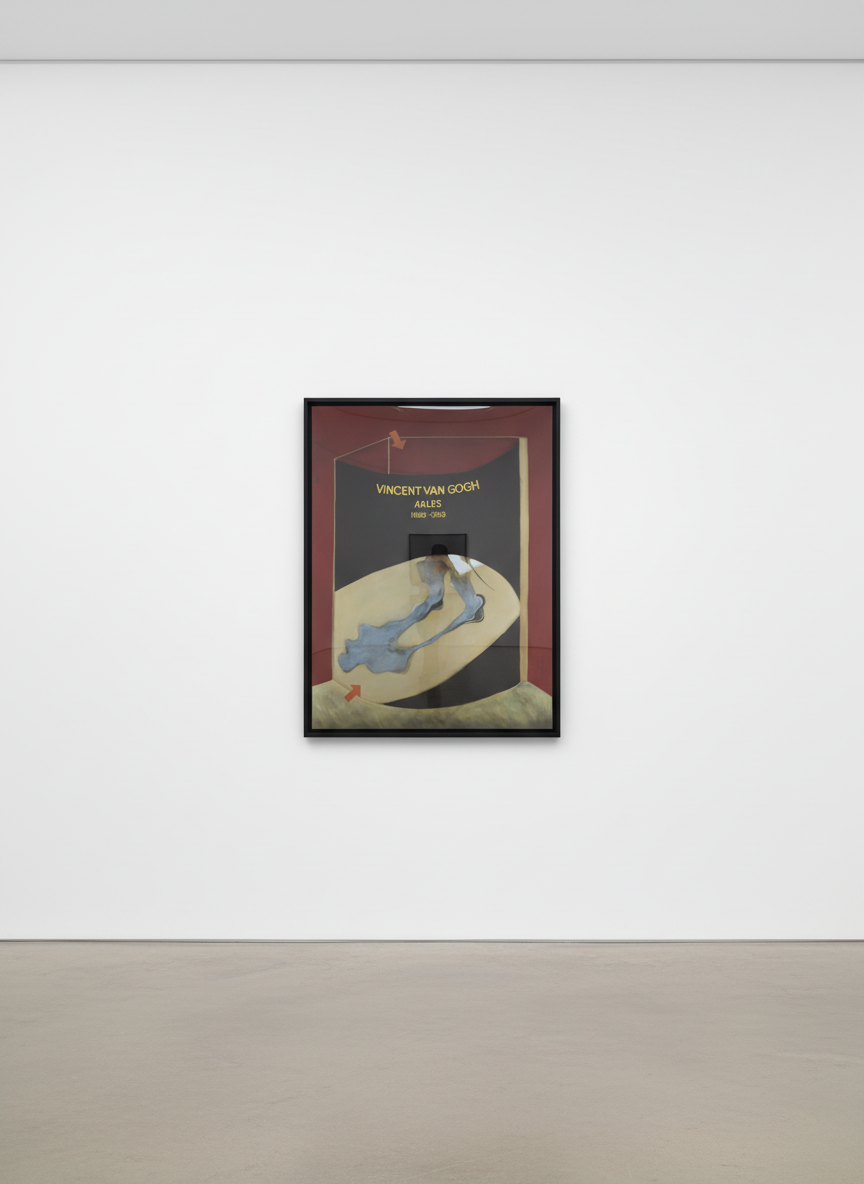
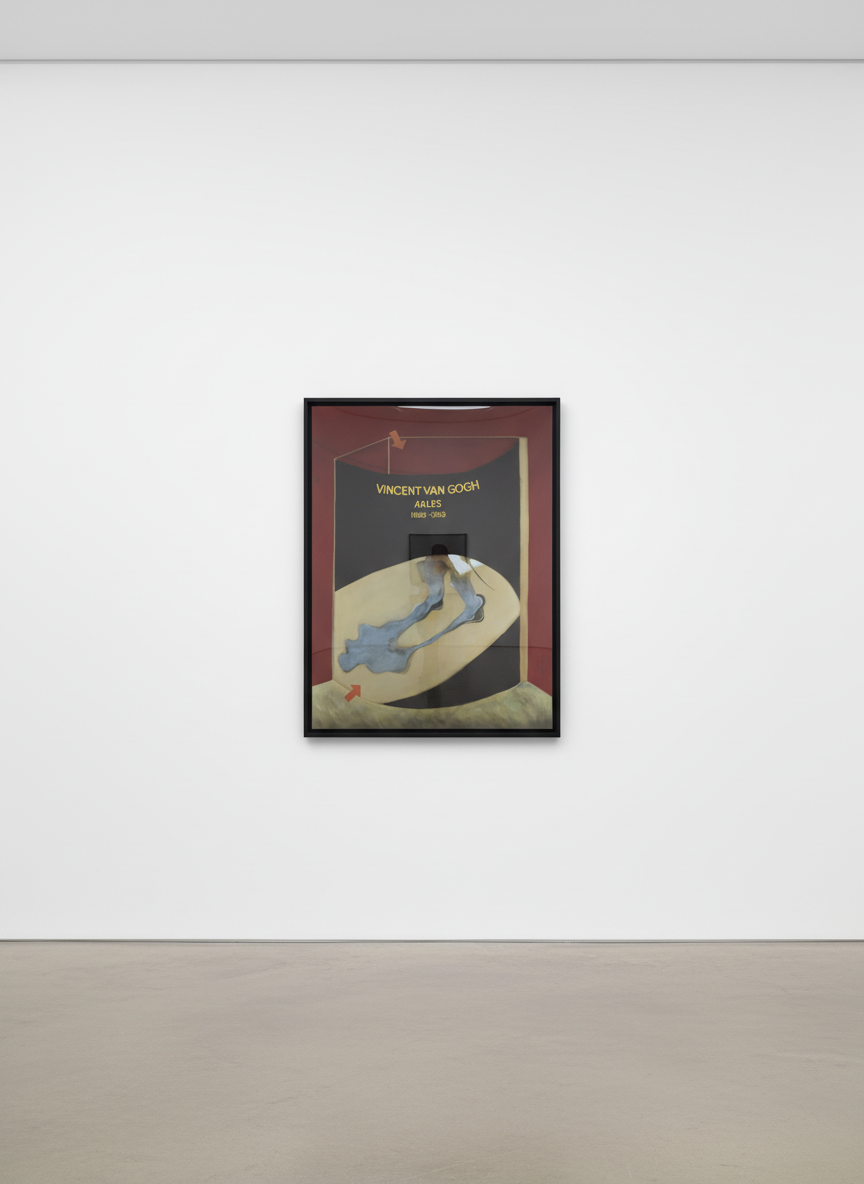
Hommage à Van Gogh , after Hommage à Van Gogh 1985, 1989
Offset lithograph on Fabriano paper
37 1/8 x 27 3/4 in 94 x 70.5 cm
Edition of 100
Francis Bacon’s Hommage a Van Gogh confronts the viewer with a raw, visceral depiction of the artist at his most existentially vulnerable. Far from a traditional homage, Bacon’s rendering strips away the romanticised image of Van Gogh the tortured genius and replaces it with a disfigured, emotionally fraught figure—part historical subject, part psychological projection. The result is a haunting and deeply personal meditation not only on Van Gogh’s suffering but on the fragility of the human condition itself.In Bacon’s interpretation, Van Gogh appears with a grotesquely distorted face, a pipe clenched in his mouth, and a heavy overcoat draped over his shoulders. His cocked hat sits awkwardly atop his head, while a stark white bandage wraps around his head and neck, covering the infamous wound he inflicted upon himself after a psychological crisis in Arles in December 1888. The incident, one of the most dramatic in modern art history, followed a heated confrontation with Paul Gauguin—after which Van Gogh, in a fugue of mental anguish, sliced off part of his left ear, wrapped it in newspaper, and gave it to a prostitute at a nearby brothel.Bacon does not seek to recreate this moment literally, but instead captures its lingering trauma. The figure he paints is not simply Van Gogh as a historical personage, but Van Gogh as a symbol of inner torment, emotional rupture, and existential isolation. The composition’s palette is dominated by complementary reds and greens, which heighten the emotional tension through chromatic contrast. Flashes of white and subtle traces of blue in the fur hat provide minor tonal relief, yet the overall atmosphere remains stark and unsettling.The treatment of Van Gogh’s face is especially striking. Bacon’s brushwork is thick, textured, almost sculptural—transforming the visage into a grotesque mass that resembles butchered meat. It quivers with motion, as if the image were caught mid-transformation, like a blurred photograph or a distorted memory. The Cubist-like deconstruction of facial features destabilizes the figure’s identity. What remains is not a likeness, but an impression—an embodiment of disfigurement and psychic dislocation. The effect is simultaneously horrific and absurd, like a nightmare balanced on the edge of comedy.The portrait is framed in an unusual way: the figure is pushed toward the lower right corner of the canvas, and the background is divided into an upper, shadowy half and a lower, lighter section. This dual-toned background creates a visual divide between consciousness and oblivion, further isolating the figure within a picture-within-a-picture. The skewed placement and reflective quality of the composition evoke the atmosphere of a self-portrait viewed in a mirror—intimate, yet disorienting. This spatial framing allows the viewer to feel as though they are intruding on a deeply personal moment of reckoning.Bacon’s series of Van Gogh portraits, developed in the late 1950s and early 1960s, were heavily influenced by two key sources: Van Gogh’s lost painting *The Painter on the Road to Tarascon* (1888), which showed the artist walking with his painting gear, and *Self-Portrait with Bandaged Ear* (1889), painted shortly after the mutilation incident. In these tributes, Bacon reinterprets the motif not with reverence, but with confrontation—emphasising Van Gogh’s psychic torment and casting him as a kindred spirit in suffering and artistic extremity.The connection Bacon felt with Van Gogh was more than aesthetic. Both artists shared a sense of alienation from the mainstream, an obsessive devotion to their practice, and a refusal to compromise their vision, no matter the personal cost. For Bacon, Van Gogh was not only a historical figure but a mirror—a reflection of his own inner chaos. In this way, the portrait becomes as much a self-portrait as it is a depiction of Van Gogh. The disfigured face, the solitary figure adrift in an abstracted space, the psychological torment veiled in painterly bravado—all echo the themes that define Bacon’s oeuvre.And yet, the portrait transcends biographical homage. Van Gogh here becomes a symbol of humankind’s existential vulnerability—wounded, misunderstood, and alone. His bandage is not merely a record of physical injury, but a marker of the psychic scars borne by anyone who has lived through despair. Bacon’s interpretation strips away heroism and replaces it with brutal honesty. This is not Van Gogh as martyr or legend, but as a human being confronted by the absurdity of existence.In the end, Bacon’s *Portrait of Van Gogh* is not a static image but a dynamic psychological study—of Van Gogh, of Bacon himself, and of humanity writ large. It confronts the viewer with a visual language that is at once grotesque and poignant, inviting us to see not just the pain of one man, but the silent wounds carried by many. Through violent brushwork, compositional unease, and emotional depth, Bacon transforms myth into metaphor and offers one of the most searing tributes to the emotional extremes of creative life in modern art.For more information on Francis Bacon’s Hommage a Van Gogh or to buy Francis Bacon’s Hommage a Van Gogh contact our galleries using the form below.
Price on Application
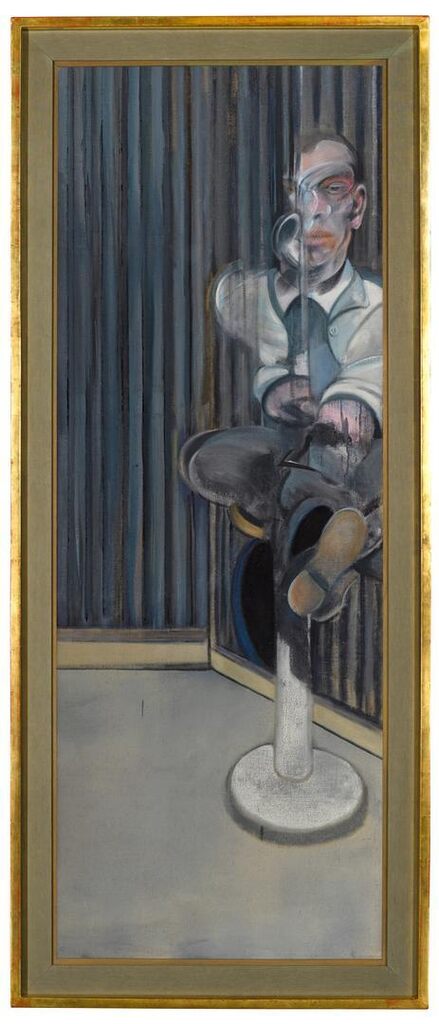
Portrait of a Dwarf · Francis Bacon · Sotheby's · 2025-10 · $23,632,180
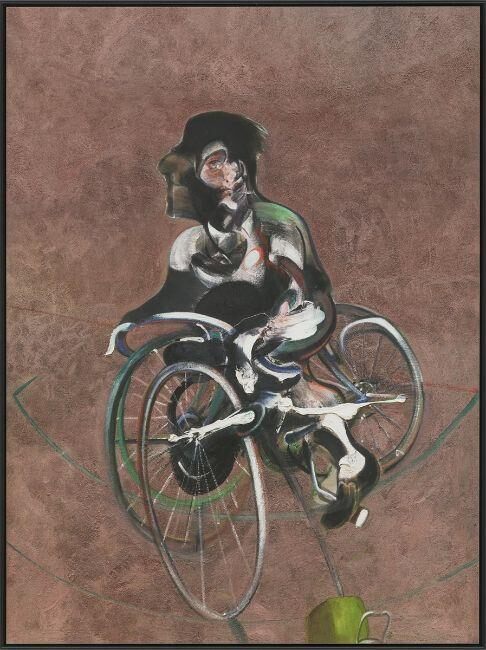
”Portrait of George Dyer Riding a Bicycle 1966” (Small) · Francis Bacon · Grisebach · 2025-09 · $3,428
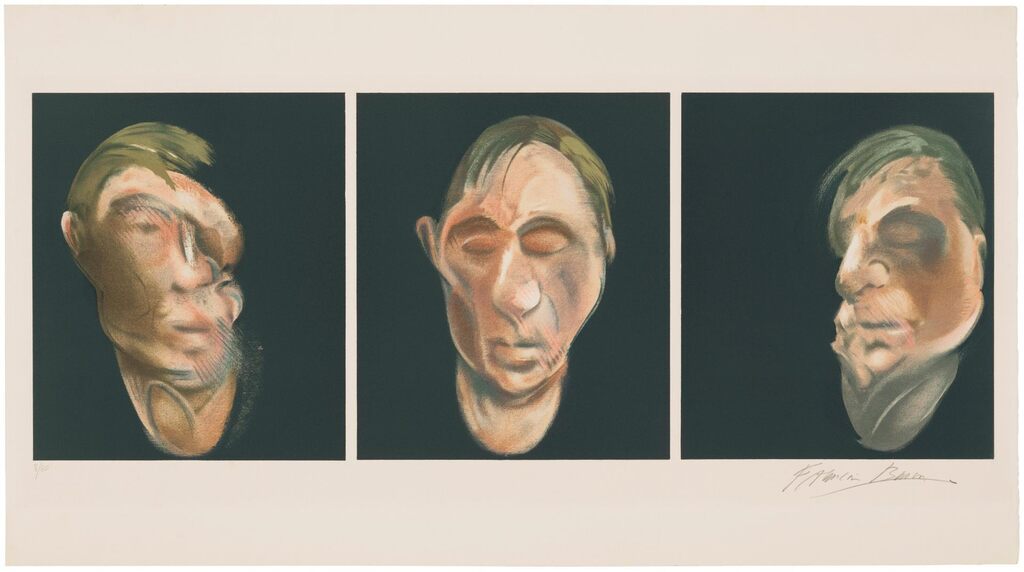
Three studies for a Self-Portrait · Francis Bacon · Christie's · 2025-09 · $32,160
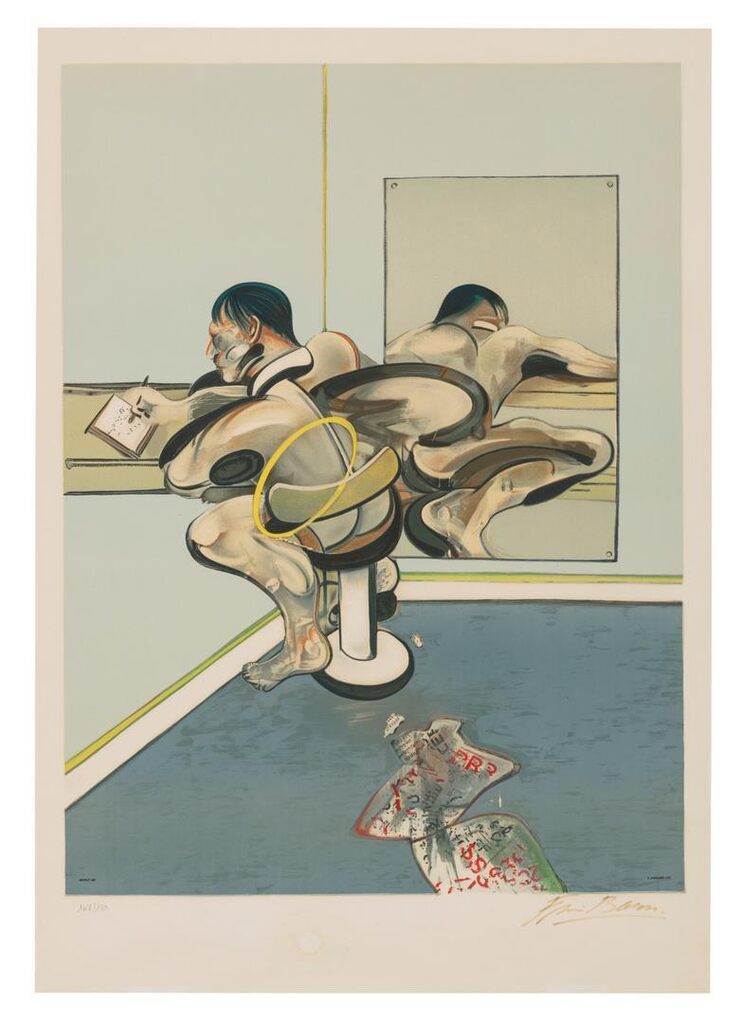
Figure Writing Reflected in a Mirror · Francis Bacon · Christie's · 2025-09 · $16,080
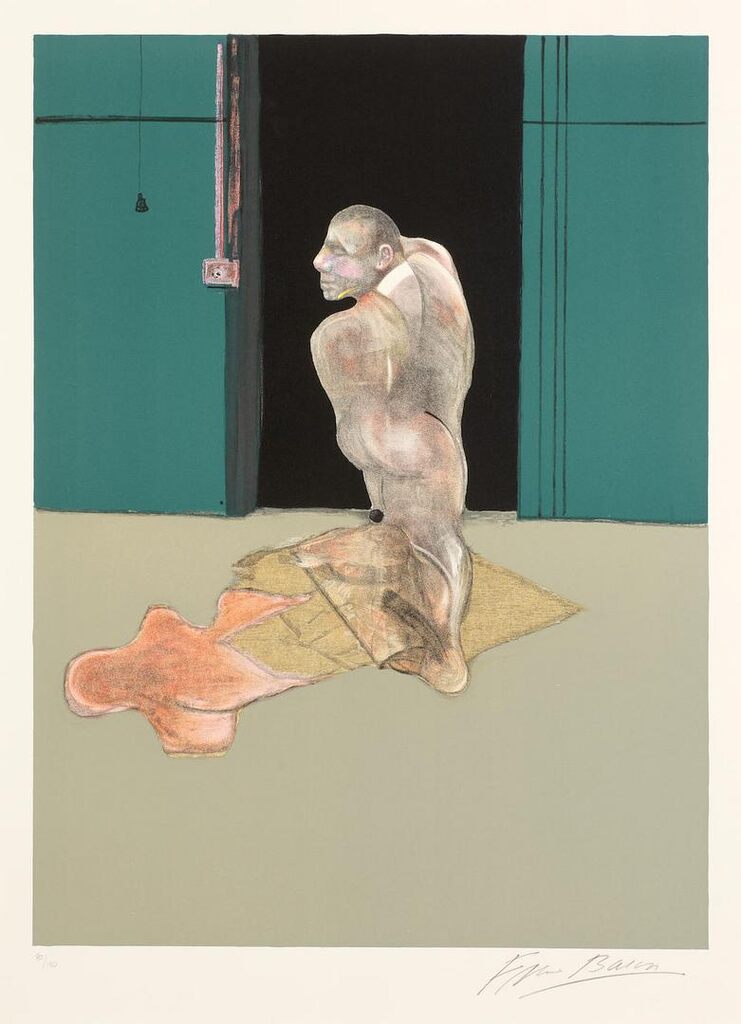
Study for a Portrait of John Edwards (Sabatier 22) · Francis Bacon · Bonhams · 2025-06 · $12,891
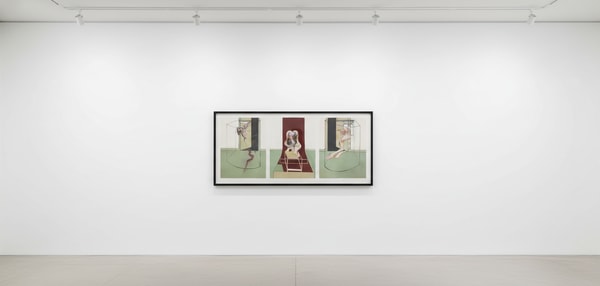
Francis Bacon
after Triptych (1981) inspired by the Oresteia of Aeschylus, 1981
1981
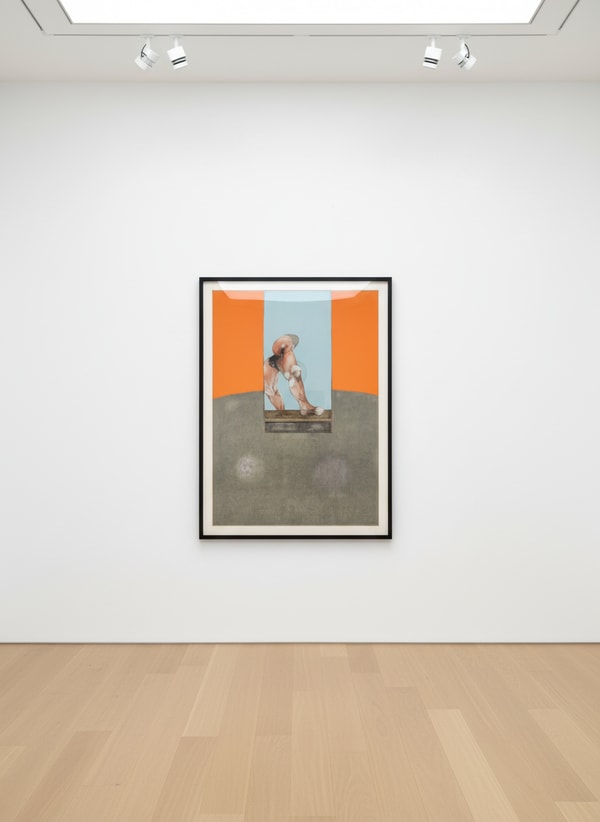
Francis Bacon
Etude de Tauromachie
1987
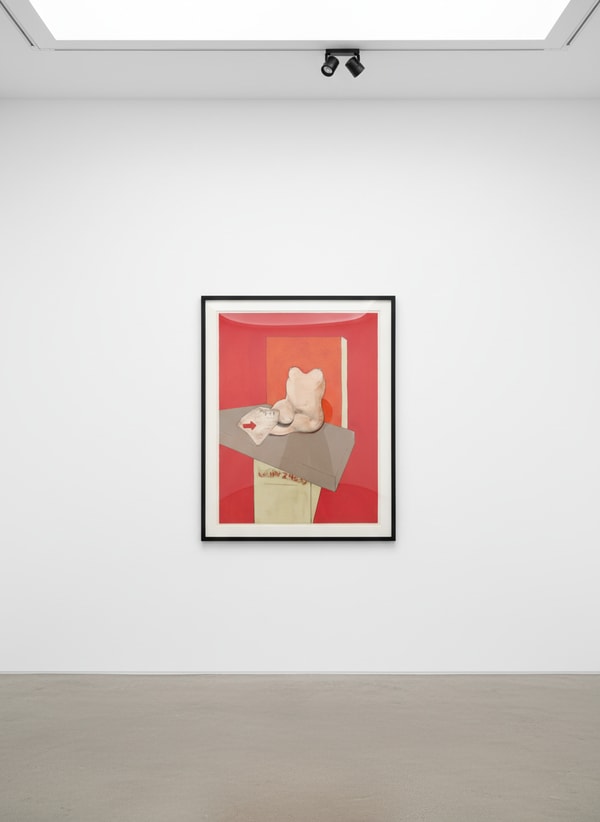
Francis Bacon
Ètude du Corps Humain d'après Ingres , afterStudy of a Human Body after Ingres 1982
1984
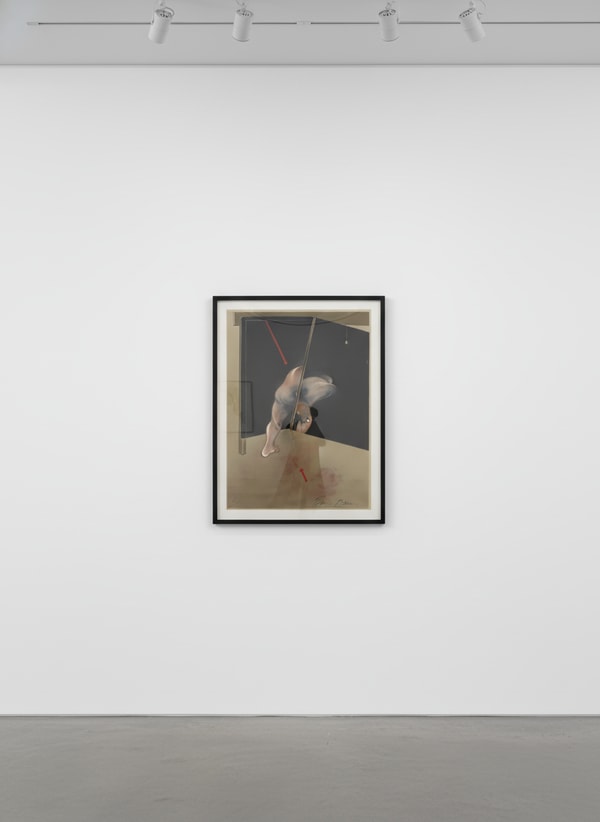
Francis Bacon
Logique de la sensation , after Study from the Human Body 1981
1981
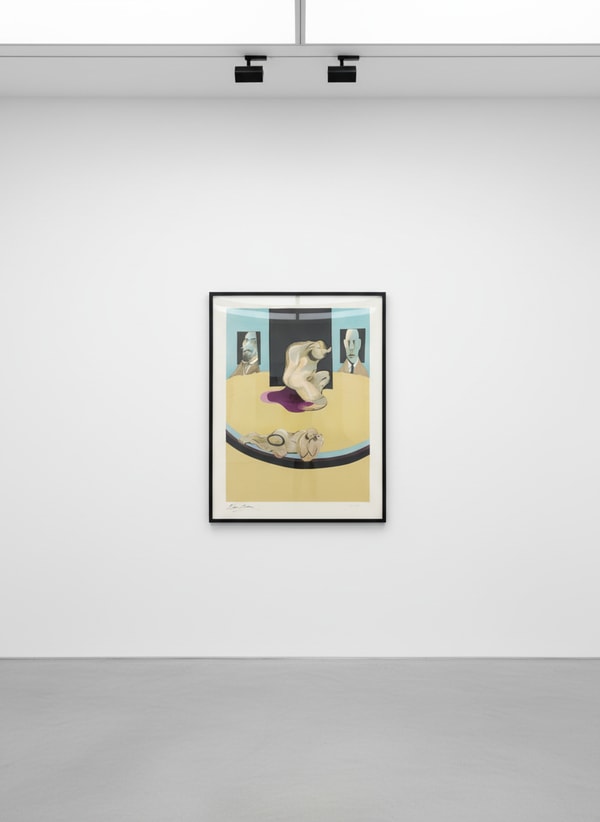
Francis Bacon
Metropolitan Museum of Art
1975
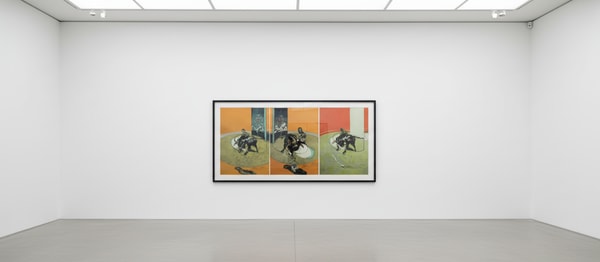
Francis Bacon
Mirroir de la Tauromachie
1990
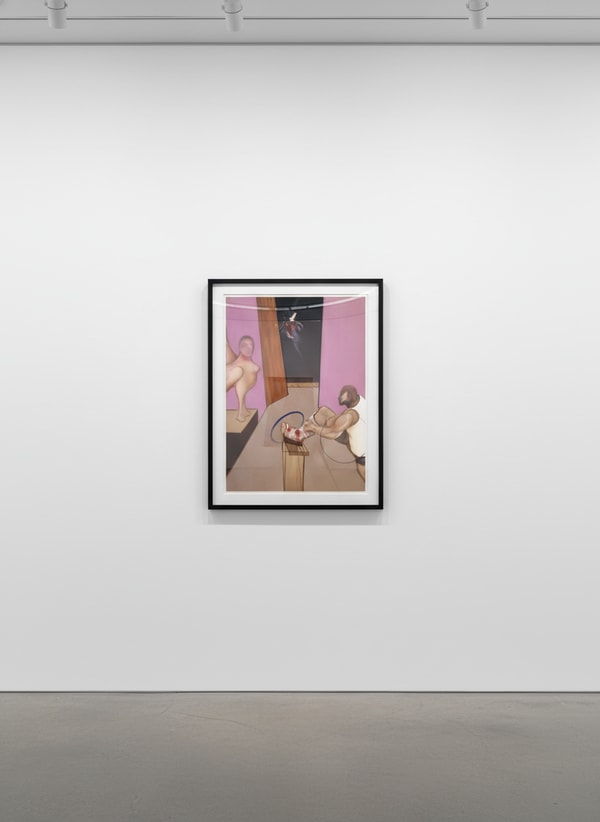
Francis Bacon
Oedipe et Le Sphinx d'après Ingres , after Oedipus and the Sphinx after Ingres 1983
1984
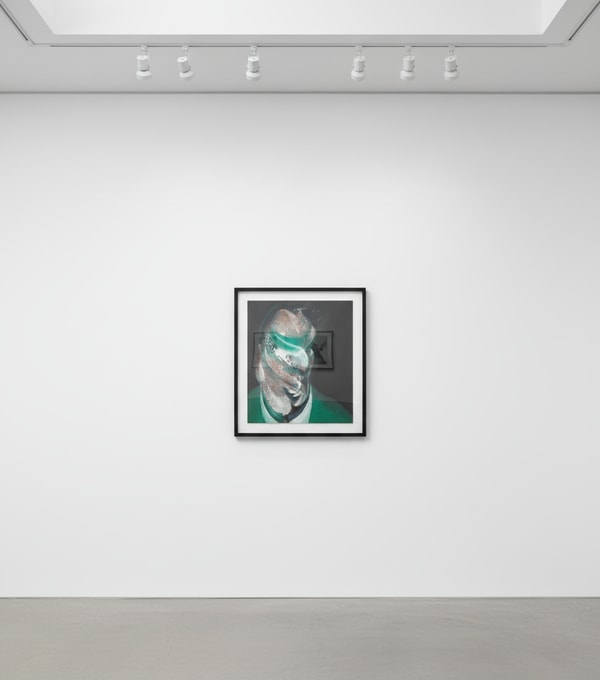
Francis Bacon
Portrait of Freud
1967
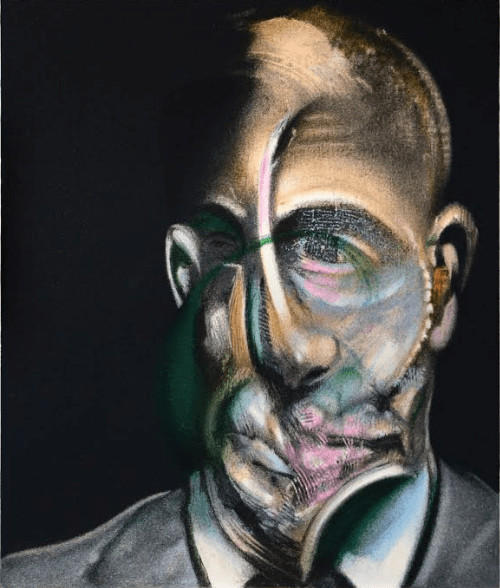
Francis Bacon
Portrait of Michel Leiris from Miroir de la Tauromachie
1990
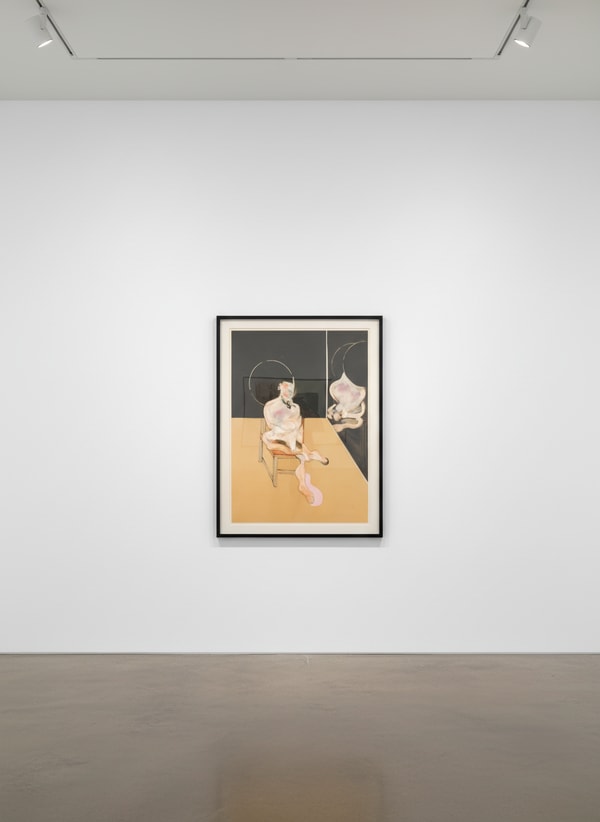
Francis Bacon
Seated Figure
1983
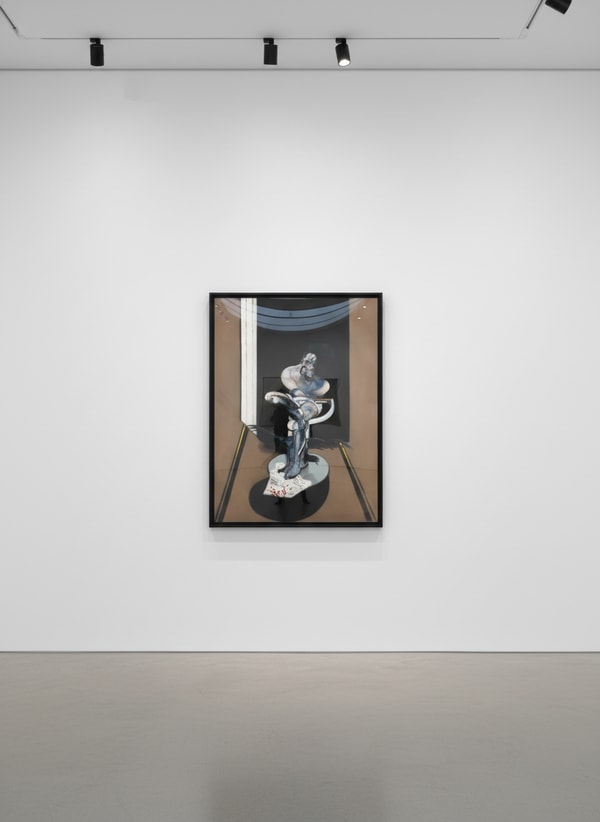
Francis Bacon
Seated Figure , after Seated Figure 1977
1992
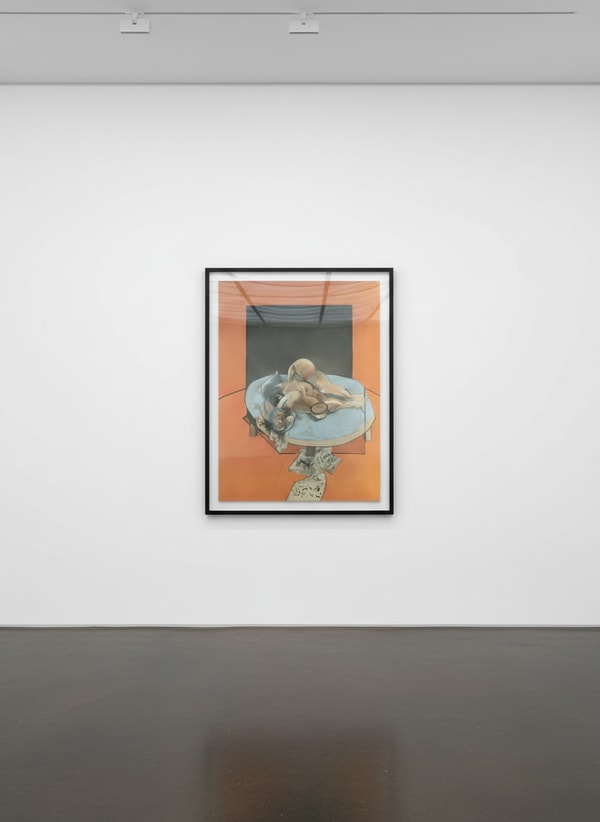
Francis Bacon
Studies of the Human Body , after the Central Panel of the Triptych Studies of the Human Body 1979
1980
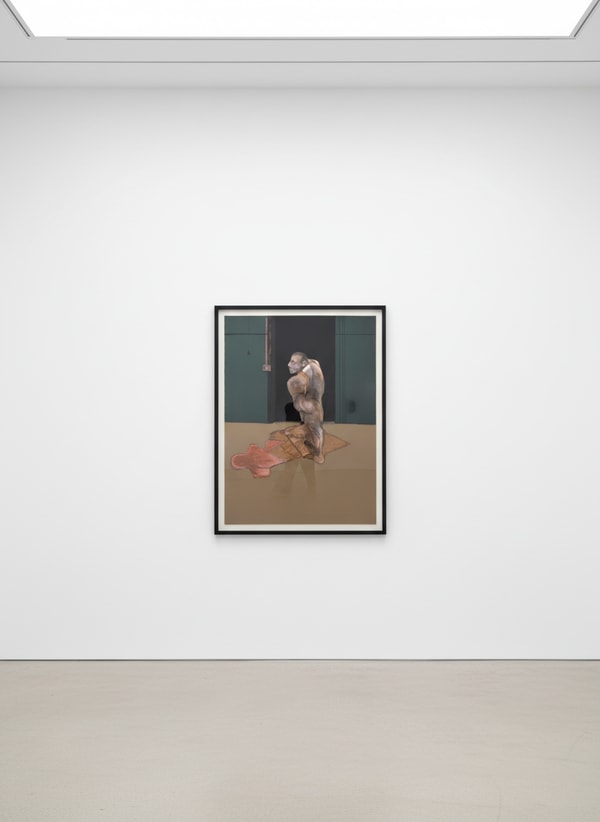
Francis Bacon
Study For A Portrait of John Edwards
1987
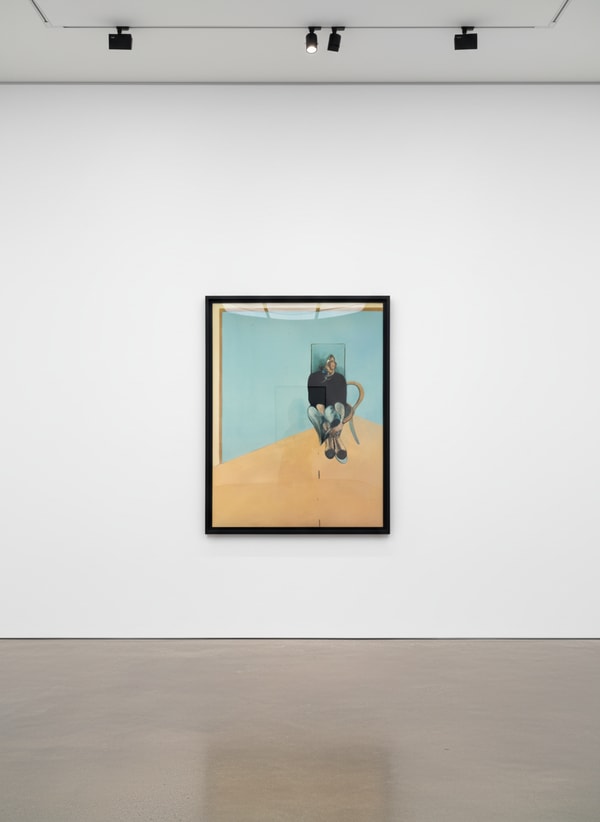
Francis Bacon
Study for Self Portrait , after Study for Self Portrait 1982
1984
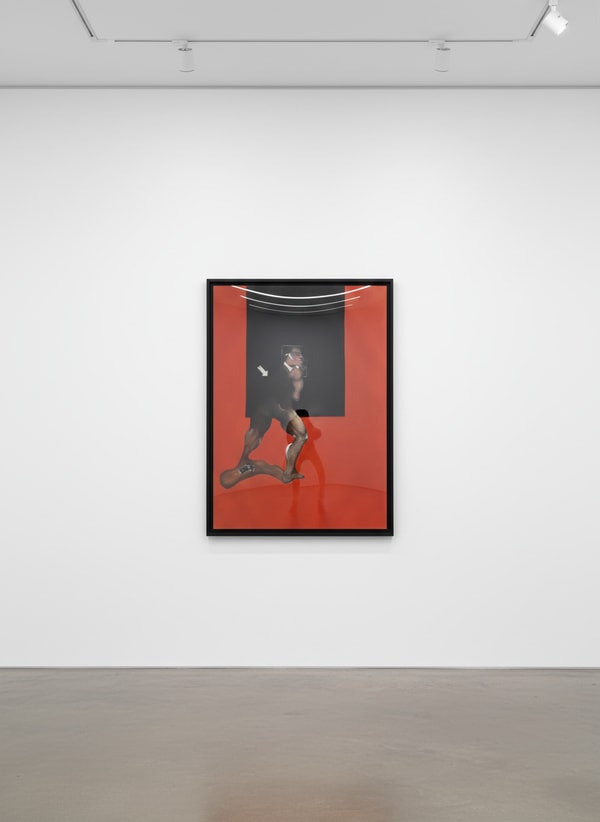
Francis Bacon
Study from Human Body , after Study from Human Body 1987
1992
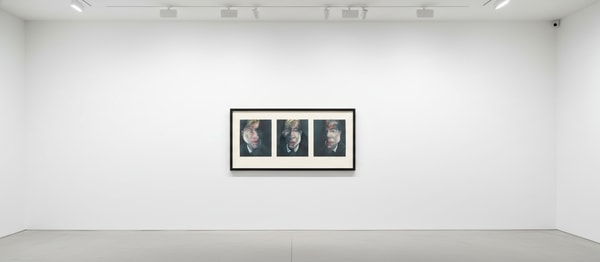
Francis Bacon
Three Studies For A Self Portrait
1983-1990
Francis Bacon (1909–1992) is among the most important figurative painters of the twentieth century, an artist whose raw, visceral canvases locate the human body in conditions of extreme psychological tension and transform painterly convention into a vehicle for existential confrontation. Born in Dublin to English parents, Bacon was largely self-taught — he received no formal art education and came to painting in his late twenties after years of drifting through London and Europe. His breakthrough came with the 1944 triptych Three Studies for Figures at the Base of a Crucifixion, which shocked a wartime London audience with its images of distorted, screaming hybrid creatures and established his reputation as an artist of unsettling and uncompromising vision.
Bacon's mature practice was built around a small number of recurrent subjects and formal devices. His Screaming Popes — a long series of works derived from Velázquez's portrait of Pope Innocent X — dissolve the authority of the Renaissance original into images of anguish and constraint, the figure screaming behind glass or pinned within a geometric cage. His portraits of his intimate circle — Lucian Freud, George Dyer, Isabel Rawsthorne, Peter Lacy — are among the most psychologically penetrating likenesses in the history of art, the faces smeared and turned and displaced in ways that feel both violently distorted and deeply faithful to the sitter's interior life. His self-portraits are equally compulsive: self-scrutiny carried to the point of self-laceration. Through all these works runs a consistent formal vocabulary: figures isolated in shallow, airless spaces; geometric frameworks of lines and bars that imprison or frame; meat-like surfaces of dragged and flung paint; glass and velvet chosen as ground materials to intensify the sense of both exposure and entrapment.
Bacon's market stands among the highest of any twentieth-century figurative artist. Three Studies of Lucian Freud (1969) achieved $142,400,000 at Christie's New York in 2013 — the world auction record at the time — while Triptych, 1976 reached $86,000,000 at Sotheby's New York in 2014, and Triptych Inspired by the Oresteia of Aeschylus (1981) achieved $84,600,000 at Sotheby's in 2020. Works on paper, prints, lithographs, and screenprints derived from his iconic paintings represent more accessible entry points to his market and are actively sought by collectors worldwide.
Bacon's work is held at Tate Modern, the Museum of Modern Art, the Metropolitan Museum of Art, the Solomon R. Guggenheim Museum, the Art Institute of Chicago, the Centre Pompidou, the Museo Nacional del Prado, and Museum Ludwig, among other major institutions globally.
Guy Hepner offers expert guidance on Francis Bacon prints, editions, and works on paper from our gallery at 177 Tenth Avenue, New York. Given the seriousness of the Bacon market and the importance of authentication, we approach every transaction with the utmost rigour. We offer free, confidential valuations for works in private collections and connections to qualified buyers worldwide.