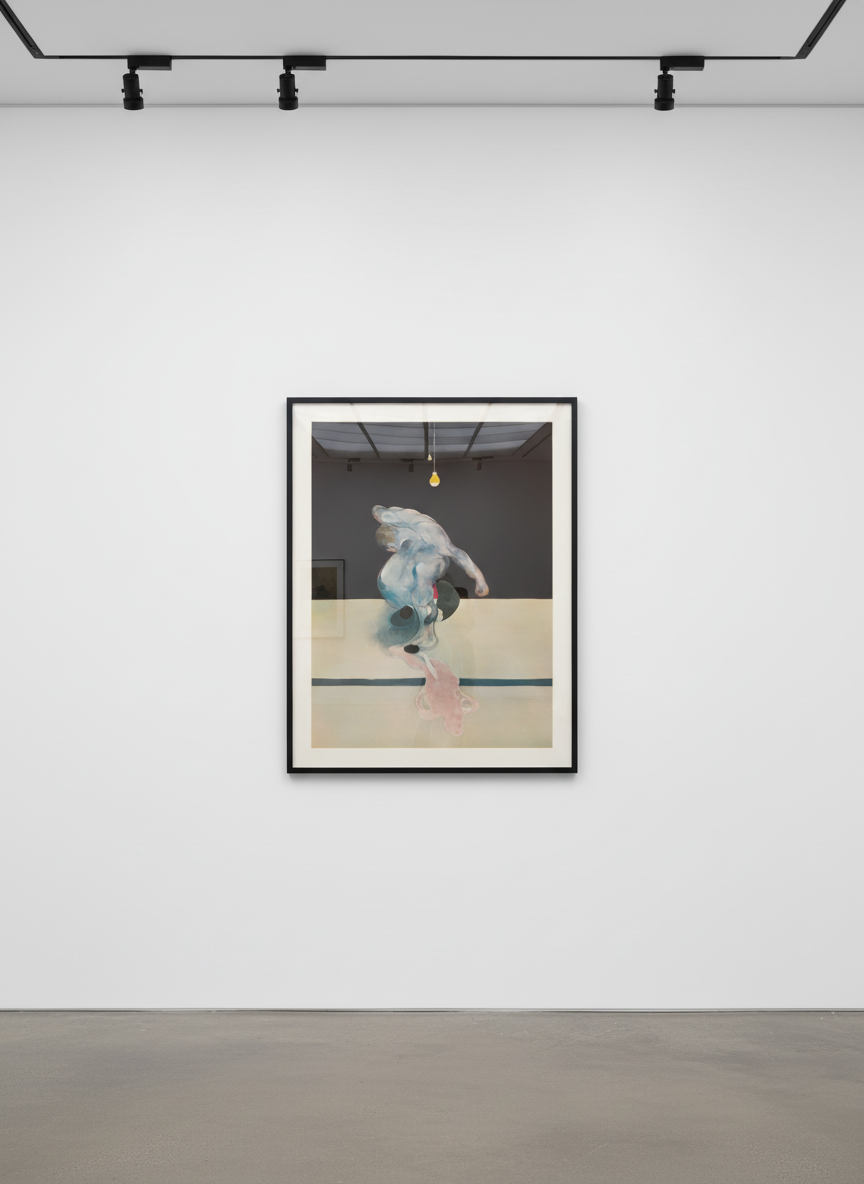
Edition of 150
1 work


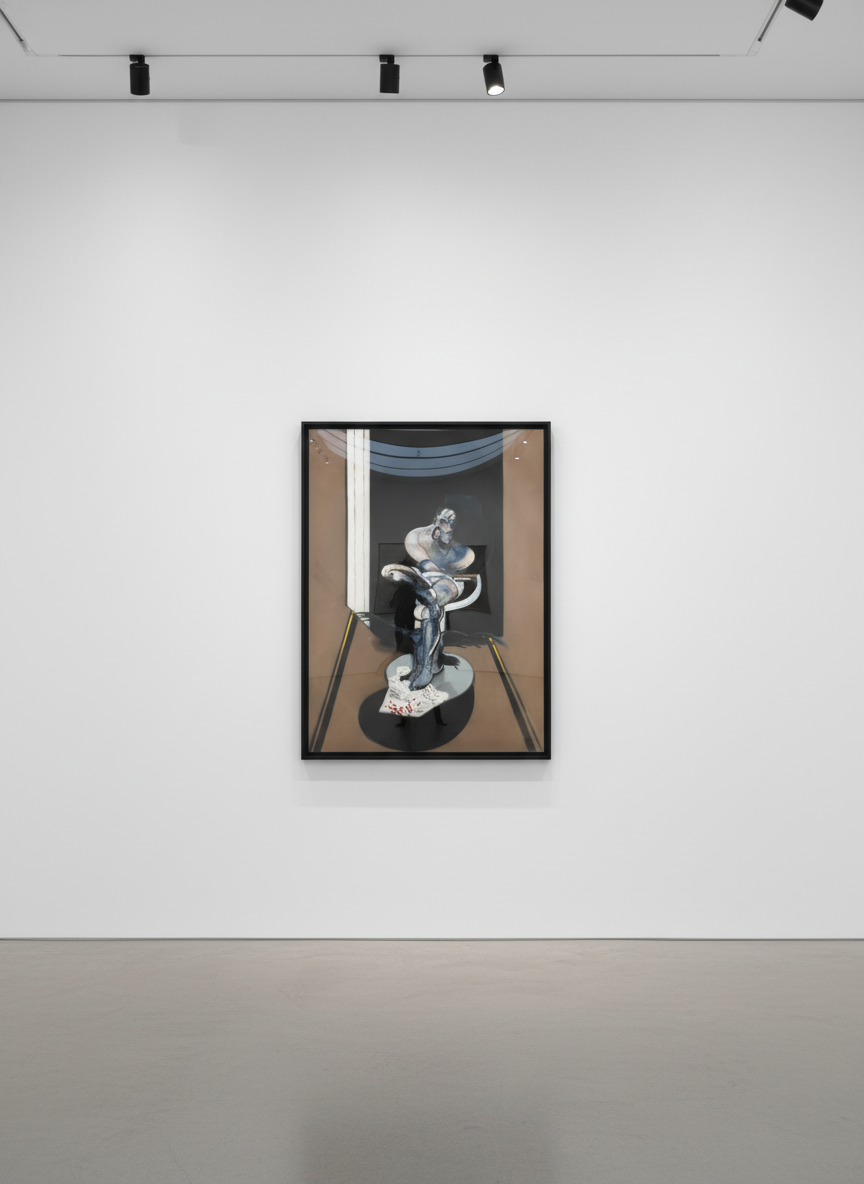
Seated Figure , after Seated Figure 1977, 1992
Aquatint
64 1/8 x 47 5/8 in 163 x 121 cm
Edition of 90 plus 30 AP
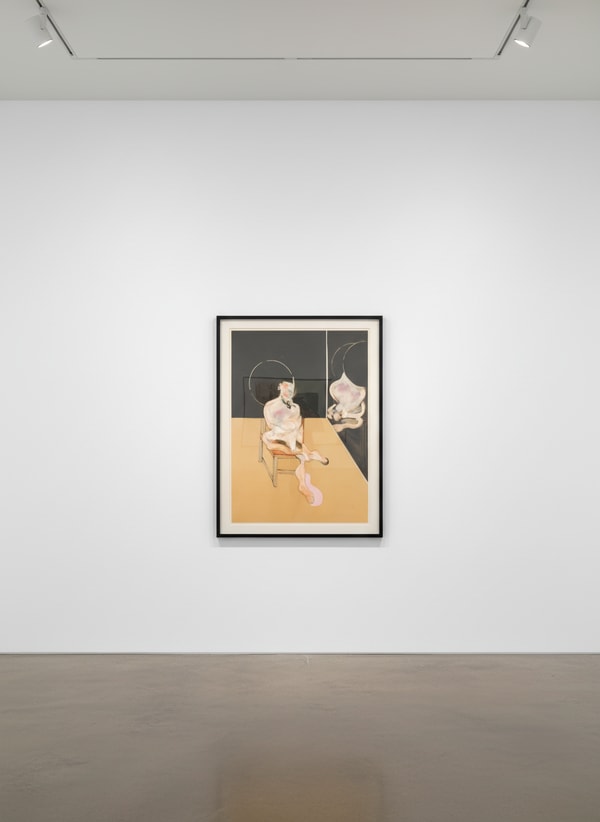
Francis Bacon’s Seated Figure, derived from his 1977 oil painting of the same name, is a compelling exploration of spatial manipulation and psychological intensity. This work exemplifies Bacon’s ability to disrupt conventional perspective in order to evoke a sense of instability, disorientation, and existential unease. As with many of Bacon’s compositions, Seated Figure does not merely depict a subject within space—it fractures space itself to mirror the fractured nature of human consciousness.At the heart of the image lies Bacon’s radical treatment of perspective. Rejecting the traditional rules of linear geometry, Bacon constructs an environment that is both implausible and deeply evocative. The space is fragmented and contradictory, creating a visual tension that permeates the entire composition. The seated figure appears simultaneously solid and unstable, as if its body is caught mid-dissolution—disjointed limbs stretching at unnatural angles, muscles exaggerated or collapsing under invisible pressure. The body seems not to inhabit the space, but to struggle against it, as though reality itself is pressing in from all sides.The chair, a recurring motif in Bacon’s work, is rendered with formal ambiguity. Its circular base contrasts sharply with the rigid, angular backdrop, suggesting conflicting spatial planes that do not resolve into a coherent whole. The effect is architectural dissonance: a sculptural tension between curves and lines that destabilizes the figure’s position within the frame. The result is a sensation that the figure is neither securely seated nor entirely suspended—a liminal presence teetering between confinement and collapse.Bacon’s manipulation of space oscillates between depth and flatness. The background is largely a deep, uniform black, devoid of texture or narrative detail, functioning as a void into which the figure threatens to disappear. Yet, within this vacuum, Bacon introduces curved lines—the arc of the chair, an oval beneath the figure—that suggest a shallow stage or plinth. This interplay between flatness and three-dimensional illusion intensifies the visual tension: the figure seems to emerge from and sink into the void simultaneously, caught in a state of perpetual flux.Two sharply angled lines flank the figure, converging toward the center like theatrical spotlights or the vanishing lines of a distorted perspective grid. These lines act as visual conduits, drawing the viewer’s gaze inward and downward, creating a funnel-like effect that concentrates psychological pressure on the figure. This subtle architectural device compresses the pictorial space, reinforcing a sense of claustrophobia. The figure, pinned between the abstract geometry of the chair and the force of these converging lines, appears subjected to an almost gravitational pull—physically and emotionally compressed.This spatial distortion is not merely aesthetic; it is psychological. Bacon uses perspective not to represent space, but to externalize states of mind. The contorted pose of the figure, its grotesque proportions, and its lack of a fully defined face all contribute to a sense of inward collapse. The body becomes a site of torment, a physical manifestation of psychic anguish. It is as if the figure is imploding under the weight of its own existence—an embodiment of anxiety, introspection, and the unbearable pressures of consciousness.The ambiguity of form and space prevents the viewer from finding visual rest. There is no stable viewpoint from which to make sense of the image. This denial of comfort or clarity is central to Bacon’s vision: he wants the viewer to share in the unease, to feel the instability and tension that the figure endures. In this way, Seated Figure functions as more than a portrait—it is an existential diagram, a study in psychological compression and human fragility.Bacon’s use of distortion, in both the figure and its spatial container, becomes a powerful metaphor for the inner workings of the mind under duress. The viewer is made to confront not only the torment of the figure, but their own discomfort in attempting to read the space. The instability of the composition mirrors the instability of identity itself—a core theme in Bacon’s work. The body is no longer a fixed vessel of the self, but a vulnerable, mutable entity at odds with the structures that surround and confine it.In the end, Seated Figure is not simply a depiction of a man in a chair, but a visual manifestation of existential tension. Bacon transforms the mundane into the metaphysical, turning spatial distortion into emotional truth. Through its skewed geometry, compressed architecture, and tortured anatomy, the image forces us to reckon with the disordered architecture of the human experience—one where clarity is fleeting, space is unreliable, and the body is always on the verge of unraveling.For more information on Francis Bacon’s Seated Figure or to buy Francis Bacon’s After Seated Figure contact our galleries using the form below.
Price on Application
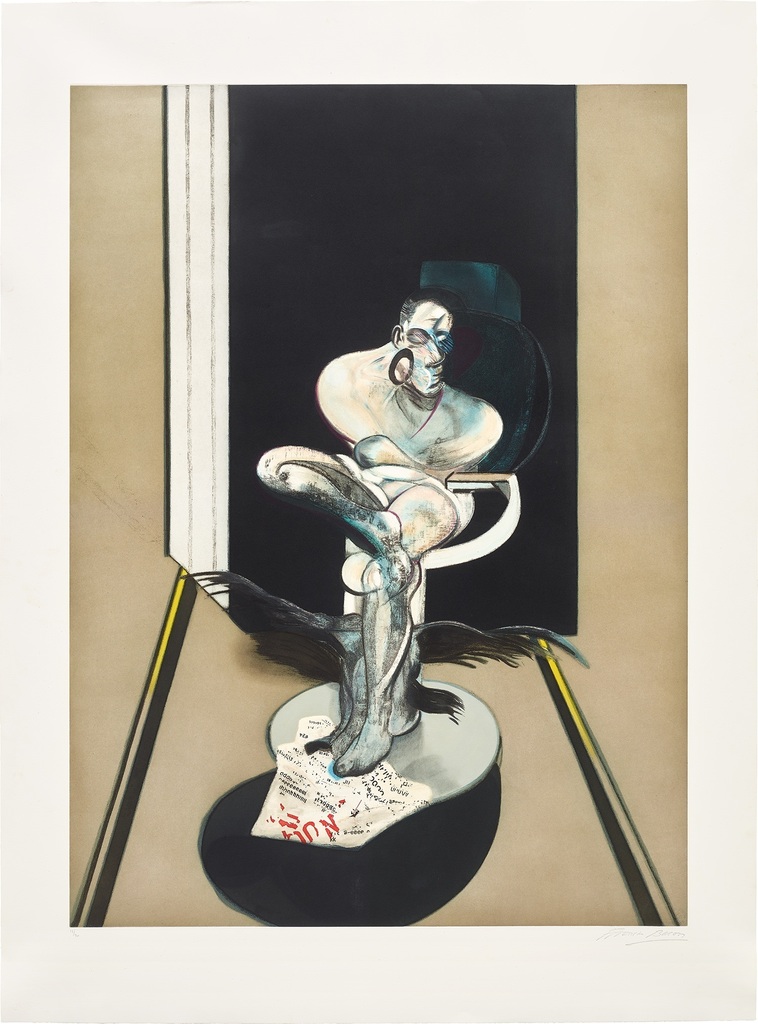
Seated Figure (after, Seated Figure 1977) (S. 7, T. 32) · Francis Bacon · Phillips · 2022-09 · $19,406
Francis Bacon
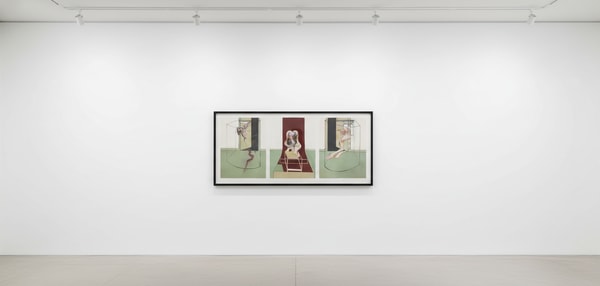
after Triptych (1981) inspired by the Oresteia of Aeschylus, 1981
1981
Francis Bacon
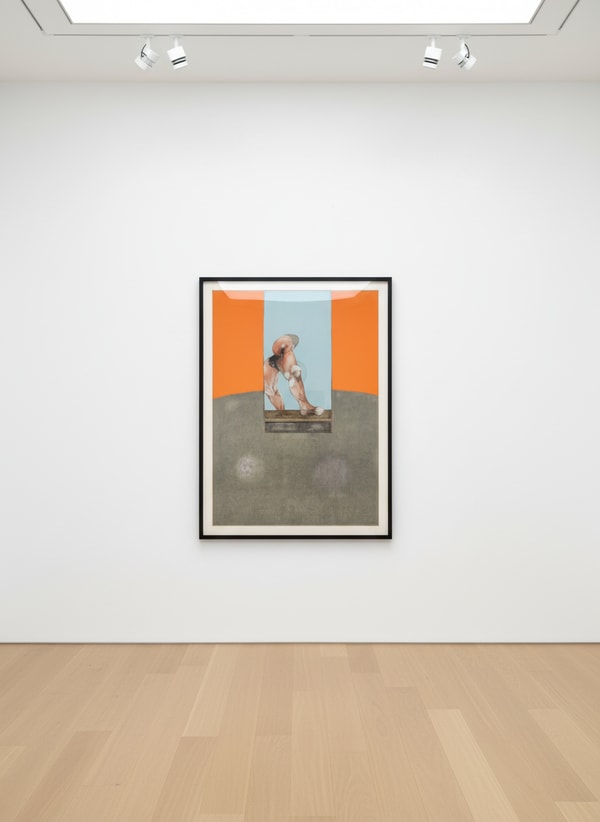
Etude de Tauromachie
1987
Francis Bacon
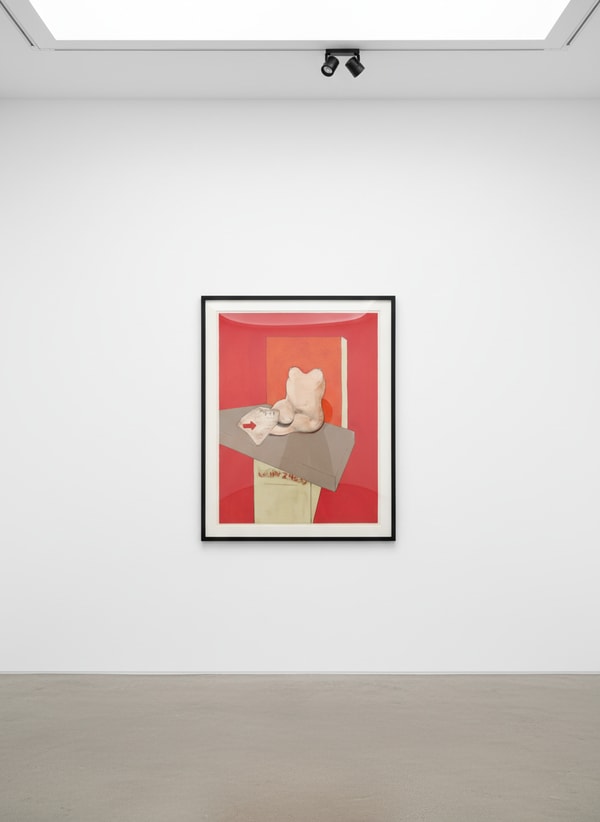
Ètude du Corps Humain d'après Ingres , afterStudy of a Human Body after Ingres 1982
1984

Francis Bacon
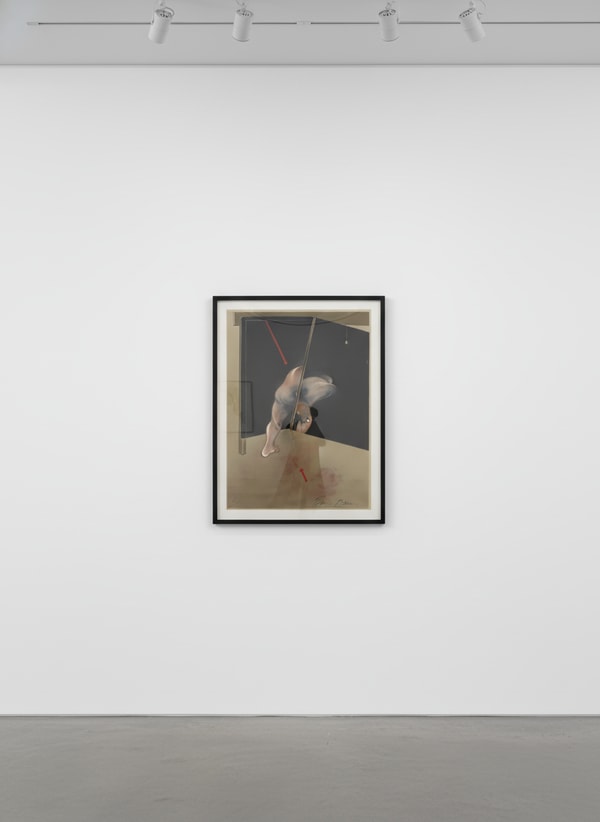
Hommage à Van Gogh , after Hommage à Van Gogh 1985
1989
Francis Bacon
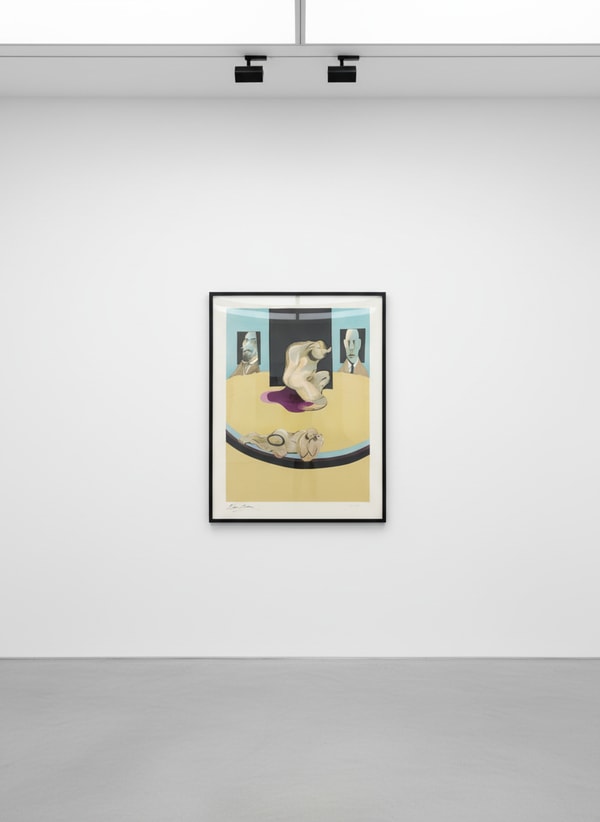
Logique de la sensation , after Study from the Human Body 1981
1981
Francis Bacon
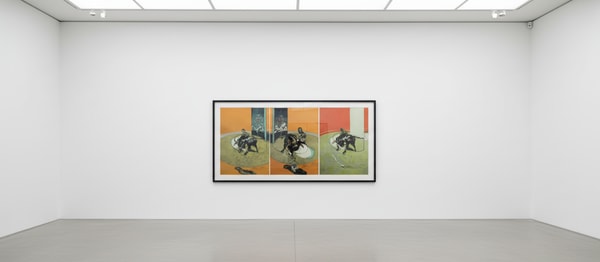
Metropolitan Museum of Art
1975
Francis Bacon
Mirroir de la Tauromachie
1990
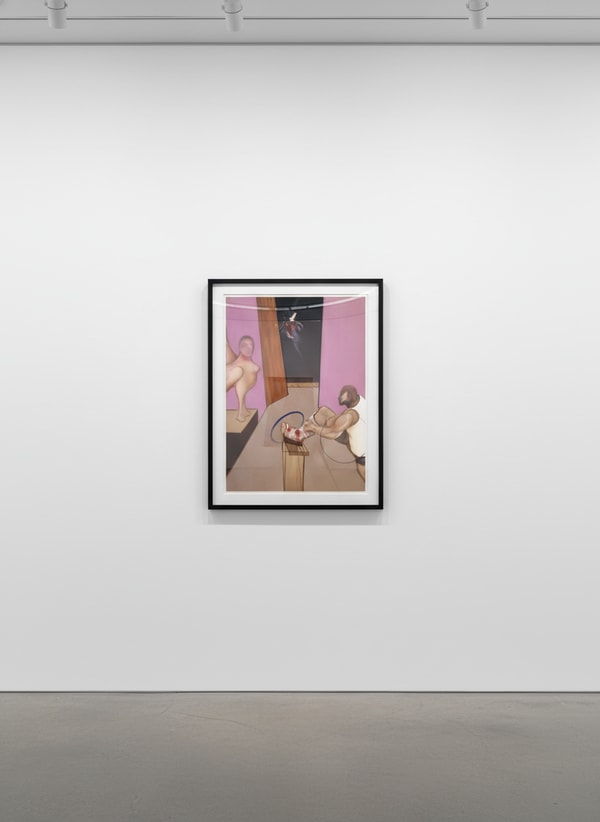
Francis Bacon
Oedipe et Le Sphinx d'après Ingres , after Oedipus and the Sphinx after Ingres 1983
1984
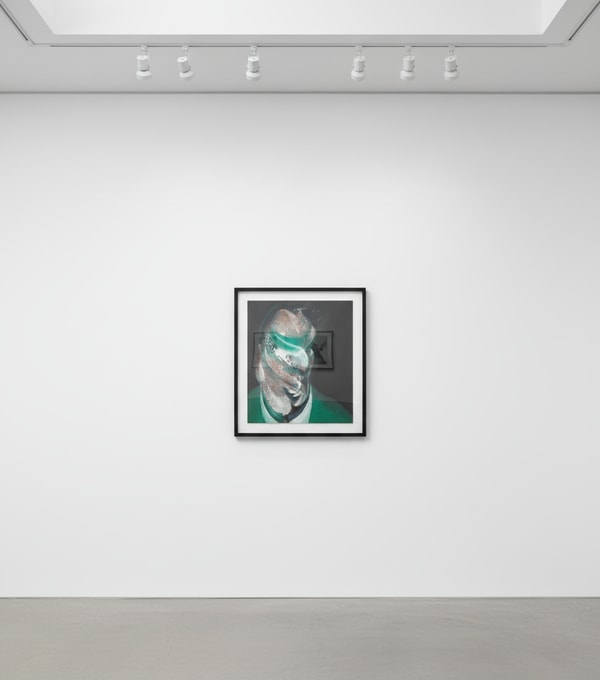
Francis Bacon
Portrait of Freud
1967
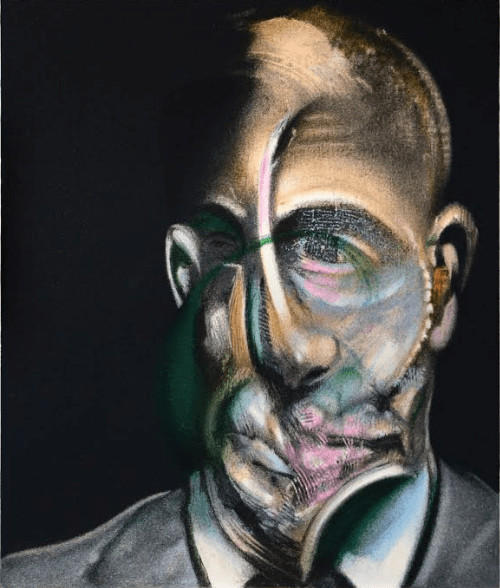
Francis Bacon
Portrait of Michel Leiris from Miroir de la Tauromachie
1990
Francis Bacon
Seated Figure
1983
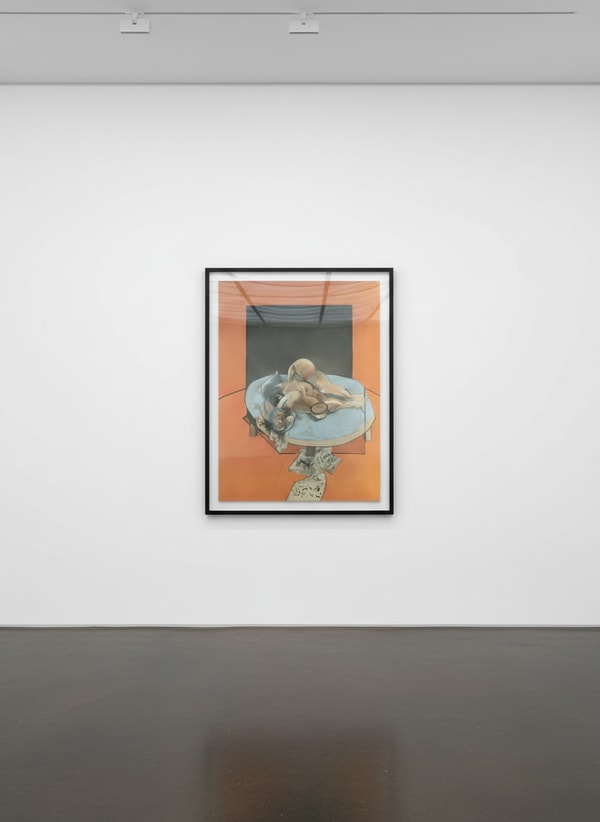
Francis Bacon
Studies of the Human Body , after the Central Panel of the Triptych Studies of the Human Body 1979
1980
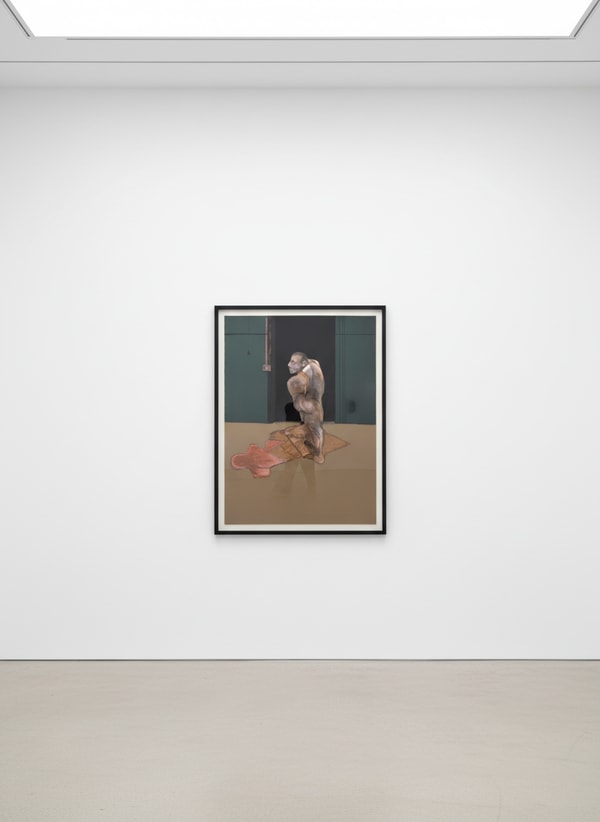
Francis Bacon
Study For A Portrait of John Edwards
1987
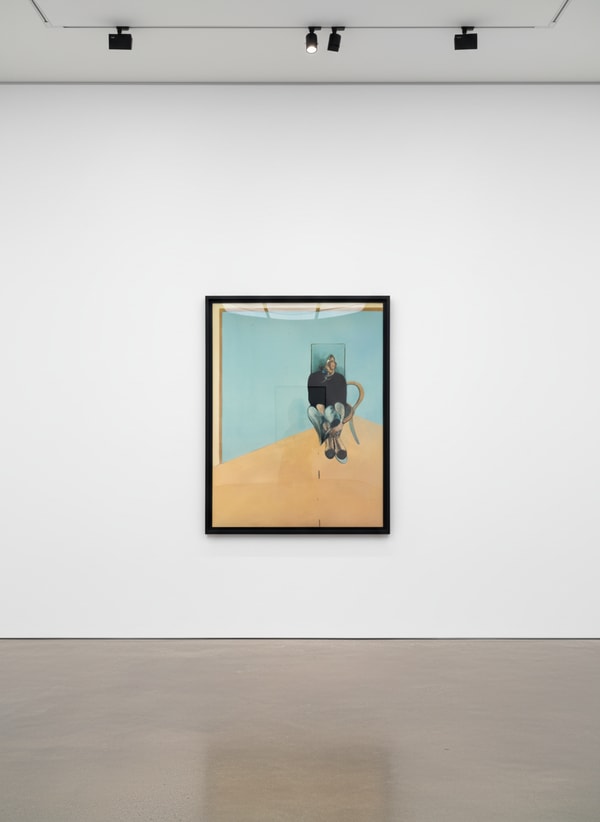
Francis Bacon
Study for Self Portrait , after Study for Self Portrait 1982
1984
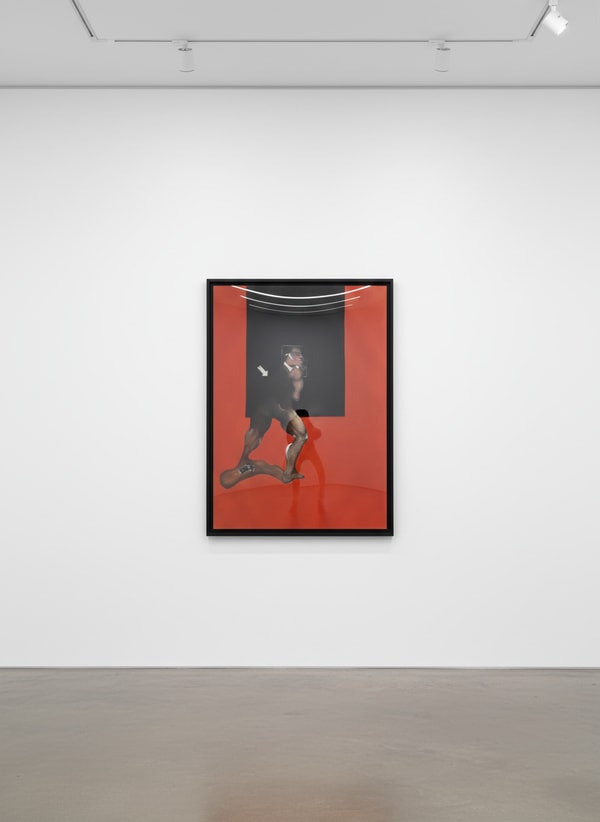
Francis Bacon
Study from Human Body , after Study from Human Body 1987
1992
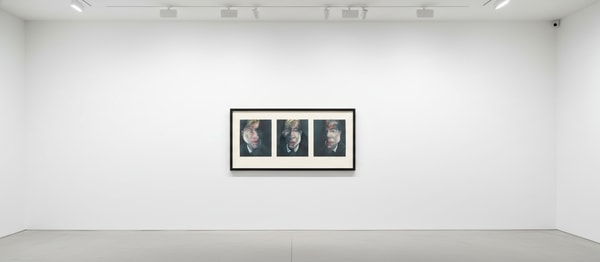
Francis Bacon
Three Studies For A Self Portrait
1983-1990
Francis Bacon (1909–1992) is among the most important figurative painters of the twentieth century, an artist whose raw, visceral canvases locate the human body in conditions of extreme psychological tension and transform painterly convention into a vehicle for existential confrontation. Born in Dublin to English parents, Bacon was largely self-taught — he received no formal art education and came to painting in his late twenties after years of drifting through London and Europe. His breakthrough came with the 1944 triptych Three Studies for Figures at the Base of a Crucifixion, which shocked a wartime London audience with its images of distorted, screaming hybrid creatures and established his reputation as an artist of unsettling and uncompromising vision.
Bacon's mature practice was built around a small number of recurrent subjects and formal devices. His Screaming Popes — a long series of works derived from Velázquez's portrait of Pope Innocent X — dissolve the authority of the Renaissance original into images of anguish and constraint, the figure screaming behind glass or pinned within a geometric cage. His portraits of his intimate circle — Lucian Freud, George Dyer, Isabel Rawsthorne, Peter Lacy — are among the most psychologically penetrating likenesses in the history of art, the faces smeared and turned and displaced in ways that feel both violently distorted and deeply faithful to the sitter's interior life. His self-portraits are equally compulsive: self-scrutiny carried to the point of self-laceration. Through all these works runs a consistent formal vocabulary: figures isolated in shallow, airless spaces; geometric frameworks of lines and bars that imprison or frame; meat-like surfaces of dragged and flung paint; glass and velvet chosen as ground materials to intensify the sense of both exposure and entrapment.
Bacon's market stands among the highest of any twentieth-century figurative artist. Three Studies of Lucian Freud (1969) achieved $142,400,000 at Christie's New York in 2013 — the world auction record at the time — while Triptych, 1976 reached $86,000,000 at Sotheby's New York in 2014, and Triptych Inspired by the Oresteia of Aeschylus (1981) achieved $84,600,000 at Sotheby's in 2020. Works on paper, prints, lithographs, and screenprints derived from his iconic paintings represent more accessible entry points to his market and are actively sought by collectors worldwide.
Bacon's work is held at Tate Modern, the Museum of Modern Art, the Metropolitan Museum of Art, the Solomon R. Guggenheim Museum, the Art Institute of Chicago, the Centre Pompidou, the Museo Nacional del Prado, and Museum Ludwig, among other major institutions globally.
Guy Hepner offers expert guidance on Francis Bacon prints, editions, and works on paper from our gallery at 177 Tenth Avenue, New York. Given the seriousness of the Bacon market and the importance of authentication, we approach every transaction with the utmost rigour. We offer free, confidential valuations for works in private collections and connections to qualified buyers worldwide.