
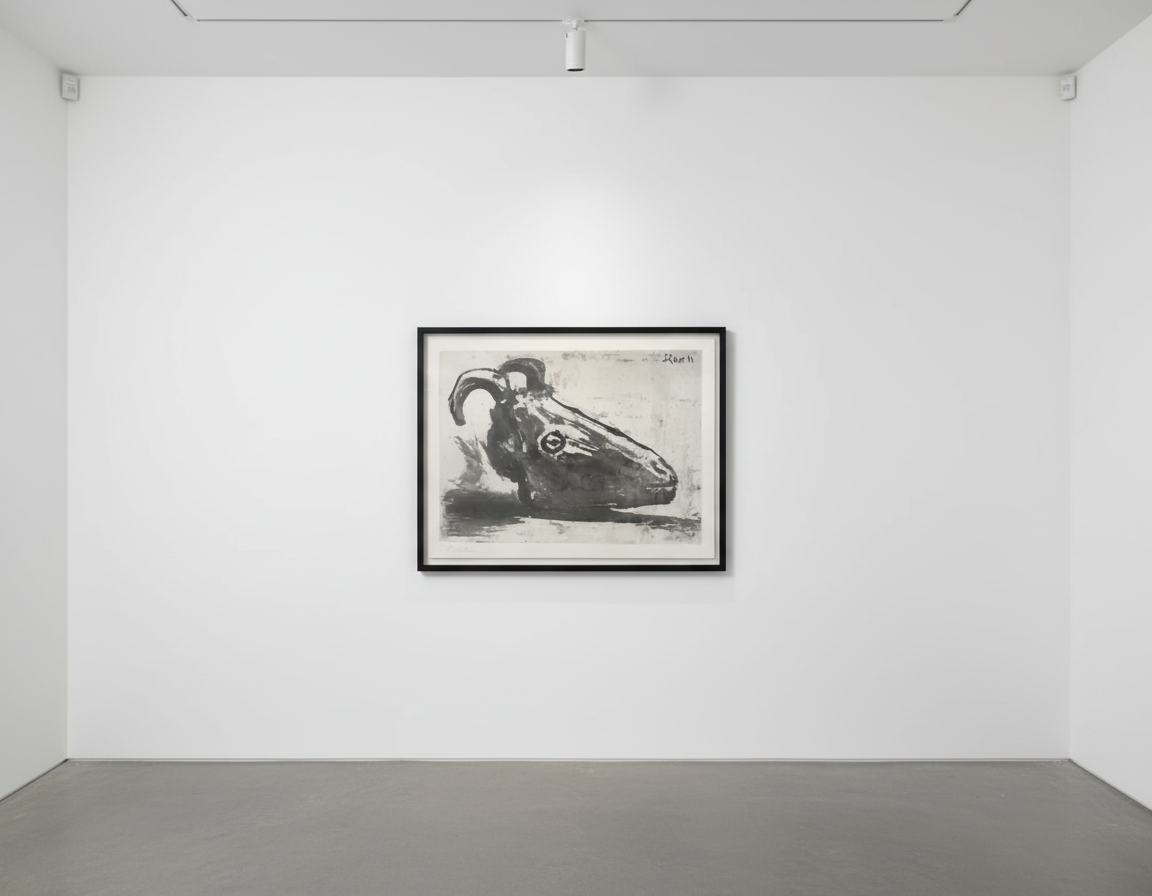
Aquatint
13 works

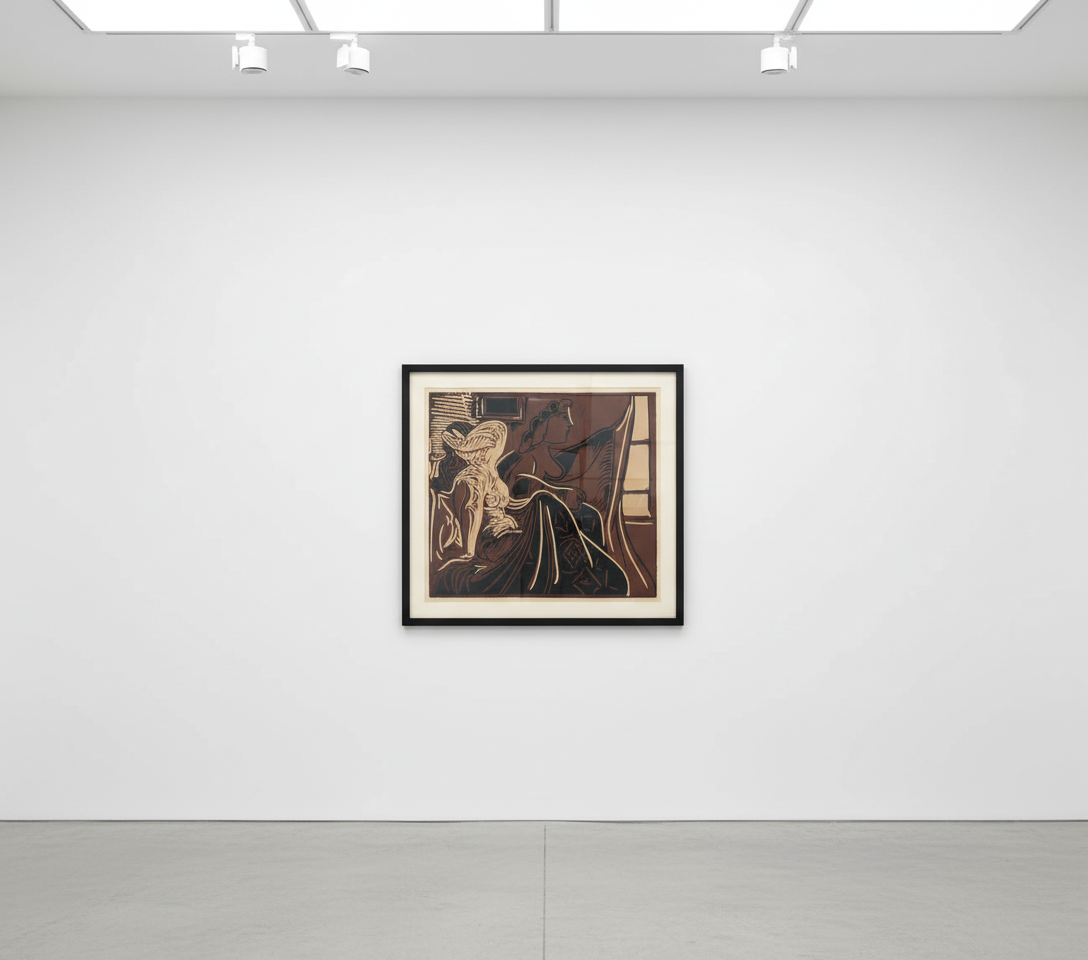
Deux Femmes Prés de la Fenêtre, 1959
Linocut in color Signed in Pencil
20 7/8 x 25 3/8 in 53.1 x 64.5 cm
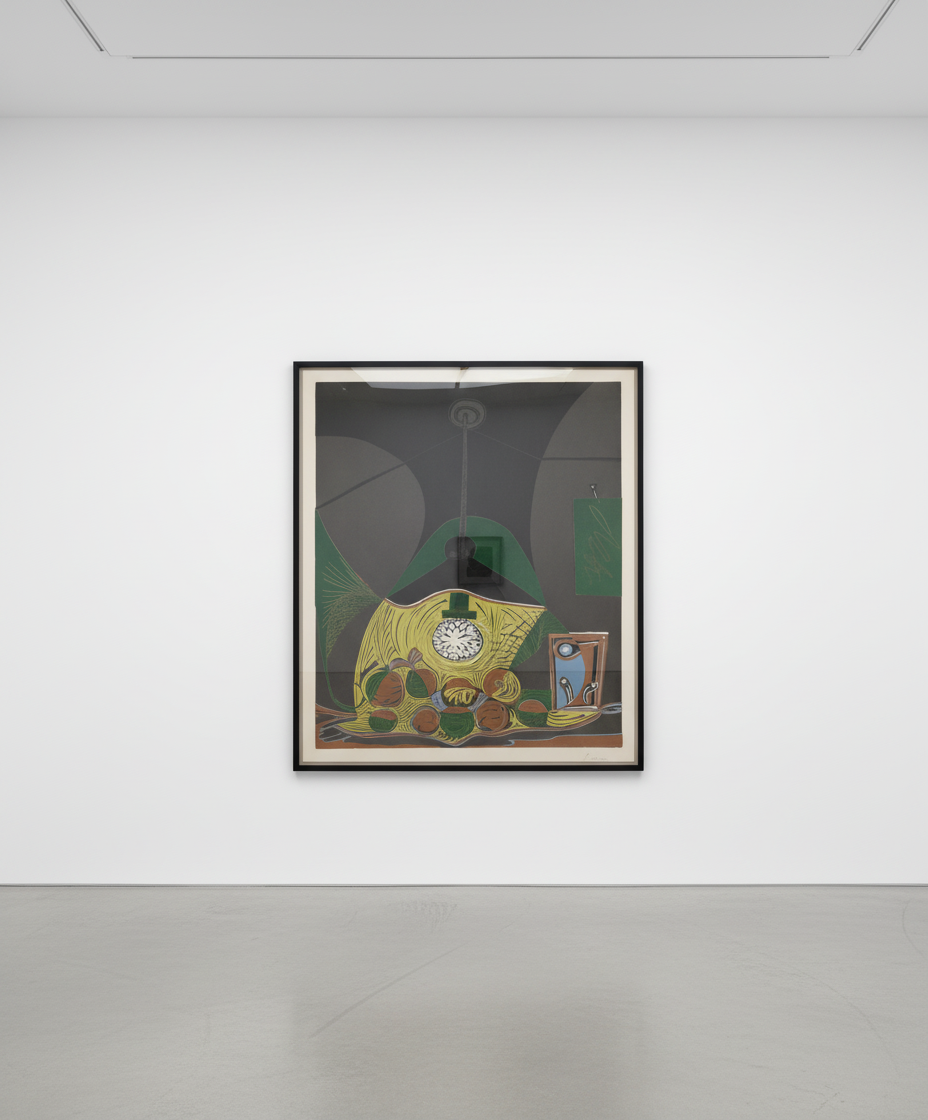
This 1959 linocut by Pablo Picasso, Deux Femmes près de la Fenêtre, is a striking demonstration of his late printmaking mastery, where the linocut became one of his boldest and most experimental mediums. Executed with reduction techniques and printed in earthy tones of black and terracotta, the work captures the intimacy of an interior scene while transforming it into a monumental composition of rhythm, contrast, and abstraction.Picasso, working in Vallauris alongside printer Hidalgo Arnéra, revolutionized the linocut medium during the 1950s. Instead of using multiple blocks for different colors, he perfected the reduction method—cutting and re-cutting a single block in successive stages, each layer of carving permanently altering the plate. This demanding process required extraordinary precision and confidence, since earlier stages could not be revised once removed.In Deux Femmes près de la Fenêtre, the result is a masterclass in tonal layering. The earthy reds and deep blacks are balanced by lighter beige highlights, producing depth and atmosphere without sacrificing the flat, graphic clarity inherent to linocut. The medium’s bold contrasts reinforce the solidity of the figures while creating a dramatic interplay between shadow and light.The composition presents two women seated near a window, a subject that recalls both Picasso’s earlier Cubist interiors and his Neoclassical figures of the 1920s. The woman in the foreground is depicted with bold striations carved into her body, emphasizing musculature, texture, and expressive dynamism. By contrast, the second woman, seated more upright and further back, is rendered in simplified contour, her silhouette serene and monumental.This juxtaposition of figures—one dynamic, almost sculptural, the other calm and statuesque—creates a dialogue of contrasts: movement versus stillness, flesh versus outline, sensual immediacy versus idealized presence. The window to the right serves as a framing device, suggesting both domestic intimacy and the metaphor of looking outward, a theme Picasso often explored in his depictions of women.The work epitomizes Picasso’s mastery of the linocut process, showcasing his ability to create both texture and volume through reduction carving. The intricate striations on the reclining figure highlight his technical ingenuity—using the carving knife almost like a brush to create rhythmic patterns of light and shadow. Meanwhile, the bold silhouettes of the seated woman and draped textiles demonstrate his economy of means, where simple shapes achieve monumental weight.This duality between fine detail and sweeping simplicity is one of Picasso’s greatest achievements in the medium. Unlike the delicate tonal subtleties of his lithographs or the layered densities of his etchings, his linocuts are unapologetically graphic, relying on contrast and clarity to achieve their power.The theme of women near windows runs throughout Picasso’s oeuvre, from his Cubist works of the 1910s to his postwar paintings. The motif symbolizes both interior intimacy and the act of looking—women as muses, as companions, and as subjects of contemplation. In the context of the 1950s, when Picasso was working prolifically in printmaking, ceramics, and painting, such works also underscore his continued interest in domestic and sensual themes, translated here into the boldest graphic language.Deux Femmes près de la Fenêtre (1959) exemplifies Picasso’s late linocut style: monumental, graphic, and experimental. Through the reduction method, he creates a dynamic interplay of tonal contrasts, textures, and forms that convey both intimacy and grandeur. The work not only reaffirms his technical mastery but also his ability to continually reinvent traditional themes—such as women by a window—through new mediums and visual languages.It stands as a testament to how, even in his later years, Picasso remained at the forefront of innovation, pushing linocut to its expressive limits and transforming a simple domestic subject into a timeless, modern icon.For more information or to buy Deux Femmes près de la Fenêtre by Pablo Picasso, contact our galleries using the form below.
Pablo Picasso (1881–1973, born Málaga, Spain) is the most productive and formally transformative artist in the history of Western art — a figure whose influence on twentieth-century painting, sculpture, printmaking, and ceramics is so pervasive that it remains, more than fifty years after his death, genuinely difficult to assess. Born in Málaga to an art teacher father who recognised and encouraged his prodigious talent, Picasso studied in Barcelona and Madrid before arriving in Paris in the early years of the twentieth century, where the encounter with Cézanne, African art, and his own restless intelligence produced Cubism — perhaps the most radical rupture in the history of representation since the Renaissance.
Pablo Picasso prints for sale at Guy Hepner represent one of the most significant collecting opportunities in the modern art market. Our gallery offers original Picasso lithographs, linocuts, etchings, and aquatints — each accompanied by full provenance documentation and catalogue raisonné references. Whether you are seeking a signed Mourlot lithograph, a Vollard Suite etching, a Vallauris linocut, or a late aquatint, Guy Hepner has the expertise and inventory to assist collectors at every level.
Picasso's print output is among the richest and most varied in art history, spanning etchings, lithographs, linocuts, and aquatints produced across seven decades. Understanding the categories is essential to collecting intelligently.
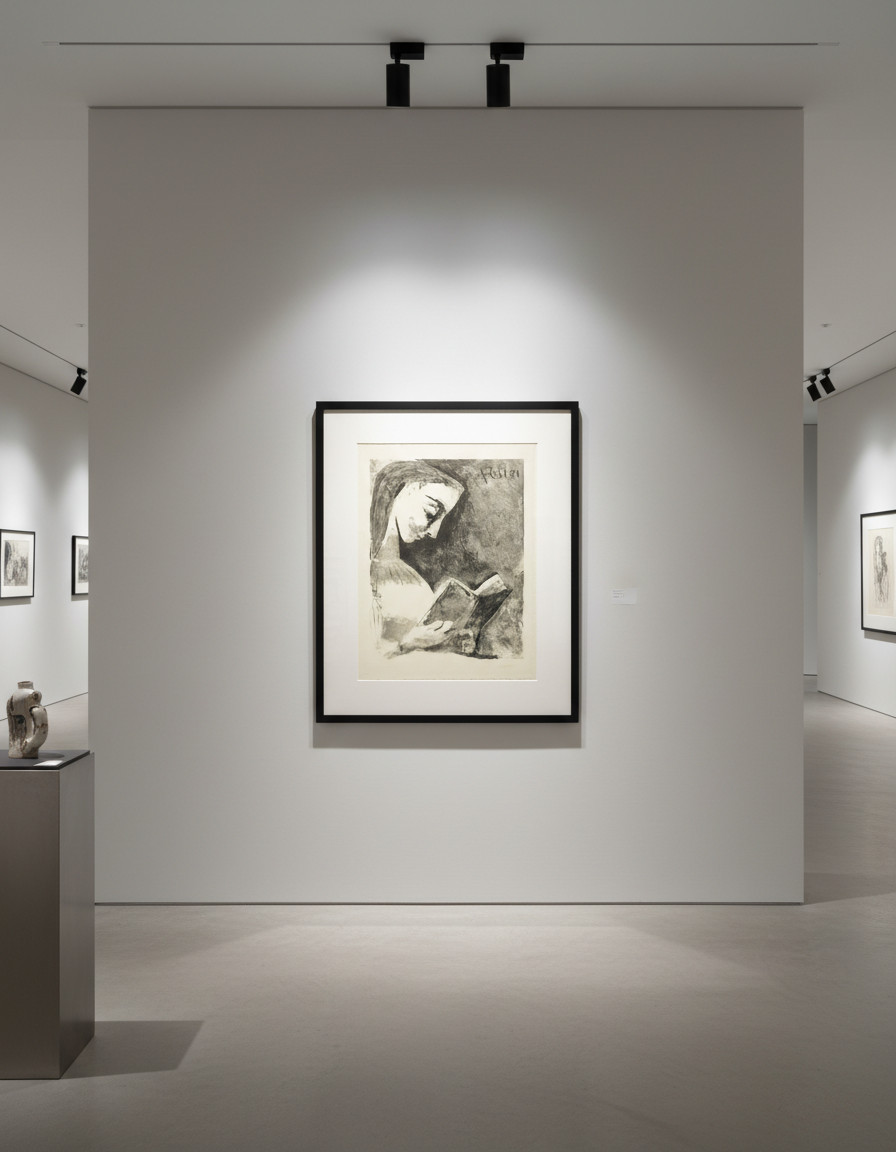
Lithographs were produced primarily through Fernand Mourlot's atelier in Paris, where Picasso worked from 1945 onwards. Mourlot documented over 400 lithographs bearing Picasso's hand, ranging from abstract heads and Cubist still lifes to the monumental Toros y Toreros bull-fighting series. Editions typically run from 50 to 275 copies. Unsigned Mourlot lithographs trade between $3,000 and $40,000; signed examples command $15,000 to $150,000 or more depending on subject and condition.
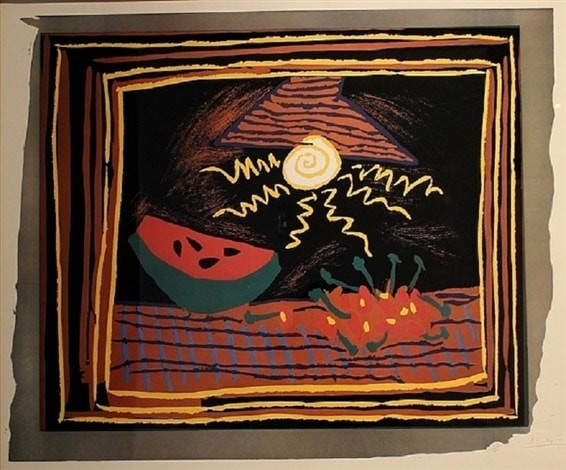
Linocuts, produced primarily at Vallauris between 1958 and 1963 using Picasso's own colour-reduction technique, are among the most technically revolutionary of all his prints. By cutting progressively deeper into a single block, Picasso achieved complex colour sequences impossible by conventional means. Edition sizes are small — typically 50 copies — and signed linocuts frequently exceed $80,000 at auction.
Etchings span Picasso's entire career, from his earliest Parisian years through to the late suites of the 1960s and early 1970s. The medium suited his restless line perfectly, and his etched output includes some of the finest prints of the twentieth century. Edition sizes vary widely, from the 50 impressions of the Vollard Suite to smaller later editions. Prices range from $5,000 for minor early works to well over $500,000 for Vollard Suite masterpieces.
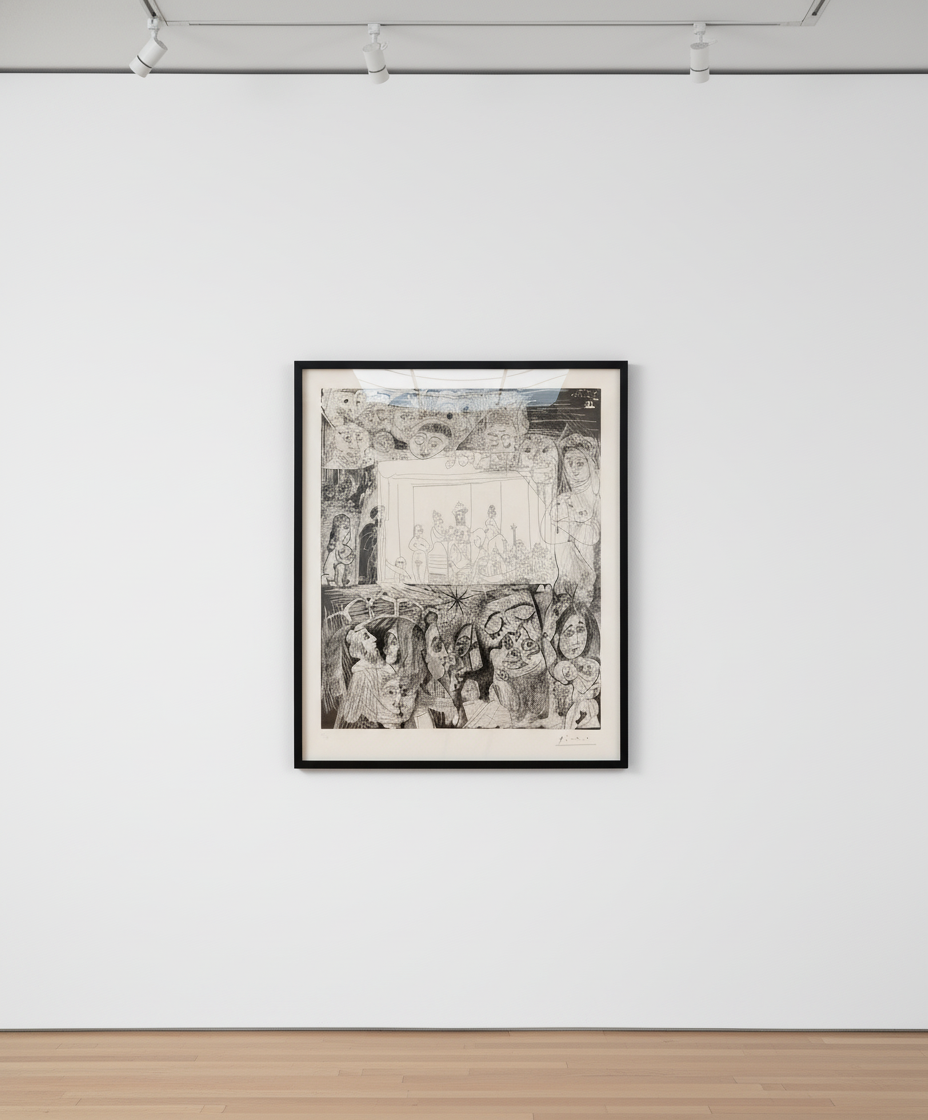
Aquatints combine etching's linear precision with tonal washes of extraordinary subtlety. Picasso's aquatint work, often produced in collaboration with master printer Roger Lacourière, includes some of his most formally sophisticated printed images. These prints are rarer than his lithographs and command significant premiums accordingly.
Authentication for all Picasso prints relies on the Bloch catalogue raisonné — the definitive scholarly record of his print output — supplemented by Mourlot's lithograph catalogue where applicable.
Picasso's paintings represent the summit of the twentieth-century market. Understanding his periods is essential for collectors.
The Blue Period (1901–1904) produced austere, emotionally charged paintings on themes of poverty, isolation, and melancholy — elongated figures rendered in blue-grey tones that echo El Greco and carry an extraordinary psychological weight. Works from this period are among the most sought-after in the history of art.
The Rose Period (1904–1906) brought warmer hues and more tender subjects — circus performers, saltimbanques, and acrobats rendered with a new formal assurance. The transitional works that followed, leading to Les Demoiselles d'Avignon (1907), represent the hinge on which the entire history of modern painting pivots.
The Cubist period (1907–1921), co-developed with Georges Braque, produced the most intellectually radical body of painting in the twentieth century. Analytic Cubism (1909–1912) fragmented forms into near-monochromatic facets; Synthetic Cubism (from 1912) introduced collage, typography, and bolder colour. Major Cubist paintings are virtually never available on the primary market; they appear at auction rarely and achieve extraordinary prices.
Picasso's auction record stands at $179,365,000 — achieved at Christie's New York in May 2015 for Les Femmes d'Alger (Version O), a 1955 work from his series responding to Delacroix. Nude, Green Leaves and Bust (1932) reached $106,482,500 at Christie's in May 2010. These are benchmark figures for a career that produced well over 16,000 works catalogued by Zervos.
The most desirable areas of the Picasso print market for serious collectors are well-defined.
The Vollard Suite (1930–1937): ninety-seven etchings (and three aquatints with Roger Lacourière) commissioned by dealer Ambroise Vollard. The suite is considered Picasso's greatest print achievement — 100 plates encompassing the Sculptor's Studio sequence, the Minotaur series, and intimate portraits of Marie-Thérèse Walter. Published posthumously by Vollard's estate, the complete suite is extraordinarily rare. Individual plates now trade from $80,000 to over $500,000.
Suite 347 (1968): three hundred and forty-seven etchings completed in seven months when Picasso was eighty-six years old — an astonishing demonstration of creative energy in extreme old age. Themes include Degas's brothel scenes, Spanish picadors, Rembrandt, and Ingres. Published by Galerie Louise Leiris. These prints represent exceptional value relative to their historical importance.
Mourlot lithographs: Fernando Mourlot's catalogue documents Picasso's lithographic output with scholarly precision. The Bloch numbers (B.1 through B.2042 for the complete print oeuvre) and Mourlot numbers together form the authentication framework used by every major auction house.
Crommelynck etchings: Piero and Aldo Crommelynck's Paris workshop produced Picasso's late etchings with extraordinary technical refinement. The 347 Suite plates were printed here, as were the 156 Series etchings (1970–1972) — Picasso's final major print campaign.
Condition criteria for print collecting: look for clean, wide margins with no trimming; avoid foxing (rust-coloured spots from paper acidity) or tide lines; fading affects lithographs most severely — examine under strong light. Impressions on Japan paper or with remarques command significant premiums.
Authentication for Picasso works operates through established institutional channels.
For prints: the Bloch catalogue raisonné (Picasso: His Graphic Work, Volumes I–IV) provides reference numbers for all known prints. Mourlot's catalogue covers lithographs specifically. The Succession Picasso estate stamp appears on many posthumously published editions. Any print without clear catalogue raisonné reference and provenance chain should be examined by a specialist before purchase.
For paintings and works on paper: the Comité Picasso (now dissolved) was the primary authentication body; the Succession Picasso now handles estate matters. The Zervos catalogue raisonné (33 volumes) is the authoritative scholarly record for paintings, drawings, and sculpture. Expert authentication by a recognised Picasso specialist is essential for any major purchase.
Guy Hepner Gallery, 177 Tenth Avenue, New York, offers full provenance verification and catalogue raisonné consultation for all Picasso works. We provide free, confidential valuations for collectors looking to sell, and access to a global network of qualified buyers. Our expertise spans ceramics, prints, linocuts, drawings, and paintings across all periods of the artist's work.