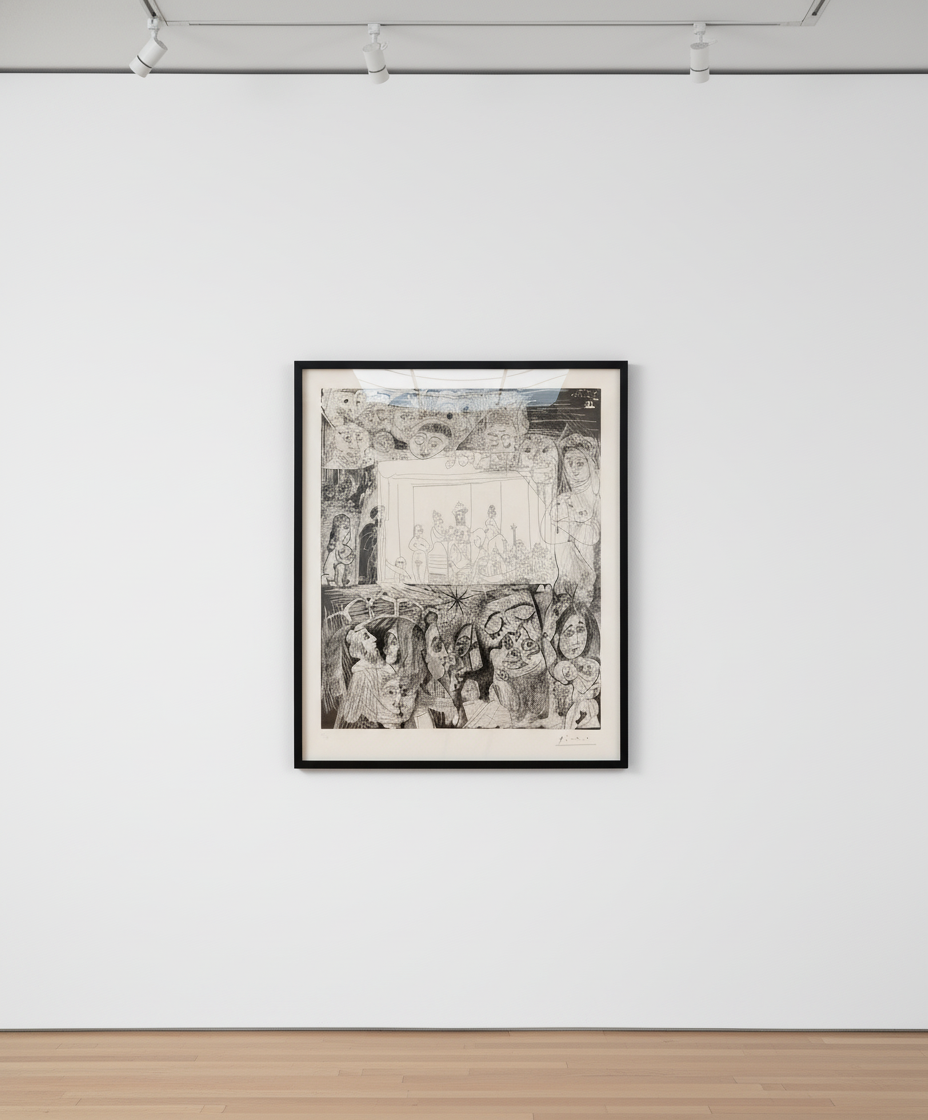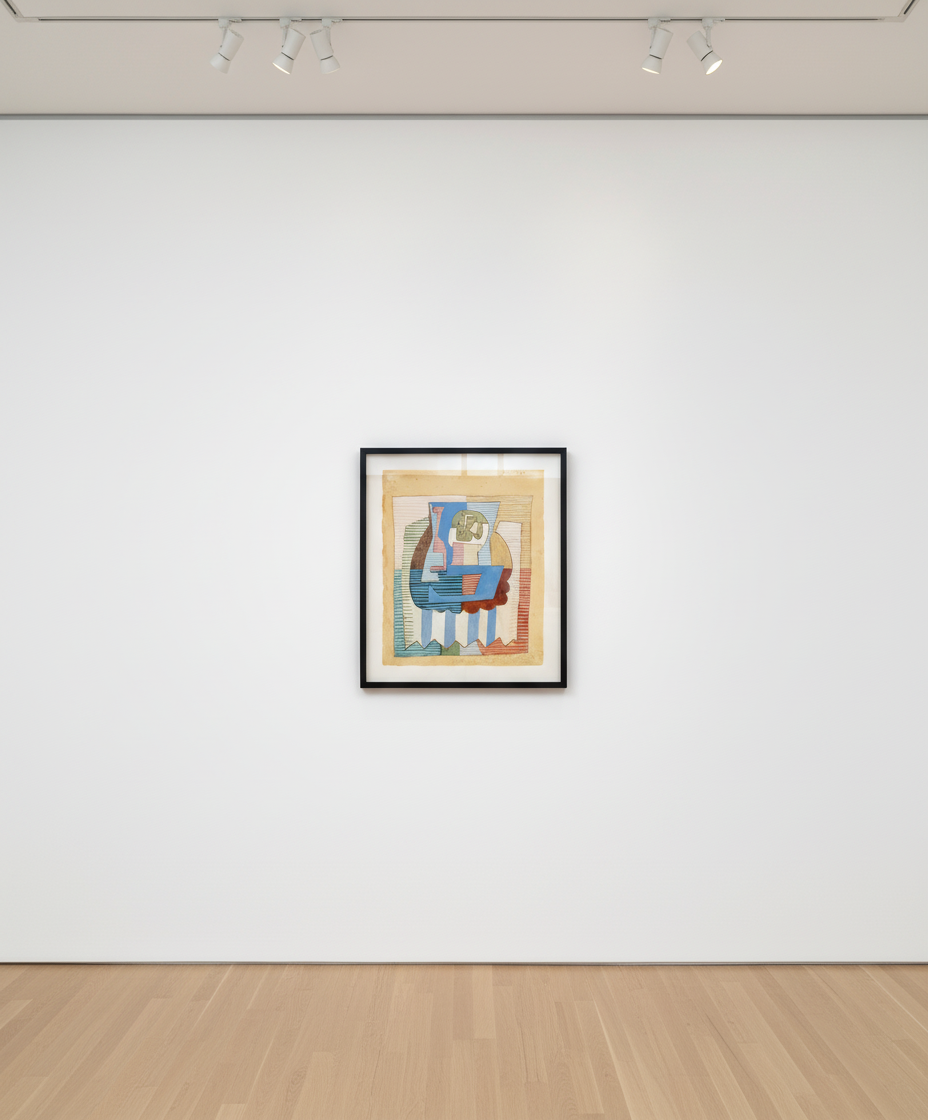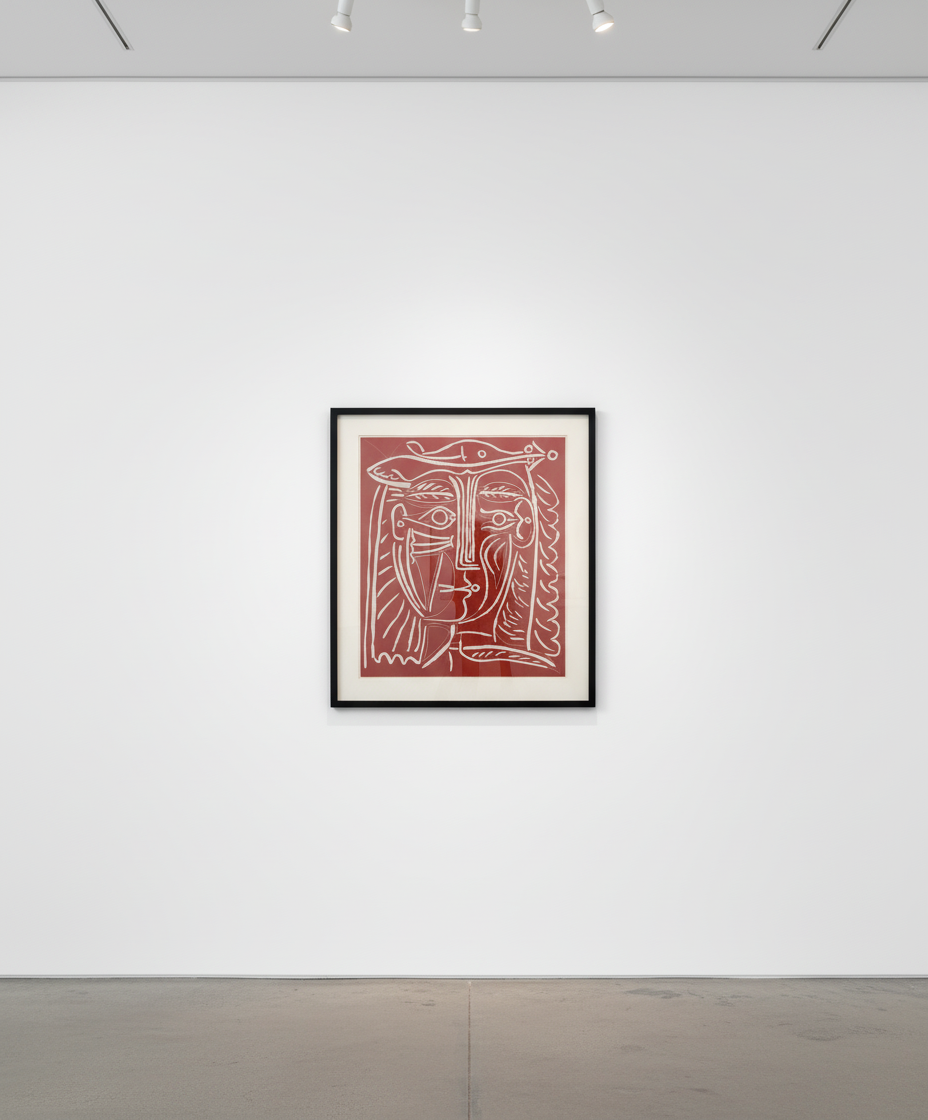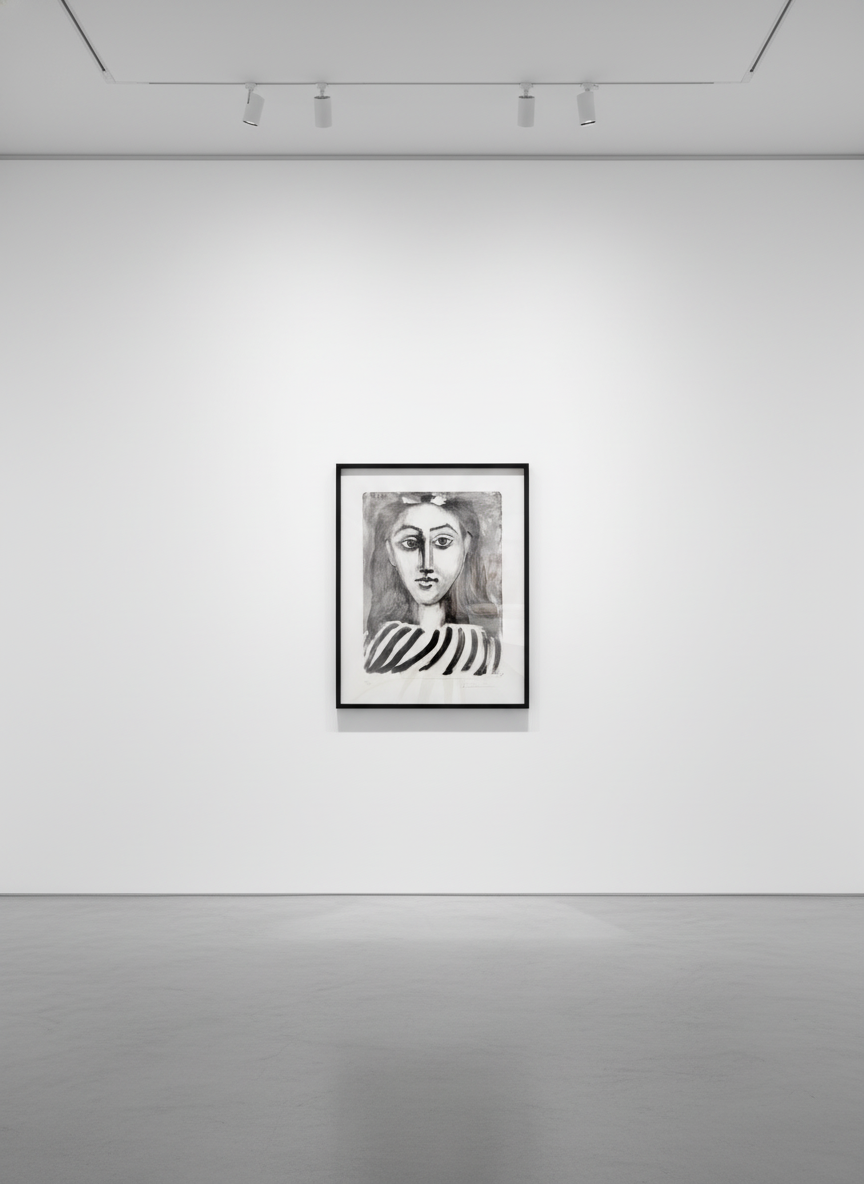

Pablo Picasso — Painting For Sale
Pablo Picasso Paintings at Guy Hepner
Market Authority in Twentieth-Century Masterworks
Pablo Picasso paintings represent the apex of the modern art market, commanding prices that have defined auction history for decades. As the Art Basel & UBS Global Art Market Report confirms the global art market's return to growth in 2025, Picasso paintings continue to anchor institutional portfolios and private collections worldwide, offering both aesthetic significance and enduring market strength.
The artist's auction dominance remains unparalleled. Christie's achieved $179.4 million for Les Femmes d'Alger (Version O) in 2015, establishing a record that stood for years as the highest price paid for any artwork at auction. Earlier, in 2010, Christie's sold Nude, Green Leaves and Bust for $106.5 million, confirming Picasso's position at the summit of the secondary market. These landmark results reflect sustained institutional confidence in Picasso paintings across all periods and stylistic phases, from early experimental works through the artist's final decades of production.
Series Context: The Foundation of Modern Painting
Born in Málaga in 1881, Picasso demonstrated extraordinary technical facility from childhood, mastering academic painting before systematically dismantling its conventions. His co-founding of Cubism alongside Georges Braque between 1907 and 1914 fundamentally restructured Western pictorial space, introducing simultaneous perspective and fragmented form that would influence virtually every subsequent modern movement. The Zervos catalogue raisonné, spanning thirty-three volumes, documents an output of staggering scope—thousands of paintings produced across more than seven decades of continuous artistic evolution.
Picasso's painted oeuvre divides into recognized periods that collectors and scholars have studied extensively: the melancholic Blue Period, the warmer Rose Period, the revolutionary Cubist years, the monumental Neoclassical phase, Surrealist explorations, and the expressionistic late works that have gained substantial critical and market reassessment. Each phase offers distinct characteristics, yet all demonstrate the artist's relentless formal invention and psychological intensity. This breadth ensures that Picasso paintings exist across virtually every price threshold, from accessible works on panel to museum-quality canvases that appear at major auction only once in a generation.
Technical Details: Materials and Methods
Picasso worked across an extraordinary range of painting supports and media throughout his career. Oil on canvas predominates in the major works, though the artist frequently employed oil on panel, oil on wood, and mixed media approaches that incorporated sand, collage elements, and unconventional pigments. His technical facility allowed rapid execution—some paintings completed in single sessions—while other works show extended periods of revision and reworking visible through pentimenti and surface texture.
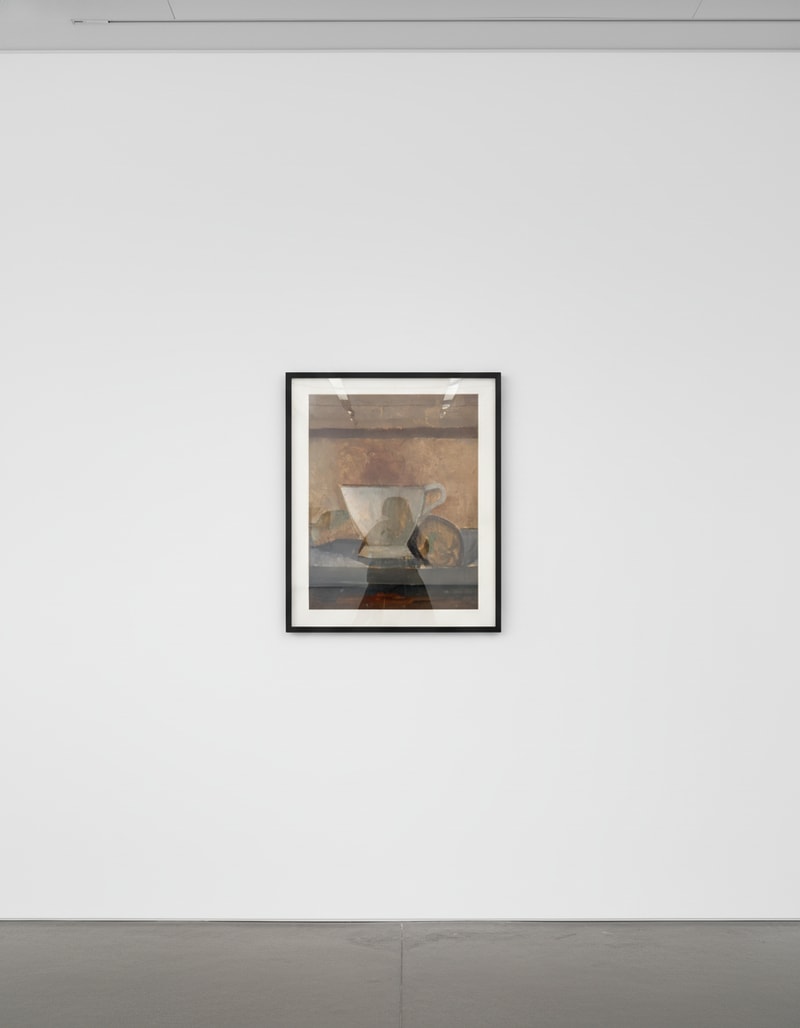
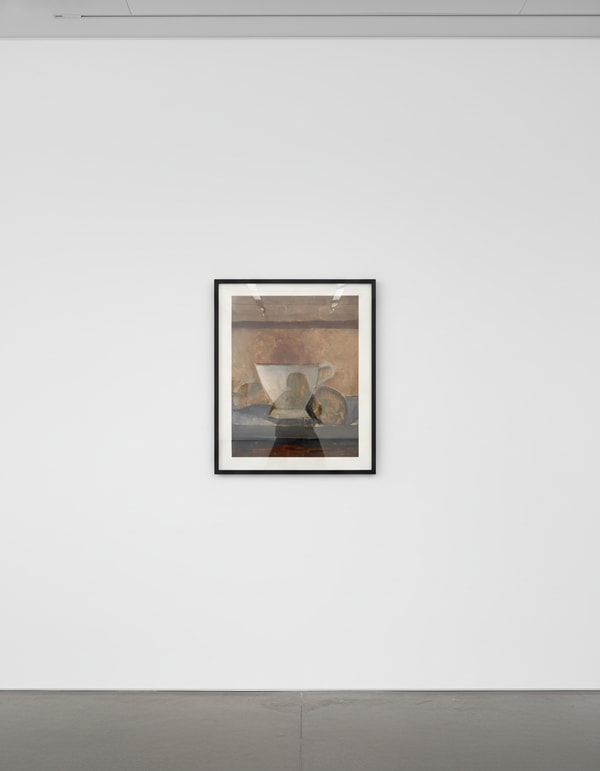
The early works, including pieces from 1908 such as Tasse et bananes, reveal the artist's engagement with Post-Impressionist color and emergent Cubist structure. Oil on panel provided a stable, smooth surface suited to the controlled brushwork of this transitional period, when Picasso was absorbing Cézanne's geometric simplifications while developing his own radical pictorial vocabulary. These proto-Cubist works hold particular art historical significance, documenting the months when Western painting's fundamental assumptions underwent irreversible transformation.
Conservation considerations for Picasso paintings vary by period and support. Panel works generally demonstrate excellent stability, while certain canvases from periods when the artist used experimental grounds or rapid drying techniques may require specialized conservation attention. Authentication relies primarily on the Zervos catalogue raisonné, supplemented by the archives of the Picasso Administration in Paris, which maintains definitive scholarly authority over the artist's painted oeuvre.
Notable Works: Tasse et bananes (1908)
Tasse et bananes from 1908 exemplifies the crucial transitional moment in Picasso's development between Post-Impressionism and fully realized Cubism. This oil on panel captures the artist's investigation of simplified volumetric form and muted, earth-toned palette that characterized his work following sustained engagement with Cézanne's late still lifes. The modest domestic subject—a cup and bananas—belies the painting's art historical weight, as such studies provided the laboratory in which Picasso refined the perceptual innovations that would culminate in the Cubist revolution.
Works from 1908 occupy a particularly significant position in Picasso scholarship, representing the period between Les Demoiselles d'Avignon (1907) and the systematic Analytic Cubism that emerged by 1910. Collectors recognize this window as documenting one of the most consequential stylistic evolutions in art history, lending even modest-scale works considerable scholarly and market interest.
Investment Analysis: Sustained Market Performance
The Art Basel & UBS Global Art Market Report documented total global art sales of $57.5 billion in 2024, with the market returning to growth in 2025. Within this environment, Picasso paintings maintain their historical role as foundation assets for serious collections. Major works continue achieving results at Christie's, Sotheby's, Phillips, and Bonhams that reinforce the artist's market primacy, while the breadth of his output ensures acquisition opportunities across multiple price tiers.
Picasso's market demonstrates notable resilience across economic cycles, with institutional collectors and museums providing consistent demand that supports valuations even during periods of broader market contraction. The artist's unassailable art historical position—extensively documented across museum collections, scholarly literature, and the comprehensive Zervos catalogue—provides authentication certainty that reduces acquisition risk relative to artists with less established provenance infrastructure.
Acquisition Guidance
Guy Hepner in New York offers collectors direct access to Pablo Picasso paintings supported by rigorous authentication verification and comprehensive provenance documentation. Our established transaction history with Picasso works demonstrates commitment to this essential collecting category.
We invite collectors to contact Guy Hepner to discuss current availability, authentication requirements, and acquisition strategies aligned with individual collection objectives.

1 work available
Frequently Asked Questions
Where can I buy Pablo Picasso Painting prints for sale?
Pablo Picasso Painting prints for sale are available at Guy Hepner Gallery, 177 Tenth Avenue, New York. We offer authenticated editions with full provenance documentation sourced from the secondary market and directly from publishers.
Are Pablo Picasso Painting works limited editions?
Pablo Picasso Painting works — 1 available — are typically produced as limited editions, individually signed and numbered by the artist. Contact Guy Hepner Gallery for edition details on specific works.
How much do Pablo Picasso Painting prints cost?
Pricing for Pablo Picasso Painting prints varies by edition size, date, and condition. Contact Guy Hepner Gallery for current market pricing and availability.