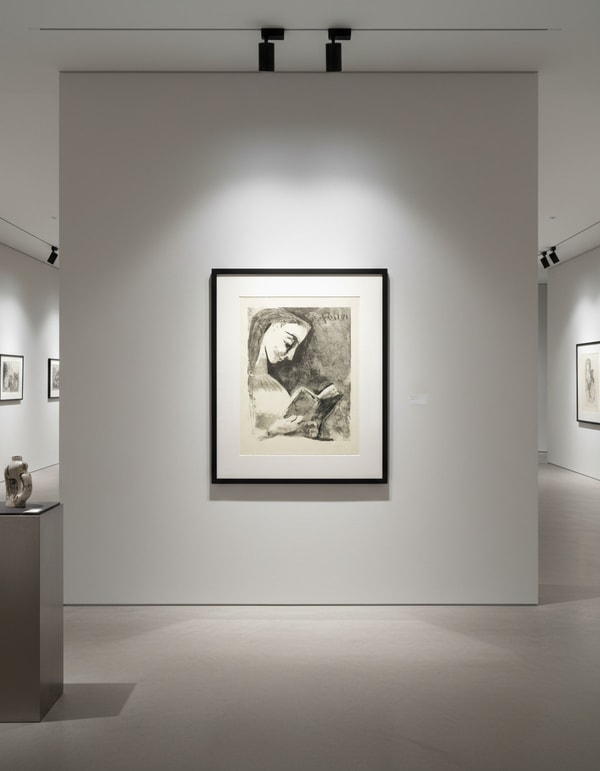
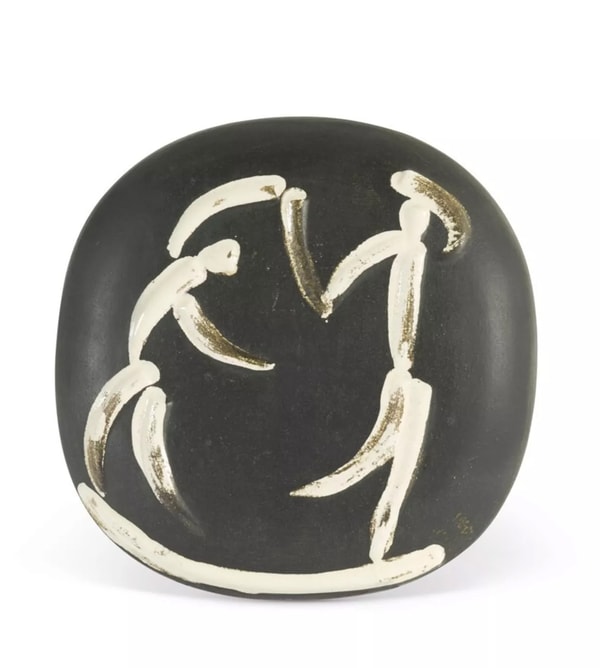
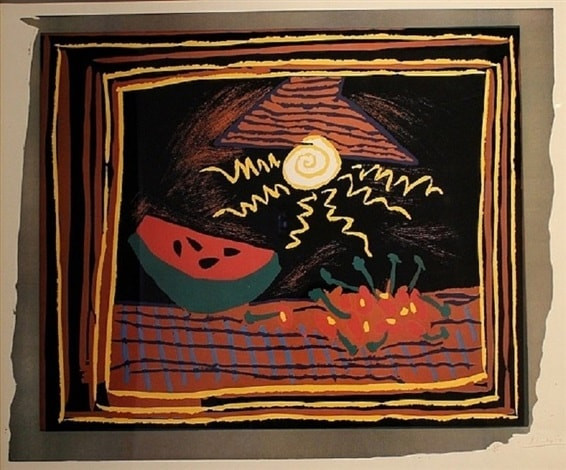

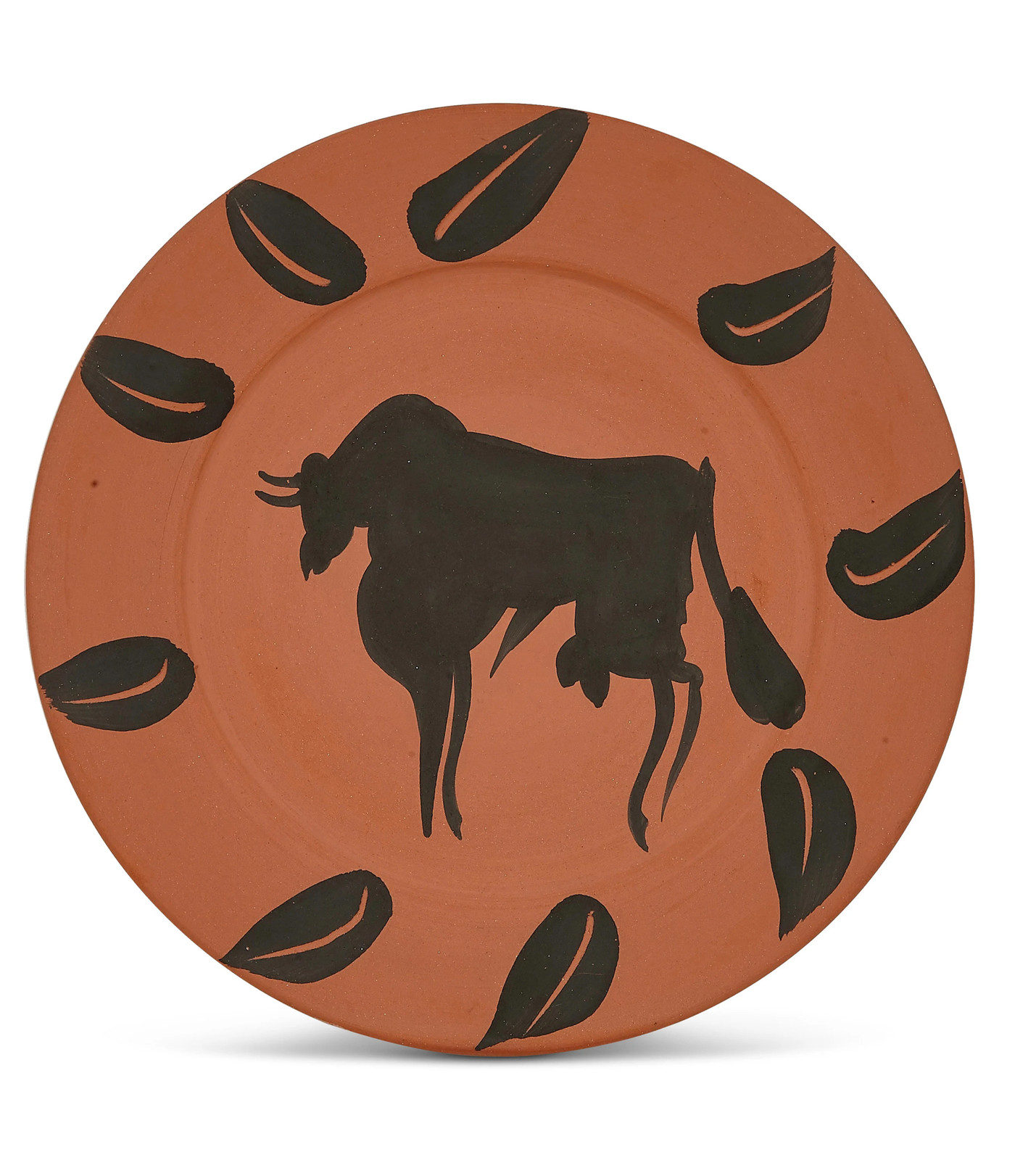
Ceramics
20 works

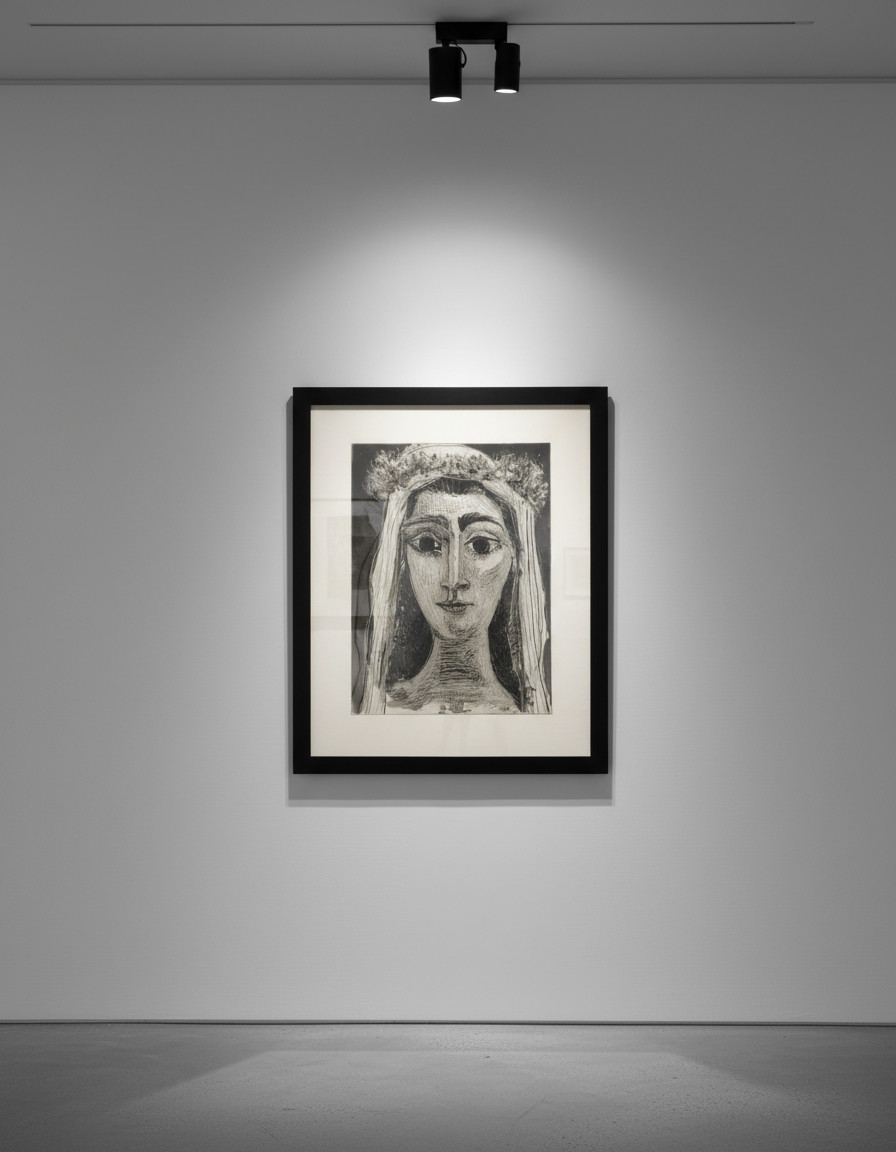
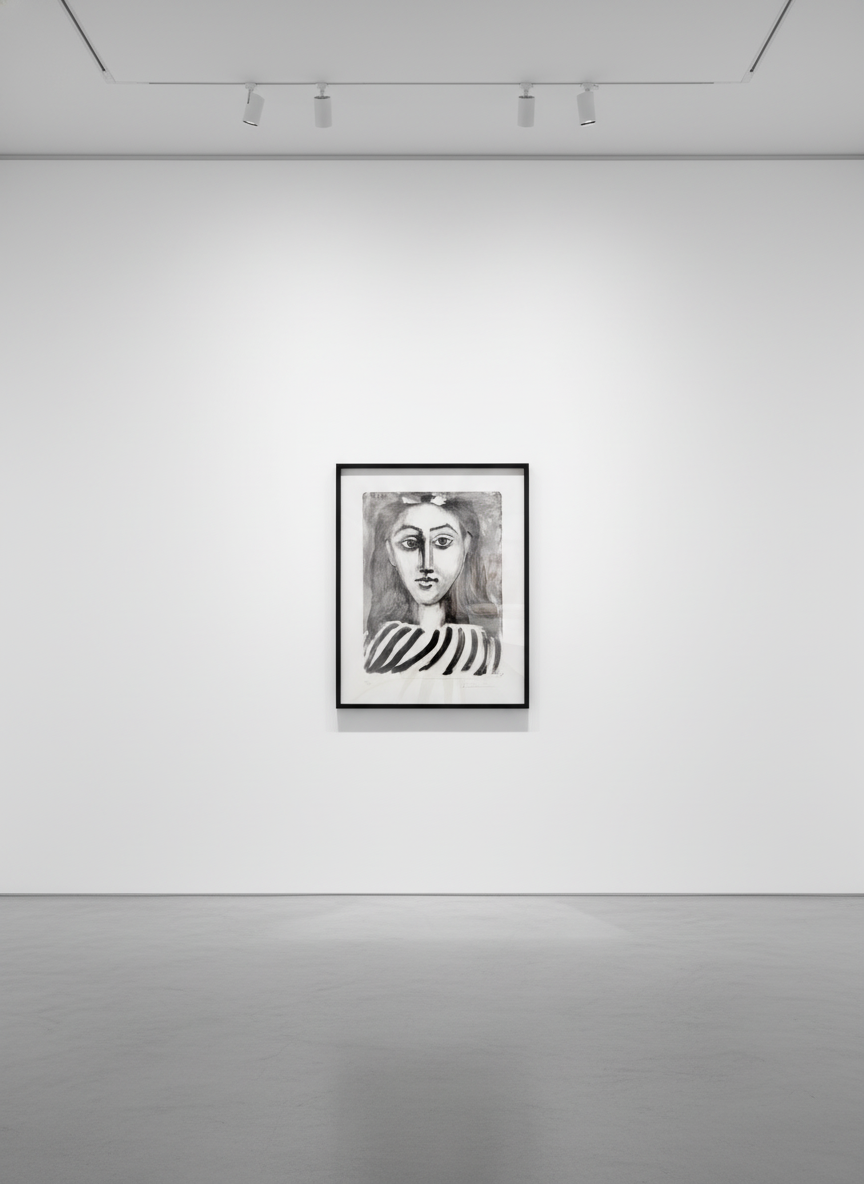
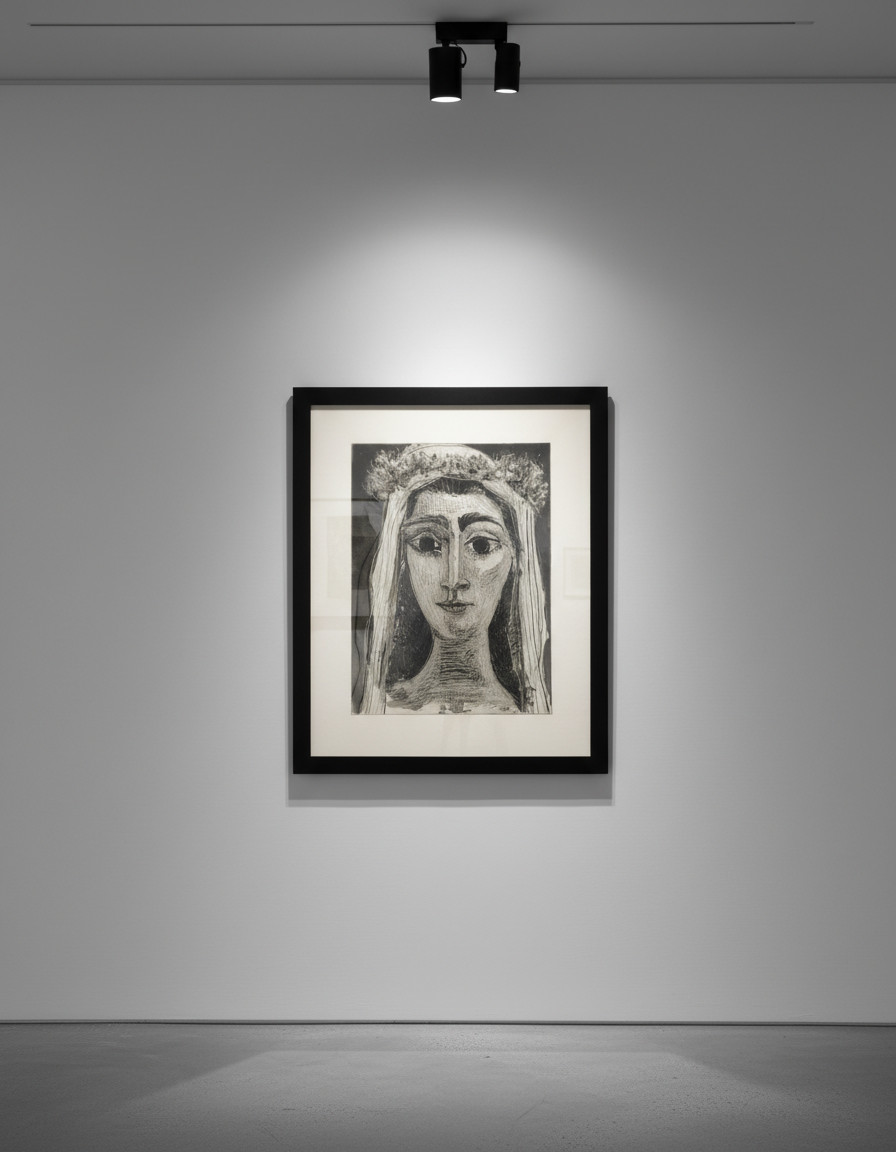
Jacqueline en mariée, de face, 1961
Aquatint with drypoint and engraving Printed by Jacques Frélaut at Atelier Lacourière, Paris (bearing his annotation “VIIe etat” in pencil on the verso).
20 1/8 x 16 in 51.1 x 40.6 cm
Proof aside from the edition
By 1961, when Jacqueline en mariée, de face was created, Jacqueline had fully assumed her place at the center of Picasso’s emotional and artistic universe. The work coincides with the year of their marriage and reflects a shift from private observation to formalized, almost ceremonial representation. Depicted frontally, Jacqueline confronts the viewer with a calm gravity that underscores her symbolic status within Picasso’s life. Picasso’s choice of aquatint with drypoint and engraving lends the portrait a sense of permanence and gravitas. The medium allows for rich tonal depth and finely articulated line, elevating Jacqueline’s features into something monumental and iconic. Unlike earlier profile views that emphasized her distinctive silhouette, this frontal composition asserts her authority and presence, positioning her less as an object of gaze and more as a central figure of significance. Within the broader history of art, this work situates Jacqueline in the lineage of muses who transcend inspiration to become emblems of artistic legacy—comparable to Dora Maar’s angular intensity or Marie-Thérèse Walter’s lyrical softness, yet unmistakably her own. Jacqueline’s image here is both deeply personal and historically resonant: a bride, a muse, and a stabilizing force during Picasso’s later years. The work exemplifies how Picasso reimagined the muse not merely as a subject of beauty, but as a partner in the continuation of his artistic mythos.
Price on Application
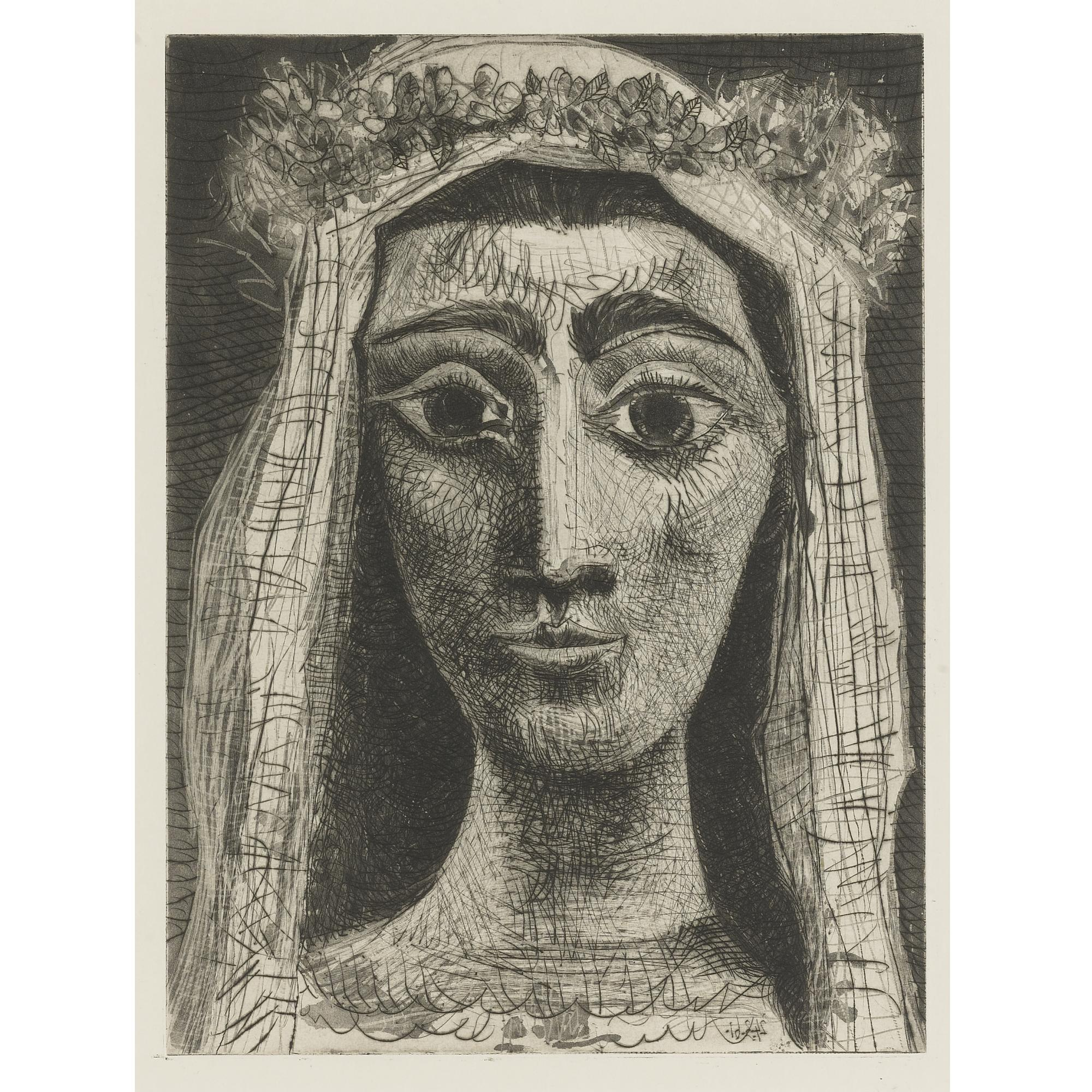
Jacqueline en Mariée, de face. I · Pablo Picasso · Sotheby's · 2010-04 · $37,500
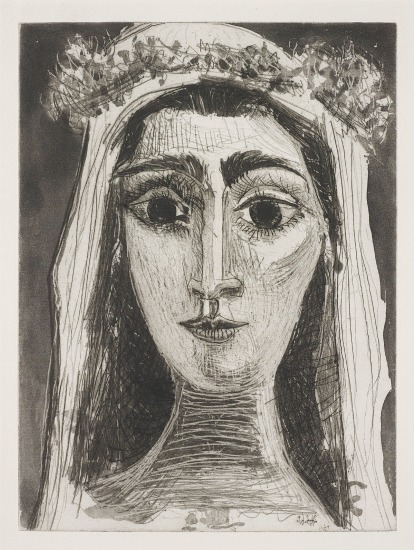
Jacqueline en mariée, de face I · Pablo Picasso · Phillips · 2015-01 · $36,098
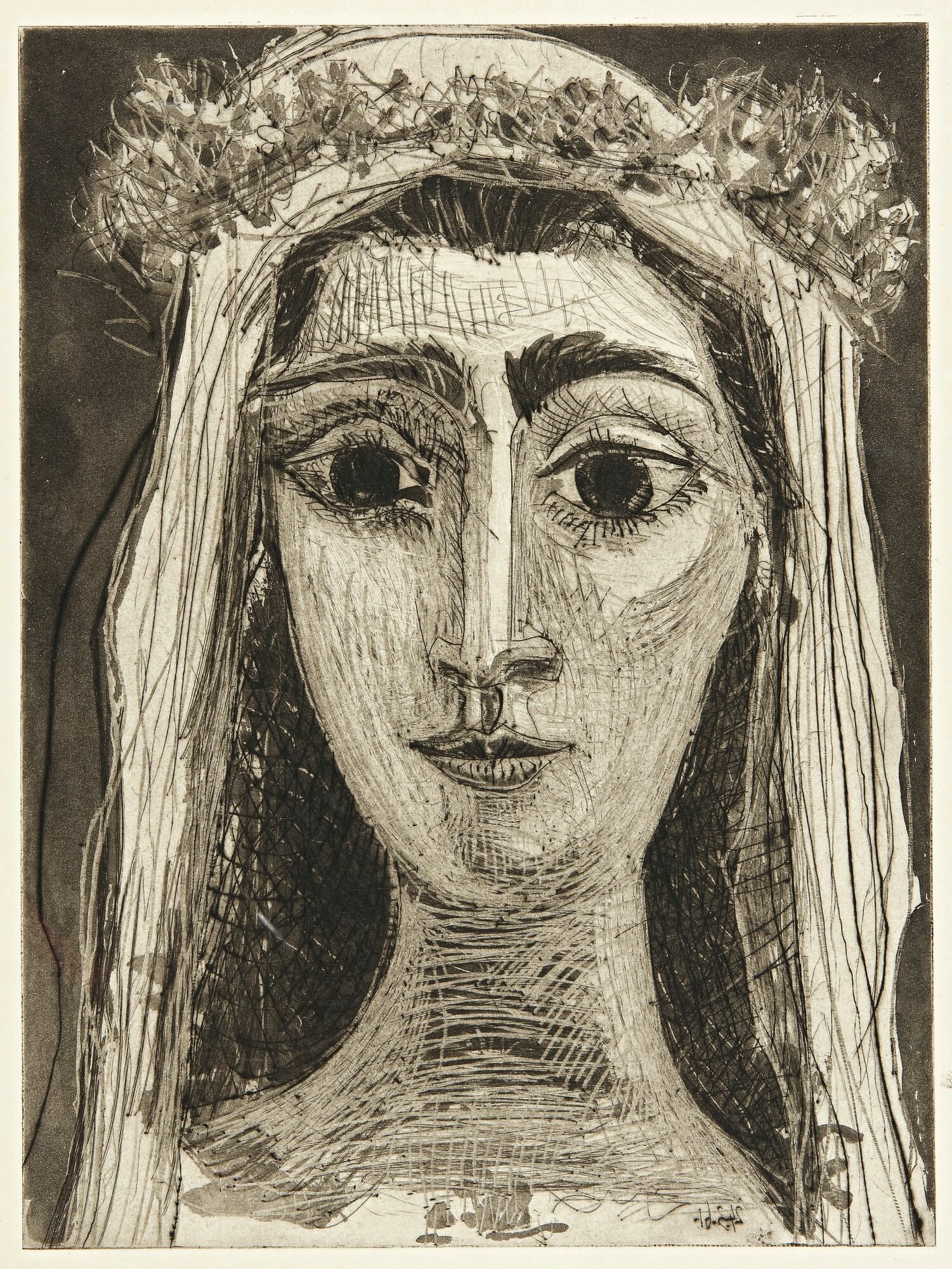
Jacqueline en mariée, de face. I · Pablo Picasso · Sotheby's · 2017-10 · $25,000
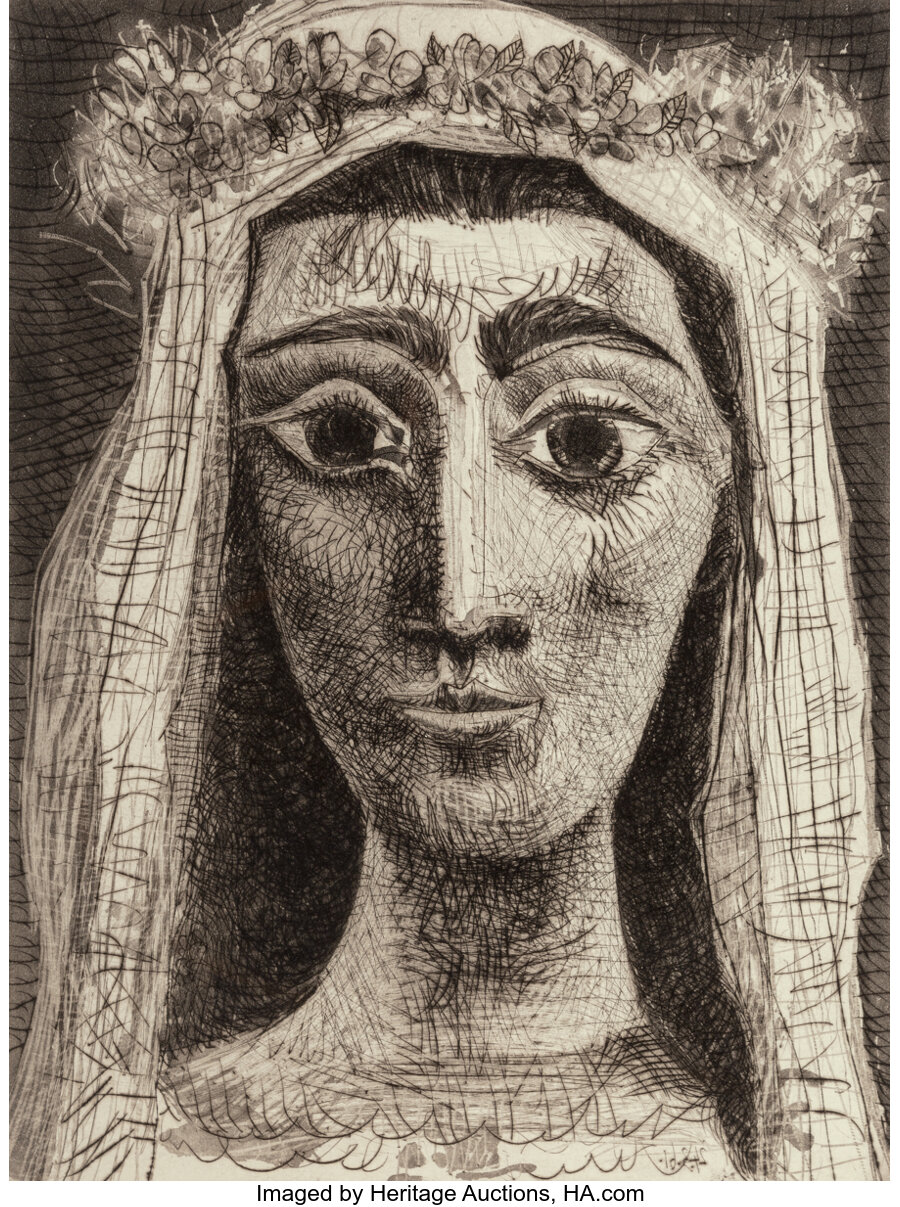
Jacqueline en Mariee, de face · Pablo Picasso · Heritage Auctions · 2019-10 · $20,000
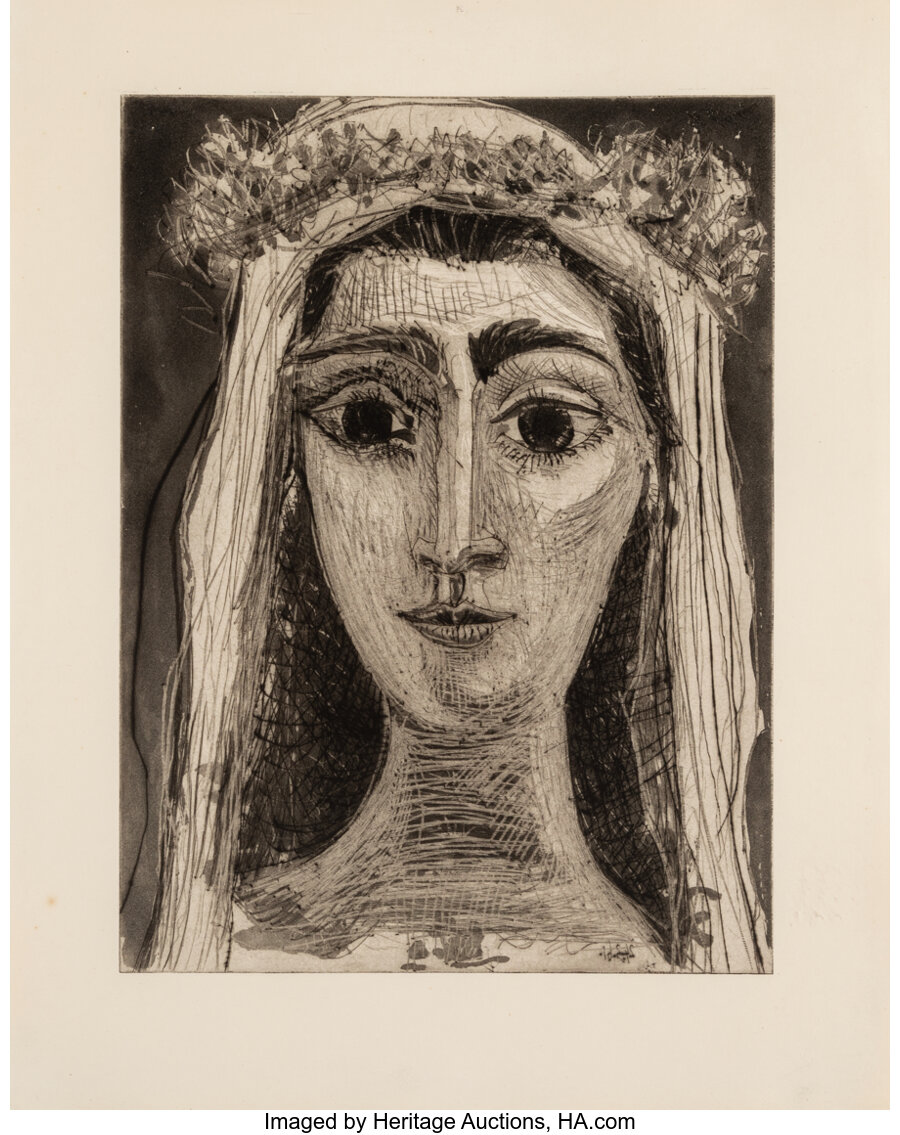
Jacqueline en mariée, de face · Pablo Picasso · Heritage Auctions · 2024-12 · $18,750
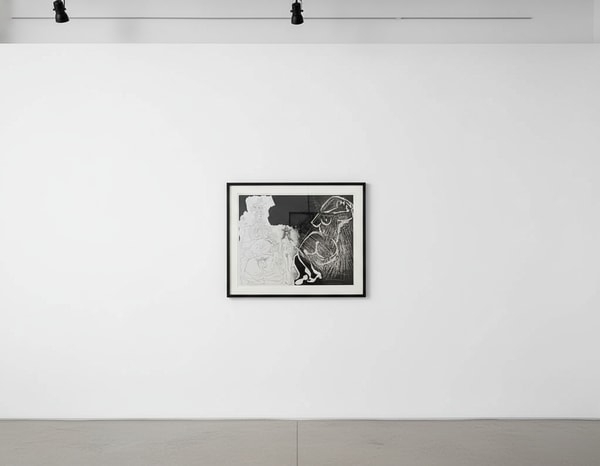
Pablo Picasso
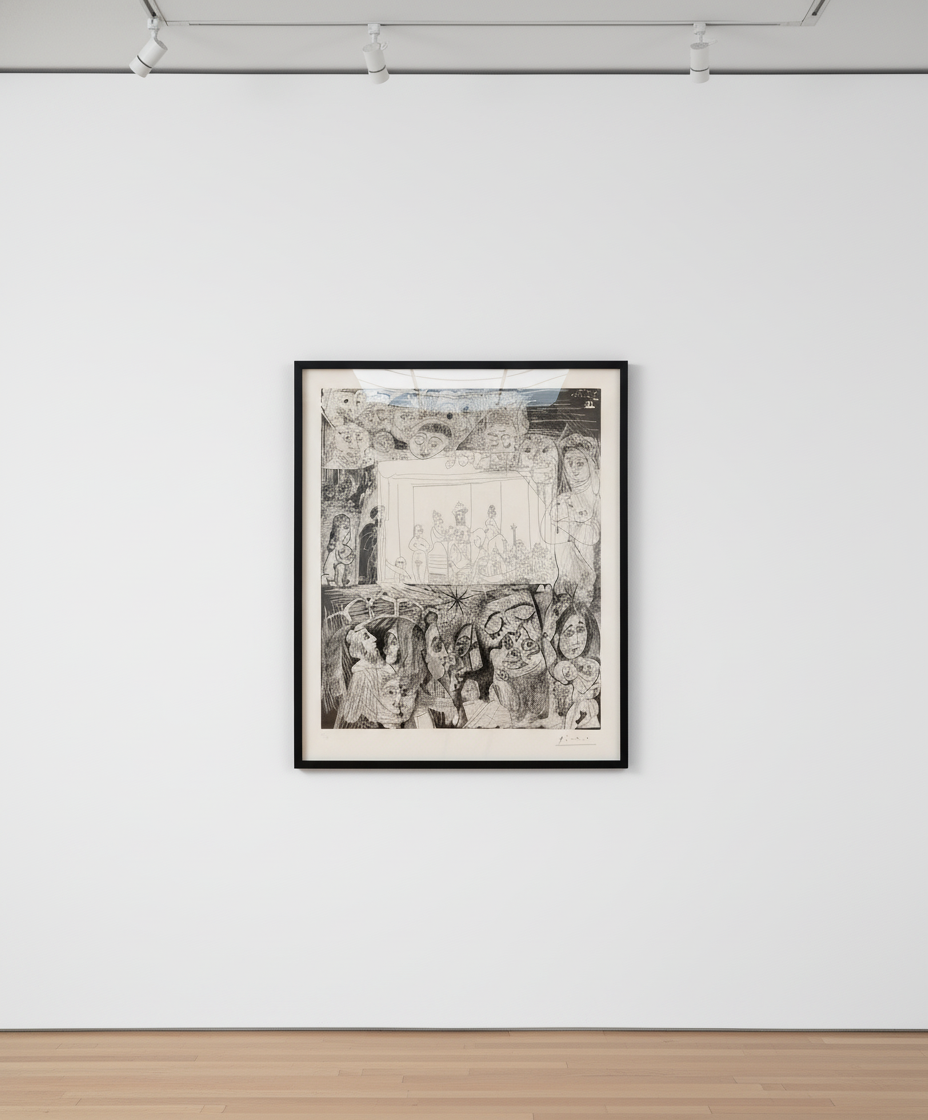
Caricature of General de Gaulle and Two Women, from: Series 347| Caricature du général de Gaulle et deux femmes
1968
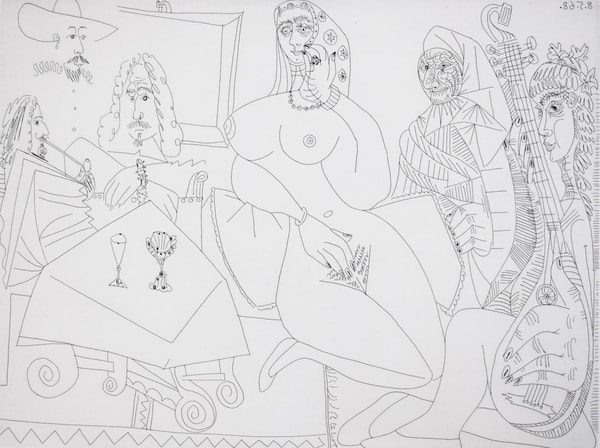
Pablo Picasso
Discussing Music at Celestine’s, from: Series 347 | Collation en musique chez la Celestine
1968
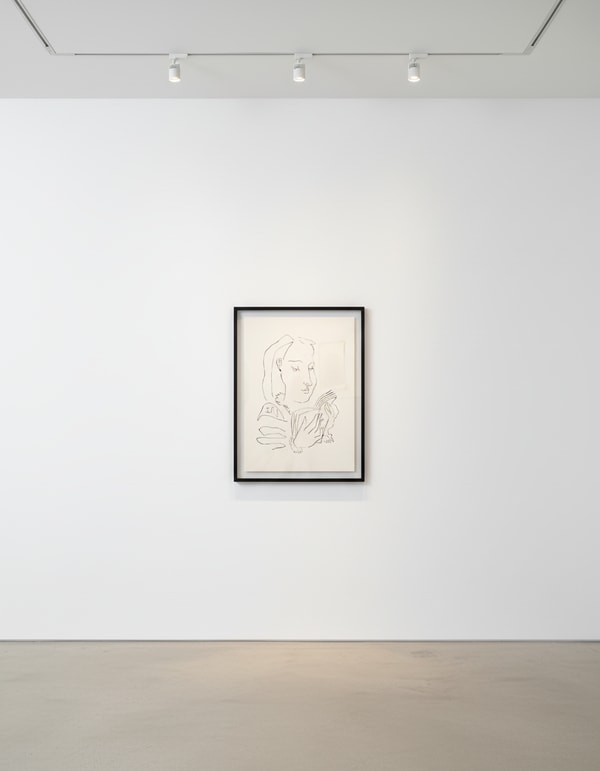
Pablo Picasso
Femme Lisant
1948
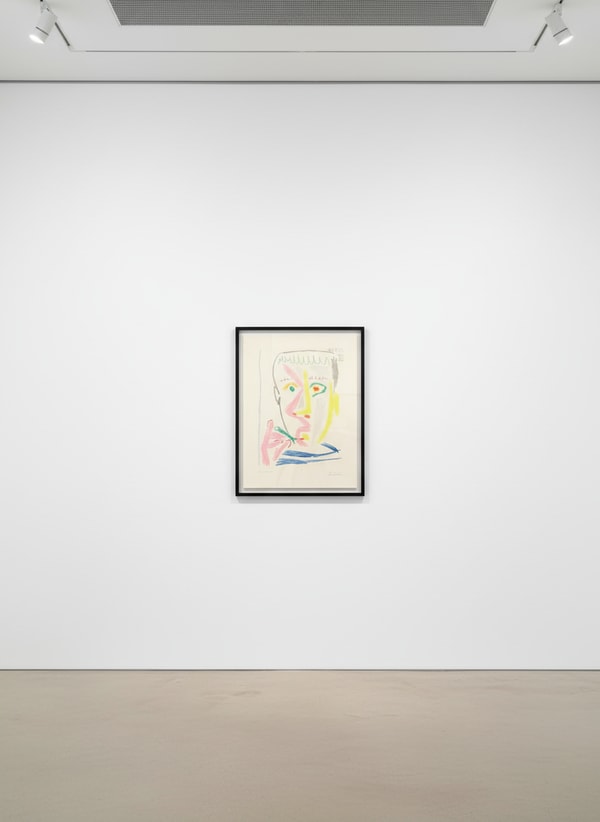
Pablo Picasso
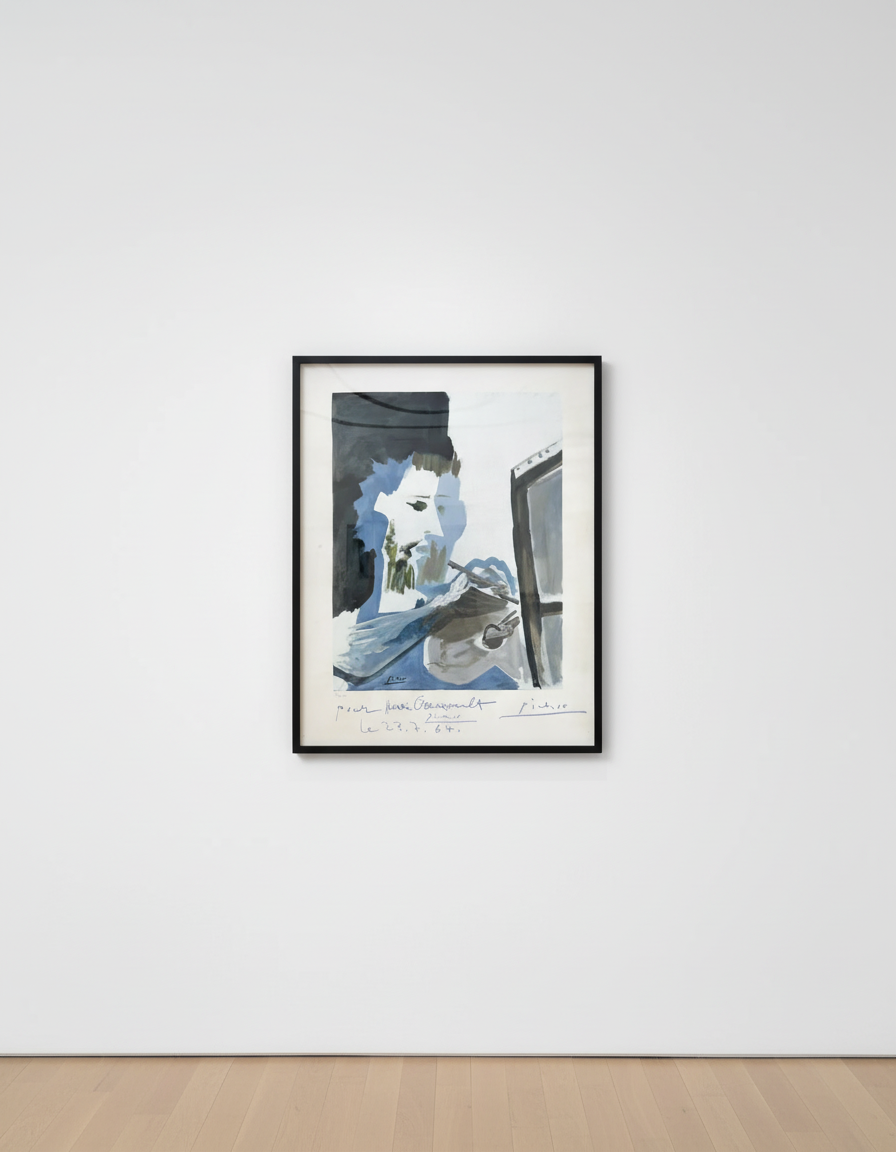
Fumer
1964
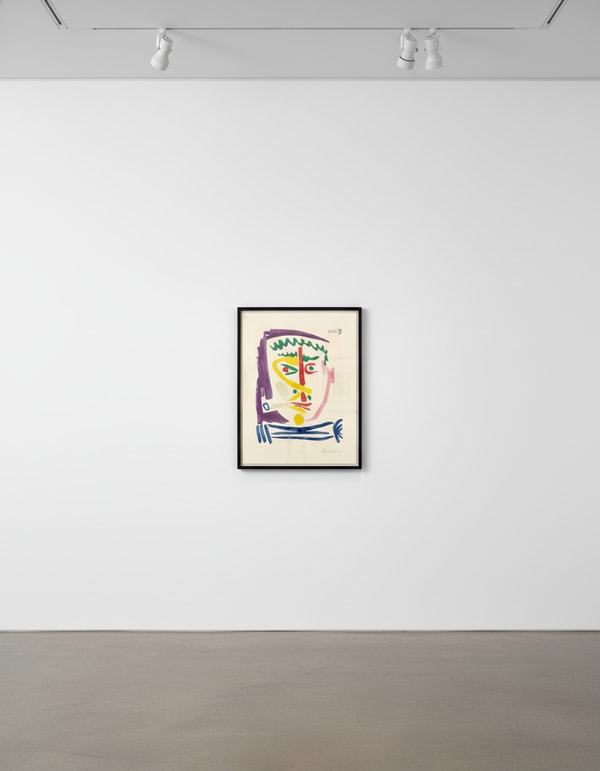
Pablo Picasso
Fumer III
1964
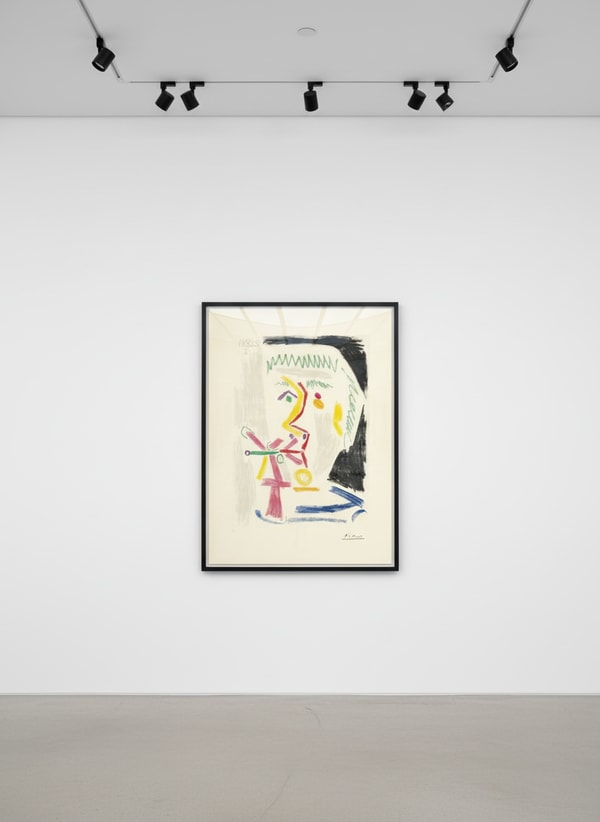
Pablo Picasso
Fumeur A La Cigarette Verte
1964
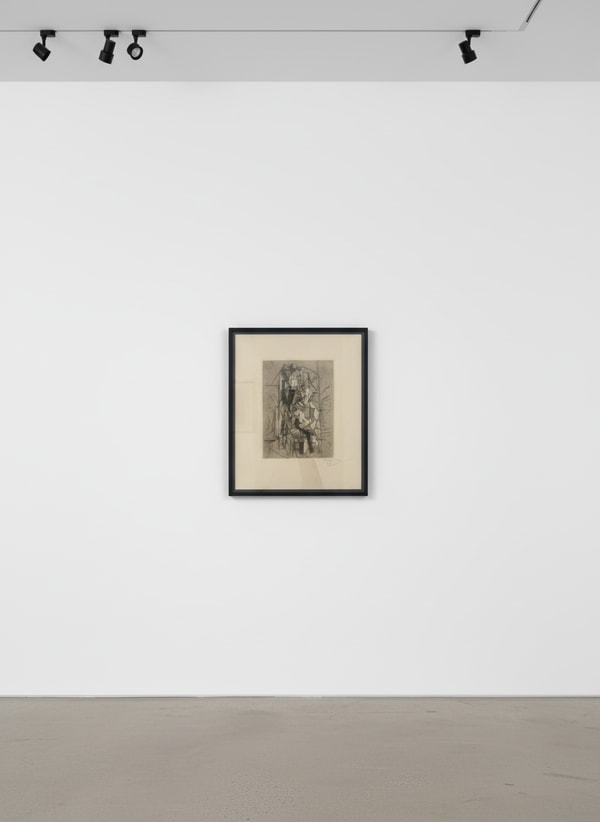
Pablo Picasso
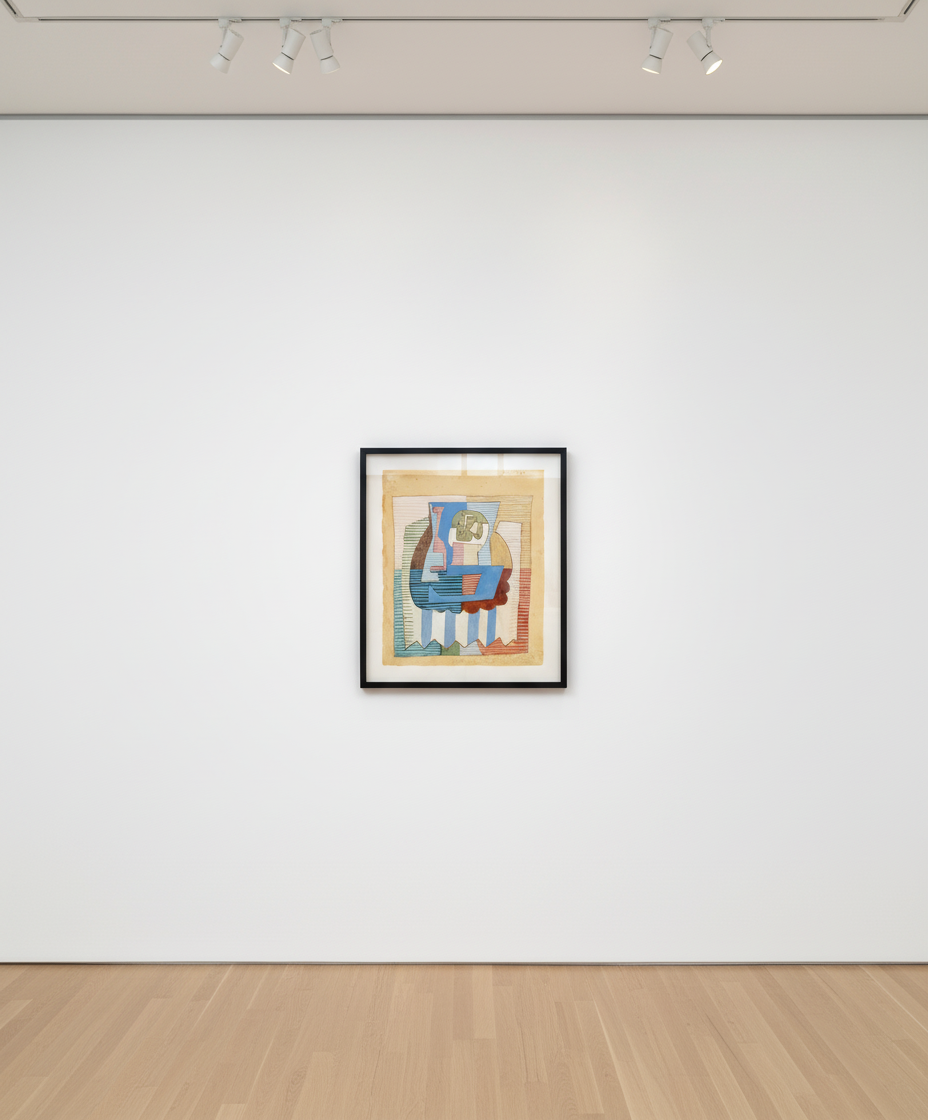
L'Homme à la Guitare
1915-29
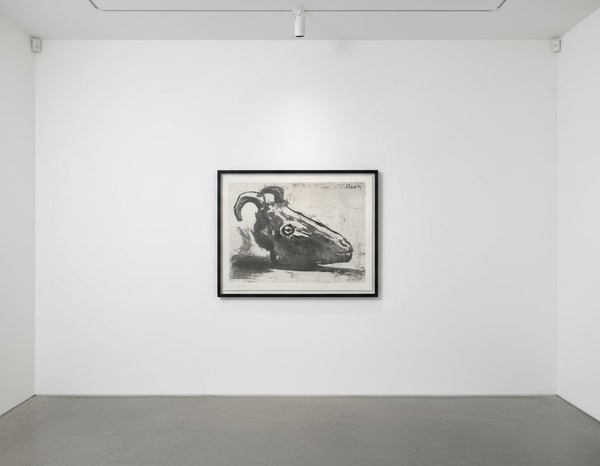
Pablo Picasso
Le Crane de Chevre
1952
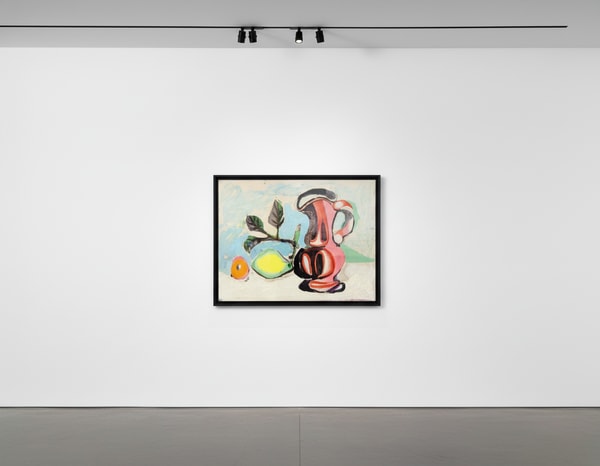
Pablo Picasso
Nature Morte au Citron et au Pichet Rouge
1955
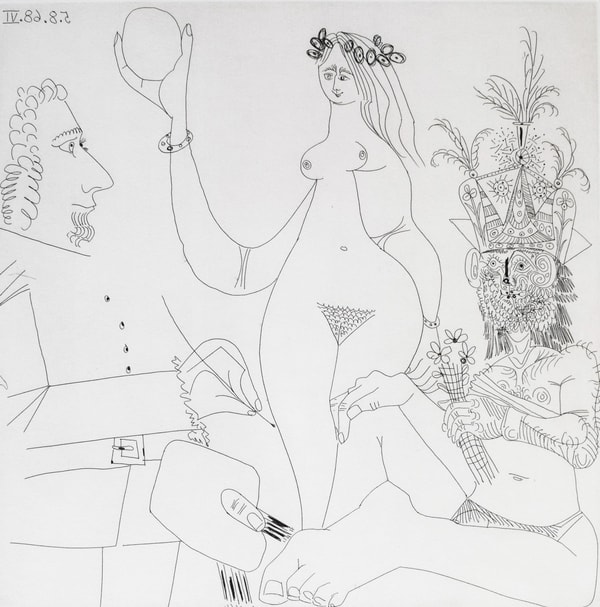
Pablo Picasso
Painter in front of one of Raphael's Three Graces, and a Woodsman in a Party Hat
1968/69
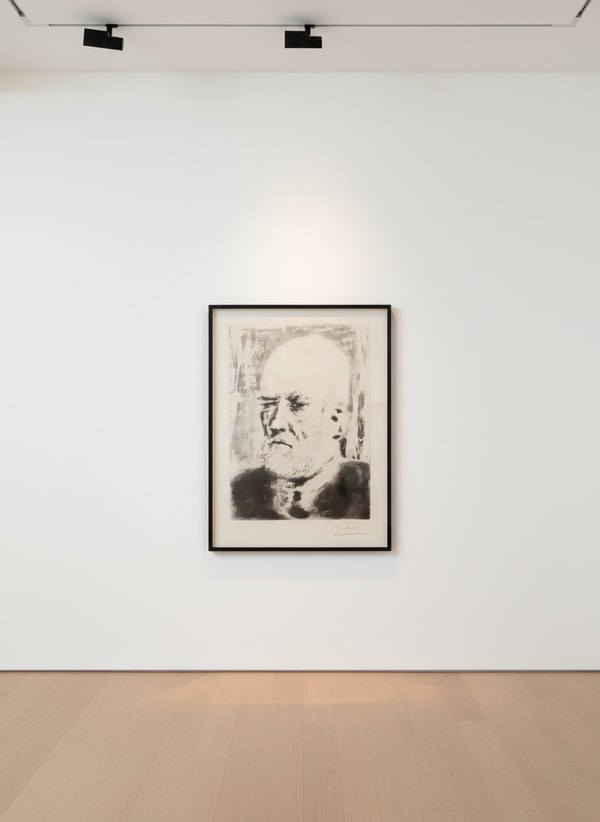
Pablo Picasso
Portrait of Vollard II
1937
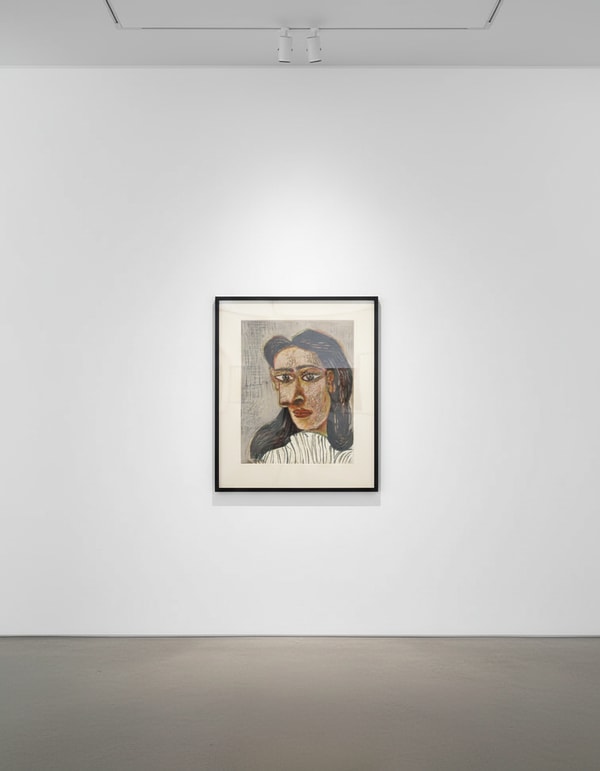
Pablo Picasso
Tête de Femme III: Portrait of Dora Maar
1939
Pablo Picasso (1881–1973, born Málaga, Spain) is the most productive and formally transformative artist in the history of Western art — a figure whose influence on twentieth-century painting, sculpture, printmaking, and ceramics is so pervasive that it remains, more than fifty years after his death, genuinely difficult to assess. Born in Málaga to an art teacher father who recognised and encouraged his prodigious talent, Picasso studied in Barcelona and Madrid before arriving in Paris in the early years of the twentieth century, where the encounter with Cézanne, African art, and his own restless intelligence produced Cubism — perhaps the most radical rupture in the history of representation since the Renaissance.
Pablo Picasso prints for sale at Guy Hepner represent one of the most significant collecting opportunities in the modern art market. Our gallery offers original Picasso lithographs, linocuts, etchings, and aquatints — each accompanied by full provenance documentation and catalogue raisonné references. Whether you are seeking a signed Mourlot lithograph, a Vollard Suite etching, a Vallauris linocut, or a late aquatint, Guy Hepner has the expertise and inventory to assist collectors at every level.
Picasso's print output is among the richest and most varied in art history, spanning etchings, lithographs, linocuts, and aquatints produced across seven decades. Understanding the categories is essential to collecting intelligently.
Lithographs were produced primarily through Fernand Mourlot's atelier in Paris, where Picasso worked from 1945 onwards. Mourlot documented over 400 lithographs bearing Picasso's hand, ranging from abstract heads and Cubist still lifes to the monumental Toros y Toreros bull-fighting series. Editions typically run from 50 to 275 copies. Unsigned Mourlot lithographs trade between $3,000 and $40,000; signed examples command $15,000 to $150,000 or more depending on subject and condition.
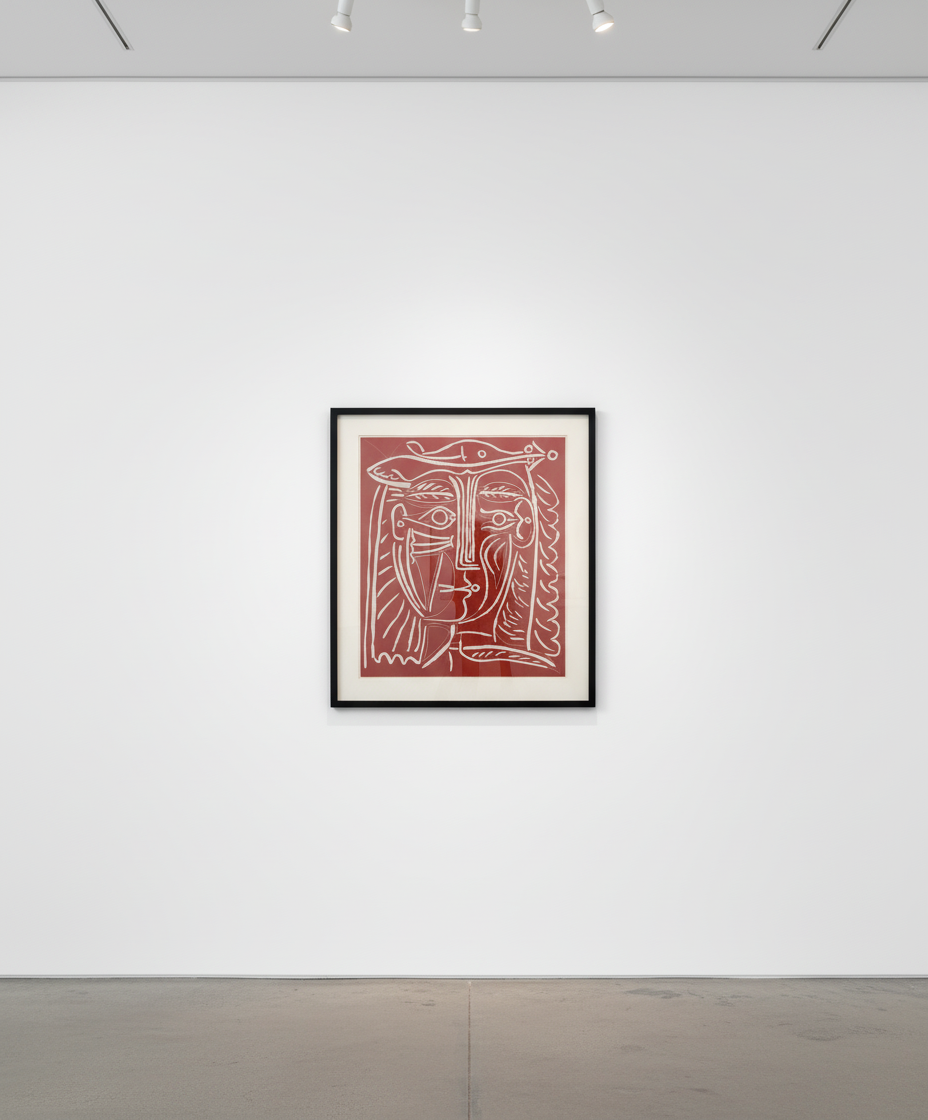
Linocuts, produced primarily at Vallauris between 1958 and 1963 using Picasso's own colour-reduction technique, are among the most technically revolutionary of all his prints. By cutting progressively deeper into a single block, Picasso achieved complex colour sequences impossible by conventional means. Edition sizes are small — typically 50 copies — and signed linocuts frequently exceed $80,000 at auction.
Etchings span Picasso's entire career, from his earliest Parisian years through to the late suites of the 1960s and early 1970s. The medium suited his restless line perfectly, and his etched output includes some of the finest prints of the twentieth century. Edition sizes vary widely, from the 50 impressions of the Vollard Suite to smaller later editions. Prices range from $5,000 for minor early works to well over $500,000 for Vollard Suite masterpieces.
Aquatints combine etching's linear precision with tonal washes of extraordinary subtlety. Picasso's aquatint work, often produced in collaboration with master printer Roger Lacourière, includes some of his most formally sophisticated printed images. These prints are rarer than his lithographs and command significant premiums accordingly.
Authentication for all Picasso prints relies on the Bloch catalogue raisonné — the definitive scholarly record of his print output — supplemented by Mourlot's lithograph catalogue where applicable.
Picasso's paintings represent the summit of the twentieth-century market. Understanding his periods is essential for collectors.
The Blue Period (1901–1904) produced austere, emotionally charged paintings on themes of poverty, isolation, and melancholy — elongated figures rendered in blue-grey tones that echo El Greco and carry an extraordinary psychological weight. Works from this period are among the most sought-after in the history of art.
The Rose Period (1904–1906) brought warmer hues and more tender subjects — circus performers, saltimbanques, and acrobats rendered with a new formal assurance. The transitional works that followed, leading to Les Demoiselles d'Avignon (1907), represent the hinge on which the entire history of modern painting pivots.
The Cubist period (1907–1921), co-developed with Georges Braque, produced the most intellectually radical body of painting in the twentieth century. Analytic Cubism (1909–1912) fragmented forms into near-monochromatic facets; Synthetic Cubism (from 1912) introduced collage, typography, and bolder colour. Major Cubist paintings are virtually never available on the primary market; they appear at auction rarely and achieve extraordinary prices.
Picasso's auction record stands at $179,365,000 — achieved at Christie's New York in May 2015 for Les Femmes d'Alger (Version O), a 1955 work from his series responding to Delacroix. Nude, Green Leaves and Bust (1932) reached $106,482,500 at Christie's in May 2010. These are benchmark figures for a career that produced well over 16,000 works catalogued by Zervos.
The most desirable areas of the Picasso print market for serious collectors are well-defined.
The Vollard Suite (1930–1937): ninety-seven etchings (and three aquatints with Roger Lacourière) commissioned by dealer Ambroise Vollard. The suite is considered Picasso's greatest print achievement — 100 plates encompassing the Sculptor's Studio sequence, the Minotaur series, and intimate portraits of Marie-Thérèse Walter. Published posthumously by Vollard's estate, the complete suite is extraordinarily rare. Individual plates now trade from $80,000 to over $500,000.
Suite 347 (1968): three hundred and forty-seven etchings completed in seven months when Picasso was eighty-six years old — an astonishing demonstration of creative energy in extreme old age. Themes include Degas's brothel scenes, Spanish picadors, Rembrandt, and Ingres. Published by Galerie Louise Leiris. These prints represent exceptional value relative to their historical importance.
Mourlot lithographs: Fernando Mourlot's catalogue documents Picasso's lithographic output with scholarly precision. The Bloch numbers (B.1 through B.2042 for the complete print oeuvre) and Mourlot numbers together form the authentication framework used by every major auction house.
Crommelynck etchings: Piero and Aldo Crommelynck's Paris workshop produced Picasso's late etchings with extraordinary technical refinement. The 347 Suite plates were printed here, as were the 156 Series etchings (1970–1972) — Picasso's final major print campaign.
Condition criteria for print collecting: look for clean, wide margins with no trimming; avoid foxing (rust-coloured spots from paper acidity) or tide lines; fading affects lithographs most severely — examine under strong light. Impressions on Japan paper or with remarques command significant premiums.
Authentication for Picasso works operates through established institutional channels.
For prints: the Bloch catalogue raisonné (Picasso: His Graphic Work, Volumes I–IV) provides reference numbers for all known prints. Mourlot's catalogue covers lithographs specifically. The Succession Picasso estate stamp appears on many posthumously published editions. Any print without clear catalogue raisonné reference and provenance chain should be examined by a specialist before purchase.
For paintings and works on paper: the Comité Picasso (now dissolved) was the primary authentication body; the Succession Picasso now handles estate matters. The Zervos catalogue raisonné (33 volumes) is the authoritative scholarly record for paintings, drawings, and sculpture. Expert authentication by a recognised Picasso specialist is essential for any major purchase.
Guy Hepner Gallery, 177 Tenth Avenue, New York, offers full provenance verification and catalogue raisonné consultation for all Picasso works. We provide free, confidential valuations for collectors looking to sell, and access to a global network of qualified buyers. Our expertise spans ceramics, prints, linocuts, drawings, and paintings across all periods of the artist's work.