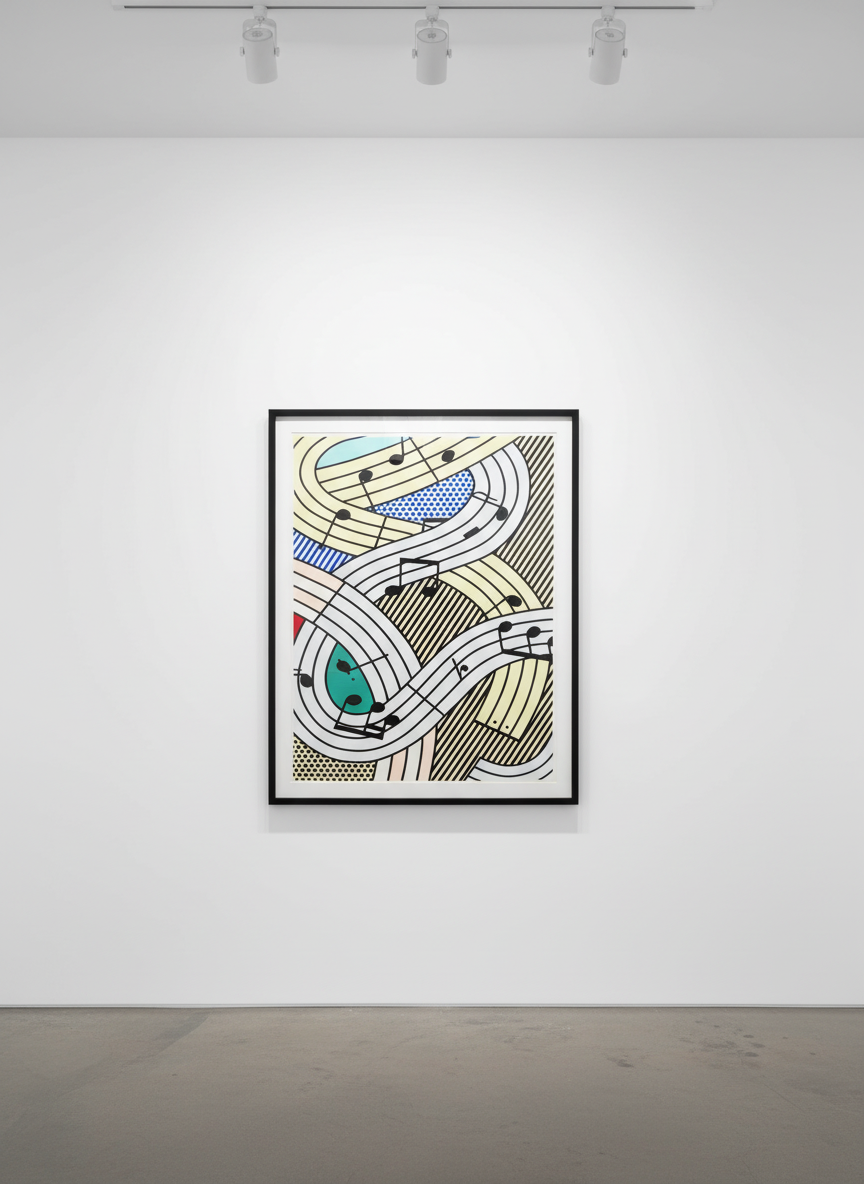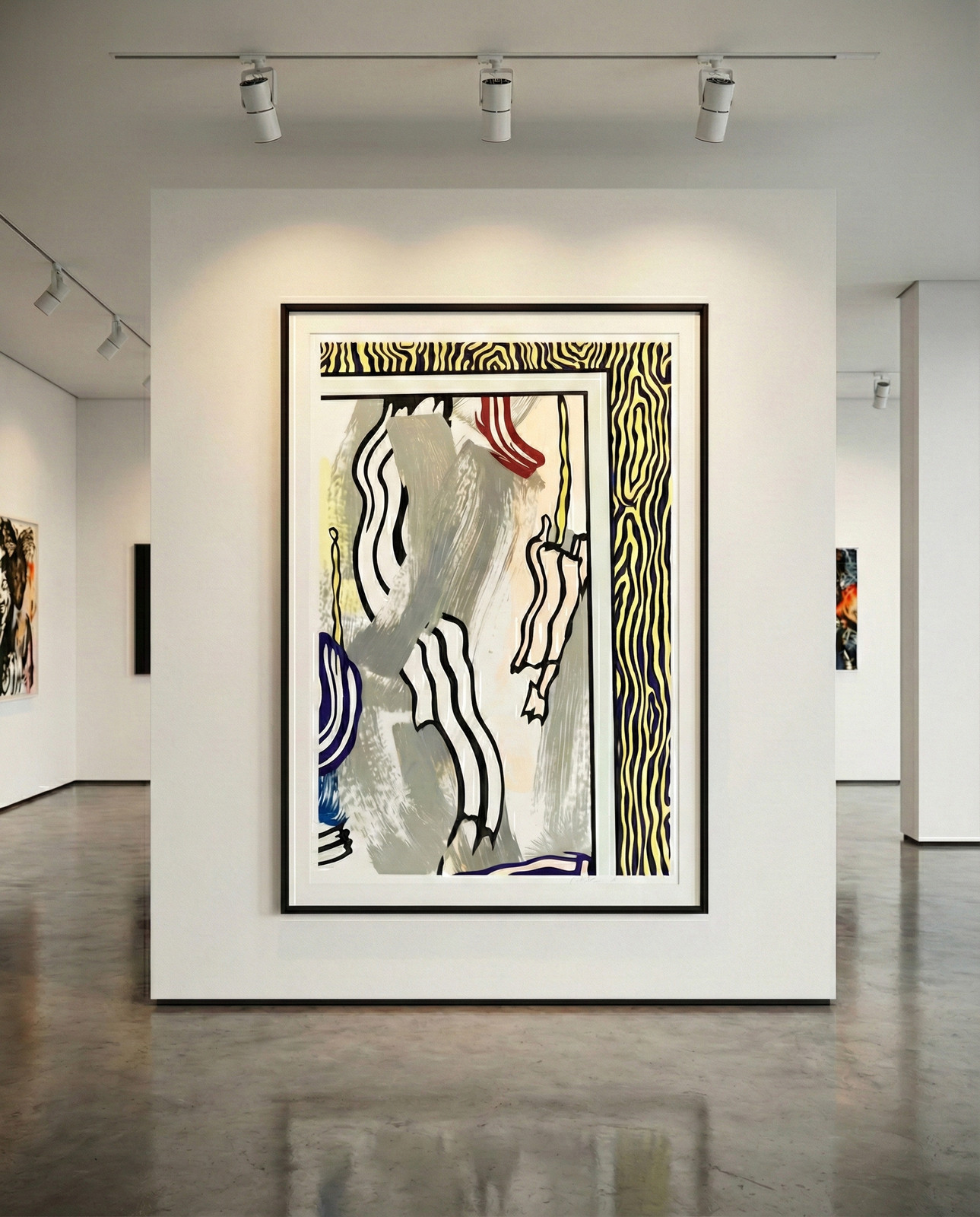
Painting Series

June 20, 2026
Roy Lichtenstein died in 1997, but his market has never been more active. In the three decades since his death, auction records have been repeatedly broken, institutional retrospectives have reinforced his canonical status, and a generation of collectors raised on pop culture has embraced his work with particular intensity. A Lichtenstein painting — the paintings, that is, not the prints — is now a nine-figure proposition at the top of the market. His 1964 canvas Masterpiece sold for $165 million in 2017. But the story of collecting Lichtenstein does not begin and end with paintings.
For most collectors, the real opportunity lies in his prints: a body of work as technically sophisticated and artistically ambitious as any in post-war American art, produced in editions that — while not cheap — remain accessible relative to the canvas market.
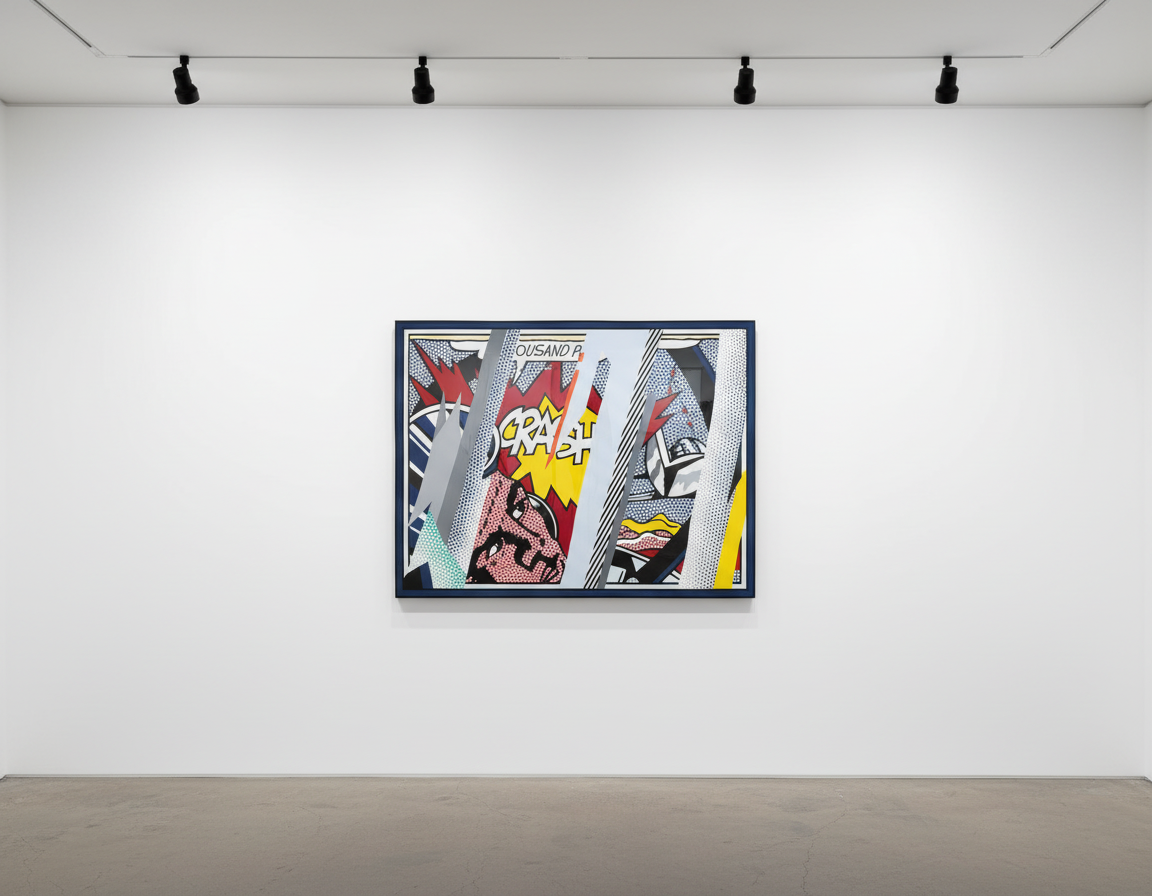
 Reflections-on-crash-c-239-rendered.jpg" alt="Reflections on Crash, Roy Lichtenstein" style="max-width:100%;height:auto;">
Reflections on Crash — from Lichtenstein's Reflections series, exploring the self-referential nature of art-making.
Lichtenstein occupies a position in the contemporary art market that few artists achieve: his work is genuinely canonical and genuinely liquid. The canonical status means institutional and private demand is structurally sustained; the liquidity means secondary market exits are predictable. That combination — rarity of achievement, abundance of market participants — makes Lichtenstein prints a serious collecting proposition.
His market position also benefits from clarity of attribution. The Roy Lichtenstein Foundation, active since the artist's death, maintains rigorous records and assists with authentication queries. The print catalogue raisonné — Corlett's comprehensive The Prints of Roy Lichtenstein — documents virtually every edition. That paper trail reduces authentication risk substantially.
Explore the full range of Roy Lichtenstein works available at Guy Hepner.
The distinction between Lichtenstein paintings and prints matters enormously for collectors. His paintings — unique, hand-executed works on canvas or aluminium — are among the rarest and most contested objects in the contemporary art market. Fewer than 500 major paintings exist, and most are in museum or major institutional collections. When they appear at auction, they attract global competition.
His prints, by contrast, exist in editions — typically between 30 and 150 impressions, depending on the series and publisher. They are original works conceived for the print medium, not reproductions of paintings. Many of the greatest Lichtenstein compositions exist only as prints; the Mirrors, for example, were developed simultaneously as paintings and prints, with each medium informing the other.
For collectors, prints offer:
The Mirrors series is arguably Lichtenstein's greatest print achievement. Twenty lithographs and screenprints depict circular and irregular mirror shapes — at first glance simple, but on sustained attention, deeply complex. The mirrors reflect nothing; they are abstract exercises in the representation of light, reflection, and the surface of seeing. The Benday dot patterns that Lichtenstein drew from comic printing appear here in their most refined form.
Mirrors prints trade across a wide range depending on image and format. A minor Mirrors print such as Before the Mirror sold for $12,700 at Christie's in 2026; larger, more iconic examples from the series reach significantly higher. They are among the most consistently appreciated works in Lichtenstein's print output.
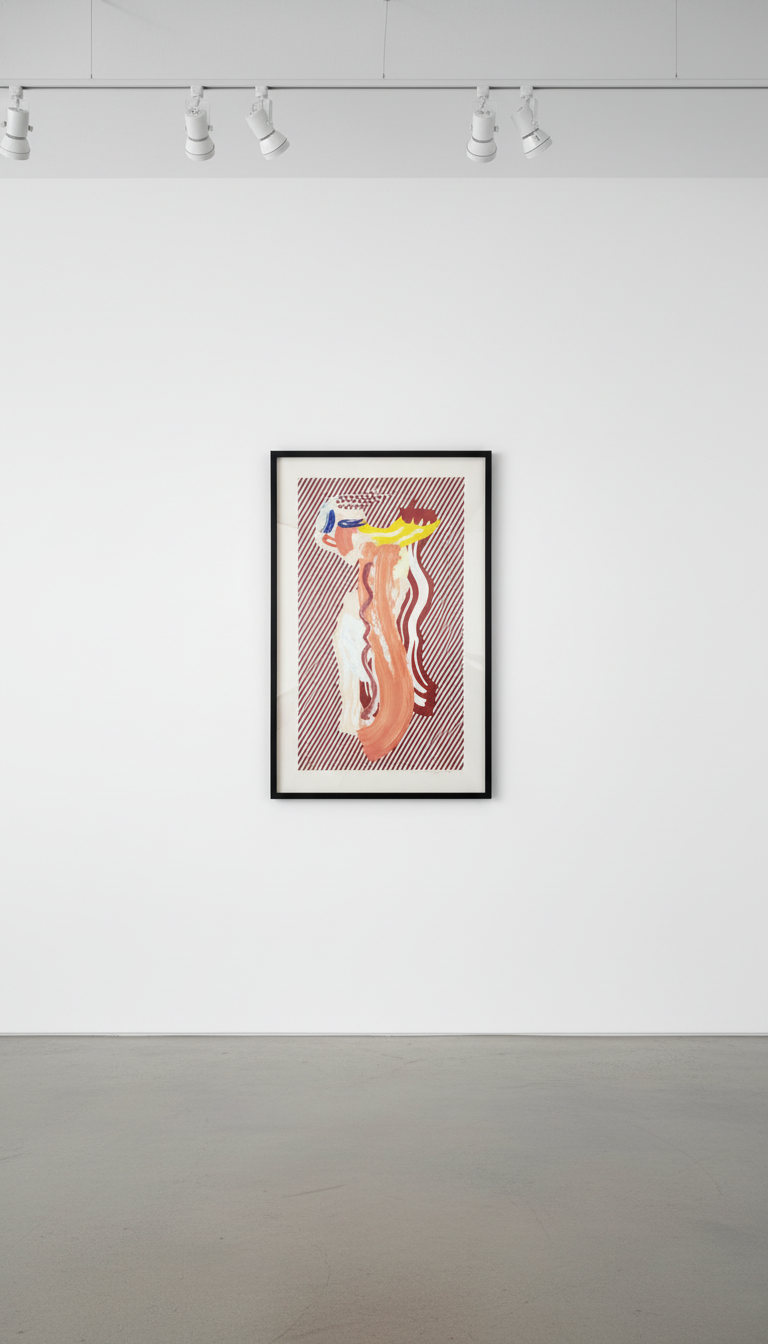
The Brushstroke prints are among Lichtenstein's most conceptually pointed works. By depicting brushstrokes — the most charged gesture in Abstract Expressionist mythology — using the mechanical, Benday-dot language of mass printing, Lichtenstein staged a confrontation between gestural painting and industrial reproduction. The series exists in multiple variants: single strokes, multiple strokes, aerial views.
These prints are highly sought after. Related woodcuts from the Expressionist Woodcut series traded at $16,510–$20,320 at Phillips in 2023. Major Brushstroke screenprints from large editions command higher prices depending on scale and condition.
The Nudes series — produced late in Lichtenstein's career — synthesises the comic-strip language of his early work with a formal engagement with classical figure painting. The flat, bold outlines and limited colour palette produce images that are simultaneously knowing and surprisingly tender.
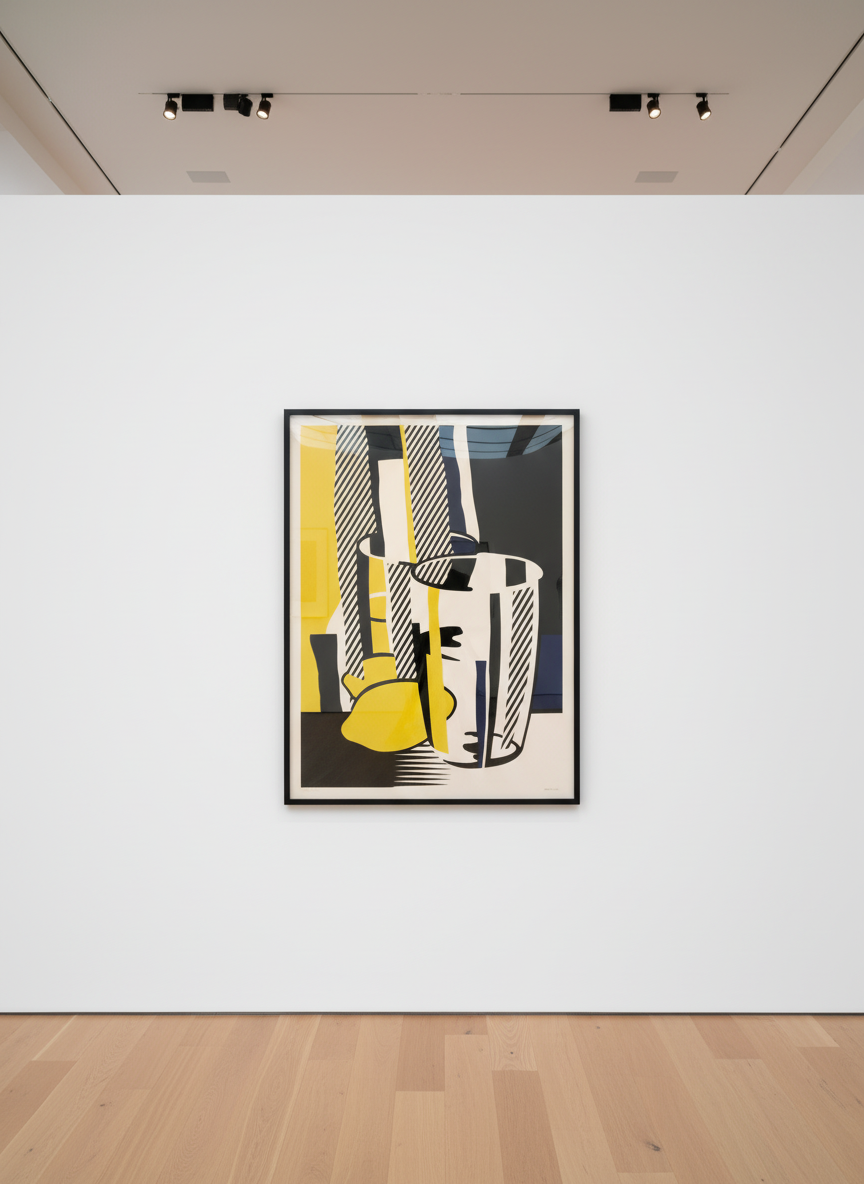
Before The Mirror — from Lichtenstein's exploration of feminine reflection and the language of the looking glass.
These are among his most valuable print editions. Nude with Yellow Pillow (C. 283) sold for $546,100 at Phillips in 2023 and $1,200,000 at Sotheby's in 2024. Nude with Blue Hair (C. 286) achieved $960,000 at Sotheby's in 2024 and $1,079,500 at Christie's in 2025. Expect serious competition at auction.
The Entablature prints depict architectural friezes — the decorative bands found on classical buildings — rendered in Lichtenstein's signature graphic language. They are rigorous and cool, exploring pattern and repetition with architectural precision. The series exists in both screenprint and lithograph variants.
These prints are less broadly known than the Mirrors or Nudes but are highly regarded by specialist collectors. They appear less frequently at auction, making direct price benchmarking difficult; consult current market data before purchasing.
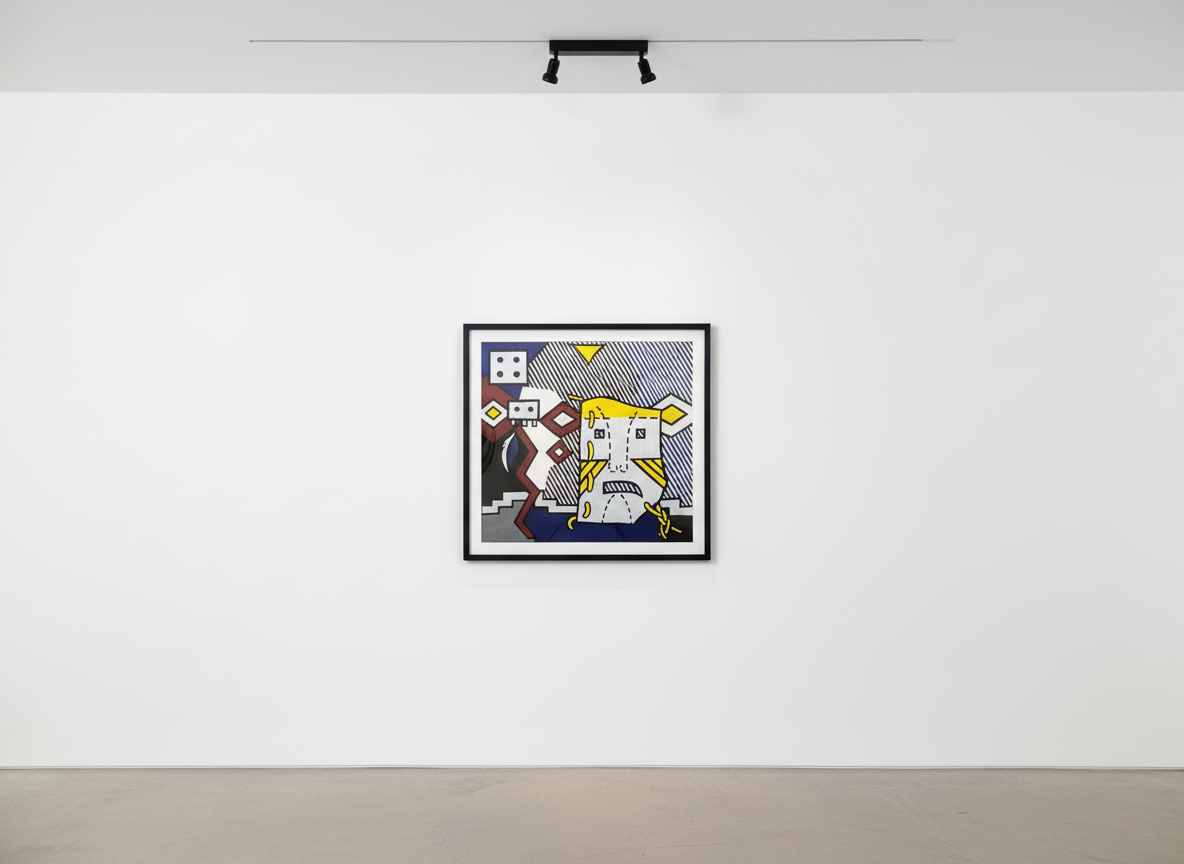
In 1980, Lichtenstein produced a suite of six screenprints drawing on Native American visual traditions — geometric patterns, textile designs, and pictographic motifs reprocessed through his Benday-dot language. The series has attracted some controversy but is historically significant as evidence of his sustained engagement with source material from outside the Western fine art tradition.
The Peace Through Chemistry prints — bold, chemical-diagram-inspired compositions — represent Lichtenstein's engagement with the visual language of science and mass media.
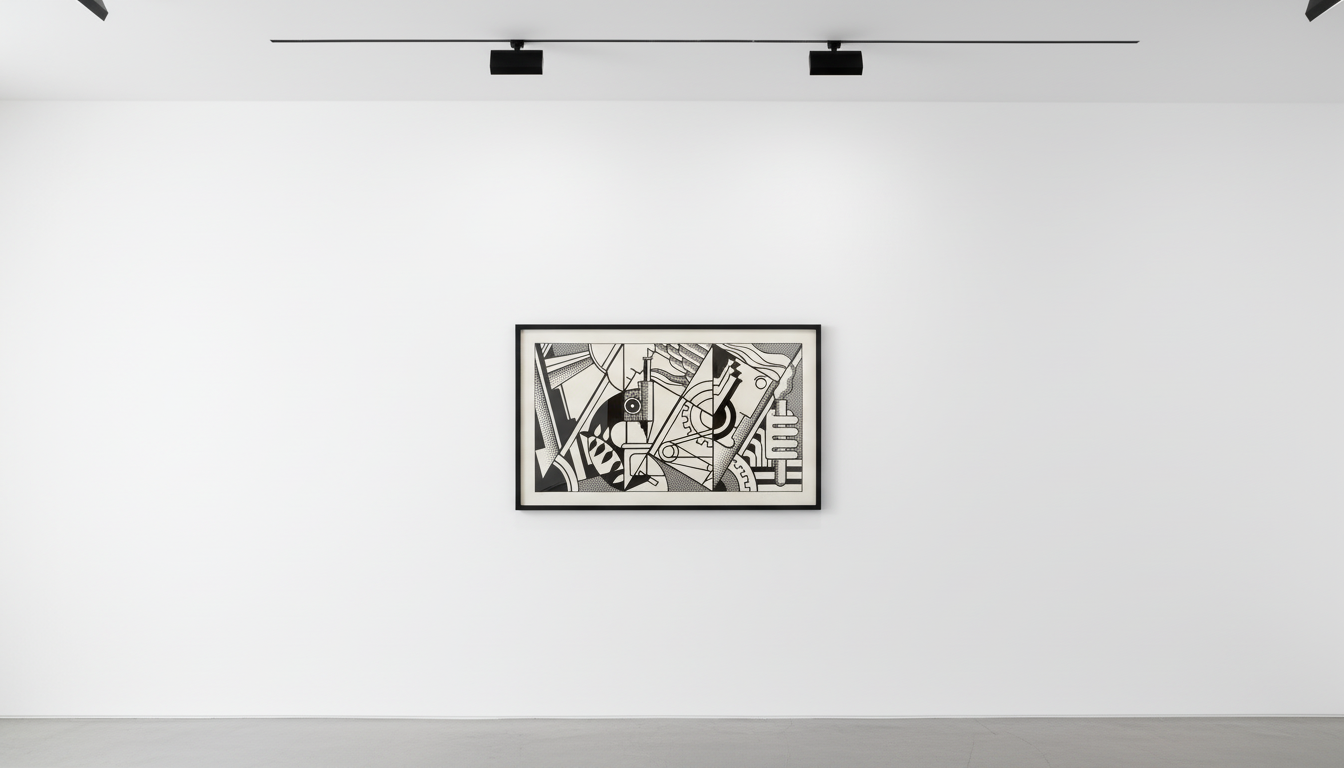
Peace Through Chemistry III — Lichtenstein's playful engagement with scientific and chemical graphic languages.
Peace Through Chemistry I sold for $101,600 at Christie's in April 2026. The series exists in multiple variants; prices vary by specific print and condition.
The Interior prints depict domestic spaces — living rooms, bedrooms, offices — furnished with objects drawn from catalogues and magazines. The compositions combine Lichtenstein's graphic economy with a wry sociological observation: these are spaces of aspiration, rendered with cool detachment. They are among his most commercially minded works and among his most sophisticated.
Lichtenstein produced still life prints across a decade, depicting objects — cups, vases, fruits, flowers — with his characteristic reduction of three-dimensional form to flat graphic statement. These are engaging works that demonstrate his formal range; Still Lifes span multiple techniques and price points.
The Surrealist series occupies a distinctive position in Lichtenstein's output: influenced by Max Ernst, Salvador Dalí, and Joan Miró, these works abandon the comic-strip vocabulary for a more fluid, dream-logic imagery.
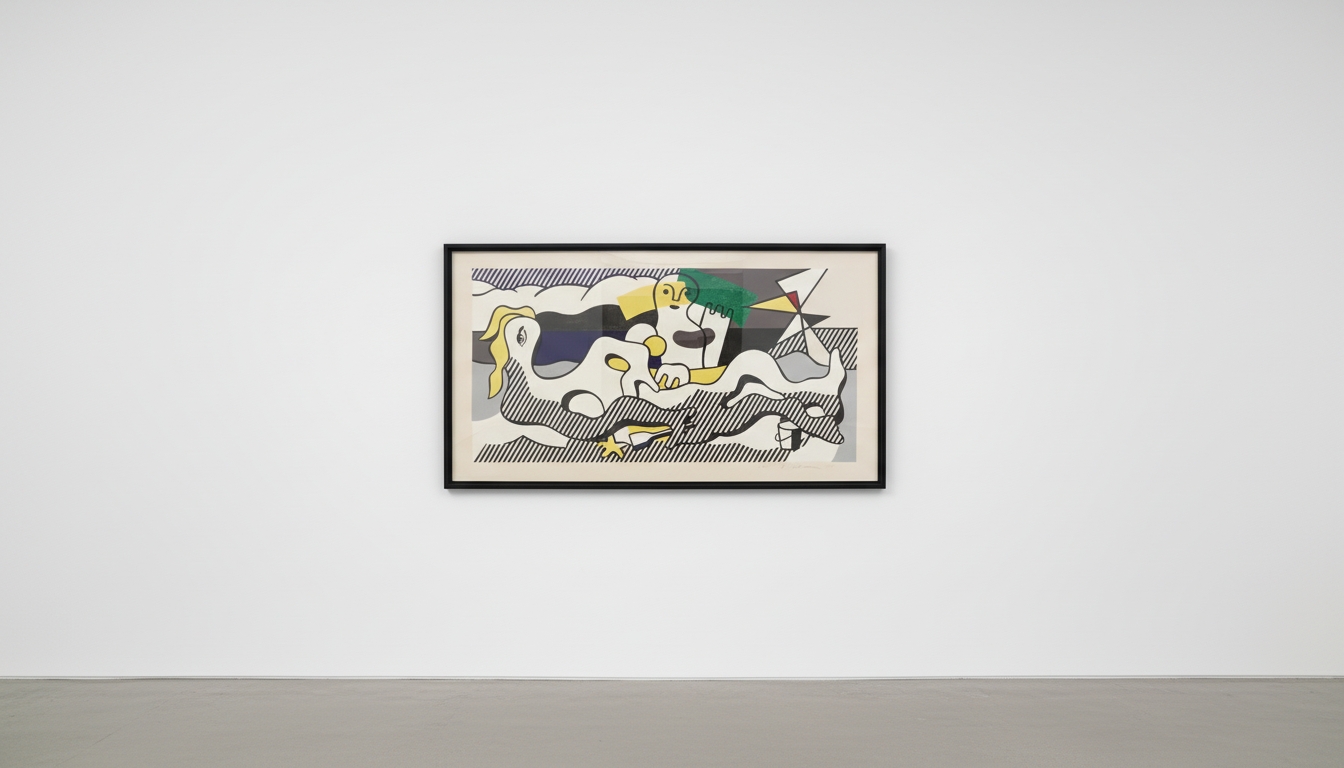
At The Beach, from the Surrealist Series — Lichtenstein in dialogue with European Surrealism.
Mary Lee Corlett's The Prints of Roy Lichtenstein (National Gallery of Art, 1994; revised and expanded editions subsequently) is the definitive reference for Lichtenstein prints. Every serious purchase should be cross-referenced against Corlett entries, which provide:
When a seller identifies a work with a "C." prefix number (e.g., C.239), they are citing the Corlett catalogue entry. This is standard practice. If a seller cannot provide a Corlett reference for a purported Lichtenstein print, that is a significant red flag.
The Roy Lichtenstein Foundation does not currently operate an active authentication service for the general market, but it maintains detailed records of the artist's work and has assisted in significant authentication cases. For major purchases, it is worth making a written inquiry to the Foundation.
More practically, authentication for Lichtenstein prints rests on:
Imperfect-67-c-223-rendered.jpg" alt="Imperfect 67, Roy Lichtenstein" style="max-width:100%;height:auto;">
Imperfect 67 — from Lichtenstein's Imperfect series, an investigation of the diagonal and geometric form.
Lichtenstein's prints are produced on a variety of papers, some more archivally stable than others. Key condition issues to monitor:
Fading: Some early screenprints used inks that are susceptible to light-induced fading. Always examine in good light and compare against published reproductions. Significant fading materially reduces value.
Paper Discolouration: Acid content in papers can cause yellowing over time. Examine margins and verso for discolouration.
Surface Damage: Lichtenstein's flat, graphic surfaces show scratches, scuffs, and pressure marks readily. These can sometimes be treated by a conservator but always affect value.
Tears and Losses: Obvious physical damage should be disclosed by sellers and reflected in price.
| Series / Type | Recent Auction Range | Source |
|---|---|---|
| Minor woodcuts / small-format prints | $15,000–$20,000 | Phillips 2023 |
| Landscapes series — individual | $75,000–$165,000 | Christie's/Sotheby's 2023–25 |
| Peace Through Chemistry — individual | ~$101,000 | Christie's 2026 |
| Haystacks series — individual | $114,000–$181,000 | Sotheby's 2025 |
| Reflections on Crash — individual | ~$216,000 | Sotheby's 2025 |
| Nudes series — individual | $546,000–$1,080,000 | Phillips 2023 / Christie's 2025 |
Indicative ranges based on recent auction and gallery data.
Auction: Transparent pricing history, competitive bidding, buyer's premium typically 25–30%. Works are sold as-is; condition reports are available but warranties are limited. Best for buyers with strong market knowledge.
Gallery: Expert guidance, condition transparency, authentication support, and typically a warranty. Price premium over auction is offset by reduced risk. Specialist galleries with Lichtenstein expertise can also advise on collection building over time.
For collectors new to the Lichtenstein market, starting with a specialist gallery — where the groundwork of authentication and condition assessment has been done — is prudent. As your knowledge deepens, auction participation becomes more attractive.
Roy Lichtenstein's prints represent one of the most thoroughly documented, institutionally validated, and consistently liquid collecting categories in post-war American art. The infrastructure is there: the catalogue raisonné, the Foundation records, the active auction market, the established gallery network. What that means for collectors is unusually low ambiguity — you know what you're buying, you know what it's worth, and you know there will be a market when you choose to sell.
Browse the current selection of Roy Lichtenstein available at Guy Hepner — including works from the Mirrors, Nudes, and major series.
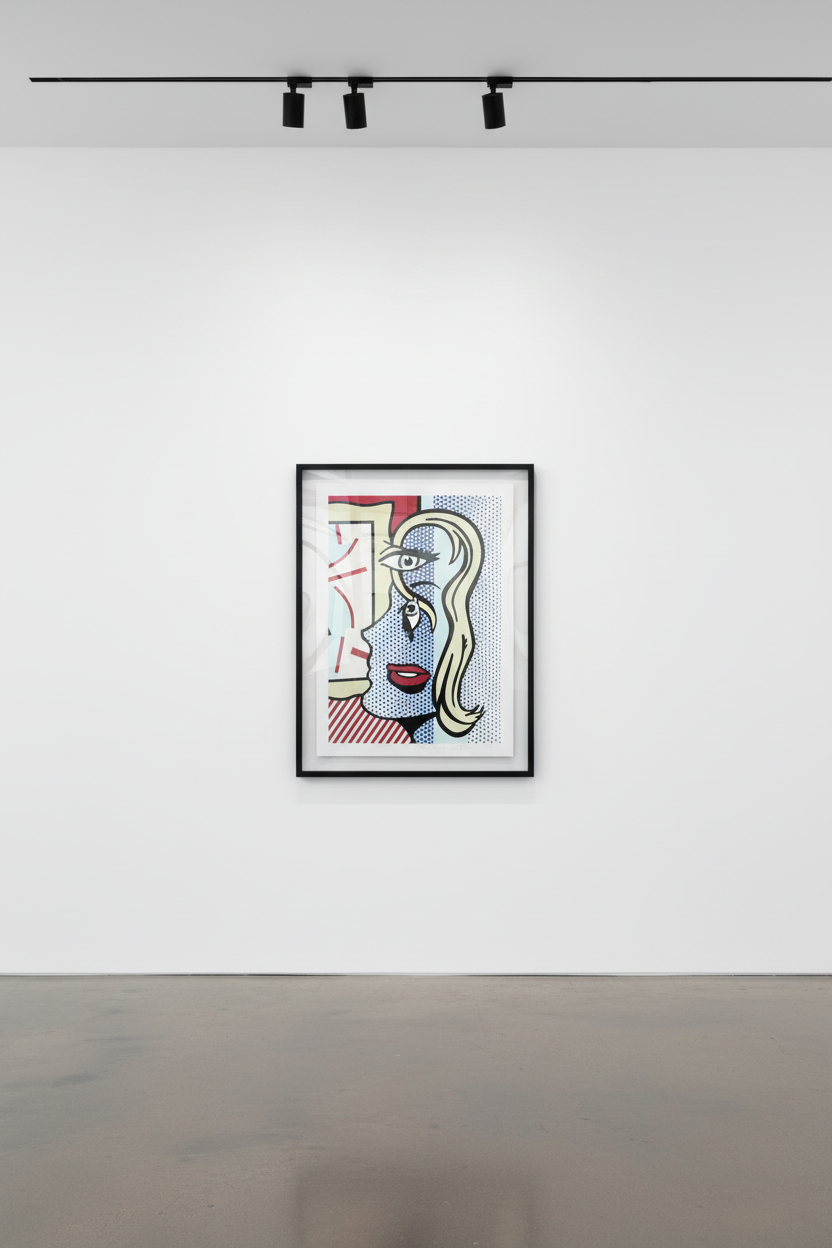
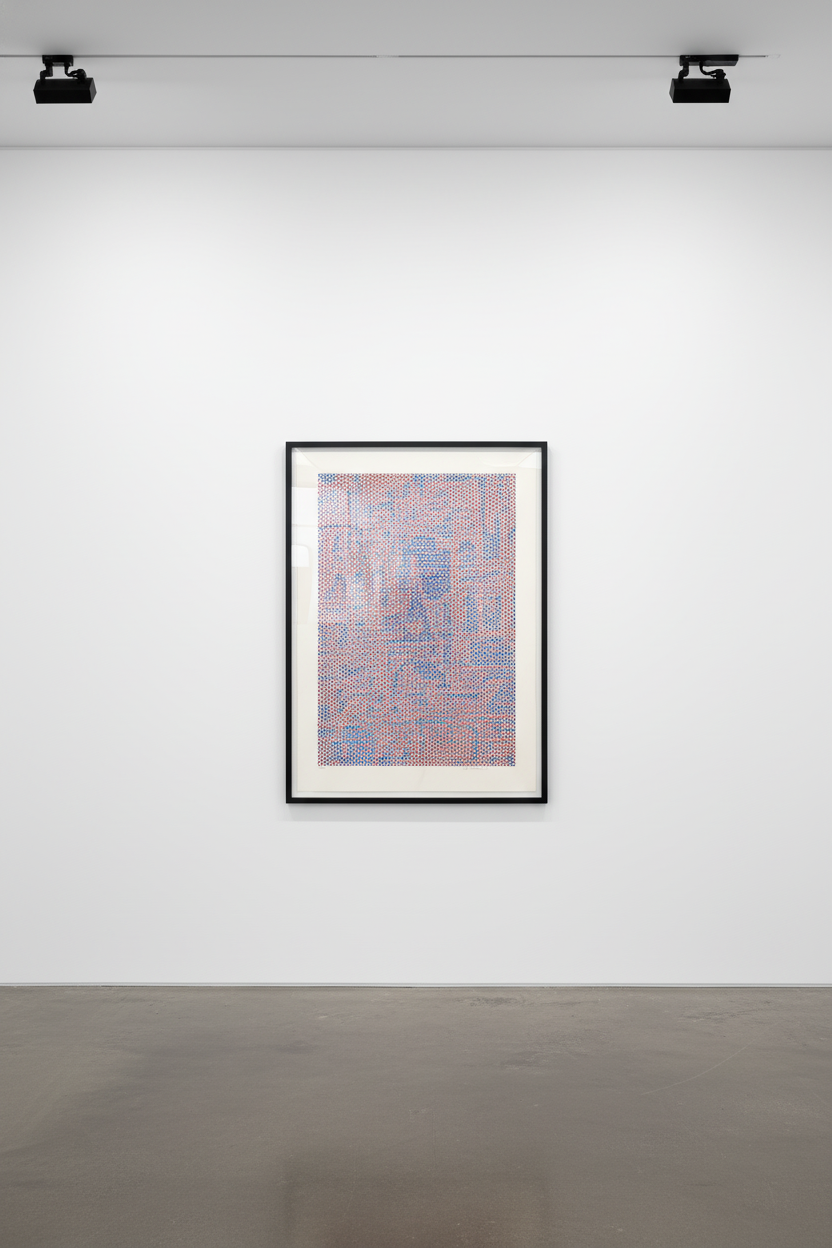
Explore Roy Lichtenstein prints for sale at Guy Hepner: Painting Series, American Indian Theme, Art Critic, Brushstrokes, Cathedral.
Related Series