Flower Paintings

April 29, 2026
Few works in the history of twentieth-century printmaking have achieved the sustained cultural resonance of Andy Warhol's Flowers series. For collectors seeking Andy Warhol Flowers 1970 for sale, understanding the full context of the portfolio — its origins, technical execution, auction history, and authentication requirements — is essential before making any acquisition decision. This guide covers everything a serious collector needs to know about the 1970 Flowers screenprint portfolio (Feldman & Schellmann FS II.64–73): from the disputed photograph that sparked a landmark copyright lawsuit, to the market performance of complete portfolios at Sotheby's and Christie's, to the authentication standards upheld by the Andy Warhol Authentication Board.
Inquire About Available Flowers Prints
Browse the complete FS II.64–73 portfolio and individual prints available through Guy Hepner, New York.
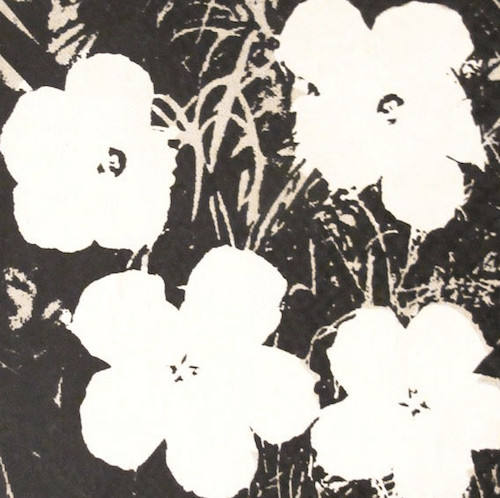
Warhol's engagement with the flower motif began in 1964, when he appropriated a photograph of hibiscus blossoms taken by commercial photographer Patricia Caulfield, which had appeared in the June 1964 issue of Modern Photography magazine. Warhol had the image cropped and colour-separated, then used it as the basis for a series of large-format canvases exhibited at the Leo Castelli Gallery in November 1964. The paintings — showing four hibiscus blooms floating against a flat, undifferentiated ground — were immediately celebrated as a signature statement of Pop Art: nature depersonalised, colour unhinged from reality, and the decorative elevated to the monumental.
The Castelli show sold out. Warhol produced the canvases in several scales, from intimate 8 × 8 inch works to room-dominating 82 × 82 inch panels. The 1964 paintings now represent some of the most valuable works on the market — a large Flowers canvas achieved $35,485,000 at Christie's in May 2024, while smaller acrylic paintings from the same year reached $463,000–$480,000 at Christie's in March 2026. These painting results are cited here for context only; they belong to an entirely separate market from the 1970 screenprint editions.
Caulfield's copyright claim against Warhol, filed in 1966, was one of the first significant legal challenges to the Pop Art practice of appropriation. The settlement, reached out of court, required Warhol to pay Caulfield a fee and provide her with several original paintings from the series. The lawsuit did not prevent the continued use of the image — it simply formalised a licensing arrangement — but it became a landmark reference point in subsequent decades of debate around artistic appropriation, fair use, and the boundaries of originality in contemporary art.
On 3rd June 1968, Valerie Solanas shot Warhol at the Factory, and he was clinically dead on the operating table before being revived. The near-death experience profoundly altered Warhol's relationship with his own output. He became more cautious, more commercially minded, and increasingly reliant on his studio apparatus. The Flowers motif — already associated with beauty, transience, and the flattening of sentiment — took on additional resonance in the years that followed.
In 1970, the original publisher published the Flowers portfolio as a suite of ten screenprints. The portfolio formalised Warhol's Flowers imagery into an edition specifically designed for the collector market. Where the 1964 paintings had been unique objects for museums and major collectors, the 1970 prints made the image accessible to a wider audience — while still carrying the imprimatur of a limited, signed, and numbered edition.
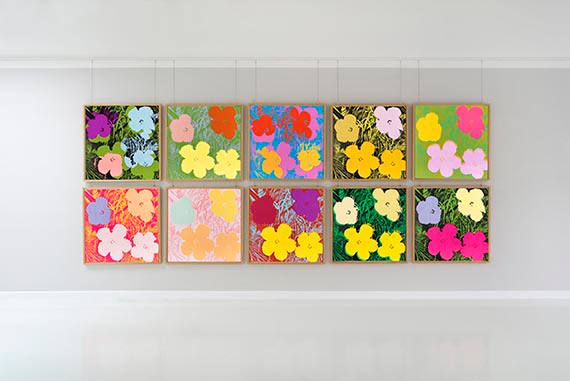
Andy Warhol, Flowers Complete Portfolio (FS II.64–73), 1970. All ten screenprints. Available at Guy Hepner, New York.
The ten prints in the 1970 Flowers portfolio are screenprints on Beckett High White paper, each measuring 36 × 36 inches (91.4 × 91.4 cm). The format is square — a deliberate choice that echoes both the 1964 canvases and Warhol's concurrent experiments with the square format in other series. Each print was produced by a team of skilled printers working under Warhol's direction, using the colour-separation and screen-preparation processes that the Factory had refined across multiple major editions.
The edition size is 250 numbered copies, plus 26 artist's proofs (AP) designated A/P and lettered A through Z. Each print bears Warhol's pencil signature and the edition number in the lower margin. The portfolio was issued in a cloth-covered portfolio box with a title page.
The source image used for the 1970 prints is the same Caulfield hibiscus photograph used for the 1964 paintings — four blooms arranged in a loose cluster. Warhol retained the basic compositional elements — the four-flower arrangement — but subjected them to radical colour transformations. In each of the ten prints, the relationship between the flowers and the background shifts: the blooms may be red on black, yellow on green, white on orange, or any number of other combinations that bear no relationship to botanical reality. The flowers become pure graphic objects, their identity as hibiscus almost incidental.
The FS II numbering — referring to the Feldman and Schellmann catalogue raisonné Andy Warhol Prints: A Catalogue Raisonné 1962–1987 — runs from FS II.64 through FS II.73. Each print is distinguished primarily by its colour scheme:
Each variation demonstrates Warhol's systematic approach to colour: he was not painting from emotion but from a kind of industrial logic, cycling through colour relationships the way a designer might work through a series of mockups. The effect, across all ten prints together, is cumulative — the repetition and variation forming a visual argument about the arbitrariness of colour in representation.
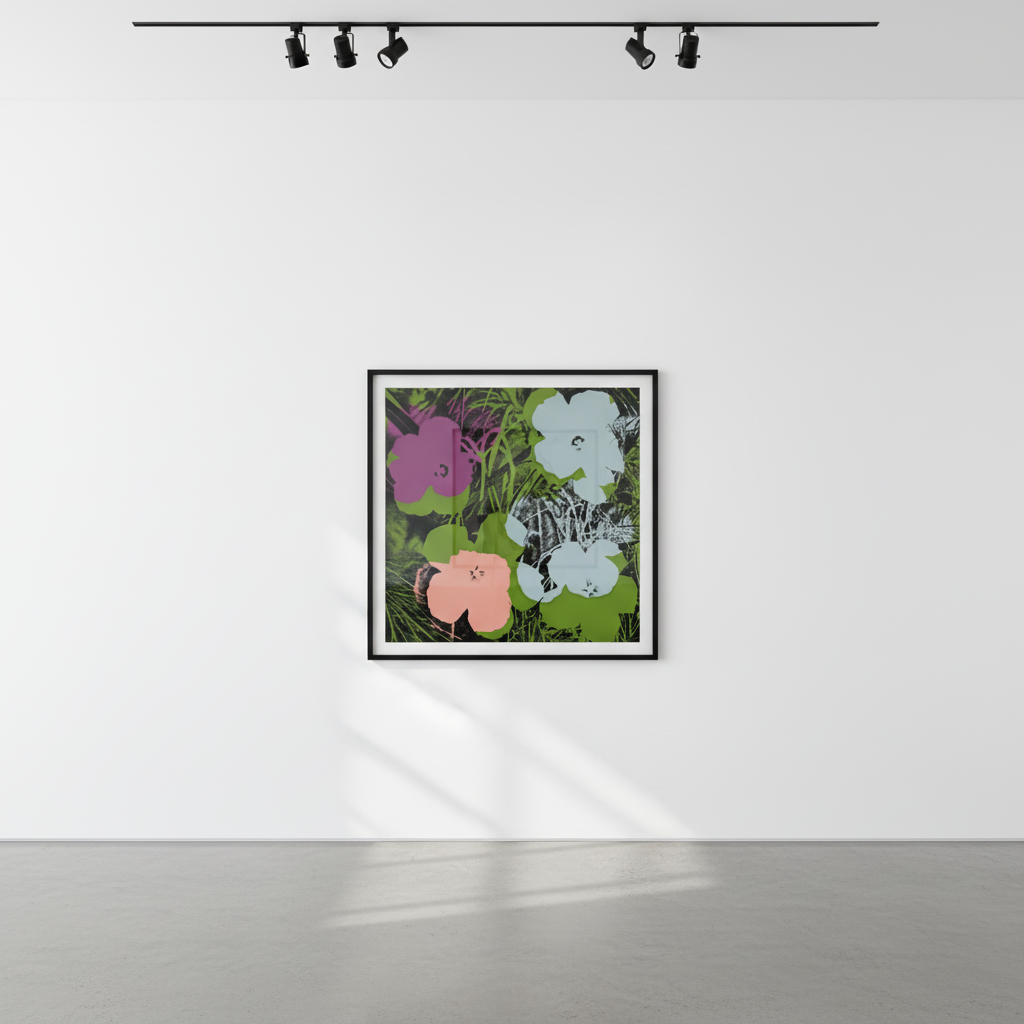
Andy Warhol, Flowers FS II.64, 1970. Screenprint on Beckett High White paper, 36 × 36 inches. Available at Guy Hepner, New York.
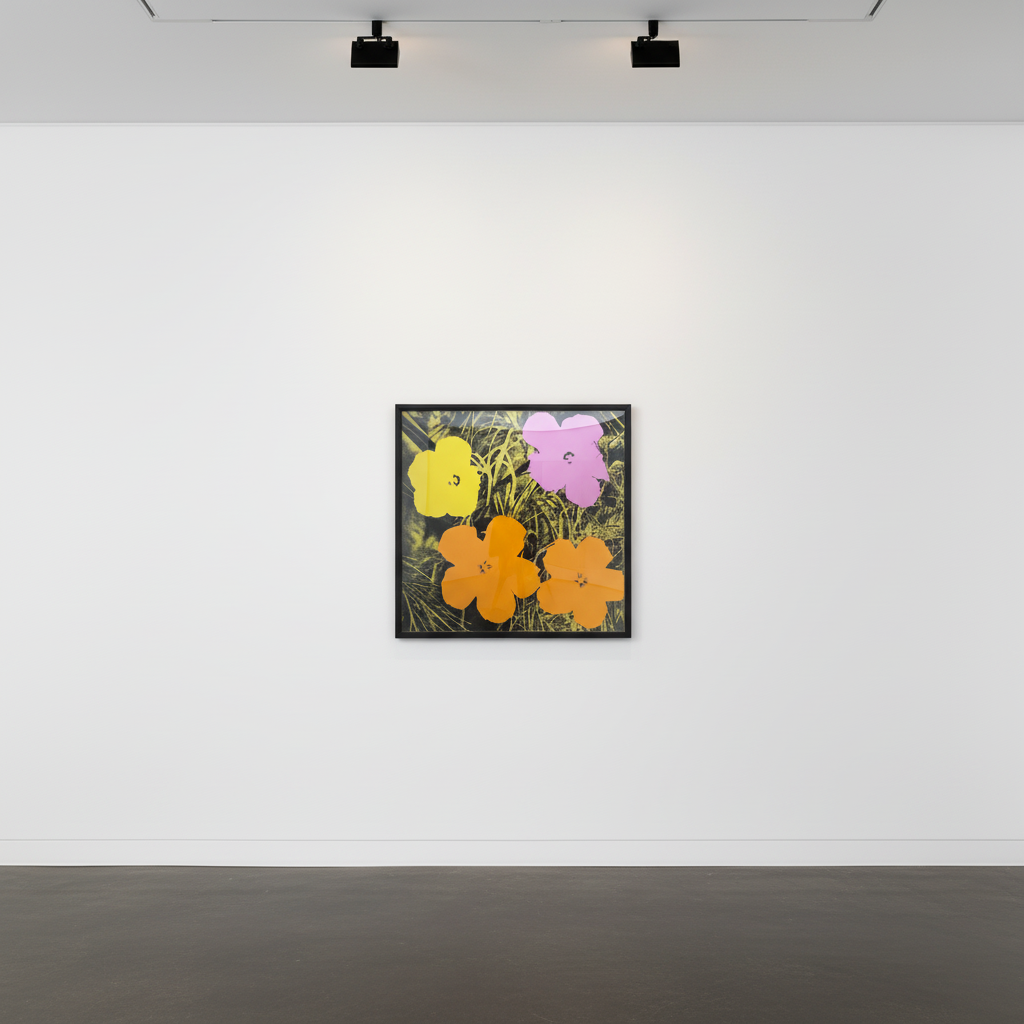
Andy Warhol, Flowers FS II.67, 1970. Screenprint on Beckett High White paper, 36 × 36 inches. Available at Guy Hepner, New York.
Speak With a Specialist
Our specialists can advise on individual prints and complete portfolios from the FS II.64–73 series.
The 1970 Flowers portfolio has a strong and well-documented auction record, with the complete ten-print portfolio (FS II.64–73) performing consistently at major international salesrooms.
Complete Portfolio Results (Screenprints):
These results reflect the market during the 2012–2014 period. The market for the complete portfolio has moved substantially since then, with current valuations for complete suites in strong condition estimated in the $1.5–2.5 million range, reflecting both broader Warhol market appreciation and the increasing scarcity of intact, well-documented portfolios in the primary and secondary markets.
More recently, Christie's "Prints and Multiples" sale in April 2026 included a unique proof from the Flowers series that achieved $114,300 against a pre-sale estimate of $60,000–$80,000 — a result that significantly exceeded expectations and signals continued collector demand for exceptional examples outside the standard numbered edition.
It is important for screenprint collectors to understand that auction results for Flowers paintings (1964 canvases in acrylic on linen) occupy an entirely different market tier. A large Flowers canvas achieved $35,485,000 at Christie's in May 2024, and smaller 1964 acrylic paintings reached $463,000–$480,000 at Christie's in March 2026. These results are not a benchmark for the screenprint editions; they reflect the unique-work market for Warhol paintings, which is driven by different collector bases, different institutional demand, and different value mechanics.
For collectors focused on the 1970 screenprint portfolio, the relevant comparables are the Sotheby's results cited above.
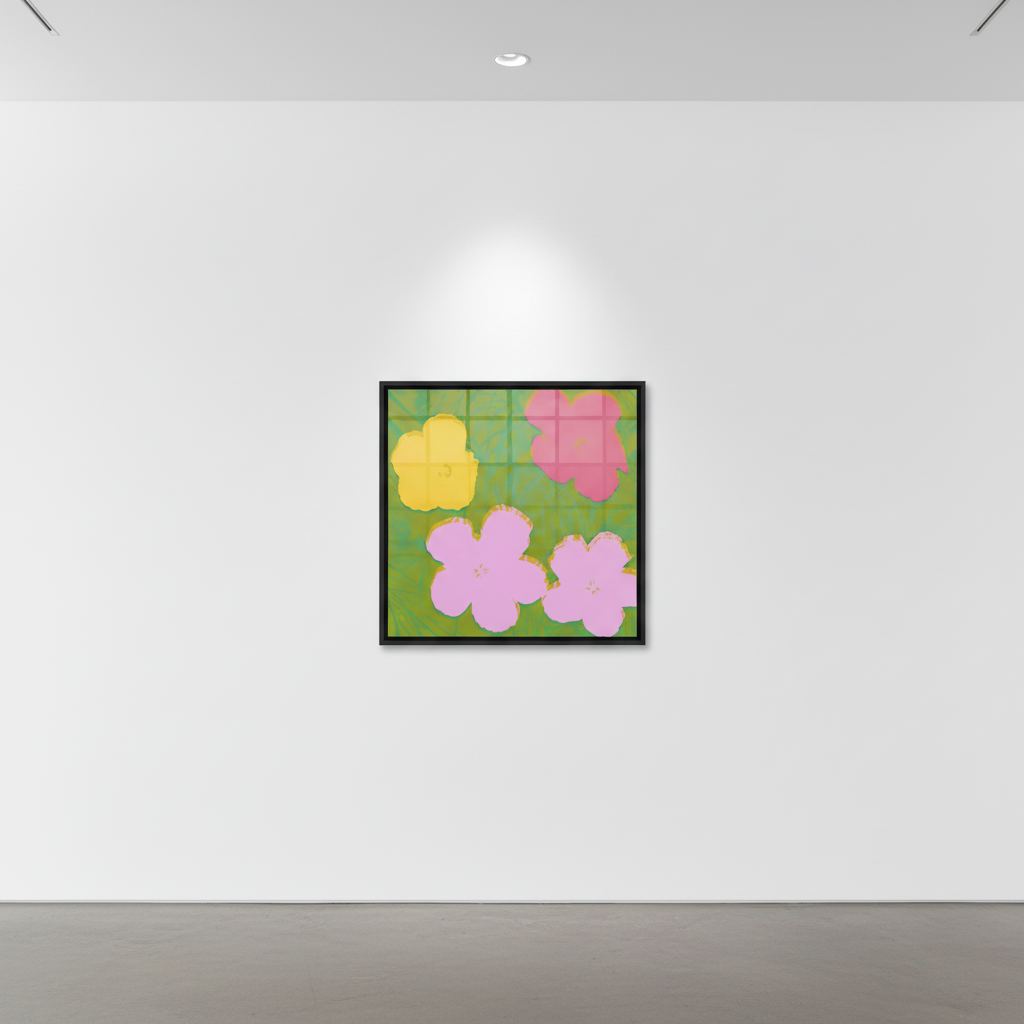
Andy Warhol, Flowers FS II.68, 1970. Screenprint on Beckett High White paper, 36 × 36 inches. Available at Guy Hepner, New York.
For collectors considering the Andy Warhol Flowers 1970 value as an investment proposition, several factors determine where an individual print or complete portfolio sits within the market range.
1. Complete Portfolio vs Individual Prints
The complete ten-print portfolio commands a significant premium over the sum of its individual parts. Institutional collectors, museums, and major private collections typically seek the complete suite. An individual print from the series — even in excellent condition — will achieve a fraction of what a verified, complete, boxed portfolio realises at auction. If your goal is long-term appreciation, acquiring or retaining the complete portfolio is the strongest position.
2. Artist's Proofs (AP) vs Numbered Editions
Artist's proofs — designated A/P and lettered A through Z — are generally considered more desirable than numbered edition copies, for two reasons. First, they are significantly scarcer (26 AP versus 250 numbered copies). Second, they are conventionally understood to have been produced earlier in the print run, when the screens are at their sharpest and the inks at their most accurate. In practice, condition matters more than edition type, but APs carry a consistent premium in the market.
3. Condition
Warhol's screenprints are vulnerable to fading, foxing, and handling damage. The Beckett High White paper used for the 1970 Flowers prints is relatively stable, but acid migration from poor storage conditions can cause discolouration over time. Collectors should look for:
4. Provenance
Provenance — the documented ownership history of a work — adds value in two ways: it provides authentication evidence (a work that has been in a major private collection since 1972 is less likely to be a forgery than one that appeared on the market yesterday), and it adds cultural context. Works from the collections of notable figures, or with exhibition histories at major institutions, command premiums.
5. Presentation
Complete portfolios in their original portfolio boxes, with all documentation intact, are significantly more desirable than loose prints. The portfolio box is part of the work as conceived by the publisher, and its condition matters.
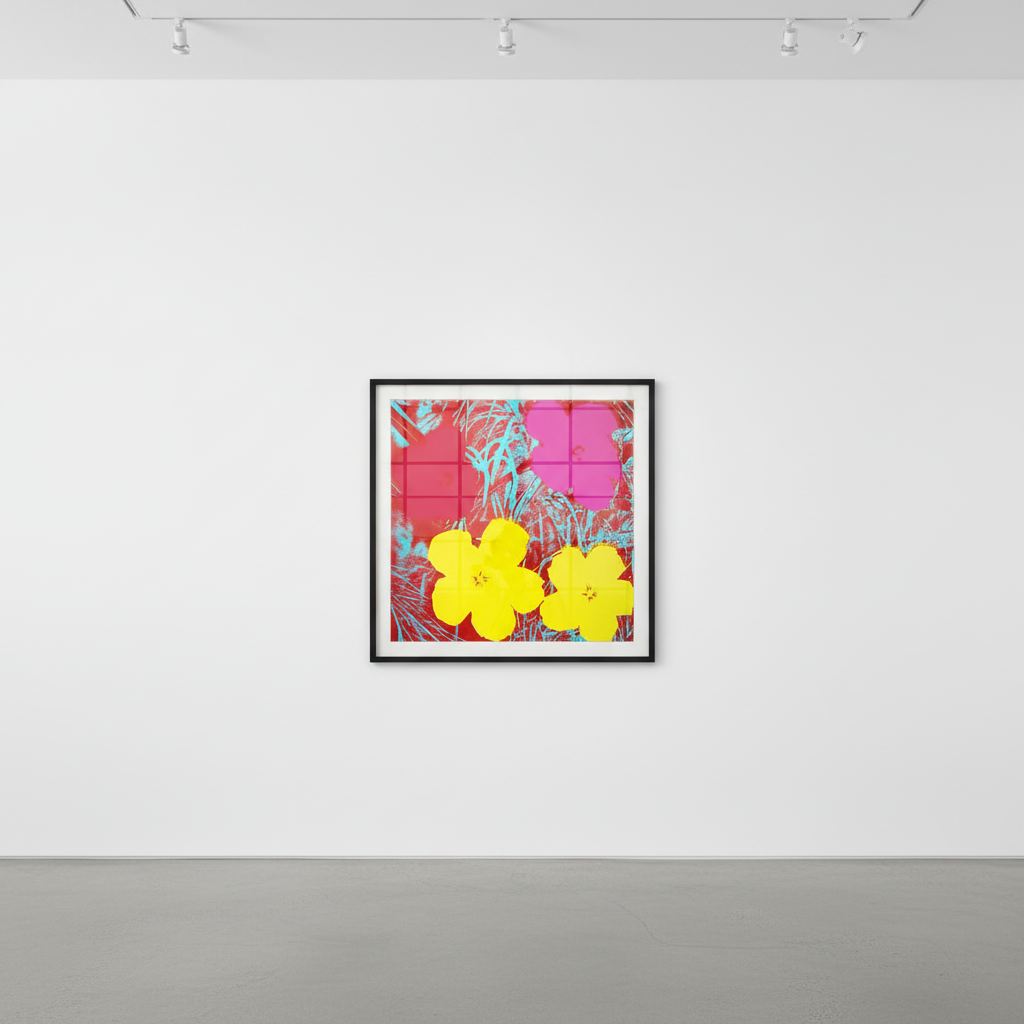
Andy Warhol, Flowers FS II.71, 1970. Screenprint on Beckett High White paper, 36 × 36 inches. Available at Guy Hepner, New York.
Inquire About Available Flowers Prints
View available works from the FS II.64–73 portfolio at Guy Hepner, New York.
The Andy Warhol Authentication Board (AWAB) was the primary body responsible for authenticating works attributed to Andy Warhol. Operating from 1995 to 2012, the AWAB examined thousands of works and issued opinions — stamped directly onto the verso of authenticated works — as to whether a given piece was, in their judgement, by Warhol. The Board was notoriously cautious and, in some cases, controversial: it denied authentication to works that have since been accepted by many scholars as genuine. The AWAB formally ceased operations in 2012, citing the legal and financial burden of its work.
For collectors today, an AWAB stamp on the verso of a Flowers print provides strong authentication support, but the absence of an AWAB stamp does not mean a work is inauthentic — many genuine works were never submitted to the Board, and many were authenticated through other means.
Works from the 1970 Flowers portfolio are identified through a combination of:
The pencil signature on the Flowers prints is relatively consistent; Warhol's signature evolved over time, but the 1970 prints have a recognisable character that specialists can assess. Forged signatures do exist in the market, and a specialist examination is always recommended.
The definitive reference for Warhol's printed editions is Andy Warhol Prints: A Catalogue Raisonné 1962–1987, compiled by Frayda Feldman and Jörg Schellmann and published in multiple revised editions. The catalogue assigns FS II numbers to each print and provides detailed technical specifications: paper type, dimensions, edition size, publisher, printer, and known variants. Any work offered as part of the 1970 Flowers portfolio should correspond precisely to the specifications in Feldman and Schellmann.
Collectors should verify:
Discrepancies in any of these details — particularly paper type or dimensions — are significant red flags.
The most reliable way to acquire an authenticated Flowers print is through a gallery with a documented track record in Warhol editions. Reputable dealers will provide full provenance documentation, condition reports, and will stand behind the authenticity of their works. Be cautious of works offered without clear provenance, at prices that seem anomalously low, or without the ability to inspect the work in person or via high-resolution documentation.
What does the FS II numbering mean?
FS II refers to the Feldman and Schellmann catalogue raisonné of Warhol prints, specifically Volume II, which covers screenprints from 1970 onwards (with some earlier works). Each print in the catalogue is assigned a unique FS number, allowing precise identification of any Warhol edition. FS II.64–73 denotes the ten prints in the 1970 Flowers portfolio, numbered sequentially within the catalogue.
What is the difference between the 1964 Flowers and the 1970 Flowers?
The 1964 Flowers are unique paintings — acrylic on linen, produced in the studio as individual works. They exist in a wide range of sizes and are considered museum-quality unique objects. The 1970 Flowers (FS II.64–73) are screenprints produced as a limited edition of 250 copies plus 26 APs. They are significant works in their own right, but they are editions — multiple copies of the same images — and occupy a different market tier from the unique paintings.
How do I buy an Andy Warhol Flowers 1970 print?
Works from the 1970 Flowers portfolio are available through specialist galleries, auction houses, and dealers. Guy Hepner offers both individual prints and complete portfolios. We recommend working with a gallery that can provide full provenance documentation and a condition report before purchase. For serious collectors, viewing the work in person or receiving high-resolution documentation of the verso (showing signature, edition number, and any stamps) is essential.
What is an artist's proof (AP)?
An artist's proof is a copy of a print set aside from the main numbered edition, conventionally reserved for the artist and their collaborators. In the Flowers portfolio, 26 APs were produced alongside the 250 numbered copies. APs are typically designated with the letters A through Z (or similar notation) rather than a fraction (e.g., 12/250). They are generally considered slightly more desirable than standard numbered copies due to their scarcity.
How do I authenticate an Andy Warhol Flowers print?
Authentication involves several layers: verifying the pencil signature, checking the edition number against the known edition size, confirming the paper type and dimensions match the Feldman and Schellmann specifications, examining any stamps or labels on the verso, and tracing the provenance history. The Andy Warhol Authentication Board operated until 2012 and stamped authenticated works. Post-2012, authentication relies on specialist expertise, gallery provenance, and scholarly assessment. If in doubt, consult a reputable Warhol specialist before purchasing.
Should I buy a complete portfolio or individual prints?
This depends on your collecting goals and budget. A complete portfolio — all ten prints in the original box — commands a significant premium and is the preferred acquisition for institutional collectors and those seeking maximum market liquidity. Individual prints are more accessible and can be highly desirable in their own right, particularly in exceptional condition or with AP designation. If you are considering a long-term investment, the complete portfolio has historically demonstrated stronger price stability.
What condition should I expect, and what should I look out for?
Works from the 1970 Flowers portfolio are now over 55 years old. Expect some degree of handling wear in the margins, particularly in works that have been exhibited or framed. Serious condition issues — fading, foxing, tears, or restoration — will significantly affect value. Always request a detailed condition report and, if possible, view the work under raking light (which reveals surface irregularities and restoration) before purchasing. Prints that have been stored flat in acid-free conditions will generally be in better shape than those that have been framed for extended periods.
Where can I find Andy Warhol Flowers 1970 for sale?
The 1970 Flowers portfolio appears regularly at major auction houses (Sotheby's, Christie's, Phillips) as well as through specialist galleries. Guy Hepner, New York, maintains a focused inventory of Warhol prints including works from the FS II.64–73 portfolio. Enquiries are handled personally, and works are available for inspection by appointment.
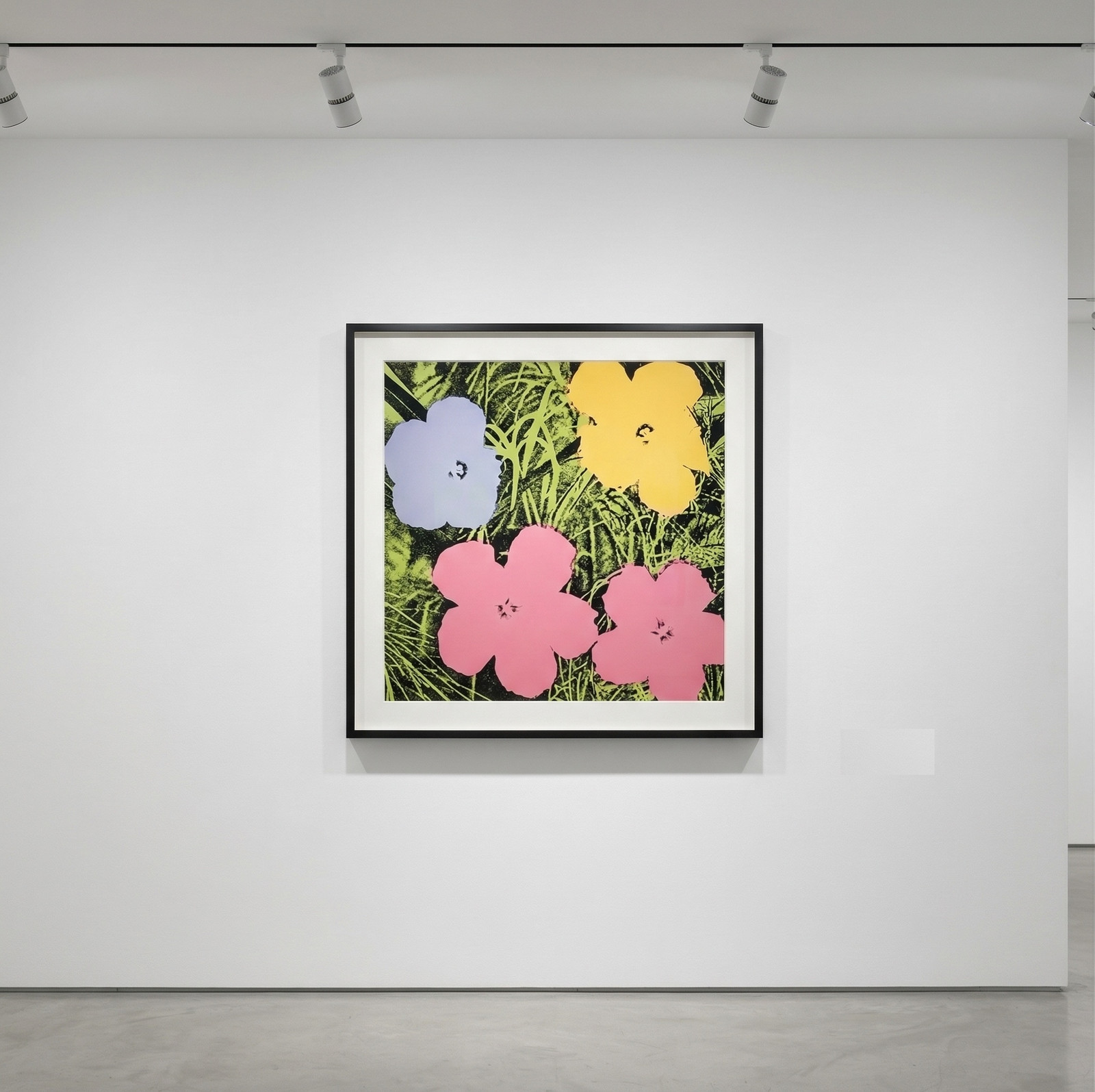
Andy Warhol, Flowers FS II.73, 1970. Screenprint on Beckett High White paper, 36 × 36 inches. Available at Guy Hepner, New York.
Guy Hepner specialises in blue-chip contemporary prints and multiples, with a particular focus on Warhol editions. Works from the 1970 Flowers portfolio are available individually and as complete portfolios. All works are offered with full provenance documentation and condition reports. The gallery is located at 529 West 20th Street, New York, and works with collectors internationally.
Our specialists have extensive experience with the Warhol print market and can advise on acquisition, authentication, framing, storage, and eventual resale. Whether you are building a collection for the first time or adding a significant work to an established holding, we are available to guide you through the process.
Inquire About Available Flowers Prints
Browse the complete FS II.64–73 portfolio and individual prints currently available through Guy Hepner, New York.
Speak With a Specialist
Contact Guy Hepner directly to discuss available works, pricing, provenance documentation, and acquisition support.
Guy Hepner, 529 West 20th Street, New York. Specialising in Andy Warhol prints and multiples since 1999.
--- Browse Andy Warhol prints at Guy Hepner: Andy Warhol art for sale | Sell your WarholExplore Andy Warhol prints for sale at Guy Hepner: Flower Paintings, Flowers 1970, 25 Cats Named Sam, A Gold Book, A La Recherche Du Shoe Perdu.
Related Series