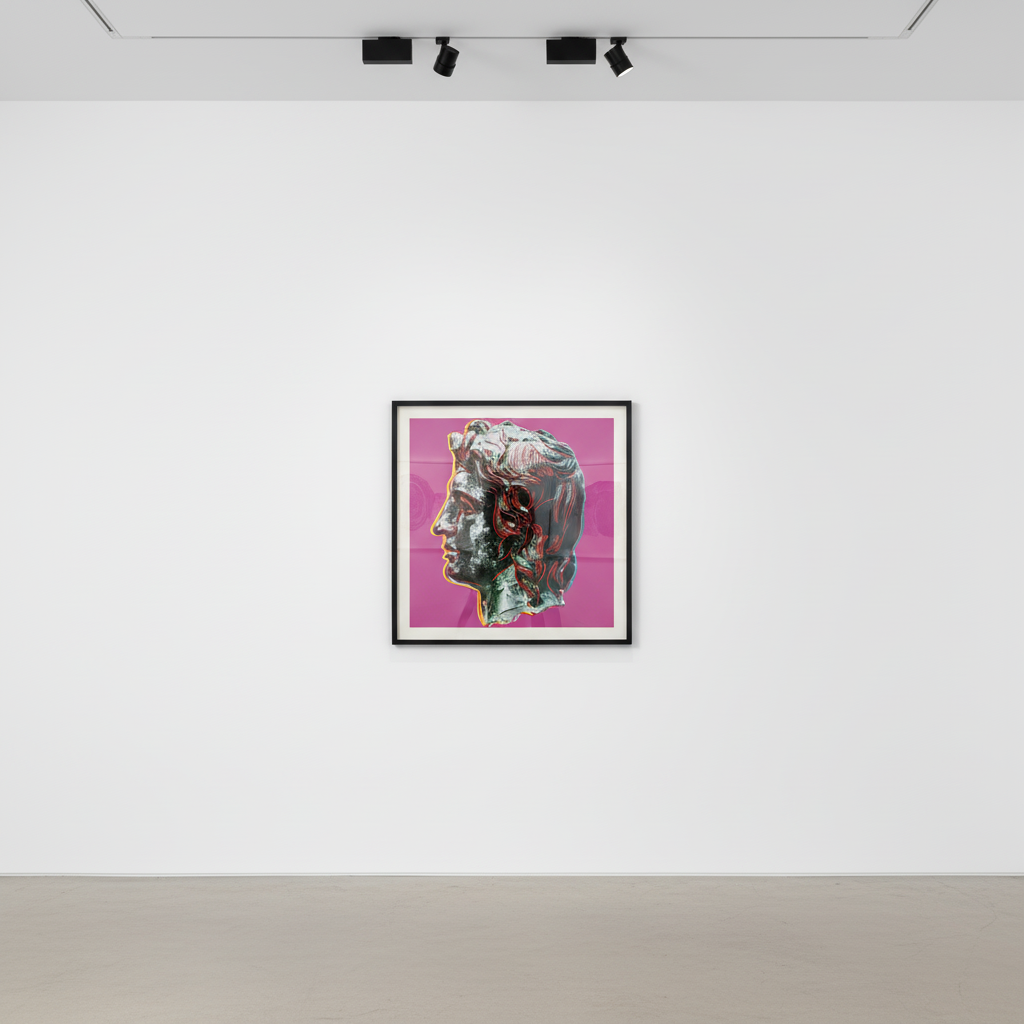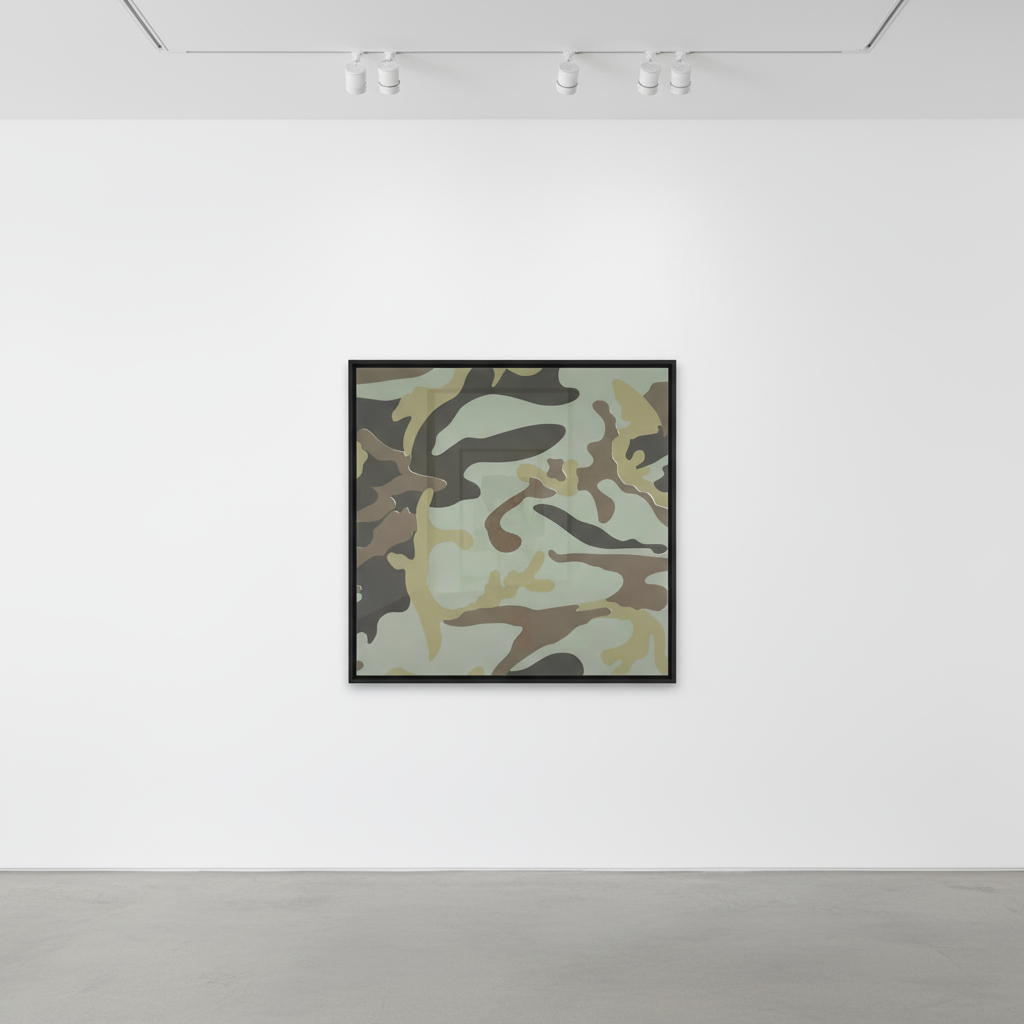
Camouflage

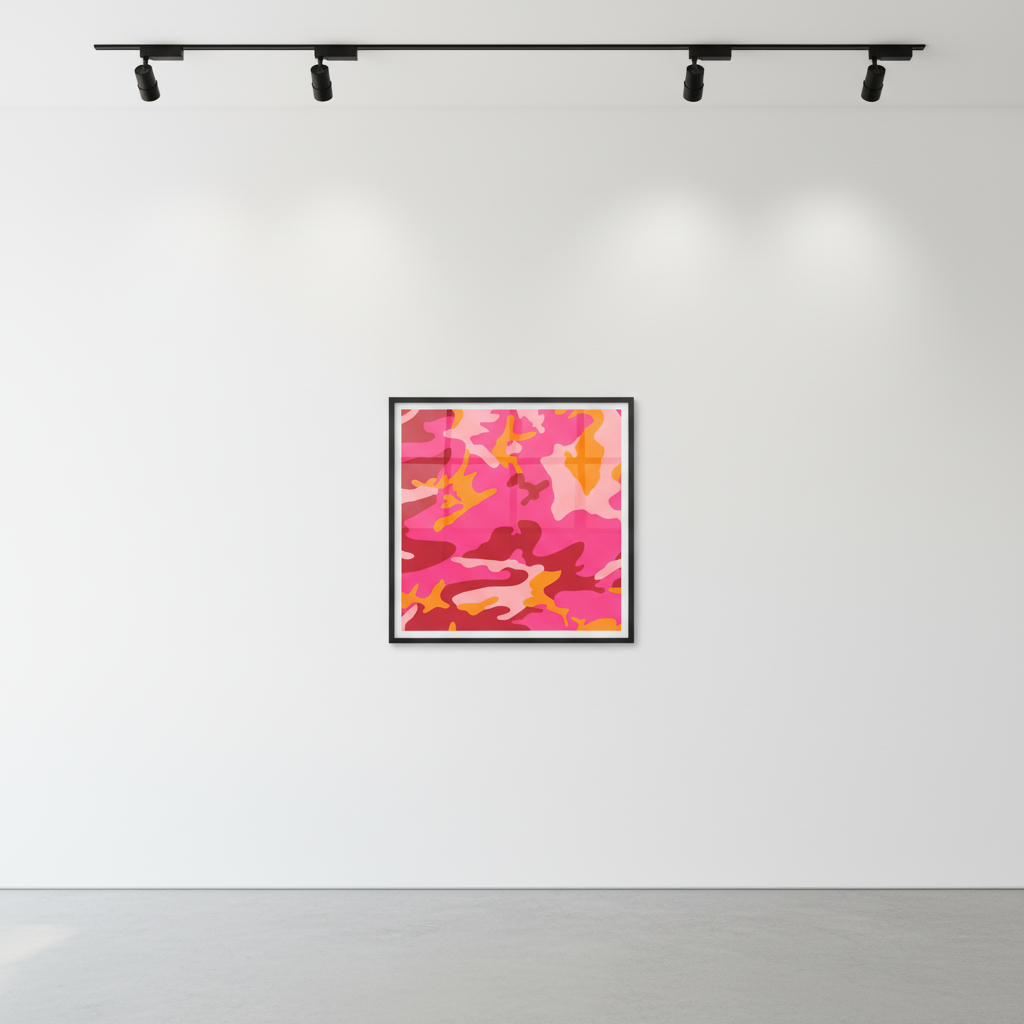
Andy Warhol's Camouflage series stands as one of the most compelling yet underexplored bodies of work from the Pop Art master's final creative period. These striking compositions, which transform a utilitarian military pattern into bold abstract statements, represent a fascinating departure from the celebrity portraits and consumer imagery that defined Warhol's public persona. Created in 1986, just months before his untimely death in February 1987, the Camouflage works reveal an artist still pushing boundaries and questioning the relationship between art, commerce, and visual culture.
The Camouflage paintings were deeply personal to Warhol, created without any gallery commission or commercial imperative. The series began in 1986 when Warhol asked his art assistant, Jay Shriver - an artist in his own right - about his ongoing projects. Warhol had allowed Shriver to work in his own studio one day a week while assisting him the rest of the time. When Shriver mentioned he was making small abstract works by pushing paint through the mesh of military camouflage cloth, Warhol became immediately inspired. He envisioned creating paintings based on the distinctive shapes and patterns of camouflage fabric, transforming this functional design into fine art.
Warhol sent Shriver to an Army-Navy surplus store near Union Square to purchase fabric samples. Once the fabric was photographed, Warhol had the mesh pattern removed, leaving only the organic, flowing shapes that characterise military concealment designs. This process of appropriation and transformation was quintessentially Warhol - taking something mundane and mass-produced, then elevating it through the lens of fine art production. The resulting silkscreen prints and paintings demonstrate Warhol's enduring fascination with patterns, repetition, and the boundaries between high and low culture.
Camouflage Trial Proof TP 4/84 — Andy Warhol. Available at Guy Hepner, New York.
The Camouflage paintings were not displayed publicly until six years after Andy Warhol's death. In September 1993, with the support of the Andy Warhol Foundation, an exhibition titled Andy Warhol Abstrakt premiered at the Kunsthalle in Basel, Switzerland. For the first time, the exhibition showcased large-scale Camouflage paintings ranging in size from 50 x 198 inches to 116 x 420 inches, offering a groundbreaking exploration of Warhol's experimentation with abstract art.
This delayed unveiling has contributed to the series' mystique within the contemporary art world. While Warhol's Marilyn Monroe portraits and Campbell's Soup Cans achieved instant iconic status, the Camouflage works represent a more contemplative, arguably more personal artistic statement. The series challenges conventional narratives about Warhol as purely a commercialist, revealing instead an artist engaged with questions of visibility, concealment, and the nature of abstraction itself.
The camouflage pattern carries inherent contradictions that appealed to Warhol's sensibilities. Designed to render soldiers invisible on the battlefield, it has paradoxically become one of the most recognizable and visible patterns in fashion and popular culture. By isolating and enlarging these shapes, Warhol strips away their functional purpose while highlighting their aesthetic power. The resulting works hover between representation and abstraction - they depict something recognizable yet remain fundamentally non-figurative.
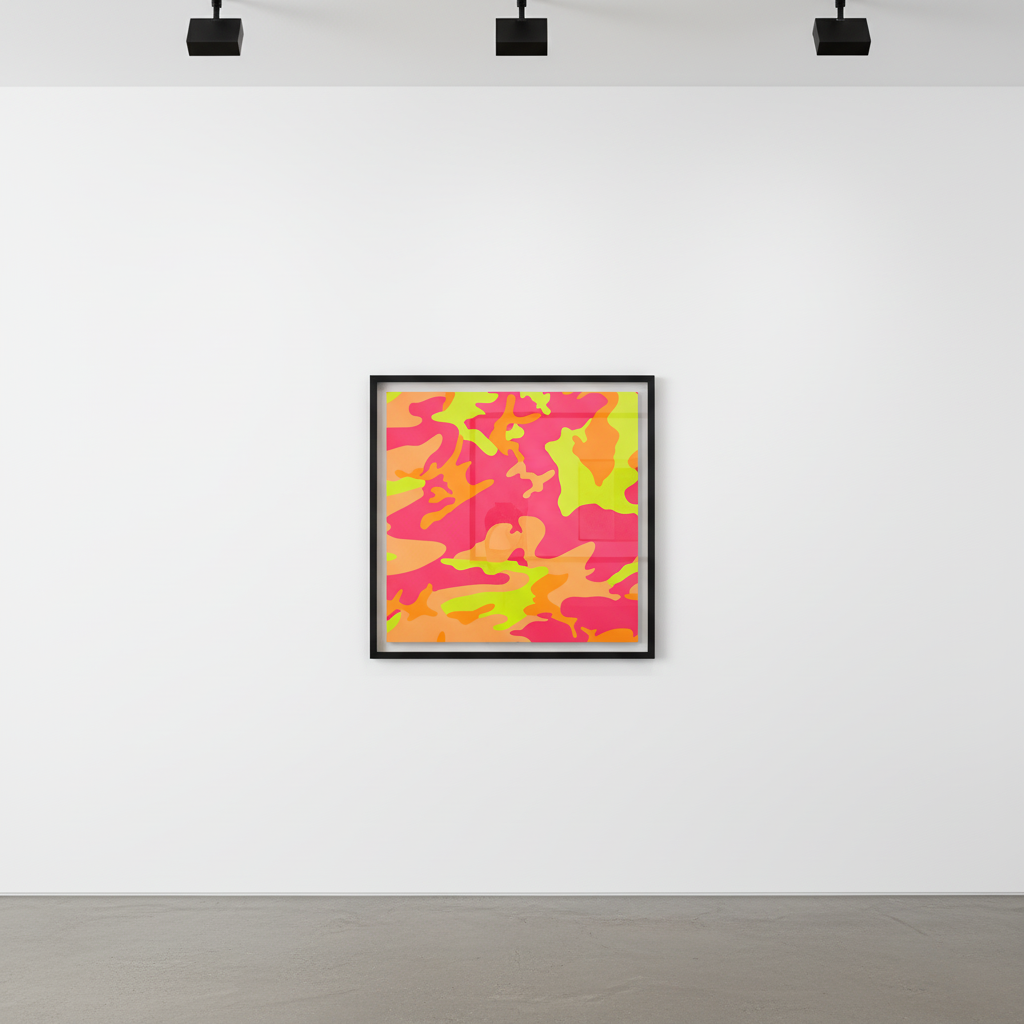
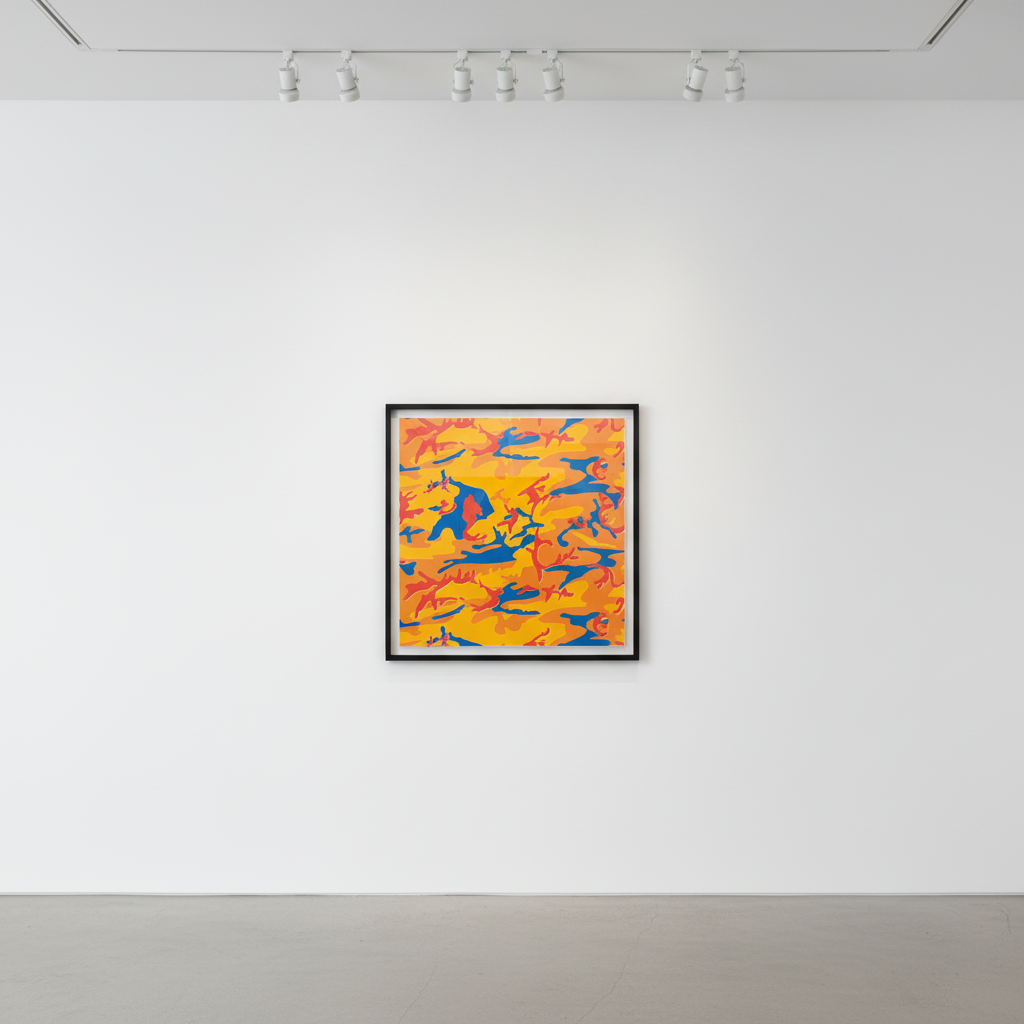
Camouflage F.S. II 409 — Andy Warhol. Available at Guy Hepner, New York.
The market for Andy Warhol Camouflage works has demonstrated remarkable strength in recent years, reflecting broader institutional and collector recognition of Warhol's late-period experimentation. According to the Art Basel and UBS Global Art Market Report, Warhol consistently ranks among the top-selling artists at auction globally, with works from his final years commanding increasing premiums as scholars and collectors reassess their significance.
Christie's and Sotheby's have both featured important Camouflage works in their major contemporary art sales, with results that underscore growing appreciation for this series. The prints, in particular, have attracted sophisticated collectors who recognise their art-historical importance and relative accessibility compared to the monumental paintings. The portfolio of screenprints, designated with Feldman-Schellmann catalogue numbers, offers collectors the opportunity to acquire museum-quality examples of Warhol's engagement with abstraction.
For collectors, the Andy Warhol Camouflage series offers several compelling attributes. These works represent one of Warhol's most significant late-period achievements, created during a time when the artist was revisiting and expanding his creative vocabulary. The imagery resonates with contemporary concerns about surveillance, visibility, and identity - themes that have only grown more relevant in the digital age. Additionally, the bold graphic quality and vibrant colour variations make these works visually striking additions to any collection, capable of holding their own alongside Warhol's more celebrated subjects.
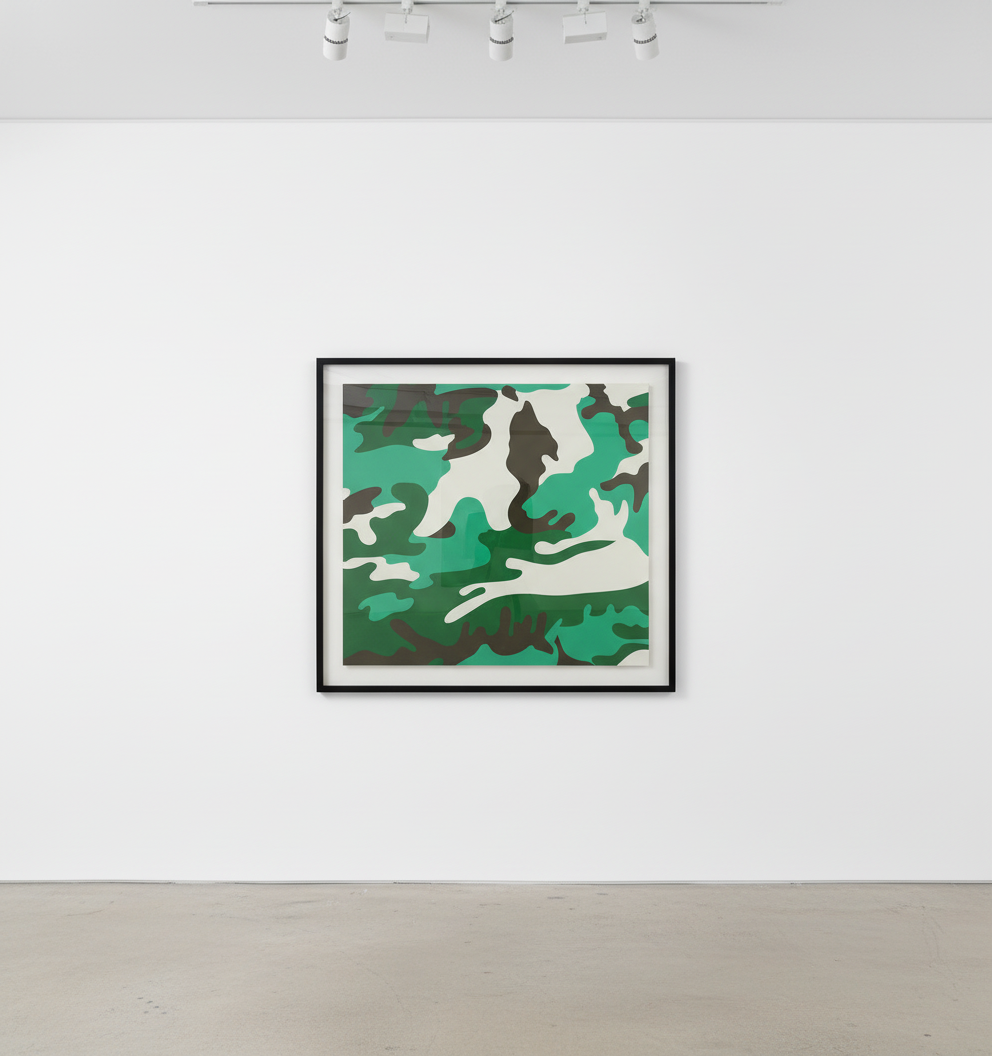
Camouflage F.S. II 406 — Andy Warhol. Available at Guy Hepner, New York.
The Camouflage series occupies a unique position within Andy Warhol's vast artistic output. These works demonstrate that even in his final year, Warhol remained committed to artistic exploration and innovation. Rather than simply repeating successful formulas, he continued to investigate new visual territory, finding in the camouflage pattern a subject that synthesised his longstanding interests in appropriation, pattern, and the transformation of everyday imagery.
The series also invites reconsideration of Warhol's relationship to Abstract Expressionism, the movement his Pop Art ostensibly rejected. The organic shapes and gestural quality of camouflage patterns echo the biomorphic abstraction of artists Warhol knew well from his early years in New York. In this sense, the Camouflage works represent a late-career dialogue with artistic traditions Warhol had seemingly abandoned decades earlier.
Guy Hepner is proud to offer exceptional examples from Andy Warhol's Camouflage series, including rare trial proofs and works from the complete portfolio. Our gallery maintains strong relationships with the most discerning private collectors and institutions, enabling us to source museum-quality works for our clients worldwide. For acquisition inquiries regarding Andy Warhol Camouflage prints or to discuss building your collection of important contemporary art, please contact our gallery specialists for a confidential consultation.
--- **Browse Andy Warhol prints** at Guy Hepner: [Andy Warhol art for sale](/andy-warhol) | [Sell your Warhol](/sell/andy-warhol)Explore Andy Warhol prints for sale at Guy Hepner: Camouflage, 25 Cats Named Sam, A Gold Book, A La Recherche Du Shoe Perdu, Alexander the Great.
Related Series