Editioned Sculptures
Editioned Sculptures

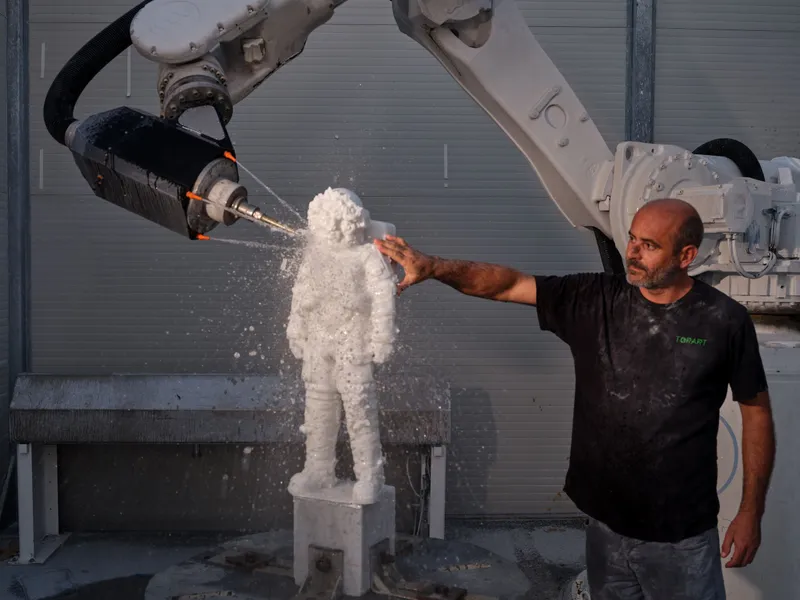
Filippo Tincolini, a graduate of Carrara’s Arts Academy, sculpted his artistic journey into a fusion of tradition and innovation. His foray into the art world began with collaborative endeavors, crafting monumental sculptures alongside fellow artists at SIEMA and SINSP in the Balearic Islands.
In 2004, Tincolini co-founded TorArt, a pioneering space melding modernity with heritage through the use of cutting-edge equipment for marble, stone, and hard materials. His directorial role at TorArt emboldens him to tackle visionary projects, exemplified by his involvement in the reconstruction of the Palmyra Arch, shattered by the Islamic State.
Reflecting on his background and artistic growth, Tincolini traces his roots to Pontedera, Tuscany, and his educational journey at the Carrara Academy. Immersed in craft workshops across Tuscany, particularly in Carrara's marble ateliers, Tincolini's artistic evolution transcended classical confines, venturing into uncharted territories.
“My goal is to explore the boundless possibilities facilitated by new technologies while upholding the essence of classical sculpture,” Tincolini affirms. “Art, for me, is a narrative that intersects with contemporary existence.”
Thematically, Tincolini's oeuvre delves into the intersection of reality and imagination, confronting societal injustices and environmental crises. Works like "Petroleum" and "Inflatable" symbolize ecological turmoil, while sculptures like "Venus and Vestalia" poignantly address gender violence. Each piece is crafted to provoke introspection and dialogue.
Describing his artistic style, Tincolini emphasizes hyperrealism and material mimesis. “I aim to infuse life into forms and objects, transcending temporal boundaries,” he explains. His meticulous attention to detail breathes life into everyday objects and classical sculptures alike.
Influenced by both classical masters like Michelangelo and contemporary luminaries such as Koons and Hirst, Tincolini's creative process begins with inspiration drawn from daily life. Harnessing technology, he translates concepts into virtual designs before employing modern and traditional techniques to materialize his vision.
Regarding the evolving role of artists in society, Tincolini underscores their responsibility as catalysts for reflection and societal discourse. “Artists serve as conduits for expression, fostering awareness and dialogue on pressing issues,” he asserts. As technology reshapes artistic landscapes, artists are embracing new mediums and narratives, reaffirming their relevance in an ever-changing world.
Explore Filippo Tincolini prints for sale at Guy Hepner: Editioned Sculptures, Large Scale Sculptures.
Related Series