Paintings

May 20, 2026
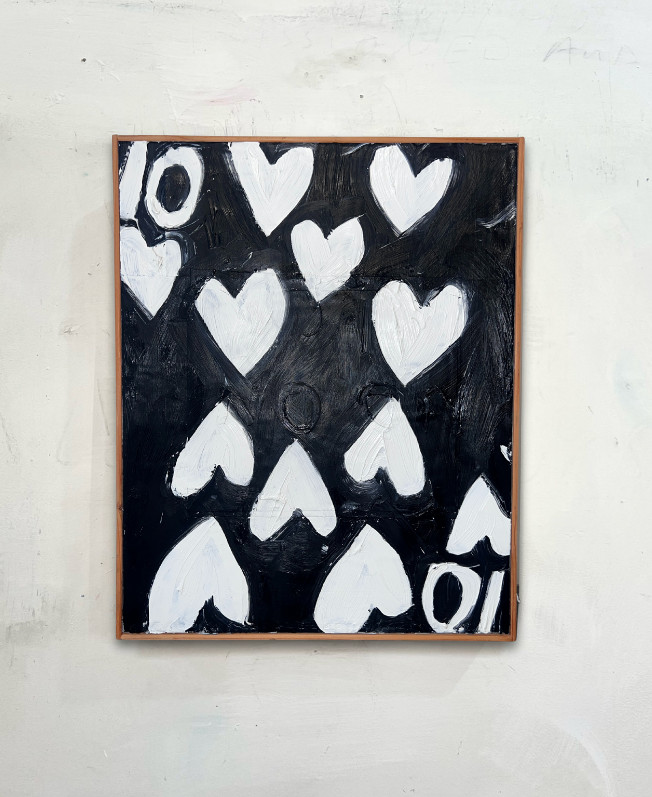
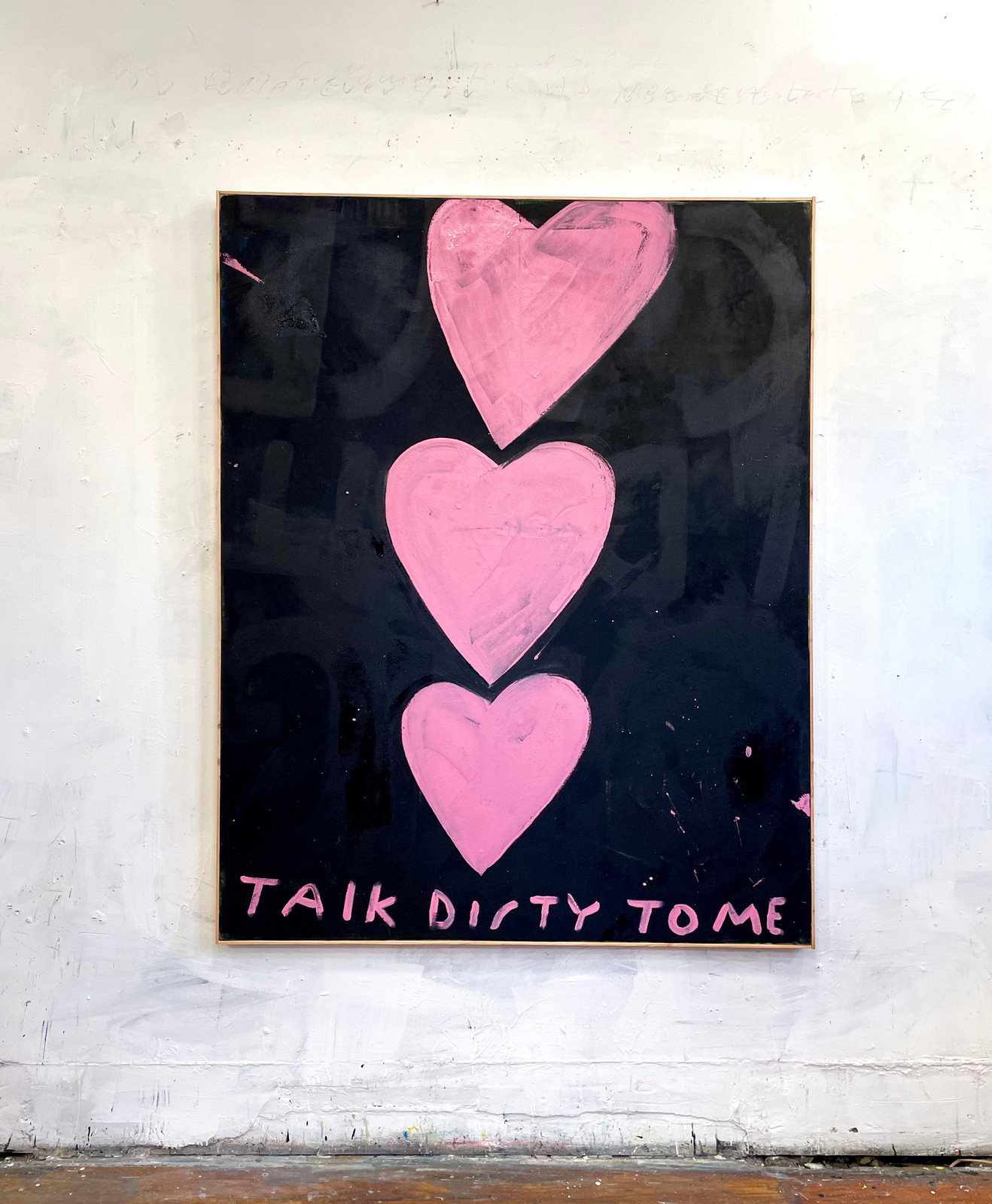
There are artists who use language as decoration, and then there is Eric Stefanski — a Chicago-based painter for whom language is the substance of painting. Every canvas Stefanski makes is an act of confession: blunt, unguarded, often uncomfortably direct. Where most painters choose to reveal through image, Stefanski reveals through the word itself — in oversized, looping, hand-rendered text that fills the entire picture plane. The result is a body of work that is simultaneously intimate and monumental, funny and devastating, as if someone left their diary open on the wall of a museum.
Stefanski came up through Chicago's graffiti and street art culture, an origin that is everywhere legible in his practice. The directness, the scale, the sense of urgency — all of it points back to a tradition of making art in public, for public consumption, without institutional mediation. Yet where graffiti typically asserts through image or tag, Stefanski asserts through language, through the specific weight of words like "I'm sorry" or "Can't stop thinking about you." These aren't slogans. They're admissions.
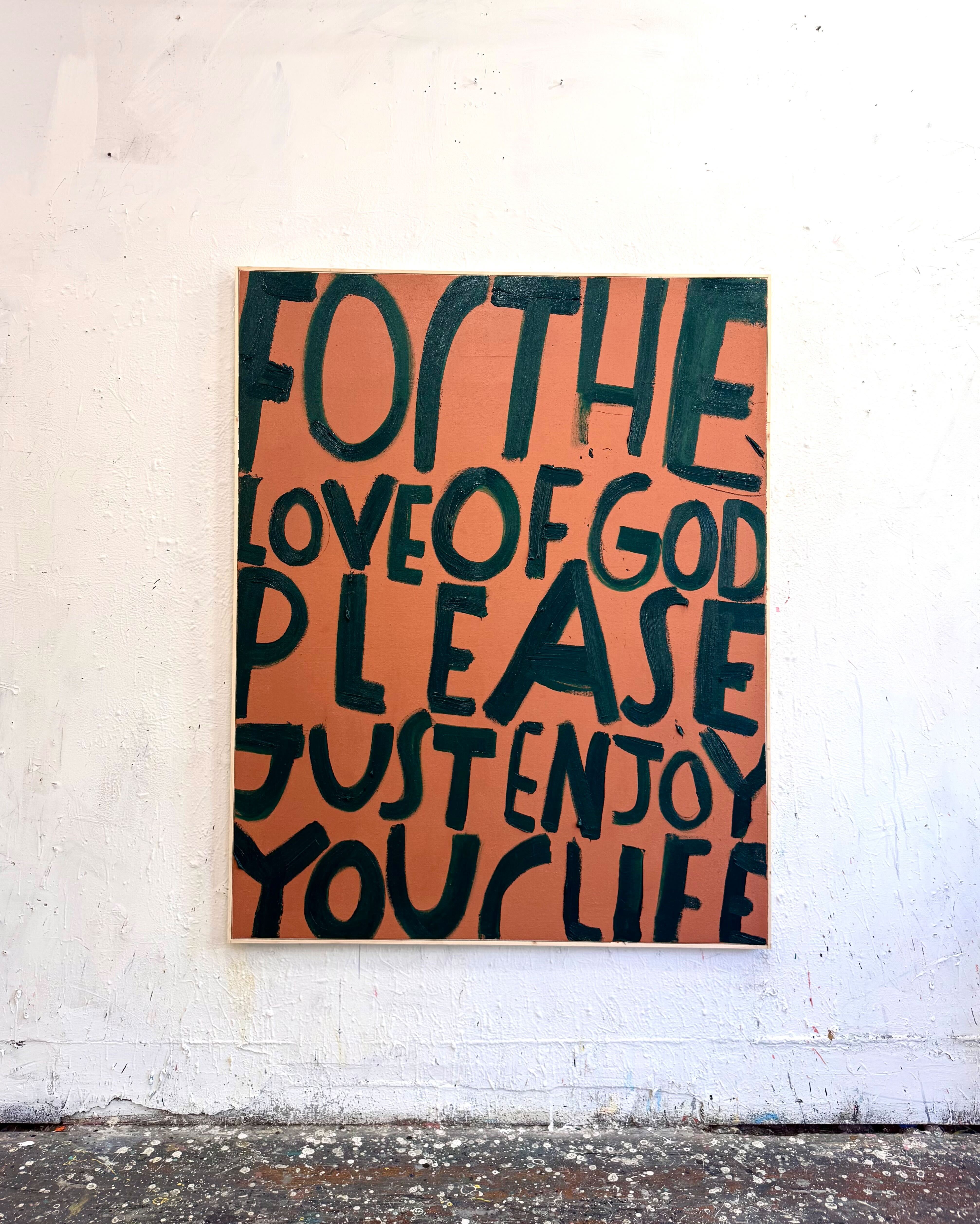
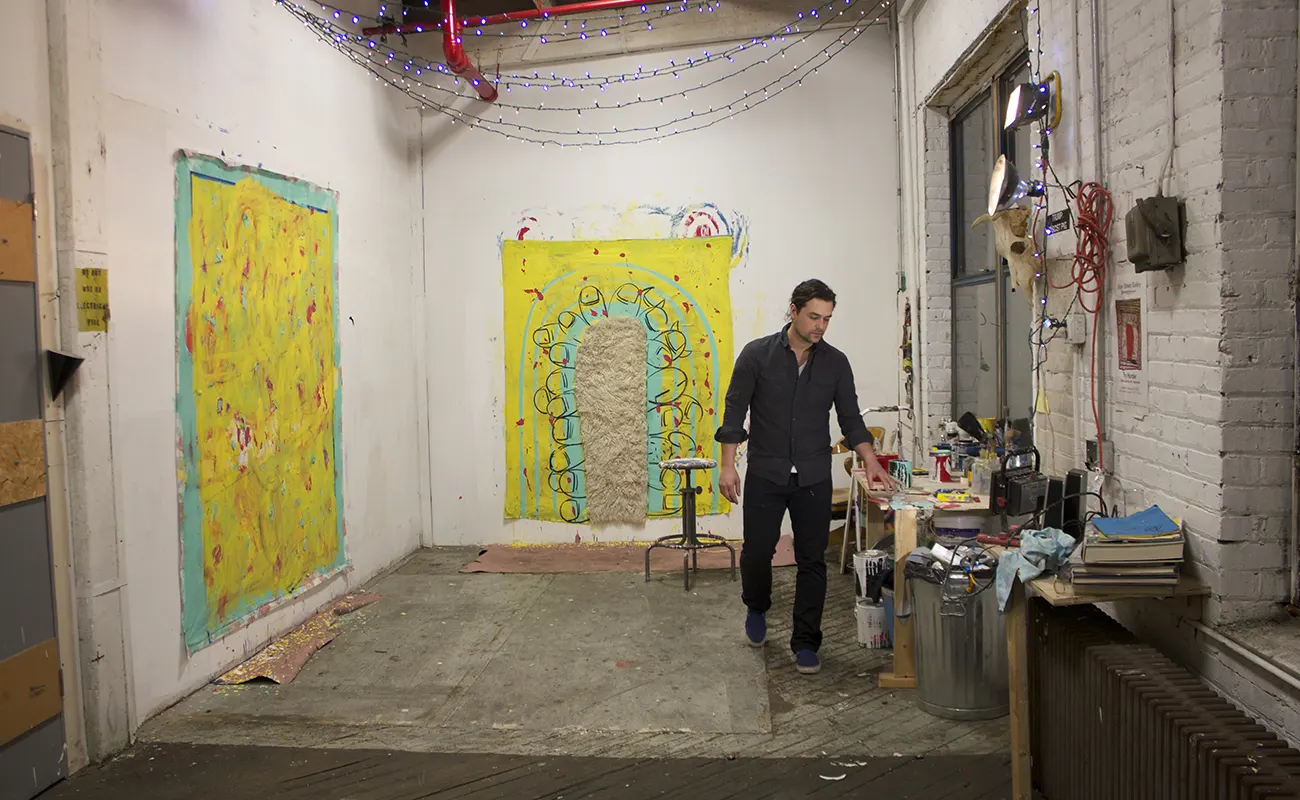 Enjoy Your Life, 2026 — Eric Stefanski. Available at Guy Hepner, New York.
What makes Stefanski one of the most compelling emerging painters working today is precisely this combination: formal rigour dressed up as casual disclosure. The canvases are painstakingly composed. The lettering, however spontaneous it reads, is calibrated for maximum visual and emotional impact. He is an artist operating at the intersection of conceptual art's linguistic turn and street culture's physical directness — and the collision produces something unlike anyone else working in painting right now. With over 200 works available through Guy Hepner, collectors are increasingly recognising Stefanski as one of the essential voices of his generation.
The works that gave Stefanski his signature identity — and the works most collectors reach for first — are the Painted Confessions. These are canvases in which a single phrase, rendered in Stefanski's characteristic hand, occupies virtually the entire surface. No background decoration, no figurative element, no distraction. Just the words, large, and the colour behind them. The emotional nakedness of the titles — I'm Sorry I Broke Your Heart, Can't Stop Thinking About You, Big, Huge, Massive Fan Of You — hits the viewer before they have time to process the work as painting. The language functions as both subject and object simultaneously.
What Stefanski understands is that repetition is at the heart of obsession, and obsession is at the heart of his subject matter. The titles themselves read like thoughts on a loop — the kind that circle back at 2am, the phrases you say in your head so many times they lose and regain meaning simultaneously. By painting them large, in acrylic on canvas, he literalises the psychological loop. The painting is the thought. The thought is inescapable.
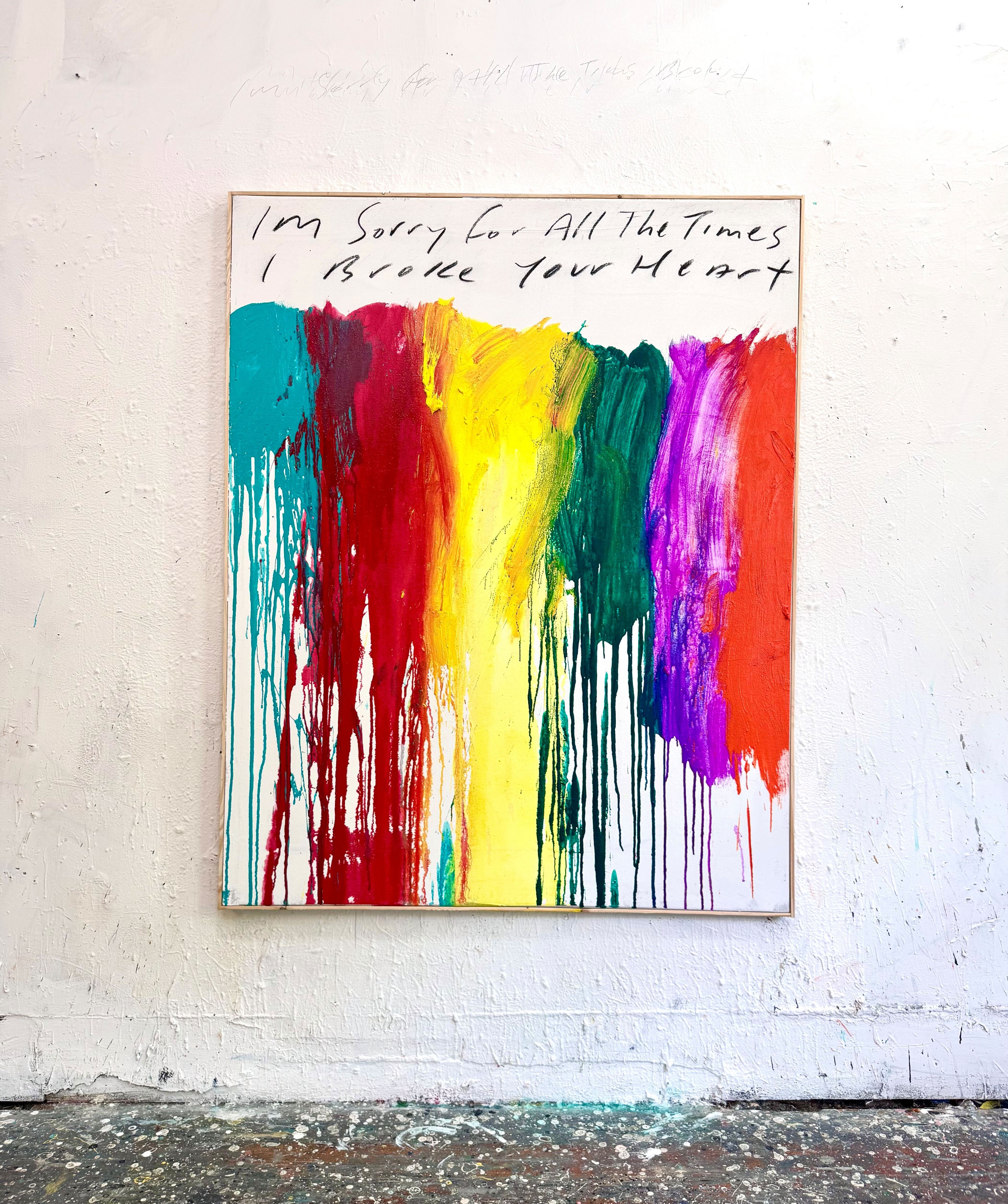I'm Sorry I Broke Your Heart, 2026 — Eric Stefanski. Available at Guy Hepner, New York.
The colour choices matter enormously. Stefanski uses acrylic in a way that refuses pastels and refuses darkness in equal measure — the palette is bright without being cheerful, saturated without being aggressive. The colours function as emotional temperature regulators, creating a dissonance between the visual experience (energetic, attractive) and the textual content (raw, exposed). You look at I'm Sorry I Broke Your Heart and find yourself drawn in by the colour before the words land. When they do land, the painting has already gotten under your skin.
The Confessions also play with scale as a mode of emphasis. In human speech, repeating something louder or more slowly is how we signal that it matters. Stefanski paints large for the same reason — the words matter, they always mattered, and the scale makes that undeniable. This is a painter who has figured out how to make the most interior kind of language — the kind we rarely say out loud — resonant at architectural scale.
For collectors, the Painted Confessions represent Stefanski's most emotionally immediate work, and they have been the series that has driven strongest collector engagement. Works from this series have found homes with collectors drawn to the intersection of pop culture, confessional literature, and painting tradition.
Beyond the specific series identity of the Confessions, Stefanski's broader canvas practice reveals a painter thinking carefully about what painting can do that other media cannot. The acrylic works are larger in the sense of operating across more emotional registers — some are funny, some are yearning, some are darkly philosophical, some are motivational in a way that knowingly echoes and subverts the self-help genre.
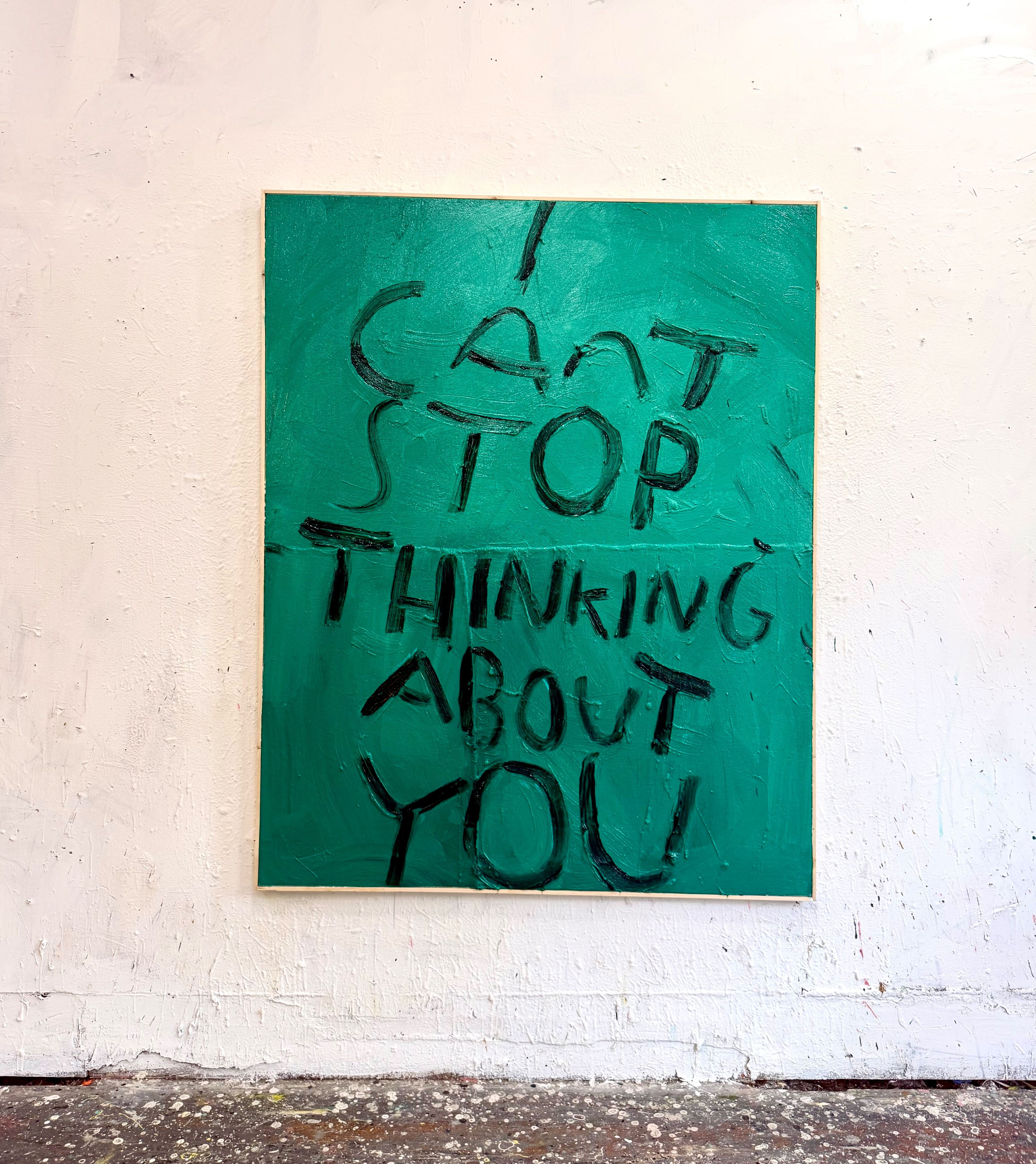Can't Stop Thinking About You, 2026 — Eric Stefanski. Available at Guy Hepner, New York.
Can't Stop Thinking About You (2026, acrylic on canvas) exemplifies the formal qualities that make Stefanski's paintings collector-grade works rather than novelty objects. The lettering fills the canvas with the kind of urgency that demands sustained looking — not despite the fact that you can read it immediately, but because of it. The text is legible, but the painting is not exhausted by its legibility. After you've read the words, you begin to see them as marks, as drawing, as colour relationships. Stefanski's practice rewards sustained attention precisely because there is always more to see than the first, immediate impact.
Getting My Shit Together (2026) operates differently — there's humour here, and self-awareness, and a rueful acknowledgement of adult life that resonates with a broad cultural moment. The phrase is one everyone has said to themselves; seeing it rendered in the size of a traditional history painting gives it an absurd grandeur that is entirely intentional. Stefanski is aware of the art-historical tradition he's working within, and he is knowingly playing with the gap between the gravitas of large-scale painting and the humility of everyday confession.
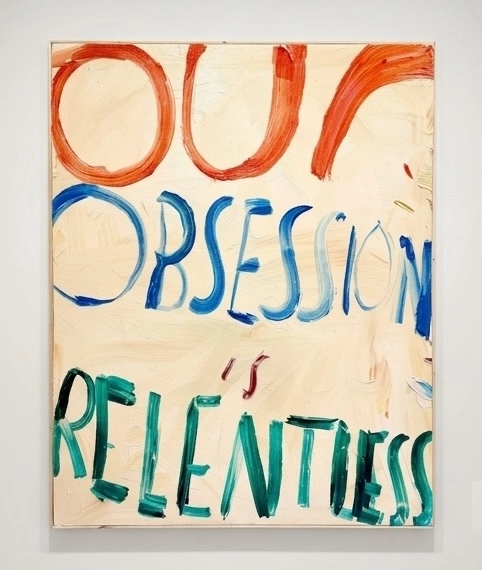Our Obsession is Relentless, 2026 — Eric Stefanski. Available at Guy Hepner, New York.
Our Obsession is Relentless (2026, acrylic on canvas) pushes into darker territory — the word "relentless" carries a weight that the other works sometimes hold at bay. Here the confessional mode tips into something more like an admission of compulsion, and the painting's surface reflects that intensity. Stefanski's hand is looser, the lettering more insistent. It is among the most viscerally charged works in the current body of work, and among the most collectable for that reason.
Across the paintings, what unifies the practice is Stefanski's absolute commitment to language as the sufficient subject. He does not illustrate the words. He does not contextualise them. He presents them with the same confidence a traditional painter presents a nude or a landscape — as a subject worth sustained attention. That confidence is what separates the paintings from text-as-gimmick and places them firmly in painting-as-practice.
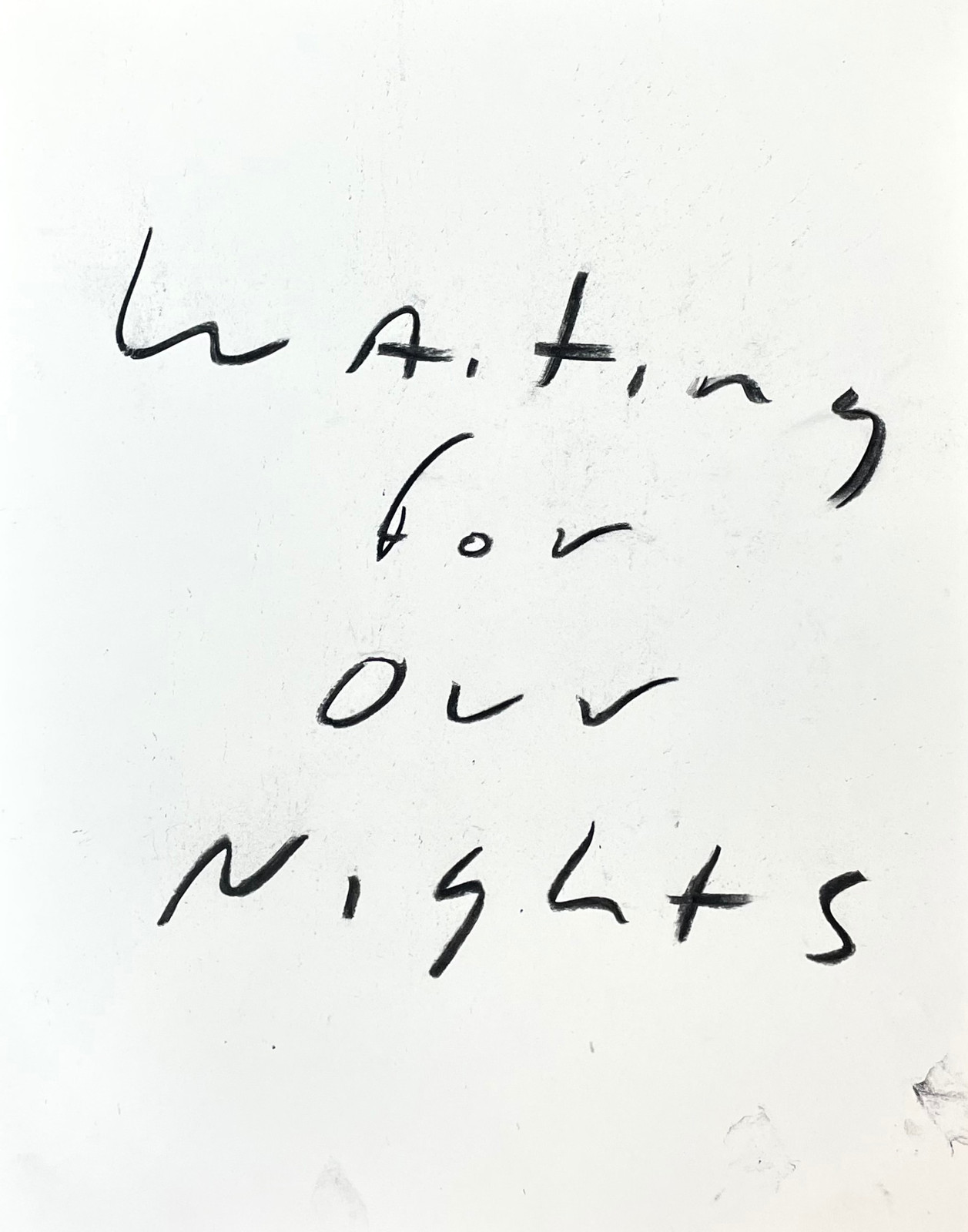
To understand Stefanski's practice fully, you need to look at the works on paper. The charcoal drawings — smaller in scale, more physically intimate than the large canvases — reveal the technical foundations of what looks like spontaneity in the paintings. Charcoal is an unforgiving medium: it captures every hesitation, every revision, every change of pressure. In Stefanski's hands, this rawness becomes a feature. The charcoal works don't hide the fact that they were made. They display it.
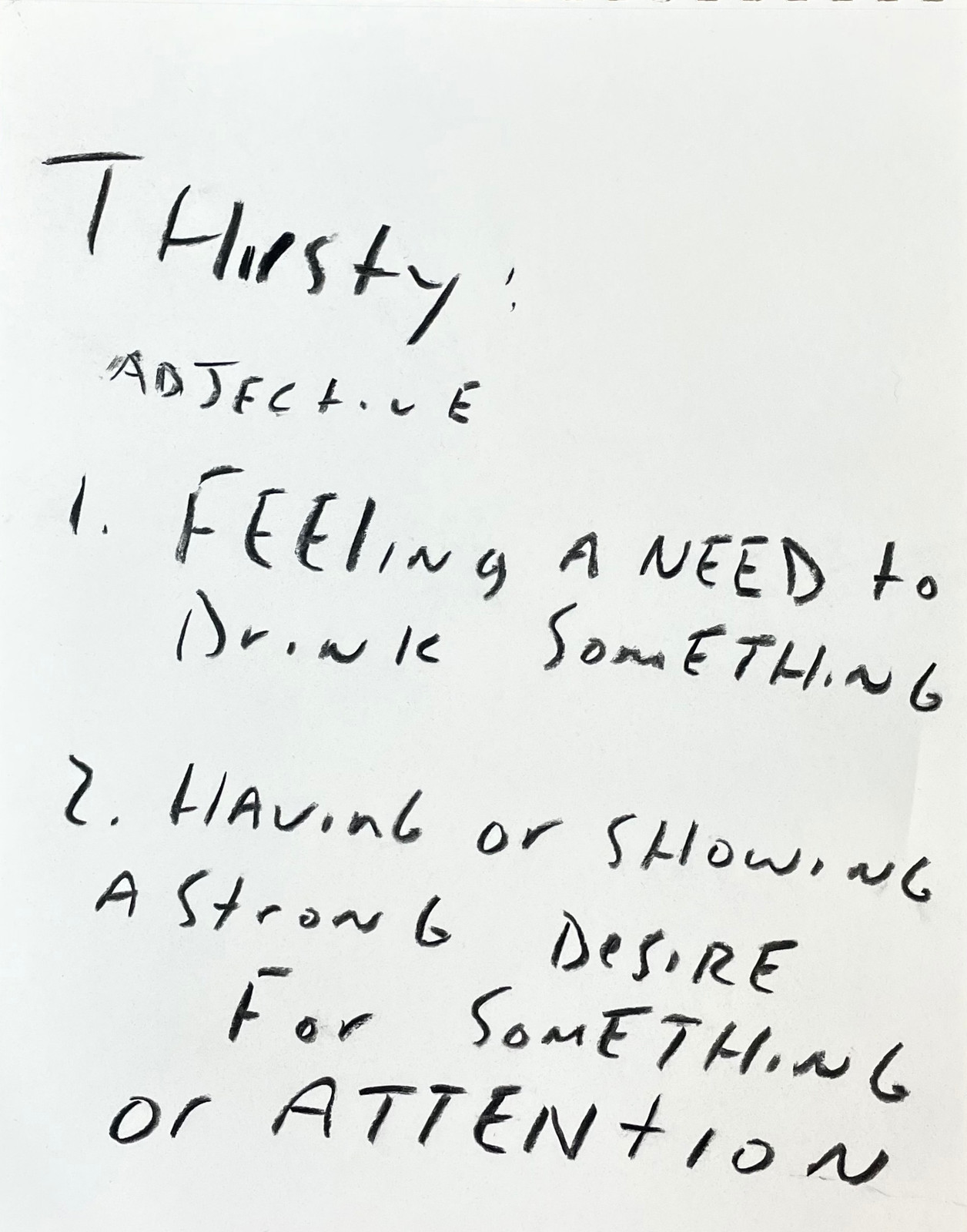Thirsty, 2023 — Eric Stefanski. Available at Guy Hepner, New York.
Thirsty (2023, charcoal on paper) is perhaps the starkest expression of Stefanski's confessional mode. The word sits on the paper with none of the chromatic seduction of the paintings — there is only the mark, the smudge, the grain of the paper and the bite of the charcoal. The rawness of the medium perfectly matches the rawness of the admission. "Thirsty," in contemporary usage, carries a particular sting — it means to want something (attention, love, recognition) in a way that is somehow embarrassing, somehow too visible. Stefanski paints it large and unashamed.
The charcoal works also serve a documentary function within Stefanski's output, functioning as studies, as sketches, as the place where ideas are tried before they are committed to canvas. For collectors, this means the drawings offer a privileged window into his process. Holding a Stefanski drawing is to hold the thought before it became a painting — an intimacy that large-scale works cannot quite offer. Their scale (intimate, holdable) makes them accessible entry points for collectors newer to his work, while their connection to the broader practice makes them essential for those building a representative collection.
The drawings also demonstrate range. Where the paintings operate at the register of emotional announcement, the drawings can be quieter, more exploratory, more quizzical. The same text that becomes an act of proclamation in acrylic at large scale becomes something more like a murmur in charcoal at paper scale. Stefanski is clearly aware of this and deploys the shift in register deliberately. Both scales are necessary to understand what he is doing.
Eric Stefanski is at a pivotal moment in his career. He has built a coherent, distinctive body of work over several years, one that is immediately recognisable and yet continues to develop in new directions — from paintings to drawings to neon, from the purely confessional to the skull series' engagement with mortality. He is an emerging artist who has crossed the threshold from promising to essential, and the collector market is beginning to reflect that assessment.
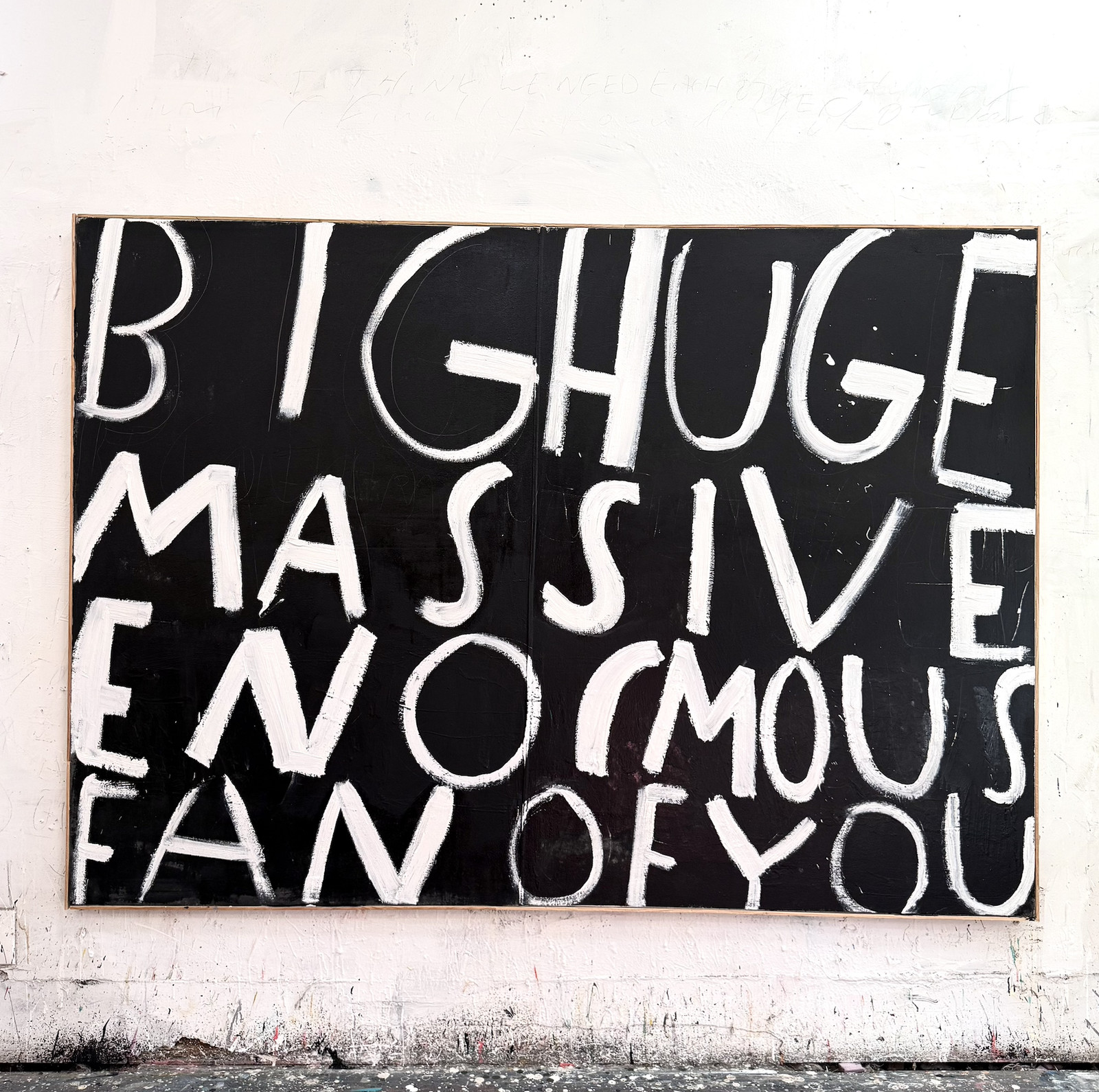Big, Huge, Massive Fan Of You, 2026 — Eric Stefanski. Available at Guy Hepner, New York.
The pricing for Stefanski works remains in a range that rewards early-stage collecting. For artists of comparable profile and trajectory, this window — between first serious institutional recognition and the secondary market premium that follows — is typically brief. Collectors who have built holdings in the last 18 months have done so at accessible price points. That window is narrowing.
Guy Hepner currently offers over 200 Eric Stefanski works, representing the broadest available selection across all series and media: Painted Confessions canvases, broader acrylic works, charcoal drawings on paper, Skull Series works, and the neon pieces. This breadth allows collectors to build a genuinely representative holding — to understand Stefanski's range, not merely acquire a single statement work.
The gallery's relationship with Stefanski's work allows for direct engagement on acquisition, condition, and provenance for each work. For collectors new to Stefanski, the charcoal drawings offer an excellent entry point — intimately scaled, technically revealing, and carrying the full emotional charge of the confessional practice at a more accessible price. For collectors ready to commit to a large-scale painting, the Painted Confessions canvases are the defining works: big, direct, and completely unlike anything else in contemporary painting.
To explore the full range of Eric Stefanski works available, and to inquire about acquisition, visit Guy Hepner's Eric Stefanski page. Works sell without warning. If something moves you, it is worth acting on that impulse.
Explore Eric Stefanski prints for sale at Guy Hepner: Small Canvases, Works on Paper.
Related Series