Lantern Flowers

May 20, 2026
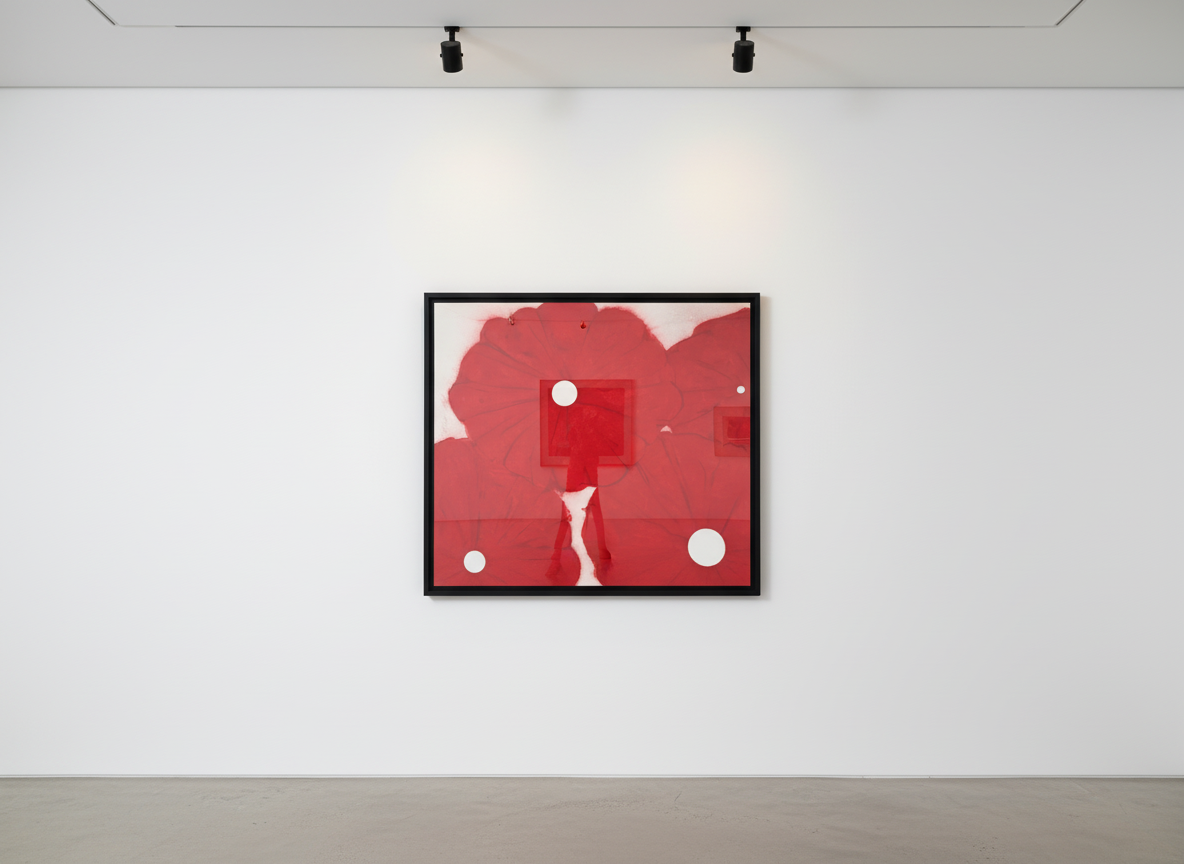
Few artists working today have built as distinctive and coherent a body of work as Donald Sultan — and few have maintained the paradox at the heart of that work with such sustained conviction. Sultan is an artist who paints flowers. He is also an artist who uses the materials of construction and industry — tar, soot, enamel, vinyl floor tiles — to do so. These two facts sit in productive tension with each other, and it is precisely this tension that gives his work its peculiar gravity. A Sultan poppy does not feel light or decorative. It feels weighted, substantial, somehow earned. The botanical subject arrives through an industrial process, and the contrast between the two registers — delicacy and weight, flower and tar — is the essential experience of the work.
Four Red Poppies April 24, 2024 — Donald Sultan. Available at Guy Hepner, New York.
Donald Sultan was born in Asheville, North Carolina, in 1951 and came to New York in the late 1970s, at the moment when downtown Manhattan was producing some of the most vital art in the world. He studied at the Art Institute of Chicago and established his loft studio in Lower Manhattan, where he began working with the industrial materials that would define his practice. The paintings he made on vinyl floor tiles, using tar and soot as primary media, were immediately recognised as something new — a way of making pictures that refused the conventional relationship between the organic (flowers, figures, landscapes) and the materials used to depict them. Sultan would be industrial. His subjects would be beautiful. The friction would be the content.
Over five decades, this practice has produced one of the most recognisable bodies of work in contemporary American art. The Donald Sultan flower — the poppy, the tulip, the lemon, the freesia — is instantly identifiable: a bold, graphic silhouette, often in high contrast, combining the formal resolution of a Japanese woodblock print with the material weight of an industrial surface. For collectors, Sultan's prints, archival pigment works, and silkscreens offer access to this singular vocabulary at multiple price points and in a range of series that repay sustained collecting engagement.
Poppies are Donald Sultan's signature subject, and they have been for decades. In a career that has engaged extensively with flowers — tulips, roses, Lemons, freesias — the poppy returns again and again as the form most perfectly suited to Sultan's formal vocabulary. The reason is structural: the poppy's shape, with its broad, flat petals and strong central form, translates naturally into the graphic silhouette language that Sultan has developed. It is a flower that already looks like it wants to be a print.
The art-historical resonance of poppies is extensive, and Sultan's work sits consciously within it. Monet's late water lily and poppy paintings explored colour and form through the specific optics of summer light. Georgia O'Keeffe's floral close-ups brought the poppy into a register of formal intensity that had nothing to do with naturalistic depiction. Sultan enters this tradition from a different direction entirely — his poppies are not about light or intimacy or the erotic dimension of O'Keeffe's close-ups. They are about presence: the weight and insistence of a form against a ground.
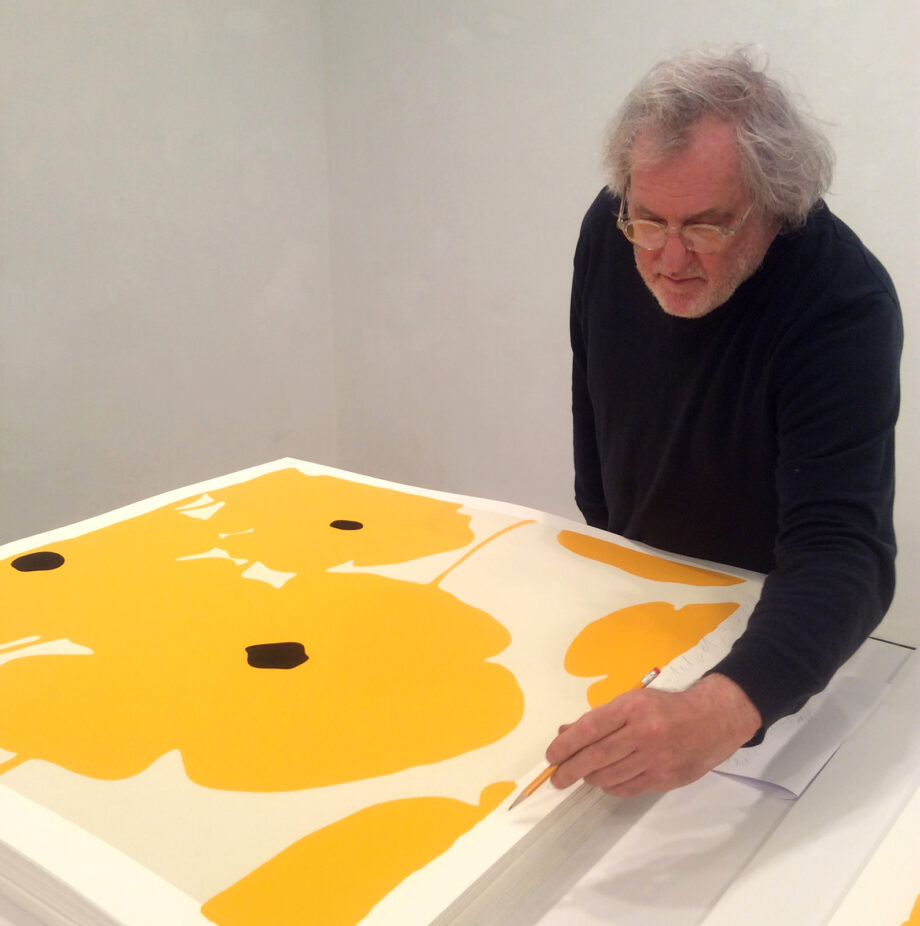Four Yellow Poppies April 24, 2024 — Donald Sultan. Available at Guy Hepner, New York.
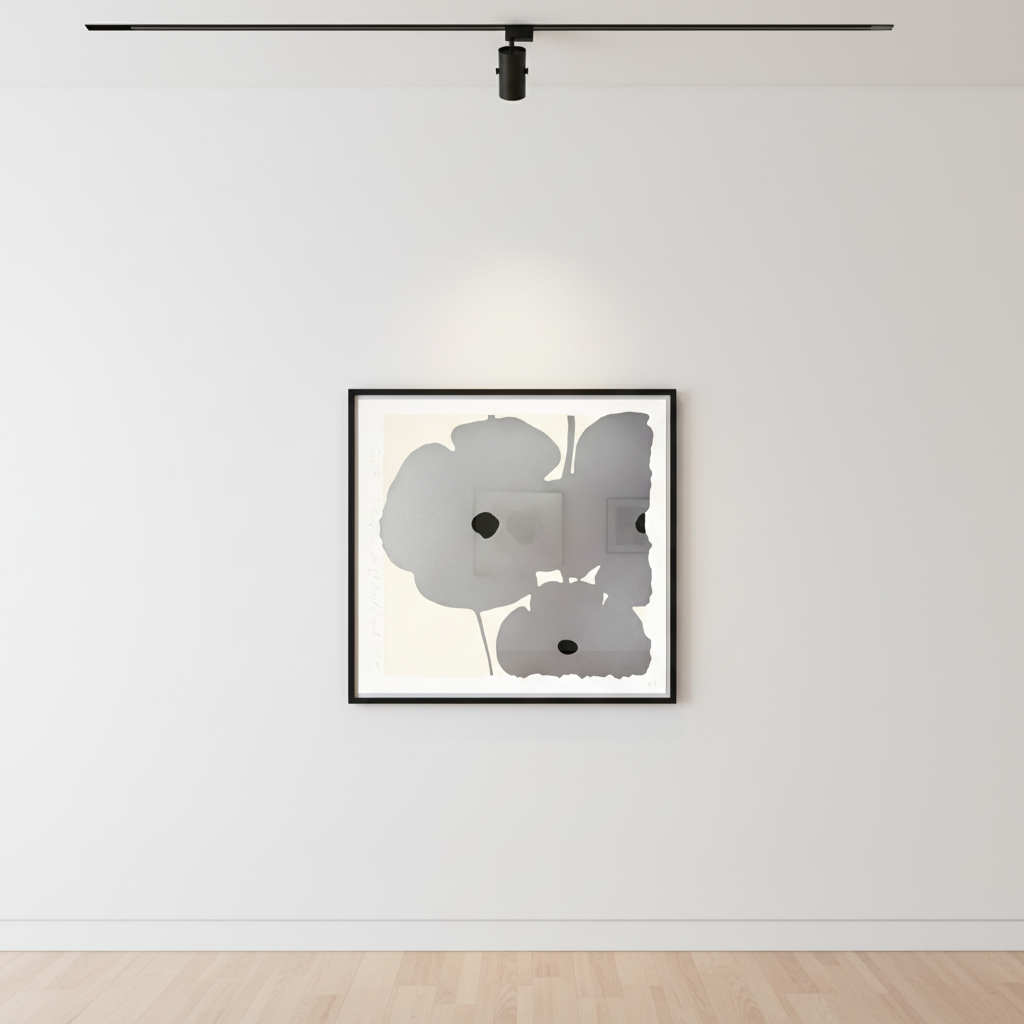
The 2024 archival pigment series — Four Red Poppies April 24 and Four Yellow Poppies April 24, both printed on Innova Etching Cotton Rag — represents Sultan at his most refined. The archival pigment printing process allows a tonal range and depth that silkscreen approaches differently, and the Innova cotton rag support gives the prints a physical weight and texture that honours the material seriousness of Sultan's painting practice. The colour variants within the series — red, yellow — demonstrate how Sultan uses colour not merely as naturalistic description but as formal variable: the same composition in different colour reads as a different experience, a different emotional temperature.
The poppy compositions typically work with groups of flowers — four, five, six — arranged with a simplicity that belies considerable formal thought. The spacing, the relationship between the flowers and the ground, the way the petals echo and differentiate from each other: all of this is carefully considered. Sultan is not a painter who makes his work look difficult. He is a painter who makes it look easy, and that ease is the product of mastery.
The flat graphic silhouette style that characterises the poppy works emerged from Sultan's engagement with Japanese woodblock printing, with Matisse's cut-outs, and with the reduction of pictorial means that was characteristic of minimalist thinking in the late 1970s and 1980s. Sultan arrived at his style by removing — by taking away everything that was not essential to the form. What remains is a flower so simplified it reads as symbol, and yet so weighted and substantial it reads as entirely real.
Alongside the poppies, the lemon works are the most immediately recognisable element of Sultan's visual identity. The lemons occupy a different register in his botanical vocabulary — where poppies are associated with fragility and colour, lemons carry associations of tartness, domesticity, and the Mediterranean still life tradition. In Sultan's hands, they become something else: bold, graphic shapes defined by their silhouette, often in stark high-contrast compositions that read almost as logos.
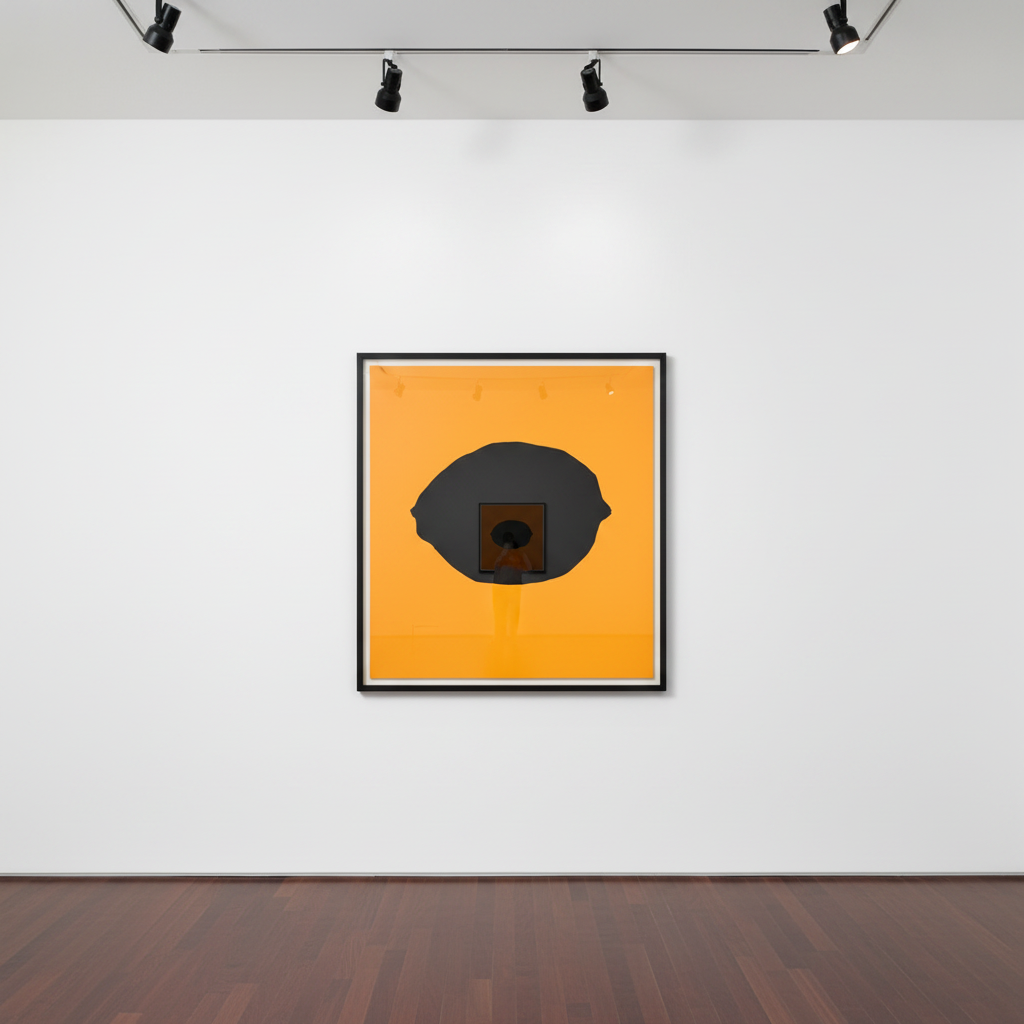
Black Lemon on White (silkscreen) and Yellow Lemon on Black (2018, colour silkscreen with enamel inks and tar-like texture) demonstrate the extent to which Sultan's lemon works are about reversal and contrast. The black lemon — botanically impossible, visually arresting — immediately removes the work from naturalistic reference and places it in a register of pure form. The lemon as shape, the lemon as graphic element, the lemon as the kind of simple form that advertising and design have always found irresistible. Sultan takes this graphic clarity and gives it weight through the tar-like texture and the enamel inks.
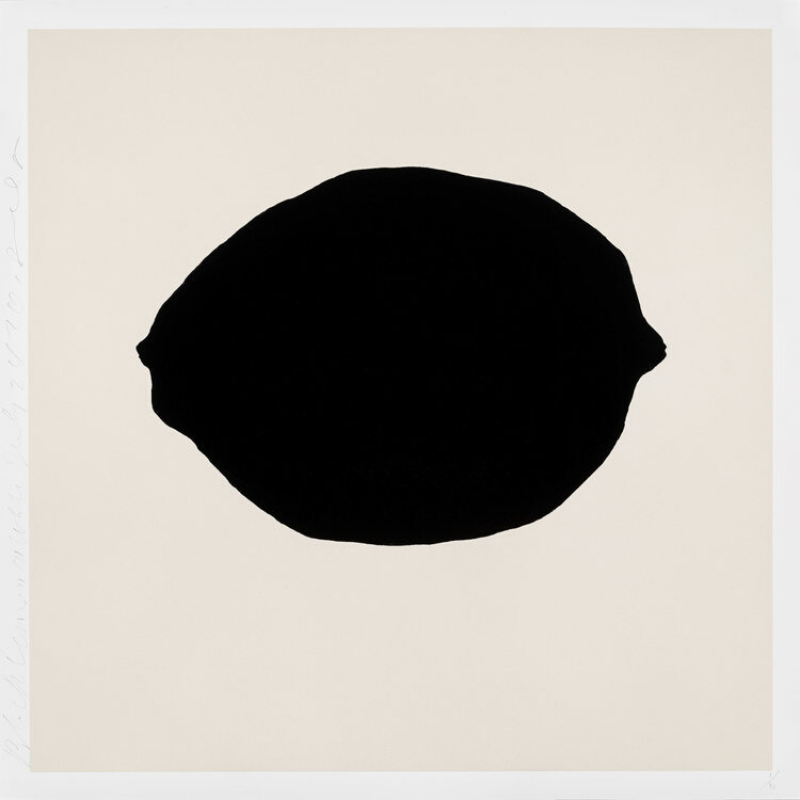Black Lemon on White — Donald Sultan. Available at Guy Hepner, New York.
The silkscreen technique is particularly well suited to the lemon works because silkscreen excels at producing absolutely flat colour and hard-edged forms. The enamel inks Sultan uses give the surface a different quality from conventional silkscreen — a glossy, slightly industrial finish that echoes the enamel of commercial signage. This is entirely deliberate. Sultan is interested in how the materials of the everyday built environment can be brought into the context of fine art printmaking, and the lemon works carry that investigation with particular clarity.
The lemon series extends Sultan's still life vocabulary into a different formal key from the poppies. Where the poppies read as organic, curved, alive, the lemons read as geometric, resolved, architectural. Both are simplified to the point of symbol, but the symbols work differently. Collectors who hold works from both series hold the full range of Sultan's botanical vocabulary.
While poppies and lemons have received the greatest collector attention, Sultan's botanical vocabulary extends to freesias, tulips, Lantern Flowers, and other forms. The 2024 Freesia series represents some of the most delicate work in his recent output, and some of the most interesting in terms of material choices.
Three Freesias Yellow (2024, archival pigment ink on Japanese mulberry paper) exemplifies the thinking behind this series. Mulberry paper — washi — is one of the most refined and demanding of all papers, associated with the Japanese printmaking tradition Sultan has always engaged. Its translucency, its fibrous texture, its response to ink are all fundamentally different from the cotton rag or museum board that Sultan typically uses. The choice of mulberry paper for the freesias creates a productive dialogue between the botanical subject (delicate, feathery flowers) and the support (light, fibrous, traditional).
The contrast with Sultan's more typical heavy, industrial supports is pointed. The freesias on washi are the most direct embodiment of the tension between delicacy and material seriousness that runs through his entire practice. They are prints that look as though they might flutter, but are grounded by Sultan's characteristically decisive line and form. Colour variants within the 2024 Freesia series allow collectors to select the register that suits their space and their collecting vision.
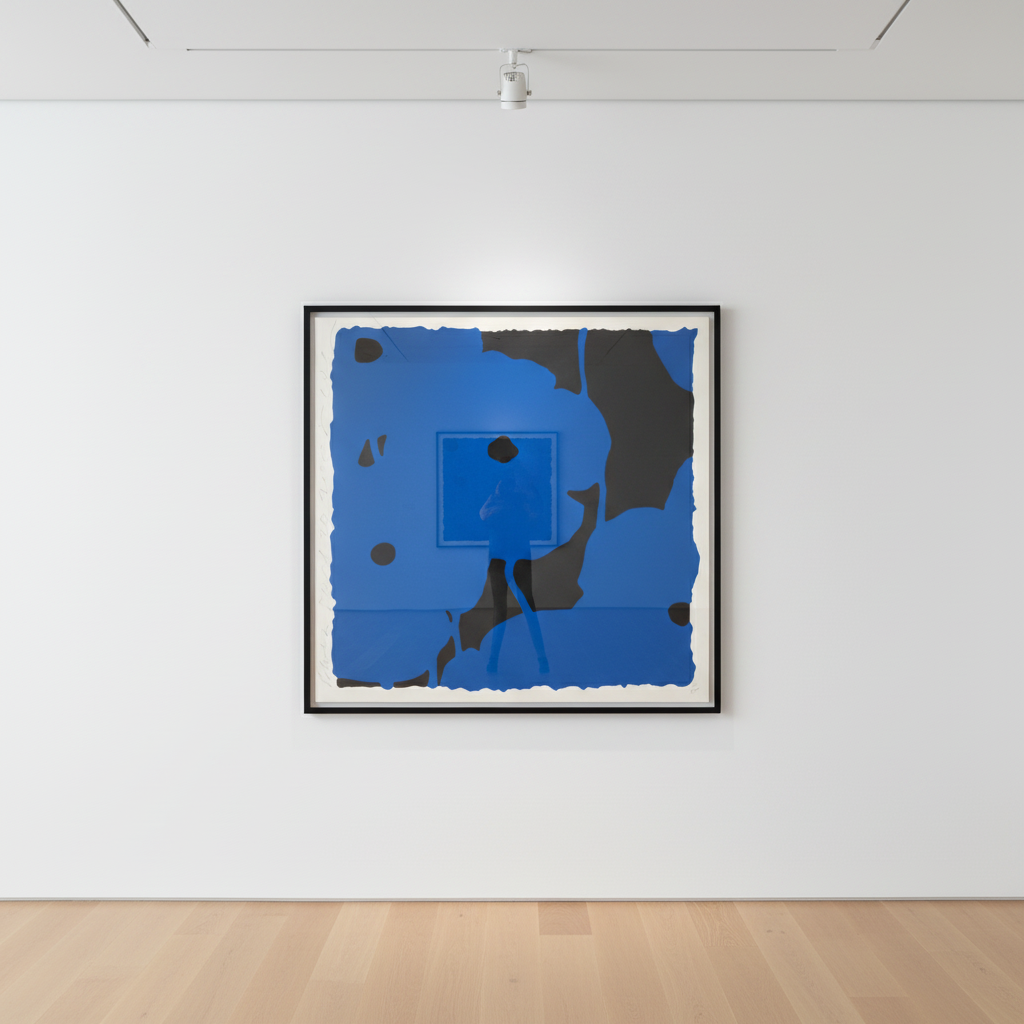
Among the most technically ambitious works in Sultan's print output are the Blues & Silvers series and the 2025 Lantern Flower works, where the surfaces achieve a richness and physicality that sets them apart from conventional prints and places them in conversation with the painting practice.
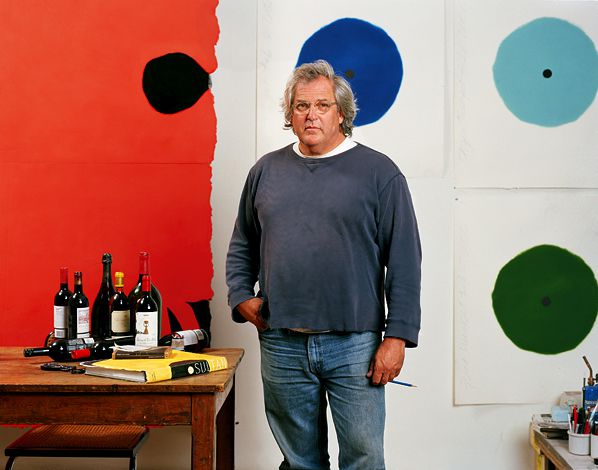 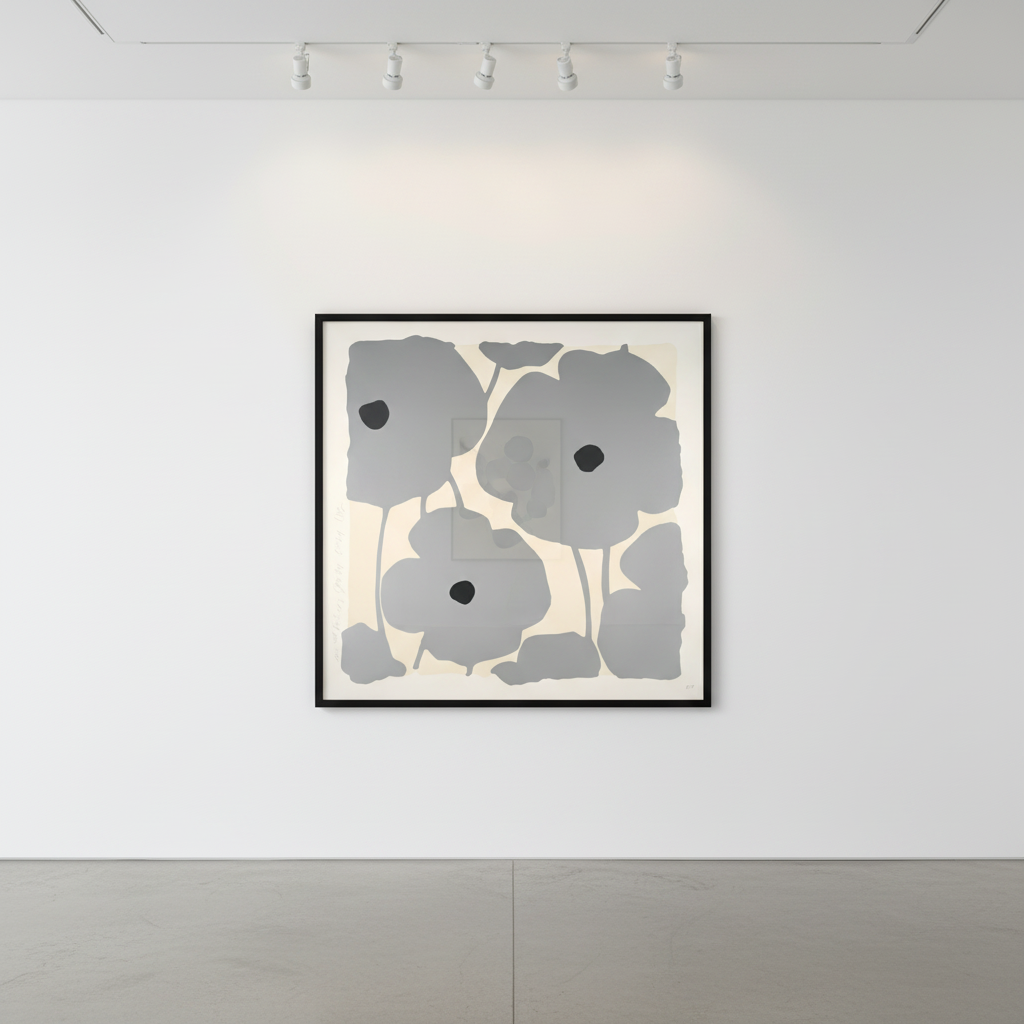Seven Silvers (2024, colour silkscreen with enamel inks, flocking, tar-like texture on Rising 4-ply museum board) exemplifies what Sultan can achieve when he layers materials and processes. The flocking — a technique of adhering fine fibres to a surface to create a velvety, tactile quality — gives the work a physical presence quite unlike a flat print. The enamel inks add gloss and depth. The tar-like texture adds material weight. The 4-ply museum board provides a ground substantial enough to bear all these layers without distortion. The result is a work that rewards close physical examination — it changes as you approach it, as the light changes, as the angle of view shifts.
The 2025 Lantern Flower series continues in this direction. Aqua Lantern Flower (2025, colour silkscreen with enamel inks and tar-like texture on Rising 2-ply museum board) uses the lantern flower's distinctive bell shape — immediately different from the Sultan poppy silhouette, more complex, more architecturally intricate — to push the surface vocabulary in new directions. The lantern flower series also exists as a portfolio: Little Lantern Flowers (Portfolio of 8) (2025) allows collectors to acquire a full suite of Sultan's lantern flower investigations in a single acquisition.
For collectors building a comprehensive Sultan holding, the portfolio works offer particular value. They document a series in full, providing the variation in colour, form, and material approach that reveals Sultan's thinking most completely. They are also, practically speaking, the kind of acquisition that rewards the collector who has space for multiple works from a single series.
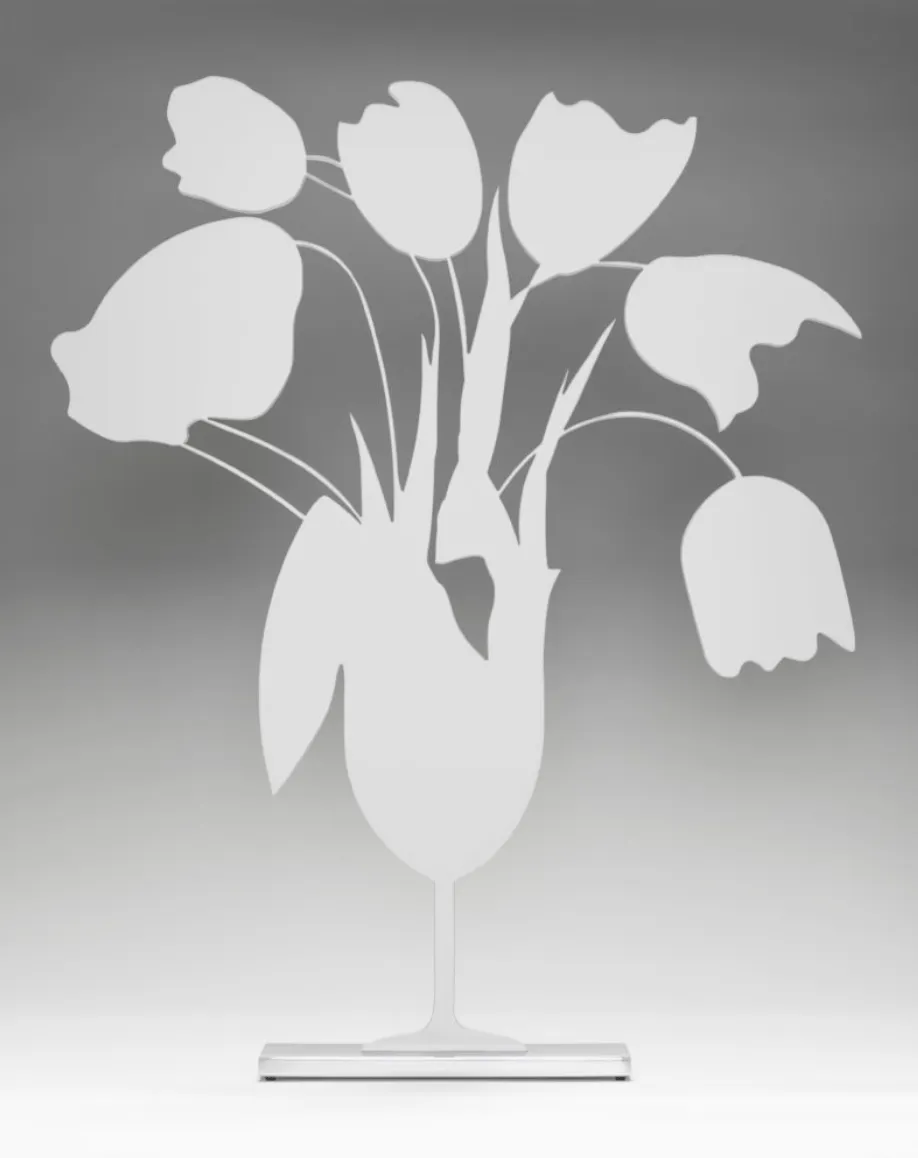
Sultan's botanical investigation extends beyond works on paper into three-dimensional objects — the Wall Poppies, in which shaped aluminium with powder coat and flocking brings the poppy motif into sculptural space. These works occupy a position between painting, print, and sculpture: they are flat objects, but they are not framed; they are coloured, but the colour is applied through industrial process; they are poppies, but they are also objects that exist in space, casting shadows, defined by their silhouette as much as their surface.
The Wall Poppies extend Sultan's core formal investigation in a direction that is architecturally ambitious. They are designed for installation, for specific spaces, for the relationship between the object and the wall and the room. In this they are closest to the painting practice — large-scale paintings function architecturally, and so do the Wall Poppies. For collectors with the right space, they are among the most striking works Sultan has produced.
Understanding Donald Sultan's work requires engaging with his materials, because in his practice the materials are not separable from the meaning. Sultan came of age as an artist at a moment when painters were questioning every assumption about what painting was and what it was made of. His response was to bring the materials of the construction industry — the floors, walls, and surfaces of the built environment — into the studio.
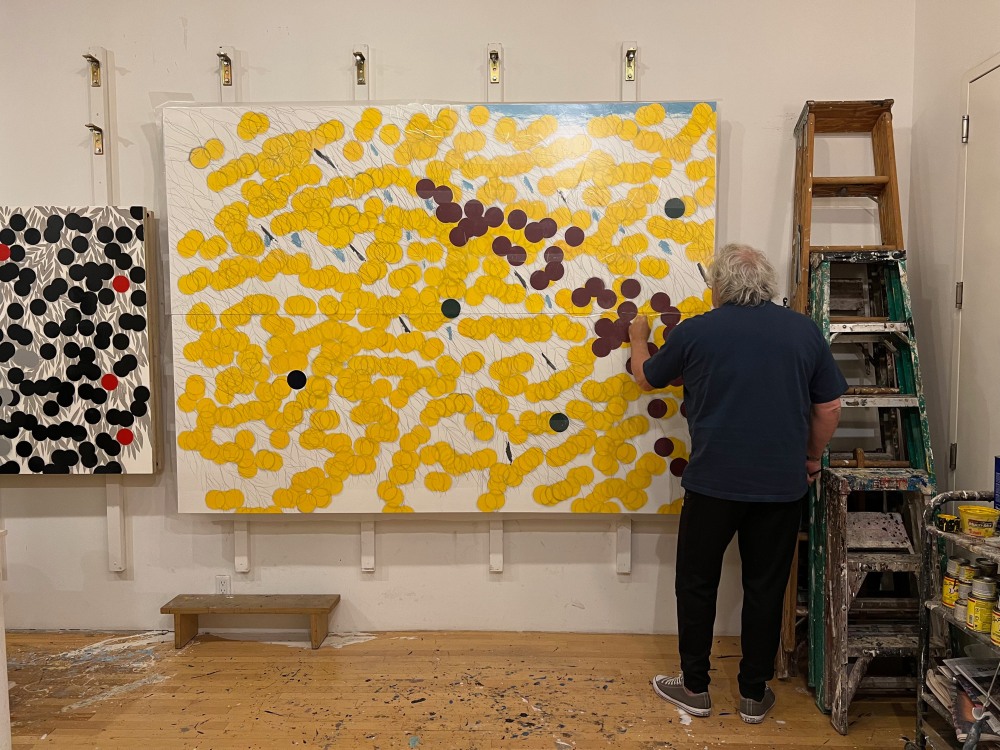
The paintings are made on vinyl floor tiles, often multiple tiles butted together to create large surfaces. The primary medium is tar, applied with plasterer's tools rather than brushes. Soot is used for dark, atmospheric effects. The surfaces are then cut into, or additions are made, using a range of construction tools. The result is a painted surface that carries the physical weight of a trowelled plaster wall — a material presence that conventional oil on canvas cannot achieve.
The print practice translates this material philosophy into the specifically printmaking context. Enamel inks, used in commercial signage and industrial coating, replace conventional silkscreen inks. Flocking brings a tactile, velvet-like quality associated with decorative surfaces and commercial luxury goods. The tar-like texture, which Sultan has developed as a characteristic element of his print surfaces, echoes the tar of the paintings in a medium more typically associated with precision and reproducibility.
The choice of grounds — museum board of 2-ply or 4-ply, cotton rag, Japanese mulberry paper — reflects Sultan's understanding that the support is as significant as the medium. Heavy museum board supports the layered applications of enamel and flocking without distortion. Mulberry paper creates an entirely different kind of dialogue with the inks. In every case, Sultan's material choices are deliberate and consequential for the final work.
The Donald Sultan market is active and well-supported by institutional recognition, consistent exhibition history, and a collector base that spans North America, Europe, and Asia. Sultan's position as a major postwar American artist is secure, and the print market reflects a collecting community that understands his significance. Works across his major series — poppies, lemons, freesias, the more recent lantern flowers and blues & silvers — are all actively traded.
For collectors entering the Sultan market, the range of available series and price points provides genuine flexibility. The archival pigment prints — the 2024 Poppies and Freesias — represent strong entry-level acquisitions: technically accomplished, from a major recent series, available at prices that reflect a secure but not inflated market. The silkscreen works with enamel inks and flocking sit at a higher price point, reflecting the greater technical complexity of the printing process and the material richness of the surface.
Portfolio acquisitions offer a different kind of value — the ability to acquire a complete series statement in a single transaction, at a price that typically reflects a discount to individual work prices. For collectors building institutional-quality holdings, portfolios are worth careful consideration. The Little Lantern Flowers (Portfolio of 8) (2025) is a particularly strong acquisition in this category.
Guy Hepner currently offers 64 Donald Sultan works across all major series — poppies, lemons, freesias, blues & silvers, lantern flowers, and wall poppies. This is one of the most comprehensive single-source holdings of Sultan's print work available anywhere, spanning his most recent output alongside works from across his career.
To explore all available Donald Sultan works and to inquire about specific pieces, visit Guy Hepner's Donald Sultan page. The gallery can provide detailed condition information, certificate documentation, and acquisition support for any work in the collection.
Explore Donald Sultan prints for sale at Guy Hepner: Lantern Flowers, Other Flowers, Blues and Silvers, Lemons, Poppies.
Related Series