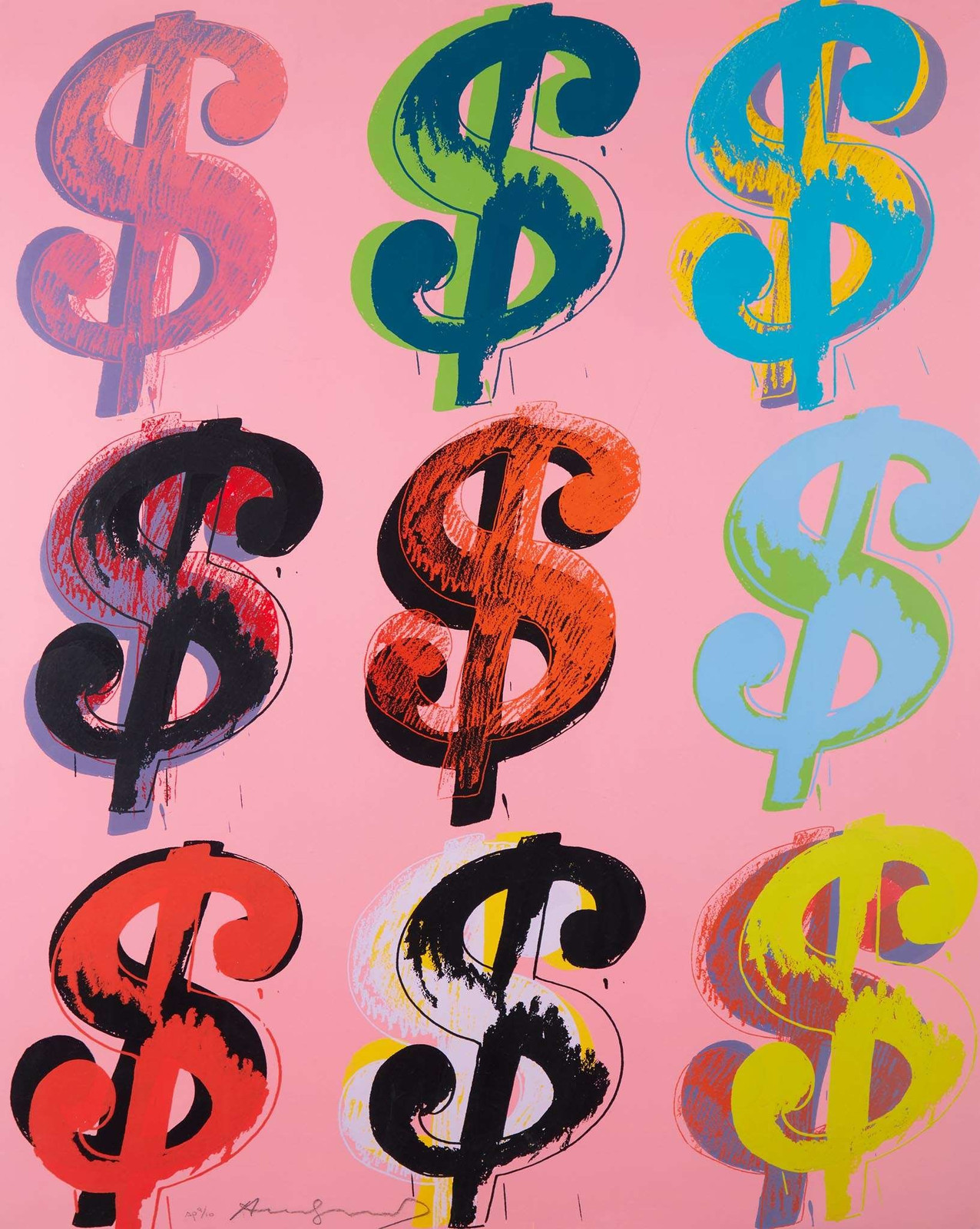
Dollar Signs

Andy Warhol's artistic legacy remains as multifaceted as it is enduring, encompassing a diverse body of work that fundamentally challenged conventional notions of art and society. Among his most provocative and celebrated creations are the Dollar Signs, a groundbreaking series of paintings, drawings, and screen prints that serve as potent symbols of his relentless exploration into the intersections between art, consumerism, and American culture. Created at the height of the 1980s economic boom, these works continue to captivate collectors and institutions alike, standing as testaments to Warhol's unparalleled ability to distill complex cultural themes into visually striking and commercially resonant imagery.
First exhibited in January 1982 at the Leo Castelli Gallery in New York, Andy Warhol Dollar Signs marked a pivotal moment in the artist's career and in the broader trajectory of contemporary art. These works represented nothing less than a bold reinvention of the relationship between art and commerce, stripping away any pretense about the transactional nature of the art world. Critics have placed the Dollar Signs on par with Warhol's legendary Campbell's Soup Cans in their audacious assertion of what constitutes legitimate artistic subject matter. Where the soup cans elevated mass-produced consumer goods to the realm of fine art, the Dollar Signs went further still, making the very symbol of monetary exchange the artwork itself.
Warhol himself unabashedly declared that "big-time art is big-time money," underscoring the profound and often uncomfortable connection between artistic value and financial worth. This statement was not merely provocative rhetoric but rather a deeply held conviction that informed his entire artistic practice. The Dollar Signs embody this philosophy with characteristic Warhol wit and visual sophistication, transforming the ubiquitous currency symbol into objects of aesthetic contemplation and collector desire.
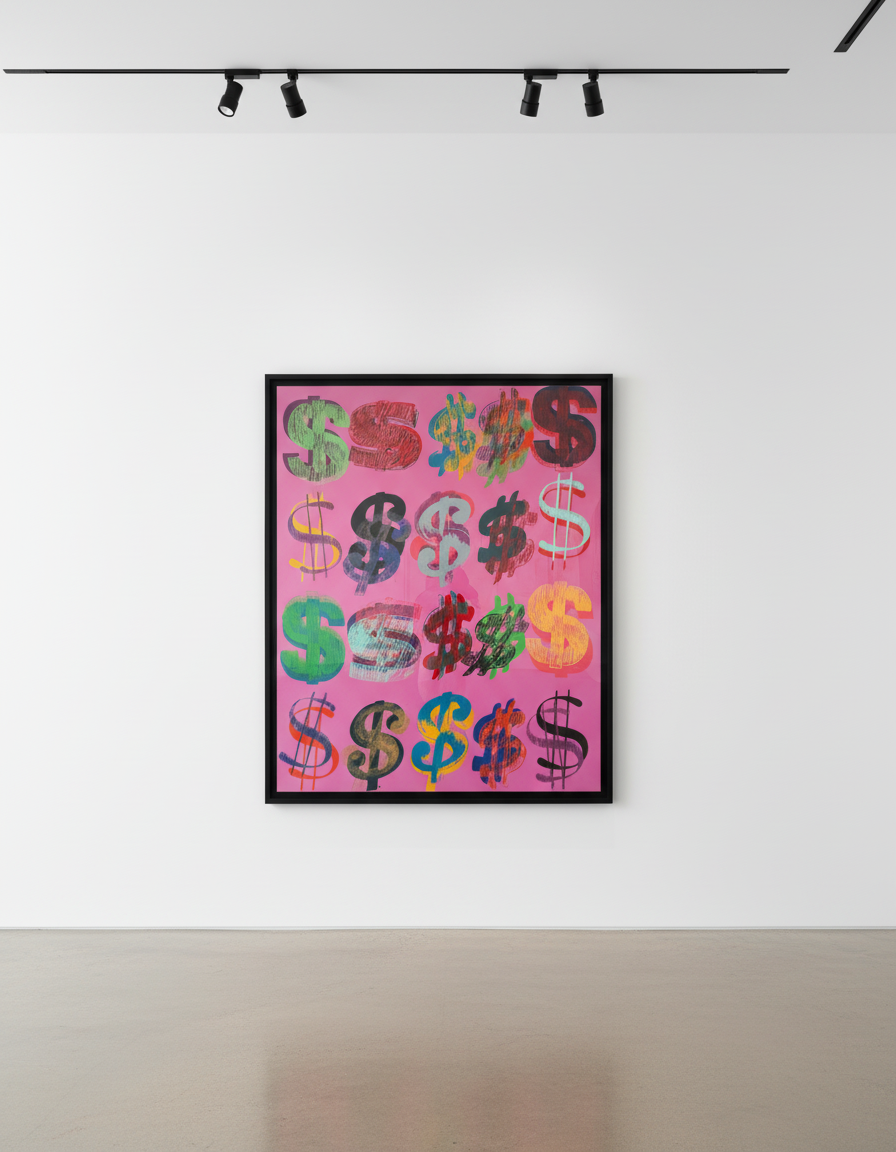
Ladies and Gentlemen (Wilhelmina Ross) — Andy Warhol. Available at Guy Hepner, New York.
The Andy Warhol Dollar Signs are far more than simple representations of currency symbols. They are bold, visually dynamic statements about the nature of consumerism, wealth, and the American dream. Rendered in wild, saturated colors and executed with Warhol's signature flamboyant style, these works pulsate with an energy that transcends their seemingly simple subject matter. The artist employed his mastered screen-printing technique to create multiple variations, each distinguished by different color combinations and compositional arrangements that range from single monumental signs to dense, overlapping compositions.
Warhol's choice of the dollar sign was characteristically deliberate. Unlike his earlier appropriations of commercial imagery, the dollar sign carries no brand allegiance or product association. It is pure abstraction rendered concrete, a universal symbol recognized across cultures and economic systems. By isolating and enlarging this familiar mark, Warhol forced viewers to confront its visual properties divorced from its utilitarian function. The gestural brushstrokes visible in many works from the series add an element of expressionistic spontaneity that complicates easy readings of the pieces as mere commercial commentary.
The series also demonstrates Warhol's continued evolution as a colorist. The combinations he employed - electric yellows against deep blacks, vibrant reds layered over cool blues - create optical tensions that activate the picture plane with remarkable force. This chromatic boldness connects the Dollar Signs to his earlier Marilyn and Mao portraits while simultaneously pointing toward the more experimental color work that would characterize his final decade of production.
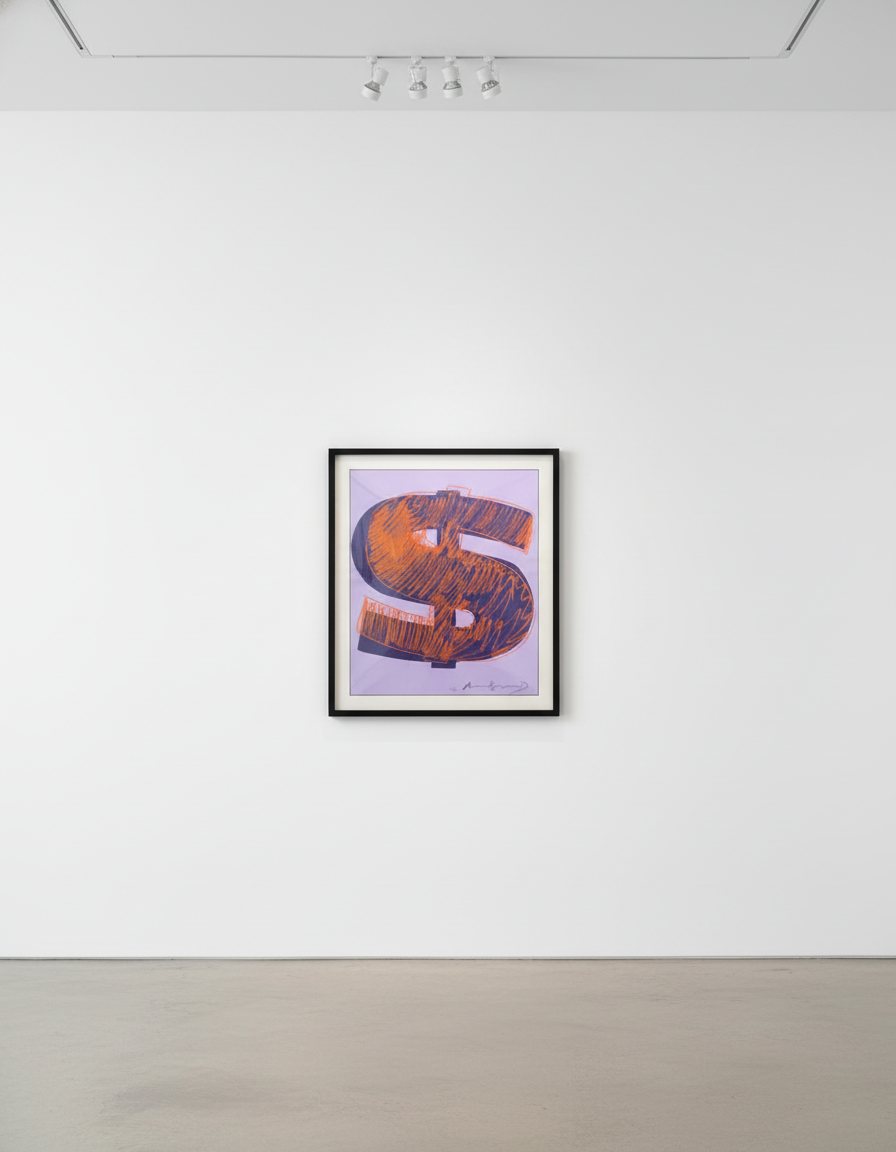
Self - Portrait F.S. IIIA 10 — Andy Warhol. Available at Guy Hepner, New York.
The Andy Warhol Dollar Signs occupy a particularly significant position within the contemporary art market, a fact that only amplifies their conceptual resonance. According to data compiled by Art Basel and UBS in their annual art market reports, Warhol consistently ranks among the top-selling artists at auction globally, with his market demonstrating remarkable resilience across economic cycles. The Dollar Signs, given their direct engagement with themes of value and commerce, have proven especially appealing to collectors who appreciate both their aesthetic impact and their intellectual sophistication.
Major auction houses have recorded substantial results for works from this series. Christie's and Sotheby's have both featured significant Dollar Sign paintings and prints in their marquee evening sales, where these works have achieved prices reflecting their art historical importance and continued cultural relevance. The series appeals to a broad spectrum of collectors, from those building comprehensive Warhol holdings to those seeking a single iconic work that encapsulates the artist's conceptual concerns and visual vocabulary.
What makes the Dollar Signs particularly compelling from a collecting perspective is their layered meaning. On one level, they function as sophisticated decorative objects, their bold graphics and vibrant palettes making them visually commanding presences in any setting. On another level, they engage in pointed commentary about the commodification of art and the art world's relationship to capital. This duality - the ability to operate simultaneously as beautiful objects and critical statements - is quintessentially Warhol and accounts for much of the series' enduring appeal.
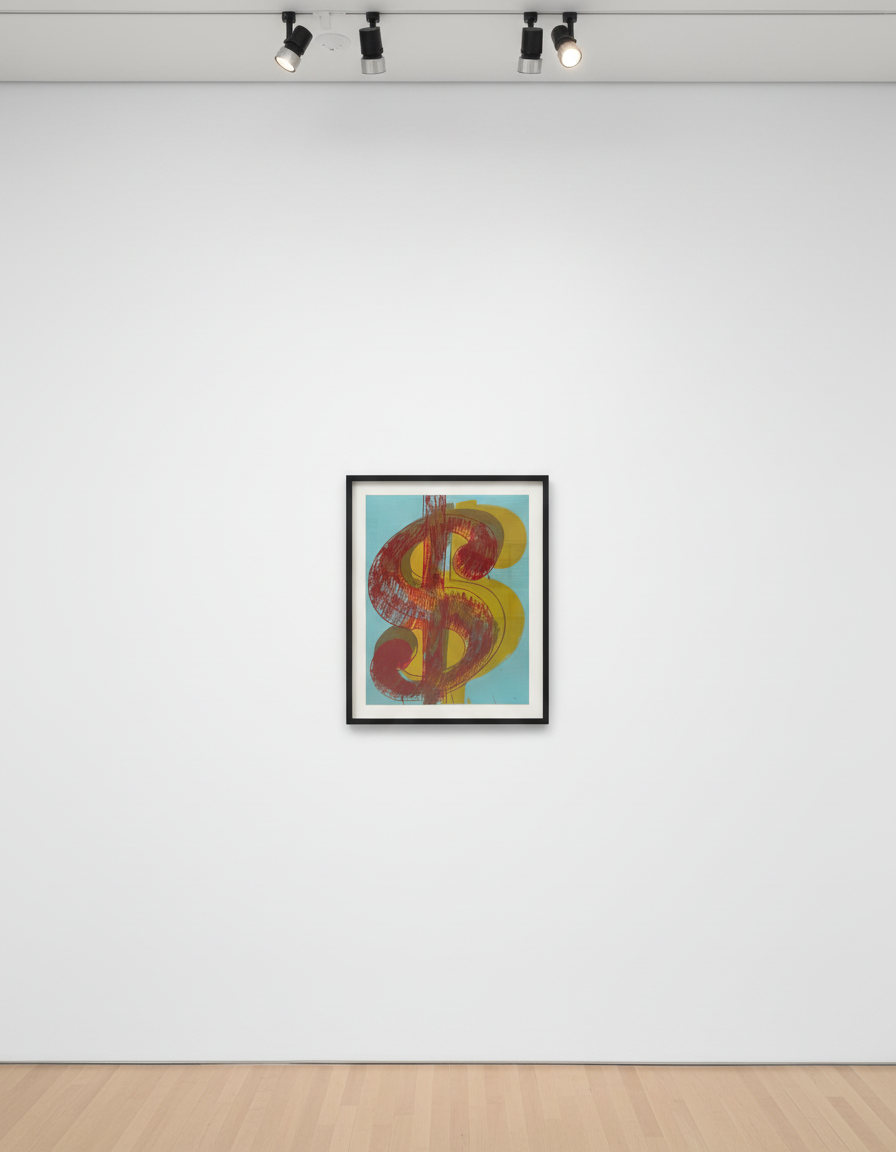
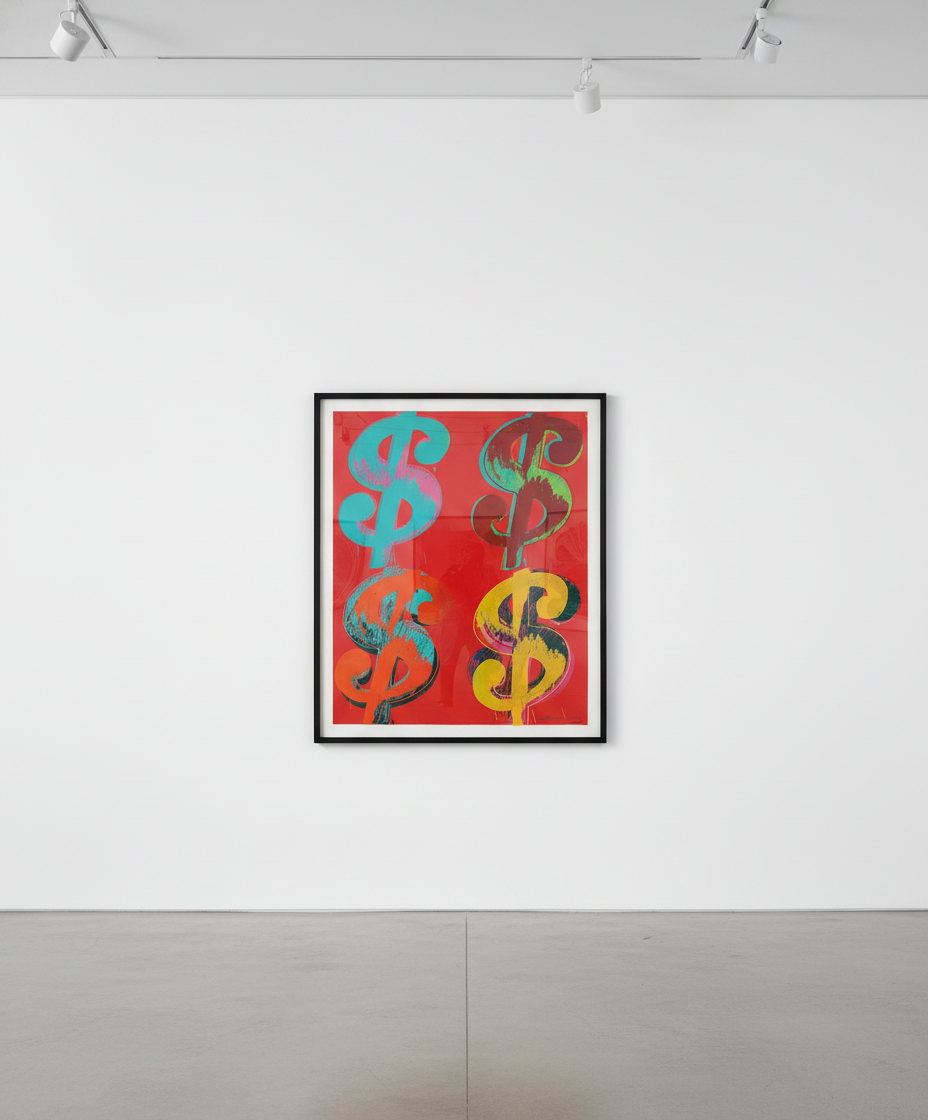
Camouflage Trial Proof TP 4/84 — Andy Warhol. Available at Guy Hepner, New York.
Nearly half a century after their creation, Andy Warhol Dollar Signs remain strikingly relevant to contemporary discourse about art, money, and value. In an era of cryptocurrency, NFTs, and increasingly abstract forms of wealth, Warhol's meditation on the symbolism of money feels almost prophetic. The works anticipated conversations about the dematerialization of currency and the arbitrary nature of assigned value that have become central to twenty-first century economic and artistic debates.
The series also exemplifies Warhol's genius for creating work that rewards both immediate visual engagement and sustained intellectual consideration. Viewers can appreciate the Dollar Signs purely as exercises in color, composition, and graphic design. Alternatively, they can unpack the multiple layers of irony, critique, and celebration embedded within these deceptively simple images. This accessibility combined with depth is a hallmark of Warhol's greatest achievements and ensures that the Dollar Signs continue to attract new audiences while retaining the admiration of longtime devotees.
For collectors seeking to acquire significant works by Andy Warhol, including pieces from the Dollar Signs series and other iconic bodies of work, Guy Hepner offers access to museum-quality examples with full provenance documentation and authentication. Our gallery maintains relationships with major collections worldwide, enabling us to source exceptional Warhol works for discerning clients. We invite collectors to contact our advisory team to discuss available inventory, acquisition strategies, and the opportunity to own a defining work by one of the twentieth century's most influential artists.
Browse Andy Warhol prints at Guy Hepner: Andy Warhol art for sale | Sell your Warhol
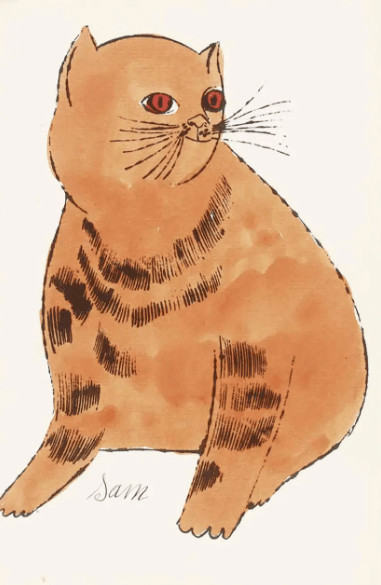
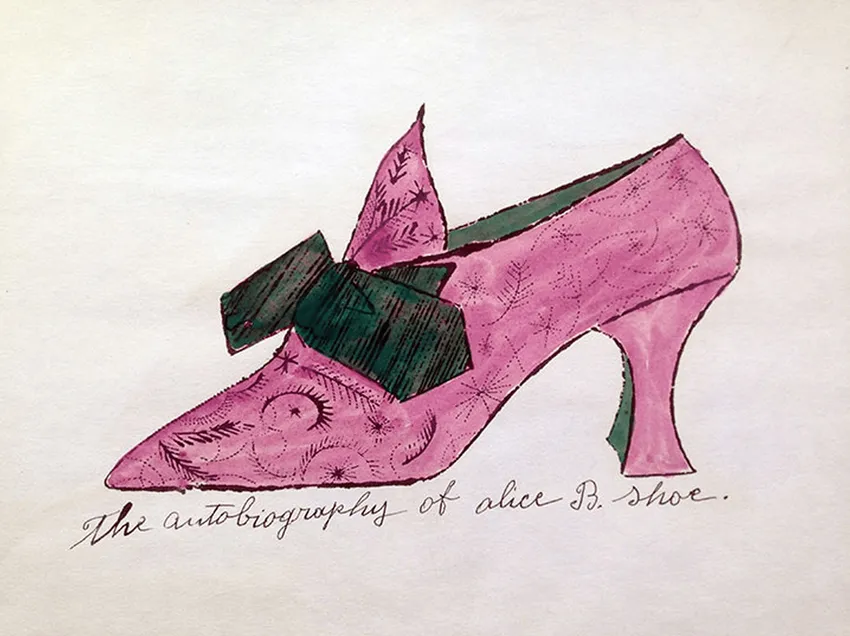
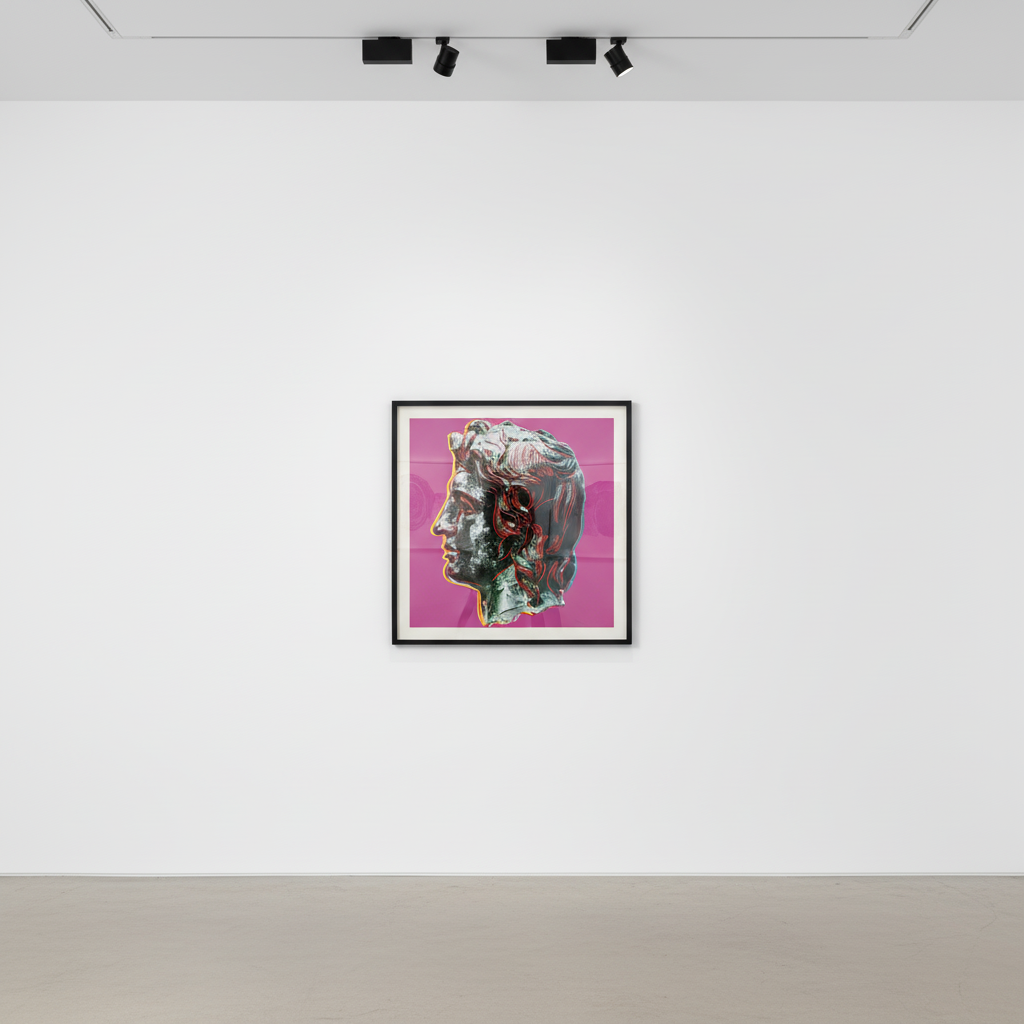
Explore Andy Warhol prints for sale at Guy Hepner: Dollar Signs, 25 Cats Named Sam, A Gold Book, A La Recherche Du Shoe Perdu, Alexander the Great.
Related Series