25 Cats Named Sam
20 works

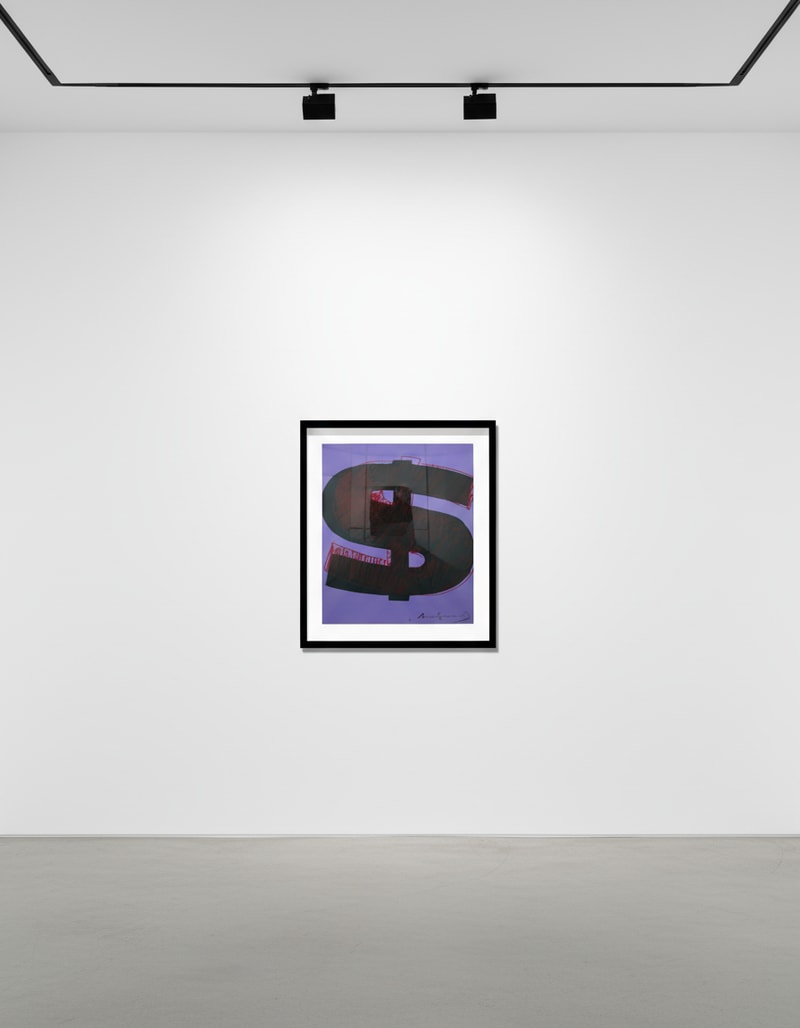
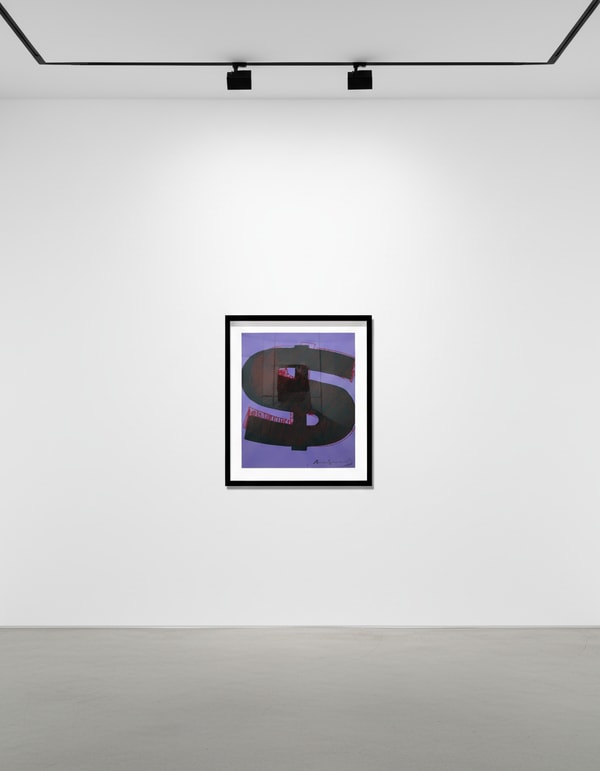
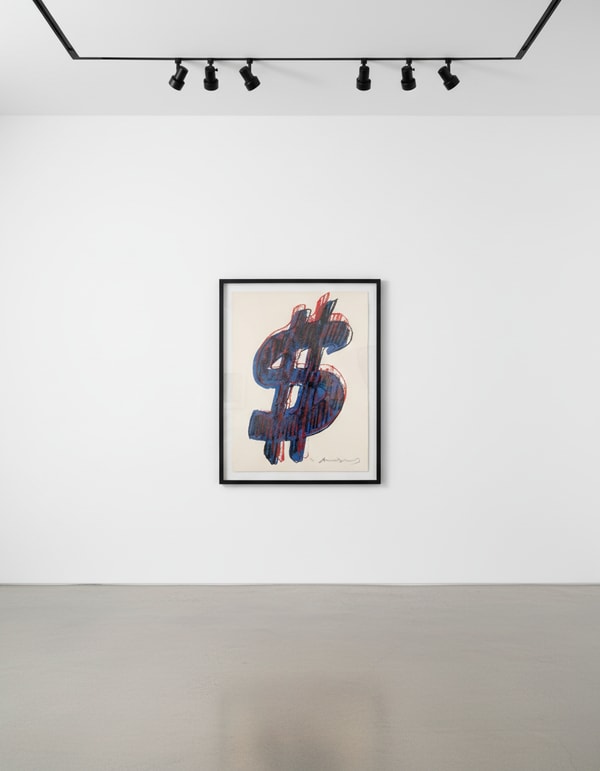
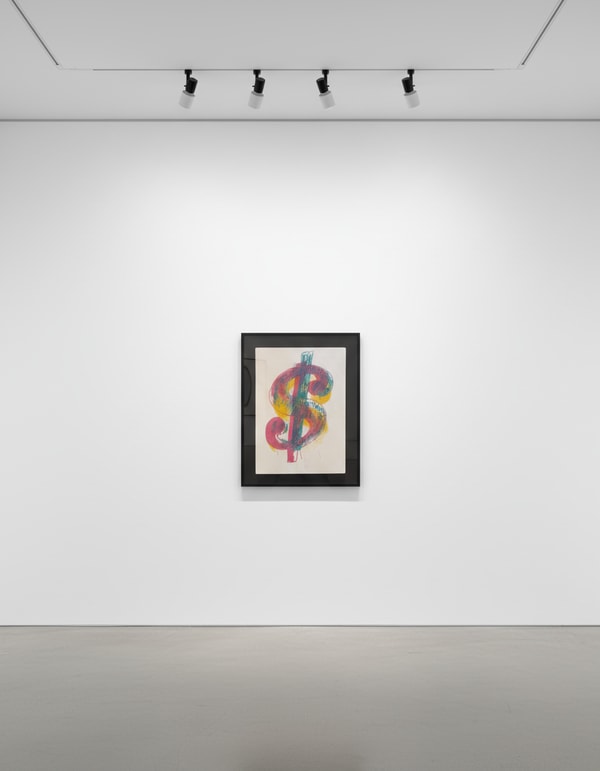
Few images in 20th-century art cut as directly to the point as Andy Warhol's Dollar Signs (1982). This ten-print portfolio is Warhol's most explicit meditation on money, capitalism, and the unapologetic commercialism that defined both his career and the decade in which it was made. Bold, instantly recognisable, and endlessly reproduced, the Dollar Signs remain among the most popular and commercially active Warhol series on the market today.
The portfolio comprises ten screenprints: 1 Dollar Sign through 9 Dollar Sign, plus the Dollar Sign Quadrant — each rendered in a different vivid colour combination against contrasting grounds. The imagery is deceptively simple: a single hand-drawn dollar symbol, blown up to poster scale, treated with the same reverence Warhol afforded Marilyn Monroe or Mao Zedong.
Published in an edition of 36 per image, with artist's proofs and printer's proofs. Each print measures 30 × 22⅞ inches, printed on Arches 88 paper. Published and printed by Rupert Jasen Smith, New York, 1982.
Dollar Signs benefits from near-universal recognition — even viewers unfamiliar with Warhol's broader output know these images immediately. That recognisability translates directly into secondary market strength. Individual prints appear frequently at auction and in private sales, with the more graphically striking colour combinations (particularly the black-on-yellow and red-on-blue variants) consistently achieving the strongest results. The series holds particular appeal for collectors drawn to the intersection of art, commerce, and American cultural history.
The Dollar Signs series is a cornerstone of any serious Warhol collection — and an ideal entry point for new collectors drawn to his most distilled commercial imagery. Guy Hepner Gallery maintains inventory of Dollar Signs prints for sale, with works available across multiple colour variants. Contact us for current availability.
24 works available
Andy Warhol
$ Dollar Sign (FS.IIA.275)
1982
Andy Warhol
$ (1) (F & S II.278),
1982
Andy Warhol
$ (1) F.S. IIIA.28
1981
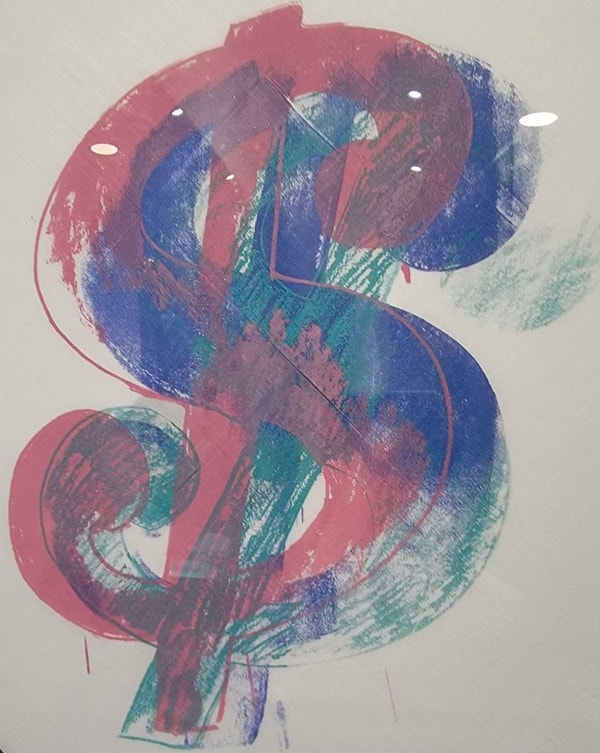
Andy Warhol
$ (1) IIIA 28
1982
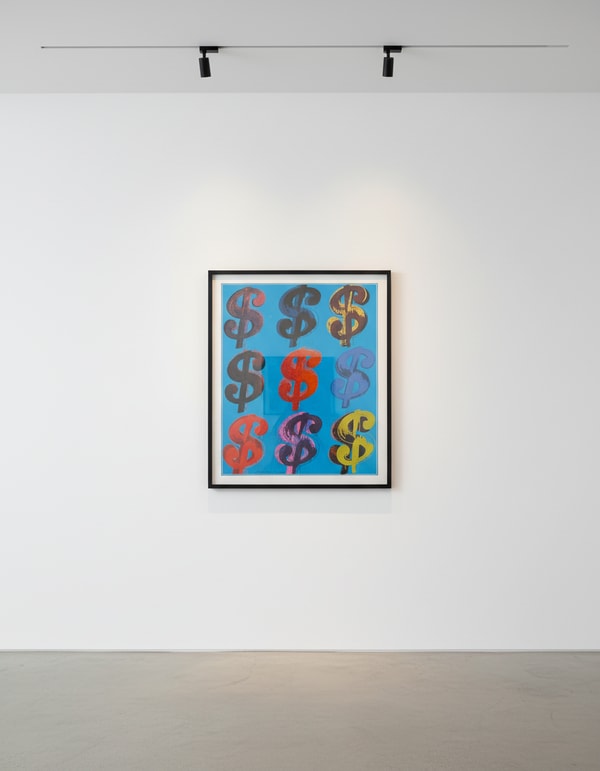
Andy Warhol
$ (9) (Blue) F.S. II 285-286
1982
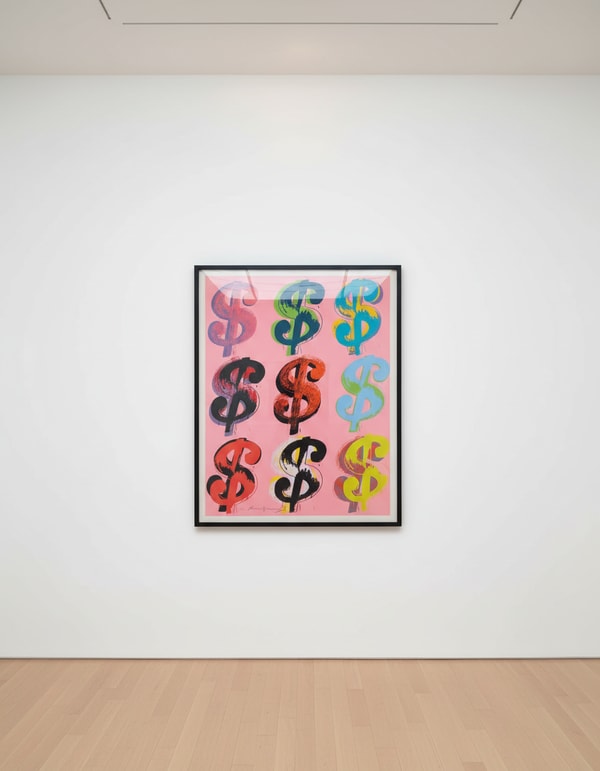
Andy Warhol
$ (9) (Pink) F.S. II 285-286
1982
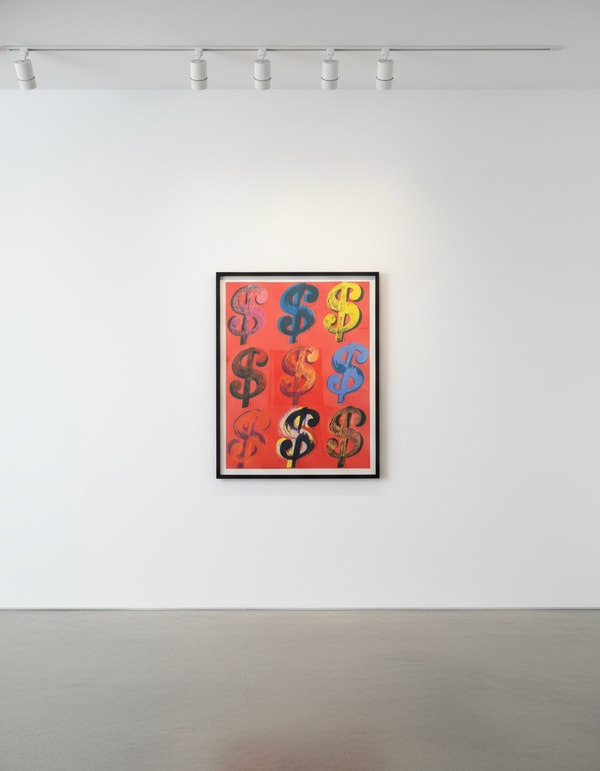
Andy Warhol
$ (9) (Red) F.S. II 285-286
1982
![Andy Warhol - $ (9) [II.285], 1982, Screen print on Lenox Museum Board](/cdn-cgi/image/width=600,format=auto,quality=90/https://zeeznfjaxmtzzuegpxcf.supabase.co/storage/v1/object/public/media/artworks/andy-warhol/andy-warhol-9-ii-285-rendered.jpg)
Andy Warhol
$ (9) [II.285]
1982
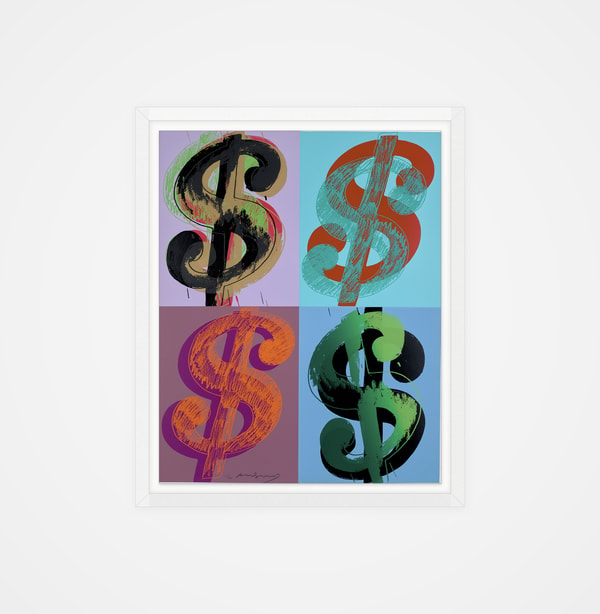
Andy Warhol
$ (Quadrant) F. & S. 283
1982
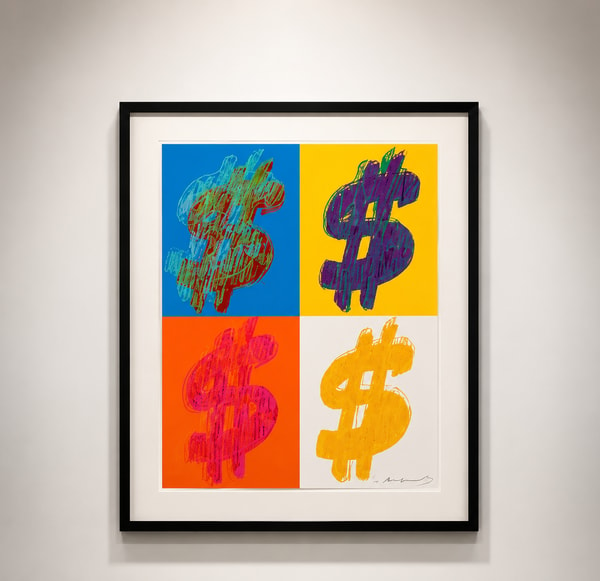
Andy Warhol
$ (Quadrant) F&S II.284
1982
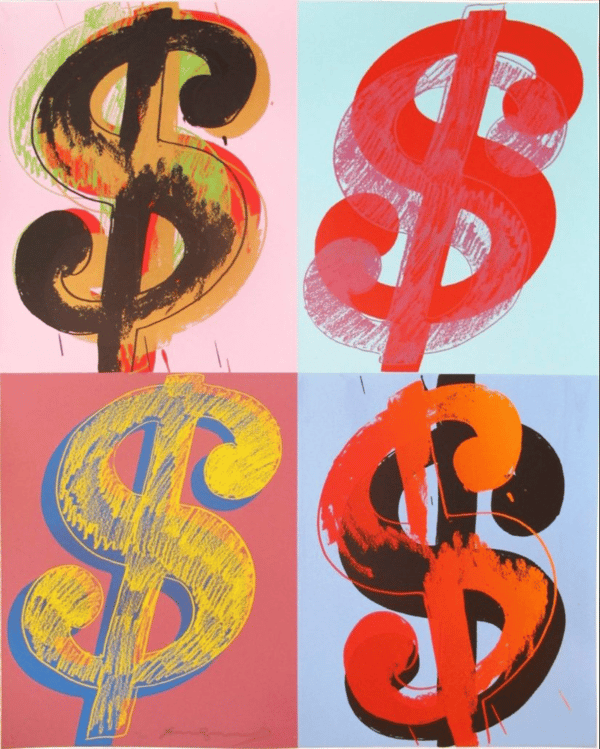
Andy Warhol
$ (Quadrant), II.283
1982
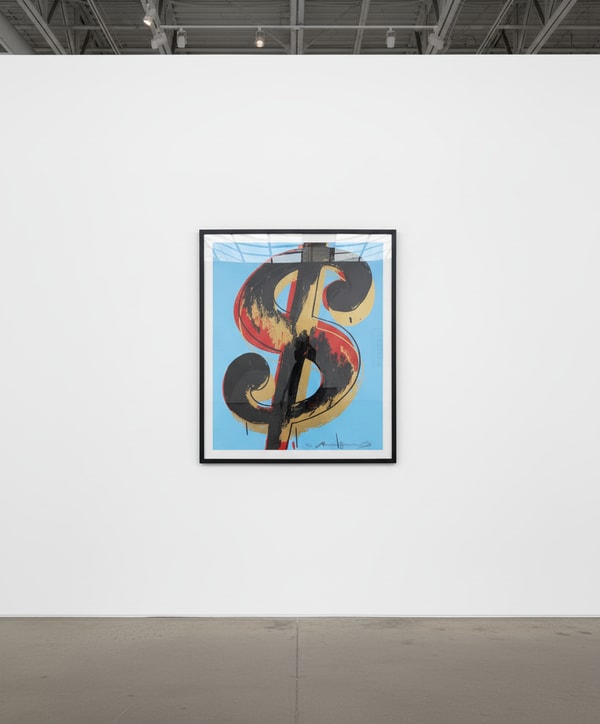
Andy Warhol
$ 1 (Dollar Sign) F.S. II 274 - 279
1982
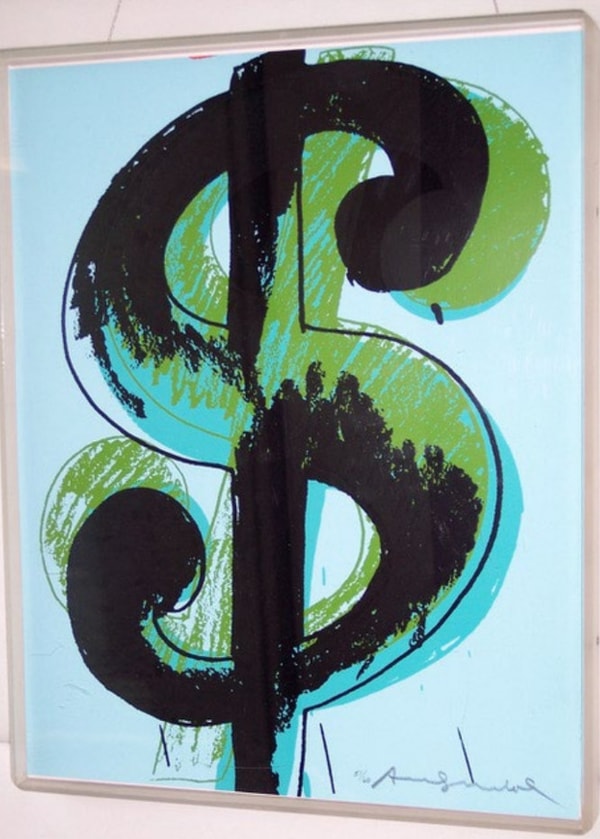
Andy Warhol
$ 1 (Dollar Sign) F.S. II 274 - 279
1982
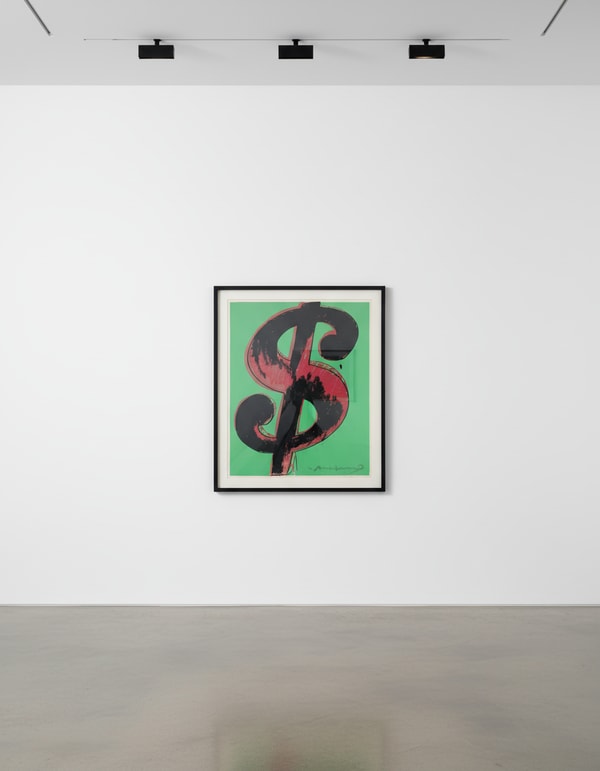
Andy Warhol
$ 1 (Dollar Sign) F.S. II 279
1982
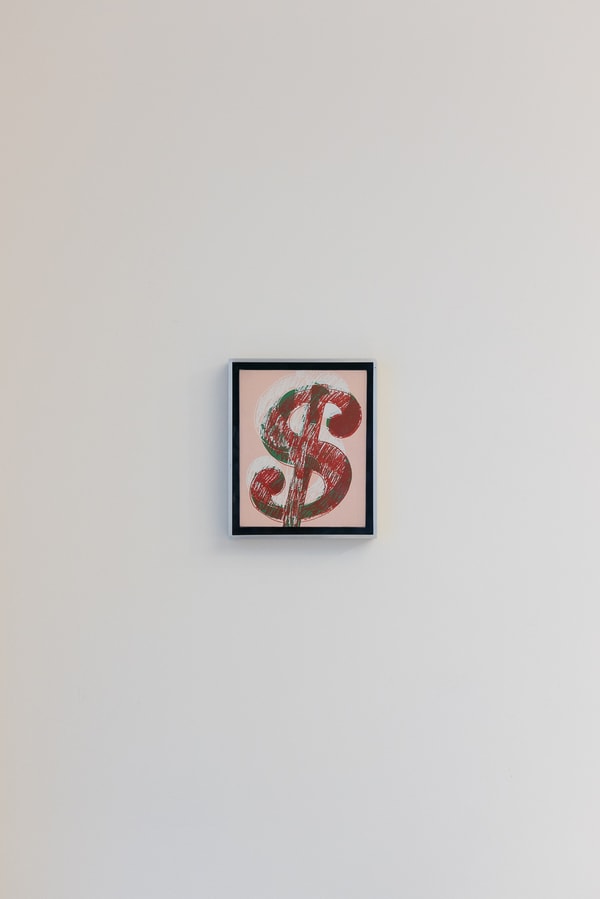
Andy Warhol
Dollar Sign
1981

Andy Warhol
Dollar Sign $ (1)
1982
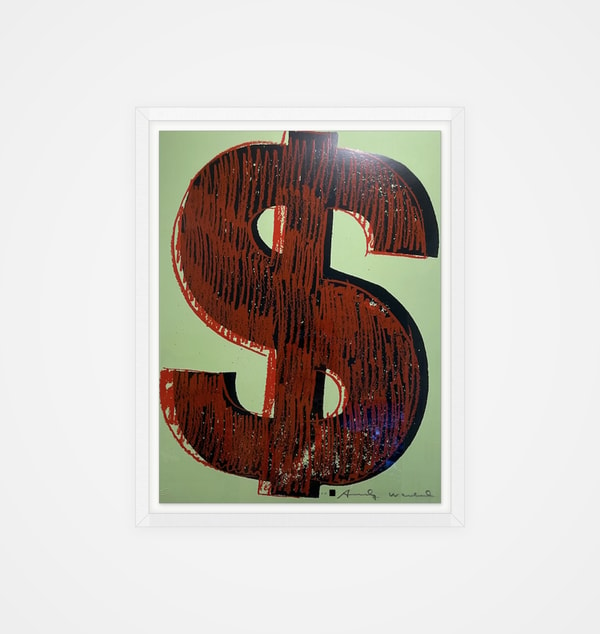
Andy Warhol
Dollar Sign $ (1)
1982
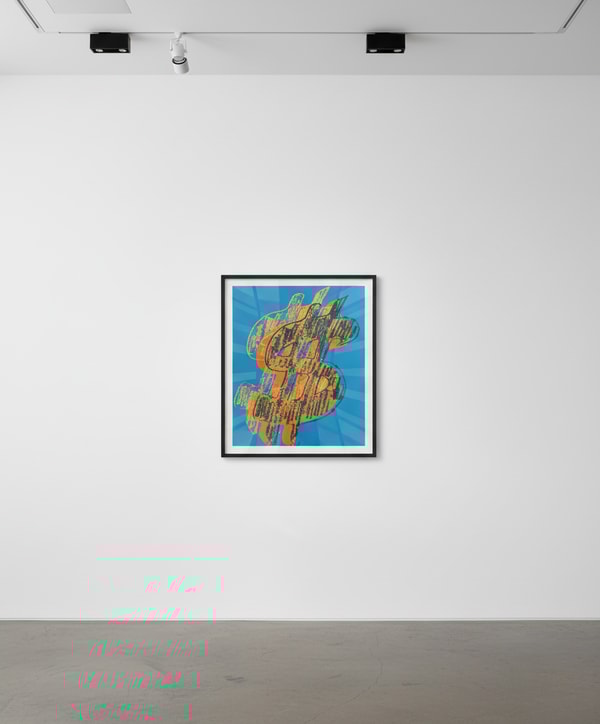
Andy Warhol
Dollar Sign F.S. II 280 Blue and Orange
1982
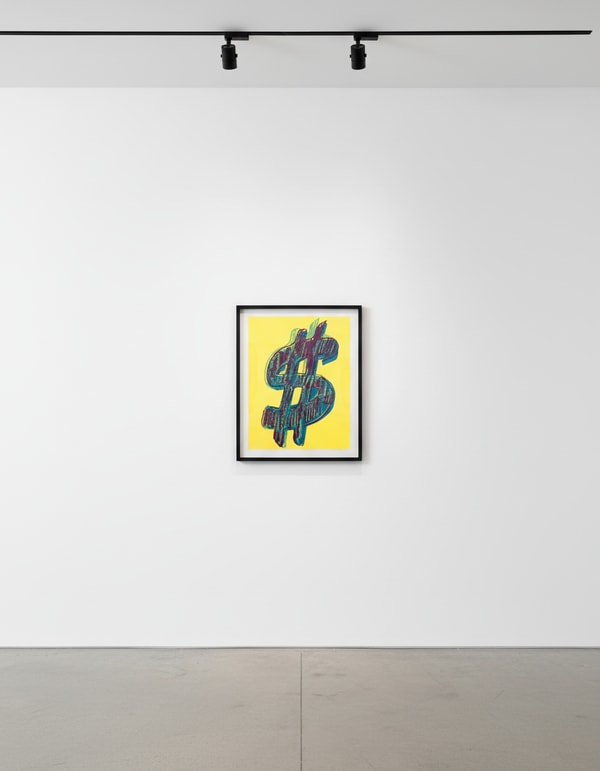
Andy Warhol
Dollar Sign F.S. II 280 Yellow and Purple
1982
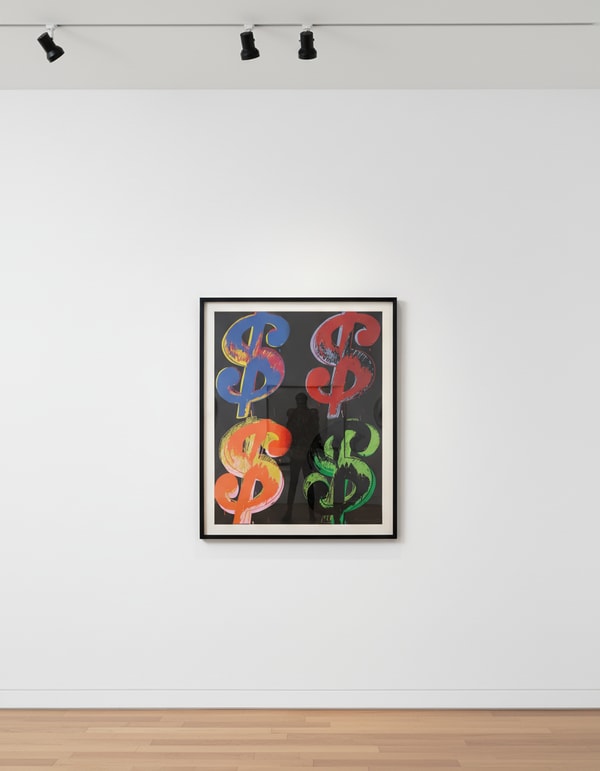
Andy Warhol
Dollar Sign F.S. II 281-282 (4)
1982
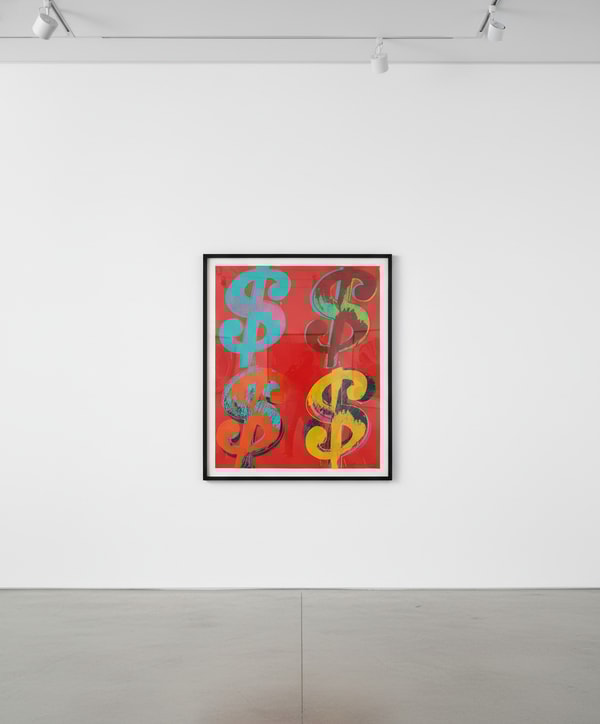
Andy Warhol
Dollar Sign F.S. II 281-282 (4) , 1982
1982
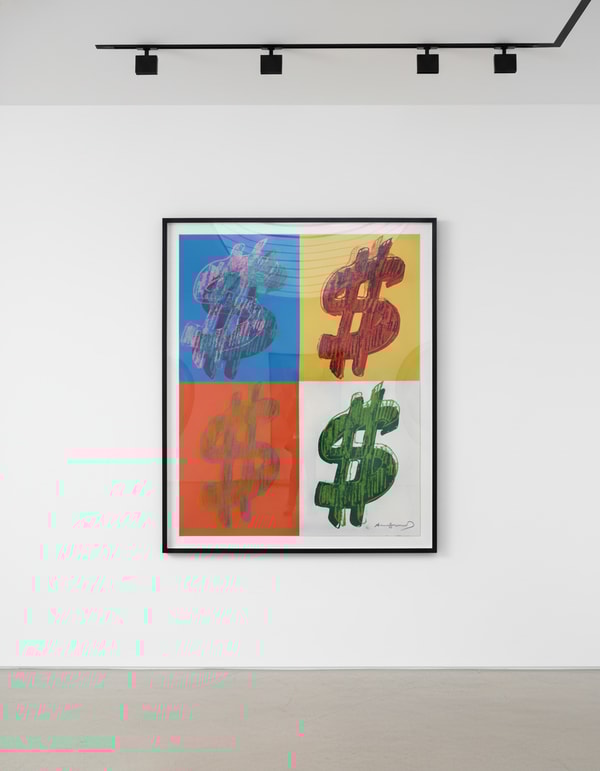
Andy Warhol
Dollar Sign Quadrant F.S. II 283-284
1982
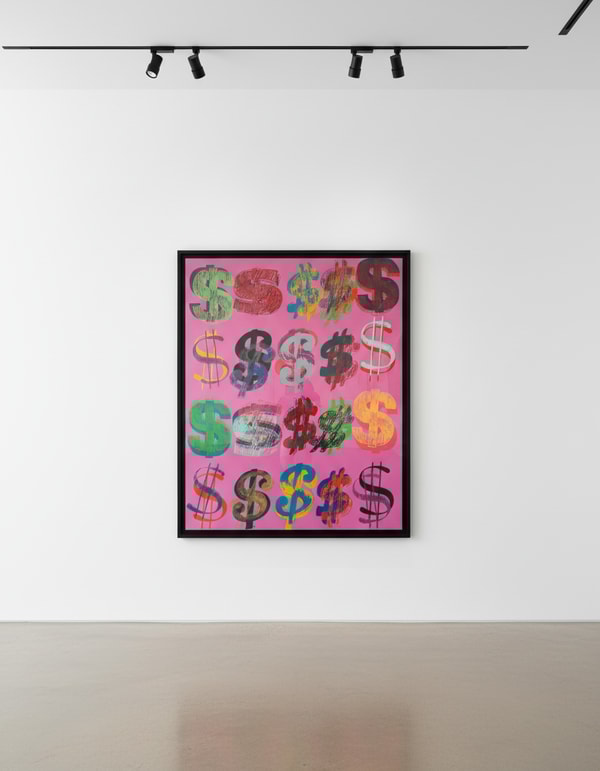
Andy Warhol
Dollar Signs
1981
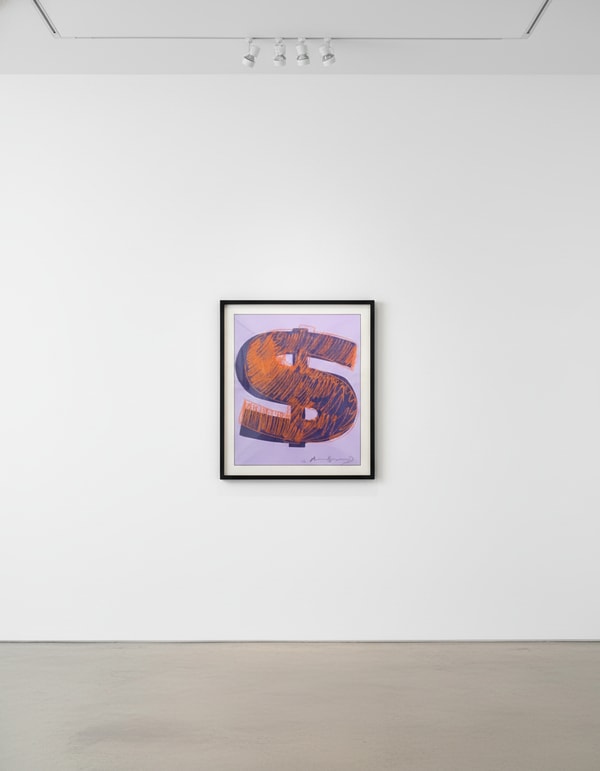
Andy Warhol
Single Dollar $ (1) F.S. IIA 274-279
1982
Five Facts About Andy Warhol Dollar Signs
Warhol's Dollar Sign works, begun in 1981, were based on an original drawing by Warhol himself rather than an appropriated photograph — a rare instance in his practice of using his own hand as the source image.
Warhol explained the choice of subject in his characteristically deadpan way: after asking friends for suggestions on what to paint, one asked him, 'Well, what do you love most?' and he answered money.
In February 1982, Artforum published a group of Warhol's Dollar Signs as a gatefold commission in the magazine.
The Dollar Sign (Quadrant) screenprints, catalogued as F.S. II.283-284, divide the dollar symbol into four quadrants layered over bold fields of color, published in an edition of 60 plus 10 artist's proofs and 3 printer's proofs, with each print unique.
Other screenprints in the series, such as $ (9) Red (F.S. II.285-286) and $ 1 (F.S. II.274-279), were produced in smaller editions of 35, each accompanied by 10 artist's proofs and 2 printer's proofs.
Market Data
See real auction history, estimate ranges and price benchmarks for individual Dollar Signs prints, sourced from Christie's, Sotheby's and other major auction houses.
Frequently Asked Questions
Andy Warhol Dollar Signs prints for sale are available at Guy Hepner Gallery, 529 West 20th Street, New York (by appointment). We offer authenticated editions with full provenance documentation sourced from the secondary market and directly from publishers.
Andy Warhol Dollar Signs works — 24 available — are typically produced as limited editions, individually signed and numbered by the artist. Contact Guy Hepner Gallery for edition details on specific works.
Pricing for Andy Warhol Dollar Signs prints varies by edition size, date, and condition. Contact Guy Hepner Gallery for current market pricing and availability.
From the Journal
More Andy Warhol Series
View all Andy Warhol works →