
Lithographs
62 works

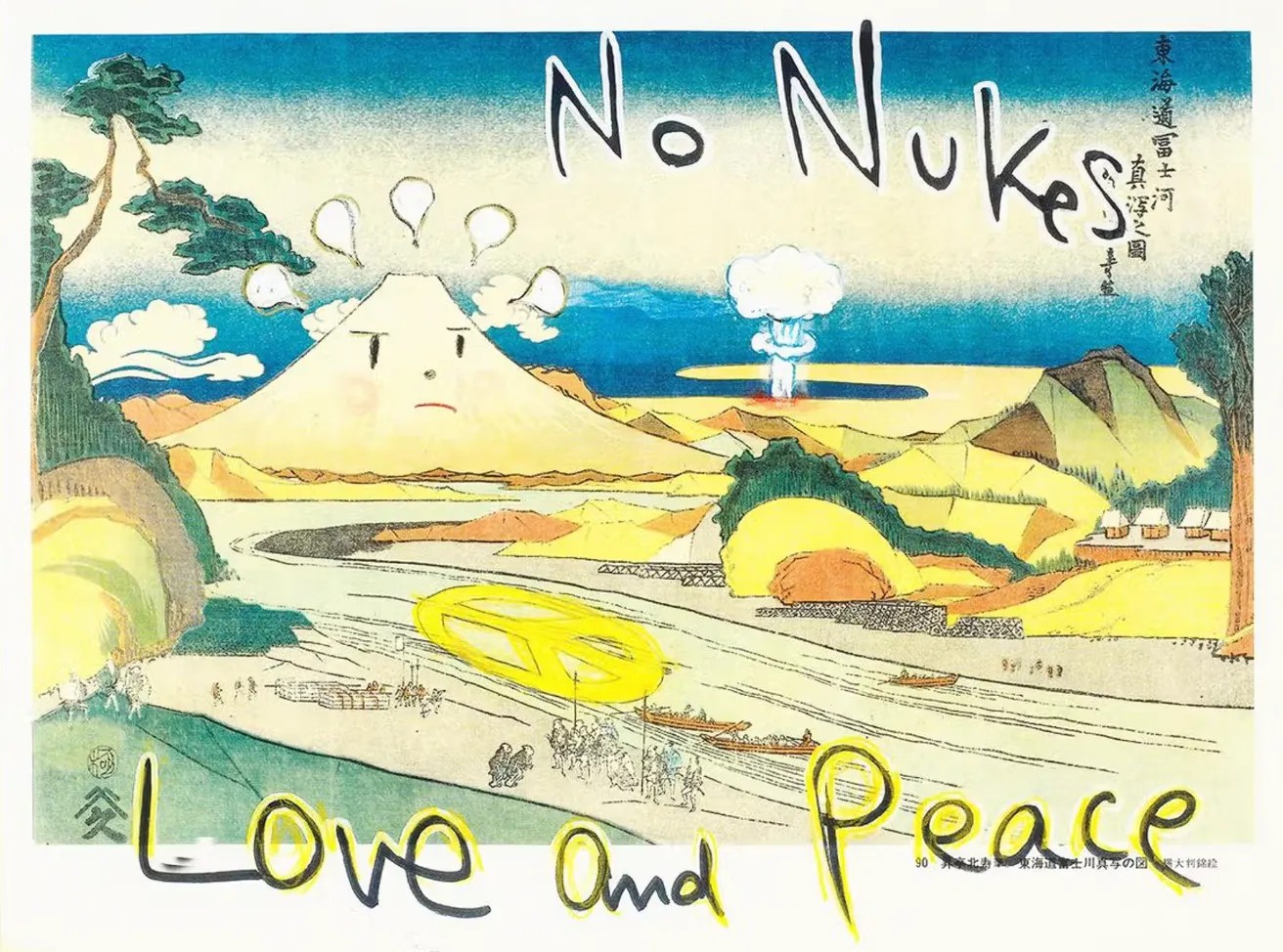
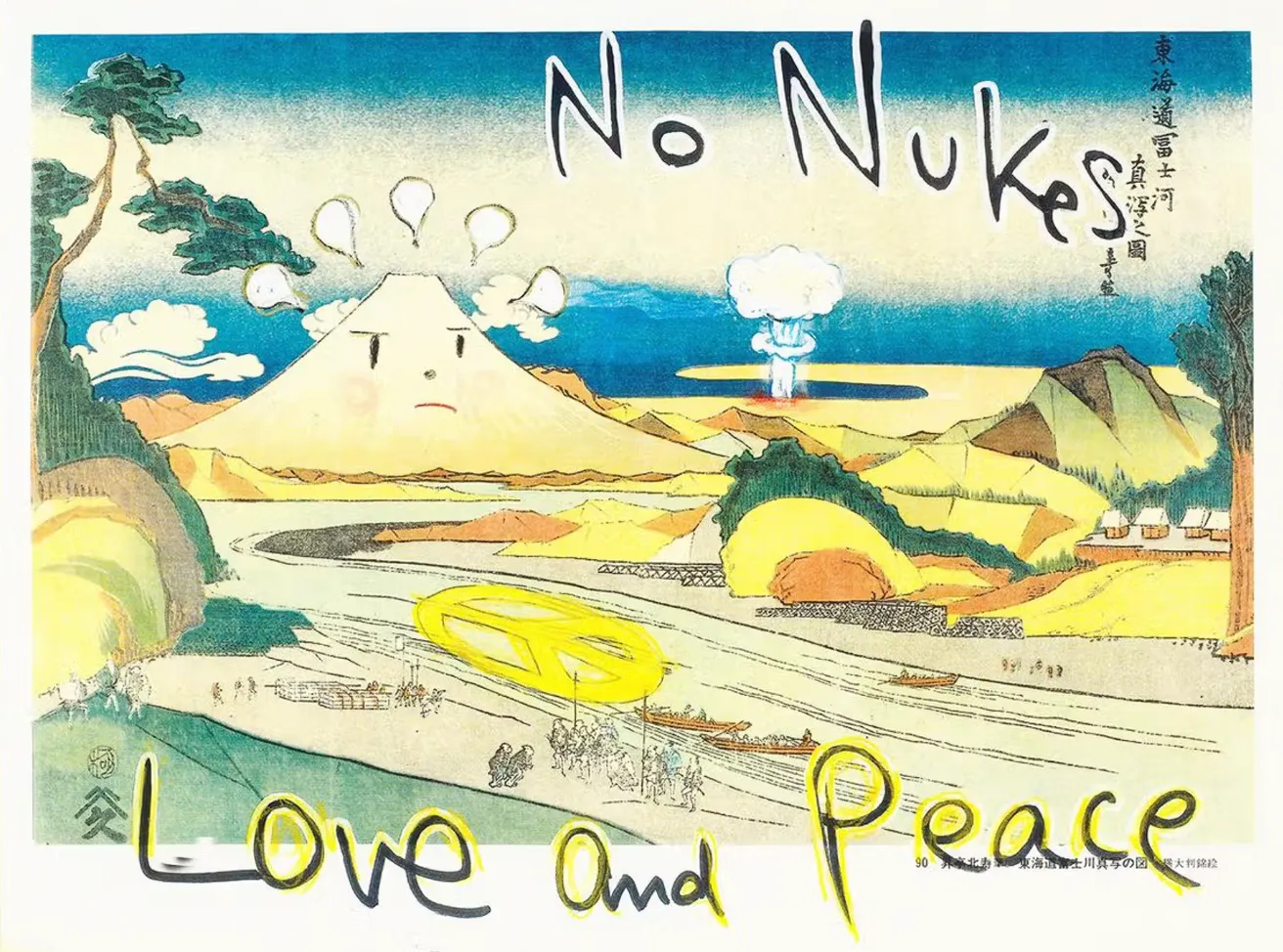
No Nukes Love And Peace, 1999
Yoshitomo Nara's *No Nukes Love And Peace* from 1999 exemplifies the artist's singular ability to channel complex political sentiment through the deceptively simple imagery of childhood. Created during a pivotal period in Nara's career, this work features his signature wide-eyed figure, rendered with the flat, graphic sensibility that draws equally from Japanese animation, Western punk rock aesthetics, and the artist's own deeply personal visual vocabulary. The title announces an unambiguous anti-nuclear stance, yet Nara's genius lies in his refusal to reduce the work to mere protest art. His child figure embodies the tension between innocence and defiance that has come to define his practice—eyes that stare outward with knowing intensity, a vulnerability that carries unexpected force. This duality reflects Nara's formative years in rural Japan and his subsequent immersion in the underground music scenes of Germany, where he lived and worked for over a decade. Works from this late-1990s period hold particular significance for collectors, representing the moment when Nara's visual language reached full maturity while retaining the raw, unpolished energy that distinguished him from his Pop Art predecessors. His market presence has grown substantially, with institutional acquisitions and dedicated retrospectives cementing his position among the most consequential artists of his generation. For acquisition inquiries, please contact Guy Hepner.
Price on Application
Yoshitomo Nara
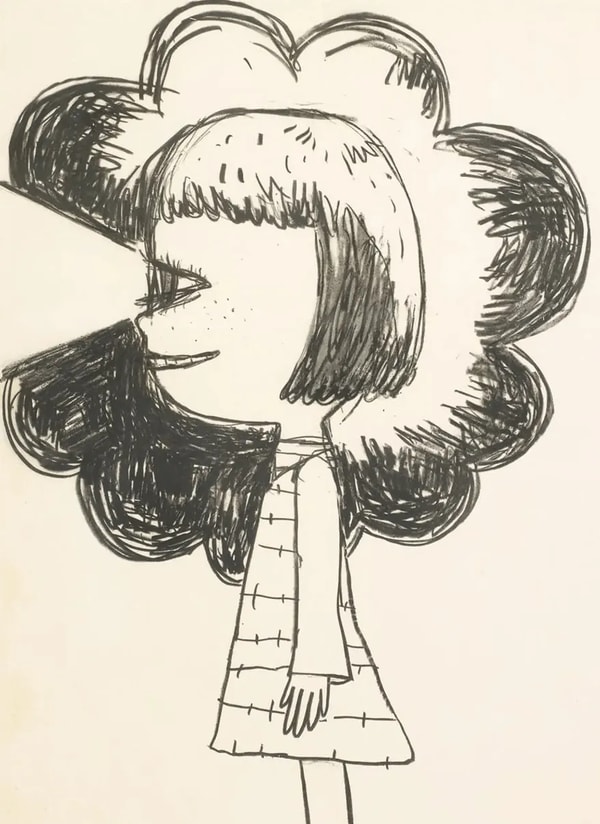
Flashlight Girl
2001
Yoshitomo Nara
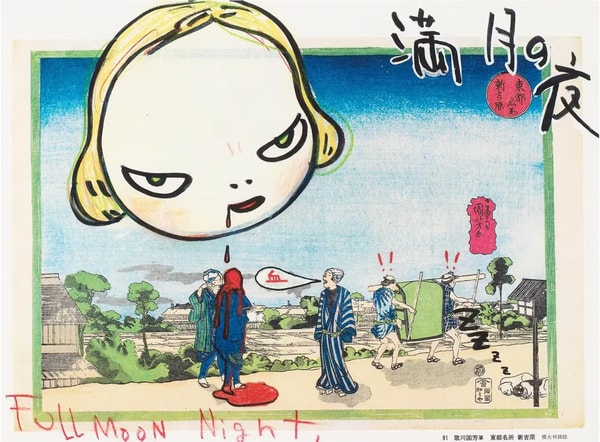
Full Moon Night
1999
Yoshitomo Nara
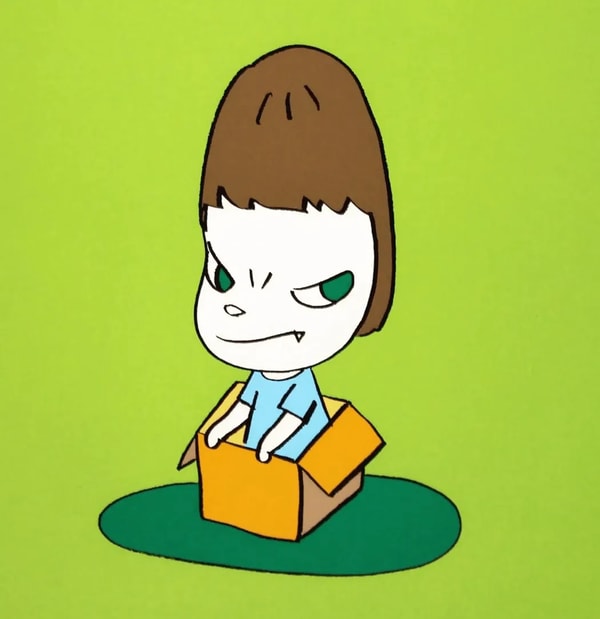
Girl In A Box
2001
Yoshitomo Nara
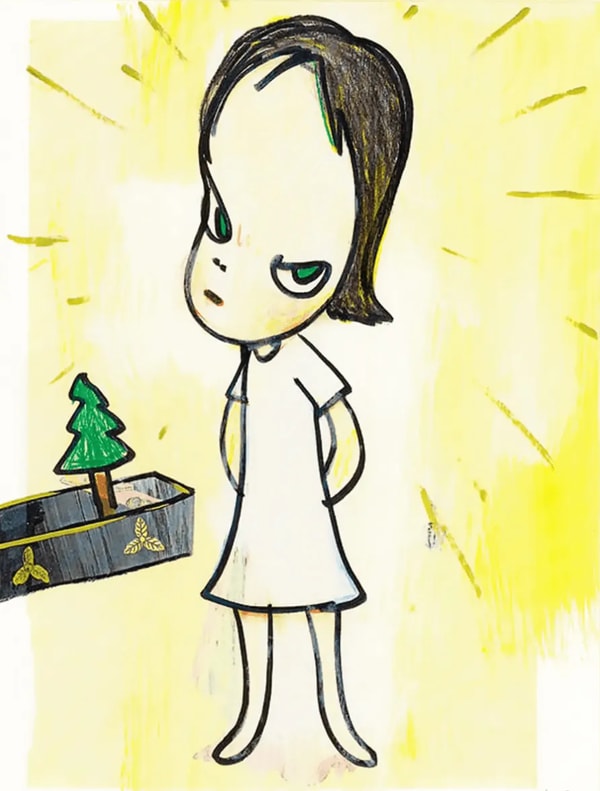
Little Tannenbaum
1999
Yoshitomo Nara
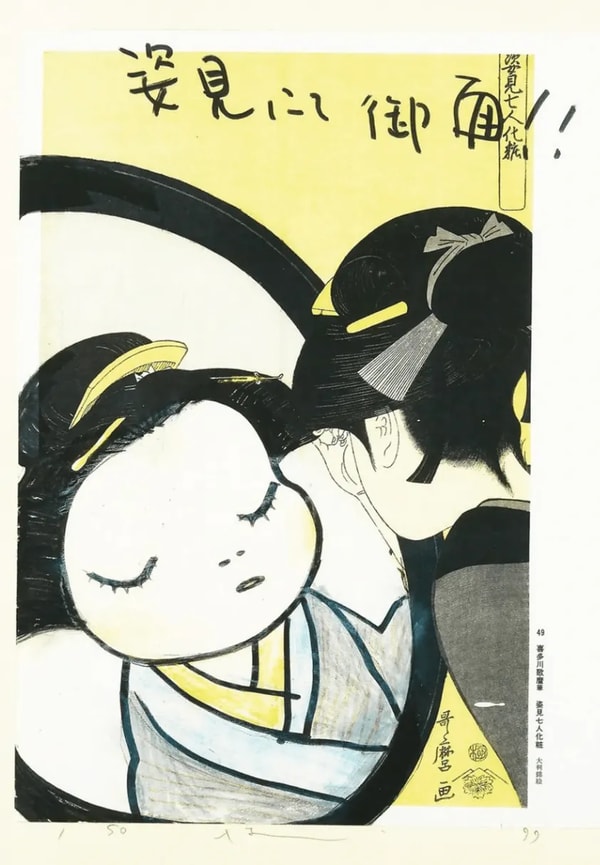
Mirror
1999
Yoshitomo Nara
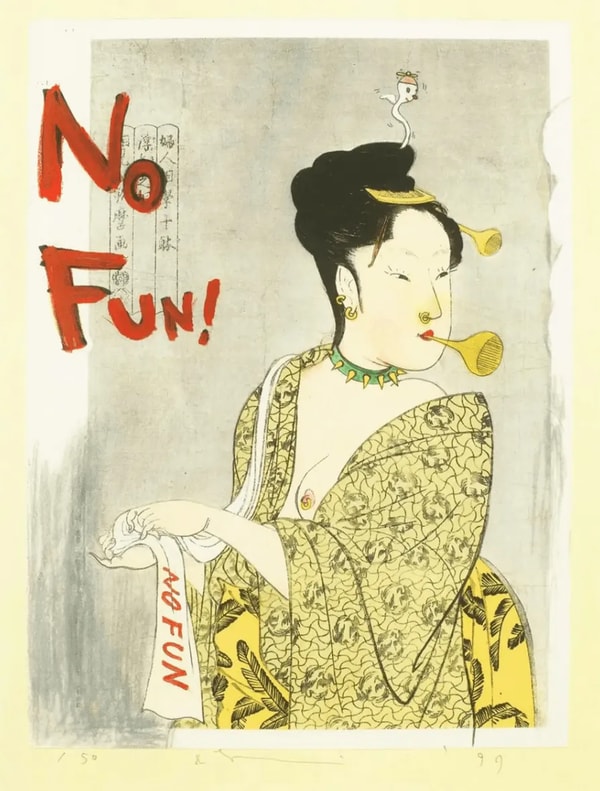
No Fun
1997
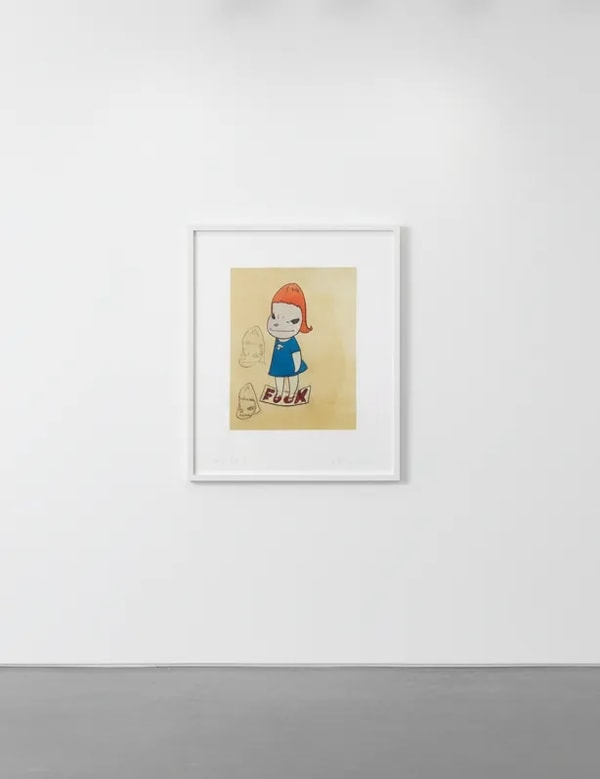
Yoshitomo Nara
On the F Word
2002
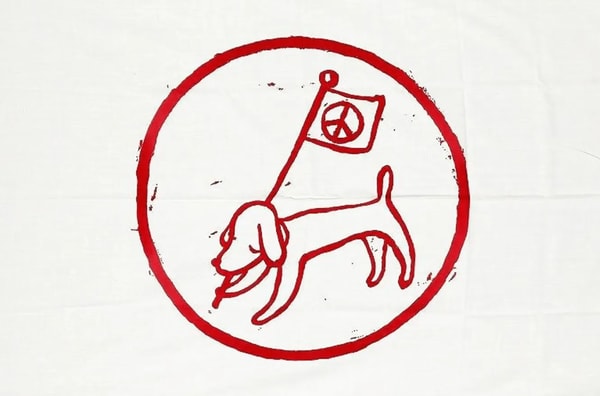
Yoshitomo Nara
Peace Flag
2001
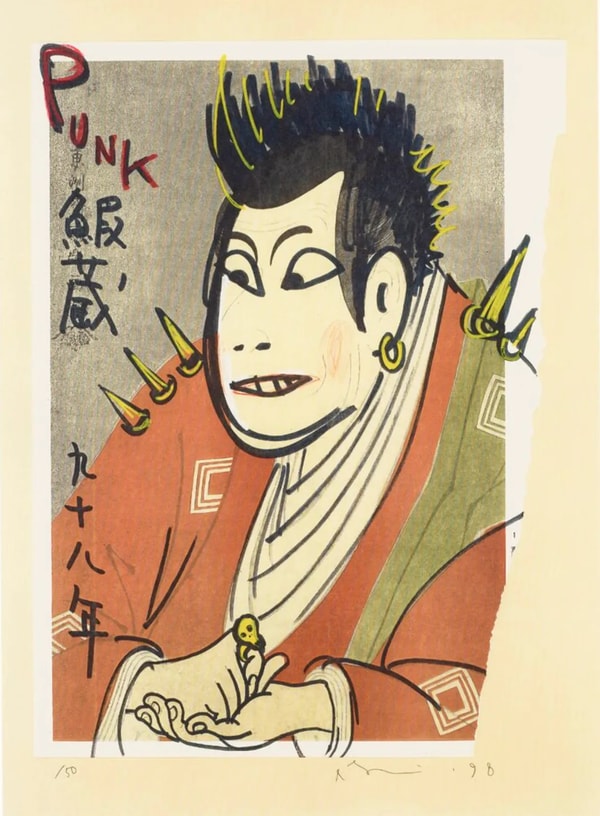
Yoshitomo Nara
Punk Ebizo
1998
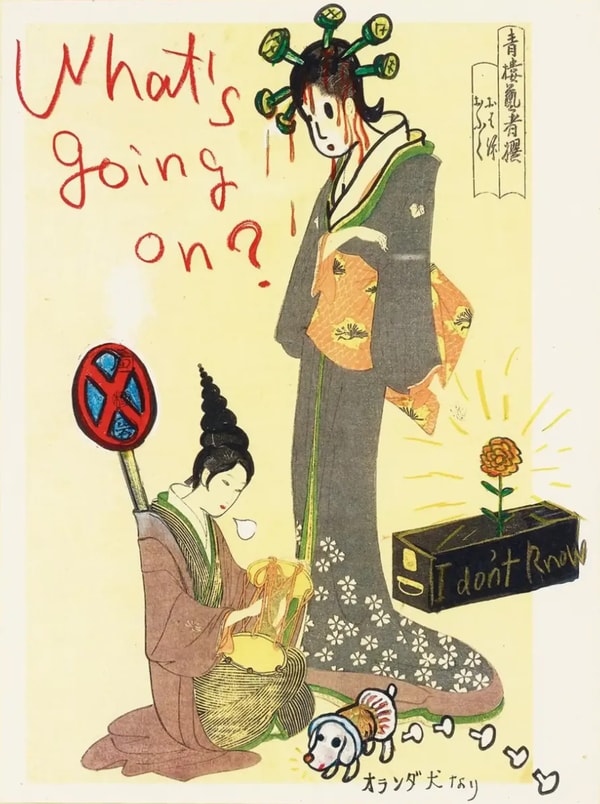
Yoshitomo Nara
What's Going On
1999
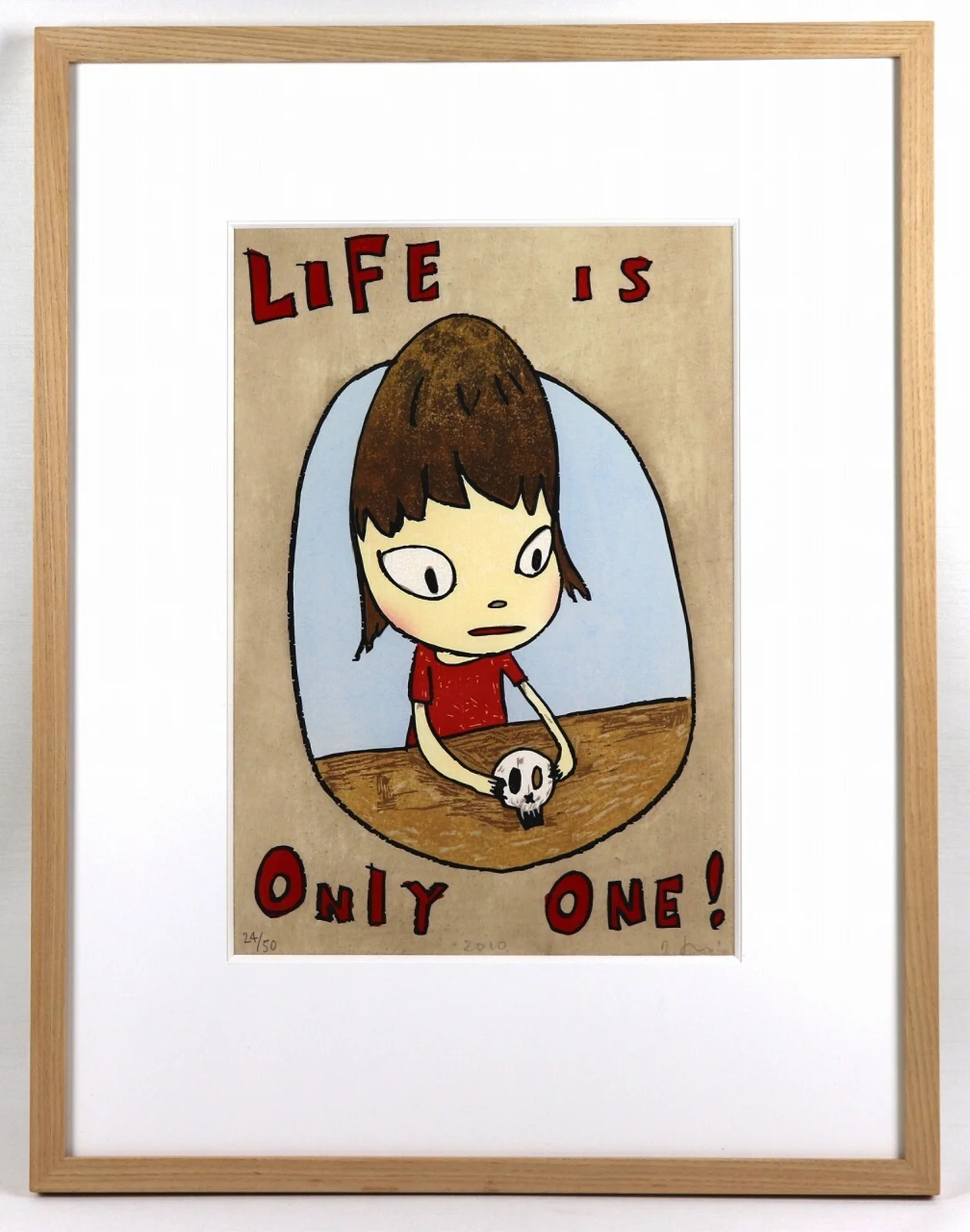
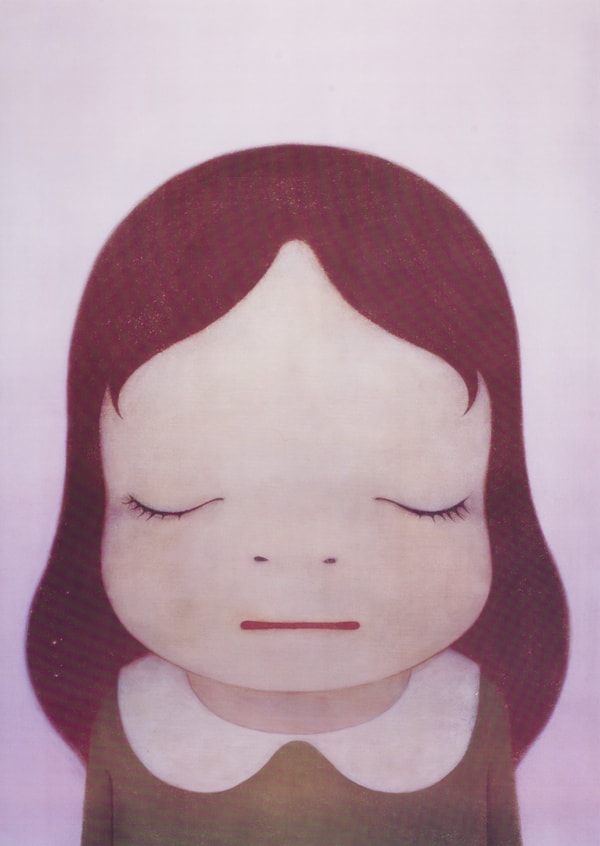
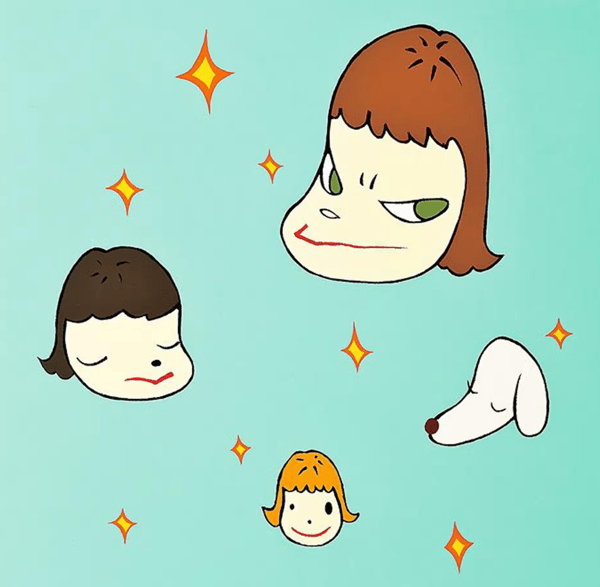
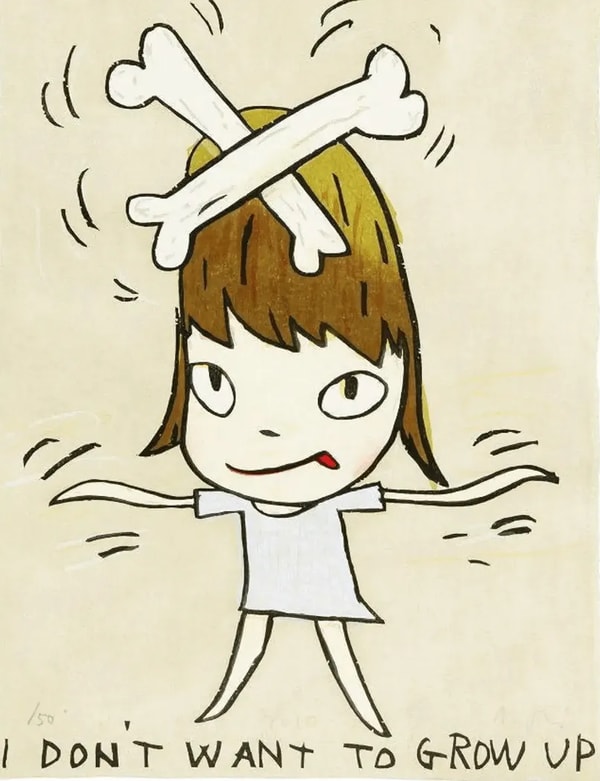
Yoshitomo Nara's early works capture the moment his visual language crystallised into one of the most recognisable in contemporary art. Produced largely between the late 1990s and early 2000s, these prints and editions introduce the lone, big-headed child — half innocent, half insurgent — that would come to define his practice. Raw, direct and steeped in the punk and folk music of his youth, they remain among the most sought-after entry points into Nara's world. Guy Hepner presents early Nara works at our New York gallery.
Nara spent formative years studying and working in Germany, and the emotional economy of these early pieces reflects that period of solitude and self-definition. Works such as No Fun (1997) and Punk Ebizo (1998) wear their attitude openly, while the 1999 group — Full Moon Night, Little Tannenbaum, Mirror, No Nukes Love And Peace and What's Going On — shows the artist refining a vocabulary of simplified line, flattened colour and a single confrontational figure set against an empty ground.
The media are as varied as the moods: alongside conventional editions sit experiments such as the What's Going On Fuji Xerox copy and the Peace Flag silkscreen printed on a cotton flag (2001), evidence of an artist testing how his imagery behaves across surfaces and formats.
Even at this early stage the essential Nara tensions are present: sweetness laced with defiance, vulnerability edged with menace. Titles like No Nukes Love And Peace and Peace Flag signal the quiet activism that runs through his career, while Flashlight Girl and Girl In A Box (2001) place his solitary children in charged, ambiguous situations. These works reward close looking — the more innocent the face, the more complicated the feeling behind it.
Early works are prized by collectors for documenting the origin of Nara's mature style, and they sit naturally alongside his later lithographs, woodblock prints and editions. Guy Hepner Gallery offers authenticated early Nara works with full provenance documentation. Contact our New York team to discuss current availability and acquisition.
Yoshitomo Nara
Yoshitomo Nara (b. 1959, Hirosaki, Japan) stands as one of the most influential figures in contemporary Japanese art, whose deceptively simple portraits of wide-eyed children—at once innocent and subversively defiant—have become icons of the Neo-Pop movement. Trained in Düsseldorf and deeply influenced by punk rock and anime culture, Nara creates works that resonate across cultural boundaries, commanding an international collector base and record-breaking auction results. His paintings, drawings, and sculptures are held in major museum collections worldwide, cementing his position as a defining voice in 21st-century art.