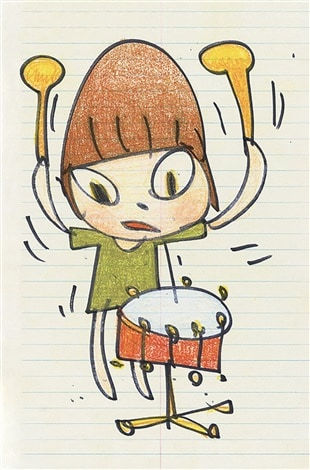
Early Works

July 13, 2026

For collectors seeking to acquire works by one of the most significant contemporary artists working today, understanding the landscape of Yoshitomo Nara prints for sale requires careful consideration of authenticity, edition structure, and market positioning. This collector guide to Yoshitomo Nara prints offers essential knowledge for both emerging collectors entering the market and established collectors deepening their holdings in this influential artist's work.
Nara's distinctive iconography—those wide-eyed children with expressions that oscillate between innocence and defiance—has become among the most recognizable visual languages in contemporary art. Yet beyond their immediate appeal lies a sophisticated artistic practice rooted in decades of rigorous development, international acclaim, and institutional recognition. For collectors, this combination of accessibility and depth makes Nara's printed editions particularly compelling acquisitions.
Yoshitomo Nara, born in Hirosaki, Japan in 1959, emerged as a leading figure in the Neo-Pop movement that transformed the global art landscape in the 1990s and 2000s. After studying at the Aichi Prefectural University of Fine Arts and Music and subsequently at the Kunstakademie Düsseldorf in Germany, Nara developed an artistic vocabulary that bridges Eastern and Western visual traditions while speaking to universal emotional experiences.
What distinguishes Nara from his contemporaries is the psychological complexity embedded within seemingly simple forms. His signature subjects—predominantly young girls and dogs rendered with minimal detail yet maximum emotional impact—function as repositories for feelings that transcend cultural and linguistic boundaries. Loneliness, rebellion, vulnerability, and quiet strength coexist within single images, creating works that reward sustained contemplation.
Nara's market trajectory reflects his institutional standing. Major retrospectives have been mounted at the Yokohama Museum of Art, the Asia Society in New York, and the Los Angeles County Museum of Art, among numerous other venues. His work resides in the permanent collections of the Museum of Modern Art, the Hirshhorn Museum, the Museum of Contemporary Art Tokyo, and countless other leading institutions worldwide.
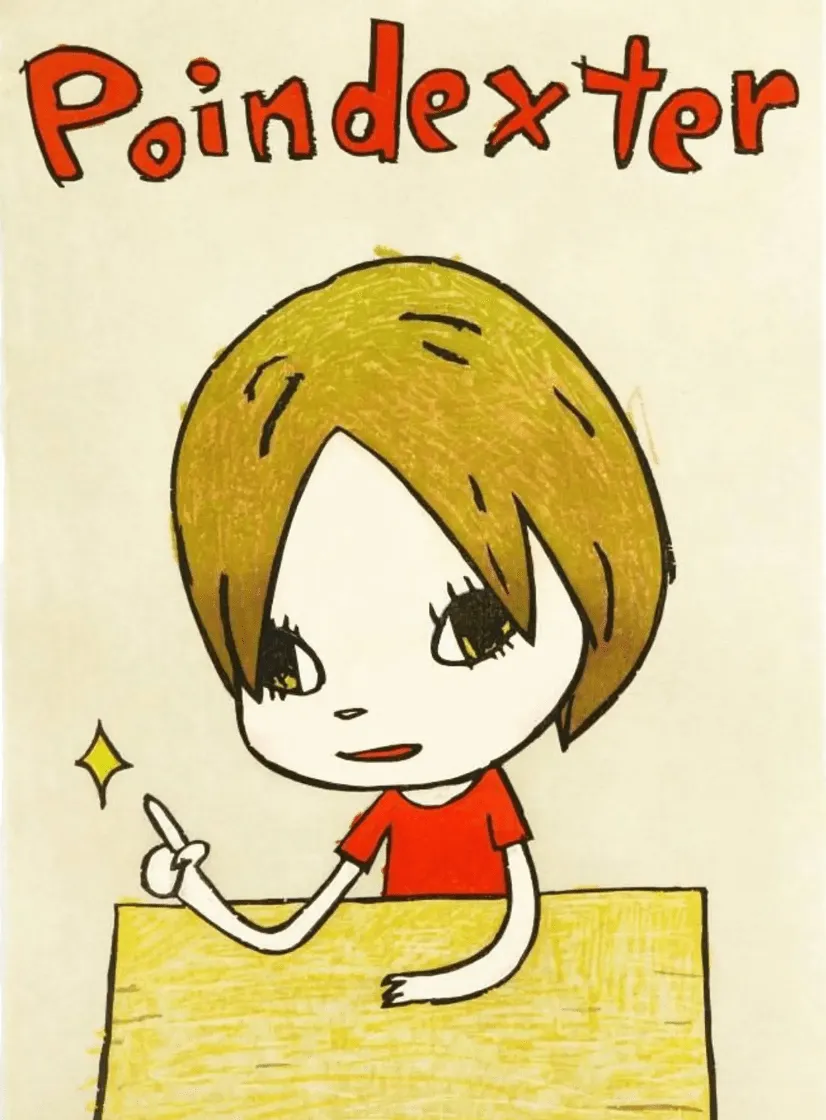
Yoshitomo Nara, Poindexter, 2010, Mixed media on paper. Available at Guy Hepner, New York.
Nara's approach to printmaking and editions reflects his broader artistic philosophy: a commitment to craft, an embrace of accessibility without sacrificing quality, and an understanding of how multiples can extend the reach of his imagery while maintaining artistic integrity.
Unlike artists who treat editions as mere reproductions of paintings, Nara has approached each print series as an opportunity for distinct creative expression. His editions range from traditional Lithographs and screenprints to more experimental processes including woodcuts and offset prints with hand-finished elements. This variety means that collectors have multiple entry points into his oeuvre, with editions that speak to different aesthetic priorities and collecting budgets.
Screenprints and Lithographs: Nara's screenprints represent some of his most sought-after editions. These works capture the flat color fields and precise linework that define his aesthetic, translating his painting style into a medium that allows for larger edition sizes while maintaining exceptional fidelity to his vision. Notable screenprint series include works produced in collaboration with established publishers such as Pace Editions and Kaikai Kiki.
Offset Lithographs with Hand-Finishing: Some of Nara's most collectible editions exist in a category between pure prints and unique works. These editions begin as offset lithographs but receive hand-drawn elements, numbered annotations, or other unique touches that individualize each impression. For collectors, these hybrid works offer the accessibility of editions with the distinctiveness of unique pieces.
Books and Printed Matter: Nara has produced numerous artist books, exhibition catalogues with original prints, and limited-edition publications that contain significant original content. While sometimes overlooked by collectors focused on wall-worthy works, these printed materials often represent exceptional value and can include works not available in any other format.
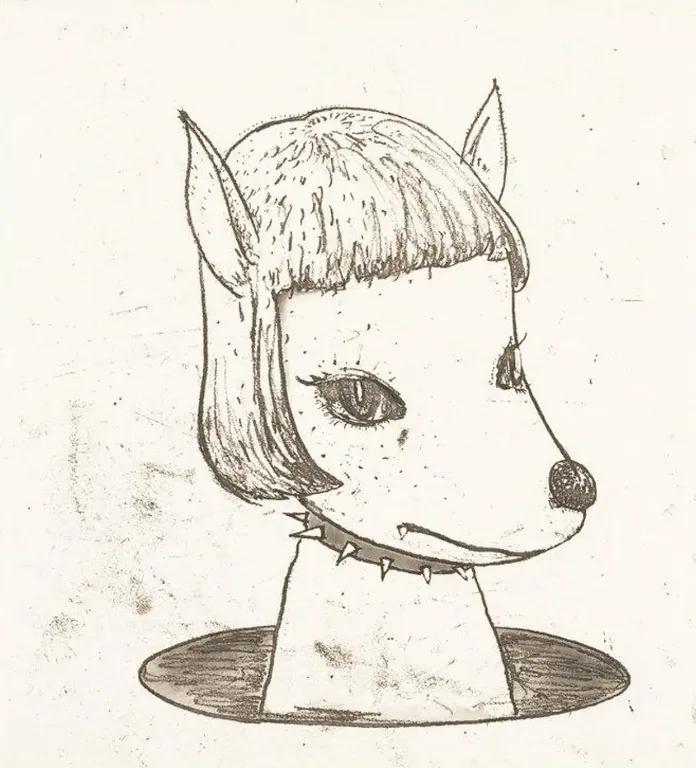
Yoshitomo Nara, Spockie, 2002, Ink on paper. Available at Guy Hepner, New York.
Successful collecting requires developing a discerning eye for quality within an artist's body of work. When evaluating Yoshitomo Nara prints for potential acquisition, several factors merit careful consideration.
Print condition significantly impacts both aesthetic enjoyment and long-term value. When examining a Nara print, look carefully for:
Surface Issues: Any scuffing, abrasions, or scratches to the printed surface diminish value. Nara's work often features large areas of flat color where surface damage becomes immediately apparent.
Paper Condition: Examine the sheet for foxing (brown spots caused by fungal growth), yellowing, creasing, or tears. Pay particular attention to the margins and edges, where handling damage most commonly occurs.
Fading: Some printing inks, particularly certain reds and yellows, are susceptible to light damage. Compare color intensity across the print surface and, when possible, against documented examples of the same edition.
Mounting and Framing History: Previous mounting can leave residue or cause paper damage. Ideally, prints should be archivally matted with no adhesive contact to the artwork itself.
Nara's editions vary significantly in size, from intimate editions of fewer than 50 impressions to larger editions of several hundred. Generally, smaller editions command premium prices, though this relationship is not absolute—a larger edition of an iconic image may outperform a smaller edition of a lesser-known work.
Pay attention to designation beyond the standard edition number. Artist proofs (marked A/P or E.A. for épreuve d'artiste), printer's proofs (P/P), and hors commerce impressions (H.C.) exist outside the numbered edition and can carry additional collector interest, though they typically comprise only 10-15% of the total impressions made.
Nara typically signs his prints in pencil, either on the image itself or in the margin below. His signature has remained relatively consistent over the years—a recognizable script that experienced dealers can authenticate at a glance. Be cautious of works where signature placement seems unusual or where the signature quality appears inconsistent with documented examples.
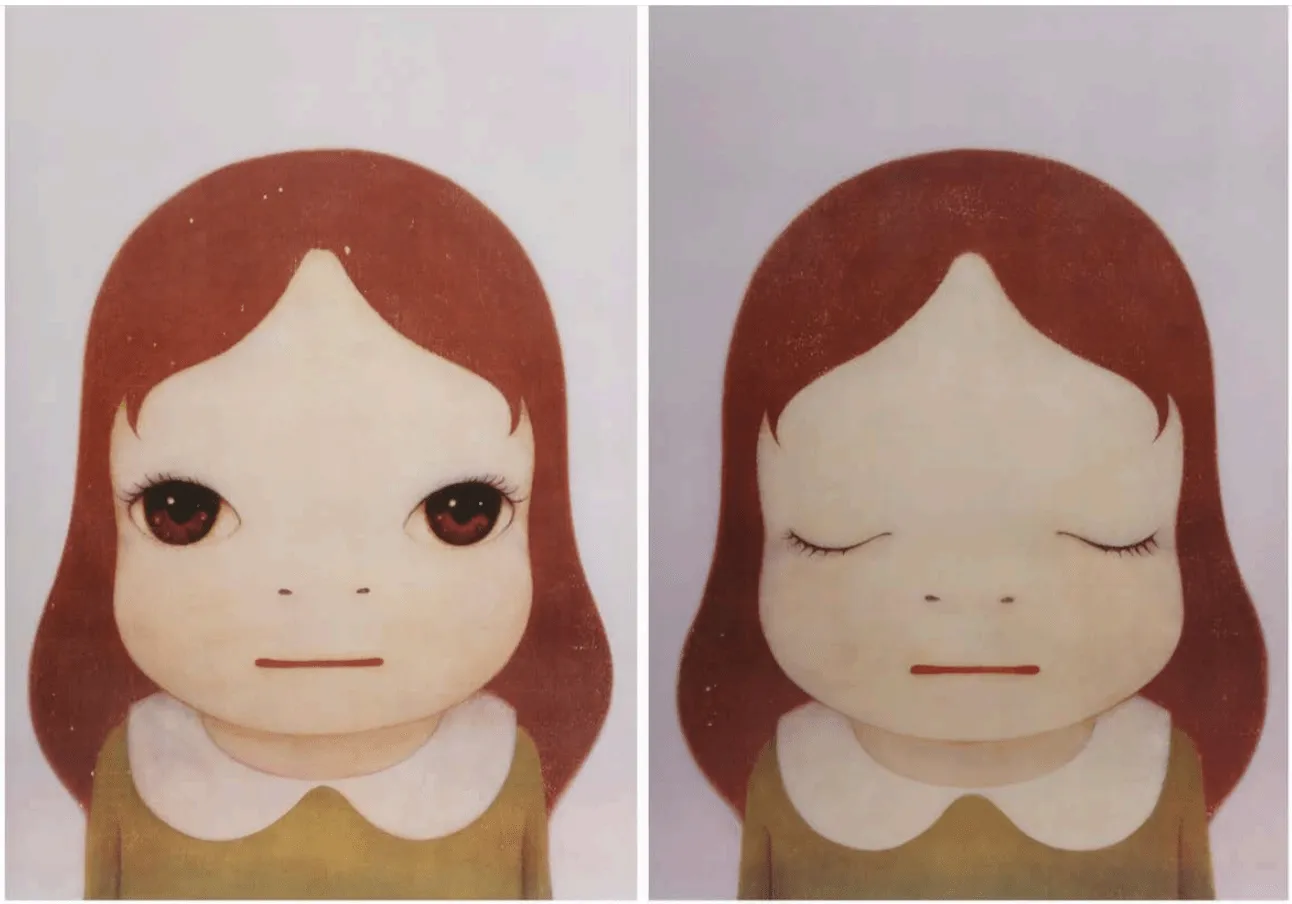
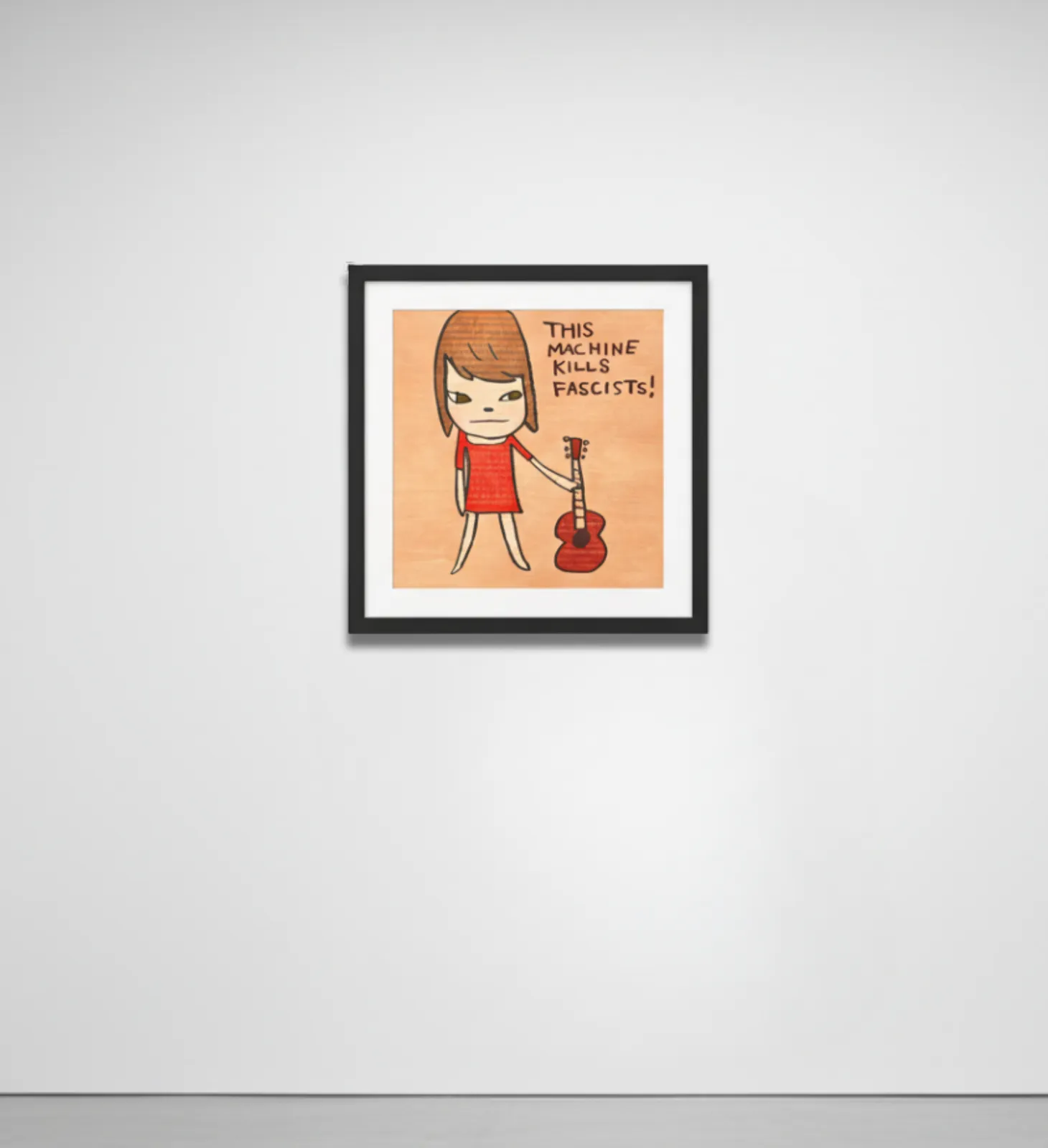
Yoshitomo Nara, Cosmic Girl (Eyes Open, Eyes Shut), 2008, Mixed media. Available at Guy Hepner, New York.
The importance of proper authentication cannot be overstated when collecting works by an artist of Nara's stature. Forgeries exist in the market, and even well-intentioned dealers can inadvertently acquire problematic works.
When considering a purchase, request complete provenance documentation including:
Reputable dealers will provide this documentation without hesitation. Reluctance to share provenance information should raise immediate concerns.
Many of Nara's editions were produced through established publishers with their own authentication protocols. Works published through galleries and institutions often include certificates of authenticity or can be verified against publisher records. When purchasing editions produced through official channels, confirmation from the publisher provides strong authentication support.
For significant acquisitions, consider seeking expert opinion from specialists in Japanese contemporary art or specifically in Nara's work. While formal authentication services for Nara do not exist in the same manner as for Old Masters or blue-chip modern artists, experienced dealers and scholars can provide informed assessment of attribution and condition.
Certain series and individual works have emerged as particularly desirable within Nara's printed oeuvre. Understanding these market dynamics helps collectors make informed acquisition decisions.
This series, featuring Nara's characteristic girls wielding knives with determined expressions, represents some of his most iconic imagery. Prints from this conceptual grouping consistently perform well at auction and rarely remain available for extended periods in the secondary market.
These works, depicting dreaming or sleepwalking figures, exemplify the contemplative, melancholic quality that distinguishes Nara's most emotionally resonant imagery. Collectors prize these editions for their psychological depth and poetic sensibility.
Nara has collaborated with various publishers and organizations on special editions, including charitable projects and institutional partnerships. These collaborative works sometimes offer entry points at accessible price levels while providing works with institutional credibility.
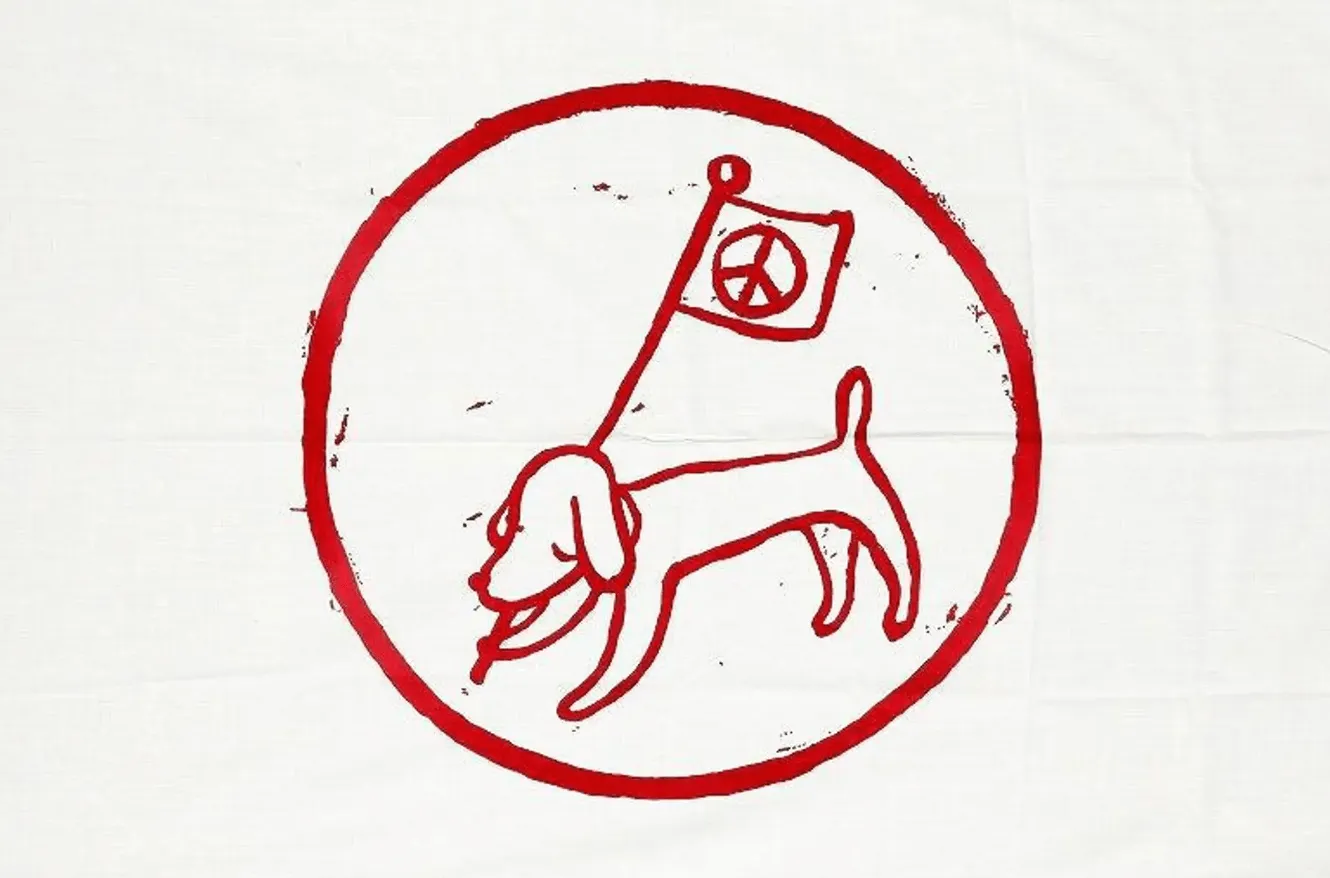
Yoshitomo Nara, Peace Flag, 2001, Print on paper. Available at Guy Hepner, New York.
The market for Nara prints has matured significantly over the past decade, with prices reflecting his established position in the contemporary art canon. Understanding current market dynamics helps collectors set realistic expectations and identify genuine opportunities.
Nara's printed works span a broad price spectrum. Entry-level prints—typically larger edition offset lithographs or works from less iconic series—can be found in the low thousands of dollars. Mid-range screenprints and lithographs from more significant series typically trade in the ten to fifty thousand dollar range. The most desirable prints—early impressions of iconic images, rare variants, and works with exceptional provenance—can command six-figure prices.
Nara's work appears regularly at major auction houses, providing transparent price benchmarks for collectors. Auction results reveal several consistent patterns: iconic imagery outperforms lesser-known subjects; condition significantly impacts realized prices; and provenance from notable collections commands premium bids.
However, collectors should note that auction prices include buyer's premiums of 20-25%, meaning the actual hammer price received by sellers is lower than headline results suggest. This spread creates opportunities for private purchases through galleries at prices that may represent better value than auction acquisition.
Nara's market has demonstrated remarkable stability, with consistent institutional and collector demand supporting prices even during broader market corrections. His combination of accessibility, critical recognition, and limited supply of quality material positions his work favorably for long-term collection building.
For collectors approaching Nara's work systematically rather than opportunistically, several strategic considerations merit attention.
Some collectors pursue comprehensive representation of Nara's printed output, acquiring examples from multiple series and periods to document the full range of his graphic work. Others concentrate resources on acquiring fewer but more significant impressions—key works from iconic series or early impressions with exceptional quality.
Both approaches have merit. Comprehensive collections tell richer stories about artistic development, while focused collections can achieve museum-quality depth within specific areas.
New Nara editions, when announced through official channels, typically sell out quickly—often within hours of release. Collectors seeking primary market access should establish relationships with galleries that receive allocations and express ongoing interest in future releases.
Secondary market opportunities arise continuously as collections are dispersed, estates are settled, and tastes evolve. Patient collectors who monitor the market consistently can acquire desirable works at favorable moments.
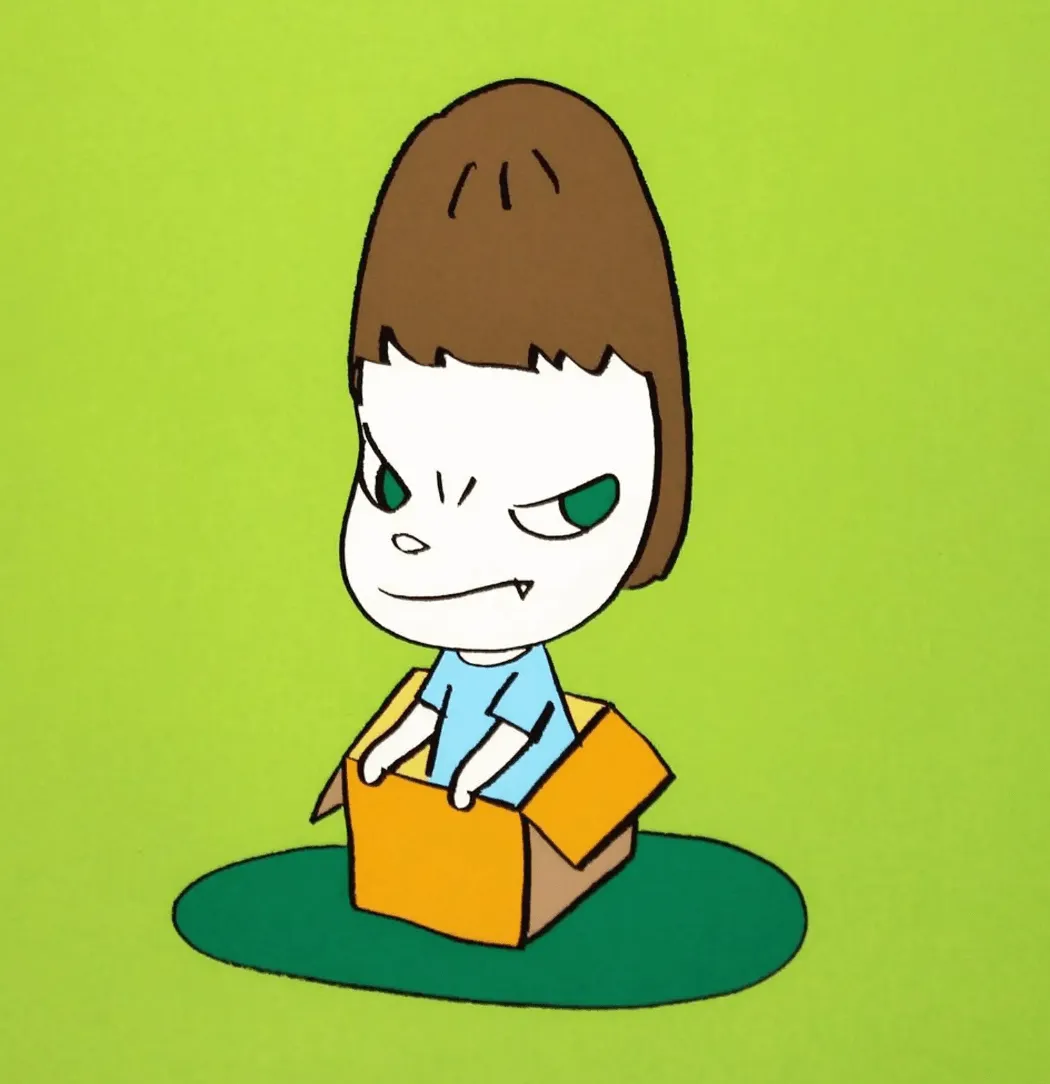
Yoshitomo Nara, Girl in a Box, 2001, Print on paper. Available at Guy Hepner, New York.
Proper care protects both aesthetic enjoyment and investment value. Nara prints should be displayed under UV-filtering glazing, away from direct sunlight and in stable temperature and humidity conditions. Professional archival framing, while representing an additional investment, prevents condition issues that would diminish value over time.
For works not currently displayed, flat storage in acid-free containers maintains condition better than rolled storage. Climate-controlled storage is essential for collectors in areas with extreme temperature or humidity variations.
Nara occupies a distinctive position in the contemporary art landscape—an artist whose work appeals broadly while maintaining critical credibility, whose market has matured while continuing to grow, and whose imagery speaks to fundamental human experiences across cultural boundaries.
For collectors, his printed editions offer multiple advantages. They provide access to an artist whose unique works trade at prices that exclude most private collectors. They represent completed, fully realized artistic statements rather than preparatory or secondary works. And they allow collectors to own multiple examples, building depth of engagement with an artist's vision that single acquisitions cannot provide.
The practical case is equally compelling. Nara's institutional standing, represented by museum retrospectives and permanent collection holdings worldwide, provides foundation for long-term value. His relatively controlled production—he does not flood the market with endless editions—maintains rarity. And the continued evolution of his practice ensures ongoing critical attention and collector interest.
At Guy Hepner, our specialists maintain extensive knowledge of Nara's printed oeuvre and current market conditions. We work with collectors at all levels, from those acquiring their first Nara print to established collectors seeking specific works to complete significant holdings.
Our inventory includes carefully vetted examples with complete provenance documentation. We assist with condition assessment, authentication verification, and identification of works that match specific collecting objectives. For collectors seeking particular titles or series, we maintain active want lists and leverage our network to locate appropriate material.
We invite you to visit our gallery at 177 Tenth Avenue, New York, to view available Yoshitomo Nara prints or to discuss your collecting interests with our team. Whether you're beginning your journey with Nara's work or adding to an established collection, we offer the expertise and inventory to support thoughtful acquisition decisions.
Explore Yoshitomo Nara prints for sale at Guy Hepner: Early Works, Lithographs, Prints & Editions, Woodblock Prints.
Related Series