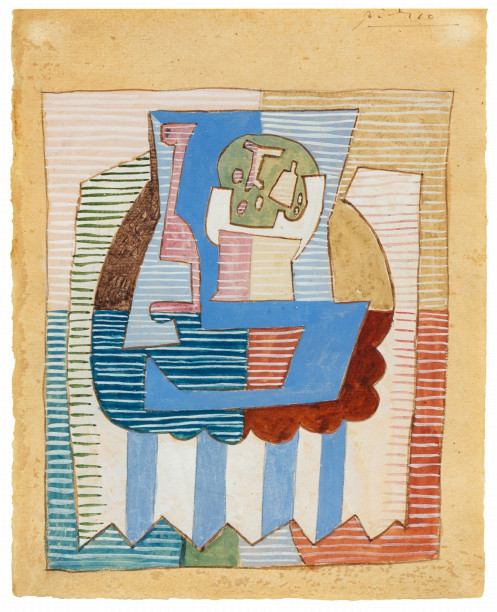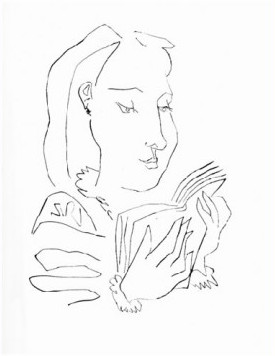
Aquatint

June 26, 2026
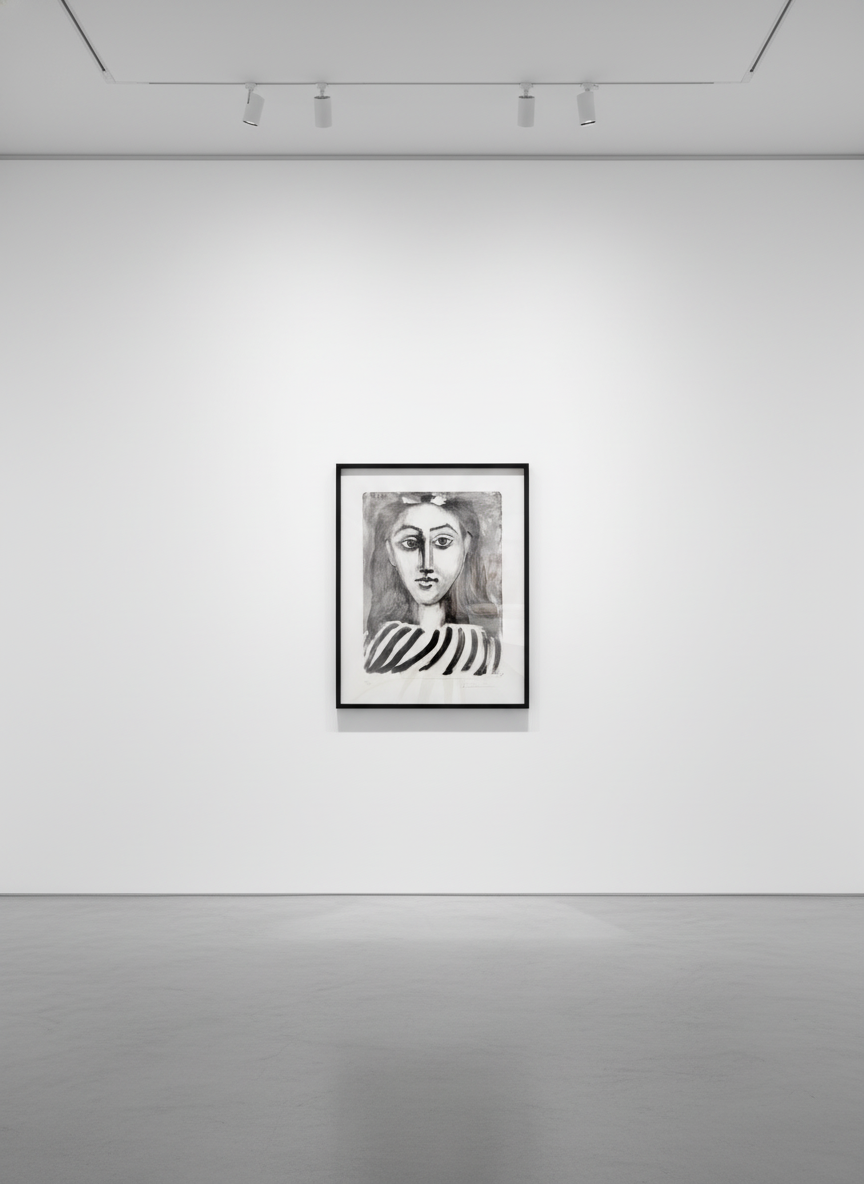
Pablo Picasso prints for sale represent the single most accessible entry point into the work of the most important artist of the twentieth century. Picasso paintings are held almost exclusively by institutions and a handful of the world's wealthiest collectors — Les Femmes d'Alger sold for $179 million at Christie's in 2015, and works of comparable stature rarely enter private hands. His prints are different. Produced across seven decades in the workshops of the greatest printers in Europe, Picasso's prints are original works made directly from plates, stones, and linoleum blocks that Picasso himself created. They are not reproductions. They are the real thing — and they begin at prices that serious collectors at every level can consider.
This guide covers everything you need to know before buying a Pablo Picasso print: the different print types, which suites and series carry the most significance, how to authenticate, what condition indicators matter most, and what you can expect to pay at every price point in today's market.
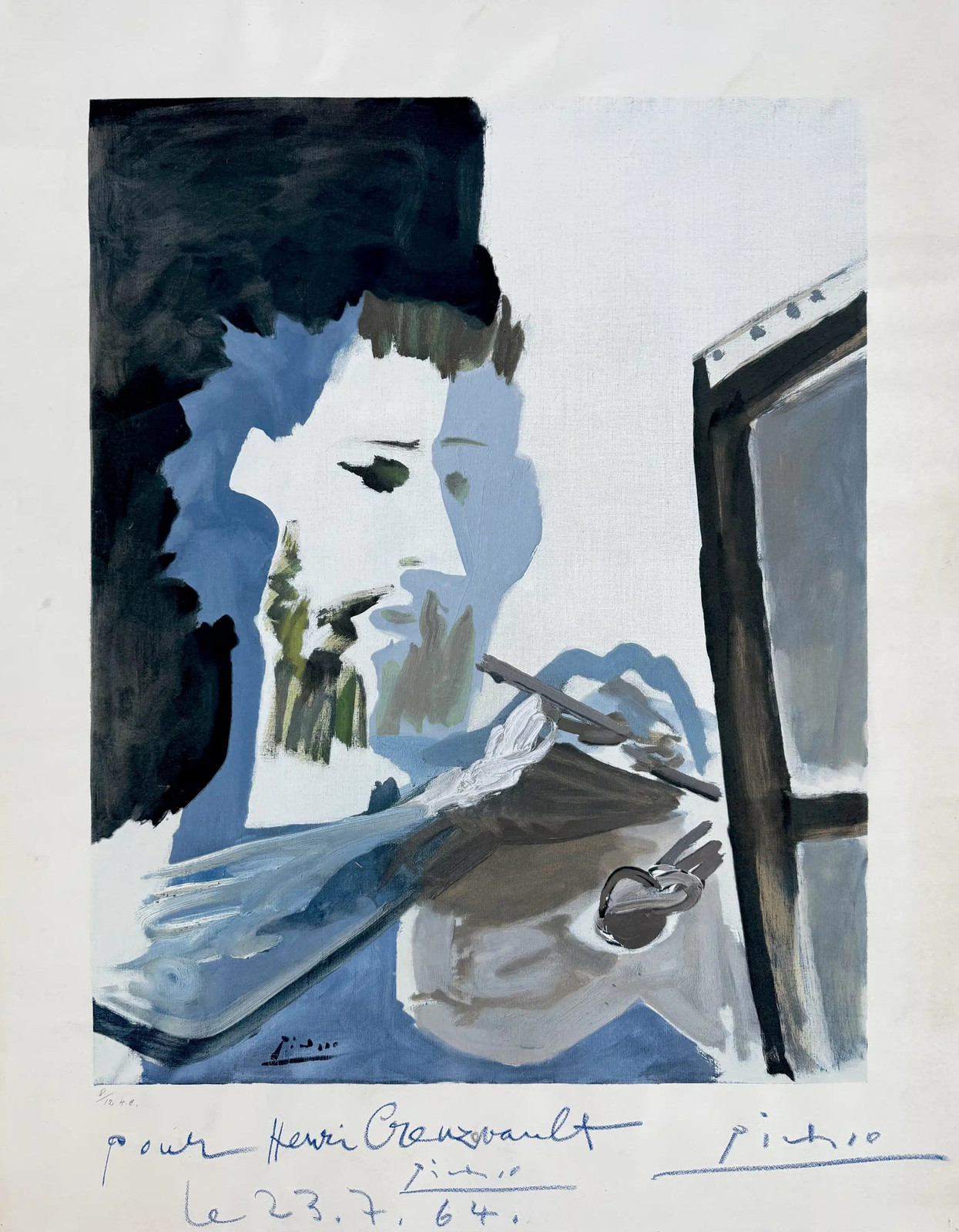
Picasso's lithographic output, produced primarily at the Mourlot workshop in Paris from 1945 onwards, is the most visually dynamic body of work in his entire print oeuvre. Fernand Mourlot first approached Picasso in November 1945, inviting him to the workshop on Rue de Chabrol. Picasso spent the next several months working directly on lithographic stones, creating images at a pace and with a freedom that astonished the professional printers around him. What began as a visit became a decades-long collaboration producing over four hundred lithographs.
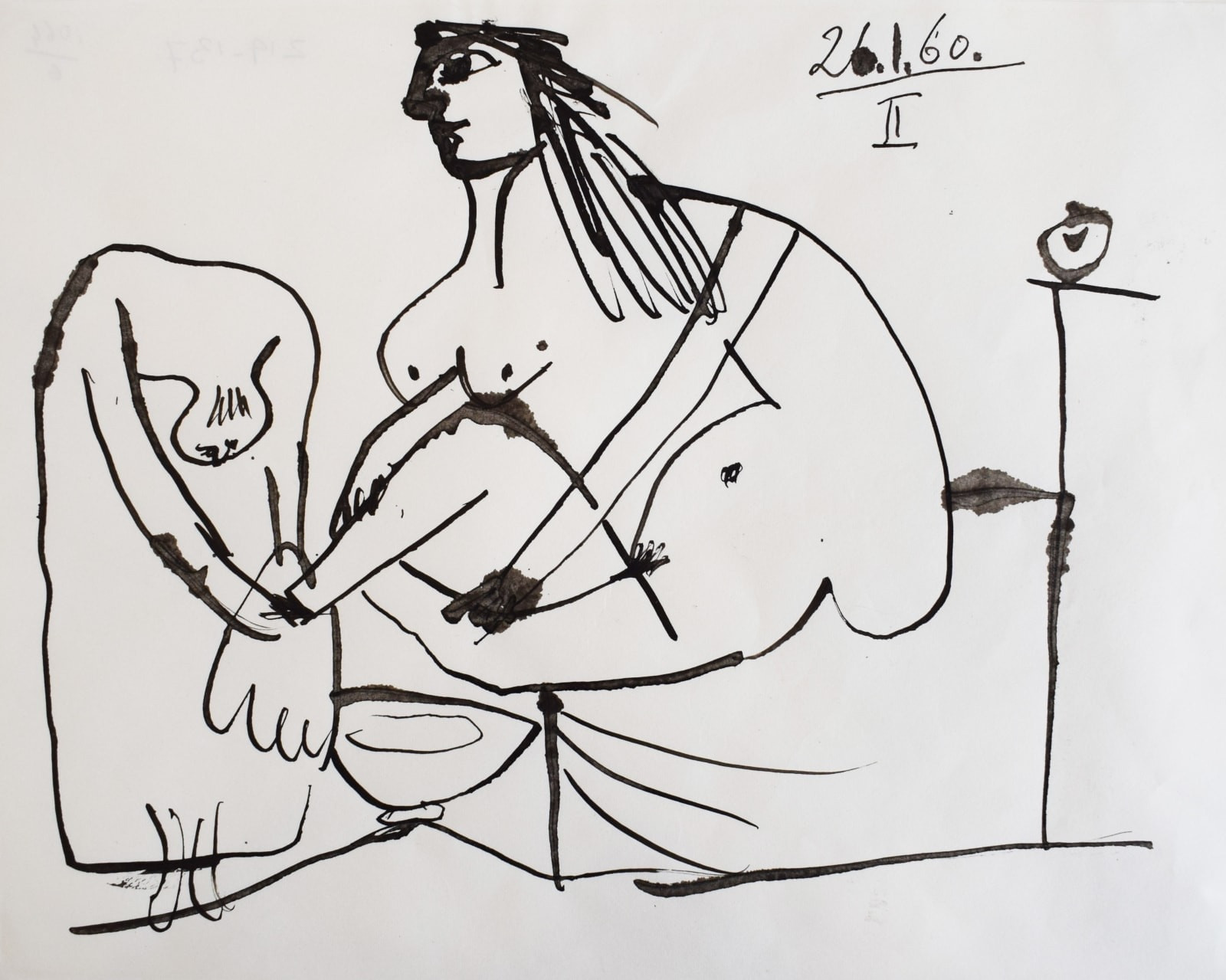
Picasso treated lithography as he treated Drawing: quickly, intuitively, correcting and revising on the stone itself. Many of his lithographs exist in multiple states — successive versions of the same composition, each a distinct work. The most celebrated example is Le Taureau (The Bull), created across eleven progressive states between December 1945 and January 1946. Beginning with a heavy, naturalistically rendered bull, each successive state strips away anatomical information until the final image is a pure line abstraction of extraordinary economy. Art historians consider it one of the most remarkable demonstrations of visual thinking in the history of printmaking.
Other major lithographic series include Toros y Toreros (1961), a portfolio of 76 prints depicting bullfighting scenes with bold, painterly energy; the portrait and head series of the late 1940s and 1950s, typically depicting Françoise Gilot and later Jacqueline Roque; and an extensive body of single-sheet works depicting doves, owls, faces, and figures from classical mythology. Mourlot lithographs are authenticated by the Mourlot workshop stamp on the verso and their reference numbers in Fernand Mourlot's four-volume catalogue raisonné of Picasso's lithographic work.
Picasso also produced lithographs through other workshops, including Crommelynck in Paris for his later work, and through various gallery publishers. These are documented in the Bloch catalogue raisonné, the primary reference for all Picasso prints regardless of medium.
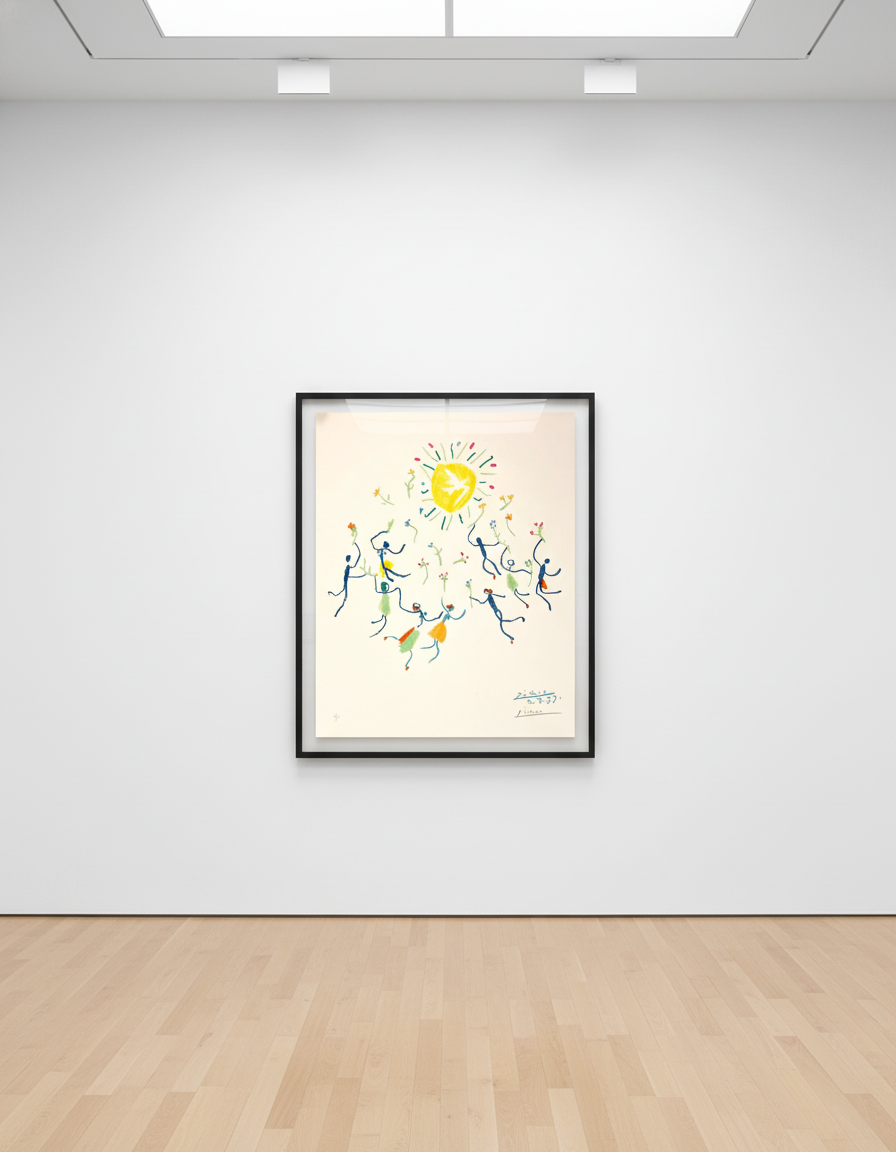
Picasso lithograph price guide: Unsigned Mourlot lithographs from minor suites begin around $3,000–$8,000 in good condition. Signed editions of the same works typically reach $15,000–$60,000 at auction. Major suites — Toros y Toreros, the facial portrait series, significant individual compositions — range from $40,000 to $150,000 signed, with exceptional examples reaching higher. Individual states of Le Taureau, each an art-historically significant document, carry premiums that reflect their specific rarity and scholarly importance.
Picasso came to Linocut in the mid-1950s after settling permanently in the south of France, working with the printer Hidalgo Arnéra in Vallauris. He developed a technique entirely his own: rather than cutting separate blocks for each colour in the conventional manner, Picasso used progressive reduction — cutting into a single block, printing the lightest colour first, cutting further, printing the next colour, and so on. Because each colour pass destroyed the previous state of the block, the editions could never be reprinted. This technical approach made his linocuts uniquely finite.
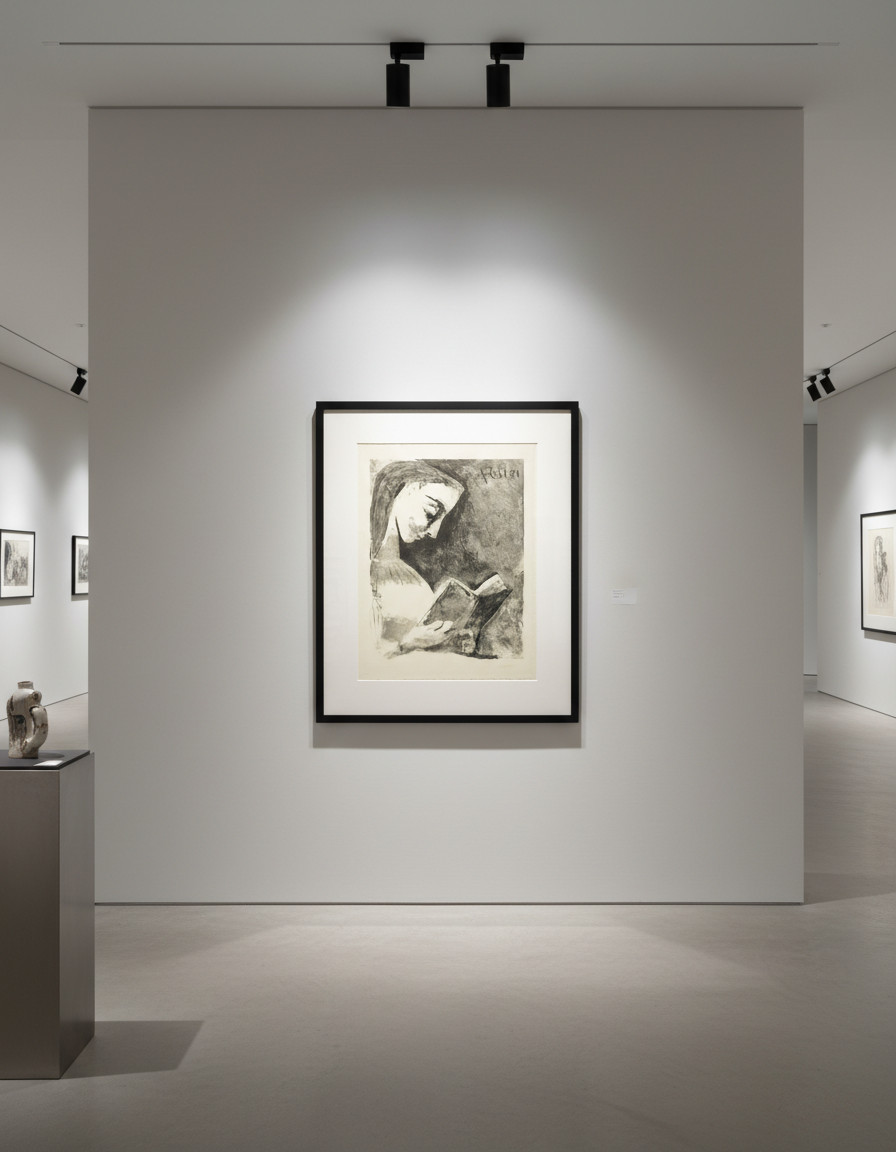
Picasso's linocuts are characterised by bold, flat areas of colour, strong black outlines, and a graphic directness that differs markedly from his lithographic work. Subject matter includes portraits, bullfighting compositions, floral arrangements, and mythological scenes. Edition sizes were consistently small — typically 50 copies or fewer. They are widely considered among the most formally accomplished of all his print works: clean, immediately powerful, and unmistakably his.
Picasso linocut price guide: Minor linocut compositions in good condition begin around $10,000–$30,000. Signed examples in excellent condition with full margins typically achieve $40,000–$200,000 at auction, with rare subjects and outstanding artist proofs reaching significantly higher.
Picasso's engagement with Etching spans his entire adult career — from his earliest Parisian experiments in 1904 through to the extraordinary final burst of work completed in the last years of his life. His etched output is enormous in range, ambition, and technical complexity, and it contains his most historically significant print works.
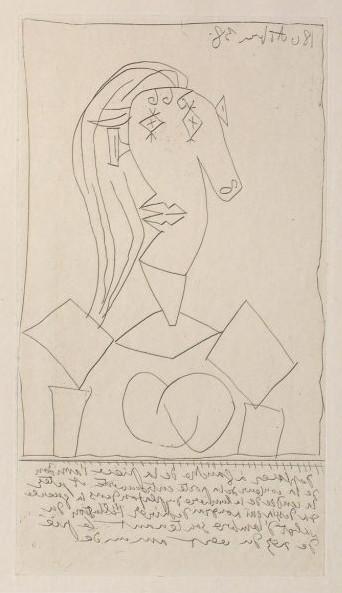
Etching involves drawing directly onto a wax-coated metal plate with a needle, then immersing the plate in acid. The acid bites into the exposed metal, creating the lines that hold ink during printing. Picasso mastered not only this basic technique but also Aquatint (which creates tonal areas rather than lines), drypoint (which scratches directly into the metal creating a velvety burr), and complex combinations of all three on a single plate. His technical ambition in printmaking was equal to his ambition in any other medium he worked in.
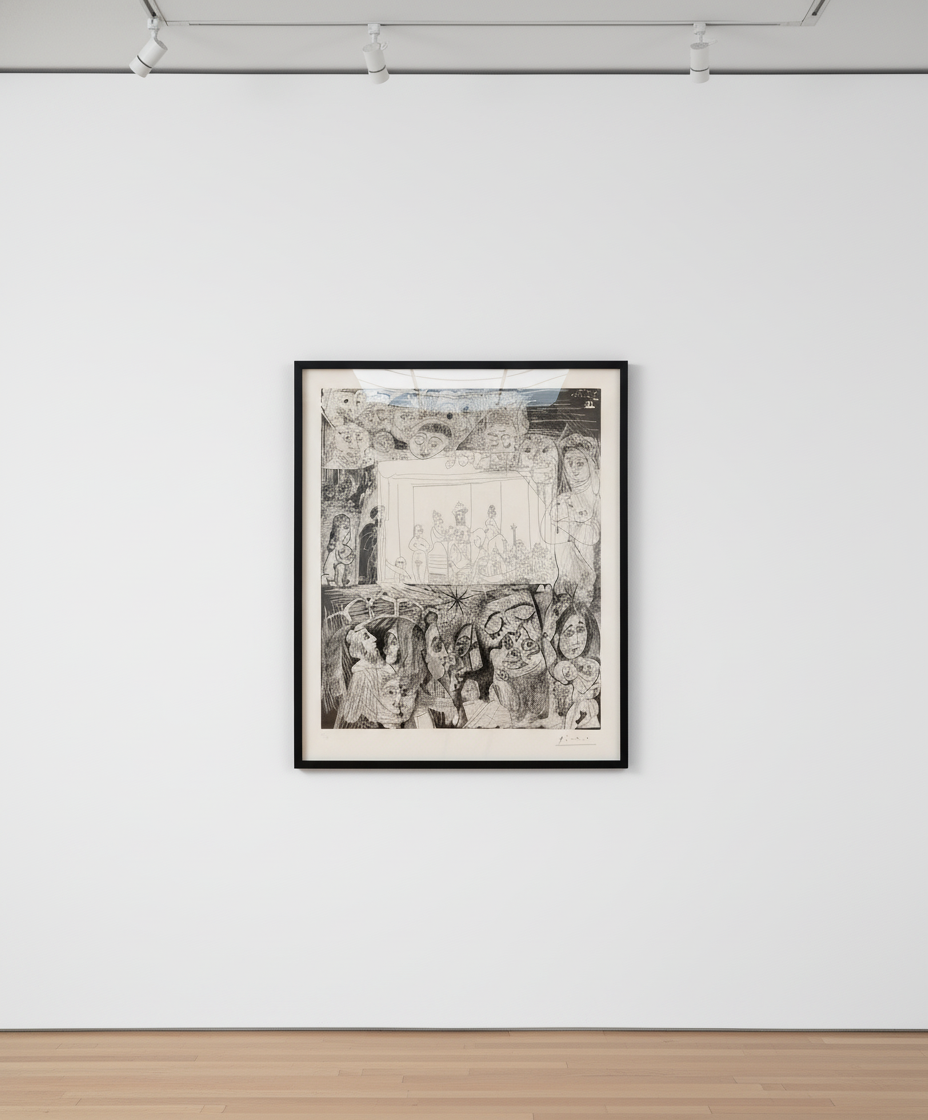
Picasso etching price guide: Early etchings from 1904–1929 begin at $5,000–$25,000 depending on subject and condition. Significant mid-career etchings in strong editions range from $15,000 to $80,000. Vollard Suite plates command $80,000–$500,000 and above. Suite 347 plates typically achieve $8,000–$60,000 per plate depending on subject and edition number.
The Vollard Suite is the apex of Picasso's printmaking output — one hundred etchings produced between 1930 and 1937, commissioned by the Paris dealer Ambroise Vollard, printed by Roger Lacourière, and published in an edition of 303 copies. The suite is divided loosely into thematic groups: the Sculptor's Studio (46 plates depicting a bearded sculptor — Picasso himself — working with or observing a reclining model, his muse Marie-Thérèse Walter); the Minotaur and Blind Minotaur sequences (combining classical mythology with personal psychological drama); Rape and Circus scenes; and three direct portraits of Vollard. Together the hundred plates constitute a sustained meditation on creation, desire, and the relationship between artist and subject.
The Sculptor's Studio plates are the most serene and formally perfect works Picasso made in any print medium. Executed with a fineness of line that shows his complete mastery of the etching needle, they achieve a classical calm entirely at odds with the expressive violence of much of his other work from the same period. The Minotaur plates are their psychological counterpart — urgent, erotic, occasionally terrifying — and they are the most actively sought by collectors with a taste for the more charged elements of his late mythology.
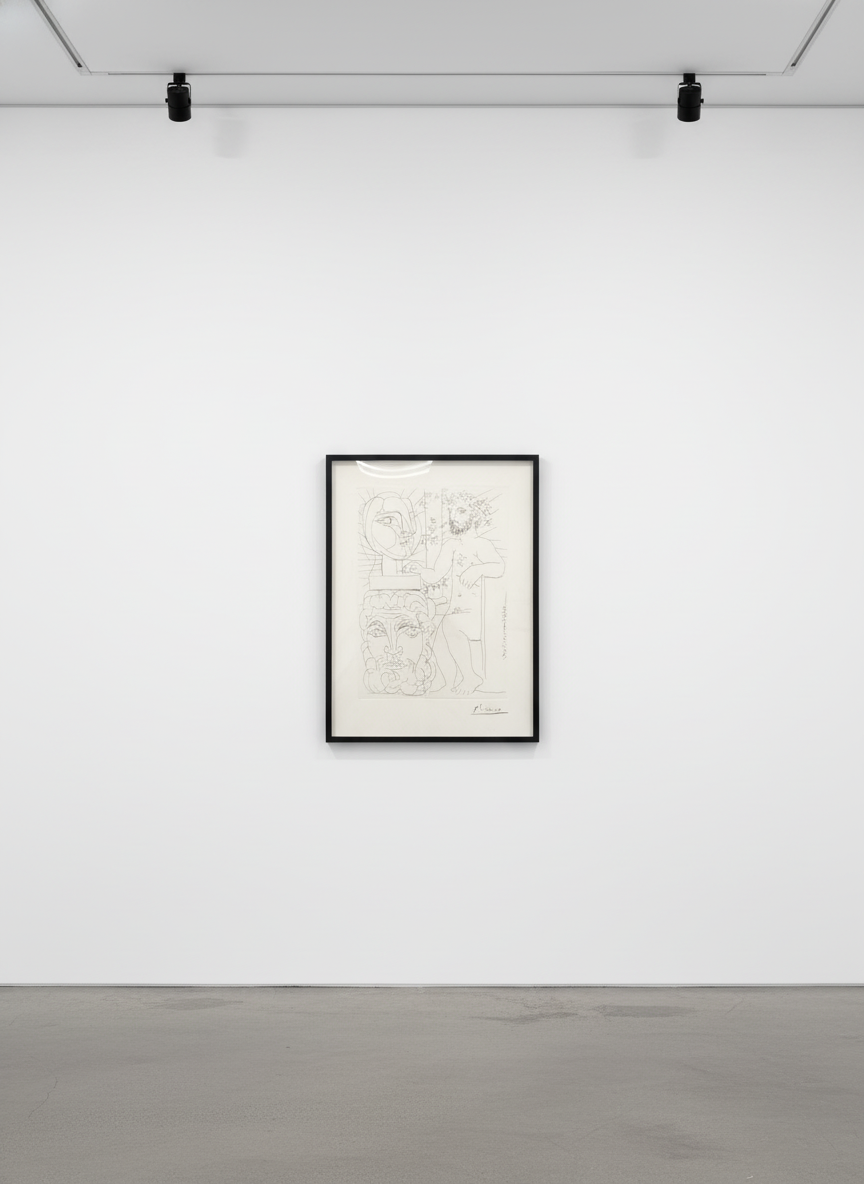
Complete sets of the Vollard Suite are held by major institutions including the Museum of Modern Art in New York and the Bibliothèque nationale de France and almost never enter the market. Individual plates appear regularly at Christie's, Sotheby's, and Phillips. The market for individual Vollard Suite plates has demonstrated consistent strength over the past three decades, making them one of the most stable asset categories in the entire print market.
Suite 347 is one of the most remarkable creative achievements in the history of art. Between 16 March and 5 October 1968 — working at the Crommelynck workshop in Paris — the 86-year-old Picasso produced 347 etchings and aquatints. The pace was extraordinary: on his most productive days he completed multiple plates. The professional printers working alongside him were astonished.
The subject matter ranges across art history, mythology, and erotic fantasy — circus performers, masked figures from the commedia dell'arte, scenes from Velázquez and Rembrandt reinterpreted with characteristic Picasso irreverence. There is an energy in these late works that reads not as the effort of an old man but as the release of an artist who has long since stopped caring about critical reception and is working purely for the pleasure of working. Suite 347 was published by Louise Leiris in an edition of 50 copies. Individual plates are actively sought by serious collectors.
The final major print project of Picasso's life, the 156 Series, was produced between 1970 and 1972. Working again with the Crommelynck brothers, Picasso produced 156 further prints — his last significant engagement with the medium he had worked in for nearly seven decades.
Authentication is the single most critical consideration when buying any Picasso print. The volume of fakes, unauthorised reproductions, and misattributed works in the market is substantial — Picasso is the most copied artist in history, and the print market has not been immune. Without proper documentation, no purchase should proceed.
The primary authentication reference for all Picasso prints is the catalogue raisonné compiled by Georges Bloch: Pablo Picasso: Catalogue of the Printed Graphic Work, published in four volumes. Every original Picasso print should correspond to a specific Bloch number, which specifies the technique, edition size, paper type, dimensions, and known variants. When a work is offered for sale, ask for the Bloch reference and verify it against the catalogue entry. Any discrepancy in dimensions, paper, or edition marking should be investigated before proceeding.
Additional authentication markers include: the workshop stamp (Mourlot, Arnéra, Crommelynck, Lacourière), pencil-inscribed edition numbering (for example 15/50), a Succession Picasso or Comité Picasso estate stamp on posthumously published editions, and an unbroken provenance chain from the original publisher. Reputable sellers at major auction houses and established print galleries will provide all of this documentation as a matter of course. Any reluctance to provide Bloch references or clear provenance is a serious warning sign.
Condition is a primary value driver in the Picasso print market. The most common condition issues are foxing (brown spots caused by acid in the paper), fading, surface soiling, trimmed margins, and previous restoration. Of these, foxing is the most prevalent and the most acceptable to the market if it is minor and confined to the margins. Foxing in the image area, however, significantly diminishes value.
Paper matters alongside condition. Mourlot lithographs were printed on Arches wove, Arches laid, Rives, and various Japanese papers. Works on premium papers with full margins — the sheet has not been trimmed to remove the platemark or edition numbers — are strongly preferred. When buying, always request a detailed condition report. For significant purchases, commission an independent assessment from a specialist conservator before committing.
Guy Hepner Gallery, 177 Tenth Avenue, New York, offers Pablo Picasso prints for sale with full provenance documentation, Bloch catalogue references, and detailed condition reports. Our team is available to assist collectors at every price point.
The Picasso print market is not monolithic. Works from different decades carry different artistic significance, different levels of market activity, and different price dynamics. Understanding this historical map helps collectors buy more intelligently.
1900s–1920s: Picasso's earliest prints are technically accomplished but rarely encountered at auction. Subjects draw from the Blue Period, Rose Period, and Cubist experiments. When these early works appear, they command strong prices reflecting their rarity and art-historical importance. The Saltimbanques etching series (1905) and the Frugal Repast (1904) are the most celebrated works from this period.
1930s: The decade of the Vollard Suite and the most psychologically intense print imagery of Picasso's career. This is the period of greatest institutional interest. Works from the Vollard Suite dominate the upper tier of the market for prints from this decade.
1940s–1950s: The Mourlot lithographic partnership begins in 1945 and produces Picasso's most formally experimental print work. The series portraits of Françoise Gilot and the great compositional lithographs of this period are widely collected. The market is liquid and well-documented. Auction records are consistent.
1960s: The linocut period reaches its apex. Toros y Toreros (1961), the 76-print bullfighting portfolio, is the most significant publication of the decade. Individual plates from this suite are among the most actively traded of all Picasso prints. The formal boldness of the linocuts from this period makes them among the most visually contemporary works in his entire output.
1968–1973: Suite 347, the 156 Series, and the final prints represent one of the most creatively extraordinary late-career achievements in the history of art. An 86-year-old producing hundreds of complex, technically demanding prints at pace is a phenomenon with no parallel. Collectors who understand the art-historical significance of this final period often find better value here than the market fully reflects.
Beyond lithograph, etching, and linocut, Picasso worked extensively with aquatint — a process in which a resin-coated plate is exposed to acid, producing tonal gradations rather than lines — and drypoint, which involves scratching directly into a metal plate with a sharp needle, creating a characteristic velvety burr that gives drypoint prints their distinctive soft-edged quality.
Picasso often combined multiple intaglio techniques on a single plate: etching for the structural lines, aquatint for the tonal areas, and drypoint for passages requiring a softer, more atmospheric quality. These mixed-technique plates are among the most technically complex and artistically nuanced of all his print works. The Suite 347 plates demonstrate the full range of his intaglio mastery — some plates are predominantly etched, others rely heavily on aquatint, and the most complex combine all three techniques in ways that require considerable technical knowledge to fully appreciate.
Collectors who develop an appreciation for the technical dimension of Picasso's printmaking often find that mixed-technique works — aquatints, combined plates — are undervalued relative to their artistic complexity compared with the more commercially prominent lithographs. This can represent a genuine collecting opportunity for those willing to invest time in understanding what they are looking at.
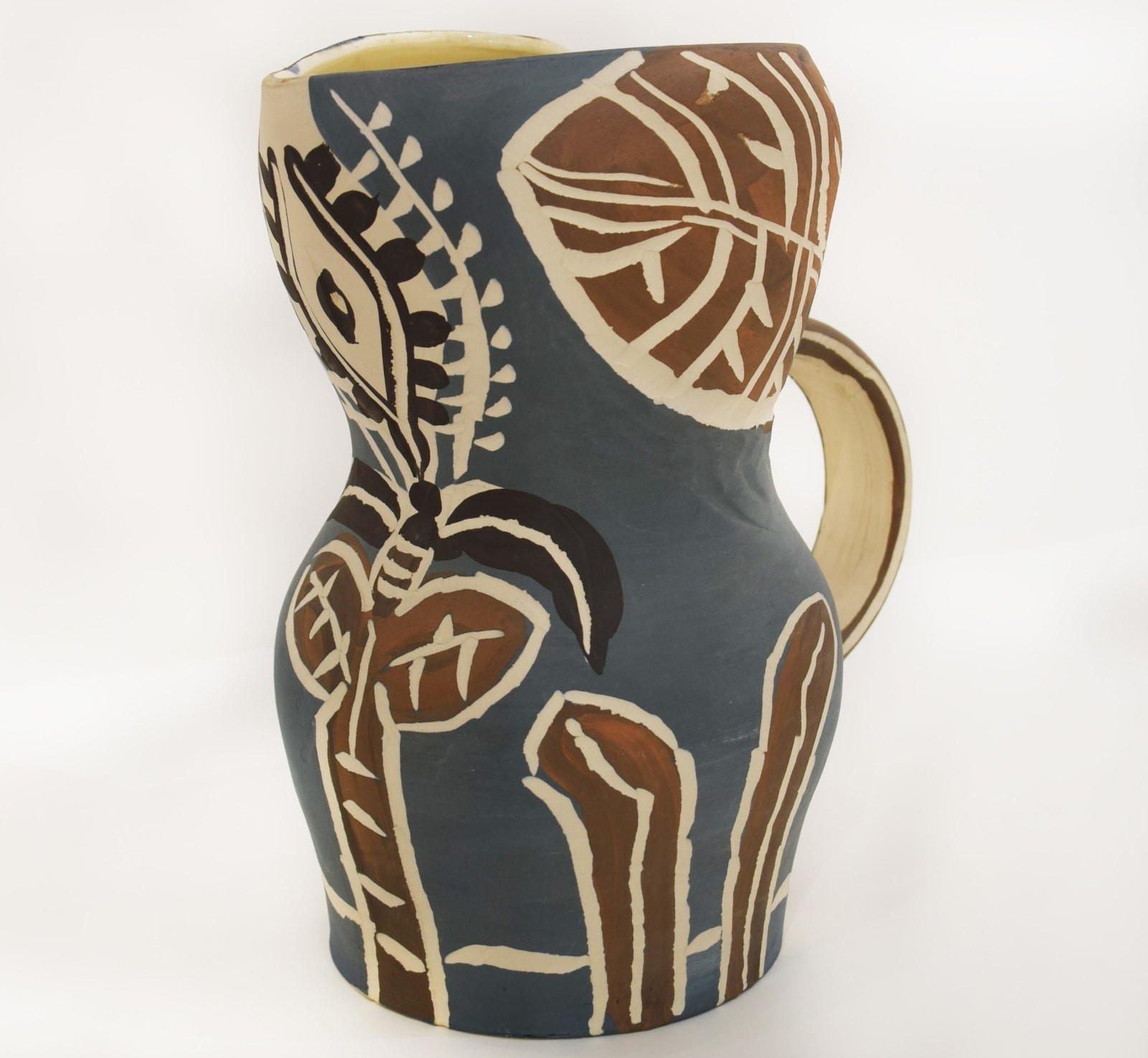
Picasso's engagement with ceramic multiples, produced at the Madoura pottery in Vallauris from 1947 onwards, sits adjacent to his print market and is increasingly collected by the same buyer base. Working with Georges and Suzanne Ramié at Madoura, Picasso produced hundreds of ceramic designs that were editioned in authorised runs — plates, jugs, pitchers, tiles, and owl forms — each stamped with the Madoura workshop mark and a Picasso copyright. These ceramics are three-dimensional originals, not reproductions, and they represent a tactile engagement with Picasso's imagery that prints cannot replicate.
Values for Madoura ceramics range from $3,000 for smaller, more common forms in good condition to $50,000 and above for rarer decorated pieces and large-format works. The ceramic market has developed a dedicated collector following distinct from but overlapping with the print market. For collectors who have already built a print collection and are looking to extend their engagement with Picasso's multiples output, ceramics represent a natural and logical adjacent category.
The broader context for Picasso print collecting in 2026 is one of sustained institutional and private demand against a supply that is inherently finite. Picasso died in 1973. The editions are closed. The plates and stones no longer exist in many cases, having been cancelled or destroyed after printing according to standard print publishing practice. Works in excellent condition from major suites are not being replenished. This fundamental supply constraint, combined with Picasso's undiminished cultural pre-eminence, underpins the long-term market strength for his most significant print works.
Are Picasso prints worth buying as investments? The Picasso print market has shown consistent long-term appreciation for works from significant suites in excellent condition. Vollard Suite plates, major Mourlot lithographs, and significant linocuts have all performed well over the past four decades. Less significant works show more modest appreciation. As with all art investment, condition, provenance, and buying intelligently within the market determine performance over time.
How do I know if a Picasso print is real? Match it to the Bloch catalogue raisonné. Check for workshop stamps, correct edition numbers, and paper consistent with the documented edition. For any purchase above $10,000, seek an independent opinion from a specialist at a major auction house or established print dealer.
What is the difference between a Picasso original print and a reproduction? An original print was made from a plate, stone, or block that Picasso himself created or worked on. A reproduction is a photomechanical or digital copy. Reproductions carry no original art market value. The distinction must be clearly documented in writing by the seller.
Where is the best place to buy Picasso prints? Major auction houses — Christie's, Sotheby's, Phillips, Bonhams — handle significant volumes of Picasso prints and provide full condition and provenance documentation. Specialist print dealers with established market presence are also reliable. Guy Hepner Gallery, 177 Tenth Avenue, New York, works exclusively with authenticated secondary market sources.
Explore Pablo Picasso prints for sale at Guy Hepner: Aquatint, Ceramics, Collotype, Drawing, Etching.
Related Series