Self Portraits

May 18, 2026
Andy Warhol's portraits stand among the most recognisable images of the twentieth century. Combining the language of commercial printing with the iconography of fame, Warhol transformed the painted portrait — a form with roots in Renaissance courts — into something brazenly modern: repeatable, synthetic, and utterly of its moment. From Marilyn Monroe to Chairman Mao, from Elizabeth Taylor to the Reigning Queens, Andy Warhol's celebrity portraits collapsed the distance between high art and popular culture in ways that still shape how we see images today.
What made Warhol's approach revolutionary was not just the subject matter but the method. He borrowed from advertising, from fashion photography, from the silkscreen processes of the printing industry — and in doing so, he asked a question that haunted the art world for decades: if a portrait can be reproduced endlessly, what does that do to the idea of the unique, authentic self? Andy Warhol pop art portraits were not celebrations of their subjects so much as meditations on the machinery of fame. They showed us how celebrities become images, and how images become commodities. That tension — beautiful, unsettling, deeply American — is what gives the work its lasting power.
The process behind Andy Warhol's multiple portraits was deceptively systematic. It began with a Polaroid camera — usually a Big Shot model that Warhol favoured for its flat, even light — and a session with the subject at The Factory, his legendary studio on Union Square. Warhol would take dozens of photographs, then select an image and hand it to his team to be enlarged, transferred onto a silkscreen mesh, and printed onto canvas in layers of ink. The background colours and tonal combinations were chosen by Warhol himself, often producing several different colourways of the same image within a single series.
This process meant that every Warhol portrait was both intimate and industrial. The Polaroid session was close, personal, sometimes uncomfortable — Warhol said little, observed everything. But once the image entered the Factory's production line, it became something else: a template, a product, a brand. Warhol understood this duality and exploited it deliberately. The repetition within a series — the same face rendered in turquoise, then gold, then crimson — stripped away individuality and replaced it with spectacle. Portraits by Andy Warhol were not windows into a soul; they were mirrors held up to a culture obsessed with surfaces.
From the mid-1960s onward, portrait commissions became a major part of Warhol's commercial output. Wealthy socialites, collectors, and corporations paid significant sums to have their likenesses rendered in Warhol's signature style. These commissions financed The Factory and funded Warhol's broader practice — but they also spread his aesthetic far beyond the art world. By the 1970s, a Warhol portrait had become a kind of status symbol: proof that you had arrived at a level of celebrity or wealth sufficient to be transformed into pop art.
The Marilyn Monroe series — formally known as Marilyn (F&S II.21–31) — is the definitive example of Andy Warhol famous portraits. Warhol made his first Marilyn works in 1962, just weeks after Monroe's death, using a still from her 1953 film Niagara. The timing was not incidental. Warhol was fascinated by the way death crystallised celebrity, freezing a person into a permanent image. By transforming Monroe's face into a flat, high-contrast silkscreen, he was already thinking about what it means to become an icon.
The 1967 portfolio, published by Factory Additions in an edition of 250, is the most celebrated iteration. Ten screenprints, each featuring the same cropped face — those heavy-lidded eyes, the parted lips, the blonde hair — rendered in a different palette of synthetic colour. Turquoise hair and acid-yellow skin. Pink lips on a black ground. Orange face, lime green eyeshadow. The colours are deliberately artificial, deliberately wrong. They don't describe Monroe; they describe how celebrity transforms a person into a logo. Each print in the series is visually distinct, yet the face is always the same: fixed, iconic, endlessly reproduced.
These works now rank among the most valuable Andy Warhol celebrity portraits in existence. Individual prints from the 1967 portfolio regularly achieve seven-figure sums at auction, and the series as a whole has become a touchstone for discussions of celebrity, gender, and the commodification of the female image. Warhol returned to Marilyn repeatedly throughout his career, but the 1967 portfolio remains the apex of his engagement with her image.
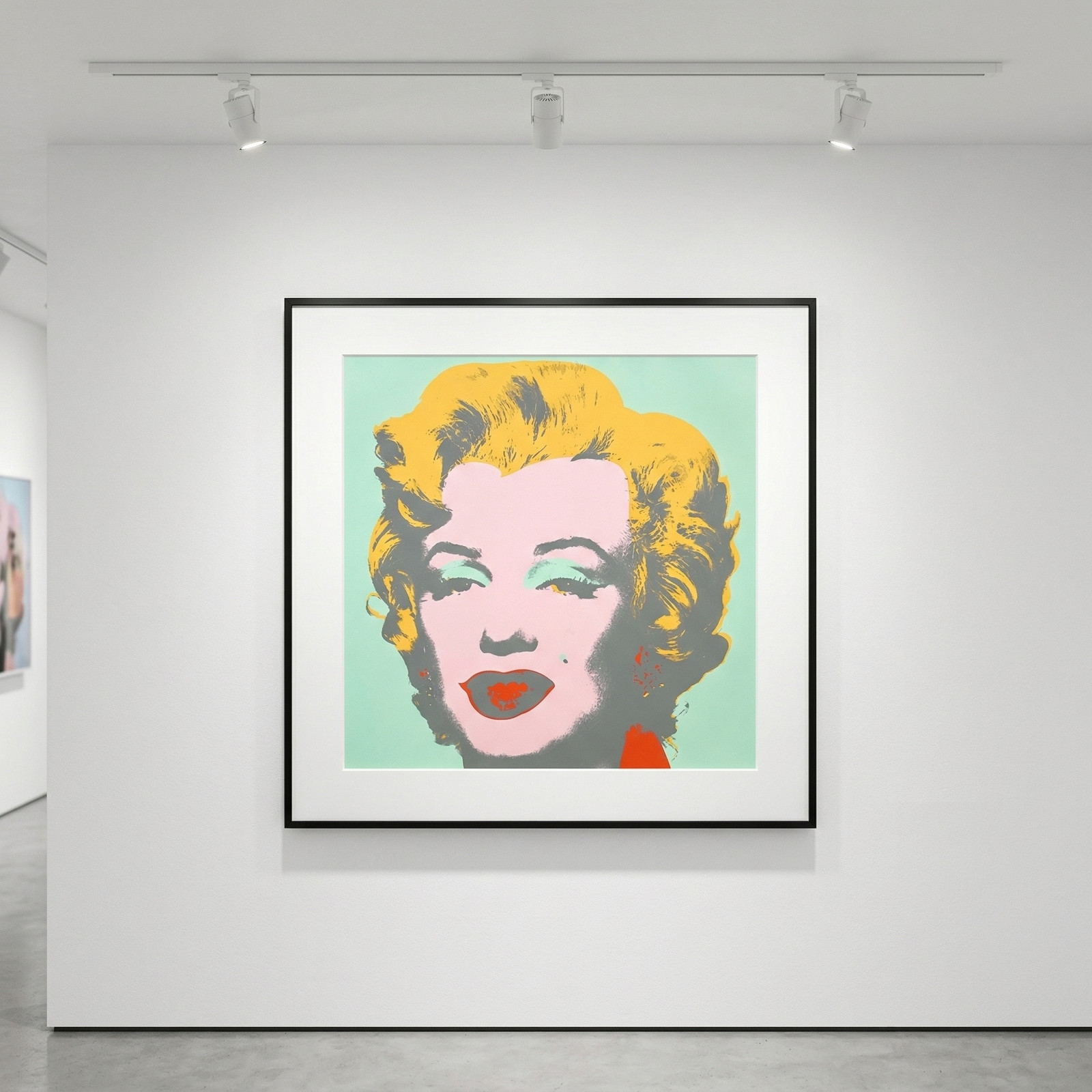
Elizabeth Taylor was one of Warhol's earliest celebrity portrait subjects — and in many ways the template for everything that followed. Warhol began making Liz works in 1963, at a moment when Taylor was simultaneously the most famous woman on earth and, following a near-fatal bout of pneumonia, the subject of intense public scrutiny. Warhol was drawn to this intersection of glamour and vulnerability. Like Marilyn, Taylor existed at the point where celebrity becomes myth, where the public image devours the private person.
The Liz series is characterised by a palette of almost theatrical luxury: deep turquoise eyeshadow, red lips, jet-black hair against fields of saturated colour. The source image — a studio publicity still — is cropped tight, focusing on the face with the same relentless attention that the tabloid press directed at Taylor herself. Warhol's decision to use a press photograph rather than commission a sitting was significant: it acknowledged that Taylor's image was already public property, already mass-produced and mass-consumed. His contribution was to make that fact explicit.
The Liz works (F&S II.7) are among the most sought-after Andy Warhol pop art portraits on the market. Taylor remained a figure Warhol returned to throughout his career, and the early 1960s works in particular — raw, vivid, occasionally deliberately crude in their printing — capture the energy of the Pop movement at its most vital.
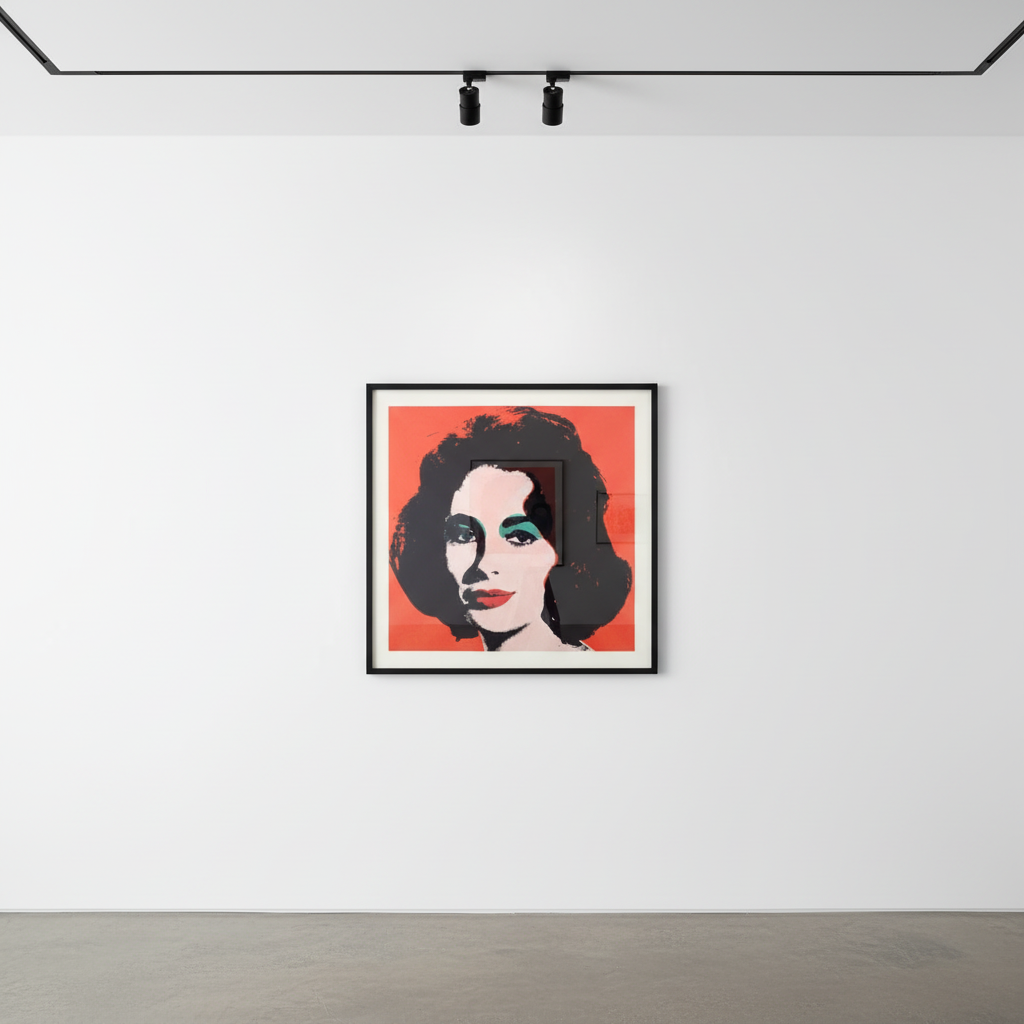
Few images in Andy Warhol's body of work carry the emotional weight of the Jackie Kennedy series. Made in 1964 from press photographs taken in the immediate aftermath of President Kennedy's assassination, the Jackie works are among the most raw and politically charged things Warhol ever produced. They show Jackie in the moments around the assassination — smiling on arrival in Dallas, her face streaked with grief at the funeral — and they do not attempt to soften or aestheticise what they depict. The repetition, usually a device for flattening emotion, here functions as a form of trauma: the same image again and again, the mind refusing to process what it has seen.
The 1964 portfolio (F&S II.13–19) was produced in multiple colourways, from sombre blacks and greys to unexpectedly vivid combinations of blue and gold. This range of treatments reflects something central to Warhol's method: he was not making a memorial so much as studying the mechanics of public grief. Jackie Kennedy had become an image — composed, dignified, American — and Warhol was interrogating what that transformation costs, both the subject and the culture that demands it.
These works remain some of the most discussed and debated in Warhol's portrait output. Critics have written about them as studies in gender, politics, and the American relationship with tragedy. What is beyond dispute is their visual power: the Jacqueline Kennedy portraits are among the most affecting Andy Warhol famous portraits, and they demonstrate that even within a practice often accused of emotional detachment, Warhol could produce work of genuine moral seriousness.
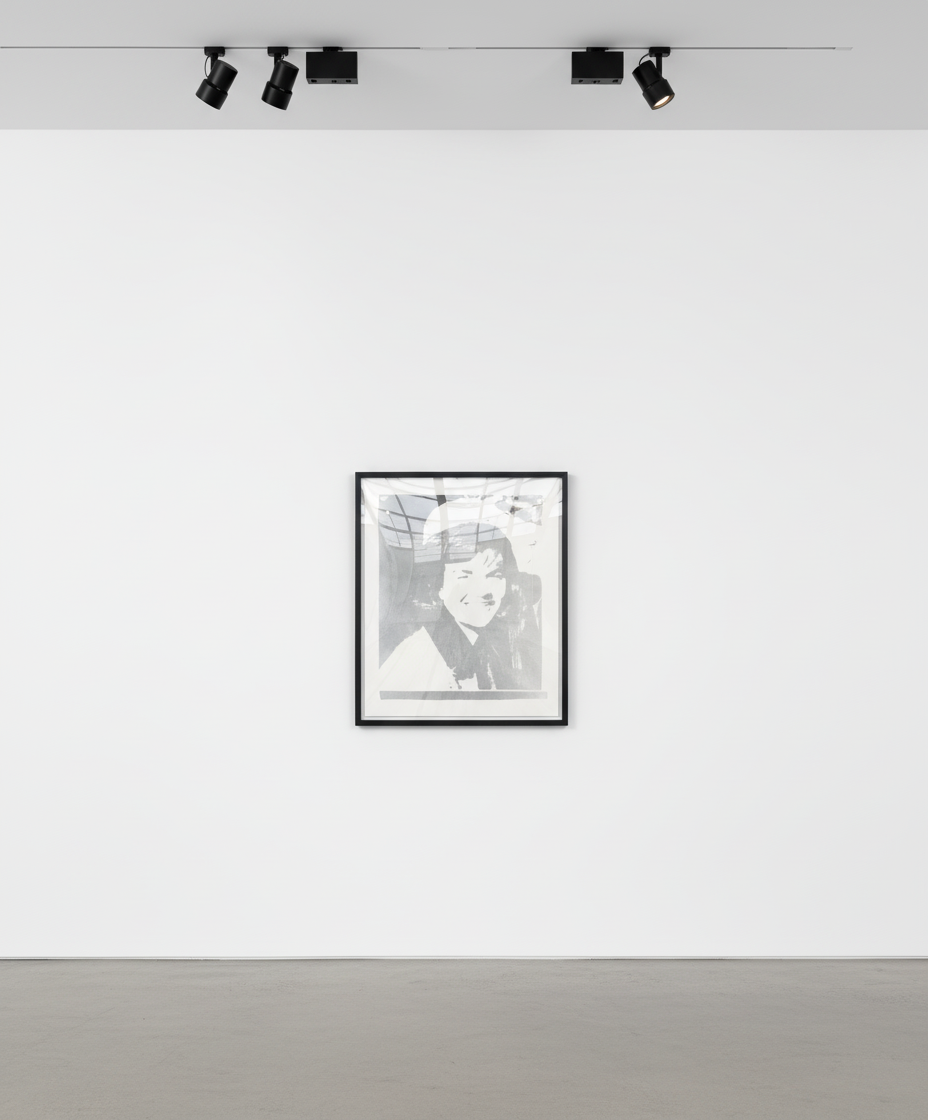
The Mick Jagger series of 1975 marks a pivotal moment in the history of warhol portraits: the first time a major rock star was the subject of a commissioned Warhol portrait portfolio. The series — ten screenprints (F&S II.138–147) — was commissioned by Jagger himself and produced in an edition of 250, with an additional ten artist's proofs. Unlike earlier series, the Jagger works incorporated hand-applied drawing and collaged elements alongside the photographic silkscreen, giving them a looser, more improvisational quality.
The source images were Polaroids taken by Warhol during a session with Jagger, and the resulting prints exploit the rock star's extraordinary visual charisma: the exaggerated lips, the hooded eyes, the air of provocative indifference that made Jagger one of the defining faces of the era. Warhol and Jagger moved in overlapping social worlds — both were fixtures of Studio 54, both understood celebrity as performance — and this mutual comprehension gives the series a collaborative electricity absent from some of Warhol's more distanced portrait subjects.
The Jagger series opened the door to a wave of rock and pop commissions that defined Warhol's later career. It also demonstrated that Andy Warhol celebrity portraits had a natural home in the world of popular music — a world built, like Warhol's art, on the manufactured glamour of the image.
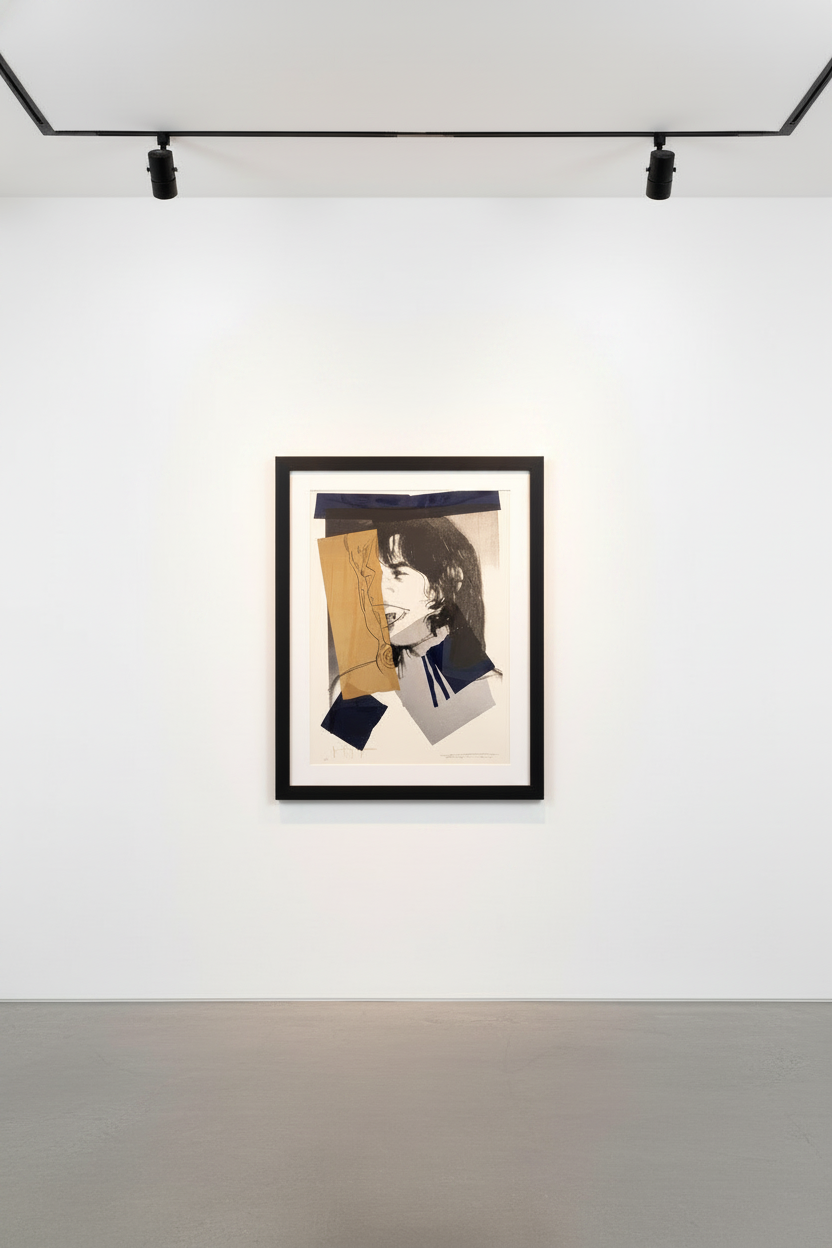
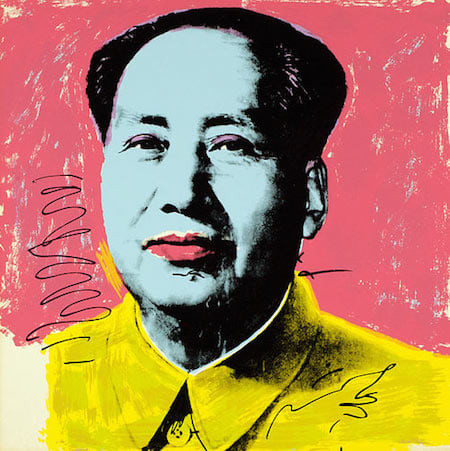
In 1972 — the same year Nixon made his historic visit to China — Warhol produced the Mao series: his largest and most politically provocative portrait work. Using the official portrait image from the Little Red Book, Warhol created a body of work that ran from small prints to enormous canvases (some measuring nearly fifteen feet high) and included a portfolio of ten screenprints (F&S II.90–99). The choice of subject was characteristically Warholian: Mao was simultaneously the most powerful man in the world and the most reproduced image in history, his face plastered across a billion propaganda posters. He was, in Warhol's terms, the ultimate celebrity.
The subversive brilliance of the Mao series lies in what Warhol does with the source image. He renders it in the same synthetic palette used for Marilyn and Liz — lipstick pink, lime green, electric blue — transforming a symbol of totalitarian power into a piece of consumer decoration. The effect is deeply disorienting: is this homage or mockery? Is Warhol celebrating Mao or domesticating him, stripping the terror from the image by treating it as wallpaper? The answer, characteristically, is both — and neither.
The Mao portraits are among the most reproduced Andy Warhol pop art portraits in museum collections worldwide, and they demonstrate that Warhol's portrait practice was never simply about flattery or glamour. At its most ambitious, it was a form of cultural analysis — a way of asking who gets to be iconic, and what the machinery of iconicity does to us.
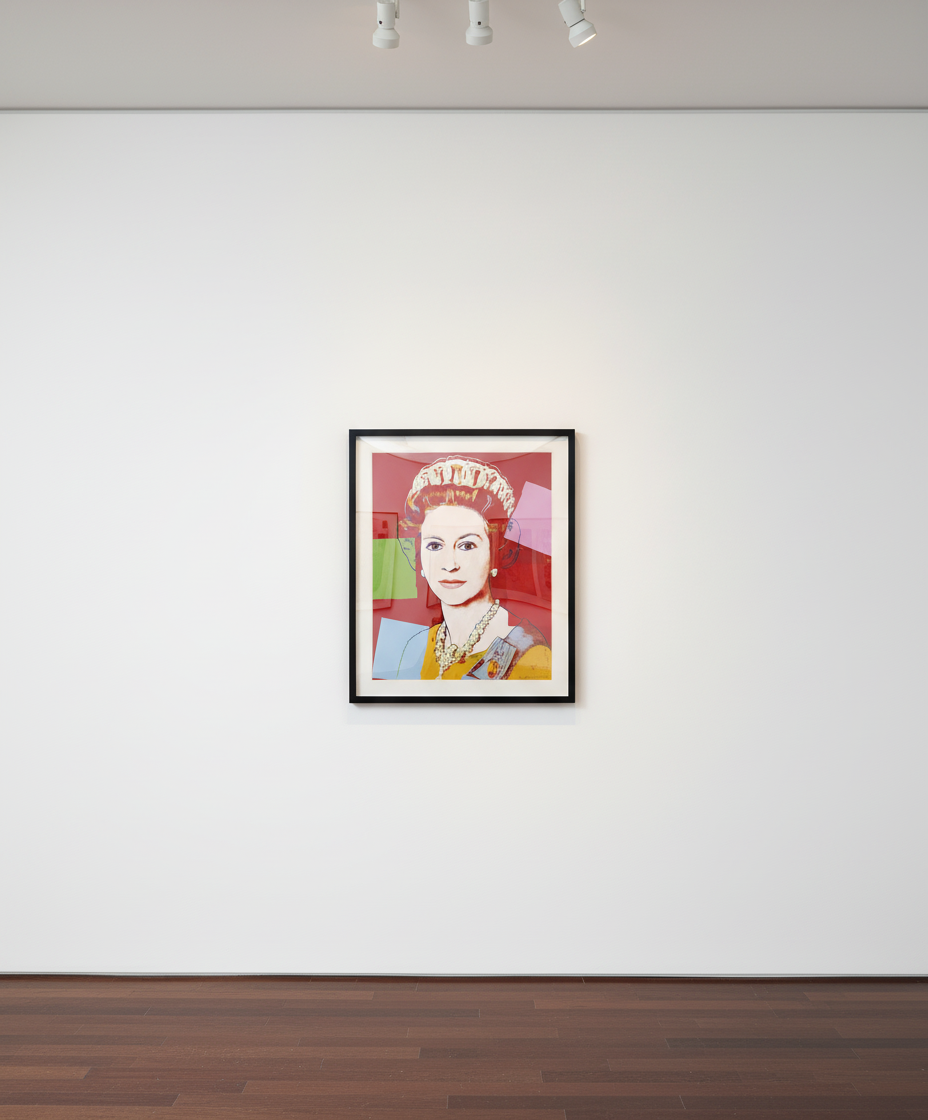
Produced in 1985 and among the last great portrait series of Warhol's career, Reigning Queens celebrates four women who held sovereign power: Queen Elizabeth II of Great Britain, Queen Beatrix of the Netherlands, Queen Margrethe II of Denmark, and Queen Ntombi Twala of Swaziland. Each queen is depicted in a portfolio of four screenprints (F&S II.334–343), rendered in Warhol's signature palette of synthetic luxury — gold, silver, deep jewel tones — against flat, saturated backgrounds.
The choice of subjects was pointed. In an era when the art world was debating representation and power, Warhol chose to celebrate women who actually held it — not as celebrities but as heads of state. The Reigning Queens series draws an explicit parallel between the royal portrait tradition (Van Dyck, Holbein, the formal official likeness commissioned by the crown) and the Warhol portrait tradition, suggesting that what he had been doing all along was a contemporary version of the same thing: fixing power in an image, transforming authority into spectacle.
The royal editions of the Reigning Queens — printed with gold or silver diamond dust on the surface — are among the most opulent objects Warhol ever produced. They sold to collectors around the world and cemented Warhol's status as the supreme portraitist of late-twentieth-century celebrity and power. Queen Elizabeth II, in particular, became one of the defining images of the series, her composed and regal face rendered in a palette of imperial gold that carries the full weight of Warhol's portrait legacy.
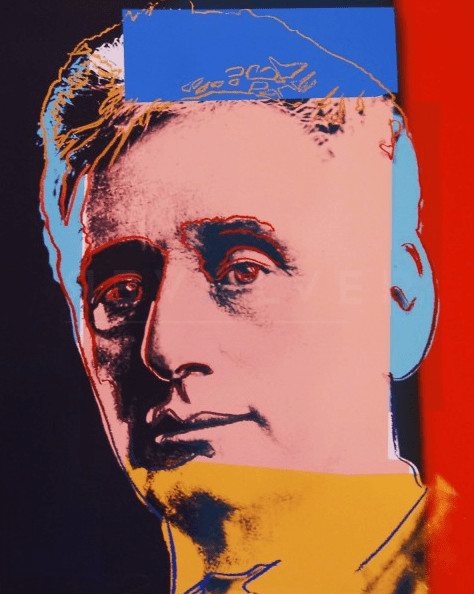
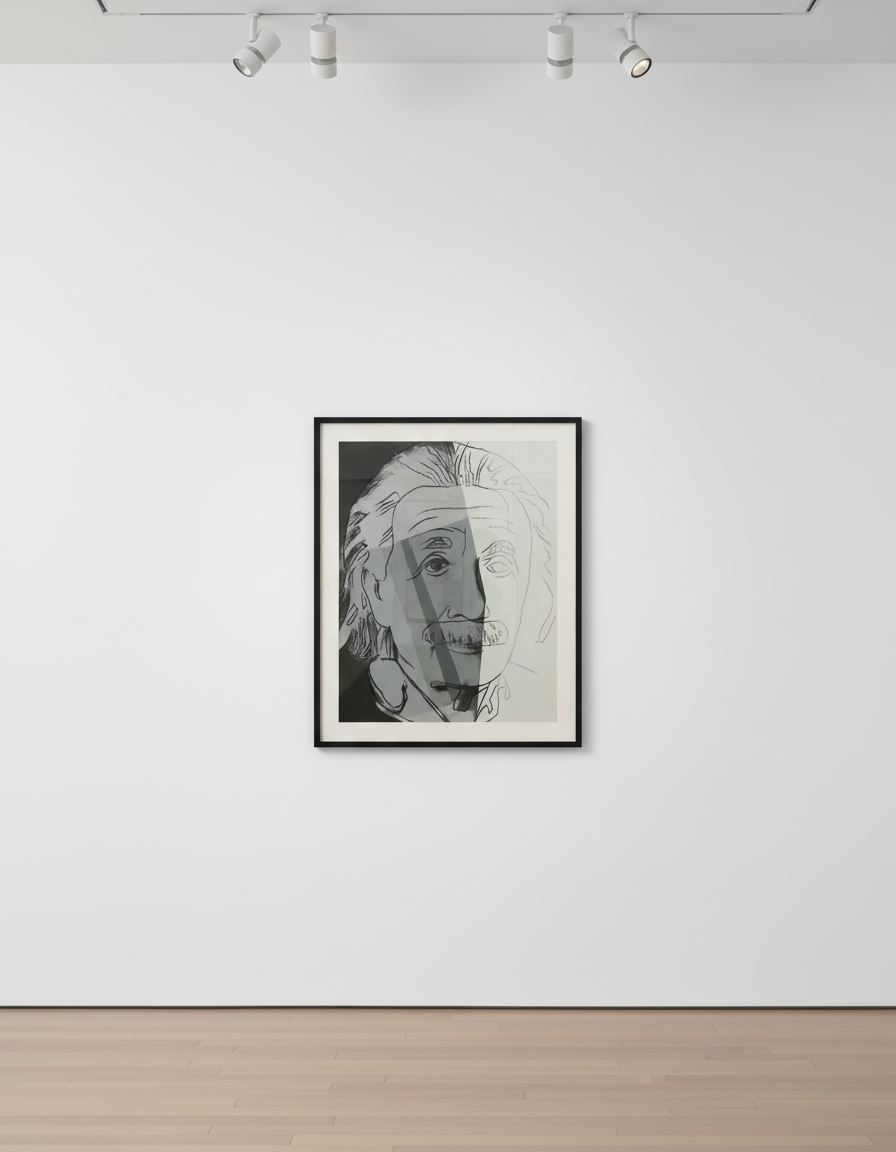
Commissioned in 1980 by gallerist Ronald Feldman, Ten Portraits of Jews of the Twentieth Century is one of the most explicitly identity-focused works in Warhol's portrait output. The ten subjects — Albert Einstein, Sarah Bernhardt, Louis Brandeis, Martin Buber, Felix Frankfurter, George Gershwin, Franz Kafka, Gertrude Stein, Golda Meir, and Sigmund Freud — were selected from a list assembled by Warhol and Feldman as figures who had shaped modern intellectual and cultural life.
Like the Reigning Queens, this series drew an explicit connection between Warhol's portrait practice and older traditions of commemorative portraiture — the kind of institutional image-making that honours the great and preserves their memory. But it also engaged with questions of Jewish identity and visibility that were culturally urgent in the post-Holocaust world. By treating these figures with the same visual vocabulary he applied to Marilyn and Mao — synthetic colour, flat silkscreen, bold graphic cropping — Warhol argued implicitly that Jewish intellectual achievement was as much a part of modern celebrity as Hollywood glamour or political power.
The Einstein portrait is among the most striking in the series: the wild hair, the knowing expression, the image so familiar it has itself become a kind of logo. Warhol's treatment finds something new in the familiar — a reminder that even the most overexposed image still has secrets to give up, if you look at it in the right light.
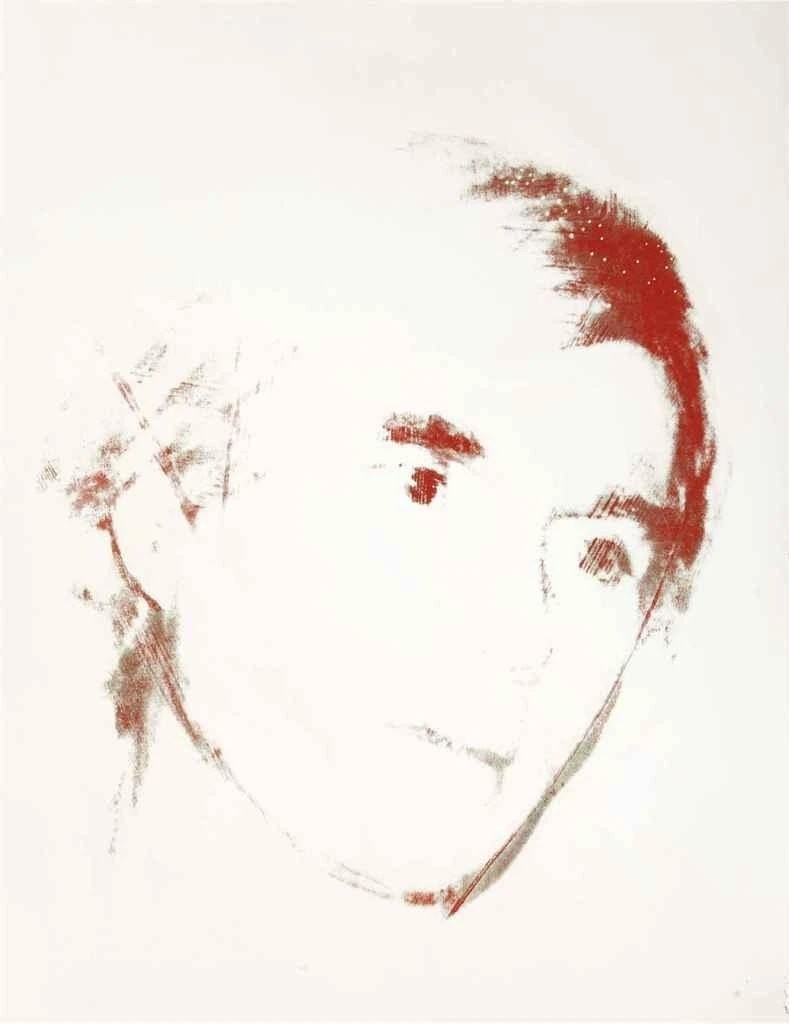
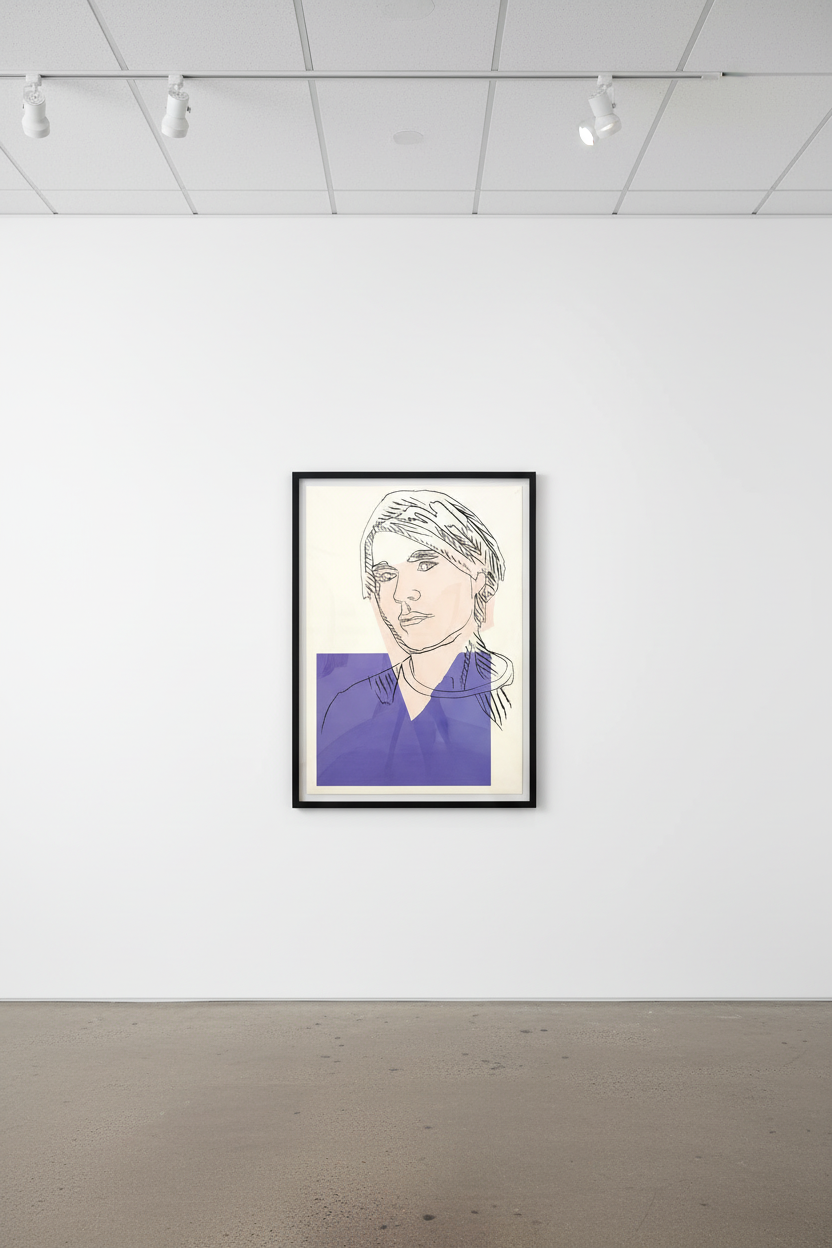
Warhol turned the camera on himself throughout his career, and his self-portraits form one of the most sustained and searching bodies of work he produced. From the early 1960s to the last works completed shortly before his death, Andy Warhol self-portraits chart a remarkable evolution — from the cool, deadpan persona of the Factory years to the more confrontational, existentially charged images of the 1980s.
The self-portraits (F&S II.156–163) feature the iconic silver wig and impassive face that Warhol cultivated as a kind of public mask. But where his celebrity portraits often depersonalised their subjects, the self-portraits are unexpectedly intimate. The direct gaze — flat, unblinking, returning the viewer's scrutiny with equal measure — refuses the distancing mechanisms Warhol usually deployed. You cannot look at these works without feeling that something real is being communicated, even as every surface detail insists on artifice.
The late self-portraits — including the 1986 Camouflage series and the haunting fright-wig works — move into something darker. The face becomes increasingly spectral, the palette more ominous. Critics have read these works as premonitions of death, and whatever Warhol intended, they carry an unmistakable sense of a man examining his own image with unusual urgency. They are among the most powerful portraits — by Andy Warhol or anyone — of the final decades of the twentieth century.
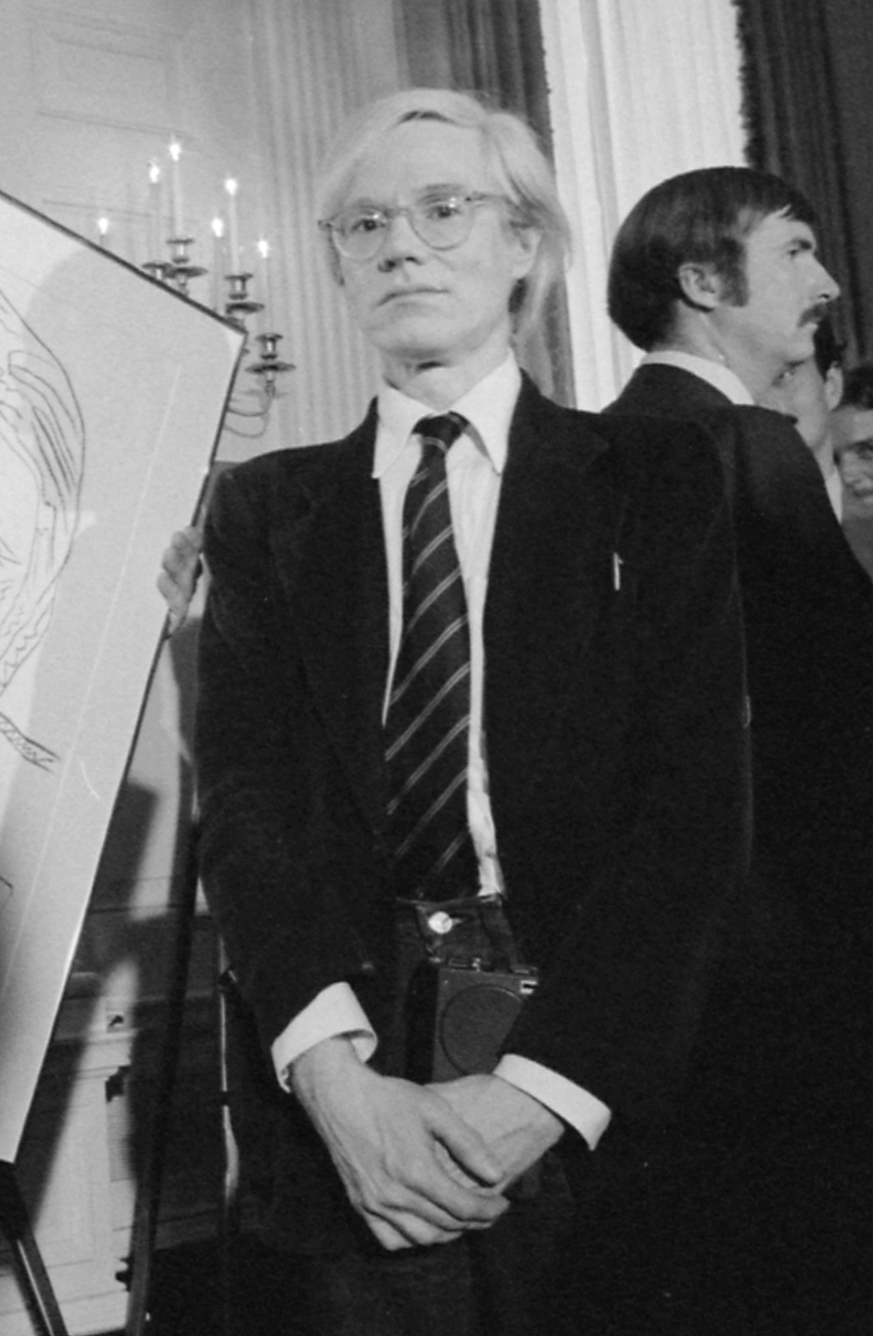
Andy Warhol died on February 22, 1987, at the age of 58 — not from the drug excess or violence that seemed to attend his world, but from cardiac arrhythmia following what was supposed to be routine gallbladder surgery. He had delayed the operation for years, afraid of hospitals; the decision proved fatal. The news stunned the art world. Warhol had seemed permanent, a fixture as enduring and inexhaustible as the culture he depicted. His death, like so much of his life, arrived without warning and without ceremony.
The effect on the market for Andy Warhol portraits was immediate and profound. Prices, already strong during the 1980s boom, accelerated dramatically in the years following his andy warhol death. Works that had sold in the tens of thousands during his lifetime began trading in the hundreds of thousands, then the millions. The Marilyn series in particular — already among the most reproduced images in contemporary art — became a benchmark for the entire secondary market. Today, major works by Warhol routinely achieve eight-figure sums at auction, and the portrait series remain the most actively traded segment of his output.
But the legacy of Andy Warhol's portraits extends far beyond the auction room. His work fundamentally changed how we think about celebrity, representation, and the relationship between art and mass culture. Every Instagram filter that flattens and colours a face, every piece of fan art that renders a pop star in graphic, silkscreened tones — these are descendants of the method Warhol developed in the Factory over half a century ago. The portraits remain startlingly contemporary because the culture they described — obsessed with fame, saturated with images, uncertain about what lies behind the surface — is still the culture we inhabit.
View all available Andy Warhol works at Guy Hepner
Warhol's most famous portraits include the Marilyn Monroe series (F&S II.21–31, 1967), the Mao series (1972), the Jackie Kennedy portfolio (1964), the Liz Taylor works (1963–64), and the Reigning Queens series (1985). These are the works most frequently reproduced, discussed, and traded, and they represent the full range of his portrait practice — from Hollywood glamour to political provocation.
Warhol typically began with a Polaroid photograph taken during a session at The Factory. The image was enlarged, transferred to a silkscreen mesh, and printed onto canvas in layers of ink. Warhol selected the colour combinations himself, often producing several different colourways of the same image. For commercial commissions, this process allowed rapid production of multiple unique-looking variants from a single source image.
Warhol produced numerous distinct portrait series throughout his career. The most significant include: the Marilyn Monroe portfolio (1967), the Jackie Kennedy series (1964), the Mao series (1972), the Mick Jagger portfolio (1975), the Reigning Queens (1985), and Ten Portraits of Jews of the Twentieth Century (1980). Each series typically consists of multiple screenprints of the same subject rendered in different colour combinations.
Values vary enormously depending on the series, edition, condition, and provenance. Individual prints from major series such as the Marilyn portfolio regularly achieve six to seven figures at auction. Larger canvases and unique works can command significantly more — the 1964 painting Shot Sage Blue Marilyn sold for $195 million in 2022. Prints from less prominent series and later commercial commissions are available at lower price points, making Warhol's portrait output accessible across a wide range of budgets.
Yes. Guy Hepner holds an extensive inventory of authenticated Andy Warhol works, including prints from the major portrait series. All works come with full provenance documentation and authentication. Browse available Andy Warhol portraits at Guy Hepner to view current inventory, or contact the gallery directly to discuss a specific work or series.
--- **Browse Andy Warhol prints** at Guy Hepner: [Andy Warhol art for sale](/andy-warhol) | [Sell your Warhol](/sell/andy-warhol)Explore Andy Warhol prints for sale at Guy Hepner: Self Portraits, Ten Portraits of Jews of the Twentieth Century, 25 Cats Named Sam, A Gold Book, A La Recherche Du Shoe Perdu.
Related Series