Endangered Species

June 2, 2026
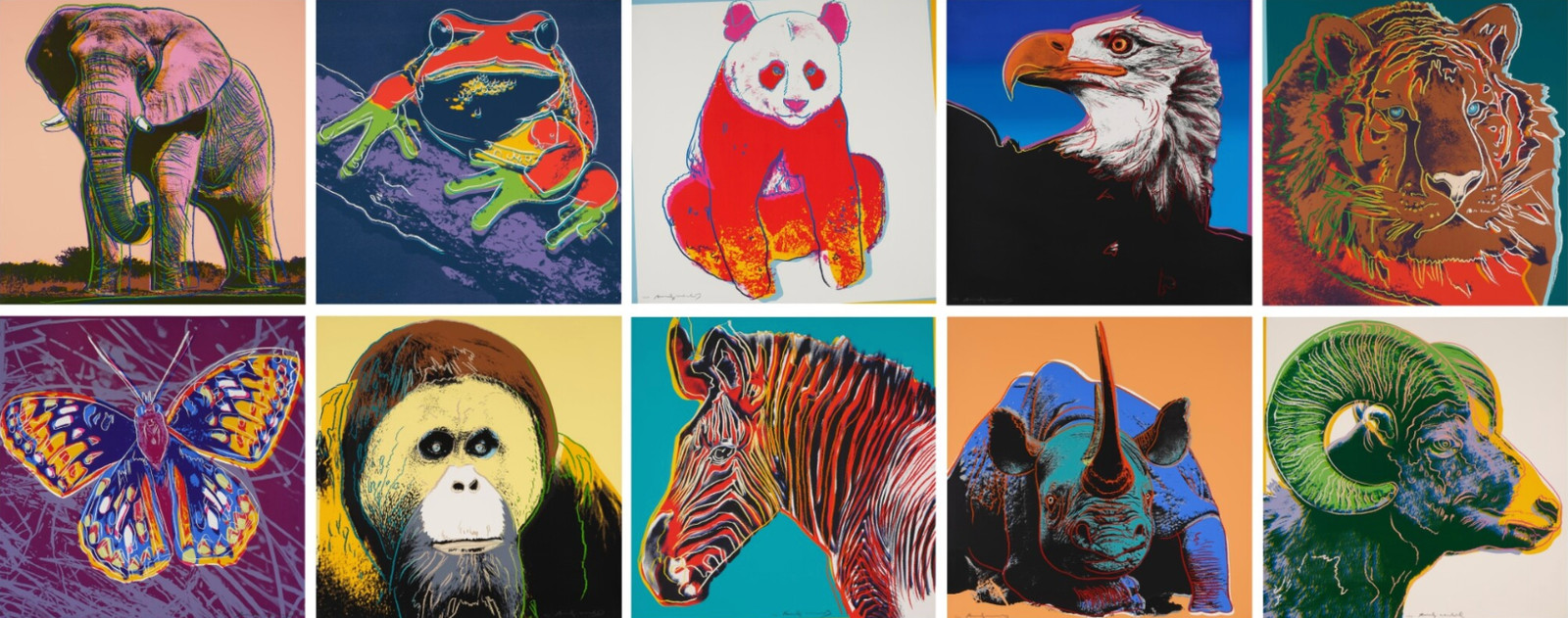
In 1983, ten years after the United States passed the Endangered Species Act, Andy Warhol produced one of the most culturally resonant series of his career. The Endangered Species portfolio — ten screenprints depicting threatened animals in his signature pop-saturated palette — fused environmental activism with the visual grammar of advertising, celebrity, and mass reproduction that had defined his output since the 1960s. An African elephant rendered in electric pink. A Siberian tiger in acid yellow. A bald eagle treated with the same flat, iconic authority as a Campbell's Soup Can. For collectors seeking Andy Warhol Endangered Species prints for sale, understanding the origins, the edition structure, and the market that has emerged around this series over forty years is essential before any acquisition decision.
Inquire About Available Endangered Species Prints
Browse the complete Endangered Species portfolio and individual prints currently available through Guy Hepner, New York.
The Endangered Species series did not begin with Warhol. It began with a conversation.
Ronald Feldman, the New York gallerist who had already published Warhol's Mao portfolio and several other major print series, had become increasingly concerned about environmental issues in the early 1980s — beach erosion, habitat destruction, the growing crisis of species loss. He and his wife Frayda Feldman proposed a portfolio to Warhol focused on animals from the US Endangered Species Act list. Warhol, who had owned dachshunds throughout his adult life and had a well-documented affection for animals, embraced the idea immediately.
An additional spark came from an article Warhol read about rhinoceros poaching in Kenya. The report documented how poaching for ivory had reduced rhinoceros populations on the African plains to a fraction of their former numbers. Back in New York, environmental consciousness was growing — the decade after the first Earth Day (1970), the passage of the Clean Water Act, the founding of Greenpeace. Warhol's choice of subjects tapped directly into that current.
The series was the second animal-themed portfolio Warhol had produced, following Cats and Dogs in 1976. But where Cats and Dogs was a relatively intimate, domestic series, Endangered Species operated at the scale of public statement. These were not pets. These were animals that might disappear from the earth within living memory, and Warhol treated them with the same graphic intensity he brought to Marilyn Monroe or Mao Zedong — which is to say, he made them impossible to ignore.
Andy Warhol, Endangered Species (F.S. II.293–302), 1983. Ten screenprints on Lenox Museum Board. Available at Guy Hepner, New York.
Warhol himself was characteristically oblique about the work's intent. He described the animals as looking like they were wearing make-up — "animals in make-up" was his phrase — which was both a deflection and, in a sense, the point. Warhol's method was always to render his subjects with such chromatic intensity that the viewer was forced to confront them in a new way. You could not look at his Bald Eagle and see only a bird. It had become something more: a symbol, a warning, a piece of visual evidence.
The portfolio was published in 1983 by Ronald Feldman Fine Arts, Inc., New York, and printed by Rupert Jasen Smith, who had handled most of Warhol's major print editions through the 1980s. In a gesture that aligned the commercial work with its stated purpose, Warhol donated ten complete sets — the Roman numeral edition, numbered I/X through X/X — directly to wildlife and conservation organisations.
In 1983, individual prints from the edition sold for $15,000 each. That price point is now the historical baseline against which the series's appreciation can be measured. It is not a modest one.
The Endangered Species portfolio was printed on Lenox Museum Board — the same American machine-made cotton paper Warhol used for the Ads portfolio (1985) and the 1970 Flowers. Its smooth, slightly absorbent surface holds screenprint ink cleanly and provides the neutral, bright ground that makes the saturated colour fields of each print read with such visual force.
Each print measures 38 × 38 inches (96.5 × 96.5 cm) — Warhol's preferred square format throughout his print career.
Catalogue designation: Feldman & Schellmann F.S. II.293–302
Edition structure:
Each impression is signed by Warhol in pencil. The publisher's blind stamp of Ronald Feldman Fine Arts, Inc., New York, and the printer's blind stamp of Rupert Jasen Smith appear on the verso. The artist's copyright inkstamp also appears on the reverse.
Publisher: Ronald Feldman Fine Arts, Inc., New York
Printer: Rupert Jasen Smith, New York City
The Trial Proof edition (30 impressions per subject) commands particular attention in this market. Trial Proofs are produced during the proofing stage, before the final numbered edition is printed, and represent the earliest impressions from each screen at its peak registration. In the Endangered Species market, Trial Proofs have achieved some of the most dramatic results — the Black Rhinoceros TP 20/30 sold at Phillips London in September 2024 for £190,500, well ahead of its £120,000–180,000 estimate; the Pine Barrens Tree Frog TP and Orangutan TP each sold in 2024 for £162,000 and £174,000 respectively.
The Roman numeral edition — ten impressions per subject, numbered I/X through X/X — carries a different kind of significance. These were the prints Warhol donated to conservation organisations, a direct institutional link between the series and its stated environmental purpose. When they appear at auction (the African Elephant III/X sold at Phillips New York in October 2022 for $126,000, and an African Elephant Roman numeral impression set a new record at Phillips in June 2025 for £215,900), they carry provenance that distinguishes them from the standard numbered edition.
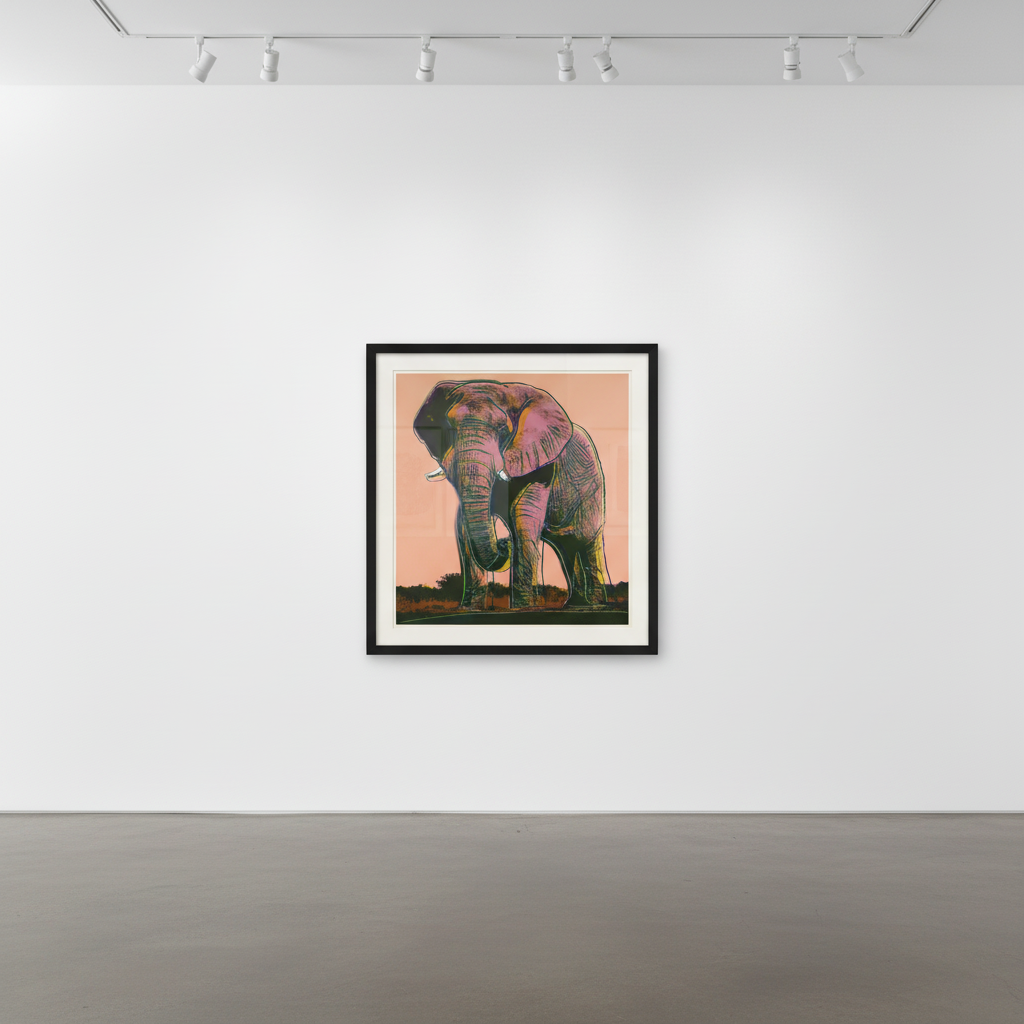
Andy Warhol, African Elephant (F.S. II.293), 1983. Screenprint on Lenox Museum Board, 38 × 38 inches.
F.S. II.293 — African Elephant
The African elephant is the series' anchor subject and its strongest individual market performer. Warhol renders the animal in an unnaturalistic palette — coral, magenta, electric blue — against a flat field that strips it of habitat and context, leaving only the form. The result is at once tender and monumental. African Elephant has appeared at auction more frequently than any other subject in the portfolio. Sotheby's Online Prints & Multiples sale in December 2024 achieved $164,200 for a numbered edition impression. A Roman numeral impression set a record at Phillips New York in June 2025 at £215,900 — surpassing the prior record by more than 40%.
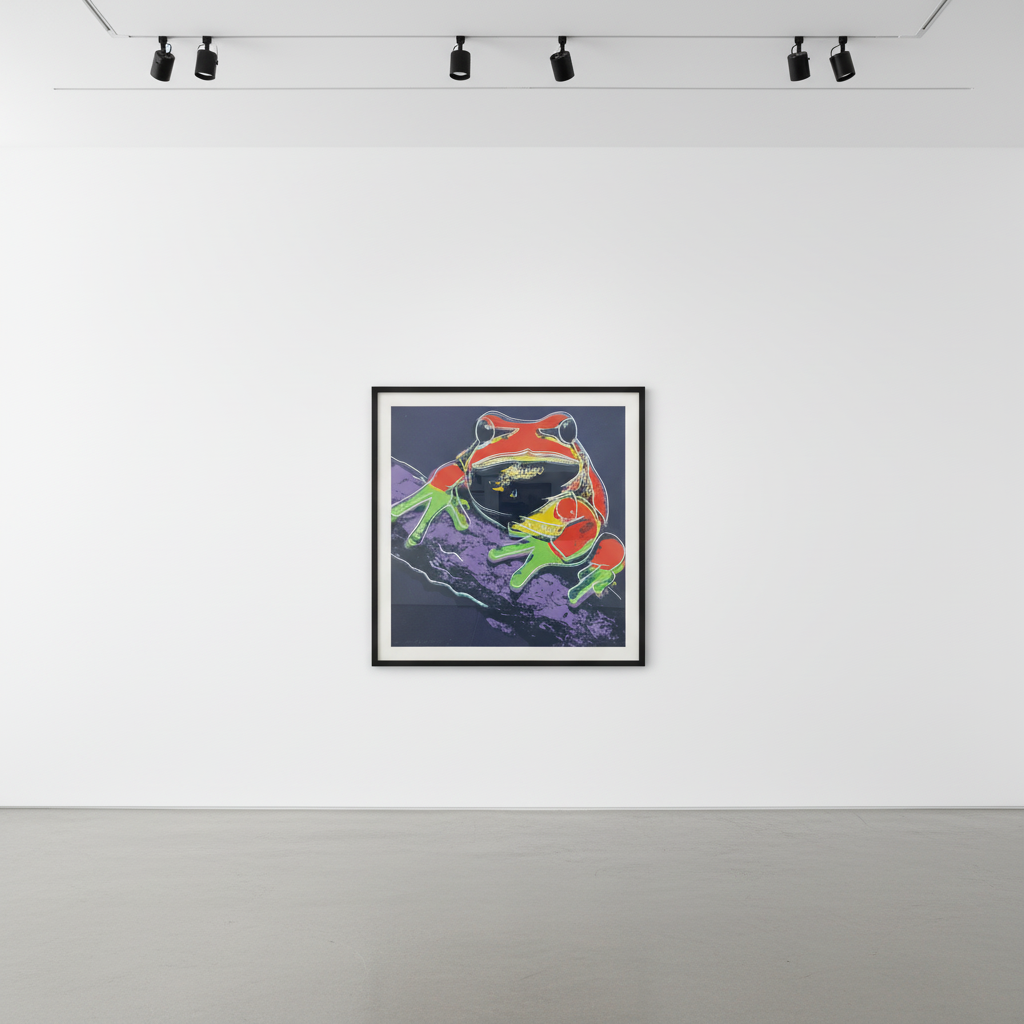
Andy Warhol, Pine Barrens Tree Frog (F.S. II.294), 1983. Screenprint on Lenox Museum Board, 38 × 38 inches.
F.S. II.294 — Pine Barrens Tree Frog
The smallest of the ten subjects — Hyla andersonii, native to the pine barrens of New Jersey, the Carolinas, and the Florida panhandle — becomes under Warhol's treatment a psychedelic burst of colour against acid green. The tree frog is one of the series' most visually arresting individual prints, its compact subject giving Warhol space for a more lavish chromatic treatment than the larger animals permit. The Trial Proof is among the most valuable individual variants: a Pine Barrens Tree Frog TP sold in 2024 for £162,000.
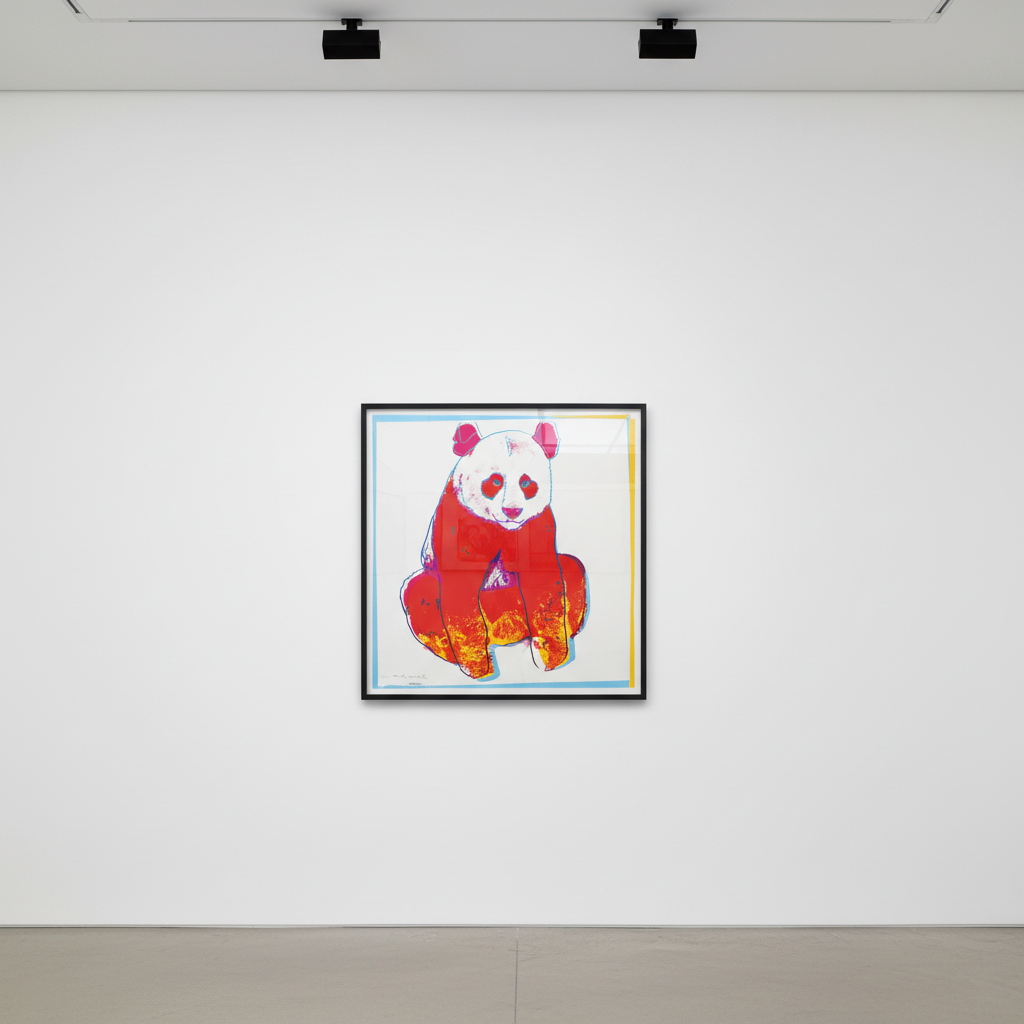
Andy Warhol, Giant Panda (F.S. II.295), 1983. Screenprint on Lenox Museum Board, 38 × 38 inches.
F.S. II.295 — Giant Panda
The Giant Panda had by 1983 become the world's most recognisable symbol of species conservation — the emblem of the World Wildlife Fund since 1961. Warhol's treatment gives the panda a chrome and blue-black palette, the white ground of the animal's body rendered in the creamy tone of the Lenox Museum Board itself. Giant Panda is consistently among the most sought-after subjects in the portfolio. A Giant Panda AP set a new series record for an individual print at a United States auction in 2025, achieving £166,507 ($215,900).
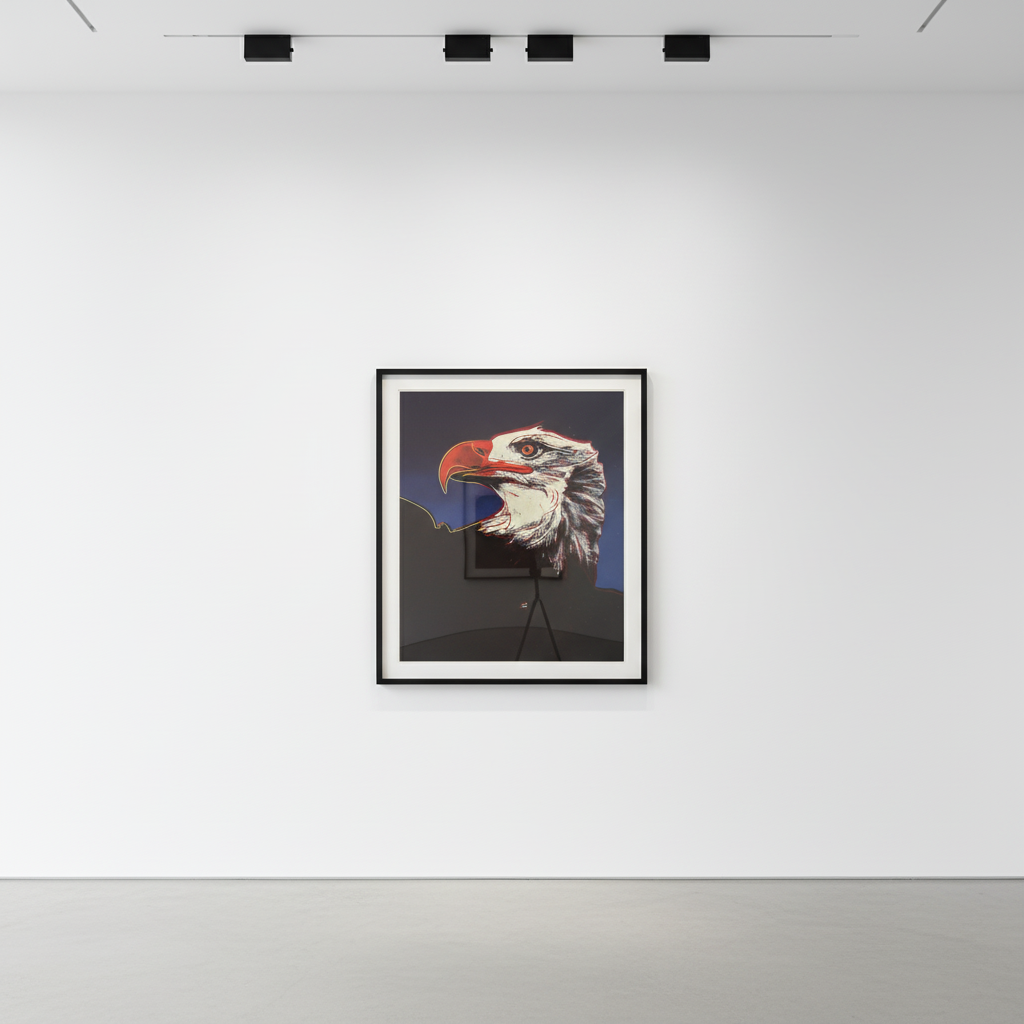
Andy Warhol, Bald Eagle (F.S. II.296), 1983. Screenprint on Lenox Museum Board, 38 × 38 inches.
F.S. II.296 — Bald Eagle
The Bald Eagle carries a charge specific to American collectors. As the national symbol of the United States, it had been listed under the Bald Eagle Protection Act since 1940 and added to the endangered species list in 1967 — a casualty of DDT contamination that had thinned its eggs to the point of collapse. Warhol renders it in a deep ultramarine and chrome yellow that turns the bird into something like a heraldic emblem, simultaneously ecological statement and patriotic image. Bald Eagle appears regularly at auction at Sotheby's, Christie's, and Phillips.
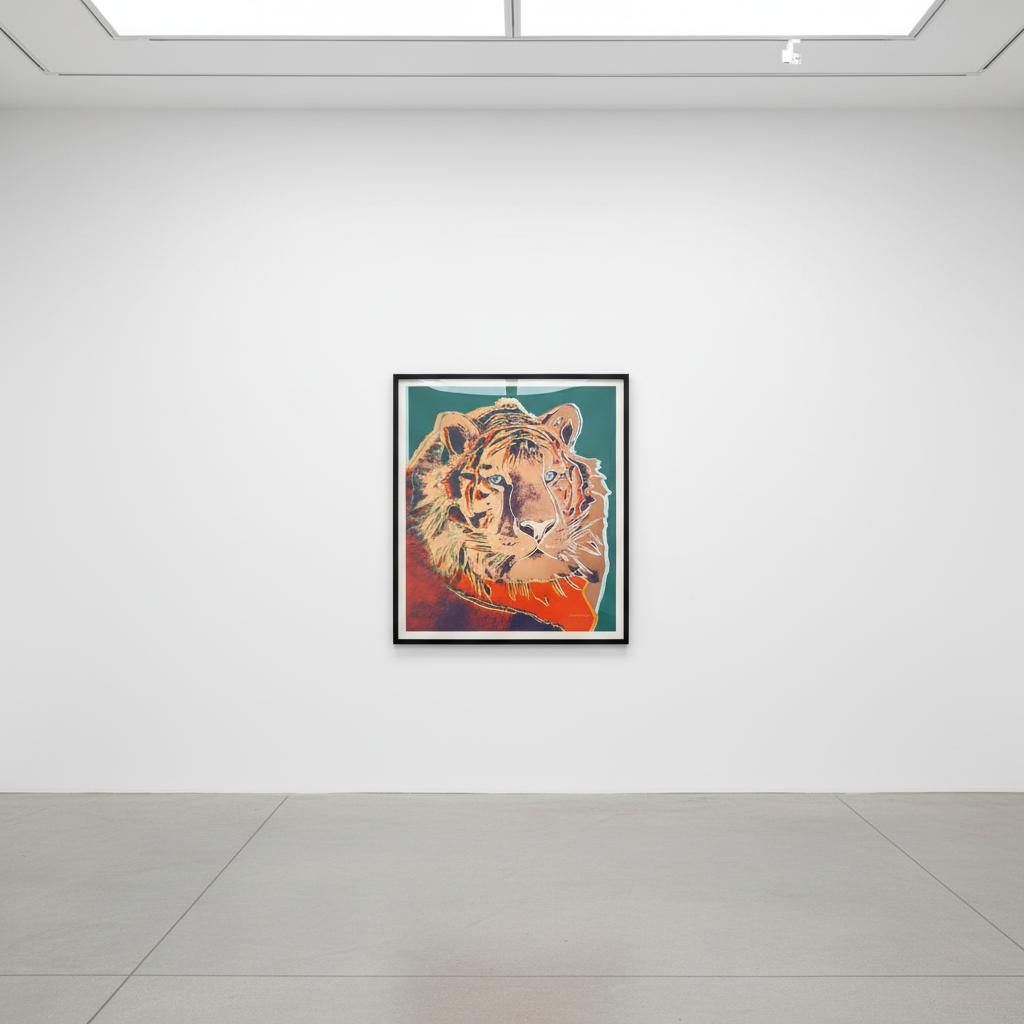
Andy Warhol, Siberian Tiger (F.S. II.297), 1983. Screenprint on Lenox Museum Board, 38 × 38 inches. Available at Guy Hepner, New York.
F.S. II.297 — Siberian Tiger
The Siberian tiger (Panthera tigris altaica) was among the most critically threatened large predators on earth by 1983, with wild populations estimated at fewer than 500 individuals. Warhol's screenprint treats the tiger's stripes as a graphic element — black marks on an acid-yellow ground — that brings it closer to an abstract composition than a naturalistic portrait. The visual energy of the Siberian Tiger print makes it one of the most immediately commanding subjects in the suite. It is among the three works currently available through Guy Hepner.
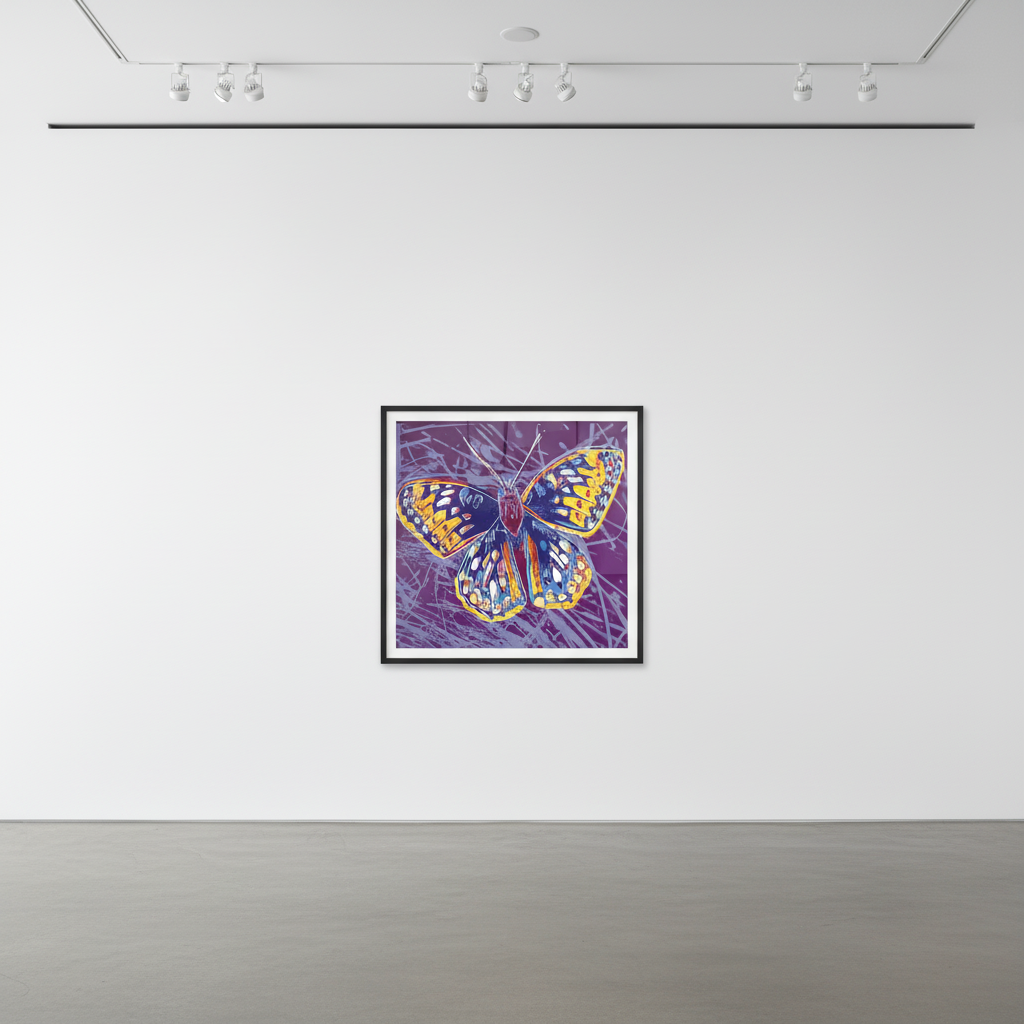
Andy Warhol, San Francisco Silverspot Butterfly (F.S. II.298), 1983. Screenprint on Lenox Museum Board, 38 × 38 inches.
F.S. II.298 — San Francisco Silverspot Butterfly
Speyeria callippe callippe, a subspecies of butterfly native to the coastal grasslands north of San Francisco, was added to the endangered species list in 1978 following dramatic habitat loss. Warhol's treatment of the butterfly emphasises its wing pattern as pure geometry — spots and curves in orange and black that read as ornamental design as much as natural subject. The San Francisco Silverspot is one of the less frequently seen subjects at auction, which can represent an entry opportunity for collectors building individual holdings.
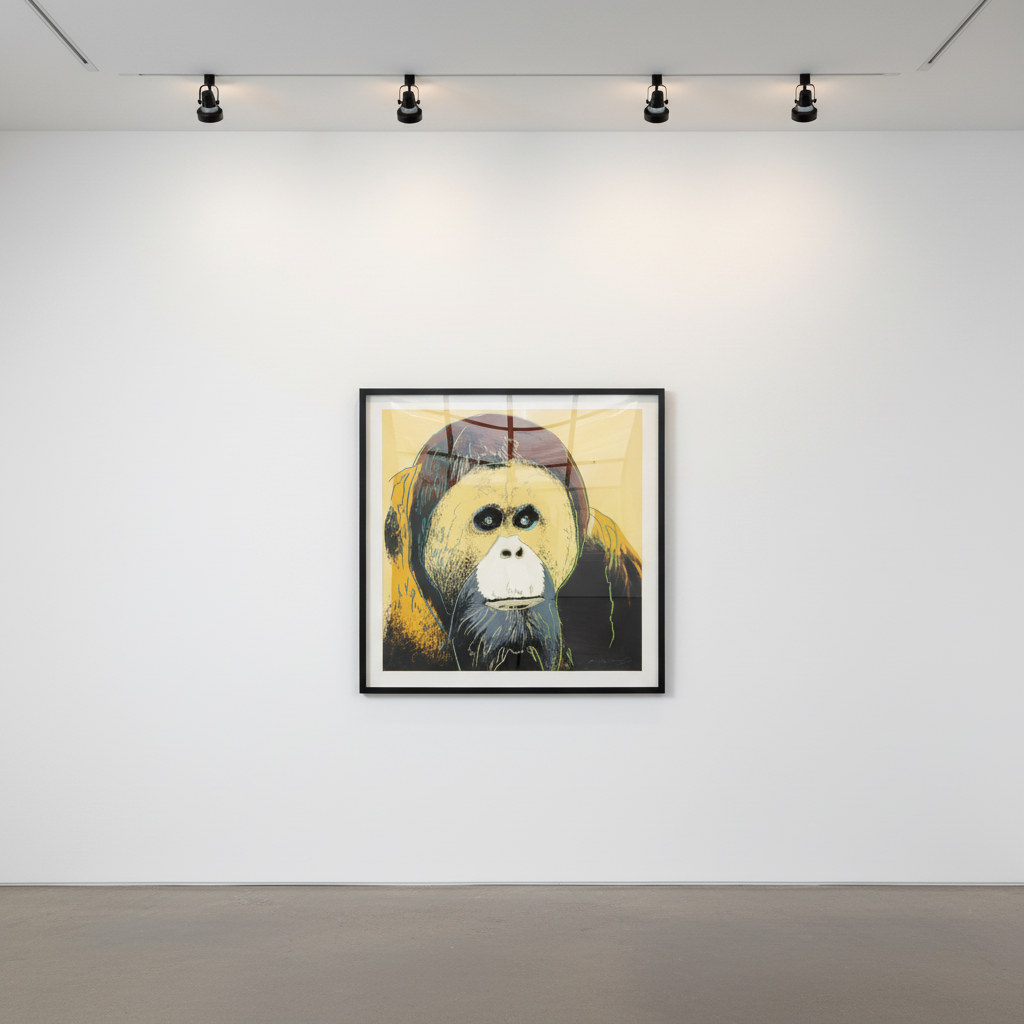
Andy Warhol, Orangutan (F.S. II.299), 1983. Screenprint on Lenox Museum Board, 38 × 38 inches.
F.S. II.299 — Orangutan
The orangutan — native to Borneo and Sumatra and already critically threatened by deforestation in 1983 — is rendered in a warm amber and rust palette that echoes the animal's actual colouration while pushing it into the realm of the iconic. Orangutan Trial Proofs have been among the most active variants in the recent market: a TP sold in 2024 for £174,000.
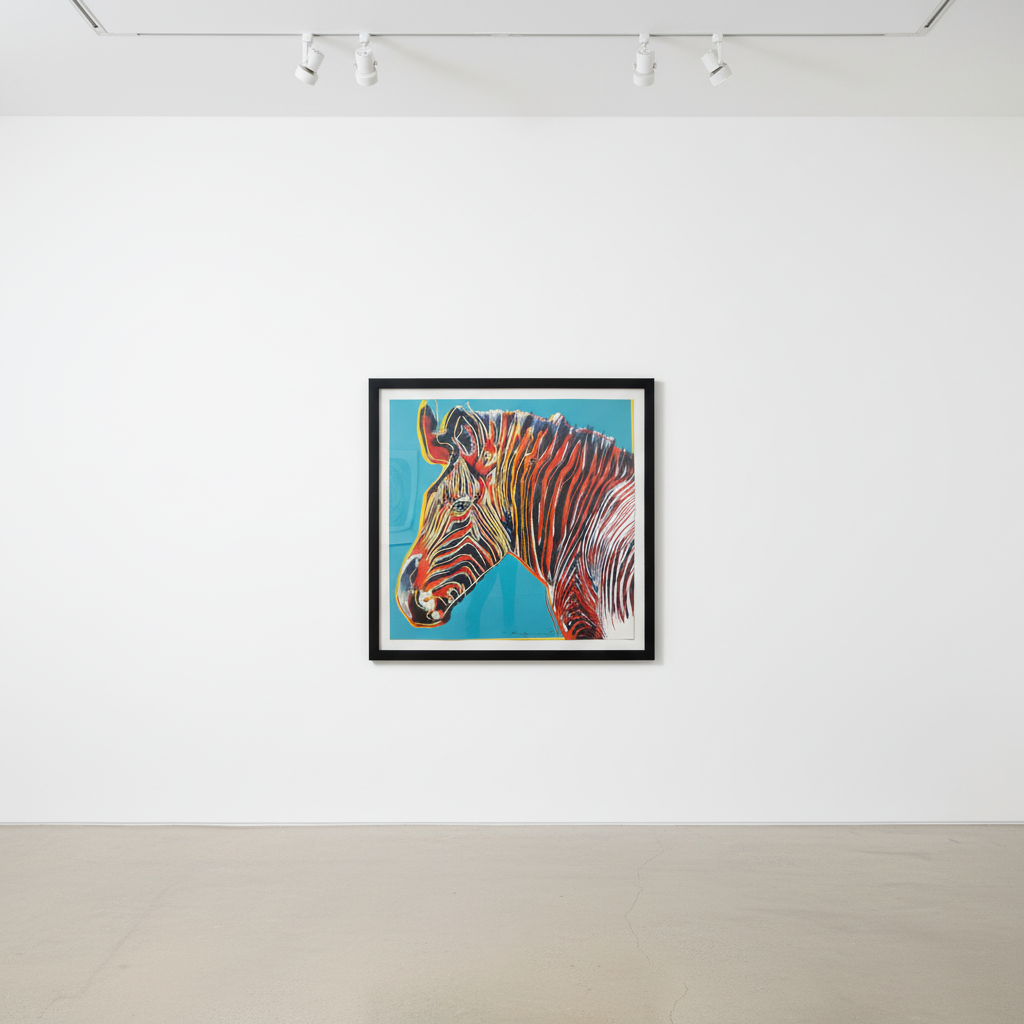
Andy Warhol, Grevy's Zebra (F.S. II.300), 1983. Screenprint on Lenox Museum Board, 38 × 38 inches.
F.S. II.300 — Grevy's Zebra
Equus grevyi, the largest of the wild equids and a species whose population had declined sharply through the 1970s due to hunting and habitat pressure, is treated by Warhol as a study in graphic pattern — the stripe as design element, repeated against a flat field. The Grevy's Zebra print is one of the most graphically bold in the suite. Current demand on the secondary market (10 active buyers tracked by MyArtBroker against only 3 documented holders) points to an undersupply dynamic worth noting.
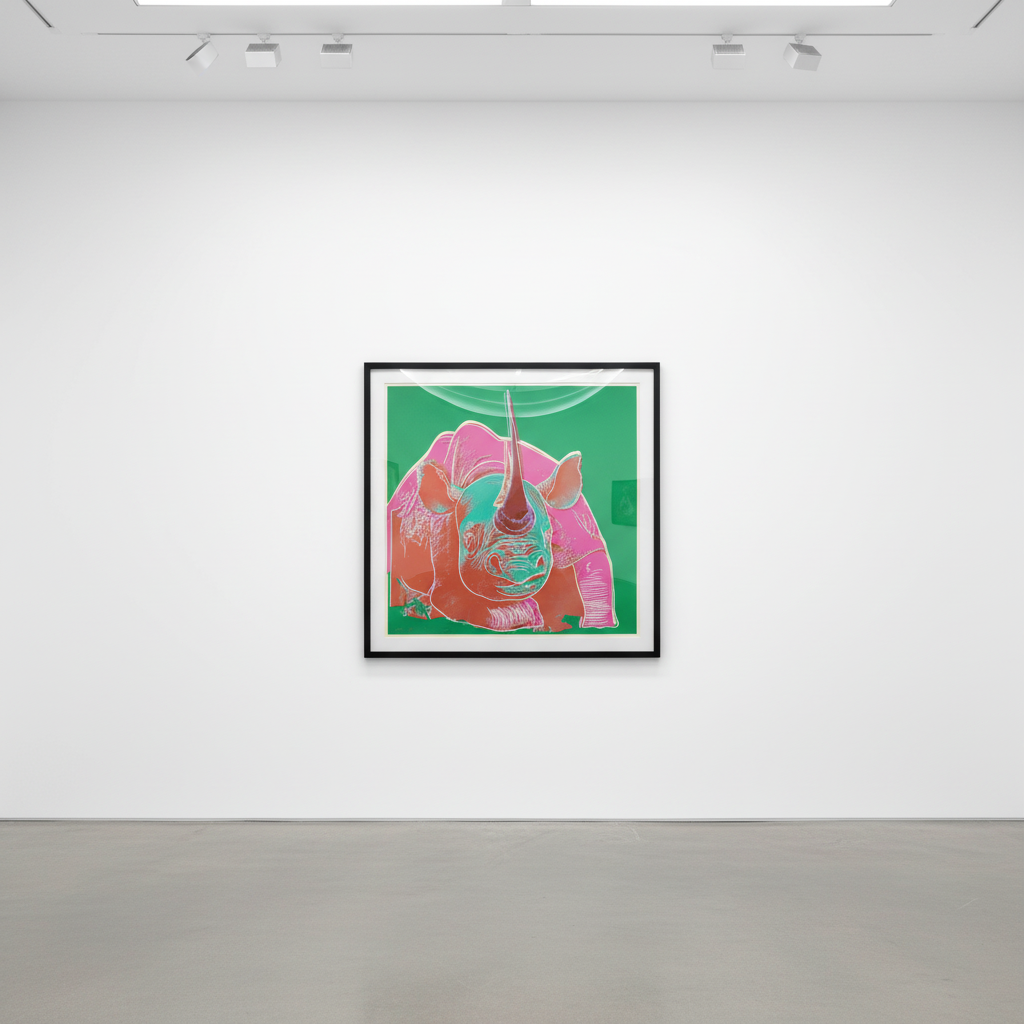
Andy Warhol, Black Rhinoceros (F.S. II.301), 1983. Screenprint on Lenox Museum Board, 38 × 38 inches. Available at Guy Hepner, New York.
F.S. II.301 — Black Rhinoceros
The subject that arguably sparked the entire series. The article about Kenyan rhino poaching that Warhol read — which described how 1970s ivory demand had reduced wild populations to a fraction of their former numbers — is the documented origin of his engagement with the project. Warhol renders the rhinoceros in a deep grey-blue palette with a saturated orange ground, giving the animal a monumental, almost heraldic presence. The Black Rhinoceros has been one of the most actively traded subjects in the recent market. A numbered edition impression (5/150) sold at Phillips New York in October 2024 for $177,800. A Trial Proof (TP 20/30) achieved £190,500 at Phillips London in September 2024. Christie's reported the Black Rhinoceros as a top performer in their 2025 editions sale.
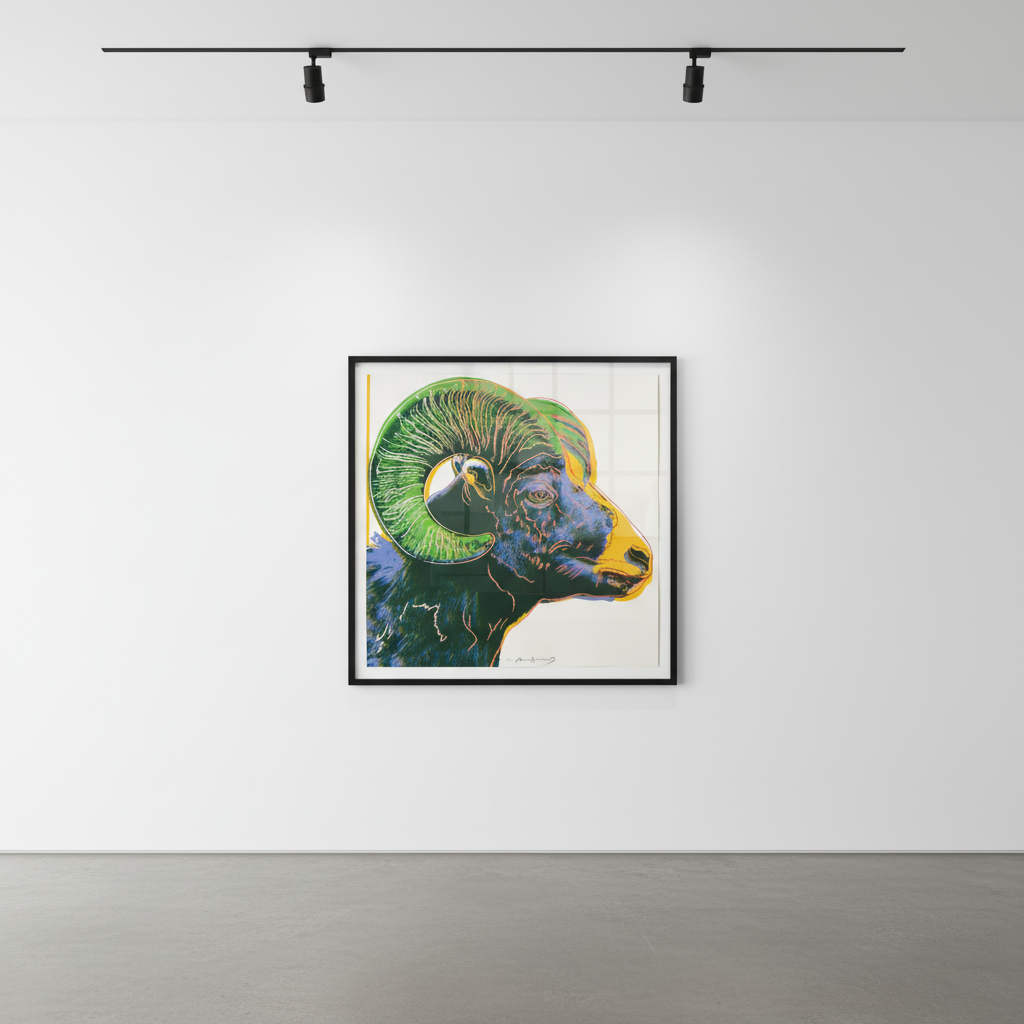
Andy Warhol, Bighorn Ram (F.S. II.302), 1983. Screenprint on Lenox Museum Board, 38 × 38 inches.
F.S. II.302 — Bighorn Ram
The Bighorn Ram (Ovis canadensis), native to the Rocky Mountains and under pressure from hunting and disease, closes the portfolio with a subject that carries particular resonance in the American West. Warhol's treatment gives the ram's distinctive curved horns graphic prominence, its silhouette reading cleanly against a flat chromatic ground. The Bighorn Ram is among the more accessible entry points for individual print collectors, with current estimated values in the £80,000–110,000 range.
The Endangered Species series has appeared at auction more than 286 times (MyArtBroker data), across Sotheby's, Christie's, Phillips, Heritage, and specialist print houses in New York, London, and internationally. The data establishes a clear market hierarchy across edition types and individual subjects.
Complete Portfolio
Complete ten-print portfolios in original portfolio boxes are rare. A matched set (all ten prints sharing the same edition number) is rarer still, and commands a significant premium over unmatched sets.
Complete portfolios have sold at public auction approximately once per year since 2021. As individual prints are separated through private sales and estate dispersals, complete sets become progressively scarcer on the open market.
Individual Prints — Key Results
Unsigned and lower-grade impressions also find buyers: Phillips London, June 2025, achieved £82,550 for an unsigned edition impression against an £80,000 high estimate — demonstrating breadth of demand beyond signed works.
The original 1983 retail price of $15,000 per print provides the clearest illustration of the series' trajectory. The African Elephant alone has appreciated to more than ten times that figure in its numbered edition form, and to fifteen times in exceptional variant impressions.
The Andy Warhol Authentication Board (AWAB) closed in 2012 and no longer issues authentication stamps. This change affects the Endangered Species portfolio in a limited way: unlike unique works or works where the question of authenticity is genuinely open, the Endangered Species prints were a published edition with clear catalogue raisonné inclusion and consistent physical evidence that authenticates them without recourse to a body.
Authentication for Endangered Species prints rests on four pillars:
1. Pencil signature — Warhol signed each impression in pencil, typically lower right or left. The signature can be assessed against verified comparables.
2. Edition numbering — Each impression is numbered in pencil in the same hand as the signature. Edition numbers should align with the published edition (1/150–150/150 for the standard edition; AP 1/30–AP 30/30; TP 1/30–TP 30/30; I/X–X/X for the Roman numeral edition).
3. Publisher's blind stamp — Ronald Feldman Fine Arts, Inc., New York. Present on the verso of all authenticated impressions.
4. Printer's blind stamp — Rupert Jasen Smith, New York. Also present on the verso.
5. Catalogue raisonné inclusion — Feldman & Schellmann, Andy Warhol Prints: A Catalogue Raisonné 1962–1987, 4th edition, 2003, pp. 130–131, nos. II.293–302.
For any Endangered Species acquisition above $50,000, require full provenance documentation including previous auction or dealer records, a current condition report, and UV examination for restoration. The combination of catalogue raisonné inclusion, publisher's blind stamp, and verifiable pencil signature makes forgery significantly more difficult than for unique works — but the price levels now achieved by this series make due diligence essential.
Understanding what separates a $90,000 Endangered Species print from a $215,000 one requires an understanding of the factors the market has consistently rewarded.
Edition type
Trial Proofs carry the clearest premium. Produced before the final numbered run, they represent the earliest impressions from each screen and often exhibit sharper ink deposition and crisper detail than numbered edition impressions. The TP premium in the Endangered Species market has ranged from 40% to over 100% above comparable numbered edition results.
Artist's Proofs (designated AP) also achieve a premium, typically 20–40% above numbered edition results for equivalent condition. The Roman numeral edition (I/X–X/X) occupies a unique position: these impressions carry the conservation provenance of Warhol's direct donation, and when they appear at auction they can exceed even TP results depending on subject and condition.
Subject
Not all ten prints are equal in the market. African Elephant, Giant Panda, and Black Rhinoceros consistently command the highest premiums among individual subjects — driven partly by the species' global recognisability and partly by the visual quality of Warhol's treatment. Grevy's Zebra and Orangutan have shown strong recent momentum. San Francisco Silverspot and Bighorn Ram represent the most accessible entry points.
Matching edition numbers
For collectors considering two or more prints from the suite, matching edition numbers carry a premium: a complete or partial portfolio where all prints share the same number is a more coherent collecting proposition and trades at a premium to a mixed-number grouping.
Condition
Lenox Museum Board holds condition well, but Endangered Species prints held unframed or in poor storage conditions can show foxing, toning, or abrasion to the surface. Prints in original framing or flat-stored in acid-free materials command a premium over works showing condition issues. Condition grades translate directly to price: a print in fine condition can achieve 30–50% more than an equivalent impression with notable toning or a handling crease.
Complete vs. individual
The complete portfolio premium is substantial and likely to grow. With only 150 complete sets ever produced — and progressively more having been separated over the past forty years — the set is genuinely scarce at the level where it would appear at major auction. The $4.32 million Sotheby's November 2024 result was a matched set, which placed it at the upper end of the complete portfolio market. A complete set of mixed numbers remains a rare and significant asset in its own right.
The Endangered Species portfolio was created in 1983 as a direct response to a set of environmental conditions that felt urgent at the time. What distinguishes it from other activist art of the period is that the urgency has only deepened.
Of the ten animals Warhol depicted, all remain under significant threat in 2025. The black rhinoceros — the species that inspired the series — is still classified as critically endangered by the IUCN, with fewer than 6,000 individuals remaining in the wild. The Siberian tiger population has recovered partially, but remains critically low. The African elephant continues to face poaching and habitat fragmentation. The series is, in a painful sense, more relevant now than when it was made.
This is not incidental to the market. Collectors who acquire Endangered Species prints are acquiring works whose subject matter remains live — not a period curio but an ongoing statement. The series occupies an unusual position in the Warhol market precisely because it combines his signature visual method with a content that does not age.
There is also the question of Warhol's position among collectors who might not otherwise engage with the broader Pop Art market. Environmental collectors, collectors of wildlife imagery, collectors drawn to the specific animals depicted — the Bald Eagle and the American national symbol, the Giant Panda and the WWF, the Black Rhinoceros and the anti-poaching movement — find in this series an entry into the Warhol market that the Campbell's Soup Cans or Marilyn Monroe series do not provide in the same way. That broadened collector base is part of what drives the demand that shows in 286 auction appearances and consistent year-over-year appreciation.
For a serious collector approaching the Endangered Species series for the first time, the strategy depends on budget and intent.
Entry level ($80,000–$130,000): Individual numbered edition prints of the less frequently traded subjects — San Francisco Silverspot, Bighorn Ram, Grevy's Zebra, or Pine Barrens Tree Frog — represent the clearest entry. Condition matters acutely at this level; buy only from galleries or specialist print dealers who provide full condition reports and clear provenance. A numbered edition print with good provenance and fine condition from one of these subjects is a defensible acquisition at current price levels.
Mid-range ($130,000–$250,000): Individual Artist's Proofs or Trial Proofs of any subject, or numbered edition impressions of the major subjects (African Elephant, Giant Panda, Black Rhinoceros, Bald Eagle). This is where the premium for edition type and subject combination begins to compound. Trial Proofs of the top subjects have shown the clearest appreciation trajectory in the recent market.
Serious acquisition ($250,000–$500,000): Multiple prints from the suite, building toward a partial portfolio, or a Roman numeral impression of a major subject. The partial portfolio — three, five, or seven prints — creates a more coherent collecting proposition than isolated individual works and can be assembled over time. Matching or closely sequential edition numbers add to the coherence and eventual marketability.
Complete portfolio ($2.2 million–$4.5 million+): A complete ten-print suite in original box, with consistent edition numbers, is among the most significant acquisitions available in the Warhol print market. Complete sets have sold at public auction approximately once per year since 2021. Private sale routes offer access to additional supply but require established dealer relationships. The matched Sotheby's November 2024 result at $4.32 million represents the current benchmark for a matched complete set in excellent condition.
In all cases: buy the edition type before you buy the subject. A Trial Proof of a less-famous subject will outperform a numbered edition of a famous one, in most market conditions.
What is the catalogue raisonné reference for Andy Warhol Endangered Species prints?
The standard reference is Feldman & Schellmann, Andy Warhol Prints: A Catalogue Raisonné 1962–1987, 4th edition, New York, 2003, pages 130–131, catalogue numbers II.293–302. Any serious acquisition should be verified against this reference. The ten subjects are: African Elephant (II.293), Pine Barrens Tree Frog (II.294), Giant Panda (II.295), Bald Eagle (II.296), Siberian Tiger (II.297), San Francisco Silverspot Butterfly (II.298), Orangutan (II.299), Grevy's Zebra (II.300), Black Rhinoceros (II.301), and Bighorn Ram (II.302).
What edition size is the Endangered Species portfolio?
The standard numbered edition was 150 impressions per subject. In addition, 30 Artist's Proofs (AP 1/30–AP 30/30) and 30 Trial Proofs (TP 1/30–TP 30/30) were produced per subject. Ten Roman numeral impressions (I/X–X/X) were also produced per subject and donated by Warhol to wildlife and conservation organisations. The total edition per subject is therefore 220 impressions before TPs and APs, though the TP and AP structure means the full edition runs to approximately 220 impressions with different designations.
How much is an Andy Warhol Endangered Species print worth?
Market value depends on subject, edition type, and condition. Numbered edition impressions of the major subjects (African Elephant, Giant Panda, Black Rhinoceros) currently trade in the $130,000–$200,000 range at auction. Trial Proofs of these subjects have achieved £162,000–£215,900 in 2024–2025. Artist's Proofs fall between numbered and TP results. The most accessible individual subjects — San Francisco Silverspot, Bighorn Ram — have current market values in the £80,000–£110,000 range for numbered editions in fine condition. Complete portfolios have sold for $2.2 million to $4.32 million depending on edition number, condition, and whether the set is matched.
What are Trial Proofs and why do they command a premium?
Trial Proofs (épreuves d'état in the print market tradition) are produced during the proofing process, before the final numbered edition is printed. Each of the 30 Trial Proofs per subject is numbered TP 1/30 through TP 30/30 and signed by Warhol. They are produced when the screens are at their freshest and often show the sharpest, most vibrant impressions. The Endangered Species market has consistently rewarded TPs at a premium of 40–100% over equivalent numbered edition results. Five Trial Proofs appeared at public auction between 2022 and 2025 — scarcity reinforcing value.
Where can I buy Andy Warhol Endangered Species prints?
The Endangered Species series appears regularly at Sotheby's, Christie's, Phillips, Swann, and Heritage, as well as through specialist Warhol print dealers. Guy Hepner Gallery, New York, maintains active inventory across the suite, including the Black Rhinoceros, Siberian Tiger, and the complete portfolio, and handles acquisitions through direct private sale with full provenance documentation.
How do I authenticate an Endangered Species print?
Authentication rests on the pencil signature, edition numbering, publisher's blind stamp (Ronald Feldman Fine Arts, Inc.), printer's blind stamp (Rupert Jasen Smith), and catalogue raisonné inclusion. The AWAB closed in 2012 and no longer authenticates Warhol works. For any acquisition above $50,000, work with a specialist gallery that provides full documentation, condition reports, and clear provenance. UV examination to identify any restoration is standard practice for prints at this level.
Which subjects are the strongest investments in the Endangered Species portfolio?
African Elephant, Giant Panda, and Black Rhinoceros have produced the strongest individual results and widest collector demand. Grevy's Zebra and Orangutan have shown particular upward momentum in 2024–2025 relative to historic averages. The Bald Eagle carries specific resonance with American collectors and appears consistently at the major New York houses. Across all subjects, Trial Proof and Artist's Proof impressions outperform numbered editions on a per-impression basis.
Guy Hepner maintains active inventory across the Endangered Species portfolio, including individual subjects and the complete portfolio, with full provenance documentation and condition reports. The gallery is located at 177 Tenth Avenue, New York, and works with collectors internationally.
Andy Warhol, Black Rhinoceros (F.S. II.301), 1983. Available at Guy Hepner, New York.
Andy Warhol, Siberian Tiger (F.S. II.297), 1983. Available at Guy Hepner, New York.
Andy Warhol, Endangered Species (F.S. II.293–302), 1983. Complete ten-print portfolio. Available at Guy Hepner, New York.
Inquire About Available Endangered Species Prints
Browse the complete inventory of Endangered Species prints — individual subjects and the complete portfolio — available through Guy Hepner, New York.
Contact Guy Hepner directly for condition reports, provenance documentation, and acquisition advice on the Endangered Species portfolio.
Guy Hepner | 177 Tenth Avenue, New York
--- **Browse Andy Warhol prints** at Guy Hepner: [Andy Warhol art for sale](/andy-warhol) | [Sell your Warhol](/sell/andy-warhol)Explore Andy Warhol prints for sale at Guy Hepner: Endangered Species, 25 Cats Named Sam, A Gold Book, A La Recherche Du Shoe Perdu, Alexander the Great.
Related Series