

25 Cats Named Sam
20 works

A Gold Book (1957) is among the rarest and most coveted of Warhol's pre-Pop artist books. Complete copies have traded in the $40,000–$80,000 range, while individual pages command $3,000–$12,000 depending on subject and condition. The edition of just 100 copies makes it significantly scarcer than 25 Cats Named Sam, and the gold ink silkscreen process gives each page an opulence that translates directly into collector desirability. Auction appearances are infrequent; when examples surface, competition is serious.
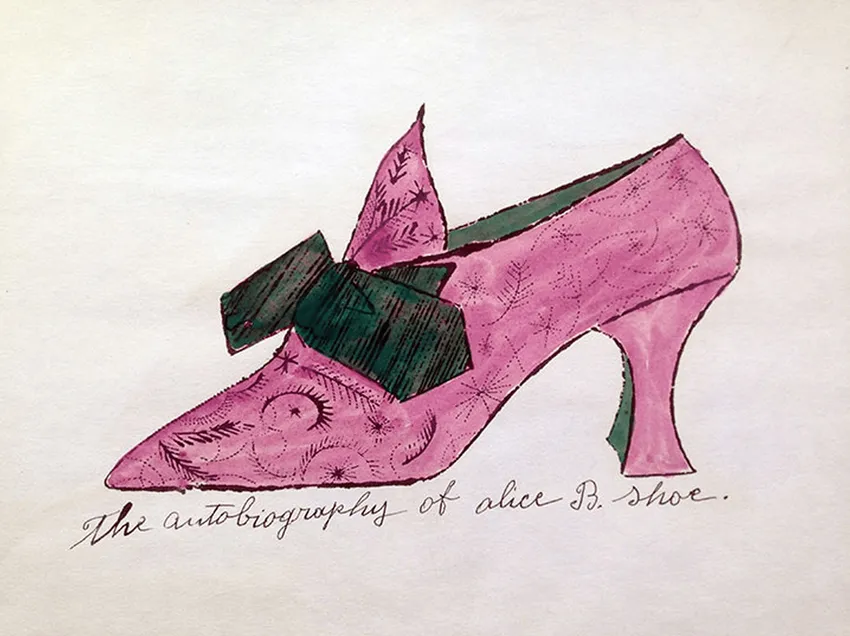
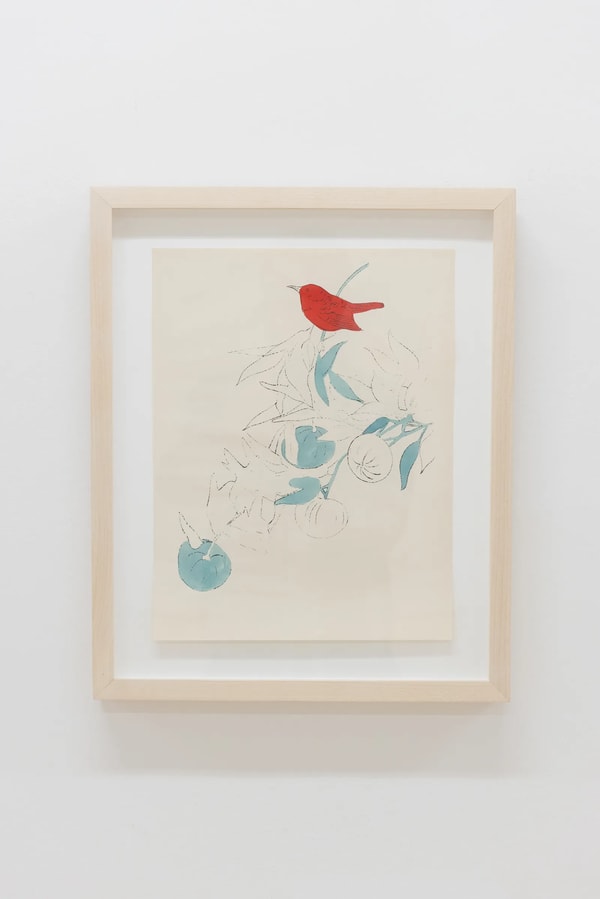
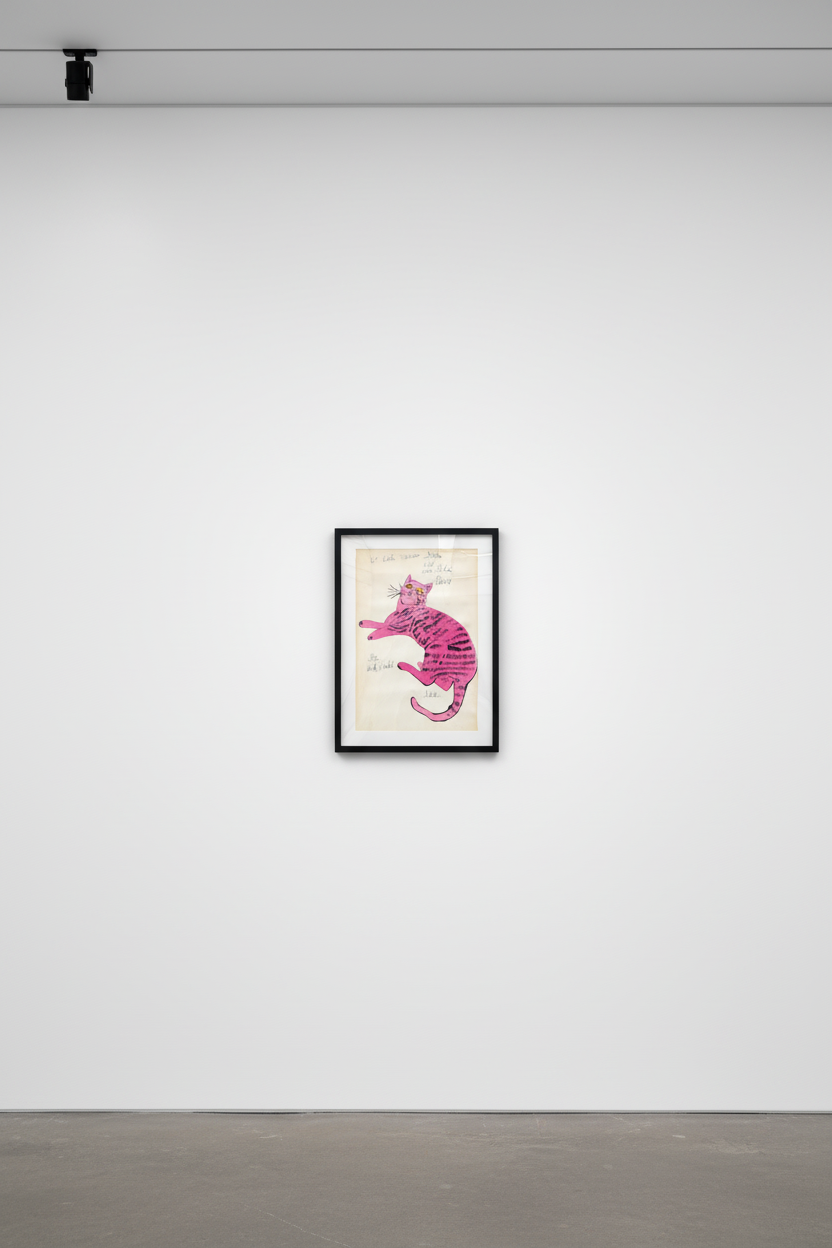
Produced in 1957—three years after 25 Cats and just as Warhol was transitioning from commercial illustrator to gallery artist—A Gold Book was silkscreened in gold ink on white pages, continuing his blotted-line technique but with a deliberate material luxury absent from his earlier books. The subject matter draws on mythological and decorative themes, rendered with the light, gestural confidence of an illustrator at peak command of his craft. Like 25 Cats, copies were distributed as gifts and promotional pieces rather than sold commercially, giving surviving examples strong personal-history provenance.
Individual page acquisitions are driven by three factors:
Collectors building a Warhol early-works narrative frequently pair A Gold Book pages with 25 Cats sheets, creating a coherent pre-Pop acquisition story at accessible price points.
Authentication follows the same specialist pathway as 25 Cats. Additional condition considerations specific to A Gold Book:
Certificates of authenticity from recognized Warhol specialists should accompany any acquisition above $5,000.
Andy Warhol's A Gold Book series is actively collected on the secondary market. Guy Hepner Gallery offers authenticated works from this series with full provenance documentation.
A Gold Book represents Warhol at the height of his career as one of New York's most sought-after commercial illustrators, prior to his transition into gallery-exhibited fine art. The use of gold ink — a striking departure from the ink and watercolour palette of his earlier books — reflects both his growing commercial success and his ongoing interest in luxury materials as a subject and medium, a preoccupation that would resurface decades later in his Diamond Dust series.
Like much of Warhol's pre-Pop output, A Gold Book was produced in small runs primarily for personal and professional gifting rather than commercial sale, which accounts for its relative scarcity today compared to his later mass-produced print editions. The book is held in institutional archives including the Andy Warhol Museum's extensive collection of the artist's commercial-era ephemera and illustrated books.
4 works available
Five Facts About Andy Warhol A Gold Book
A Gold Book is a privately published artist's book made by Warhol in 1957, produced in an edition limited to 100 copies.
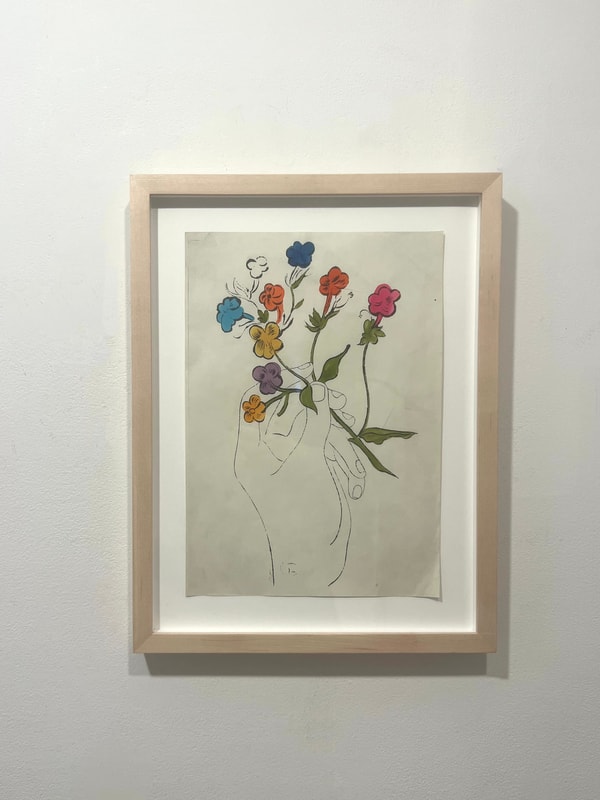
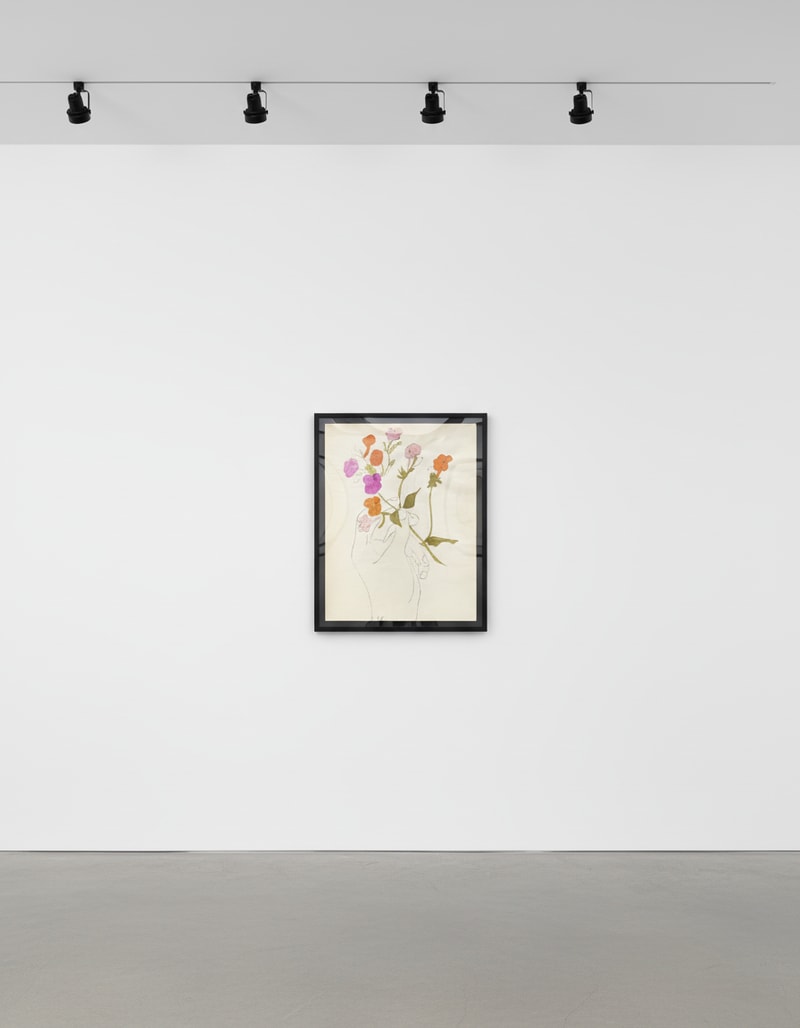
The book reproduces twenty of Warhol's 'blotted line' drawings by offset lithography, fifteen printed on gold-coloured metallic paper and five on cream paper with added colour ink, separated by coloured tissue-paper barrier sheets.
It was dedicated "to Boys, filles, fruits and flowers, shoes, T.C. and E.W.", referencing Warhol's friend Ted Carey and his then-lover, photographer Edward Wallowitch, whose photographs formed the basis for several of the drawings.
Warhol's mother, Julia Warhola, contributed hand-lettering to the book, and the volume was designed by Georgie Duffee.
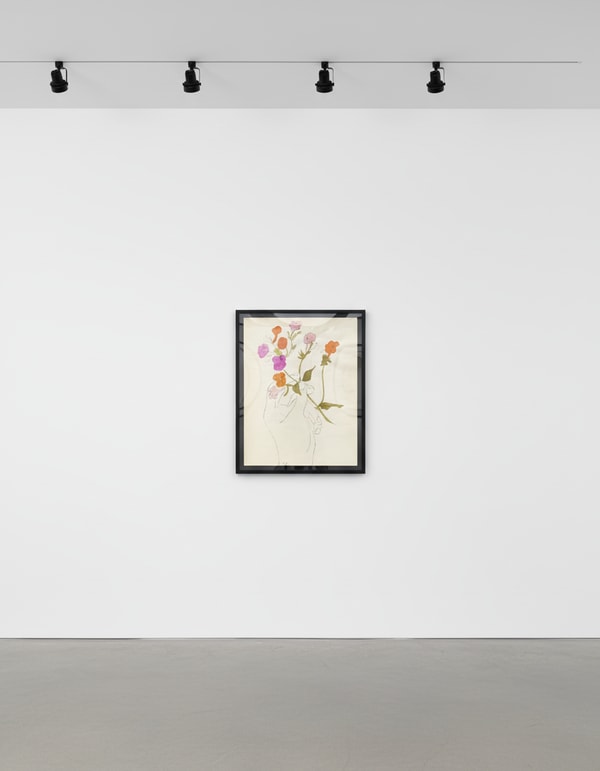
Each signed copy features a cutout of Warhol's line drawing of a hand clasping a flower pasted to the gold-paper-covered front board of the binding.
Market Data
See real auction history, estimate ranges and price benchmarks for individual A Gold Book prints, sourced from Christie's, Sotheby's and other major auction houses.
Frequently Asked Questions
Andy Warhol A Gold Book prints for sale are available at Guy Hepner Gallery, 529 West 20th Street, New York (by appointment). We offer authenticated editions with full provenance documentation sourced from the secondary market and directly from publishers.
Andy Warhol A Gold Book works — 4 available — are typically produced as limited editions, individually signed and numbered by the artist. Contact Guy Hepner Gallery for edition details on specific works.
Pricing for Andy Warhol A Gold Book prints varies by edition size, date, and condition. Contact Guy Hepner Gallery for current market pricing and availability.
From the Journal
More Andy Warhol Series
View all Andy Warhol works →