Dollar Signs

August 13, 2026
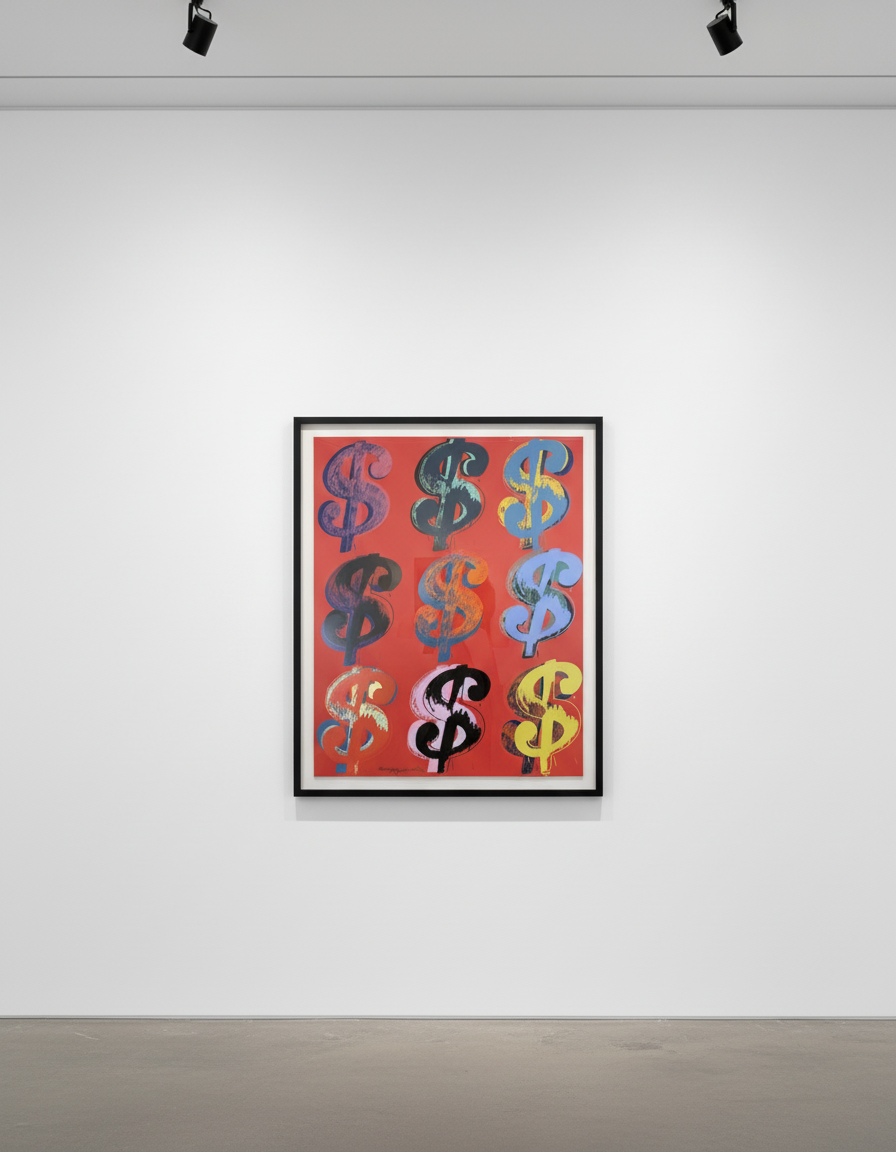
When Andy Warhol painted the dollar sign, he wasn't being ironic — he was being honest. "I like money on the wall," he famously remarked. "Say you were going to buy a $200,000 painting. I think you should take that money, tie it up, and hang it on the wall." The Andy Warhol Dollar Sign series represents perhaps the most transparent moment in the artist's career: a body of work that collapses the distance between art and commerce so completely that the two become indistinguishable. First exhibited at Leo Castelli Gallery in January 1982, these paintings, drawings, and screen prints arrived at precisely the right cultural moment — the dawn of the Reagan era, when wealth became aspirational rather than something to apologize for, and when the art market itself was transforming into an arena of speculation and spectacle.
For serious collectors, the Dollar Signs occupy a unique position within Warhol's oeuvre. They are simultaneously among his most commercially explicit works and his most conceptually rigorous. Unlike the Campbell's Soup Cans or Brillo Boxes, which required viewers to accept everyday consumer products as worthy subjects, the Dollar Signs eliminate the product entirely. What remains is the symbol of exchange itself — money as the ultimate American icon, the thing that makes all other transactions possible. This is Warhol at his most self-aware, creating works that acknowledge their own status as luxury commodities while commenting on the system that assigns them value.
Warhol's relationship with money as subject matter began two decades before the Dollar Signs. In 1962, he created his first paintings of American currency — front and back views of dollar bills rendered with the meticulous attention typically reserved for fine art subjects. These early works coincided with his experiments in screen printing and marked his initial exploration of commercial imagery as artistic content. When asked how he came to paint money, Warhol offered a characteristically deadpan explanation: "I'd asked around 10 or 15 people for suggestions. Finally one lady friend asked the right question, 'Well, what do you love most?' That's how I started painting money."
The Dollar Sign series of 1981-1982 represented a return to this foundational subject, but with crucial differences in approach and execution. Rather than depicting actual currency, Warhol isolated the typographic symbol — the "$" itself, stripped of any specific denomination or governmental apparatus. This abstraction transformed the work from representation to pure signification. The dollar sign became a logo for capitalism, instantly recognizable and infinitely reproducible, much like the consumer products Warhol had celebrated throughout his career. The timing proved prescient: the series debuted just as the American economy was emerging from recession into the boom years that would define the decade.
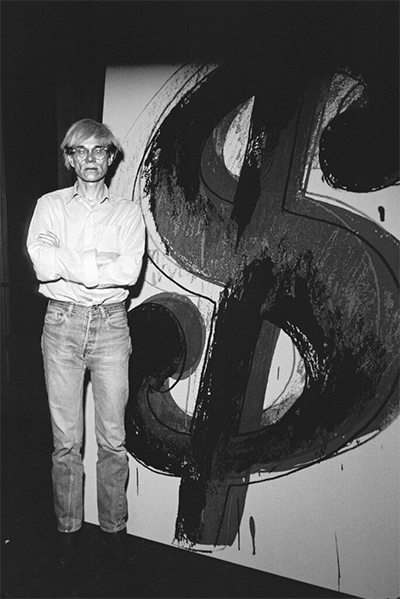
The January 1982 exhibition at Leo Castelli Gallery presented the Dollar Signs as a major statement, positioning them alongside Warhol's most significant bodies of work. Critics immediately recognized the series as a bold reinvention of the relationship between art and commerce. Where earlier Pop Art had elevated consumer goods to the realm of fine art, the Dollar Signs went further, making the very mechanism of value exchange the artwork itself. Warhol understood that in doing so, he was creating works that would function simultaneously as commodities and as commentary on commodification — a conceptual loop that continues to fascinate collectors and scholars alike.
The Dollar Signs emerged during a transformative period in both American culture and the international art market. Ronald Reagan's election in 1980 signaled a shift in national attitudes toward wealth and consumption. The conspicuous accumulation that had seemed gauche in previous decades became aspirational, even patriotic. Warhol, always attuned to cultural currents, recognized that the moment called for art that addressed money directly rather than through the intermediary of consumer products. "Good business is the best art," he declared, a statement that served as both provocation and sincere artistic philosophy.
The art market itself was undergoing rapid transformation. Auction prices for contemporary art were climbing to unprecedented levels, and collecting had become a form of cultural participation for a new generation of wealthy buyers. Warhol understood this dynamic intimately — he had built his career on the recognition that the line between commerce and culture had become effectively meaningless. The Dollar Signs acknowledged this reality with characteristic wit, offering collectors the opportunity to purchase works that were explicitly about the transaction itself. The series thus functions as a kind of meta-commentary: to own a Dollar Sign is to participate in exactly the system it depicts.
The market has validated Warhol's vision decisively. An original canvas from the series achieved £9.9 million (approximately $15.4 million) at Sotheby's in 2015, affirming the Dollar Signs' status among the most coveted images of his final decade. This result reflects not merely art market inflation but genuine collector enthusiasm for works that capture something essential about American culture. The Dollar Signs have proven remarkably durable as both aesthetic objects and cultural documents, their relevance undiminished by the passage of time.
The Dollar Sign series encompasses multiple formats, from unique paintings to editioned prints, each offering different entry points for collectors. Understanding the distinctions between these formats is essential for anyone considering acquisition. The screen prints, published in 1982, represent the most accessible form of the series and demonstrate Warhol's mastery of the medium he had pioneered throughout his career.
The print portfolio consists of several distinct compositions, each assigned a catalogue number in the Feldman and Schellmann catalogue raisonné, the definitive reference for Warhol prints. The single dollar sign compositions (F. & S. II.274-280) present the symbol in isolation, allowing the graphic power of the mark to dominate the visual field. These works emphasize Warhol's handling of color and his ability to transform a simple typographic element into a compelling image. The quadrant compositions (F. & S. II.281-284) arrange four dollar signs in grid format, creating visual rhythms through color variation while maintaining the serial repetition that characterized much of Warhol's practice.
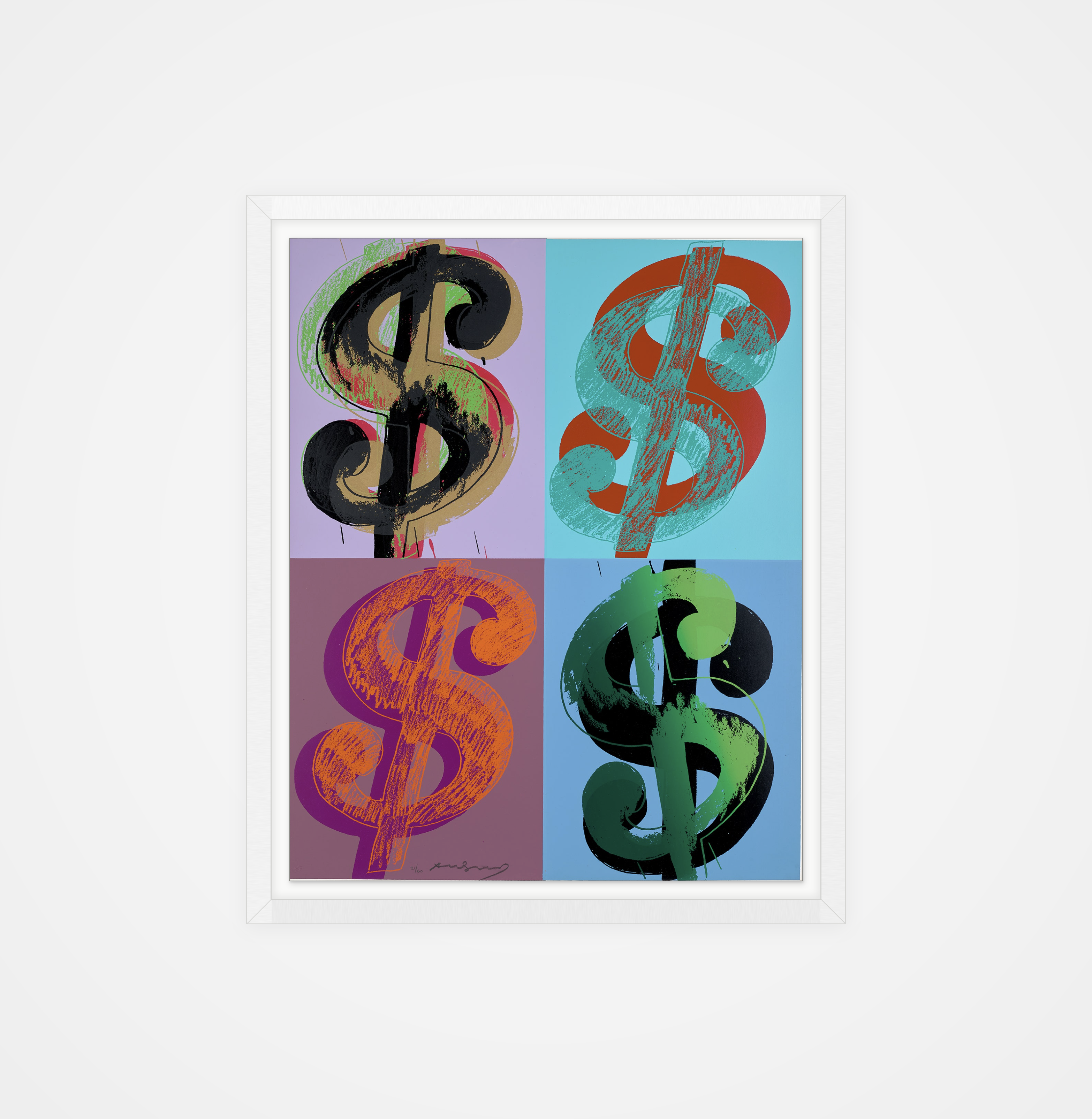
Andy Warhol, $ (Quadrant) F.S. II.283, 1982, Unique screenprint on Lenox Museum Board. Available at Guy Hepner, New York.
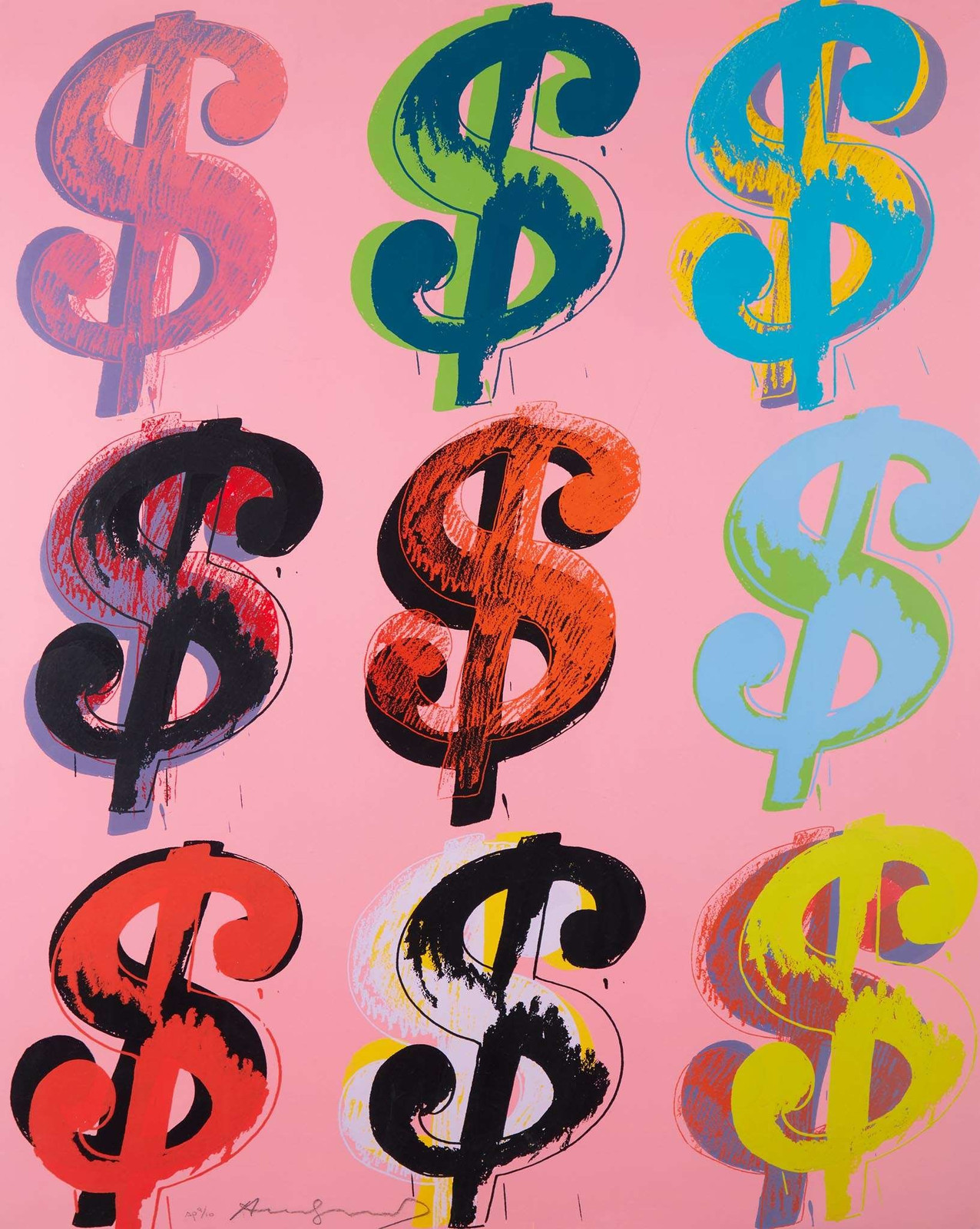
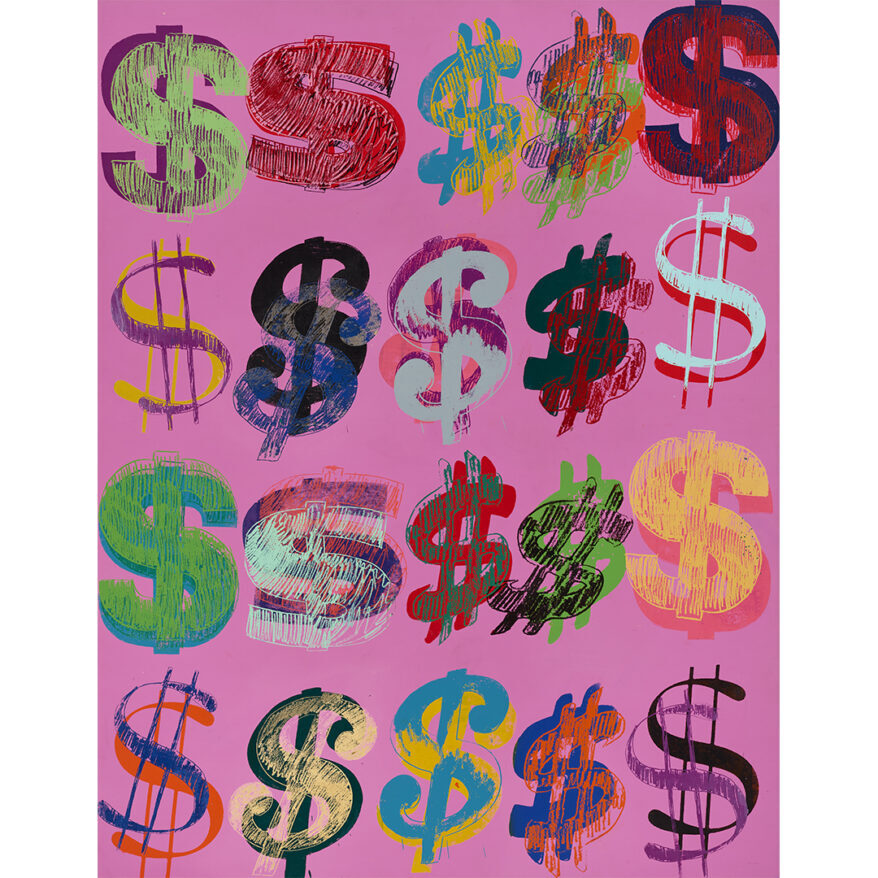
The nine-sign composition (F. & S. II.285-286) represents the most visually dense arrangement, presenting a three-by-three grid of dollar signs against a colored ground. This format echoes Warhol's earlier grid compositions, from the Marilyn Diptych to the Flowers series, while applying the approach to purely abstract symbolic content. The multiplication of the motif reinforces the series' themes of reproducibility and accumulation — the dollar sign repeated becomes a visualization of wealth compounding, the symbol breeding more of itself in endless proliferation.
The prints were executed on Lenox Museum Board, a high-quality substrate that provides excellent color saturation and archival stability. This choice of paper reflects Warhol's professional standards and ensures that well-preserved examples retain their visual impact decades after production. The screen printing technique allows for subtle variations between impressions, making each print slightly unique despite belonging to an edition. Collectors should examine potential acquisitions carefully, as condition and color registration significantly affect both aesthetic quality and market value.
Navigating the edition structure of the Dollar Sign prints requires attention to the specific catalogue numbers and their associated production runs. Warhol produced several distinct compositions, each with its own edition parameters and market characteristics. Understanding these details allows collectors to identify works that align with their collecting objectives and budget constraints.
The standard edition prints were produced in the following formats:
Beyond the standard editions, collectors may encounter trial proofs, artist's proofs, and unique variants that fall outside the numbered editions. Trial proofs (TPs) represent early impressions pulled during the development of color combinations and may show variations from the final published versions. Artist's proofs (APs) were reserved for Warhol's personal use and typically exist in small quantities outside the numbered edition. Unique screenprints, particularly from the quadrant compositions, offer unrepeatable color combinations that make each impression a singular work.
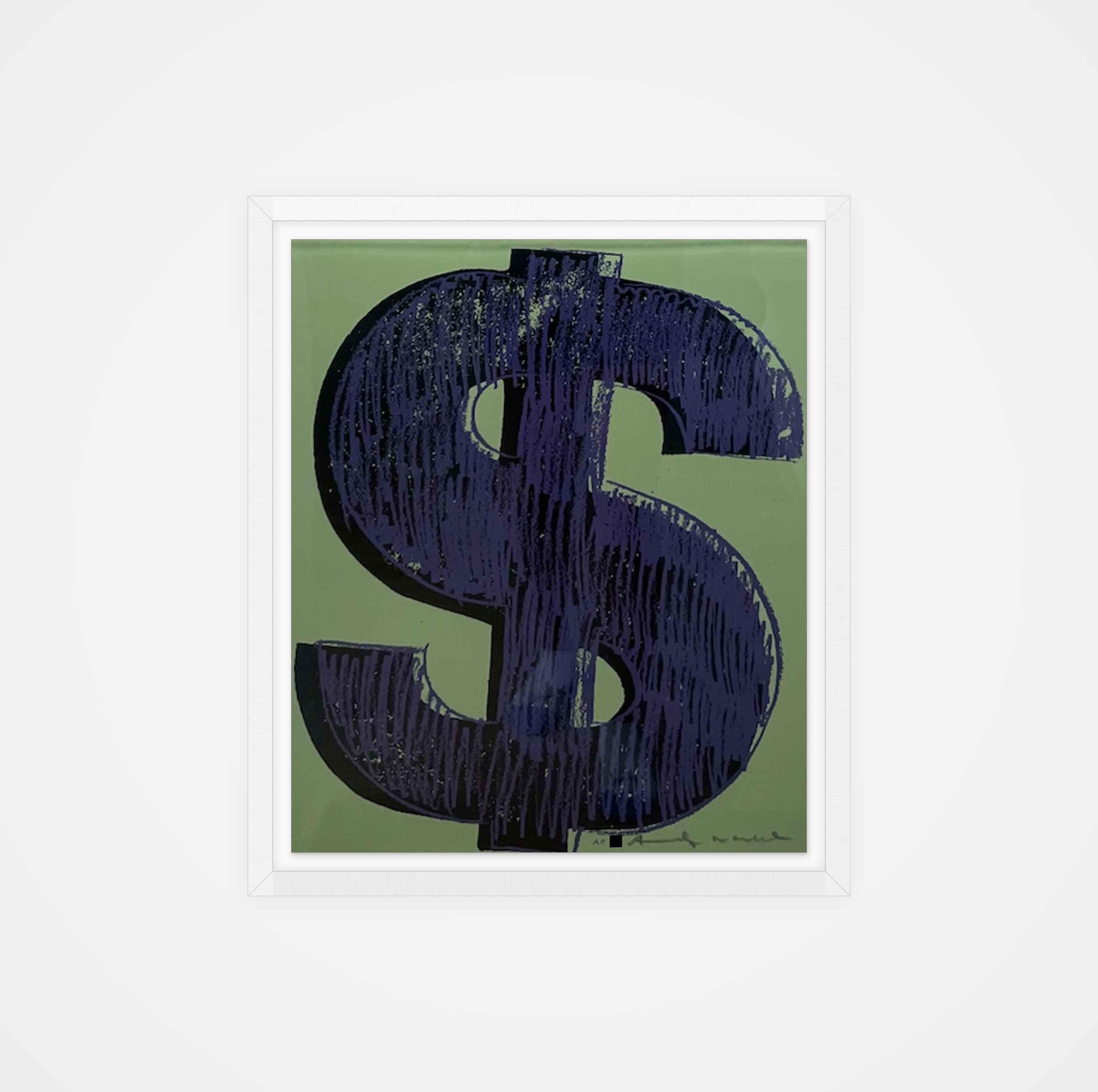
Andy Warhol, Dollar Sign $ (1), 1982, Screenprint on Lenox Museum Board. Available at Guy Hepner, New York.
The unique screenprints deserve particular attention from collectors seeking works with enhanced rarity. Unlike editioned prints, which exist in multiple identical impressions, unique works feature color combinations that appear nowhere else in the series. These variants often emerged from Warhol's studio practice of experimenting with color during the printing process, saving exceptional results as standalone works. The unique prints from the Dollar Sign series combine the accessibility of the print medium with the singularity typically associated with paintings or drawings.
Assessing the quality and condition of Dollar Sign prints requires attention to several factors that affect both aesthetic appeal and market value. Experienced collectors develop an eye for distinguishing exceptional impressions from merely acceptable ones, and understanding these criteria helps ensure successful acquisitions.
Key evaluation factors include:
Condition issues to watch for include fading (particularly in the brighter colors), surface abrasions from improper handling, and restoration that may not be immediately apparent. Light damage can cause subtle color shifts that become more evident when comparing affected impressions to pristine examples. Any restoration should be disclosed and appropriately reflected in pricing. Works that have been extensively repaired may present conservation challenges and typically trade at significant discounts to comparable untreated examples.
Authentication represents a critical concern for any Warhol acquisition, and the Dollar Sign prints are no exception. The Andy Warhol Foundation for the Visual Arts previously operated an authentication board that reviewed submitted works, though this service has been discontinued. Today, authentication typically relies on a combination of provenance documentation, physical examination, and expert consensus.
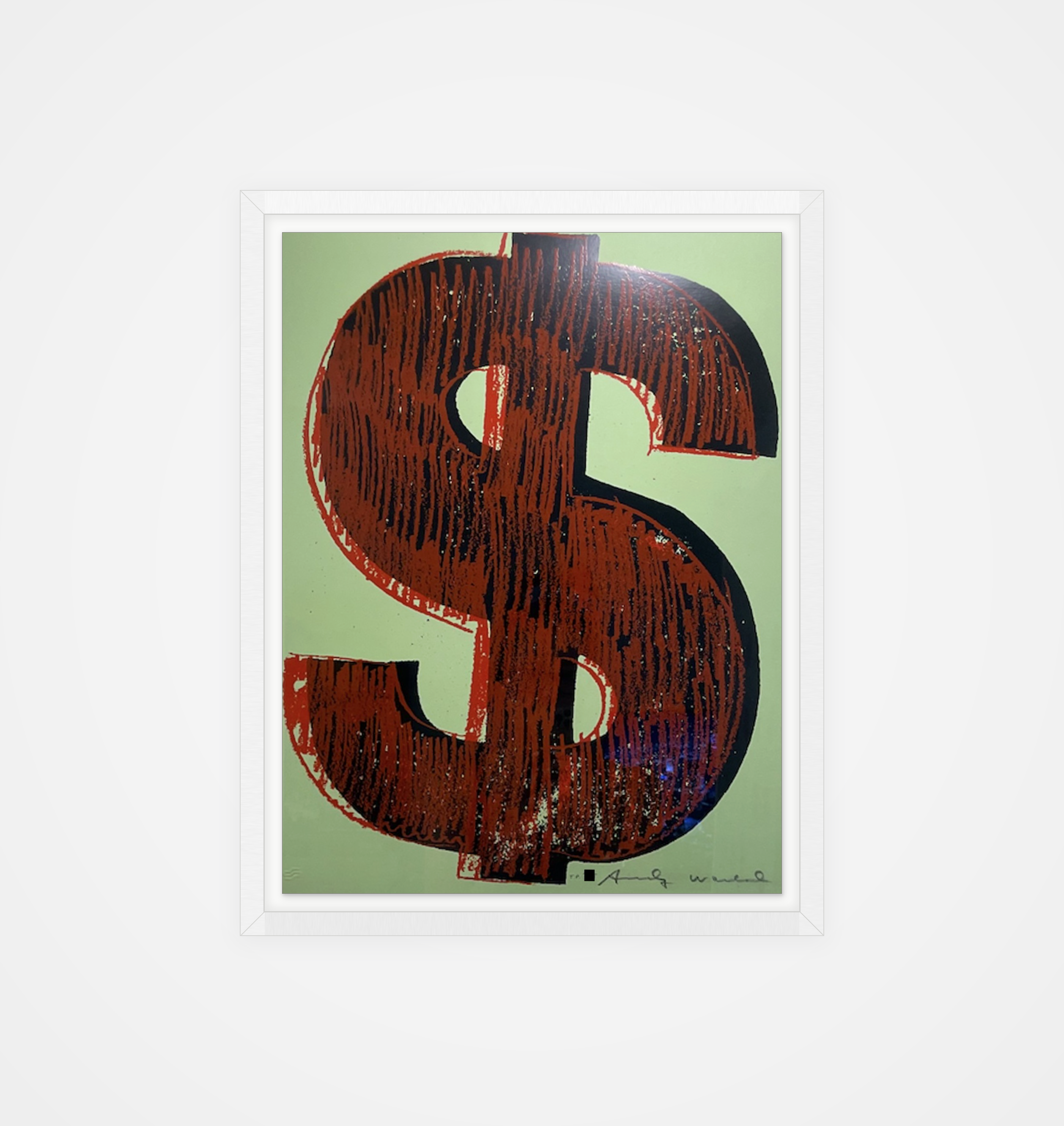
Andy Warhol, Dollar Sign $ (1), 1982, Screenprint on Lenox Museum Board. Available at Guy Hepner, New York.
The Feldman and Schellmann catalogue raisonné serves as the primary reference for Warhol prints, documenting the published editions with technical specifications and imagery. Prints listed in this catalogue carry scholarly recognition that supports their authenticity and market acceptance. However, catalogue inclusion alone does not guarantee that any specific impression is genuine — forgeries exist, and due diligence remains essential.
Provenance documentation should ideally trace the work back to its original source, whether the publisher, a gallery that handled primary sales, or Warhol's studio. Gaps in provenance are not necessarily disqualifying but should be evaluated in context. Works with continuous ownership histories from recognized sources command premium prices and present lower risk. Collectors should request any available documentation — invoices, exhibition catalogues, conservation records — that supports the work's history.
Working with established dealers who specialize in Warhol prints provides an additional layer of protection. Reputable galleries conduct their own due diligence before offering works and typically provide guarantees of authenticity. This expertise represents real value, particularly for collectors new to the market or unfamiliar with the technical aspects of print authentication.
Pricing for Dollar Sign prints varies considerably based on composition, condition, rarity, and market conditions. Understanding the general pricing landscape helps collectors set realistic expectations and identify opportunities within their budgets. While specific prices fluctuate with market conditions, certain patterns provide useful guidance.
The single dollar sign compositions typically represent the most accessible entry point to the series. Standard edition prints in good condition have historically traded in a range that makes them attainable for serious collectors who may not be pursuing the rarest or most pristine examples. Exceptional impressions with outstanding color and condition command premiums above average market levels, reflecting collector preference for quality.
The quadrant compositions generally trade at higher levels than single-sign prints, reflecting both their larger scale and increased visual complexity. Unique variants from this group command particular premiums, as they offer unrepeatable color combinations that distinguish them from editioned impressions. Collectors seeking singularity within the print medium find these unique works especially attractive.
The nine-sign compositions represent the most visually ambitious format within the print series and typically achieve prices reflecting their impact and relative scarcity. These works make strong visual statements and appeal to collectors seeking presence and scale within the constraints of works on paper.
Market dynamics for Warhol prints generally favor works in exceptional condition with strong provenance. The collector base for Warhol remains deep and international, supporting consistent demand across market cycles. The Dollar Signs benefit from their iconic status and their resonance with contemporary concerns about wealth, value, and the relationship between art and commerce. These factors suggest continued collector interest and stable to appreciating values for quality examples.
Beyond their market significance, the Dollar Signs represent a crucial development in Warhol's artistic evolution and in the broader history of conceptual art. The series marks a departure from Warhol's typical practice of appropriating found imagery, as each dollar sign was drawn by hand before being transferred to screen. This gestural quality lends the works a painterly energy that anticipates his late-career experiments with more expressive techniques. The visible brushstrokes complicate easy readings of the pieces as mere commercial commentary, introducing an element of artistic subjectivity into otherwise systematic work.
Warhol's choice to isolate the dollar sign carried significant implications for how we understand art's relationship to value. Unlike his earlier appropriations of brand imagery, the dollar sign carries no product association — it is pure abstraction rendered concrete, a universal symbol recognized across cultures. By elevating this mark to the status of fine art, Warhol forced viewers to confront questions that remain central to contemporary art discourse: What determines artistic value? How do we distinguish cultural significance from market price? Is there any meaningful difference between the two?
The series also demonstrates Warhol's continued evolution as a colorist. The combinations he employed — electric yellows against deep blacks, vibrant reds layered over cool blues — create optical tensions that activate the picture plane beyond what the simple subject matter might suggest. These works reward sustained attention, revealing subtleties of hue and texture that transcend their seemingly straightforward content. Collectors who live with Dollar Signs often report discovering new dimensions over time, as the works reveal themselves through extended engagement.
For collectors considering Dollar Sign prints, several strategic approaches merit consideration depending on objectives and resources. The series offers sufficient variety to support different collecting philosophies, from focused acquisition of specific compositions to broader surveys of Warhol's approach to the motif.
A focused approach might concentrate on acquiring the finest available example of a single composition, prioritizing exceptional condition and provenance over diversity. This strategy suits collectors who prefer depth to breadth and who appreciate the subtle variations that distinguish outstanding impressions from ordinary ones. Building expertise in a specific composition allows for confident evaluation of market opportunities.
Alternatively, collectors might pursue representative examples across multiple compositions, creating a survey of Warhol's treatment of the dollar sign theme. This approach provides visual variety and allows comparison of the different formats — single signs versus quadrants versus grids. The resulting collection demonstrates the range of Warhol's thinking within a unified conceptual framework.
Some collectors prioritize unique works, seeking the unrepeatable color combinations that exist outside the numbered editions. These variants offer singularity that editioned prints cannot match, combining the accessibility of works on paper with the exclusivity typically associated with unique objects. The premium required for unique works may be justified for collectors who value distinctiveness above all.
Guy Hepner maintains a focused selection of Dollar Sign prints at our 529 West 20th Street gallery in New York, offering collectors access to carefully vetted examples with clear provenance and accurate condition reporting. Our specialists bring deep knowledge of Warhol's print market, understanding the factors that distinguish exceptional impressions from merely acceptable ones and providing the guidance that supports confident acquisition decisions.
We recognize that acquiring significant works requires both expertise and trust. Our approach emphasizes transparency about condition, provenance, and pricing, ensuring that collectors have the information necessary to make informed decisions. Whether you are building a collection around Warhol's commercial commentary or seeking a single iconic work that captures his artistic vision, we offer the curatorial support and market knowledge that serious collecting demands.
To inquire about currently available Dollar Sign prints or to discuss your collecting objectives, we invite you to contact our New York gallery. Warhol understood that good business is the best art — and we understand that helping collectors build meaningful holdings requires the same combination of vision and execution that distinguished his own practice.
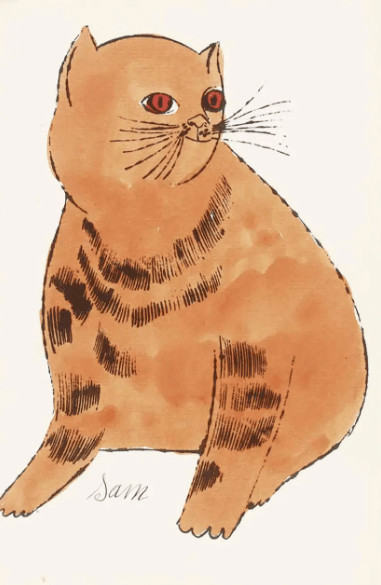
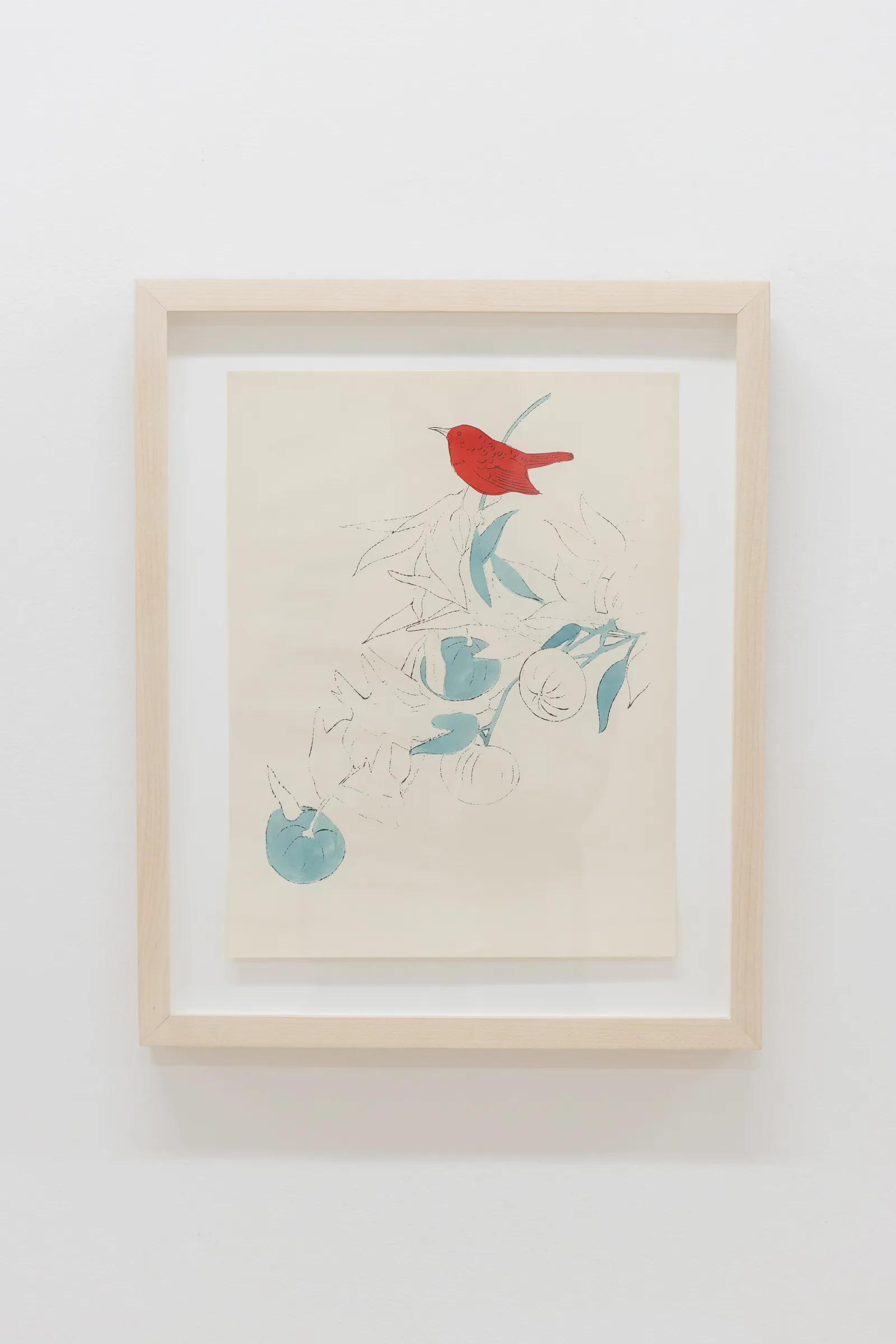
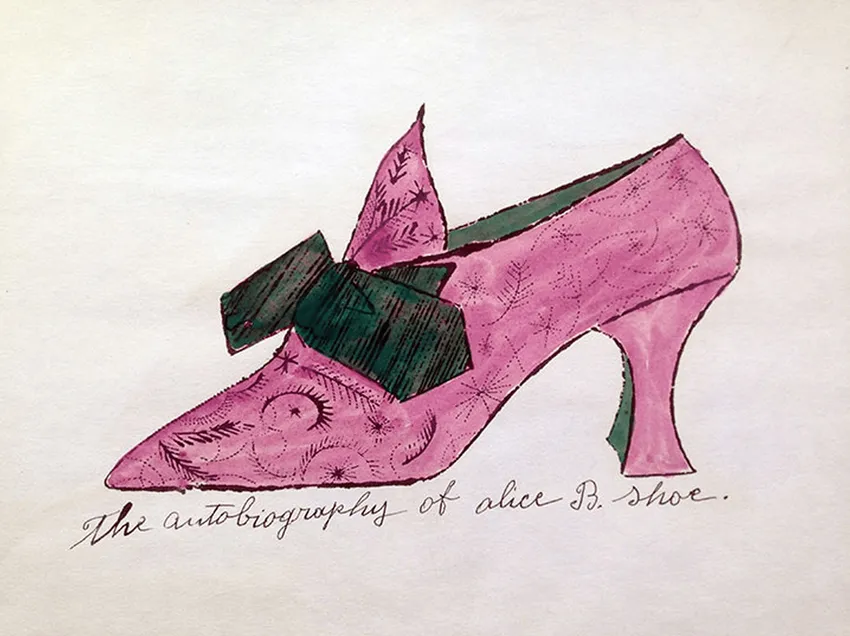
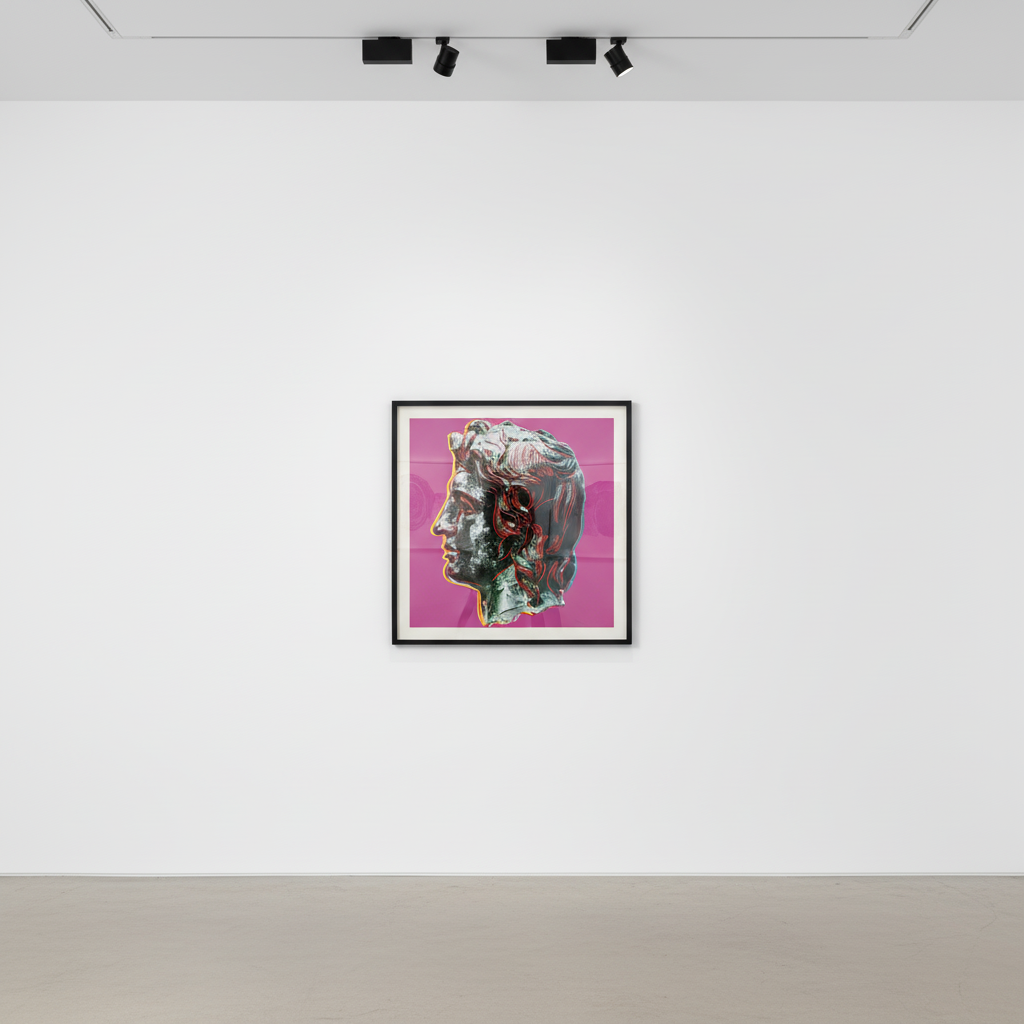
Explore Andy Warhol prints for sale at Guy Hepner: Dollar Signs, 25 Cats Named Sam, A Gold Book, A La Recherche Du Shoe Perdu, Alexander the Great.
Related Series