Amazing
1 work

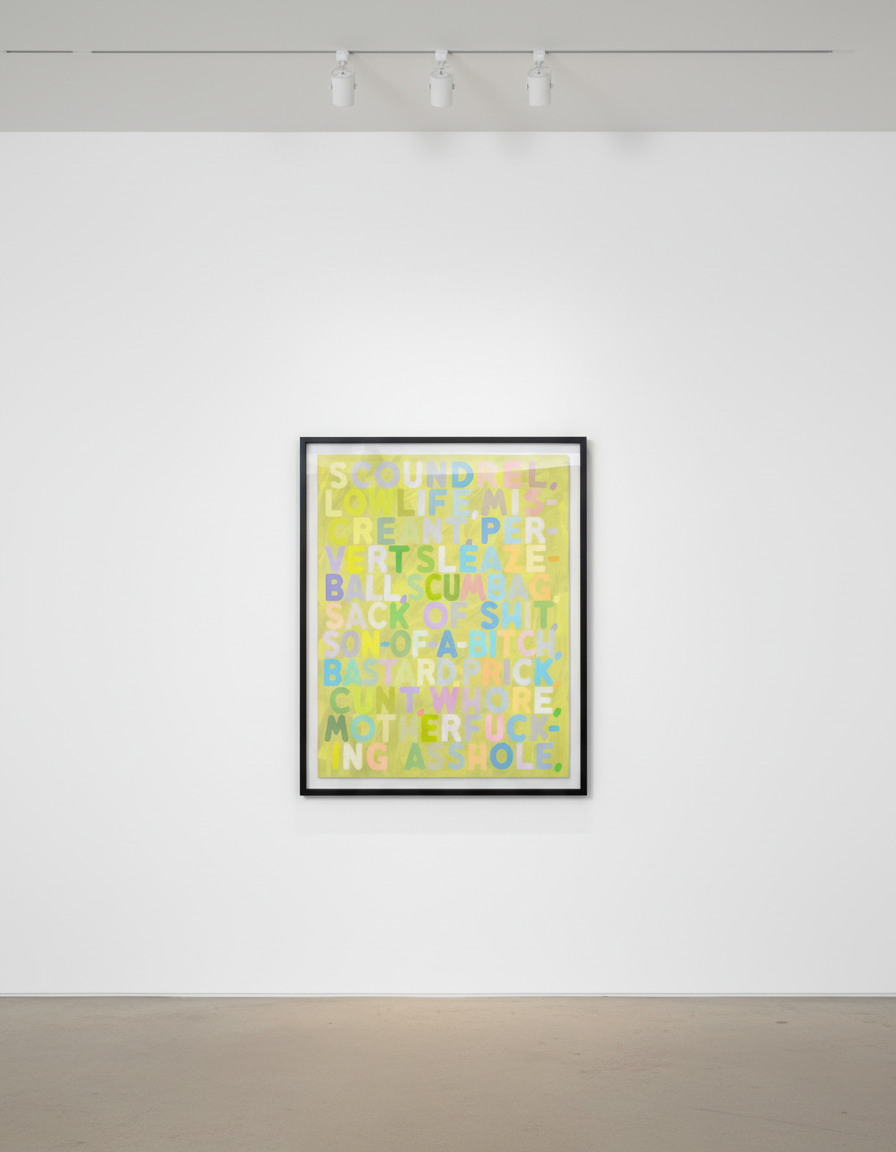
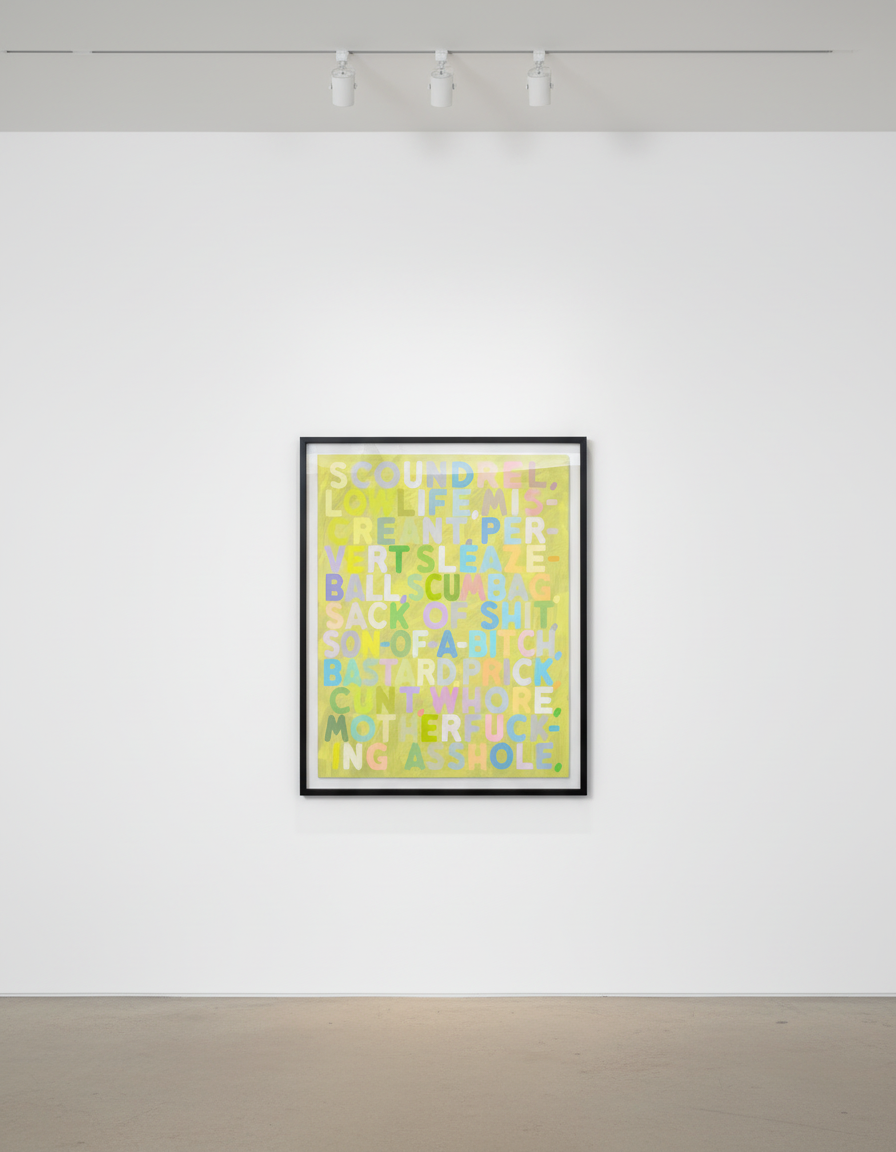
Scoundrel, 2010
136 color silkscreen
60 x 45 in 152.4 x 114.3 cm
Edition of 20
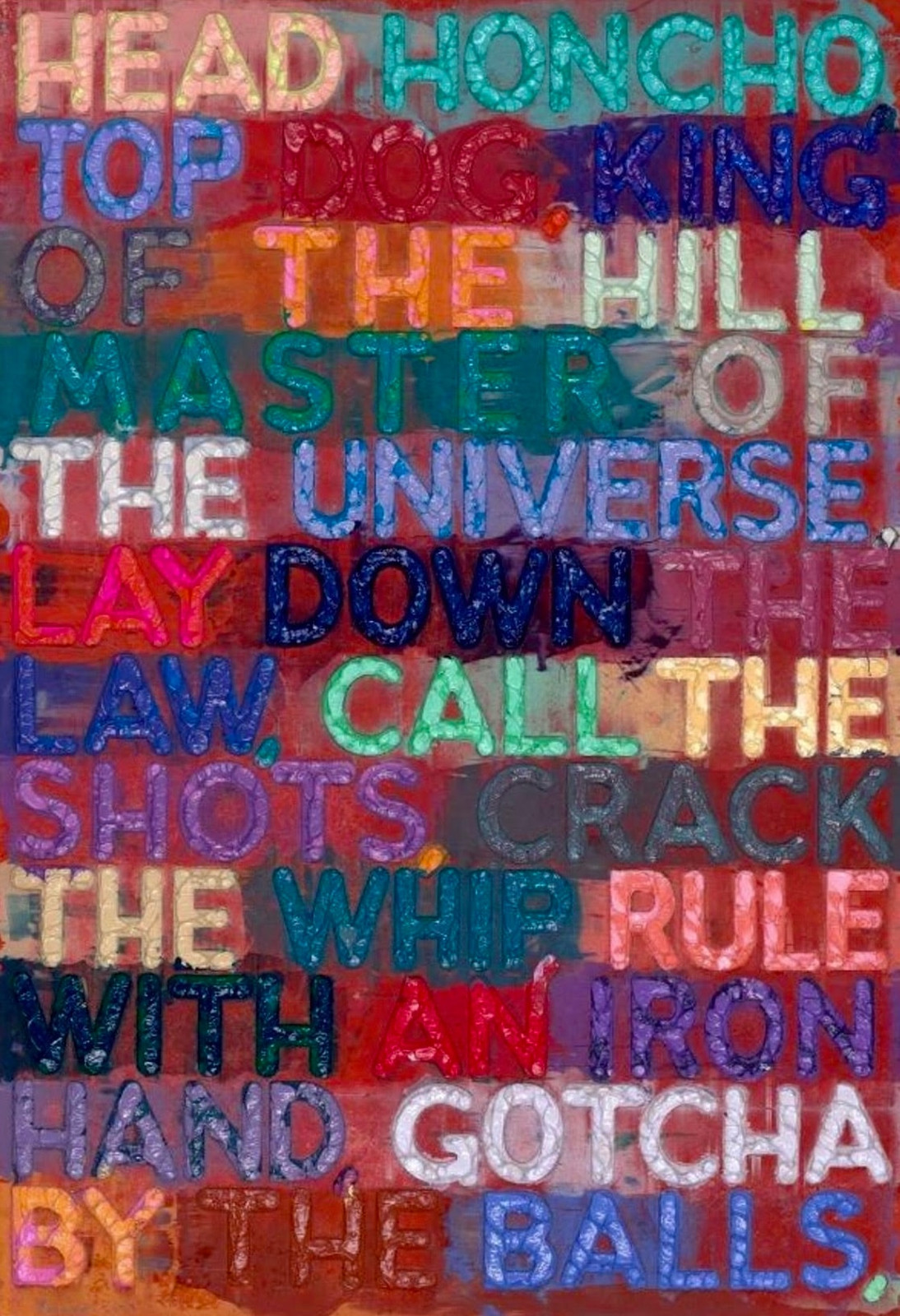
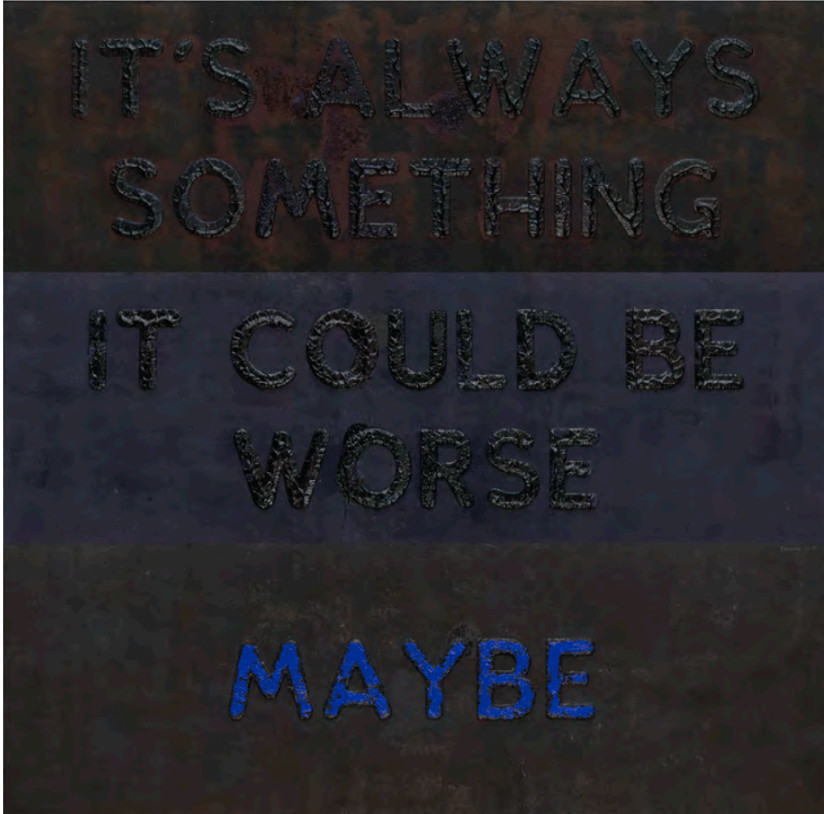
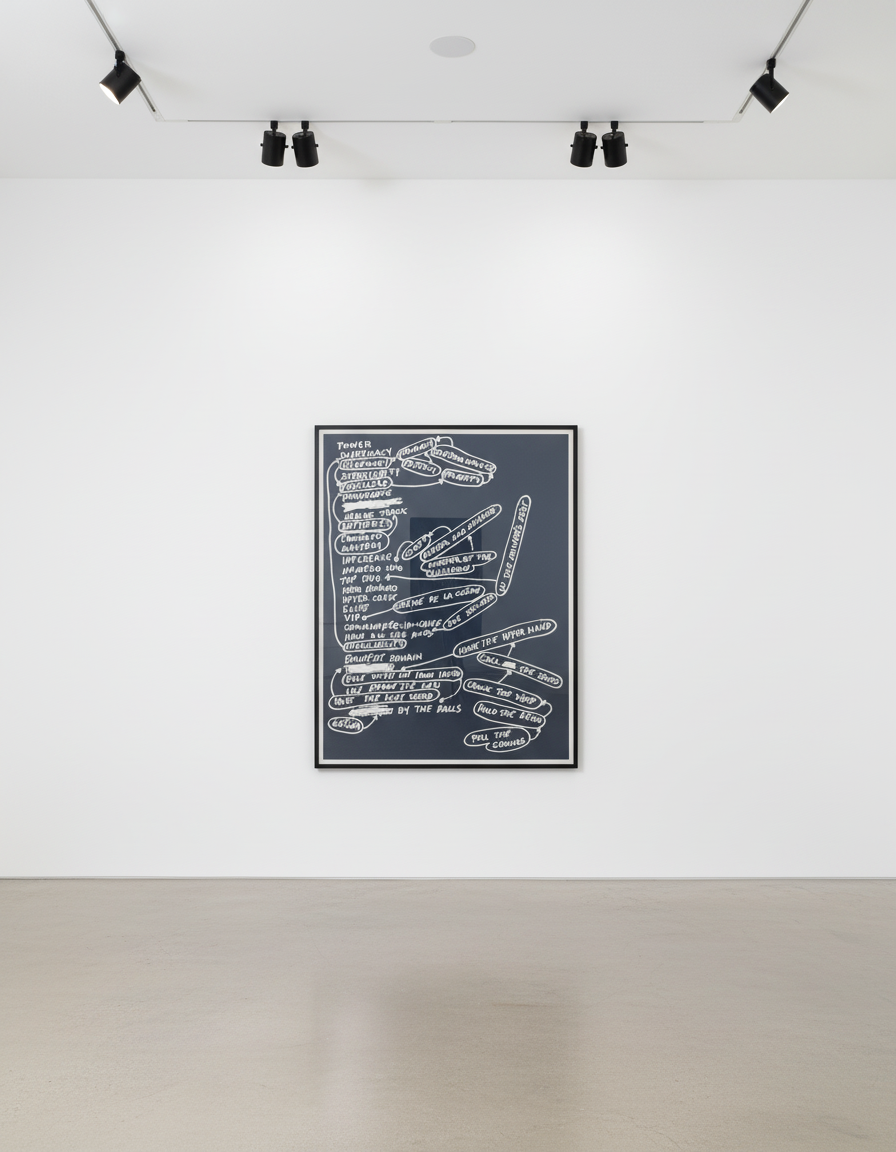
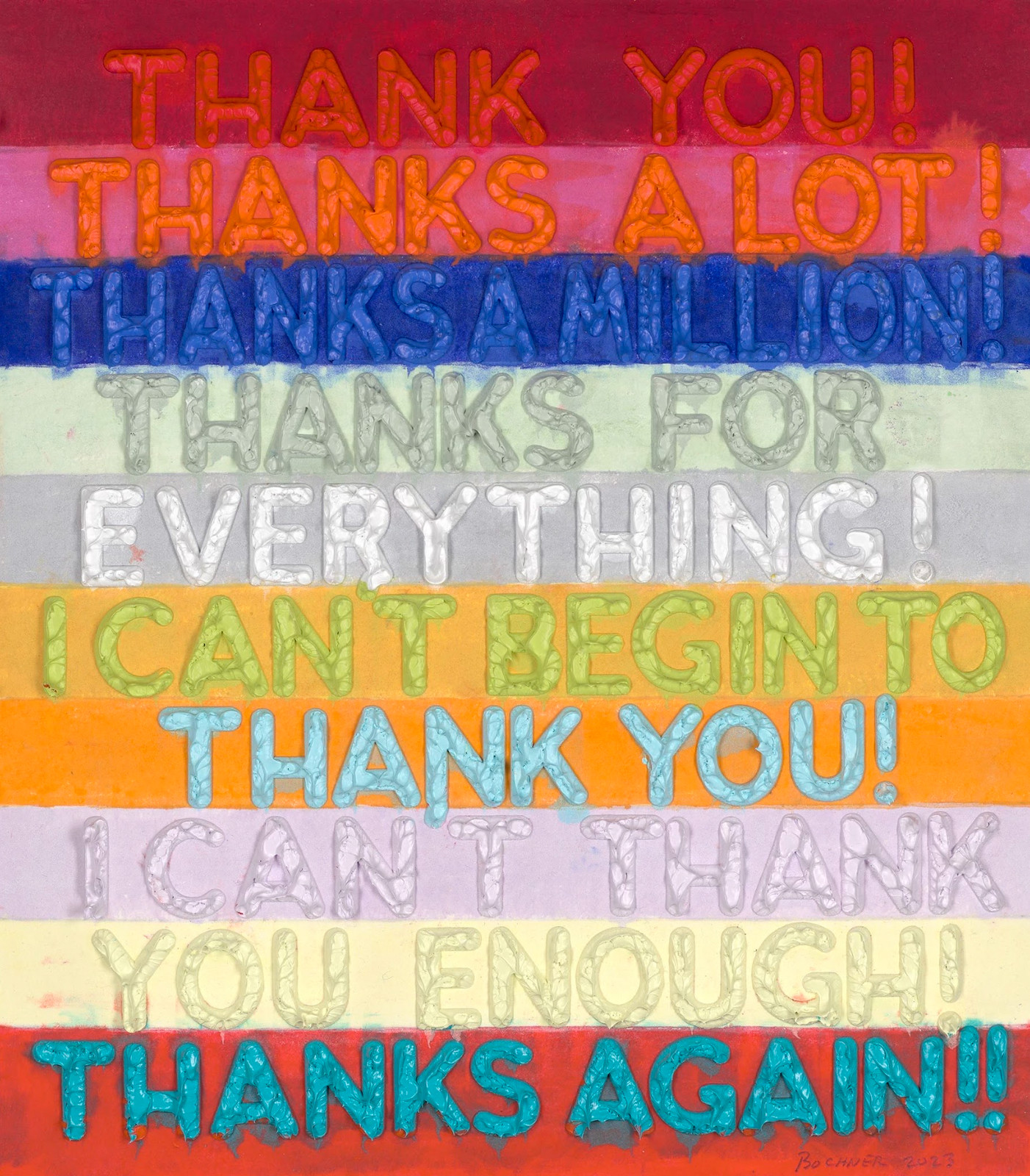
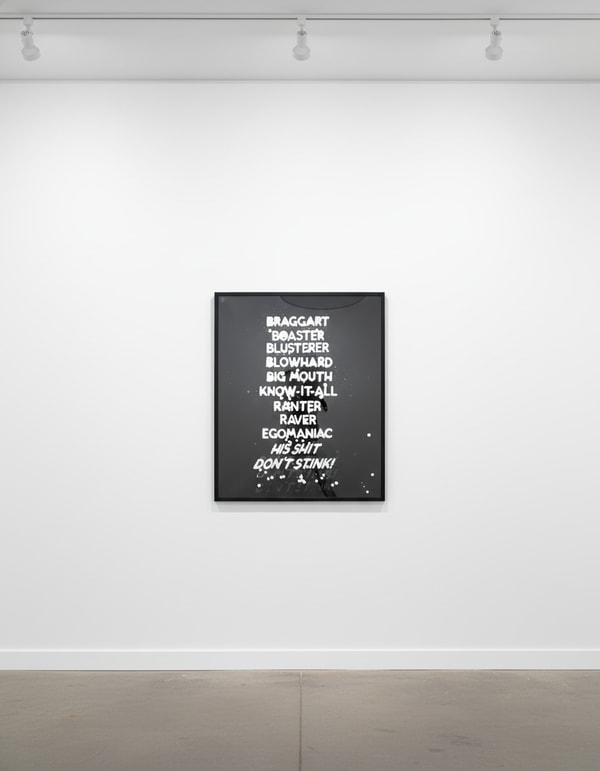
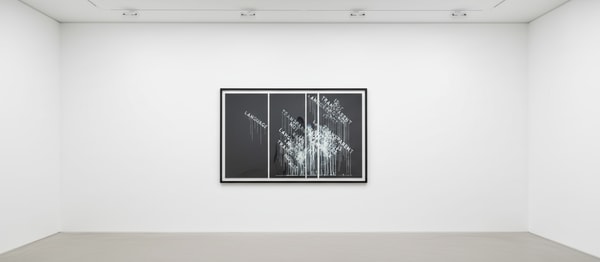
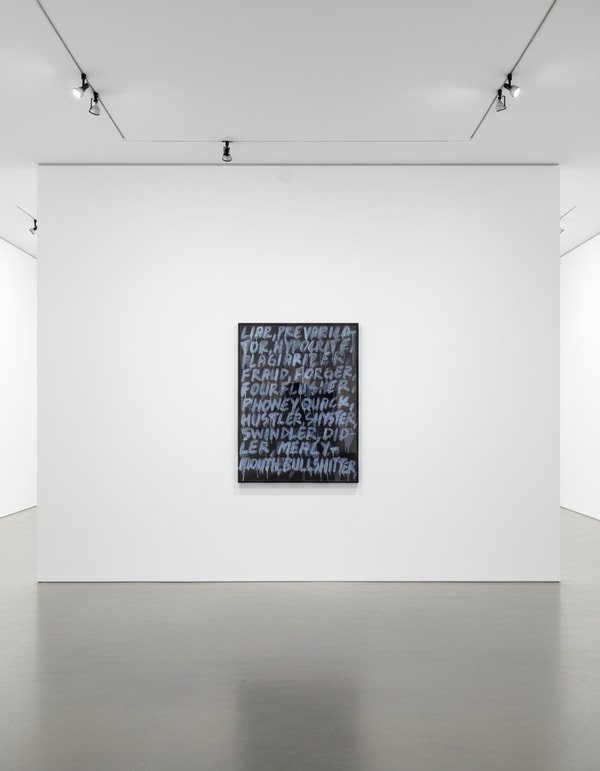
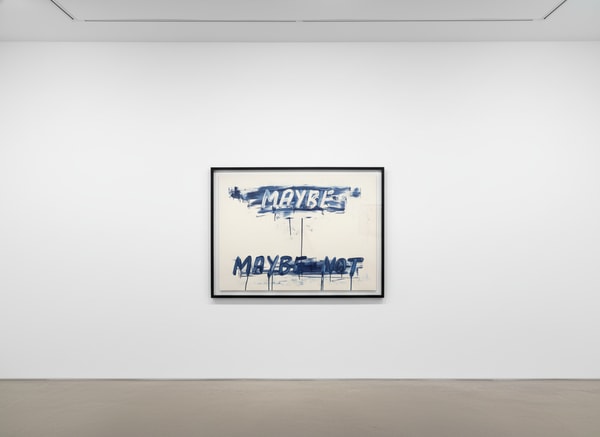
Mel Bochner's "Scoundrel" silkscreen is a compelling exploration of language, morality, and the complexities of human behavior. In this work, Bochner employs his distinctive style of layering text and vibrant colors to create a visually striking composition. The word "Scoundrel" is rendered in bold, expressive letters, filling the canvas with a sense of intrigue and ambiguity. Through the medium of silkscreen, Bochner adds depth and texture to the word, enhancing its impact and inviting viewers to contemplate its meaning. The repetition of the word "Scoundrel" reinforces its significance, prompting viewers to consider the implications of dishonesty and deceit in society. "Scoundrel" exemplifies Bochner's ability to use language as a visual tool, transforming ordinary words into works of art that provoke thought and introspection. By exploring the complexities of morality and human behavior in his silkscreen, Bochner challenges viewers to confront their own perceptions of right and wrong, ultimately leaving us to ponder the nature of ethics and integrity in the modern world.
Price on Application
Mel Bochner (b. 1940, Pittsburgh, Pennsylvania) is a foundational figure of Conceptual Art whose career bridges the rigorous intellectual demands of the 1960s New York avant-garde and a vigorous ongoing practice in language-based painting that has only grown richer and more expansive over the past two decades. Bochner studied philosophy at Northwestern University before arriving in New York, where his proximity to Sol LeWitt, Donald Judd, Robert Smithson, and the emerging Minimalist and Conceptualist milieu of the mid-1960s shaped what would become one of the most consistently challenging and philosophically serious bodies of work in contemporary American art.
His 1966 exhibition Working Drawings and Other Visible Things on Paper Not Necessarily Meant to Be Viewed as Art — mounted at the School of Visual Arts — is widely regarded as a watershed moment in the history of Conceptual Art. By placing photocopied pages of artists' working drawings and mathematical notations in looseleaf binders displayed on sculpture pedestals, Bochner challenged the most basic assumptions about what art is, what it looks like, and what institutional context it requires. From this beginning he developed a practice organised around number, measurement, and language. His Measurement series, begun in 1969, used tape and adhesive labels to inscribe actual dimensions onto walls and floors — making the space of display itself the subject of the work. These pieces, executed in museums and galleries over decades, remain among the most intellectually rigorous interventions in the relationship between art, architecture, and quantification.
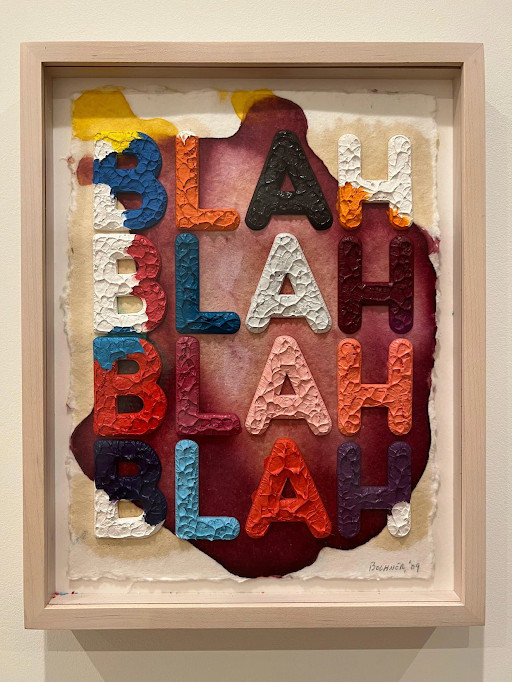
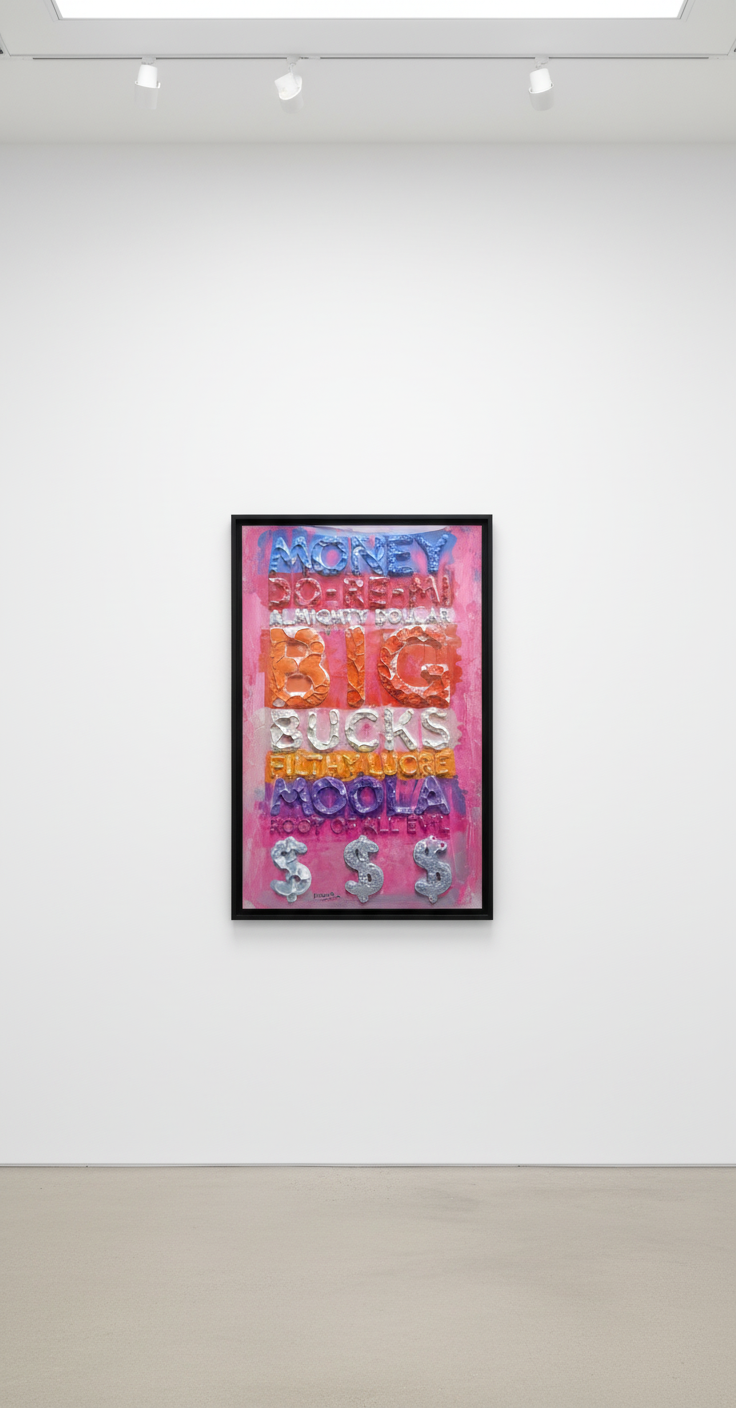
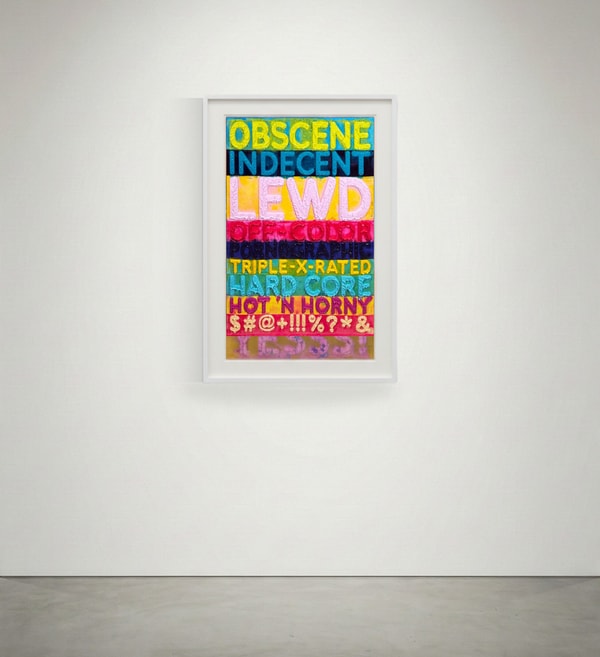
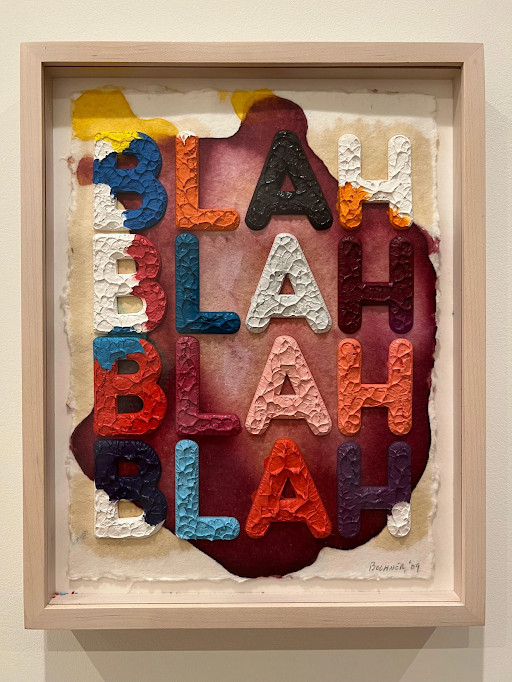
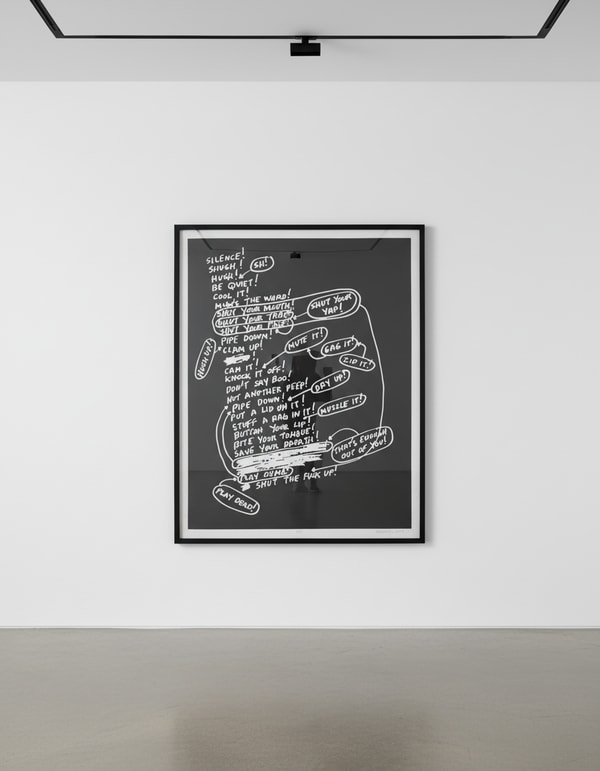
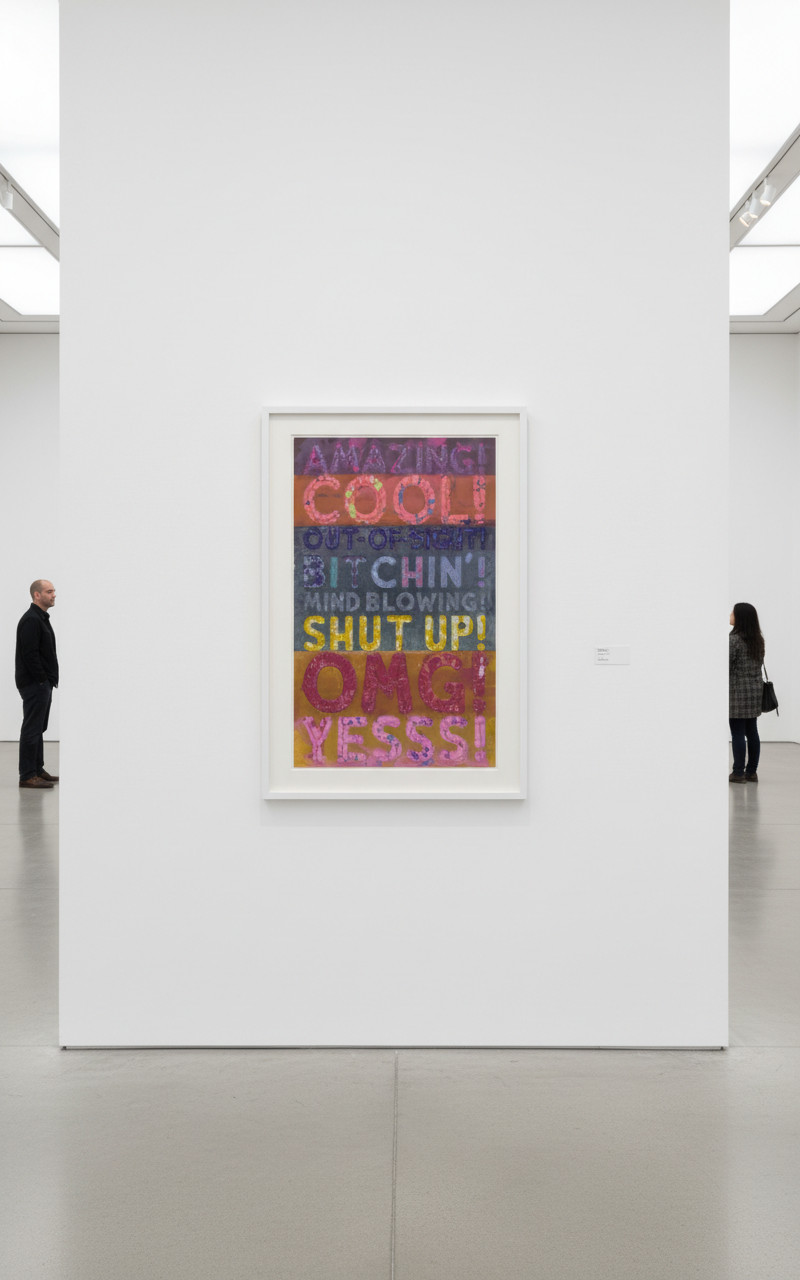
In parallel with this conceptual rigour, Bochner developed the Thesaurus paintings — large-scale works in which synonyms for a single word (Blah, Crazy, Boring, Money, Failure) are painted in bold, gestural typography, often in competing or clashing colours. These works, begun in the early 2000s, have become among his most recognised and commercially successful: they carry the intellectual freight of his Conceptualist formation while operating with the visual directness and wit of the best text-based art. Works at the major auction houses have achieved high six-figure and occasionally seven-figure results. His print editions, including Thesaurus-based screenprints and related works, have attracted serious collector attention.
Bochner's work is held in permanent collections at the Museum of Modern Art, Tate Modern, the Whitney Museum of American Art, the Metropolitan Museum of Art, the Centre Pompidou, the Art Institute of Chicago, and the National Gallery of Art, Washington, among many others. Retrospectives and major survey exhibitions have confirmed his place as one of the essential figures of postwar American art.
Guy Hepner brings deep expertise to the Mel Bochner print and edition market. Our gallery at 177 Tenth Avenue, New York works with collectors seeking to acquire or sell his work, and we offer free, confidential valuations for works in private hands. We are well positioned to advise on the full range of his output, from early conceptual works to the major Thesaurus paintings and editions.