25 Cats Named Sam
20 works

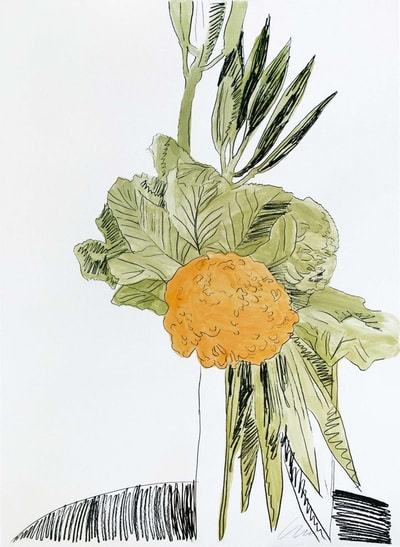
The Hand-Colored Flowers occupy a distinctive position within Andy Warhol's print market—works that bridge the mechanical reproducibility central to his practice with the irreducible presence of the artist's hand. This tension drives serious collector interest and creates notable price differentiation across the series.
Warhol's broader market continues to demonstrate exceptional strength at the highest levels. Shot Sage Blue Marilyn set the benchmark for any twentieth-century artwork at $195,040,000 (Christie's, May 2022). Mao F.S. II.96 and II.97 each reach $4,648,000, while Sotheby's moved Flowers prints at $4,076,000 and $3,832,000 the same month. These figures confirm sustained institutional and private appetite for Warhol's iconic imagery. The Hand-Colored Flowers offer collectors access to unique characteristics within an established series—a proposition that resonates with those building focused Warhol holdings.
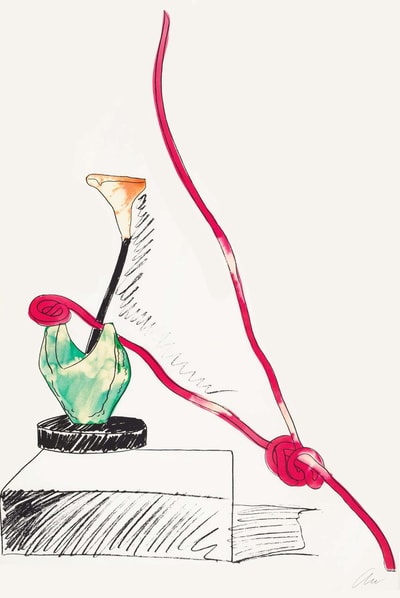
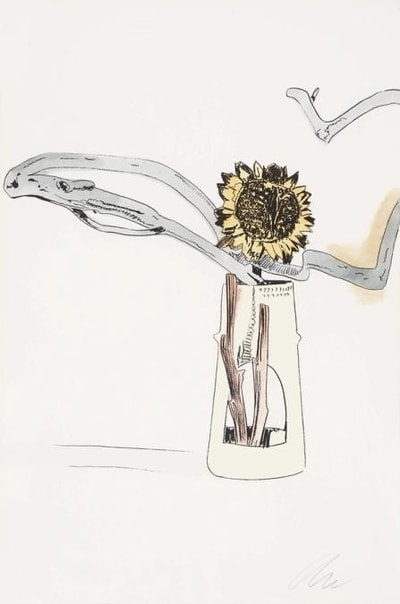
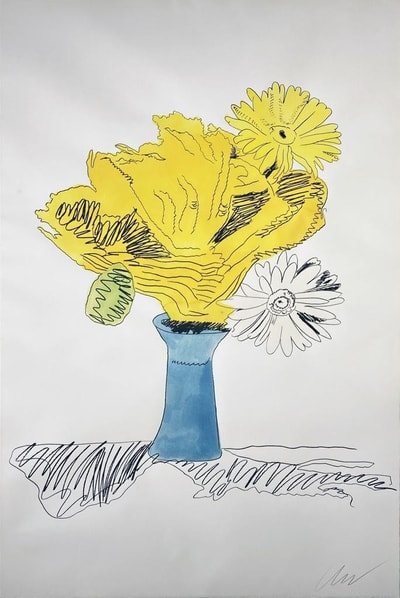
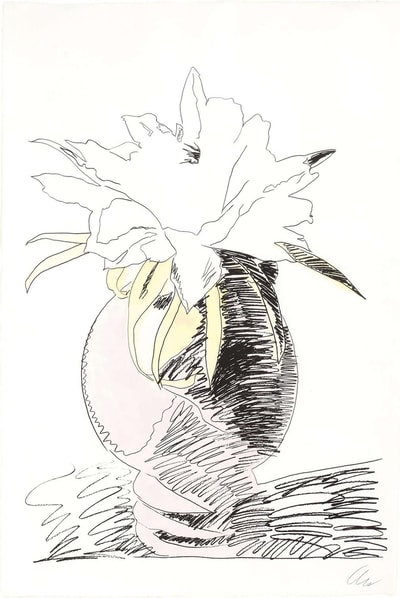
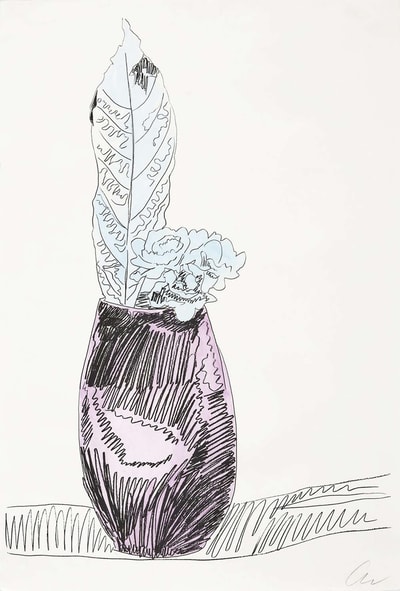
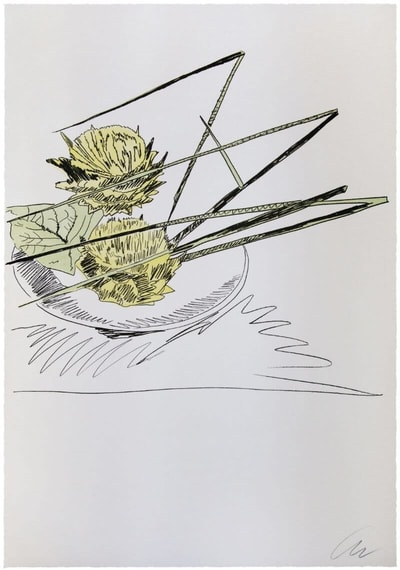
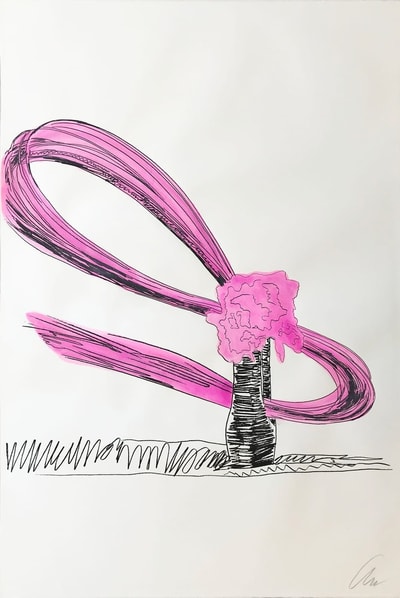
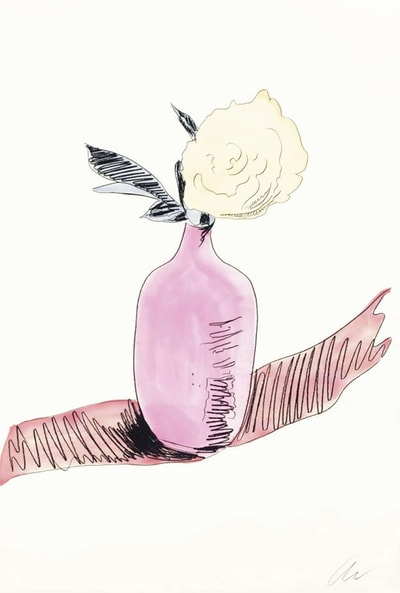
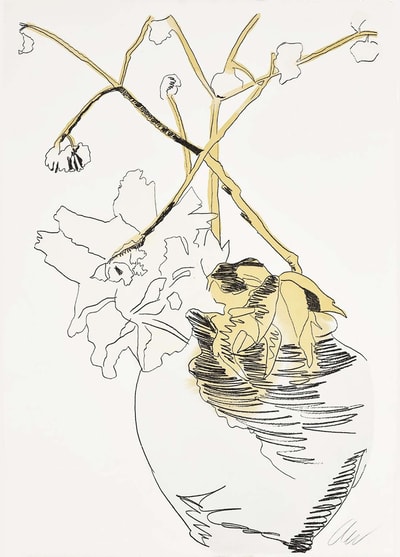
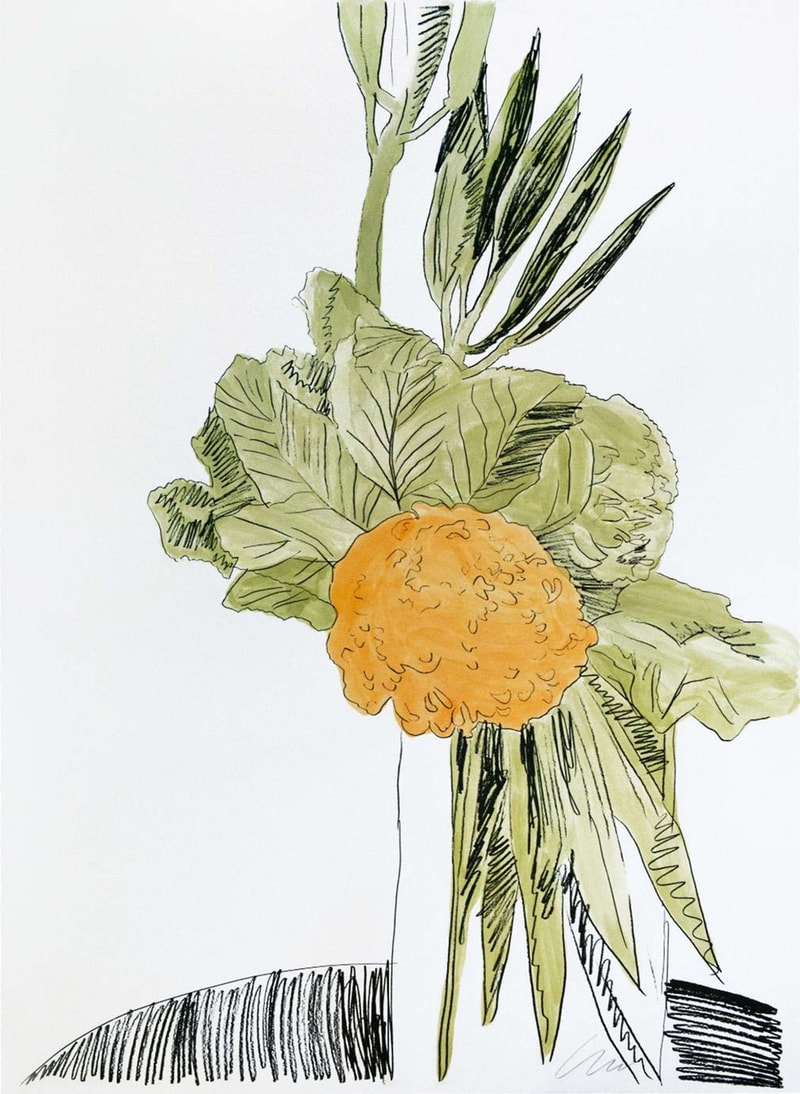
Created in 1974 and published by Factory Additions, New York, the Hand-Colored Flowers series comprises screenprints on Arches paper and J. Green paper, each measuring 40 x 27 inches. What distinguishes these works is Warhol's application of Dr. Martin's aniline watercolor dyes—a deliberate intervention that transforms each impression into something approaching a unique work.
The source imagery derives from a photograph by Patricia Caulfield, which Warhol appropriated for his 1964 Flowers paintings and subsequent print editions. By 1974, Warhol had revisited the motif multiple times, but the hand-coloring introduced here marked a departure: the mechanical becomes personal, the edition becomes individuated. Each impression bears different color applications, densities, and gestural choices, making direct comparison between works in the series essential when acquiring.
The use of Dr. Martin's dyes—a commercial product favored by illustrators—maintains Warhol's conceptual framework of incorporating industrial materials while simultaneously introducing variability that collectors prize.
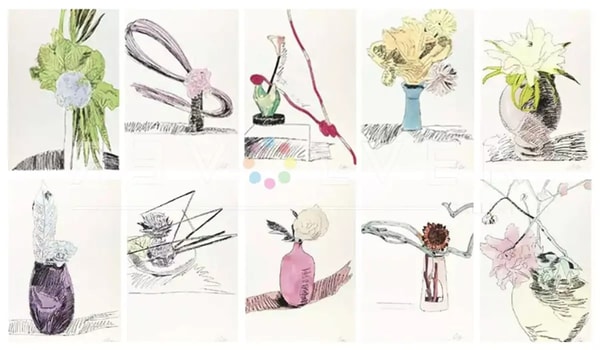
These prints, with each catalogue number presenting distinct compositional arrangements and color palettes in the underlying screenprint, are further diversified by Warhol's hand-coloring.
This work commands the strongest auction history within the series, reflecting collector preference for its particular color balance and the quality of surviving impressions. The $10,245,000 result from 2014 established this work as the market leader, though subsequent sales demonstrate the critical importance of individual impression quality.
This work has traded more modestly—$70,600 in October 2007—but represents an acquisition opportunity for collectors focused on building comprehensive Flowers holdings. The dramatic price differential between works in this series reflects condition variance and the specific characteristics of each hand-colored application rather than inherent compositional hierarchy.
This work shows auction activity at $11,970 (October 2022) and $5,625 (October 2014), positioning it within reach for collectors entering the Warhol print market who want the unique-work characteristics these hand-colored variants provide.
Collectors building significant Warhol positions increasingly seek these hand-colored works specifically because they cannot be duplicated—even within the same catalogue number, no two impressions match.
Proper documentation should include provenance tracing to Factory Additions and, where available, exhibition history.
Condition assessment for the Hand-Colored Flowers requires specialized attention beyond standard screenprint evaluation. Dr. Martin's aniline dyes exhibit particular light sensitivity—prolonged UV exposure produces fading that materially impacts both aesthetic quality and market value. Collectors should verify display and storage history; works maintained under museum-standard conditions command premiums that justify thorough due diligence.
Paper condition presents another critical factor. The Arches and J. Green substrates used for this series maintain structural integrity well, but handling damage, toning, and foxing all affect desirability. Any restoration to the hand-colored areas requires disclosure and typically diminishes value regardless of execution quality.
Guy Hepner provides comprehensive condition reporting on all Hand-Colored Flowers inventory, including detailed photography of the hand-colored applications specific to each impression we handle.
Guy Hepner maintains active inventory of Andy Warhol's Hand-Colored Flowers series from our New York operations. To discuss available works, pricing, and acquisition strategy for the Hand-Colored Flowers, contact our team directly.
This series belongs to the vast and varied body of print and painted work Warhol produced across five decades, during which he moved fluidly between celebrity portraiture, consumer product imagery, historical appropriation, and personal or commissioned subject matter — all filtered through the same signature screenprint process that flattened the distinction between mechanical reproduction and fine art. Warhol's insistence on treating commercial printing techniques as a primary artistic medium, rather than a secondary reproductive tool, remains one of the most influential positions in postwar American art.
Warhol's work is held in the permanent collections of major museums worldwide, including the Museum of Modern Art, the Whitney Museum of American Art, Tate Modern, and the Andy Warhol Museum in Pittsburgh, which maintains the most complete public archive of his output across all periods and subjects.
12 works available
The Colourways
Each of these ten prints uses Warhol's recurring hibiscus motif as its base, finished by hand with watercolour so that no two impressions are ever quite identical.
Other Hand-Colored Flowers Works
Market Data
See real auction history, estimate ranges and price benchmarks for individual Hand-Colored Flowers prints, sourced from Christie's, Sotheby's and other major auction houses.
Frequently Asked Questions
Andy Warhol Hand-Colored Flowers prints for sale are available at Guy Hepner Gallery, 529 West 20th Street, New York (by appointment). We offer authenticated editions with full provenance documentation sourced from the secondary market and directly from publishers.
Andy Warhol Hand-Colored Flowers works — 12 available — are typically produced as limited editions, individually signed and numbered by the artist. Contact Guy Hepner Gallery for edition details on specific works.
Pricing for Andy Warhol Hand-Colored Flowers prints varies by edition size, date, and condition. Contact Guy Hepner Gallery for current market pricing and availability.
More Andy Warhol Series
View all Andy Warhol works →