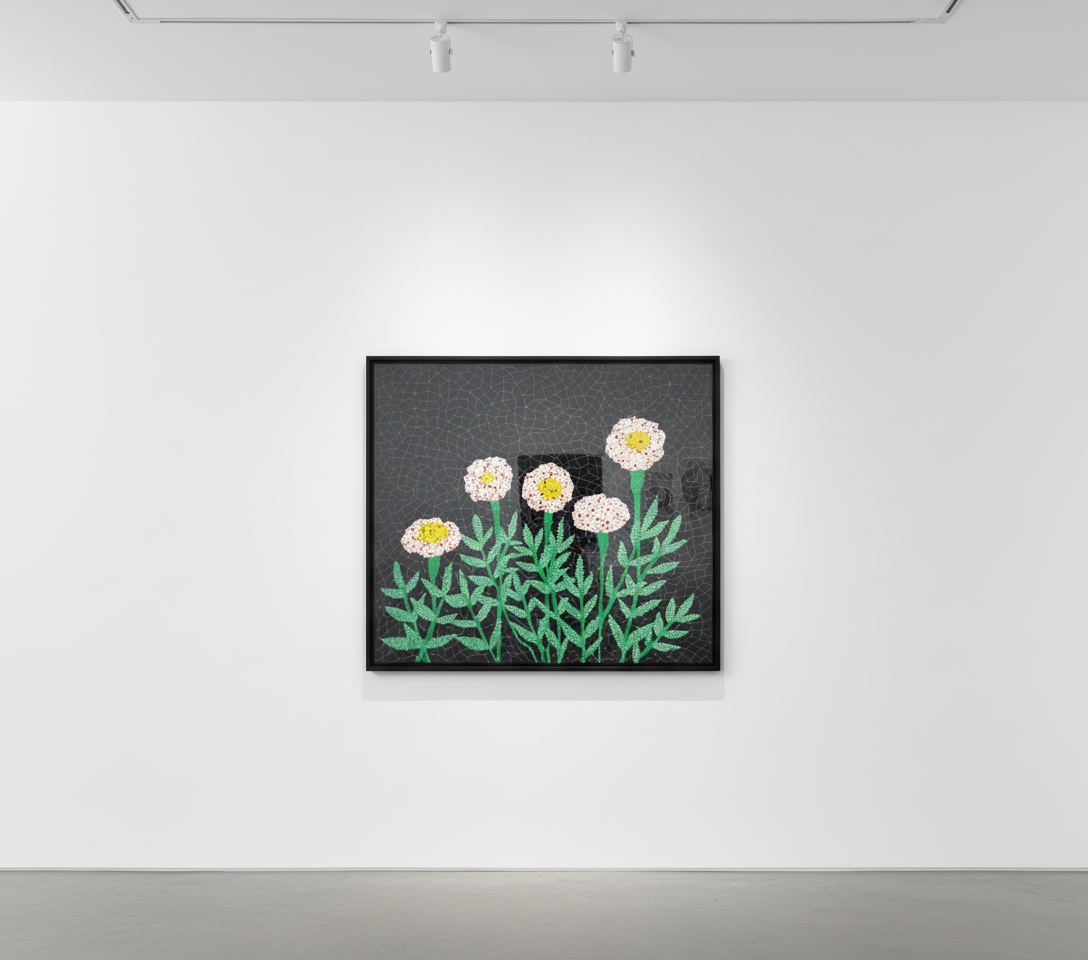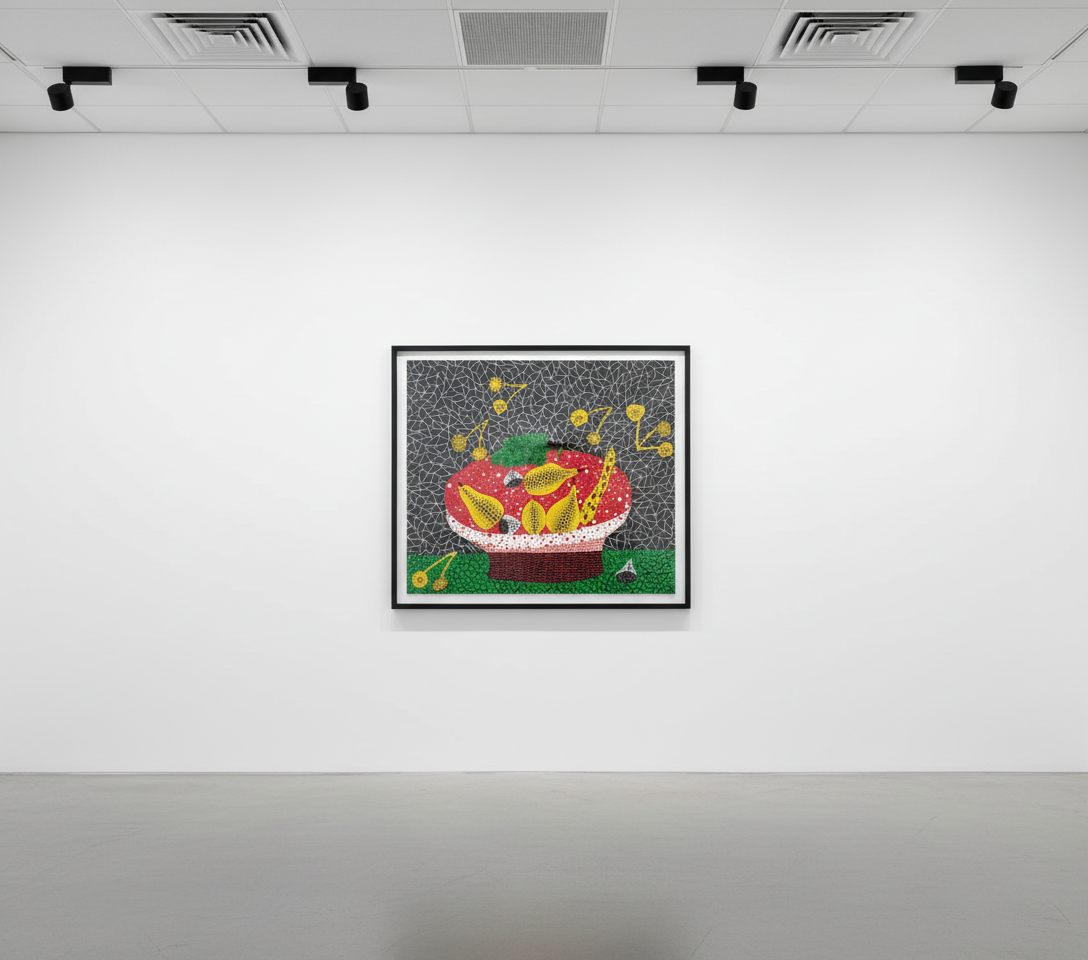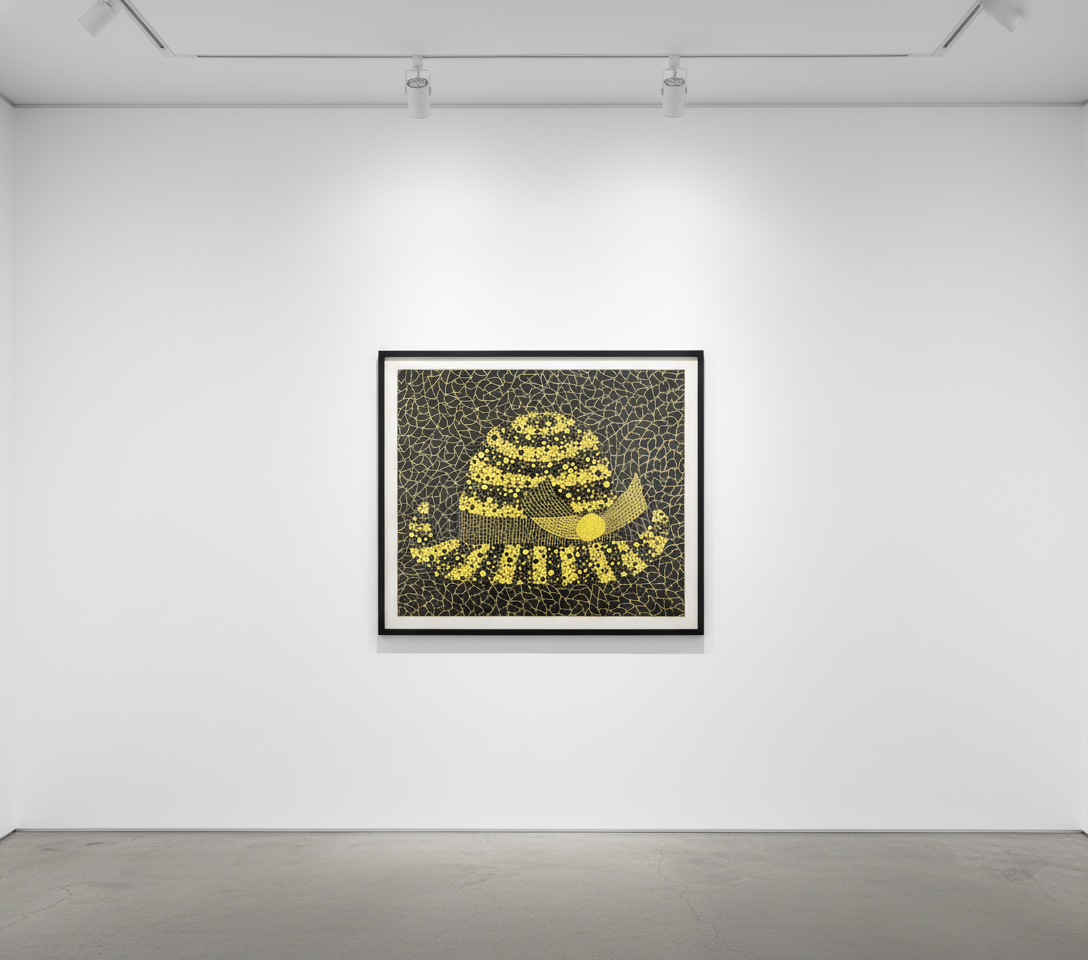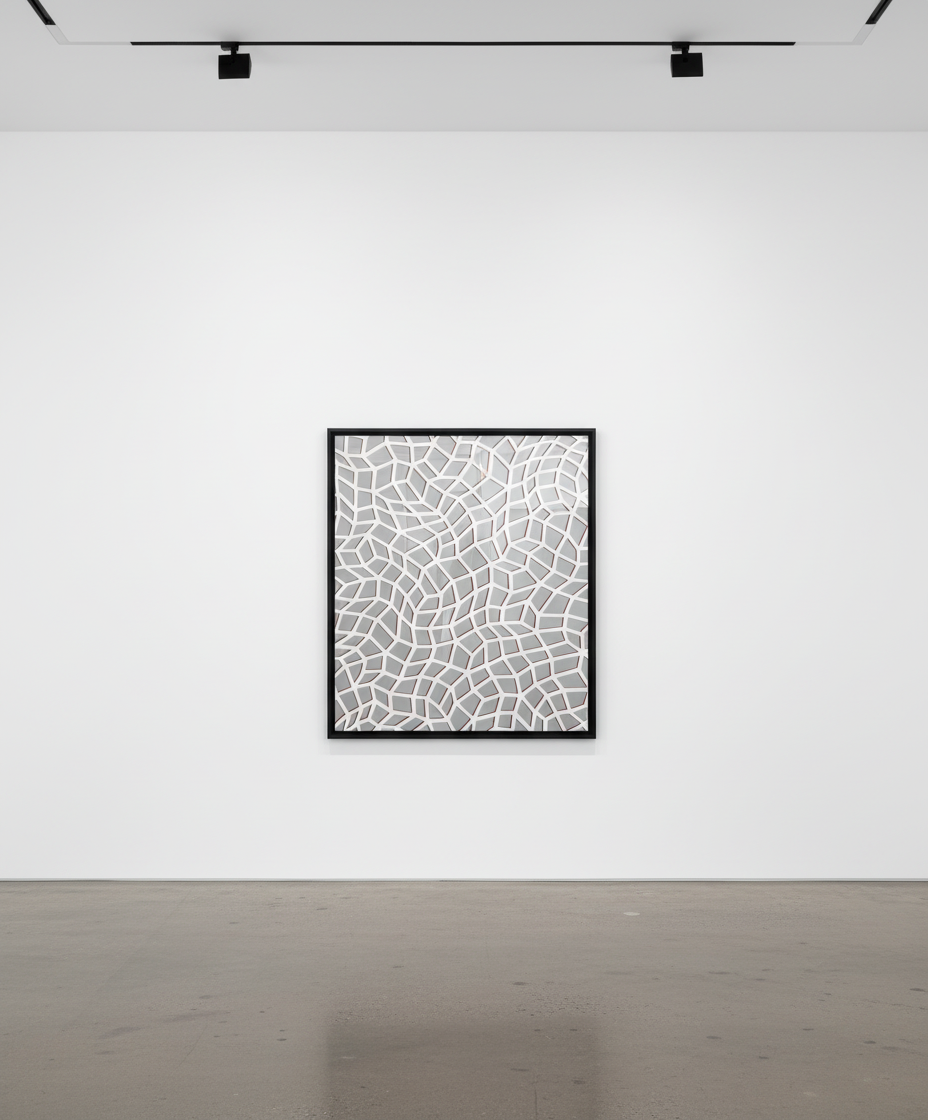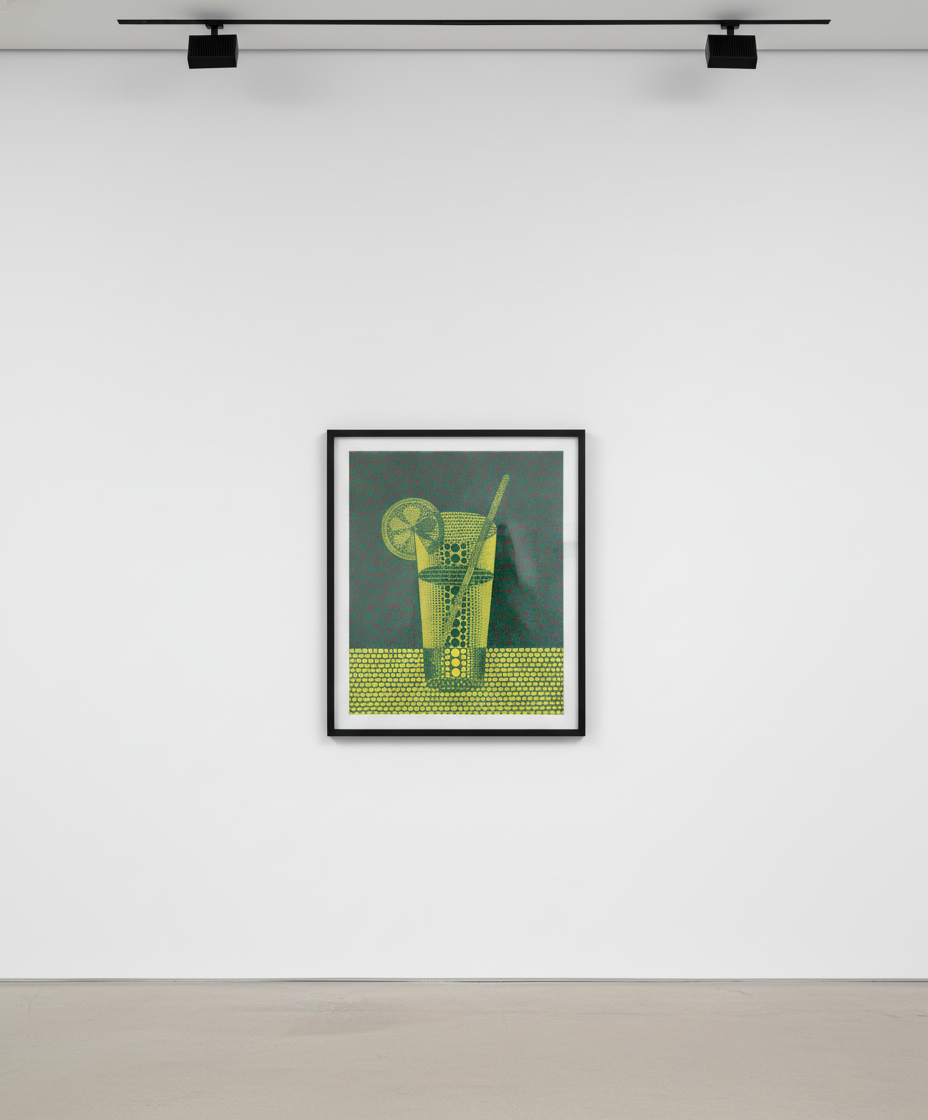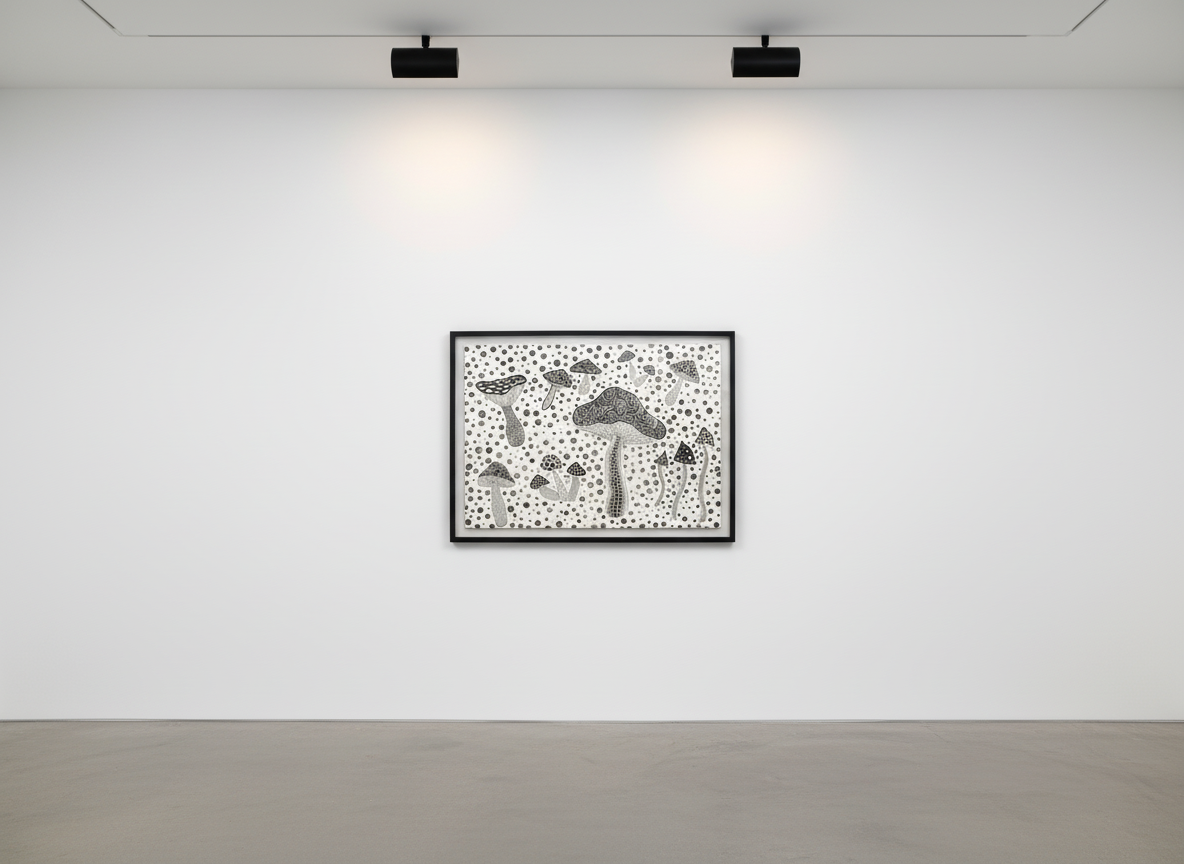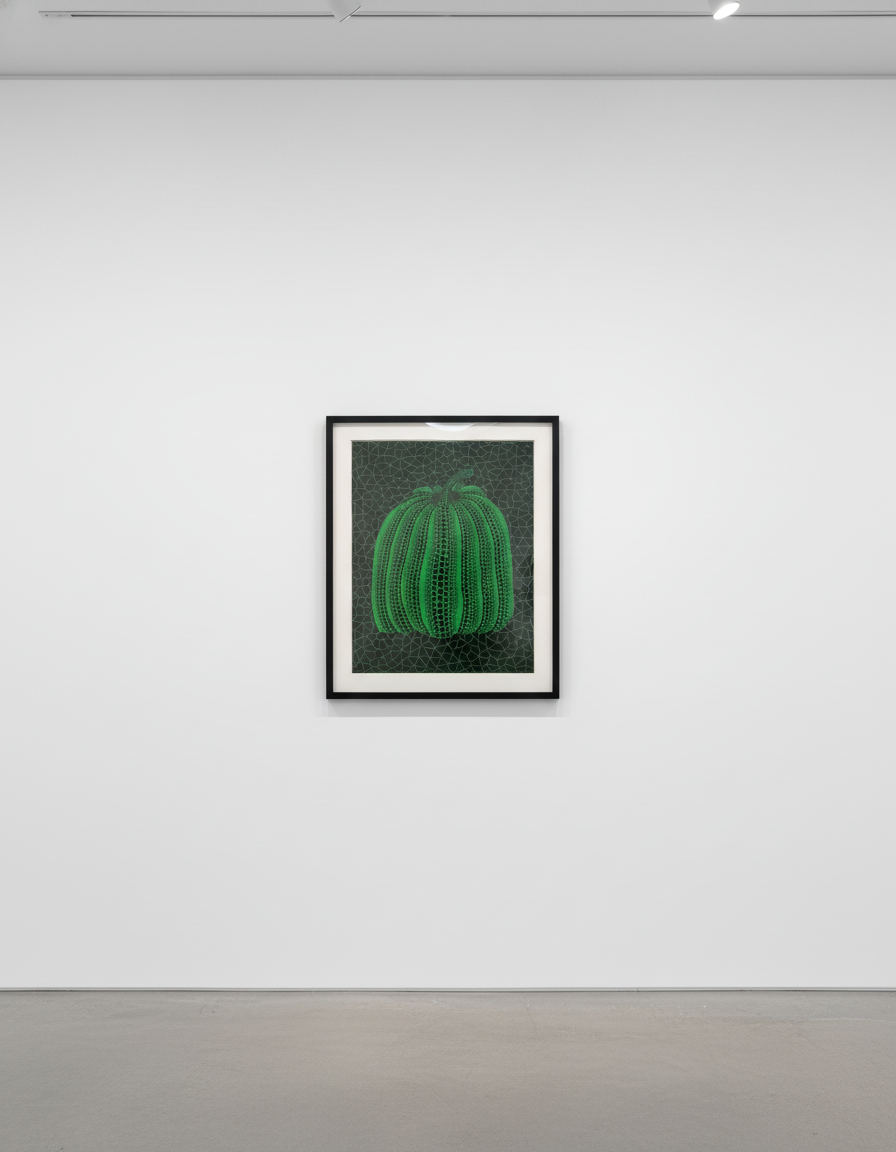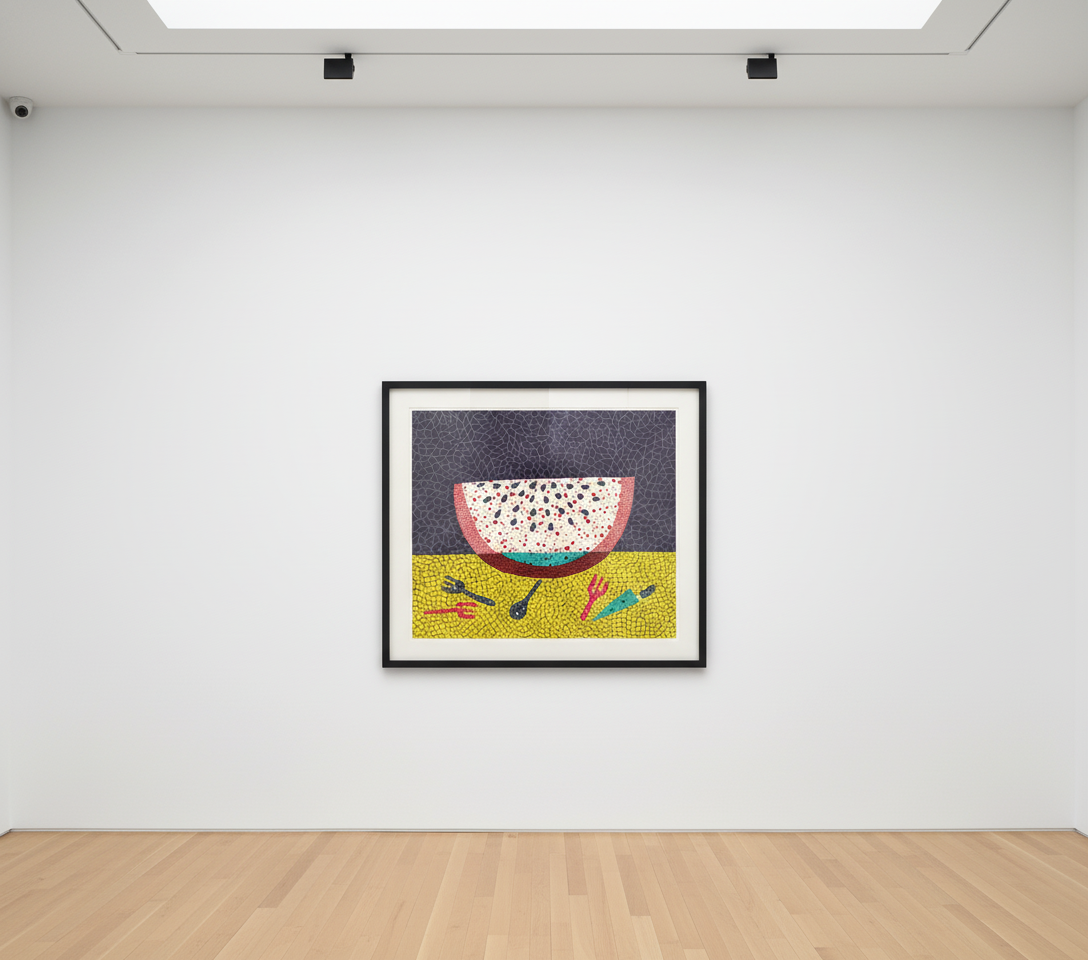


Fauna
2 works

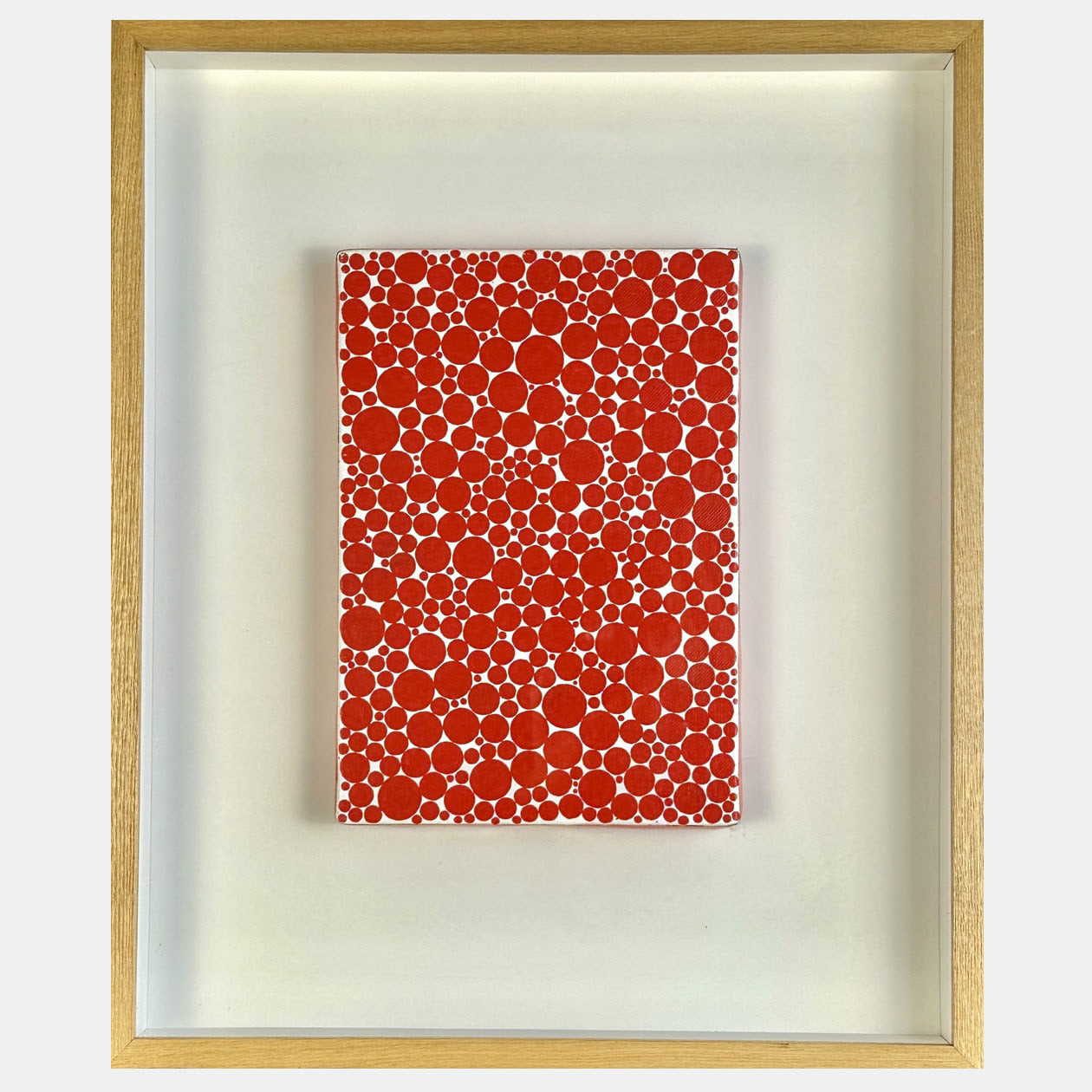
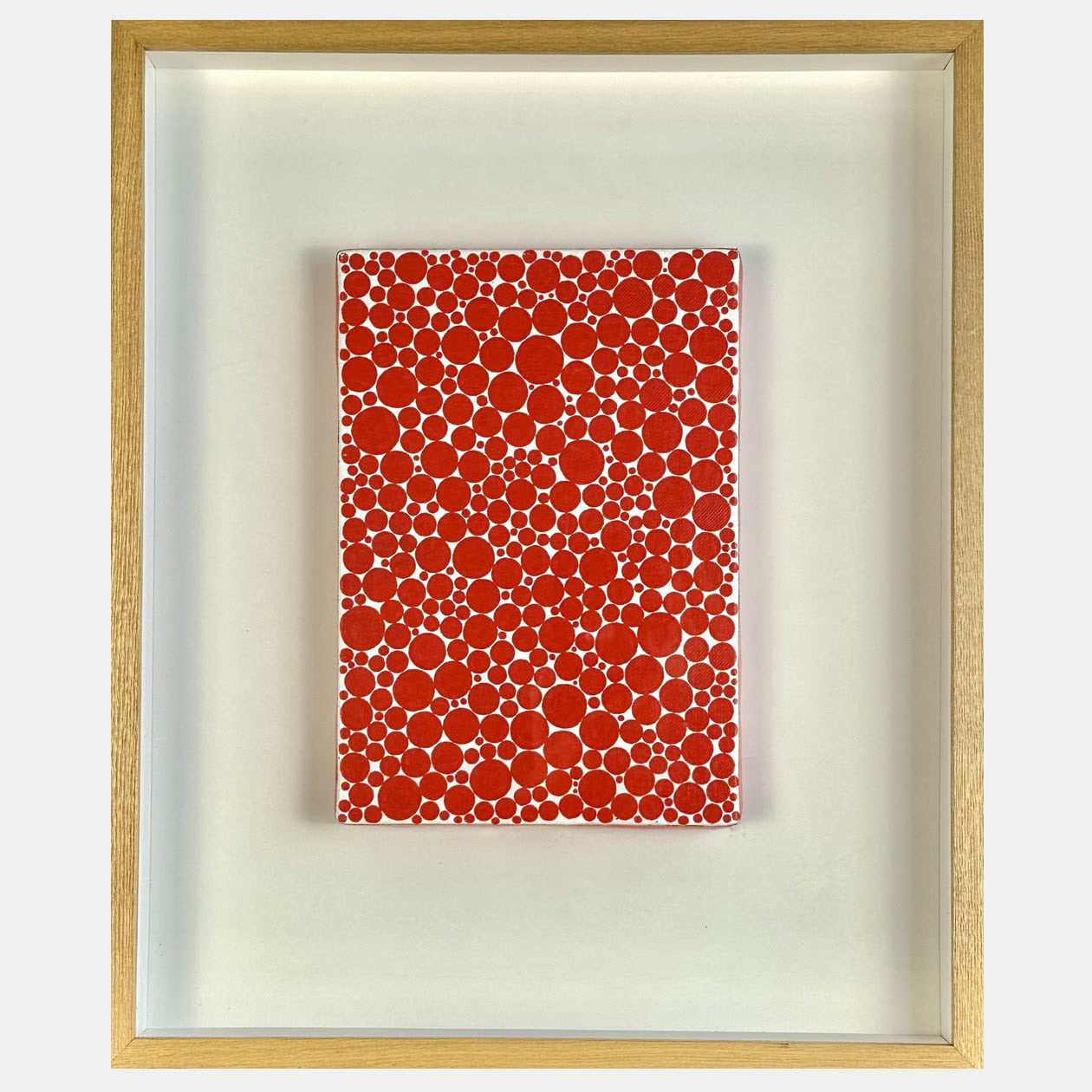
Infinity Dots, 1992
Acrylic on canvas Artist signed and dated 1992 on the reverse Unique
8.9 x 6.2 in 22.7 x 15.8 cm
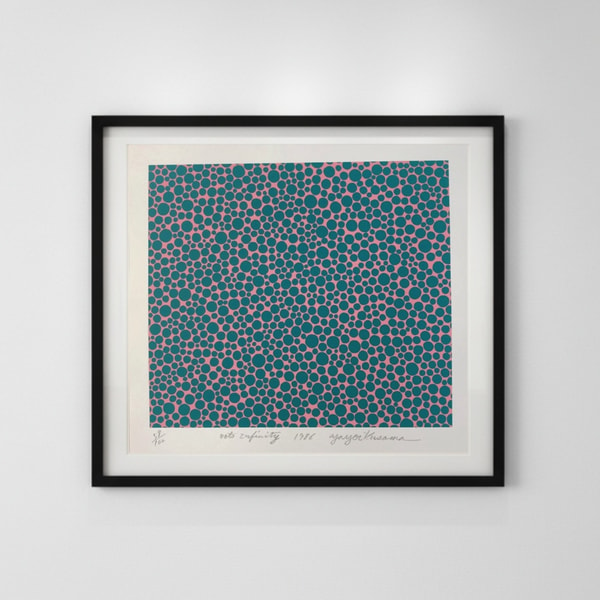
Infinity Dots, 1992, is an intimate and profoundly personal work by Yayoi Kusama, rendered in acrylic on canvas and existing as a unique piece. Measuring just 8.9 by 6.2 inches — modest in scale yet immense in conceptual ambition — the work exemplifies Kusama's lifelong preoccupation with repetition, pattern, and the dissolution of selfhood through obsessive mark-making. The canvas is hand-signed and dated by the artist on the reverse, affirming its singular status within her broader practice. The dot, for Kusama, is no mere decorative device. It is a fundamental unit of existence — a philosophical and psychological tool through which she explores what she describes as "self-obliteration," the merging of the individual with the infinite cosmos. In Infinity Dots, dense configurations of polka dots accumulate across the surface in a manner both meditative and relentless, each mark reinforcing the next in an expanding, all-consuming field. The small format heightens this effect: the viewer is drawn intimately close, immersed in the pattern's rhythmic insistence. Executed during a prolific period in Kusama's career, Infinity Dots belongs to the same visual language as her celebrated Infinity Mirror Rooms and Net Paintings, translating that immersive impulse onto a compact canvas. As a unique work — not an edition — it represents a singular, direct expression of the artist's hand, making it an exceptional object within any collection of postwar and contemporary art.
Price on Application
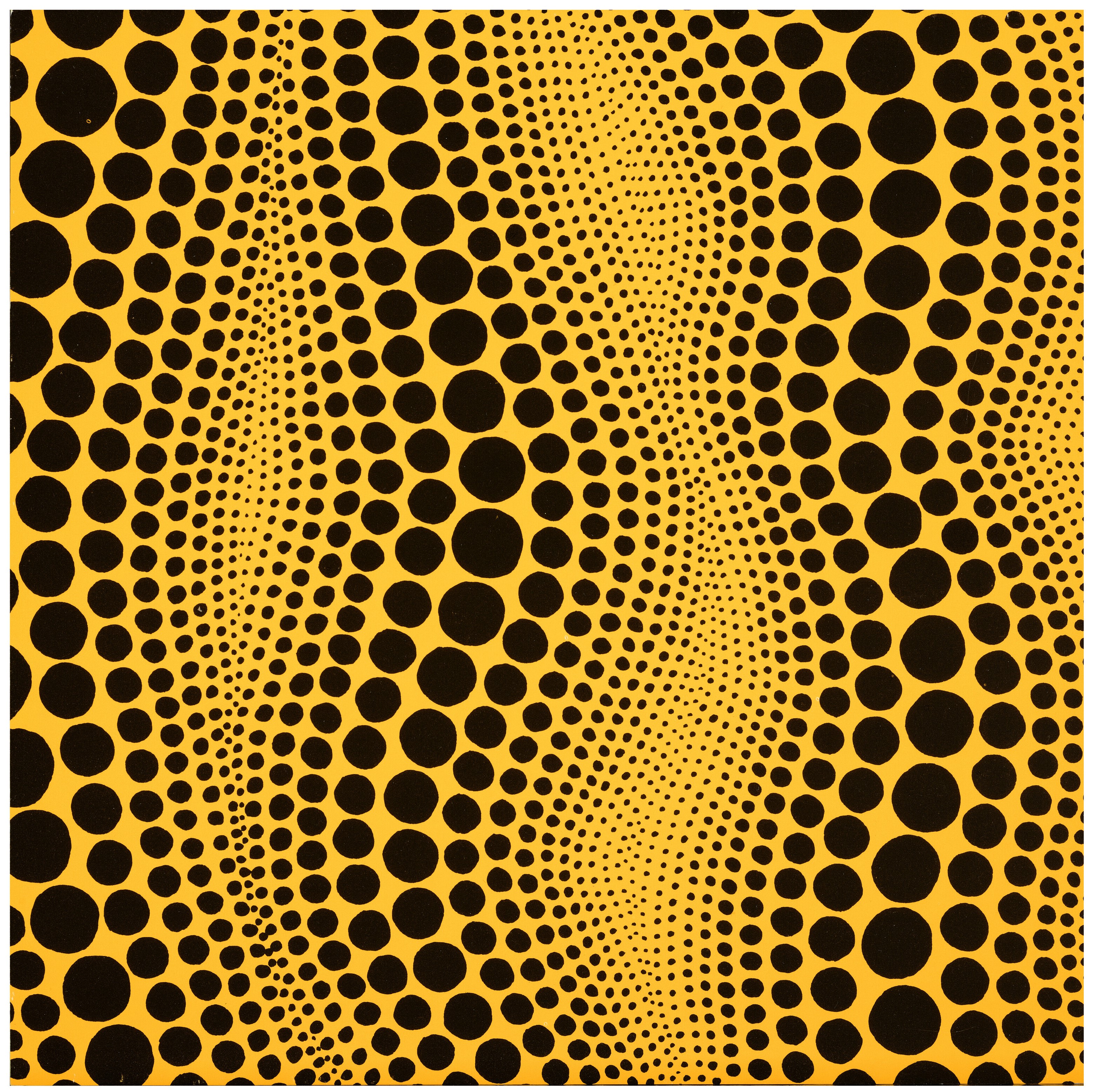
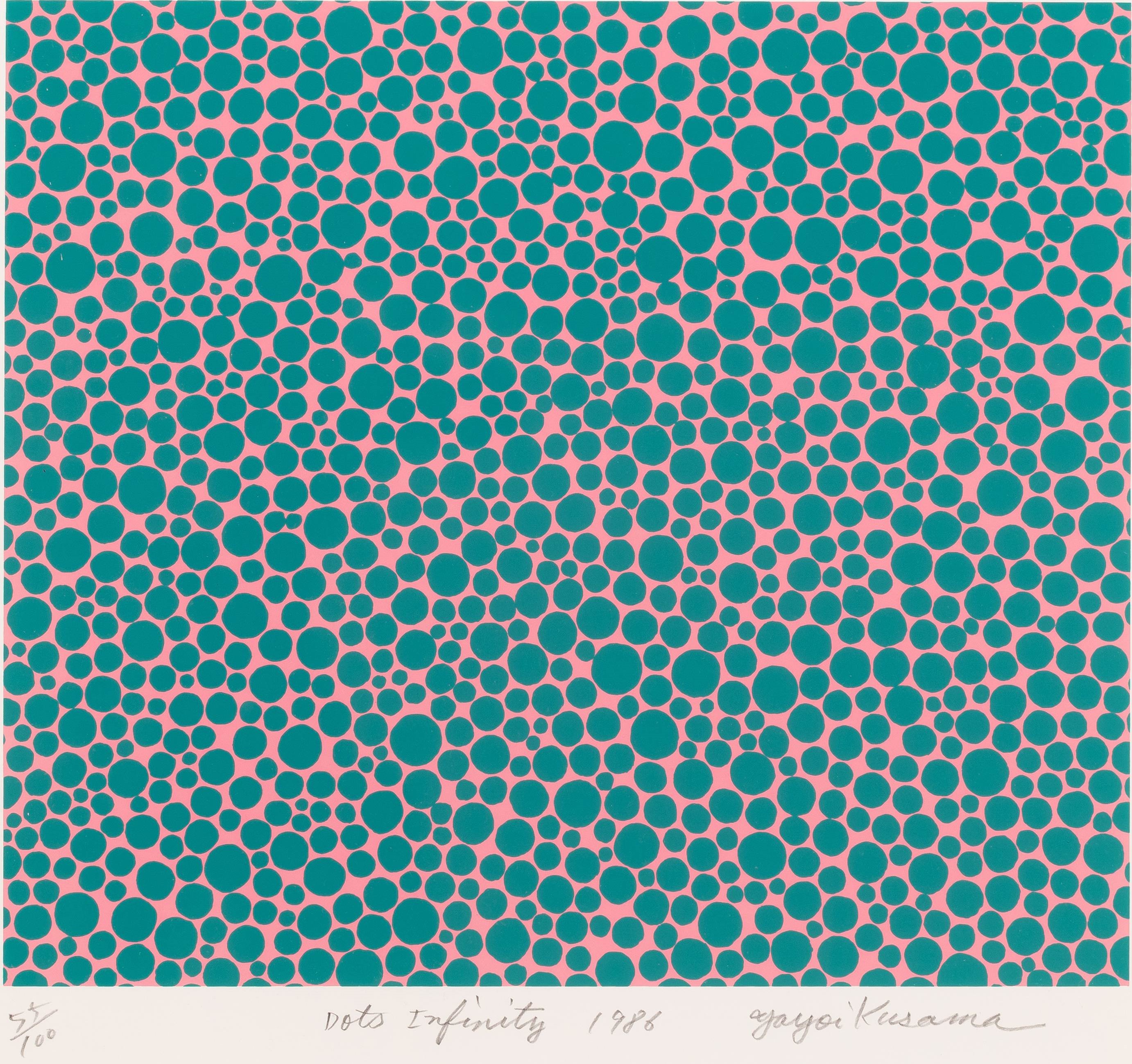
Dots Infinity · Yayoi Kusama · Christie's · 2023-07 · $23,996
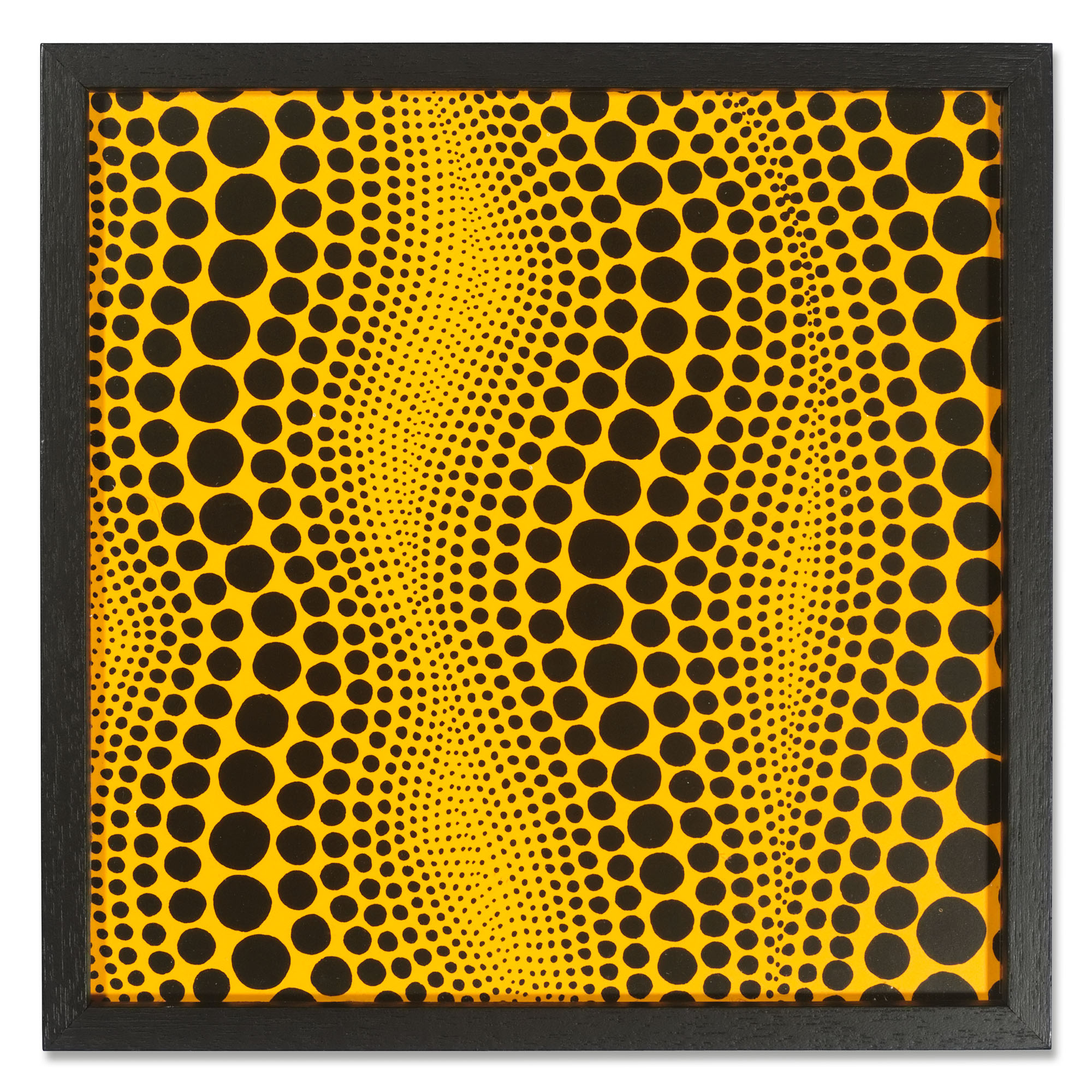
Dots Infinity · Yayoi Kusama · Sotheby's · 2023-03 · $17,973
Dots Infinity · Yayoi Kusama · Christie's · 2020-07 · $13,685
Dots Infinity (Kusama 94) · Yayoi Kusama · SBI Art Auction · 2024-10 · $11,731
Yayoi Kusama's Infinity Dots series represents one of the most recognizable and enduring visual vocabularies in contemporary art, commanding sustained collector interest across global auction markets. Guy Hepner in New York has facilitated $561,250 in Yayoi Kusama transactions, establishing significant expertise in this iconic body of work. As the Art Basel & UBS Global Art Market Report confirms the global art market's return to growth in 2025, Kusama's dot-based compositions continue attracting sophisticated collectors who recognize both their art historical importance and their proven market resilience.
The most recent auction benchmark for this series—Infinity Dots (1992) achieving HKD 164,695 in March 2026—demonstrates ongoing international demand for these hypnotic, meditative canvases. This result reflects the sustained appetite for Kusama's work among collectors in Asia and beyond, where her cultural significance resonates deeply.
Born in 1929 in Matsumoto, Japan, Yayoi Kusama began experiencing visual and auditory hallucinations in childhood—phenomena that would profoundly shape her artistic vision. The dots that appear throughout her work emerged from these early experiences, which she has described as fields of polka dots covering everything in her visual field, obliterating the boundaries between self and environment. What began as a psychological response to her perception of reality evolved into one of contemporary art's most distinctive and philosophically rich visual systems.
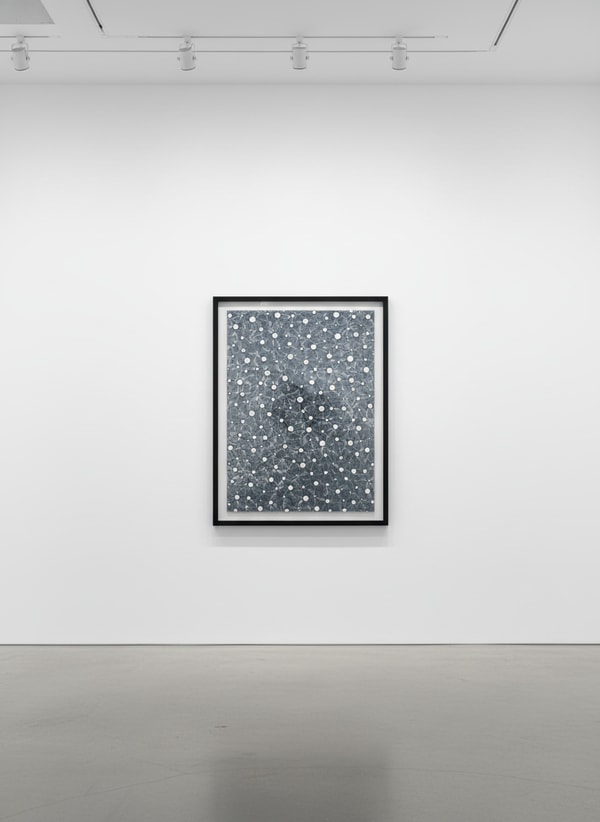
The Infinity Dots series crystallizes Kusama's lifelong exploration of infinity, repetition, and the dissolution of the individual ego into the cosmic whole. Unlike her Infinity Nets series, which features interconnected cellular patterns, the Infinity Dots works present discrete circular forms that float across the picture plane, creating rhythm and visual vibration that suggest both molecular structures and celestial bodies. These compositions invite viewers into meditative states, encouraging contemplation of humanity's place within infinite space and time.
Kusama's dot motif connects to multiple art historical lineages while remaining entirely singular. Her work anticipated key developments in Pop Art, Minimalism, and environmental installation, yet defies easy categorization within any single movement. Major retrospectives at Tate Modern, Centre Pompidou, the Whitney Museum of American Art, and the Museum of Modern Art have cemented her position as one of the most significant artists of the past century. Her Infinity Mirror Rooms, installed in museums worldwide, have introduced her vision to unprecedented audiences, creating a cultural phenomenon that transcends the traditional art world.
The Infinity Dots (1992) exemplifies Kusama's meticulous technical approach and her philosophical commitment to obsessive repetition as both artistic method and spiritual practice. Executed in acrylic on canvas, this work demonstrates the artist's characteristic precision in dot placement, creating visual fields that appear simultaneously ordered and organic, finite and boundless.
Kusama's technical process involves painstaking application of individual dots, building compositions through accumulated gesture rather than preliminary sketching. This labor-intensive methodology reflects her belief in repetition as a path toward self-obliteration and transcendence. Each dot represents a meditative act, and the completed canvas embodies thousands of such moments, creating surfaces that pulse with concentrated artistic energy.
The 1992 dating places this work within a particularly fertile period of Kusama's career, following her return to Japan in 1973 after nearly two decades in New York, where she had established herself as a provocative avant-garde figure. By the early 1990s, Kusama had refined her dot imagery into increasingly sophisticated compositions, balancing chromatic intensity with spatial complexity. Works from this period demonstrate her mature command of scale, color relationships, and the psychological effects of pattern repetition.
Yayoi Kusama has built one of the most instantly recognisable bodies of work in contemporary art through her sustained investigation of pattern, repetition, and self-obliteration, developed across painting, sculpture, installation, and print media over more than seven decades. Her recurring motifs — polka dots, net patterns, and later the pumpkin — function as a personal visual vocabulary rooted in hallucinatory visual experiences she has described since childhood, transformed through disciplined repetition into a body of work of extraordinary scale and consistency.
Kusama's work is held in the permanent collections of major museums worldwide, and her Infinity Mirror Room installations have drawn record attendance at institutions internationally, establishing her as one of the most widely recognised and best-selling living artists.
Yayoi Kusama prints for sale at Guy Hepner Gallery in New York include Infinity Net editions, pumpkin screenprints, dot works, Flower Ball multiples, and the full range of her extraordinary print output — representing one of the most consistently in-demand bodies of work in the contemporary edition market. For collectors seeking Yayoi Kusama art for sale, Guy Hepner at 177 Tenth Avenue, New York offers expert guidance, authenticated works across all her major print series, and access to a market that has demonstrated exceptional sustained strength.
Yayoi Kusama (b. 1929, Matsumoto, Japan) is the highest-selling living female artist in the world and one of the most instantly recognisable visual presences in contemporary art — an artist whose dots, nets, pumpkins, and Infinity Mirror Rooms have achieved a cultural ubiquity that coexists, without diminishing, with the genuine psychological intensity from which her work emerged. Kusama began making art as a child as a means of processing the hallucinations she experienced — flowers speaking to her, the self dissolving into fields of pattern and repetition — and the therapeutic impetus has never separated itself from the formal achievement. The work is not illustration of pathology but its transformation into aesthetic proposition.
Kusama received traditional Japanese painting training before moving to New York in 1958, where she became a conspicuous and somewhat isolated figure in an avant-garde largely indifferent to her practice. Her Infinity Net paintings — monumental canvases covered in an unbroken weave of looping marks applied with obsessive labour — anticipated the Minimalist investigation of serial mark-making while remaining intensely personal, each loop a unit in an accumulation too vast to resolve into pattern.
The visual world Kusama has created across her long career rests on a small number of obsessively repeated motifs:
Kusama's auction record stands at $7,109,000 for Infinity Nets (TW) at Christie's, with multiple major Net canvases from the late 1950s and 1960s achieving $5,000,000+ at Sotheby's and Christie's. An Infinity Nets canvas from 1959 achieved $5,098,000 at Christie's in November 2021. She has held the record for the highest auction result achieved by a living female artist for many years. Her major paintings — particularly early Net works and large-scale Infinity environments — are held primarily in institutional collections or by committed long-term private collectors and rarely come to market.
Her print editions — featuring signature dot and pumpkin imagery — are among the most actively traded in the contemporary edition market, with strong global demand across price points. Kusama has worked with publishers in Japan and internationally to produce editions across all major print media: screenprints, lithographs, woodcuts, and etchings.
Print prices range from $8,000–$15,000 for smaller open-style editions through $50,000–$200,000+ for rare signed limited editions featuring pumpkins, infinity net patterns, or dot works in high demand colourways. Works produced in collaboration with Ota Fine Arts and other authorised publishers carry the strongest provenance.
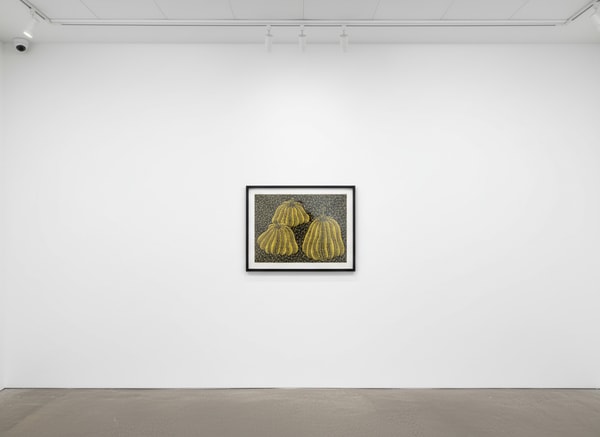
Motif: Pumpkin works and infinity net prints consistently outperform generic dot compositions. Flower Ball works carry strong demand. Early net works on paper, if available, are among the rarest and most historically significant objects in her output.
Edition size and signature: Small-edition signed prints carry significant premium over open editions. Certificates of authenticity from Ota Fine Arts or the artist's studio are essential for any significant acquisition.
Colourway: Yellow and black pumpkin works (echoing her iconic Naoshima installation) carry premium. Red and white, gold, and silver colourways in dot and net works also command strong demand.
Condition: Kusama's prints are typically produced on quality substrates, but UV protection and stable storage are critical to long-term value preservation.
Provenance: Works with direct gallery provenance from Ota Fine Arts, Victoria Miro, or Zwirner hold value most reliably.
Kusama's work is held in permanent collections at MoMA, the Whitney Museum, Tate, the Centre Pompidou, the Guggenheim, the National Gallery of Victoria, the Hirshhorn Museum, and The Broad in Los Angeles. A landmark joint retrospective toured Tate Modern, the Centre Pompidou, the Whitney, and MoMA in 2012. She continues to produce work daily from her studio in Tokyo.
Guy Hepner offers authenticated Yayoi Kusama art for sale with full provenance documentation from our gallery at 177 Tenth Avenue, New York. We provide expert guidance on acquisition, free and confidential valuations for those wishing to sell, and access to a global network of collectors actively seeking her work across all media and price points. Whether you are seeking Yayoi Kusama prints for sale in a specific motif or colourway, or exploring her broader edition output, Guy Hepner is the right starting point.