Infinity Dots

September 1, 2026
For nearly seven decades, Yayoi Kusama saw the world differently—and taught us to see it her way. The polka dots that first appeared to her as hallucinations became a visual language understood across continents. The infinity rooms that began as artistic experiments became pilgrimages for millions. The Pumpkins she painted obsessively became icons of joy in a fractured world. Kusama didn't just make art; she made a universe—infinite, dotted, and unmistakably hers.
When the news spread that the world had lost this singular Japanese contemporary artist, something remarkable happened: people who had never set foot in a museum shared her images, those who had waited hours to enter her infinity rooms recalled the transcendence they felt inside, and collectors worldwide began reassessing what it means to own a piece of genuine artistic infinity. The outpouring was not merely mourning but celebration—a recognition that Yayoi Kusama had achieved what few artists ever do. She had become universal.
Yayoi Kusama was born in 1929 in the mountainous region of Matsumoto in central Japan, the youngest daughter in a family that made its living from the cultivation of plant seeds. There remains a plant nursery on the site of her childhood home today, a quiet reminder that this artist who would fill the world with dots and pumpkins came from soil, from seeds, from the patient rhythms of agricultural life. Yet nothing about Kusama's path would prove patient or conventional.
Her family did not support her artistic ambitions. Her mother, in particular, tried to steer the young Yayoi toward the expected path of a traditional Japanese housewife, going so far as to tear drawings from her daughter's hands. But Kusama made more. When she could not afford art supplies, she used materials found around the home. This early experience of creating against opposition, of insisting on her vision despite those closest to her, would define her entire career. The determination that emerged from that childhood household in Matsumoto never wavered.
The Second World War interrupted her adolescence in the most brutal way possible. Like other school-age children in her hometown, Kusama was called upon to work up to twelve hours a day in a parachute factory. The punishing labor might have crushed another young artist's dreams, but Kusama found time and resources to continue drawing. Art was not a luxury for her; it was survival itself. The visual hallucinations that had begun appearing to her as a child—fields of dots, patterns that seemed to obliterate everything they touched—continued throughout this period, becoming both torment and inspiration.
To understand Yayoi Kusama's art, one must understand the visions that haunted her from childhood. She has described experiencing hallucinations from an early age, seeing the world covered in dots that spread and multiplied, obliterating the boundaries between objects, between self and other. These episodes were terrifying, yet Kusama found a way to transform terror into transcendence. Rather than being consumed by her visions, she externalized them, covering canvases, objects, and eventually entire rooms with the patterns that invaded her perception.
This relationship between mental health and artistic creation lies at the heart of Kusama's significance. She never romanticized her struggles or presented them as merely quirky inspiration. Instead, she spoke openly about the psychological battles she faced throughout her life. In 1977, she voluntarily admitted herself to a psychiatric hospital in Tokyo, where she would live for the rest of her life while continuing to work in a studio across the street. This choice—to live within the structure of medical care while maintaining her artistic practice—reflects a remarkable self-awareness and determination.
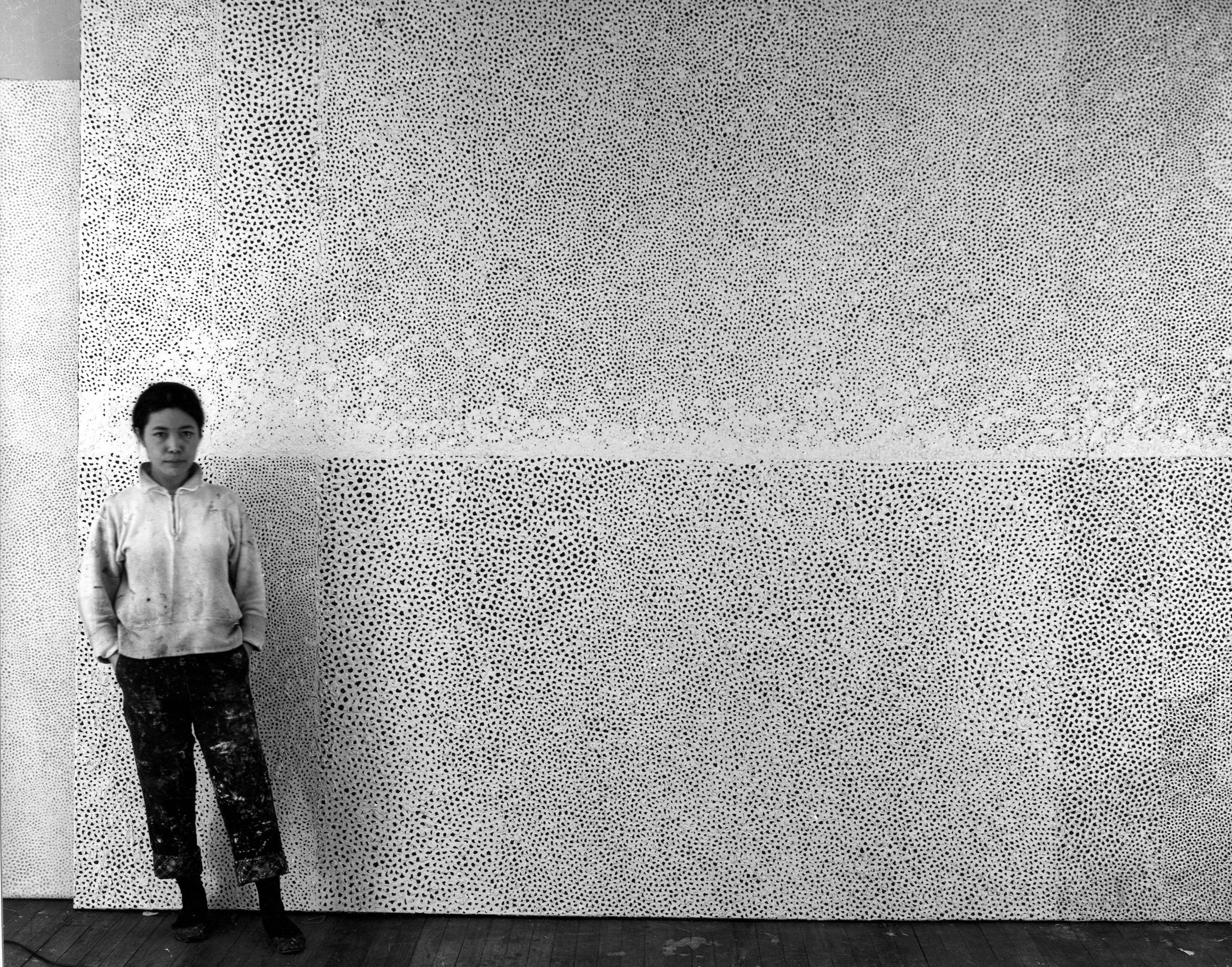
Kusama in front of her 10-metre-long Infinity Net painting
The dots that define so much of her work are not decorative choices but records of perception, attempts to capture and contain experiences that threatened to overwhelm her. When viewers enter one of her infinity rooms and find themselves surrounded by endless reflections of glowing dots, they are not simply experiencing an Instagram-worthy moment. They are being invited into Kusama's consciousness, experiencing a version of what the artist herself has lived with since childhood. This context transforms the work from spectacle into something far more profound.
In 1958, Kusama did something audacious: she left Japan for New York City, arriving with just a few dollars and an unshakeable belief in her artistic vision. The New York art world she entered was dominated by Abstract Expressionism, but Kusama brought something entirely different. Her Infinity Net paintings—vast canvases covered with obsessively repeated loops and arcs—predated and arguably influenced the minimalist movement that would later dominate the scene.
The New York years proved both triumphant and difficult. Kusama achieved significant recognition, exhibiting widely and attracting attention from critics and fellow artists alike. She staged happenings and performances that pushed boundaries, covered furniture and mannequins with phallic soft sculptures in her famous Accumulations, and created her first infinity room in 1965. She was a genuine pioneer, yet the art world of the 1960s was not always kind to an Asian woman making radical work.
During this period, Kusama developed relationships with many of the era's most important artists. Donald Judd was a close friend and supporter; Joseph Cornell became romantically involved with her. She was very much part of the avant-garde conversation, yet somehow history would not fully credit her contributions until decades later. When pop art and minimalism achieved their canonical status, Kusama's pioneering role was often overlooked. It would take a major reassessment, beginning in the 1990s, to restore her to her rightful place in art history.
No aspect of Kusama's work has captured the public imagination quite like her infinity rooms. These mirrored environments, filled with hanging lights or sculptural elements that reflect endlessly in all directions, offer visitors something increasingly rare in contemporary life: genuine wonder. The meaning of Kusama's infinity rooms extends far beyond their visual spectacle, touching on profound questions about existence, consciousness, and our place in the cosmos.
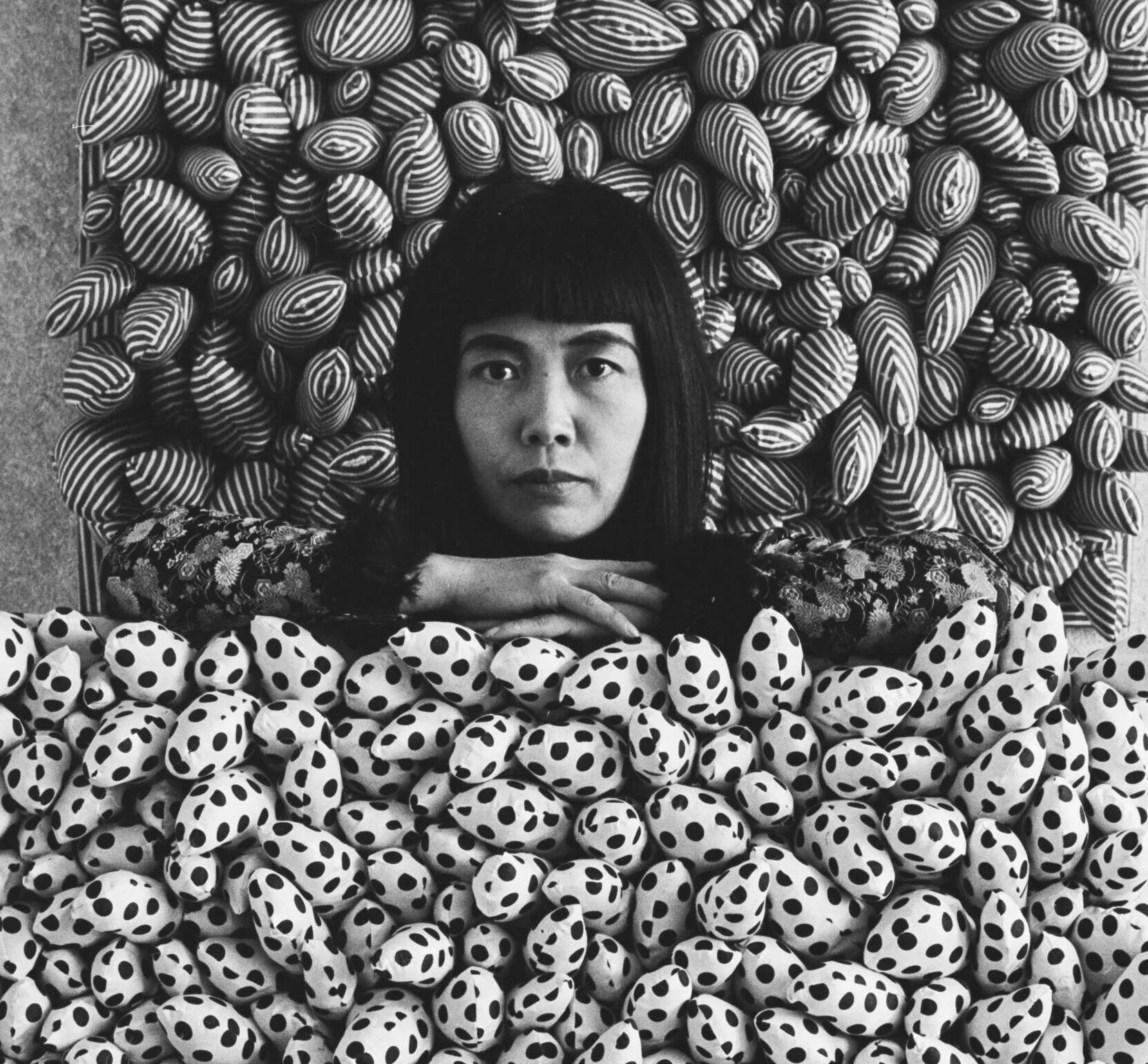
The first infinity room, created in 1965 and titled Infinity Mirror Room—Phalli's Field, filled a mirrored space with hundreds of stuffed fabric phalluses covered in red polka dots. It was provocative, disorienting, and unlike anything else being made at the time. Over the subsequent decades, Kusama would create numerous variations on the concept, each exploring different aspects of infinite space and self-obliteration.
Infinity Mirrored Room—Let's Survive Forever (2017) suspends stainless steel balls within a mirrored chamber, creating the sensation of floating among stars. Infinity Mirrored Room—Dancing Lights That Flew Up to the Universe (2019) uses LED lights that cycle through colors, surrounding the viewer with an ever-changing cosmos. These works have become phenomena in themselves, drawing visitors who wait hours for their brief moments inside. Museums have adapted their operations around the demands of these rooms, implementing timed entry systems and dealing with unprecedented attendance figures.
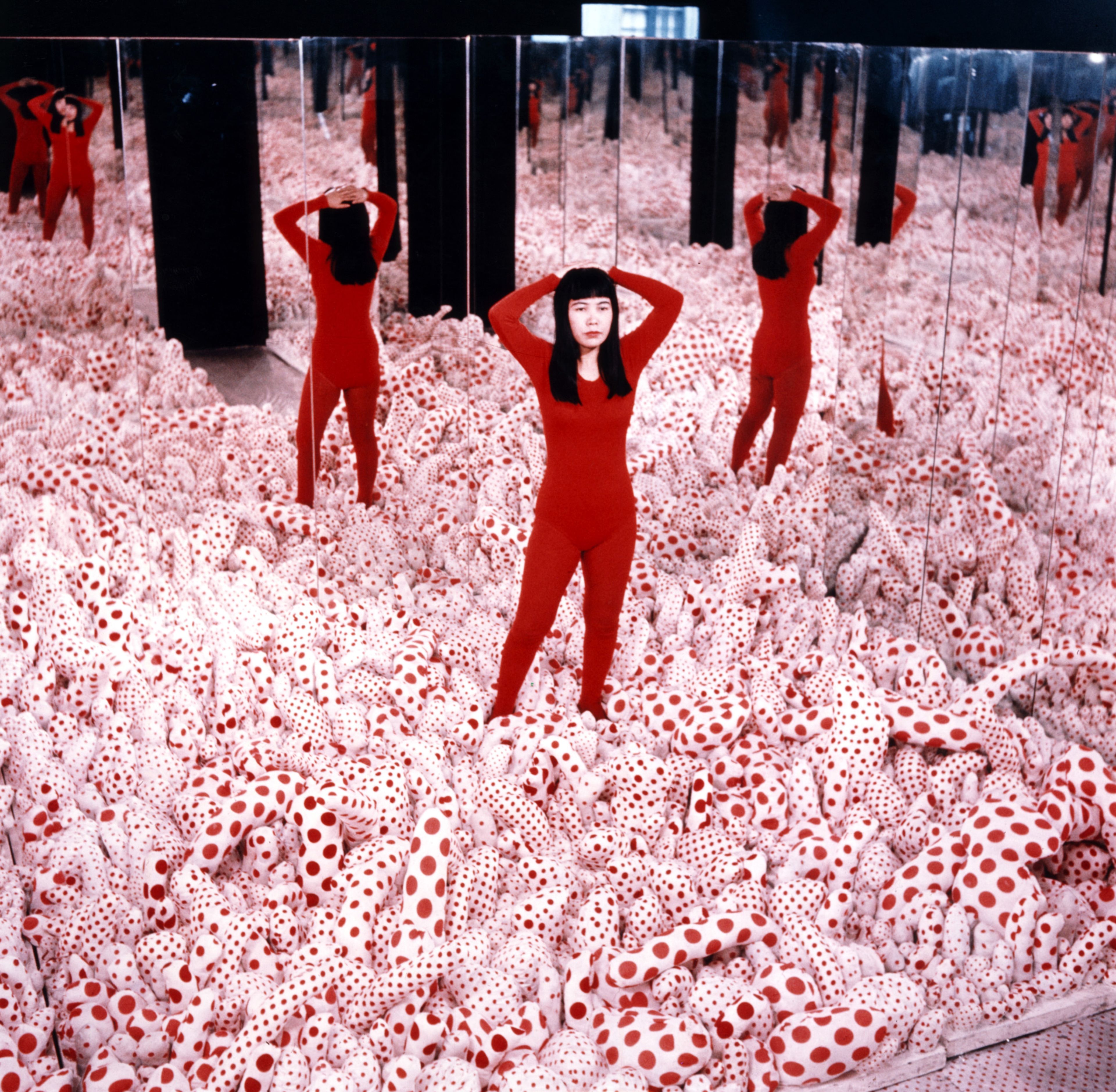
Infinity Mirror Room - Phalli's Field (Floor Show), 1965
Yet there is something deeper happening in these spaces than social media might suggest. Kusama has spoken of self-obliteration as a central concept in her work—the dissolution of individual identity into something larger, the recognition that we are all connected to an infinite universe. When visitors step into an infinity room, they literally see themselves multiplied and dissolved into endless space. The selfies that inevitably result capture only a fraction of the actual experience, which is fundamentally about losing oneself rather than asserting oneself.
If the infinity rooms represent Kusama's cosmic vision, her pumpkins represent something warmer, more earthbound, yet equally essential to her artistic identity. She has been painting and sculpting pumpkins since the 1940s, finding in their humble, bulbous forms something that speaks to her profoundly. The pumpkins appear across all scales, from intimate prints to monumental outdoor sculptures, and they have become perhaps her most recognizable motif.
Why pumpkins? Kusama has described feeling an affinity for their "amusing and warmhearted form," their simultaneous modesty and presence. Unlike the dots that emerged from hallucinations, the pumpkins seem to connect to her rural childhood, to the plant nursery where she grew up, to something grounded and organic. Covered in her signature polka dots, the pumpkins become bridges between the cosmic and the domestic, between infinity and the garden.
The most famous pumpkin sculptures have achieved landmark status. The yellow pumpkin that stood on a pier at Naoshima island in Japan's Seto Inland Sea became one of the most photographed artworks in Asia before being swept away by a typhoon in 2021 (it has since been restored). Similar pumpkin installations have appeared at institutions worldwide, each becoming a site of pilgrimage for art lovers and casual visitors alike. The pumpkins prove that Kusama's appeal extends far beyond the traditional art world, touching something universal in human experience.
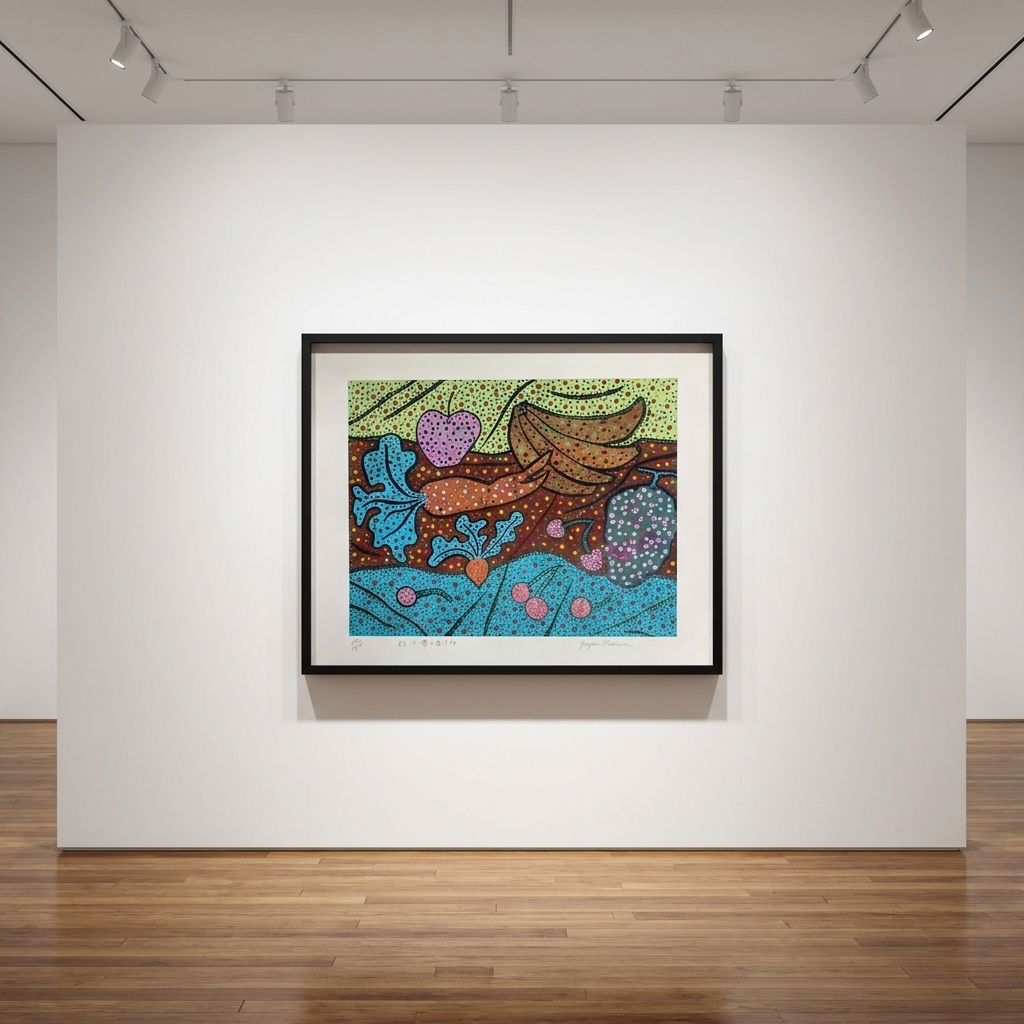
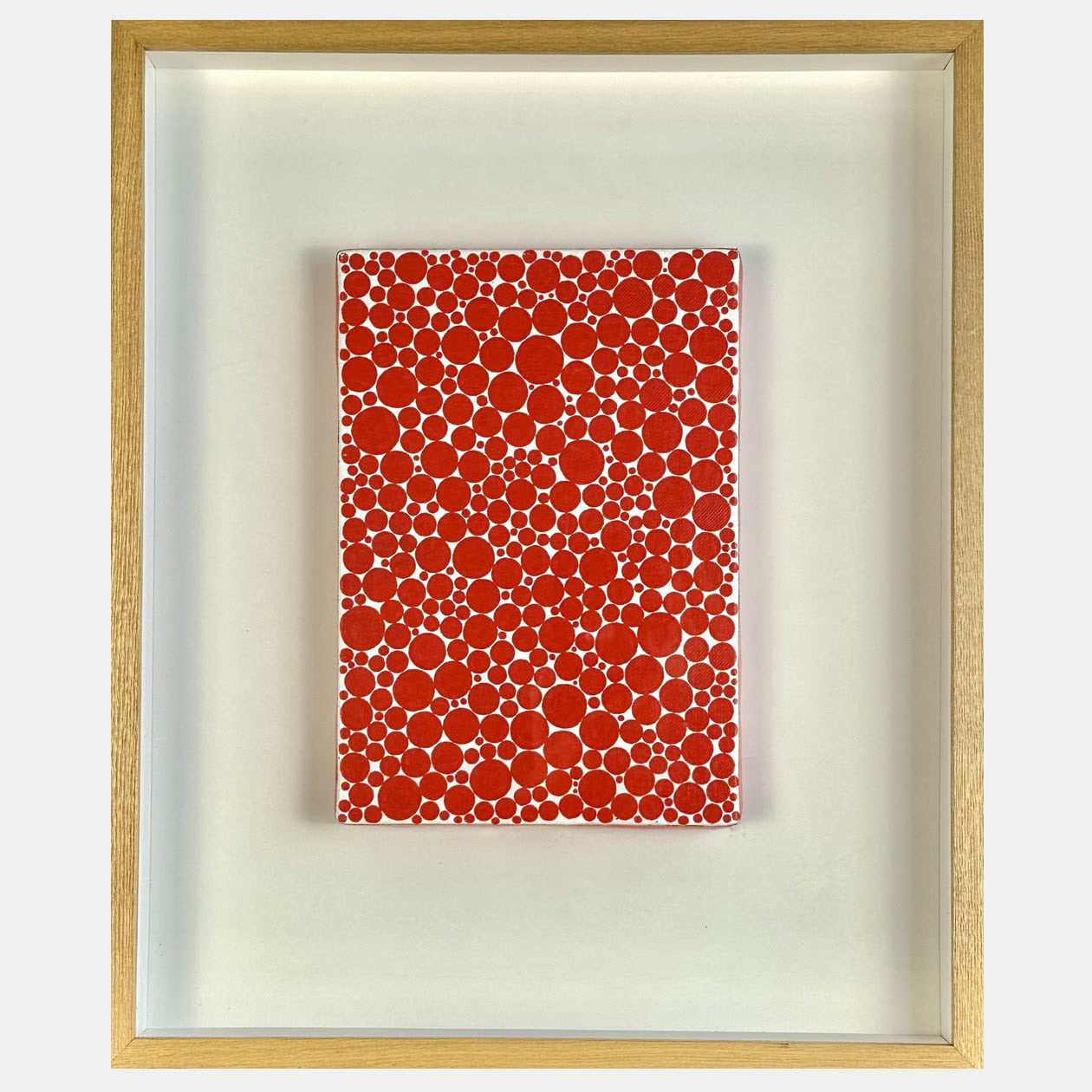
While Kusama's installations and sculptures dominate museum spaces and public plazas, her prints and editions offer collectors the opportunity to own a piece of her infinite universe. Throughout her career, Kusama has produced screenprints, lithographs, and other editioned works that translate her obsessive visual language into formats accessible to a broader range of collectors.
These prints are not minor works or afterthoughts. They demonstrate the same intensity and precision that characterizes her paintings and installations. The dots in a Kusama screenprint are placed with the same obsessive care as those covering a room-sized sculpture. The pumpkins in her prints radiate the same warmth as their monumental counterparts. Collectors who acquire these works are not receiving diminished versions of Kusama's vision but rather concentrated expressions of it.
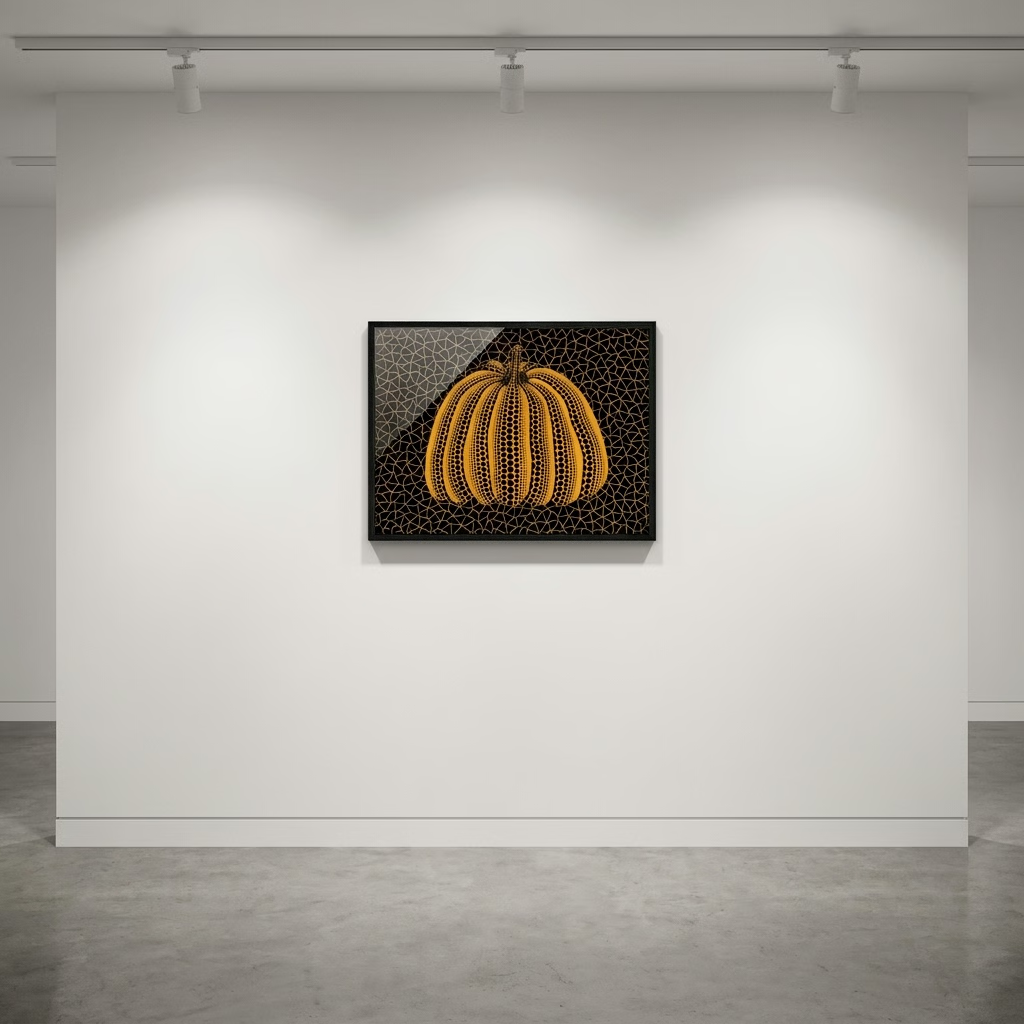
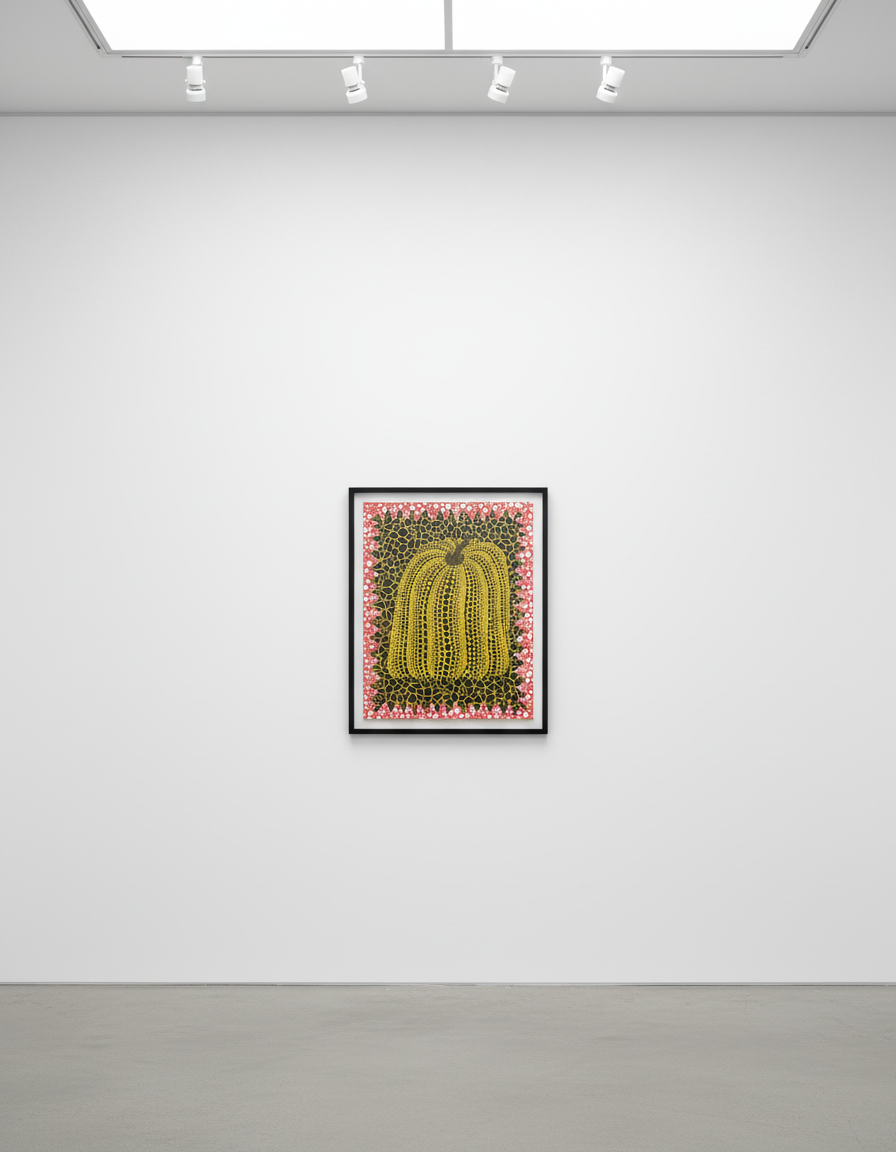
Yayoi Kusama, Pumpkin (YY). Available at Guy Hepner, New York.
The market for Yayoi Kusama prints has grown significantly over the past two decades, reflecting both her rising art historical stature and broadening popular appeal. Works from her pumpkin series, her Infinity Nets series, and her flower studies have all found eager collectors. The question of whether Yayoi Kusama art is a good investment has been asked increasingly often as her auction results have climbed. While no artwork should be acquired purely for investment purposes, Kusama's prints have demonstrated strong and consistent value appreciation over time.
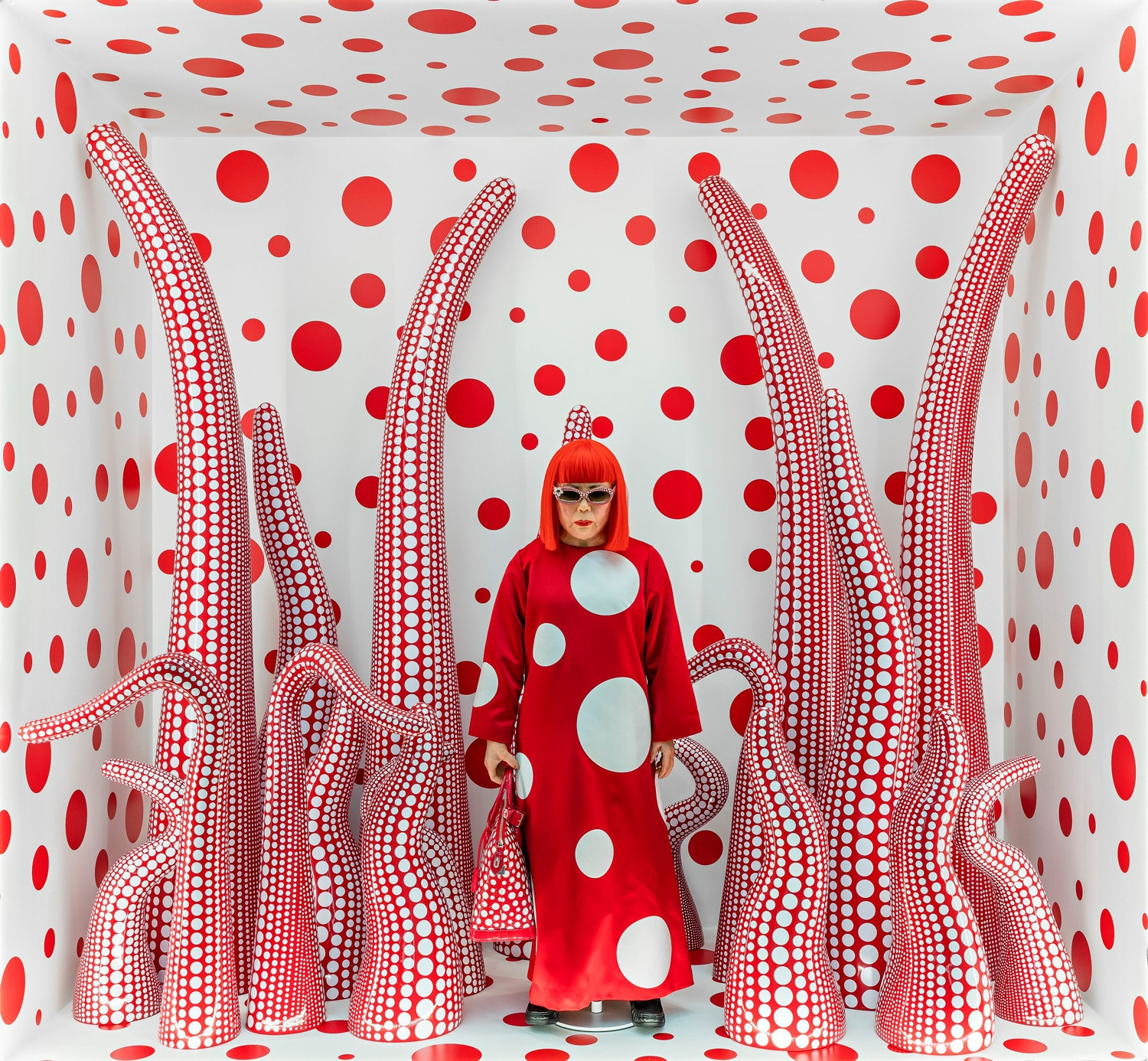
Kusama's collaborations with the fashion world, particularly her ongoing relationship with Louis Vuitton, have brought her visual language to audiences who might never visit a gallery. The Yayoi Kusama Louis Vuitton partnership, which began in 2012 and was renewed with spectacular results in 2023, covered the luxury brand's products and stores with dots, creating a global spectacle that blurred the boundaries between art, commerce, and everyday life.
These collaborations have sometimes generated skepticism within the art world—isn't this just marketing, just commerce wearing the mask of art? But such criticism misses something essential about Kusama's project. She has always been interested in obliterating boundaries, whether between self and other, between artwork and environment, or between high art and popular culture. The dots that cover a Louis Vuitton handbag are the same dots that cover her infinity rooms, the same dots that first appeared to her as terrifying hallucinations in childhood. The context changes; the vision remains consistent.
Moreover, these collaborations have introduced Kusama to generations who might otherwise never have encountered her work. Young people who first saw her dots on a shopping bag have gone on to visit her museum exhibitions, to learn about her history, to engage with the deeper meanings in her art. This expansion of audience is entirely consistent with Kusama's stated goal of spreading love and beauty throughout the world. Art that remains locked in museums, accessible only to the initiated, cannot achieve the kind of universal impact she has sought.
Kusama's position in art history has undergone a dramatic reassessment over the past three decades. In the 1960s, despite her significant presence in the New York avant-garde, she was often marginalized in critical accounts that focused on male artists. When she returned to Japan in 1973 and entered psychiatric care in 1977, her absence from the Western art scene allowed her contributions to be further minimized. The canonical narratives of pop art and minimalism were written without her.
The correction began in the 1990s. Major museum retrospectives—at the Museum of Modern Art in New York, the Centre Pompidou in Paris, the Tate in London—reintroduced Kusama to audiences and critics. Scholars began documenting her pioneering role in movements where she had been overlooked. The Infinity Net paintings were recognized as precursors to minimalism; her Accumulations were acknowledged as early examples of installation art; her happenings were restored to their place in performance art history.
This reassessment coincided with broader movements to diversify art historical narratives, to recognize artists who had been marginalized due to gender, race, or geography. Kusama benefited from this shift, but her rehabilitation was not merely a matter of political correction. The work itself demanded attention. As the infinity rooms became international phenomena, as her pumpkins dotted landscapes from Japan to Europe to America, as her prints achieved ever-higher prices at auction, the art world was forced to acknowledge what the public already knew: Yayoi Kusama was one of the most significant artists of our time.
The question of Yayoi Kusama's art value, particularly in light of her passing, weighs on collectors' minds. Historical patterns suggest that an artist's market often experiences increased activity following their death, as the finite nature of their output becomes starkly apparent. Kusama's case presents unique considerations that collectors should understand.
Her market was already extraordinarily strong during her lifetime. Auction records climbed steadily through the 2000s and 2010s, with major paintings achieving prices in the tens of millions of dollars. Her most expensive works at auction have approached $30 million, placing her among the most valuable living artists (a distinction she held until recently). The prints and editions market, while operating at lower price points, has shown similar strength and consistency.
What distinguishes Kusama from many contemporary artists is the breadth of her collector base. Her work appeals not only to sophisticated art world insiders but to a global audience that has encountered her through museums, public installations, and fashion collaborations. This broad appeal provides market stability, as demand comes from multiple sectors rather than depending on a narrow group of collectors.
For those considering acquiring Kusama's work, several factors deserve attention:
For those seeking to understand which Yayoi Kusama works have achieved the greatest renown, a brief overview proves helpful. The Infinity Net paintings from her New York period (1958-1968) are considered her most art-historically significant works, representing her breakthrough moment and her influence on subsequent movements. These large-scale canvases, covered with obsessively repeated loops, rarely appear on the market and command the highest prices when they do.
The infinity rooms, while not typically available for private acquisition, represent her most publicly impactful works. Institutions compete to acquire these installations, and they drive attendance wherever they appear. For collectors, owning works that relate to the infinity rooms—prints depicting similar dot patterns and infinite spaces—offers a connection to this aspect of her legacy.
The pumpkin works span multiple decades and media. Early paintings of pumpkins from the 1940s and 1950s are extremely rare. The screenprints and sculptures from later decades are more accessible to collectors while still representing this central motif. The monumental outdoor pumpkin sculptures have become landmarks but exist in very limited numbers, most held by institutions or placed in permanent public installations.
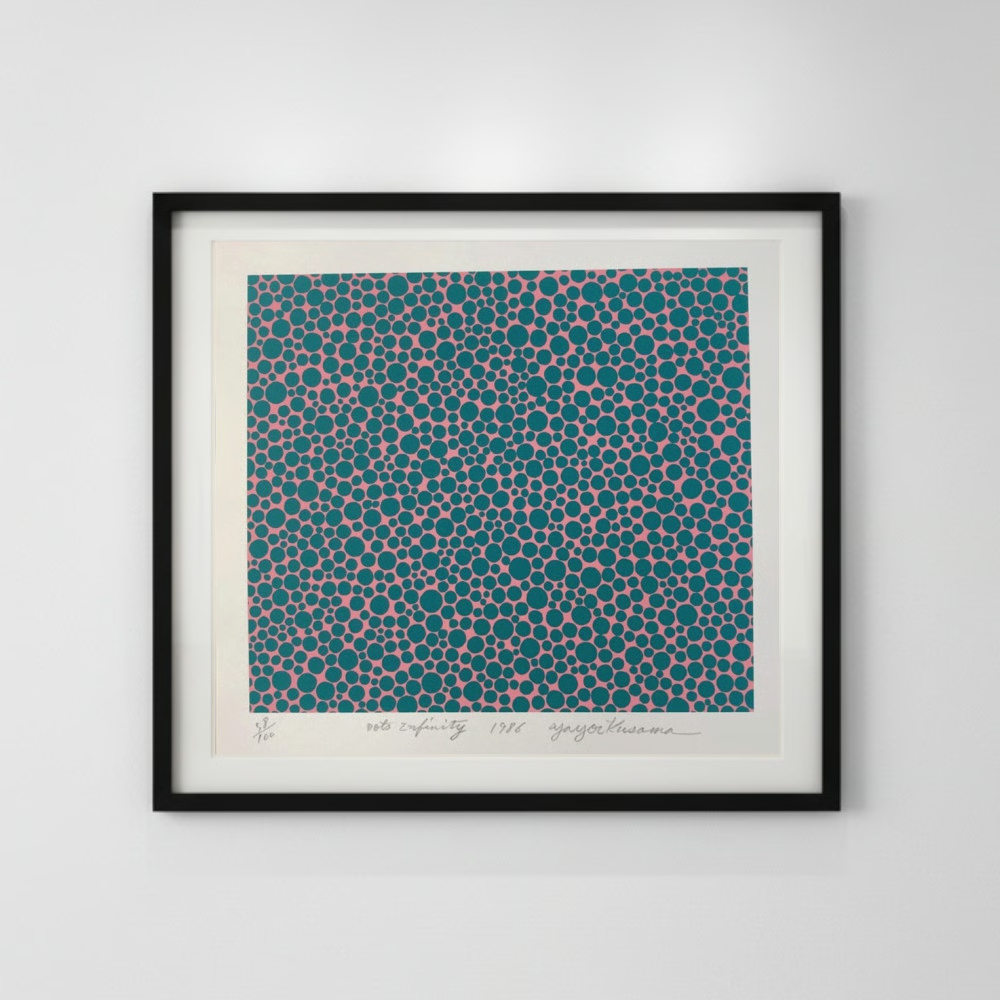
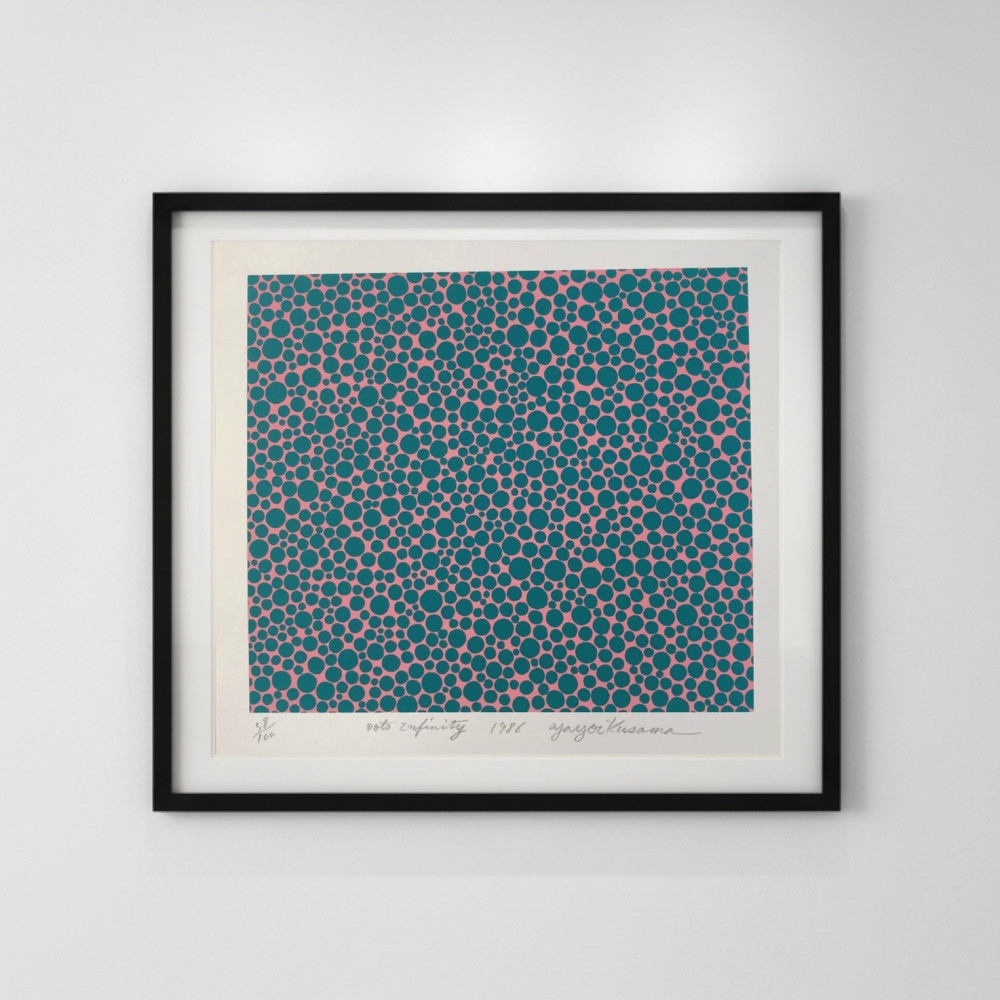
Yayoi Kusama, Dots Infinity, Screenprint. Available at Guy Hepner, New York.
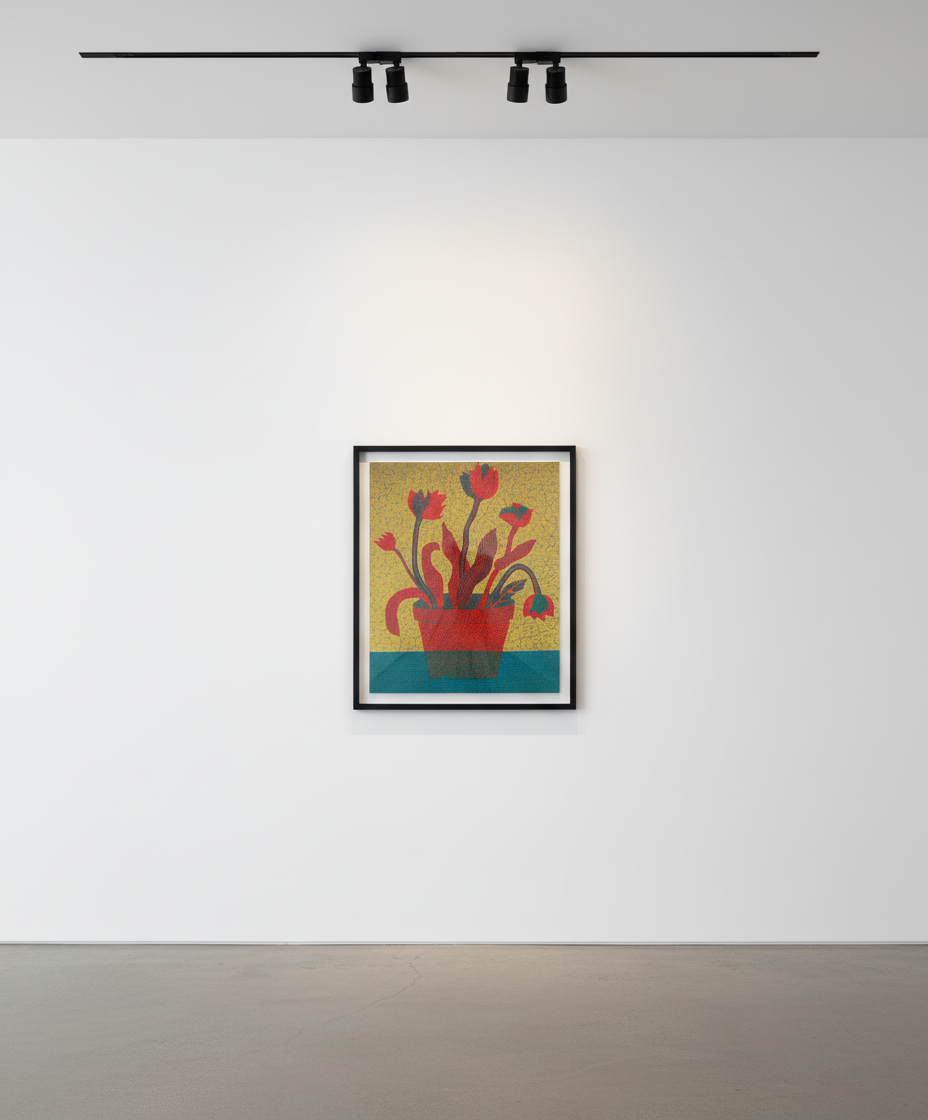
Floral works, including prints of tulips and other Flowers, demonstrate Kusama's connection to nature and her botanical childhood. These works often appeal to collectors who appreciate their beauty and warmth alongside their art historical significance. The shoe images and other object-based works connect to her Accumulations period and her interest in covering everyday objects with obsessive patterns.
The calendar of Kusama exhibitions stretching into 2026 and 2027 demonstrates the sustained institutional interest in her work. The Stedelijk Museum in Amsterdam will present a retrospective from September 2026 through January 2027. The Museum Ludwig in Cologne hosts a solo exhibition from March through August 2026. The Cincinnati Art Museum will present "All the Eternal Love I Have for the Pumpkins" from July through October 2026. The Guggenheim Museum in New York includes her work in "Guggenheim Pop: 1960 to Now," running from June 2026 through January 2027.
These exhibitions ensure that Kusama's work will continue reaching new audiences, that the infinity rooms will continue offering their moments of transcendence, that the pumpkins will continue spreading their warmhearted presence. For collectors, such exhibitions also reinforce the artist's institutional standing and maintain visibility for her market.
The permanent installations deserve mention as well. At Liverpool Street Station in London, "Infinite Accumulation" offers commuters and visitors a daily encounter with Kusama's vision. At Naoshima and other locations in Japan, her works have become integral to cultural tourism. These permanent presences ensure that Kusama remains visible even between major exhibition cycles.
For collectors interested in acquiring Yayoi Kusama works, the current moment presents both opportunities and considerations. The artist's output over her long career was substantial, meaning that works do appear on the primary and secondary markets with some regularity. Prints and editions remain the most accessible entry point, with prices ranging from several thousand dollars for later editions to six figures for rare early prints.
Working with established galleries that specialize in post-war and contemporary art ensures proper authentication and fair pricing. The market for Kusama has attracted forgeries and questionable attributions, making expertise essential. Serious collectors should:
The question collectors frequently ask—how old was Yayoi Kusama when she died—reflects both curiosity about her remarkable longevity and interest in understanding the full arc of her productive career. At 96, she had been creating art for approximately eight decades, an almost unprecedented span of sustained creativity. This longevity resulted in a substantial body of work across multiple media and periods, giving collectors numerous entry points into her universe.
What does it mean to own a piece of infinity? This question, perhaps unanswerable in any literal sense, lies at the heart of collecting Kusama's work. Her art offers not merely aesthetic pleasure or investment potential but something rarer: a genuine shift in perception. To live with a Kusama work is to be reminded daily that the world contains more than our ordinary vision perceives, that patterns connect us to something larger than ourselves, that obliteration of the ego can be liberating rather than threatening.
Kusama once wrote, "Our earth is only one polka dot among a million stars in the cosmos." This statement captures both the humility and the ambition of her vision. We are small, dots within dots, yet we are also part of something infinite. Her art enacts this paradox, making viewers simultaneously aware of their individual presence and their dissolution into larger patterns.
For collectors, this philosophical dimension adds meaning to ownership. A Kusama print on the wall is not simply decoration but a meditation object, a reminder of perspectives beyond the everyday. The dots that cover a pumpkin are not merely design elements but records of an artistic consciousness that saw beyond ordinary perception. The infinity represented in her rooms extends into the works one can actually live with.
Infinity, by definition, never ends. The dots continue spreading; the rooms keep reflecting; the pumpkins persist in their warmhearted presence. Yayoi Kusama spent nearly a century creating a visual universe that has become part of global consciousness. From the child who kept drawing despite her mother's disapproval, to the factory worker who found time to create during wartime, to the young woman who arrived in New York with nothing but ambition, to the artist who chose to live in psychiatric care while producing some of the most beloved art of our era—her story is one of extraordinary persistence in service of vision.
The legacy she leaves is not merely a body of work, though that body is vast and significant. It is a way of seeing, a recognition that the patterns repeating in our peripheral vision might be doorways to understanding. It is an example of how art can emerge from struggle and transform pain into beauty. It is proof that a single, determined individual can change how the world perceives itself.
For those who wish to bring a piece of this infinite universe into their own lives, the opportunity exists. At Guy Hepner, located at 529 West 20th Street in New York, collectors can explore available works by Yayoi Kusama, from prints capturing her iconic motifs to pieces that demonstrate the range of her artistic production. The gallery's specialists can guide collectors through the considerations involved in acquiring these works, ensuring proper authentication and helping to identify pieces that resonate with individual collecting goals. In owning Kusama, one owns not simply an artwork but a point of connection to an infinite universe—one that continues expanding, dotted and endless, long after its creator has joined the cosmos she always depicted.
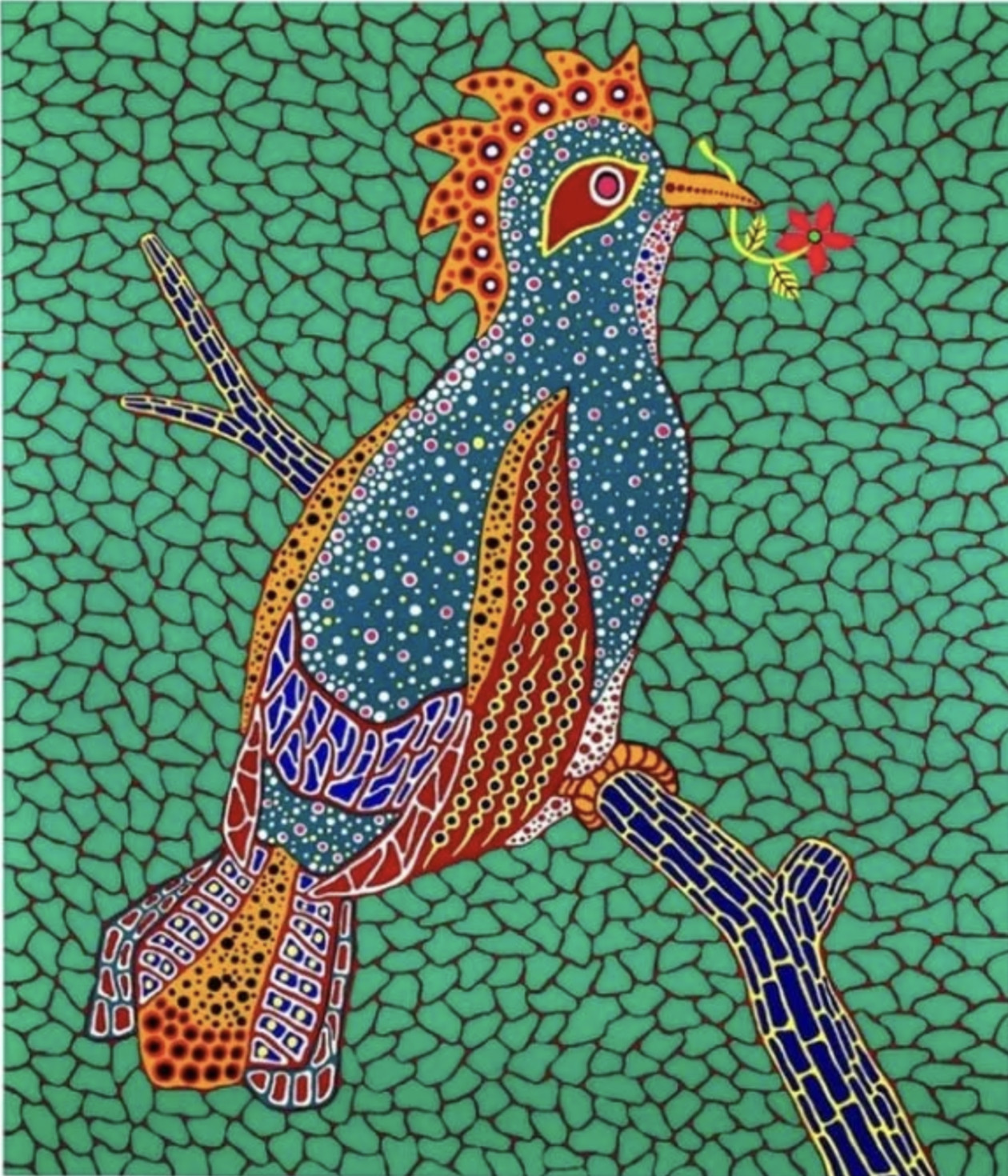
Explore Yayoi Kusama prints for sale at Guy Hepner: Infinity Dots, Infinity Nets, Pumpkins, Fauna, Flowers.
Related Series