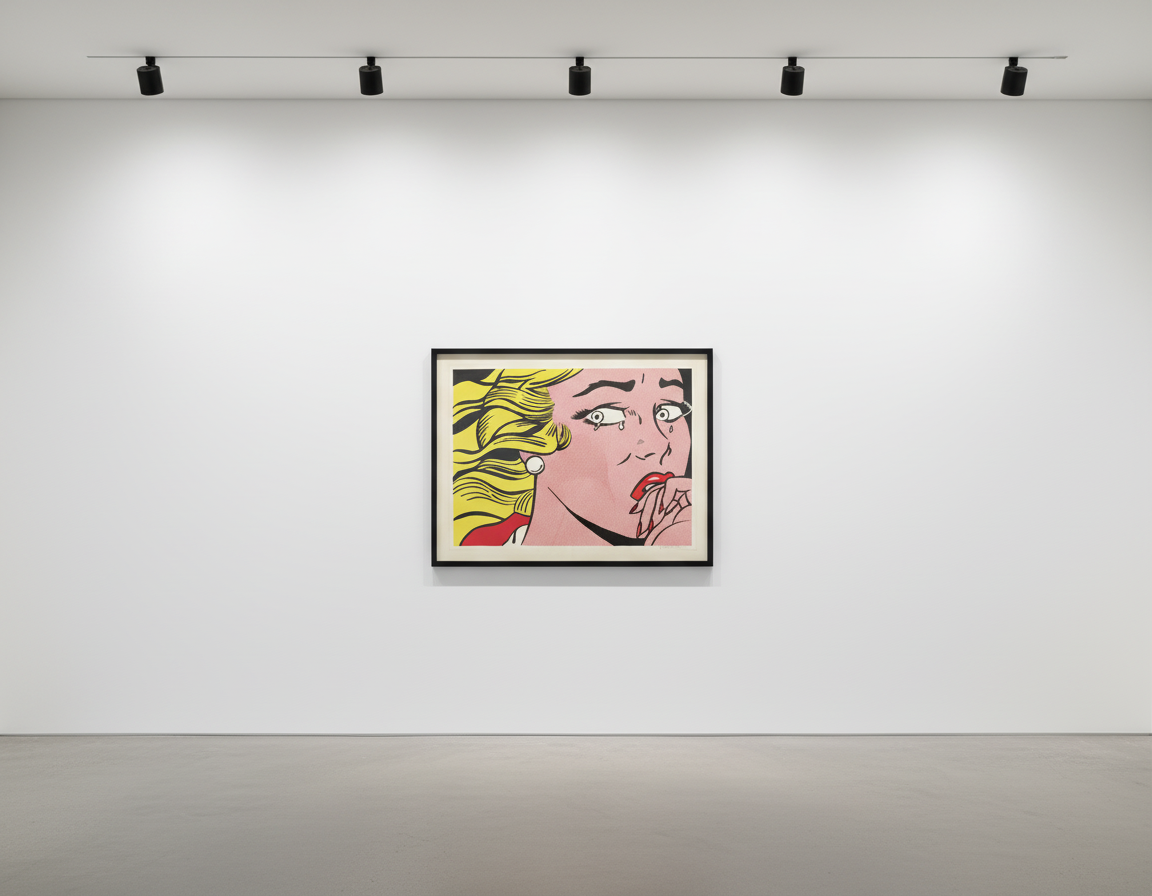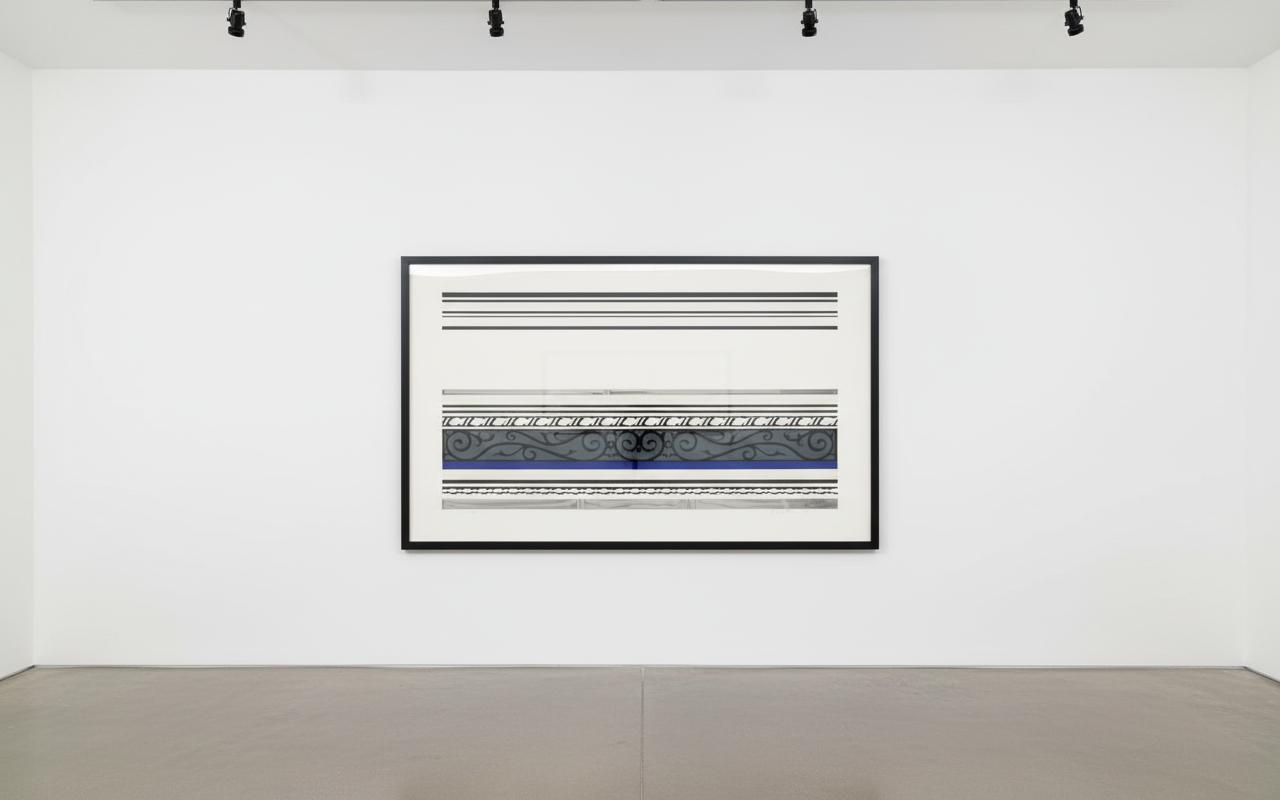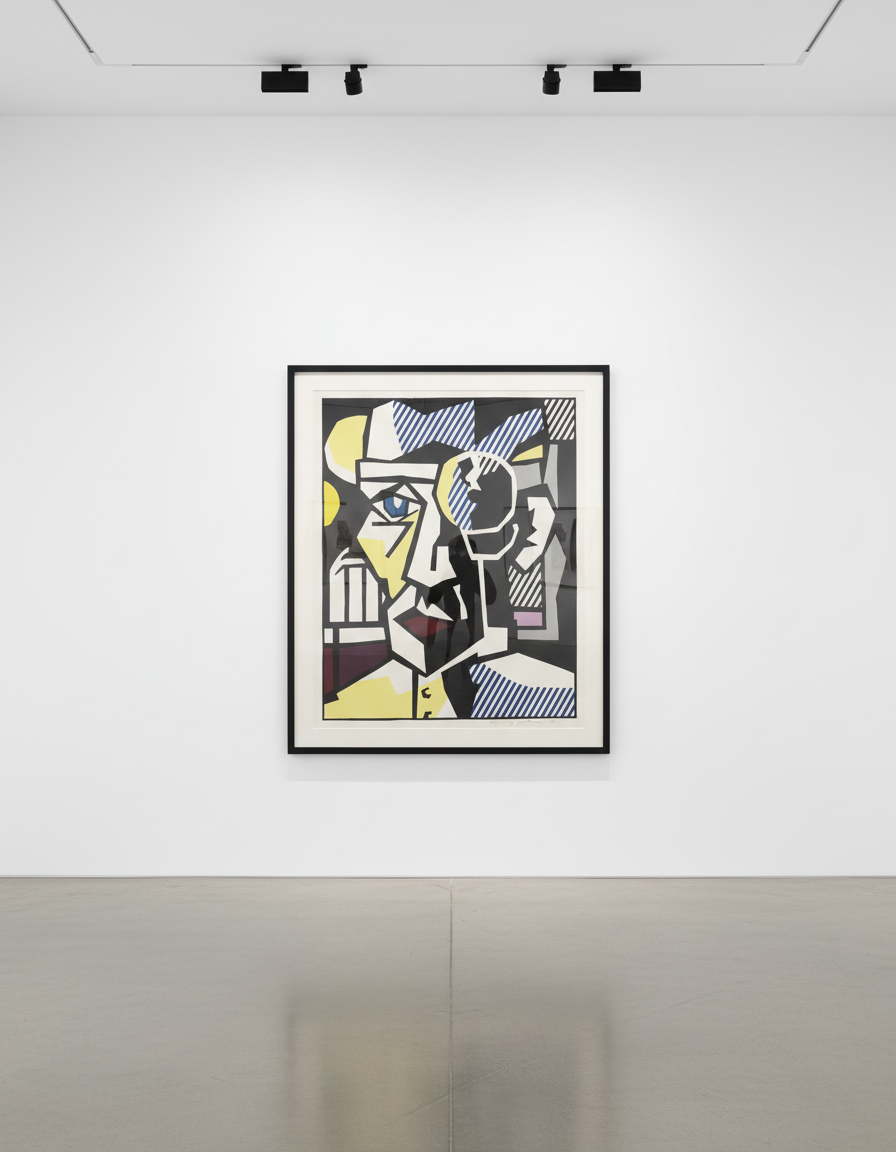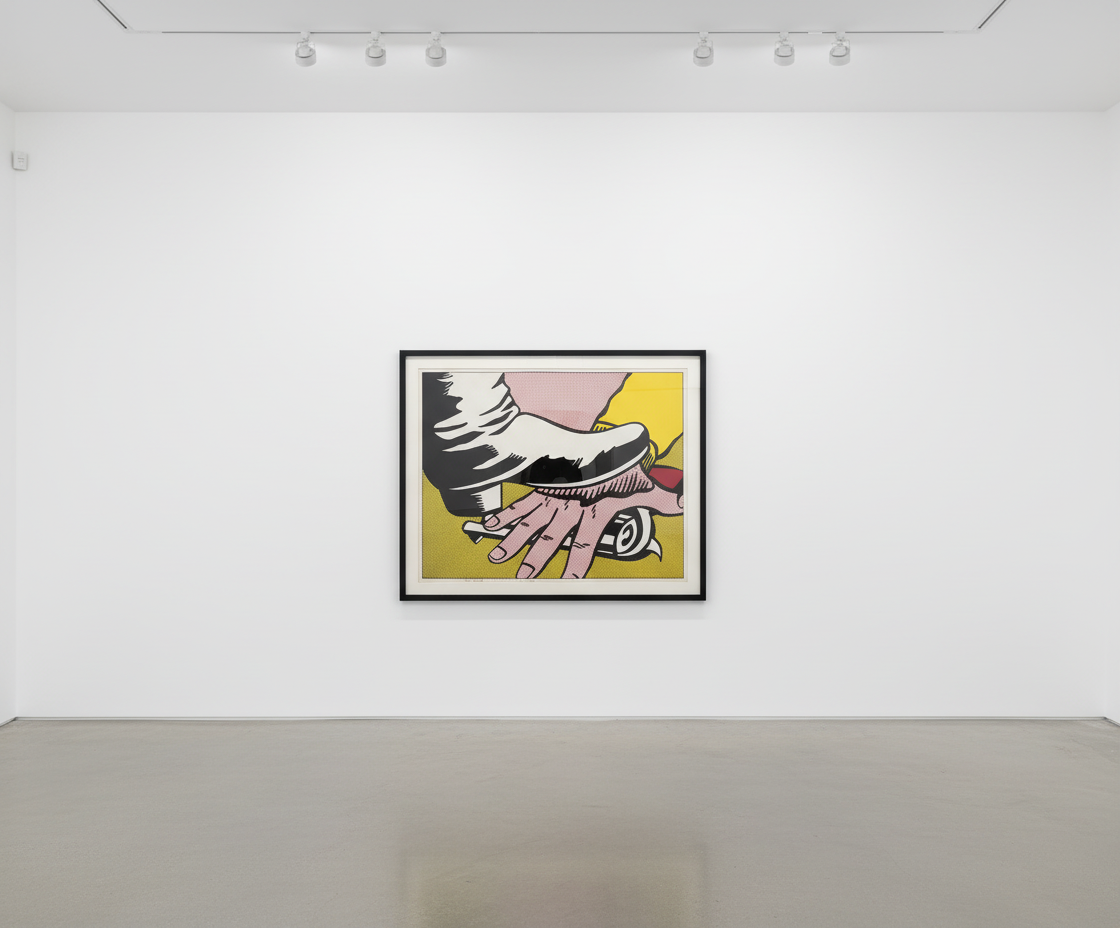
American Indian Theme
6 works

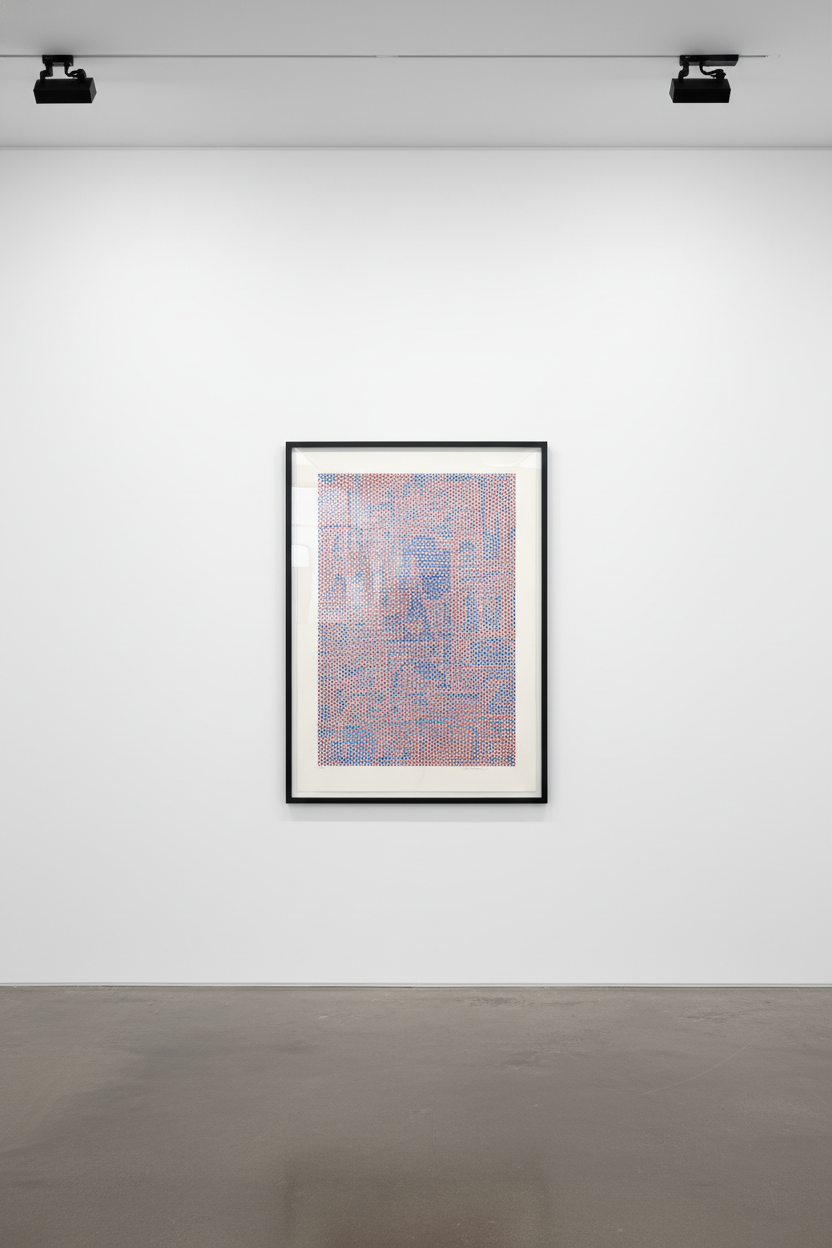
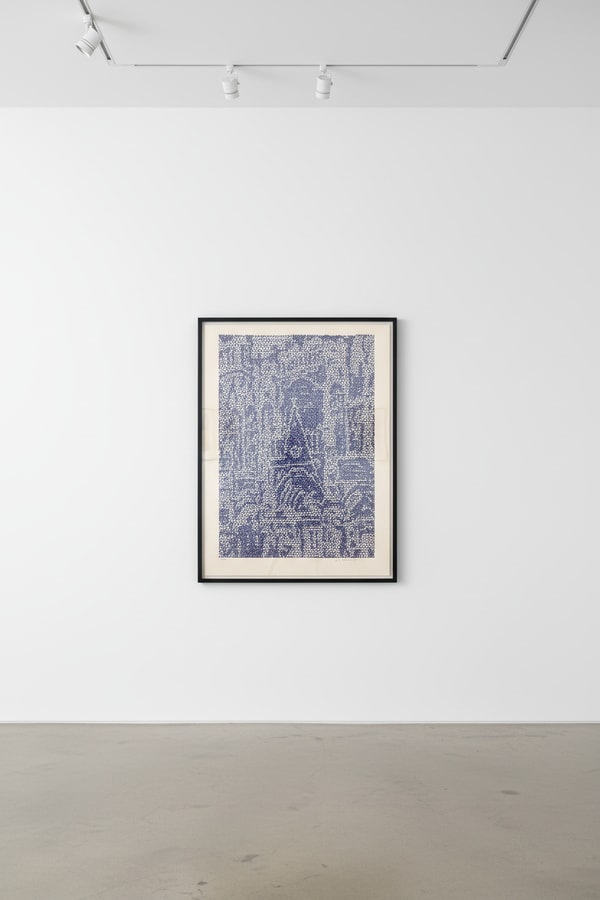
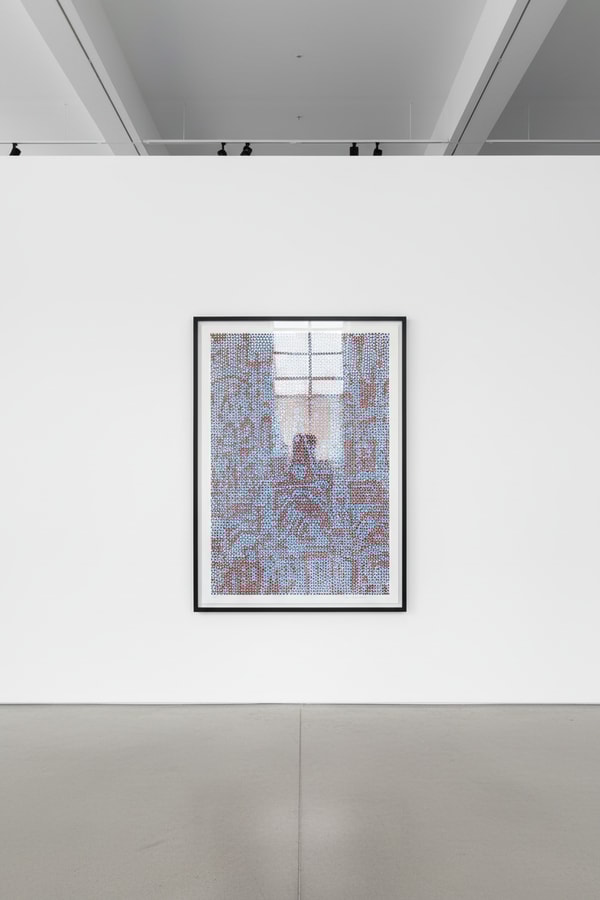
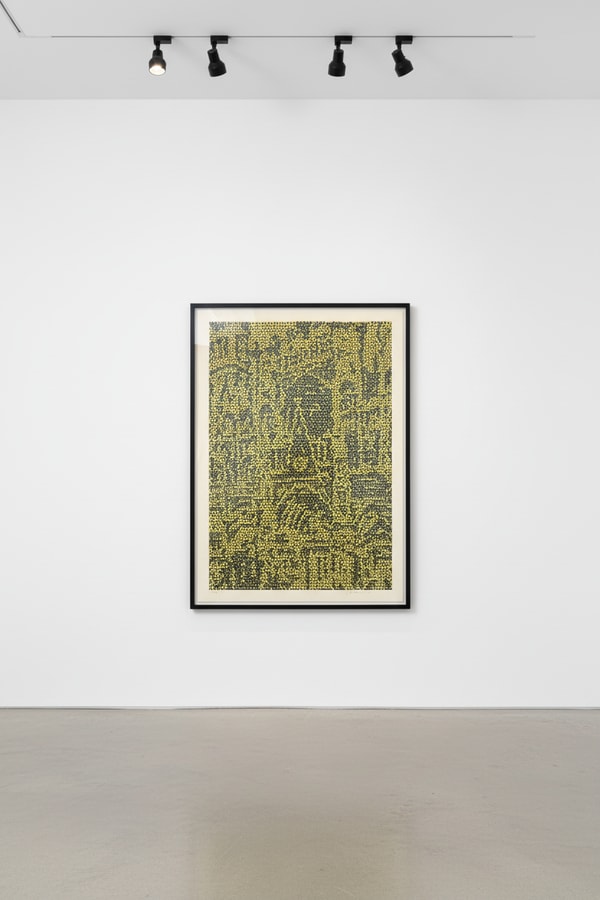
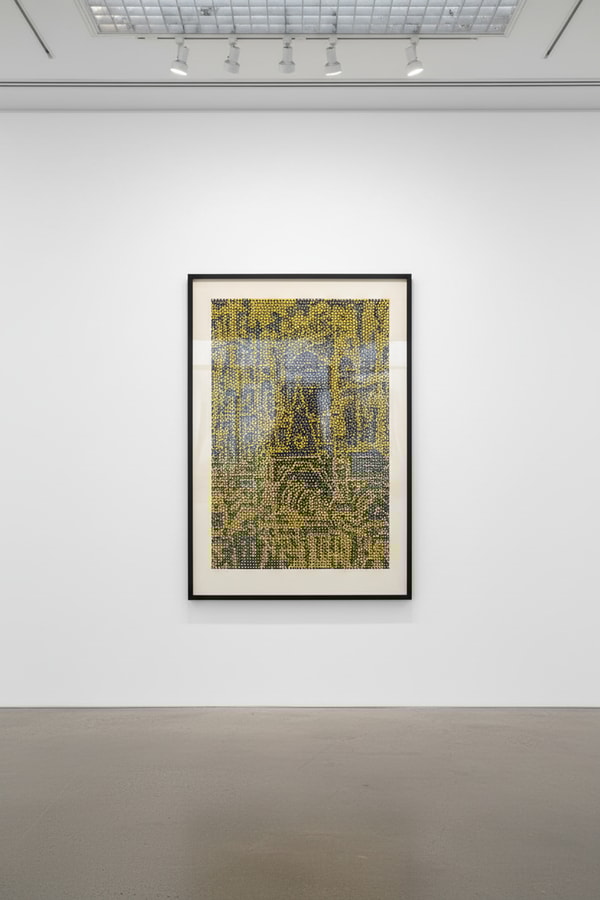
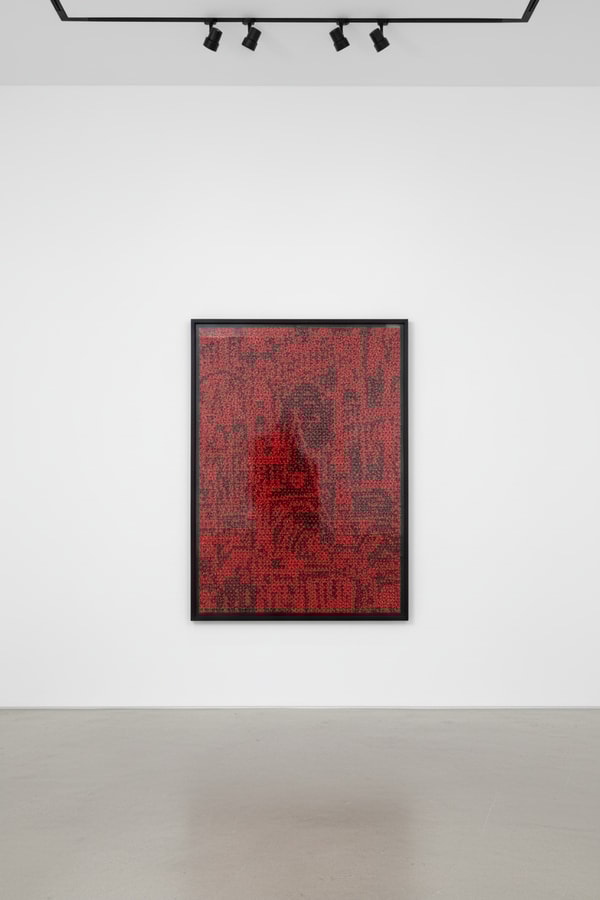
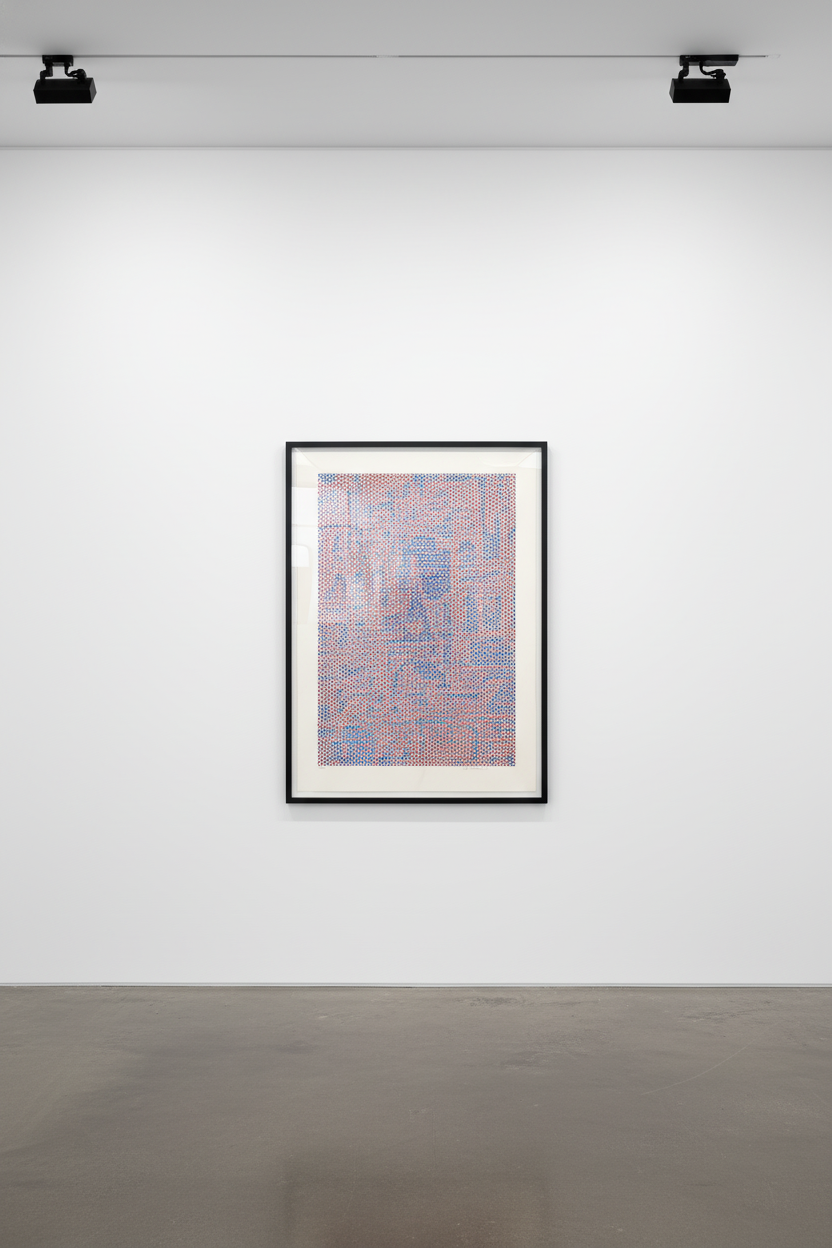
Cathedral II (C. 76), 1969
Lithograph
48 3/8 x 32 3/8 in 122.7 x 82.2 cm
Edition of 75 plus 10 AP
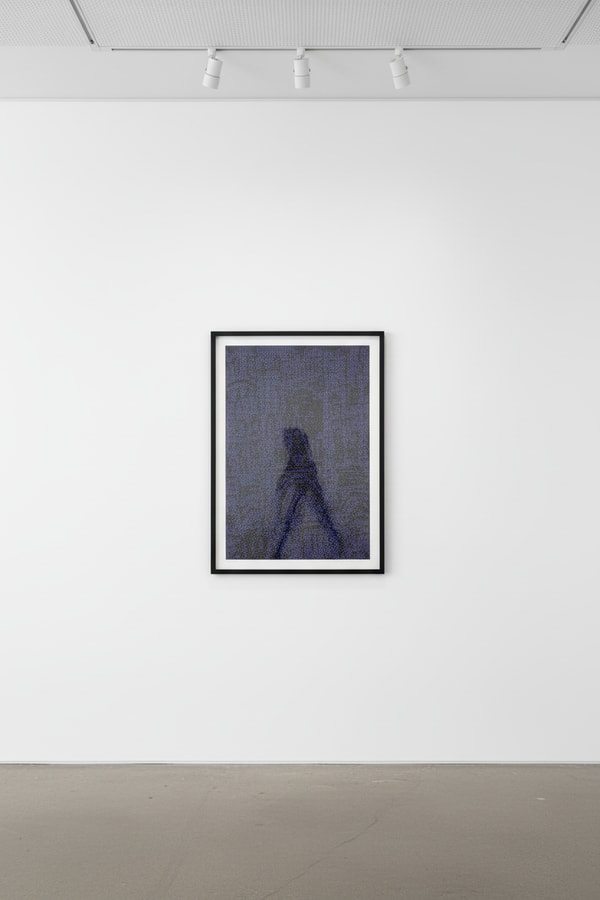
Roy Lichtenstein’s Cathedral II (C. 76), created in 1969, continues his exploration of perception, abstraction, and mass-produced imagery through the iconic Cathedral series. Like Cathedral I, this work uses his signature Ben-Day dot technique to both reveal and obscure a subject—in this case, the Gothic grandeur of a cathedral reduced to an intricate matrix of red and blue dots. The composition vibrates with optical tension, creating a field where the recognizable strains against abstraction.At first glance, the lithograph presents itself as a dense, almost impenetrable surface of mechanical dots in two colors. The visual effect is one of flickering instability: the eye dances across the surface, attempting to find coherence within the grid. Gradually, however, forms emerge—the suggestion of Gothic spires, the faint outline of arches, and the sense of verticality that evokes the soaring architecture of European cathedrals. The viewer is caught in a play of recognition, perpetually shifting between seeing only patterns and sensing the monumental structure that lies beneath.This duality encapsulates Lichtenstein’s broader concerns as a Pop artist. By taking the grandeur of the cathedral—a symbol of permanence, spirituality, and cultural achievement—and filtering it through a system of dots, he transforms the subject into an exercise in perception and reproduction. The monumental becomes fragile, dependent on the viewer’s ability to reconstruct the image from fragments. At the same time, the reduction of sacred architecture into a commercial printing code underscores Lichtenstein’s challenge to hierarchies of high and low culture.Cathedral II can be read as an extension of Lichtenstein’s dialogue with Claude Monet’s Rouen Cathedral series of the 1890s. Monet dissolved the solidity of the cathedral into light and atmosphere, emphasizing how perception transforms architecture over time and condition. Lichtenstein, in turn, dissolves the form into a mechanical system of dots, a 20th-century code of vision tied not to nature but to reproduction technologies and mass media. Where Monet’s cathedral is ephemeral because of shifting light, Lichtenstein’s is ephemeral because it is mediated, existing only as an optical illusion built by the viewer.The choice of red and blue intensifies the optical effect. The colors vibrate against each other, destabilizing the image and mimicking the retinal fatigue produced by prolonged viewing of printed material. This chromatic play further reinforces the work’s concern with vision, not as a transparent act but as a process fraught with strain, error, and instability.Ultimately, Cathedral II exemplifies Lichtenstein’s move in the late 1960s toward semi-abstraction and conceptual commentary. It is a meditation on the nature of representation: what does it mean to depict a cathedral when the image is reduced to dots? How does grandeur survive when transposed into the language of commercial reproduction? The work stands as both homage and critique, simultaneously engaging with centuries of artistic tradition while reframing it within the logic of Pop Art.For more information or to buy Cathedral II (C. 76) by Roy Lichtenstein, contact our galleries using the form below.
Price on Application
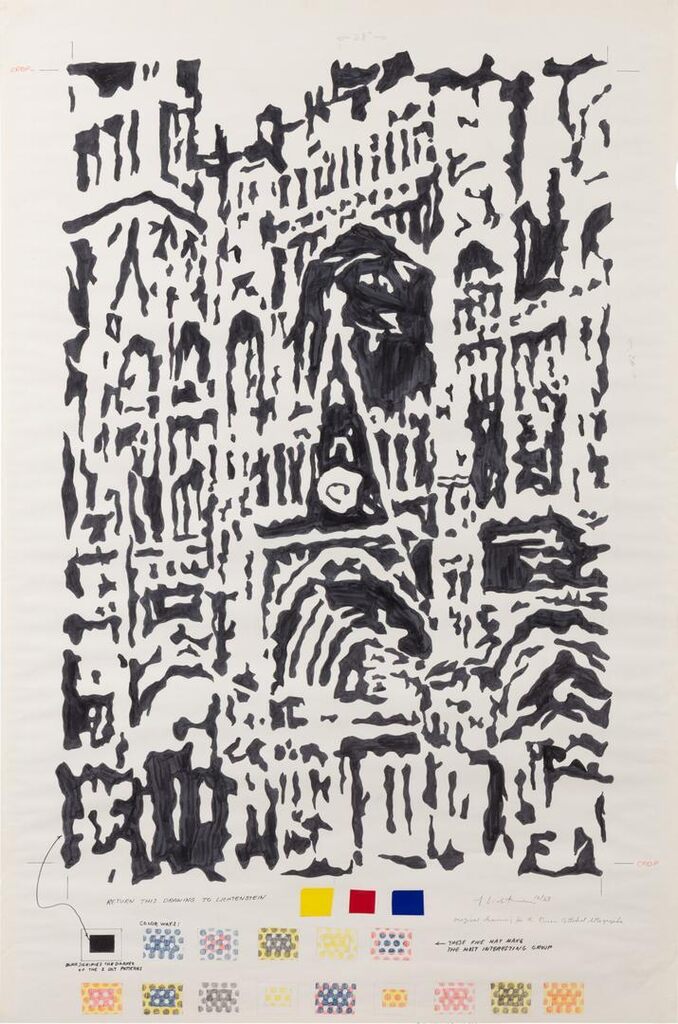
Cathedral (Study) · Roy Lichtenstein · Sotheby's · 2025-10 · $484,038
CATHEDRAL #1-6 (C. 75-80) · Roy Lichtenstein · Sotheby's · 2010-03 · $70,692
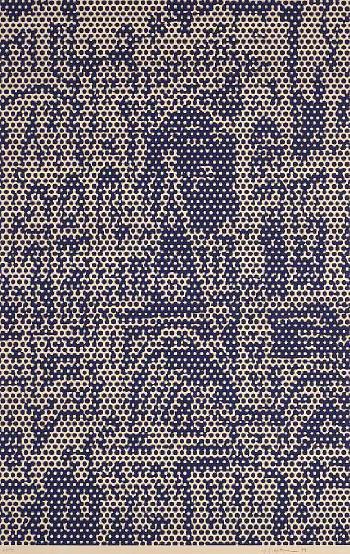
Cathedral #3, from Cathedral Series (C. 78; G. 144) · Roy Lichtenstein · Bonhams & Butterfields · 2010-10 · $27,450
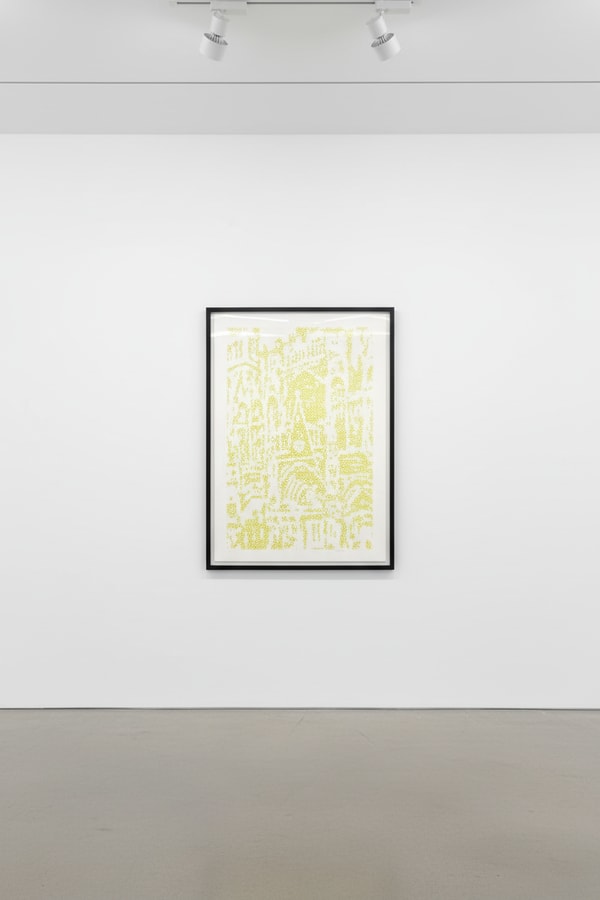
Roy Lichtenstein's Cathedral Series: History, Prints, and Collector Value

The Roy Lichtenstein Market in 2025
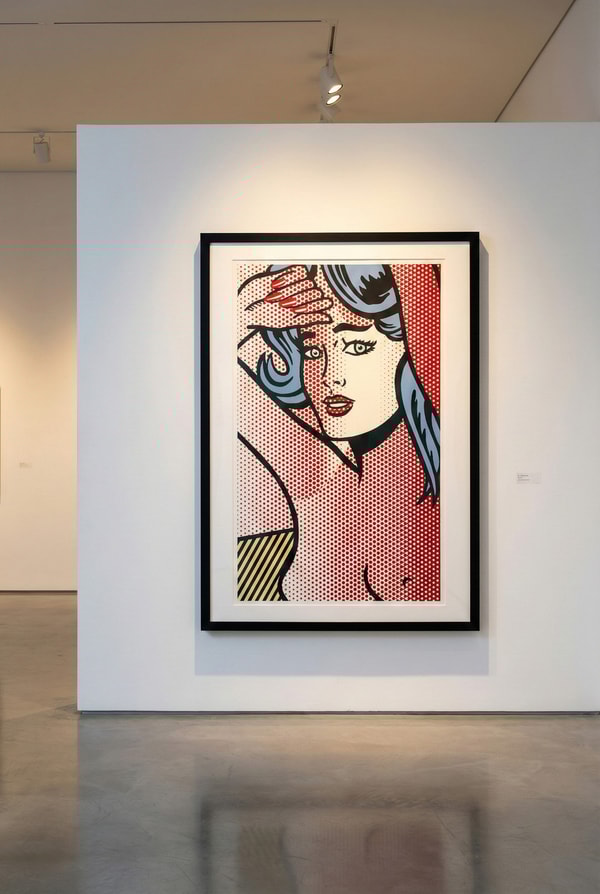
Roy Lichtenstein Suspended Storytelling
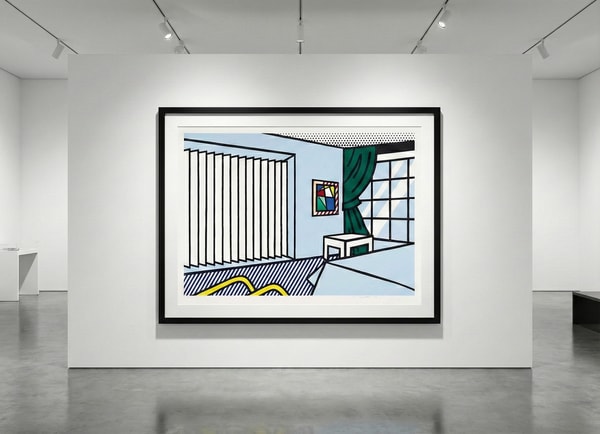
Roy Lichtenstein 2024 Half Time Report

Roy Lichtenstein: Everyday Objects
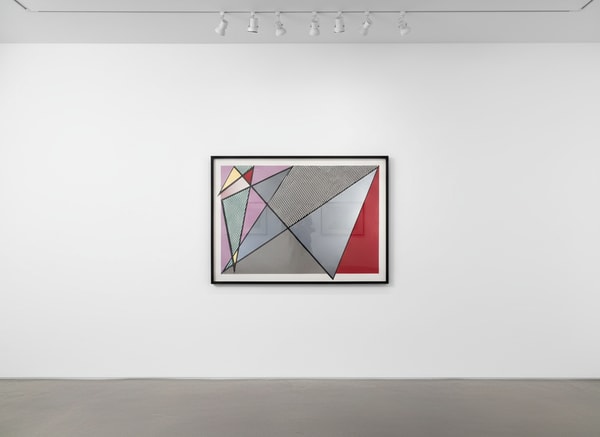
Roy Lichtenstein's Imperfect Series
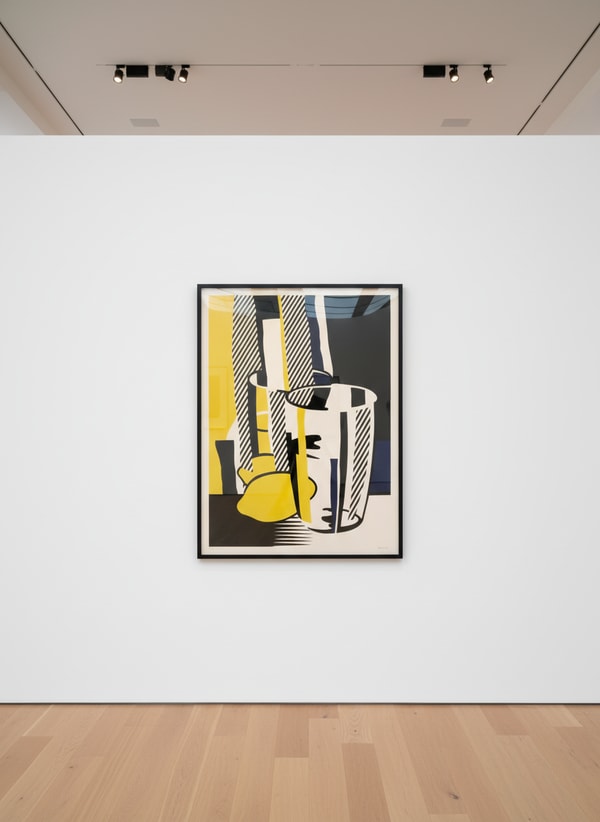
Why Collect Roy Lichtenstein
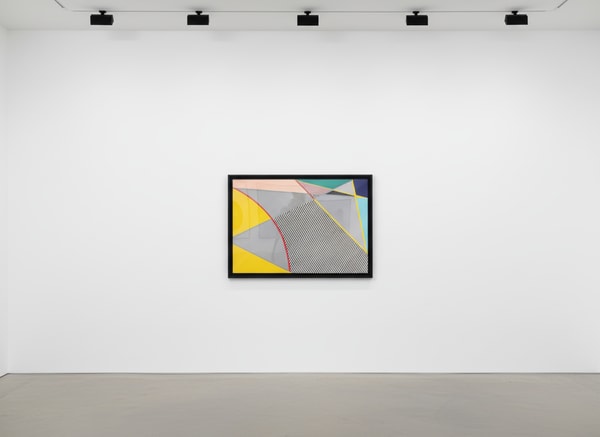
Roy Lichtenstein: Picture Perfect Panoramas
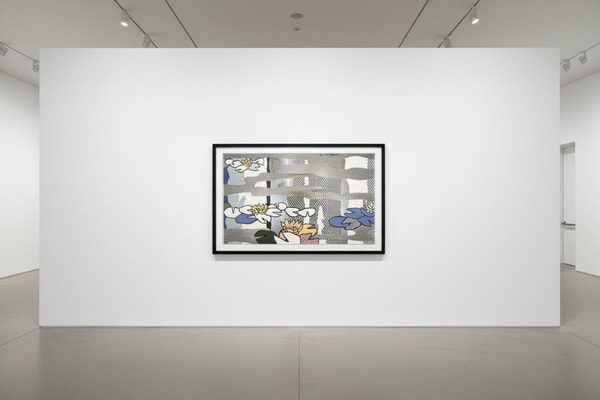
Roy Lichtenstein's Water Lilies Series
Roy Lichtenstein prints for sale and Roy Lichtenstein paintings for sale at Guy Hepner Gallery, New York. Our inventory spans lithographs, screenprints, and unique works from his most collected series: Brushstrokes, Reflections, Nudes, Interiors, Haystacks, Cathedral, Entablature, and American Indian Theme — all with full provenance and Corlett catalogue raisonné references. We also acquire Lichtenstein. Free valuations available.
Roy Lichtenstein (1923–1997) is the defining figure of American Pop Art and one of the most actively traded artists on the post-war and contemporary market. His bold graphic language — Ben-Day dots, black outlines, primary palettes drawn from comic books and advertising — is among the most instantly recognisable in twentieth-century art. Born in New York City, he was exhibited by Leo Castelli Gallery from 1962 and worked until his death in September 1997, producing one of the most extensively documented print catalogues of any artist of his generation.
Roy Lichtenstein art for sale spans signed prints, paintings, and unique works across his full catalogue. His most collected categories: signed and numbered screenprints and lithographs from the major series, unique works on paper, and large-format canvas paintings. The auction benchmark was set when Masterpiece (1962) sold for $165 million in a private transaction in 2017, and Nurse (1964) achieved $95.4 million at Christie's New York in 2015. Major print series regularly achieve $100,000–$2 million at Sotheby's, Christie's, and Phillips.
The most liquid and accessible segment of his market. Working with Gemini G.E.L., Petersburg Press, and Castelli Graphics, Lichtenstein produced lithographs, screenprints, woodcuts, and relief prints across three decades. Key series at Guy Hepner:
Signed impressions command significant premiums over unsigned editions. Corlett catalogue raisonné reference and publisher's certificate documentation are essential for any acquisition.
Roy Lichtenstein original art for sale — unique paintings on canvas — represents the rarest category of his output. Major early canvases are primarily in institutional collections; secondary market appearances are concentrated at evening sales at Christie's, Sotheby's, and Phillips. Works on paper and preparatory drawings offer compelling opportunities for collectors seeking unique works with strong Lichtenstein provenance at more accessible price points.
Guy Hepner actively acquires Roy Lichtenstein prints, paintings, and works on paper from private collections. If you are looking to sell Roy Lichtenstein prints or seeking a current market valuation, contact our New York gallery for a confidential, no-obligation assessment. We handle all series including Brushstrokes, Reflections, Nudes, Haystacks, Cathedral, American Indian Theme, and Interiors.
Interested in adding Roy Lichtenstein to your collection? Contact Guy Hepner Gallery at 177 Tenth Avenue, New York to discuss current inventory and acquisition strategy.