X-Ray Works

May 28, 2026
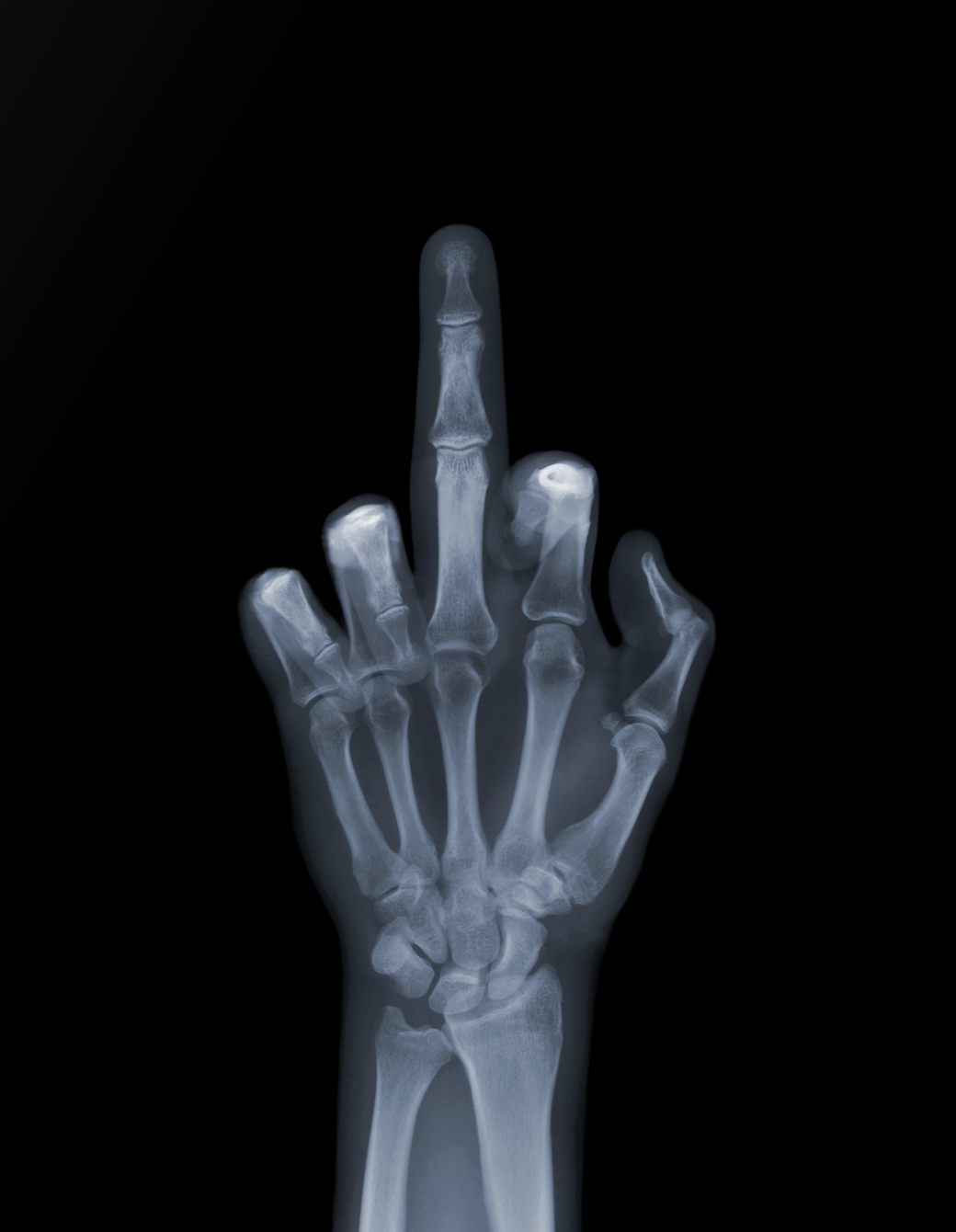
Nick Veasey is a British artist whose X-ray photographs have entered the permanent collection of the Victoria and Albert Museum, been exhibited across five museum retrospectives, and appeared in international campaigns for Adobe, Macallan, and some of the world's most recognisable brands. His Framed Chromaluxe works — available through Guy Hepner Gallery, New York — apply his signature radiographic process to subjects ranging from classic Ferraris and Porsches to Hermès Birkin bags, Christian Louboutin heels, and original compositions that place skeletal human figures in cinematic scenes drawn from mid-century American mythology.
Fourteen works are currently available. What follows is a guide to his practice, the process behind the images, and what distinguishes his output within the broader landscape of contemporary photography-based art.
Veasey was working in advertising and conventional still photography in London when he was asked to X-ray a cola can for a television production. On impulse, he X-rayed the shoes he was wearing the same day. When he showed the finished image to an art director, the response told him everything. He had found the thing his practice had been building toward without his knowing it — a method of seeing the world from the inside out, of revealing the engineered reality beneath every surface we are taught to read as whole.
What followed was thirteen years of systematic experimentation with X-ray imaging and equipment, documented in his book X-ray: See Through The World Around You, published by Carlton/Goodman in the UK and Penguin in North America. The book is not a retrospective so much as a manifesto: proof that the radiographic image, long confined to medical and industrial contexts, could carry the same aesthetic authority as any other photographic form.
He lives and works near Maidstone, England, operating his own X-ray studio — an unusual infrastructure for any artist, but the only way to maintain the control over exposure, composition, and scale that his practice demands.
Veasey's working method begins with actual X-ray imaging — not digital simulation, not post-production approximation. Subjects are physically irradiated using medical and industrial-grade equipment scaled to the object in question. A pair of shoes requires different equipment and exposure settings than a full-size Ferrari. The Boeing 777 he X-rayed in its entirety — a life-size image that currently hangs in a hangar at Logan Airport in Boston — required a level of technical coordination that no photographer working in conventional light could replicate.
The resulting images are then worked with collaborators including digital artists to composite and refine the final image before output. For the works available through Guy Hepner, the output format is Framed Chromaluxe — a process in which the image is infused directly into the surface of an aluminium panel using heat and pressure. The result is a print with exceptional archival stability, a depth of tone that conventional photographic paper cannot match, and a surface that reads differently under different light conditions. The metallic substrate gives Veasey's radiographic imagery — naturally rendered in silver and white — a resonance that reinforces the source material. These are prints that look like what they are.
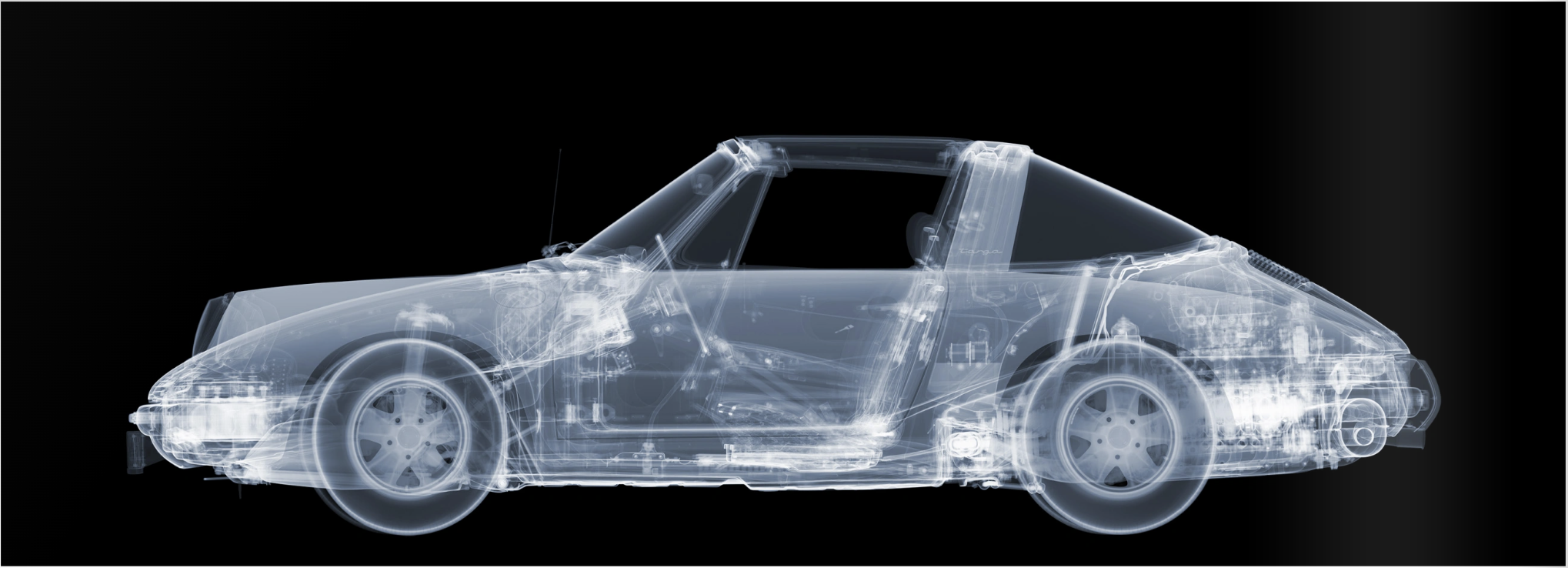
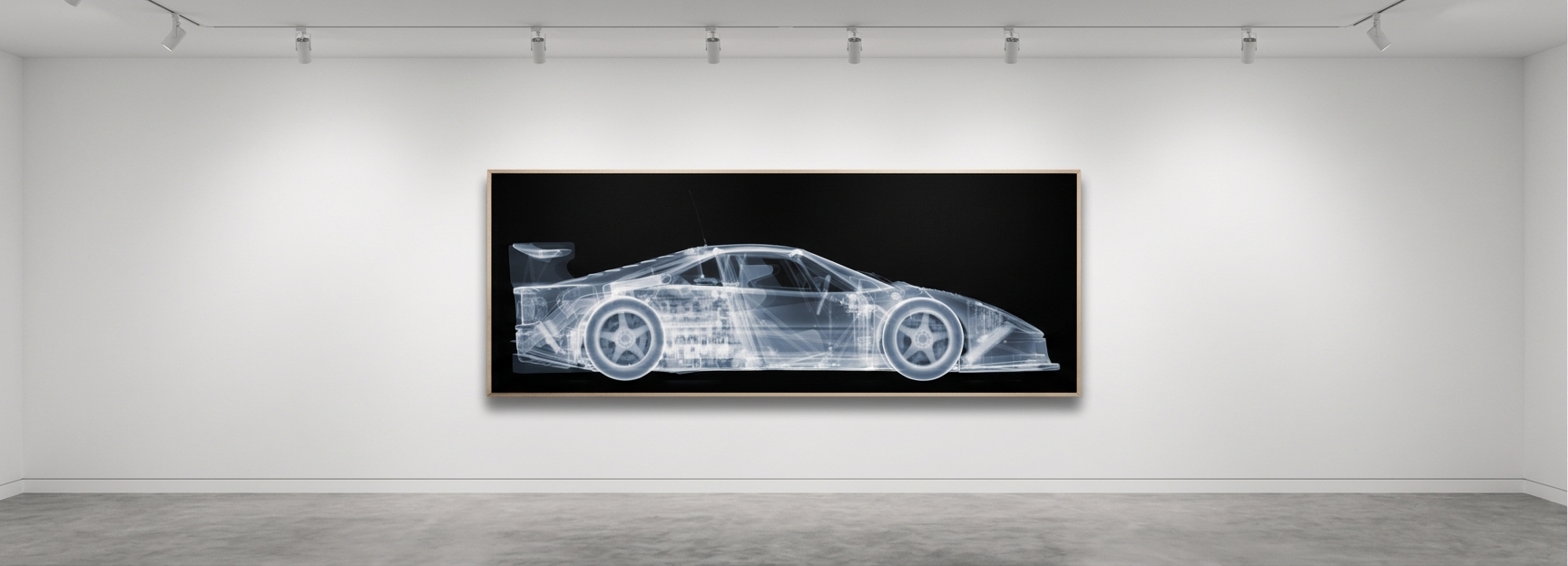
Veasey's automotive series are among the most technically demanding and widely collected bodies of work he has produced. The Ferrari F40 GTE and Porsche 911 Targa available through Guy Hepner are not photographs of cars in any conventional sense. The body panels, the paint, the designed exterior that makes a Ferrari a Ferrari — none of it appears. What remains is the engine, the frame, the mechanical architecture that makes the car move: the thing the car actually is, stripped of everything we associate with its desirability.
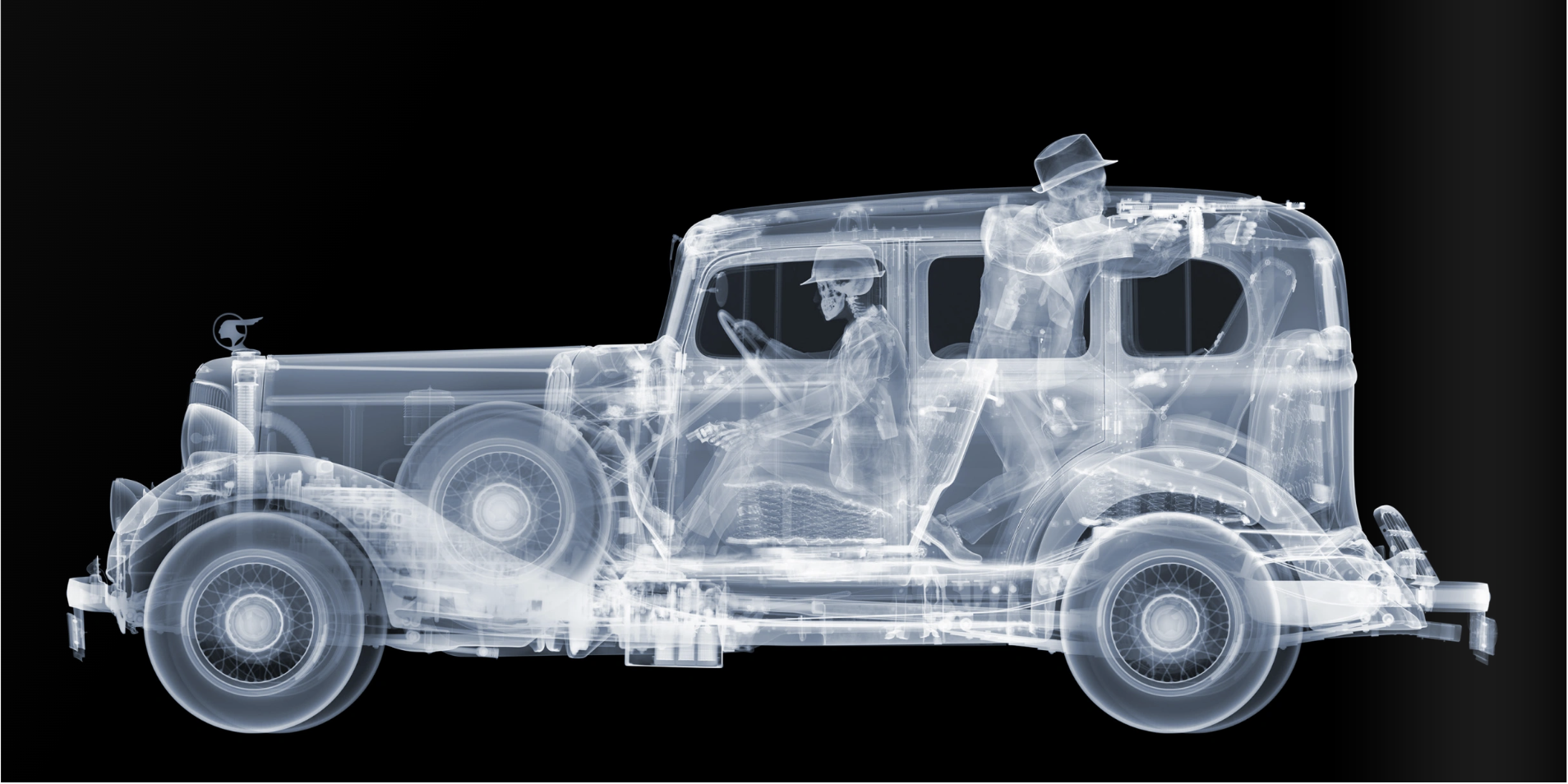
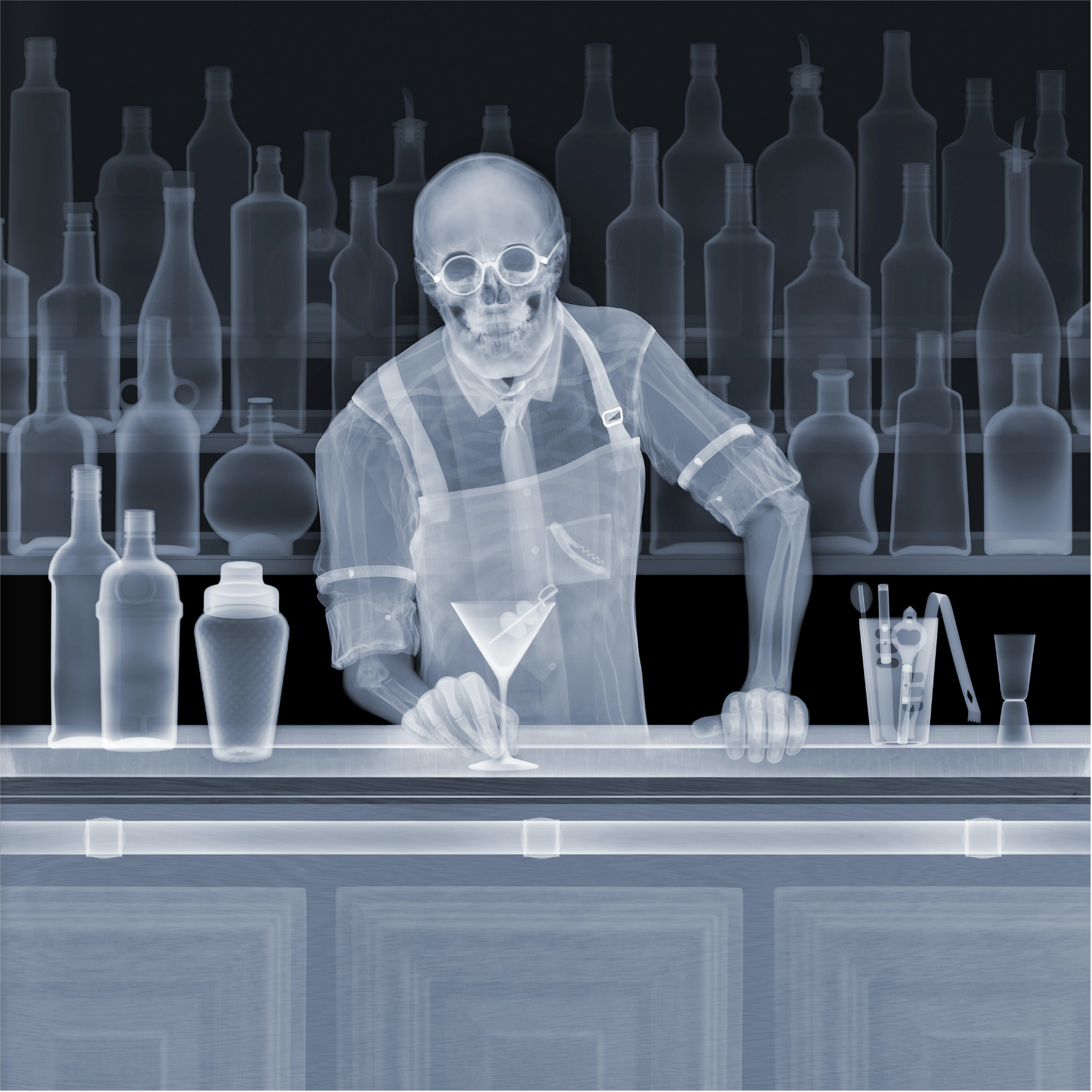
The 1930s Pontiac with Gangsters and the 1948 Mercury Cowboy extend this into narrative territory. These are not simply mechanical studies — they are scenes. Skeletal human figures occupy the vehicles in period dress, constructing tableaux that recall a particular American mythology of the open road, of the car as a vessel for a certain kind of freedom or transgression. The X-ray process, which reduces the human figure to its bare anatomical structure, simultaneously universalises and distances: these are not specific people but archetypes, seen from the inside with the same forensic clarity as the machines they inhabit.
Veasey's inclusion in the British National Collection of Photography at the Victoria and Albert Museum places him in a category that most photographers working commercially never reach. The V&A's photography collection is not assembled on commercial terms; it reflects curatorial judgment about what constitutes a lasting contribution to the medium. His presence there is a statement about the seriousness with which the art world has received work that began in an advertising context.
His collaboration with the V&A on X-raying Balenciaga couture from the museum's collection produced some of the more forensically compelling fashion images of the last two decades. Couture garments that took hundreds of hours to construct were subjected to his radiographic process, revealing the internal architecture — the boning, the stitching, the structural engineering — of pieces that most people encounter only through glass. The project demonstrated that X-ray imaging could function as a form of art historical research as much as a creative act: it showed us things about these garments that no camera pointed at their exterior ever could.
He has additionally undertaken five museum retrospectives, including Mass MoCA in North Adams, Massachusetts, and the Erarta Museum in St. Petersburg — institutional contexts that few photographers working with the same commercial fluency have managed to sustain alongside.
A separate strand of Veasey's practice uses lenticular printing — a ribbed lens technology that shifts the visible image depending on the viewer's angle — to introduce narrative and kinetic energy into his otherwise still compositions. Works that change as you walk past them: Clark Kent's business suit revealing Superman's costume beneath, Batman and Superman occupying the same frame from different viewing positions. The lenticular format is technically exacting and conceptually coherent with Veasey's broader interest in what lies beneath visible surfaces. These are works that reward movement, that change in your peripheral vision as you cross the room.
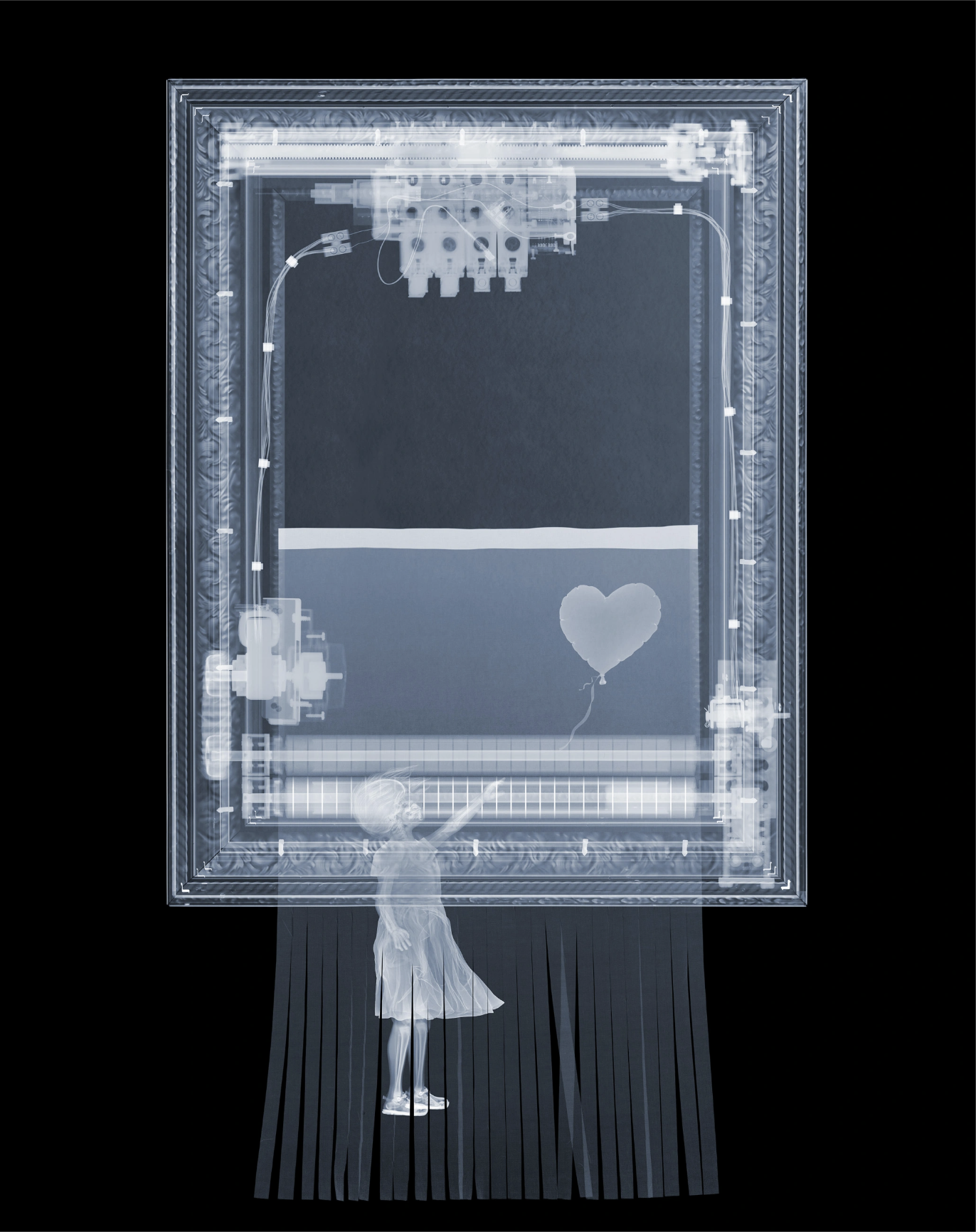
The BanXsy series — available in two versions, BanXsy Before and BanXsy After — applies Veasey's radiographic eye to one of the most legible iconographies in contemporary art. The X-ray reduces the image to its structural and material reality: what the spray can, the stencil, the wall actually consist of, seen from the inside. It is an act of forensic attention that the work's cultural weight invites and sustains.
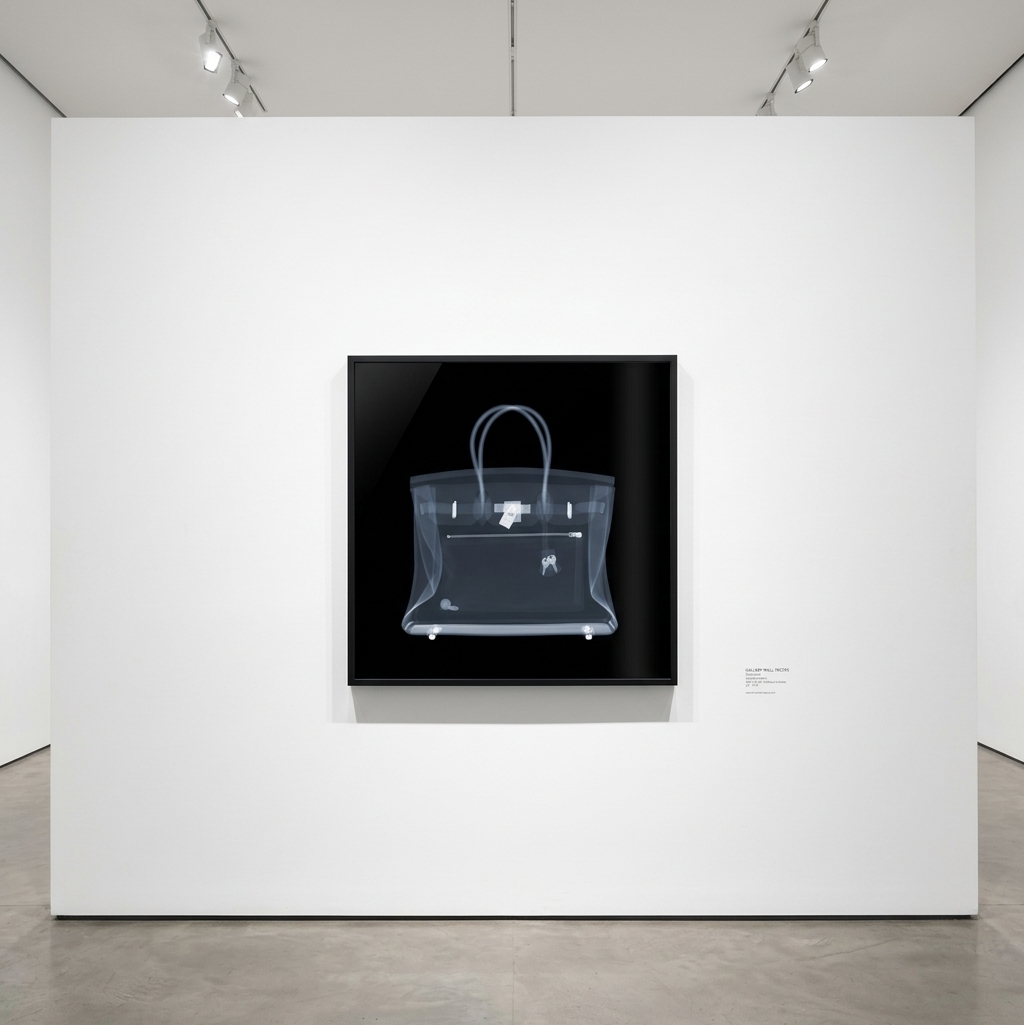
His fashion and luxury object works — the Christian Louboutin Pigalle Follies heel, the Hermès Birkin bag — occupy similar territory. These are among the most culturally loaded objects in contemporary material culture, objects whose value is almost entirely bound up in their exterior. Veasey's X-ray strips that away and asks what remains. The Louboutin heel, rendered radiographically, becomes an engineering diagram: the internal structure of a shoe designed entirely around its exterior appearance. The Birkin bag reveals the hardware, the stitching, the physical substance behind one of fashion's most durable symbols of status.
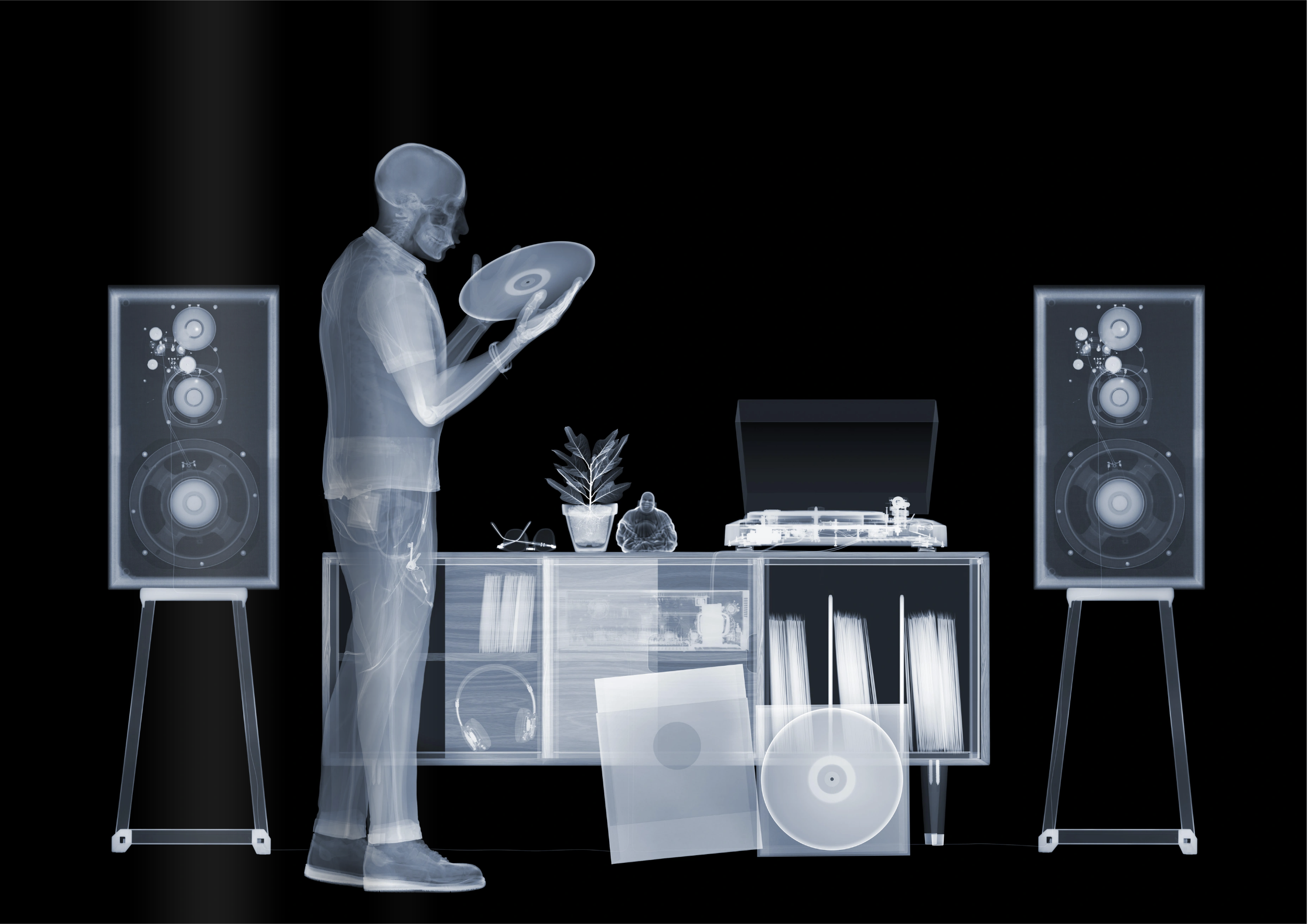
Several works in the current Guy Hepner selection explore a recurring Veasey theme: the relationship between the human figure and the technology it inhabits or performs with. Hi-Fi Man, Easy Listener, and the Rat Pack series place skeletal figures in scenes defined by audio equipment, headphones, and the paraphernalia of recorded sound. The X-ray reduces both the human body and the surrounding technology to the same register — structures of metal and bone, circuits and cartilage — and in doing so suggests something about how completely the technology has been incorporated into the human. The figure does not use the equipment; it has become part of it.
The Rat Pack works carry the same mid-century American mythology as the automotive pieces. The original Rat Pack's cultural authority was inseparable from a specific visual language — the tuxedo, the microphone, the particular gestural confidence of men at ease with their own legend. Veasey strips that exterior away and leaves the human fact beneath it: bone and structure, the physical reality that the mythology was built on top of.
Veasey's practice occupies an unusual position in the contemporary photography market: genuine technical originality, an institutional record that includes permanent museum collection, five major retrospectives, and sustained coverage in publications including Wired, CNN, Reuters, Harper's Bazaar Arabia, and Popular Photography — combined with a price point that reflects primary market access rather than secondary market positioning. Works are currently available through Guy Hepner from $5,300 to $16,900.
The Chromaluxe format is an important consideration for collectors thinking about long-term holdings. Unlike conventional photographic paper, Chromaluxe — the dye-sublimation process that infuses the image into an aluminium substrate — does not yellow, crack, or deteriorate under normal gallery or residential conditions. The aluminium panel is robust enough to hang without glazing, which means the work is experienced without the reflective interference of glass. These are prints made for the long term.
For collectors placing work in contemporary residential or commercial interiors, the monochromatic silver palette of Veasey's X-ray images gives them an unusual versatility: they read as photographs, as prints, and in certain lights almost as drawings. They work alongside other photographic work and alongside painting, in domestic spaces and in corporate ones, at the scale of an intimate interior detail or — as the Ferrari and Porsche works demonstrate — as commanding statement pieces.
The following works are currently available through Guy Hepner Gallery. All works are Framed Chromaluxe. Additional sizes are available on several pieces — contact the gallery for specifications.
Veasey uses actual X-ray imaging equipment — not digital simulation — to photograph his subjects. Objects and figures are physically irradiated using medical and industrial-grade equipment scaled to the subject. The resulting radiographic images are worked with digital artists before output, with the final works produced as Framed Chromaluxe prints: images infused into aluminium panels via dye-sublimation for exceptional archival stability and tonal depth.
Yes. Veasey is included in the British National Collection of Photography at the Victoria and Albert Museum in London. He has also undertaken five museum retrospectives, including at Mass MoCA in Massachusetts and the Erarta Museum in St. Petersburg. His work has additionally been part of international exhibitions across Europe, North America, and Asia.
Chromaluxe is a dye-sublimation process in which the printed image is infused directly into an aluminium panel using heat and pressure. Unlike conventional photographic paper, it does not yellow or deteriorate under normal conditions. The aluminium surface gives Veasey's silver-toned X-ray imagery a resonant quality that paper cannot match, and the works can be hung without glazing — eliminating the reflective interference of glass and allowing the image to be seen exactly as it was made.
His subjects span classic automobiles (Ferrari F40, Porsche 911 Targa, 1930s Pontiac, 1948 Mercury), luxury fashion objects (Hermès Birkin bag, Christian Louboutin heels), human figures in cinematic scenes, music and audio equipment, and lenticular compositions that shift as the viewer moves past them. He has also X-rayed couture garments from the V&A's Balenciaga collection and — at the largest scale — a life-size Boeing 777, now displayed at Logan Airport in Boston.
Fourteen Framed Chromaluxe works are currently available through Guy Hepner Gallery at 177 Tenth Avenue, New York. The gallery can also advise on additional sizes available for several works in the collection. Contact Guy Hepner to arrange a viewing or request full specifications.
Guy Hepner Gallery presents Nick Veasey's X-Ray Works alongside an established programme of post-war and contemporary art. For collectors interested in acquiring specific works or discussing the full range of available sizes, contact the gallery at 177 Tenth Avenue, New York.
View Nick Veasey X-Ray Works at Guy Hepner →
Explore Nick Veasey prints for sale at Guy Hepner: X-Ray Works.
Related Series