Sculptures

September 15, 2026

There is a particular sensation that anyone who grew up in the 1980s or 1990s will recognise instantly: the satisfying click of a cartridge sliding into a console, the electronic chime that follows, the weight of a controller settling into your palms. These are not merely sensory memories but emotional anchors, portals to afternoons spent cross-legged on living room floors, to the specific joy of discovering a hidden level or finally defeating a boss that had tormented you for weeks. Connor Gottfried artist and engineer from Calgary, Canada, has built an entire practice around this recognition, transforming obsolete gaming hardware into luminous, oversized sculptures that visitors can actually play. In a contemporary art landscape often defined by conceptual distance and institutional solemnity, Gottfried's work offers something increasingly rare: pure, uncomplicated delight.
The art world has long maintained an uneasy relationship with video games, occasionally acknowledging their cultural significance while often relegating them to design museums or treating them as anthropological curiosities rather than legitimate aesthetic objects. Gottfried's intervention is both simple and radical. By extracting the electronic guts of first and second-generation consoles—Nintendo Entertainment Systems, Sega Genesis units, original Game Boys, TurboGrafx-16 machines—and embedding them within elaborate, candy-coloured sculptural forms, he forces a confrontation between high art pretension and low culture pleasure. The result is work that functions simultaneously as sculpture, as functional gaming device, and as time machine.
Connor Gottfried's relationship with technology began earlier than most. At age five, his father purchased an Apple II computer with an unusual arrangement: he had convinced the store owner to let him copy every game disk available, meaning young Connor began his gaming journey with nearly 300 titles at his disposal. This abundance shaped a particular relationship with digital play—not as scarce commodity to be rationed but as inexhaustible resource for exploration and imagination. The experience planted seeds that would take decades to flower into artistic practice.
Through childhood and adolescence, Gottfried accumulated an eclectic set of skills that would prove essential to his later work. He studied music, programming, and visual art with equal enthusiasm, never seeing these disciplines as separate but rather as interconnected expressions of the same creative impulse. His professional credits span multiple fields, from software development to musical composition, each contributing tools and perspectives to what would eventually become his signature artistic approach. This multidisciplinary foundation distinguishes his practice from artists who might share similar thematic interests but lack the technical sophistication to execute their visions with comparable precision.
The turning point arrived in 2019 when Gottfried began incorporating screens into his large-scale artwork, an experiment that transformed conceptual possibility into physical reality. A 2021 piece featuring a Zelda Game & Watch established the direction that would define his mature practice, proving that these hybrid objects could generate genuine emotional responses in viewers. As Gottfried himself has noted, this was when he realised the idea was lighting people up. The phrase captures something essential about his artistic philosophy: the conviction that art should illuminate rather than obscure, should invite participation rather than demand reverence.
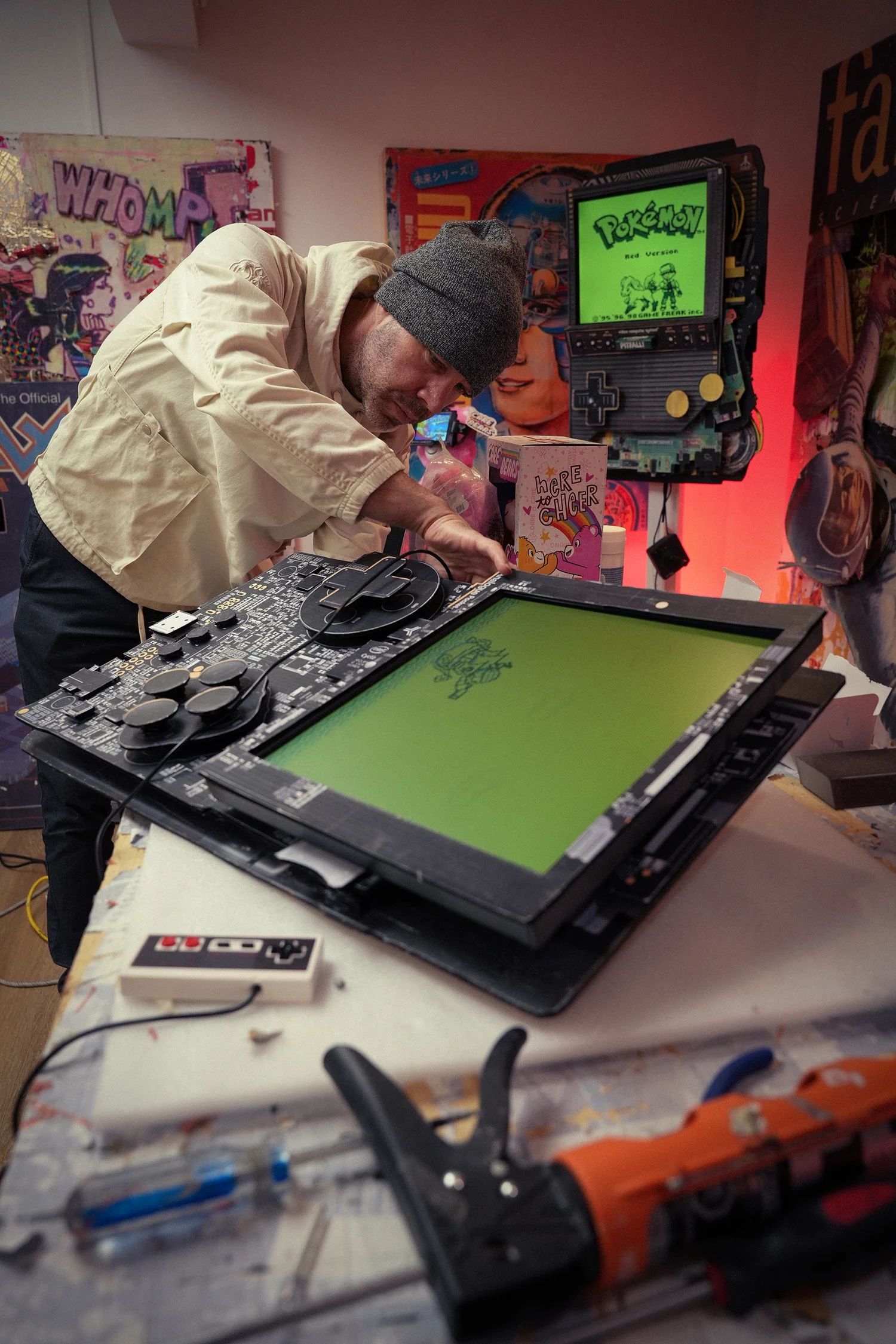
Understanding Gottfried's creative process reveals the remarkable technical sophistication underlying his seemingly playful objects. Each piece begins as a digital design in Photoshop, constructed as a series of layers that will eventually become physical strata. He then models these layers in three dimensions, examining the emerging sculpture from every conceivable angle and adjusting the design until it achieves the desired effect. This iterative digital process can take weeks or months, as Gottfried refines proportions, colour relationships, and structural details before any physical fabrication begins.
Once the design is finalised, the work transitions to material production. Depending on the scale of the piece, designs are printed onto either aluminum composite paneling or acrylic paneling, then either CNC-routed or laser-cut to achieve the intricate shapes that characterise his aesthetic. The layers are separated with acrylic spacers and assembled using what Gottfried describes, with evident relish, as a secret combination of adhesives. Electronics are wired in during final assembly, transforming static sculpture into functional gaming device. The entire process demands equal fluency in digital design, fabrication technology, and electronic engineering—a combination of skills that few artists possess and even fewer have thought to apply in this particular direction.
The scale of these works contributes significantly to their impact. Liquid Crystal II, for instance, transforms the humble Game Boy into a three-foot playable sculpture with a nineteen-inch screen and functional controller. The enlargement produces a defamiliarisation effect familiar from Pop Art—Claes Oldenburg's giant soft sculptures come to mind—but Gottfried adds a dimension that Oldenburg could never achieve: functionality. These are not representations of consumer objects but actual consumer objects, transformed through scale and context into something that belongs equally in gallery and living room.
Museums have traditionally operated according to what Gottfried calls the velvet rope edict of look-but-don't-touch. This prohibition makes sense for fragile historical artifacts and unique paintings vulnerable to the oils and acids of human skin, but it has calcified into a broader ideology separating viewer from artwork across all contexts. Gottfried's sculptures deliberately subvert this ideology. They are designed not merely to be viewed but to be used, not merely contemplated but played. The artwork is incomplete until someone picks up a controller and begins navigating pixelated worlds.
This interactivity carries philosophical implications beyond mere novelty. By requiring participation, Gottfried's work challenges the passive spectatorship that dominates conventional gallery experience. Visitors become players, observers become participants, and the traditional hierarchy separating artist, artwork, and audience begins to dissolve. There is something almost democratic about this arrangement, a refusal of the exclusivity that can make contemporary art feel forbidding to non-specialist audiences. Anyone who has ever held a controller can engage with these works, regardless of their familiarity with art historical discourse or theoretical frameworks.
The interactivity also generates a particular kind of social energy. Gottfried has spoken about casting visual art as the ultimate conversation starter, and indeed his sculptures function as gathering points, drawing people together around shared activity and shared memory. In domestic settings, they become focal points that invite guests to engage, to reminisce, to play. In gallery settings, they transform typically hushed spaces into sites of laughter, competition, and collaborative problem-solving. This social dimension represents a significant departure from the contemplative solitude that galleries traditionally cultivate.
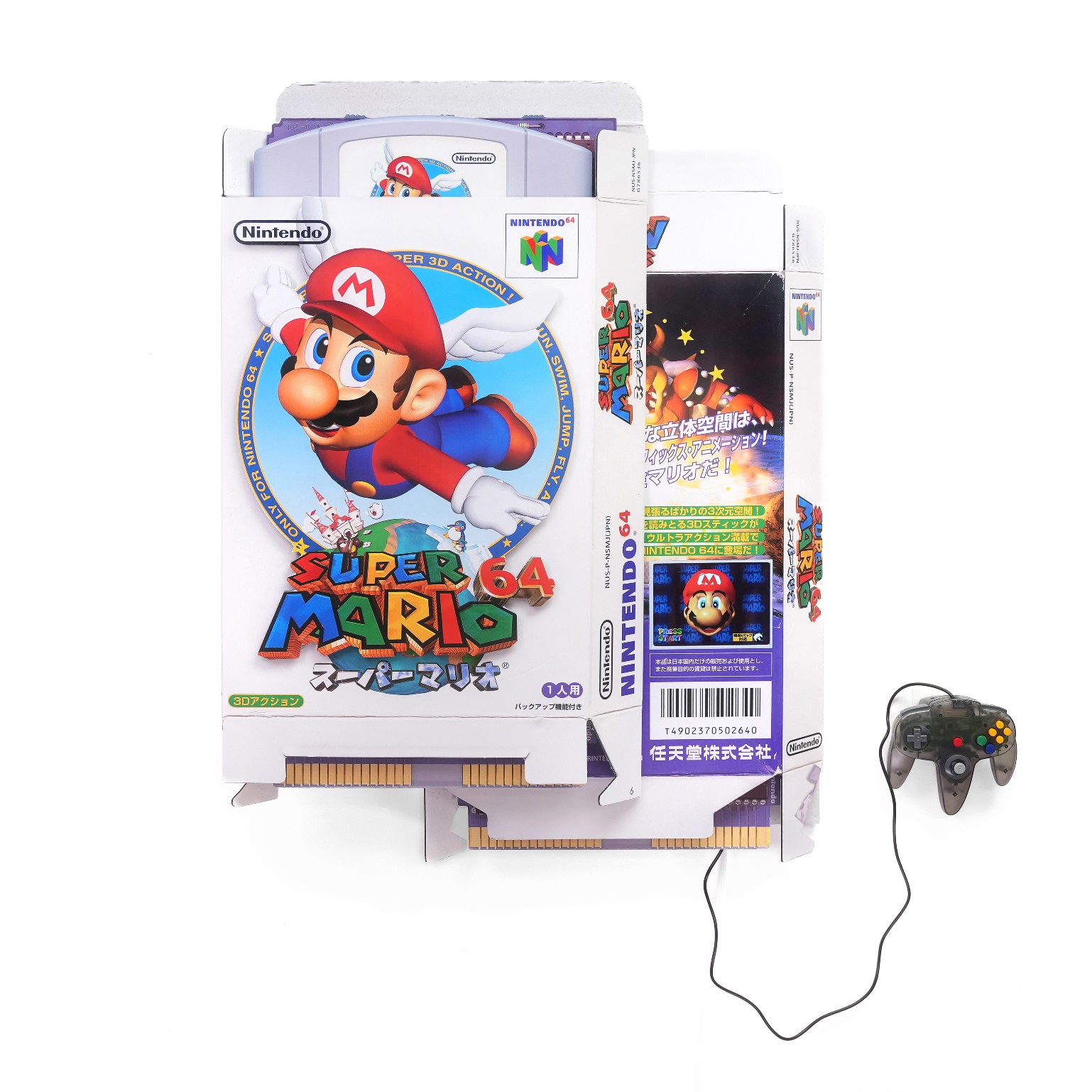
Connor Gottfried, Polygon (Super Mario 64), Mixed media with playable game. Available at Guy Hepner, New York.
Examining the formal characteristics of Gottfried's sculptures reveals deliberate aesthetic choices that distinguish his work from mere novelty items or commercial merchandise. Most striking is the asymmetry that defines many pieces, with shapes extending beyond conventional rectangular boundaries into irregular, almost organic forms. This asymmetry is not arbitrary but intentional, carrying symbolic weight that Gottfried has articulated in interviews. For him, asymmetry represents the transition from traditional, historical technology to new forms of technology that are complex, chaotic, and unpredictable.
This interpretation positions his work as more than nostalgic indulgence. By presenting vintage gaming technology within asymmetrical, unconventional forms, Gottfried suggests that these familiar objects were always strange, always harbingers of transformations we are only now beginning to comprehend. The Game Boy and NES were not endpoints but early chapters in an ongoing story whose later developments—artificial intelligence, virtual reality, algorithmic culture—have made the technologies of our childhood seem simultaneously quaint and prophetic. Gottfried's sculptures capture what he describes as the childhood that we shared with technology itself, recognising that digital technology was young when we were young, and has grown up alongside us into forms we could never have anticipated.
The psychedelic colour palette reinforces this sense of temporal displacement. These are not faithful reproductions of original hardware but re-imaginings that saturate familiar forms with intensified colour and exaggerated detail. The effect recalls the heightened perception of childhood memory, the way recalled experiences often seem more vivid than present ones. Gottfried wants viewers to re-perceive these technologies as refreshing psychedelic centrepieces, transforming obsolete gadgets into objects of renewed wonder. The strategy works because it corresponds to genuine psychological processes: the way memory amplifies and distorts, the way nostalgia bathes the past in golden light.
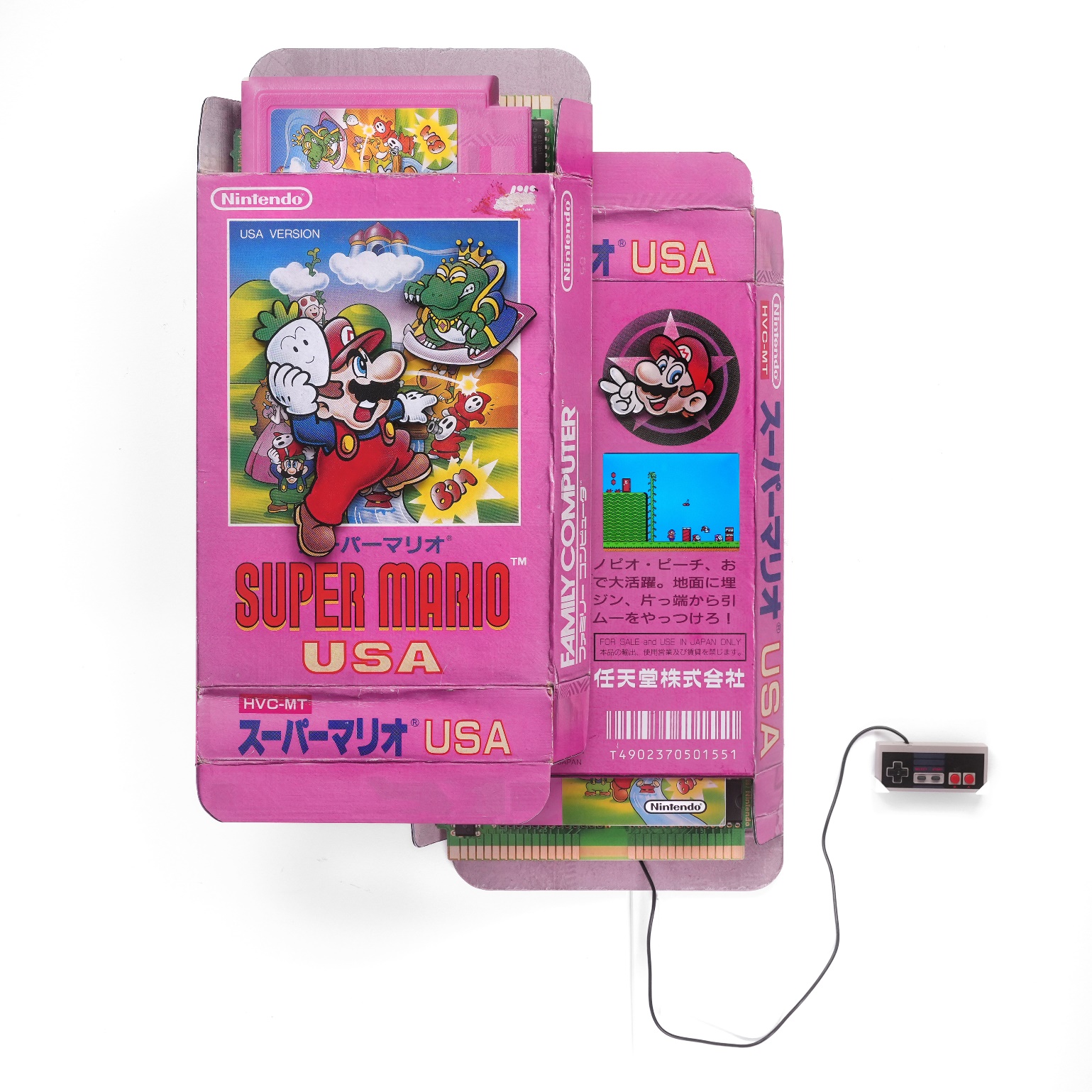
Gottfried's recent Unboxing series demonstrates his capacity for cultural commentary beyond pure nostalgia. The series takes as its starting point a contemporary phenomenon: the staggering fact that YouTube viewers watch nearly six billion hours of unboxing videos each month. These videos, in which hosts open and examine consumer products for audiences who may never purchase them, represent a peculiar form of vicarious consumption unique to the digital age. Gottfried's sculptural response recreates the unfolded packaging that games like Pokémon originally came in, adding playable games where screenshots were once printed.
The series operates on multiple levels simultaneously. On one hand, it offers the same nostalgic pleasure as his earlier work, recreating the specific joy of opening a new game and examining its components. On the other hand, it comments critically on contemporary media culture, on the strange displacement whereby watching others consume has become a form of entertainment in itself. The playable elements add yet another dimension, reminding viewers that these objects were always meant to be used, not merely observed. Against the passive spectatorship of unboxing videos, Gottfried reasserts the active engagement that gaming represents.
Other ongoing series explore different aspects of his thematic concerns. The Cartoon Acid series intensifies the psychedelic dimensions of his palette, while the Pocket Monsters series presents twisted variations on the Game Boy form. Eat My Shorts! re-embodies the 1994 Nintendo game Virtual Bart, combining gaming nostalgia with The Simpsons nostalgia in a single object. Each series demonstrates Gottfried's range while maintaining the consistent thread of interactive playability that unifies his practice. Collectors who acquire multiple pieces can observe the variations and developments in his approach, building personal museums of gaming memory.
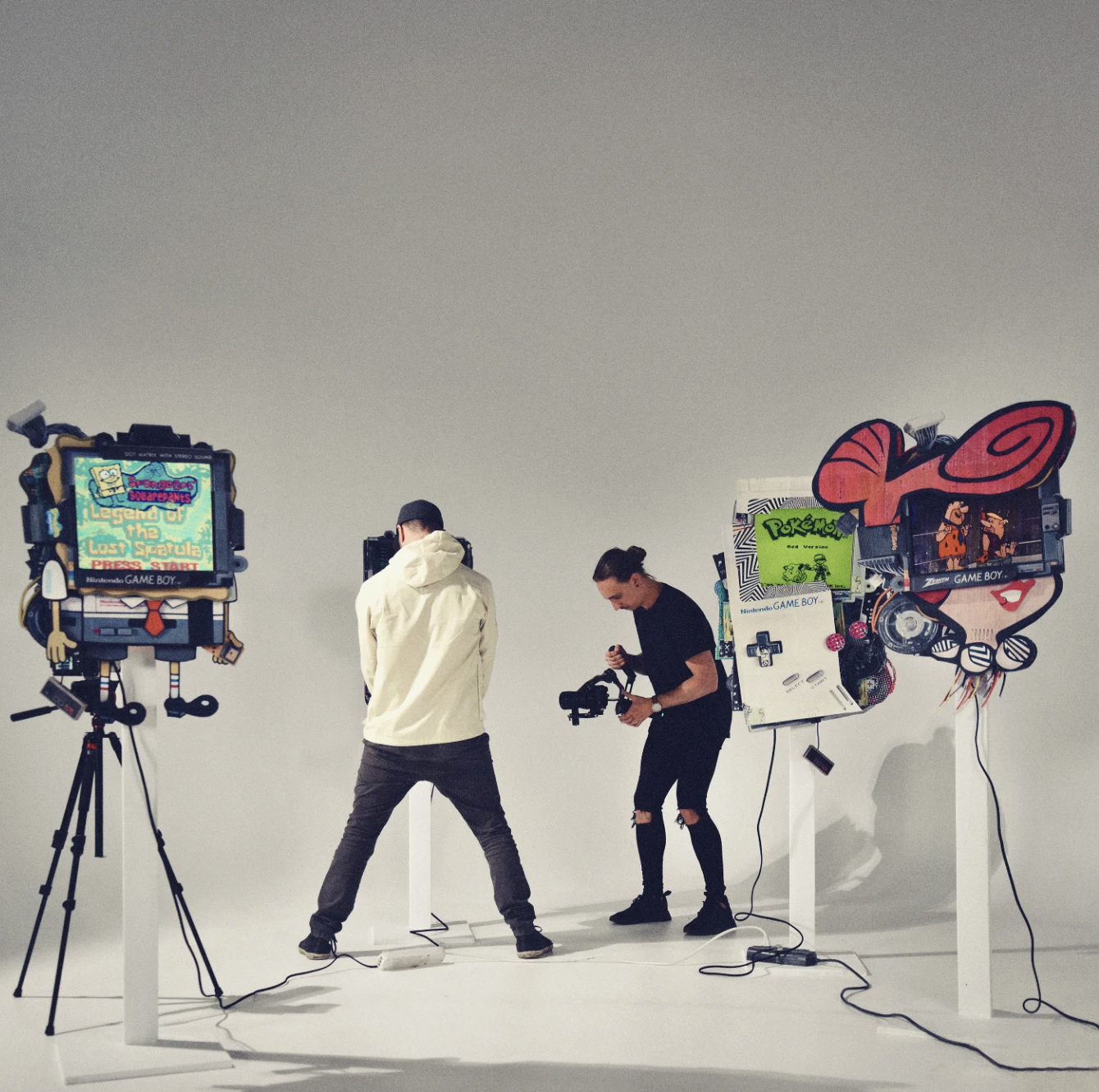
Gottfried's work has begun attracting serious institutional attention, a development that confirms his transition from maker subculture curiosity to legitimate art world presence. He has exhibited at the Rochester Museum of Fine Art and has been in discussions with Contemporary Calgary, bringing his work to his hometown in what would represent a significant homecoming for an artist whose practice so directly engages with childhood memory. A solo exhibition at Dopeness Art Lab in Taiwan, scheduled for spring 2025, will feature twenty-five pieces of work, representing his most ambitious presentation to date.
This institutional trajectory reflects broader shifts in how art establishments understand gaming culture. For decades, video games existed in a critical blind spot, too commercial for fine art venues, too sophisticated for toy museums, too interactive for traditional display formats. Artists like Gottfried have helped chart new territory, demonstrating that gaming can provide source material for work that satisfies conventional criteria of aesthetic ambition and cultural significance. The fact that his pieces actually function as games rather than merely representing them adds a dimension of authenticity that purely appropriationist approaches cannot match.
Critical reception has been enthusiastic, with publications ranging from Paste Magazine to Retro Dodo covering his work. Dana Forsythe's feature in Paste positioned Gottfried's practice within broader conversations about technology, nostalgia, and the dissolution of boundaries between high and low culture. Gaming-focused outlets have celebrated the technical achievement his sculptures represent, recognising the engineering sophistication required to embed functional vintage electronics within elaborate sculptural forms. This dual reception—from both art criticism and gaming journalism—confirms Gottfried's success at bridging two audiences often thought to have little in common.
For collectors considering Connor Gottfried's work, several factors distinguish his pieces from comparable objects in the marketplace. Most fundamentally, these are functional artworks that reward ongoing engagement rather than demanding the static appreciation appropriate to traditional painting or sculpture. Acquiring a Gottfried piece means acquiring not just a visual object but an activity, a portal to play that remains perpetually available. This functionality raises particular considerations for collectors, including questions of maintenance, longevity, and the relationship between aesthetic and instrumental value.
The construction materials and methods suggest considerable durability. Aluminum composite and acrylic panels provide stable substrates, while laser-cutting and CNC-routing ensure precise tolerances that contribute to structural integrity. The electronics derive from vintage hardware known for reliability—these consoles were built to withstand the handling of children, after all—and are embedded within protective sculptural forms. Standard considerations for electronic art apply: avoiding temperature extremes, managing humidity, ensuring adequate ventilation. But these are not fragile objects requiring museum-grade environmental controls; they are designed for domestic settings and regular interaction.
Pricing positions Gottfried's work within reach of serious collectors who might not have access to blue-chip contemporary art. Edition structures allow multiple collectors to acquire related works while maintaining reasonable scarcity. For collectors interested in the intersection of art and technology, or seeking pieces that can generate conversation and engagement in domestic settings, Gottfried offers compelling propositions at accessible price points. The investment case combines aesthetic appreciation with functional utility, a rare combination in contemporary art markets.
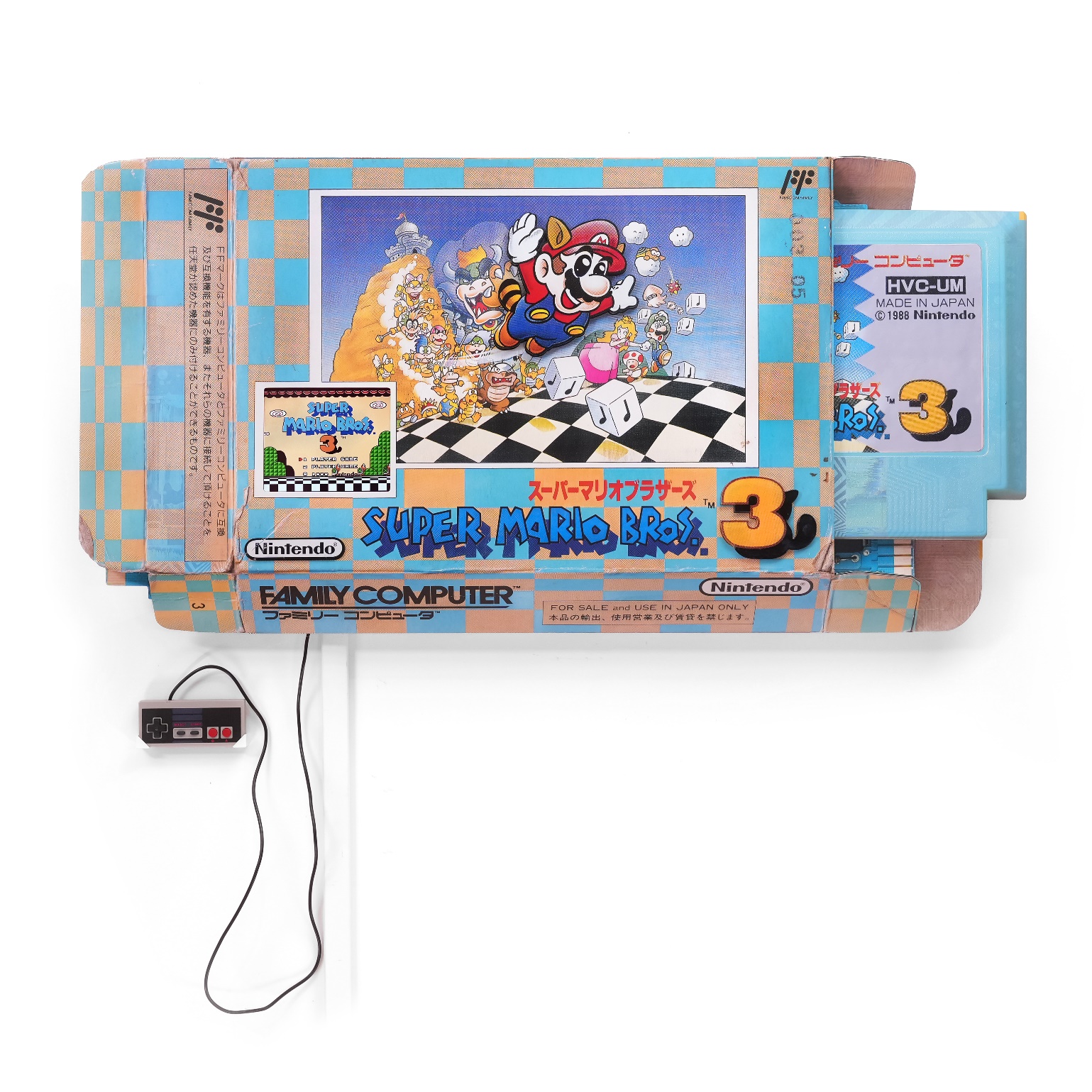
Connor Gottfried, Levels (Super Mario Bros. 3), Mixed media with playable game. Available at Guy Hepner, New York.
Gottfried's work occupies a distinctive position within the broader landscape of technology-influenced contemporary art. He shares thematic concerns with appropriation artists who have long engaged with consumer culture and brand imagery, but his pieces function rather than merely represent. He connects to the maker movement and its celebration of DIY engineering, but his objects achieve a polish and conceptual sophistication that transcend hobbyist production. He participates in gaming culture's ongoing aesthetic self-reflection, but from the position of trained artist rather than fan tribute.
The market for nostalgia-driven contemporary art has proven remarkably robust, with artists engaging childhood memories of television, toys, and consumer products attracting both critical attention and collector interest. Gottfried benefits from the particular intensity of gaming nostalgia, which tends to generate stronger emotional responses than other forms of media memory. Players spent hours, days, weeks with these games, developing embodied relationships through controller manipulation that passive media consumption cannot replicate. When collectors encounter a Gottfried sculpture, they are not merely remembering but re-enacting, renewing bodily memories alongside visual ones.
The emergence of gaming-influenced art as a legitimate category opens possibilities for collection building that were unavailable even a decade ago. Collectors can now assemble coherent groupings that explore the aesthetic and cultural significance of gaming from multiple perspectives, with Gottfried representing the sculptural and interactive dimensions of this emerging field. His work complements two-dimensional gaming-influenced graphics and photography, offering the three-dimensional and participatory elements that complete a comprehensive approach to this cultural territory.
Critical discussions of contemporary art often emphasise difficulty, resistance, and critical distance—valuable qualities that Gottfried's work possesses in measure but does not foreground. What his sculptures foreground instead is joy. They light people up, to use his own phrase, generating immediate pleasure that does not require theoretical justification or historical contextualisation. This emphasis on joy can seem almost subversive in an art world that sometimes treats accessibility as intellectual compromise and pleasure as aesthetic failure.
But Gottfried's joy is not naive or unreflective. It emerges from sophisticated technical achievement and deliberately designed formal qualities. The pleasure his sculptures generate derives from careful manipulation of scale, colour, and interactivity, from decades of accumulated skill applied to materials both traditional and digital. Moreover, the joy connects to genuine depth of content: the exploration of memory, obsolescence, childhood, and technological change that underlies his seemingly playful surfaces. Critics who dismiss the work as mere nostalgia bait miss the conceptual architecture supporting its emotional effects.
The work also suggests that joy itself might be worthy of serious artistic attention. In an era characterised by ambient anxiety, political division, and technological disruption, objects that generate genuine delight perform culturally valuable functions. Gottfried's sculptures offer temporary respites from contemporary stress, portals to simpler times that never actually existed but feel real nonetheless. The nostalgia they traffic in is less historical than psychological, conjuring emotional states rather than accurate memories. Collectors who live with these works report ongoing effects: elevated moods, sparked conversations, sustained engagement over time.

Connor Gottfried, Blast-O-Matic (Donkey Kong 64), Mixed media with playable game. Available at Guy Hepner, New York.
The question of how Gottfried's sculptures function in domestic contexts deserves particular attention. Unlike paintings or traditional sculptures that maintain fixed relationships with their environments, these works change depending on whether and how they are used. Switched off, they operate as luminous sculptural objects, their layered construction and saturated colours contributing visual interest regardless of functionality. Switched on, they become entertainment centres, drawing inhabitants and guests into shared activity. This dual nature offers collectors unusual flexibility in how they incorporate the work into daily life.
Interior designers have begun recognising the potential these pieces offer for clients seeking distinctive statement works. The combination of sculptural presence, vibrant colour, and interactive capability addresses multiple design objectives simultaneously. For collectors with children, the works function as bridge objects, connecting across generations through shared play while introducing young people to art appreciation through direct engagement. For collectors without children, they offer regression opportunities, sanctioned excuses to revisit pleasures that adult life often discourages.
The conversational dimensions of these works should not be underestimated. In an era when dinner parties can devolve into parallel phone scrolling, objects that draw people into shared activity represent genuine social utilities. Gottfried has spoken about his works as conversation starters, and collectors confirm this effect. Guests who might feel uncomfortable discussing abstract painting or conceptual art find immediate entry points through gaming. Memories are exchanged, competitions initiated, connections formed around what might otherwise have remained mere décor.
Guy Hepner Gallery at 177 Tenth Avenue in New York currently offers a selection of Connor Gottfried's playable vintage sculpture series, providing collectors the opportunity to acquire works that represent the leading edge of technology-influenced contemporary art. The gallery's expertise in contemporary and street art positions it well to contextualise Gottfried's practice within broader artistic developments while emphasising the distinctive qualities that set his work apart. Available pieces span multiple series and price points, from smaller editions suitable for beginning collectors to larger statement works for those building significant collections.
The edition structure of Gottfried's work offers particular advantages for collectors entering his market now. While unique works command premium prices as an artist's reputation develops, editions allow earlier access at more accessible levels while still participating in potential appreciation as institutional recognition and critical attention expand. Given Gottfried's upcoming solo exhibition in Taiwan and ongoing discussions with major Canadian institutions, the current moment represents an opportune entry point for collectors who recognise his trajectory.
For those who remember the specific weight of a Game Boy in childhood hands, the anticipation of sliding a cartridge into its slot, the triumph of finally mastering a difficult level—for those who carry these memories as part of their personal histories—Gottfried's work offers something beyond aesthetic appreciation. It offers return, renewal, recognition. The gallery welcomes inquiries from collectors interested in learning more about available works, pricing structures, and the distinctive pleasures these functional sculptures provide. Contact Guy Hepner to discover how Connor Gottfried's playable art can transform your collection and your living space into sites of memory, joy, and ongoing engagement.
Related Series