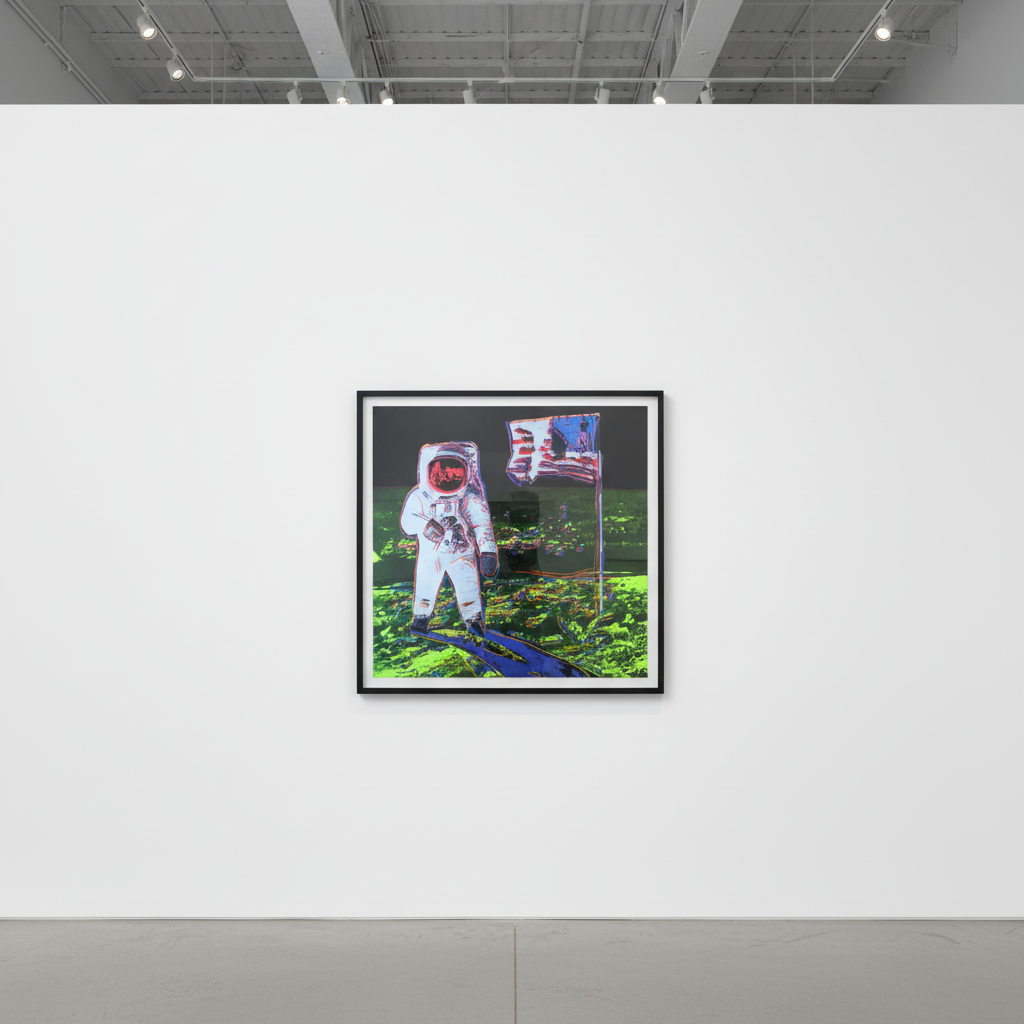
Moonwalk

September 15, 2026
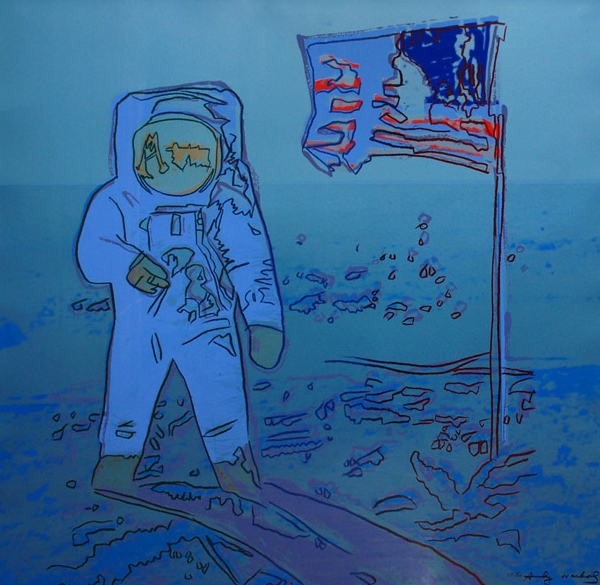
The Andy Warhol Moonwalk Series stands as one of the most poignant intersections of American mythology, technological triumph, and Pop Art sensibility in the artist's entire oeuvre. Created in 1987, just months before Warhol's unexpected death, these screenprints transform Neil Armstrong's documentary photographs of Buzz Aldrin on the lunar surface into radiant icons of human achievement. As NASA's Artemis program returns crewed missions to the moon after more than half a century, collectors and cultural observers alike have renewed their attention to these works, recognizing them not merely as historical artifacts but as living documents of America's most ambitious moment.
The Moonwalk prints occupy a singular position within Warhol's catalogue raisonné. Unlike his Campbell's Soup Cans or Marilyn portraits, which drew from commercial and celebrity culture, these works commemorate a collective achievement—a moment when millions of people across the globe watched the same grainy television broadcast and shared in the same sense of wonder. That Warhol chose to memorialize this event speaks to an evolution in his artistic concerns during his final years, a shift from the ironic celebration of consumer culture toward something approaching reverence for genuine human accomplishment.
On July 20, 1969, approximately 600 million people worldwide watched as Neil Armstrong descended the ladder of the Apollo 11 Lunar Module and became the first human being to set foot on another celestial body. The photographs that emerged from that mission became some of the most reproduced images in history, yet the specific photograph Warhol chose for his screenprints carries its own particular resonance. The image shows Buzz Aldrin standing beside the American flag, his gold-visored helmet reflecting the lunar landscape and, crucially, the figure of Neil Armstrong himself, who took the photograph.
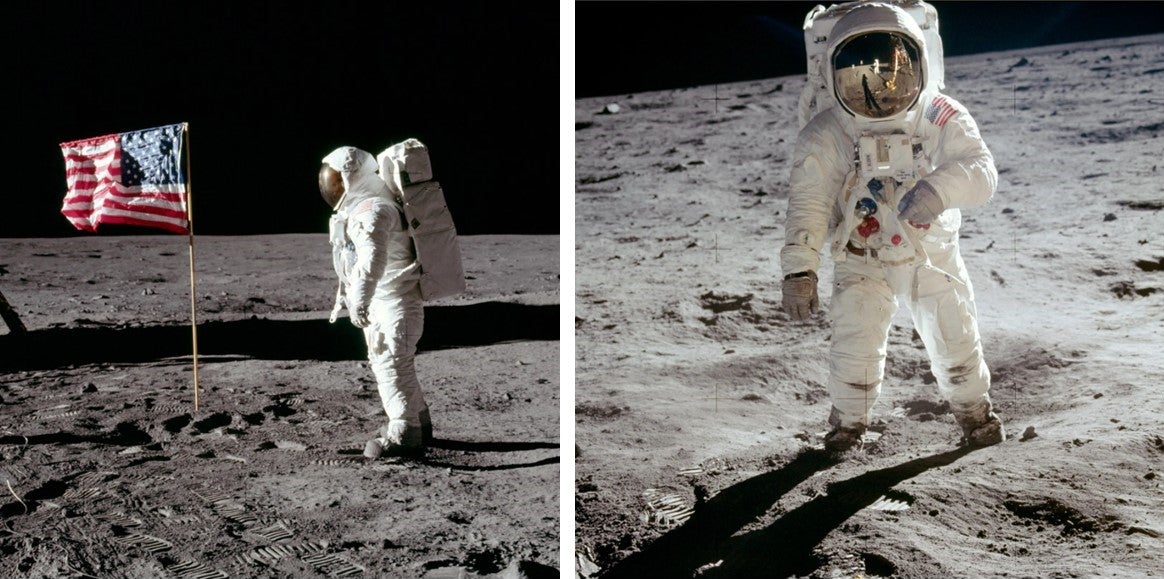
Apollo 11 Moon Landing Photography, documenting humanity's first steps on the Moon through analog film photography.
Warhol's choice of source material reveals his sophisticated understanding of media and meaning. The photograph he selected was not a still from the live television broadcast that captivated the world, but rather a NASA publicity image—a carefully composed photograph taken with a Hasselblad camera that offered far greater clarity and visual impact than the ghostly television transmissions. In selecting this image, Warhol acknowledged the layered nature of how we experience historical events: through the mediation of technology, through the curation of official channels, and through the subsequent reproduction and dissemination that transforms documentation into mythology. The reflection of Armstrong in Aldrin's visor adds another dimension of meaning, creating what amounts to a double portrait within the composition and introducing the artist's characteristic interest in the relationship between observer and observed.
The Moonwalk Series was originally conceived as part of a far more ambitious project that Warhol never completed. He had planned a portfolio entitled "TV" that would depict seminal moments from the history of American television—those broadcast events that shaped the national consciousness and created shared cultural memories across demographic lines. The proposed portfolio would have included images of the Beatles' first appearance on the Ed Sullivan Show in 1964, Martin Luther King Jr. delivering his "I Have a Dream" speech during the 1963 March on Washington, and scenes from "I Love Lucy," the situation comedy that pioneered the three-camera setup and established the template for American television programming.
The fact that Moonwalk was the only composition from this ambitious series that reached completion lends the prints an elegiac quality. They represent not only a celebration of the moon landing but also a testament to Warhol's final creative intentions—a glimpse into a project that death prevented him from fully realizing. For collectors, this context adds significant weight to the works. They are not simply prints from the late period; they are fragments of an unrealized masterwork, the surviving evidence of an artistic vision cut short.
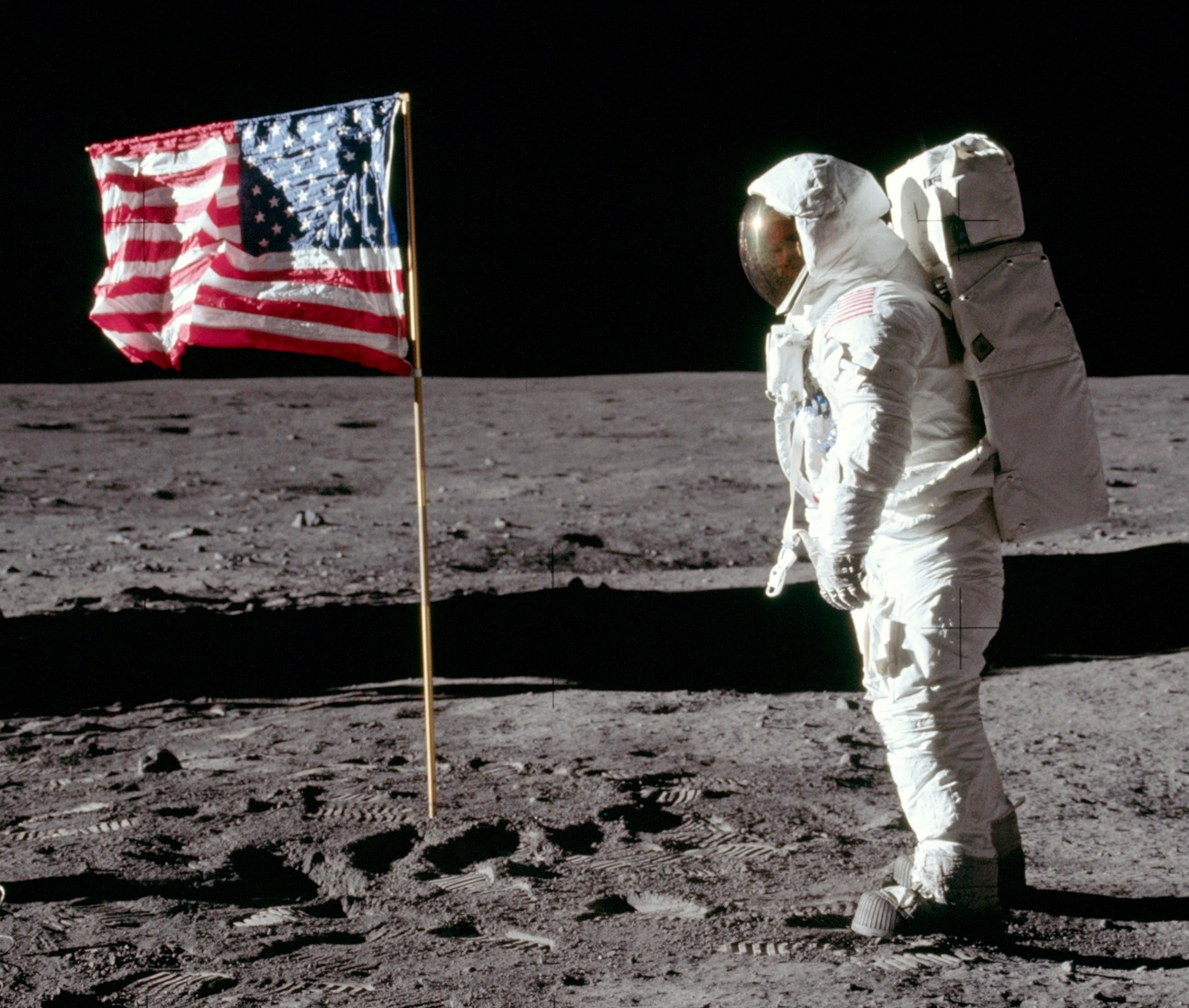
Lunar Photograph from Apollo 11 mission, 1969, documenting an astronaut saluting the American flag on the Moon's surface.
The Moonwalk portfolio consists of two screenprints, catalogued as F.&S. II.404 (the yellow colorway) and F.&S. II.405 (the pink colorway). Both measure 38 x 38 inches (96.5 x 96.5 cm) and were printed on Lenox Museum Board, a high-quality archival substrate that has proven its longevity over nearly four decades. The prints were executed by Rupert Jasen Smith, Warhol's longtime printing collaborator who had worked with the artist on numerous projects throughout the 1980s.
The edition structure breaks down as follows:
The publication was handled by Ronald Feldman Fine Arts, Inc., New York, with authentication certificates stamped and signed by Frederick W. Hughes (Executor of the Estate), Rupert Jasen Smith, and Ronald Feldman. This tripartite authentication system provides collectors with robust provenance documentation and has helped maintain the integrity of the market for these works.
Moonwalk 404, the yellow variant, presents Buzz Aldrin's spacesuit in vivid yellow tones against an aquamarine rendering of the lunar surface. The effect is simultaneously otherworldly and familiar—the bright, saturated colors recall the aesthetic of science fiction film posters and comic book imagery while also evoking the optimistic futurism of the Space Age. The American flag beside Aldrin glows in the same yellow palette, creating a unified color field that emphasizes the graphic boldness of the composition.
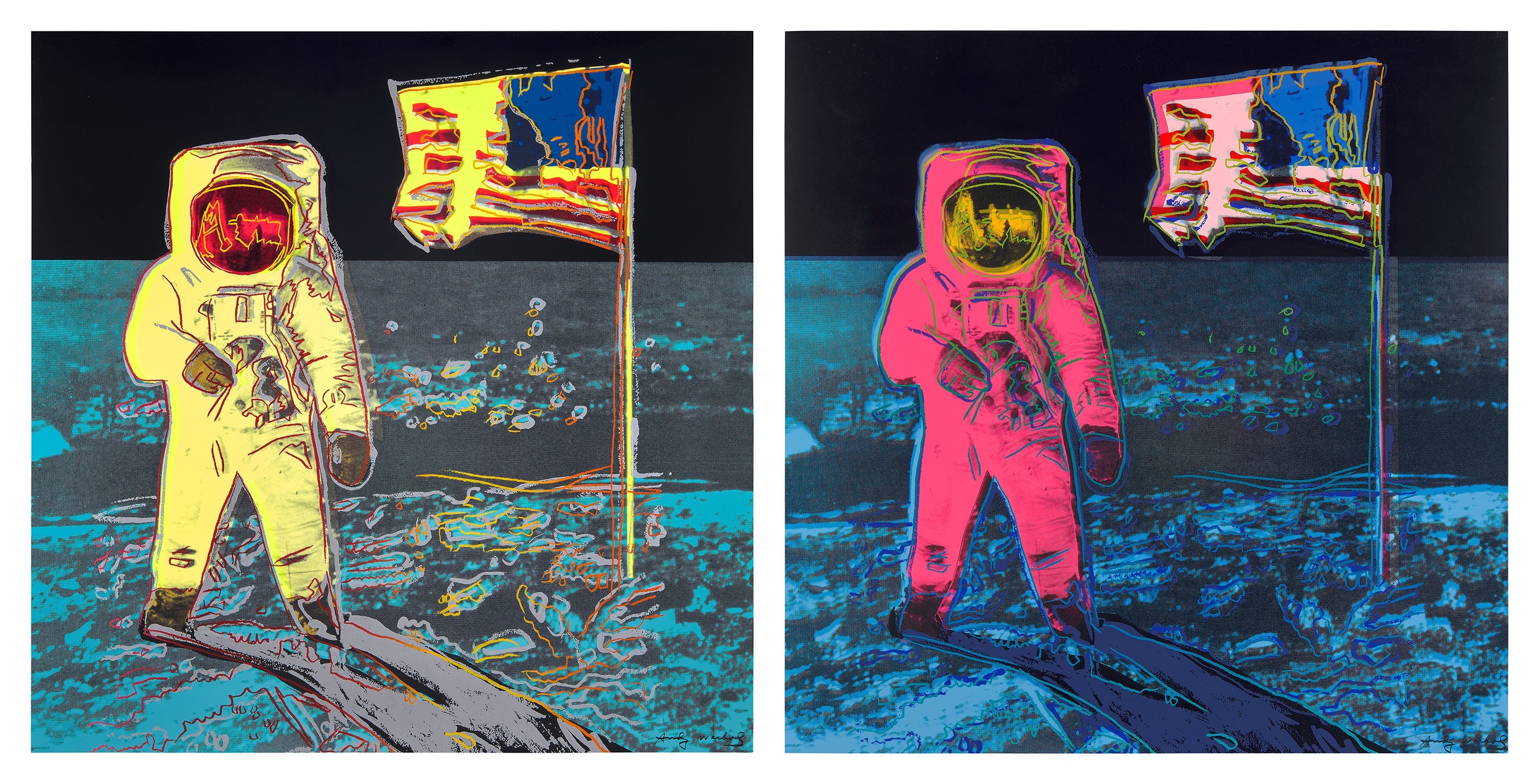
Andy Warhol, Moonwalk (F.&S. II.404 and II.405), 1987, Screenprint on Lenox Museum Board. Available at Guy Hepner, New York.
The yellow colorway has historically traded at a slight discount to its pink counterpart, though the gap has narrowed in recent years. For collectors entering the Moonwalk market, the yellow variant offers a more accessible entry point while still providing the full visual impact of Warhol's transformation of the source photograph. The bright, almost electric quality of the yellow palette appeals particularly to collectors who appreciate Warhol's more exuberant color choices and those seeking works that make a strong visual statement in contemporary interior settings.
Moonwalk 405 renders Aldrin's spacesuit in vivid pink against a deep teal lunar surface, creating a color combination that is at once more dramatic and more unexpected than the yellow variant. The pink colorway has consistently commanded the highest prices among the main edition prints, establishing a clear hierarchy within the market that has remained stable over several decades of auction activity. The deep teal of the lunar surface provides a more substantial visual contrast to the figure, and the overall effect is one of greater visual complexity.
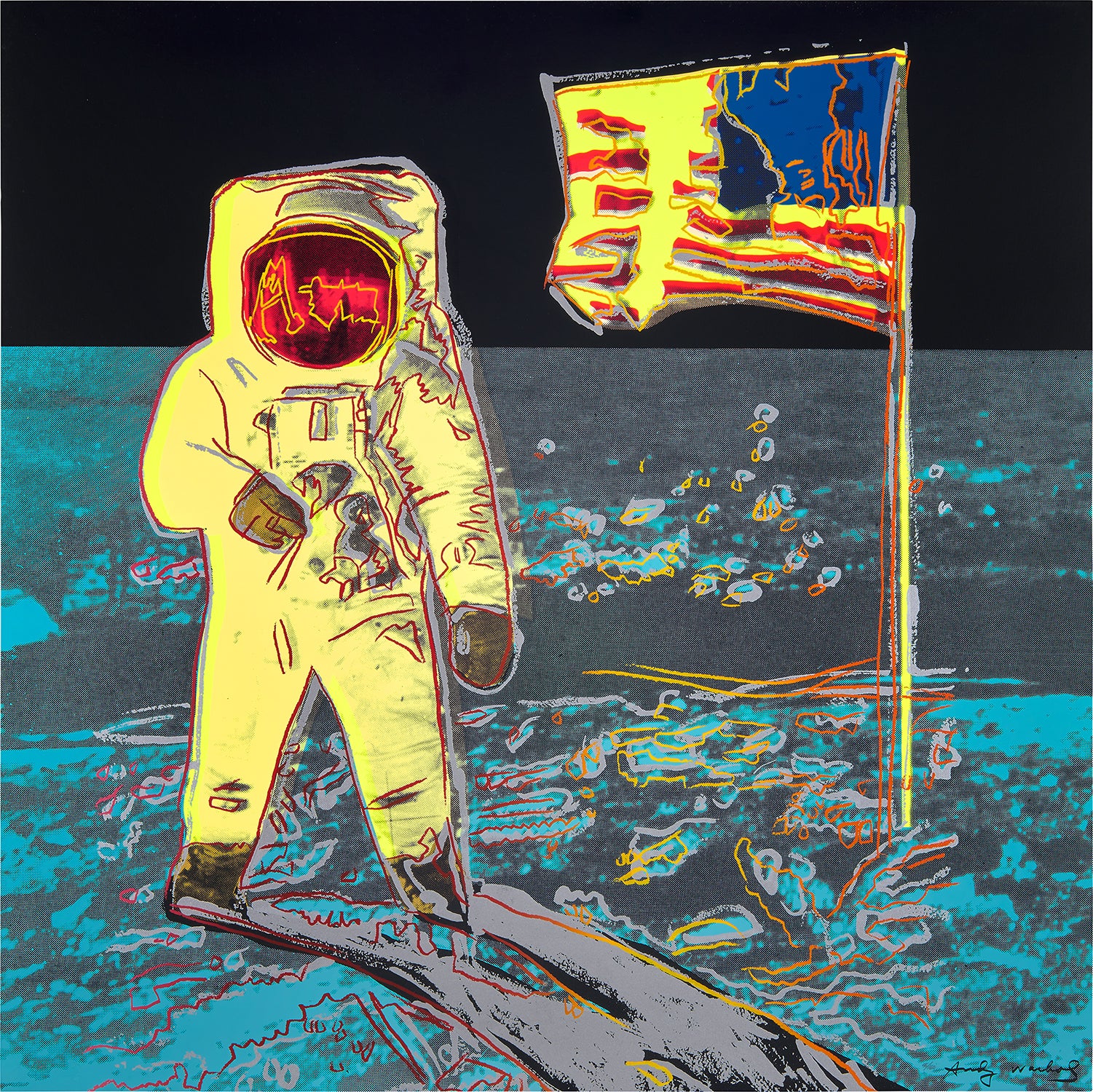
Andy Warhol, Moonwalk (F.&S. II.404), 1987, Screenprint on Lenox Museum Board. Available at Guy Hepner, New York.
The pink colorway's premium position in the market reflects both collector preference and broader trends within Warhol collecting. Pink has emerged as one of the most sought-after colors across multiple Warhol series, from the Marilyn prints to the Dollar Sign works. The color carries associations of Pop Art at its most exuberant while also suggesting a certain subversive wit—the transformation of a serious documentary photograph of American technological achievement into an image that verges on the flamboyant.
Perhaps the most dynamic segment of the Moonwalk market involves the trial proofs—unique impressions created during the printing process that feature color combinations different from the final published editions. These trial proofs represent Warhol's working process, the experimental phase during which he and his printer explored various chromatic possibilities before settling on the yellow and pink variants for the published edition.
The trial proof market has experienced extraordinary growth in recent years. In October 2025, three trial proofs transacted across Christie's and Phillips auctions in New York, with an orange-red spacesuit variant setting a record at approximately £385,596 (over $500,000). Two other trial proofs from the same sale series brought £308,476 and £305,725 respectively. These results demonstrate that collectors increasingly value the uniqueness and experimental quality of trial proofs, viewing them as irreplaceable windows into Warhol's creative process.
For serious Warhol collectors, trial proofs offer something that numbered editions cannot: absolute singularity. While the main edition prints exist in quantities of 160, each trial proof is one of a kind, a unique color experiment that captures a specific moment in the development of the final work. This uniqueness commands substantial premiums, and trial proofs have become the objects of significant collector competition when they appear at auction.
The Moonwalk market has demonstrated remarkable strength through the mid-2020s, with auction results confirming sustained collector demand across all categories. In June 2026, Bonhams London offered a signed impression of the pink main edition (F.&S. II.405) as the headlining lot of their evening sale, achieving $211,026 (£171,459 hammer price). That same spring, in April 2026, Sotheby's New York sold another impression of the pink colorway for $280,000, establishing a solid baseline for standard edition examples in good condition.
The most dramatic recent result came in October 2025, when Phillips New York sold a complete two-print Moonwalk portfolio suite for $928,000. This exceptional result demonstrates the significant premium that intact sets command over individual sales. Collectors prize complete portfolios for their coherence and their ability to display both colorways together, creating a dialogue between the yellow and pink variants that neither work achieves on its own.
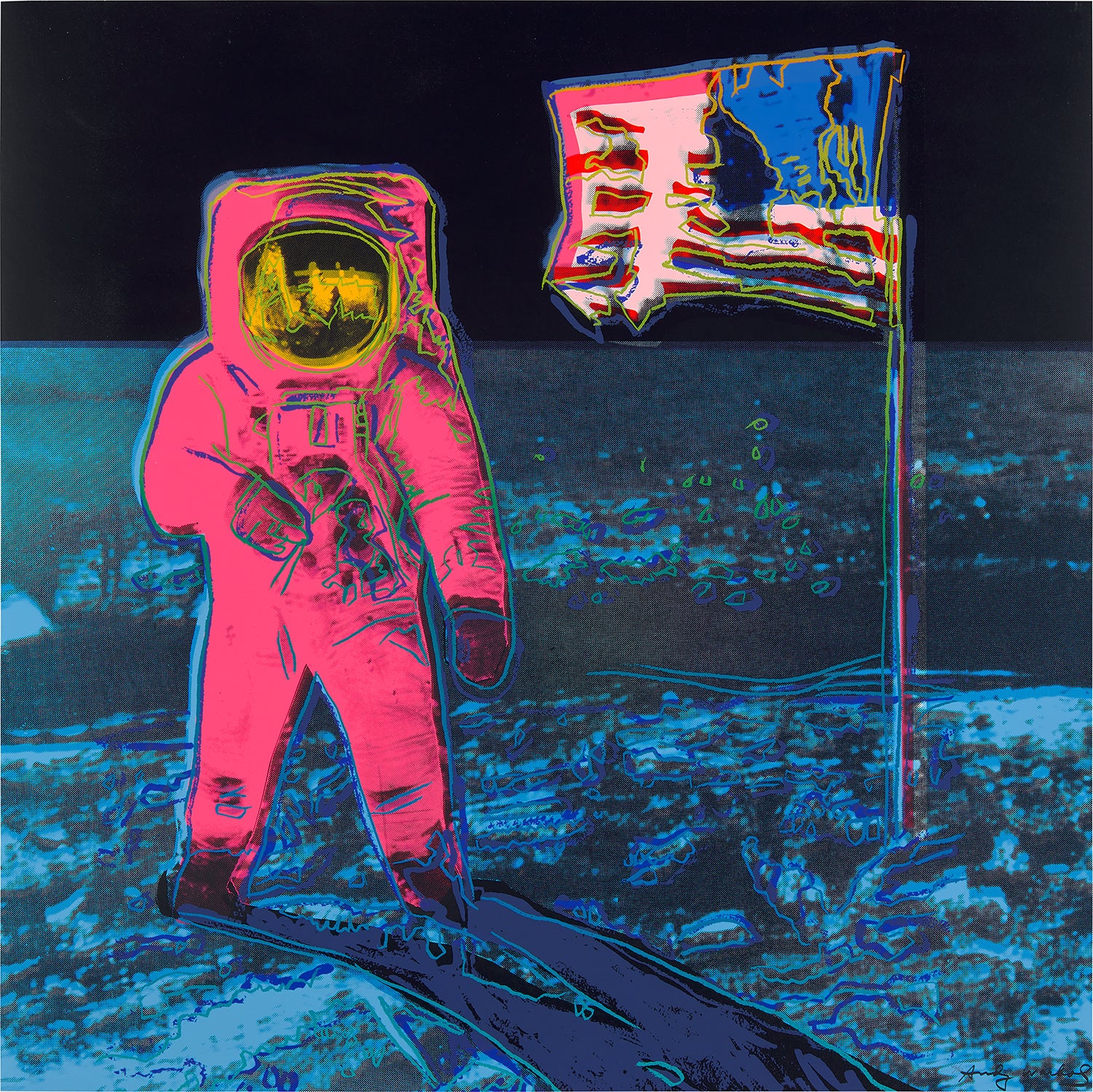
Andy Warhol, Moonwalk (F.&S. II.405), 1987, Screenprint on Lenox Museum Board. Available at Guy Hepner, New York.
The pink main edition has shown an average annual growth rate of approximately 18% compound annual growth over the tracking period from first recorded sale, with the auction record for this colorway standing at £373,000, set in 2024. These figures position the Moonwalk series among the stronger performers in the late Warhol print market, supported by a combination of genuine scarcity, historical significance, and the emotional resonance of the subject matter.
One of the defining characteristics of the Moonwalk market is its genuine scarcity. Across all formats—main editions, artist's proofs, printer's proofs, and trial proofs—fewer than 30 sales have been recorded since 2017. This limited supply creates a market structure quite different from more prolific Warhol series like the Campbell's Soup Cans or the Flowers, where auction appearances are frequent and collectors have regular opportunities to acquire examples.
The scarcity of Moonwalk prints reflects several factors:
For collectors, this scarcity means that acquisition requires patience and preparedness. When examples do appear at auction or through gallery sales, buyers must be ready to act decisively, as opportunities may not recur for extended periods.
When evaluating Moonwalk prints for acquisition, several condition factors merit careful attention:
The timing of renewed interest in the Moonwalk series is not coincidental. As NASA's Artemis program advances toward returning humans to the lunar surface for the first time since 1972, the cultural context that gave these works their original power has been reactivated. A new generation of viewers is experiencing the same anticipation and wonder that accompanied the Apollo missions, and Warhol's prints have emerged as touchstones connecting past achievement to future ambition.
This contemporary relevance extends beyond space exploration. In an era of increasing fragmentation, when shared cultural experiences grow ever rarer, the moon landing retains its status as one of the few moments of genuine global unity in living memory. Warhol's transformation of that moment into Pop Art icons speaks to his understanding of how media images become the currency of collective memory, how the photograph of Aldrin beside the flag transcended documentation to become symbol.
For collectors considering the Moonwalk series, several strategies merit consideration:
The Moonwalk Series represents more than a celebration of technological achievement; it stands as a testament to Warhol's enduring ability to identify and elevate the images that define American experience. That he chose to commemorate the moon landing—an event that predated the work by nearly two decades—suggests a reflective quality to his late career, a willingness to look backward as well as forward, to recognize that certain moments achieve a permanence that transcends their immediate context.
The works also reveal Warhol's sophisticated understanding of the relationship between original and reproduction, between event and image. By transforming NASA's documentary photograph into Pop Art icons, he acknowledged that for most viewers, the moon landing was always already a mediated experience—something witnessed through the pixelated gray of television screens, through the reproduction of photographs in newspapers and magazines. His colorful reinterpretations do not distort this experience but rather make explicit its constructed nature, celebrating the image as image while honoring the achievement it commemorates.
Guy Hepner Gallery maintains an active inventory of Andy Warhol works, including select examples from the Moonwalk Series. Our specialists work with collectors to source specific works, provide market guidance, and facilitate acquisitions that align with collecting goals and budgets. Whether you seek your first Warhol print or aim to add a significant late work to an established collection, we invite you to discuss your interests with our team.
The Moonwalk prints occupy a unique position in Warhol's oeuvre—late works that summarize many of his career-long concerns while also pointing toward something new, a willingness to engage with moments of genuine significance rather than the ironic celebration of consumer culture. For collectors who respond to works that carry both historical weight and visual power, these screenprints offer an exceptional opportunity to own a piece of both Pop Art history and American history.
To explore available Moonwalk impressions or to discuss other works by Andy Warhol, contact Guy Hepner Gallery at our Tenth Avenue location in New York. Our team looks forward to assisting you in building a collection that reflects both artistic significance and personal meaning.
Explore Andy Warhol prints for sale at Guy Hepner: Moonwalk, 25 Cats Named Sam, A Gold Book, A La Recherche Du Shoe Perdu, Alexander the Great.
Related Series