Mick Jagger

August 25, 2026
In 1975, Andy Warhol turned his lens on rock's most magnetic face — and created one of the most important portrait series of his career. The ten Andy Warhol Mick Jagger prints aren't just celebrity portraits; they're a collision of two cultural forces at the peak of their powers. Warhol brought collage, color, and chaos. Jagger brought lips, cheekbones, and the kind of charisma that bends light. The result? Ten screenprints that still define what rock star portraiture can be, and a portfolio that remains among the most sought-after works in Warhol's entire print catalogue.
For collectors, the Mick Jagger series represents something rare: the intersection of Pop Art's greatest practitioner with rock and roll's greatest frontman, captured at a moment when both were operating at full creative voltage. These weren't distant commissions or arms-length business arrangements. Warhol and Jagger were genuine friends, moving through the same Factory circles, attending the same parties, sharing the same cultural moment. That intimacy shows in every print — in the directness of the poses, the boldness of the color choices, and the way Warhol's hand-drawn collage elements seem to embrace rather than merely overlay Jagger's features.
Andy Warhol and Mick Jagger first crossed paths at a party in 1964, when the Rolling Stones were still ascending and Warhol was establishing himself as Pop Art's undisputed heavyweight. The connection was immediate and lasted decades. Jagger became a regular presence at The Factory, Warhol's legendary studio that served as a nexus for artists, musicians, filmmakers, and cultural provocateurs of every stripe. The relationship wasn't merely social — it was creatively generative for both parties, with Warhol gaining access to rock's inner sanctum while Jagger absorbed the avant-garde credibility that proximity to Warhol conferred.
By 1975, their collaboration had already produced one iconic result: the controversial cover for the Rolling Stones' Sticky Fingers album in 1971, featuring that unforgettable close-up of a male crotch in tight jeans complete with a working zipper. But the Mick Jagger portfolio represented something different — a sustained, considered exploration of Jagger's image across ten distinct compositions. Warhol photographed Jagger himself using Polaroid cameras, then transformed those images through his signature screenprint process, adding hand-drawn elements, collage papers, and the explosive color combinations that make each print feel simultaneously spontaneous and precisely calibrated.
The portfolio emerged during a particularly fertile period for Warhol's print production. The mid-1970s saw him refine the collage-overlay techniques that distinguish the Jagger series from his earlier, cleaner celebrity portraits. Where his Marilyn Monroe prints from the 1960s applied color in flat, discrete areas, the Jagger screenprints layer torn paper, gestural marks, and photographic imagery in complex compositions that reward sustained looking. Each print in the series bears not just Jagger's image but evidence of Warhol's physical engagement with the medium — you can see where papers were torn, where lines were drawn, where decisions were made.
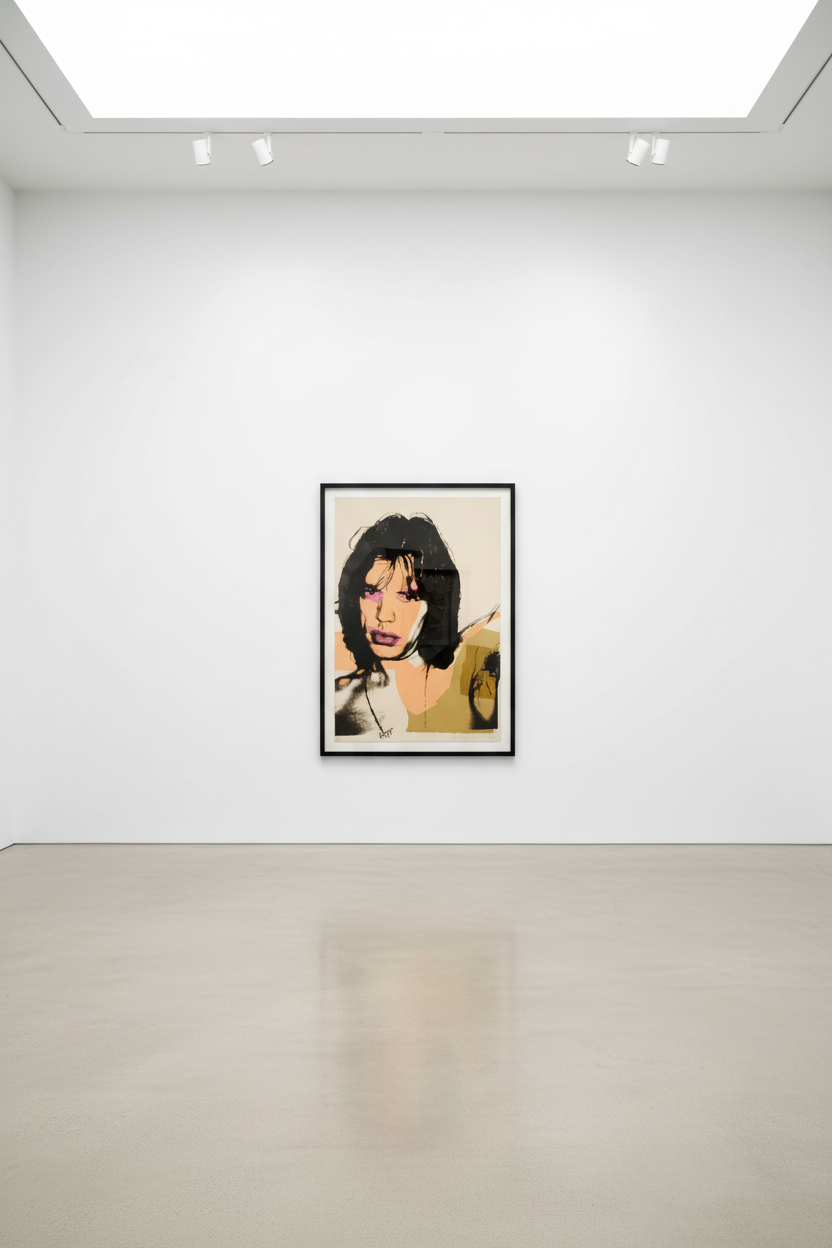
Andy Warhol, Mick Jagger (F.S. II.140), 1975, Screenprint. Available at Guy Hepner, New York.
The Mick Jagger series comprises ten screenprints, catalogued as F.S. II.138 through F.S. II.147 in the Feldman and Schellmann catalogue raisonné, the definitive reference for Warhol's prints. Each image measures 43 7/8 x 29 inches (111.4 x 73.7 cm), printed on Arches Aquarelle paper — a high-quality watercolor paper whose weight and texture complement the layered screenprint process. The portfolio was published by Seabird Editions, with printing executed by Alexander Heinrici in New York.
The edition structure follows Warhol's standard practice for major portfolios of this period. The regular edition consists of 250 impressions numbered 1/250 through 250/250, plus 50 artist's proofs marked A.P. Each print bears two signatures: Andy Warhol's in pencil on the front, and Mick Jagger's in colored crayon or pencil, also on the front. This dual-signature element adds significantly to the portfolio's appeal — you're acquiring a work authenticated by both the artist who created it and the subject who posed for it.
What distinguishes individual prints within the series goes beyond the obvious differences in color palette, though those differences are dramatic. The poses vary from confrontational to contemplative, from glamorous to almost vulnerable. Some images emphasize Jagger's famous lips and angular bone structure; others obscure portions of his face with collage elements or hand-drawn marks. The color combinations range from relatively restrained monochromatic schemes to explosive juxtapositions of hot pink against acid yellow, electric blue against burnt orange.
Collectors often develop strong preferences for specific prints within the portfolio based on these variations. F.S. II.140, with its high-contrast composition and dramatic collage elements, consistently commands premium prices at auction. F.S. II.141, featuring Jagger in a more vulnerable, downward-gazing pose, appeals to collectors seeking something beyond the obvious rock-star swagger. Understanding these distinctions — and knowing which compositions resonate with your own collecting vision — represents an important part of navigating this market intelligently.
Beyond the standard edition and artist's proofs, the Mick Jagger series includes a small number of Trial Proofs that represent the portfolio's most exclusive — and most historically significant — tier. These working proofs were created during Warhol's development of the final compositions, and many show color variations, registration differences, or other departures from the published edition. Trial Proofs are unsigned by Jagger and typically bear Warhol's signature alone, sometimes accompanied by his distinctive stamp.
What makes these Trial Proofs particularly compelling is their provenance. A significant number came from the collection of Bianca Jagger, Mick's wife during the period when the portfolio was created. The couple married in 1971 and divorced in 1978, bracketing the exact years of this collaboration. Bianca was herself a prominent figure in the Factory scene, and works from her collection carry documentary weight that extends beyond their aesthetic value. When a Trial Proof surfaces at auction with Bianca Jagger provenance, it represents not just a variant impression but a direct link to the social world that produced these images.
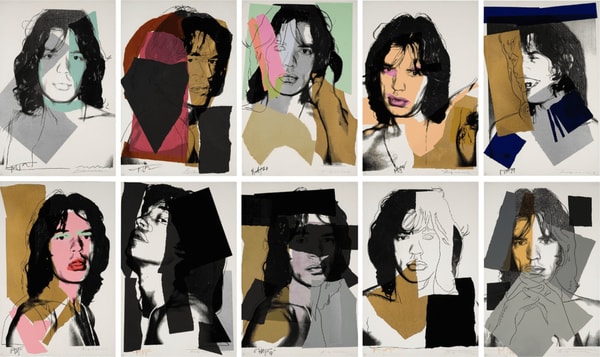
Andy Warhol, Mick Jagger Complete Portfolio (F.S. II.138-147), 1975, Screenprints. Available at Guy Hepner, New York.
Trial Proofs appear at auction far less frequently than standard edition impressions, and pricing reflects their rarity. While a strong standard edition impression might achieve six figures at major auction houses, Trial Proofs with documented provenance have commanded significantly higher prices. For collectors building museum-quality holdings, these working proofs offer insight into Warhol's creative process while also providing the kind of scarcity that anchors long-term value.
As with all works on paper, condition represents a critical factor in assessing Warhol Mick Jagger prints. The large format of these screenprints (nearly four feet tall) means they've faced decades of potential handling issues, framing decisions, and environmental exposure. Understanding what constitutes excellent condition — and recognizing the warning signs of problems — protects your investment and ensures you're acquiring works that will hold value over time.
When examining a Mick Jagger screenprint, pay attention to the following factors:
For significant acquisitions, commissioning a professional condition report from a paper conservator provides documentation that supports both authentication and valuation. This becomes particularly important when considering Trial Proofs or impressions at the higher end of the market, where condition differences can translate to substantial price differentials.
Authentication for Andy Warhol prints follows established protocols that collectors should understand before making significant acquisitions. The Andy Warhol Foundation for the Visual Arts maintained an authentication board until 2011, when it dissolved following costly litigation. Today, authentication relies on several complementary approaches that, taken together, provide confidence in a work's legitimacy.
The Feldman and Schellmann catalogue raisonné documents the complete Mick Jagger portfolio with detailed descriptions of each print, including precise color specifications, edition information, and publication details. Matching a prospective acquisition against these catalogue entries represents the first authentication step. Additionally, many impressions have exhibition history, publication history, or documented sales records that establish their provenance from known collections or galleries.
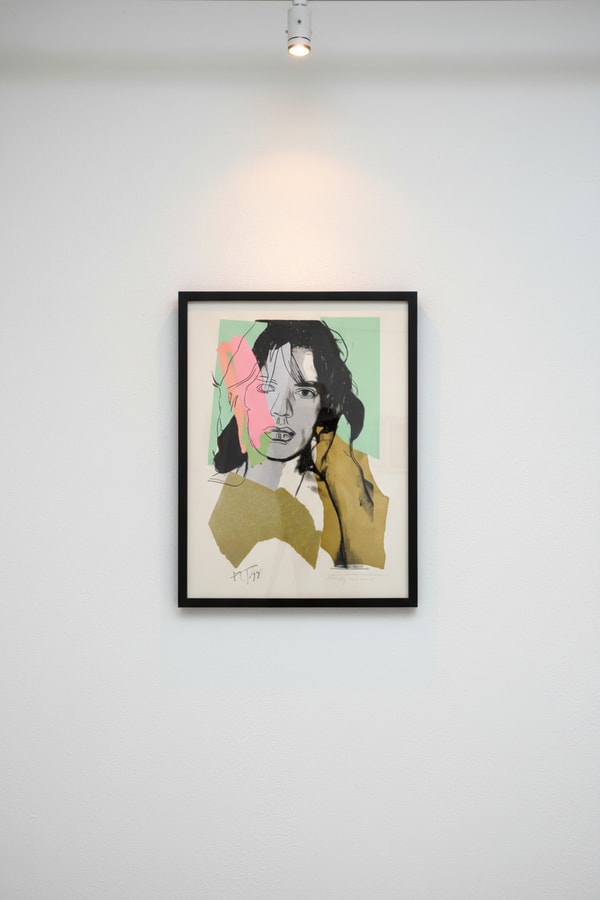
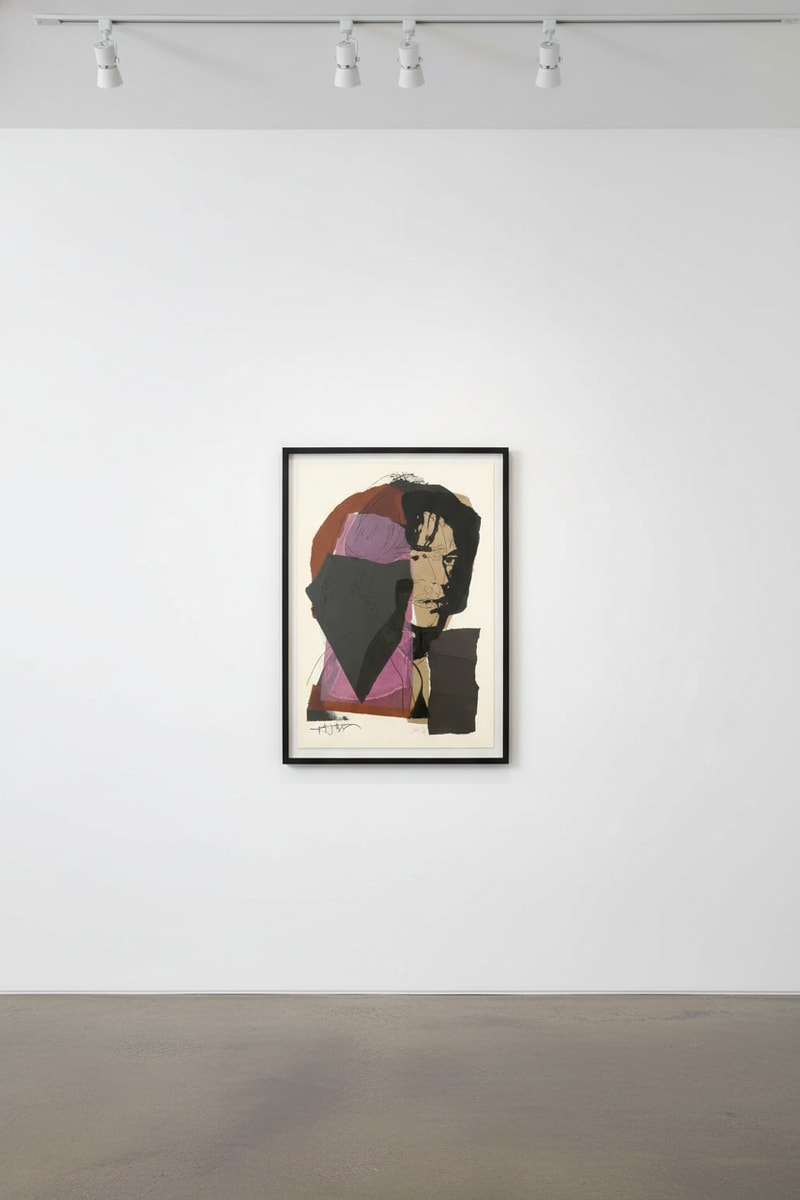
Andy Warhol, Mick Jagger (F.S. II.143), 1975, Screenprint. Available at Guy Hepner, New York.
The dual signature requirement — both Warhol and Jagger — provides an additional authentication layer specific to this portfolio. Warhol's signature appears consistently in pencil, while Jagger's signatures show more variation in placement and medium (colored pencil, crayon, or felt-tip marker). Familiarity with both artists' signature styles helps identify anomalies that might warrant further investigation.
When purchasing through established galleries, authentication responsibility shifts significantly. Reputable dealers stand behind the works they sell, providing guarantees of authenticity and often maintaining relationships with scholars and conservators who can address questions that arise. This assurance represents a meaningful portion of what you're paying for when acquiring through the gallery market rather than at auction or privately.
The Warhol Mick Jagger market has demonstrated remarkable consistency over the past decade, with strong demand from both established collectors and new entrants drawn to the portfolio's combination of art-historical significance and rock-and-roll energy. Pricing varies substantially based on several factors: specific image (some compositions consistently outperform others), condition, provenance, and whether you're acquiring a single print or a complete portfolio.
For individual prints from the standard edition in excellent condition, current market pricing generally falls in the following ranges:
Complete portfolios appear at auction less frequently and achieve prices that typically exceed the sum of individual print values, reflecting collector preference for acquiring the full series as Warhol intended. A complete portfolio in uniform excellent condition represents a significant acquisition, often exceeding $2 million at major auction houses.
Approaching the Mick Jagger series strategically depends on your collecting goals, budget, and existing holdings. Several distinct approaches have proven successful for different collector profiles.
The signature acquisition: For collectors seeking a single, definitive Warhol Jagger print, focus on one of the consistently strong compositions (F.S. II.140, II.141, or II.143) in the best condition you can afford. Prioritize fresh-to-market works with clean provenance over pieces that have circulated repeatedly.
Building toward completeness: Some collectors begin with a single print and gradually acquire additional images as opportunities arise. This approach allows you to develop expertise in the series while spreading acquisition costs over time. Be patient — the strongest compositions may take years to source in excellent condition.
The complete portfolio acquisition: For collectors with the resources and space to display a major holding, acquiring a complete portfolio offers advantages in presentation and potentially in future resale. Complete sets tend to attract institutional interest and may achieve premiums that incomplete groupings cannot.
The Trial Proof route: Collectors prioritizing rarity and art-historical significance over decorative considerations may focus exclusively on Trial Proofs. These working proofs provide insight into Warhol's creative process while offering the scarcity that distinguishes truly elite holdings.
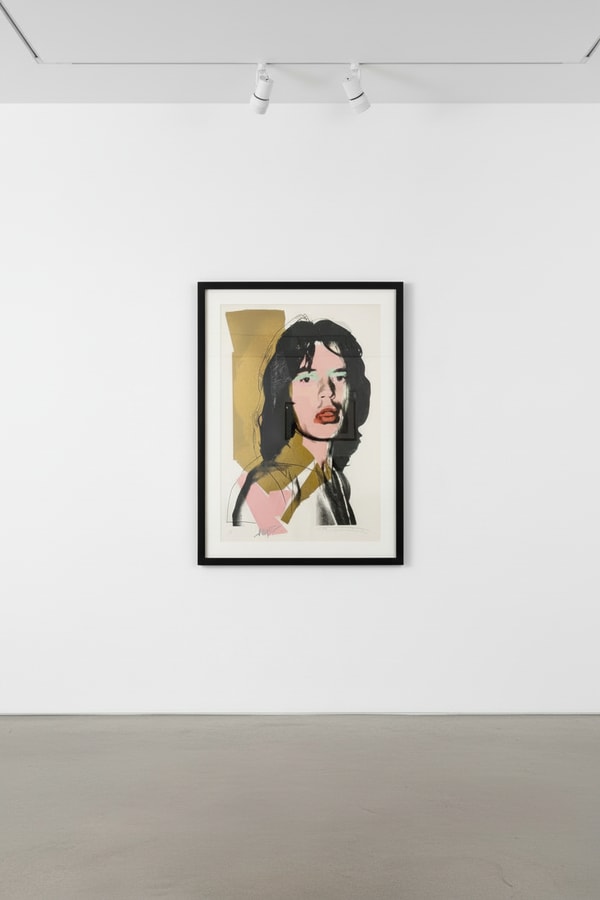
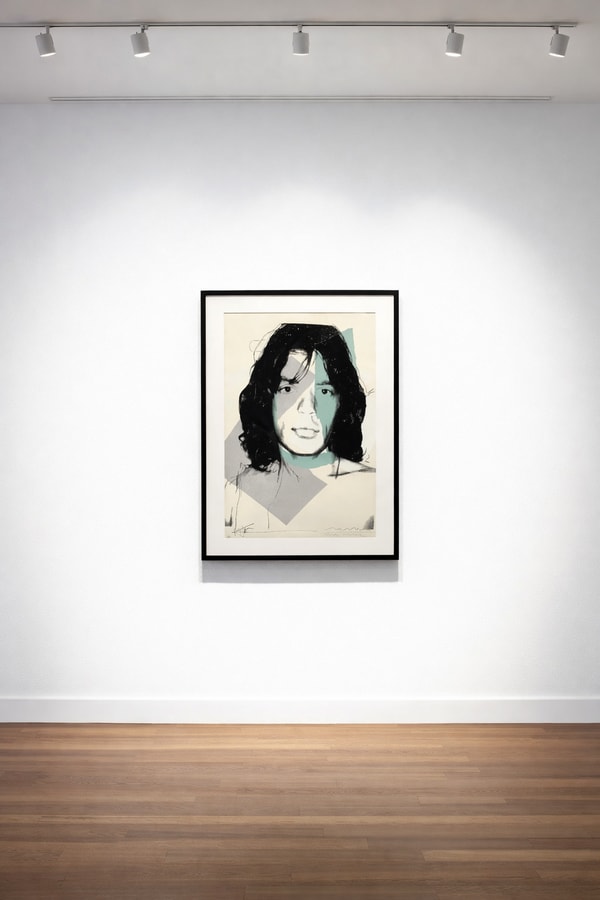
Andy Warhol, Mick Jagger (F.S. II.144), 1975, Screenprint. Available at Guy Hepner, New York.
Whichever approach you pursue, timing matters. The market for major Warhol prints has shown steady appreciation over the past two decades, with occasional corrections creating buying opportunities for prepared collectors. Maintaining relationships with dealers who specialize in this area ensures you'll see strong material before it reaches public auction.
Works on paper require thoughtful display practices to ensure long-term preservation. For prints of this caliber, investment in museum-quality framing and appropriate display conditions protects both the aesthetic experience and the underlying asset value.
Framing should employ conservation-grade materials throughout: acid-free mat boards, UV-filtering glazing (museum glass or acrylic options provide excellent protection), and mounting methods that don't permanently adhere the print to any backing material. Hinges made from Japanese tissue and wheat starch paste allow the print to be safely removed from its frame for conservation, exhibition loans, or future sales.
Environmental conditions matter significantly for paper stability. Ideal storage and display conditions maintain temperature between 65-72°F and relative humidity between 30-50%. Avoid walls that receive direct sunlight, and consider lighting options (LED or fiber-optic systems) that minimize UV exposure. If you're displaying a complete portfolio, rotating which prints are on view allows you to share the cumulative light exposure across the group rather than concentrating it on your favorites.
For collectors with significant holdings, relationships with paper conservators provide ongoing support for monitoring condition, addressing minor issues before they become major problems, and documenting works for insurance and sale purposes. Annual inspections represent a small investment that can prevent costly damage.
The Mick Jagger portfolio emerged at a pivotal moment in both Warhol's career and rock music history. By 1975, the initial shock of Pop Art had evolved into widespread cultural acceptance, with Warhol occupying an undisputed position as the movement's defining figure. The Rolling Stones, meanwhile, were navigating the transition from sixties counterculture heroes to seventies arena-rock behemoths — a transformation that required careful image management.
Warhol's portraits served both subjects well. For Jagger, they conferred an avant-garde credibility that balanced the increasingly commercial direction of the Stones' music. For Warhol, they demonstrated his continued relevance to the contemporary cultural moment while showcasing the technical evolution of his screenprint practice. The collage elements that distinguish these prints — the torn papers, the hand-drawn lines, the overlapping colors — represented a departure from the cleaner, more mechanical aesthetic of his 1960s celebrity portraits.
This portfolio also documents Jagger at a specific moment in his visual identity. He was 32 years old, still possessing the angular features and undeniable magnetism that made him rock's preeminent frontman, but showing the maturity that distinguished the Stones from the younger generation of punk and glam artists then emerging. Warhol captured something timeless in these images — a confidence and charisma that transcends any particular decade.
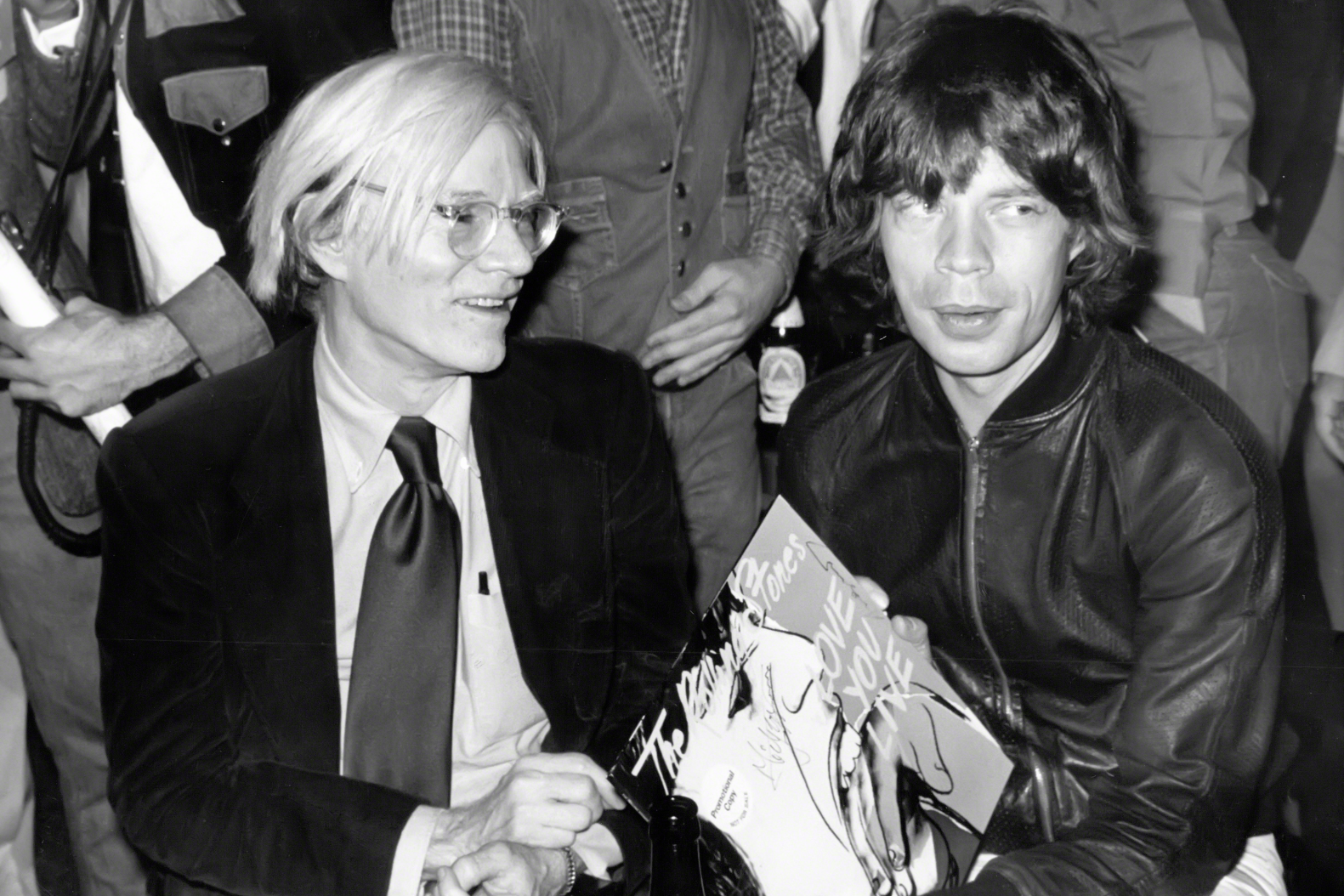
CIRCA 1977: Andy Warhol and Mick Jagger at the album release party for 'Love You Live.' Robin Platzer/Images/Getty Images
Nearly fifty years after their creation, the Mick Jagger screenprints continue to command serious collector attention. Several factors explain this durability. The combination of two cultural icons — Warhol and Jagger — creates broader appeal than either artist's name alone would generate. The prints attract collectors whose primary interest is Pop Art, collectors focused on rock-and-roll memorabilia, and collectors building holdings around celebrity portraiture. This overlapping audience creates competitive dynamics that support pricing.
The portfolio's technical quality also contributes to its standing. These are not casual works or commercial by-products; they represent Warhol's sustained engagement with a subject over ten distinct compositions, employing the full range of techniques he'd developed through two decades of printmaking. Each print rewards careful looking with details that reveal themselves over time — the precise way a torn edge creates visual tension, the exact color choices that make an ordinary pose feel electric.
Finally, the edition structure provides sufficient scarcity without creating a market so thin that transactions become rare. With 250 impressions of each print plus artist's proofs, material appears at auction and through galleries with enough regularity to establish clear market pricing, while remaining scarce enough that strong examples don't linger unsold. This balance supports both acquisition and eventual resale, making these prints attractive to collectors concerned with liquidity as well as aesthetic pleasure.
Guy Hepner gallery has maintained a consistent focus on major Warhol prints, including significant holdings from the Mick Jagger portfolio. Our position at 177 Tenth Avenue in New York's gallery district allows us to work closely with collectors seeking to acquire works of this caliber, whether you're building your first major Pop Art holding or adding to an established collection.
Our team provides guidance on authentication, condition assessment, and market positioning for any Warhol print acquisition. We maintain relationships with conservators, scholars, and collectors that enable us to source material that may not appear at public auction, and we stand behind every work we sell with guarantees appropriate to its significance.
If you're considering an acquisition from the Mick Jagger series — whether a single print to anchor a collection or a complete portfolio — we welcome the opportunity to discuss what's currently available and what might be sourced to meet your specific requirements. Contact our specialists to begin the conversation.
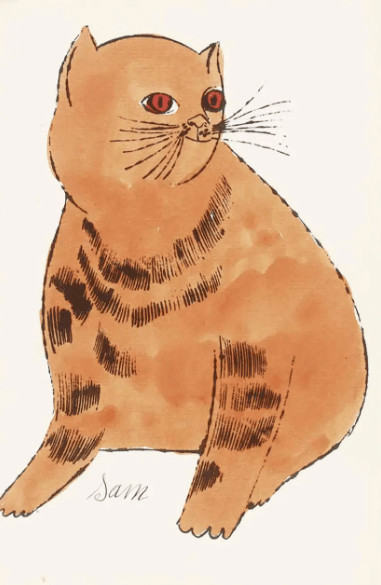
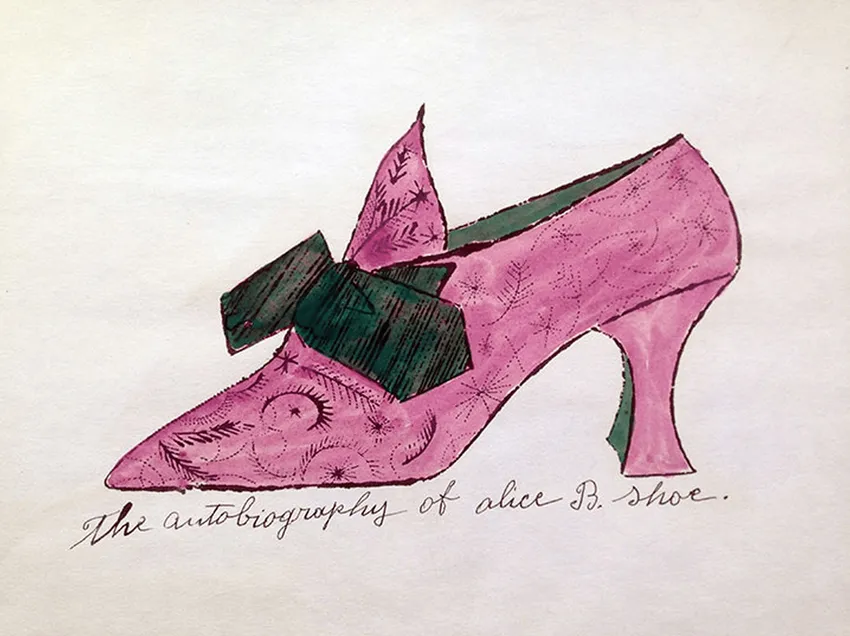
Explore Andy Warhol prints for sale at Guy Hepner: Mick Jagger, 25 Cats Named Sam, A Gold Book, A La Recherche Du Shoe Perdu, Alexander the Great.
Related Series