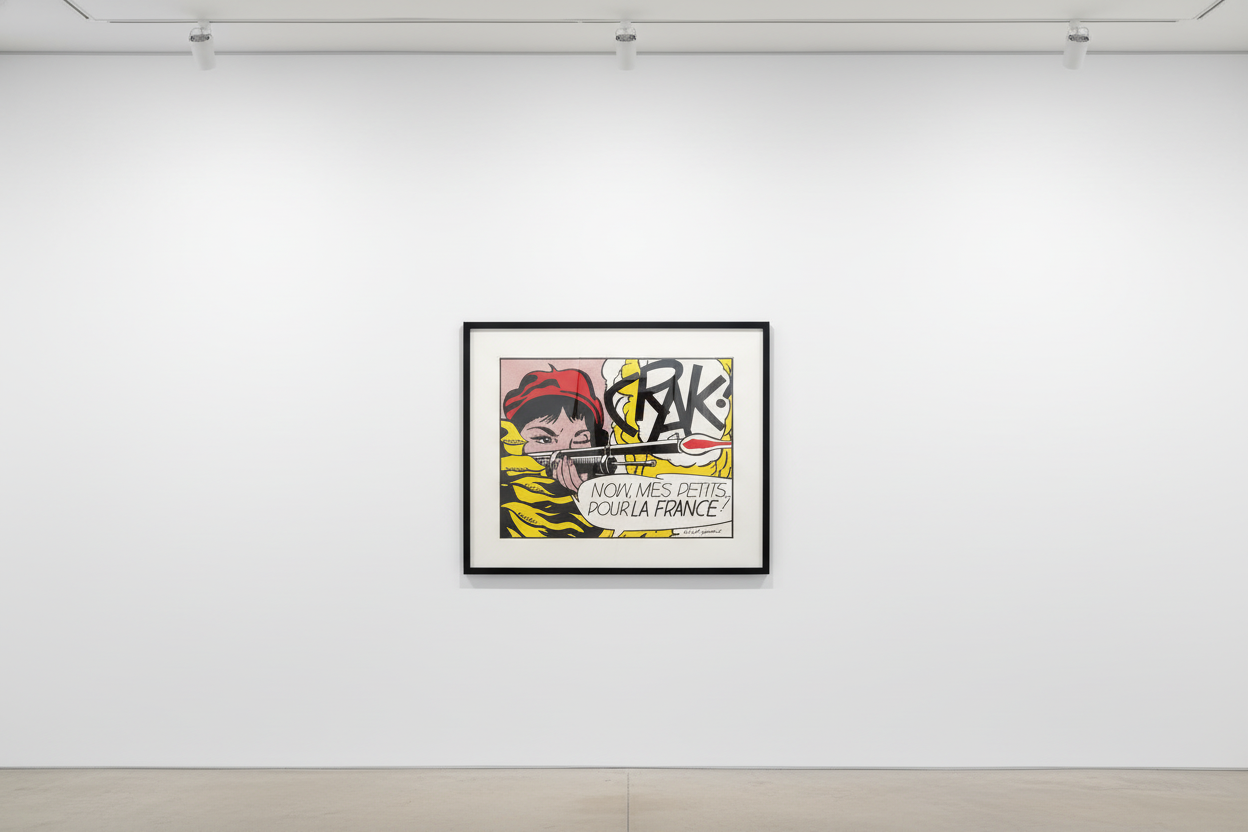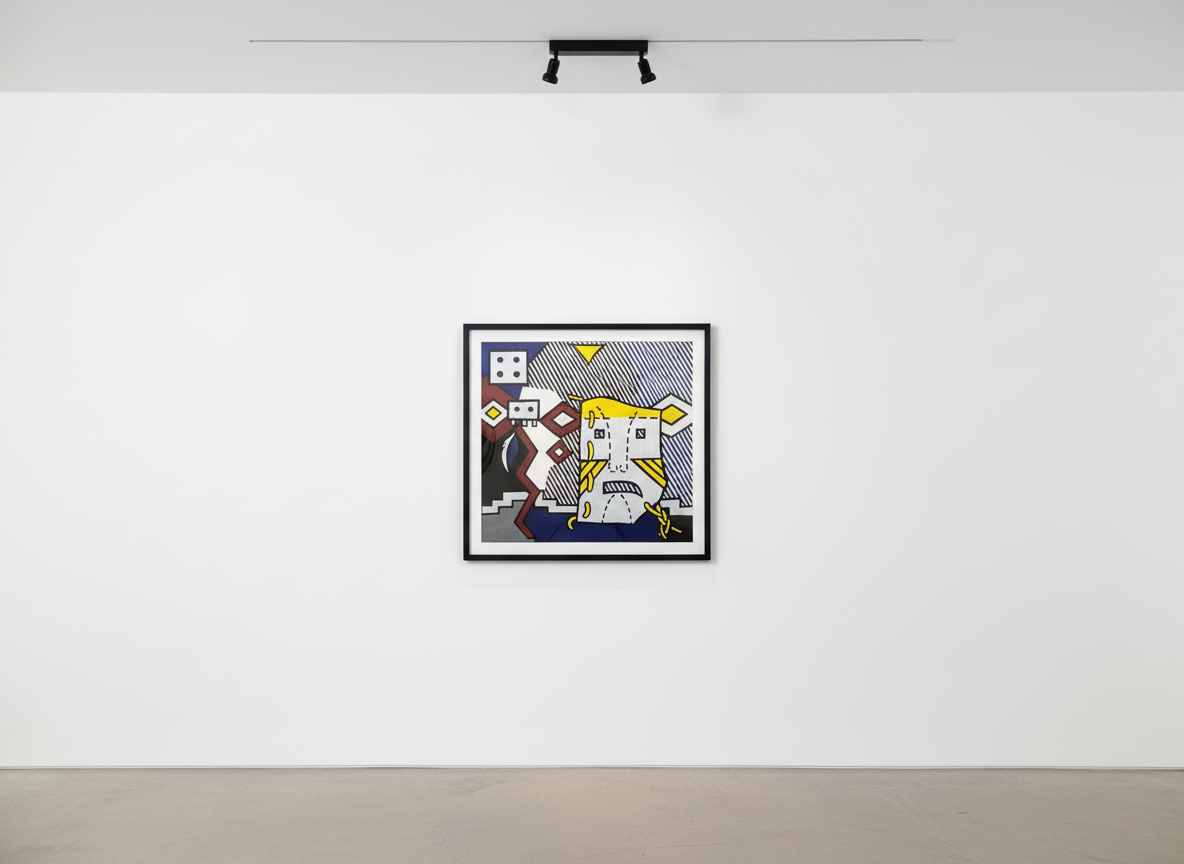
American Indian Theme

May 23, 2026
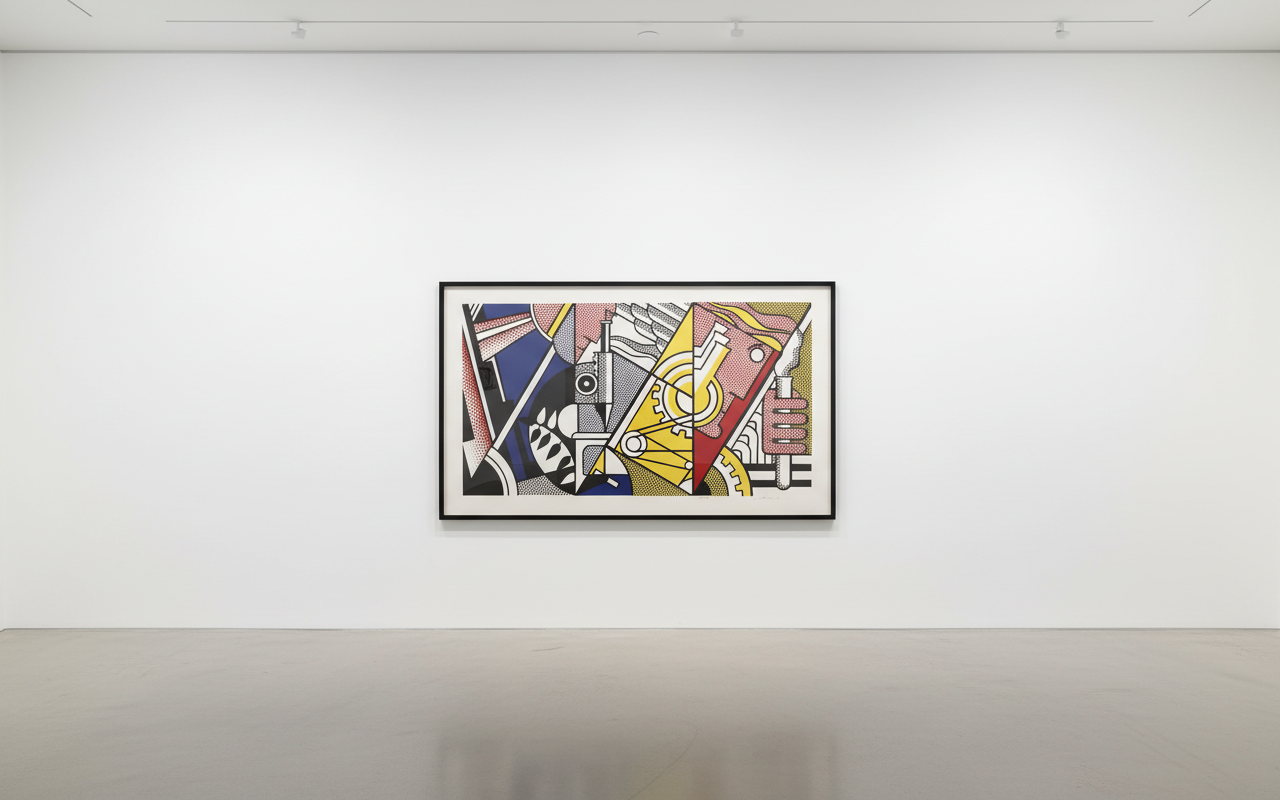
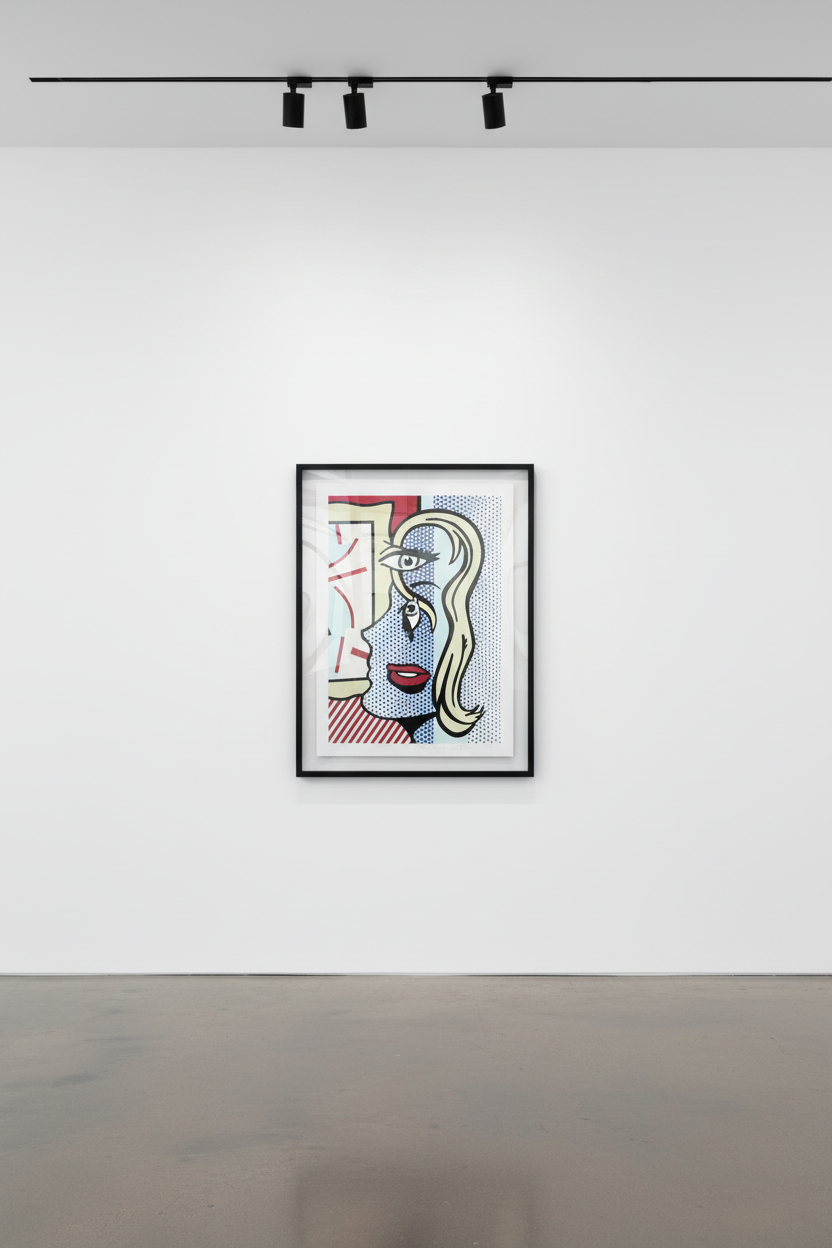
Roy Lichtenstein stands as one of the most influential and instantly recognizable artists of the twentieth century. As a pioneering figure of the Pop Art movement, he revolutionized contemporary art by appropriating imagery from comic strips, advertising, and commercial printing techniques - transforming the visual language of mass media into monumental fine art. His signature Ben-Day dots, bold primary colors, and thick black outlines became synonymous with a new artistic vocabulary that challenged traditional hierarchies between high art and popular culture.
Lichtenstein's genius lay not merely in reproduction but in transformation. By isolating and enlarging fragments of American visual culture, he revealed the mechanisms through which media shapes our perceptions of beauty, heroism, romance, and drama. His works continue to command extraordinary prices at auction - his paintings regularly achieve figures in the tens of millions at Christie's and Sotheby's - cementing his position among the most sought-after artists in the secondary market.
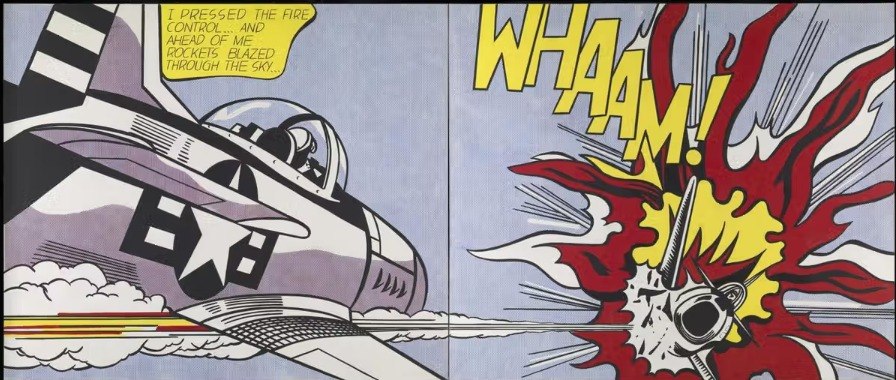
Perhaps no work better encapsulates Lichtenstein's artistic ambition than Whaam! (1963), a monumental diptych measuring over four metres wide now permanently housed at Tate Modern in London. Depicting two fighter planes locked in aerial combat - one firing a rocket, the other exploding in a brilliant fireball accompanied by the now-iconic onomatopoeia - the painting transforms a single panel from DC Comics' All-American Men of War into an epic meditation on violence, spectacle, and American military mythology. The sheer scale of the work was a deliberate provocation: by blowing a throwaway comic panel up to the dimensions of history painting, Lichtenstein forced a reckoning with the imagery Western culture consumed daily and discarded without thought. Whaam! remains his most reproduced work and one of the defining images of twentieth-century art.
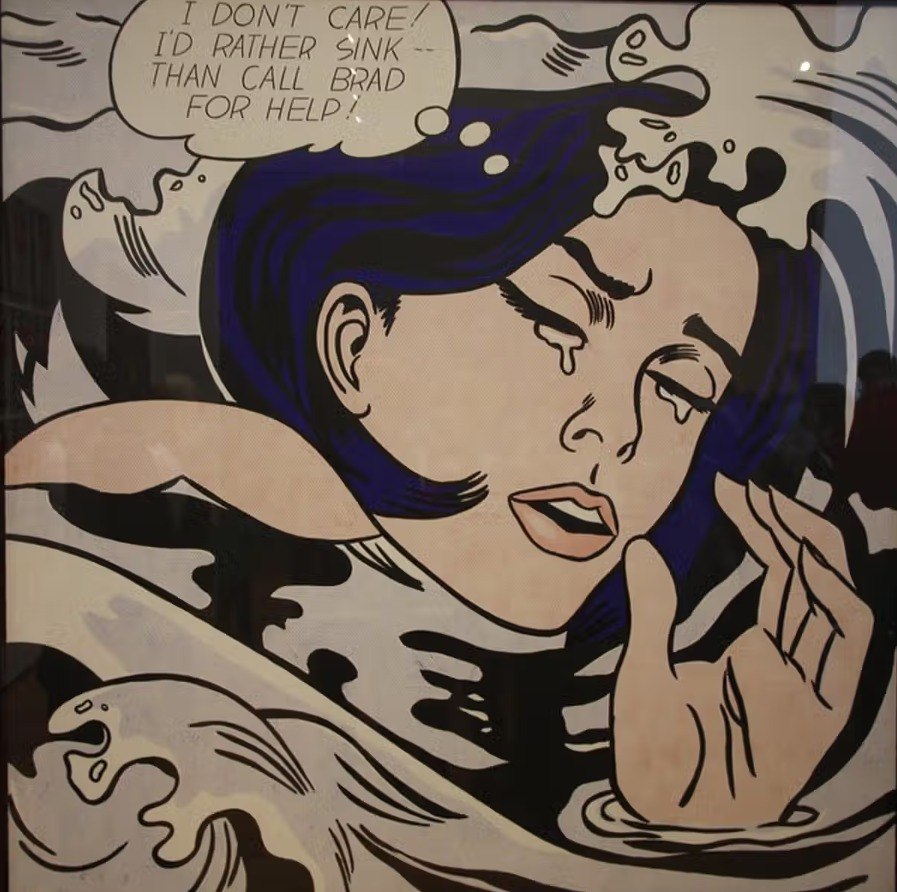
Drowning Girl (1963) is among the most psychologically complex works Lichtenstein ever produced. The painting presents a young woman submerged in stylized waves, her thought bubble declaring, "I don't care! I'd rather sink than call Brad for help!" - a line adapted from a DC Comics romance strip. Lichtenstein cropped the source image drastically, removing the boyfriend entirely and placing the viewer uncomfortably close to the woman's anguished face. The swirling waves - a nod to Hokusai as much as to the romance comic tradition - give the work a formal tension that transcends its pop-cultural origins. Drowning Girl resides permanently at the Museum of Modern Art in New York and is consistently cited as one of the masterworks of Pop Art.
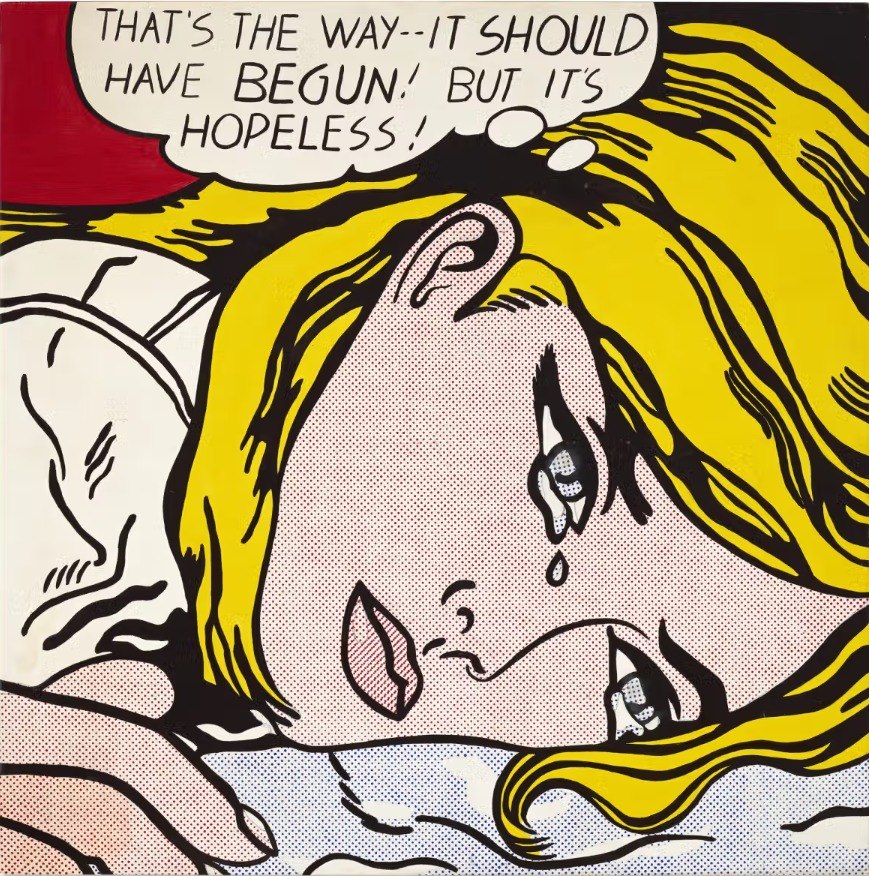
Hopeless (1963) lays bare the emotional language of the romance comic with devastating precision. A blonde woman lies with her head against a pillow, tears streaming, her thought bubble reading: "That's the way - it should have begun! But it's hopeless!" Lichtenstein removes any surrounding narrative, leaving only the close-cropped face and the manufactured grief it displays. The Ben-Day dot texture that renders her skin and tears is the same mechanical process used to print cheap magazines - a deliberate flattening of emotion into commercial production. The work sits in the Kunstmuseum Basel and is frequently paired with Drowning Girl as a study in Lichtenstein's radical reframing of female vulnerability in popular media.
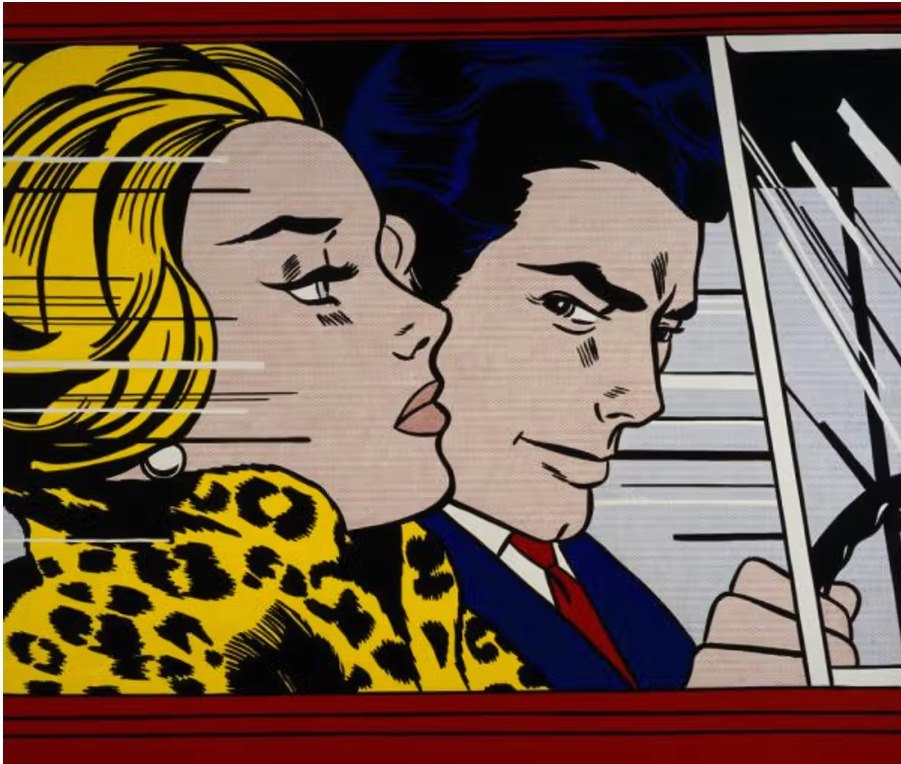
In the Car (1963) showcases Lichtenstein at his most cinematically sophisticated. The close-cropped Composition frames a man and woman inside an automobile, the speed lines of the car window creating visual tension between movement and stillness. The woman leans close to the man, but their expressions convey emotional distance rather than intimacy - a quiet psychological drama played out in primary colours and thick outlines. The work exemplifies how Lichtenstein transformed romance comic imagery into something more ambiguous and unsettling than its source material ever intended. In the Car is held in the collection of the Scottish National Gallery of Modern Art in Edinburgh.
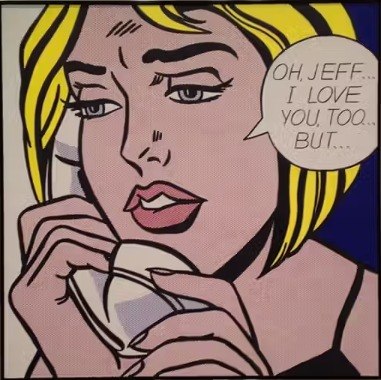
Oh, Jeff…I Love You, Too…But… (1964) is one of Lichtenstein's most iconic explorations of the interrupted confession. A blonde woman holds a telephone receiver, her speech bubble trailing off mid-sentence in a suspended moment of emotional tension. The painting captures something essential about the constructed nature of romantic narrative: the "but" that completes nothing, the cropped composition that withholds resolution. By freezing this perpetual deferral, Lichtenstein turned the grammar of the romance comic - its cliffhangers and emotional hooks - into a formal strategy. The work is part of the permanent collection at the San Francisco Museum of Modern Art.
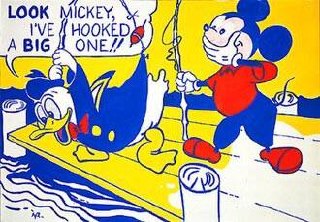
Look Mickey (1961) holds special significance as the painting that catalyzed Lichtenstein's Pop Art direction. Depicting Donald Duck and Mickey Mouse in a fishing scene - Donald excitedly believing he has caught something, unaware he has only hooked his own coat - this was Lichtenstein's first direct appropriation of cartoon imagery. The origin story is well documented: his young son challenged him to paint something as good as a Mickey Mouse comic book, and the work that resulted changed the trajectory of his career. Its seemingly simple humor belies the revolutionary implications it carried for the art world's understanding of originality, appropriation, and authorship. Look Mickey is now in the collection of the National Gallery of Art in Washington DC.
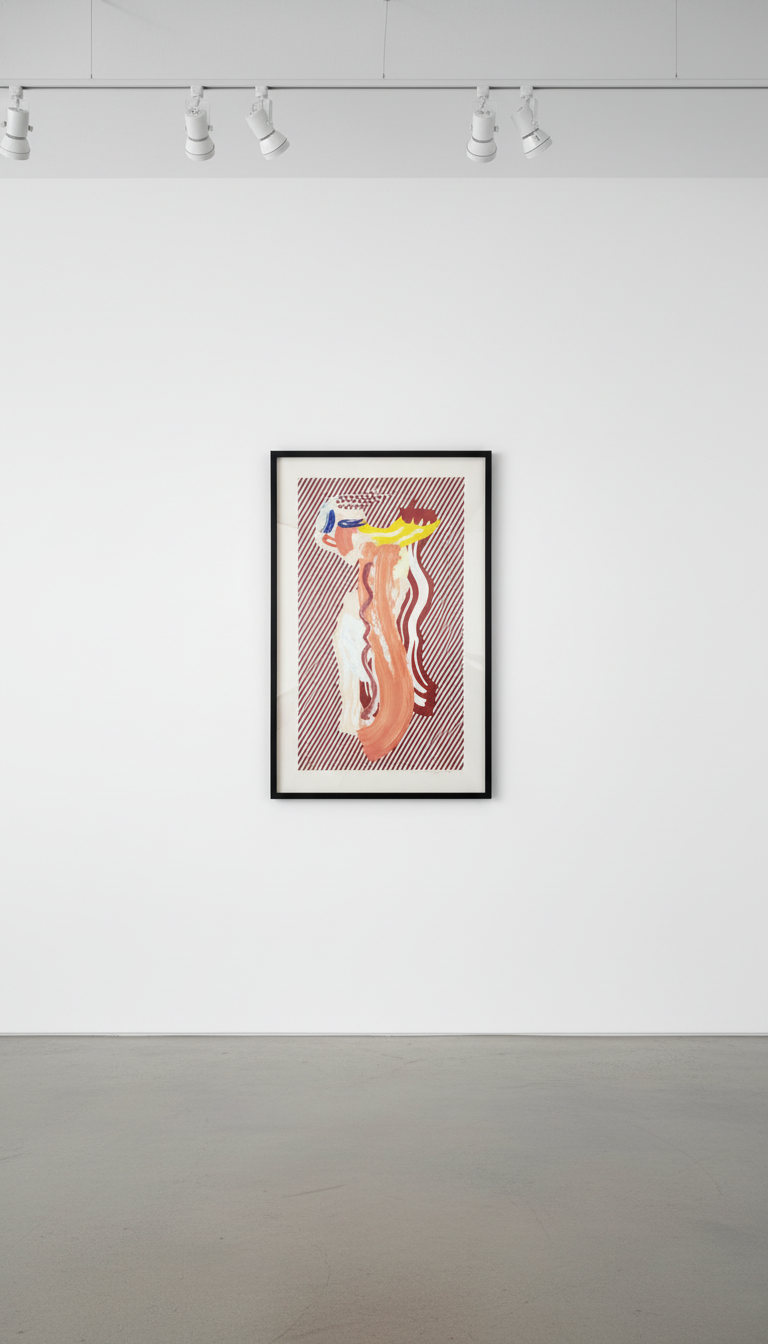
Brushstroke (1965) represents one of Lichtenstein's most pointed conceptual manoeuvres. At a moment when Abstract Expressionism's cult of the spontaneous gesture still dominated critical discourse, he depicted a single gestural brushstroke - the very symbol of artistic authenticity and creative freedom - using his most mechanical, deliberate Pop technique. Ben-Day dots, flat colours, and heavy outlines rendered the "spontaneous" mark as calculated product. The result is a work of profound wit and genuine philosophical weight, interrogating the mythology of the artist's hand at the peak of that mythology's cultural power. Lichtenstein returned to the Brushstroke motif repeatedly throughout his career, generating an extended series of prints and sculptures from this single idea.
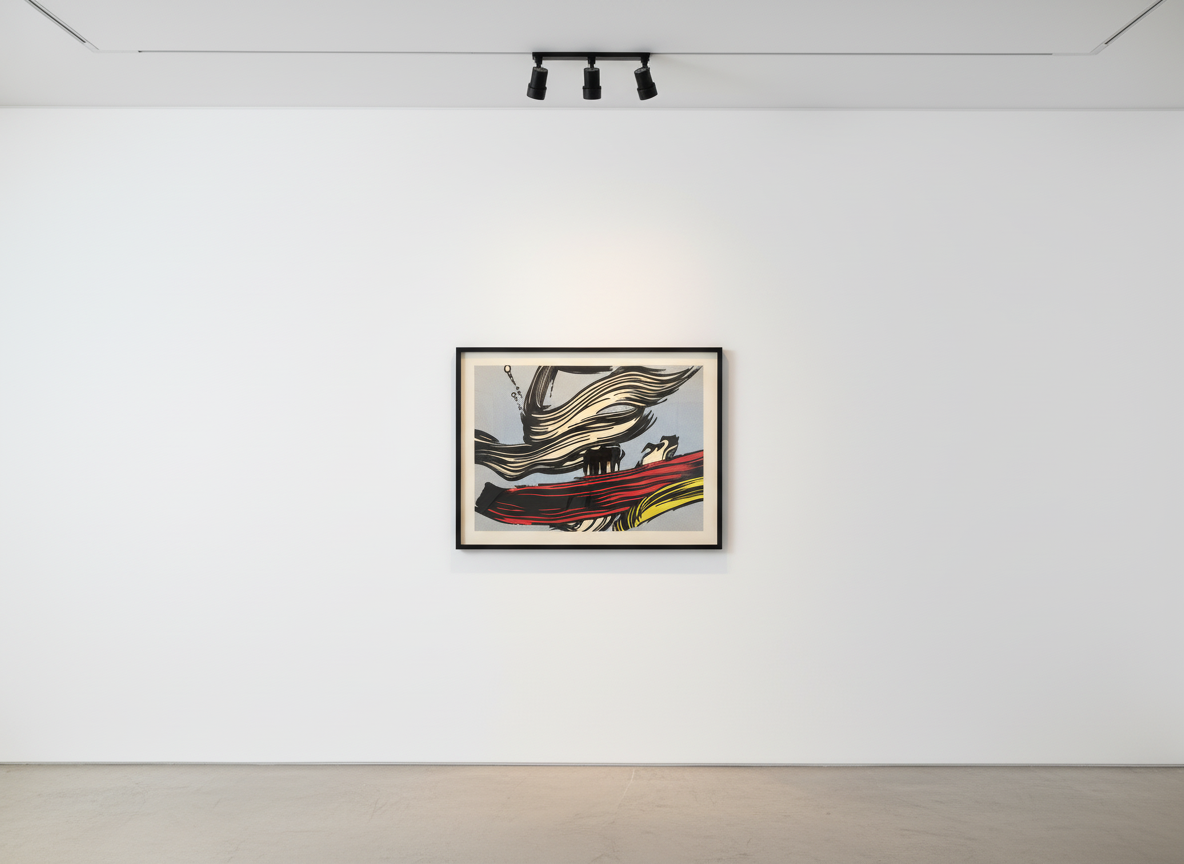
Brushstroke (C. 45), 1967 — Roy Lichtenstein. Available at Guy Hepner, New York.
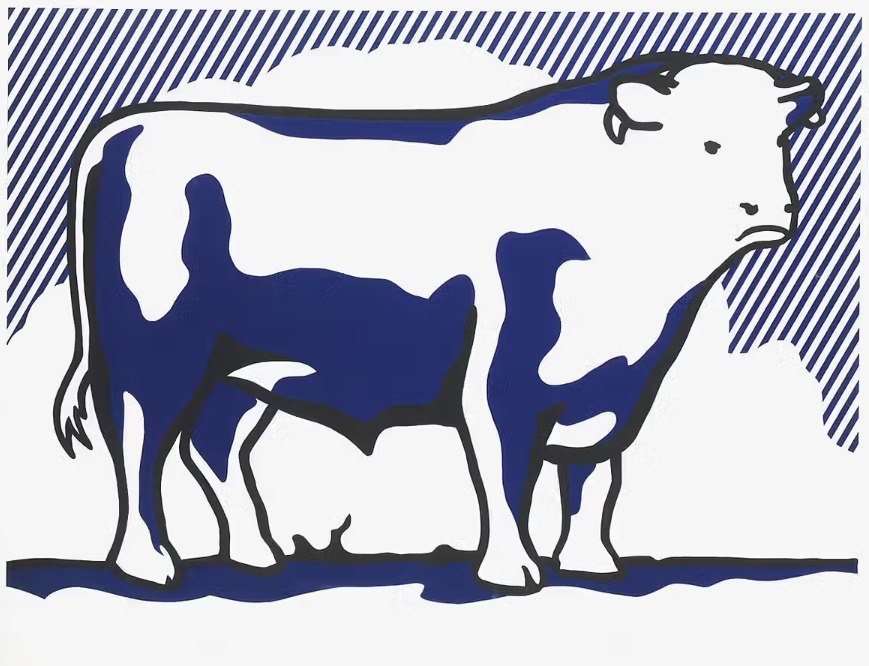
The Bull Profile Series (1973) stands apart in Lichtenstein's body of work as his most sustained engagement with modernist art history. The series comprises six lithographs that progressively reduce a naturalistic bull into pure geometric abstraction, tracing a visual journey from realist representation through Cubism to something approaching pure form. The sequence directly references Theo van Doesburg's Cow series and engages with the formalist ambitions of De Stijl and Constructivism - movements that Lichtenstein treats with both respect and his characteristic irony. As both a formal exercise and a commentary on the history of abstraction, the Bull Profile Series reveals the intellectual depth that underpins Lichtenstein's apparently accessible Pop aesthetic.
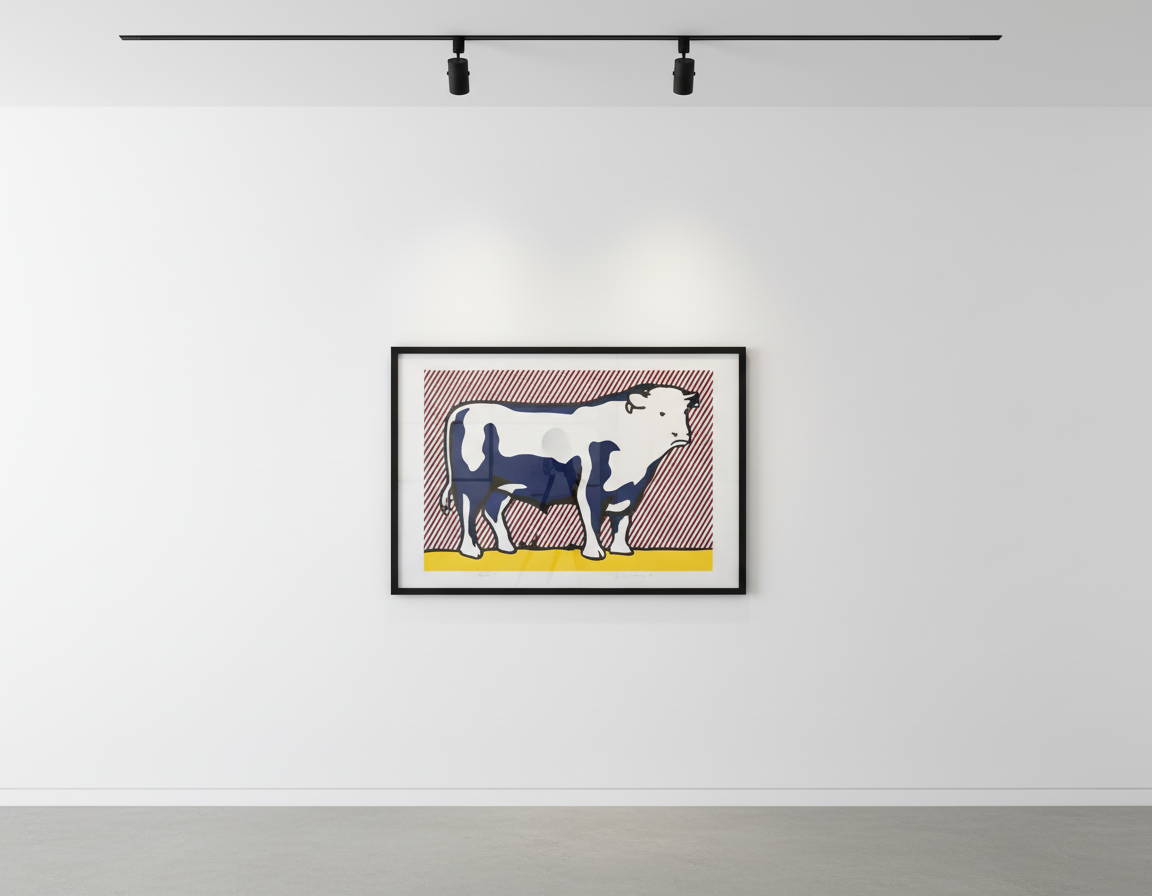
Bull VII (C. 122), 1974 — Roy Lichtenstein. Available at Guy Hepner, New York.
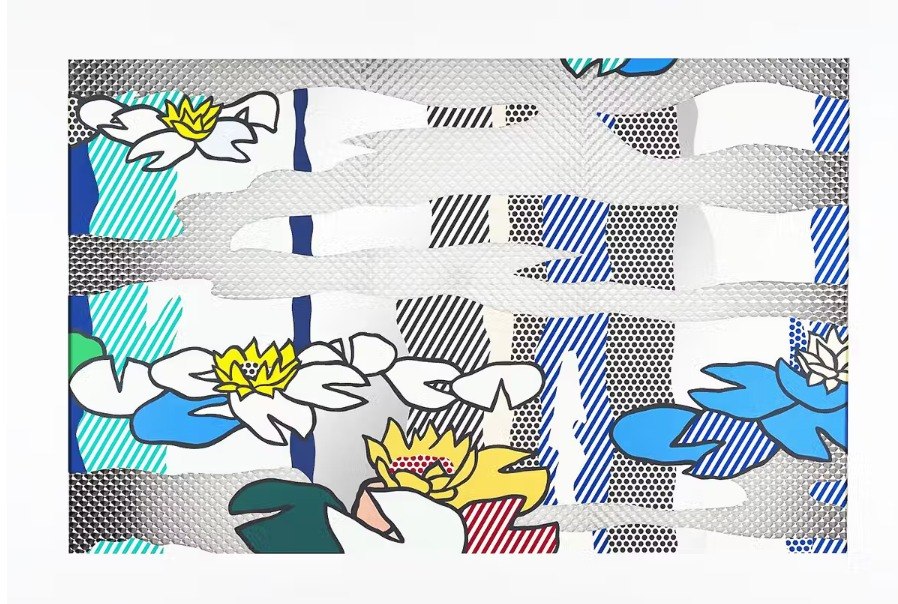
Water Lilies with Cloud (1992) belongs to Lichtenstein's celebrated series of homages to Monet's Nymphéas paintings, executed on mirror-polished stainless steel panels. The choice of support is crucial: where Monet dissolved form in atmospheric light, Lichtenstein replaces atmosphere with reflective surface, so the viewer's own image merges with the water lilies. Monet's meditative shimmer becomes a graphic composition of Ben-Day dots, diagonal hatching, and flat colour fields - the Impressionist concern for perception reframed through the lens of commercial reproduction. The series is widely regarded as one of the most sophisticated art-historical dialogues in Lichtenstein's late career, demonstrating that his formal intelligence only deepened with time.
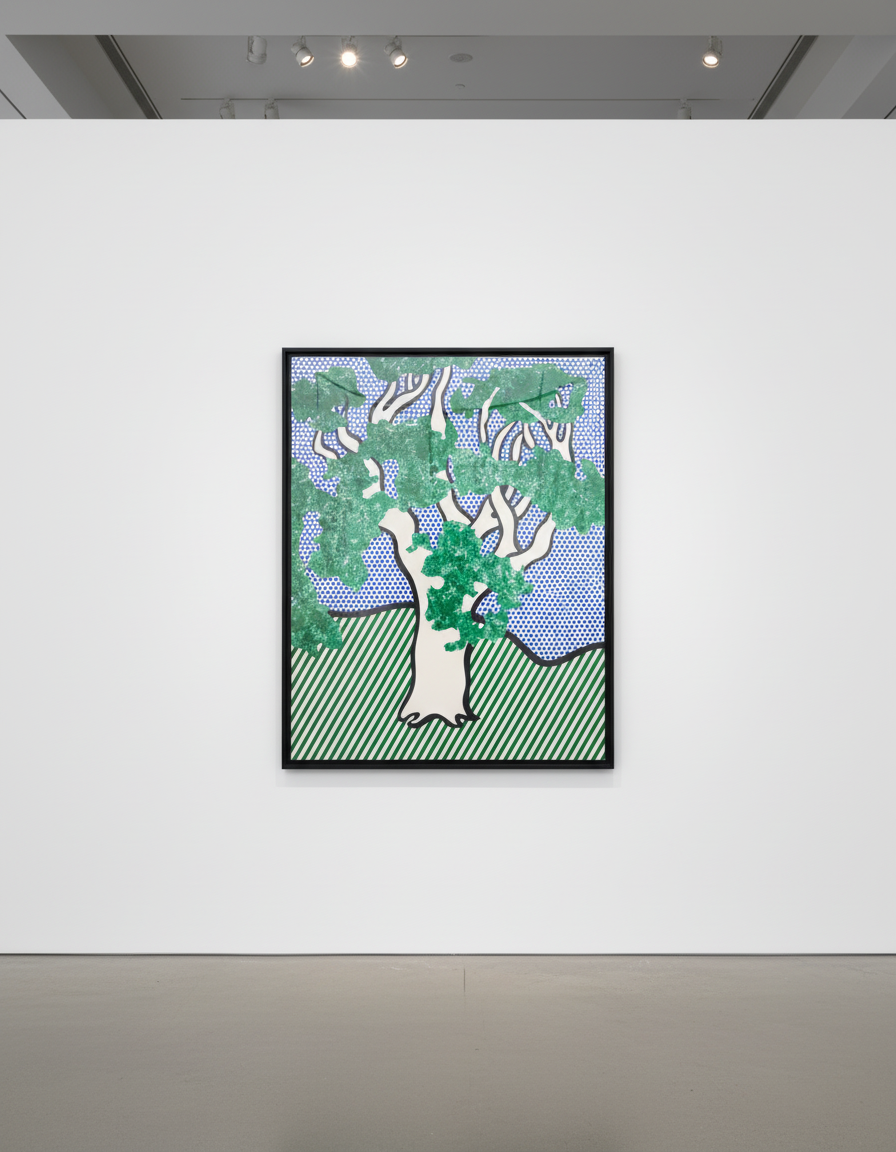
Rainforest (C. 278), 1996 — Roy Lichtenstein. Available at Guy Hepner, New York.
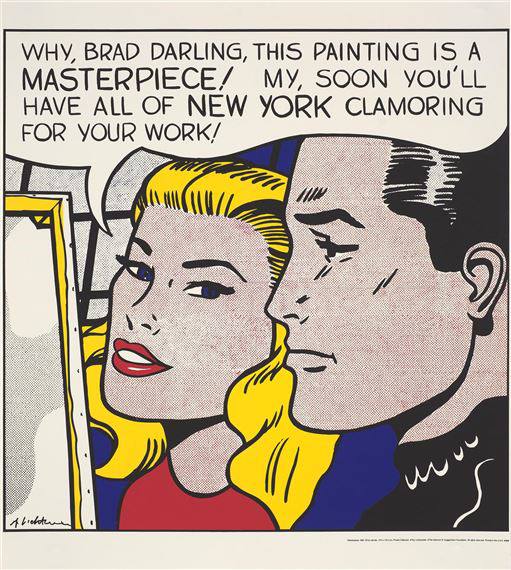
Masterpiece (1962) is perhaps Lichtenstein's most self-aware work - and one of his most quietly funny. In it, a woman gazes at a man's painting and declares, "Why, Brad darling, this painting is a MASTERPIECE! My, soon you'll have all of New York clamoring for your work!" The painting enacts its own subject: it is a comic-book image pretending to be fine art, while depicting someone pronouncing fine art to be great. The circularity is deliberate. By 1962, Lichtenstein was acutely aware that his work was generating exactly the controversy and critical attention that the painting predicts - making Masterpiece a wry commentary on the machinery of art-world validation, taste, and the making of reputations. The work is held in a private collection and has achieved landmark results at auction.
Roy Lichtenstein's market performance reflects his enduring cultural relevance and art-historical importance. According to data from Christie's and Sotheby's, his works consistently rank among the highest-achieving lots in post-war and contemporary art sales. The Art Basel and UBS Global Art Market Report regularly identifies Lichtenstein as a cornerstone artist for serious collections, with demand remaining robust across both primary paintings and his extensive print editions.
For collectors, Lichtenstein offers multiple points of entry. His graphic prints - produced throughout his career with exceptional technical refinement - provide accessible pathways to ownership while maintaining strong appreciation potential. Meanwhile, his paintings represent blue-chip holdings that anchor institutional and private collections worldwide. The artist's consistent aesthetic vision ensures that works from any period of his career maintain recognizable identity and market appeal.
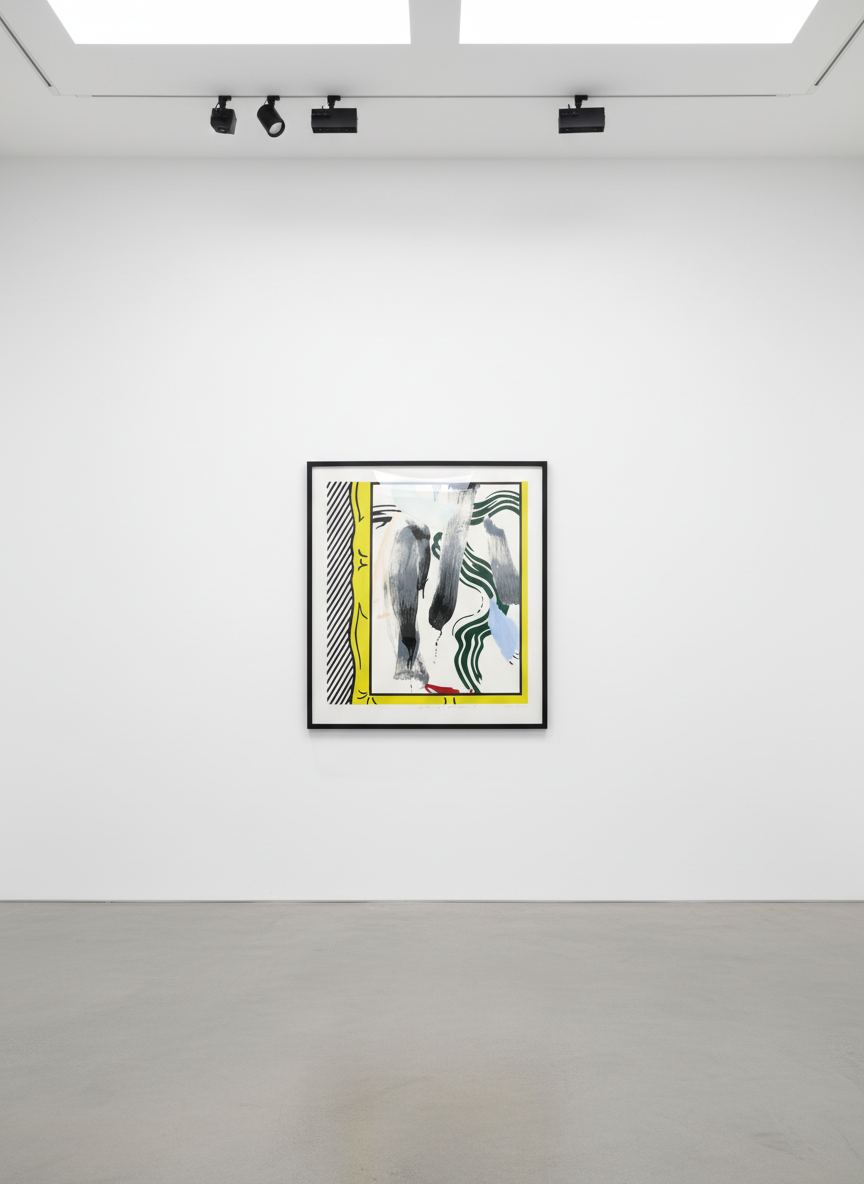
Against Apartheid (C. 200), 1983 — Roy Lichtenstein. Available at Guy Hepner, New York.
Guy Hepner gallery is privileged to offer exceptional works by Roy Lichtenstein to discerning collectors worldwide. Our expertise in Pop Art and contemporary masters positions us to guide acquisitions with scholarly knowledge and market insight. Whether you seek iconic graphic prints or significant unique works, our team provides personalized consultation to match exceptional pieces with distinguished collections. Contact Guy Hepner today to explore available Roy Lichtenstein works and discover how his revolutionary vision might enhance your collection.
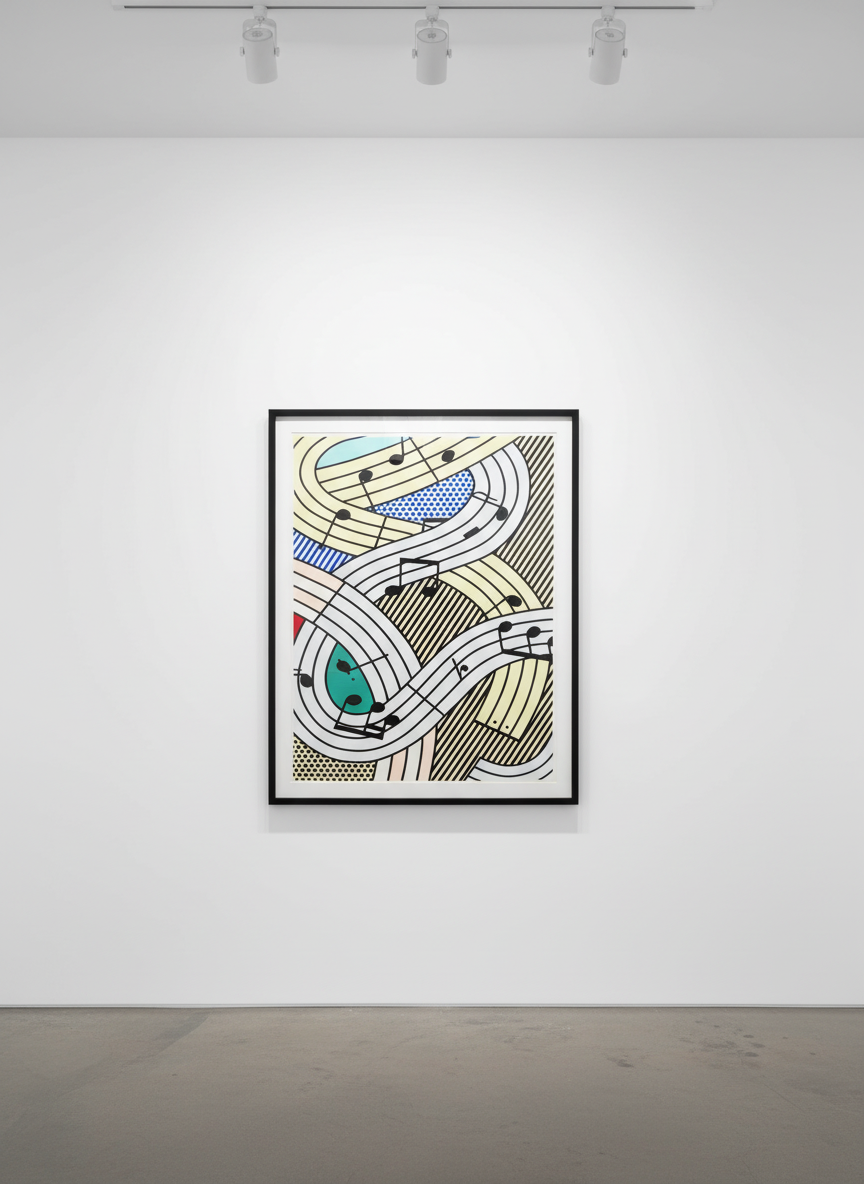
--- **Browse Roy Lichtenstein prints** at Guy Hepner: [Roy Lichtenstein art for sale](/roy-lichtenstein) | [Sell your Lichtenstein](/sell/roy-lichtenstein)Explore Roy Lichtenstein prints for sale at Guy Hepner: American Indian Theme, Art Critic, Brushstrokes, Cathedral, Composition.
Related Series