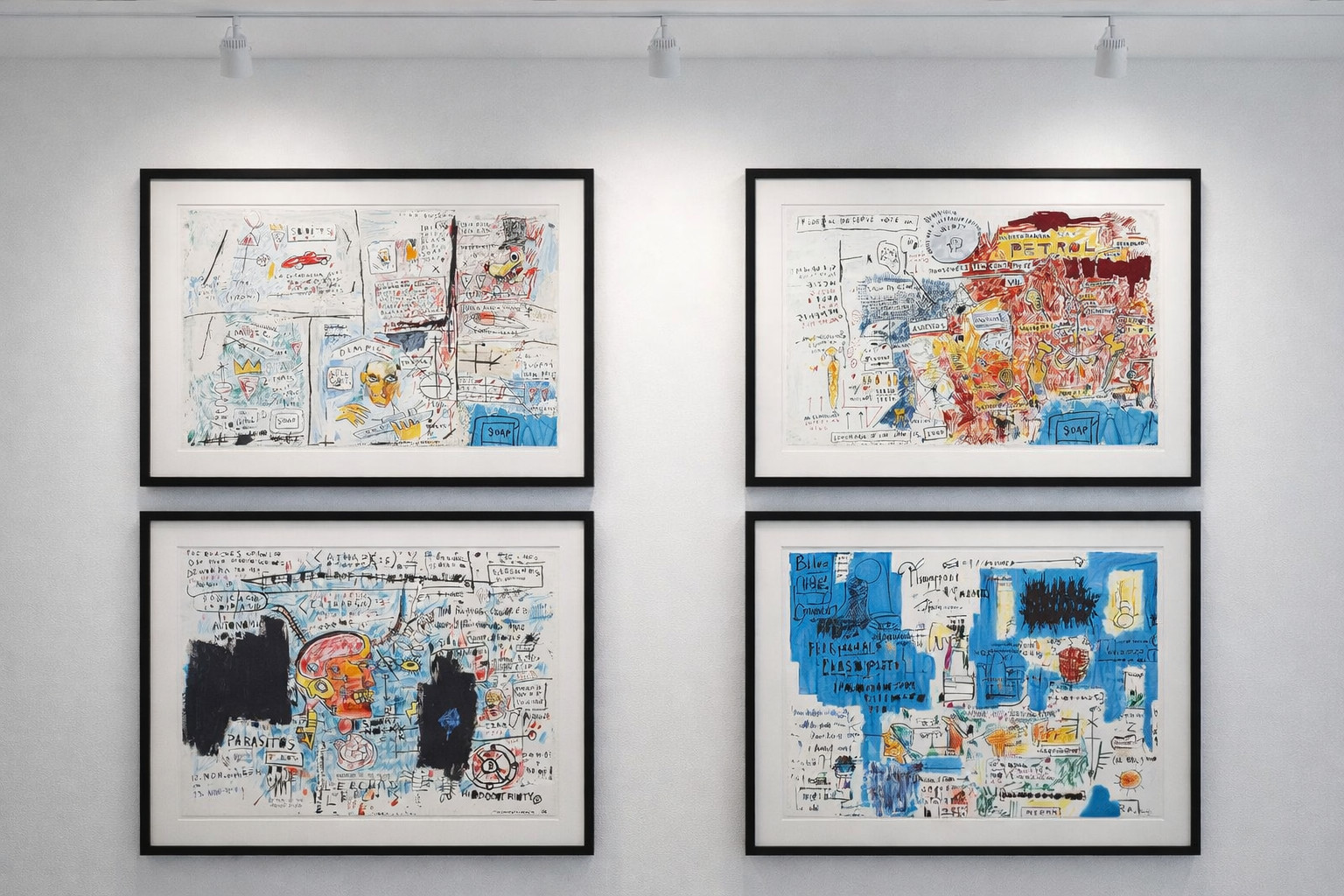
Anatomy

Jean-Michel Basquiat's Anatomy series stands as one of the most significant print portfolios in contemporary art history, representing the artist's first formal venture into editioned works. Created in 1982 at a pivotal moment in his meteoric career, this groundbreaking series distills the raw energy and intellectual depth that would come to define Basquiat as one of the most important artists of the twentieth century. The portfolio emerged during a period of intense creative output, establishing visual and thematic vocabularies that continue to captivate collectors and institutions worldwide.
The Anatomy series materialized in the basement studio of the Annina Nosei Gallery in New York, where Basquiat worked following his celebrated debut solo exhibition in March 1982. This exhibition marked a turning point - the moment when Basquiat transitioned from street artist and downtown provocateur to a figure commanding serious attention from the international art establishment. The eighteen screenprints comprising the Anatomy portfolio were created in this charged atmosphere of newfound recognition and relentless creative drive.
Basquiat's preoccupation with anatomical imagery traces back to a formative childhood experience. Art historian Gianni Mercurio has documented how a young Basquiat, hospitalized at age seven after being struck by a car, received a copy of Gray's Anatomy from his mother. This medical reference book became a touchstone throughout his artistic development, its detailed illustrations of the human body serving as both visual inspiration and conceptual framework. The gift arrived during a vulnerable moment of physical trauma, creating an association between bodily fragility and intellectual curiosity that would permeate his mature work.
Beginning in early 1981, Basquiat produced hundreds of drawings and paintings featuring skulls, skeletons, and isolated body parts. This obsessive exploration culminated in the Anatomy portfolio, where he refined these investigations into a cohesive visual statement. The series demonstrates his ability to synthesize personal history, art historical references, and contemporary concerns into works of striking immediacy and lasting resonance.
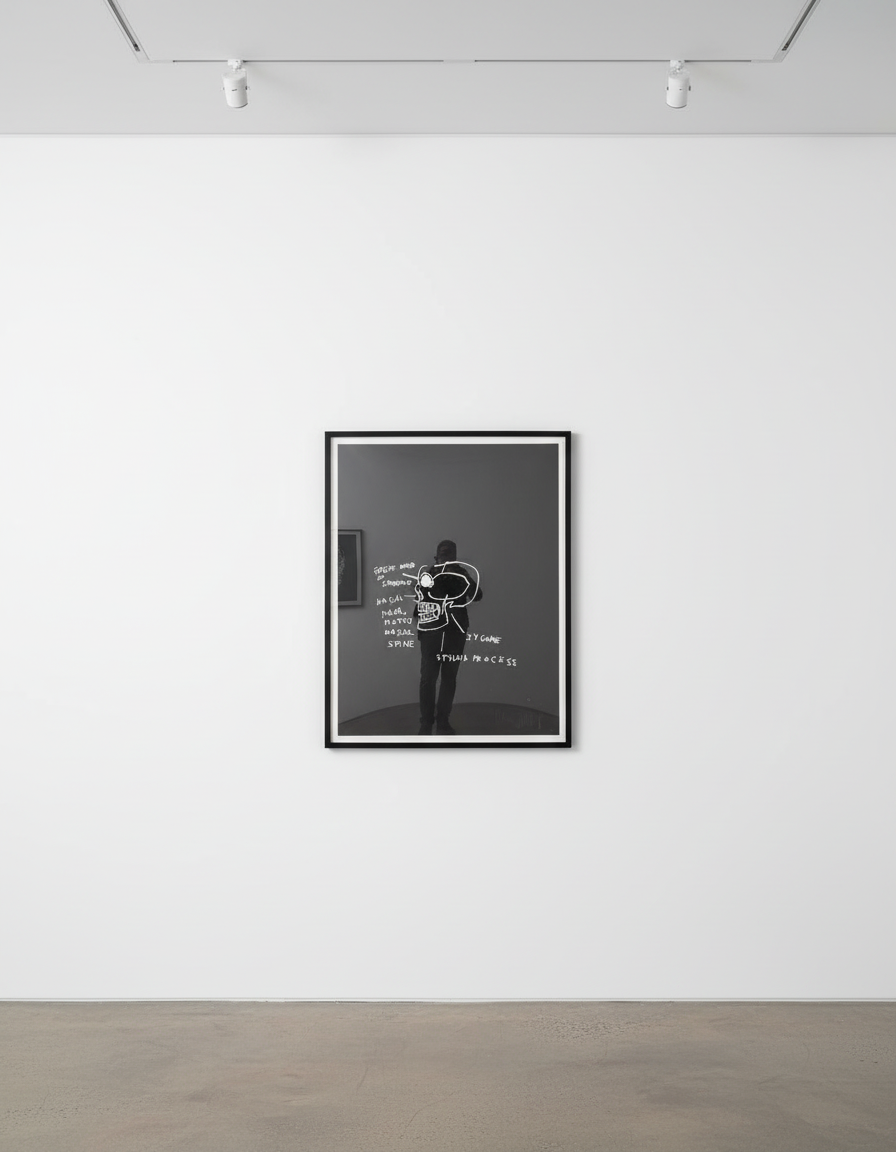
Great Wind of Sphenoid, from Anatomy — Jean-Michel Basquiat. Available at Guy Hepner, New York.
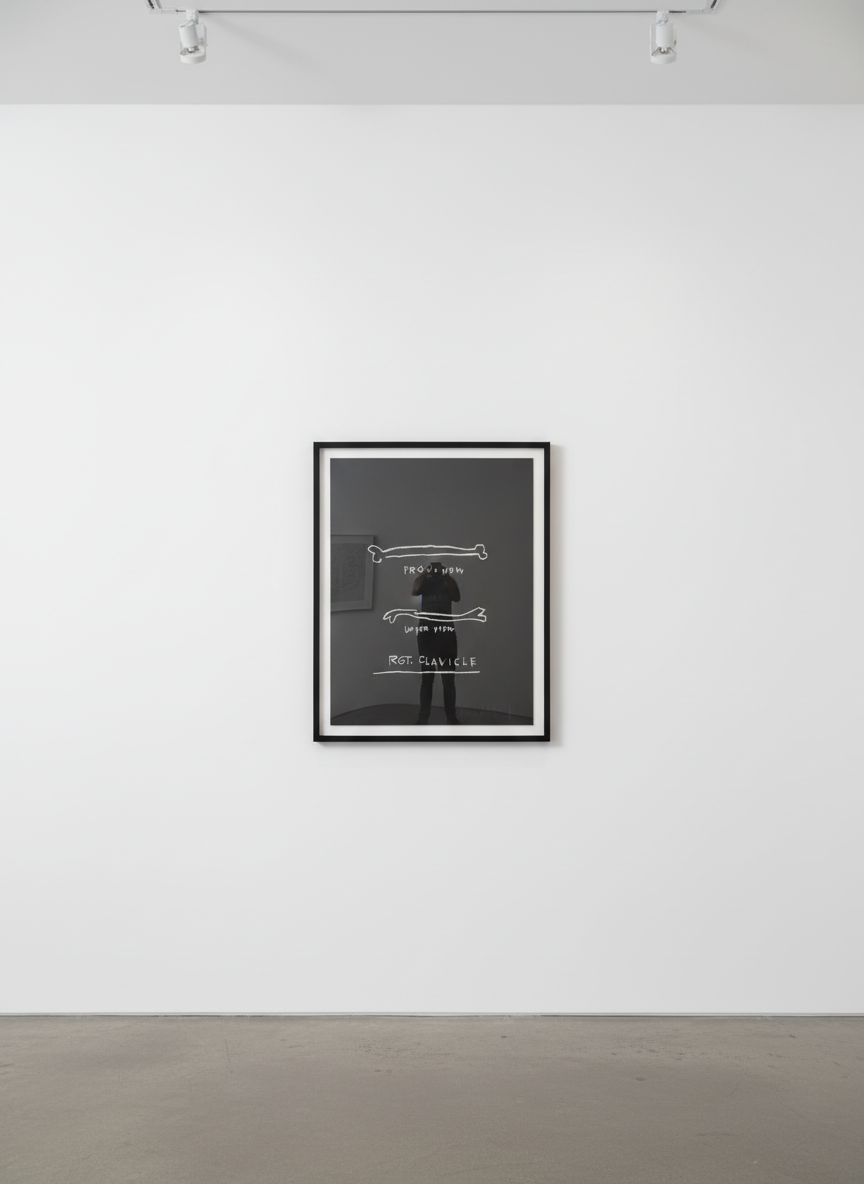
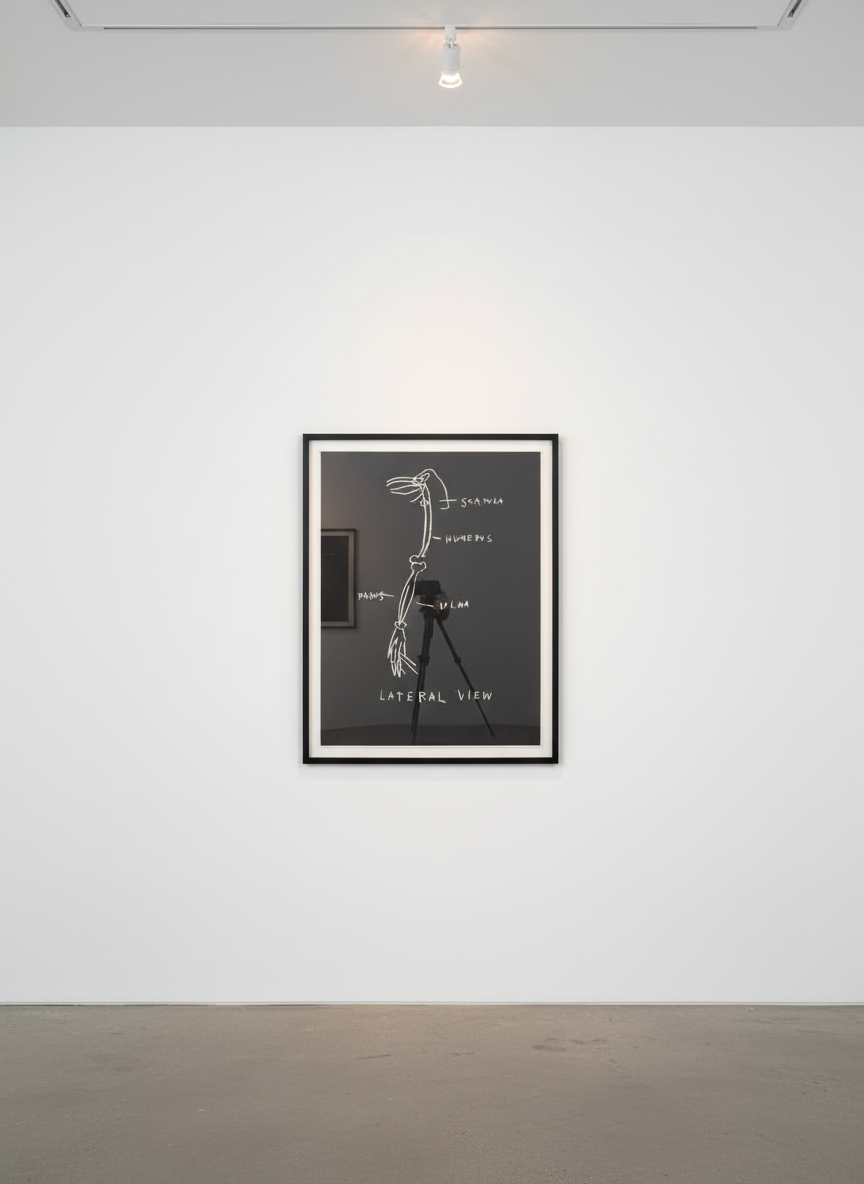
The Anatomy prints present a stark visual vocabulary - skeletal forms rendered in white lines against deep black backgrounds, evoking the ghostly quality of X-ray imagery. This reversal of traditional figure-ground relationships creates an effect that is simultaneously clinical and mystical, medical and spiritual. Works such as Great Wind of Sphenoid from Anatomy exemplify this approach, isolating specific bones and labeling them with the precision of a medical textbook while imbuing them with an almost totemic significance.
Basquiat's treatment of anatomical subjects reflects his broader engagement with systems of knowledge and power. By appropriating the visual language of medical science - its diagrams, labels, and taxonomic impulses - he interrogated how bodies are classified, understood, and controlled. The skull, appearing throughout his oeuvre including in related works like Cabeza from Portfolio Ii, functions as a universal symbol of mortality while also referencing African masks, Caribbean spiritual traditions, and the memento mori of Western art history.
The artist's signature integration of text and image reaches particular sophistication in the Anatomy series. Labels identifying body parts - femurs, scapulae, pelvises, elbows - transform clinical terminology into poetic fragments. This linguistic dimension connects the prints to Basquiat's origins in the SAMO© graffiti project and his ongoing fascination with how words shape perception. The handwritten quality of his annotations personalizes what might otherwise feel purely scientific, insisting on the individual humanity beneath the anatomized forms.
Cabeza, from Portfolio II — Jean-Michel Basquiat. Available at Guy Hepner, New York.
Jean-Michel Basquiat has achieved extraordinary recognition in the secondary market, with his works consistently achieving record prices at major international auctions. According to Christie's and Sotheby's sales data, Basquiat ranks among the highest-grossing artists at auction, with demand spanning paintings, works on paper, and prints. The Art Basel and UBS Global Art Market Report has repeatedly identified Basquiat as a driving force in the contemporary art sector, with collector interest showing remarkable resilience across market cycles.
The Anatomy series holds particular appeal for collectors seeking entry points into Basquiat's oeuvre or wishing to complement existing holdings with historically significant editioned works. As unique paintings become increasingly scarce and command prices in the tens of millions, the prints offer an opportunity to acquire works from a defining moment in the artist's development. The portfolio's art historical importance - as Basquiat's first print series - adds documentary value to its aesthetic and conceptual achievements.
Related print works, including selections from the Leonardo series such as Untitled 4 from Leonardo and collaborative pieces, demonstrate the sustained market interest in Basquiat's graphic production. These works appeal to collectors who recognize that Basquiat's genius expressed itself across media, with prints representing not secondary production but integral components of his artistic vision.
Untitled 4 (from Leonardo) — Jean-Michel Basquiat. Available at Guy Hepner, New York.
The themes Basquiat explored in the Anatomy series - mortality, identity, the relationship between body and knowledge - remain urgently relevant. His unflinching examination of human vulnerability resonates with contemporary audiences navigating questions of bodily autonomy, medical authority, and systemic inequality. The series also anticipates later investigations into anatomy and representation by subsequent generations of artists, establishing Basquiat as a foundational figure whose influence extends far beyond his brief career.
Institutional recognition continues to grow, with major museums worldwide holding examples from the Anatomy portfolio and related print works. This scholarly attention reinforces the series' canonical status while introducing Basquiat's graphic achievements to new audiences. For collectors, such institutional validation provides confidence in the enduring significance of these works.
Guy Hepner is pleased to offer select works from Jean-Michel Basquiat's Anatomy series and related print portfolios. Our gallery maintains relationships with leading collectors and estates, enabling us to source exceptional examples of these historically significant prints. We invite collectors to inquire about current availability, condition reports, and acquisition opportunities by contacting our specialists directly.
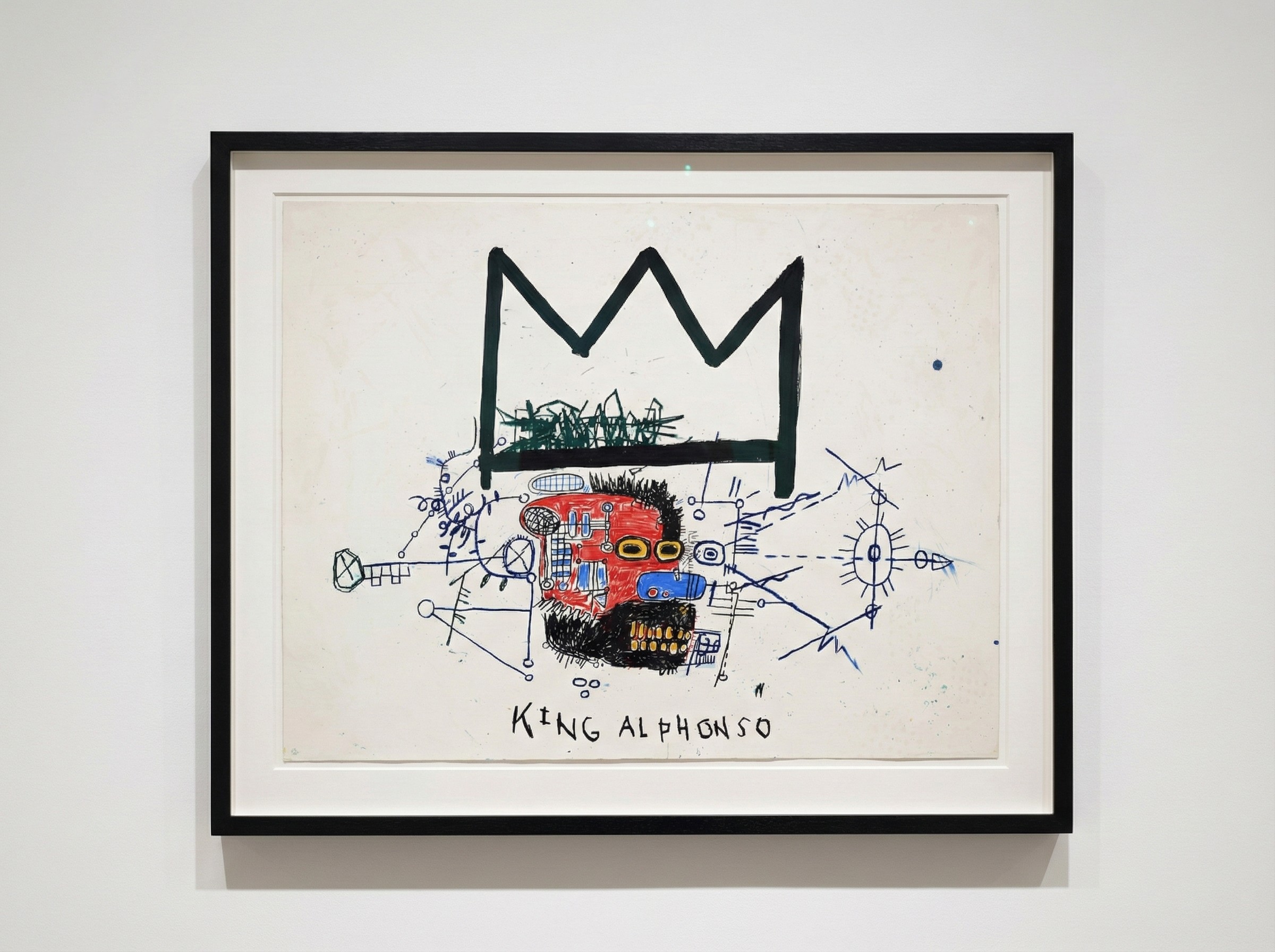
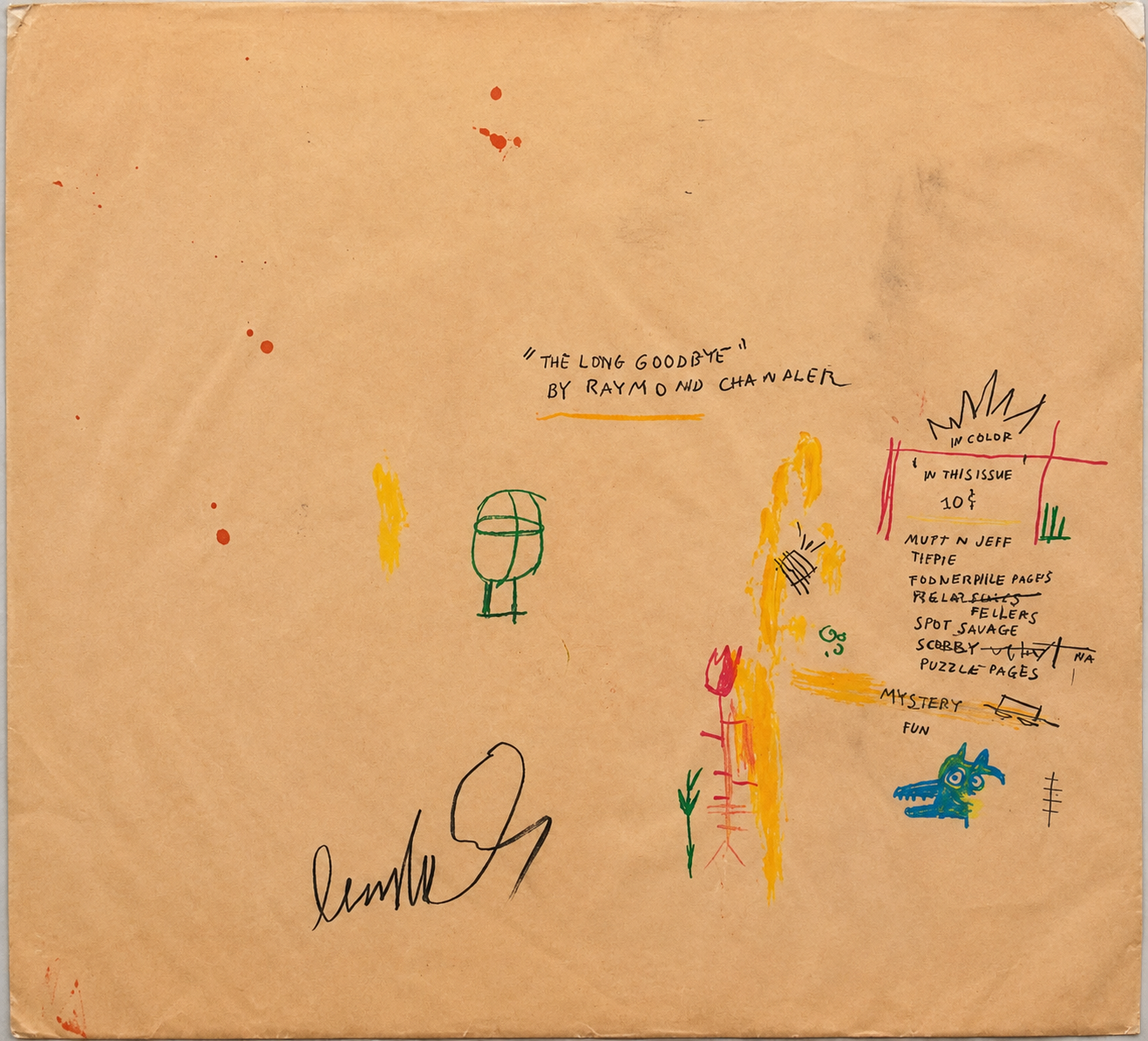
Explore Jean Michel Basquiat prints for sale at Guy Hepner: Anatomy, Daros Suite, Estate Prints, King Alphonso, Original Works.
Related Series