Which Celebrities Collect Basquiat?
May 19, 2026 · Guy Hepner
Which celebrities collect Basquiat? Jean-Michel Basquiat’s art is a testament to his unique blend of graffiti, text, and vibrant imagery. While his works are celebrated globally, they are predominantly held in private collections — a reflection of the artist’s complex relationship with institutions. The majority of Basquiat’s pieces, ranging from his early street work to his later large-scale canvases, remain outside public view, making each appearance at auction or exhibition a significant cultural event.
Inquire About Available Basquiat Works at Guy Hepner
PRIVATE COLLECTIONS AND THE BASQUIAT MARKET
Approximately 85–90% of Jean-Michel Basquiat’s output — over 800 paintings and 1,500 drawings made in a career of less than a decade — remains in private hands. His works command among the highest prices of any post-war artist: five separate canvases have exceeded $40 million at auction since 2017, and the auction record stands at $110.5 million (Sotheby’s, May 2017). That scarcity and those numbers explain why celebrity and billionaire collectors have competed so intensely to acquire them.
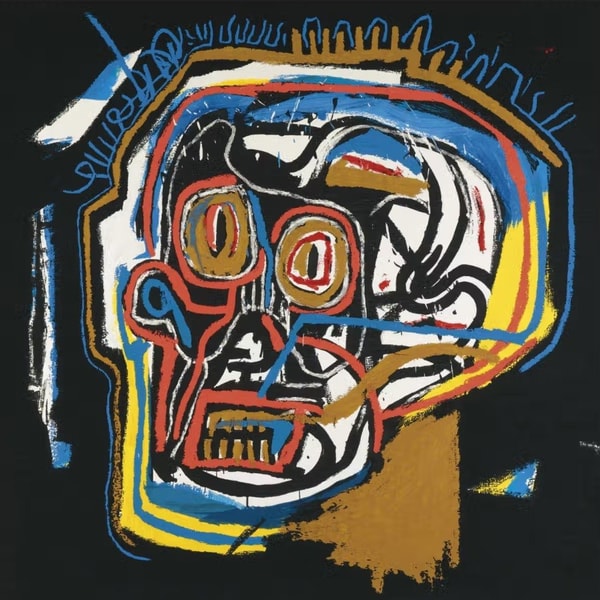
One of the most notable private collectors is billionaire Yusaku Maezawa, who owns Untitled (1982), a haunting skull painting that sold for $110.5 million at Sotheby’s in May 2017, setting the record for the highest price ever paid for a Basquiat. Maezawa also owns Untitled (Devil) (1982), another major work from the same year.
Other prominent collectors of Jean-Michel Basquiat include hip-hop mogul Jay-Z and Beyoncé, whose collection reflects both cultural influence and market significance. Jay-Z owns a print of Charles the First (1982) — a work that inspired his album Magna Carta Holy Grail — as well as Mecca, acquired at Sotheby’s in November 2013 for $4.5 million, and CPRKR, which he lent to the Guggenheim Museum for the exhibition Basquiat’s Defacement: The Untold Story in 2019.
Beyond individual collectors, major luxury brands have also entered the market. Tiffany & Co. owns Equals Pi (1982), a striking work featuring a robin’s egg blue background that closely echoes the brand’s signature hue. The painting is permanently displayed in Tiffany’s New York flagship on Fifth Avenue, and in 2021 was featured prominently in a global advertising campaign with Jay-Z and Beyoncé.
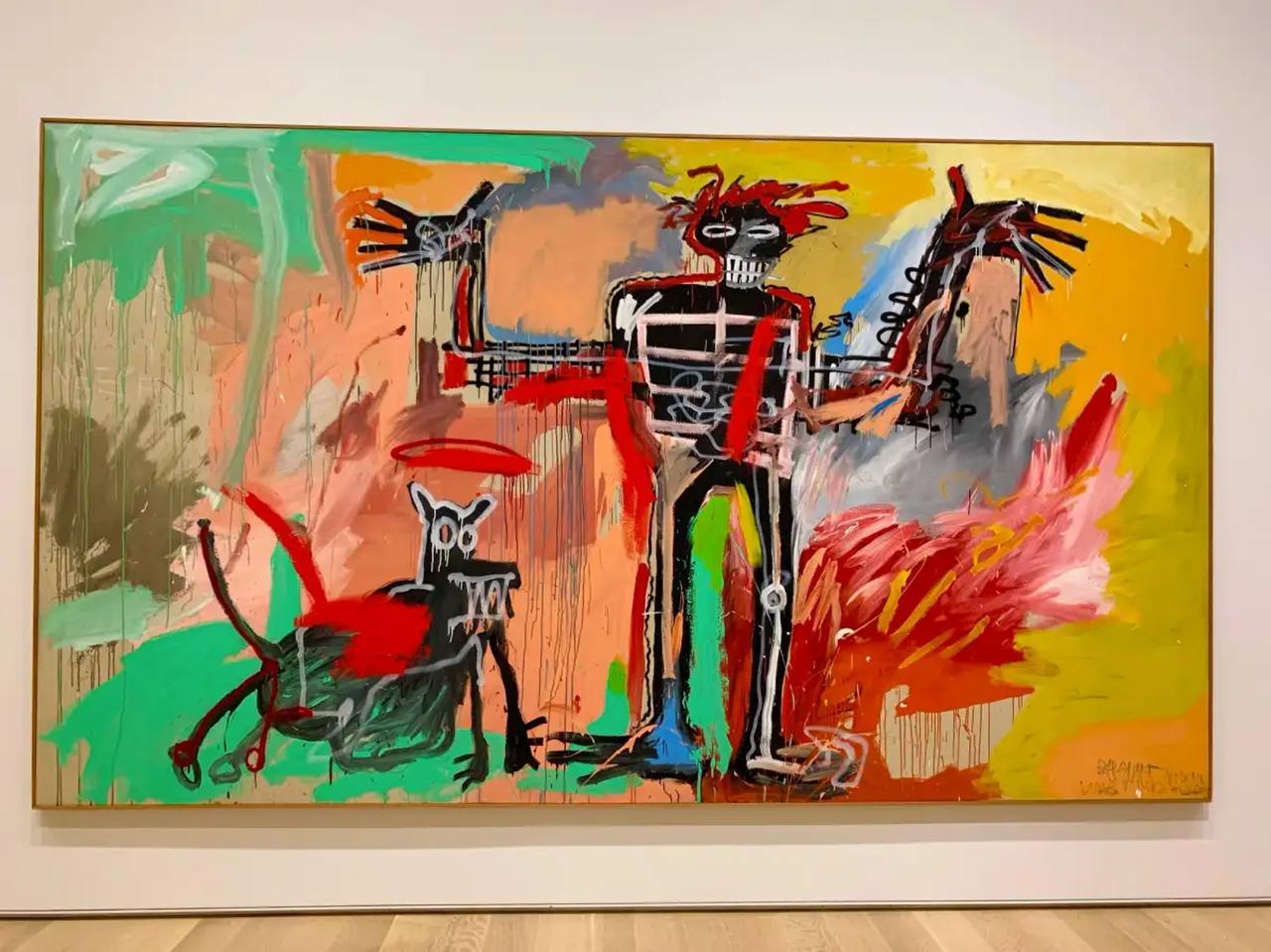
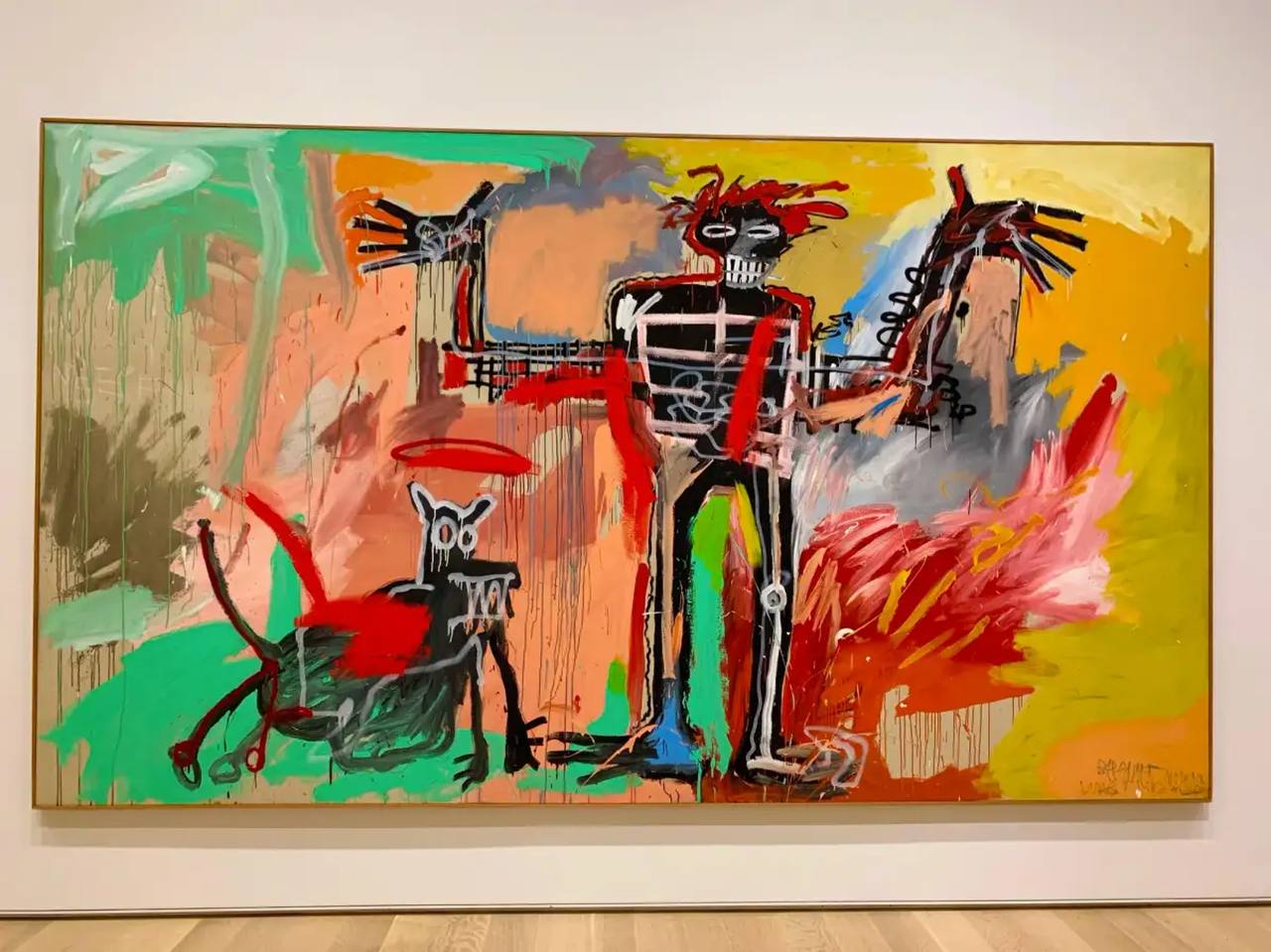
Billionaire hedge fund manager Kenneth C. Griffin also owns a major Basquiat work, Boy And Dog In A Johnnypump (1982), which he purchased for over $100 million in 2020. Griffin, a long-time trustee of the Art Institute of Chicago, displayed the piece there before relocating it to Florida.
Other notable collectors include musician Lenny Kravitz, who has owned a Basquiat painting since the 1990s; actor Johnny Depp, who assembled and later sold a collection of eight works; and Leonardo DiCaprio and Tommy Hilfiger, who contributed to Basquiat’s rising market profile during the 1990s and 2000s.
AUCTION RECORDS: THE MARKET FOR BASQUIAT
Understanding who collects Basquiat requires understanding the market that has formed around him. The following are confirmed auction results for Basquiat paintings — all distinct from prints or works on paper, which trade at significantly different levels:
Sotheby’s, New York, 18 May 2017: Untitled (1982, skull) — $110.5 million. Purchased by Yusaku Maezawa. Bidding opened at $57 million and ran for over ten minutes. This remains the record for any American artist at auction.
Phillips, New York, May 2022: Untitled (1982, the Modena painting) — $85 million. The same work had sold for £39.7 million in 2016.
Christie’s, New York, May 2021: In This Case (1983) — $93.1 million. A monumental portrait described by curator Fred Hoffman as “a gateway to the psychological and mental realms.”
Christie’s, New York, May 2023: El Gran Espéctaculo (The Nile) (1983) — $67.1 million. Previously owned by Valentino Garavani; sold after a five-minute bidding battle between Larry Gagosian and an anonymous telephone bidder.
Phillips, New York, 14 May 2024: Untitled (ELMAR) (1982) — $46.5 million with fees, against a $40 million estimate. The top lot of Phillips’s $86.3 million evening sale.
Christie’s, New York, 14 May 2025: Baby Boom (1982) — $23.4 million with fees ($20 million hammer, against a $20–$30 million estimate). The highest-selling Basquiat at auction so far in 2025.
These are painting results. Prints and works on paper trade at entirely different levels. Basquiat produced relatively few authorised print editions; the most significant are the screenprints published by his estate, which are available through specialist galleries.
NOTABLE CELEBRITY AND PRIVATE COLLECTORS
Yusaku Maezawa
The Japanese billionaire is the most consequential single buyer in Basquiat’s market history. In May 2017, Maezawa purchased Untitled (1982) at Sotheby’s New York for $110.5 million — the highest price ever paid for an American artist at auction at the time. He also owns Untitled (Devil) (1982). In May 2022, a second Basquiat from his collection sold at Phillips for $85 million, having been acquired for £39.7 million six years earlier. Maezawa has said: “I want to share the experience of encountering extraordinary art with as many people as possible.”
Jay-Z and Beyoncé
Jay-Z and Beyoncé’s collection, estimated at over $150 million, includes multiple Basquiat works. Jay-Z owns a print of Charles the First (1982), which directly informed his album Magna Carta Holy Grail; Mecca, acquired at Sotheby’s in November 2013 for $4.5 million; and CPRKR, lent to the Guggenheim for Basquiat’s Defacement: The Untold Story (2019) — an exhibition exploring Basquiat’s response to anti-Black racism and police brutality. He has said: “Basquiat’s painting sits there like a warning.”
Tiffany & Co.
The luxury brand owns Equals Pi (1982), whose robin’s egg blue background closely echoes the brand’s signature colour. The work is permanently displayed in Tiffany’s New York flagship on Fifth Avenue. In 2021, it served as backdrop for a global campaign featuring Jay-Z and Beyoncé — making Equals Pi one of the most publicly visible Basquiat canvases in existence.
Kenneth C. Griffin
Citadel founder Kenneth C. Griffin privately acquired Boy And Dog In A Johnnypump (1982) for over $100 million in 2020, one of the largest reported private art transactions in history. Griffin initially placed the work on public display at the Art Institute of Chicago before relocating it to Florida. His collection also includes works by de Kooning, Pollock, Cézanne, and Jasper Johns.
Inquire About Available Basquiat Works at Guy Hepner
Leonardo DiCaprio
DiCaprio has been a Basquiat collector since early in his career. In a 2013 Wall Street Journal interview he said: “He’s been talked about for years as this modern-day Picasso, but suddenly like Francis Bacon or Gerhard Richter, his prices have just shot up.” In December 2017, he was seen negotiating directly over a Basquiat drawing at Art Basel Miami Beach.
Lenny Kravitz
Kravitz has owned Basquiat since the 1990s and displays a large canvas at his Paris residence. Personally connected to the downtown New York scene through which Basquiat moved, he was among the first to hear of the artist’s death in August 1988. He has said: “Lots of his art came my way. I could have had so many more and I just didn’t make the move back in the day – I know, I know. Idiot!”
Johnny Depp
Depp spent approximately twenty-five years assembling eight Basquiat works, including Pork, Self-Portrait (1981), Anatomy Six, Untitled (Plush Safe He Think), Untitled (Cold Blooded Killer), and Untitled #27 (Lee Harvey Oswald). All were sold at Christie’s in 2016. He has said: “Nothing can replace the warmth and immediacy of Basquiat’s poetry.”
Tommy Hilfiger
Hilfiger assembled a historically significant Basquiat collection that included Dos Cabezas — Basquiat’s double portrait of himself and Andy Warhol, a canonical work of their collaboration — and the Warhol-Basquiat co-production New Flame (1985), offered at Sotheby’s in 2019. He had a direct personal connection to mid-1980s downtown New York culture, acquiring works during Basquiat’s lifetime.
Adam Clayton (U2)
The U2 bassist has collected Basquiat since the 1980s. In September 2023, Christie’s London offered Untitled (1982) from his collection with a £1–1.5 million estimate — a work on paper that documents Basquiat’s dense symbolic vocabulary in a more intimate register than his large canvases.
Kim Kardashian
Kardashian reportedly owns Both Poles, a work estimated at approximately $4.9 million. Her collecting has contributed to Basquiat’s sustained visibility among younger audiences and has drawn significant press attention to the secondary market for his works.
PUBLIC COLLECTIONS AND INSTITUTIONAL PRESENCE
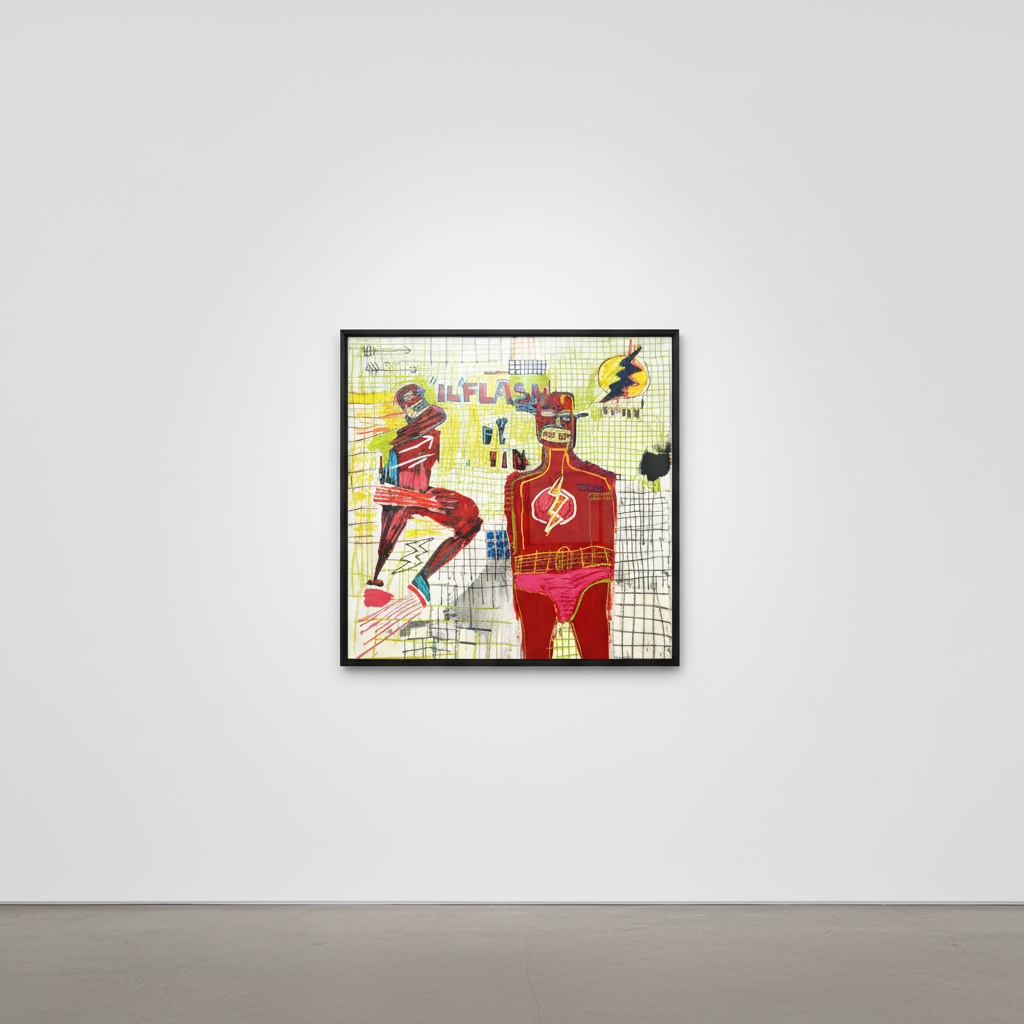
While Basquiat’s works are largely held in private hands, they are occasionally showcased in public exhibitions through loans from collectors. Institutions including the Whitney Museum of American Art, the Museum of Modern Art, and the Brooklyn Museum have all displayed Basquiat’s work, offering the public rare opportunities to engage with these paintings outside the gallery and auction context.
THE ESTATE: LEGACY AND AUTHENTICATION
The Basquiat estate, managed by his sisters Jeanine Heriveaux and Lisane Basquiat, plays a central role in preserving the artist’s legacy. The estate curated Jean-Michel Basquiat: King Pleasure, an exhibition featuring over 200 pieces including Now’s the Time (1985) — a work inspired by Charlie Parker’s 1945 recording, demonstrating Basquiat’s deep connection to jazz and African American cultural history.
In October 2025, 57 Great Jones Street in Manhattan — Basquiat’s last home and studio, where he died in August 1988 — was officially renamed Jean-Michel Basquiat Way by the City of New York.
AUTHENTICATION AND FORGERY RISK
The high demand for Basquiat’s work has created serious authentication and legal risk. The work Humidity (1982) became the subject of protracted litigation involving multiple alleged owners and the fraudulent art dealer Inigo Philbrick. In October 2024, a New York judge issued a ruling on ownership after years of dispute; Philbrick had sold fractional interests in the painting to multiple buyers simultaneously, each unaware of the others.
In 2022, the FBI seized 25 suspected forgeries from the Orlando Museum of Art, which had included them in an exhibition titled Heroes & Monsters. The Basquiat estate declined to authenticate them. The case reinforced the importance of working with established galleries that maintain clear acquisition trails.
The Basquiat Authentication Committee dissolved in 2012. Authentication now depends on documented provenance, exhibition history, and scholarly review by researchers affiliated with Pleiades and CAAC. No single body currently issues stamps or certificates. When acquiring Basquiat works, collectors should insist on complete paper trails and seek expert opinion before purchase.
ACQUIRING BASQUIAT THROUGH GUY HEPNER
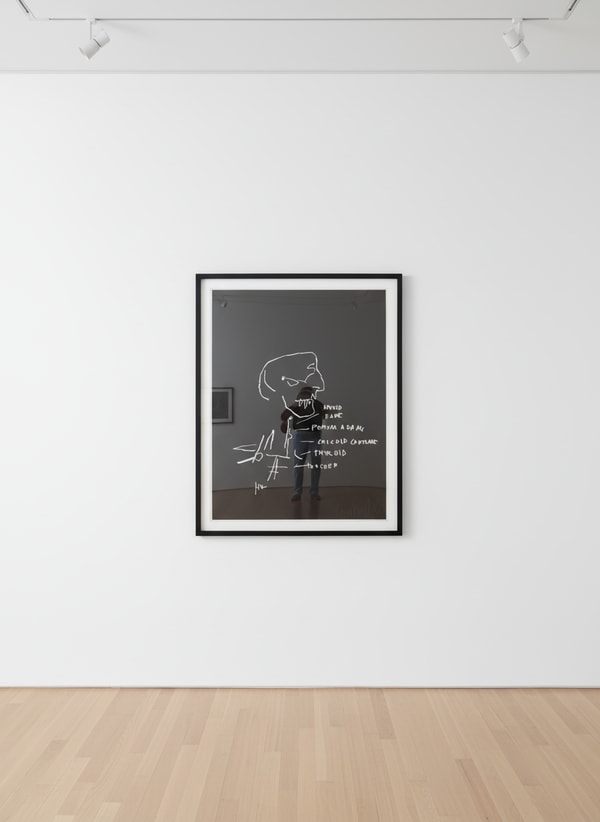
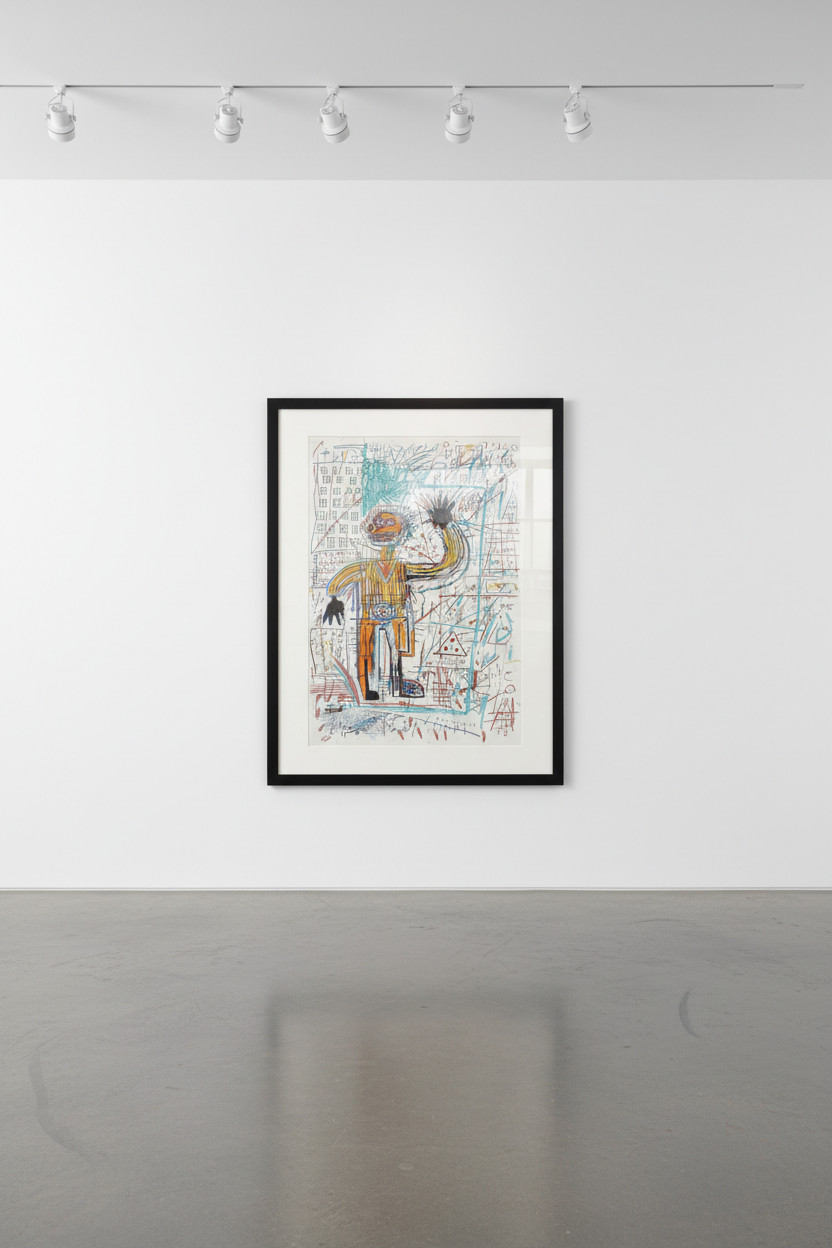
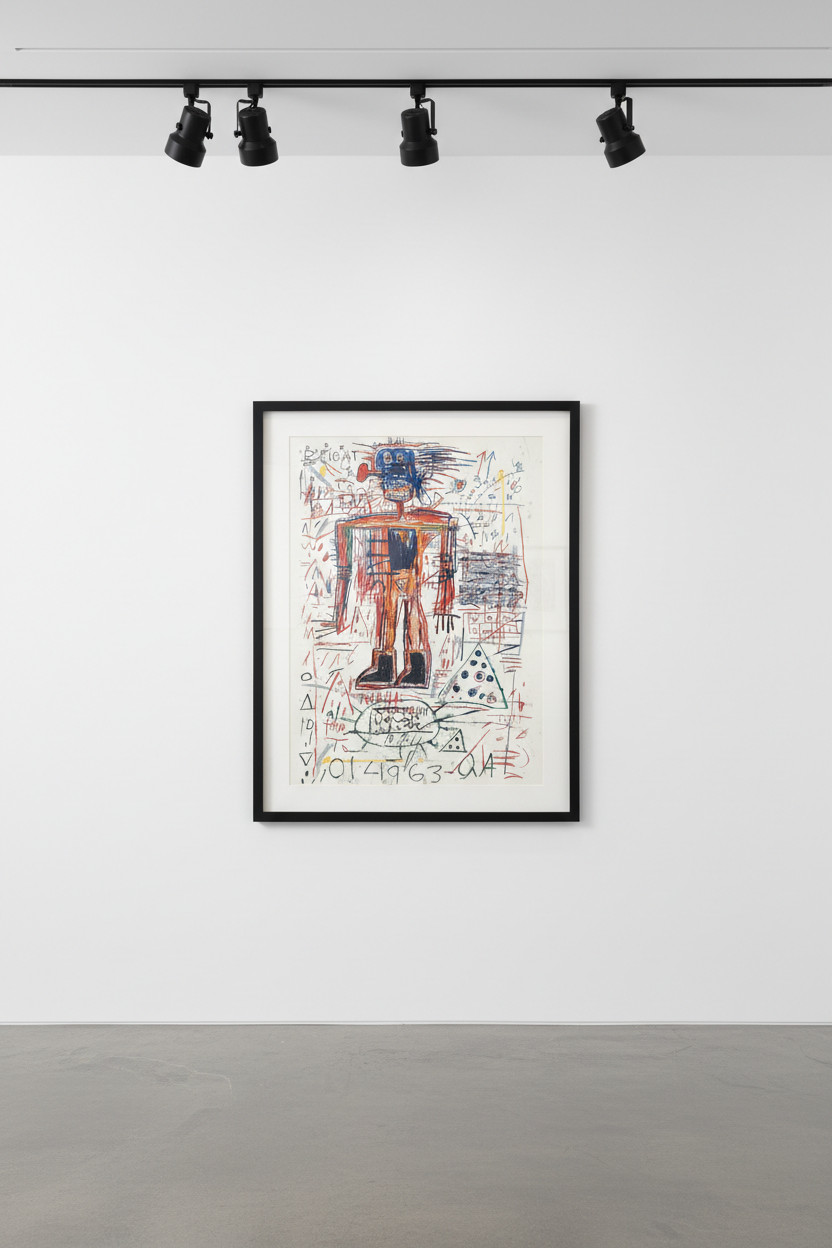
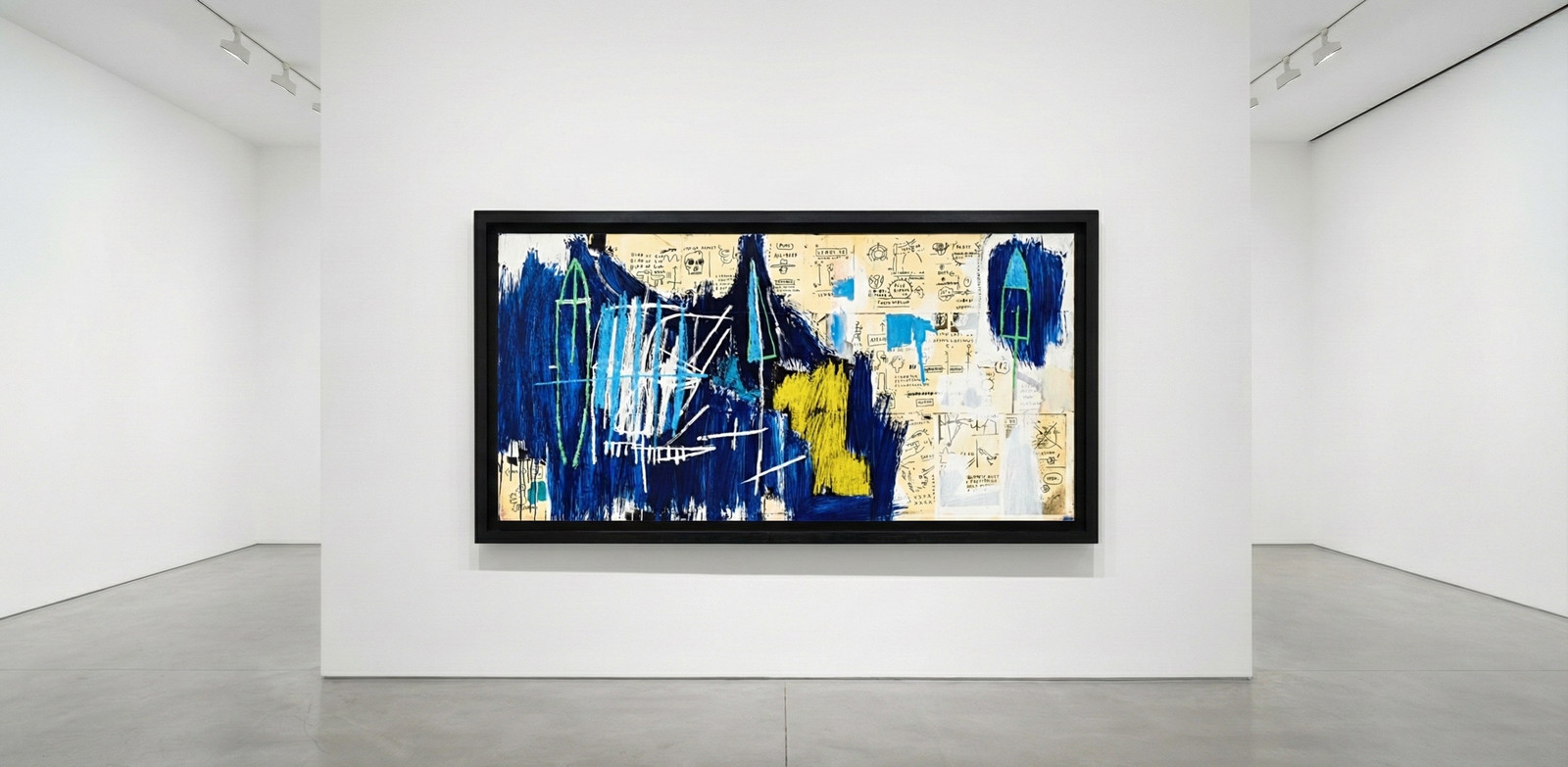
Guy Hepner Gallery maintains active sourcing relationships for authenticated Basquiat prints, editions, and works on paper. Given that approximately 85–90% of Basquiat’s output is in private collections and rarely appears on the market, access depends on established relationships with collectors, estates, and specialist dealers. The gallery’s current inventory includes works from The Figure Portfolio and the Superhero Portfolio, both estate-authorised print editions.
Inquire About Available Basquiat Works at Guy Hepner
FREQUENTLY ASKED QUESTIONS
Which celebrities currently own Basquiat paintings?
As of 2026, confirmed Basquiat collectors include Yusaku Maezawa, Jay-Z and Beyoncé, Kenneth C. Griffin, Leonardo DiCaprio, Lenny Kravitz, Kim Kardashian, Tommy Hilfiger, and Adam Clayton. Tiffany & Co. also owns Equals Pi (1982), permanently displayed in its Fifth Avenue flagship.
Who owns the most expensive Basquiat ever sold at auction?
Yusaku Maezawa purchased Untitled (1982) for $110.5 million at Sotheby’s New York on 18 May 2017 — the record for any American artist at auction at the time. The same work had sold at Christie’s in 1984 for $19,000.
How much of Basquiat’s art is held in private collections?
Approximately 85–90% of Jean-Michel Basquiat’s works are in private collections. Because Basquiat had a complex relationship with institutions during his life, the majority of his output was sold through the gallery system into private hands before major museums had a chance to acquire significant holdings.
How do you authenticate a Basquiat?
The Basquiat Authentication Committee dissolved in 2012. There is currently no single authentication body. Establishing authenticity requires documented provenance (ideally unbroken from Basquiat or his immediate dealers), exhibition records, and scholarly review by experts affiliated with Pleiades and CAAC. Work only with galleries that provide full provenance documentation.
What is the difference between a Basquiat painting and a Basquiat print?
Basquiat paintings are unique, one-of-a-kind works that trade at seven to nine figures at major auction houses. Prints are authorised reproductions — screenprints, silkscreens, or photographic editions — produced in limited numbers, primarily by his estate after 1988. They are accessible at significantly lower price points and represent the primary route into Basquiat collecting for most private buyers. The two markets operate independently and should never be confused when assessing value.
Where can I buy a Basquiat print?
Authenticated Basquiat prints and editions are available through Guy Hepner Gallery, New York. Contact the gallery for current availability and pricing on works from The Figure Portfolio, the Superhero Portfolio, and other estate-authorised editions.
Works For Sale
Available through Guy Hepner
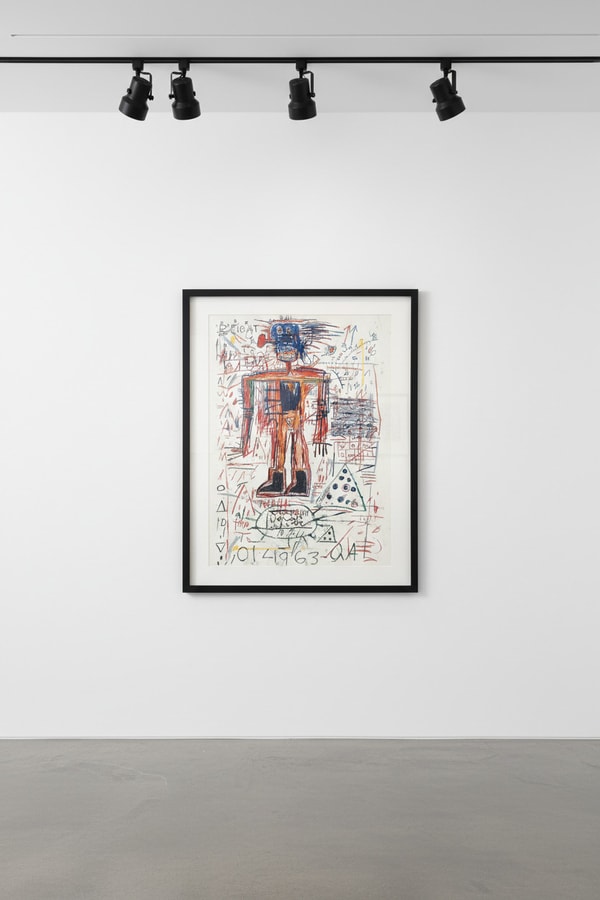
Jean-Michel Basquiat
Untitled 2, from The Figure Portfolio
1982 - 2023
Enquire →
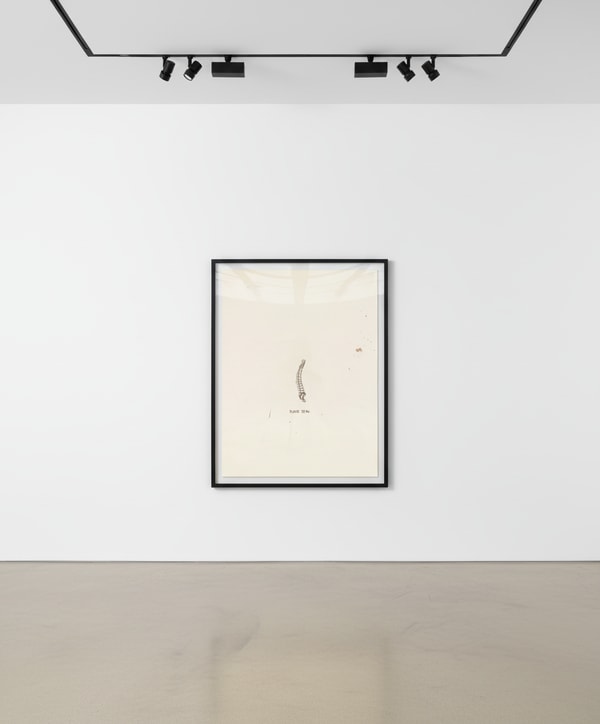
Jean-Michel Basquiat
Untitled 1 (from Leonardo)
1983
Enquire →
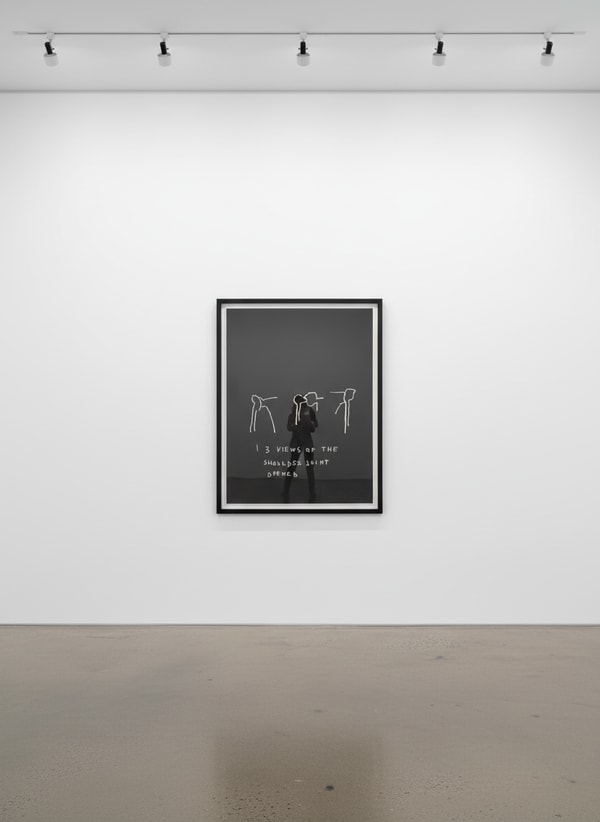
Jean-Michel Basquiat
Three Views of The Shoulder Joint Opened, from Anatomy
1982
Enquire →
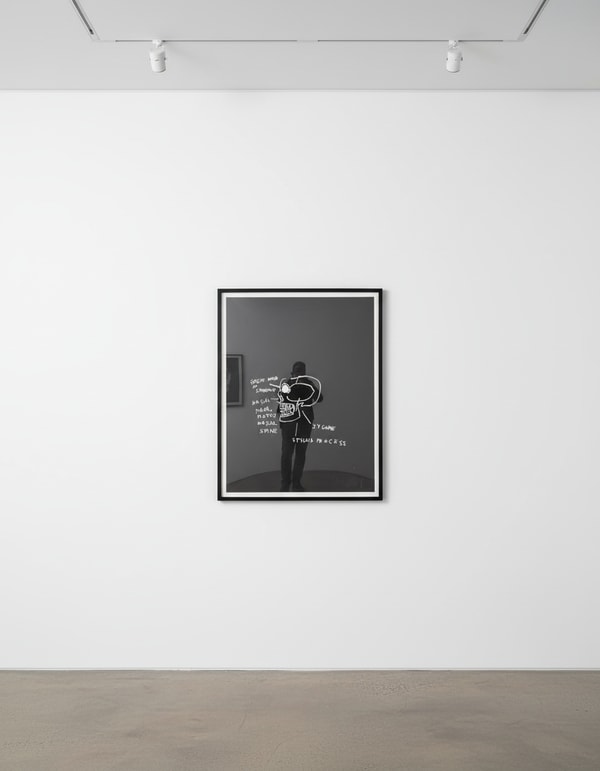
Jean-Michel Basquiat
Great Wind of Sphenoid, from Anatomy
1982
Enquire →
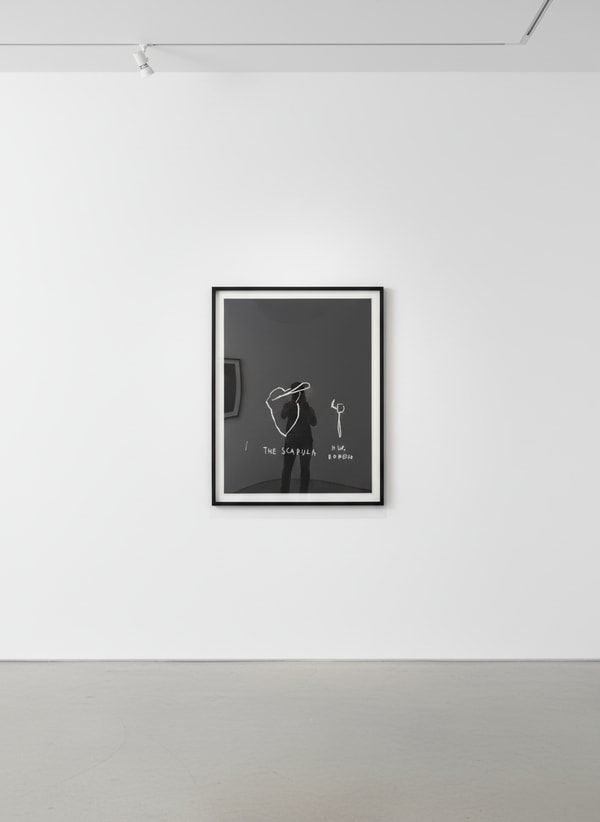
Jean-Michel Basquiat
The Scapula, from Anatomy
1982
Enquire →
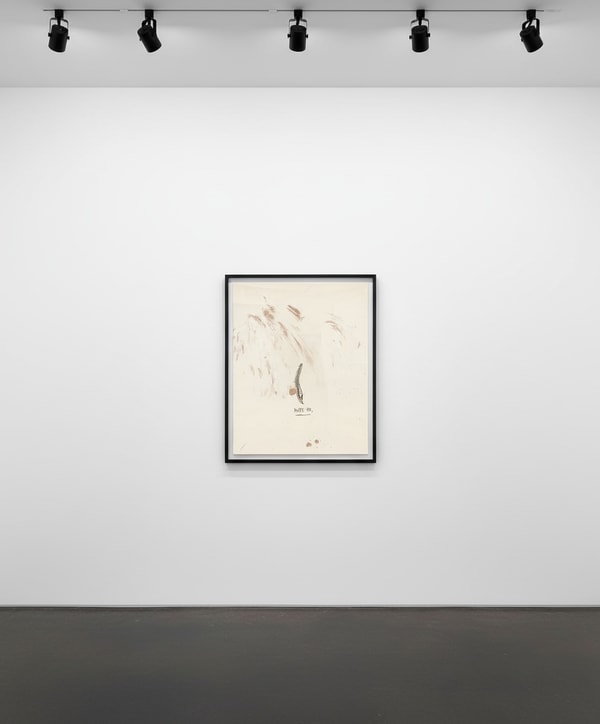
Jean-Michel Basquiat
Untitled 4 (from Leonardo)
1983
Enquire →
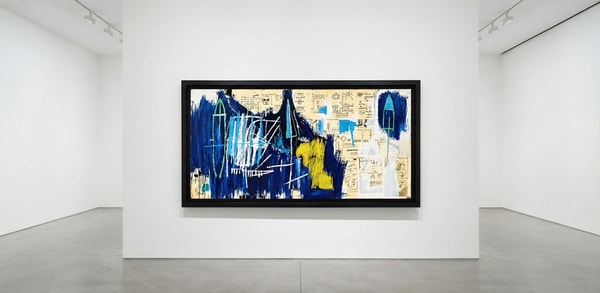
Jean-Michel Basquiat
Odours Of Punt
1983-2024
Enquire →
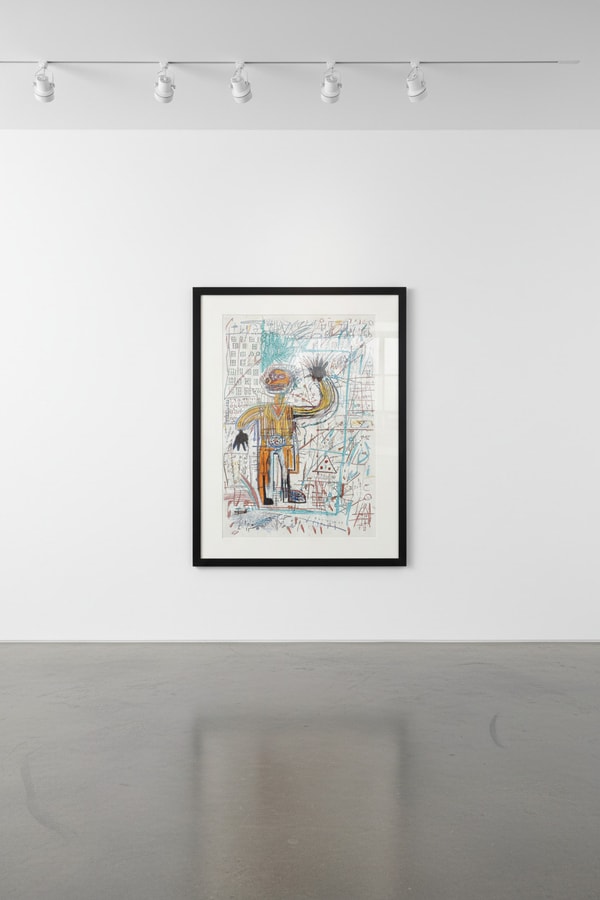
Jean-Michel Basquiat
Untitled 5, from The Figure Portfolio
1982 - 2023
Enquire →
More from Guy Hepner