
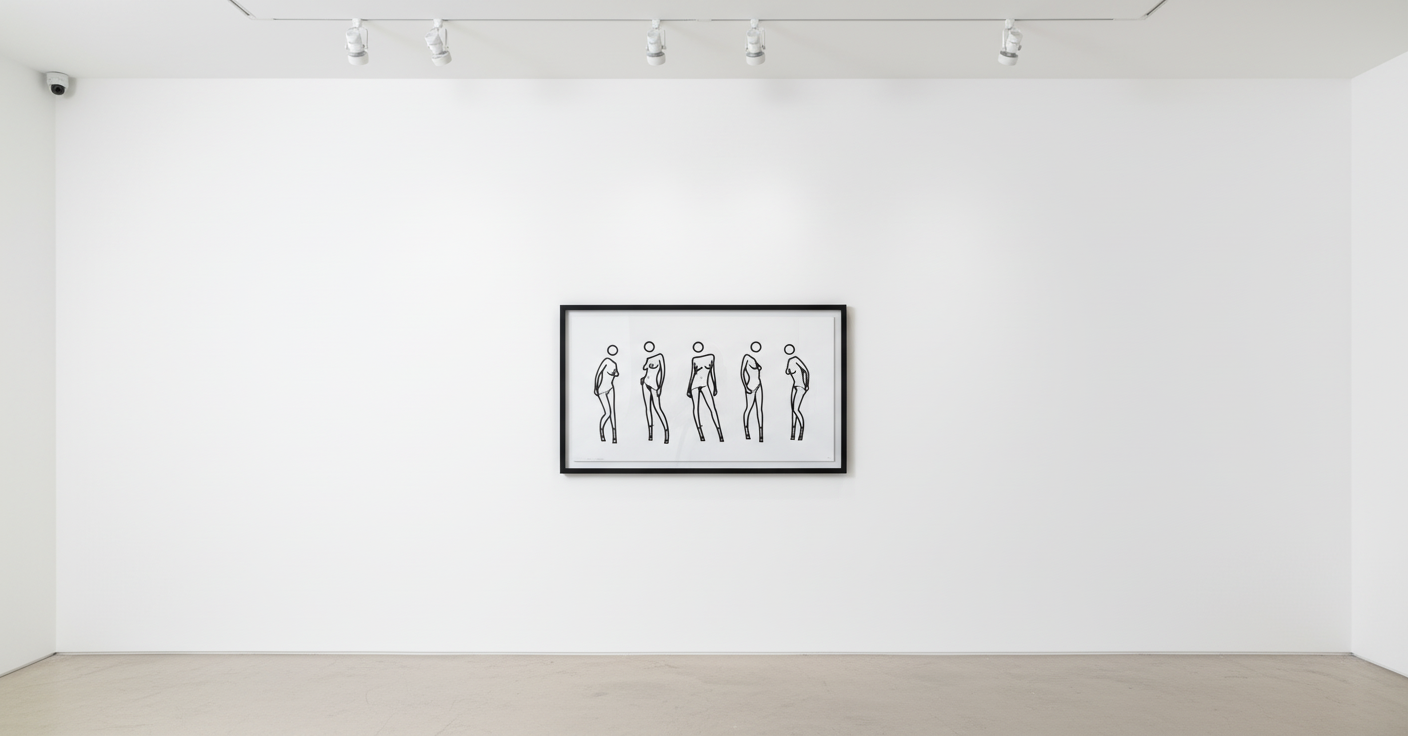
Bijou Gets Undressed
6 works

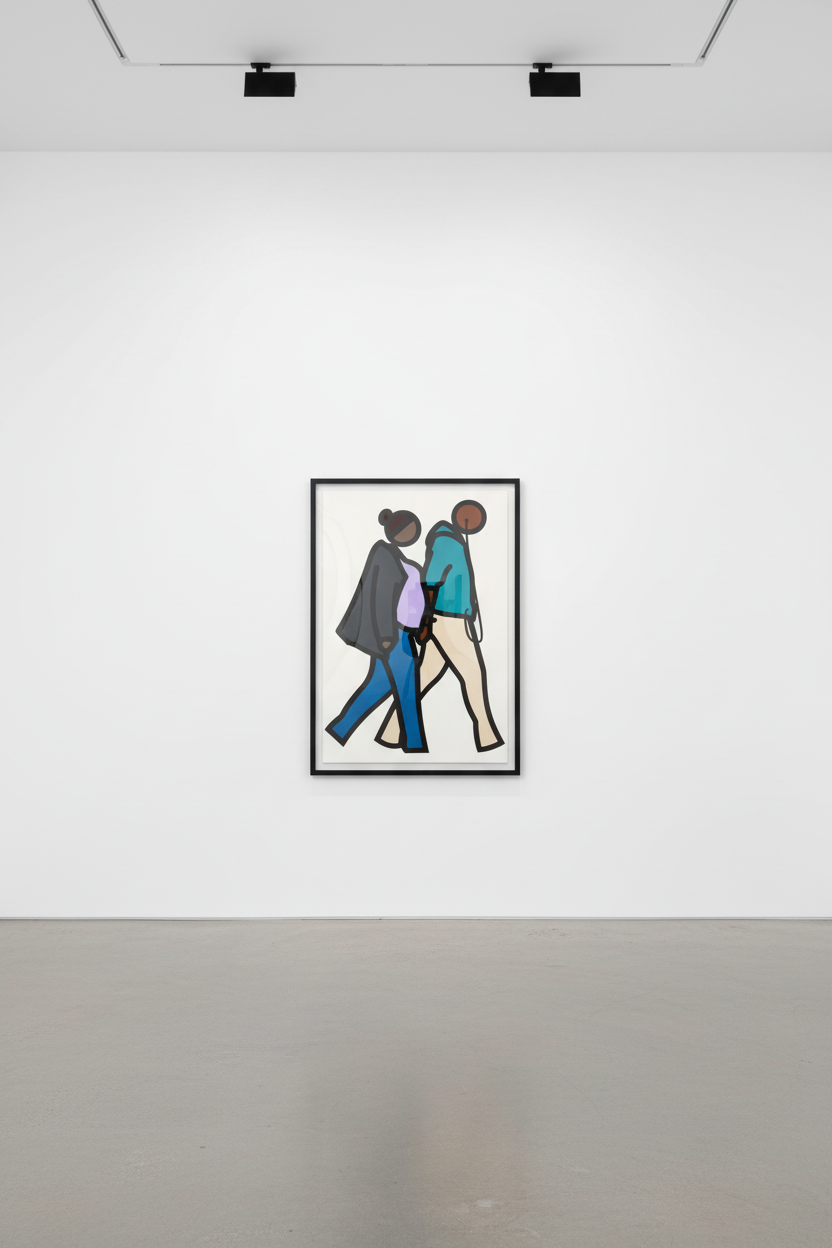
Faime and Danielle Walking, 2016
Continuous computer animation on 55" LCD screen
50 x 29 in 127 x 73.7 cm
Edition of 4
This continuous computer animation presents two female figures in perpetual motion across the screen. Rendered in Opie's signature reductive style, the women are depicted with bold black outlines, minimal facial features, and blocks of flat color. Their walking movements loop seamlessly, creating a hypnotic rhythm as they traverse the digital space. The large-scale LCD screen transforms the figures into an architectural presence, blurring boundaries between painting, sculpture, and moving image. Julian Opie has established himself as one of the most influential contemporary artists working with digital portraiture and motion. His work bridges Pop Art traditions with cutting-edge technology, creating instantly recognizable imagery that resonates across cultures. This 2016 piece exemplifies his mature exploration of human movement and digital portraiture, making it a significant example from a pivotal period in his practice. The work's format offers collectors a dynamic alternative to static works while maintaining the accessible visual language that has made Opie's art internationally celebrated. Available for purchase — enquire for price and availability.
Price on Application
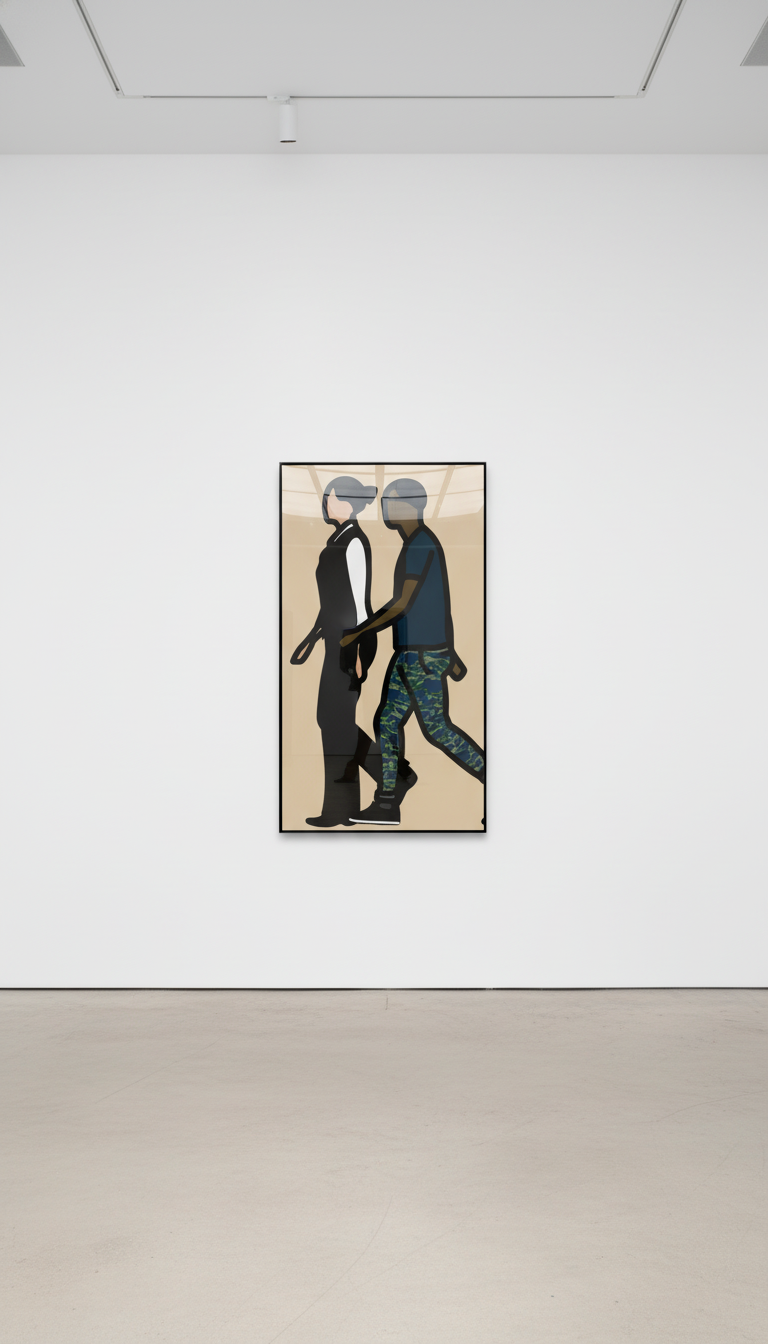
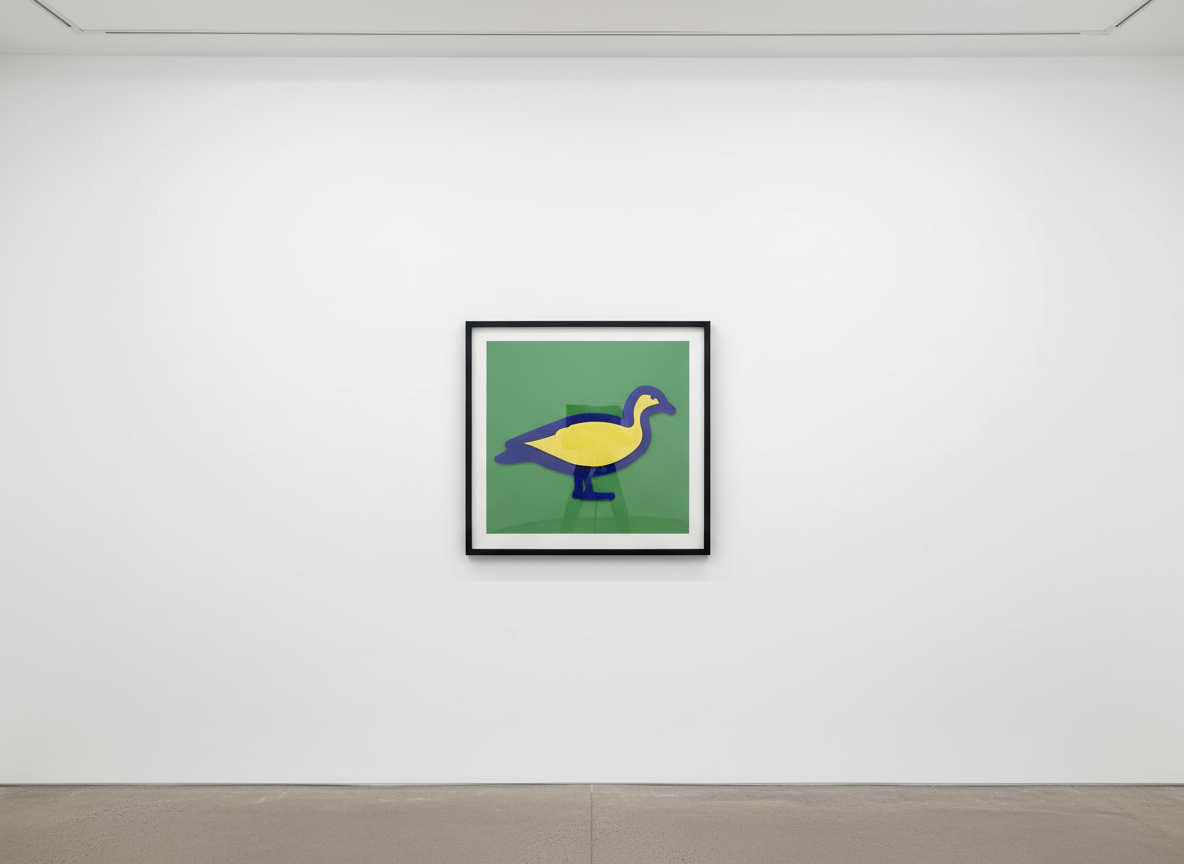
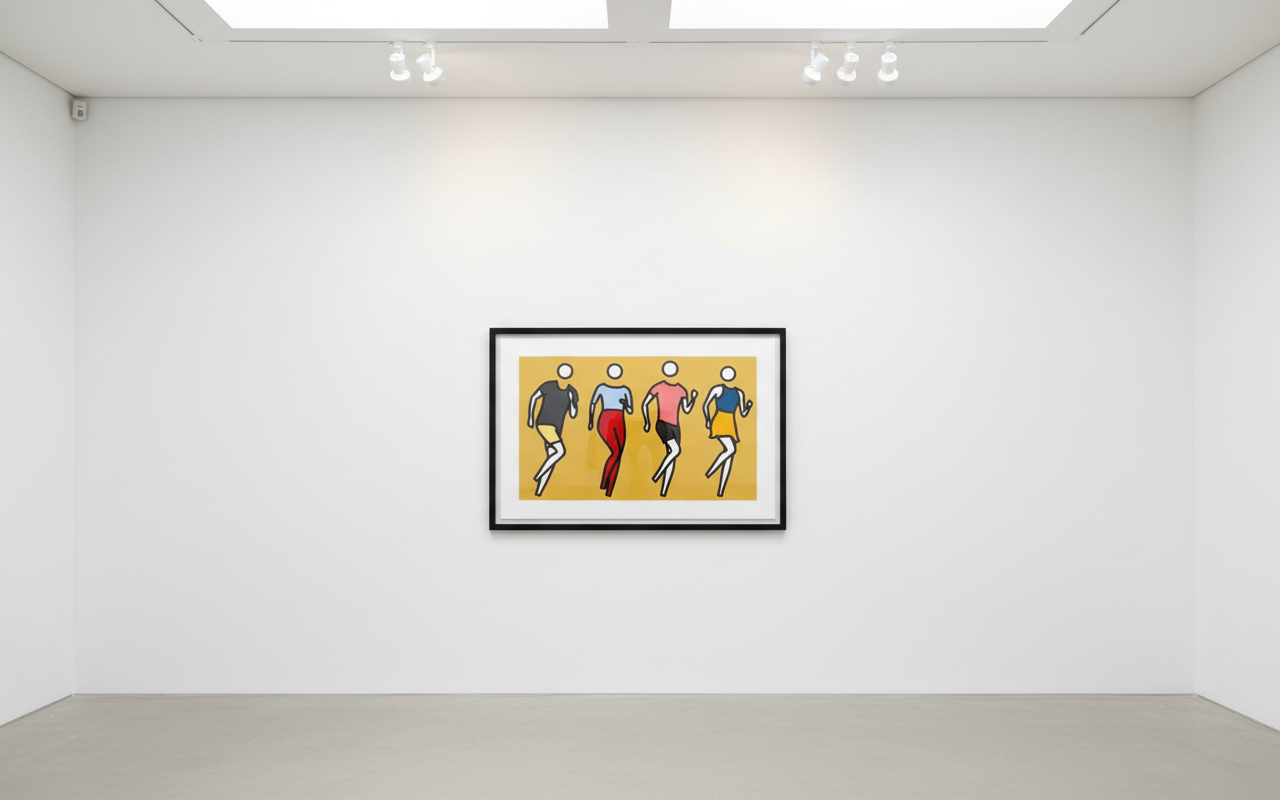
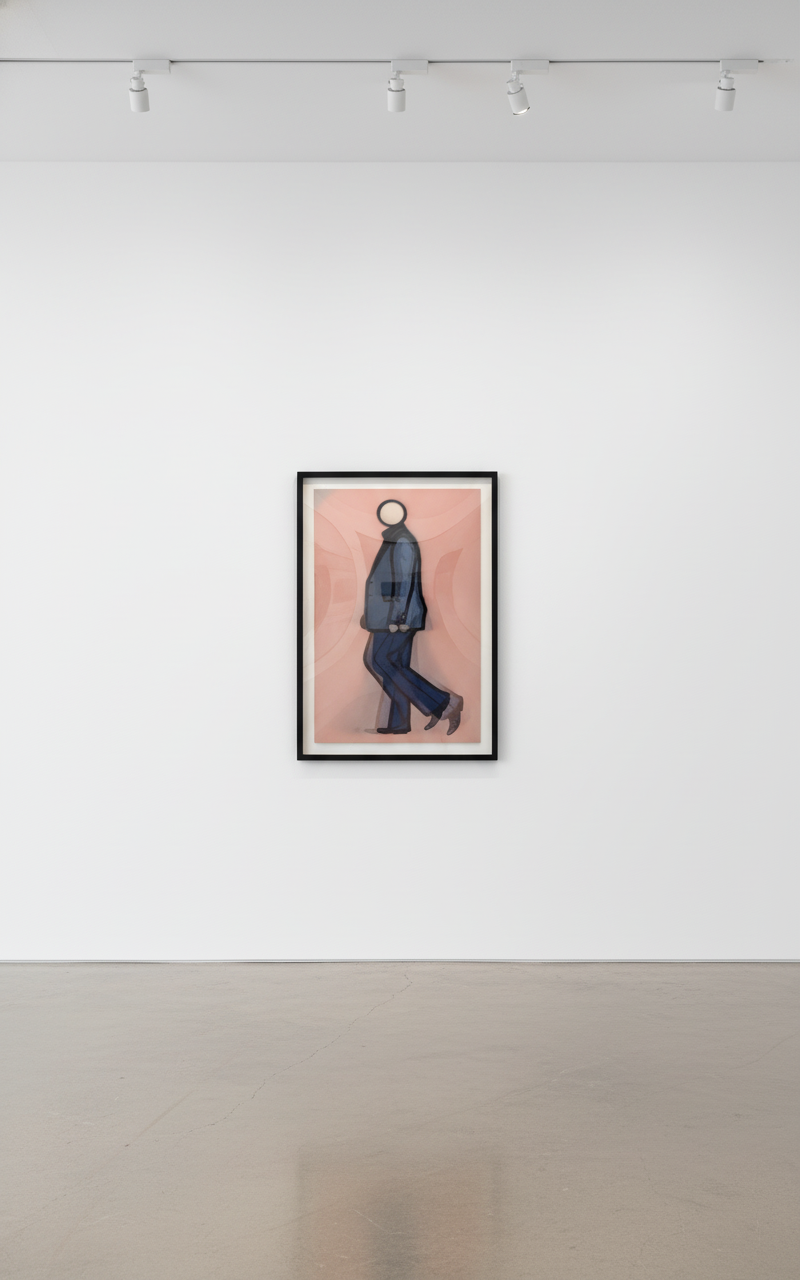
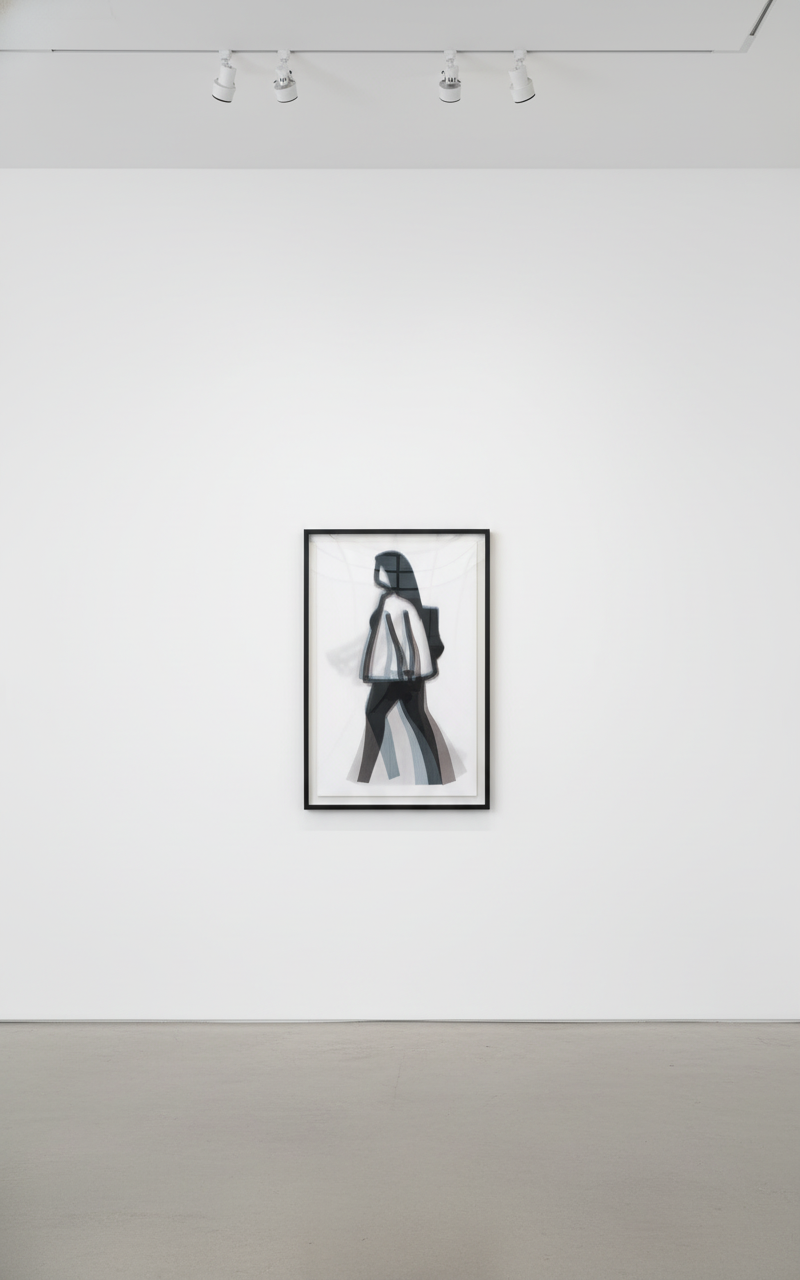
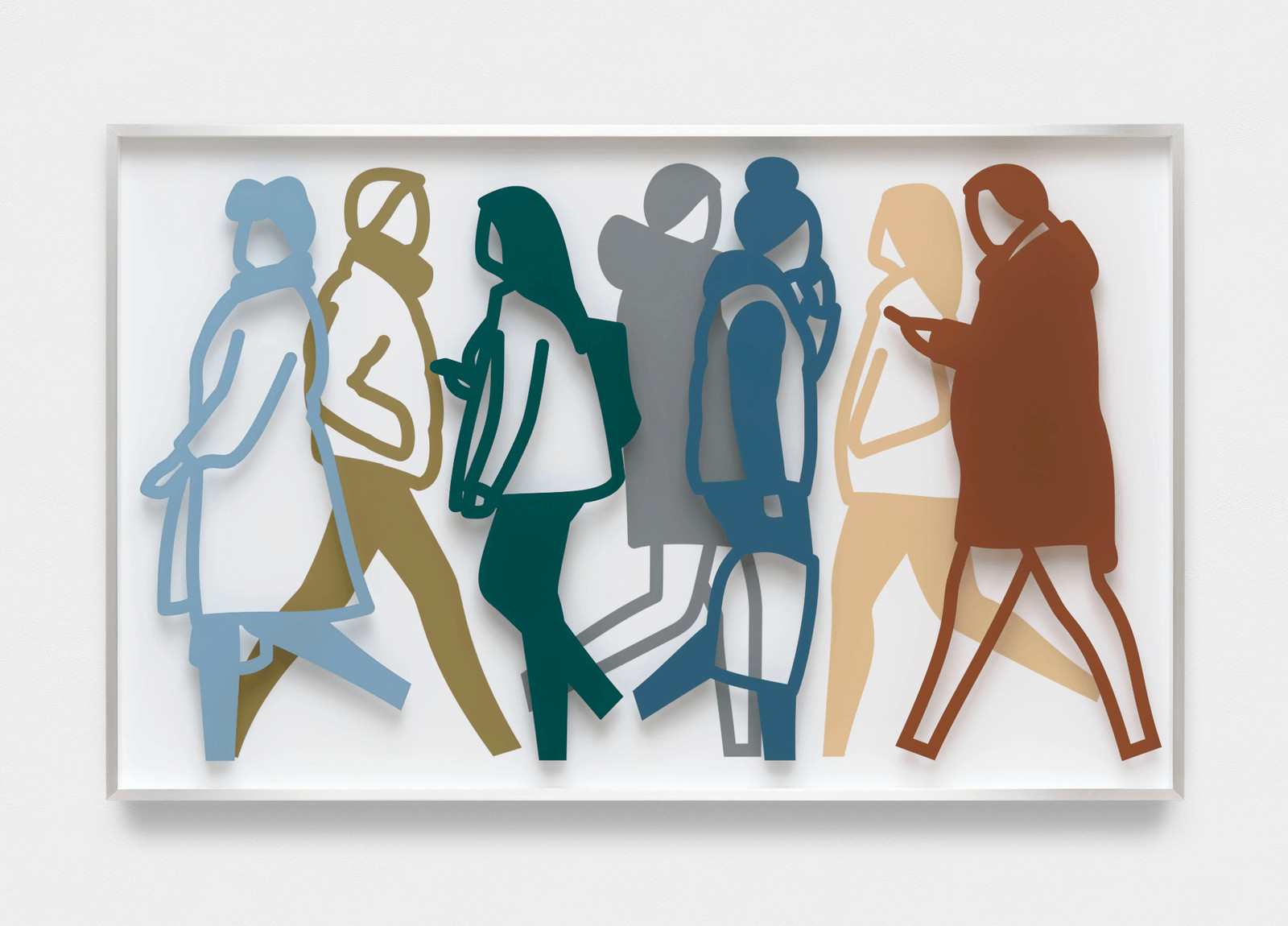
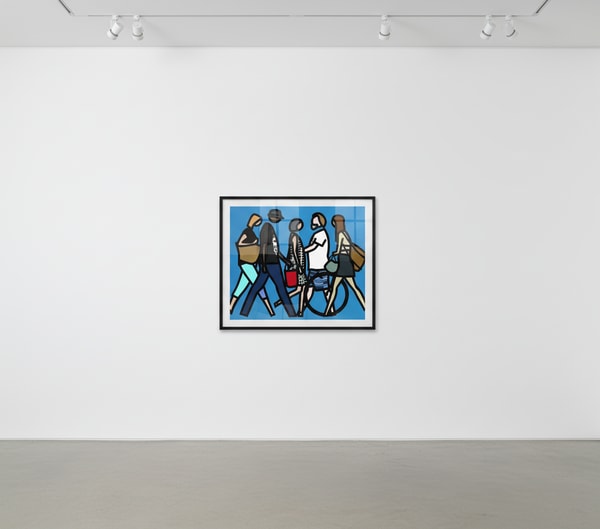
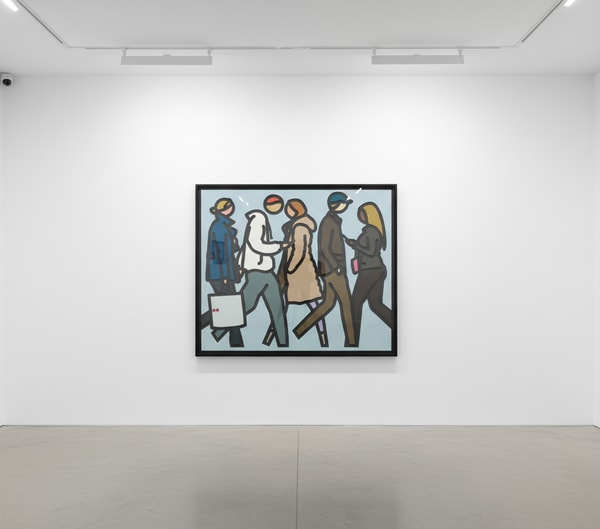
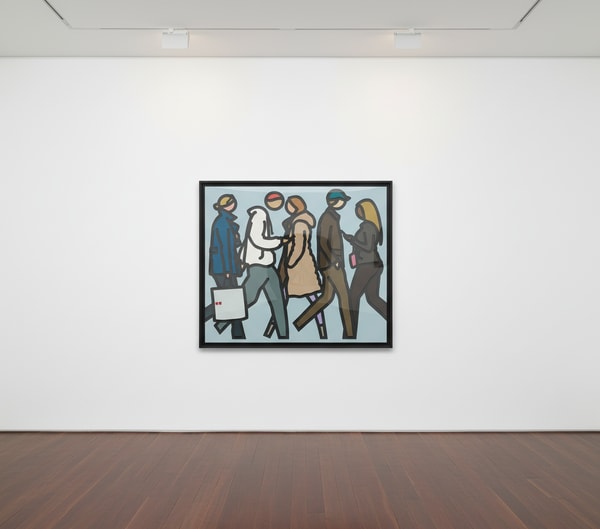
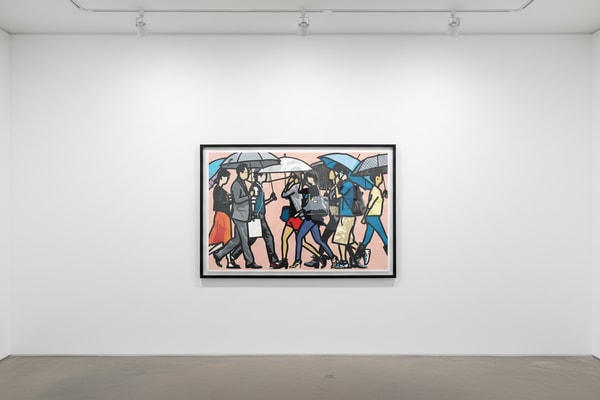
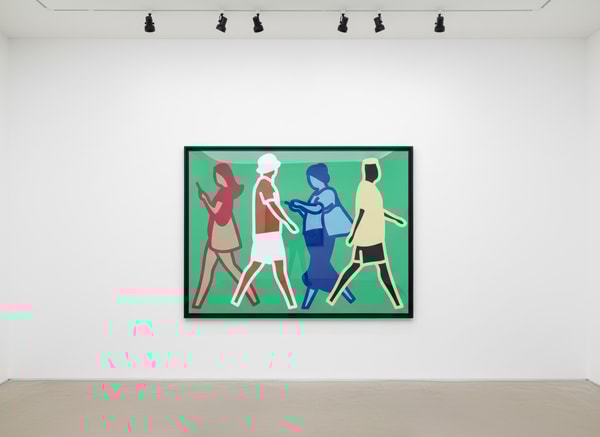
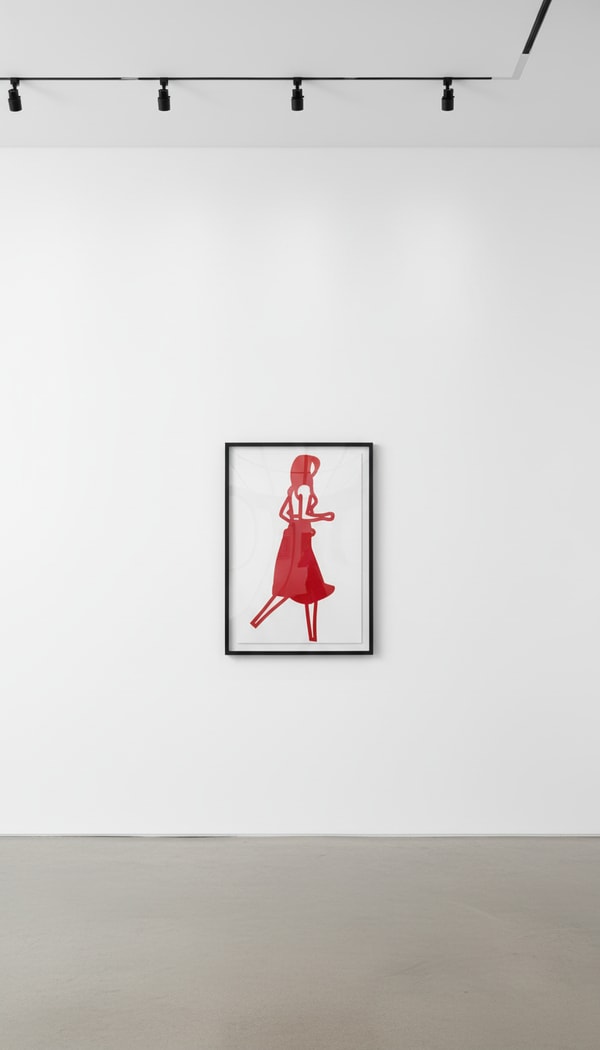
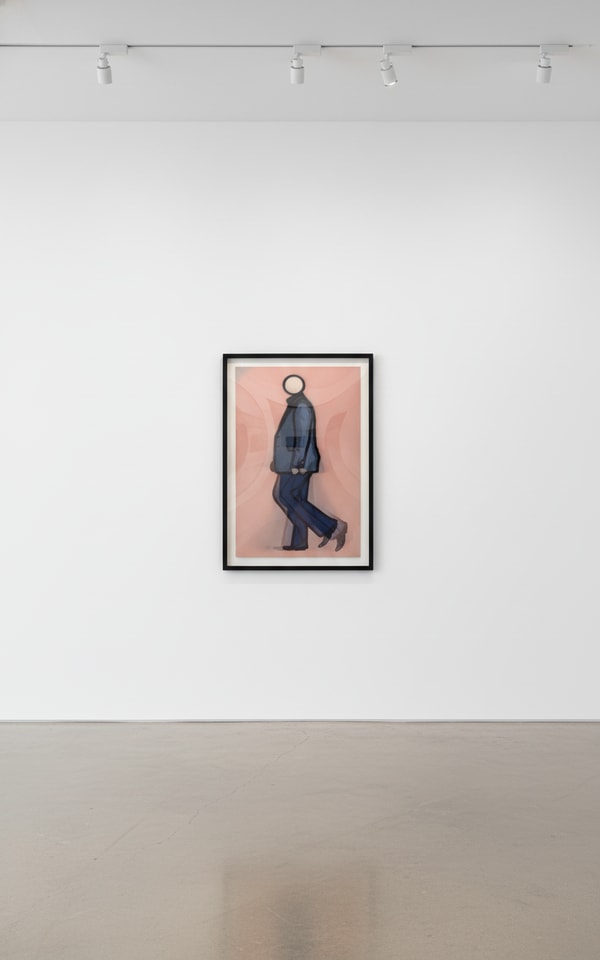
Julian Opie's "Walking" series stands as one of the most immediately recognizable and conceptually rich bodies of work in contemporary art, distilling the universal human act of movement into a visual language that is at once ancient and unmistakably modern. Across this celebrated series, Opie captures figures mid-stride—anonymous yet deeply familiar—reducing the complexity of human locomotion to its essential rhythm through his signature bold outlines and flat planes of color. The result is a meditation on how we move through the world, how we perceive one another in passing, and how the simplest of gestures can become a subject worthy of profound artistic investigation.
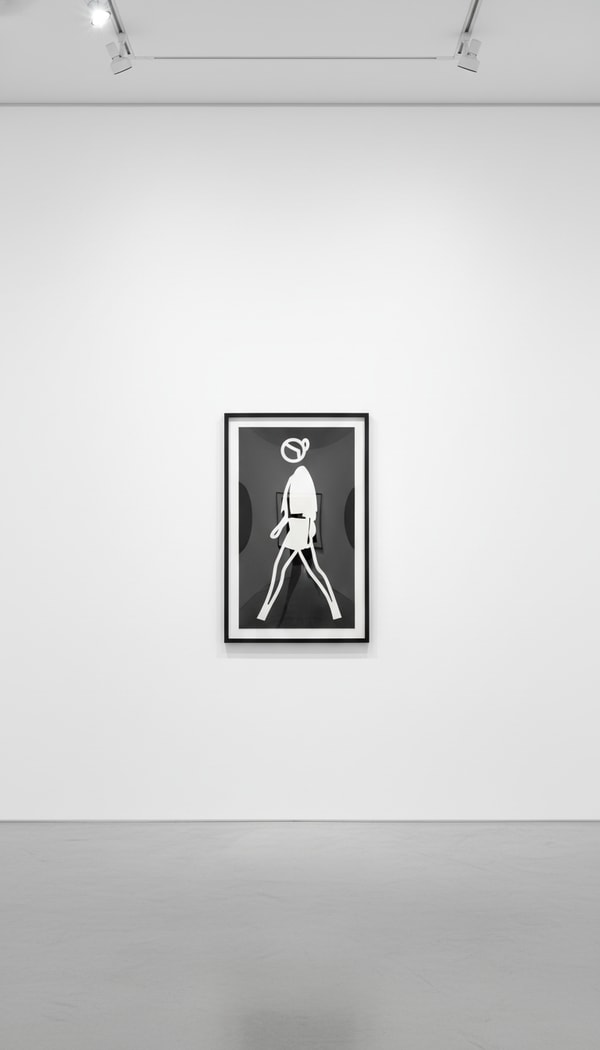
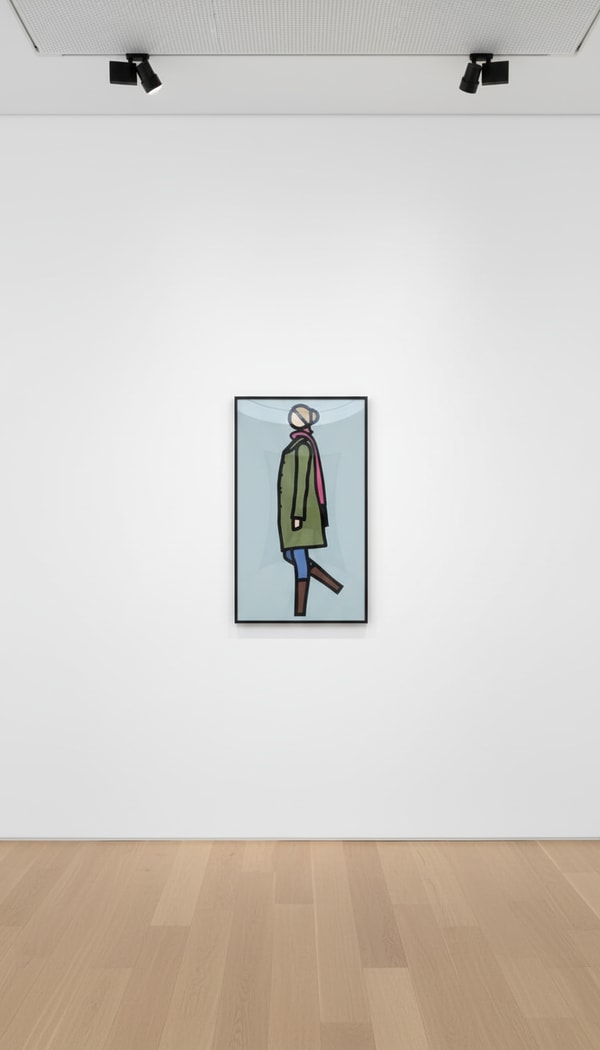
What distinguishes the "Walking" series within Opie's broader practice is its singular focus on the body in transit, stripped of context yet somehow made more present by that very absence. Works such as "Faime and Danielle Walking" present paired figures whose synchronized steps suggest relationship and rhythm without narrative explanation, while pieces like "Natalie Walking 2" and "Sian Walking 3" isolate individual subjects, transforming the solitary walker into an archetypal figure. These are not portraits in any traditional sense—Opie deliberately removes the markers of individual identity that we typically rely upon to know one another. Facial features are reduced to minimal dots and lines, clothing becomes pure color field, and yet each figure retains an undeniable sense of personhood. This tension between anonymity and presence lies at the heart of the series, inviting viewers to project their own narratives onto these silent pedestrians.
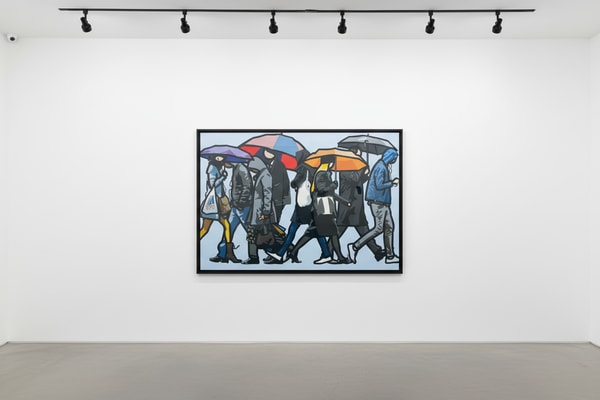
The geographic scope of the "Walking" series reveals Opie's fascination with the universal nature of human movement across cultures and climates. "Walking In New York 1" captures the distinctive pace and energy of Manhattan's streets, while "Walking in Melbourne" and "Walking In The Rain, Seoul" extend this study to vastly different urban environments. The inclusion of weather—particularly in the evocative "Walking In The Rain, London" and the broader "from Walking In The Rain" subset—adds atmospheric dimension to works that might otherwise exist outside of time and place. Rain transforms walking into something more deliberate, more conscious, and Opie's treatment of these conditions demonstrates his ability to convey environmental circumstance through the most economical of means. An umbrella becomes a bold geometric form; the posture of a figure shifts almost imperceptibly to suggest shelter-seeking; the color palette darkens to intimate gray skies without ever depicting them directly.
Opie's technical approach in the "Walking" series draws from an extraordinary range of influences while remaining wholly original. The flat color and bold outlines recall Japanese ukiyo-e woodblock prints, particularly the work of Hiroshige and his depictions of travelers on the Tōkaidō road. Simultaneously, there are echoes of ancient Egyptian wall paintings in the profile positioning and stylized human forms, as well as the clean graphic efficiency of modern signage and digital iconography. Opie has spoken of his interest in the way we process visual information rapidly—how a stick figure on a crosswalk sign communicates "pedestrian" instantaneously across languages and cultures. The "Walking" series operates in this same territory of immediate legibility while offering far greater visual sophistication and emotional resonance than any traffic symbol could achieve.
The process behind these works involves Opie photographing or filming real individuals, then meticulously translating their forms through digital manipulation before rendering them in his chosen medium. This methodology bridges observation and abstraction, ensuring that each walking figure, however simplified, carries the authentic weight distribution and kinetic truth of actual human movement. The figures do not merely represent walking; they embody it with an accuracy that bypasses photorealism to achieve something more essential. Viewers often report a strange sensation when encountering these works—a sense that the figures are perpetually about to complete their stride, frozen in motion yet somehow still moving.
Within the contemporary art market, the "Walking" series has achieved iconic status, appearing in major museum collections worldwide and becoming synonymous with Opie's contribution to the visual culture of our time. These works speak to our increasingly mobile, urban existence—the countless strangers we pass daily, the way we occupy public space, the curious intimacy of sharing sidewalks with people we will never know. In an age of constant movement and fleeting connection, Opie's walking figures offer a moment of contemplation, asking us to truly see the act we perform without thinking, elevated to the status of art.
Guy Hepner is pleased to offer works from Julian Opie's "Walking" series, and collectors interested in acquiring pieces from this defining body of contemporary art are invited to contact our New York team for availability, pricing, and detailed condition information.

Julian Opie (b. 1958, London) is one of the most recognisable and widely exhibited British artists of his generation, a painter, sculptor, and printmaker whose stripped-back figurative language has achieved both the commercial viability of design and the conceptual seriousness of fine art — a combination that few artists of any era have managed with equal confidence. Opie studied at Goldsmiths College under Michael Craig-Martin, graduating in 1982, and was representing by a major London gallery almost immediately. He has been a significant presence in the international art world for over four decades.
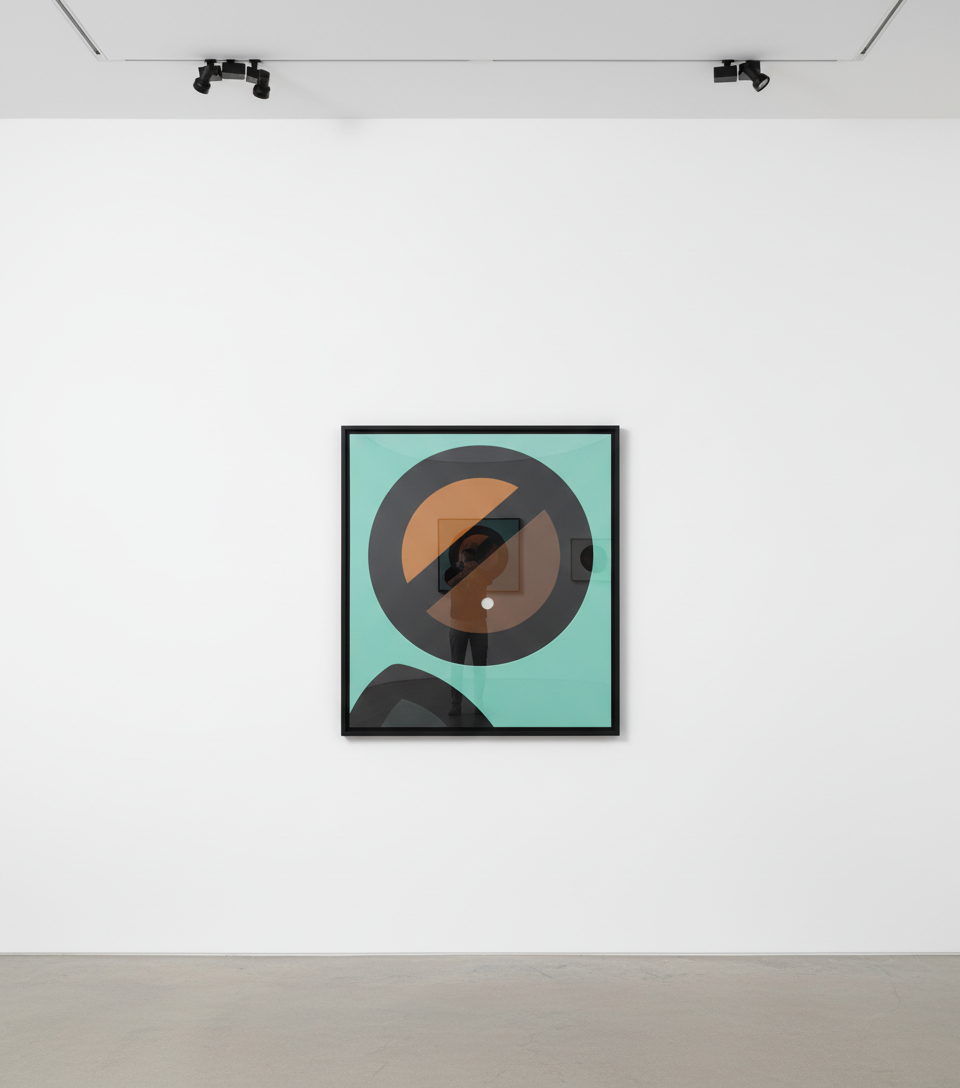
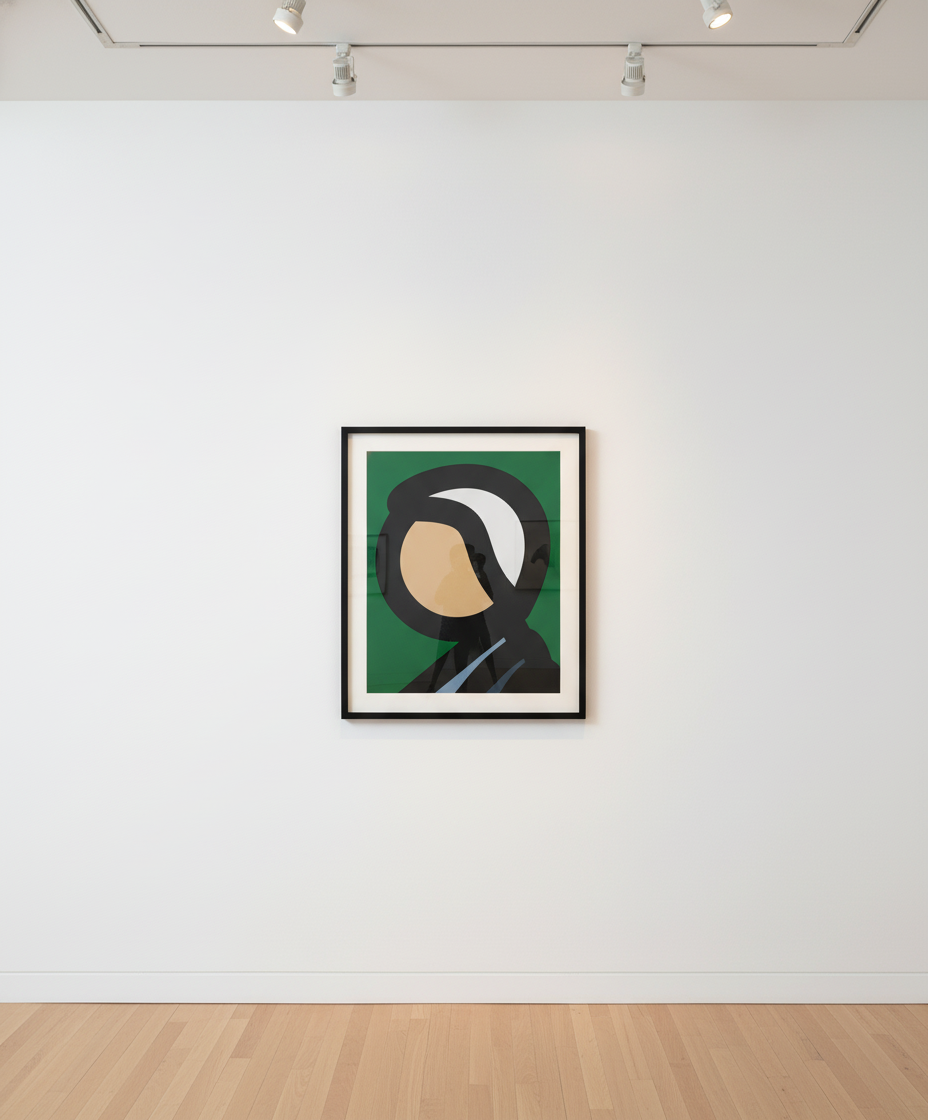
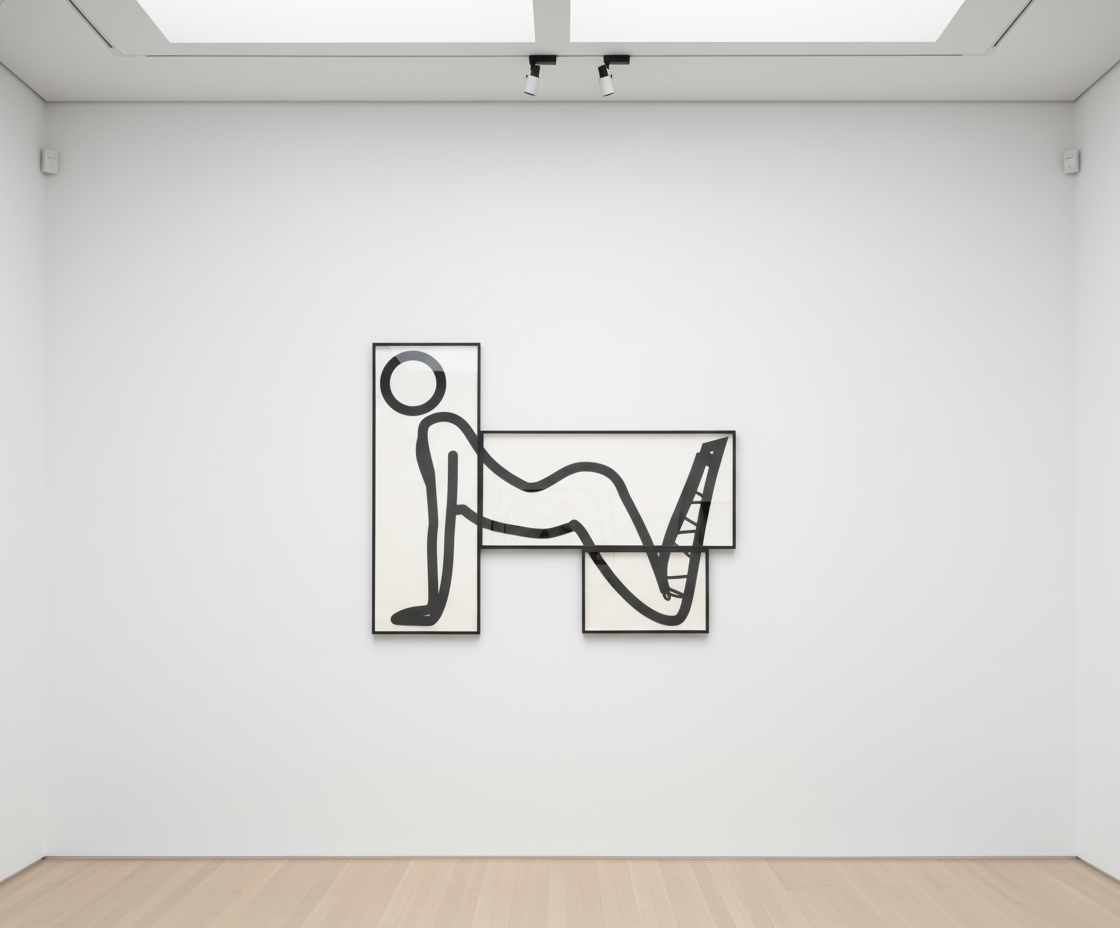
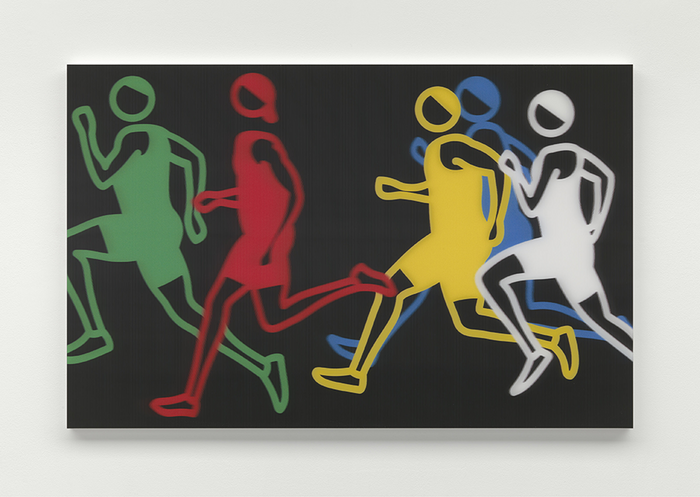
Opie's visual language is built from a small number of radical formal decisions: bold black outlines, flat unmodulated colour fields, the elimination of shadow, texture, and incidental detail, and a scale and graphic authority that draws openly on Egyptian hieroglyphics, Japanese woodblock printing, public signage, and the simplified conventions of digital interfaces. The result is a style of immediate recognisability — when you encounter a Julian Opie figure, you know it instantly — that nonetheless contains real formal thought about how images communicate, how representation functions, and what remains when almost everything is removed. His Walking Figures series, in which anonymous pedestrians in continuous motion are rendered in his signature distilled vocabulary and presented as both print editions and LED wall sculptures, has become one of the most compelling ongoing investigations in contemporary art into the relationship between the ancient idea of the frieze, the vernacular language of the public sign, and the aesthetic possibilities of the LED screen.
In 2000, Opie created the cover artwork for Blur's Best Of compilation — four simplified band portraits in his trademark style — bringing his visual language to an audience of millions and cementing his profile as an artist operating meaningfully across the boundary between fine art and popular culture. His portrait series, his landscape works, and his permanent public installations — including major commissions at Queen Elizabeth Olympic Park in London — extend the reach of his practice into civic and architectural contexts. At the major auction houses, significant Opie works have traded in the £200,000–£500,000 range at Christie's and Sotheby's, while his print editions range from thousands to tens of thousands of pounds, providing entry points across a wide spectrum of collector budgets. His work is held in the Tate Collection, among other public institutions.
His media range is notably broad: silkscreen prints, vinyl paintings, LED panels, lenticular works, and public sculptures are all produced with equal technical rigour and formal clarity.
Guy Hepner maintains strong inventory and expertise in Julian Opie's print editions and LED works. Our gallery at 177 Tenth Avenue, New York offers collectors expert guidance on acquisition and valuation. We provide free, confidential valuations for those looking to sell Opie works and active connections to buyers engaged with this market.