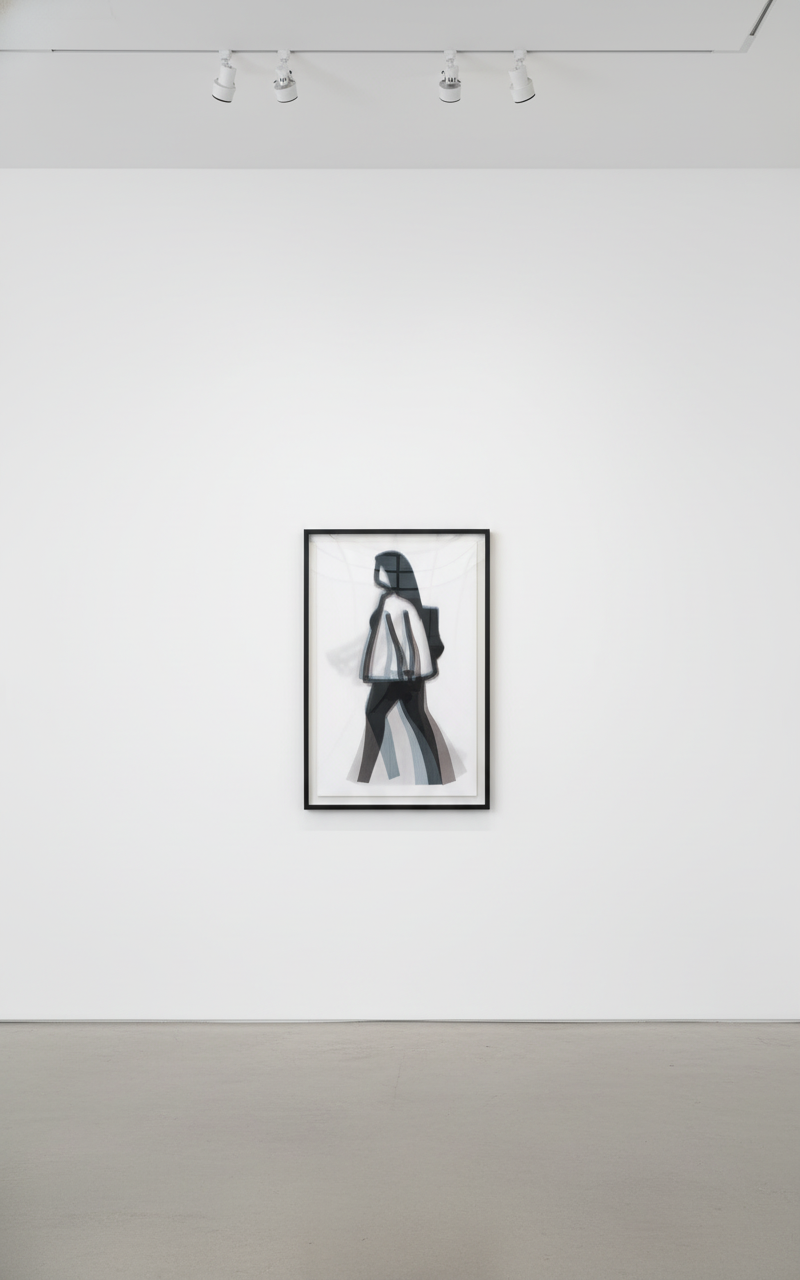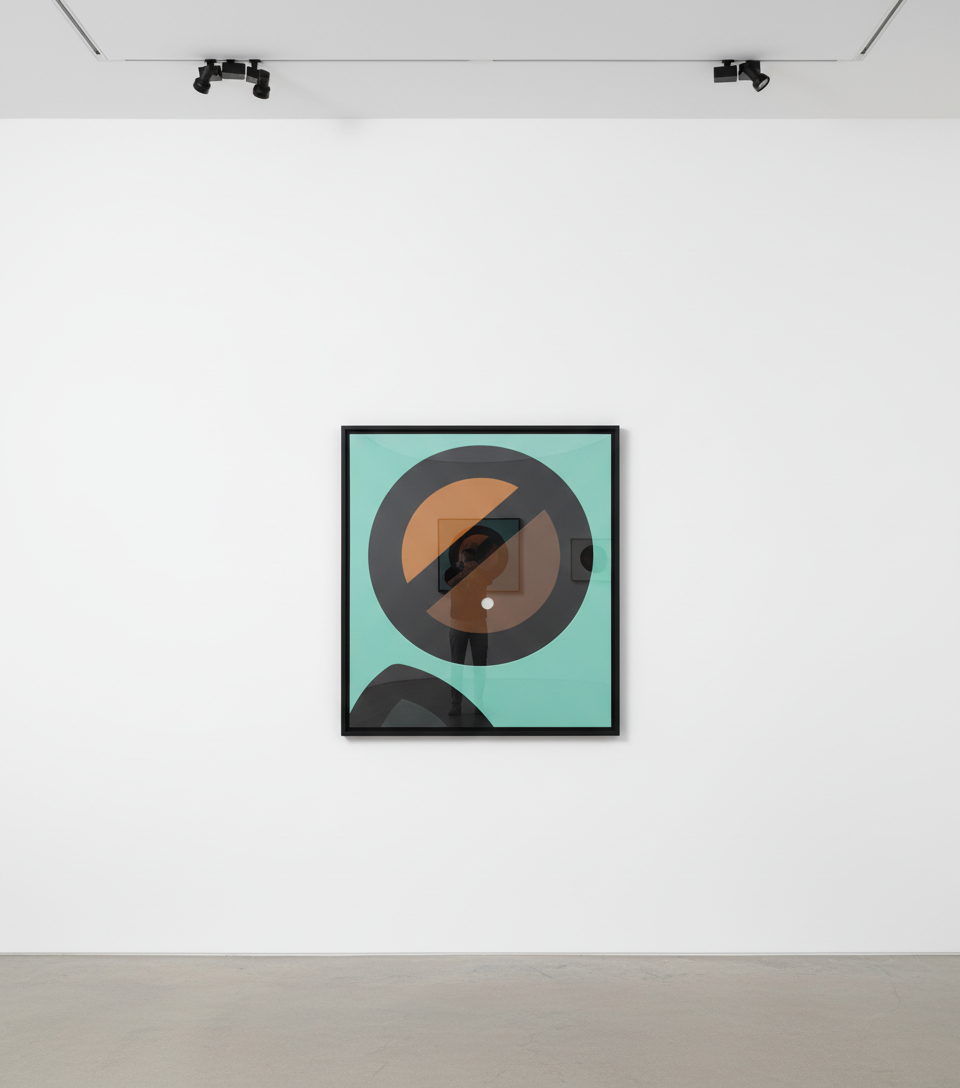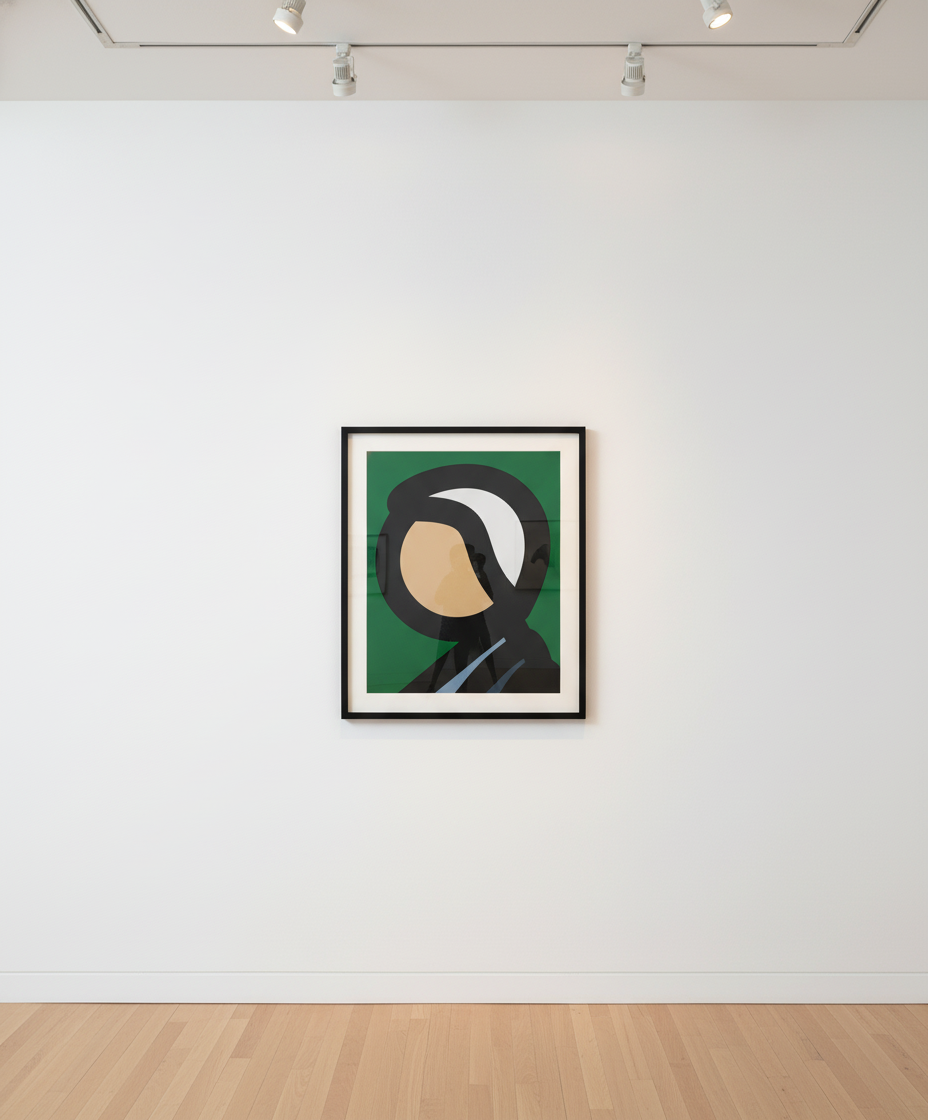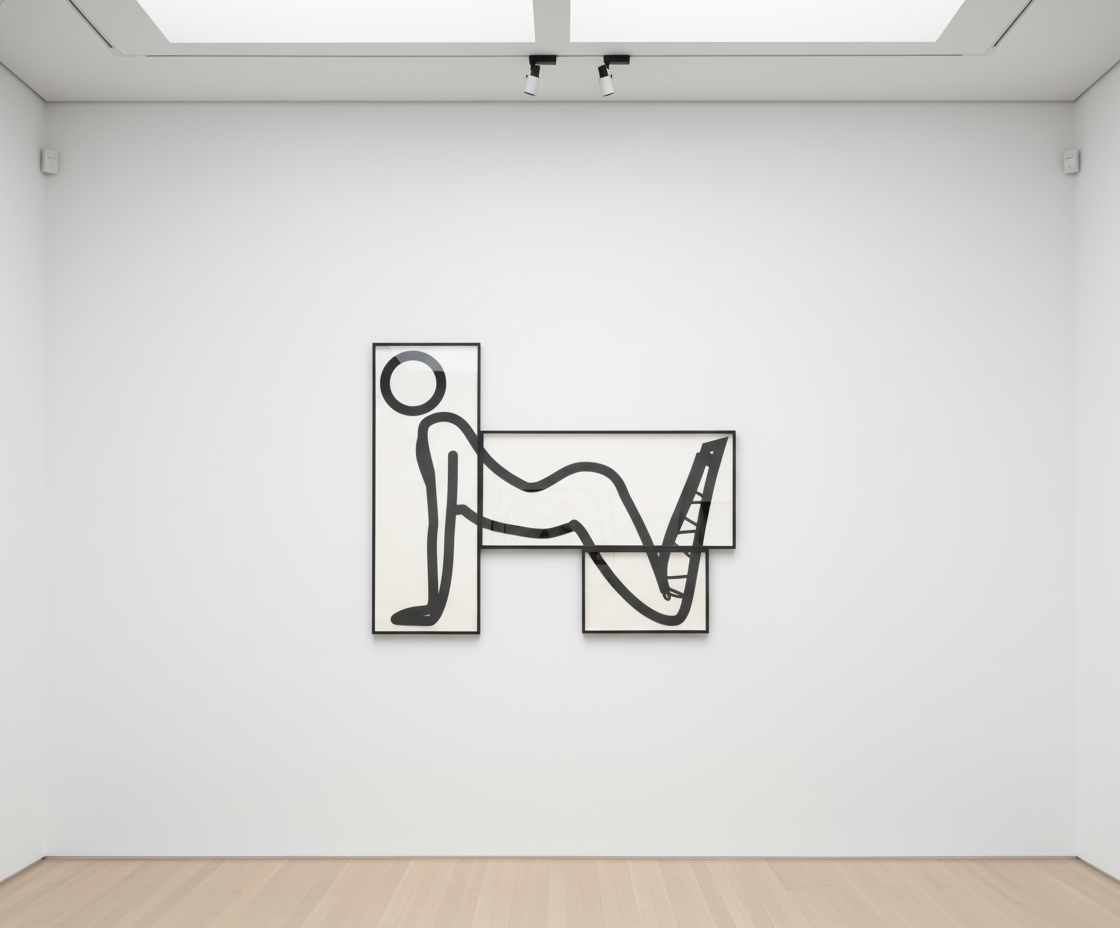
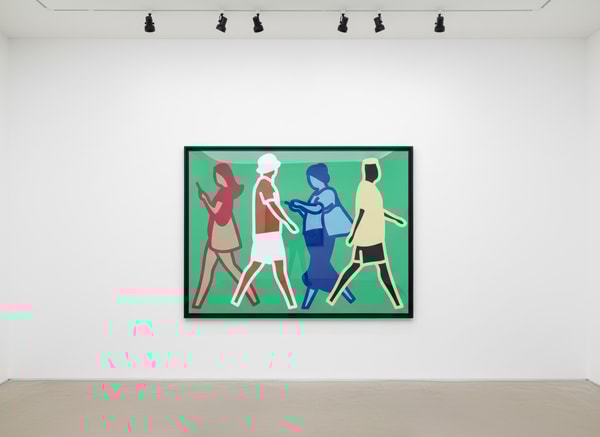
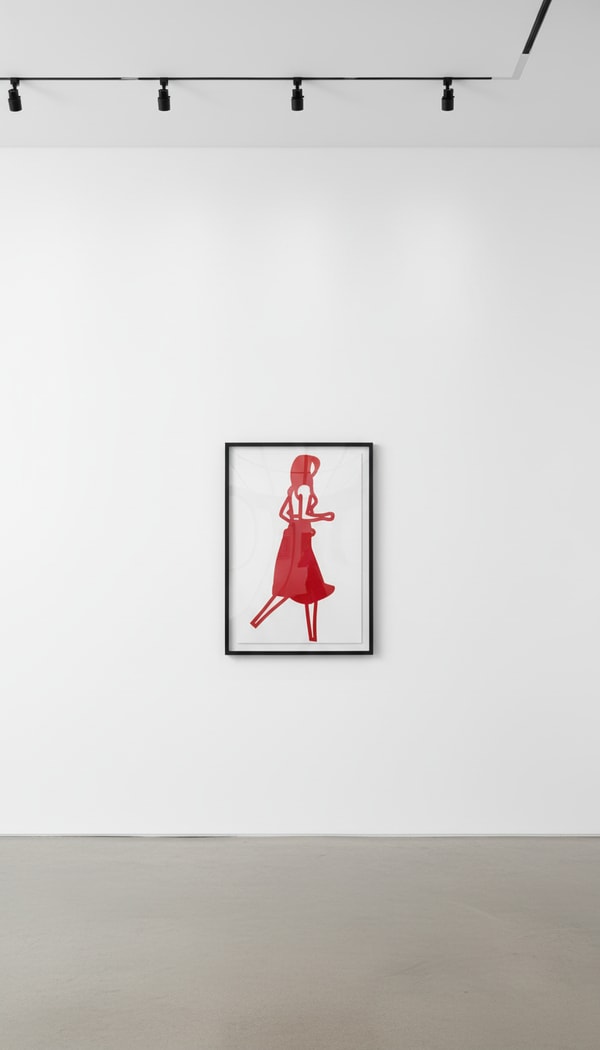
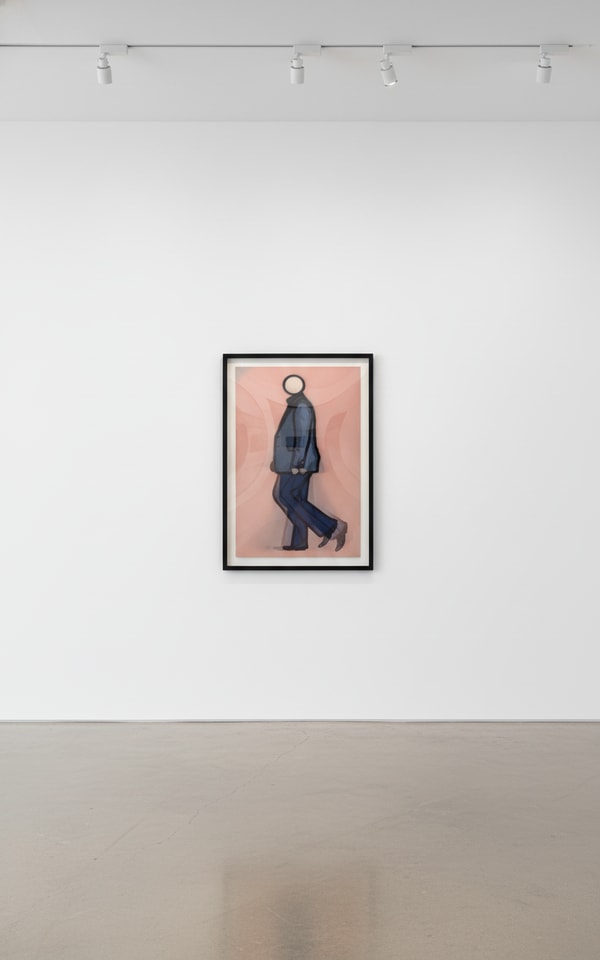

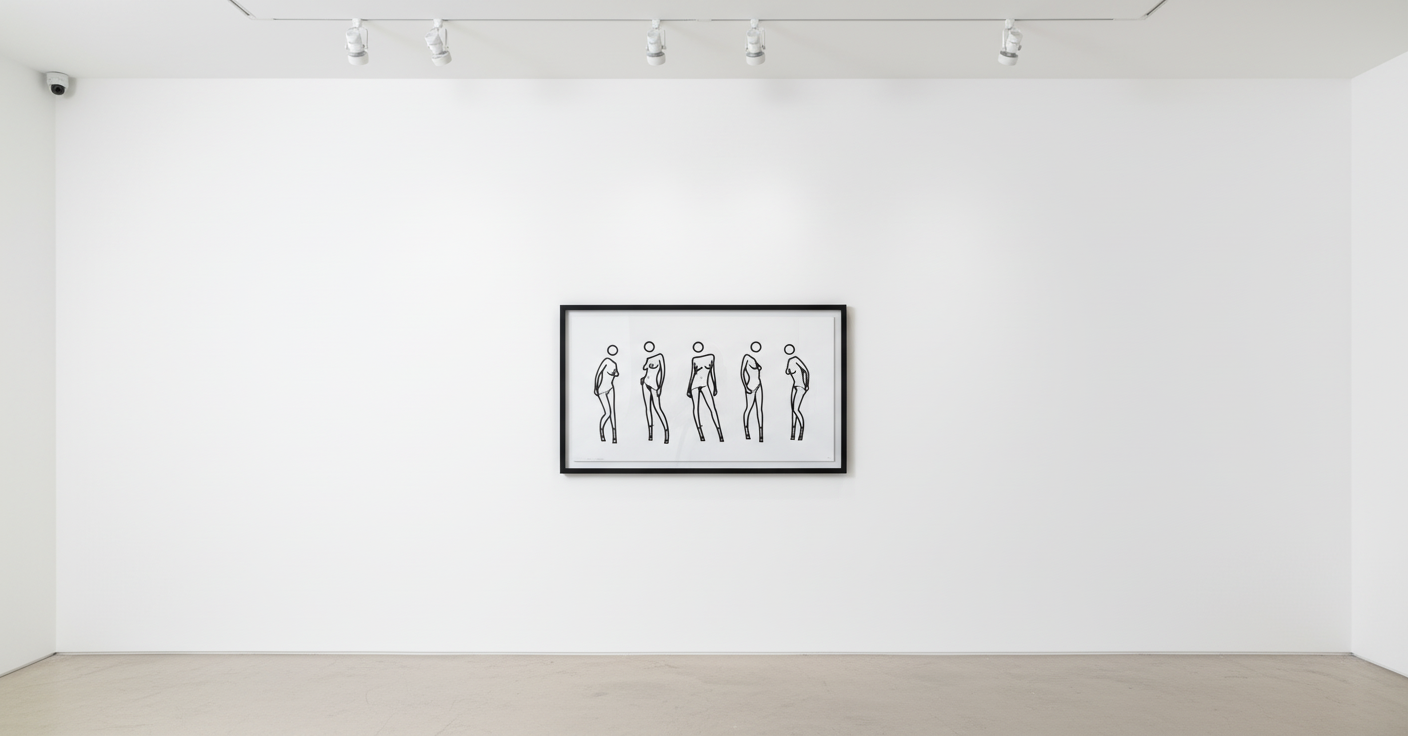
Bijou Gets Undressed
6 works

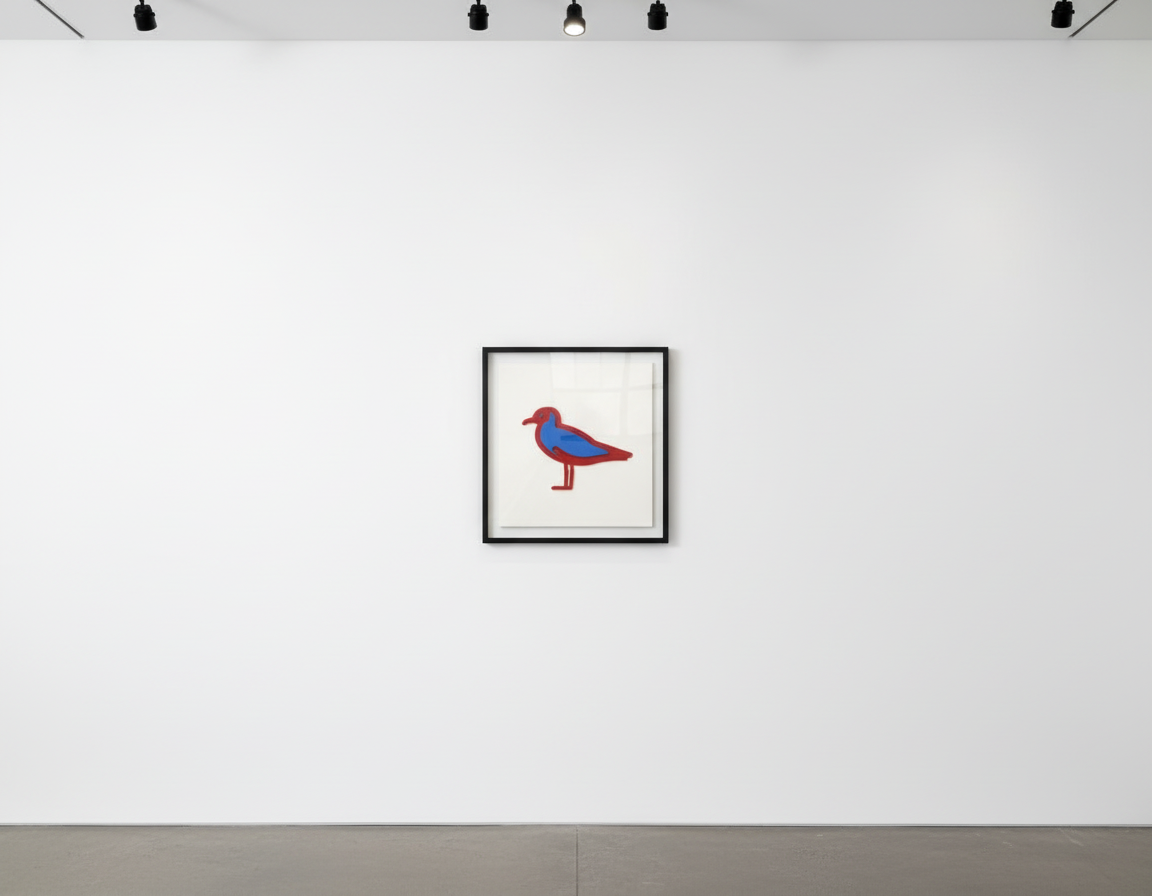
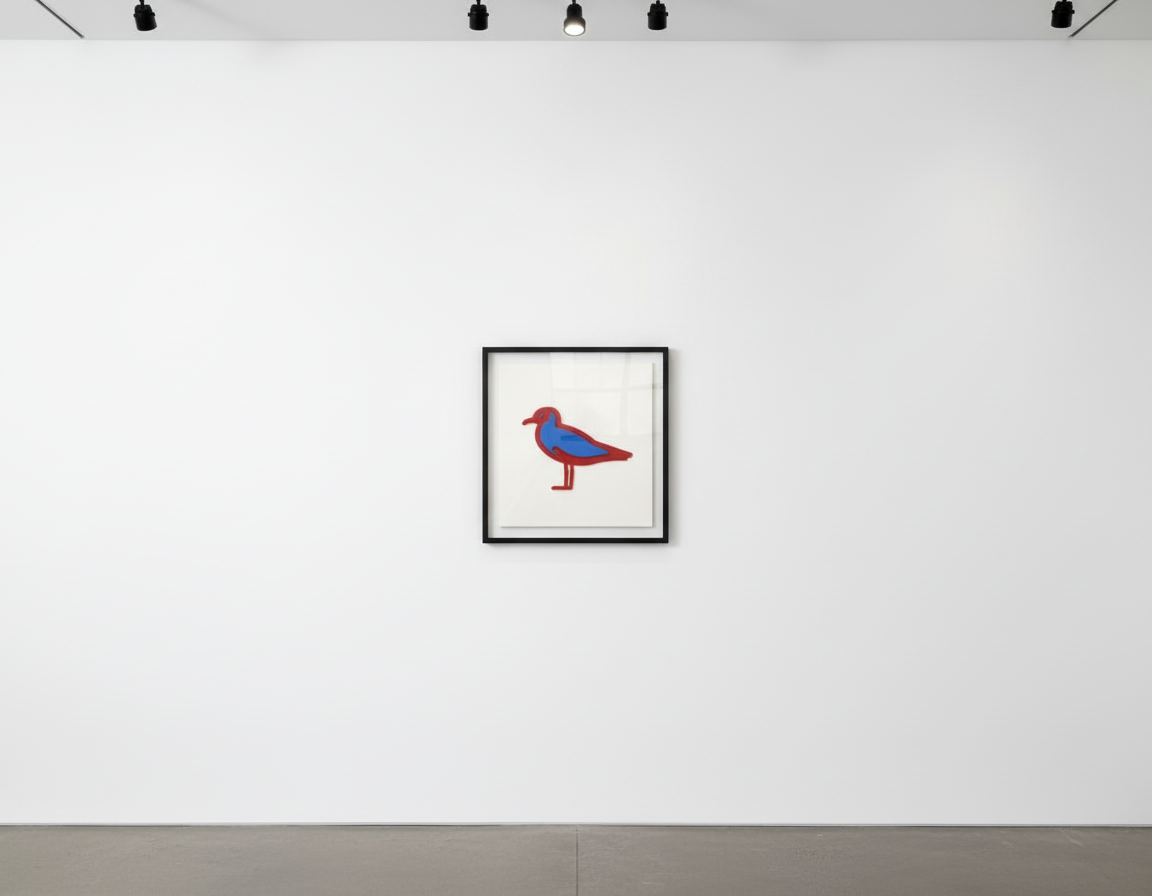
Small Birds Black Headed Gull, 2020
Wall mounted acrylic relief
12 1/8 x 16 x 1 5/8 in 30.7 x 40.6 x 4 cm
Edition of 20
This wall-mounted acrylic relief captures a black-headed gull in flight through Opie's signature reductive style. The bird is rendered in bold black silhouette against a pristine white background, distilled to its most essential forms. Minimal lines define the wings, body, and distinctive head marking with remarkable clarity. The shallow relief construction adds subtle dimensionality, allowing the piece to hover just off the wall and cast delicate shadows that shift with changing light throughout the day. Created in 2020, this work exemplifies Opie's ongoing exploration of movement and nature through digital simplification. His ability to convey complex motion and character with such economy of form has established him as one of Britain's most recognizable contemporary artists. The compact scale makes this an ideal entry point for collectors new to Opie's work, while seasoned collectors will appreciate how it complements his larger installations and portrait series. The piece offers versatile display options for both residential and corporate settings. Available for purchase — enquire for price and availability.
Price on Application
Julian Opie's "Birds" series represents a captivating evolution in the artist's ongoing investigation of the natural world, bringing his signature visual language to the realm of avian and aquatic life. While Opie has long been celebrated for his iconic portraits and figures in motion, this body of work reveals his equally compelling engagement with wildlife, rendered through the same bold minimalism and flat planes of color that have made his human subjects instantly recognizable across the globe. In the "Birds" series, Opie strips away the complexity of feather and fin to arrive at something more essential—a visual distillation that captures the very essence of each creature while simultaneously elevating it to the status of contemporary icon.
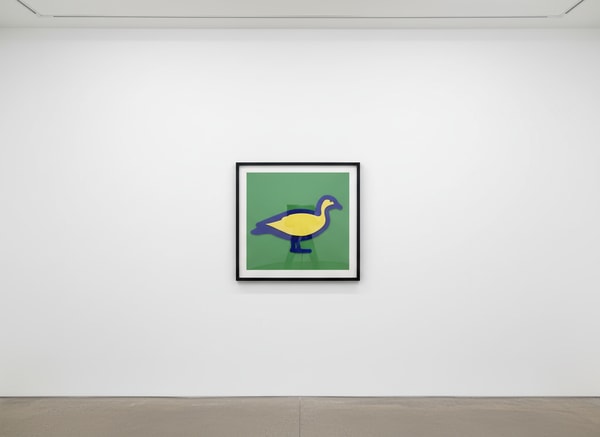
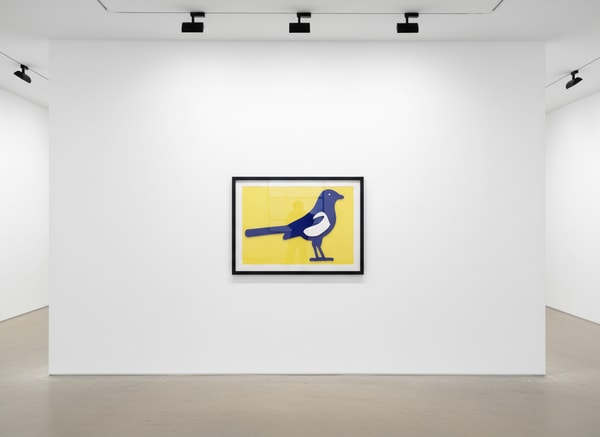
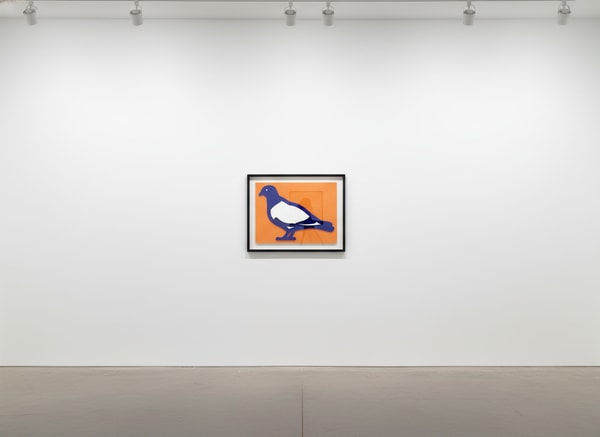
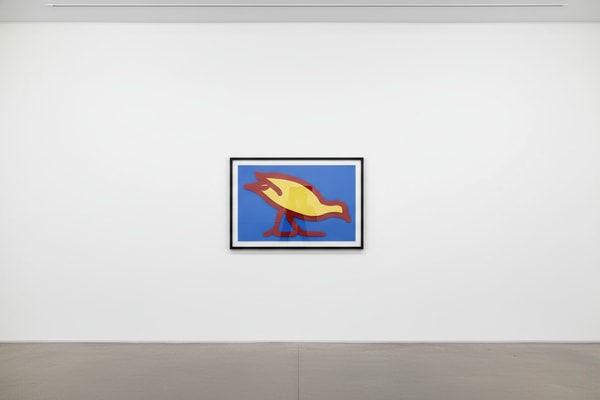
The works within this series demonstrate Opie's remarkable ability to transform observation into symbol without sacrificing the character and personality inherent to each species. From the stately composure of the Australian Wood Duck to the urban familiarity of the Pigeon, each piece presents its subject with a clarity that borders on the taxonomic while remaining unmistakably artistic. The Swamp Hen and Magpie emerge as studies in contrasting silhouettes and color relationships, their forms reduced to elegant arrangements of shape and line that nonetheless convey something true about the birds themselves. Even the humorous Crow Excreting captures a moment of unguarded naturalism, rendered with the same deadpan precision Opie brings to his most celebrated human figures. This willingness to depict nature in all its unglamorous reality speaks to the artist's democratic approach to subject matter, where no moment is too mundane for aesthetic consideration.
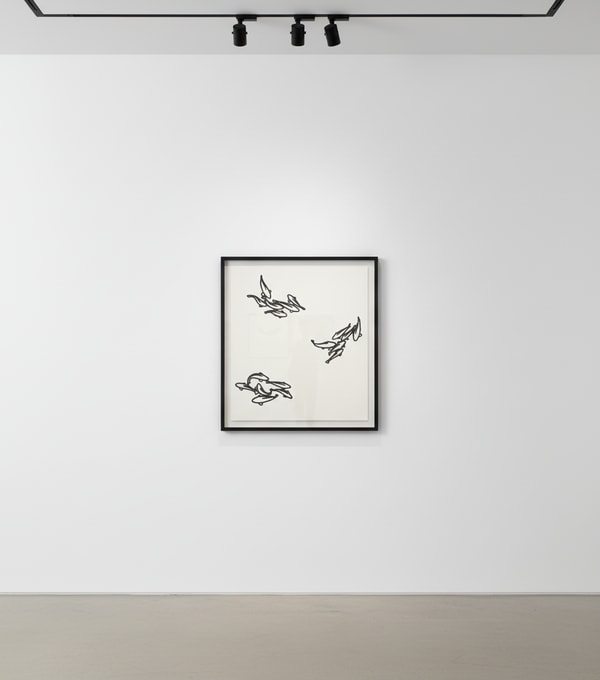
The inclusion of aquatic subjects within the series—Carp 1, Carp 2, and Carp 3—extends Opie's investigation beyond the avian to encompass the broader natural world. These works demonstrate how his visual vocabulary translates seamlessly across species, the sinuous forms of the fish rendered with the same economy of line that defines his birds. The carp, with their golden scales reduced to flat fields of color and their graceful movements frozen in characteristic poses, become meditations on form and movement. Together with the bird studies, they suggest a comprehensive artistic taxonomy, a personal bestiary filtered through Opie's distinctive aesthetic sensibility.
What distinguishes the "Birds" series within Opie's broader practice is its intimate scale and contemplative quality. While the artist is known for monumental public installations and large-scale LED works that animate city streets and museum facades, these pieces invite closer looking, rewarding sustained attention with subtle details and considered compositions. The Small Birds works, in particular, possess a jewel-like quality, their compact formats concentrating Opie's visual language into dense, satisfying arrangements. This shift in scale does not diminish the works' impact but rather intensifies it, creating objects that command attention through precision rather than presence.
The series also reveals Opie's deep roots in art historical tradition, even as his visual language remains resolutely contemporary. One can trace lines of influence back to Japanese woodblock prints, with their flat areas of color and elegant natural subjects, as well as to the bold simplifications of Pop Art and the systematic investigations of Minimalism. Yet Opie synthesizes these influences into something wholly his own, creating works that feel both timeless and of the moment. The birds and fish depicted here could exist in any era, their essential forms transcending the specifics of time and place, yet the crisp digital precision of their execution anchors them firmly in the contemporary world.
For collectors, the "Birds" series offers an opportunity to engage with a dimension of Opie's practice that complements and enriches his more widely known work. Those familiar with his walking figures and iconic portraits will discover in these nature studies the same formal rigor and conceptual clarity applied to new territory. The works function beautifully as individual pieces, each complete in itself, yet they also reward collection in depth, their variations and repetitions creating rich dialogues when displayed together. The Nature Set, from which several of these works derive, speaks to Opie's own understanding of them as part of a larger whole, an interconnected exploration of the natural world through his particular visual filter.
The "Birds" series ultimately affirms Opie's position as one of the most significant artists working today, an artist capable of transforming the ordinary into the iconic while maintaining a lightness of touch that keeps his work accessible and engaging. These are images that lodge themselves in memory, their simplified forms becoming the way we picture their subjects in our mind's eye. In reducing nature to its essentials, Opie paradoxically expands our appreciation of it, teaching us to see the world through his eyes.
For inquiries regarding the acquisition of works from Julian Opie's "Birds" series, please contact Guy Hepner in New York.

Julian Opie (b. 1958, London) is one of the most recognisable and widely exhibited British artists of his generation, a painter, sculptor, and printmaker whose stripped-back figurative language has achieved both the commercial viability of design and the conceptual seriousness of fine art — a combination that few artists of any era have managed with equal confidence. Opie studied at Goldsmiths College under Michael Craig-Martin, graduating in 1982, and was representing by a major London gallery almost immediately. He has been a significant presence in the international art world for over four decades.
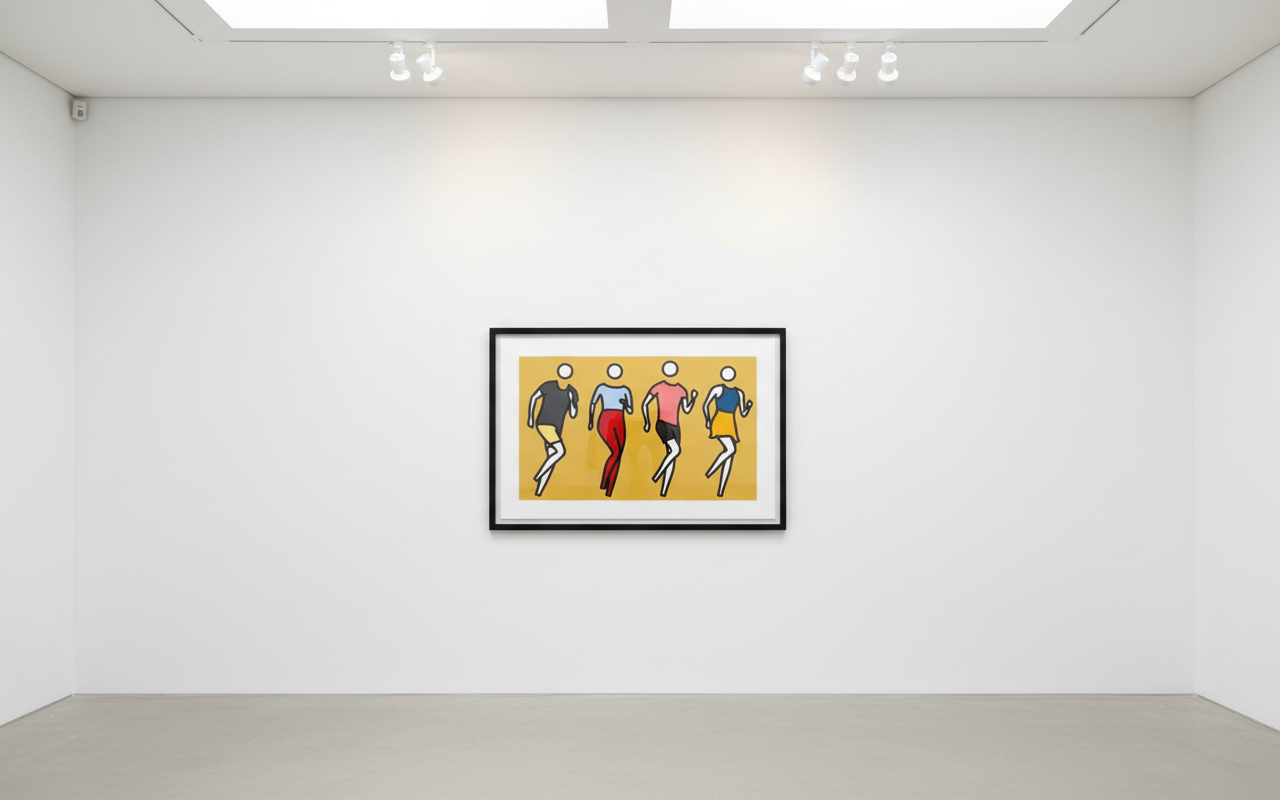
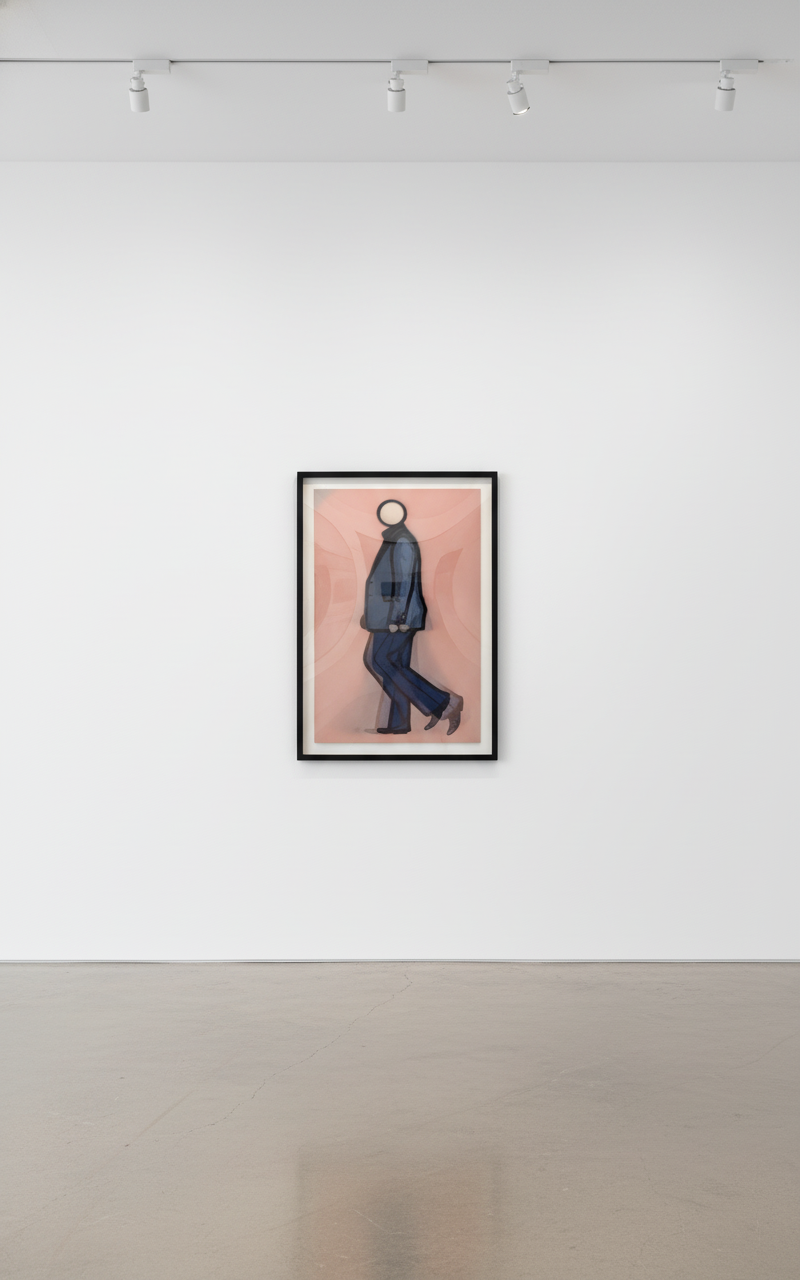
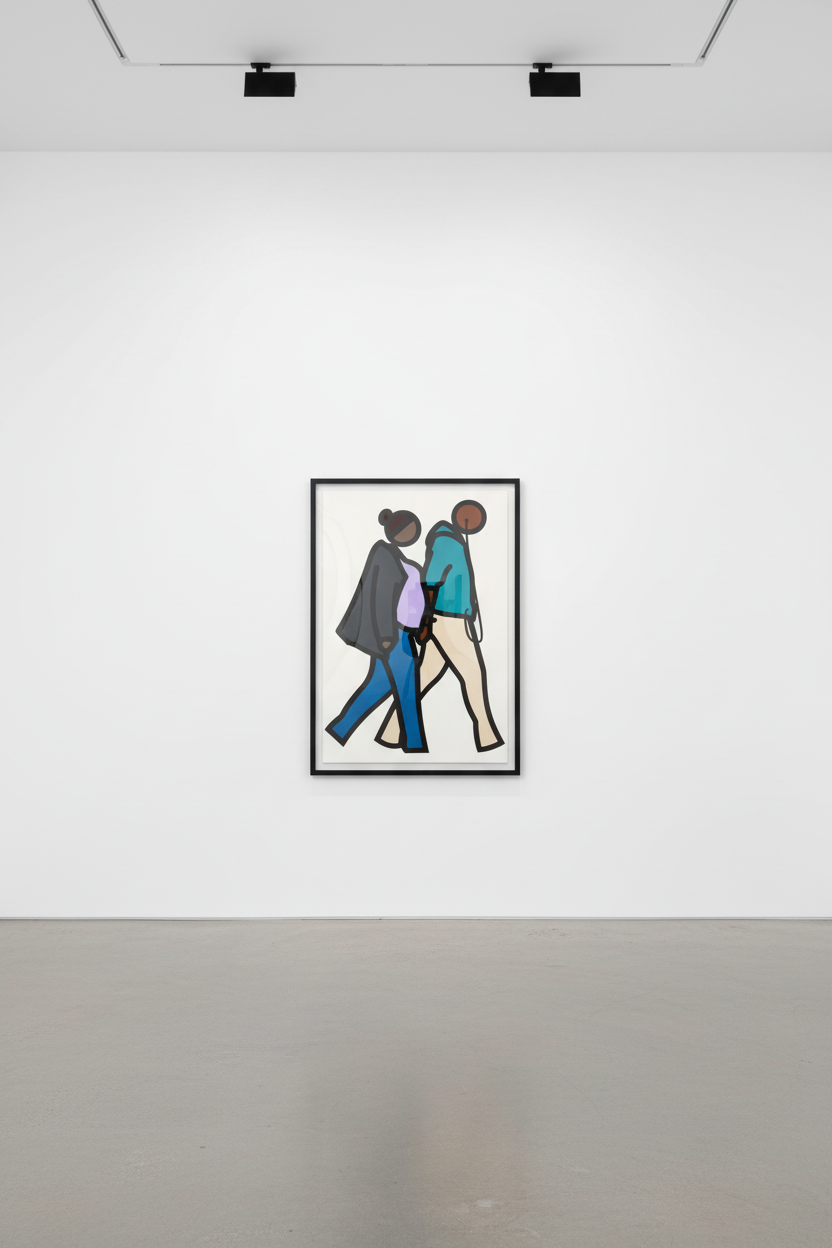
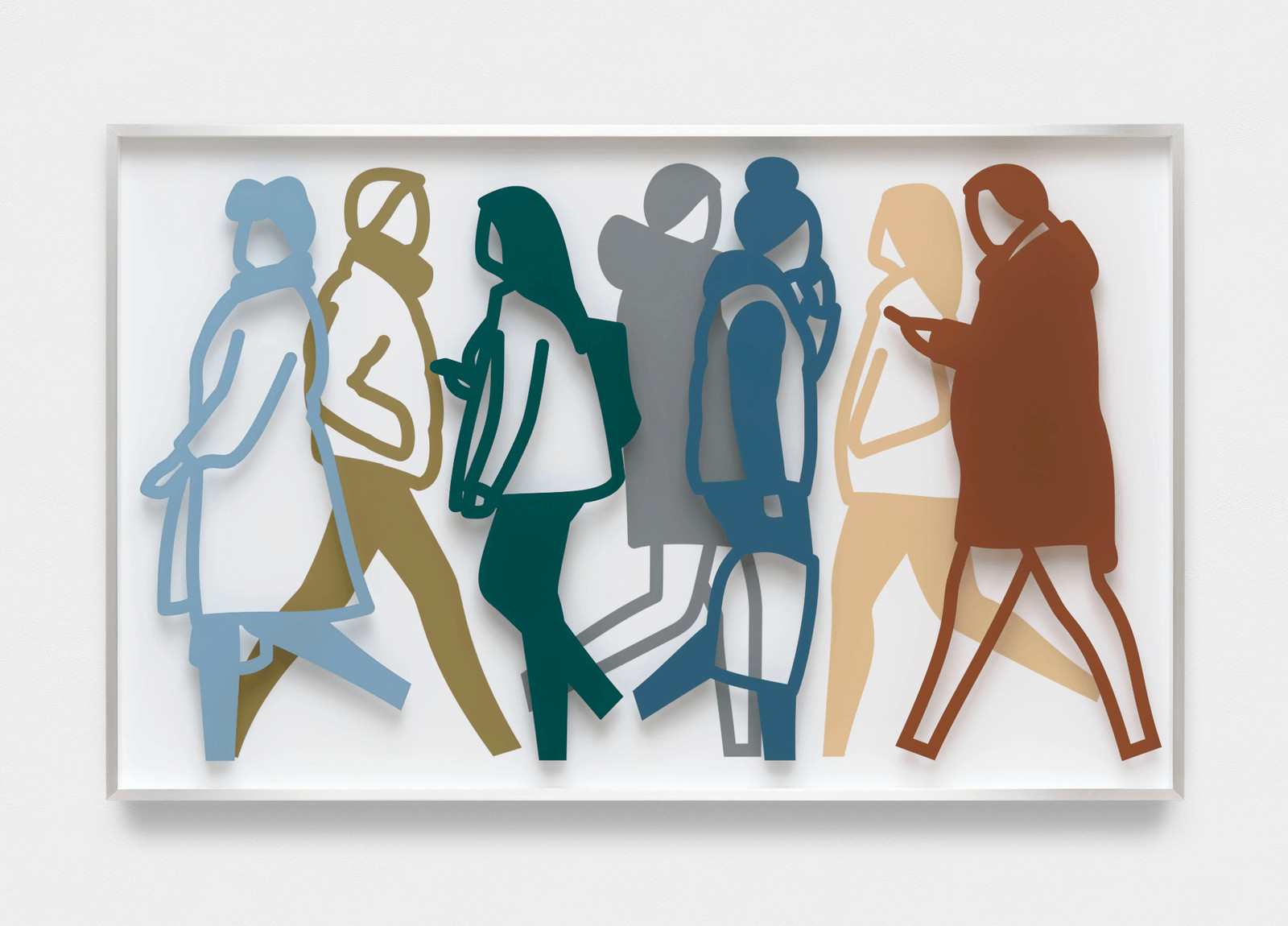
Opie's visual language is built from a small number of radical formal decisions: bold black outlines, flat unmodulated colour fields, the elimination of shadow, texture, and incidental detail, and a scale and graphic authority that draws openly on Egyptian hieroglyphics, Japanese woodblock printing, public signage, and the simplified conventions of digital interfaces. The result is a style of immediate recognisability — when you encounter a Julian Opie figure, you know it instantly — that nonetheless contains real formal thought about how images communicate, how representation functions, and what remains when almost everything is removed. His Walking Figures series, in which anonymous pedestrians in continuous motion are rendered in his signature distilled vocabulary and presented as both print editions and LED wall sculptures, has become one of the most compelling ongoing investigations in contemporary art into the relationship between the ancient idea of the frieze, the vernacular language of the public sign, and the aesthetic possibilities of the LED screen.
In 2000, Opie created the cover artwork for Blur's Best Of compilation — four simplified band portraits in his trademark style — bringing his visual language to an audience of millions and cementing his profile as an artist operating meaningfully across the boundary between fine art and popular culture. His portrait series, his landscape works, and his permanent public installations — including major commissions at Queen Elizabeth Olympic Park in London — extend the reach of his practice into civic and architectural contexts. At the major auction houses, significant Opie works have traded in the £200,000–£500,000 range at Christie's and Sotheby's, while his print editions range from thousands to tens of thousands of pounds, providing entry points across a wide spectrum of collector budgets. His work is held in the Tate Collection, among other public institutions.
His media range is notably broad: silkscreen prints, vinyl paintings, LED panels, lenticular works, and public sculptures are all produced with equal technical rigour and formal clarity.
Guy Hepner maintains strong inventory and expertise in Julian Opie's print editions and LED works. Our gallery at 177 Tenth Avenue, New York offers collectors expert guidance on acquisition and valuation. We provide free, confidential valuations for those looking to sell Opie works and active connections to buyers engaged with this market.