Early Works
11 works

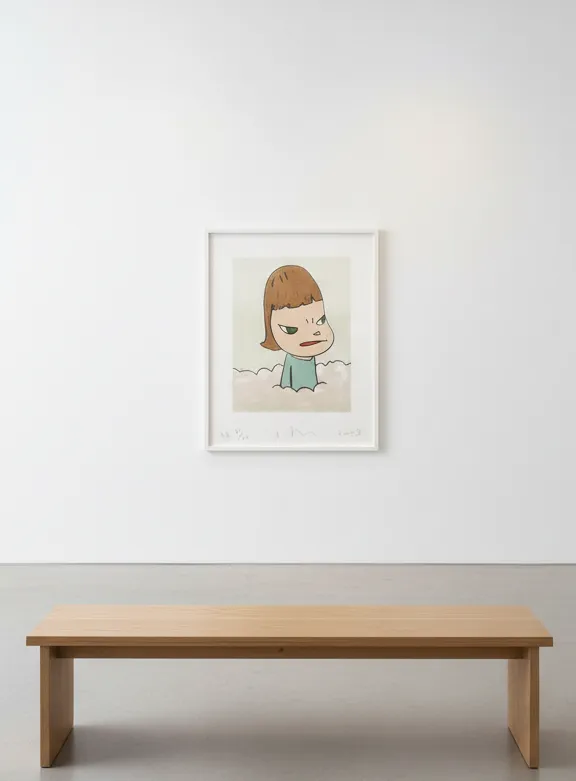
Pissed Off, 2010
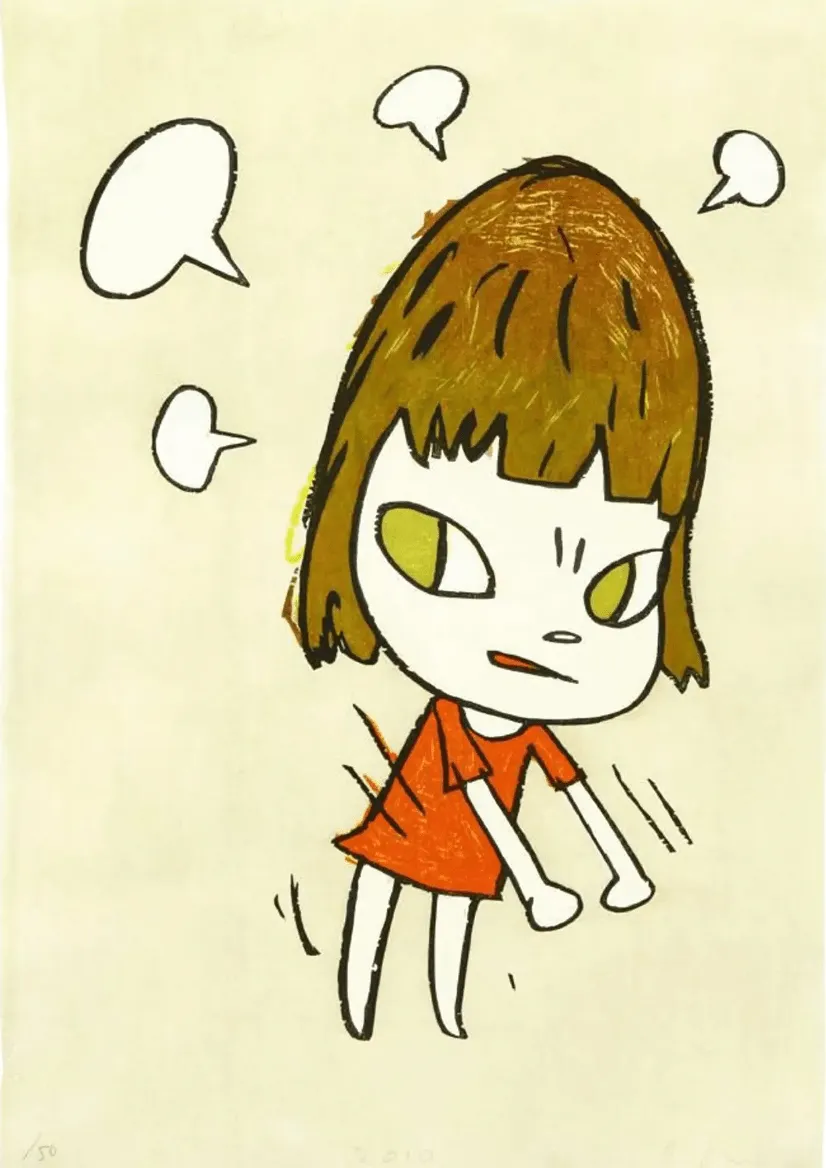
Yoshitomo Nara's *Pissed Off* (2010) exemplifies the Japanese artist's singular ability to channel complex emotional states through deceptively simple imagery. The work features one of Nara's characteristic wide-eyed children, rendered with the artist's signature economy of line and flat planes of color. Yet beneath the cartoonish aesthetic lies a palpable tension—the figure's expression radiates defiance and barely contained frustration, embodying the punk sensibility that has defined Nara's practice since his emergence in the 1990s. Drawing from sources as varied as Japanese manga, Western punk rock album covers, and the isolation of his childhood in rural Aomori, Nara creates figures that exist in a state of perpetual emotional contradiction. His children are at once innocent and menacing, vulnerable and fiercely autonomous. *Pissed Off* captures this duality with particular clarity, the title itself serving as an unfiltered declaration that mirrors the directness of Nara's visual language. As one of the most sought-after contemporary artists working today, Nara commands significant presence in both institutional collections and the secondary market, with works consistently achieving strong results at auction. His influence extends beyond the art world into popular culture, cementing his position as a defining voice of the contemporary moment. For acquisition inquiries regarding *Pissed Off* or other works by Yoshitomo Nara, please contact Guy Hepner.
Yoshitomo Nara
Yoshitomo Nara (b. 1959, Hirosaki, Japan) stands as one of the most influential figures in contemporary Japanese art, whose deceptively simple portraits of wide-eyed children—at once innocent and subversively defiant—have become icons of the Neo-Pop movement. Trained in Düsseldorf and deeply influenced by punk rock and anime culture, Nara creates works that resonate across cultural boundaries, commanding an international collector base and record-breaking auction results. His paintings, drawings, and sculptures are held in major museum collections worldwide, cementing his position as a defining voice in 21st-century art.