
Early Works
11 works

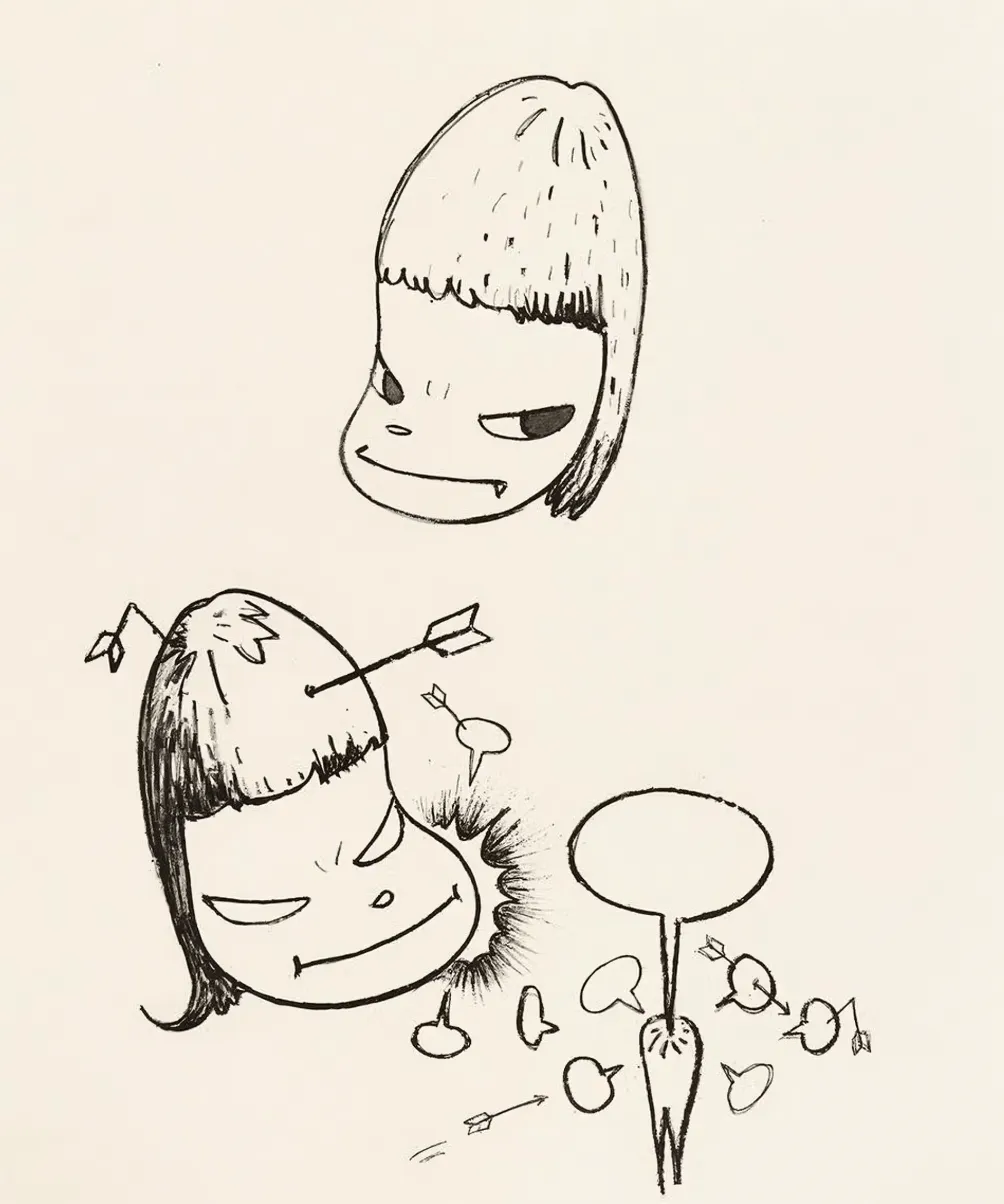
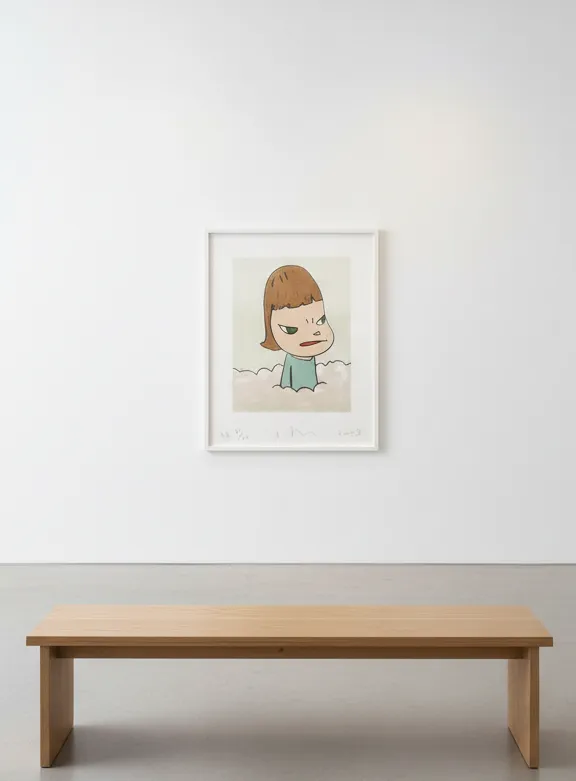
Pain, 2002
Yoshitomo Nara's "Pain" from 2002 exemplifies the Japanese artist's distinctive visual language that has positioned him among the most sought-after contemporary artists working today. Created during a particularly prolific period in Nara's career, this work features his signature portrayal of a solitary child figure rendered with the artist's characteristic blend of innocence and underlying tension. The large, penetrating eyes that define Nara's subjects carry an unmistakable emotional weight, communicating simultaneously a sense of vulnerability and quiet resistance. This duality lies at the heart of Nara's practice, informed equally by his upbringing in rural Japan, his years studying in Germany, and his deep connection to punk rock and underground music culture. The title itself speaks to the raw emotional honesty that permeates his oeuvre, inviting viewers to recognize universal experiences of hurt, isolation, and resilience. Works from the early 2000s hold particular significance within Nara's catalogue, representing a period when his visual vocabulary reached full maturity while retaining the immediacy and directness that first distinguished his practice. Collectors worldwide continue to pursue pieces from this era, recognizing both their art historical importance and their enduring resonance with contemporary audiences. Guy Hepner is pleased to offer this compelling example of Nara's practice and welcomes inquiries regarding acquisition.
Yoshitomo Nara
Yoshitomo Nara (b. 1959, Hirosaki, Japan) stands as one of the most influential figures in contemporary Japanese art, whose deceptively simple portraits of wide-eyed children—at once innocent and subversively defiant—have become icons of the Neo-Pop movement. Trained in Düsseldorf and deeply influenced by punk rock and anime culture, Nara creates works that resonate across cultural boundaries, commanding an international collector base and record-breaking auction results. His paintings, drawings, and sculptures are held in major museum collections worldwide, cementing his position as a defining voice in 21st-century art.