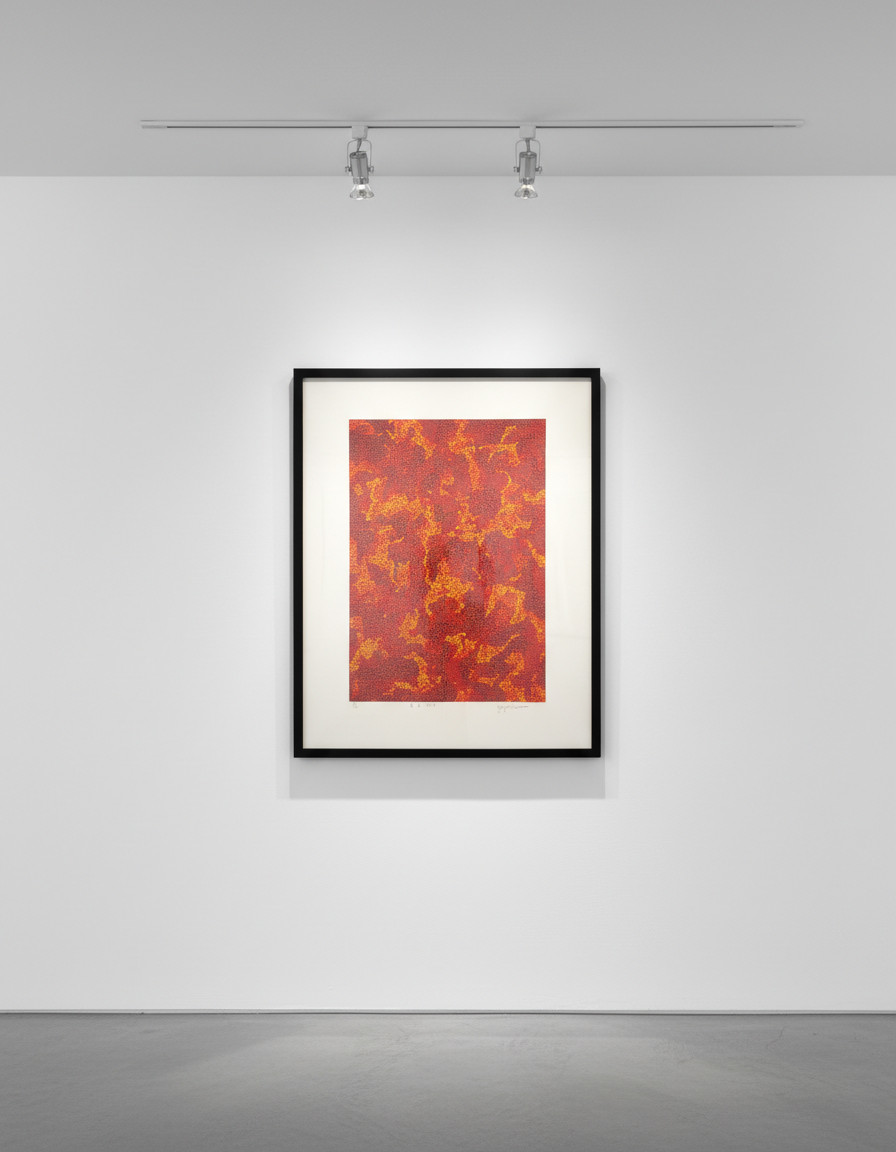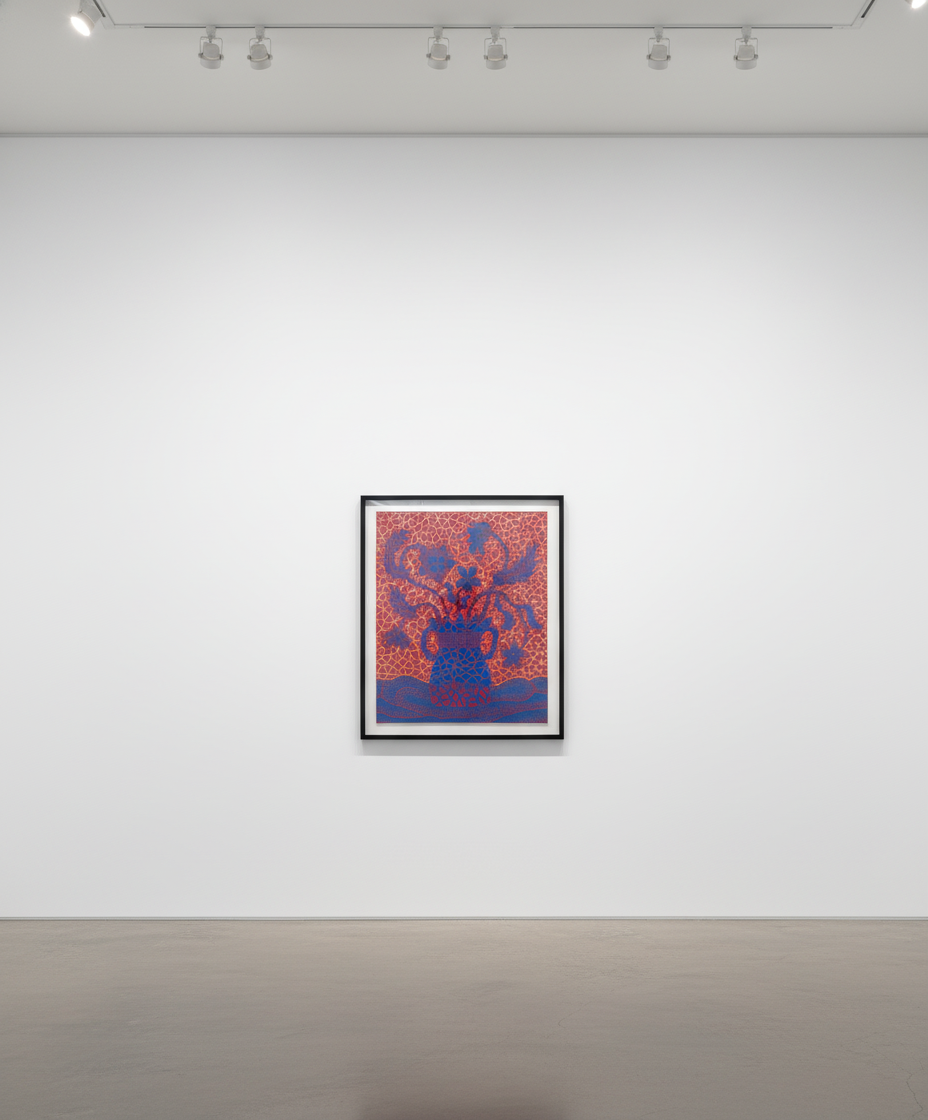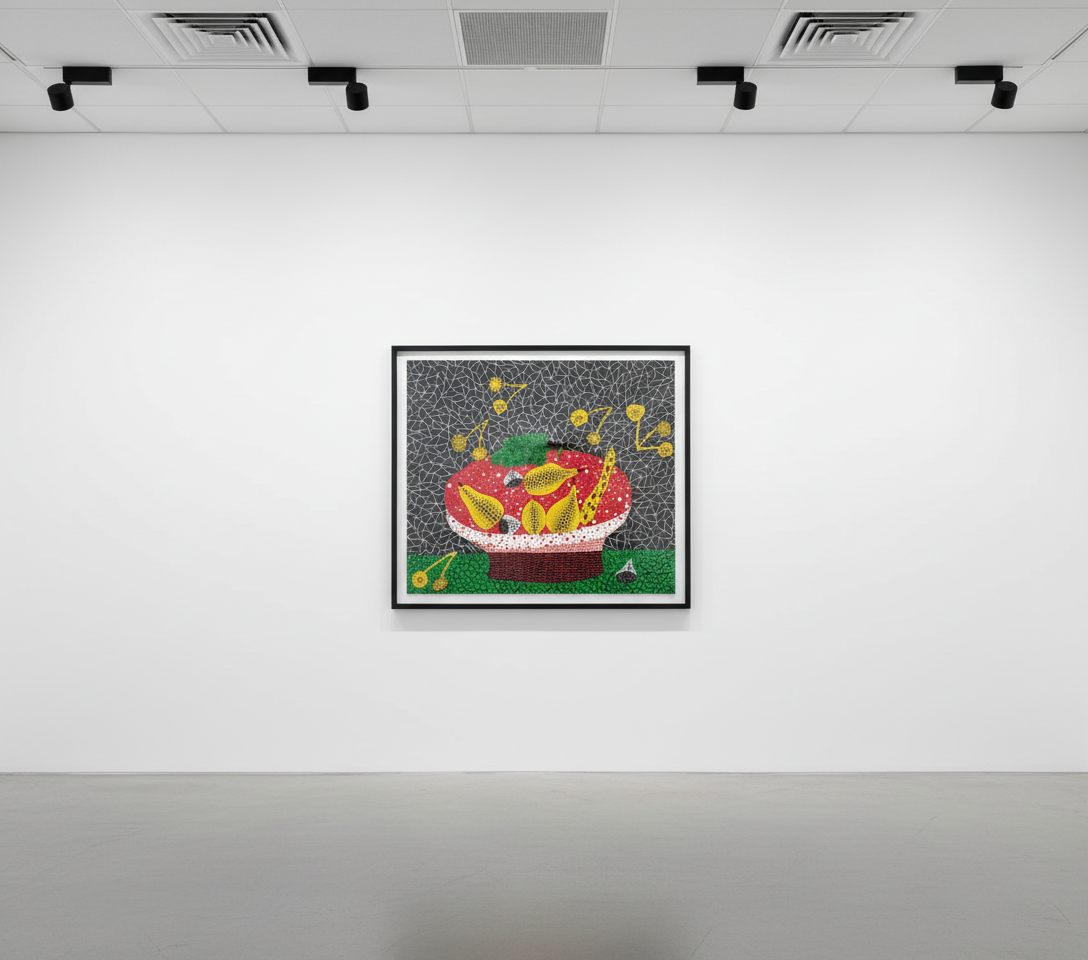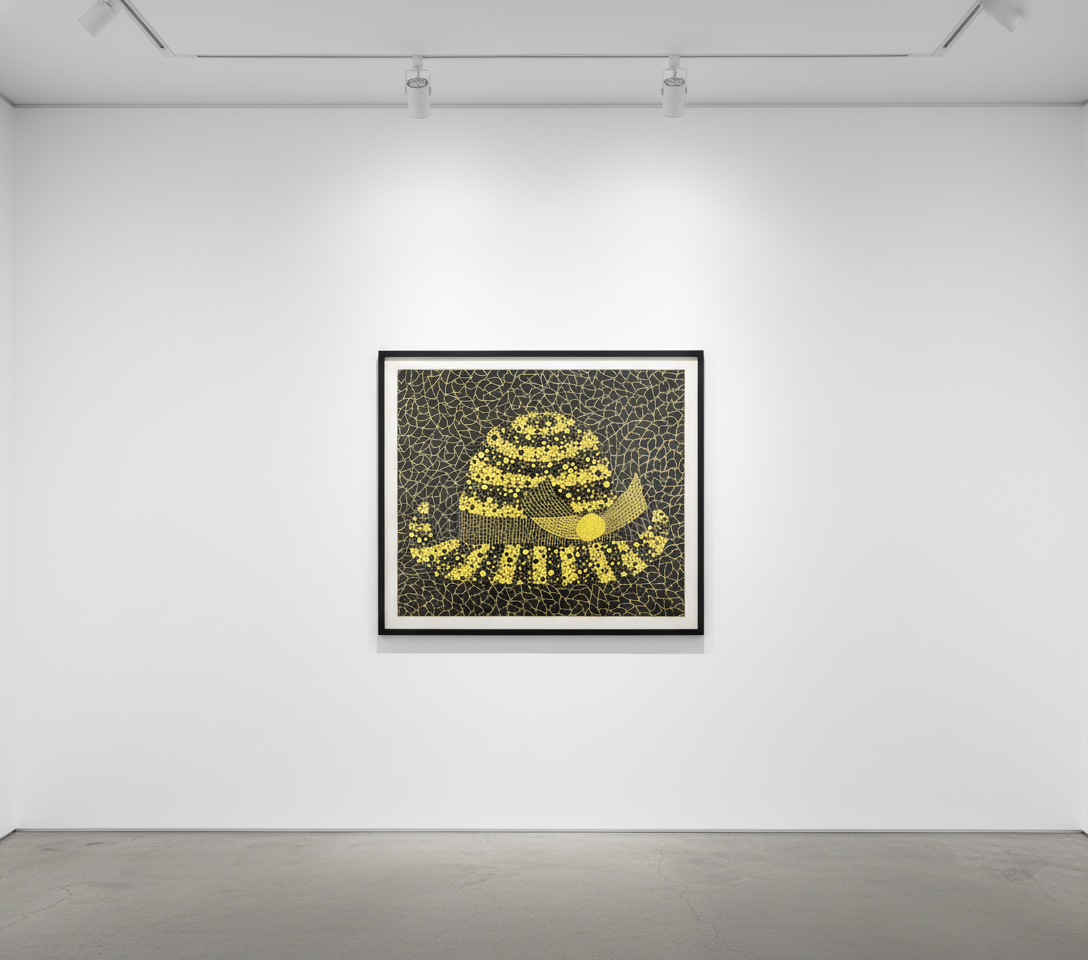
Fauna
1 work
Yayoi Kusama commands the highest auction results of any living female artist, with her masterwork Pumpkin (Yellow/Black) from 1994 achieving $6,717,800 at Sotheby's in April 2021. That same year, her foundational Infinity Nets canvas from 1959 reached $5,098,000 at Christie's in November, confirming sustained institutional demand across her seven-decade practice.
Yayoi Kusama commands the highest auction results of any living female artist, with her masterwork Pumpkin (Yellow/Black) from 1994 achieving $6,717,800 at Sotheby's in April 2021. That same year, her foundational Infinity Nets canvas from 1959 reached $5,098,000 at Christie's in November, confirming sustained institutional demand across her seven-decade practice. According to the Art Basel and UBS Global Art Market Report 2025, the global art market reached $57.5 billion in 2024, with female artists capturing increasing market share at the highest price tiers. Kusama's position at the apex of this category reflects both her historical significance and her continued cultural relevance, as collectors worldwide compete for access to her most important works.
Guy Hepner has facilitated $561,250 in Yayoi Kusama transactions, establishing direct relationships with collectors seeking museum-quality examples from her major series. Operating from New York, Guy Hepner maintains access to authenticated Kusama works across her Infinity Nets, Pumpkin sculptures, and limited edition prints, serving private collectors, institutions, and art advisors navigating a market defined by scarcity and authentication complexity. The secondary market for Kusama demands rigorous provenance documentation, and Guy Hepner's expertise ensures that every transaction meets the verification standards required by serious collectors building legacy holdings.
Born March 22, 1929, in Matsumoto, Japan, Yayoi Kusama began creating art as a child to process the hallucinations and anxiety that would shape her entire creative output. These early psychological experiences manifested as obsessive pattern-making, with dots and nets appearing across every available surface as both therapeutic practice and artistic compulsion. Rather than treating her condition as limitation, Kusama transformed her unique perception into a revolutionary visual language that would eventually reshape contemporary art's understanding of space, infinity, and self-obliteration.
Kusama's formal training in traditional Japanese painting gave her technical foundations that she would systematically deconstruct upon arriving in New York in 1958. Entering the male-dominated art world at the height of Abstract Expressionism, she developed her Infinity Net paintings as a direct challenge to gestural heroism, creating monumental canvases covered in endless repetitions of small loops that dissolved figure-ground relationships and suggested infinite expansion beyond the canvas edge. These works anticipated both Minimalism and conceptual art while remaining entirely distinctive, establishing Kusama as a pioneering voice whose influence would eventually be recognized by artists from Andy Warhol to contemporary practitioners working today.
The Infinity Net series represents Kusama's most historically significant and market-validated body of work, with the 1959 canvas achieving $5,098,000 at Christie's confirming the premium collectors place on early examples. These paintings emerged from Kusama's first years in New York, where she worked obsessively to cover canvases stretching up to thirty-three feet with interlocking loops of paint applied in continuous, meditative gestures. The resulting surfaces pulse with optical energy, simultaneously flat and infinitely deep, suggesting both microscopic cellular structures and cosmic expanses.
Art historians credit the Infinity Nets with influencing the development of Minimalism, predating similar investigations by artists who would receive greater institutional recognition during their lifetimes. The 2012 retrospective traveling from Tate Modern to Centre Pompidou, Whitney Museum, and MoMA corrected this historical oversight, positioning Kusama's early achievements within proper art-historical context and triggering sustained market growth. Christie's and Sotheby's have since anchored their contemporary sales with significant Infinity Net examples, recognizing that these paintings represent both aesthetic achievement and sound investment fundamentals.
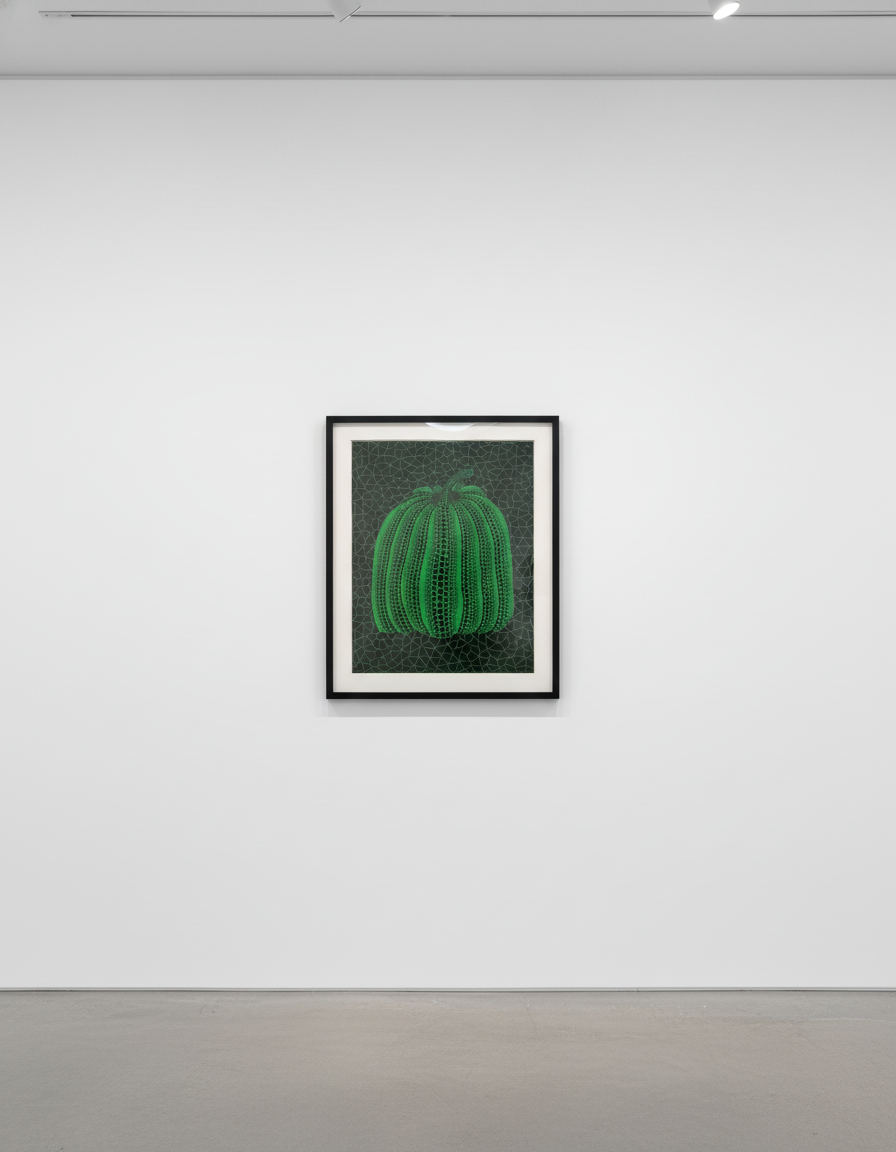
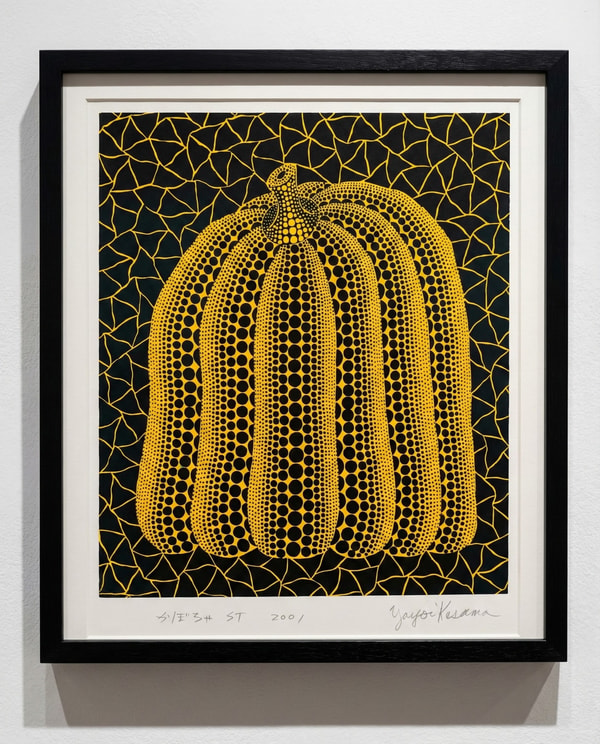
Kusama's Pumpkin sculptures in bronze and fibreglass have achieved global recognition through permanent installations sited internationally, transforming the humble gourd into an icon of contemporary art. The artist's identification with the pumpkin form began in childhood and intensified through her career, with Kusama describing the vegetable as both amusing and unwavering in its spiritual appeal. The $6,717,800 result for Pumpkin (Yellow/Black) at Sotheby's in April 2021 confirmed collector conviction in these three-dimensional works, which translate Kusama's signature polka-dot language into sculptural form.
The market for Pumpkin sculptures distinguishes between unique bronze casts, fibreglass editions, and related works on paper, with authentication and condition documentation proving essential at every price level. Guy Hepner advises collectors on navigating these distinctions, ensuring acquisitions meet museum standards and maintain provenance integrity for future institutional consideration or secondary market placement. Bronze examples command particular premiums, with patination quality and edition documentation directly impacting value realization.
Kusama's Infinity Mirror Rooms have achieved unprecedented institutional penetration, with permanent installations at The Broad in Los Angeles drawing attendance figures that rival traditional museum blockbusters. These immersive environments surround viewers with endless reflections of lights, pumpkins, or cosmic forms, creating the self-obliteration experience that Kusama has pursued since her earliest hallucinations. The 2021-2022 exhibition at the National Gallery of Victoria continued this institutional embrace, introducing new audiences to Kusama's practice while reinforcing collector interest in related portable works.
The Infinity Mirror Rooms cannot enter private collections, but they generate sustained public engagement that elevates values across Kusama's entire market. Collectors who cannot acquire the rooms themselves compete for related prints, sculptures, and paintings that capture similar visual concepts in formats suitable for residential or private museum installation. Guy Hepner recognizes this dynamic and maintains inventory positioned to serve collectors seeking authentic Kusama experiences at accessible price points without sacrificing quality or authentication integrity.
The Kusama market requires vigilant authentication practices, as the artist's popularity has attracted forgeries and misattributed works that threaten collector confidence. Legitimate transactions demand documentation from the Yayoi Kusama Studio or verification through established auction house provenance, with any gaps in ownership history requiring careful evaluation before acquisition. Guy Hepner maintains authentication standards aligned with Christie's, Sotheby's, Phillips, and Bonhams requirements, ensuring that every Kusama work entering our inventory meets institutional verification thresholds.
Collectors should approach Kusama purchases with documentation demands proportional to investment scale, requesting complete exhibition history, publication records, and direct studio confirmation for significant acquisitions. The artist's continued productivity from her Tokyo studio, where she has resided at a psychiatric institution since 1977, means new authenticated works continue entering the market through official channels while simultaneously increasing scrutiny on secondary market offerings.
The Art Basel and UBS Global Art Market Report 2026 confirms that the global art market returned to growth in 2025, creating favorable conditions for collectors holding museum-quality works by historically validated artists. Kusama's position as the highest-selling living female artist provides insulation against market volatility, as institutional demand creates consistent floor prices even during broader economic uncertainty. Her continued cultural visibility through museum exhibitions, public installations, and fashion collaborations maintains the cross-generational collector interest that sustains long-term market performance.
Guy Hepner advises collectors considering Kusama acquisitions to prioritize works with complete authentication documentation, excellent condition, and clear provenance chains connecting directly to the artist's studio. Early Infinity Net paintings from the 1950s and 1960s represent the highest appreciation potential, though authenticated Pumpkin sculptures and significant prints offer entry points for collectors building positions in anticipation of future institutional recognition. The current market rewards patience and selectivity, with premium examples commanding prices reflecting their rarity while lesser works demonstrate price sensitivity requiring careful evaluation.
For collectors seeking authenticated Yayoi Kusama works with institutional-quality provenance, Guy Hepner offers direct access to carefully vetted inventory and expert guidance navigating this complex market. Contact our New York team to discuss current availability and acquisition strategies aligned with your collection objectives.