Sol Felpeto Fangio, Monaco grand Prix 1950 For Sale
Sol Felpeto
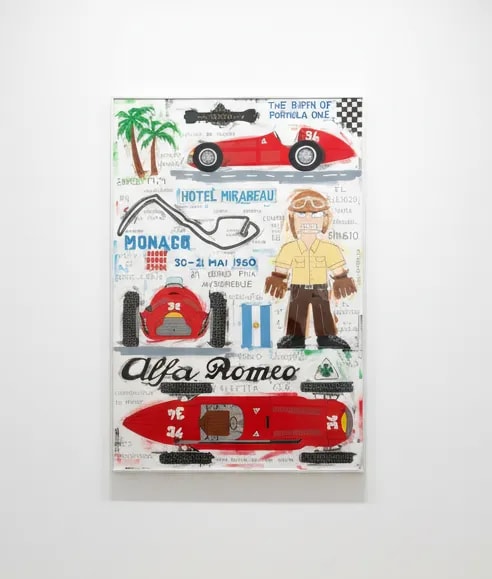
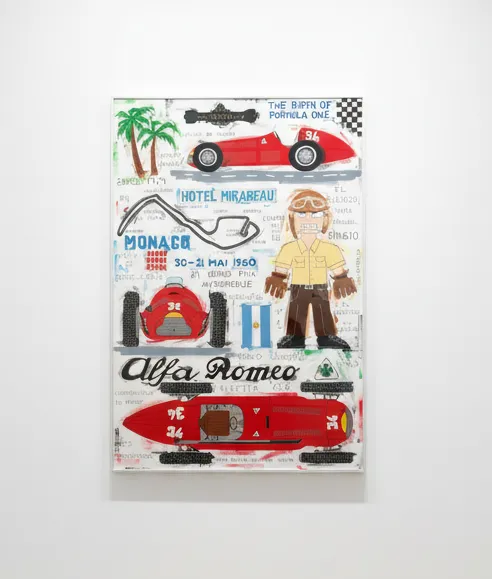
Fangio, Monaco grand Prix 1950
Acrylic on canvas
About this work
Sol Felpeto's Fangio, Monaco grand Prix 1950 captures a defining moment in motorsport history through the artist's signature synthesis of documentary precision and painterly expressionism. The acrylic on canvas presents Juan Manuel Fangio navigating the legendary street circuit, his Alfa Romeo rendered with the kind of gestural urgency that transforms archival subject matter into visceral contemporary experience. The composition channels the compressed intensity of Monaco's hairpin turns and harbor-side straights, where Felpeto's brushwork oscillates between controlled detail and kinetic abstraction. This tension—between the frozen historical record and the sensation of speed—defines the work's visual rhythm. The artist treats the racing machine not as nostalgic artifact but as cultural totem, a vessel carrying collective memory of postwar European ambition and athletic transcendence. Within Felpeto's broader practice, this painting exemplifies her commitment to sport as legitimate subject for serious contemporary work. Like her Arttoons series, the piece operates at the intersection of popular imagery and fine art tradition, refusing the distinction between high culture and mass spectacle. The 1950 Monaco Grand Prix—Fangio's first Formula One victory at the circuit—becomes both specific historical document and universal meditation on human achievement under pressure. The emotional register balances reverence with vitality. Felpeto approaches her subject with the seriousness of a history painter while maintaining the immediacy of someone who understands why these moments endure in collective imagination. For acquisition inquiries regarding this work by Sol Felpeto, contact Guy Hepner in New York.
Price on Application
Edition & Provenance
- Medium
- Acrylic on canvas

More from this series
About the Paintings Series
Fanny Brodar has emerged as one of the most distinctive voices in contemporary American painting, crafting works that pulse with an infectious energy and an unmistakable visual vocabulary. Based in New York, Brodar has developed a practice that sits at the compelling intersection of pop culture, graphic design, and fine art, producing canvases that demand attention through their fearless use of color and their witty, text-driven compositions. Her paintings speak to the viewer with an immediacy that feels both refreshingly accessible and intellectually engaging, transforming everyday subjects into vibrant celebrations of modern life.
What distinguishes Brodar's work from her contemporaries is her ability to synthesize seemingly disparate influences into a cohesive and instantly recognizable aesthetic. Her canvases burst with saturated hues—electric blues, blazing oranges, vivid pinks, and sunshine yellows—applied with a confidence that speaks to her mastery of color theory and her understanding of its emotional impact. These bold chromatic choices serve as more than mere decoration; they function as essential components of the narrative each painting constructs, amplifying mood and drawing the eye across compositions that reward prolonged viewing.
The incorporation of text stands as perhaps the most defining characteristic of Brodar's artistic practice. Words and phrases dance across her canvases, sometimes bold and declarative, other times playful and irreverent. This linguistic dimension adds layers of meaning to her imagery, creating works that function simultaneously as visual experiences and verbal statements. The text elements in Brodar's paintings recall the legacy of artists like Jean-Michel Basquiat and Ed Ruscha, yet she brings an entirely contemporary sensibility to this tradition, infusing her typographic choices with a warmth and humor that feel distinctly her own.
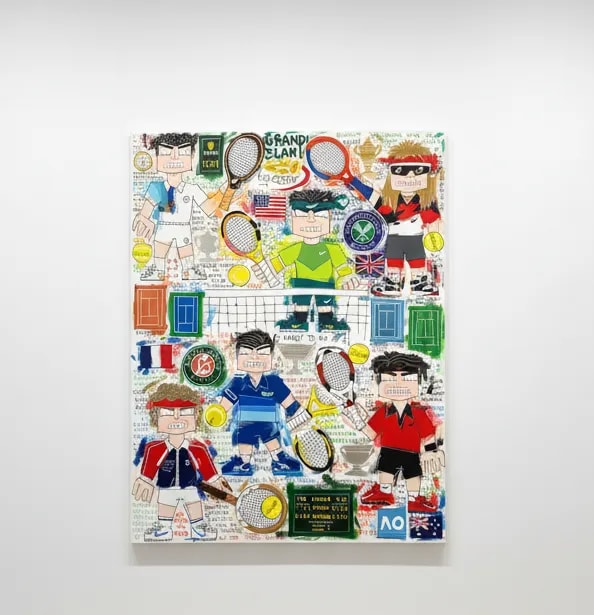
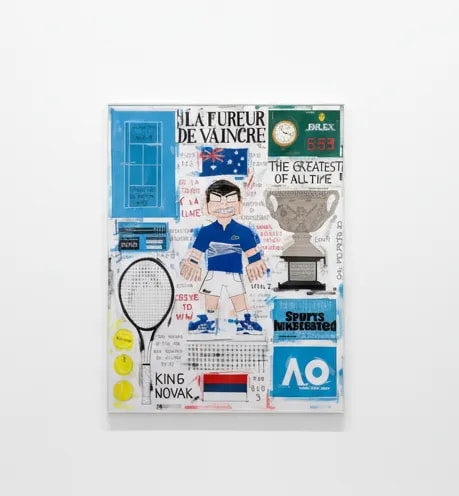
Throughout her expanding body of work, Brodar demonstrates a particular fascination with cultural icons, competitive rivalries, and the dramatic narratives that capture public imagination. Her paintings exploring the world of tennis exemplify this interest beautifully. Works such as Agassi vs. McEnroe, The Big Three, Djokovic, and Grand Slam transform the sport's legendary figures and moments into dynamic visual statements. These pieces capture not merely the athletic achievements of their subjects but the mythology that surrounds them—the intensity of competition, the clash of personalities, and the enduring fascination these rivalries hold in collective memory. Brodar approaches these sporting legends with both reverence and a knowing sense of play, creating paintings that will resonate with tennis enthusiasts while standing entirely on their own as compelling works of contemporary art.
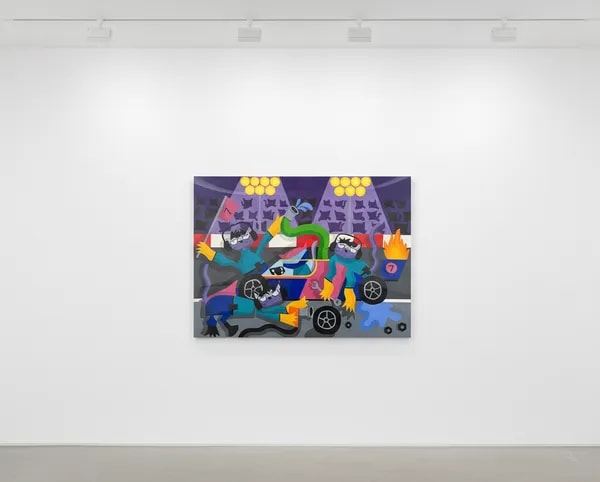
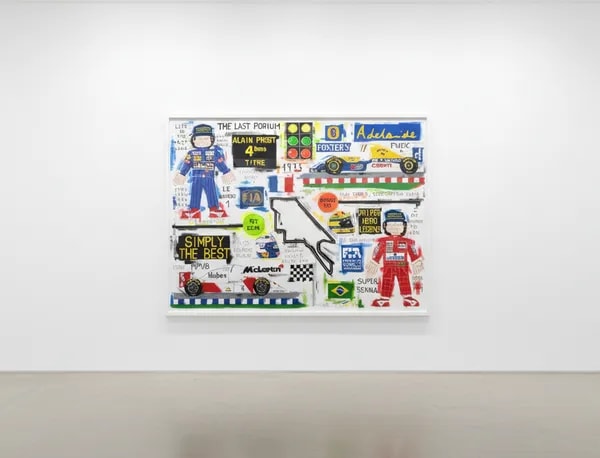
This same spirit infuses her motorsport-inspired pieces, including Prost vs. Senna, Adelaide 1993, and Indycat. The legendary rivalry between Ayrton Senna and Alain Prost represents one of the most dramatic chapters in Formula One history, and Brodar channels that intensity through her characteristic visual language. These works capture the speed, danger, and glamour of racing while simultaneously commenting on the human drama that makes such competition so captivating. Adelaide 1993 speaks to a specific moment in racing history, demonstrating Brodar's attention to the particular details and stories that transform sport into legend.
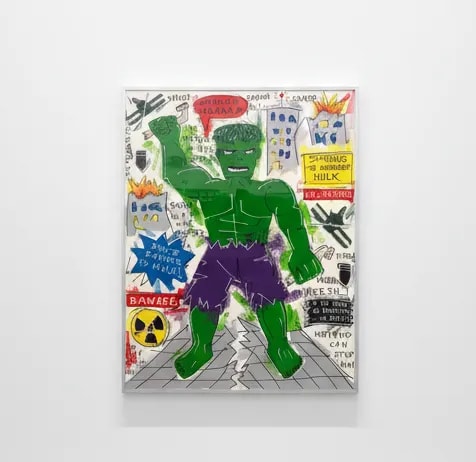
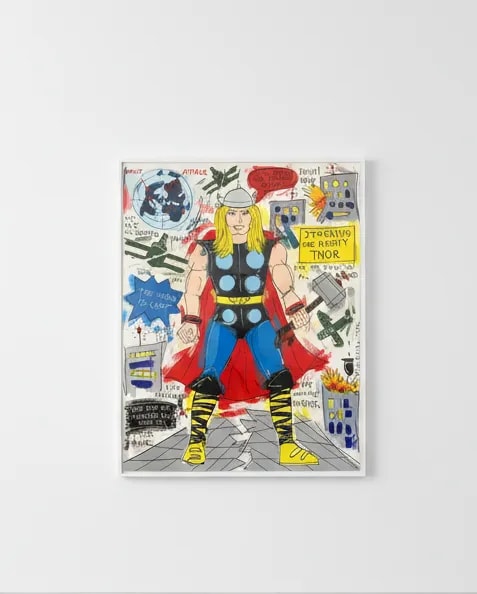
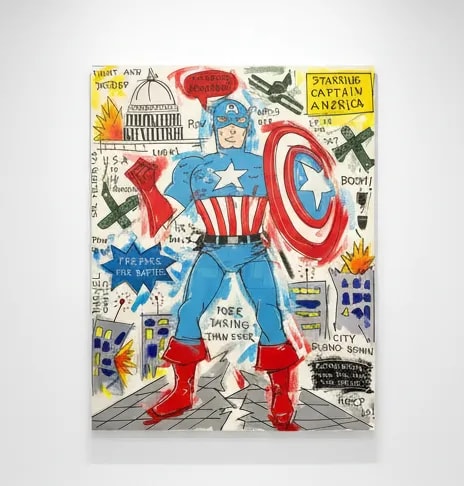
Equally compelling is Brodar's exploration of popular culture through her superhero-inspired works. Paintings such as The Hulk, Thor, and Captain America engage with the iconography of comic book heroes that have become central figures in contemporary entertainment. Rather than offering straightforward depictions, Brodar filters these characters through her distinctive aesthetic, producing works that comment on heroism, mythology, and the role these figures play in modern storytelling. The paintings possess a knowing quality, acknowledging both the earnest appeal of these characters and the sophisticated cultural conversations surrounding them.
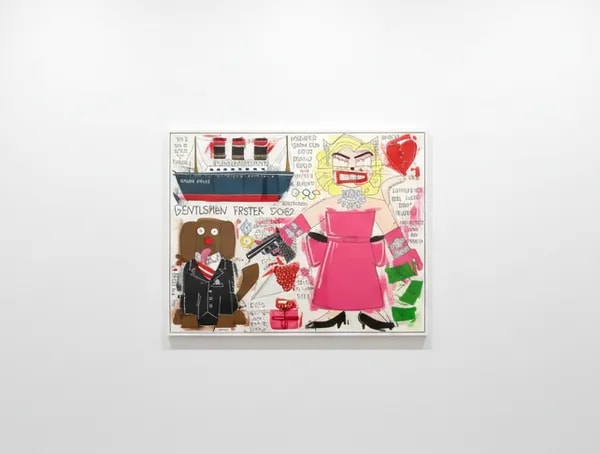
Perhaps most delightfully, Brodar brings her considerable talents to bear on subjects drawn from everyday pleasures and observations. Her feline-inspired works—Cats Of Wall Street, Cats In Black, and King Dog VS Catzilla—display her gift for finding humor and joy in the world around her. These paintings transform the eternal competition between cats and dogs, and the personalities we project onto our animal companions, into exuberant visual celebrations. Gentleman prefer dogs continues this playful exploration, its very title suggesting the witty wordplay that characterizes so much of Brodar's practice. These works remind us that great art need not be solemn; it can embrace joy, whimsy, and the simple pleasures that brighten daily existence.
Food, travel, and the small moments that constitute a life well-lived thread through Brodar's broader practice, informing her color choices and compositional decisions even in works focused on other subjects. There is a generosity to her paintings, an evident desire to share delight with the viewer rather than to challenge or confront. This quality has contributed to her growing reputation among collectors who seek works that bring energy and optimism into their living spaces while maintaining genuine artistic credibility.
As Brodar continues to develop her practice, her paintings increasingly command attention from serious collectors who recognize the sophistication underlying their accessible surfaces. Her work represents a significant contribution to the ongoing dialogue between fine art and popular culture, between linguistic and visual expression, and between aesthetic pleasure and intellectual engagement. These are paintings that invite viewers into a world of color, language, and joy, offering both immediate gratification and lasting rewards.
Guy Hepner is pleased to offer works from Fanny Brodar's paintings series. For all inquiries regarding acquisition, pricing, and availability, collectors are invited to contact the gallery directly.

About Sol Felpeto
Sol Felpeto has established herself as one of the most distinctive voices in contemporary figurative painting, constructing a visual language that transforms collective memory into meticulously composed narrative tableaux. Working exclusively in acrylic on canvas, the Spanish-born artist has developed an instantly recognizable approach that bridges high culture and popular iconography, channeling the graphic intensity of comic illustration through the conceptual rigor of archival practice. Her A