Paintings

August 4, 2026
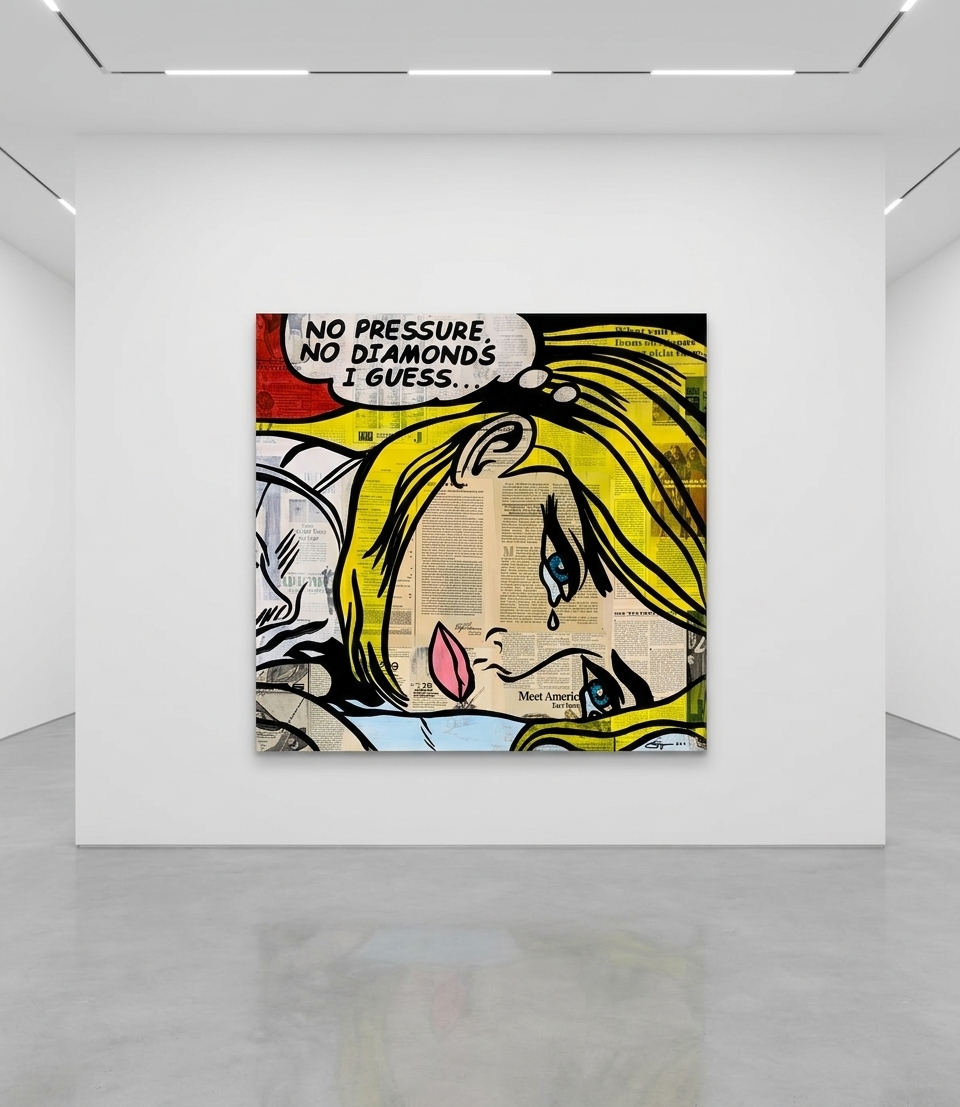
Walk through any American supermarket and you are surrounded by design decisions that have shaped generations. The curve of a Coca-Cola bottle, the grin of Tony the Tiger, the patriotic palette of a Fourth of July display—these are not incidental images but the visual architecture of collective memory. For those seeking Jojo Anavim art for sale, understanding this cultural foundation is essential. The New York-based artist has built a remarkable practice on the premise that the objects we dismiss as ordinary are, in fact, extraordinary repositories of meaning, nostalgia, and shared experience.
Anavim's work arrives at a moment when collectors are increasingly drawn to artists who can bridge accessibility and conceptual depth. The contemporary art market has shown sustained appetite for paintings that engage with popular culture and collective memory, and Anavim occupies a unique position within this landscape. His canvases speak to universal experiences—Saturday morning cartoons, childhood breakfasts, summer road trips—while maintaining the technical sophistication and layered significance that serious collectors demand. This is not mere nostalgia; it is a sophisticated examination of how consumer culture shapes identity, memory, and the American experience itself.
Jojo Anavim works from his New York studio, creating compositions that have earned him recognition from both collectors and institutions. His client list speaks to a remarkable range of appeal: the Coca-Cola Archives have acquired his work, as has Madison Square Garden, demonstrating that his paintings resonate across the spectrum from corporate collections to dedicated art enthusiasts. This dual appeal—to both institutional buyers and individual collectors—reflects the accessibility and depth that characterizes his entire practice.
The Jojo Anavim artist identity is inseparable from his relationship with American consumer culture. He approaches brand iconography not with the cool detachment that characterized earlier Pop artists but with genuine warmth and affection. His paintings invite viewers to reconsider objects they encounter daily, finding within them layers of memory, cultural significance, and aesthetic beauty that typically go unexamined. There is a generosity in this approach, a willingness to meet viewers where they are rather than demanding they ascend to some rarefied plane of art-world sophistication.
What distinguishes Anavim from artists working in similar territory is his material approach. His surfaces frequently incorporate actual packaging elements, thick impasto brushwork, and layered compositions that reward sustained viewing. Standing before one of his paintings, you notice details that photographs cannot capture: the texture of built-up paint, the unexpected juxtapositions of found materials, the way light plays across surfaces that combine the glossy and the matte. These are works that benefit from physical presence, that reward the collector who lives with them over time.

Jojo Anavim in his Studio.
Among the most recognizable elements of Anavim's practice is his treatment of breakfast cereal packaging. At first glance, his use of Cheerios, Lucky Charms, and Frosted Flakes feels playful, colorful, even whimsical. But there is considerable depth beneath the sugary surface. Cereal, particularly in American households, represents far more than sustenance; it functions as a ritual, a rite of passage, and a shared visual language passed down across generations. For many viewers, the cereal aisle served as an early introduction to branding, desire, and visual stimulation—the first encounter with the persuasive power of commercial design.
The characters that populate these boxes—Tony the Tiger, the Trix Rabbit, Toucan Sam—operate as mascots of childhood but also as the earliest agents of advertising influence that shape consumer behavior for decades. Jojo Anavim cereal box art engages with this cultural weight directly. His paintings transform mass-produced packages into objects worthy of contemplation, elevating the mundane to the monumental in a manner that echoes the revolutionary gestures of Andy Warhol's Campbell's Soup Cans. Yet where Warhol maintained a certain clinical objectivity, Anavim injects warmth, texture, and an unmistakable sense of personal investment.
This approach resonates particularly strongly with collectors who came of age surrounded by these logos, mascots, and packaging. There is recognition in viewing these works—a sense of seeing one's own visual history transformed into something museum-worthy. The Jojo Anavim paintings featuring cereal imagery invite viewers to reconsider their own relationships with these ubiquitous objects, to recognize how profoundly commercial imagery has shaped collective memory and individual identity. For the collector, owning one of these works means possessing a piece of that shared cultural experience, rendered with artistic sophistication that transcends its source material.
If cereal represents the morning ritual of American childhood, ice cream embodies its summer afternoons. Jojo Anavim ice cream paintings capture the soft-serve aesthetic of roadside stands, the bright colors of Good Humor trucks, the particular joy of a melting cone on a hot day. These works evoke childhood summers and American roadside culture, transformed through Anavim's distinctive lens into something both familiar and entirely fresh.
The "Life is Sweet" series represents a compelling iteration of his established visual vocabulary. These pieces brim with positivity, rendered in Anavim's signature style—a kaleidoscope of color, playful typography, and nostalgic undertones that have become hallmarks of his practice. The soft-serve imagery operates on multiple levels: as pure visual pleasure, as cultural reference, and as meditation on optimism in contemporary life. In an art world that often privileges darkness, difficulty, and critique, Anavim's embrace of sweetness and joy feels genuinely countercultural.
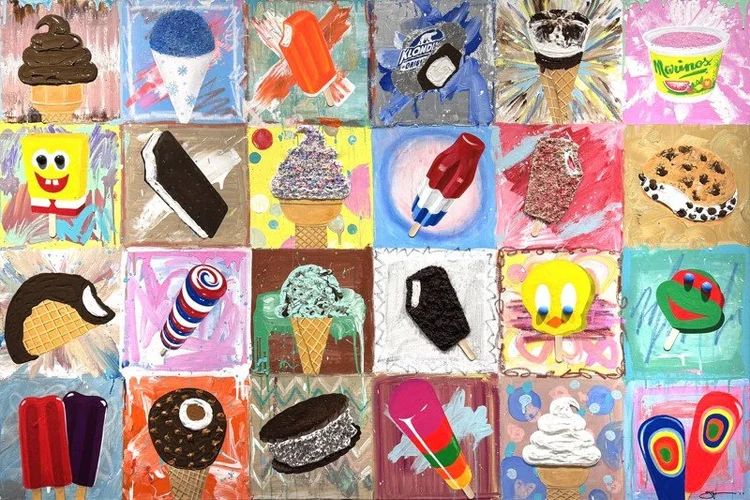
Jojo Anavim, 24 Ice creams, Mixed media on canvas. Available at Guy Hepner, New York.
This is not to suggest that the work lacks substance. The cheerfulness of Anavim's palette and subject matter exists in productive tension with the knowledge that these commercial images are designed to manipulate desire, that the sweetness they promise is often manufactured, that childhood itself is increasingly commodified. The collector who engages deeply with these paintings finds layers of complexity beneath their accessible surfaces. They are works that children can enjoy and adults can contemplate—a combination that makes them particularly suitable for collectors building homes rather than institutional collections.
Perhaps no symbol carries more weight in American visual culture than the flag itself. Artists from Jasper Johns to Robert Rauschenberg have engaged with the Stars and Stripes, finding in its familiar form endless possibilities for reinterpretation. Jojo Anavim American flag art enters this tradition with distinctive energy, treating the national symbol not with reverence or irony but with the same affectionate examination he brings to cereal boxes and ice cream cones.
His gold foil American flag painting represents a particularly striking technical achievement. The use of metallic materials elevates the familiar icon into something approaching the ceremonial, while the textured surface undermines any reading of straightforward patriotism. These are works that acknowledge the complexity of American identity—the way national symbols function simultaneously as sources of genuine pride and instruments of commercial persuasion. The flag appears on beer cans and Fourth of July sales advertisements as often as it does on government buildings; Anavim's treatment acknowledges this multiplicity without resolving it into any simple statement.
For collectors, the flag works offer something of particular value: recognizable subject matter that transcends trend or moment. Where paintings tied to specific cultural references may date, the American flag remains perpetually current, its meanings shifting with political and cultural context while its visual form remains constant. These are works that will reward viewing across decades, their significance evolving as America itself evolves.
The Pop Art movement that emerged in the 1950s and 1960s fundamentally altered how artists and audiences understood the relationship between fine art and commercial culture. Figures like Warhol, Lichtenstein, and Rosenquist drew from advertising, comic books, and consumer products to challenge established hierarchies of taste and subject matter. They demonstrated that the imagery of mass culture could serve as legitimate artistic material, opening doors that subsequent generations have walked through with increasing confidence.
Jojo Anavim pop art represents a crucial evolution in this lineage. His practice acknowledges the legacy of Pop while pushing beyond its original parameters. Where earlier Pop artists often maintained critical distance from their source materials—presenting consumer goods with clinical objectivity—Anavim embraces emotional resonance and material complexity. This shift reflects a different cultural moment: where Warhol's generation encountered mass media as something new and potentially threatening, Anavim's generation has known nothing else. Consumer imagery is not an invasion to be documented but the very air one breathes, the vocabulary in which memory and identity are constructed.
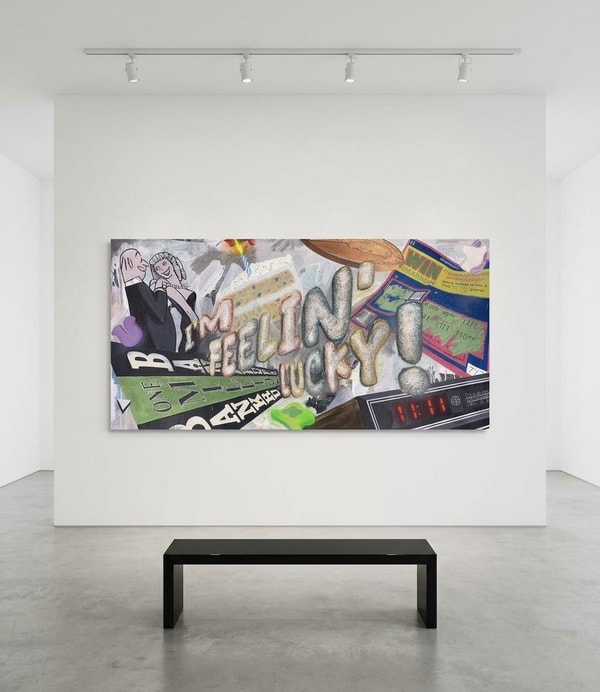
Jojo Anavim, I'm Feeling Lucky, Mixed media on canvas. Available at Guy Hepner, New York.
This evolution has significant implications for collectors. Works that engage with Pop Art traditions continue to demonstrate remarkable resilience in the secondary market, with collectors increasingly drawn to artists who translate foundational strategies into fresh visual languages relevant to current cultural conditions. Anavim occupies an ideal position in this landscape: recognizably connected to an established tradition while offering something genuinely new. His paintings satisfy collectors who appreciate art historical context while appealing to those who simply respond to their immediate visual pleasure.
Beyond his explorations of consumer products, Anavim has developed a notable body of portrait work that engages with celebrity culture and fashion iconography. His Kate Moss series demonstrates his ability to synthesize seemingly disparate cultural realms into coherent visual statements. The "Cowboy Kate" work, for instance, brings together high fashion and the romance of the American West—an unexpected combination that exemplifies Anavim's gift for finding connections that feel both surprising and inevitable.
This synthesis speaks to America's ongoing fascination with reinvention and the persistent allure of Western iconography in contemporary visual culture. The cowboy remains a powerful symbol in American self-understanding, representing independence, frontier spirit, and a certain masculine ideal. By combining this imagery with the sophistication of fashion photography and celebrity portraiture, Anavim creates works that operate on multiple registers simultaneously. They are visually striking enough to anchor a room while offering sufficient conceptual complexity to sustain intellectual engagement over time.
The portrait works also demonstrate the range of Anavim's practice, countering any suggestion that his interests are limited to consumer products and packaging. He approaches the human figure with the same affectionate examination he brings to cereal boxes, finding in celebrity imagery the same cultural weight and collective meaning. For collectors, this range is valuable: it suggests an artist whose practice can evolve and expand rather than remaining static around a single recognizable formula.
For collectors considering where to buy Jojo Anavim art, understanding the current market landscape is essential. The question of how much a Jojo Anavim painting costs depends on several factors: scale, medium, series, and condition among them. His work occupies an accessible position in the contemporary market, priced to attract emerging collectors while maintaining the quality and significance that serious collections require.
This accessibility is not incidental but reflects Anavim's broader artistic philosophy. His subject matter celebrates everyday objects and experiences precisely because they are shared widely; his pricing follows similar democratic principles. This does not mean his work lacks investment potential—quite the contrary. Artists who establish strong collector bases at accessible price points often demonstrate significant appreciation as their reputations mature. The collector who acquires Anavim today positions themselves at an early point in a trajectory that institutions have already begun to recognize.
Several factors should guide collectors evaluating specific works:
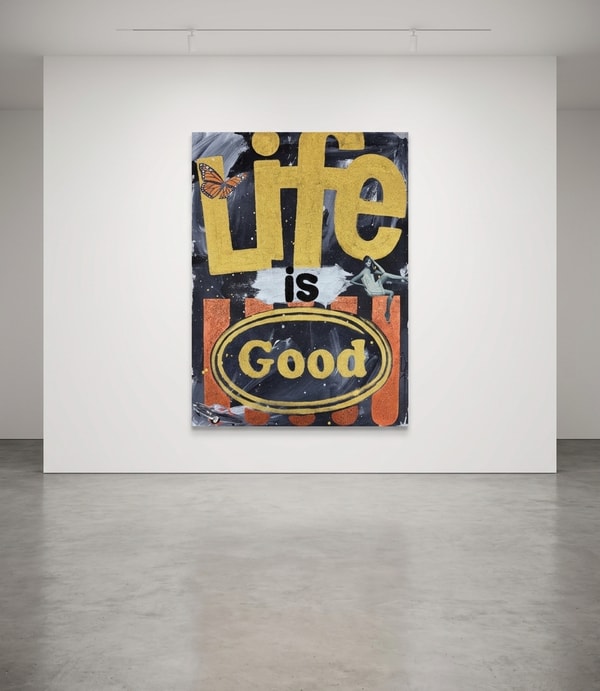
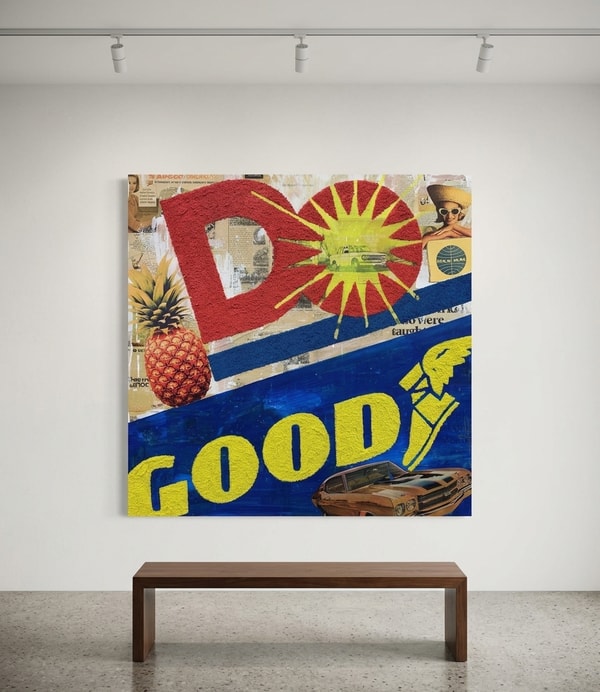
Jojo Anavim, Life is Good, Mixed media. Available at Guy Hepner, New York.
Beyond market considerations, there is the simple question of what it means to live with these paintings. Anavim's work possesses unusual versatility in domestic settings. The bright colors and accessible subject matter make his paintings suitable for spaces where children are present, while the conceptual depth and material sophistication satisfy adults seeking more than mere decoration. This dual appeal is rare and valuable: how many contemporary artists can claim work that functions equally well in a family room and a serious collector's study?
The nostalgic quality of Anavim's imagery also ensures that his work sparks conversation. Visitors recognize the cultural references—the cereal mascots, the ice cream iconography, the American flag—and find themselves drawn into discussion about memory, childhood, and the visual culture that shaped them. Art that prompts conversation has value beyond the aesthetic; it transforms domestic space into something more alive, more engaged, more socially rich.
For interior designers, Anavim's paintings offer considerable flexibility. The bold color palettes can anchor a room's design scheme or provide counterpoint to more subdued surroundings. The scale of his work ranges from intimate pieces suitable for hallways or bedrooms to commanding canvases that define entire living spaces. His Jojo Anavim New York artist identity also carries cache in design contexts where provenance matters—work created in one of the world's most significant art cities by an artist engaged with that city's commercial and cultural energy.
Jojo Anavim gallery representation through Guy Hepner ensures that collectors can access his work with confidence in authenticity and condition. The gallery, located at 177 Tenth Avenue in New York, maintains a significant inventory of Anavim's paintings across various series and scales. This representation matters: acquiring work through an established gallery provides documentation, provenance, and the assurance of dealing with professionals who understand both the artist's practice and the collector's needs.
The current selection available through Guy Hepner includes examples from Anavim's major series. Collectors interested in Jojo Anavim consumer culture art can find works featuring the cereal boxes and brand packaging that have become central to his practice. Those drawn to the more celebratory aspects of his work will discover examples from the "Life is Sweet" and "Life is Good" series. The American flag paintings and portrait works are also represented, allowing collectors to select pieces that align with their particular interests and collection-building strategies.
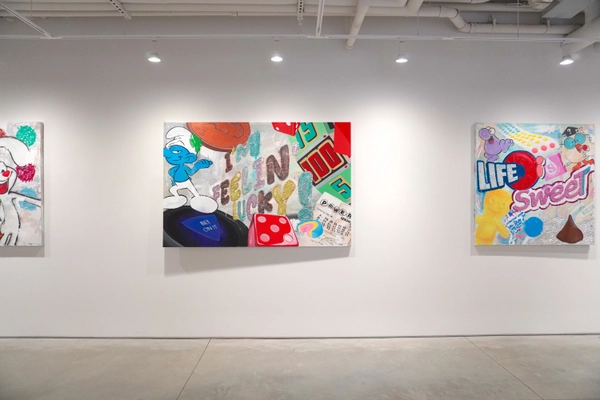
Jojo Anavim installation at Guy Hepner
For collectors outside New York, the gallery provides detailed photography and condition information that supports remote acquisition decisions. The team at Guy Hepner understands that serious collectors often build relationships over time, beginning with inquiry and conversation before committing to purchase. This consultative approach is particularly valuable for those new to collecting contemporary art, providing guidance on selection, installation, and collection development that extends beyond any single transaction.
Timing matters in art collecting, and several factors suggest that the present moment offers particular opportunity for those interested in Anavim's work. His recognition by institutional collectors—the Coca-Cola Archives, Madison Square Garden—establishes credentials that individual collectors can leverage. When institutions acquire an artist's work, they signal confidence in its lasting significance, providing validation that supports both aesthetic and investment considerations.
The broader market context also favors artists working in Pop traditions. According to industry reports, works engaging with popular culture and collective memory continue to perform strongly among both emerging and established collectors. This is not a passing trend but reflects fundamental changes in how contemporary audiences understand the relationship between commercial imagery and artistic expression. Anavim's practice positions him ideally within this ongoing shift.
Finally, there is the simple fact that Anavim remains actively productive, creating new work that extends and develops his established concerns. Collectors who acquire now can follow his evolution, potentially adding pieces from successive series as his practice matures. This is the particular pleasure of collecting living artists: participation in an ongoing creative project rather than mere acquisition of fixed historical objects.
What ultimately distinguishes Jojo Anavim's practice is his ability to make familiar imagery feel fresh. We have all seen cereal boxes, American flags, ice cream cones. We have encountered these images thousands of times, processed them unconsciously, allowed them to shape our desires and memories without examination. Anavim's paintings interrupt this automatic processing, demanding that we look again at what we thought we knew.
This is, in essence, the gift that great art offers: enhanced perception, renewed attention, the transformation of ordinary experience into something rich and strange. That Anavim achieves this through subject matter drawn from supermarket aisles and highway diners rather than museums and academies speaks to the democratic possibilities of contemporary art. His work insists that meaning and beauty are everywhere, waiting to be recognized by those willing to look carefully.
For collectors seeking to buy Jojo Anavim artwork, Guy Hepner at 177 Tenth Avenue in New York offers a welcoming entry point. The gallery's expertise in contemporary Pop traditions and commitment to collector education make it an ideal partner for those beginning or expanding their engagement with Anavim's work. Whether you are drawn to the cereal box paintings, the American flag series, the portrait works, or the exuberant celebrations of American sweetness, the team at Guy Hepner can guide you toward pieces that align with your vision and space. In Anavim's vibrant, textured canvases, the ordinary becomes extraordinary—and your walls become galleries of shared cultural memory, reimagined for the present moment.
Related Series