727

June 19, 2026
Takashi Murakami is one of the most commercially significant and intellectually serious artists working today — and his prints sit at a compelling junction of accessibility and investment value that few other contemporary artists can match. Whether you are searching for Takashi Murakami prints for sale for the first time, or expanding an established holding, this guide gives you the framework to buy with confidence: what series matter, how editions are structured, what prices look like in 2026, and how to authenticate before you buy.
Born in Tokyo in 1962, Takashi Murakami trained in traditional Nihonga painting at the Tokyo University of the Arts, earning a PhD before rejecting the insularity of that tradition entirely. He began developing the visual language that would make him famous — cartoon-like Flowers, mutant Characters, flat colour fields, gold and silver grounds — through the lens of Japanese pop culture, manga, and anime. His 2000 manifesto, Superflat, provided the theoretical scaffold: the argument that Japanese art has never adopted Western perspectival depth, that a continuous aesthetic of surface flatness runs from Edo-period screen painting through postwar otaku culture, and that the hierarchical distinction between high and low culture is itself an ideology worth dismantling.
That argument — combined with the extraordinary visual energy of his work — produced one of the most distinctive and durable careers in contemporary art. His studio, Kaikai Kiki Co., Ltd., operates across Tokyo, New York, and Los Angeles, employing hundreds of assistants and running a production operation that manages editions, collaborations, and merchandise with the precision of a design company. His major gallery relationships — Gagosian, Galerie Perrotin, Blum and Poe — provide the institutional scaffolding for his fine art market. And his collaborations — Louis Vuitton, Kanye West, Supreme, Billie Eilish — have introduced his imagery to audiences far beyond the traditional art world.
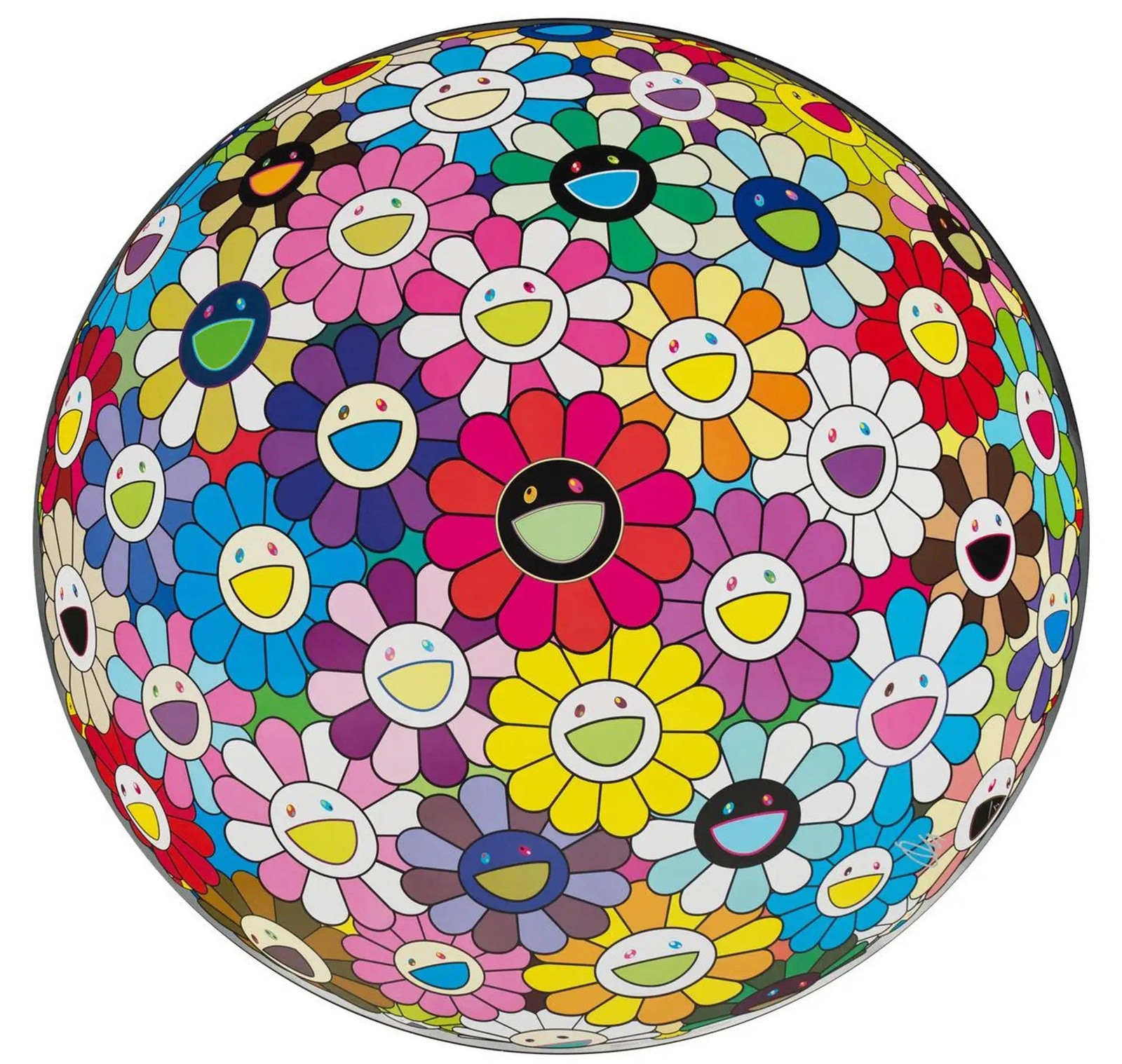
Flower Ball (Multicolour) — Takashi Murakami. Browse Takashi Murakami prints for sale at Guy Hepner.
The case for collecting Takashi Murakami prints in 2026 rests on several converging arguments. The primary market has remained active, with Kaikai Kiki continuing to publish new print editions at regular intervals. The secondary market has demonstrated consistent liquidity — Murakami editions circulate freely at Christie's, Sotheby's, Phillips, and Bonhams, with established price benchmarks that allow buyers and sellers to transact with reasonable price discovery. Museum institutional support — MoMA, MOCA Los Angeles, Tate Modern, the Louis Vuitton Foundation — has sustained the scholarly and cultural framework that underpins long-term collector confidence.
Perhaps more importantly, Murakami's visual language has become genuinely embedded in global popular culture in a way that very few artists achieve in their lifetimes. The smiling flowers, the Mr. Dob character, the skulls — these are images that will register with collectors and audiences for decades to come. That cultural embeddedness is a meaningful long-term asset for any print holding.
For buyers who are new to contemporary print collecting, Murakami also offers something practically valuable: a clearly structured edition hierarchy with well-documented prices, authentication infrastructure through Kaikai Kiki, and a specialist gallery ecosystem that makes guidance accessible. You do not need to navigate this market alone.
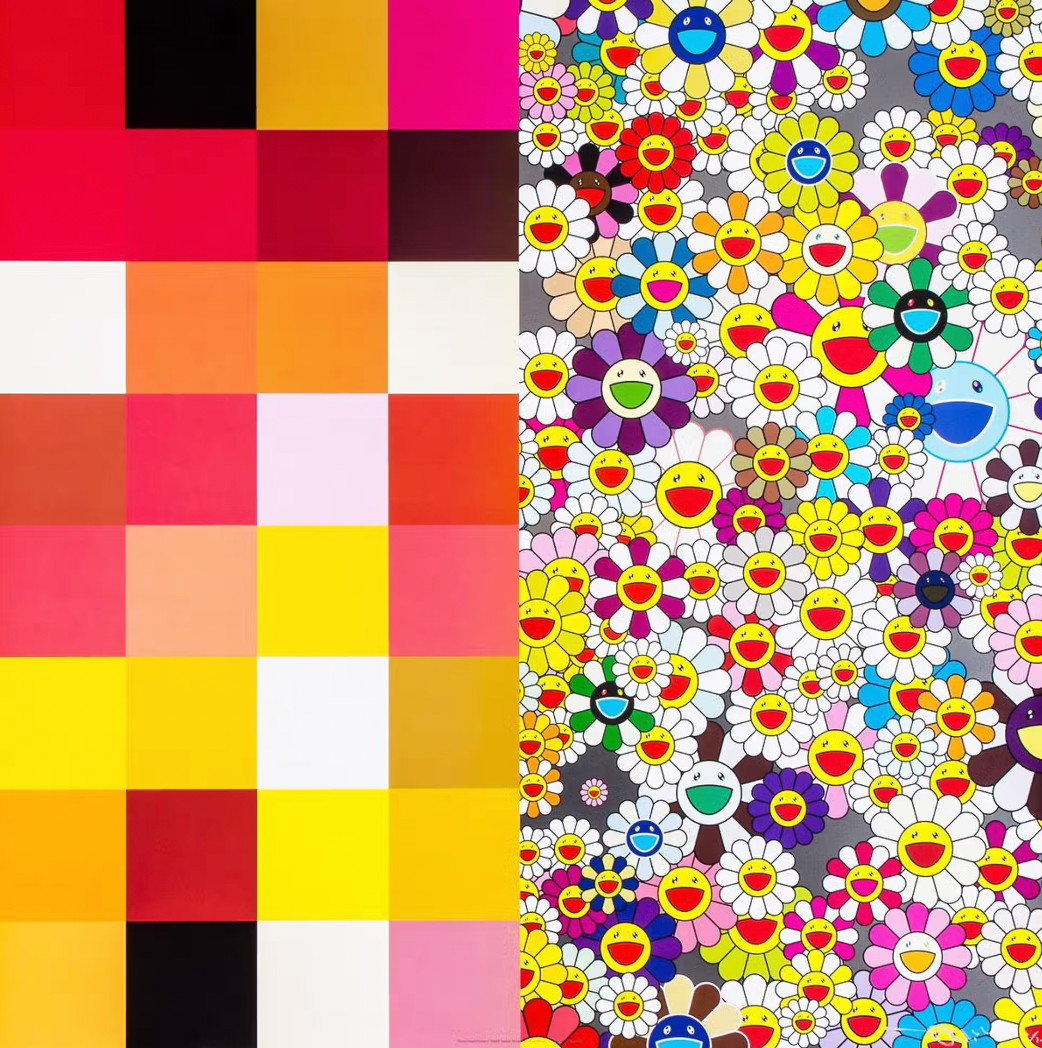
The smiling, multi-petalled flower motif is Murakami's most iconic and most widely traded image. Developed in the early 2000s, the flowers — circular cartoon faces ringed by dozens of graduated petals in rainbow colour fields — have appeared across hundreds of print editions in a vast range of scales, formats, and colour palettes. Their immediate visual accessibility combines with genuine art historical complexity: the flat petal arrangements deliberately invoke the decorative screens of Rimpa-school masters like Ogata Korin.
Flower print editions range from small open editions produced for retail distribution at entry prices of $3,000–$8,000, through mid-range signed screenprints in editions of 50–100 that achieve $15,000–$80,000 at auction, to major large-format works from limited gallery editions that have exceeded $300,000–$500,000 at top auction houses. The range is enormous, reflecting the fact that "a Murakami flower print" encompasses objects as different in rarity and ambition as an entry-level multiple and a museum-quality edition. Knowing which tier you are buying in is the first essential step.
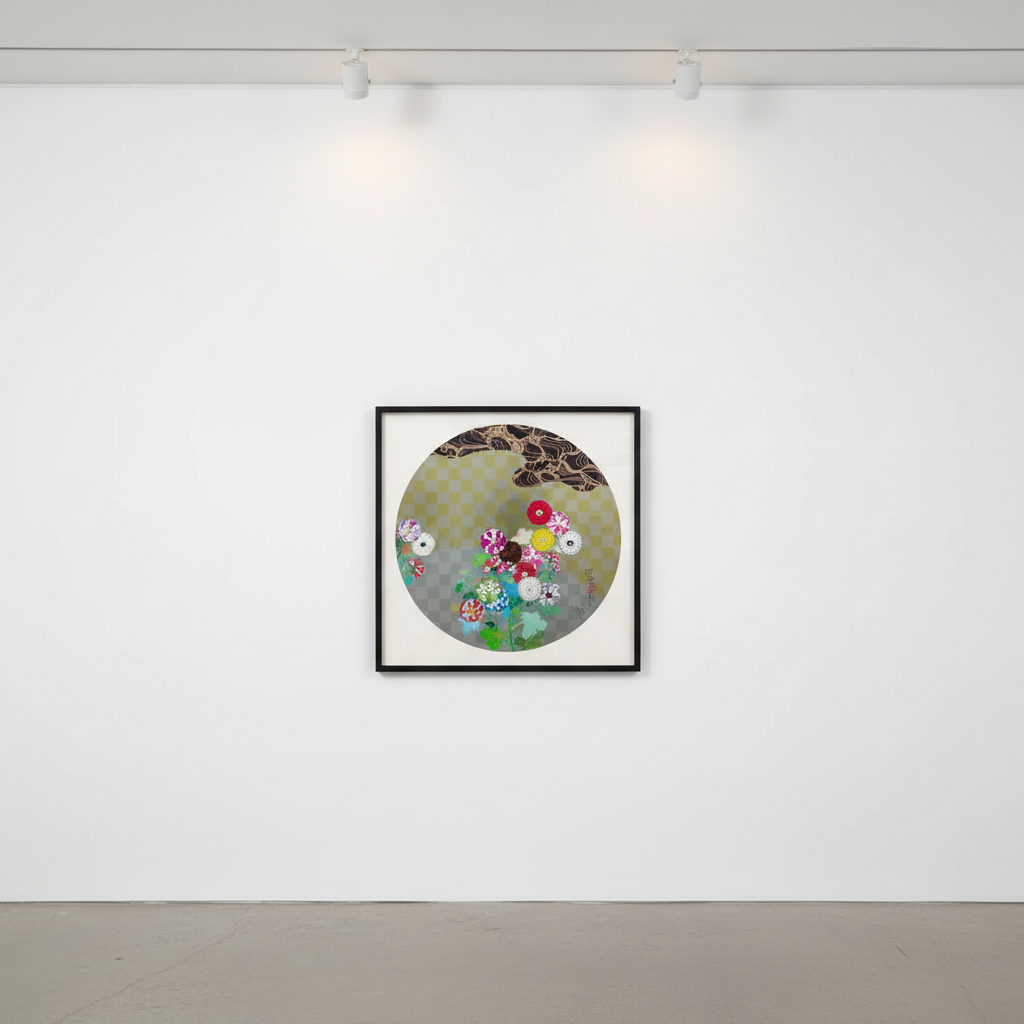
Korin Flowers and Water — Takashi Murakami. Available at Guy Hepner, New York.
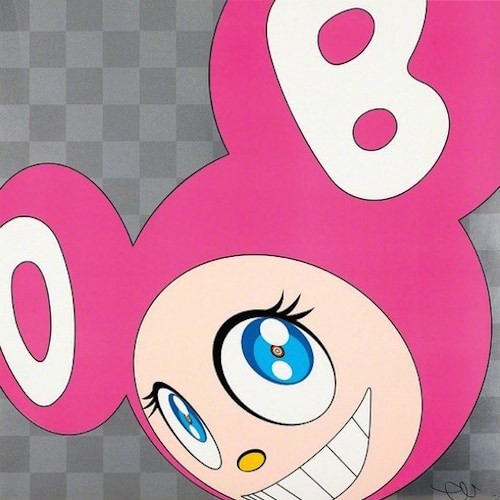
Mr. DOB — Murakami's alter-ego character, a smiling creature whose features migrate between cartoon innocence and unsettling aggression — is among his earliest and most conceptually charged motifs. The name derives from Japanese slang for "why?" ("dobojite"), and the character's shifting physiognomy explores the contradictions within consumer culture. Mr. DOB prints appear in smaller editions than the flowers and tend to appeal to collectors with a more conceptually oriented interest. Early examples from the late 1990s and 2000s are substantially rarer and trade in the $30,000–$300,000 range at auction.
Murakami's skull imagery provides the conceptual counterpoint to his cheerful flowers. Drawing on both Western vanitas traditions and Japanese Buddhist iconography around mortality and impermanence, the skull prints engage collectors seeking works with explicit philosophical weight. In print form, skull editions have shown consistent secondary market strength in the $10,000–$150,000 range, with their more sombre palette making them formally versatile across collection display contexts.
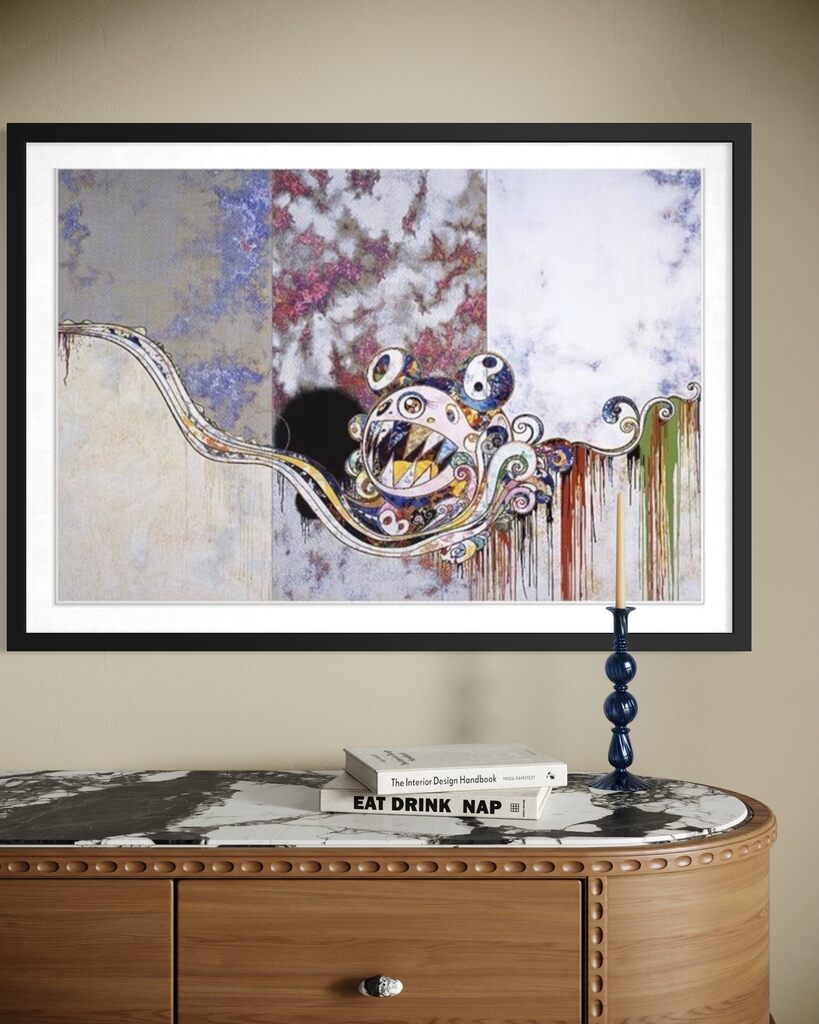
Named after the landmark 1996 painting, the 727 series represents Murakami's most ambitious engagement with Japanese art historical tradition in print form. The central image — a rolling dragon-cloud over churning waves — derives from Edo-period screen painting conventions but is rendered in Murakami's flat, graphic register. These prints carry significant art historical weight and appeal to collectors building museum-quality holdings. They have performed strongly at major auction houses and represent a serious statement in any collection.
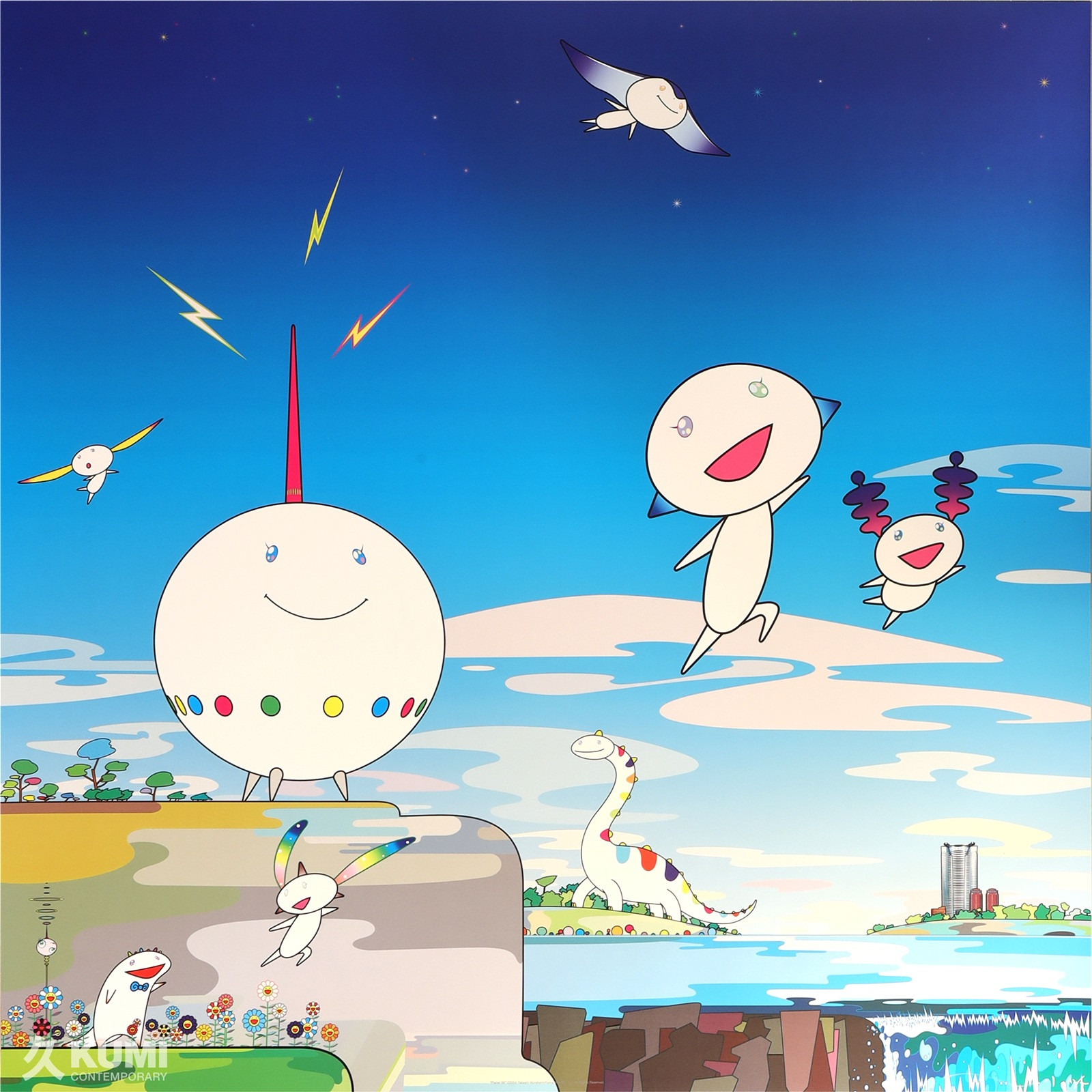
Murakami's Kaikai and Kiki characters — the white bunny-like Kaikai and the orange star-shaped Kiki — appear across a range of editions and multiples that occupy a more accessible price tier. These works are produced with the same exacting craft standards as the major print series but at lower price points, making them an excellent entry option for collectors building their first Murakami position.
Murakami's homage works — including tributes to Yves Klein and to Rimpa master Ogata Korin — demonstrate the intellectual scaffolding of his practice most explicitly. The Yves Klein works directly invoke Klein's IKB blue and his Anthropometries performances, translated into Murakami's flat graphic language. These editions are particularly significant for collectors interested in the conceptual depth underlying his apparently playful aesthetic.
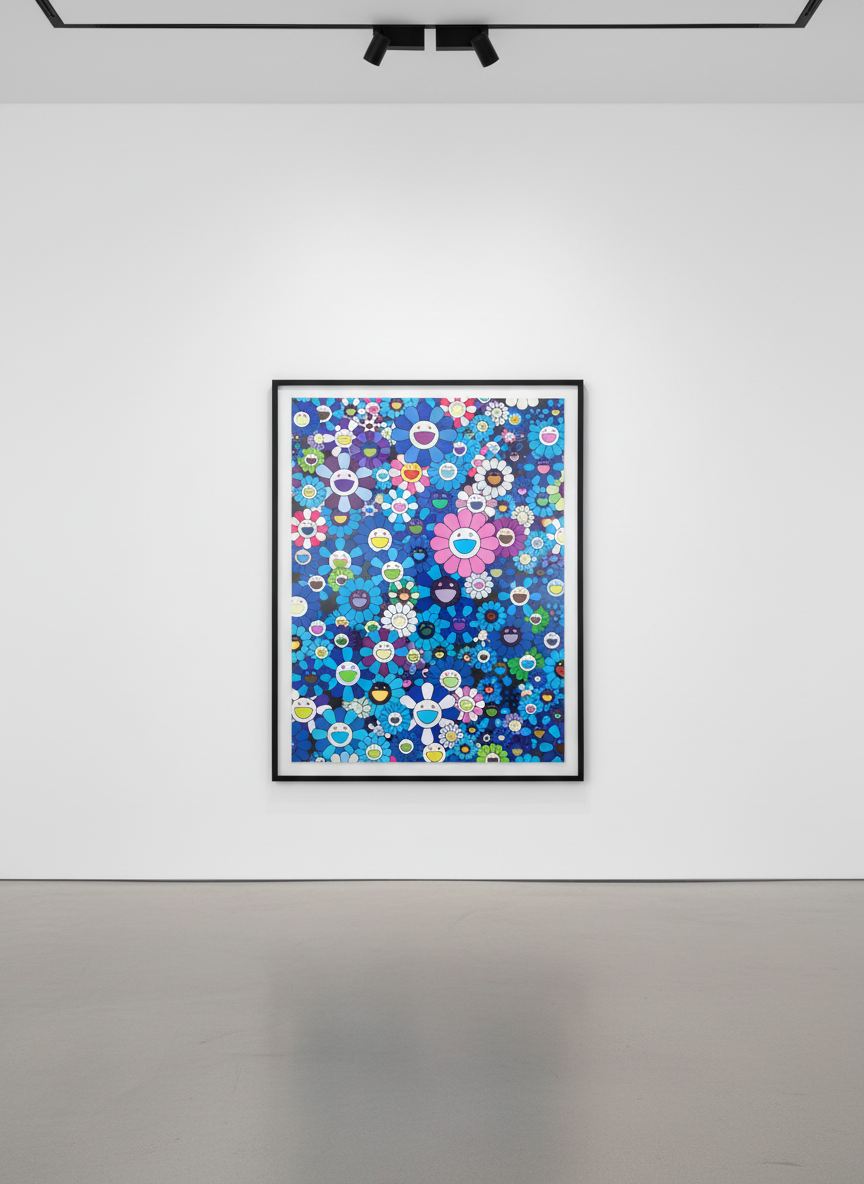
An Homage To Yves Klein Blue — Takashi Murakami. Available at Guy Hepner, New York.
Understanding edition structures is fundamental to buying Murakami prints at the right price and avoiding overpaying for lower-tier editions.
Fine art screenprints represent the upper tier of the Murakami print market. Produced by pushing ink through a mesh screen one colour at a time — often involving dozens of separate passes for complex compositions — screenprints achieve the thick, opaque ink deposits and saturated colour fields that give Murakami's editions their characteristic visual weight. Fine art screenprints are published in clearly documented limited editions, typically signed in pencil by the artist with the edition number in the lower margin.
When a Murakami screenprint is published by Kaikai Kiki Co. directly, or by major gallery partners such as Gagosian or Galerie Perrotin, you can have high confidence in both the production quality and the authentication infrastructure. The colophon — typically on the reverse of the sheet or in accompanying documentation — will list the publisher, printer, date, and edition size. This is the first document to examine when evaluating any screenprint.
Offset lithography uses a photomechanical process to transfer an image from a plate to the print surface via a rubber blanket. The ink deposits are finer and the surface texture less pronounced than in a screenprint. Offset lithographs are often used for larger-edition works, typically at lower price points. They can represent excellent value for collectors focused on the image rather than the technical craft of the edition, but the distinction from a screenprint is meaningful and should be reflected in the price.
High-quality inkjet printing using archival pigment inks on fine art paper. Common in the Murakami market for works published through third-party publishers or as catalogue editions accompanying institutional exhibitions. Quality can be excellent, but giclée editions sit at a lower position in the edition hierarchy than screenprints, and secondary market pricing reflects this. Check the colophon carefully: a giclée should not be priced as a screenprint.
Murakami typically signs fine art editions in pencil in the lower margin, with the edition number on the left and signature on the right. A genuine signature commands a significant premium over unsigned variants of the same edition — often 30–50% or more. But the signature is not a substitute for publisher authentication: a signed work without proper documentation and provenance is not fully authenticated.
Many Murakami editions incorporate metallic inks — gold, silver, iridescent — that give his prints their distinctive luminosity. These inks require specific care: they are more sensitive to UV light and can oxidise if improperly stored or framed. UV-protective conservation glazing is not optional for these works; it is a necessary part of the ownership cost from day one.
The following ranges reflect secondary market evidence and gallery pricing as of 2026. Individual works may fall outside these ranges depending on condition, provenance, edition size, and specific cultural significance.
Edition size is the primary but not the only driver of price. Condition, provenance, the cultural significance of the specific image, and whether the work is signed all materially affect value. A mid-range flower print in flawless condition with pristine provenance from a major gallery primary sale will outperform a smaller-edition work with condition issues or uncertain history.
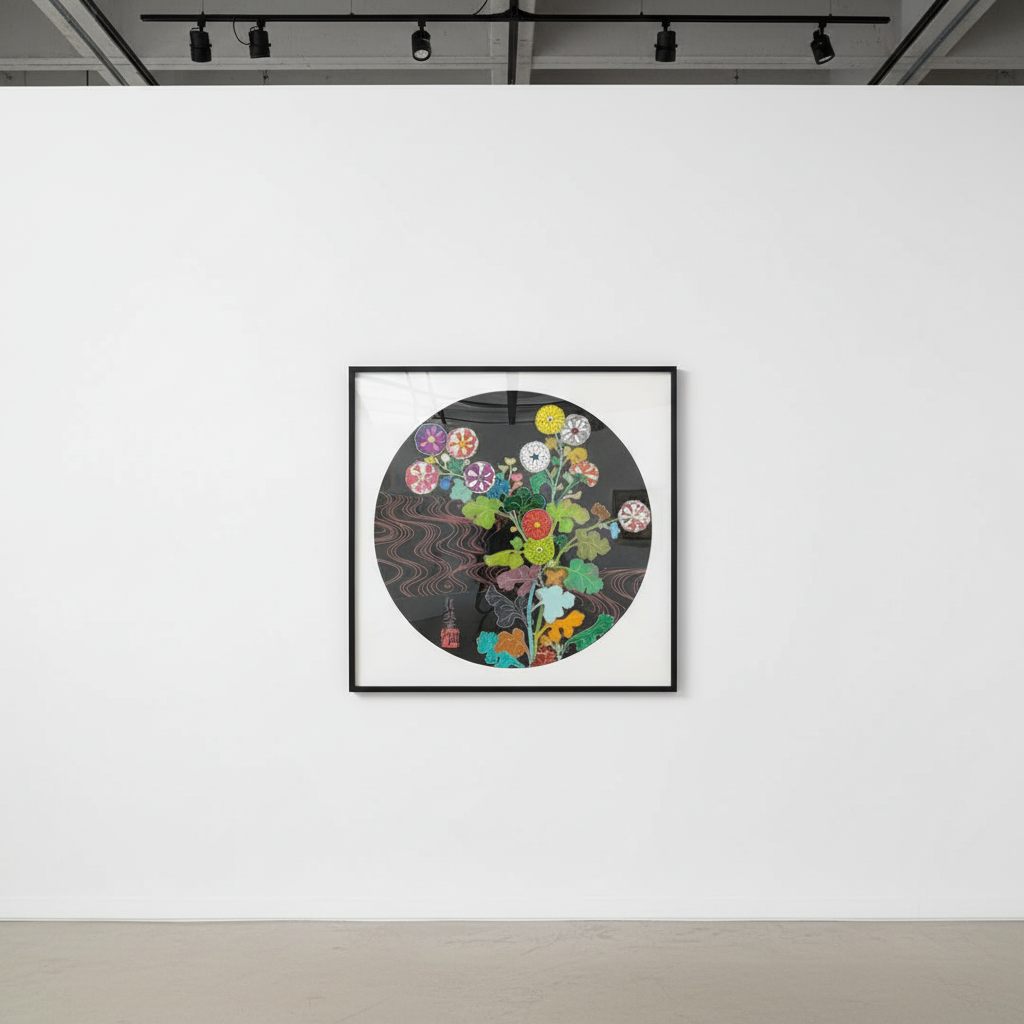
Skulls — Takashi Murakami. Available at Guy Hepner, New York.
The popularity of Murakami's imagery — particularly the flowers — has attracted counterfeiters. Before completing any Murakami print acquisition, verify the following:
A legitimate fine art Murakami print should come with a Certificate of Authenticity (COA) listing: the title and date of the work; the edition number and total edition size; the printing method and materials; and the publisher. The COA should be specific to the individual edition number — generic documents not tied to a specific work are a red flag. The publisher name should be verifiable.
For significant acquisitions, Kaikai Kiki Co., Ltd. is the definitive authentication authority. The company maintains production records for all studio-supervised editions and can confirm or deny authenticity through a formal submission process. Build authentication costs into your acquisition budget for any purchase above $20,000.
In-person examination is preferable for any significant purchase. Genuine Murakami screenprints have visible ink density and a tactile surface quality that cannot be replicated in digital images. Check colour profiles against documented examples. Examine margins and paper quality. Look at the signature under magnification if present — genuine signatures show the fluid confidence of a mark made thousands of times; hesitant, wavering versions are suspect.
A clear, documented chain of ownership from the original publisher or gallery to the current seller significantly strengthens confidence. Primary gallery purchase receipts, documented auction history, and exhibition records all contribute to provenance. Sellers unable to provide any provenance documentation for a significant work warrant caution.
If a price appears dramatically below secondary market comparables for similar edition work, treat that as a warning signal rather than an opportunity. Counterfeit Murakami flower prints regularly circulate through lower-tier online platforms at below-market prices with convincing-looking COAs. The combination of unusually low price and unfamiliar publisher is the single most common profile of a counterfeit offering.
The most reliable sources for Murakami print acquisitions in 2026 are:
Established specialist galleries — galleries with direct relationships with Kaikai Kiki Co. and the major representing galleries (Gagosian, Perrotin, Blum and Poe) provide authentication, condition assessment, and provenance documentation as part of the transaction. The price premium over less verifiable sources reflects genuine value added.
Major auction houses — Christie's, Sotheby's, Phillips, and Bonhams maintain specialist print departments with internal Murakami expertise. Auction purchase provides implicit authentication assurance through the house's own due diligence process, plus condition reports and public price history. The buyer's premium adds 20–25% to the hammer price in most cases, which should be factored into acquisition budgets.
Primary market through representing galleries — When available, primary market acquisition from Gagosian, Galerie Perrotin, or similar directly avoids secondary market premiums and provides unimpeachable provenance. These opportunities typically require existing gallery relationships and carry waitlists for significant editions.
Guy Hepner — Our New York gallery maintains an active Murakami inventory spanning flower editions, major series prints, and rare works, with specialist authentication support and collector guidance at every level. Whether you are purchasing your first Murakami or adding to a significant collection, our team can ensure you acquire the right work at the right price.
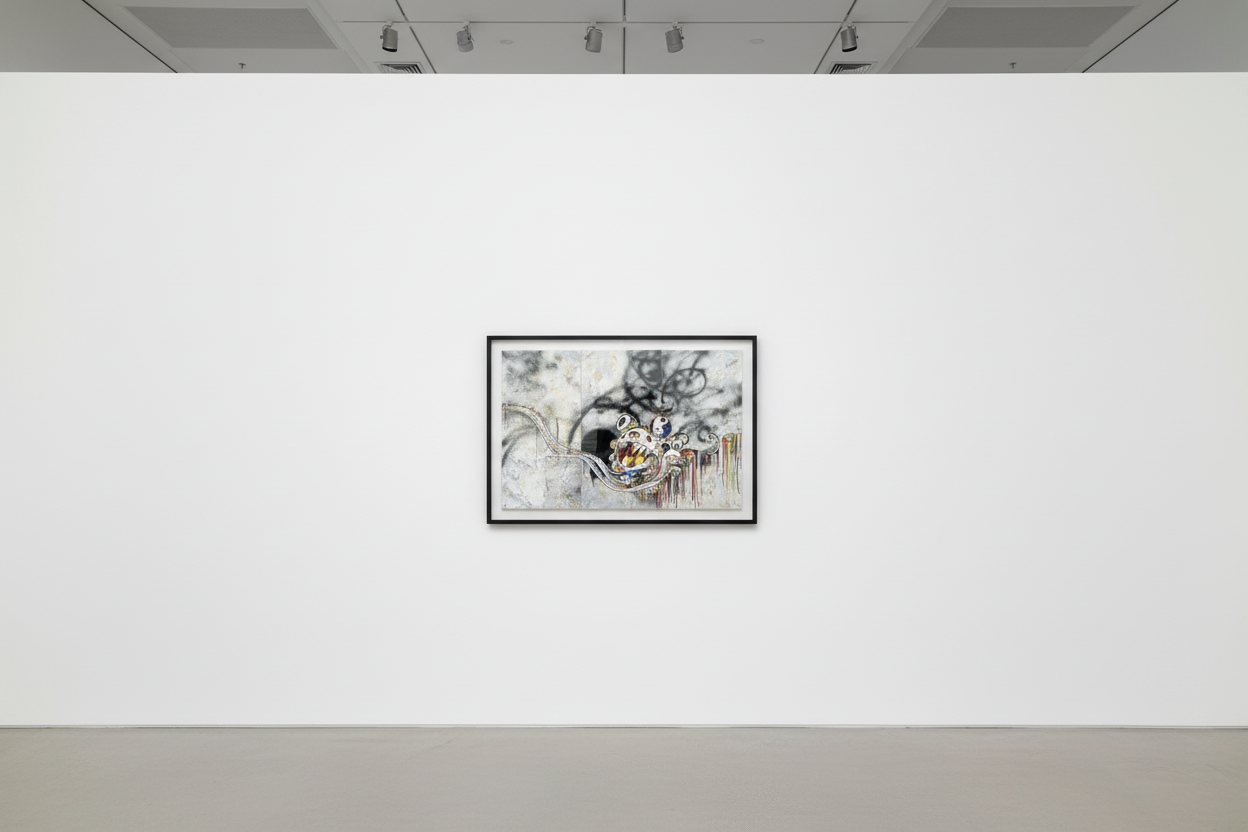
727 — Takashi Murakami. Available at Guy Hepner, New York.
The collectors who have built the most valuable Murakami holdings have typically followed a few consistent principles worth sharing:
Focus on condition from day one. The difference in value between a Murakami print in excellent condition and one with fading, handling damage, or restoration can be 50% or more. If the price seems low and you can't inspect the work in person, be cautious.
Buy the best edition you can afford. It is generally better to own one significant signed Murakami screenprint from a small edition than three lower-tier open-edition offset prints. The top tier of any edition hierarchy holds value more durably than the bottom tier.
Prioritise provenance. Works with documented ownership from first gallery or auction sale carry meaningful premium and significantly simpler future selling. When you buy with no paperwork, you are also buying a future authentication problem.
Frame immediately and conserve properly. Museum-grade UV protective glazing, acid-free matting, and climate-controlled display environments are the difference between a print that looks the same in 20 years and one that has faded and yellowed. Frame from day one.
Think thematically. The most compelling collections are built around coherent themes — a deep holding in the Flowers series, or a survey across Flowers, Skulls, and 727 that tracks the full arc of Murakami's imagery. Random acquisitions of isolated works are less satisfying to live with and less compelling to future buyers.
For a first acquisition, a signed flower print screenprint from a well-documented edition of 50–100 represents the best balance of accessibility, authenticity confidence, and secondary market liquidity. Prices in the $15,000–$50,000 range give access to genuine fine art editions with strong authentication infrastructure. If budget is a constraint, KAIKAIKIKI character prints or small-format flower editions offer authentic Murakami works at lower entry points.
Murakami prints have demonstrated strong secondary market performance over two decades, with major editions showing consistent appreciation and the broader market maintaining liquidity across market cycles. The combination of institutional support, active primary market, and global collector base creates conditions favourable to long-term value. As with all art investments, condition, provenance, and edition quality are the primary determinants — not simply the artist's name on the colophon.
Authentication rests on four pillars: publisher documentation (COA, colophon); physical examination (printing quality, ink density, paper, signature); provenance (ownership chain from primary sale); and, for significant works, formal submission to Kaikai Kiki Co. Any single pillar may be necessary but not sufficient — all four together provide the strongest assurance.
Guy Hepner Gallery in New York maintains an active inventory of Takashi Murakami prints for sale across all major series and price tiers. Contact our specialists for current availability and guidance on acquisitions that match your collecting goals and budget.
Browse Takashi Murakami Prints for Sale at Guy Hepner
Sell your Takashi Murakami — free valuation
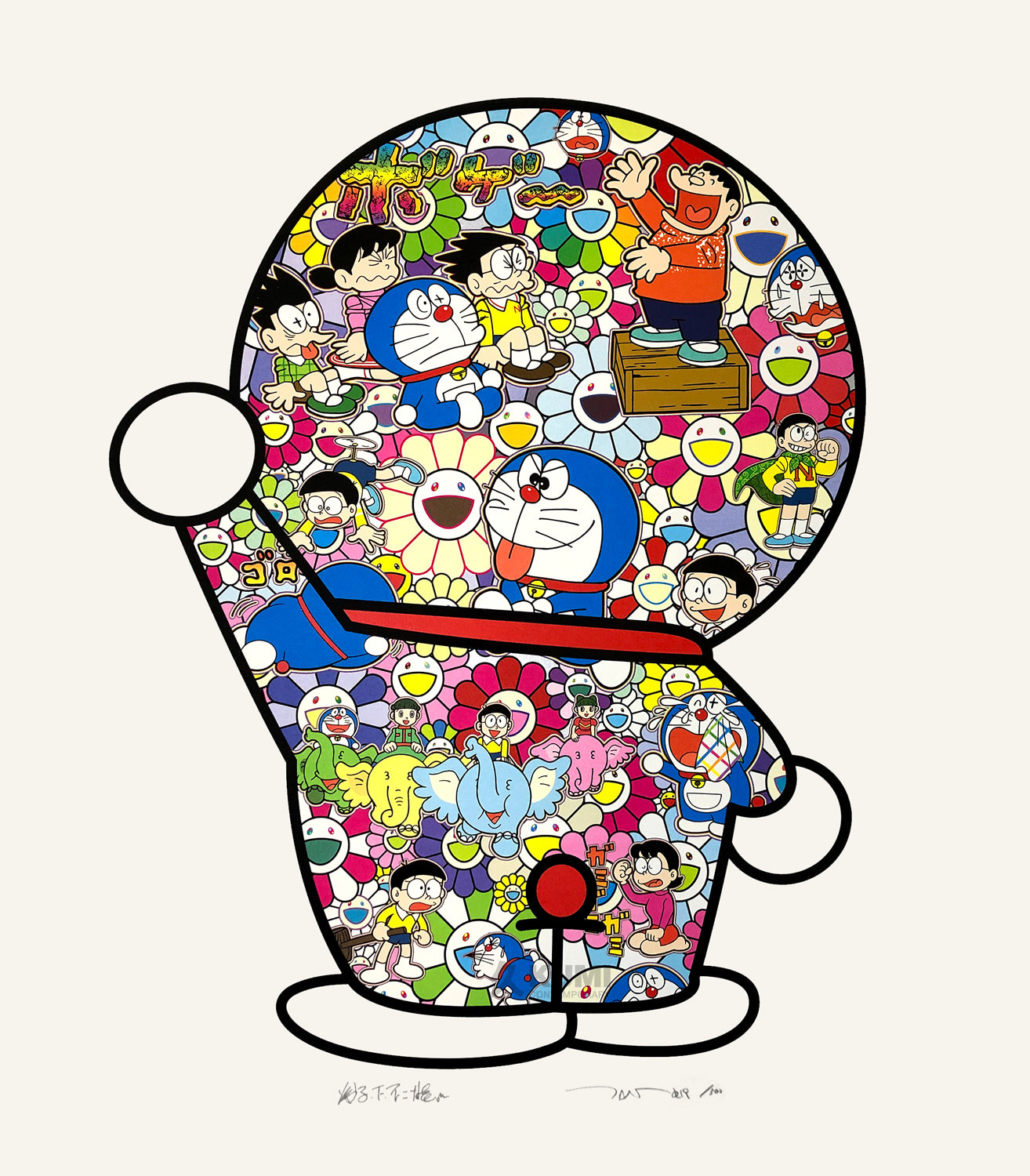
Explore Takashi Murakami prints for sale at Guy Hepner: Acupuncture, And Then and Then and Then and Then and Then, Characters, Doraemon, Enso.
Related Series