Anatomy

July 31, 2026
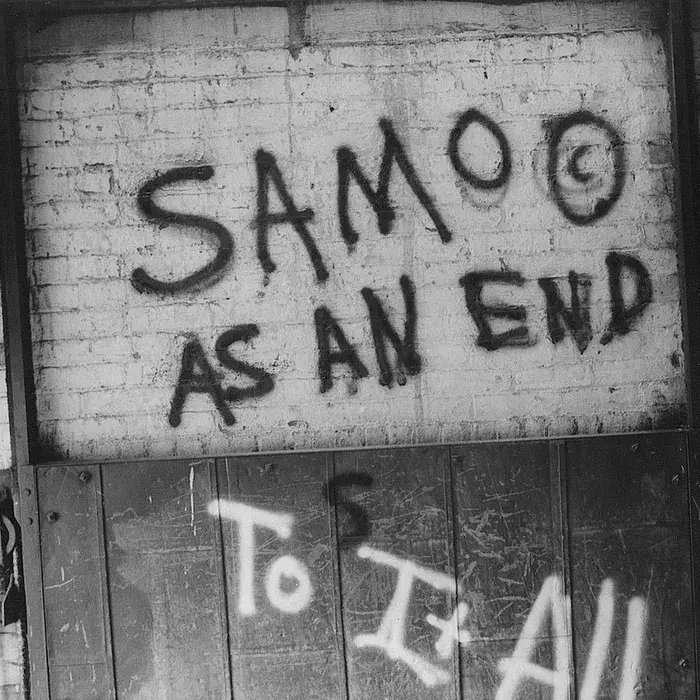
Lower Manhattan, 1978. The walls started talking. Not with the usual hieroglyphics of gang territory or the bubble-letter bravado of train bombers, but with something stranger, more unsettling, more deliberate. Short, cryptic phrases appeared overnight on SoHo's crumbling facades, the D train's interior, even public toilet stalls. Each message ended with a peculiar flourish: a copyright symbol. SAMO Basquiat wasn't a signature anyone recognized yet. The SAMO graffiti wasn't tagging in any traditional sense—it was philosophy weaponized with spray paint, poetry masquerading as vandalism, a conceptual art project disguised as street-level rebellion.
Two teenagers were responsible: Jean-Michel Basquiat, the restless Haitian-Puerto Rican kid from Brooklyn who'd already run away from home multiple times, and Al Diaz, a Lower East Side native who'd been writing on trains since age twelve. Together, they created something that defied every convention of graffiti culture—and in doing so, planted the seeds for one of the most significant artistic careers of the twentieth century. The SAMO meaning would prove prophetic: these two young men were declaring war on the same old shit that defined American complacency, consumer culture, and the art world's gatekeeping hierarchies.
The origin story of SAMO belongs equally to Jean-Michel Basquiat and Al Diaz, though history has not distributed credit fairly between them. They met in 1976 at City-As-School, an alternative high school in Manhattan designed for students who didn't fit the conventional educational mold. Basquiat had been expelled from more traditional settings; Diaz was already a veteran of New York's underground graffiti scene, his tag "Bomb 1" immortalized in Norman Mailer's seminal 1974 book The Faith of Graffiti. What drew them together wasn't just their shared Puerto Rican heritage or their mutual disillusionment with institutional education—it was a shared hunger for something the existing art world couldn't offer them.
The phrase "SAMO" emerged during a stoned conversation, the kind of rambling philosophical exchange that teenagers have when the world feels both infinitely expansive and impossibly constraining. They were smoking marijuana—"the same old crap," as they called it—and the phrase contracted organically: "Same Old" became "SAMO." What started as a private joke between two friends evolved into something far more ambitious. The SAMO same old shit meaning carried immediate satirical weight, but Basquiat and Diaz recognized they could weaponize that recognition, turning it into a commentary machine that questioned everything from religion to consumerism to the pretensions of the downtown art scene.
Basquiat took the lead in developing SAMO as a character, creating content for the Spring 1977 issue of their school newspaper, the Basement Blues Press. The initial concept parodied alternative religions—a subject both young men found ridiculous—and was presented in comic-book style as an endorsement of a false faith. The pamphlet credited the work as "Based on an original concept by Jean Basquiat and Al Diaz," a collaborative attribution that would later become contentious as Basquiat's solo fame eclipsed their joint history. Shannon Dawson, another schoolmate who later founded the band Konk, contributed to the early development, though accounts vary regarding his specific involvement.
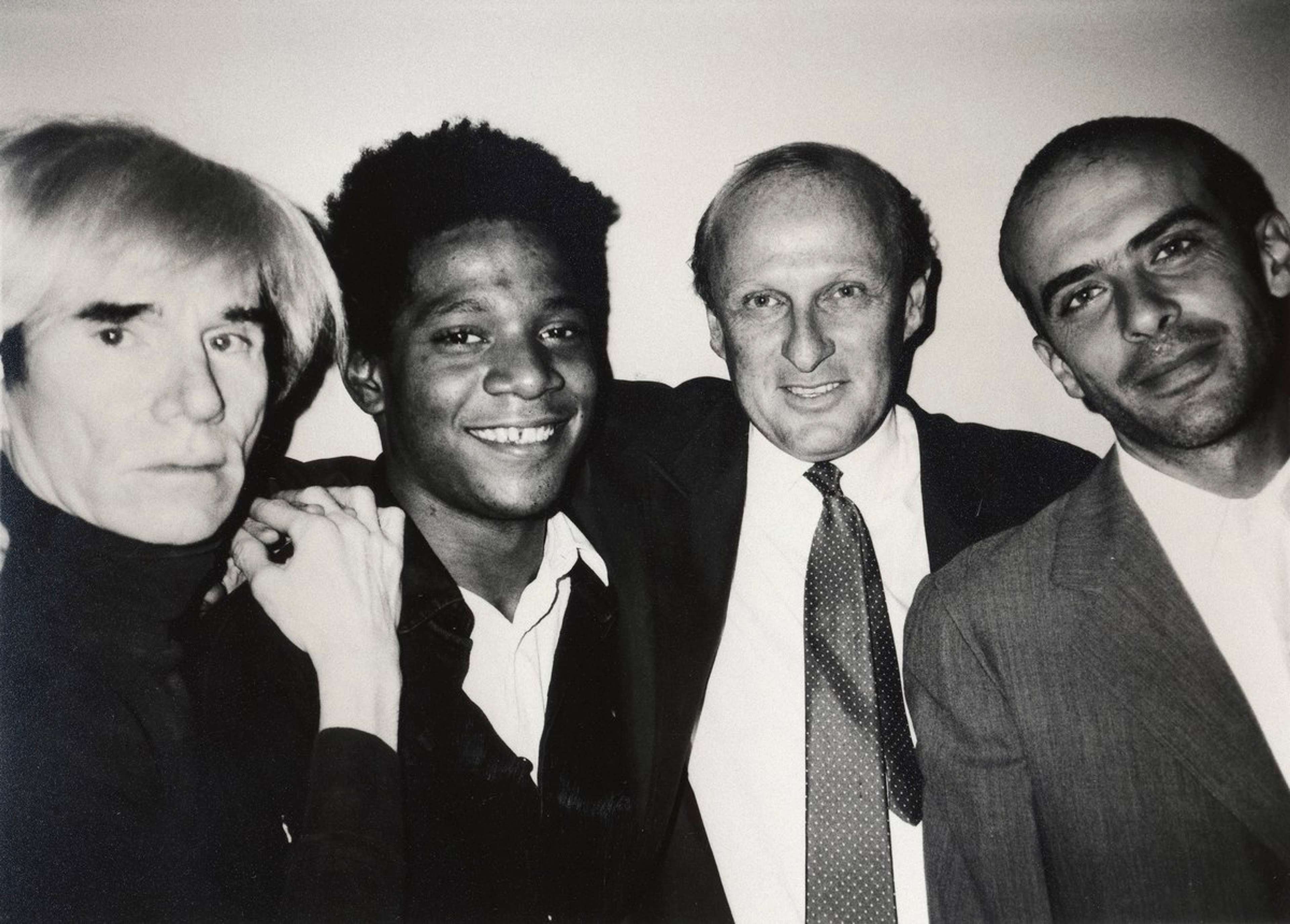
Image © Galerie Bruno Bischofberger, CC BY-SA 4.0, via Wikimedia Commons / Andy Warhol, Jean-Michel Basquiat, Bruno Bischofberger and Fransesco Clemente, New York, 1984
In May 1978, the Basquiat SAMO tags began appearing across Manhattan with increasing frequency and audacity. Unlike traditional graffiti, which prioritized visual impact and territorial marking, SAMO graffiti operated through language. The messages were dense with meaning, layered with irony, and demanded engagement from their readers. Consider some of the most memorable examples:
The SAMO copyright symbol was perhaps the most brilliant touch—a sardonic commentary on ownership, originality, and the commodification of ideas. In graffiti culture, where writers fought for recognition and territory, claiming copyright on an anonymous tag was absurd and subversive. The symbol transformed each message into a mock advertisement, positioning SAMO as both product and critique of products. Basquiat and Al Diaz understood something fundamental about American culture: that the language of commerce had become the dominant form of communication, and that the only way to break through was to speak that language while simultaneously mocking it.
The physical locations of SAMO tags were strategically chosen. SoHo, which by the late 1970s had become the epicenter of New York's gallery scene, received heavy attention. Messages appeared near galleries, on the walls that collectors and dealers passed daily. This was not random vandalism—it was targeted intervention. Basquiat and Diaz were announcing themselves to an art world that had no idea who they were, demanding attention through sheer persistence and conceptual intelligence. The Basquiat street art phase, though it preceded his gallery career, demonstrated the same obsessive drive and media-savvy positioning that would later make him a superstar.
On December 11, 1978, The Village Voice published an article attempting to decode the SAMO phenomenon. The piece speculated about the identity behind the tags, treating SAMO as a genuine mystery requiring journalistic investigation. For Basquiat and Diaz, this was validation of the highest order—proof that their guerrilla art project had penetrated mainstream cultural consciousness. The article also marked the beginning of the end, as increased attention threatened the anonymity that had protected their operation.
The relationship between Basquiat and Diaz began to fracture as external recognition introduced new pressures. Basquiat, ambitious and increasingly focused on building a solo career, started revealing his involvement in SAMO to strategic contacts in the art world. Diaz, who valued the collaborative and anonymous nature of their project, felt betrayed by these disclosures. The tension reflects a recurring pattern in Basquiat's relationships—his ability to form intense creative partnerships combined with a fierce individual drive that eventually overwhelmed collaborative bonds.
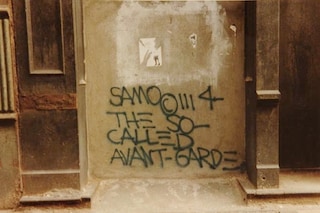
SAMO© trademark graffiti on weathered urban surface, New York City, late 1970s.
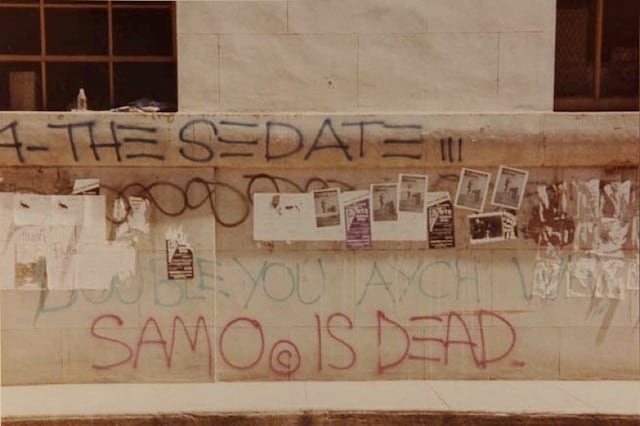
By 1979, the partnership had dissolved. Basquiat, now pursuing connections with downtown artists, musicians, and gallerists, needed to kill SAMO to allow Jean-Michel Basquiat to be born. The execution was public and dramatic: the phrase "SAMO© IS DEAD" began appearing across the same neighborhoods where SAMO had once philosophized. The death announcement was both practical and mythological—a statement that the graffiti project had concluded, and a symbolic sacrifice that positioned Basquiat as the sole survivor of a creative explosion.
The SAMO is dead graffiti appeared throughout 1980, marking a transition period in Basquiat's development. He was no longer a anonymous vandal but an ambitious young artist seeking gallery representation and critical recognition. The timing aligned with his growing involvement in the downtown scene—his relationship with the band Gray, his appearances at Club 57 and the Mudd Club, his romance with Jennifer Stein, and his early sales to collectors who recognized his raw talent. Killing SAMO wasn't abandonment; it was evolution.
Al Diaz, meanwhile, continued working as an artist but never achieved the recognition that would come to define his former collaborator's legacy. In interviews conducted decades later, Diaz has spoken thoughtfully about the SAMO period, neither bitter nor self-aggrandizing. He acknowledges Basquiat's singular talent while also asserting his own contribution to the project's conceptual framework. "I certainly don't know of any [surviving SAMO tags] but it would be great if there was," Diaz told Dazed magazine in 2017, noting that if any original tags survive, "they'd likely be hidden in a basement somewhere."
Understanding Basquiat before fame requires recognizing that the streets of Lower Manhattan served as his primary studio, classroom, and exhibition space. Long before gallery walls displayed his paintings for six-figure prices, crumbling brick facades held his first public works. This period established patterns that would define his entire career: the compulsive mark-making, the integration of text and image, the references to high and low culture existing simultaneously, and the positioning of his work as both inside and outside institutional art spaces.
The Basquiat Lower Manhattan experience shaped his aesthetic vocabulary in ways that remained visible throughout his career. The visual chaos of the urban environment—advertisements, warning signs, graffiti, peeling posters, the layered history of city walls—informed his densely packed canvases. His later paintings often resemble palimpsests, with images and words built up, crossed out, and rewritten in ways that echo the temporal accumulation of street surfaces. The city was his first collaborator, providing materials, context, and audience.
How Basquiat got famous is a question with multiple answers, but the SAMO project represents the foundational strategy. He understood instinctively that visibility precedes validation, that being noticed is the first step toward being taken seriously. The SAMO tags announced his presence to an art world that hadn't invited him, forcing recognition through sheer persistence and conceptual wit. By the time galleries began showing his work in 1980 and 1981, he had already built a mythology—the mysterious tagger revealed as a young genius, the street artist who infiltrated the white cube.
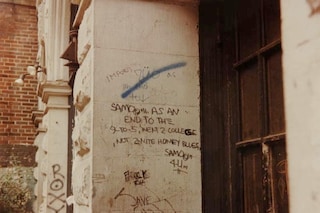
Street art from early 1980s New York.
The Neo-Expressionism origins that critics would later identify in Basquiat's mature work trace directly to his SAMO period. The movement, which emerged in the late 1970s and dominated the early 1980s art market, represented a return to figurative painting, emotional intensity, and gestural mark-making after decades of Minimalist and Conceptual art dominance. Basquiat entered this context with advantages that academically trained painters lacked: an authentic connection to street culture, a visual vocabulary developed outside institutional influence, and a subject position as a young Black man that gave his work unavoidable political resonance.
The transition from graffiti to gallery happened quickly once it began. In June 1980, Basquiat participated in the "Times Square Show," a massive collaborative exhibition in a former massage parlor that brought together downtown artists, graffiti writers, and punk musicians. His contribution attracted attention from dealers and critics who saw in his work a bridge between street authenticity and gallery sophistication. By the following year, he was included in group shows at respected venues, and individual collectors were pursuing his paintings.
What distinguished Basquiat from other graffiti-to-gallery artists of his generation was his refusal to be contained by that narrative. He wasn't a street artist who learned to paint; he was an artist who had used the streets as his first exhibition space. His knowledge of art history—deep and largely self-taught—allowed him to engage with traditions ranging from Leonardo da Vinci to Cy Twombly while maintaining the urgency and rawness of his graffiti roots. The SAMO tags explained in retrospect appear as proto-conceptual art, positioning Basquiat as an intellectual force rather than an untrained primitive.
Throughout his career, Basquiat maintained the text-image integration that characterized his SAMO work. Words appear constantly in his paintings: lists of body parts, historical names, prices, cryptic phrases, crossed-out passages. This wasn't decoration but content, as essential to his visual language as color or form. The SAMO practice had taught him that words could function as images, that text carried emotional and visual weight beyond its semantic meaning.
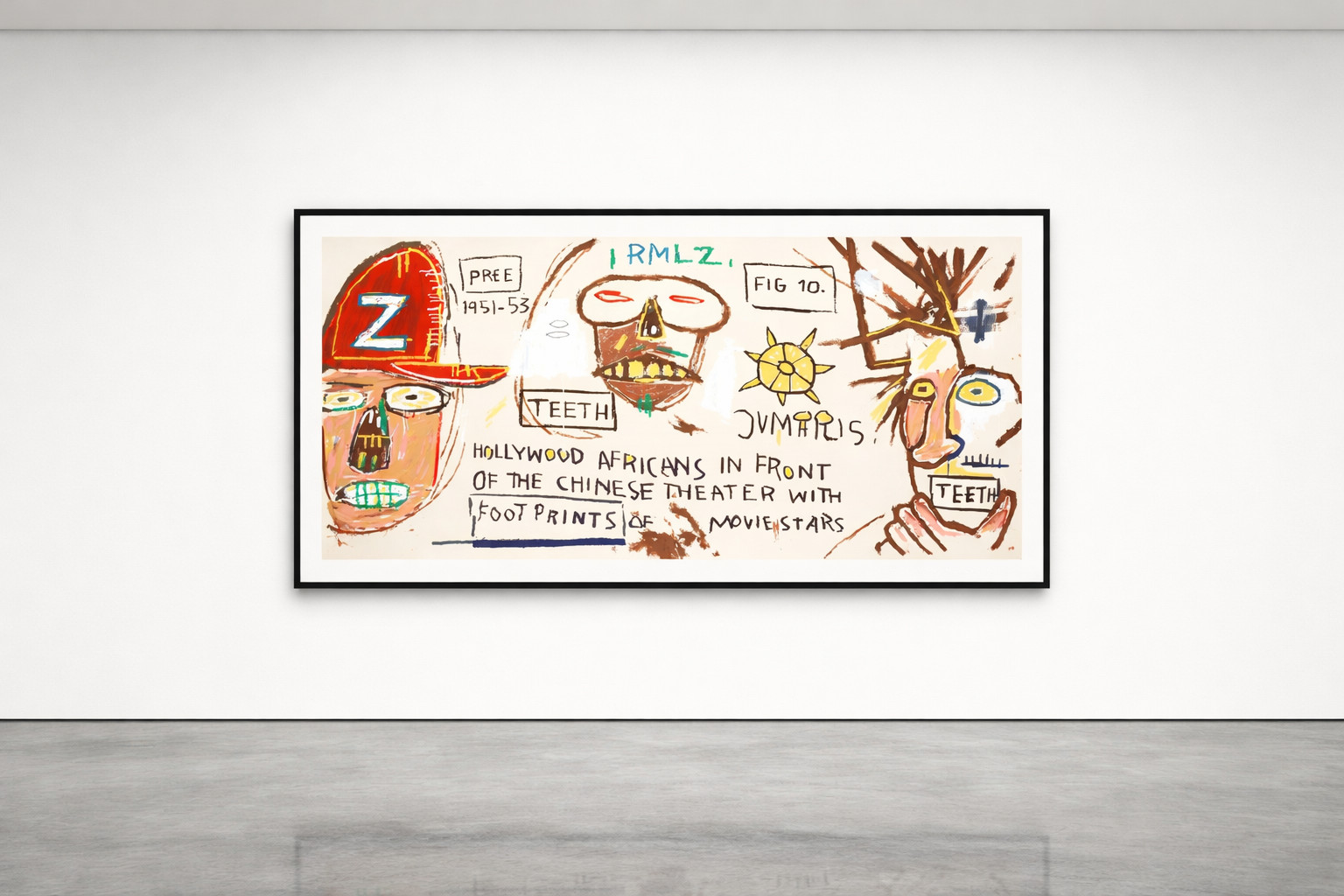
Consider how his major paintings deploy language. In Untitled (Skull) from 1981, text fragments emerge from and dissolve into the painted surface. In Hollywood Africans from 1983, words like "GANGSTERISM," "TAX FREE," and "WHAT IS BWANA" interrupt and comment on the figurative elements. In Defacement (The Death of Michael Stewart) from 1983, the title phrase and additional text confront viewers with the political reality of a young Black graffiti artist beaten to death by police. The SAMO tags explained—they prepared audiences and critics for reading Basquiat's work as language-based despite its painterly surfaces.
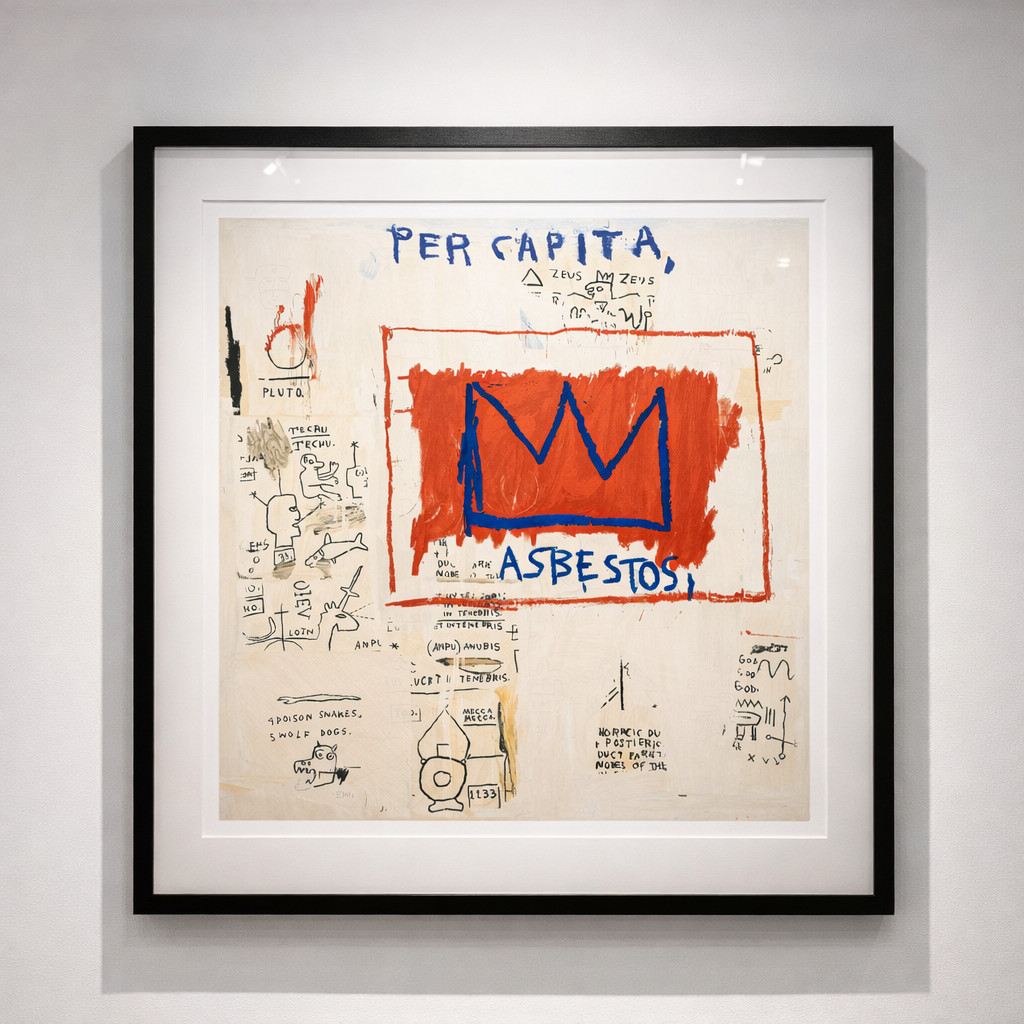
The copyright symbol that had accompanied SAMO reappeared in Basquiat's paintings, sometimes attached to his signature crown motif, other times floating independently. This recycling of graffiti iconography demonstrated continuity rather than rupture—evidence that Basquiat never fully abandoned the streets even as he conquered the galleries. The © became a personal symbol, a reminder of where he came from and a continued assertion of ownership over his own image and production.
The mythology of Basquiat is incomplete without acknowledging his relationship with Andy Warhol, but it's worth remembering that Basquiat had already created one mythology before he encountered Warhol. The SAMO story—two teenagers revolutionizing graffiti with conceptual intelligence—preceded and enabled the Basquiat-Warhol narrative. When the two artists met, Basquiat wasn't an unknown; he was already the subject of fascination, the street kid who'd stormed the galleries.
Warhol himself recognized the parallels between his own origin story and Basquiat's. Both came from working-class backgrounds, both were outsiders to establishment art, both weaponized media attention as creative material. The collaboration between them, which produced over 160 paintings between 1984 and 1985, represented a meeting of complementary mythologies—Pop Art's godfather and Neo-Expressionism's enfant terrible, both savvy manipulators of their own public images.
What Warhol understood, and what Basquiat had demonstrated with SAMO, was that contemporary art exists as much in documentation and discourse as it does in physical objects. The SAMO tags, most of which have been painted over or destroyed, survive primarily in photographs and memories. This ephemeral quality links Basquiat to Conceptual art traditions while maintaining his street credentials. The work exists, was witnessed, influenced subsequent production—whether or not any specific tag survives is almost beside the point.
The critical reception of Basquiat during his lifetime was mixed, often filtered through racialized assumptions about authenticity and primitivism. Some critics praised his work as a vital return to expressionist intensity; others dismissed him as a media creation or, more insidiously, as a "primitive" whose power derived from lack of training rather than intellectual sophistication. The SAMO background complicated these readings—here was evidence of conceptual thinking that predated gallery involvement, proof that Basquiat's intelligence wasn't a recent acquisition or external imposition.
In the decades since his death in 1988, critical reassessment has positioned Basquiat as a central figure in late twentieth-century art. His influence appears in countless contemporary artists who integrate text, explore identity politics, or move fluidly between street and gallery contexts. The 2017 sale of Untitled (1982) for $110.5 million at Sotheby's—making Basquiat the most expensive American artist ever sold at auction—confirmed his market dominance. More importantly, recent scholarship has deepened understanding of his work's intellectual complexity, moving beyond primitivist clichés to engage with his art-historical knowledge and conceptual rigor.
The Barbican's major retrospective in 2017 included substantial attention to the SAMO period, finally giving public institutional recognition to the collaborative origins of Basquiat's career. Al Diaz participated in programming around the exhibition, ensuring that the full story—two teenagers, not just one—received attention. This kind of historical correction matters, not because it diminishes Basquiat's individual genius, but because it reveals the conditions that enabled that genius to develop and flourish.
The contemporary market for Basquiat's work operates at stratospheric levels for major paintings, but his print editions offer collectors more accessible entry points. The estate has authorized several posthumous editions that maintain the quality and conceptual integrity of Basquiat's vision while making ownership possible for a broader range of collectors. These editions include portfolios and individual works that reproduce significant images from throughout his career.
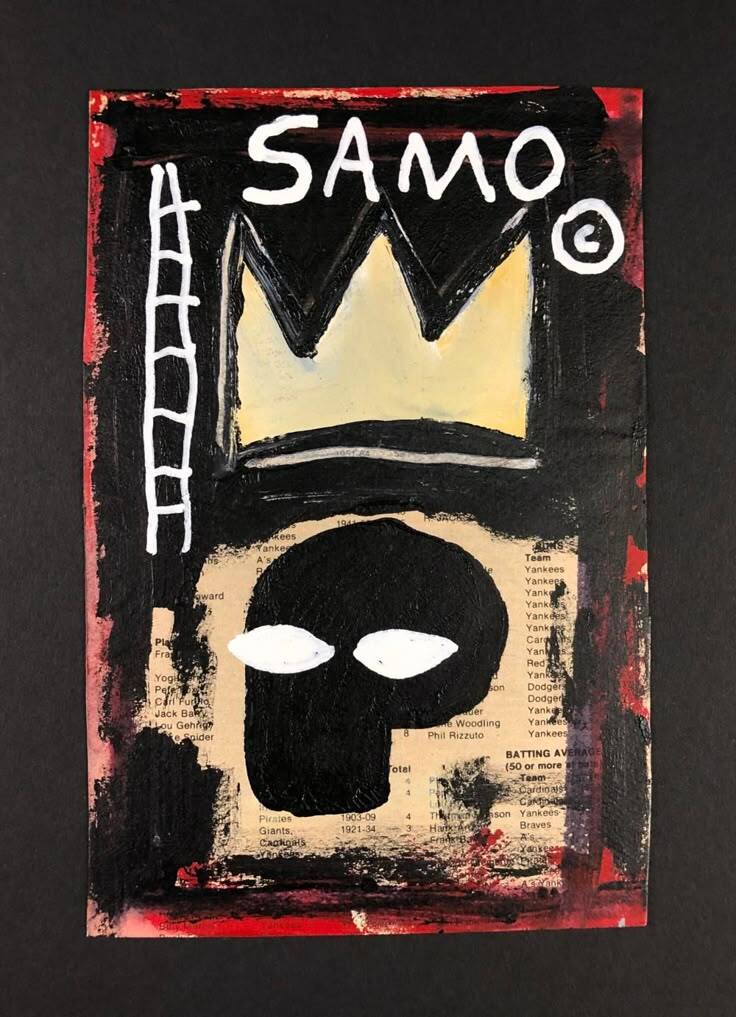
For collectors seeking to acquire Basquiat, understanding the SAMO origins enriches appreciation of the work. The aesthetic and conceptual strategies visible in his graffiti—the text-image synthesis, the satirical edge, the critique of institutional power, the obsessive mark-making—remain consistent throughout his career. A collector who understands SAMO understands Basquiat at a fundamental level, recognizing how deeply the streets inform even his most refined gallery productions.
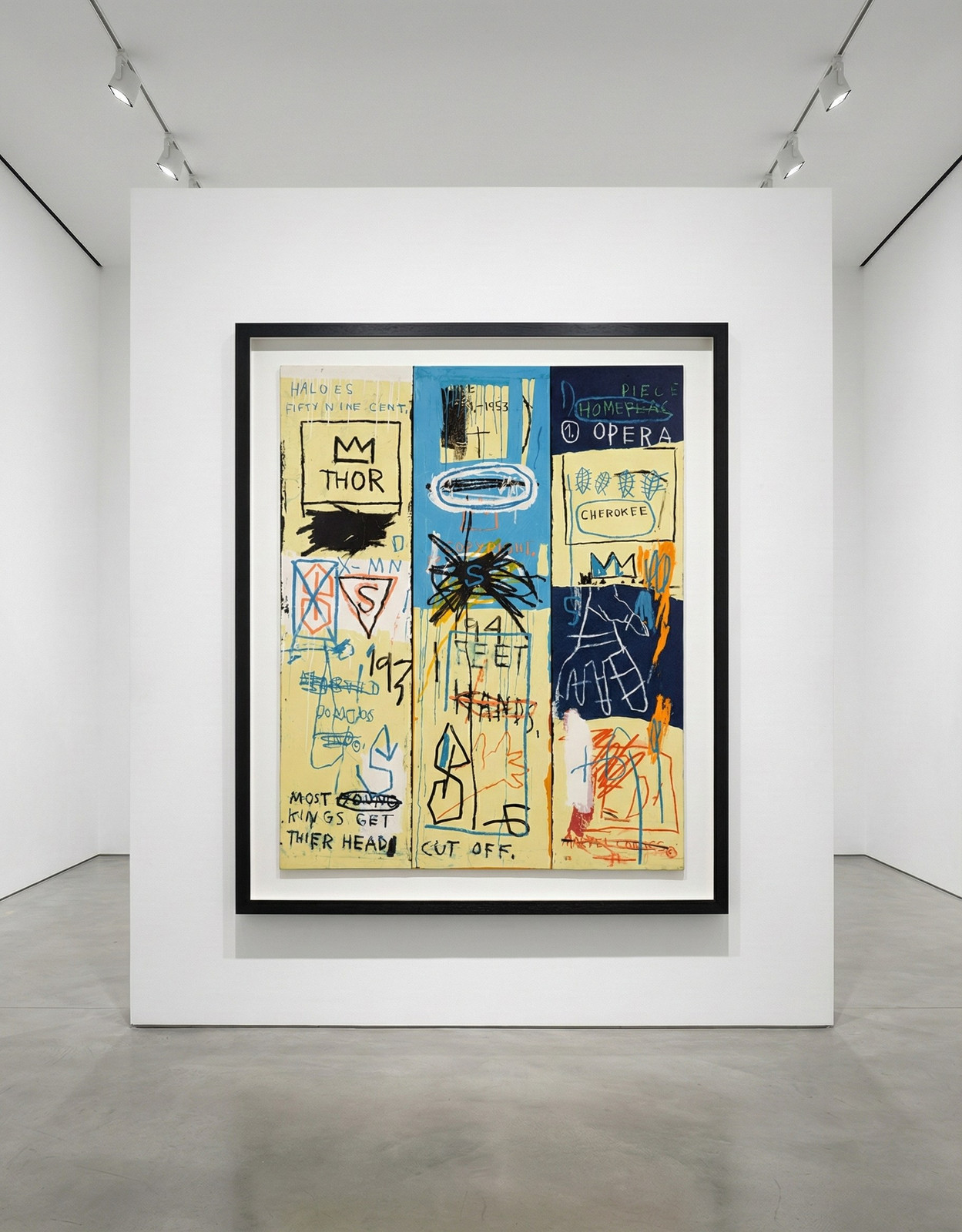
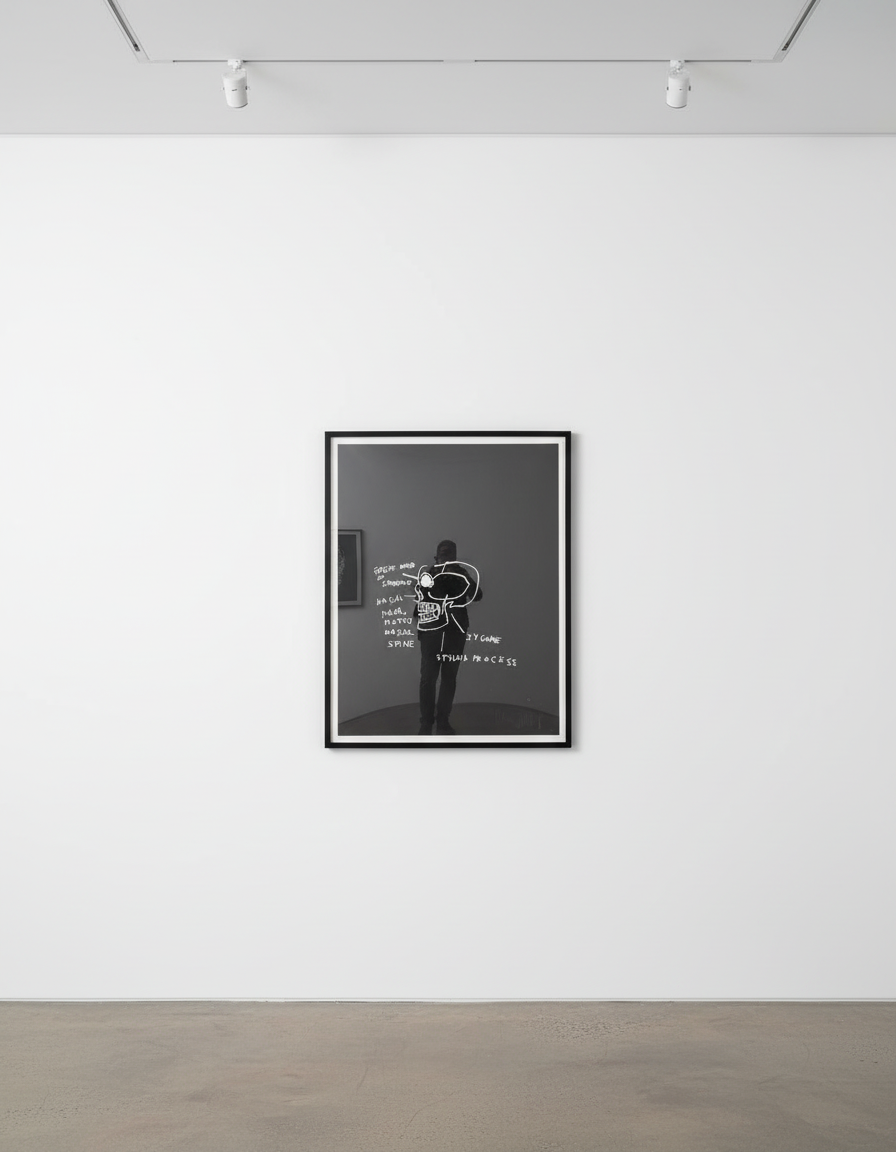
Market considerations for Basquiat prints include edition size, condition, provenance, and visual impact. His Estate Prints, produced after his death but from authentic sources, trade at significant premiums compared to unauthorized reproductions. The most sought-after portfolios include works that display his characteristic iconography: crowns, skulls, text fragments, anatomical references, and the dense layering that makes his surfaces so compulsively watchable.
The SAMO legacy extends beyond its role as Basquiat's origin story. It represents a particular moment in New York cultural history—the late 1970s intersection of punk, graffiti, conceptual art, and downtown bohemia that produced an extraordinary flowering of creative energy. The messages that Basquiat and Diaz left on city walls anticipated themes that remain urgent: the emptiness of consumer culture, the hypocrisy of institutional religion, the class stratification of the art world, and the commodification of rebellion itself.
Al Diaz has continued to engage with the SAMO legacy, occasionally reviving the tag and speaking publicly about the collaborative period. His perspective offers valuable corrective to narratives that treat Basquiat as a solitary genius emerging fully formed from nowhere. SAMO was a partnership, a dialogue, a shared project between two young men who recognized each other's intelligence and ambition. That partnership dissolved, as many do, but its products—the graffiti, the mythology, the conceptual framework—belonged to both of them.
For contemporary viewers, the SAMO tags explained become a lens for understanding Basquiat's entire career. The copyright symbol mocking ownership while asserting it. The text-based critique of institutions from someone outside those institutions. The strategic use of public space to demand attention. The refusal to accept the boundaries between street art and gallery art, between vandalism and masterpiece. These strategies didn't disappear when SAMO died; they evolved into the practice that made Basquiat immortal.
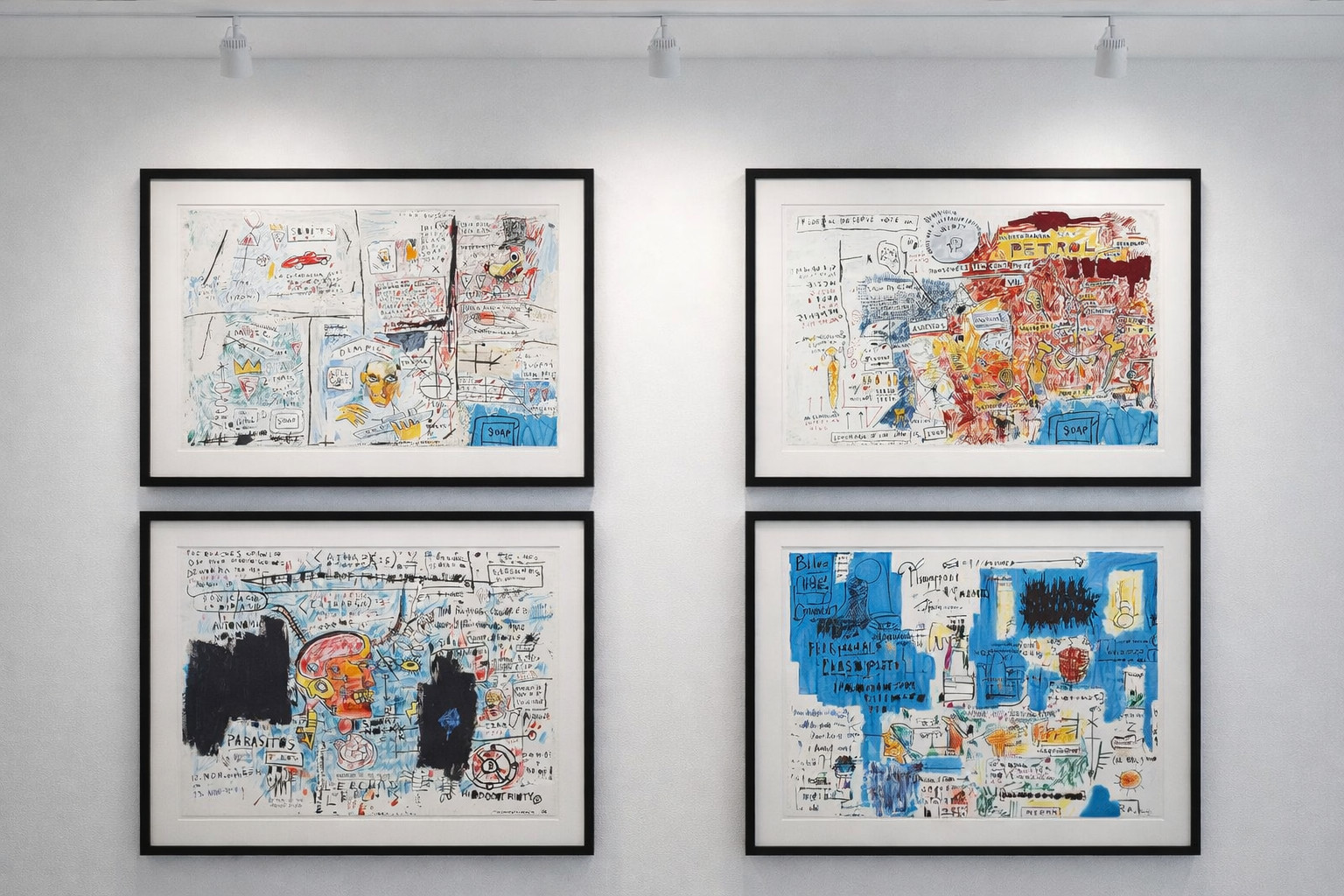
Guy Hepner Gallery at 177 Tenth Avenue in New York maintains significant inventory of Jean-Michel Basquiat's authorized prints and editions. These works offer collectors the opportunity to own pieces by one of the twentieth century's most influential artists at accessible price points. The gallery's holdings include works from major portfolios such as the Anatomy series, the Daros Suite, Portfolio I and Portfolio Ii, and other estate-authorized editions that bring Basquiat's iconic imagery into collectible form.
For those who understand what SAMO meant—who recognize the intelligence, ambition, and strategic brilliance that characterized Basquiat from his earliest public gestures—these prints represent more than wall decoration. They're artifacts of a mythology that began on Lower Manhattan's crumbling walls and culminated in the world's most prestigious auction houses. The teenager who wrote "SAMO© AS AN END TO MINDWASH RELIGION, NOWHERE POLITICS AND BOGUS PHILOSOPHY" became the artist whose works now hang in major museums and private collections worldwide.
Collectors interested in exploring available Basquiat works are encouraged to contact Guy Hepner Gallery directly. Whether seeking a first acquisition or adding to an established collection, the gallery's specialists can provide guidance on current inventory, pricing, and the particular qualities that distinguish each available work. In acquiring Basquiat, collectors participate in a legacy that stretches from those first spray-painted messages to the contemporary art world's highest echelons—a legacy that began when two kids decided the walls should start talking.
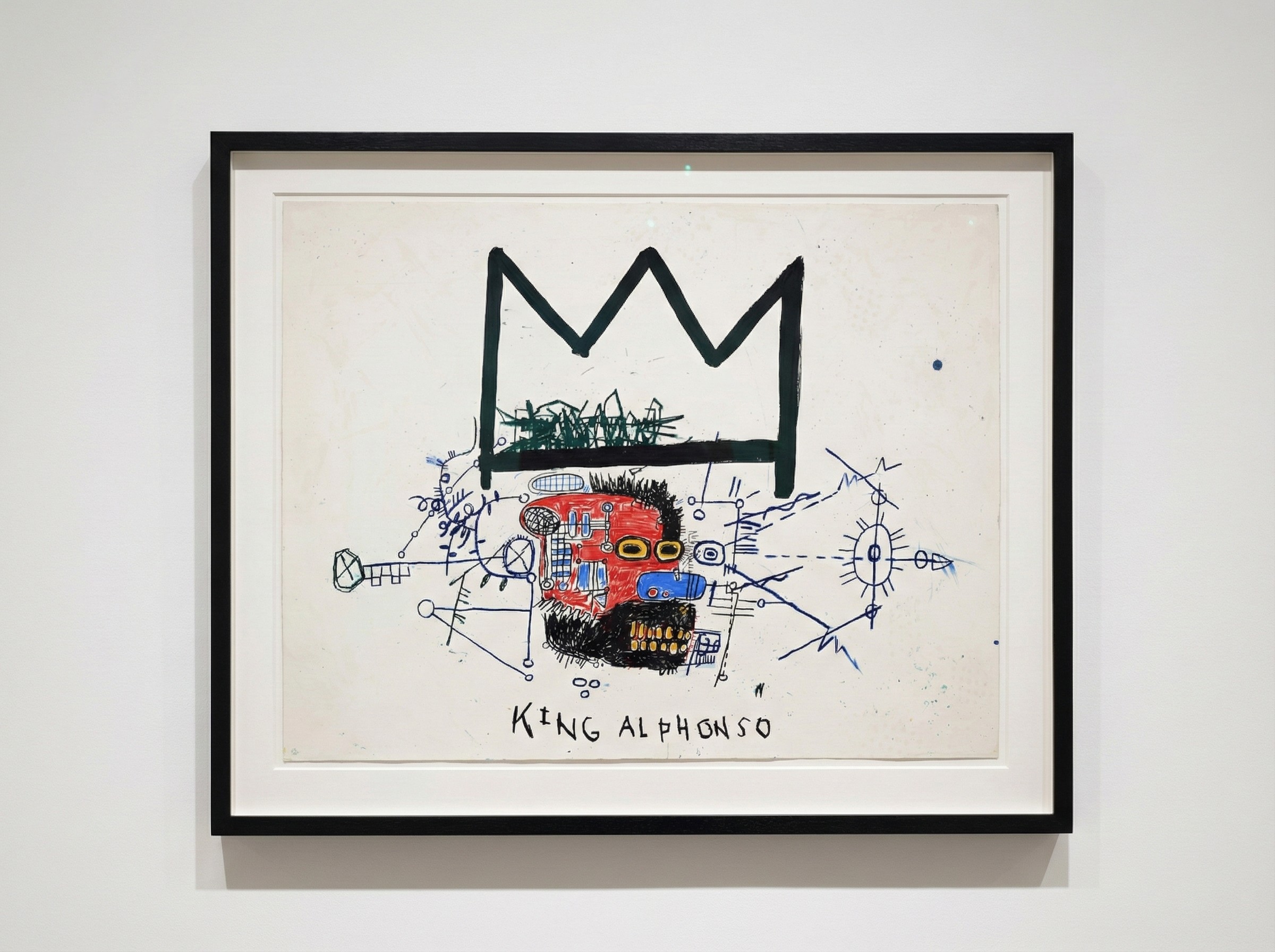
Explore Jean Michel Basquiat prints for sale at Guy Hepner: Anatomy, Daros Suite, Estate Prints, King Alphonso, Portfolio I.
Related Series