Marilyn Crying

August 13, 2026
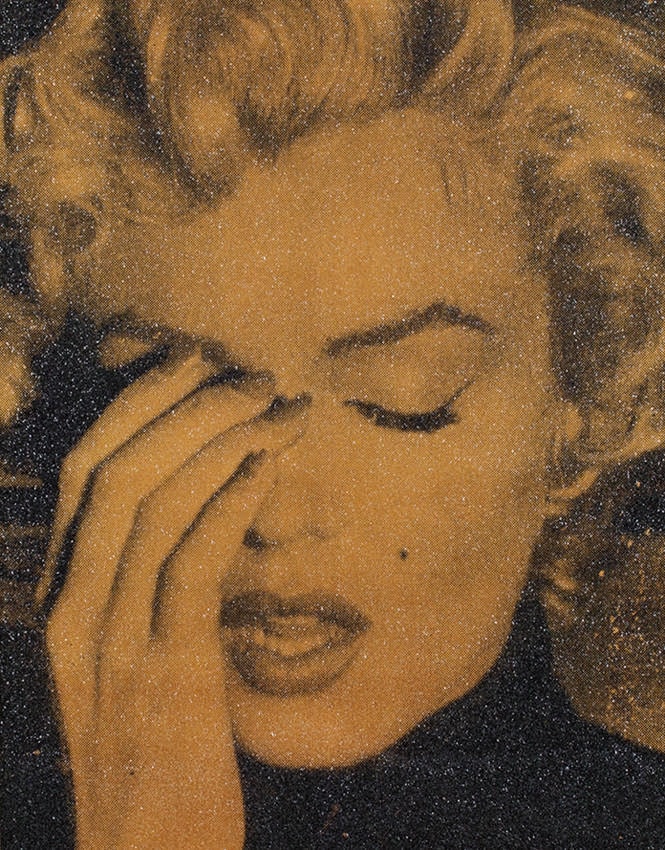
Russell Young Marilyn Crying represents one of the most emotionally resonant and visually stunning bodies of work in contemporary Pop Art. Unlike the countless glamorous depictions of Marilyn Monroe that have saturated popular culture since the 1950s, Young's series captures the Hollywood icon in a moment of raw vulnerability—her hand raised to her face, tears streaming down her cheeks during her 1954 divorce proceedings from baseball legend Joe DiMaggio. This candid press photograph, transformed through Young's signature technique of screenprinting with acrylic, enamel, and diamond dust on linen, creates works that shimmer with an almost sacred luminosity while meditating on the profound costs of American fame.
For collectors seeking to acquire works from this celebrated series, understanding the nuances of Russell Young Marilyn Crying prints is essential. Each piece exists as a unique impression—a one-of-one colorway that ensures no two works are identical despite sharing the same iconic source image. With over twenty-five colorways available across four distinct sizes, the Marilyn Crying series offers collectors remarkable flexibility in building a collection that speaks to both their aesthetic preferences and spatial requirements. This guide provides everything serious collectors need to know about evaluating, authenticating, and acquiring these remarkable works.
Marilyn Monroe's transformation from Norma Jeane Mortenson into the world's most recognizable blonde bombshell represents one of the twentieth century's most compelling narratives of reinvention and tragedy. Her image has been reproduced billions of times across every conceivable medium, from Andy Warhol's famous 1962 silkscreens to contemporary fashion campaigns and social media tributes. Yet the vast majority of these reproductions draw from the same well of carefully choreographed glamour shots—images designed to project an idealized feminine mystique that bore little resemblance to the complex, troubled woman behind the persona.
Russell Young's decision to base his Marilyn Crying series on a candid press photograph from Monroe's divorce proceedings represents a radical departure from this tradition of idealization. The source image captures Monroe outside a Los Angeles courthouse in October 1954, visibly distressed as she faced the end of her nine-month marriage to Joe DiMaggio. This was not the radiant screen goddess but a thirty-two-year-old woman confronting public humiliation and private heartbreak in front of dozens of photographers. By selecting this moment of genuine emotional exposure, Young fundamentally reframes our relationship with Monroe's iconography.
The art historical lineage of celebrity portraiture runs directly through Andy Warhol's Pop Art innovations of the early 1960s. Warhol's Marilyn screenprints, created in the weeks following Monroe's death in August 1962, established the visual vocabulary that would define celebrity art for generations. His technique of repeating and altering photographic images through silkscreen printing transformed fame itself into both subject and medium. Young acknowledges this debt explicitly while pushing the conversation in new directions—where Warhol's Marilyns maintain the mask of Hollywood glamour, Young's Marilyn Crying strips it away entirely.
Russell Young's path to becoming one of the most sought-after Pop artists of his generation began not in art school but in the music industry. Working as a photographer and music video director throughout the 1980s and early 1990s, Young captured intimate portraits of legendary musicians including The Smiths, Duran Duran, George Michael, and countless others. This background proved instrumental in shaping his artistic sensibility, particularly his understanding of how celebrity imagery simultaneously reveals and conceals the authentic self.

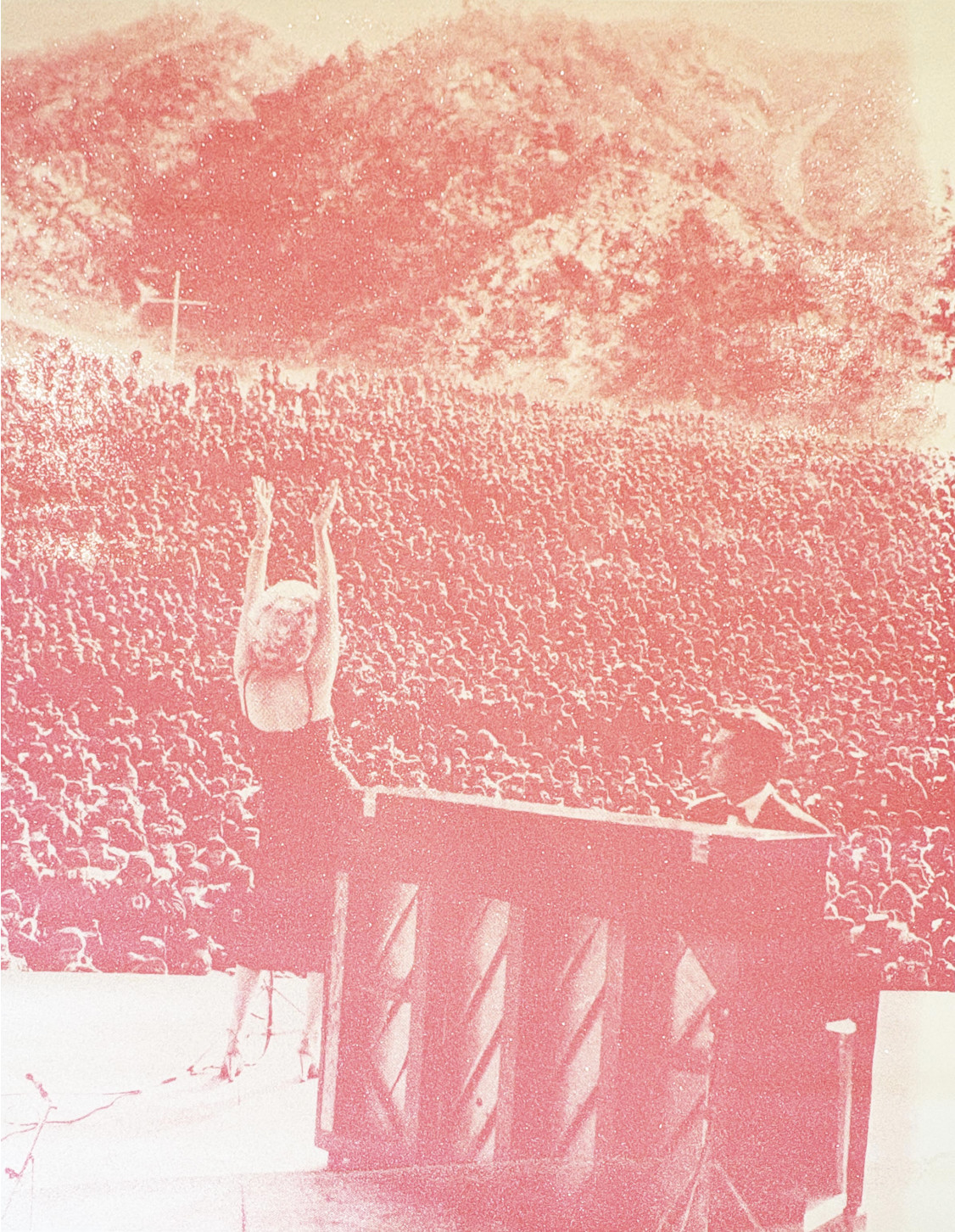
Russell Young, Marilyn Crying (Pink Gold), Acrylic, enamel and diamond dust screenprint on linen. Available at Guy Hepner, New York.
Young's transition from commercial photography to fine art began in the late 1990s when he started experimenting with screenprinting techniques. Drawing directly from methods pioneered by Warhol, he developed these traditions into something distinctly his own through the addition of diamond dust—actual crushed industrial diamonds that create a shimmering surface quality unlike anything else in contemporary art. This signature technique transforms flat printed images into luminous objects that shift and transform as viewers move around the work, lending each piece an almost transcendent quality.
The technical process behind Russell Young diamond dust prints is remarkably labor-intensive. Each work begins with a carefully selected archival image, which Young transforms through multiple layers of acrylic and enamel paint applied via silkscreen onto Belgian linen. The diamond dust is then hand-applied to specific areas of the composition, creating zones of intense luminosity that catch and reflect ambient light. Because each application of paint and diamond dust is performed by hand, every impression exhibits subtle variations in color saturation, dust distribution, and surface texture that make it genuinely unique.
Young's choice of linen as his substrate rather than paper or canvas further distinguishes his practice. Belgian linen provides a surface with exceptional archival properties and a subtle texture that interacts beautifully with the screenprinting process. The resulting works possess a tactile quality that photographs cannot fully capture—collectors often describe the experience of viewing a Russell Young diamond dust print in person as revelatory, with the interplay of light, color, and crystalline surfaces creating effects that must be seen to be appreciated.
The Marilyn Crying series has become Russell Young's most celebrated and collected body of work, embodying the full range of his artistic concerns and technical capabilities. The series transforms a single source photograph into a seemingly infinite variety of unique impressions through Young's masterful manipulation of color, contrast, and surface treatment. Understanding the structure of this series is essential for collectors seeking to acquire works that will provide lasting satisfaction.
The source photograph captures Monroe in three-quarter profile, her right hand raised to her face in a gesture that might be wiping away tears or shielding herself from the camera's intrusive gaze. Her expression conveys a complex mixture of sorrow, exhaustion, and dignified resignation. This emotional ambiguity gives the image its enduring power—viewers can project their own interpretations onto Monroe's face, seeing in it whatever aspects of human vulnerability most resonate with their own experience.
Young offers the Marilyn Crying series in four standard sizes, each designated with a descriptive name that has become shorthand among collectors:
Within each size category, collectors can choose from over twenty-five distinct colorways, ranging from bold primary hues to subtle metallic tones and dramatic black-and-white treatments. Some colorways feature extensive diamond dust application covering much of the image surface, while others use dust more sparingly to highlight specific areas such as Monroe's hair, jewelry, or tears. The naming conventions for colorways often reference locations meaningful to Young's biography or evocative of the mood each treatment creates.

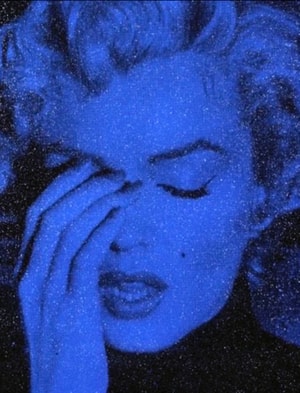
Russell Young, Marilyn Crying (Blue), Acrylic, enamel and diamond dust screenprint on linen. Available at Guy Hepner, New York.
One of the most important concepts for collectors to grasp when considering Russell Young Marilyn prints is the distinction between traditional limited editions and Young's unique impression model. While most contemporary printmakers produce numbered editions where each impression is intended to be identical to every other, Young works in a fundamentally different paradigm that makes each work a one-of-one piece.
The unique impression approach means that every Russell Young Marilyn Crying exists as a distinct colorway that will never be exactly replicated. Even when Young creates multiple works using the same general color palette, the hand-applied nature of his process ensures meaningful variations in every aspect of the finished piece. The density of diamond dust, the saturation of enamel colors, the precise registration of screenprinted layers—all vary from impression to impression in ways that give each work its own character.
This model offers significant advantages for collectors concerned with the investment potential of their acquisitions. Unlike traditional limited editions where the market must absorb hundreds of essentially identical impressions, each Russell Young unique impression functions more like a one-of-a-kind original. Collectors can acquire works with confidence that they own something genuinely singular rather than one copy among many. The unique impression model also encourages connoisseurship—experienced collectors develop preferences for specific color treatments, dust applications, and surface qualities that guide their acquisition decisions.
For collectors new to Russell Young's work, the unique impression model can initially seem confusing. The key understanding is that while Young may create many works based on the Marilyn Crying image, he treats each as an independent artwork rather than a reproduction. Galleries typically photograph individual works in their inventory precisely because no stock image can accurately represent what a collector will receive. When considering a Russell Young Marilyn Crying for sale, always request actual photographs of the specific piece under consideration rather than relying on representative images.
The extraordinary range of Russell Young Marilyn Crying colorways provides collectors with remarkable options for finding works that resonate with their personal aesthetic and complement their existing collections or living spaces. While cataloguing every colorway would exceed the scope of this guide, understanding the general categories and their characteristics helps collectors narrow their search productively.
Monochromatic treatments represent some of the most striking interpretations in the series. Black-and-white versions emphasize the documentary origins of the source photograph while allowing the diamond dust to create dramatic contrasts between matte and luminous surfaces. These works often appeal to collectors who appreciate the gravitas of photographic imagery and prefer artwork that integrates seamlessly with diverse interior schemes. The Santa Cruz Black and White, for example, presents the image with stark contrast that highlights Monroe's emotional expression while diamond dust adds unexpected glamour to the journalistic source material.
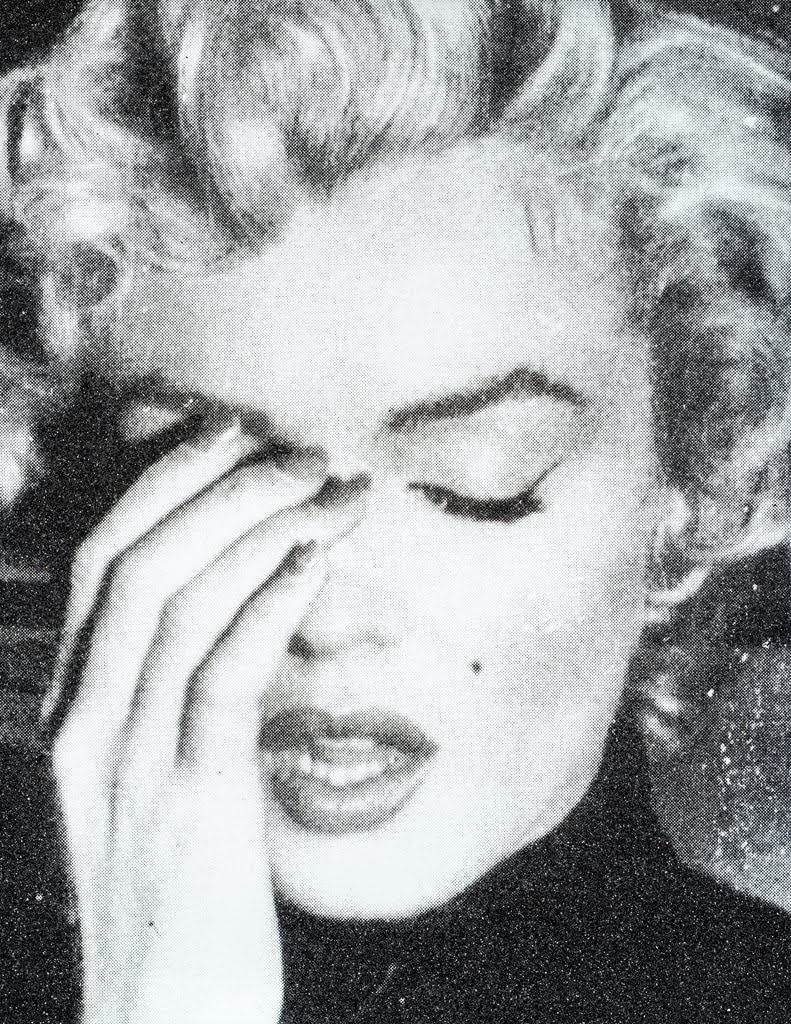
Russell Young, Marilyn Crying (Santa Cruz Black and White), Acrylic, enamel and diamond dust screenprint on linen. Available at Guy Hepner, New York.
Bold color treatments transform the image into something closer to traditional Pop Art territory while retaining the emotional complexity that distinguishes Young's vision. Vivid blues, electric pinks, and rich purples saturate Monroe's features with chromatic intensity that commands attention from across a room. The California Half Moon Blue colorway bathes the image in oceanic hues that evoke both Hollywood's dreamlike quality and the melancholy of Pacific sunsets. These works appeal to collectors who want statement pieces that celebrate the theatrical aspects of Monroe's persona while acknowledging its underlying sadness.
Metallic and precious metal colorways occupy a unique position in the series, combining the luminosity of diamond dust with backgrounds of gold, silver, or copper. The Pink Gold treatment layers warm metallic tones beneath the image, creating an effect reminiscent of Byzantine icons or Mexican devotional paintings. These works emphasize the quasi-religious status Monroe has achieved in American culture—she has become a secular saint whose image inspires reverence and contemplation. Collectors drawn to these colorways often appreciate the art historical resonances and the way precious materials elevate the subject matter.
While every Russell Young Marilyn Crying qualifies as a unique impression, variations in execution and condition mean that not all works are equally desirable. Developing an educated eye for quality helps collectors identify superior examples and avoid potential disappointments. The following criteria should guide evaluation of any work under consideration.
The robust secondary market for Russell Young Marilyn prints makes authentication an essential concern for collectors considering works from any source other than the artist's authorized galleries. Given the relatively high values these works command and the technical possibility of forgery, establishing definitive authenticity before acquisition protects both financial investment and peace of mind.
Russell Young, Marilyn Crying colorway, Acrylic, enamel and diamond dust screenprint on linen. Available at Guy Hepner, New York.
Authentic Russell Young works bear the artist's signature on the reverse of the linen substrate. Young typically signs in paint pen or marker, including the work's title, date, and colorway designation alongside his signature. The consistency of this practice means that any work lacking proper verso documentation should be viewed with skepticism until independent authentication can be obtained. Collectors should request clear photographs of the work's reverse before committing to any purchase.
Provenance—the documented history of ownership—provides additional security for collectors. Works acquired directly from the artist's studio or his authorized galleries carry the strongest provenance, as these sources maintain detailed records of every work sold. Secondary market acquisitions should ideally include original purchase documentation linking the work back to an authorized source. Gaps in provenance do not necessarily indicate problems, but they do increase the importance of physical authentication.
For works of uncertain authenticity, several options exist for verification. The most definitive approach involves submitting the work to the artist's studio for examination, though this process may involve shipping costs and delays. Reputable galleries specializing in Russell Young's work maintain extensive reference materials and can often provide informed opinions about authenticity based on photographs and documentation. Guy Hepner, as one of the leading dealers in Russell Young Marilyn Monroe art, offers authentication consultation for collectors considering secondary market acquisitions.
Understanding the availability of Russell Young Marilyn Crying works helps collectors develop realistic acquisition strategies and assess pricing in context. Unlike traditional limited editions with fixed quantities, the unique impression model means that Young continues to create new works in this series while earlier colorways may no longer be available.
The artist has produced Marilyn Crying works consistently since launching the series, with certain colorways appearing in limited quantities before being retired while others remain in ongoing production. This creates a dynamic where some colorways have become genuinely scarce while others can be acquired through authorized galleries with relative ease. Collectors seeking specific colorways should inquire about current availability, as gallery inventory changes regularly based on studio output and sales activity.
Primary market acquisition—purchasing directly from authorized galleries—offers significant advantages for collectors. Primary market works carry unquestionable authenticity, come with comprehensive documentation, and provide access to the freshest inventory from the studio. Additionally, gallery relationships established through primary market purchases often provide advance notice of new colorways and priority access to particularly desirable works.
Secondary market activity for Russell Young Marilyn Crying has increased substantially over the past decade as early collectors have begun to rotate their holdings and institutional interest has grown. Auction results for major examples have demonstrated consistent appreciation, though as with any contemporary artist, market performance varies based on colorway desirability, size, condition, and broader economic factors. Collectors should approach secondary market pricing critically, recognizing that asking prices and realized prices often differ significantly.
Pricing for Russell Young Marilyn Crying works varies considerably based on several factors that collectors should understand before entering the market. While specific prices change over time and discussing exact figures would quickly become outdated, understanding the variables that influence pricing helps collectors evaluate whether asking prices represent fair value.
Size serves as the primary determinant of price, with Superstar format works commanding substantial premiums over Small format examples. The relationship between size and price is not strictly linear—larger works require greater material costs, more complex production processes, and present different logistical challenges that justify their higher valuations. Collectors should select sizes based on their display requirements and budget constraints rather than assuming smaller works offer better value.
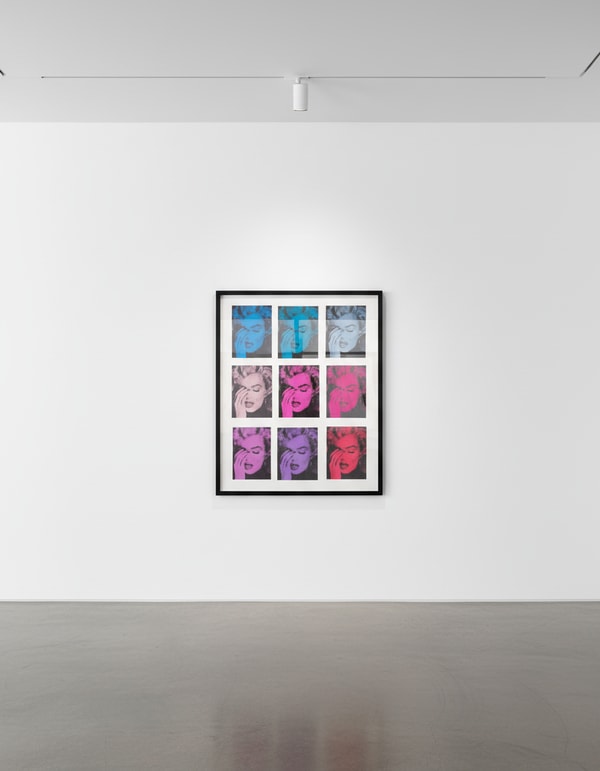
Russell Young, Marilyn Crying series, Acrylic, enamel and diamond dust screenprint on linen. Available at Guy Hepner, New York.
Colorway desirability significantly influences pricing, though this factor involves subjective aesthetic judgments that vary among collectors. Certain colorways have achieved particular popularity and command premium prices, while less common treatments may be available at more accessible levels. The retirement of specific colorways can trigger price increases as remaining examples become scarcer. Collectors who develop informed preferences may find opportunities to acquire works they find personally compelling at prices below comparable examples in more fashionable colorways.
Diamond dust density and overall condition affect pricing in the secondary market particularly. Works with exceptionally rich dust application or unusual surface effects may command premiums over standard examples. Conversely, works showing condition issues such as dust loss, surface abrasions, or stretcher problems should be priced significantly below comparable examples in excellent condition. Collectors considering secondary market purchases should carefully evaluate condition relative to pricing.
Collectors approaching Russell Young's Marilyn Crying series for the first time benefit from developing a coherent acquisition strategy rather than purchasing impulsively. The diversity of options available—multiple sizes and dozens of colorways—means that thoughtful planning helps ensure satisfying outcomes.
One productive approach involves selecting a preferred size and then exploring available colorways within that format. This strategy makes sense for collectors whose display space imposes constraints on the size of works they can accommodate. A collector committed to the Star format, for example, can focus attention on evaluating colorways available in that size rather than being distracted by unavailable options in other formats.
Alternatively, collectors may identify preferred colorways first and then consider which available sizes best suit their needs and budget. This approach makes sense for collectors particularly drawn to specific color treatments whose desirability outweighs other considerations. A collector passionate about metallic gold treatments might pursue that aesthetic across different sizes as opportunities arise.
Serious collectors sometimes pursue depth rather than breadth, acquiring multiple examples of Marilyn Crying in different colorways to create ensemble presentations. A wall featuring three or more variations creates a powerful visual statement while demonstrating connoisseurship and commitment to the series. This approach echoes Warhol's own practice of presenting celebrity portraits in grid formations and acknowledges the serial nature of Young's artistic project.
For collectors building comprehensive holdings in Russell Young's work more broadly, the Marilyn Crying series naturally serves as an anchor around which other series can be organized. Young's investigations of American iconography extend beyond Monroe to include Elvis Presley, Muhammad Ali, various political figures, and other cultural touchstones. A collection that includes Marilyn Crying alongside complementary works from other series demonstrates the full range of Young's artistic vision.
Guy Hepner Gallery has established itself as one of the world's leading sources for Russell Young's work, maintaining comprehensive inventory and deep expertise in the artist's practice. Located at 529 West 20th Street in New York's Chelsea gallery district, Guy Hepner provides collectors with access to an exceptional selection of Russell Young Marilyn Crying works alongside knowledgeable guidance through the acquisition process.
The gallery's relationship with Russell Young ensures access to the strongest available inventory, including new colorways as they emerge from the studio and rare examples that surface in the secondary market. This combination of primary and secondary market expertise means collectors working with Guy Hepner can pursue their acquisition goals through whatever channels prove most productive. The gallery's track record of facilitating significant placements in private collections and institutions worldwide demonstrates its capability to handle acquisitions at every level.
Collectors interested in exploring Russell Young Marilyn Crying for sale are encouraged to contact Guy Hepner to discuss available inventory, pricing, and acquisition strategies. Whether seeking a first work by this celebrated artist or adding to an existing collection, the gallery's expertise ensures that collectors make informed decisions leading to lasting satisfaction with their acquisitions.
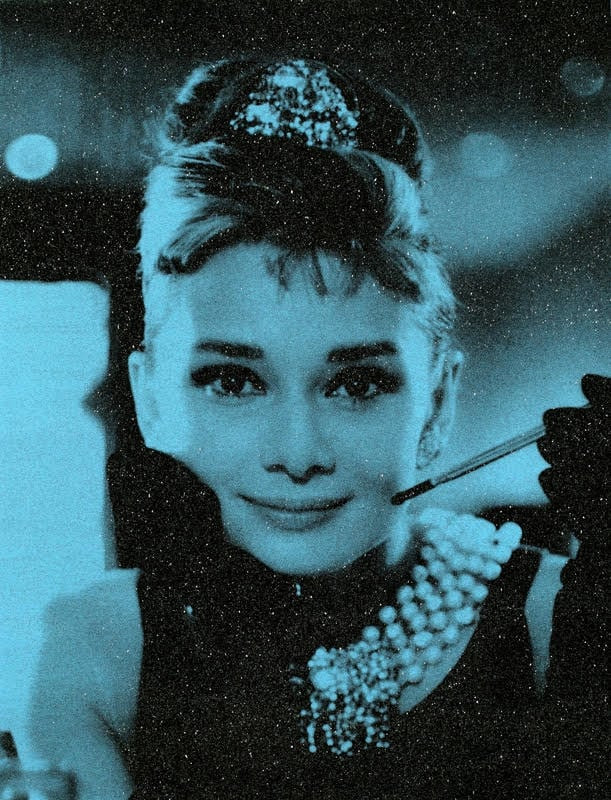
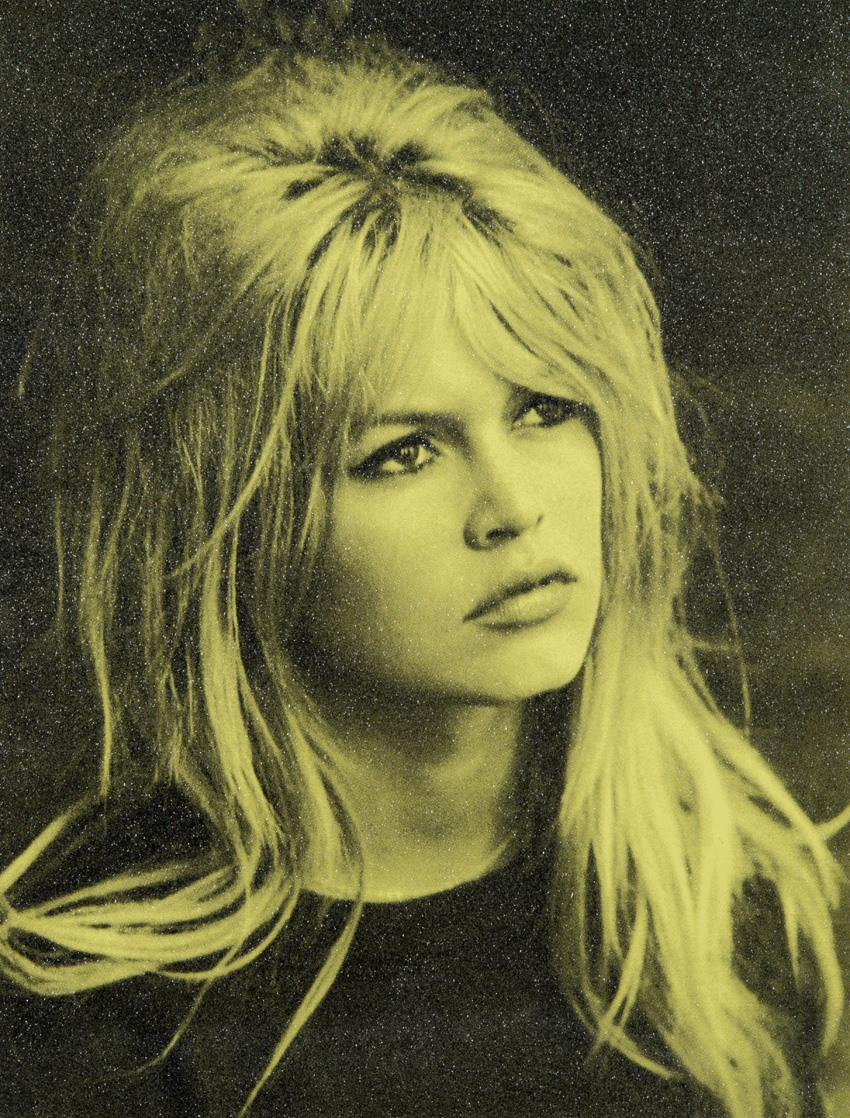
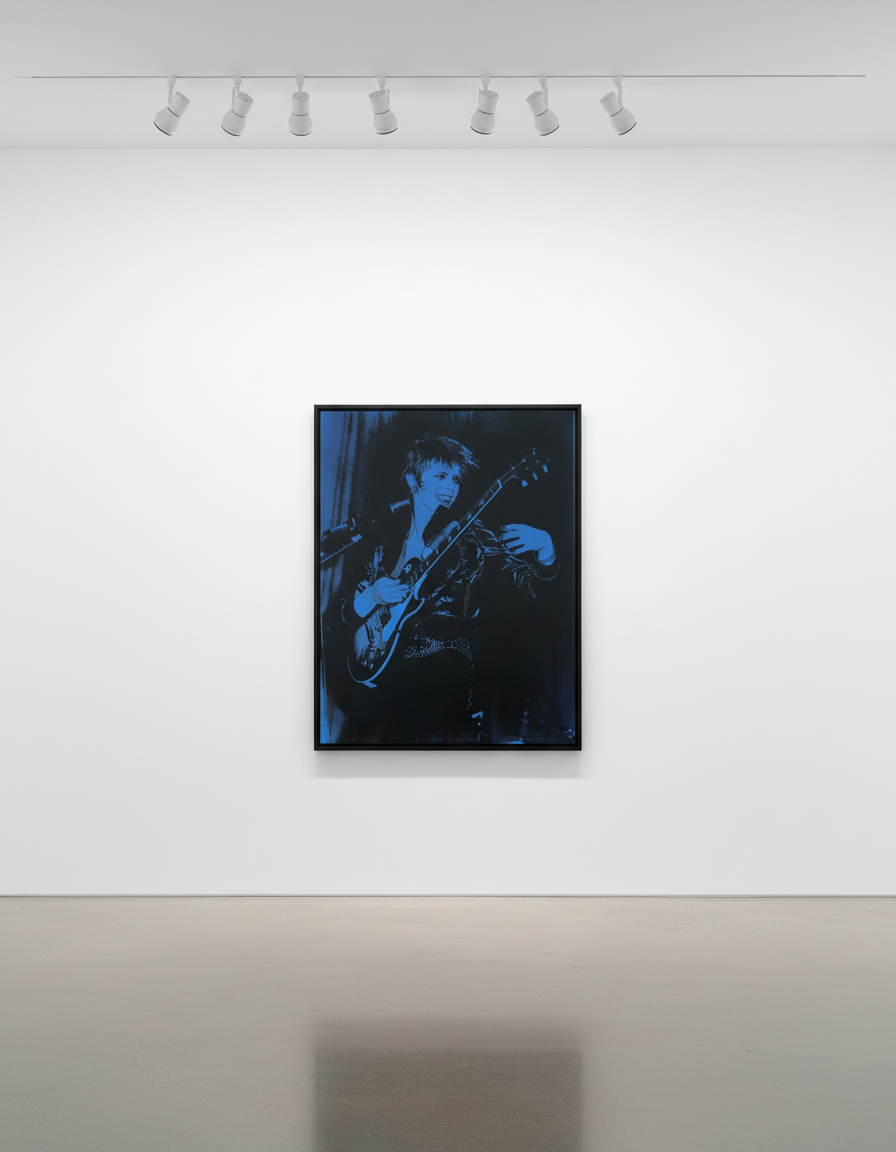
Explore Russell Young prints for sale at Guy Hepner: Marilyn Crying, Marilyn Monroe, Audrey Hepburn, Brigitte Bardot, David Bowie.
Related Series