Reflections

April 29, 2026
For collectors seeking Roy Lichtenstein Reflections for sale, few bodies of work in the post-war print market offer the same combination of art-historical depth, technical ambition, and sustained auction demand. Created between 1988 and 1990, the Reflections series represents one of the defining achievements of Lichtenstein's late career — a sophisticated act of self-examination in which the artist turned his iconic Pop vocabulary back on itself, literally and conceptually.
The series is now among the most sought-after print editions in the secondary market, with auction results in 2025 confirming that collector appetite for major subjects remains exceptionally strong. Whether you are a first-time buyer researching Roy Lichtenstein Reflections value or a seasoned collector assessing a specific Corlett number, this guide provides the essential reference points for understanding, authenticating, and acquiring works from this remarkable series.
Inquire About Available Works Browse available works from the Reflections series at Guy Hepner, New York.
The Reflections series emerged from a period of intense critical self-examination within Lichtenstein's practice. By the late 1980s, the artist had spent nearly three decades constructing one of the most recognisable visual languages in 20th-century art: the Ben-Day dot, the bold black outline, the compressed comic-strip narrative. In the Reflections series, he subjected that language to a novel form of scrutiny.
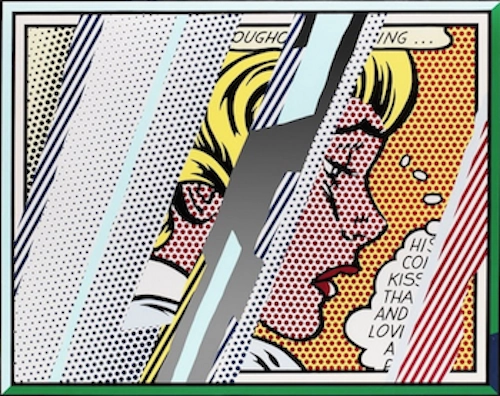
The core conceit is simultaneously simple and conceptually rich. Each work depicts a pre-existing image — a Lichtenstein painting, a sculpture, or an art-historical motif — as if seen through a reflective surface. Diagonal streaks of white and silver suggest the glint of glass or polished mirror; the underlying image appears through and beneath this reflective layer. The result is a body of work that comments on representation, on the mediation of images by surfaces, and on Lichtenstein's own canonical status within the art world he had helped to redefine.
The series was created from 1988 to 1990 and catalogued by Mary Lee Corlett in the standard catalogue raisonné of the artist's prints. The main Reflections series spans Corlett numbers C.239 through C.257, covering the principal screenprint editions along with preparatory studies. The Corlett numbering system is the primary reference for authentication and valuation purposes; any serious collector should be familiar with which Corlett numbers correspond to which subjects.
The prints were produced in both screenprint and lithograph formats, with some works incorporating embossing, hand-applied element illusions, and multiple colour separations. Edition sizes vary across the series, and this variation directly affects relative scarcity and, consequently, market value.
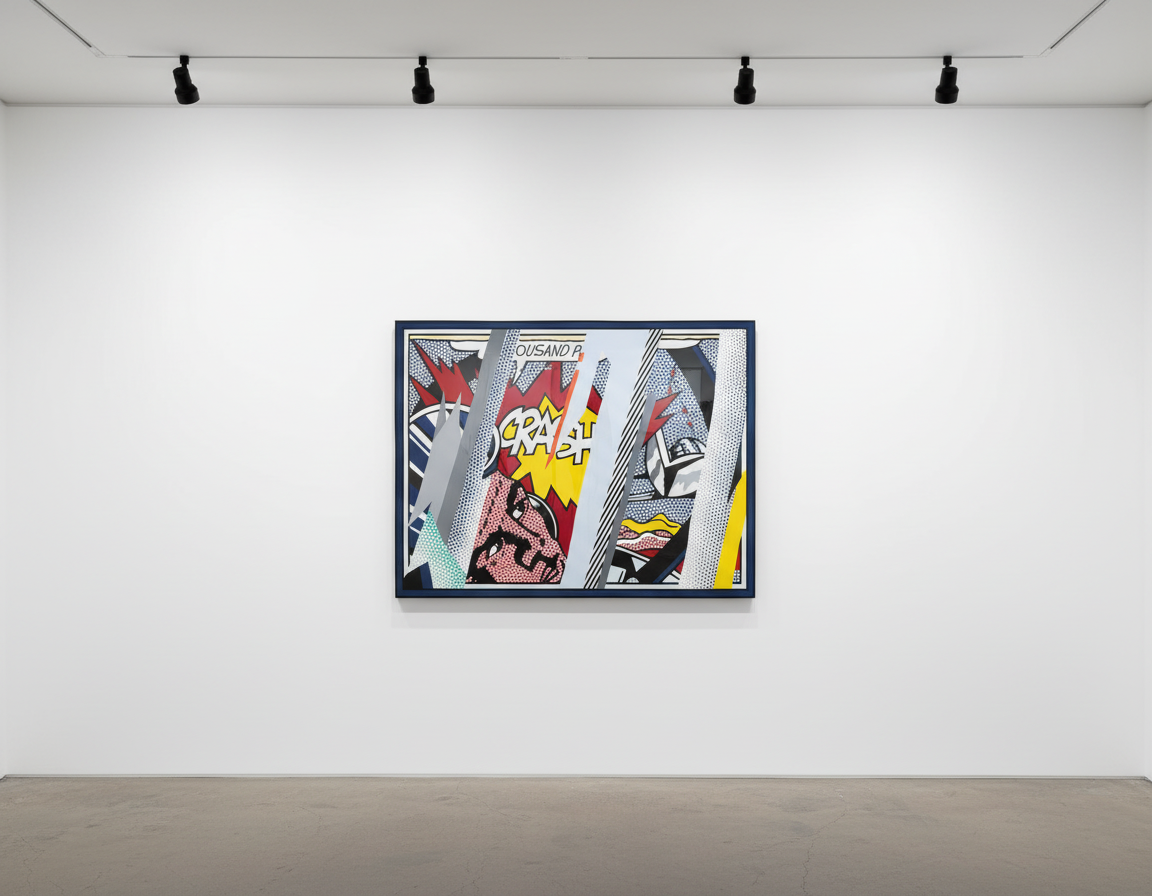 Reflections on Crash (Corlett C.239). Available at Guy Hepner, New York.
Understanding the technical construction of the Reflections prints is essential for collectors assessing condition, authenticity, and comparative quality within the series.
The majority of Reflections works are screenprints — a medium that allowed Lichtenstein to achieve the flat, mechanically precise surfaces central to his aesthetic. Screenprinting enabled rigorous control over the Ben-Day dot patterns: those evenly spaced, uniformly sized circles that simulate the cheap commercial printing of mid-century comic books and newspaper advertisements. In the Reflections series, the dots appear both in the underlying depicted image and in the reflective layer itself, creating a visual doubling that reinforces the conceptual theme.
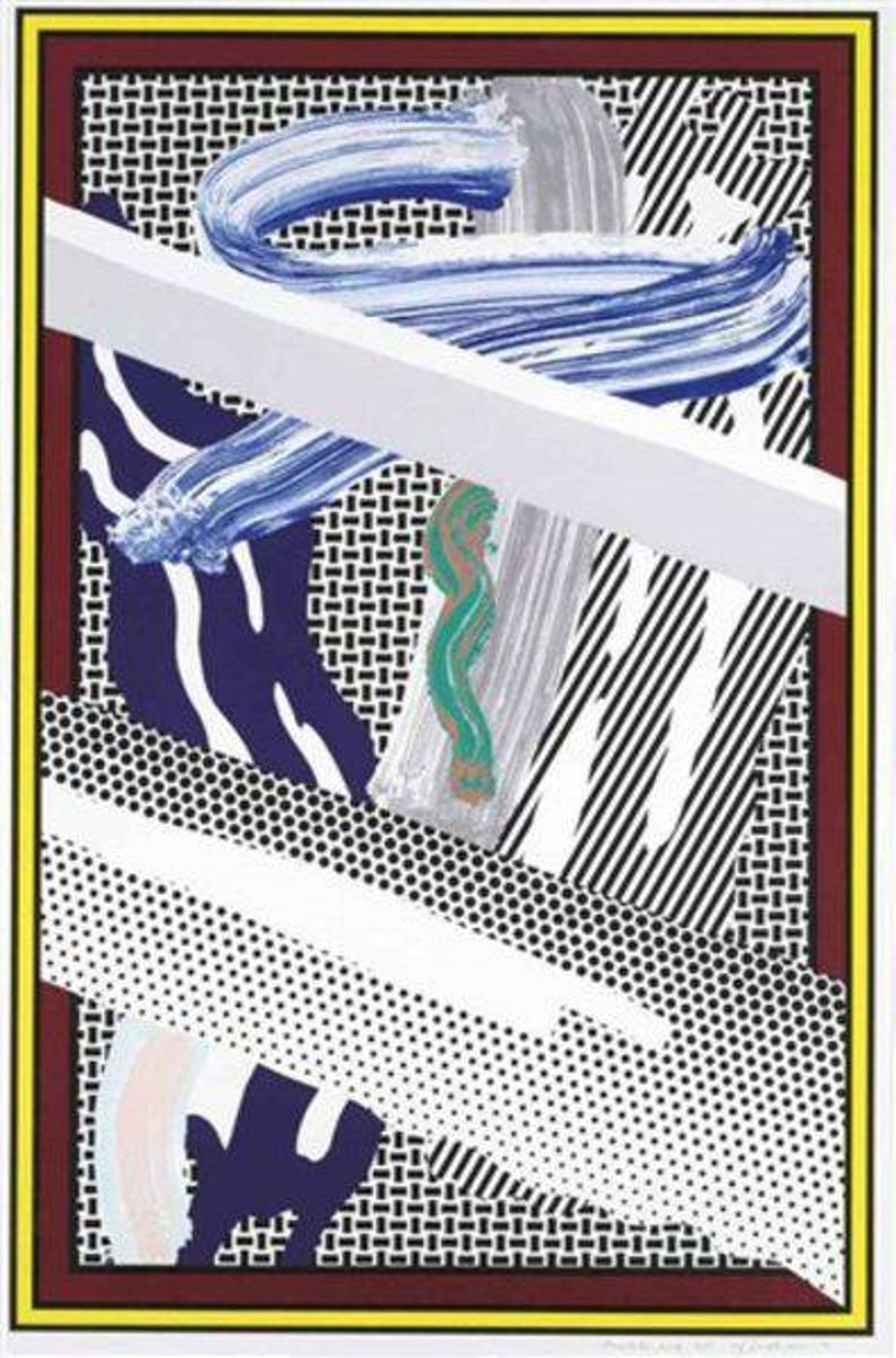
The colour separations in many Reflections prints are technically ambitious. Works such as Reflections on Crash and Reflections on Brushstrokes involve multiple colour passes, each requiring precise registration. Misregistration — even minor — affects print quality and is one of the condition factors that specialists examine when appraising works from this series. The best impressions display an almost photographic precision in the alignment of dots, outlines, and reflective streaks.
The defining visual innovation of the series is the depiction of reflection. Lichtenstein rendered this through diagonal bands and streaks of white, often combined with a limited palette of silver, grey, and pale blue. These elements sit across the composition like light bouncing off a glass surface, partially obscuring and partially revealing the image beneath.
This layering is not merely decorative. It raises questions about visibility, mediation, and the relationship between an artwork and its own image in the world — questions that were acutely relevant in the late 1980s art market, when prices for Lichtenstein's own paintings had reached stratospheric heights. The Reflections series can be read as a wry commentary on the spectacle of that market: the works of art become objects glimpsed through the distorting surface of commerce and cultural reproduction.
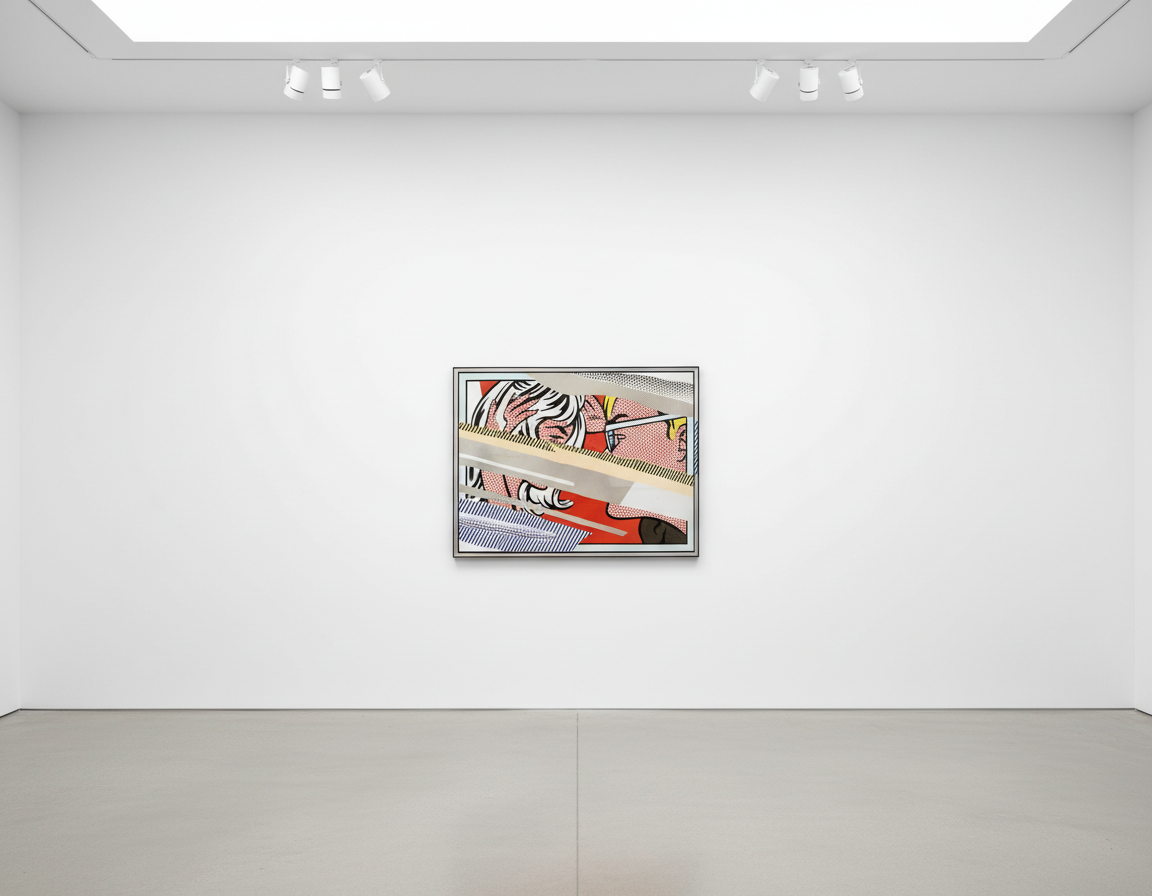 Reflections on Conversation (Corlett C.240). Available at Guy Hepner, New York.
Many of the Reflections prints depict Lichtenstein's own earlier works. Reflections on Crash references the artist's celebrated comic-book imagery from the 1960s. Reflections on Brushstrokes revisits his famous Brushstrokes series, in which he had turned the gestural spontaneity of Abstract Expressionism into a subject for cool Pop-art treatment. Reflections on the Scream takes as its source a composition with clear art-historical resonance. By depicting his own paintings through the device of reflection, Lichtenstein achieved a layered commentary: his Pop-art subjects — themselves reproductions of popular imagery — are now themselves reproduced and mediated further through a reflective surface.
This self-referential dimension gives the series unusual intellectual depth for collectors interested in Lichtenstein's overall project, not simply his visual impact.
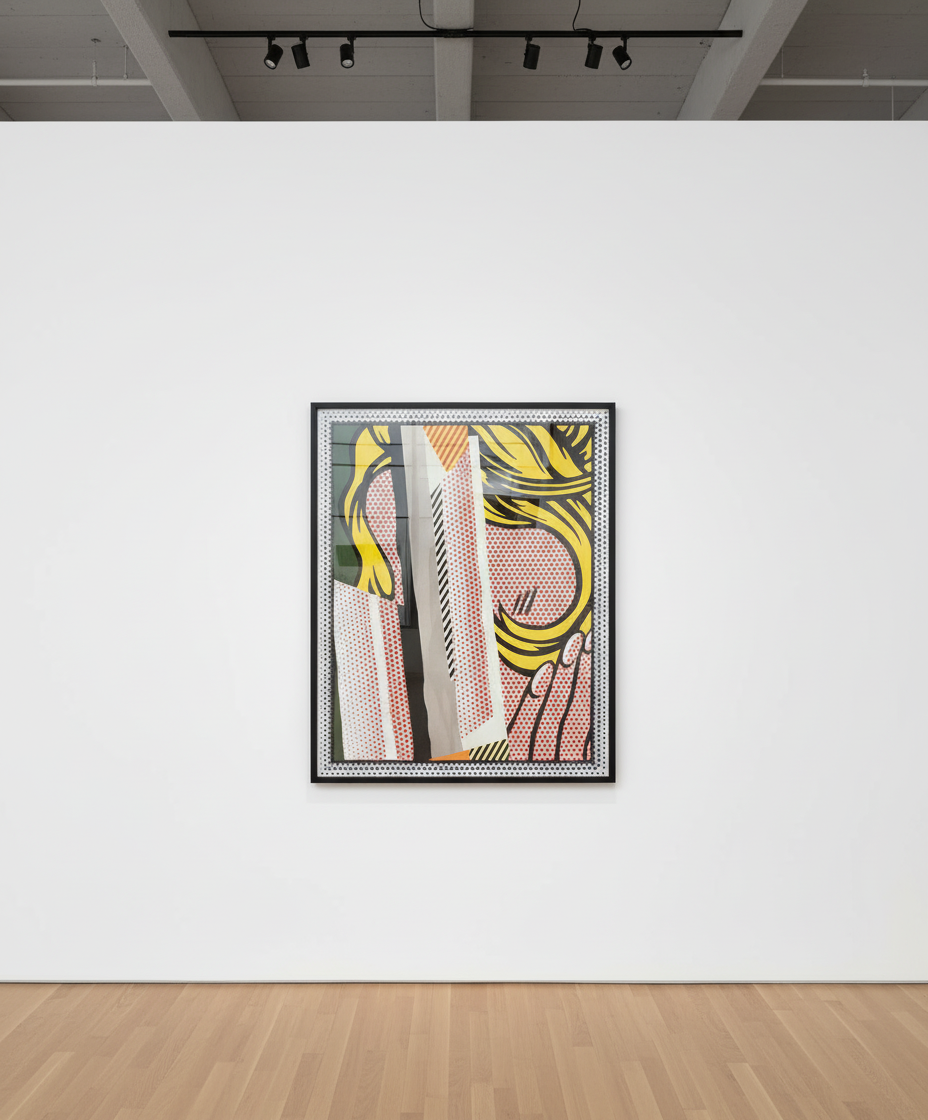 Reflections on Hair (Corlett C.241). Available at Guy Hepner, New York.
Speak With a Specialist Contact our team to discuss specific Corlett numbers, condition, and provenance for available Reflections works.
The secondary market for the Reflections series is well-established and provides a clear picture of which subjects and formats command the strongest prices.
The most significant recent result came at Sotheby's in November 2025, where Reflections: Wimpy III achieved $2,002,000, confirming top-tier demand for the most ambitious subjects in the series. At the same sale, Reflections on Brushstrokes sold for $1,392,000 — a result that reflects the sustained collector appetite for compositions connecting to Lichtenstein's most celebrated 1960s body of work. Also at Sotheby's in November 2025, Reflections on Thud! (Study) realised $482,600, while Reflections of Large Interior (Study) achieved $139,700.
Reflections on Crash (Corlett C.239) has a well-documented and consistent auction history. At Sotheby's in May 2025, the work achieved $215,900; at Bonhams in October 2023, a comparable result of $203,700 was recorded. The consistency of these results across major auction houses and across a two-year window reflects the subject's enduring collector appeal and the reliability of demand for this particular Corlett number. An earlier data point is equally instructive: at Phillips de Pury in November 2005, Reflections on Crash sold for $1,100,000 — a figure that captures both the peak market conditions of the mid-2000s and the degree to which Crash has always been among the most coveted subjects in the series.
Several conclusions emerge from this auction record. First, the most iconic subjects — Crash, Brushstrokes, Wimpy III — command the highest prices by a considerable margin, with results for the strongest examples reaching into seven figures. These are works with immediate visual impact and clear connection to Lichtenstein's best-known imagery. Second, studies are genuinely distinct from the main editions in market terms; the $482,600 result for Thud! (Study) versus the seven-figure results for main edition subjects illustrates the structural gap. Third, the 2025 auction season confirms that the market remains active and willing to pay premium prices for the strongest examples, even in a competitive broader art market environment.
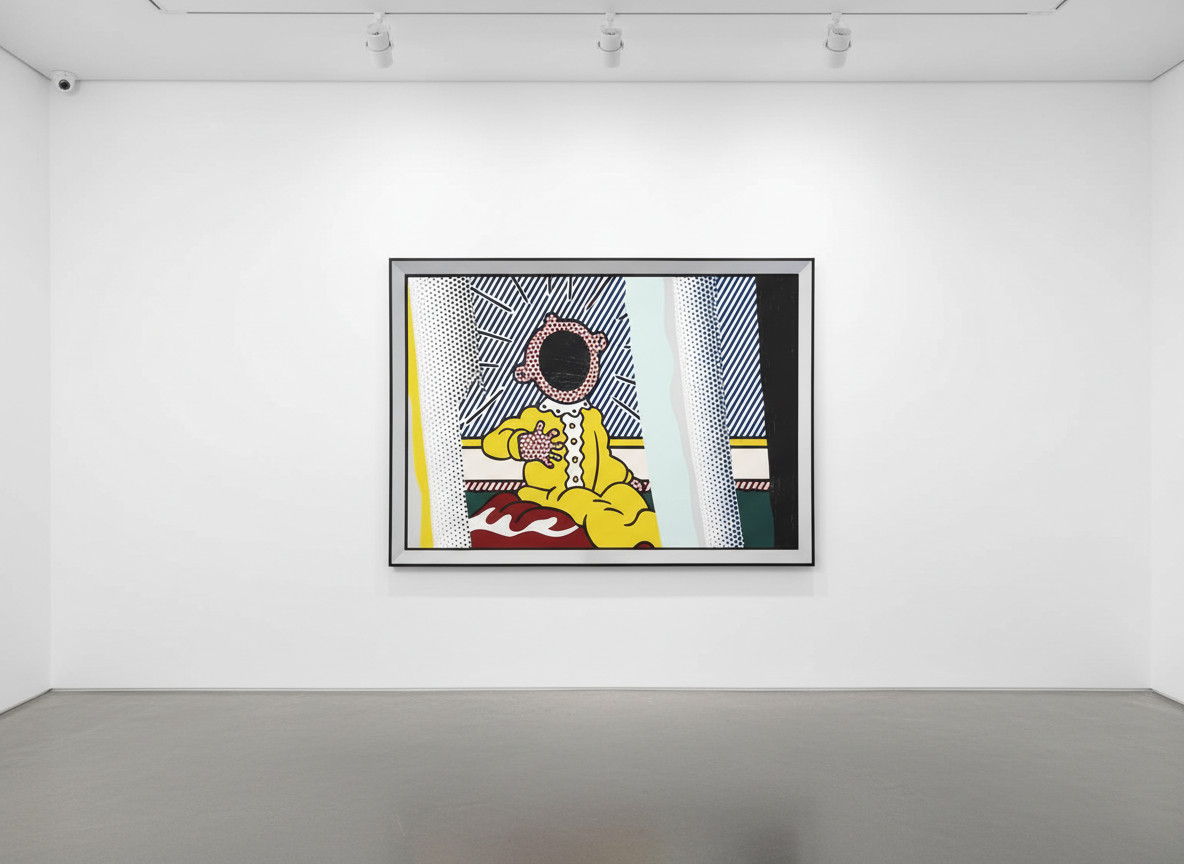 Reflections on the Scream (Corlett C.243). Available at Guy Hepner, New York.
For collectors considering the Reflections series as an investment as well as an aesthetic acquisition, the following framework provides practical guidance.
The distinction between main edition screenprints and studies is fundamental. Main editions are the definitive, finished versions of each composition — produced in the intended edition size, on the standard support, with the full complement of colour separations and technical execution. Studies are preparatory or variant works, often produced in smaller formats, with fewer colour passes, or with a less fully resolved composition. They are academically interesting and occupy an important position in understanding Lichtenstein's working process, but they trade at a structural discount relative to main editions.
If your primary goal is long-term value preservation and appreciation, focus on main edition screenprints in excellent condition with clean provenance. If you are building a research or study collection, studies offer entry points at lower price levels with genuine art-historical interest.
Within the main Reflections series (C.239–C.257), not all Corlett numbers are equal in market terms. The numbers correspond to specific subjects, and the subjects themselves carry different levels of art-historical significance and collector demand. The most sought-after works are those whose underlying imagery connects most directly to Lichtenstein's iconic output — the comic-book crash imagery, the Brushstrokes, the figurative works most recognisable to a broad collector audience.
Collectors should familiarise themselves with the full Corlett sequence and understand which numbers correspond to which compositions before acquiring. A work's Corlett number is not simply a catalogue reference; it is effectively a shorthand for the composition's place in the market hierarchy.
Condition is paramount for print valuation. The key factors in the Reflections series are:
Colour fidelity: The flat, precise colour fields of screenprints are susceptible to fading under UV exposure. Works should be examined under controlled lighting conditions for any colour shift, particularly in the pale blue and yellow zones.
Registration: Misregistration between colour separations affects the crispness of the Ben-Day dot patterns and outlines. This is detectable at close range and can significantly affect value on the secondary market.
Paper support: Check for foxing, tidelines, or any evidence of moisture exposure. The paper margins should be clean and intact, with no trimming or repair.
Signature and numbering: All main edition works should be signed and numbered by the artist. The legibility and condition of the signature matter; a rubbed or faded signature affects presentation even where it does not affect authenticity.
Embossing integrity: Some Reflections prints include embossed elements simulating the three-dimensionality of the depicted surface. These should be examined for any flattening caused by improper framing or handling.
Based on available auction data, the hierarchy is clear. Wimpy III and Brushstrokes subjects sit at the top. Crash (C.239) occupies a strong secondary tier with the most consistent demand and the most abundant secondary market data. The Scream and compositions connected to Lichtenstein's own celebrated series attract sustained interest. Works whose underlying imagery is less immediately recognisable to a broad collector audience typically trade closer to the bottom of the main edition range.
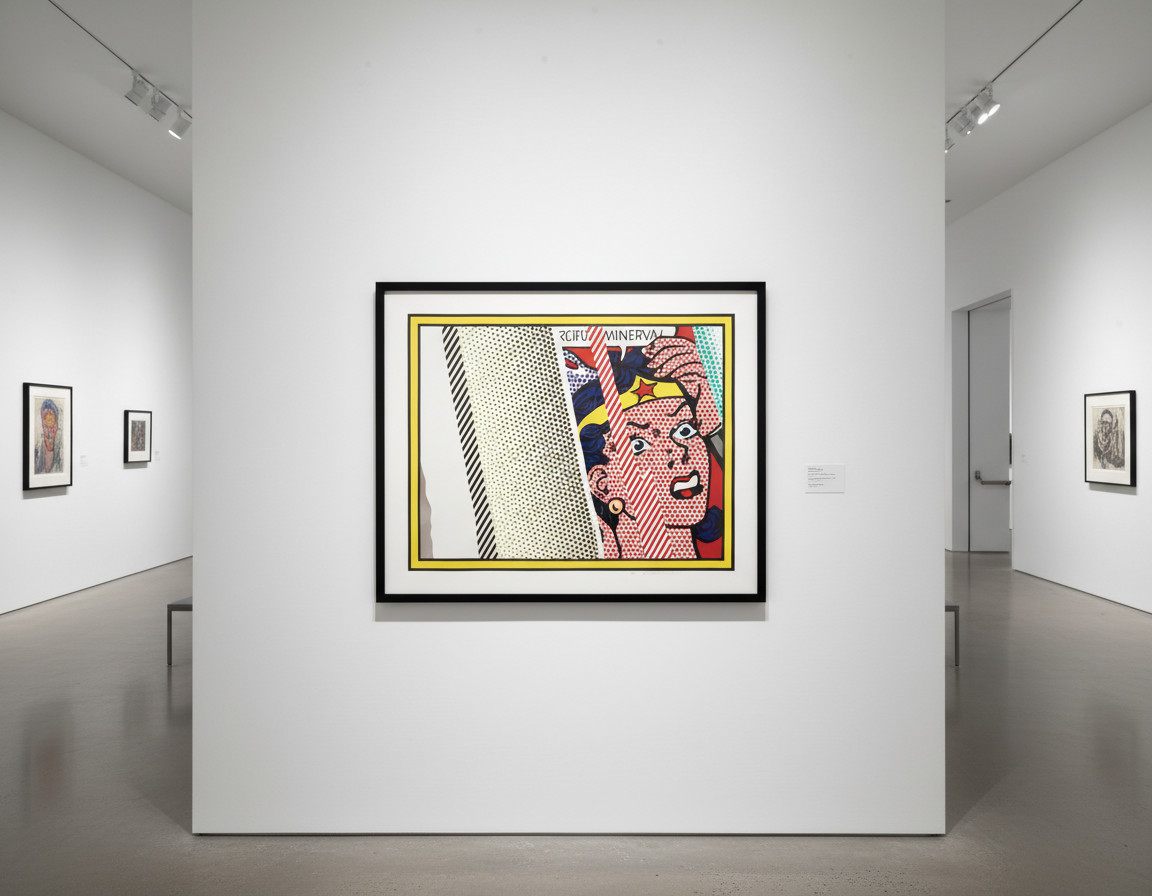 Reflections on Minerva (Corlett C.244). Available at Guy Hepner, New York.
Inquire About Available Works Our current inventory includes multiple works from the Reflections series. Contact us to discuss condition reports and provenance documentation.
Authenticating works from the Reflections series requires attention to multiple layers of evidence. No single factor is sufficient; collectors should expect to assemble a complete picture before committing to a significant acquisition.
The Roy Lichtenstein Foundation is the primary authority on the artist's work. The Foundation maintains records of the artist's output and can, in certain circumstances, provide guidance on specific works. Any significant acquisition should be cross-referenced with Foundation records where possible, and any claimed Foundation endorsement or authentication should be verified directly.
Mary Lee Corlett's catalogue raisonné of Lichtenstein's prints is the definitive scholarly and market reference. Each work in the Reflections series is documented with its composition, technique, edition size, paper, and relevant provenance information. A work that cannot be located in the catalogue raisonné, or that differs from its catalogue description in material respects, should be treated with considerable caution.
For collectors, the practical implication is straightforward: always obtain the Corlett number for any Reflections work under consideration, and verify the work's characteristics — dimensions, edition size, technique, paper type — against the published catalogue entry.
Many Lichtenstein prints bear blind stamps — embossed or inked marks from the publisher or printer — that provide additional evidence of authenticity. These stamps should be consistent with the documented printing history of the specific work. Collectors should familiarise themselves with the publishers associated with each Corlett number in order to assess whether any stamps present are consistent with the work's claimed history.
A clean provenance chain — ideally traceable to the original publisher or a recognised institution — is the strongest supporting evidence for authenticity. Collectors should request all available documentation: original purchase receipts, exhibition labels, prior auction records, and any correspondence related to the work. Gaps in provenance are not necessarily disqualifying, but they require additional authentication scrutiny and may affect the work's liquidity on the secondary market.
For acquisitions above a threshold appropriate to your collection, a formal authentication opinion from a recognised specialist is advisable. This is particularly important for works that lack direct publisher provenance or have passed through multiple hands without comprehensive documentation. Reputable galleries and auction houses maintain relationships with qualified specialists and can facilitate this process.
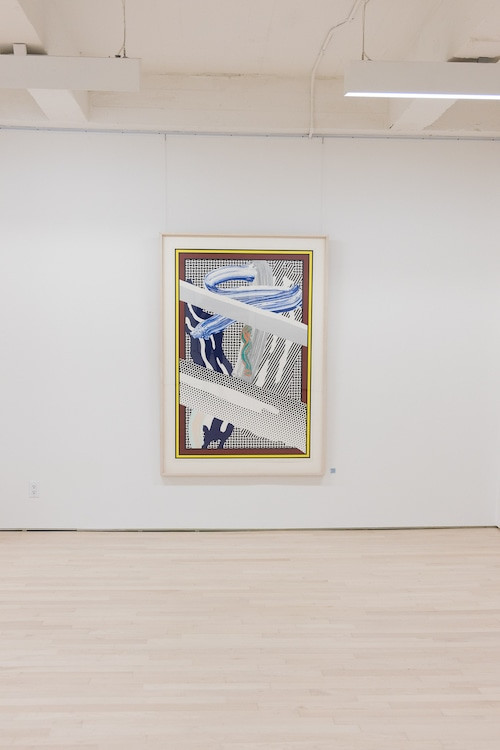 Reflections on Girl (Corlett C.245). Available at Guy Hepner, New York.
The Reflections series is a body of prints created by Roy Lichtenstein between 1988 and 1990. The works depict existing images — often Lichtenstein's own earlier paintings — as if seen through a reflective or glazed surface. Distinctive diagonal streaks of white and silver suggest light bouncing off glass, partially obscuring the underlying composition. The series is catalogued in the Corlett catalogue raisonné of Lichtenstein's prints, with the main edition works spanning Corlett numbers C.239 through C.257.
Mary Lee Corlett compiled the catalogue raisonné of Roy Lichtenstein's prints, which serves as the standard scholarly and market reference for the artist's print output. Each work is assigned a unique "C." number corresponding to its position in the catalogue. For the Reflections series, the C. numbers allow collectors, dealers, and auction specialists to identify specific works with precision and compare them against documented characteristics including edition size, technique, paper type, and dimensions.
Authentication requires cross-referencing the work against the Corlett catalogue raisonné entry for the relevant C. number. Key checks include: confirming that the composition matches the catalogue description; verifying the edition number against the documented edition size; examining any blind stamps or publisher marks; reviewing provenance documentation; and, for significant acquisitions, obtaining an independent specialist opinion. The Roy Lichtenstein Foundation maintains records that may assist with authentication queries.
Main edition works are the definitive, fully realised versions of each Reflections composition, produced in the intended format and edition size with the full technical execution. Studies are preparatory or variant works — often smaller in scale, with fewer colour passes or a less resolved composition. Both types are documented in the Corlett catalogue raisonné, but they trade at materially different price levels. Collectors should confirm precisely which category any prospective acquisition belongs to before making comparisons with auction results for main editions.
Auction data consistently identifies Reflections: Wimpy III and Reflections on Brushstrokes as the highest-value subjects in the series, with results at Sotheby's in 2025 confirming prices well into seven figures for these works. Reflections on Crash (C.239) is the most frequently traded subject and has achieved strong, consistent results across multiple auction venues over two decades. Works whose underlying imagery connects most directly to Lichtenstein's iconic 1960s output tend to command the strongest premiums.
Condition is a primary value driver for prints across all artists, and the Reflections series is no exception. The key condition factors are: colour fidelity (screenprints are susceptible to UV fading), registration quality (misregistration between colour passes affects the crispness of dot patterns and outlines), the state of the paper support (foxing, moisture exposure, or handling damage all reduce value), and the legibility of the artist's signature. Works in excellent, unrestored condition with clean provenance will consistently achieve the strongest prices. Even apparently minor condition issues can result in significant price differentials at auction or in private sale negotiations.
Works from the Reflections series are available through established galleries and the secondary market at auction. Guy Hepner, New York, currently holds inventory across multiple subjects in the series, with condition reports and full provenance documentation available on request. Auction houses including Sotheby's, Christie's, Bonhams, and Phillips regularly offer Reflections works; buyers should factor in the buyer's premium (typically 25–26% on the hammer price at major houses) when assessing total acquisition cost. Private gallery acquisitions avoid the auction premium and typically provide additional support around condition and provenance documentation.
The November 2025 auction results — with top subjects achieving strong results above estimate — confirm that collector demand for the Reflections series remains robust. The series benefits from several factors that underpin long-term collector interest: it represents a late-career conceptual achievement by one of the defining figures of 20th-century art; it is comprehensively documented in the Corlett catalogue raisonné; the most iconic subjects maintain clear art-historical relevance beyond the immediate Lichtenstein market; and the supply of the finest condition examples is genuinely finite. As with all print markets, condition and subject matter will continue to drive differentiation between the strongest and weakest results within the series.
Speak With a Specialist Contact Guy Hepner's team for condition reports, provenance documentation, and acquisition guidance on the Reflections series.
The Roy Lichtenstein Reflections series occupies a distinctive position in the market for post-war and contemporary prints. It is not a series that rewards casual engagement; understanding which Corlett numbers correspond to which subjects, the technical distinctions between screenprint formats and studies, and the condition standards that drive price differentiation at auction all require careful research. For collectors willing to engage at that level of depth, the series offers genuine intellectual satisfaction alongside strong market fundamentals.
The 2025 auction results, with multiple subjects achieving results that confirm sustained institutional and private collector demand, suggest that the Reflections series will remain a benchmark body of work within the Lichtenstein market for the foreseeable future. The combination of conceptual sophistication, technical accomplishment, and clear provenance documentation makes it as compelling an area for new collectors as for those who have followed it since the editions first appeared.
Guy Hepner, New York, maintains active inventory across the Reflections series, with works sourced from documented collections and accompanied by full provenance records. Condition reports are available on request for any work in inventory.
Inquire About Available Works Browse available works from the Reflections series at Guy Hepner, New York.
Explore Roy Lichtenstein prints for sale at Guy Hepner: Reflections, American Indian Theme, Art Critic, Brushstrokes, Cathedral.
Related Series