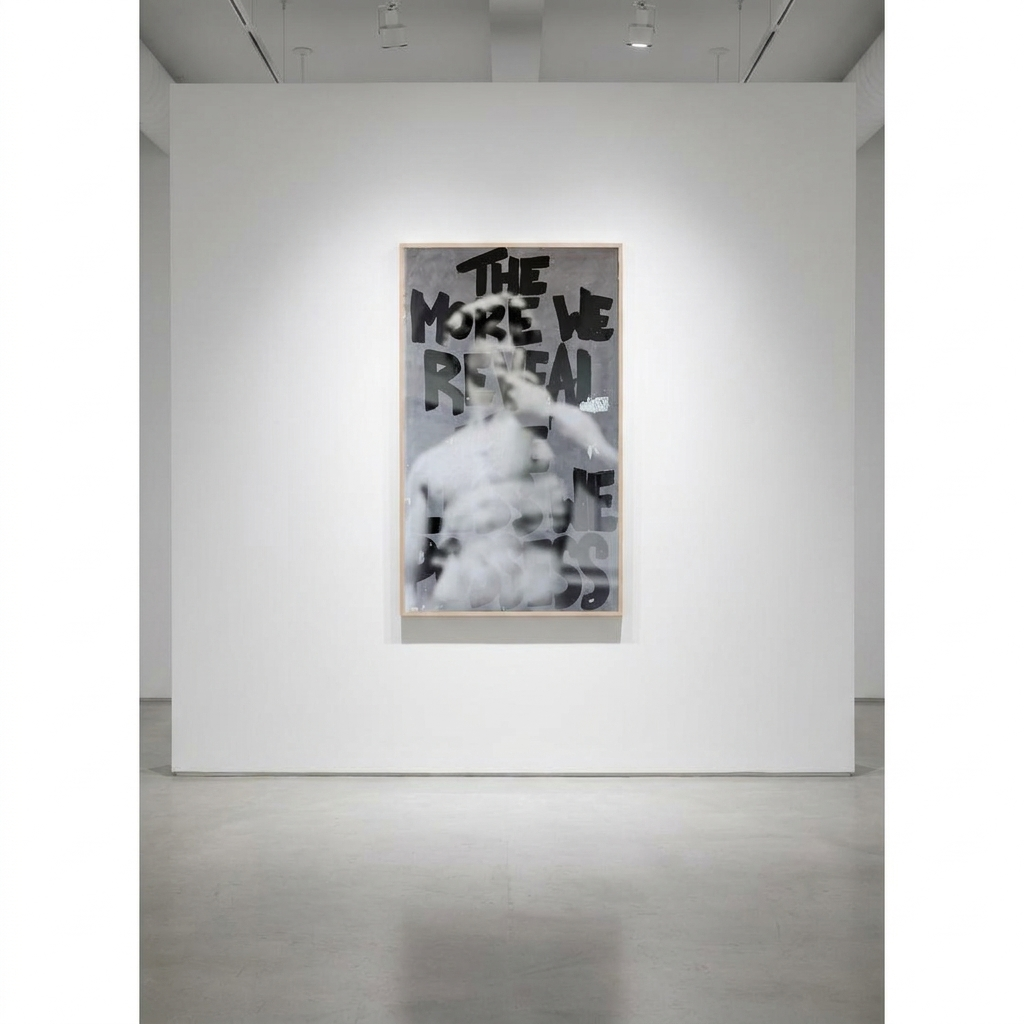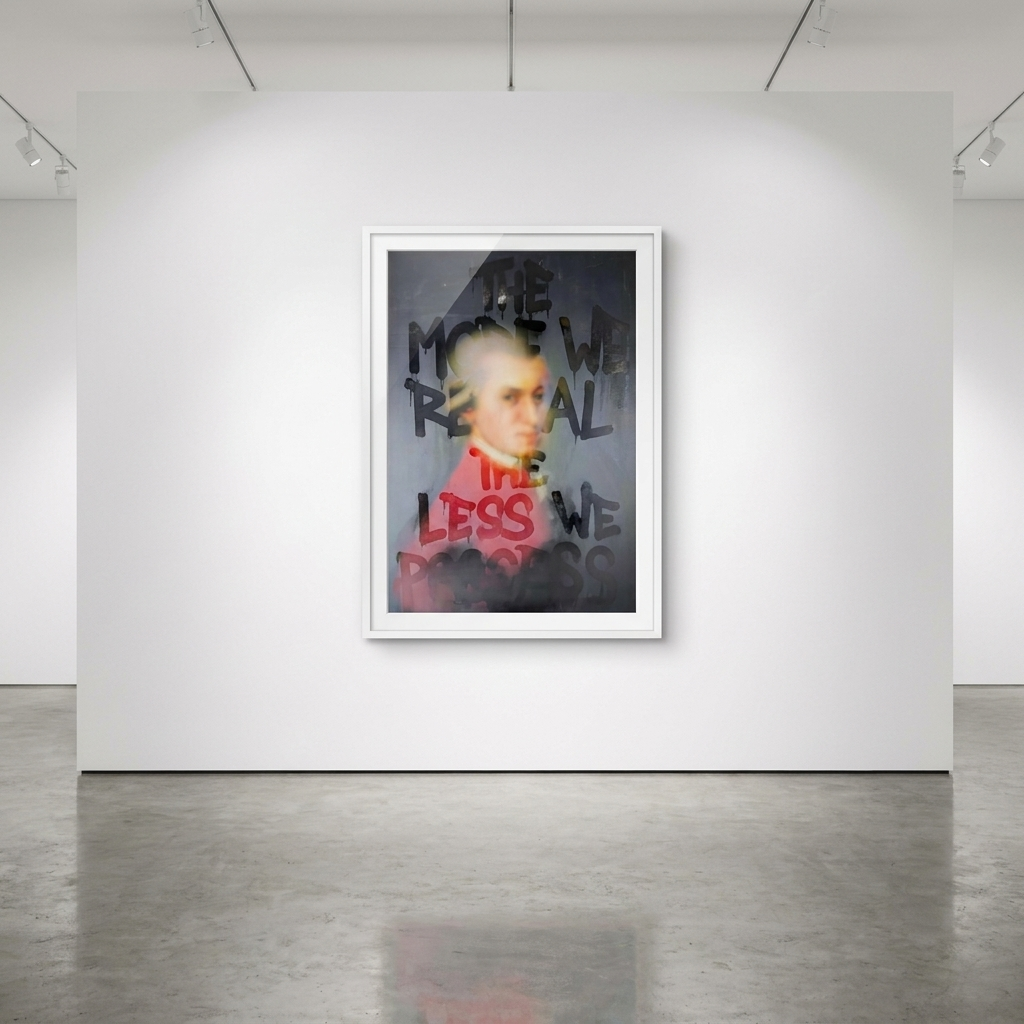
Spin Paintings

July 21, 2026
Somewhere between the neon chaos of Los Angeles street corners and the pristine walls of contemporary galleries, a transformation is taking place. Punkmetender art has been emerging from the shadows of the anonymous street art world, carrying with it nearly two decades of insider knowledge from one of the most controversial movements in recent art history. Born from the collision of Parisian sensibility and American hustle, the artist behind Punkmetender spent fifteen years as an invisible force behind Mr. Brainwash — that polarizing figure who emerged from Banksy's "Exit Through the Gift Shop" to become either street art's greatest success story or its most elaborate joke, depending on whom you ask. Now, Romain Lefebvre has stepped into the light with his own visual language, and collectors who understand the value of getting in early are paying attention.
The butterfly — that ancient symbol of metamorphosis — has become Punkmetender's signature motif, rendered in explosive bursts of color that seem to vibrate between street credibility and gallery sophistication. These aren't the delicate specimens you'd find pinned behind museum glass; they're creatures caught mid-transformation, their wings radiating with the kinetic energy of spray paint and the precision of contemporary fine art. In an art world increasingly dominated by algorithmic speculation and blue-chip commodification, here is an artist whose work actually means something about change, survival, and the courage to emerge from someone else's shadow into your own becoming.
The story of Punkmetender begins in 1982 Paris, though it wouldn't acquire that name for another three decades. Romain Lefebvre grew up in a France still processing the aftershocks of its own street art revolution, where figures like Blek le Rat had laid the groundwork for what would eventually become a global movement. The young Lefebvre absorbed these influences unconsciously, the visual vocabulary of rebellion seeping into his consciousness through the walls of Parisian arrondissements where official culture met unauthorized expression. When he immigrated to Los Angeles in the early 2000s with almost nothing — barely speaking English, carrying only an instinctive understanding of art as survival — he entered a city that was itself undergoing a profound transformation.
Los Angeles in the early millennium was becoming ground zero for a new kind of street art, one that bridged the gap between graffiti's outlaw origins and the commercial galleries of Venice Beach and West Hollywood. It was here that Lefebvre encountered Thierry Guetta, the French-born videographer who was obsessively documenting the global street art scene. The two men shared more than a language; they shared an understanding that art made in the streets could speak to something universal, something that the traditional gallery system had been failing to articulate. What followed was a collaboration that would last fifteen years and produce one of contemporary art's most contentious phenomena.
The Mr. Brainwash project — whether you consider it genuine artistic vision or elaborate performance art — required an army of skilled practitioners working behind the scenes. Lefebvre was among them, traveling the world, helping to construct massive installations, learning the technical and logistical realities of producing art at scale. He watched as the art world debated whether Mr. Brainwash was a genius provocateur or a fraud, all while quietly developing his own sensibility. The experience was, in its way, the perfect apprenticeship: he learned not just how to make art, but how the art world actually functions — its appetites, its blind spots, its capacity for both genuine appreciation and cynical manipulation.
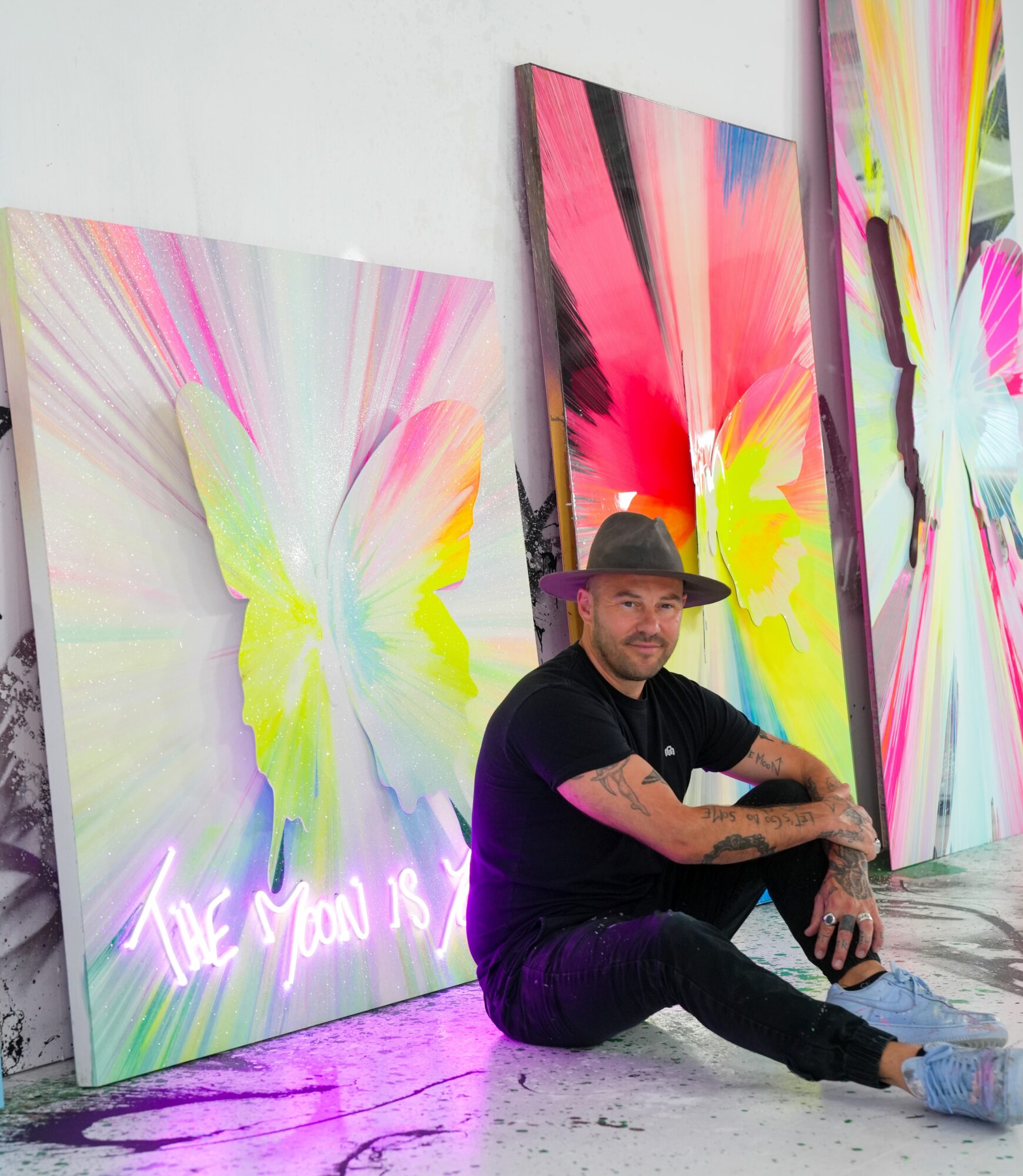
PunkMeTender
In 2016, after a decade and a half of working within someone else's creative framework, Lefebvre made the decision that every serious artist eventually faces: to step out on his own. The name Punkmetender emerged from two seemingly disparate influences — Daft Punk and Elvis Presley — that together captured something essential about the artist's vision. From Daft Punk came the embrace of anonymity as a creative strategy, the understanding that masks can paradoxically reveal more truth than faces. From Elvis came the unabashed embrace of spectacle, the belief that art should move people viscerally, not just intellectually. The combination suggested an artist willing to be simultaneously hidden and utterly present, rebellious and romantic, punk and tender.
The early Punkmetender works stayed close to their street art origins. Under cover of darkness, Lefebvre hit billboards and walls with unauthorized interventions, his butterflies appearing as unexpected eruptions of color against the gray infrastructure of urban space. But the work was already evolving beyond pure graffiti toward something more ambitious. The butterfly motif wasn't chosen arbitrarily; it emerged organically from the artist's own experience of transformation. Here was a creature that embodied everything Lefebvre had lived through — the vulnerability of the chrysalis stage, the patient waiting, and finally the emergence into something wholly new and capable of flight.
By 2017, Punkmetender had created his first three-dimensional butterfly mural, integrating sculptural elements that seemed to leap off the wall toward the viewer. These installations marked a crucial evolution in the work, moving beyond the flat surface into spatial environments that invited participation. Viewers didn't just look at these pieces; they entered into relationship with them, often photographing themselves within the work, becoming part of its ongoing life on social media. This wasn't mere Instagram-bait cynicism but a genuine extension of street art's democratic impulse — the belief that art should meet people where they are, should become part of their daily experience and personal narrative.
To understand why Punkmetender's butterflies resonate so powerfully, one must consider the creature's extraordinary symbolic weight across human cultures. In ancient Greece, the word for butterfly — psyche — was also the word for soul, establishing a connection between these ephemeral insects and our deepest conceptions of consciousness and identity. Japanese tradition associates butterflies with the spirits of the living and dead, messengers between worlds. Mexican culture celebrates the monarch butterflies that arrive each year during Día de los Muertos as the returning souls of ancestors. Punkmetender's work taps into this deep reservoir of meaning while translating it into a contemporary visual vocabulary that speaks to our current moment of perpetual transformation.
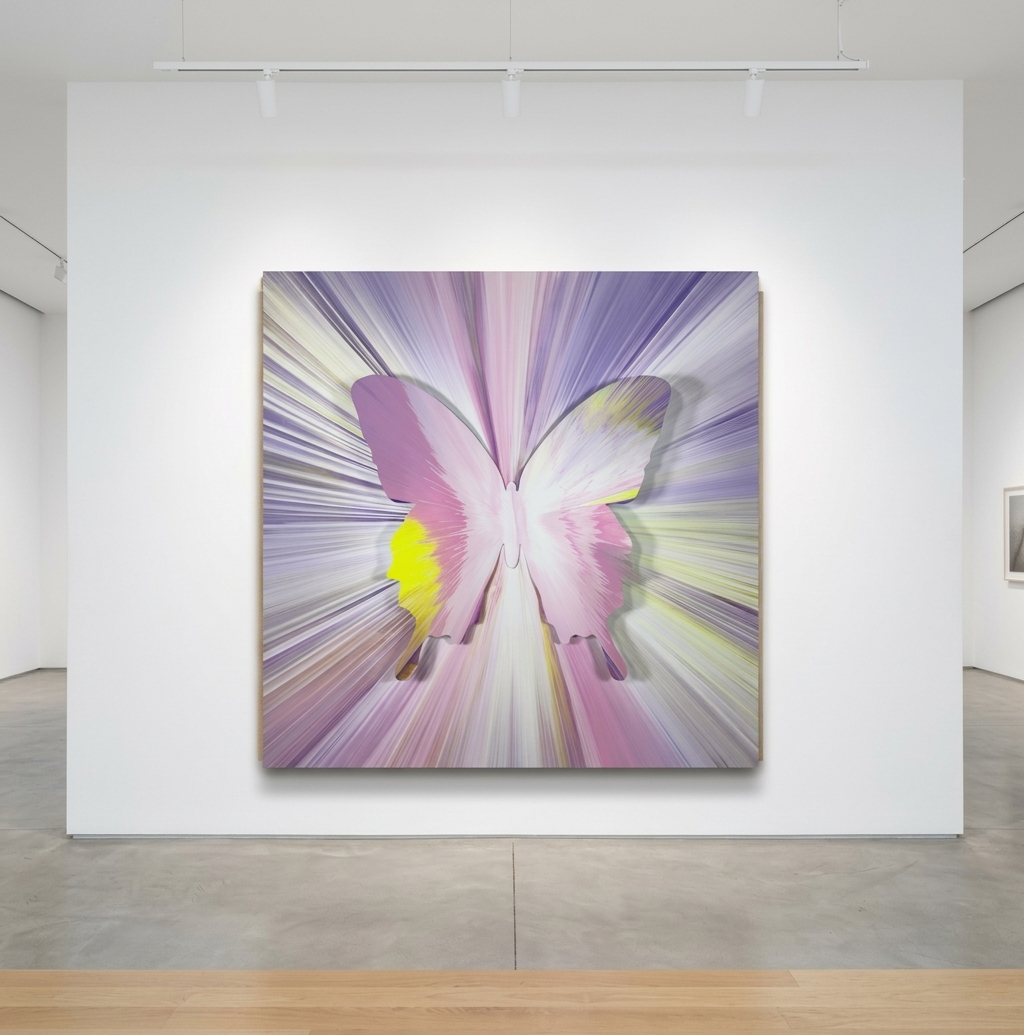
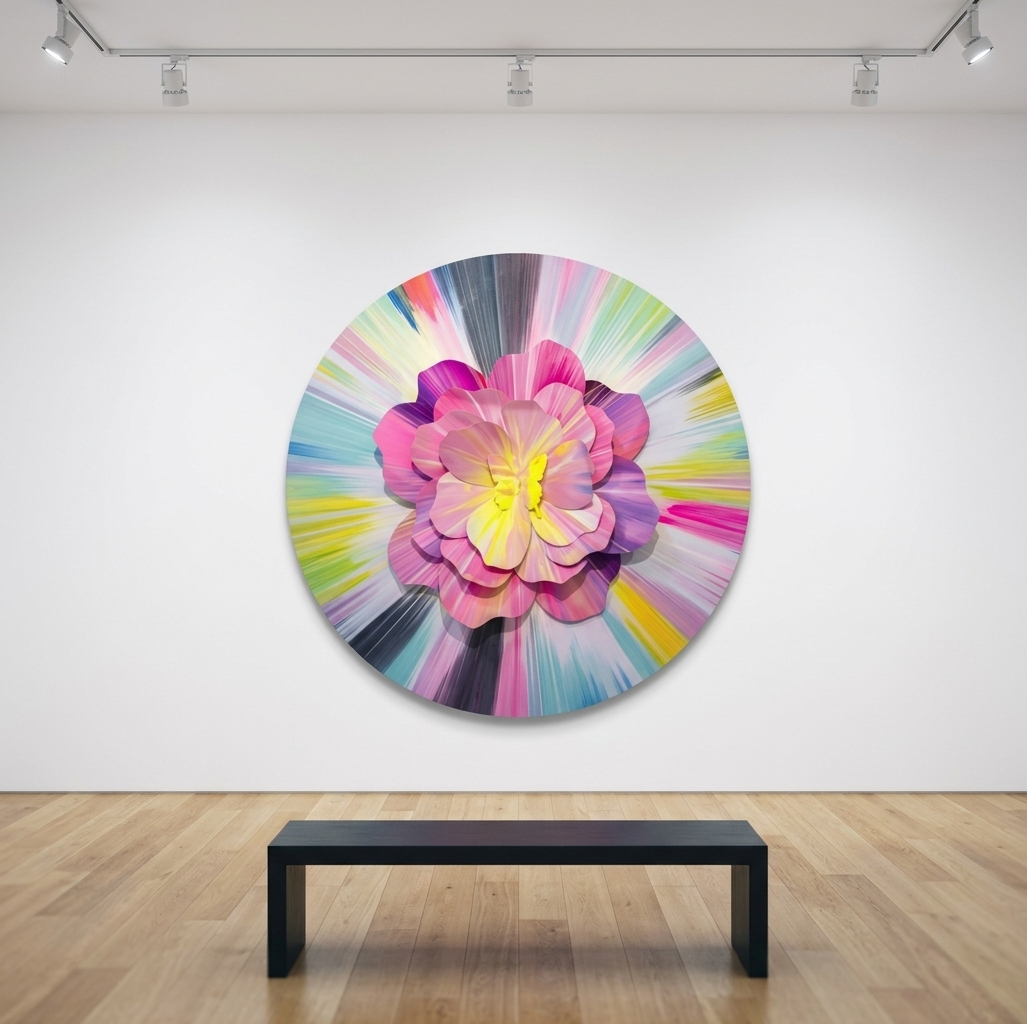
The Spin Paintings that have become central to Punkmetender's practice achieve something remarkable: they freeze the butterfly mid-flight while simultaneously suggesting infinite motion. The radiating lines of color that emanate from each creature create an optical effect of expansion, as though the butterfly is perpetually in the act of taking off, its wings generating waves of energy that ripple outward into the viewer's space. This technique draws on a rich history — from the centrifugal paintings of Damien Hirst to the kinetic investigations of the 1960s Op Art movement — while arriving at something distinctly personal. The colors are audacious, often combining neon pinks and electric blues with softer gradients that suggest both dawn and artificial light, the natural and the manufactured existing in productive tension.
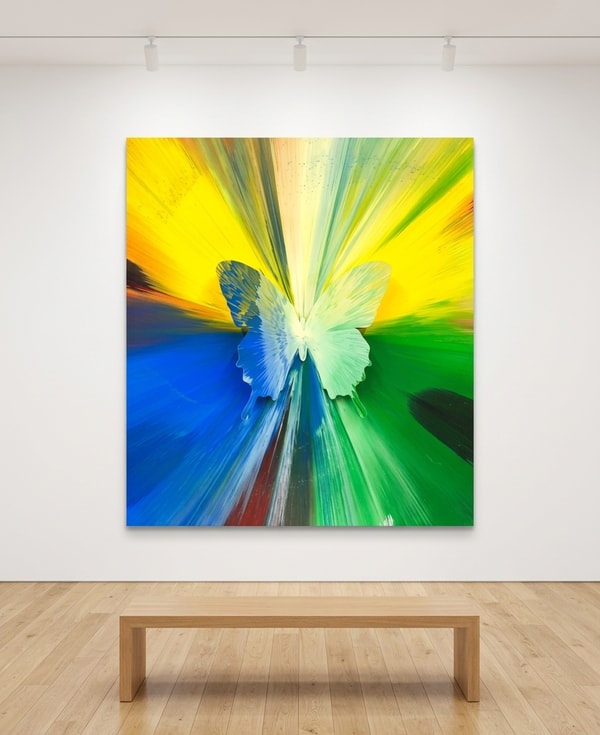
Punkmetender, 46, 2023, Acrylic and Mixed Media. Available at Guy Hepner, New York.
What distinguishes Punkmetender's approach from mere decorative butterfly imagery is the persistent undercurrent of subversion. These are not the gentle, greeting-card butterflies of suburban wall art; they're creatures that carry within their beauty the memory of the caterpillar's destruction, the violence of metamorphosis. The spray paint medium itself — still bearing its associations with vandalism and unauthorized expression — grounds even the most elegant compositions in an acknowledgment of art's capacity for transgression. Every Punkmetender butterfly is simultaneously beautiful and slightly dangerous, inviting and challenging, tender and punk.
The trajectory from street to gallery has become one of contemporary art's defining narratives, yet it remains remarkably contentious. When Banksy's works began appearing at auction and his rats started commanding six-figure prices, purists cried sellout while collectors celebrated the validation of a movement long dismissed by institutional gatekeepers. The tension between street credibility and commercial success has defined the careers of nearly every artist associated with this movement — from Shepard Fairey, whose OBEY campaign became both radical intervention and clothing brand, to KAWS, whose companion figures now inhabit the same collections as blue-chip modernists. Punkmetender enters this conversation with a unique perspective: having watched the transformation from the inside, having helped build one of its most successful (and controversial) examples.
The current moment in urban contemporary art represents both maturation and uncertainty. The market has proven that collectors will pay significant sums for works rooted in street culture, but it has also demonstrated the pitfalls of hype cycles and speculative excess. Artists like Invader, whose tile-based space invaders have colonized cities worldwide, and D*Face, whose pop-inflected skulls critique consumer culture while participating in it, have found sustainable models that balance artistic integrity with market realities. What distinguishes the most enduring figures in this movement is not merely technical skill or marketable imagery but a genuine vision that extends beyond any single work or series — a coherent worldview expressed through visual means.
Punkmetender's position as an emerging artist with deep roots in the movement's history creates an unusual value proposition for collectors. Unlike artists who emerged directly from the gallery system and adopted street art aesthetics for their commercial appeal, Lefebvre paid his dues in the actual streets, risking arrest to make unauthorized work before transitioning to sanctioned spaces. Unlike artists whose early works have already disappeared into private collections or been destroyed by time and weather, Punkmetender's gallery-appropriate pieces are still accessible at prices that reflect an artist at the beginning of his market trajectory rather than at its peak.
The art world's reception of Punkmetender has been characterized by the kind of measured enthusiasm that often precedes broader recognition. Gallery shows in Los Angeles and Boston have demonstrated consistent collector interest, with works selling out and waiting lists forming for upcoming releases. The 2022 solo exhibition "Voyage d'Ulysse" at Pellas Gallery positioned the artist within a mythological framework, connecting the butterfly motif to classical narratives of journey, transformation, and homecoming. Critics noted the sophistication of an artist willing to engage with such loaded references while maintaining the visual accessibility that makes the work approachable for audiences beyond the art world cognoscenti.
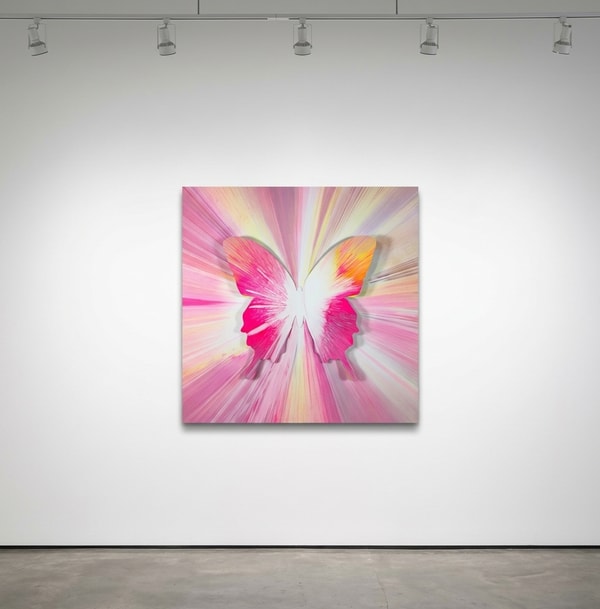
Punkmetender, 693, 2023, Mixed Media. Available at Guy Hepner, New York.
What distinguishes serious critical engagement with Punkmetender from the hype that often surrounds emerging street artists is attention to the work's conceptual dimensions. The butterfly isn't merely a pretty image repeated for commercial consistency; it's a carefully considered symbol deployed across multiple media — painting, sculpture, installation, photography, and moving image — to explore themes of transformation from various angles. The moving-image works, often featuring Lefebvre's wife as a balletic muse, extend the metamorphosis theme into the realm of performance, exploring femininity, grace under pressure, and the body as a site of ongoing change. This multi-disciplinary approach suggests an artist thinking beyond the market's demand for recognizable signature imagery toward something more ambitious and enduring.
The Miami relocation represents another strategic evolution. As the Art Basel satellite has transformed Miami into a crucial node in the global art economy, artists have increasingly established practices there to take advantage of the city's collector traffic and institutional infrastructure. Lefebvre's move positions him at the center of this ecosystem while maintaining roots in the Los Angeles street art scene that shaped his early development. The synthesis of French origin, LA street credibility, and Miami contemporary positioning creates a biography that appeals to collectors seeking artists with genuine stories rather than manufactured personas.
For collectors considering Punkmetender art, the current market presents a compelling opportunity that deserves careful analysis. The artist's works are currently available at price points significantly below comparable street art figures — entry-level Banksy works have long since crossed the $30,000 threshold and continue to appreciate, while Shepard Fairey editions command consistent premiums on the secondary market. Early Mr. Brainwash pieces, despite the ongoing controversy surrounding that artist, have demonstrated surprising market resilience. Punkmetender, positioned as an artist with direct connections to this legacy but an independent vision, offers access to the urban contemporary aesthetic at a moment before secondary market dynamics have fully engaged.
The inventory situation deserves particular attention from serious collectors. As Punkmetender's practice has evolved toward more ambitious installation work and moving-image projects, the production of collectible individual pieces has naturally moderated. Limited editions maintain the exclusivity that drives long-term value while ensuring that works remain accessible to collectors building emerging art portfolios. The mixed-media pieces, which combine spray paint, screenprint, and stencil techniques, offer the material richness that distinguishes originals from mere reproductions — each work bearing the evidence of handwork that connects it to the artist's street art origins.
Comparable artists provide useful benchmarks for understanding Punkmetender's market trajectory. The Dotmaster, another British-based street artist working with stencil techniques and subversive imagery, has seen steady appreciation over the past decade as collector recognition has grown. Invader's early works, once available for modest sums, now command prices that reflect both artistic merit and historical significance within the street art canon. The pattern suggests that collectors who identify genuine talent at the emerging stage — rather than chasing already-established names — position themselves advantageously for long-term portfolio development.
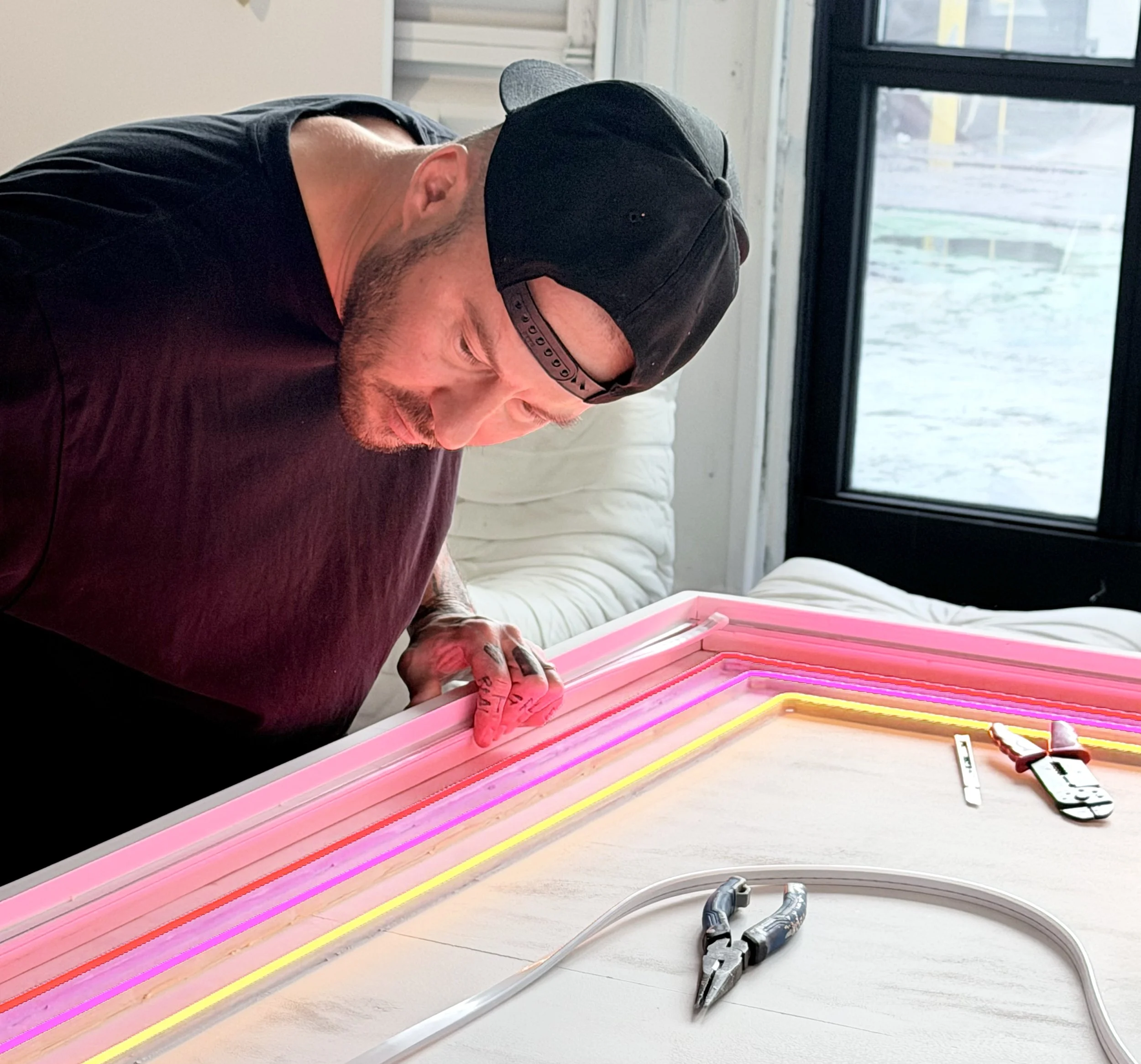
Punkmetender
Approaching the acquisition of Punkmetender art requires the same due diligence that applies to any emerging artist purchase, combined with specific considerations relevant to the street art market. The following factors merit attention:
The current market for Punkmetender works positions the artist at an accessible price point for collectors building urban contemporary collections without requiring the substantial capital outlay demanded by established names. Works under $10,000 remain available, offering entry points for new collectors while more substantial pieces appeal to those seeking museum-quality acquisitions. The artist's living status ensures ongoing market development through new works, exhibitions, and institutional recognition that dead artists obviously cannot generate.
Punkmetender's recent evolution toward light-based sculpture and immersive installation represents an ambitious expansion that bears watching. The LED works shift with ambient conditions, existing in that provocative space between painting and sculpture, static object and temporal experience. These pieces respond to their environment, transforming galleries and architectural spaces into sites of ongoing visual performance. For collectors with appropriate spaces, such works offer an entirely different relationship with art than traditional wall-hung pieces — they become presences rather than merely objects, their effects shifting with the time of day and the viewer's movement through space.
The cinematic and photographic practice, centered on the recurring ballerina figure, extends the metamorphosis theme into the realm of the human body. These works, which involve actual paint applied to a performer and then documented through photography and video, bridge the gap between performance art, body art, and traditional image-making. They suggest an artist unwilling to be contained by medium categories, seeking instead to explore his central themes through whatever means prove most expressive. For collectors, this multi-disciplinary approach indicates an artist with the conceptual depth to sustain a decades-long career rather than one dependent on a single marketable image.
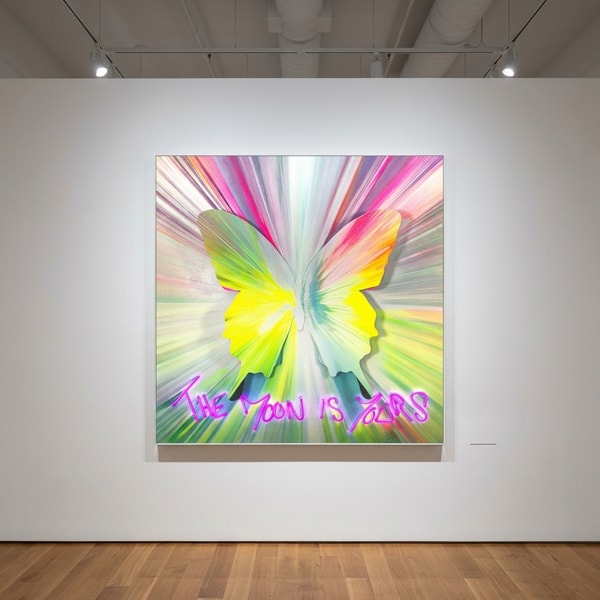
Punkmetender, 700, 2023, Mixed Media with LED. Available at Guy Hepner, New York.
The public art commissions and architectural installations that Lefebvre is developing represent another vector for market growth. As cities worldwide embrace public art as a tool for placemaking and cultural identity, artists capable of working at architectural scale find themselves in demand for commissions that raise their profile while generating substantial revenue. Punkmetender's three-dimensional butterfly murals have already demonstrated the capacity to work at scale; larger commissions seem a natural next step that would significantly enhance the artist's visibility and, consequently, the value of collectible works.
What finally distinguishes Punkmetender from the many artists working in the urban contemporary space is the coherence of vision that runs through every aspect of the practice. The butterfly isn't just a brand logo slapped onto various products; it's a genuine symbol that emerged from the artist's own experience of transformation — from Paris to LA, from apprentice to master, from anonymous collaborator to independent voice. The spin paintings capture this theme with particular elegance, their centrifugal energy suggesting both the violence of change and its potential for beauty. The light-based works extend this into temporal experience, their shifting colors mimicking the way transformation unfolds not in single moments but across time.
The street art origins remain essential to understanding the work's significance, even as the practice has evolved beyond unauthorized intervention. Every Punkmetender piece carries within it the memory of those early nights hitting walls in the cover of darkness, the risk and the adrenaline and the democratic impulse to make art in public space without permission from institutional authorities. This history grounds even the most polished gallery works in an ethos of accessibility and transgression that distinguishes street art from the traditional fine art market's exclusivity. To buy Punkmetender is not merely to acquire an attractive object; it's to participate in a tradition of art-making that prioritizes communication with broad audiences over pleasing elite gatekeepers.
For collectors seeking work that combines visual impact with conceptual depth, street credibility with technical sophistication, and accessible pricing with genuine investment potential, Punkmetender represents an opportunity that the market hasn't fully recognized. The artist's unique biography — apprenticeship with Mr. Brainwash, emergence into independent practice, ongoing evolution toward ever more ambitious work — suggests a trajectory that serious collectors should consider before broader market recognition drives prices beyond current levels.
Guy Hepner Gallery is pleased to offer a selection of Punkmetender works that capture the artist's distinctive vision at this crucial moment in his development. The spin paintings, with their explosive color and optical energy, represent the most immediately recognizable aspect of the practice, while mixed-media works on panel demonstrate the technical range that distinguishes hand-finished works from mere editions. Each piece comes with full documentation and authentication, ensuring that collectors can acquire with confidence.
The gallery's Chelsea location at 529 West 20th Street provides an appropriate context for experiencing these works, whose scale and visual impact benefit from proper gallery presentation. Interested collectors are encouraged to schedule appointments to view available inventory and discuss acquisition opportunities before current holdings disperse into private collections. The urban contemporary market moves quickly, and artists at Punkmetender's stage of development tend to appreciate in ways that reward early recognition. For those seeking to acquire meaningful street art for sale at accessible price points from a living artist with genuine credentials, this represents a moment worth seizing.
Explore Punkmetender prints for sale at Guy Hepner: Spin Paintings, Membrane, Membrane Prints.
Related Series