Paintings

May 29, 2026
Few artists entering the international market carry the weight of backstory and the force of visual language that Nathan Paddison brings simultaneously. His large-scale paintings — acrylic and mixed media on canvas, built with impasto surfaces and a sardonic wit that keeps pace with the emotional intensity beneath — have moved from his studio on Australia's north coast into institutional collections, auction rooms in Taipei and Seoul, and the programme of Guy Hepner in New York. Nathan Paddison paintings are now tracked by collectors across three continents. The primary market window at current pricing will not remain open indefinitely.
Works are available through Guy Hepner upon inquiry. To discuss the current holdings, visit the Nathan Paddison collection page or contact our New York team directly.
Nathan Paddison was born in 1983 in Taree, a small town on the mid-north coast of New South Wales, Australia. His path to painting was neither straightforward nor designed. Over more than a decade cycling through incarceration, Paddison turned to art not as a hobby but as something closer to survival — crediting painting with giving him a second chance at life in a way that carries more weight than the usual artist biography phrase when you understand how literally he means it.
He is self-taught. He has been painting seriously for approximately four years. In that time, he has accumulated more than 82 auction results across global houses, achieved a record of $16,320 USD at Ravenel in Taipei, been named a finalist for the Lester Prize at the Art Gallery of Western Australia — Australia's most prestigious portraiture award with a top prize of A$50,000 — and had work acquired by Artbank Australia, the federal government's collection programme.
The pace of that ascent is unusual by any standard. What makes it more so is that Paddison operates from a position that most art world narratives would overlook entirely. He did not emerge from an art school. He does not have a gallery-groomed biography. What he has is a body of work that speaks loudly enough to make those absences irrelevant.
His international representation reflects the serious collector interest his work has attracted. Frank Fluegel Galerie in Germany, Corridor Contemporary, Addicted Art Gallery, IdeelArt, and Morton Contemporary have all worked with Paddison. Guy Hepner represents him in New York — a gallery whose programme includes Andy Warhol, Banksy, KAWS, and Keith Haring. The company his work keeps is a considered position, not a coincidence.
The Lester Prize recognition in 2022 was particularly significant. Judged by an independent national panel, a finalist position for a self-taught painter with fewer than four years of serious practice signals institutional attention of the kind that is difficult to manufacture and meaningful to serious collectors. His acquisition by Artbank — which purchases work for long-term institutional holding and loan to public spaces across Australia — confirmed it.
Born from necessity, developed in extraordinary circumstances, now held in institutional collections and tracked by auction houses across Asia, Europe, and Australia — the Nathan Paddison story is one the art world found on its own terms. It continues to find him.
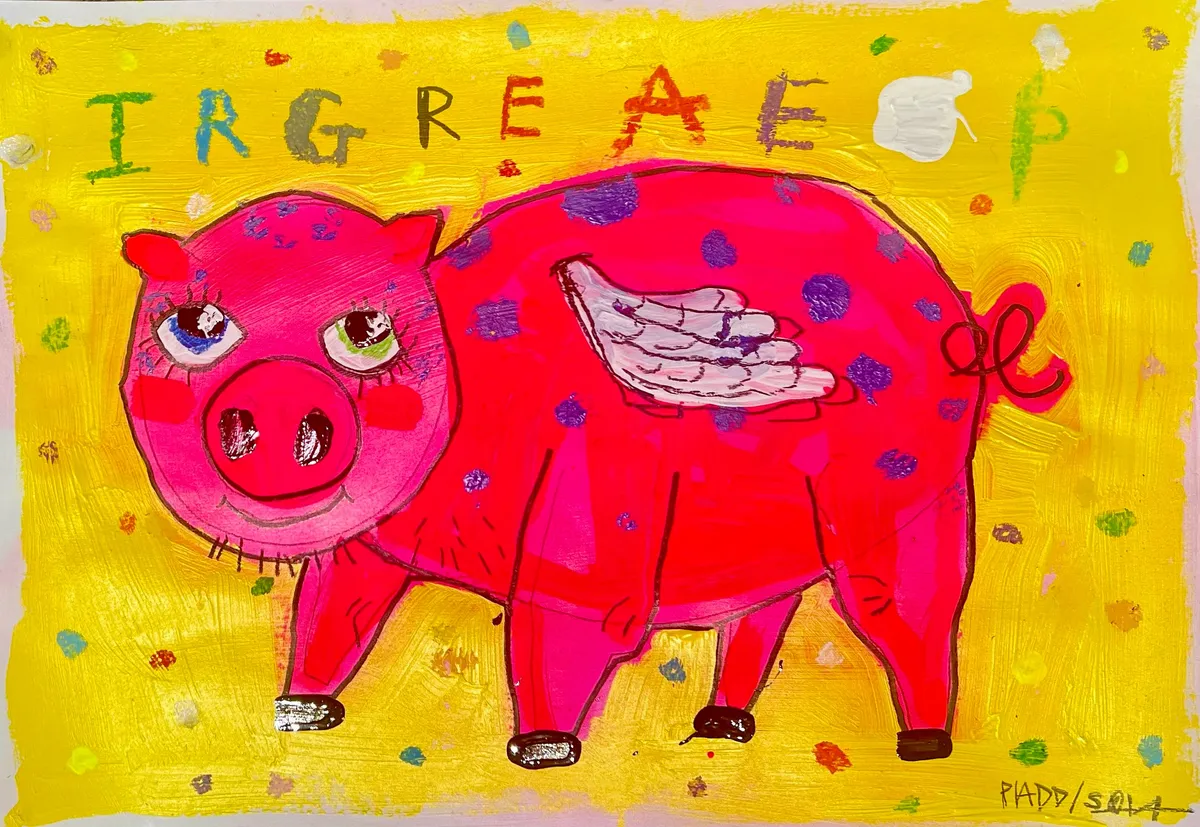
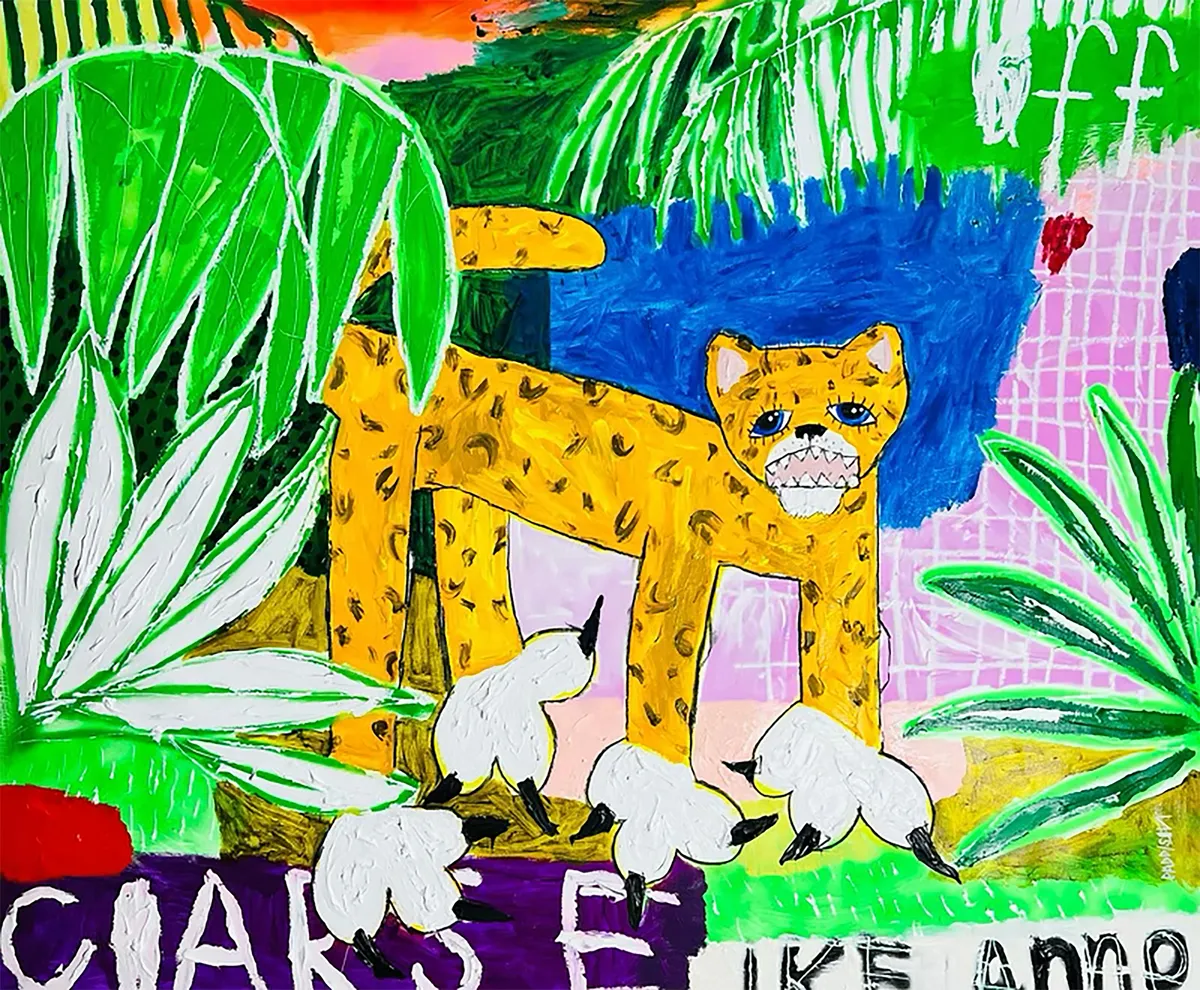
Paddison's paintings are immediately recognisable. His visual language draws on Art Brut traditions — the instinctual, unmediated mark-making associated with Jean Dubuffet and the Outsider Art lineage — filtered through a sensibility that is entirely his own. The work is impasto, expressive, and built with acrylic and mixed media on canvas. It does not ask to be liked before it is felt.
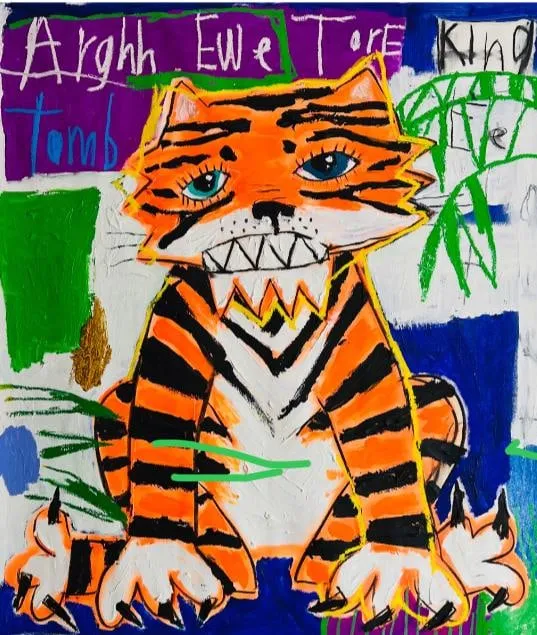
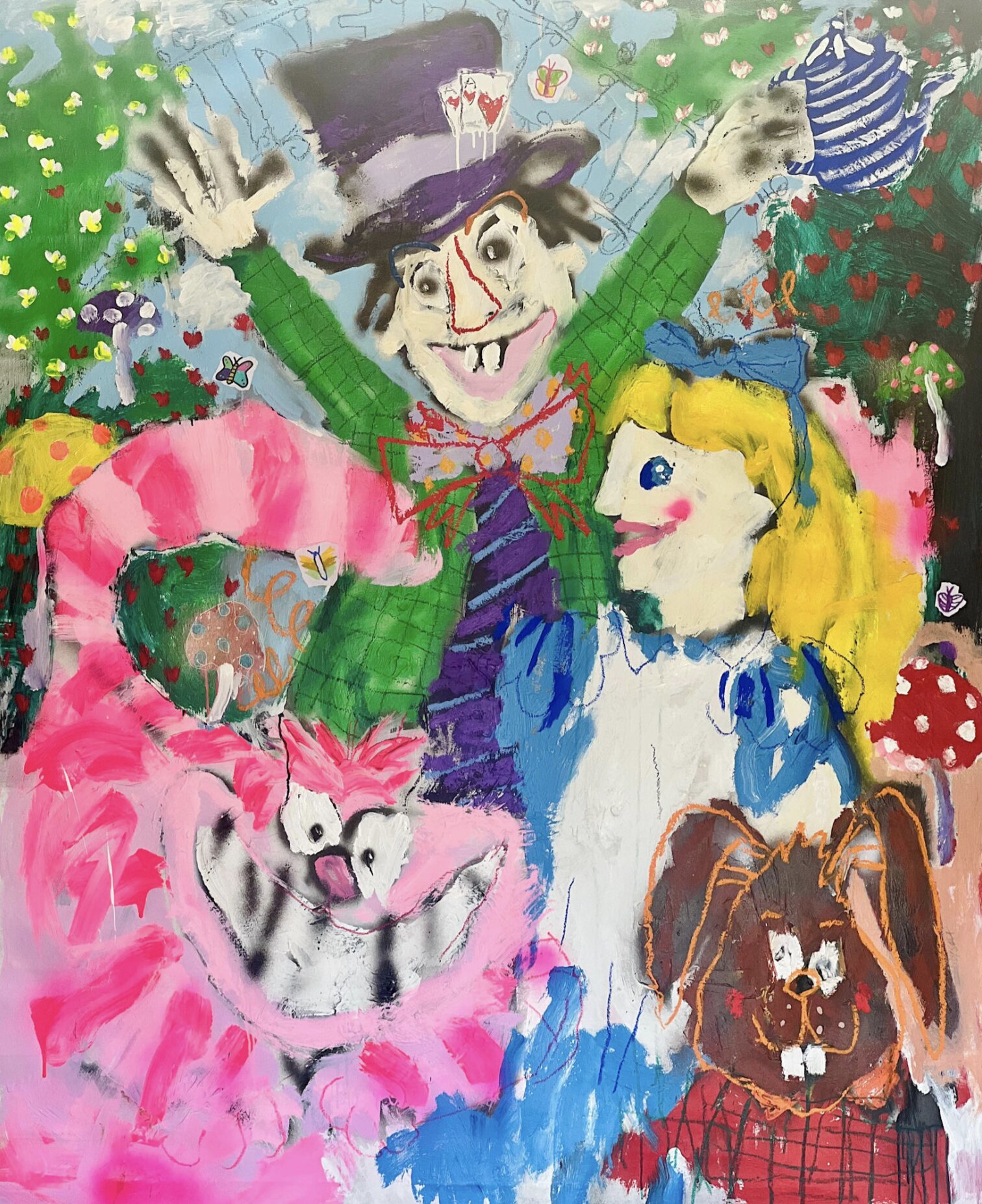
His subjects range across animals — tigers, birds, horses — nostalgic cultural icons including Cookie Monster and Alice in Wonderland, and people who have shaped his life. All of them pass through what Paddison describes as a distorted lens. Faces are pulled, stretched, recomposed. Familiar icons become something unsettling. Animals carry an emotional charge that feels oddly human. The distortion is not stylistic affectation; it is how Paddison sees and translates experience into image.
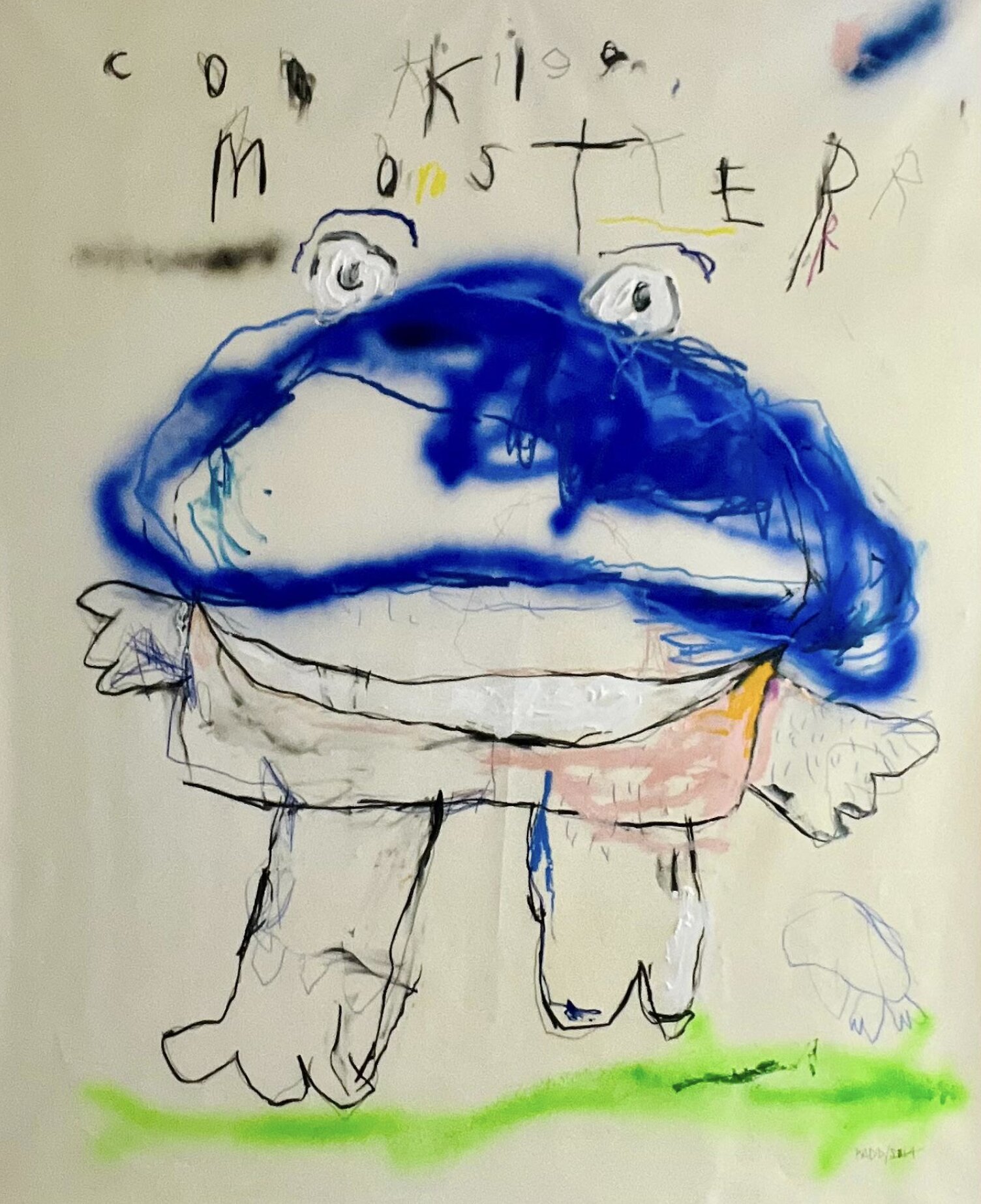
The titles of his works are a signature in themselves. Phonetic wordplay runs through nearly everything he makes: Cookie Moster, Alice In Vunderland, Neigh Bores Hoarse, Soup Par Mar Ee Oh. The effect is part comedy, part code — titles that require you to say them aloud before they resolve, that hold two registers simultaneously. It is the kind of wit that comes from someone who has spent a long time watching language from the outside, testing its edges.
Thematically, the work moves through addiction, resilience, and personal reckoning — but without self-pity and without the heavy-handedness that can undermine narrative-driven art. The emotion arrives sideways: through a distorted tiger, through a childhood icon rendered strange, through the accumulated pressure of impasto surfaces that suggest something was genuinely worked through in the making. Paddison is not producing confessional painting in the therapeutic sense. He is painting what he knows, and the difference shows.
For collectors accustomed to work that requires context before it communicates, Paddison's paintings are refreshingly immediate. They operate visually first. The biography adds depth but is not required for the work to land. That is a meaningful distinction in a market where artist narrative frequently carries more weight than the work itself.
The Art Brut lineage places Paddison in a critical framework that includes artists whose market durability has proven substantial: Basquiat, Haring, Dubuffet. He does not imitate any of them. But the conditions that made those artists legible to serious collectors — raw mark, authentic biography, emotional immediacy — apply to Paddison's work with genuine relevance.
Scale is a deliberate choice in Paddison's practice. His canvases typically run to 60 inches and beyond — works that occupy a room rather than hang quietly in it. At those dimensions, the impasto surfaces and bold colour fields do not function as decoration. They function as presence.
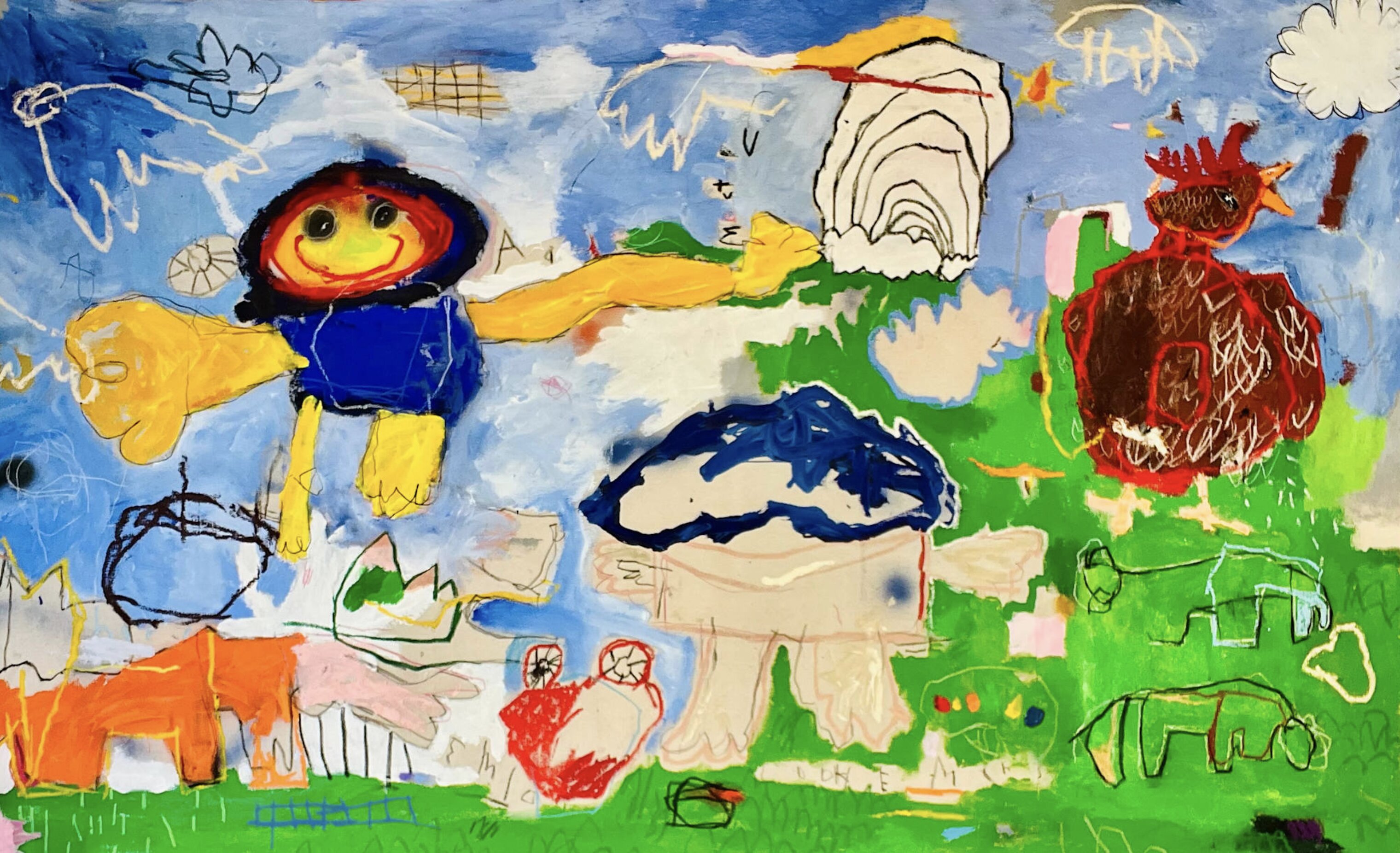
For collectors and interior architects approaching Paddison's work from a spatial perspective, scale is one of the primary considerations. Works of 60 to 80 inches or larger read differently in a residential or commercial context than mid-sized works — they anchor a space, establish a focal point, and carry the visual authority that distinguishes a curated collection from an accumulated one. Paddison's canvases do all of that while bringing an energy that more restrained contemporary painting typically lacks.
The mixed media on canvas construction — typically built up through layered acrylic application with additional media introduced into the surface — means these are works with considerable physical presence even before the imagery is considered. The materiality is part of what the collector acquires. Those who encounter a Paddison canvas in person consistently note the gap between reproductions and the actual surface. That gap is meaningful. It is also one reason these works retain and build value in collections where lived experience of the work is part of the proposition.
Works such as Daddy x Daughter — which operates in the personal register that runs throughout Paddison's figurative output — demonstrate how intimate subject matter holds at monumental scale without sentimentality. The emotional content is embedded in the surface rather than stated. Scale amplifies rather than inflates it.
Paddison's secondary market record is, for an artist with approximately four years of serious practice, genuinely notable. MutualArt data documents more than 82 auction results across global houses, with realised prices ranging from $359 to $16,320 USD. The auction record — $16,320 for Thai Gores are knot Pink at Ravenel in Taipei in 2022 — was achieved at one of Asia's most respected contemporary platforms.
Active secondary market activity has continued through 2025, with results recorded at Davidson Auctions, Lawsons Australia, Korea Premier Auction, and Seoul Auction. The geographic breadth — Australia, South Korea, Taiwan — is unusual for an artist at this career stage and indicates a collector base that is international rather than regionally concentrated. International distribution of demand provides a more stable foundation for long-term market health than single-market concentration.
Current primary market pricing at Guy Hepner ranges from $7,500 to $12,000 and above, depending on scale and subject. This sits within the established band for Paddison's primary market across his international gallery network. Several factors bear on the longer-term collector calculus:
The secondary market activity to date appears organic rather than gallery-managed — no obvious manufactured scarcity, no single-collector concentration driving results. That reading matters for collectors with a medium to long holding horizon.
For collectors approaching Paddison's work for the first time, a few practical considerations are worth noting.
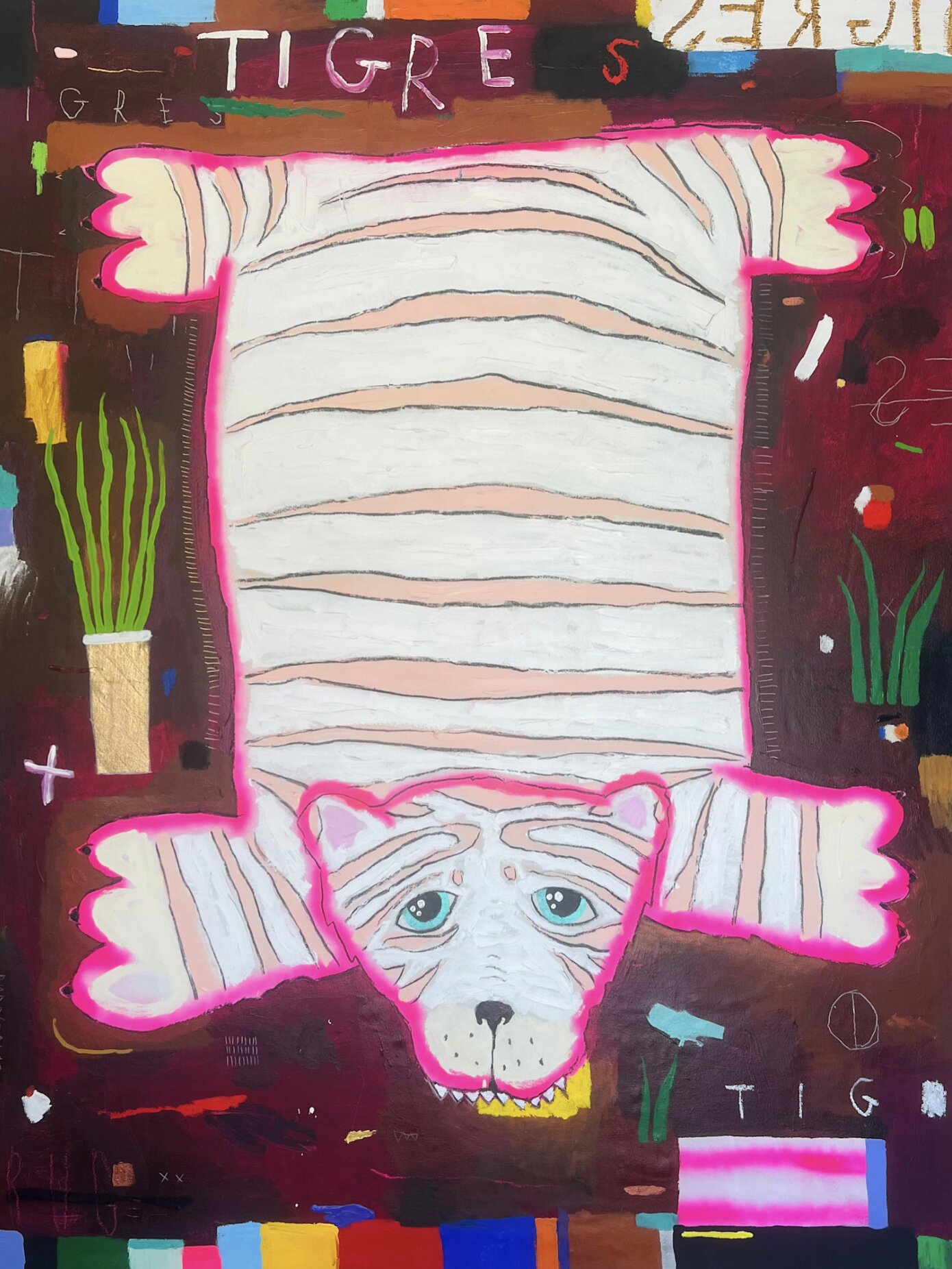
Subject coherence. Paddison returns to certain subjects across multiple works — tigers, horses, cultural icons, figures from his personal history. Works within recognisable thematic clusters have demonstrated more consistent secondary market demand than one-off experiments. The animal paintings, in particular, have produced the most sustained international auction activity. Collectors building a considered position in his work might focus within a coherent subject group rather than across disparate themes.
Scale. Larger canvases have historically attracted stronger collector interest on the secondary market. Works at 60 inches and above represent the most canonical end of Paddison's output. That said, smaller works by artists who typically work large carry their own appeal — the intimacy of a contained Paddison is a different experience from the immersive quality of his large-scale works, and a different acquisition proposition.
Title recognition. The phonetic wordplay titles are a signature element of Paddison's practice. Works whose titles most clearly demonstrate the device — Alice In Vunderland, Neigh Bores Hoarse, Soup Par Mar Ee Oh, You Nick Corn — are immediately identifiable to a secondary market audience. That identifiability has genuine value in resale contexts.
Provenance. Works acquired through the Guy Hepner programme carry documented gallery provenance from the point of acquisition. That paper trail — certificate of authenticity, exhibition history, gallery invoice — is what institutional and secondary market buyers require. Establishing clean provenance from a named primary market gallery is the most straightforward way to protect and enhance future value.
The Guy Hepner holdings are available upon inquiry. Not all works are listed publicly at any given time. Collectors seeking access to the full current inventory, or wishing to be notified of specific subjects or scales as they become available, are encouraged to open a direct dialogue with our New York team.
Works at Guy Hepner are priced from $7,500, with larger canvases extending to $12,000 and above depending on scale and subject. Current primary market listings across Paddison's international gallery network range from approximately $3,250 to $12,500. Secondary market results — more than 82 documented auction sales — run from $359 to $16,320 USD. Pricing reflects both the early-career entry point and the institutional and auction traction the work has already established.
Works are available through Guy Hepner in New York (177 Tenth Avenue) upon inquiry. Paddison is also represented by Frank Fluegel Galerie in Germany, Corridor Contemporary, Addicted Art Gallery, IdeelArt, and Morton Contemporary. His work appears at auction through Davidson Auctions, Lawsons Australia, Korea Premier Auction, and Seoul Auction. For collectors seeking primary market acquisition with documented provenance, working directly with a representing gallery is the recommended approach.
The combination of institutional validation (Artbank Australia, Lester Prize finalist), international auction liquidity (82+ results across three continents), a constrained and finite early body of work, and primary market pricing that remains at a meaningful entry level relative to the career trajectory. His Guy Hepner representation, alongside Warhol, Banksy, KAWS, and Haring, positions him within a collector community already attuned to recognising the transition from emerging to established. Supply at current pricing will contract as the career develops.
Paddison works in acrylic and mixed media on large-scale canvas, building impasto surfaces with bold, expressive brushwork. His approach draws on Art Brut traditions — raw, instinctual, emotionally immediate — filtered through a personal sensibility shaped by his own experience of addiction, incarceration, and recovery. Subjects include animals (tigers, birds, horses), nostalgic cultural icons (Cookie Monster, Alice in Wonderland), and personal figures — all rendered through a distorted lens that prioritises inner truth over surface accuracy. His phonetic wordplay titles are a recognised signature of his practice.
$16,320 USD, achieved for Thai Gores are knot Pink at Ravenel, Taipei, in 2022. Ravenel is one of Asia's most respected contemporary auction platforms. His secondary market price range across 82+ documented results runs from $359 to $16,320 USD, with active sales recorded through 2025 at Davidson Auctions, Lawsons Australia, Korea Premier Auction, and Seoul Auction.
The animal series — particularly tiger and horse works — has demonstrated the most consistent secondary market demand. Cultural icon works (Cookie Moster, Alice In Vunderland) carry strong visual identity and are among the most immediately recognisable as canonical Paddison. Large-scale canvases at 60 inches or above, with clearly expressed phonetic wordplay titles, represent the most market-established end of his output. Works with documented exhibition history and gallery provenance command the most sustained interest at resale.
The following works are currently held at Guy Hepner. Inquiries regarding condition, dimensions, and availability are welcomed directly.
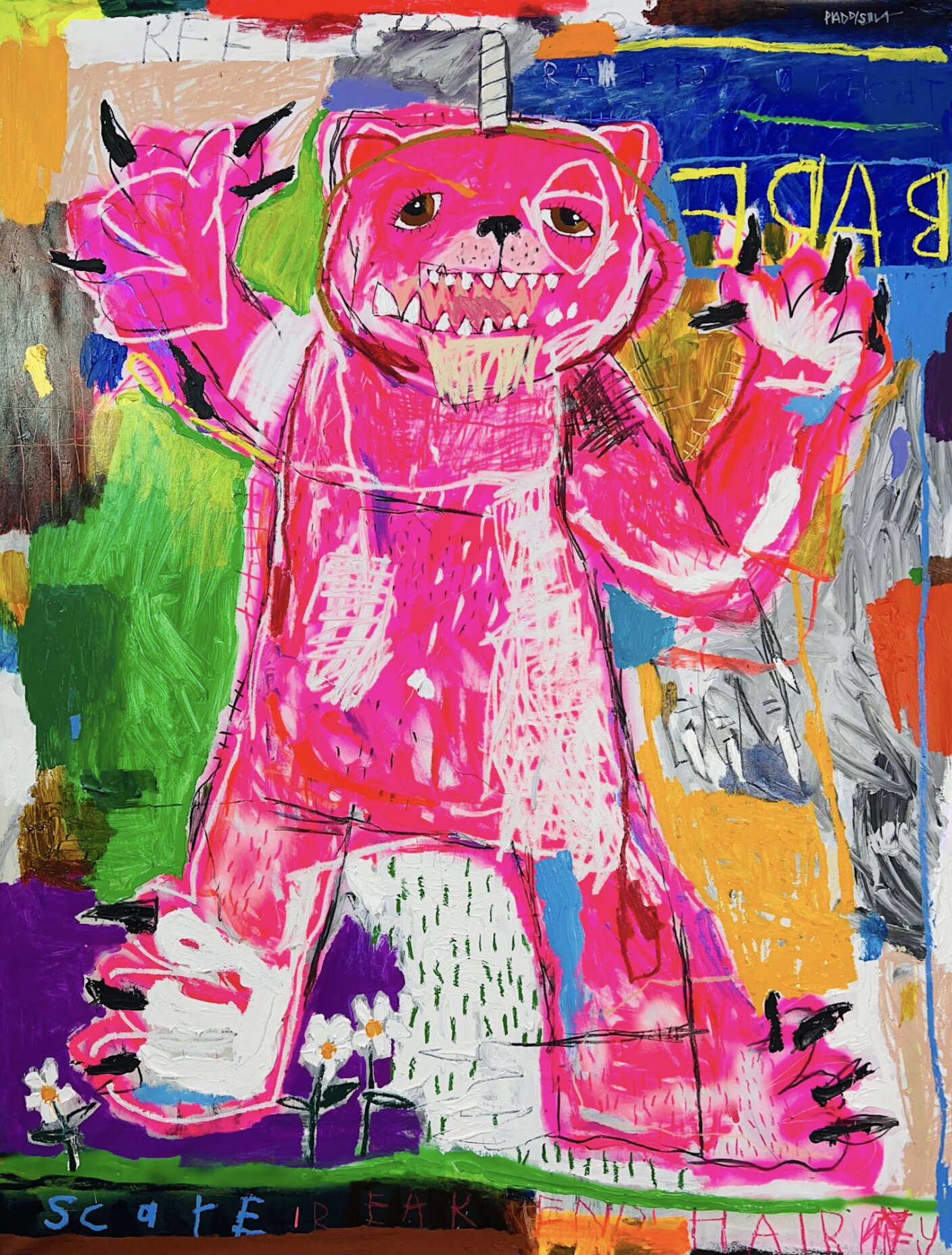
Bare — A figurative work operating in the personal register that runs throughout Paddison's portraiture. Direct, unguarded, and made with the kind of care that tends to register on the surface of a canvas rather than being declared in its subject matter.
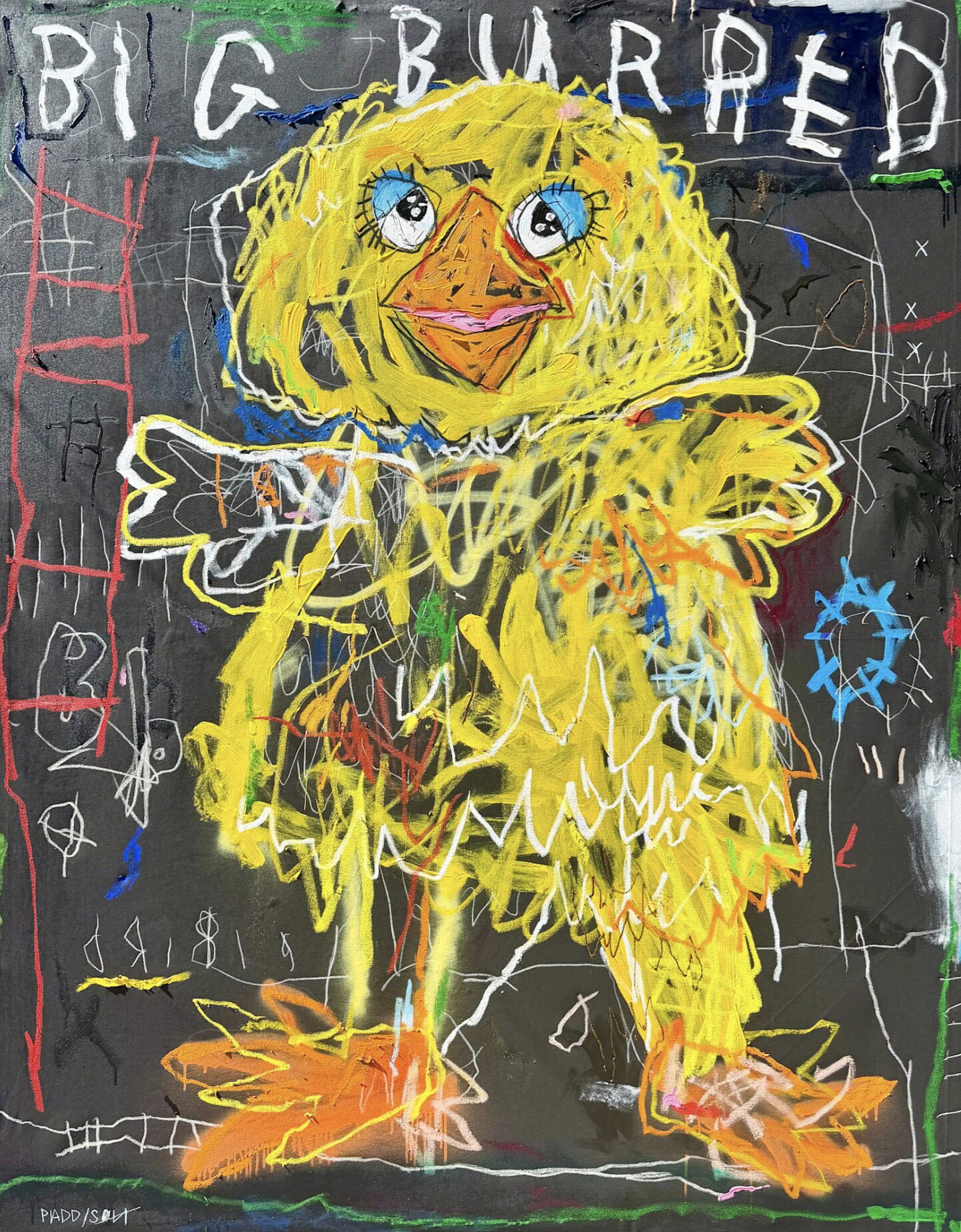
Big Burred — From Paddison's animal series. At scale, these works carry an unmistakable energy — the bold brushwork and expressive colour become inseparable from the subject, which is rather the point.
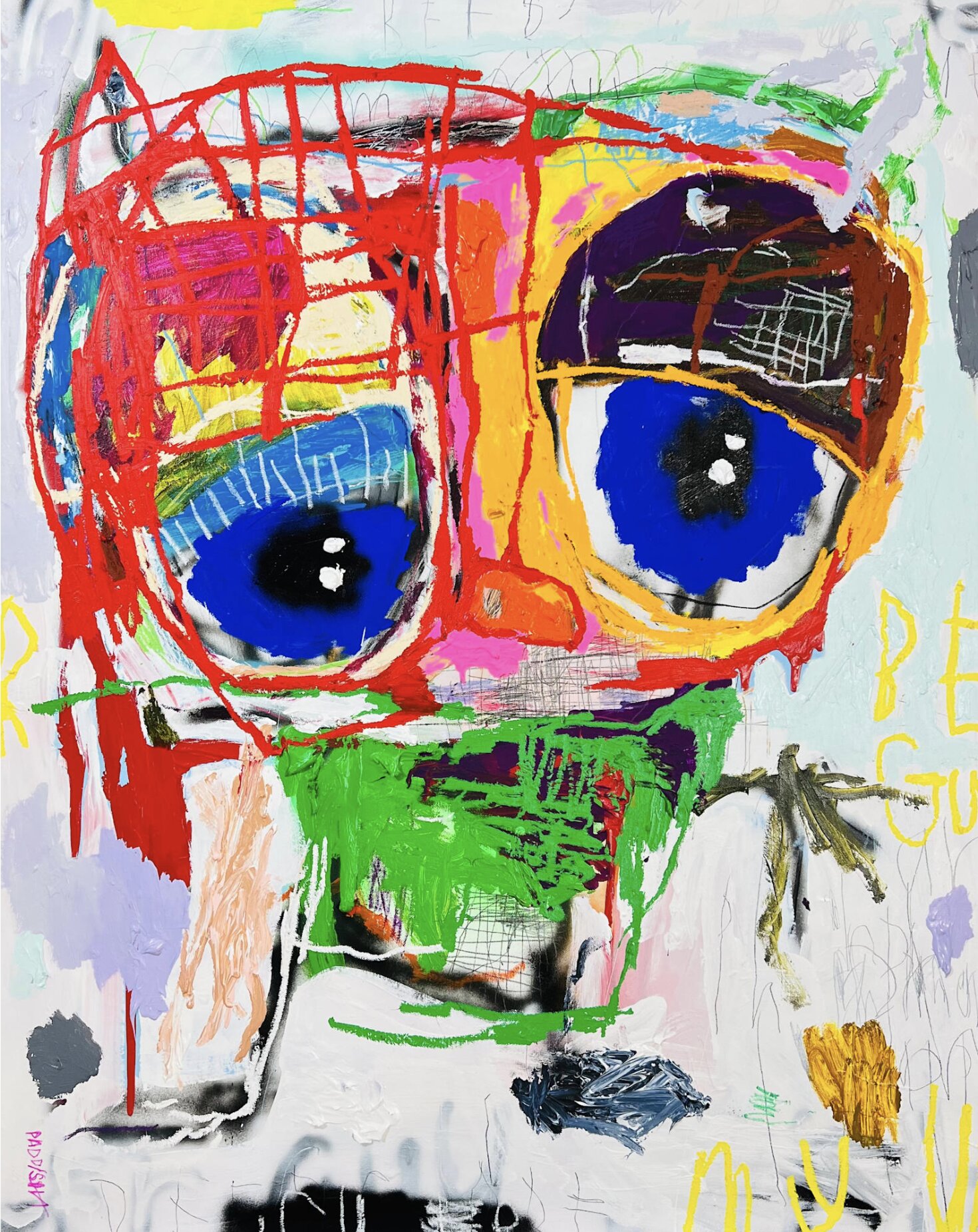
My Guy — A personal tribute, demonstrating Paddison's approach to painting people who have shaped his life. The title is straightforward by his standards, which makes it one of his more disarming works.
Arghh Ewe Tore Kin Tomb Ee — Among the most immediately compelling works in the current holdings. The title, like all of his best work, rewards the moment you say it aloud. Inquire for dimensions and condition report.
To discuss the full Nathan Paddison holdings at Guy Hepner, or to arrange a studio visit for works currently held in New York, contact us directly. Our team works with collectors at all levels of engagement — from those adding their first significant contemporary work to established collections building a considered position in an artist whose primary market window is finite.
Guy Hepner | 177 Tenth Avenue, New York
Explore Nathan Paddison prints for sale at Guy Hepner: Works on Paper.
Related Series