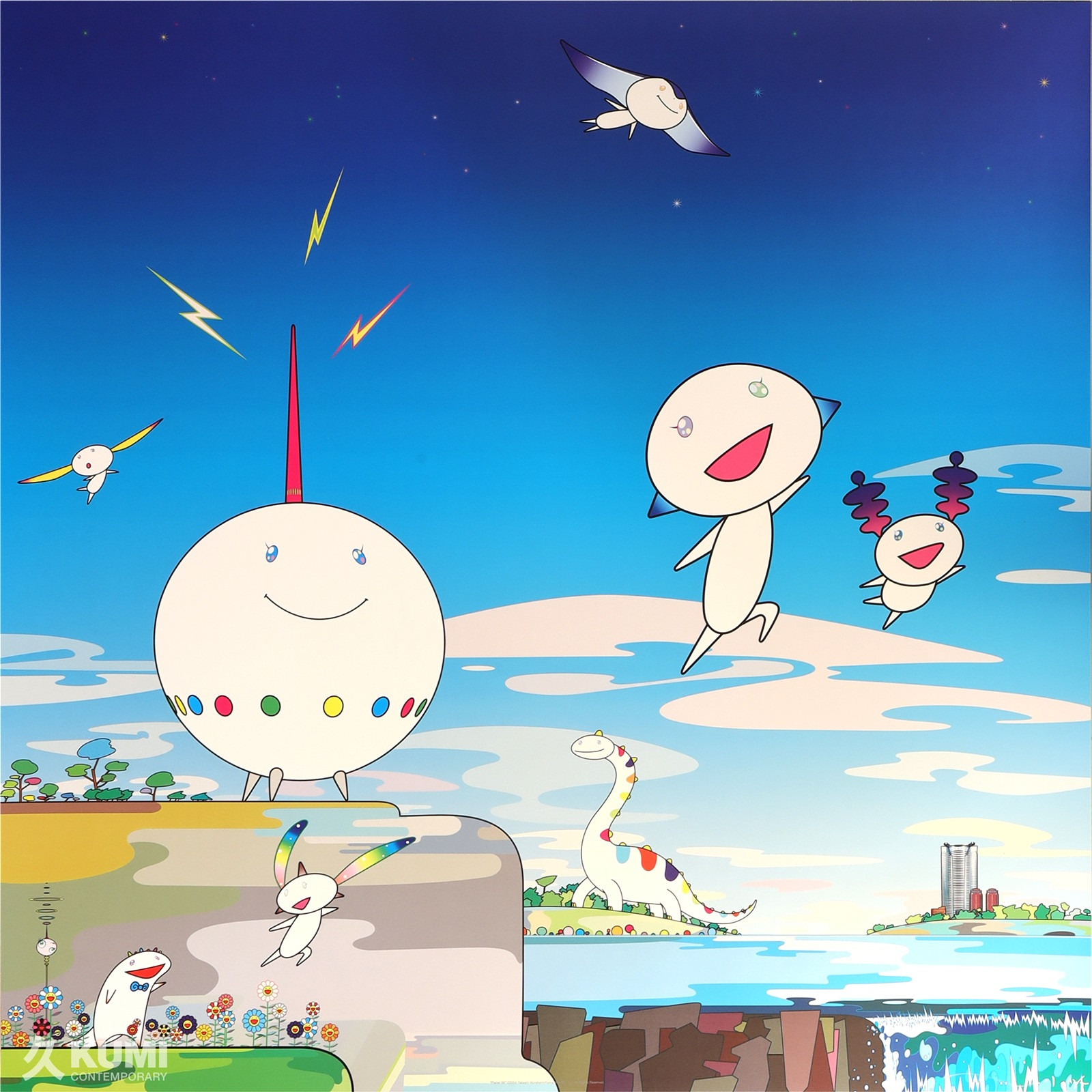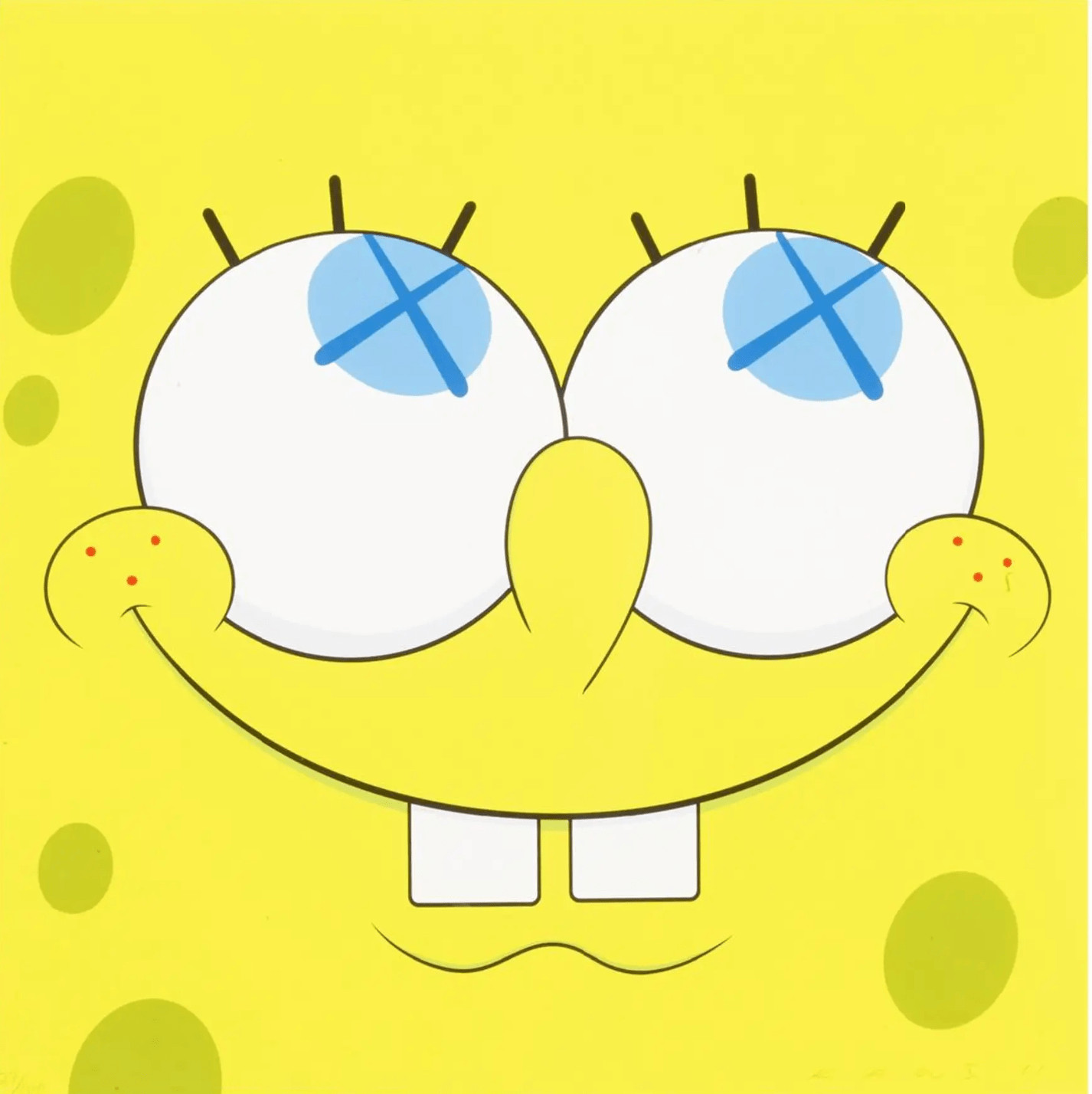
Kawsbob

June 19, 2026
Two names dominate the accessible contemporary art print market in a way that no other living artists quite match: Takashi Murakami and KAWS. Both have built globally recognisable visual languages rooted in cartoon and pop culture. Both have crossed from fine art galleries into streetwear, fashion, music, and mass consumer culture. Both maintain serious auction market presences while simultaneously operating as consumer brands. And both are represented at Guy Hepner, where we have spent years helping collectors navigate what distinguishes these two markets and how to build a considered position in either — or both.
This guide compares the two artists across every dimension that matters to collectors in 2026: market trajectory, edition structures, liquidity, price points, auction performance, and the less quantifiable question of which body of work you want to live with.
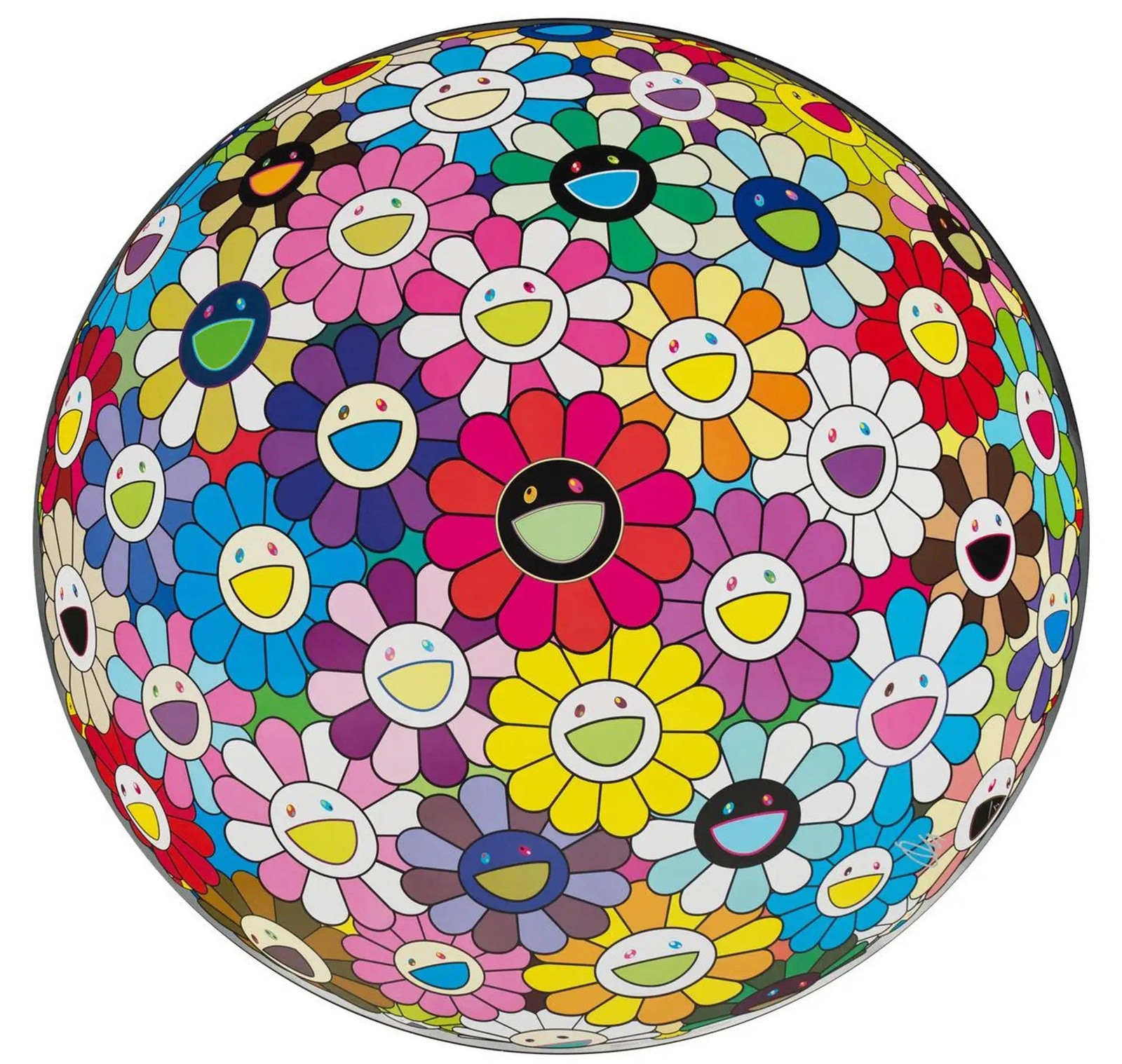
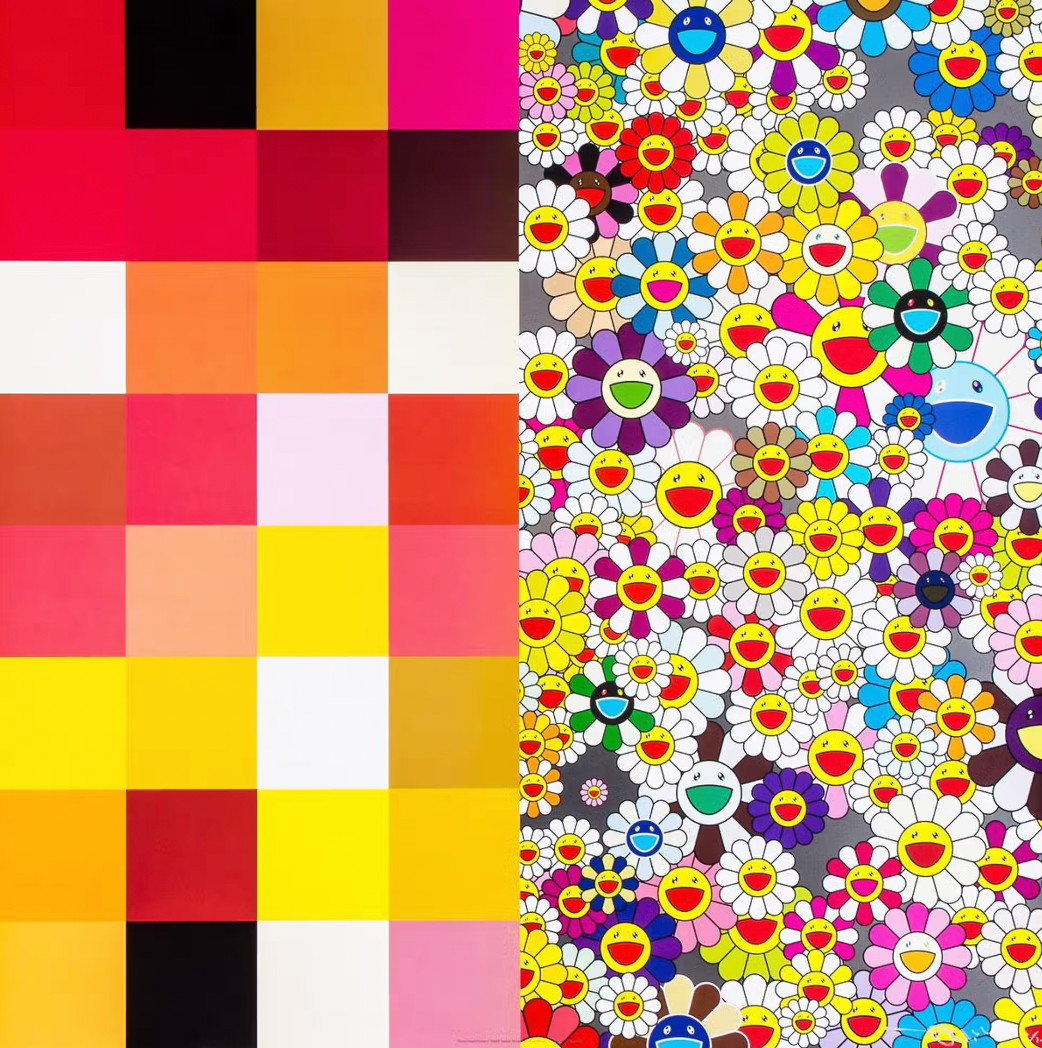
Flower Ball (Multicolour) — Takashi Murakami. Available at Guy Hepner.
Murakami was born in Tokyo in 1962 and trained in traditional Nihonga painting to PhD level before building his own visual language at the junction of Japanese classical art, anime, manga, and Western pop art. His 2000 Superflat manifesto provided an intellectual architecture for work that might otherwise be dismissed as purely decorative: the argument that surface flatness connects Edo-period screen painting with postwar otaku culture, and that the division between high and low culture is an ideological construct his work deliberately collapses.
Murakami's career has been built in dialogue with major art world institutions from the outset. His gallery relationships with Gagosian and Galerie Perrotin, his retrospectives at MOCA Los Angeles and the Palace of Versailles, his acquisitions by MoMA and Tate Modern — these institutional credentials sit alongside his commercial collaborations (Louis Vuitton, Kanye West, Supreme, Billie Eilish) in a career that has consistently occupied both worlds simultaneously. His studio, Kaikai Kiki Co., Ltd., operates as a commercial enterprise managing editions, merchandise, and emerging artist development alongside fine art production.
Brian Donnelly — KAWS — was born in Jersey City, New Jersey in 1974 and came up through New York City graffiti culture before founding his practice at the intersection of street art, designer toys, and fine art. Studying illustration at the School of Visual Arts and working as a background painter for Disney while illegally modifying bus shelter advertisements across New York, Paris, London, and Tokyo, KAWS developed his visual language — the Companion character with its XX eyes and crossbone hands, the BFF figure, the Dissected Companion — through a practice that was genuinely rooted in public space before it entered the gallery.
KAWS's institutional position is meaningful but less extensive than Murakami's. Major auction results — most dramatically the $14.7 million achieved for THE KAWS ALBUM at Sotheby's Hong Kong in 2019 — have validated his place in the contemporary art market beyond question. But his primary institutional identity remains in the designer toy and streetwear cultural sphere, and his collector base reflects that: younger, more internationally distributed, with particular depth in Asian markets.
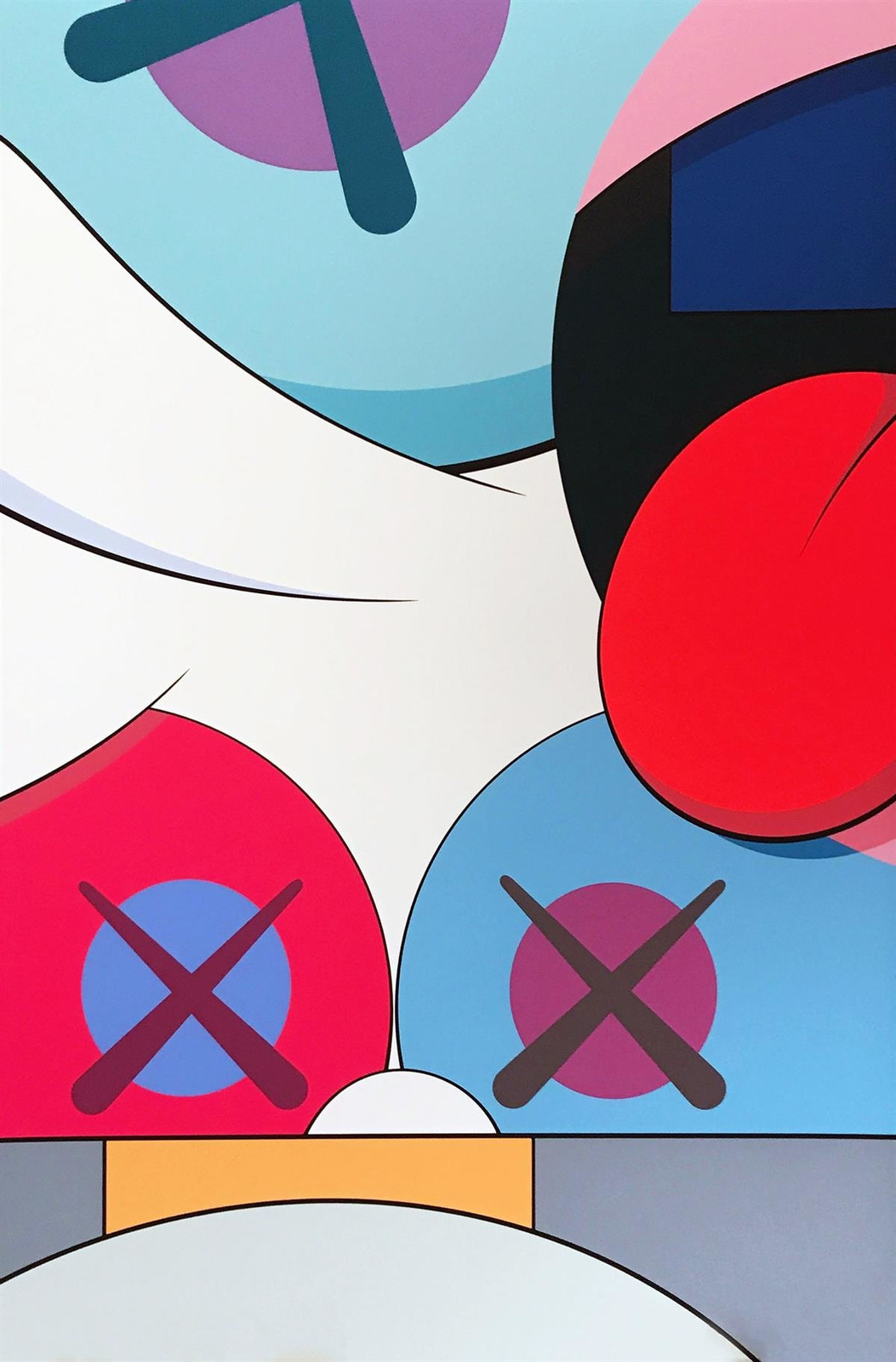
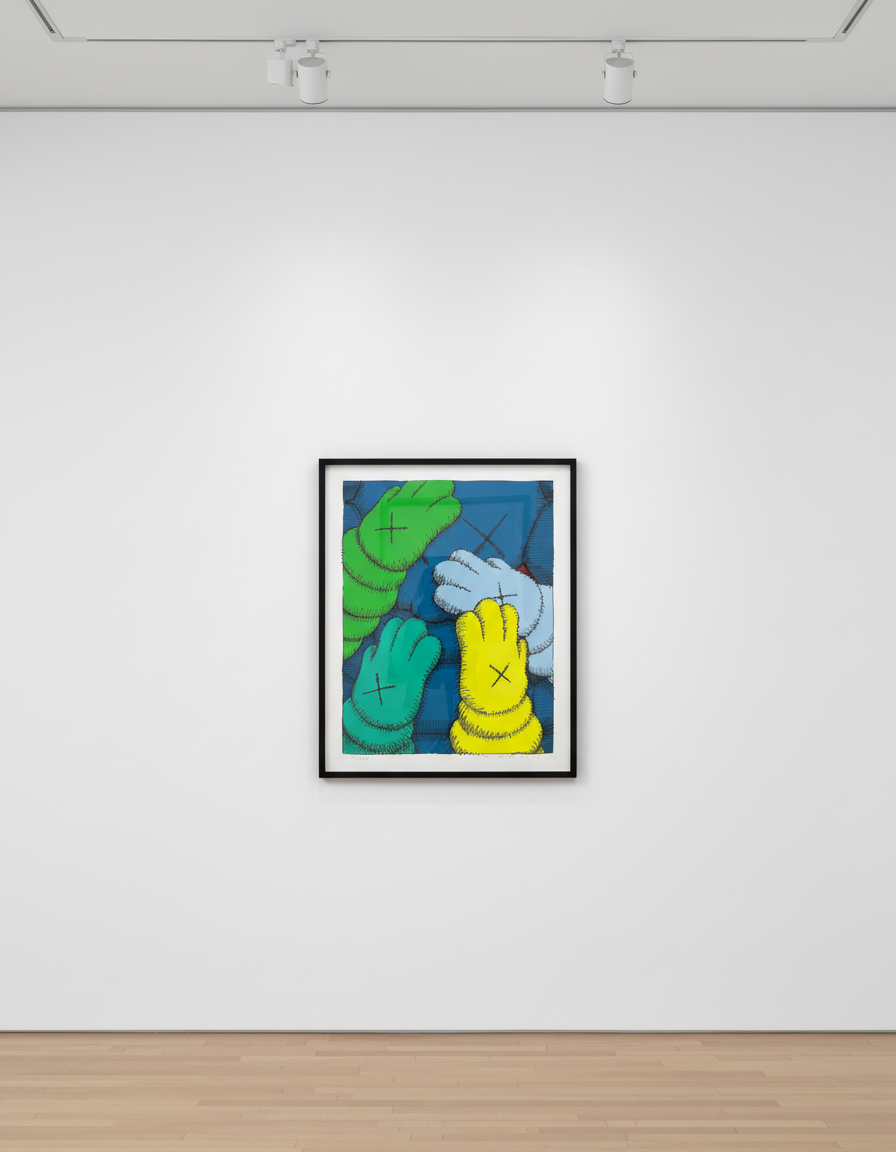
KAWS, Urge III. Available at Guy Hepner.
Murakami's market has demonstrated consistent strength and resilience over more than two decades. His auction volume — spanning prints, multiples, paintings, and sculptures — is substantial, and the print market in particular benefits from clear edition documentation, active dealer infrastructure, and a global collector base that extends across North America, Europe, and Asia. The Art Basel and UBS Global Art Market Reports have consistently identified Murakami among the highest-volume contemporary artists at auction, and his institutional presence sustains the scholarly and critical framework that underpins long-term collector confidence.
In 2026, the Murakami print market is operating at maturity: prices are well-established, liquidity is reliable for significant editions, and the authentication infrastructure through Kaikai Kiki provides a level of market confidence unusual in the contemporary print space. The risks are those of a mature market — there is less volatility to either direction, and the spectacular appreciation events of his earlier career are less likely to recur for established editions.
The KAWS market has been one of the most dramatic growth stories in contemporary art over the past decade. The 2019 Sotheby's Hong Kong result for THE KAWS ALBUM — a 140x pre-sale estimate hammer multiple — was the defining moment, but it reflected a trajectory that had been building since the late 2000s. Asian market demand, particularly from Hong Kong, mainland China, Japan, and South Korea, has been the principal driver of KAWS price growth, and the artist's cultural footprint in those markets — through collaborations with Japanese brands, Chinese retail platforms, and Korean pop culture — has created a collector base with demographic characteristics quite different from the traditional Western fine art market.
In 2026, the KAWS market is in a more complex position than Murakami's. The extraordinary appreciation of his most collectible figures and early editions has, in some cases, outpaced the rate at which new collectors can enter meaningfully. The designer toy segment — where KAWS built his initial following — is experiencing both continued demand and increased counterfeiting pressure. The fine art print market for KAWS (screenprints, woodblocks, canvas prints) is well-established but smaller in volume and depth than Murakami's equivalent.
Murakami's print editions follow a clear hierarchy that the market understands well. At the top sit signed fine art screenprints published by Kaikai Kiki Co. or major gallery partners (Gagosian, Perrotin) in limited editions typically ranging from 30 to 100. These are the works that trade most actively at Christie's and Sotheby's and represent the core of the fine art print market. Below them sit larger-edition offset lithographs and giclée prints, often published in conjunction with institutional exhibitions or at accessible retail price points. At the base are multiples, skateboard decks, and collaboration objects that appeal to a broader collectibles market.
The key virtue of this structure, from a collecting perspective, is its legibility. The tier you are buying in is clearly communicated by the publisher documentation, the printing method, the edition size, and the price. Ambiguity tends to signal lower-tier or potentially problematic offerings rather than undiscovered value.
KAWS's edition structure is dominated not by prints but by vinyl figures — the Companion, BFF, Dissected Companion, and associated Characters — produced primarily in collaboration with Medicom Toy. These figures operate as collectible objects with their own hierarchy: four-foot versions carry gallery-level presence and gallery-level prices; palm-sized figures from early editions can trade for multiples of their original retail price. Edition sizes are variable and not always clearly documented at point of original sale, which creates both opportunity and risk in the secondary market.
KAWS print editions — screenprints, woodblocks, canvas works — are a smaller part of his market than the figure category, and they have generally attracted a different buyer: more traditional art collectors rather than streetwear or toy collectors. The print editions that have achieved significant auction results tend to be works that bridge the art world and the broader KAWS cultural phenomenon — works like the Companion print series that function as fine art equivalents of the iconic figures.
At the entry level, KAWS is more accessible than Murakami — original retail prices for KAWS figures were dramatically lower than comparable Murakami print editions, and the secondary market for smaller figures remains within reach of collectors with limited budgets. At the upper end, both artists have comparable ceilings, though the specific works achieving seven-figure results differ in character: for Murakami, they tend to be major paintings or exceptional print editions; for KAWS, they have included both paintings and unique sculptural works.
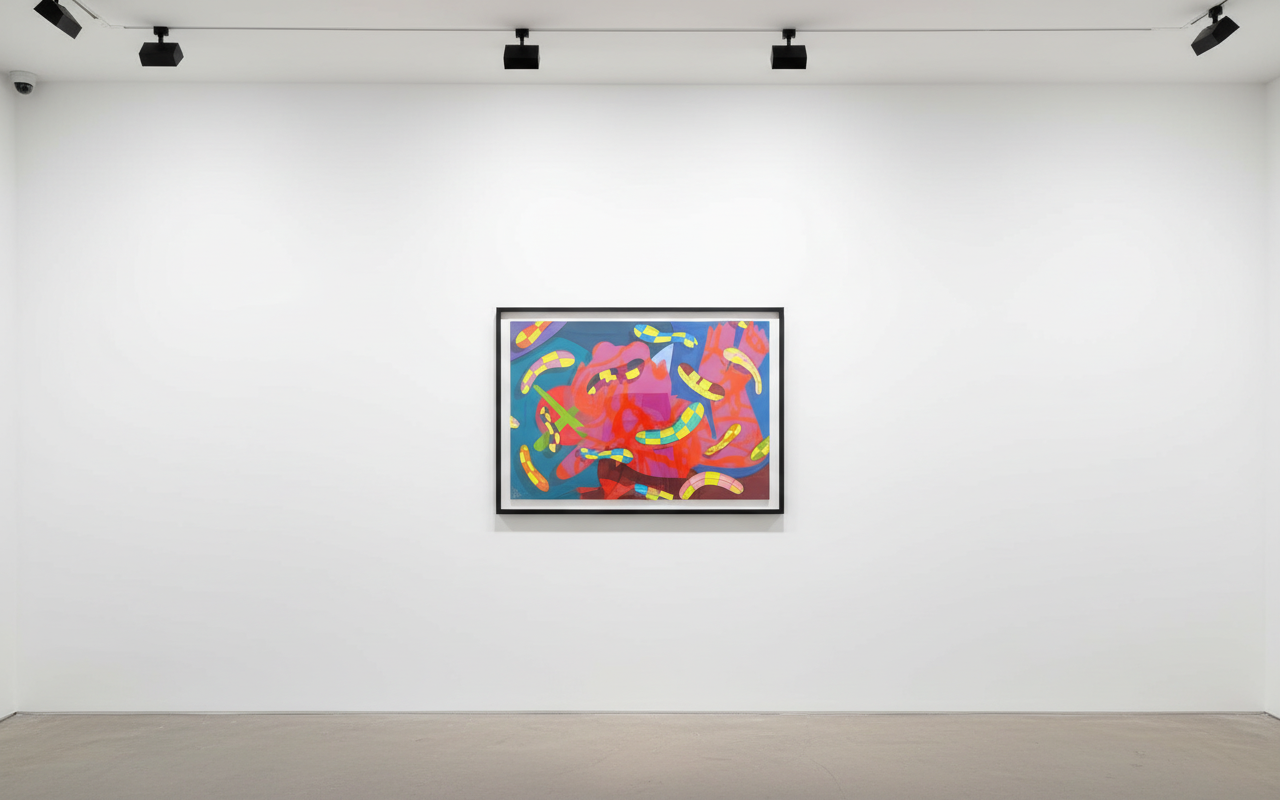
KAWS, Alone Again. Available at Guy Hepner.
Liquidity — the ability to sell a work at or near market price within a reasonable timeframe — is often underestimated as a collecting criterion. Both Murakami and KAWS score well on liquidity by contemporary art standards, but with different profiles.
Murakami liquidity is strongest for core print editions: signed flower screenprints from documented small editions turn over regularly at Christie's, Sotheby's, and Phillips, with established price benchmarks that allow sellers to set realistic expectations and buyers to calibrate bids against comparables. The auction cycle is the primary exit mechanism, and works consigned to specialist print sales typically find buyers within one or two auction cycles. Unusual or less well-documented editions may take longer to sell.
KAWS liquidity is strongest in the four-foot Companion category and in iconic figures from well-known series (Alone Again, Good Intentions, What Party). The secondary market is active and global, with particular depth in Asian platforms and specialist streetwear/art auction venues. However, condition is an unusually strong liquidity driver in the KAWS figure market: mint-in-box examples trade dramatically better than opened or shelf-worn figures, and works without original packaging face meaningful buyer resistance. For print editions, KAWS liquidity is solid but less deep than for the figures.
Understanding who buys Murakami versus KAWS matters because collector base shapes both current market dynamics and long-term demand.
Murakami's collector base is demographically broad and institutionally anchored. He attracts traditional fine art collectors — those with gallery relationships, auction house accounts, and a primary interest in print collecting — as well as collectors who arrived at fine art through his cultural collaborations with fashion and music. Japanese and Western European collectors are well-represented, alongside North American fine art collectors. The institutional anchor — MoMA, Tate, the Louis Vuitton Foundation — means that even collectors with no prior Murakami interest encounter his work in serious museum contexts.
KAWS's collector base is younger, more geographically concentrated in Asia, and more culturally rooted in streetwear and designer toy culture. His collector demographics skew significantly toward buyers under 40 — a strategic long-term advantage, as this cohort ages into greater purchasing power — but it also means his market is more sensitive to the health of streetwear and toy culture than Murakami's more institutionally grounded following.
Murakami has achieved consistently strong results at major auction houses over two decades. His paintings have achieved $10–15 million at the upper end, and exceptional prints have exceeded $300,000–$500,000. The print market is characterised by reliable volume and clear price discovery: hundreds of Murakami prints trade at auction every year, providing the price benchmarks that allow educated buying and selling. His auction presence at Christie's, Sotheby's, and Phillips is broad and consistent.
KAWS's auction history is defined by dramatic moments rather than consistent volume. The 2019 Sotheby's Hong Kong KAWS ALBUM result ($14.7 million USD against an $800,000 estimate) established the top of his market emphatically. Companion figures in significant editions and colourways regularly achieve $50,000–$500,000, with rare early examples exceeding these ranges. The KAWS auction market is more geographically concentrated — Hong Kong and Asian platforms dominate — and more condition-sensitive than Murakami's.
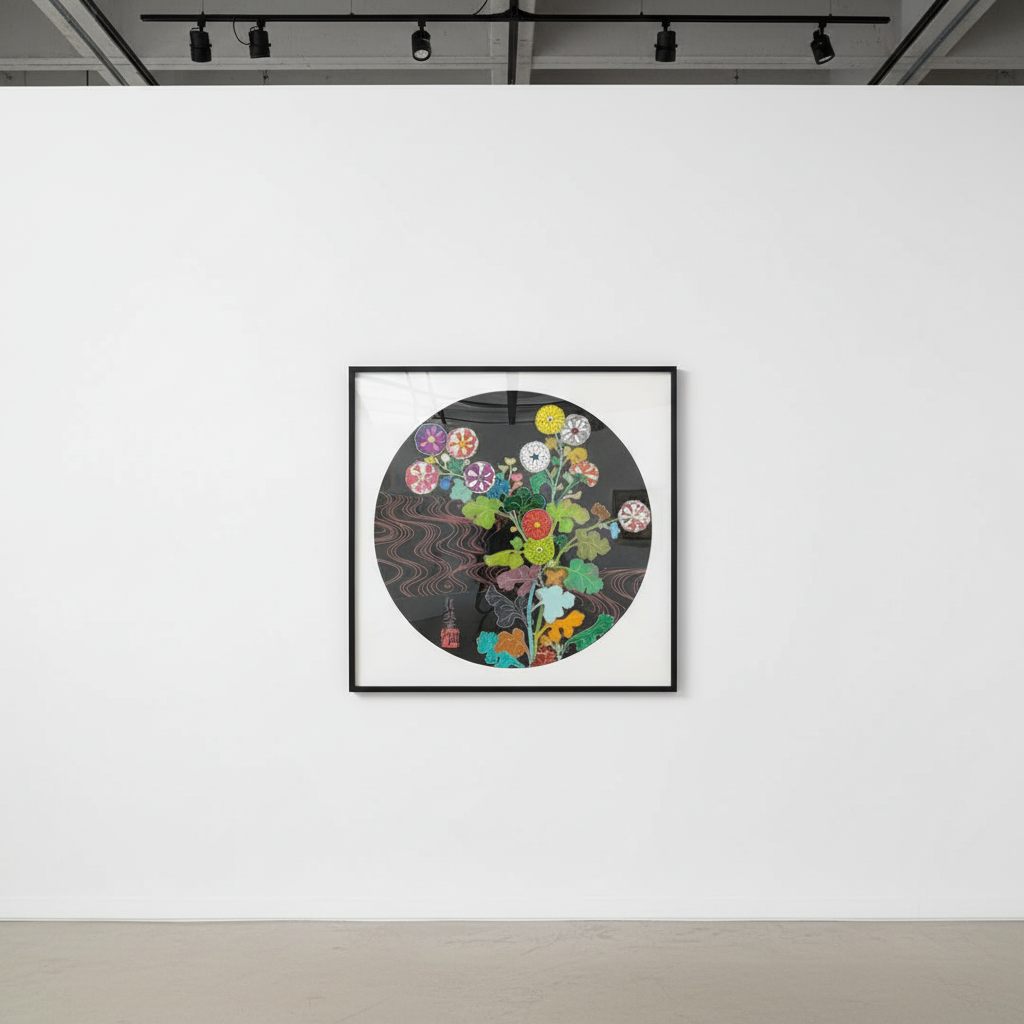
Skulls — Takashi Murakami. Available at Guy Hepner, New York.
The most fundamental difference between Murakami and KAWS is one that the market eventually prices, even if it takes time: art historical positioning.
Murakami is unambiguously a major contemporary artist in the traditional fine art sense. His Superflat theory is taught in art schools and written about in academic journals. His work is in the permanent collections of the world's leading museums. His gallery relationships are with the most institutionally powerful galleries in the art world. The scholarly and critical apparatus that sustains long-term art market value — catalogue raisonnés, institutional acquisitions, retrospective exhibitions, academic monographs — is fully in place for Murakami in a way that relatively few living artists can claim.
KAWS has made extraordinary gains in art world legitimacy over the past decade, and his institutional presence is real and growing. But his primary cultural positioning — as a designer toy creator and streetwear collaborator who also makes fine art — is meaningfully different from Murakami's, and the fine art market has historically assigned a premium to artists whose institutional credentials are unambiguous.
This is not an argument that KAWS lacks value — clearly he does not — but rather that the nature of the value is different and rests on somewhat different foundations. For collectors whose primary goal is long-term investment security, Murakami's more deeply institutionalised art historical position is a structural advantage. For collectors whose primary interest is in the cultural moment and demographic energy of the present, KAWS's younger collector base and streetwear-to-fine-art trajectory is a compelling argument.
The honest answer is that this depends on what you are trying to achieve — and that the most compelling collections often include both.
Choose Murakami if:
Choose KAWS if:
Consider both if:
Guy Hepner Gallery in New York maintains active inventory in both Takashi Murakami prints and KAWS works, with specialist knowledge of each market and the relationships with authentication infrastructure (Kaikai Kiki for Murakami) to support confident acquisitions at every price level. Our team can advise on building a combined collection that uses both artists strategically, or help you assess individual acquisition opportunities in either market.
Browse Takashi Murakami prints at Guy Hepner
Browse KAWS works at Guy Hepner
Browse KAWS and Murakami prints at Guy Hepner — or contact our specialists to discuss which is right for your collection.
Explore Takashi Murakami prints for sale at Guy Hepner: Kawsbob, Acupuncture, And Then and Then and Then and Then and Then, Blame Game, Characters.
Related Series