Subway Drawings

September 1, 2026
In November 2024, Sotheby's New York brought the hammer down on a collection of thirty-one Keith Haring Subway Drawings, sending waves through the contemporary art market and reminding collectors everywhere that these ephemeral chalk works—created illegally on vacant advertising panels in the New York City transit system—remain among the most historically significant and emotionally charged works of the twentieth century. The sale wasn't just about provenance or market positioning. It was about something deeper: the moment when an unknown twenty-two-year-old artist from Pennsylvania decided that art belonged to everyone, that the subway platform was as valid as any white-walled gallery, and that a piece of chalk could change the world.
Keith Haring subway drawings occupy a singular position in art history. They are not merely early works or juvenilia to be catalogued before the "important" pieces. They are the origin point—the big bang from which Haring's entire visual universe expanded. The radiant baby, the barking dog, the crawling figures, the pyramids, the UFOs, the hearts, the crosses—all of it emerged first in the subterranean passages of New York, witnessed by commuters who had no idea they were watching art history unfold between express stops.
Keith Haring arrived in New York City in 1978, an eighteen-year-old from Kutztown, Pennsylvania, enrolled at the School of Visual Arts. The city he encountered was nothing like the sanitized metropolis of today. This was the New York of the South Bronx burning, of Times Square peep shows and three-card monte games, of subway cars so thoroughly tagged with graffiti that you couldn't see out the windows. Crime was everywhere. The city was broke. And yet, for a young artist hungry for raw energy and creative possibility, it was paradise.
Haring quickly immersed himself in the downtown scene, befriending Jean-Michel Basquiat, Kenny Scharf, and the other young artists congregating around the clubs and galleries of the East Village. He participated in the Times Square Show of 1980, a landmark exhibition that brought together graffiti writers, punk musicians, filmmakers, and visual artists in an abandoned massage parlor near 42nd Street. But it was during his daily commute through the subway system that Haring discovered his true canvas.
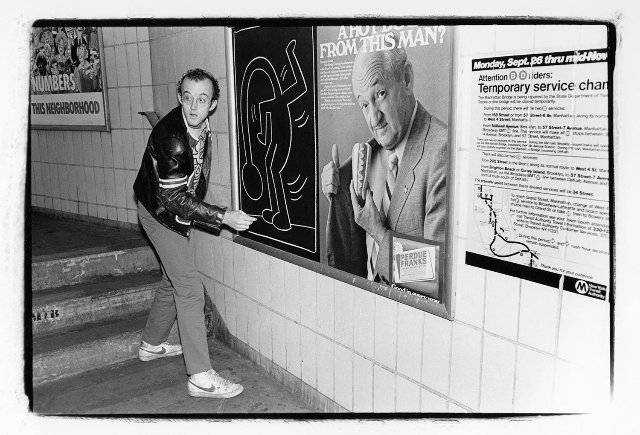
The MTA used matte black paper to cover expired advertising panels, creating temporary voids in the visual chaos of the subway stations. To most commuters, these blank rectangles were simply absence—the negative space between destinations. To Haring, they were invitations. The black paper was perfect for white chalk, and the surface was rough enough to hold the marks. Beginning in 1980 and continuing through 1985, Haring descended into the subway system almost daily, armed with sticks of white chalk purchased from art supply stores, and transformed these vacant spaces into impromptu galleries.
The process was quick by necessity. Haring knew that creating art on MTA property was illegal, and transit police patrolled the platforms. He developed a style that was fast, fluid, and immediately recognizable—thick outlines, no corrections, no hesitation. A single drawing might take five minutes or twenty, depending on complexity. On productive days, he would create dozens of works across multiple stations. Over the five-year period, Haring estimated that he produced thousands of subway drawings, though the exact number will never be known.
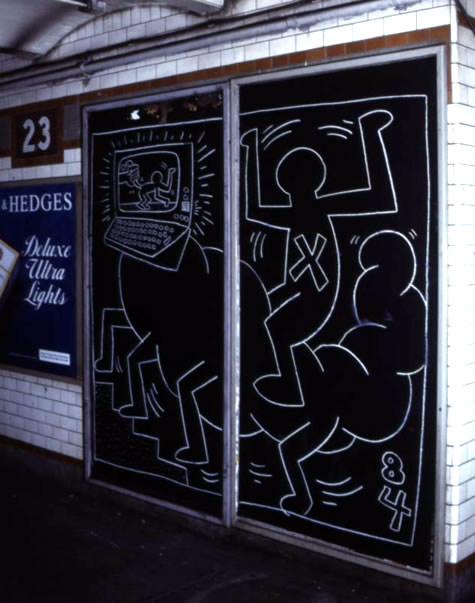
Keith Haring, Untitled, 1984, chalk on paper, 88 1 /2 x 46 inches, photographer: Ivan Dalla Rana © Keith Haring Foundation
What emerged from those underground sessions was nothing less than a complete visual vocabulary—a language that could speak to anyone regardless of education, class, or nationality. The radiant baby, perhaps Haring's most recognized symbol, first appeared in the subway drawings. This crawling infant, surrounded by lines suggesting energy, movement, or divine illumination, represented purity, innocence, and the potential of human existence. It was optimistic without being naive, simple without being simplistic.
Equally important was the barking dog, an angular canine figure that Haring used to represent authority, aggression, and social control. In the context of the 1980s—with its escalating Cold War tensions, the Reagan administration's policies, and the Growing AIDS crisis—the barking dog carried political weight. It could represent police violence, governmental oppression, or the anonymous forces that sought to control individual lives. Commuters who encountered the image might not have articulated these meanings explicitly, but they felt them. The dog was menacing in a way that transcended its cartoon simplicity.
Other recurring figures populated this underground universe: crawling human forms stacked atop one another like living architecture, pyramids topped with radiant eyes, spaceships hovering over crowds, hearts pierced by arrows or radiating energy, television sets with legs, and the famous three-eyed face that seemed to watch everything. Each symbol carried multiple meanings, and Haring deliberately avoided fixed interpretations. The work was meant to be encountered, absorbed, and understood intuitively rather than intellectually decoded.
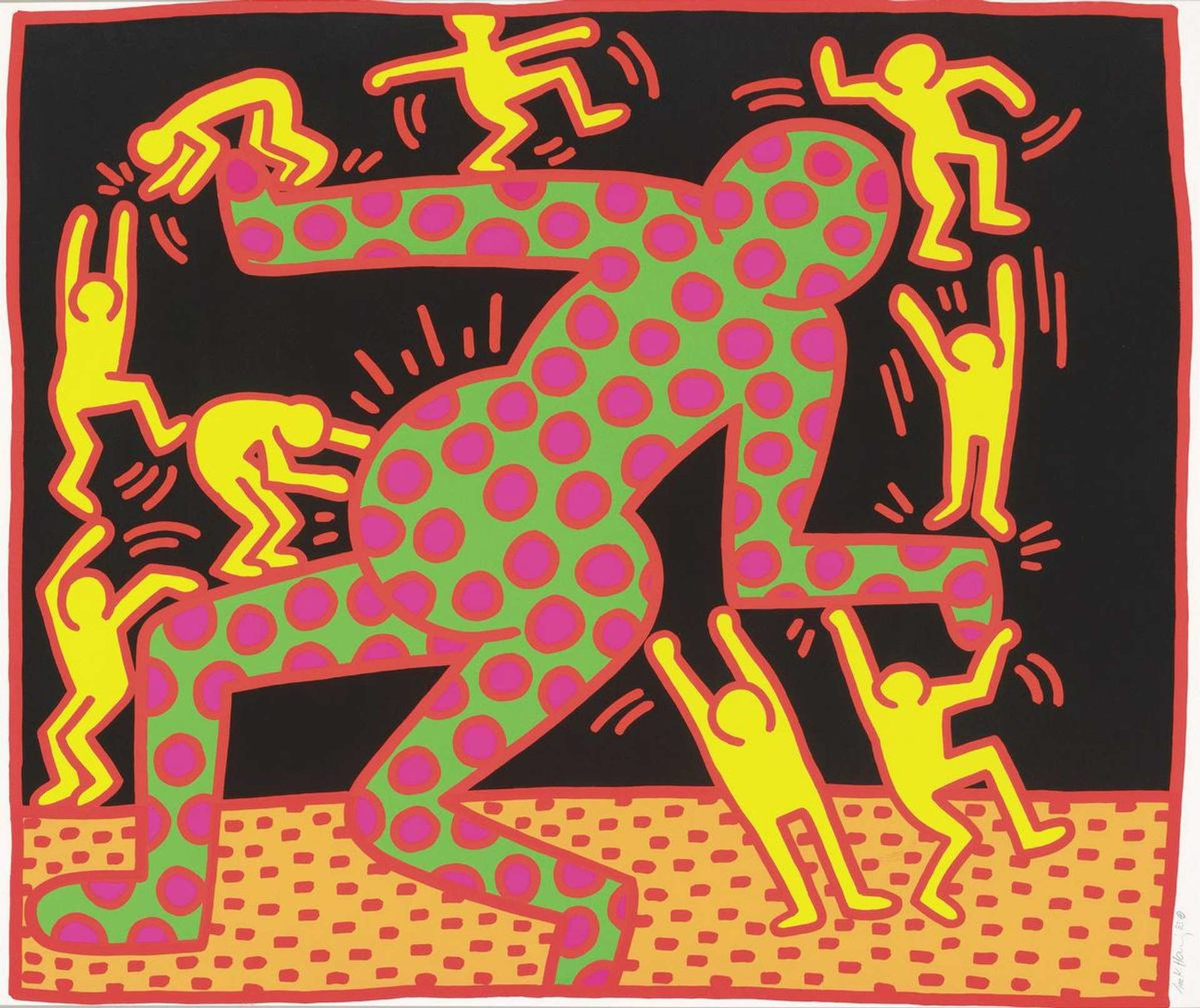
The style itself—those thick black outlines (or white, in the case of the subway drawings), the flat figures without shading or perspective, the continuous flowing lines—drew from multiple sources. Haring acknowledged the influence of Disney animation, of Pierre Alechinsky's calligraphic painting, of Jean Dubuffet's Art Brut, of the Aztec and Aboriginal art he studied at the School of Visual Arts. But the synthesis was entirely his own, and its accessibility was no accident. Haring wanted his art to communicate immediately, to function like traffic signs or international pictograms, to reach people who had never set foot in a museum.
The subway drawings represented a radical democratization of contemporary art. At a time when the art world was dominated by Neo-Expressionist painters selling canvases for six figures to wealthy collectors, Haring was giving away his work for free to anyone who happened to be waiting for the F train. There were no velvet ropes, no admission fees, no gallery assistants asking if you needed help. The art was simply there, part of the urban environment, as available to a construction worker heading to a job site as to a gallery owner traveling uptown.
This democratic impulse was central to Haring's philosophy and remained so throughout his career. When he opened the Pop Shop in SoHo in 1986, selling T-shirts, buttons, and other merchandise featuring his imagery at accessible price points, critics accused him of selling out. Haring's response was characteristically direct: he wanted people to be able to own his work, to take it home, to live with it. The Pop Shop was the logical extension of the subway project—another attempt to bypass the traditional gatekeepers of the art world and reach a mass audience.
The subway drawings also established Haring's practice of art as public engagement. Unlike graffiti writers who operated in darkness and secrecy, Haring often drew in broad daylight, surrounded by commuters who would stop to watch. Children were particularly entranced, and Haring welcomed their attention. He saw himself as performing a kind of public service, adding beauty and meaning to spaces that were otherwise bleak and utilitarian. The drawings sparked conversations among strangers, created moments of unexpected joy in the grinding routine of urban life, and reminded New Yorkers that art didn't have to be intimidating or exclusive.
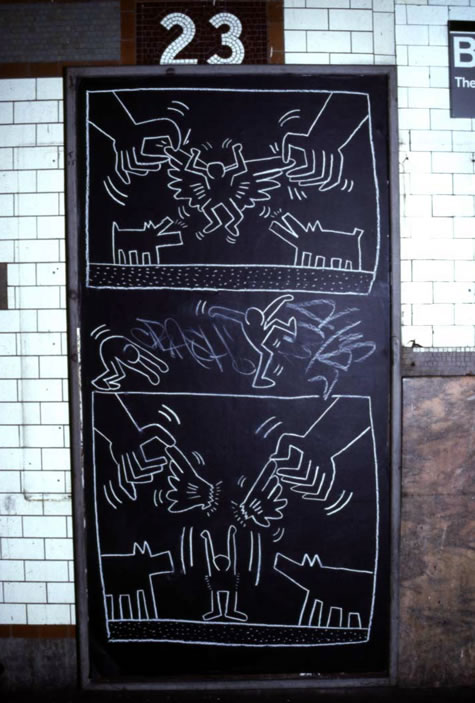
Untitled, 1982 | Chalk on paper | Photographer: Ivan Dalla Tana
Creating art in the subway system was illegal, and Haring paid the price repeatedly. He was arrested multiple times for vandalism, and transit police knew his face well. The arrests became part of the mythology surrounding the subway drawings, evidence of Haring's commitment to his practice and his willingness to face consequences for bringing art to the public. He approached the legal risks philosophically, understanding that the confrontation with authority was itself part of the work's meaning.
The impermanence of the subway drawings was both a limitation and a conceptual strength. Haring knew that his chalk works would disappear—covered over by new advertisements, damaged by passing commuters, erased by weather or cleaning crews. Some drawings lasted only hours before being destroyed. Others survived for weeks. This ephemerality gave each encounter with a Haring subway drawing a special urgency. You might never see this image again. It existed only in this moment, in this particular configuration of artist, viewer, and public space.
Many commuters, recognizing the drawings' significance and fearing their disappearance, attempted to preserve them. Some peeled the black paper panels off the walls and took them home. Others photographed the works before they vanished. A subculture of Haring collectors emerged, people who tracked his movements through the subway system and tried to salvage drawings before the MTA destroyed them. The artist had mixed feelings about these efforts. On one hand, he appreciated that people valued his work enough to preserve it. On the other, the impermanence was part of the point—a rejection of the art market's fetishization of permanent, collectible objects.
The drawings that survived—and many did, despite the odds—have become among the most sought-after works in Haring's oeuvre. Auction houses and collectors prize them precisely because of their rarity and their historical importance. These are not prints or multiples, but unique works created in the crucible of New York's underground passages. They carry the chalk dust of the 1980s, the energy of a young artist in full creative flight, and the history of a city that was simultaneously falling apart and reinventing itself.
The art establishment was initially unsure what to make of Haring's subway drawings. Some critics dismissed them as mere graffiti, unworthy of serious attention. Others saw them as a clever publicity stunt, a way for an ambitious young artist to build name recognition outside traditional gallery channels. But as Haring's reputation grew—through gallery exhibitions, museum shows, and public commissions—the subway drawings were increasingly recognized as foundational works, the essential starting point for understanding his artistic vision.
Art historians have placed the subway drawings in several contexts. They are part of the broader street art movement that emerged in New York during the 1970s and 1980s, alongside the work of graffiti writers like SAMO (Jean-Michel Basquiat's early tag), Lee Quiñones, and Fab Five Freddy. They connect to the Pop Art tradition of Warhol and Lichtenstein, with their embrace of commercial imagery and mass accessibility. And they anticipate the public art practices of later artists like Banksy, Shepard Fairey, and JR, who would similarly blur the boundaries between street art and fine art.
The conceptual sophistication of the subway drawings should not be underestimated. Haring was not simply decorating subway stations; he was interrogating the nature of public space, the relationship between art and audience, and the role of the artist in society. Each drawing was a small act of resistance against the commodification of urban life, a reminder that beauty and meaning could exist outside the marketplace. The work engaged with semiotics, with the relationship between sign and meaning, in ways that aligned with the theoretical concerns of postmodern art criticism.
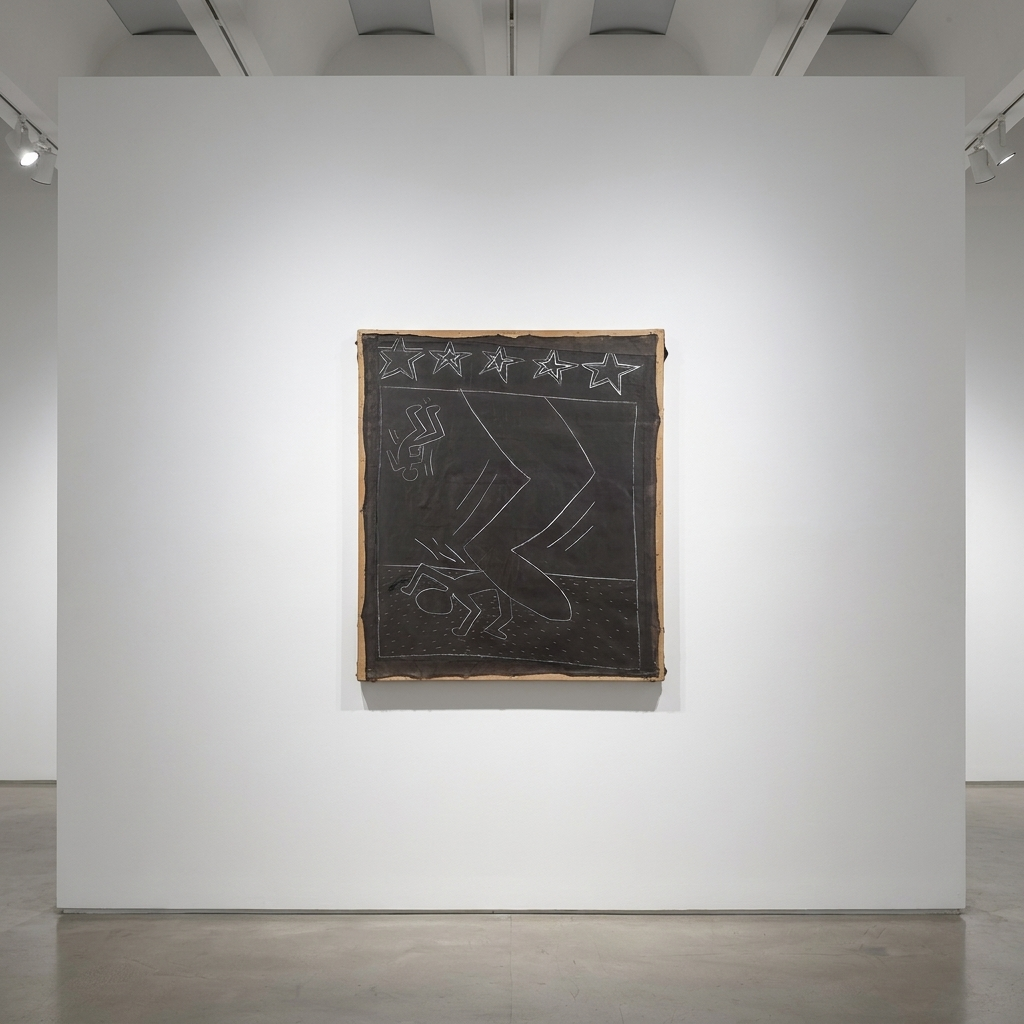
Keith Haring, Untitled (Growing), Chalk on dark surface work. Available at Guy Hepner, New York.
The subway drawings launched Haring into the broader art world. By 1982, he was showing at Tony Shafrazi Gallery in SoHo, and his career accelerated rapidly. He painted murals across the globe—in Paris, Berlin, Tokyo, Melbourne, Rio de Janeiro. He collaborated with celebrities including Andy Warhol, Grace Jones, and Madonna. He designed sets for theatrical productions and concerts. His imagery appeared on album covers, magazine spreads, and eventually the Pop Shop merchandise that brought his work to millions.
Through all of this, the visual vocabulary developed in the subway remained consistent. The radiant baby, the barking dog, the dancing figures, the crawling forms—they reappeared in Haring's paintings, prints, sculptures, and public works. Collectors who acquire a Haring print today are purchasing imagery whose DNA traces directly back to those chalk drawings on black paper. The subway period wasn't a stepping stone to greater things; it was the foundation on which everything else was built.
Haring's tragically early death from AIDS-related complications in 1990, at the age of thirty-one, froze his career at a moment of maximum creative energy. Unlike artists who live long enough to fade into irrelevance or repeat themselves into exhaustion, Haring exists permanently in a state of youthful intensity. The subway drawings, created when he was in his early twenties, capture that energy at its purest—before the international fame, before the six-figure sales, before the illness that would claim his life.
Original Keith Haring subway drawings are extraordinarily rare on the market. Most surviving examples are held in museum collections or major private holdings, and when they do appear at auction, they command significant prices. The November 2024 Sotheby's sale of Larry Warsh's collection of thirty-one subway drawings was a landmark event, generating intense interest from collectors who understood the historical importance of these works.
The rarity stems from multiple factors. Many drawings were destroyed within days or weeks of their creation. Others were removed from subway stations but subsequently lost or damaged. The chalk medium is inherently fragile, requiring careful conservation to prevent deterioration. And the Keith Haring Foundation, which oversees the artist's estate, maintains strict standards for authentication, excluding works whose provenance cannot be definitively established.
For collectors who cannot acquire original subway drawings—which is to say, the vast majority of collectors—Haring's print editions offer an accessible entry point into his work. Many of these prints reproduce the imagery first developed in the subway, translated into screenprints, lithographs, and other media. While they lack the historical weight of an actual subway drawing, they capture the essential visual vocabulary and allow collectors to live with Haring's imagery on a daily basis.
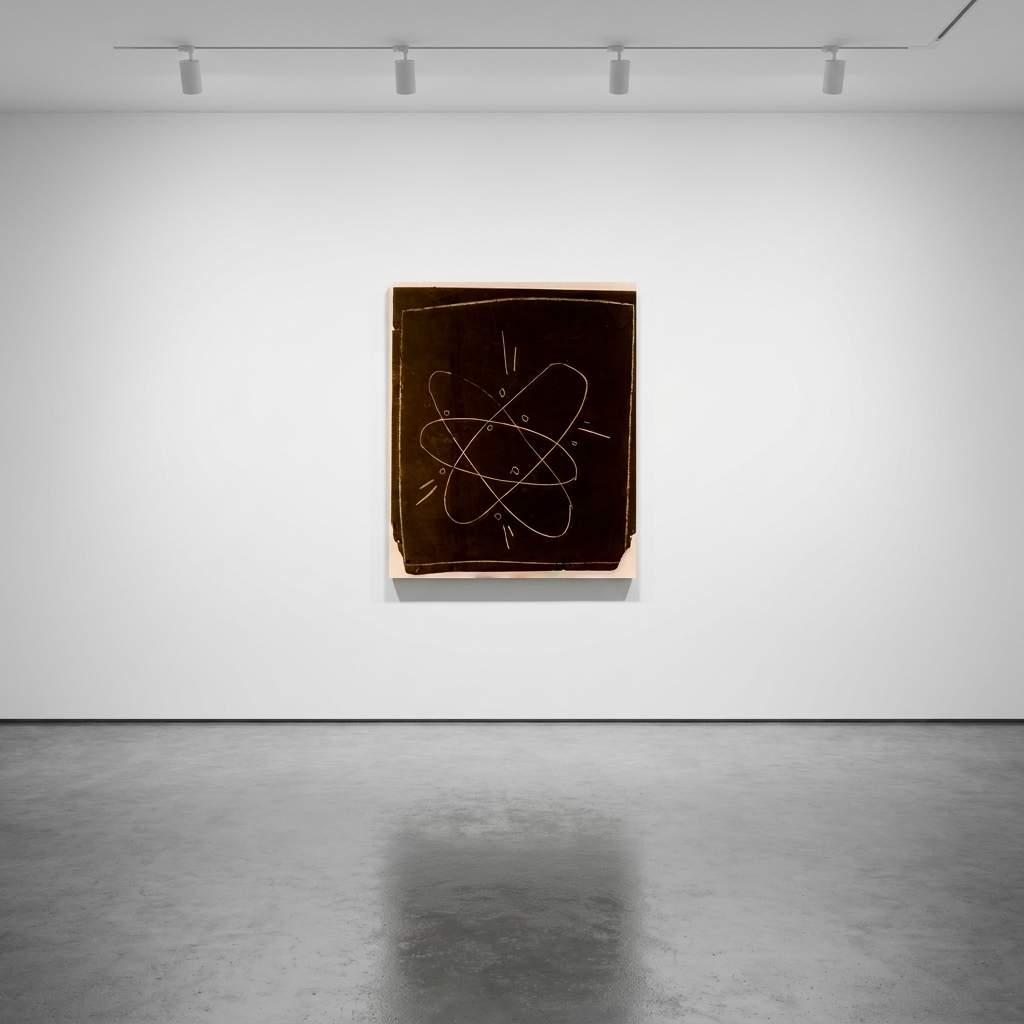
Keith Haring, Untitled (American Power), Atomic diagram style work. Available at Guy Hepner, New York.
The market for Keith Haring prints has demonstrated remarkable consistency over the past two decades, with strong demand across all price levels. Several factors influence value and collectibility:
The print market also offers opportunities across a range of price points. Entry-level Haring prints can be acquired for a few thousand dollars, making them accessible to new collectors, while rare trial proofs, unique works, or important early editions can reach six figures at auction. This accessibility mirrors Haring's original democratic impulse—his belief that art should be available to everyone, not just the wealthy elite.
Guy Hepner Gallery maintains an active inventory of Keith Haring works, including prints, multiples, and unique pieces that span his career. Our selection emphasizes works that connect directly to the visual vocabulary established during Haring's subway period—the radiant babies, barking dogs, dancing figures, and other iconic images that first appeared on those black paper panels in the early 1980s.
We understand that acquiring a Haring work is both an investment and a personal statement. These images carry meaning that extends beyond their market value—they represent a vision of art as public good, as democratic engagement, as visual language that speaks across all boundaries. Whether you're a seasoned collector seeking a rare proof or a new enthusiast looking for your first Haring print, our specialists can guide you through the available options and help you find a work that resonates with your collecting goals.
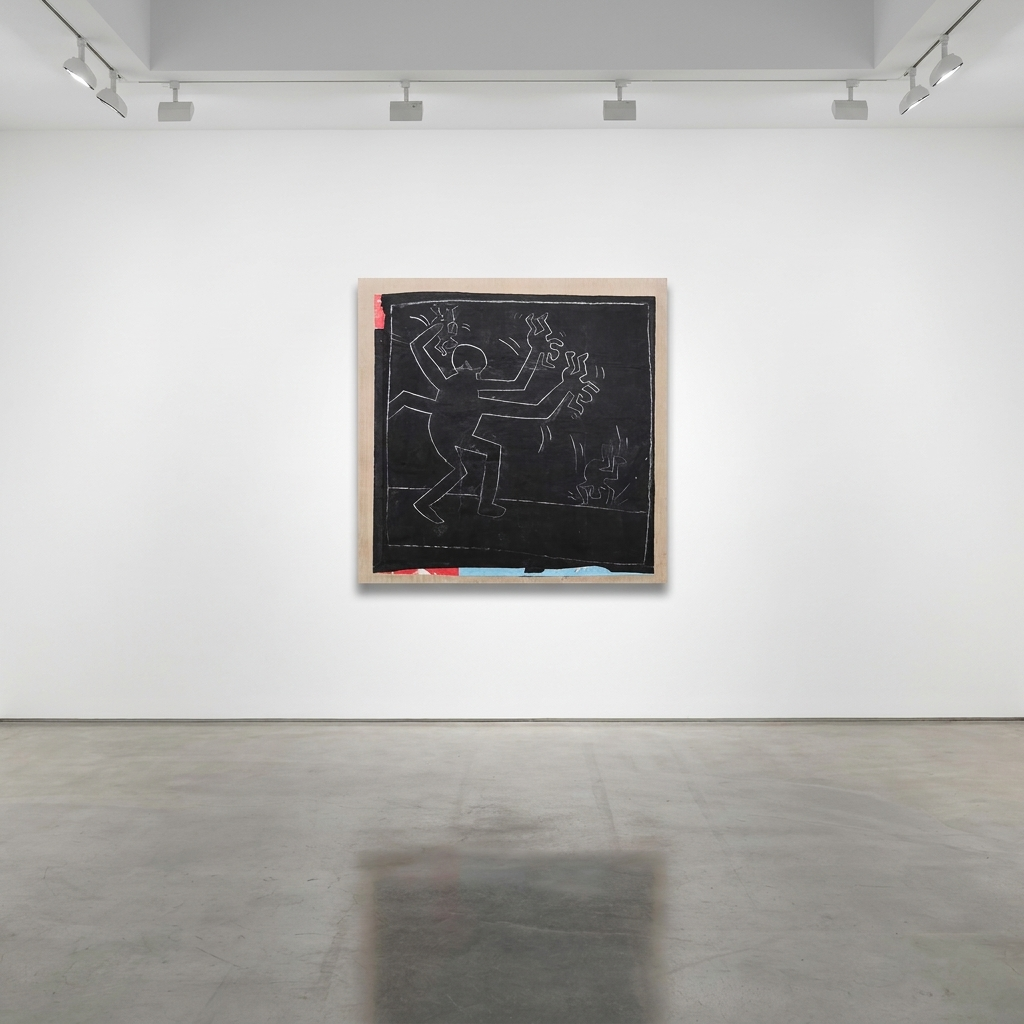
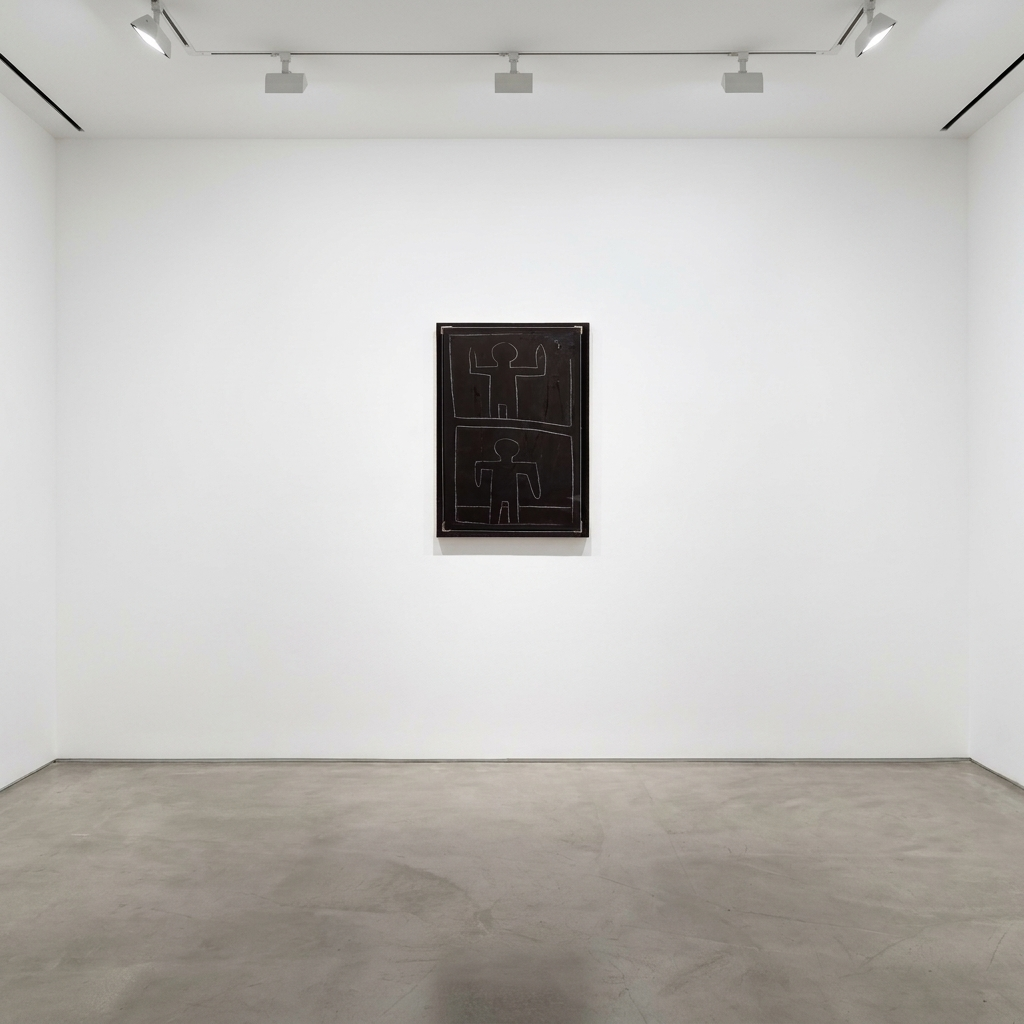
Keith Haring, Untitled (Figures), White line drawing on black featuring energetic human forms. Available at Guy Hepner, New York.
More than four decades after Keith Haring first descended into the New York City subway system with a stick of white chalk, his subway drawings remain astonishingly powerful. They capture a moment in time—the chaotic energy of early 1980s New York, the urgency of an artist who seemed to know his time was limited, the democratic possibility of art that belongs to everyone. They are historical documents, aesthetic achievements, and cultural artifacts simultaneously.
The drawings also remind us that art doesn't require institutional validation to matter. Haring created these works without gallery representation, without critical approval, without any assurance that anyone would care. He made them because the empty black panels demanded to be filled, because the commuters deserved something beautiful to look at, because the images inside him needed to escape. That fundamental creative impulse—art as necessity rather than career strategy—continues to resonate with viewers who encounter Haring's work today.
For collectors, the subway drawings represent the origin point, the big bang. Every Haring print, painting, and sculpture that followed carries their DNA. Understanding the subway period is essential to understanding Haring's oeuvre, and acquiring works that connect to this period means owning a piece of art history that transcends mere market value.
To explore available Keith Haring works or to discuss acquisition opportunities, contact the specialists at Guy Hepner Gallery at our New York location, 529 West 20th Street. We look forward to helping you discover the transformative power of Haring's visual language.
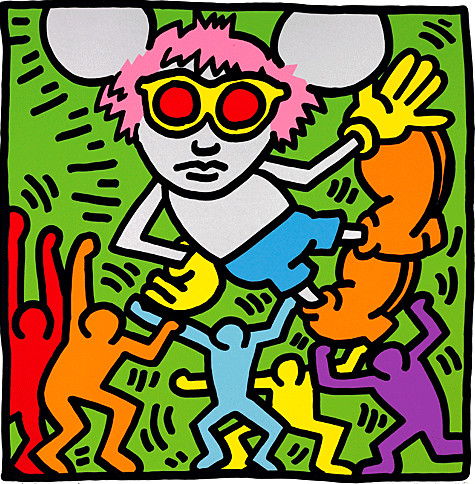
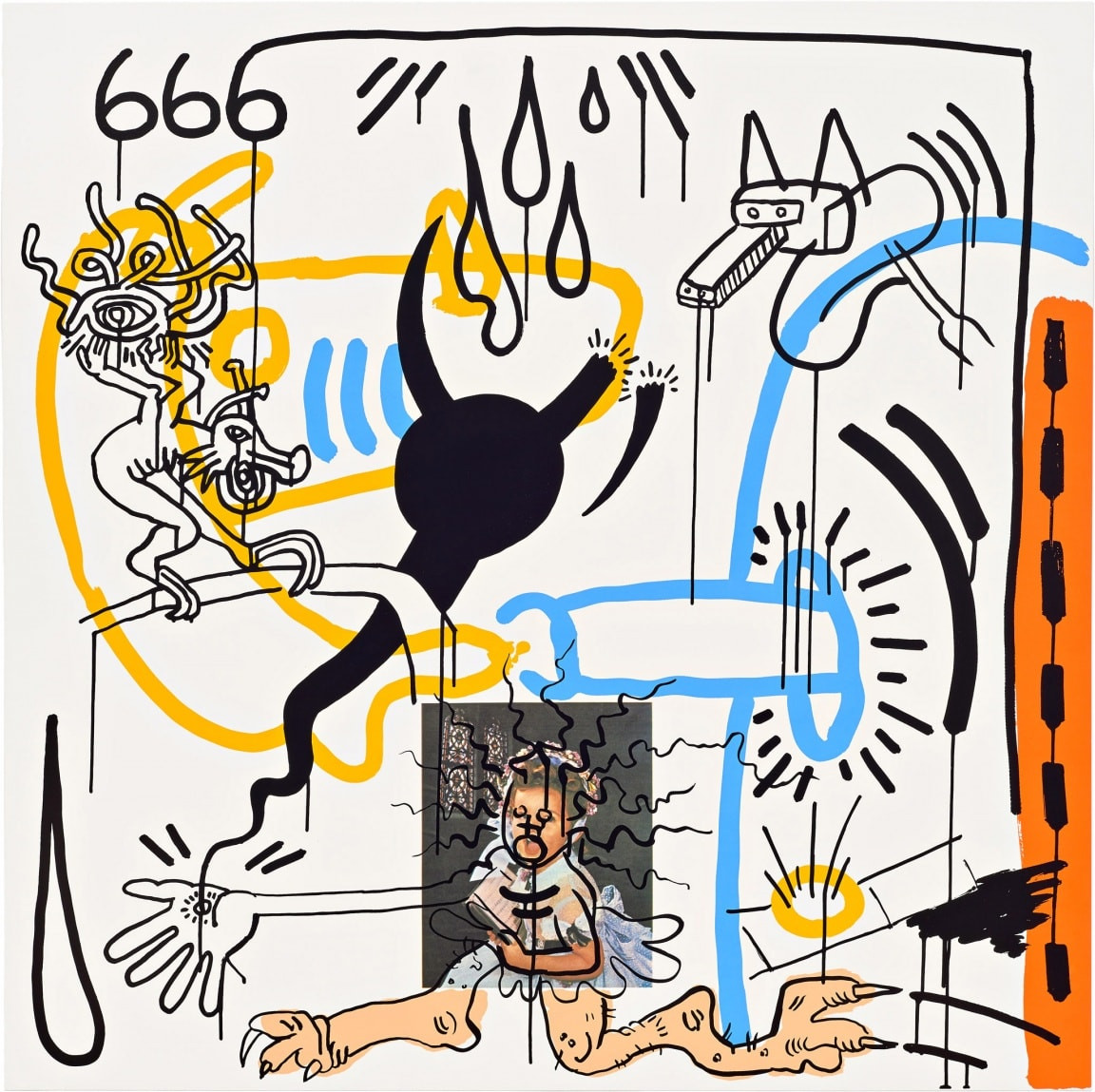
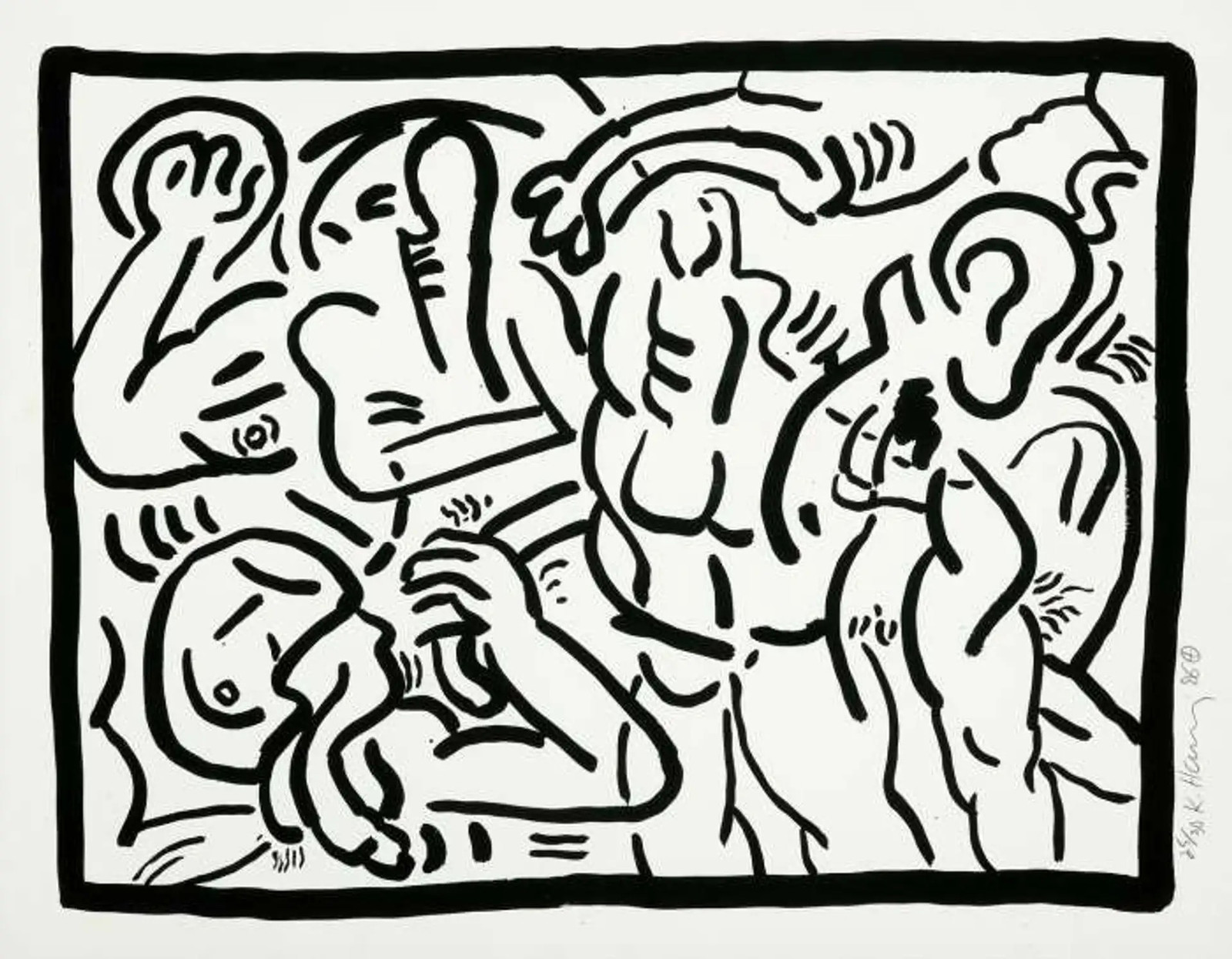
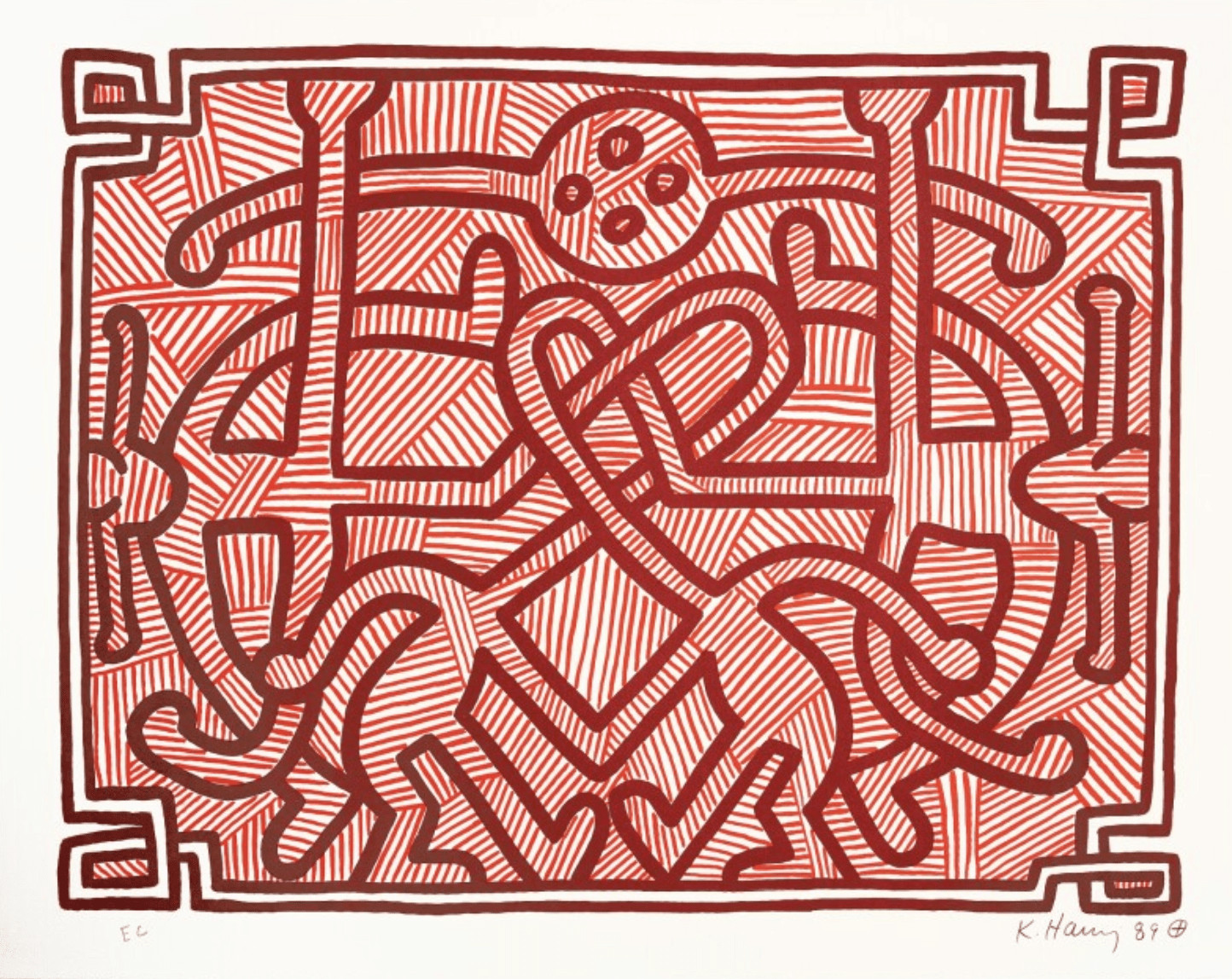
Explore Keith Haring prints for sale at Guy Hepner: Subway Drawings, Andy Mouse, Apocalypse, Bad Boys, Chocolate Buddha.
Related Series